

As the quest for natural and effective health supplements continues, a combination that has been gaining attention is Liposomal Palmitoylethanolamide (PEA) plus Luteolin. This duo is touted for its potential to offer a range of health benefits, from reducing inflammation to protecting neurological function. In this article, we delve into the science behind these compounds and explore the health benefits they may provide.
Understanding Liposomal PEA and Luteolin
Before we examine the benefits, it’s important to understand what these compounds are and how they work.
What is Liposomal PEA?
Palmitoylethanolamide (PEA) is a naturally occurring fatty acid amide, which is produced within our bodies as part of a response to inflammation and pain. PEA has been studied for its analgesic and anti-inflammatory properties. The liposomal form of PEA is encapsulated within liposomes, which are tiny vesicles that can encapsulate nutrients, enhancing their absorption and bioavailability.
What is Luteolin?
Luteolin is a flavonoid found in various plants, including celery, thyme, and green peppers. It’s known for its antioxidant properties and its ability to modulate the immune system, potentially reducing inflammation and providing neuroprotection.

Health Benefits of Liposomal PEA Plus Luteolin
When combined, liposomal PEA and luteolin may offer synergistic effects that can lead to various health benefits. Here are some of the most significant potential benefits:
Enhanced Anti-Inflammatory Effects
Both PEA and luteolin have anti-inflammatory properties. PEA acts on the endocannabinoid system, which plays a role in regulating inflammation and pain. Luteolin, on the other hand, can inhibit the production of inflammatory cytokines. The combination of these two compounds may provide a more potent anti-inflammatory effect than either would alone.
Neuroprotective Properties
Neuroinflammation is a contributing factor in many neurodegenerative diseases. Luteolin has been shown to have neuroprotective effects, potentially slowing the progression of diseases like Alzheimer’s and Parkinson’s. PEA also exhibits neuroprotective properties, making the combination a promising candidate for supporting brain health.
Pain Relief
Chronic pain is a debilitating condition affecting millions worldwide. PEA has been studied for its analgesic effects and may be beneficial in treating various types of pain, including neuropathic pain and fibromyalgia. Luteolin’s anti-inflammatory action can further support pain relief.
Immune System Modulation
Luteolin has been found to modulate immune function, which can be beneficial in autoimmune conditions where the immune system attacks the body’s own tissues. PEA also has immune-modulating effects, potentially making the combination useful in managing autoimmune diseases.
Support for Allergies and Asthma
Allergic reactions and asthma involve inflammatory processes that luteolin can help mitigate. PEA may also contribute to reducing the severity of allergic reactions and asthma symptoms.
Scientific Research and Case Studies
Several studies and case reports support the health benefits of liposomal PEA and luteolin:
These examples underscore the therapeutic potential of liposomal PEA plus luteolin, although more research is needed to fully understand their effects.
Conclusion: Key Takeaways on Liposomal PEA Plus Luteolin
In summary, the combination of liposomal PEA and luteolin offers a promising natural approach to managing inflammation, pain, and neurodegenerative conditions. Their synergistic effects can enhance anti-inflammatory and neuroprotective outcomes, potentially improving the quality of life for individuals with chronic health issues.
Discover ETchem’s Protein Products
If you’re interested in exploring the benefits of protein supplements alongside liposomal PEA and luteolin, ETchem’s range of high-quality protein products is worth considering. Their extensive selection caters to various health and wellness needs, ensuring you find the right supplement to complement your health regimen.
About ETChem:
ETChem, a reputable Chinese Collagen factory manufacturer and supplier, is renowned for producing, stocking, exporting, and delivering the highest quality collagens. They include marine collagen, fish collagen, bovine collagen, chicken collagen, type I collagen, type II collagen and type III collagen etc. Their offerings, characterized by a neutral taste, instant solubility attributes, cater to a diverse range of industries. They serve nutraceutical, pharmaceutical, cosmeceutical, veterinary, as well as food and beverage finished product distributors, traders, and manufacturers across Europe, USA, Canada, Australia, Thailand, Japan, Korea, Brazil, and Chile, among others.
ETChem specialization includes exporting and delivering tailor-made collagen powder and finished collagen nutritional supplements. Their extensive product range covers sectors like Food and Beverage, Sports Nutrition, Weight Management, Dietary Supplements, Health and Wellness Products, ensuring comprehensive solutions to meet all your protein needs.
As a trusted company by leading global food and beverage brands and Fortune 500 companies, ETChem reinforces China’s reputation in the global arena. For more information or to sample their products, please contact them and email karen(at)et-chem.com today.


https://moviemusicuk.us/2017/11/30/the-last-emperor-ryuichi-sakamoto-david-byrne-and-cong-su/
They don’t make movies like The Last Emperor anymore. A lavish historical epic directed by the great Italian filmmaker Bernardo Bertolucci and starring John Lone, Joan Chen, and Peter O’Toole, the film tells the life story of Pu Yi, the last monarch of the Chinese Qing dynasty prior to the republican revolution in 1911. It is set within a framing story wherein the adult Pu Yi – a political prisoner of communist leader Mao Zedong – looks back on his life, beginning with his ascent to the throne aged just three in 1908, and continuing through his early life growing up in the Forbidden City in Beijing, and the subsequent political upheaval that led to his overthrow, exile, and eventual imprisonment. It’s an enormous, visually spectacular masterpiece that balances great pageantry and opulence with the very personal story of a man trying to navigate his life as a figurehead and monarch, and how he balances that with his private life and his political and social importance. It was the overwhelming critical success of 1987, and went on to win nine Oscars, including Best Picture, Best Director, and Best Adapted Screenplay, as well as a slew of technical awards for Art Direction, Cinematography, Editing, Costume Design, and Score.
The score for The Last Emperor was by as unlikely a trio of composers as you could possibly imagine: Ryuichi Sakamoto, David Byrne, and Cong Su. Sakamoto was an acclaimed pop musician in his native Japan, and had scored his first films three or four years previously, but was most known internationally as a result of his 1983 score for the film Merry Christmas Mr. Lawrence, in which he also appeared in the main supporting role opposite David Bowie. Byrne was the unconventional and eccentric front man of the post-punk rock band Talking Heads, who had enjoyed a fair amount of chart success with songs such as “Once in a Lifetime” in 1981, “Burning Down the House” in 1983, and “Road to Nowhere” in 1985, but had shown no indication that he was capable of writing a serious orchestral score for a prestigious drama film. Cong Su, meanwhile, was a complete unknown, an expert on Chinese classical music who split his time as a composer and musicology teacher between Beijing and Germany, but had never written for film prior to this. Quite how Bertolucci brought these three diverse individuals together to work on The Last Emperor is a mystery, but through some strange alchemy it all works; the soundtrack is a theme-filled exploration of the sounds and musical traditions of Imperial China, filtered through some very contemporary sensibilities.
Sakamoto’s contribution to the score comprises nine cues and is focused around his main theme, a beautiful, lyrical melody for the full orchestra, with the main recurring idea often conveyed by an erhu or a guzhengzither. It’s a soft theme, slightly wistful, slightly introspective, but which often rises to swelling brass crescendos during its more dramatic second half. The two specific variations of the theme offer slightly different takes on the melody; “Variation 1” has an ecclesiastical tone, featuring a duet for guzheng and choir, while “Variation 2” is more abstract, with a much more prominent Fairlight synthesized element which stands out like a sore thumb, but is nevertheless typical of Sakamoto’s experimental nature. It’s interesting to note that one of the credited synth arrangers and producers on Sakamoto’s part of the score was none other than Hans Zimmer, the then-29-year-old assistant to composer Stanley Myers, who was still a year away from writing Rain Man. I wonder how much he contributed to this cue’s sound specifically?
The other cues in Sakamoto’s segment tend to offer little vignettes of Pu Yi’s life as a toddler in the Imperial Palace, and help to convey the romance and majesty of his environment, as well as the inquisitiveness the little boy shows at his wondrous surroundings. “First Coronation” is a thrilling fully-orchestral enhancement of the main theme with a great deal of scope and melodrama, and an especially notable performance for a konghou harp. “Open the Door” is more stark and tragic sounding, with a bank of searing strings allowing little Pu Yu’s shock and horror at the death of his father to hit home, while the more strident and rhythmic second half is the closest the score comes to having an action cue. “Where is Armo?” is warmer, with rich classical strings and a welcoming sound, but which still works in some playful traditional Chinese instrumental ideas that continue on into the evocative and ancient-sounding “Picking Up Brides.” “Rain (I Want a Divorce)” continues the synths that Variation 2 added into the mix, before presenting a lush and fulsome scherzo for the string section that has a lyrical sense of joie de vivre. “The Baby (Was Born Dead)” is more downbeat, with harp and solo piano dominating and creating a somber mood.
Byrne’s contribution to the score comprises five cues, but the first one – “Main Title Theme (The Last Emperor)” – is actually the score’s most recognizable element, as it plays over the film’s stylish opening credits sequence, and accompanied the three composers as they made their way to the stage to accept their Oscars from Patrick Swayze and Jennifer Grey at the 1987 Academy Awards. The main theme emerges from a set of evocative Chinese percussion items, with the melody being carried by a gorgeous, lilting erhu. It’s traditional and wholly steeped in Chinese classical music, but it has a real emotional weight that will connect with westerners; it’s repetitive and almost hypnotic in nature, picking up layers of instruments as it develops, and is quite magnificent.
Byrne’s other cues are, inevitably, less powerful than his main theme, but are no less effective. It’s interesting to note just how much Byrne relied on classic Chinese music in his cues – much more so than Sakamoto did – which is unexpected considering that Sakamoto comes from a complementary musical culture, whereas Byrne was born in Scotland and grew up in Maryland. “Picking a Bride” is a playful, rhythmic piece for a variety of traditional instruments, most notably a small section of ethnic woodwinds, and what sounds like a Chinese version of an accordion. “Bed” is more abstract, featuring a number of scratched and scraped metallic percussion ideas over a bed of tremolo strings and, latterly, elegant flutes, amid the vaguest hints of his main theme. “Wind, Rain, and Water” revisits the accordion sound, and is quite jaunty with a sort of sea shanty-esque vibe, while “Paper Emperor” uses the much more western combination of brass and slightly jazzy oboes to convey a sense of bitterness and despondency.
Cong Su’s contribution to the soundtrack album comprises just one cue – “Lunch” – but there is much more of his music in the film; Su was basically responsible for writing all the period-specific Chinese source music one hears in and around the imperial palace during Pu Yi’s childhood. Most of it sounds much like “Lunch,” which is a soft, quiet, intimate piece for a number of Chinese folk instruments, including a dizi flute, a pipa lute, a guzheng, various metallic percussion items, and the ubiquitous erhu. It’s very authentic sounding, and has a calming, peaceful tone. The other cues are two traditional pieces, “Red Guard” and “The Red Guard Dance,” both of which are performed diegetically on-screen by The Red Guard Accordion Band and The Girls Red Guard Dancers respectively, and a lovely orchestral rendition of Strauss’s popular “Emperor Waltz.”
It’s interesting how the careers of these three composers have diverged since The Last Emperor. Sakamoto, of course, has gone on to enjoy an outstanding career as one of Japan’s pre-eminent film composers, with titles such as High Heels, Little Buddha, Snake Eyes, Femme Fatale, Appleseed, and The Revenant among his more popular works. Byrne diversified greatly, releasing more albums with Talking Heads, several others as a solo artist, and contributing to art projects including ballets, operas, theatre works, and a handful of other films including 1988’s Married to the Mob and 2003’s Young Adam. Meanwhile, Cong Su only scored two more films, both of them in China, before settling down to a quiet life in musical academia in Italy.
Think about all the great scores released in the past twenty years or so which have blended western orchestras with Chinese solo instrumental textures: Rachel Portman’s The Joy Luck Club, Conrad Pope’s Pavilion of Women, Klaus Badelt’s The Promise; scores by Tan Dun and Shigeru Umebayashi and Zhao Jiping; heck, even the Kung Fu Panda movies. Now try to think of one from a film that was released prior to 1987 – there aren’t many, right? In many ways, The Last Emperor was the pioneer which paved the way for many of these great scores, which makes it all the more curious why people so rarely talk about The Last Emperor today, thirty years after it’s release. Many scores from 1987 are beloved – The Untouchables, The Witches of Eastwick, Predator, Robocop, Masters of the Universe, Hellraiser, and Empire of the Sun among them – and The Last Emperor absolutely deserves to be on that list. It would not have been my choice to win the Oscar, but it remains a genuinely excellent score, full of richness, melody, emotion, and which allowed the traditional music of Imperial China to enter the film music mainstream.


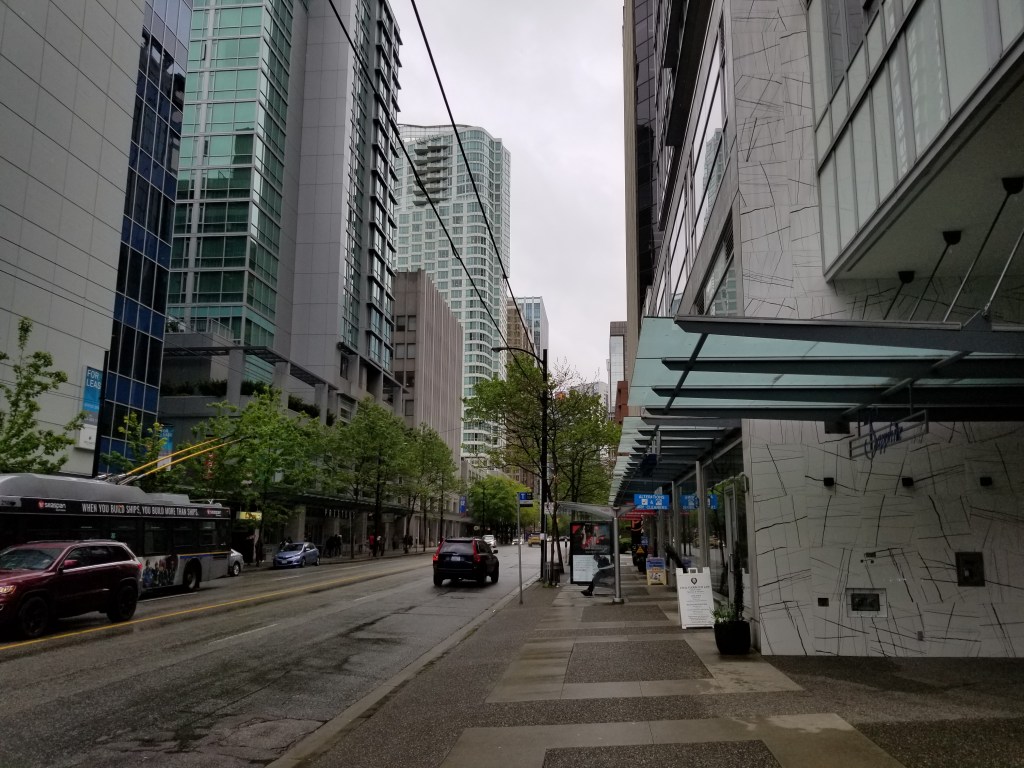
Broadway is a major east-west thoroughfare in the city of Vancouver, British Columbia, Canada. In Vancouver’s numbered avenue grid system, it runs in place of a 9th Avenue, between 8th and 10th. The street has six lanes for most of its course. Portions of the street carry the British Columbia Highway 7 designation.
The route begins as “West Broadway” at the intersection of Wallace Crescent and 8th Avenue, in the affluent residential neighbourhood of West Point Grey, a few kilometres east of the University of British Columbia (UBC). Past Alma Street, Broadway takes over from 10th Avenue as one of Vancouver’s major thoroughfares, as it enters Greek West Broadway (or Greektown) section of Vancouver’s Kitsilano district. East of here are several blocks of generally trendy, upscale shops interspersed with low-rise apartment blocks and small supermarkets. The surrounding neighbourhoods generally consist of large, older homes dating from the early twentieth century, many of which have been subdivided into rental suites.
As Broadway approaches Arbutus Street, the commercial establishments become larger before transitioning into a mix of small to mid-size apartment blocks. East of Burrard Street, the apartment blocks get progressively taller, and commercial establishments larger and busier. Between Burrard and Main Street, Broadway can be considerably congested by vehicular traffic. Past Granville Street, Broadway yields completely to medium-to-large commercial structures and high-rise apartments and condominiums. Between Cambie and Main, the commercial establishments become smaller and somewhat more downscale.
At Ontario Street, two blocks west of Main, the route becomes “East Broadway.” After bisecting Main and Kingsway, traffic on Broadway eases somewhat, and the character returns to a mix of small-to-medium apartment buildings and commercial establishments, interspersed with older homes – all considerably less affluent than those to the west. At Commercial Drive, Broadway passes by the Commercial–Broadway SkyTrain Station. Past here for several blocks, the neighbourhood consists predominantly of older residential homes.
As Broadway travels east of Renfrew Street, the neighbourhood once again becomes mixed, with older homes to the north and larger industrial, commercial, and warehouse establishments to the south. Broadway finally ends at Cassiar Street, just short of the Vancouver-Burnaby boundary, where it becomes the Lougheed Highway.
Broadway was created at the turn of the 20th century, along with other gridded roads south of False Creek, to meet the needs of an expanding population in Vancouver. The name of the route was changed from 9th Avenue to Broadway in 1909, at the behest of merchants around Main Street (at that time the hub of Vancouver commerce), who felt that it bestowed a more cosmopolitan air. Commercial establishments originally spread out around the intersections of Cambie and Main Streets, while the character of the rest of the route remained predominantly single-family dwellings.
By the 1970s, the length of Broadway had become a major arterial route in Vancouver, conveying commuters from downtown to the neighbourhoods of the west and east sides. With the growth of UBC and the expansion of the Vancouver General Hospital (one block south of Broadway between approximately Oak and Cambie), traffic demands accelerated. In the 1990s, the agency then responsible for public transit in Greater Vancouver — BC Transit — introduced an express bus route, the 99 B-Line, to help reduce congestion. The Vancouver transportation plan for Broadway notes that congestion is such that the bus service is at capacity, and will not be eased until a new rapid transit line is built paralleling the street. It is anticipated that the SkyTrain’s Millennium Line will be extended to Central Broadway by 2021; the extension is expected to connect with Canada Line at Broadway-City Hall Station, at the intersection of Broadway and Cambie Street.

Network: NBC
Original Airdate: October 28, 1984
As a genre that sort of falls somewhere in the middle of highbrow and lowbrow entertainment, the made for television movie was able to play around with expectations and the types of stories it could bring to viewers. But then somewhere in between the betweens of The Burning Bed and Diary of Teenage Hitchhiker lies another middle, where films that set out to entertain weren’t sure if they should aim for that high or low bar. One of those films, City Killer, which is somewhat befuddling and perhaps overly ambitious, is also, for the most part, high entertainment, thanks to an extremely engaging Terence Knox and some decent special effects.
And, then there’s that common trope of 1980s TV. We all loved Heather Locklear. Circa early – mid 1980s, Locklear was all over the, ahem, boob tube, appearing as a series regular on the popular T.J. Hooker, while also showing up periodically to stir the pot at the Carrington mansion in Dynasty. She also somehow managed to appear on things such as Love Boat and even Firestarter. So it’s no shock that the indefatigable charmer found the time to star in a Movie of the Week, although it is really what the MOW is about that makes City Killer so interesting (Sorry Heather, you’ve been upstaged by a mad bomber!).
Locklear is Andrea McKnight, a general workaholic who has a dog she never walks, and who also enjoys slightly warm relationships with her co-workers. But she tends to be a tad aloof, choosing to keep herself in a self-imposed state of solitude in her airy apartment (she could walk that dog once in a while though). Things take a weird turn when she comes home late one night to find an attractive, but creepy man waiting for her. He’s Leo (Terence Knox), an ex who would prefer to be a current. But considering how he picks locks and waits in the dark for pretty blondes, he’s not made of great boyfriend material. Even worse, when Andrea flat out refuses his advances, he decides to blow up buildings to get her attention! Nicknamed The Love Bomber, Leo joyfully sets explosives throughout the city, eventually targeting Andrea’s job amongst other random buildings.
Enter Lieutenant “Eck” Eckford (Gerald McRaney), a handsome but humorless cop who is assigned to protect Andrea and bring Leo to justice. Mostly though, he seems almost as sinister as Leo, constantly telling Andrea that she’s a target because she’s “a very nice person,” who understands when a guy can’t get an erection. Then he quietly ogles her. In short, I was sort of rooting for Leo.
City Killer is, pardon the expression, a blast. Locklear and McRaney seem to be phoning it in, but the supporting cast, especially Todd Susman, John Harkins (best know to me for playing Ham Lushbough on an episode of the Golden Girls), and Harkin’s little rodent co-star, not to mention the lovably weird Knox are up to the task of making the ridiculous material work. Knox in an absolute joy as crazy Leo and if anyone can make terrorism adorable, it’s this guy.
The screenplay was written by one of the stalwarts of the Movie of the Week, Michael Wood, who was responsible for the excellent telefilms Savages, Haunts of the Very Rich, Outrage and Death Car on the Freeway. By the 1980s, Wood was still penning some interesting fare, including The Execution and The Penthouse, but City Killer honestly seems a little below him. Don’t get me wrong, it is a fun film, but considering how small scale and intimate most of his TVMs are, it felt as though Wood was dipping into his Death Car repertoire and perhaps overshot expectations.
Director Robert Michael Lewis (Pray for the Wildcats, y’all!) moved predominately to TV movies by the 1980s, and this was just one of eight films he directed between 1983-1985! It appears some of the explosions were done with miniatures with the rest comprised of footage of actual demolitions, all to decent effect. Things go boom quite nicely, and you quickly understand that Leo isn’t joking around! He pulverizes the city, and kills several people along the way… all in the name of amore. Awwww, ain’t love grand?
As entertaining as City Killer is, it may be worth noting that it can be an uncomfortable viewing in our post 9-11 world. It’s mostly a flight of fancy and is so gloriously over the top that it’s 99% inoffensive, but (and maybe this is just me) it can be difficult to watch buildings pancake, even all these years later. At the same time, it also sadly recalls a bygone era of innocence adding a nostalgic flavor to the proceedings… but Heather’s intense feather cut basically does the same thing without making you feel bad. City Killer is worth a watch. You’ll fall in love with Leo and root for the bad guy. It’s a good time.
Canada is a dying nation and in this video I break down exactly why I decided to get out before it’s too late. I’ve lived in Canada for over 23 years and it’s sad to see what has happened to the country. I recommend any of you feeling a similar way to me try to leave while you still can as the government is continually making it more difficult to exit.
⏳ Timestamps
00:00 I Left Canada
00:33 | Reason #1
02:47 | Reason #2
04:51 | Reason #3
07:49 | Reason #4
10:45 | Reason #5
12:37 | Reason #6
14:05 | Reason #7