“I Feel Their Paaaaaiiiiiiiinnnnnn!” Bill Clinton Makes His Apology for the Neoliberalization of Haiti as He Gears Up to Do It Again

https://nomadiceveryman.blogspot.com/2019/02/i-feel-their-paaaaaiiiiiiiinnnnnn-bill.html

I wish I could tell you this was an April Fools joke. I really do.

About a month ago Bill Clinton sat in congress and admitted that he played a vital part in the willful destruction of the agricultural base of Haiti in order to “relieve them of the burden of producing their own food so they could leap right into the industrial revolution“. Not only does he try to pass off their neoliberalization scheme as a “mistake” but he admits it was really only good for ”some of my farmers (subsidized rice farmers) in Arkansas“.

Well, not only was it good for “his farmers” from his home state who just happened to be political donors as well, but it was also very good for another interest he had back in the day; the company that created a Board of Directors chair for his wife when he became Governor of Arkansas.

You see, the “leap into the industrial revolution” Bill Clinton was talking about was the predicted migration to the urban centers that the population of the rural farming areas had to make. This “blight flight” produced a vast number of dislocated migrant workers living in shanty towns who would work for next to nothing in all the sweatshops that Bill Clinton helped set up.

And of course who benefited from that? Walmart. Bill Clinton’s good old friends, the Forbes 500 top ten billionaire Walton Family.

“Since 1981, until about a year or so ago we started rethinking it, we thought that we rich countries that produce a lot of food should sell it to poor countries and relieve them of the burden of producing their own food so that, thank goodness, they can leap right into the industrial era. It has not worked. It may have been good for some of my farmers in Arkansas but it has not worked. It was a mistake. It was a mistake that I was a party to, I am not pointing the finger at anybody, I did that. I have to live everyday with the consequences of the lost capacity to produce their rice crop in Haiti to feed those people.” Bill Clinton, March 2010

Clinton’s mia culpa is clearly too little too late, especially considering the fact that he has been appointed, by his Secretary of State wife no less, to become the defacto emperor of Haiti.

In short, what Bill Clinton is saying is he purposefully and willfully destroyed the economy and the standard of living for millions of Haitians, so naturally of course, we should hand over to him complete control of all the money donated and raised for the rebuilding of that same nation. A $10 billion dollar fund will be handed over to one of the chief architects of the neoliberalization of Haiti …and no one bats an eye.

What Bill Clinton actually did was just an extension of the neoliberal scheme started by Reagan and Bush 41. The idea was to collapse the agricultural base of targeted nations by opening up their markets to corporate produced agribusiness food products that were subsidized by the US taxpayers.

This allowed these businesses, “my farmers” as Clinton refers to them, to get in and sell cheap products that would undermine rice prices in Haiti to the point where local farmers could not afford to compete. Top that with forcing the Haitian government to pass laws requiring local farmers to buy seed and fertilizer from our companies at inflated rates, and you have a recipe for deliberately wiping out the entire indigenous agricultural base.

Once that income source was cleared out, the rural communities that surrounded the agricultural industry of Haiti would soon be forced to relocate into the urban centers in order to simply survive. And those people moved right into Bill Clinton’s other neoliberal trap in Haiti, the sweatshop garment industry.

Forced to live like peasants and work like dogs for slave wages, the people of Haiti suffered for decades as a direct result of Bill Clinton’s and George H. W. Bush’s neoliberalization of a nation. The people suffered horrible lives for decades while the friends of Bill Clinton got rich selling those shirts and sneakers at Walmart. Of course those products being flooded into America ultimately undermined our textile industry and the strength of their realted unions and thus the viral infection of neoliberalization spread.

In a more recent interview, also covered on Democracy NOW!, Clinton again talks about the “mistake” they made back then, only this time he leaves out the “my farmers” part. But he does go a bit further in explaining the deeper destruction his neoliberal policies caused the people of Haiti. Policies that were basically enacted at gunpoint. Keep in mind the notion that the same process is happening here as you read his comments.

“We really believed for 20 years that if you moved agricultural production there (I suppose hes talking about “his” farmers in his home state again) and then facilitated its introduction into poorer places (forced open markets) you would free those places to get aid (impoverish the nation so the IMF and World Bank could come in) to skip agricultural development and go straight into an industrial era (garment factory sweatshops) and it’s failed everywhere its been tried… and it also undermines a lot the culture, the fabric of life, the sense of self-determination…. we genuinely thought we were helping Haiti…” Bill Clinton, late March 2010

As he delivered that last little part, the part where he says they thought they were helping the people of Haiti, you can see a little smirk on his face. He actually breaks out in a little smile as he says it.

Instead of flowing directly to the Haitian government, the aid will be managed by a proposed Interim Haiti Recovery Commission co-chaired by former President Bill Clinton and Haitian Prime Minister Jean-Max Bellerive. Democracy NOW!

It’s not hard to understand the real nature of what the Bill Clinton led program actually has in store for Haiti as that the signs are already there for all to see.

Last week Clinton and George (wipe my hands off) Bush traveled down to Haiti to strong-arm the puppet president there to pass a law which would allow the new neoliberal Clinton regime to take any land they saw fit from whomever they wanted for the reconstruction process. Its kind of an eminent domain law which the donors at this weeks conference wanted as an assurance prior to investing their “donations”. It basically allows for any corporation that Clinton is shilling for to take any land they want in order to basically do anything they want with, as long as it is going to turn a profit.

“of course this entire conference is the culmination of the final takeover of Haiti by the US… its pretty much a US run show. The World Bank is going to be deciding who gets the money.”

Clinton has apparently turned over a new leaf, even though he is still surrounded by the same financial advisors he had with him back in the days when they were “mistakenly” destroying the “fabric of life” of the Haitian people and others in Africa and so on. This new leaf seems to be to reintroduce agricultural business back into Haiti. I wonder if “his farmers”, the massive agribusiness companies, will be looking to move down to Haiti to set up corporate farms down there. The soil should be choice at this point considering it hasn’t been farmed for decades. Should get pretty good crop yields per acre wouldn’t you say? And with all that cheap labor waiting for “aid” down there, profits should be through the roof.

Only in a country this fucked up could a story like this one just slip under the radar of the main stream media.

When you have a political dynasty (one of two) so entrenched in our corrupt system that the secretary of state can anoint her own husband to manage $10 billion in reconstruction aid for a country that he has admittedly decimated, on purpose, for decades… and that story gets nearly zero coverage, and what little coverage it does get is actually positive, its beyond ridiculous. Just beyond ridiculous.

No wonder Clinton was practically laughing when he talked about thinking he was helping the people of Haiti. He was laughing at us. We are the April Fools joke here. and that ain’t no joke.

Soltaniyeh

http://whc.unesco.org/en/list/1188

The mausoleum of Oljaytu was constructed in 1302–12 in the city of Soltaniyeh, the capital of the Ilkhanid dynasty, which was founded by the Mongols. Situated in the province of Zanjan, Soltaniyeh is one of the outstanding examples of the achievements of Persian architecture and a key monument in the development of its Islamic architecture. The octagonal building is crowned with a 50 m tall dome covered in turquoise-blue faience and surrounded by eight slender minarets. It is the earliest existing example of the double-shelled dome in Iran. The mausoleum’s interior decoration is also outstanding and scholars such as A.U. Pope have described the building as ‘anticipating the Taj Mahal’.

Brief Synthesis

In north-western Iran’s city of Soltaniyeh, which was briefly the capital of Persia’s Ilkhanid dynasty (a branch of the Mongol dynasty) during the 14th century, stands the Mausoleum of Oljaytu, its stunning dome covered with turquoise-blue faience tiles. Constructed in 1302-12, the tomb of the eighth Ilkhanid ruler is the main feature remaining from the ancient city; today, it dominates a rural settlement surrounded by the fertile pasture of Soltaniyeh. The Mausoleum of Oljaytu is recognized as the architectural masterpiece of its period and an outstanding achievement in the development of Persian architecture, particularly in its innovative double-shelled dome and interior decoration.

The Mausoleum of Oljaytu is an essential link and key monument in the development of Islamic architecture in central and western Asia. Here, the Ilkhanids further developed ideas that had been advanced during the classical Seljuk phase (11th to early 13th centuries), during which the arts of Iran gained distinction in the Islamic world, thereby setting the stage for the Timurid period (late 14th to 15th centuries), one of the most brilliant periods in Islamic art. Particularly relevant are the mausoleum dome’s double-shell structure (an inside shell and an outside shell), and the materials and themes used in its interior decoration. The very large 50-m-high dome is the earliest extant example of its type, and became an important reference for the later development of the Islamic dome. Similarly, the extremely rich interior of the mausoleum, which includes glazed tiles, brickwork, marquetry or designs in inlaid materials, stucco, and frescoes, illustrates an important movement towards more elaborate materials and themes. The Mausoleum of Oljaytu thus speaks eloquently to the Ilkhanid period, which was characterised by innovations in structural engineering, spatial proportions, architectural forms, and decorative patterns and techniques.

Excavations carried out in the 790-ha Mausoleum of Oljaytu property have revealed additional vestiges of the old city, and a large part of this property has retained its archaeological character. As the ancient capital of the Ilkhanid dynasty, Soltaniyeh represents an exceptional testimony to the history of the 13th and 14th centuries in Iran.

Criterion (ii): The Mausoleum of Oljaytu forms an essential link in the development of the Islamic architecture in central and western Asia, from the classical Seljuk phase into the Timurid period. This is particularly relevant to the double-shell structure and the elaborate use of materials and themes in the decoration.

Criterion (iii): Soltaniyeh, as the ancient capital of the Ilkhanid dynasty, represents an exceptional testimony to the history of 13th and 14th centuries.

Criterion (iv): The Mausoleum of Oljaytu represents an outstanding achievement in the development of Persian architecture, particularly in the Ilkhanid period, characterised by its innovative engineering structure, spatial proportions, architectural forms, and the decorative patterns and techniques.

Integrity

Within the boundaries of the property are located all the elements and components necessary to express the Outstanding Universal Value of the property, most importantly the Mausoleum of Oljaytu. The exterior decorations of the mausoleum have suffered severe decline, which has affected its integrity. Nevertheless, the internal decorations have remained intact to a large degree. Urban development around the property represents a potential threat, though such development is slow.

Authenticity

The historical monument of the Mausoleum of Oljaytu at Soltaniyeh is authentic in terms of its form and design, materials and substance, and location and setting. Restoration work has carefully respected the authenticity of the monument, utilizing traditional technology and materials in harmony with the ensemble.

Protection and management requirements

Soltaniyeh is state owned, and protected as a national monument on the basis of the Iranian Law on the Conservation of National Monuments (1982) and the Law on City Properties (1982). Parts of the buffer zone are in private ownership. The principal management authority of the property is the Iranian Cultural Heritage, Handicraft and Tourism Organization (which is administered and funded by the Government of Iran) through its local office in Zanjan. There is a management plan with short-term (1-year), mid-term (3-year), and long-term (5-year) objectives related to equipment, research, restoration and conservation, and development of tourism at Soltaniyeh. Financial resources for the property are provided through national budgets.

Sustaining the Outstanding Universal Value of the property over time will require continuing to respect scientific standards and to properly safeguard the monument when undertaking conservation and restoration projects; controlling the effects of urban development around the property by devising and executing appropriate management strategies in this regard; and directing studies of the Mausoleum of Oljaytu (including, among others, studies of the decorations, reinforcement projects, and scientifically justified tourist attraction programs) toward specific, detailed outcomes that maintain and/or enhance the Outstanding Universal Value, integrity, and authenticity of the property.

Koch-Tied Firm Conducts Mass Layoffs After Trump “Job Creating” Tax Cut Bill

https://www.prwatch.org/news/2018/05/13353/koch-tied-firm-conducts-mass-layoffs-after-trump-%E2%80%9Cjob-creating%E2%80%9D-tax-cut-bill

Last year, Koch Industries was the second largest, privately held company in the United States. This year it will be the largest; with its acquisition of glassmaker, Guardian Industries, its revenue will surpass agricultural giant Cargill for the number one spot.

Trump’s first year in office has been marked by almost a complete lack of major legislation. The exception was the Tax Cuts and Jobs Act of 2017, the massive corporate tax bill sold to the public as a job creation measure. The bill permanently dropped the corporate tax rate from 35 to 21 percent and temporarily implemented modest tax relief for the middle class.

The Koch brothers made securing the massive tax cuts for themselves and their corporation their top priority for their sprawling political network in 2017, as internal documents revealed. The Kochs’ Americans for Prosperity astroturf group lobbied hard for the bill and spent some $20 million on ads spinning the bill and pressuring recalcitrant politicians.

Tim Phillips, president of Americans for Prosperity, said the tax plan is “about to ignite a new era of growth, and we’re going to make sure that Americans understand how they and their community stand to benefit.”

But as the Center for Media and Democracy reported last week, many companies simply pocketed the cash. Instead of creating jobs, they created layoffs. CMD detailed nine American Legislative Exchange Council (ALEC) companies that implemented layoffs, and ALEC’s private sector board chair, Koch Industries, is no exception.

RAKING IN THE KOCH CASH, LAYING OFF MORE WORKERS

Koch Industries is a privately held company, but it is expected to rake in between $1 billion and $1.4 billion a year due to the tax cuts.

Last year, the Koch brothers made a $650 million investment in Meredith Corp. to help the publishing giant complete its purchase of Time magazine. Now Meredith is announcing the layoff of 1,200 employees for 2018, with cuts at Time, Sports Illustrated, Money, and other subsidiaries, along with closing its office center in Tampa, laying off 500 employees.

Other Koch subsidiaries have announced layoffs as well:

In November, already knowing there would be some tax cuts, Koch announced that its Georgia-Pacific facility in Camas, Washington, operating for 134 years, would close with the loss of 300 jobs. Koch bought the paper and pulp company in 2005.

In April, Koch announced it would cut 25 jobs from its gypsum plant in Marysville, Kansas. A Koch spokesperson, Julie Davis, who apparently got to keep her job, said, “This is no reflection on the employees. When the market improves we’d certainly encourage those folks to come back.” She did not say when that would happen.

Koch Industries has its own commodities trading company, and it has announced layoffs in that subsidiary.

Invista, Koch’s fiber company, laid off 52 employees at its Athens, Georgia, plant ten days before Congress passed the tax cut bill.

The estimated $1 billion in tax cuts for Koch this year surely could have covered the cost of keeping some of these workers as the company goes through a temporary downturn in sales of some of its products.

How Zack Snyder’s 300 is Representative of Bad Hollywood Cinema

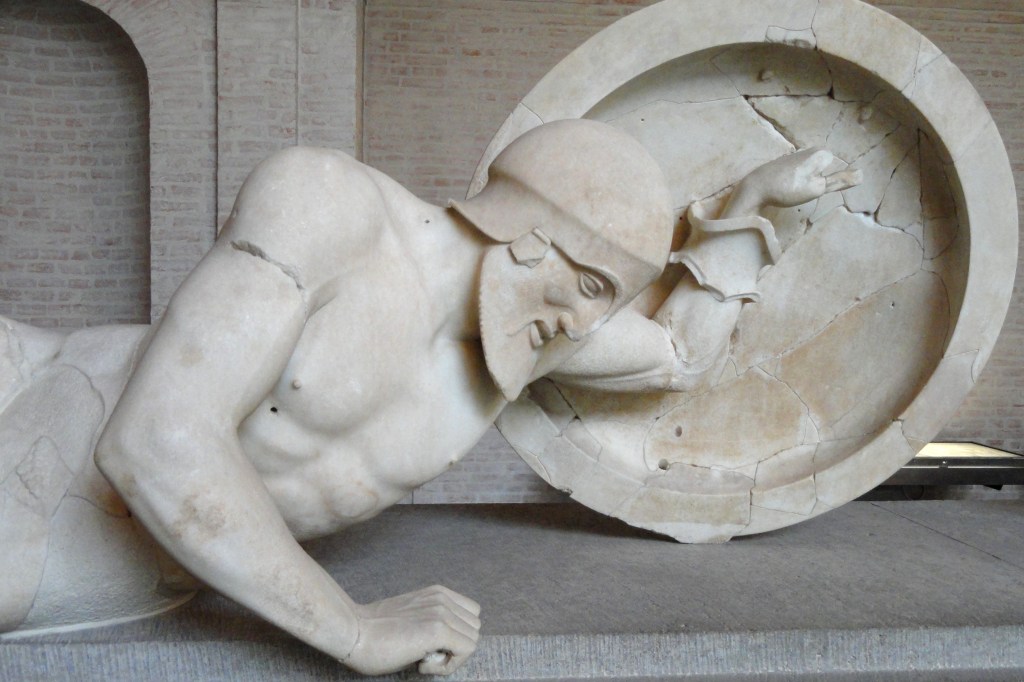
Sculpture of Laomedon, a Trojan king, son of Ilus and thus nephew of Ganymede and Assaracus

It’s that time again, the time for updates, since enough time has passed. First of all, people asked me to give my opinion on the summer films of this year, and I’m not against doing this. How good are the films that have been released this summer? I’m now ready to give my take. I must admit that I’ve seen only several films this summer, and most of them were made by the The Walt Disney Company. But the ones that I did see didn’t really disappoint me. Toy Story 4 is the best film that I saw. This film had a long development period because of the departure of John Lasseter from Pixar Animation Studios. I read about this in Animation Magazine. Because of this, and because of the fact that the film is yet another sequel to Toy Story (1995), I had the feeling that Toy Story 4 might be somewhat disappointing. But this film surprised me when I saw it because it’s not only the best Pixar film since Incredibles 2 (2018). It’s also one of the best Pixar films of this decade. In my opinion, the director, Josh Cooley, delivered the goods. The characters have never looked better. The voice work is excellent. The humor is frequent. And we get to find out new things about Woody and the gang. It’s true that the film is formulaic, and it’s yet another sequel from Pixar, but, when the film is this good, I don’t feel like complaining. Still, I didn’t enjoy seeing Toy Story 4 as much as I enjoyed seeing Incredibles 2. Incredibles 2 is, in my opinion, the best Pixar film of this decade, even surpassing Inside Out (2015) and Finding Dory (2016) in terms of craftsmanship. I went to see it more than once in a cinema. Can you believe that Incredibles 2 could have been even better if Brad Bird and Pixar had been given more time to make it? The film is almost perfect as it is, but it could have been even better. The only thing that weighs it down is the lack of a truly memorable villain. But, otherwise, the film is perfect, in my opinion. Thank goodness that films like this can still be made from time to time in Hollywood. Bird deserved to win a second Oscar for his work, but, because of political reasons and because he already has one Oscar, the Oscar for Best Animated Feature was instead awarded to the filmmakers of Spider-Man: Into The Spider-Verse (2018). By the way, I finally figured out why Into The Spider-Verse isn’t an entirely satisfying film. Miles Morales, the new Spider-Man, is supposed to be the main character. But he spends almost the entire film either being a sidekick to Peter B. Parker or acting as comic relief. Only at the end of the film does he get to do something on his own, but, by that time, it’s too late for any character development for him. Therefore, Into The Spider-Verse lacks a fully developed protagonist. The animation style is also something that I find to be not entirely to my liking. It makes the film seem like a gimmick at times. Anyway, I’ve already posted my review of Into The Spider-Verse on my blog, and I don’t have to go into it in more detail. By the way, if you like the animation style of the film, I can recommend getting the art book ‘Spider-Man: Into the Spider-Verse – The Art of the Movie’. The only other film that I fully enjoyed seeing this summer in a cinema is Spider-Man: Far From Home. It’s yet another example of Marvel’s domination of the superhero genre in film form. Marvel continues to put the other Hollywood studios to shame. Even the recently released Shazam!, which is thought of by some people as the best DC film of recent years, doesn’t come close to the best Marvel films. I mean, really, is it that hard to make a good action film these days? I guess that it is, especially one with plenty of special-effects. Instead of lively, enjoyable flicks, we often get dour, distasteful flicks like Venom (2018), The Amazing Spider-Man 2 (2014), or Batman v Superman: Dawn Of Justice (2016) from the other studios. How depressing. It seems that the only film form in Hollywood that has consistently delivered good films in the last decade is computer animation. In my opinion, Far From Home doesn’t rank among Marvel’s best, but it’s still a good flick. Tom Holland is definitely the best on-screen Peter Parker so far. So, there you go. I enjoyed seeing two films in a theater this summer, and both of them are films from Disney. I guess this means that this summer has been disappointing when it comes to new Hollywood films. But there are other new films that I found to be… passable, though not fully enjoyable. They are Annabelle Comes Home, Detective Pikachu, Missing Link, The Angry Birds Movie 2, Pet Sematary, The Secret Life Of Pets 2, Aladdin, Us, Hobbs & Shaw, How To Train Your Dragon: The Hidden World, and Alita: Battle Angel. I saw almost all of these films long after they were released in theaters. I decided not to include The Lion King among these “just fine” flicks because seeing it felt strange to me. Firstly, this film was made entirely using computers. There are no human actors or real locations. But the film was still made to look as realistic as possible. Maybe this means that it can’t really be called an animated film, or maybe it can. It’s almost a scene for scene copy of the original 1994 film. This means that there’s nothing original about it except for the way it was made. The animals, since they were made to look as real as possible, aren’t as expressive as in the original animated film. In addition to all of this, I saw the original animated film only a few days before I went to see the remake in a theater. All of this added together made the film a strange and unenjoyable experience for me. Still, Pumbaa did fart once. But let’s move away from this somewhat depressing picture and focus on something else. The people that follow my blog should know that most of the films that I see aren’t new Hollywood films. If it’s a Hollywood film, it’s most likely one from the 1980s or it’s a so-called classic Hollywood film. Many films from Hollywood’s Golden Age really are a pleasure to watch for me. These films are well-acted and optimistic. By the way, if you’ve read the science fiction novel Titan by John Varley, you should know that Gaea, the old alien being that Cirocco meets at the end of the story, is obsessed with watching films from Hollywood’s Golden Age. I’m currently reading the book ‘Majestic Hollywood: The Greatest Films of 1939’ by Mark A. Vieira. The CIA’s Wikipedia even has a page dedicated to “Classical Hollywood cinema”. Here it is:

https://en.wikipedia.org/wiki/Classical_Hollywood_cinema

It seems that after this so-called Golden Age of Hollywood the only advances that have been made in the USA were in the fields of special-effects and computer animation. There were no cinematic advances in Western Europe at that time because industrial capitalism had become highly institutionalized in Western Europe by that time and thus provided little or no progress. Simultaneously, while these minor advances were happening, major elements of cinema like acting, music, and screenplays have been slowly getting worse in the USA. Hence, there’s all of the talk in the media about how influential George Lucas has been, and about what an icon he is, after the release of Star Wars (1977). I personally have nothing against this. Lucas is objectively an influential filmmaker, he doesn’t go around saying offensive things, and he deserves most of the praise that he gets. I very much like his films The Empire Strikes Back (1980) and Return of the Jedi (1983). I also don’t have a hatred for his prequel trilogy. The same goes for Steven Spielberg. Spielberg, for example, still manages to make good films. Lincoln (2012) and Ready Player One (2018) are some of the best films of this decade. Lucas and Spielberg did manage to make the turd that is Indiana Jones and the Kingdom of the Crystal Skull (2008), but I haven’t seen Lucas’s special editions of the original Star Wars trilogy. The films that I have in my collection are the original, unaltered VHS versions of the trilogy. Therefore, I don’t have a hatred for Lucas. If Lucas had been responsible for an additional bad film like 300 (2006) or Batman v Superman: Dawn of Justice (2016), I’d have a reason to dislike him. The shame for making these two turds goes instead to the director Zack Snyder. Snyder’s 300 is a bucket of filth that somehow manages to get praised by brainless Americans and by some bought and paid for professional film critics. Sure, 300 isn’t the only bucket of filth that has been made in Hollywood in the last two decades. There have been many such buckets of filth. But I think that 300 is the film that is most representative of all of this filth. 300 is much louder, much more distasteful, and much more historically inaccurate than The 300 Spartans (1962), which is actually a fine film that’s worth seeing. In addition, I noticed that it promotes militarism and oligarchical rule. Sparta, the Greek city-state whose citizens and customs are portrayed as being worthy of imitation in the film, had oligarchical and militaristic rule. But Classical Athens, the Greek city-state whose citizens are portrayed as weak and ineffective in the film, had democratic rule. In fact, Athens is the birthplace of democracy and the model of democracy. It also became the most prosperous Greek city-state after the Greco-Persian Wars. Now, if you want to know what a real democracy should be like, you should read some history books about Classical Athens or at least look at the Wikipedia page about Fifth-century Athens. It’s quite different from the so-called democracy that exists in the USA. In addition, I recommend reading Carroll Quigley’s books ‘The Evolution of Civilizations: An Introduction to Historical Analysis’ (1961) and ‘Weapons Systems and Political Stability: A History’ (1983), which provide even more useful information and conclusions about Ancient Greece. I think that this is important because most people these days don’t know what democracy is supposed to be like, partly because of the fact that they get a bad education in school. This is why some middle class people fall for oligarchical swindles like libertarianism and why other middle class people think that democracy is a failure and thus become irrational pro-fascists. The overwhelming majority of Americans, for example, don’t care about democracy. They don’t even know what it is. What they do care about is the empire that the USA possesses. Therefore, when you criticize the American political system, they respond in a calm and apathetic manner. But, when you criticize the American empire and overseas operations, they respond in a heated and confrontational manner (even in a psychotic manner). The same goes for class structure in the USA. This is the case because they’ve been taught to think like this by the American ruling class. They’ve been taught to think that they have a right to trample on others and to stick their noses in every crack. But, when it comes to democracy and their economic rights under capitalism, they take a conservative and unconcerned position. This isn’t true for all Americans, but it’s undoubtedly true for most Americans.