



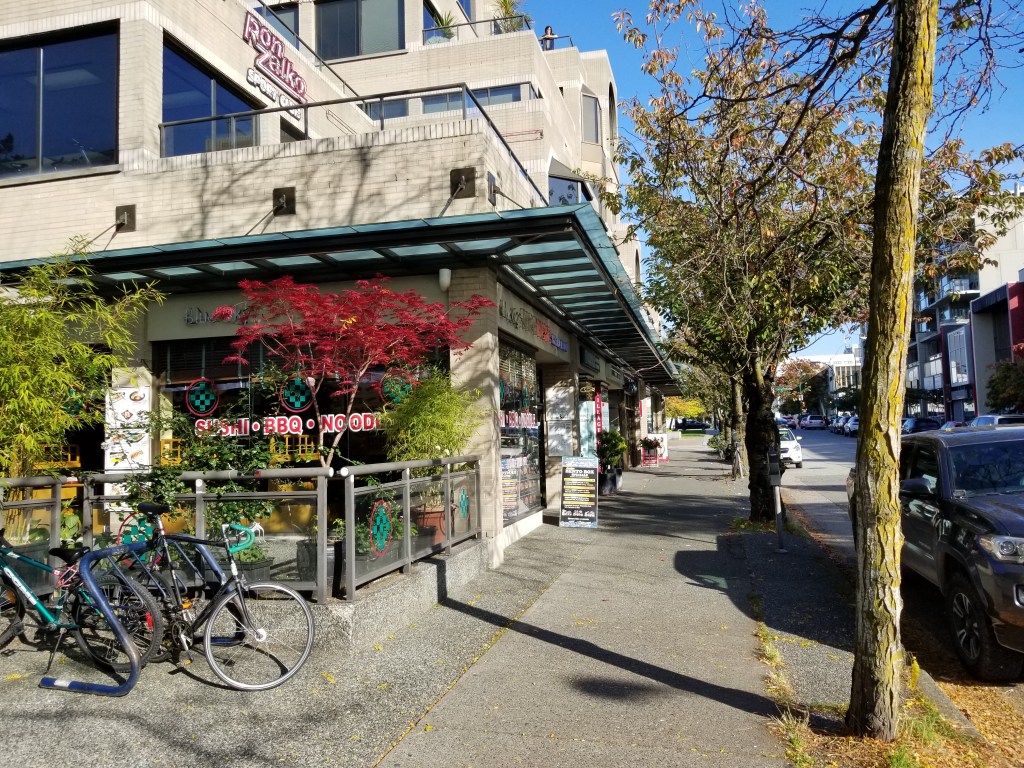
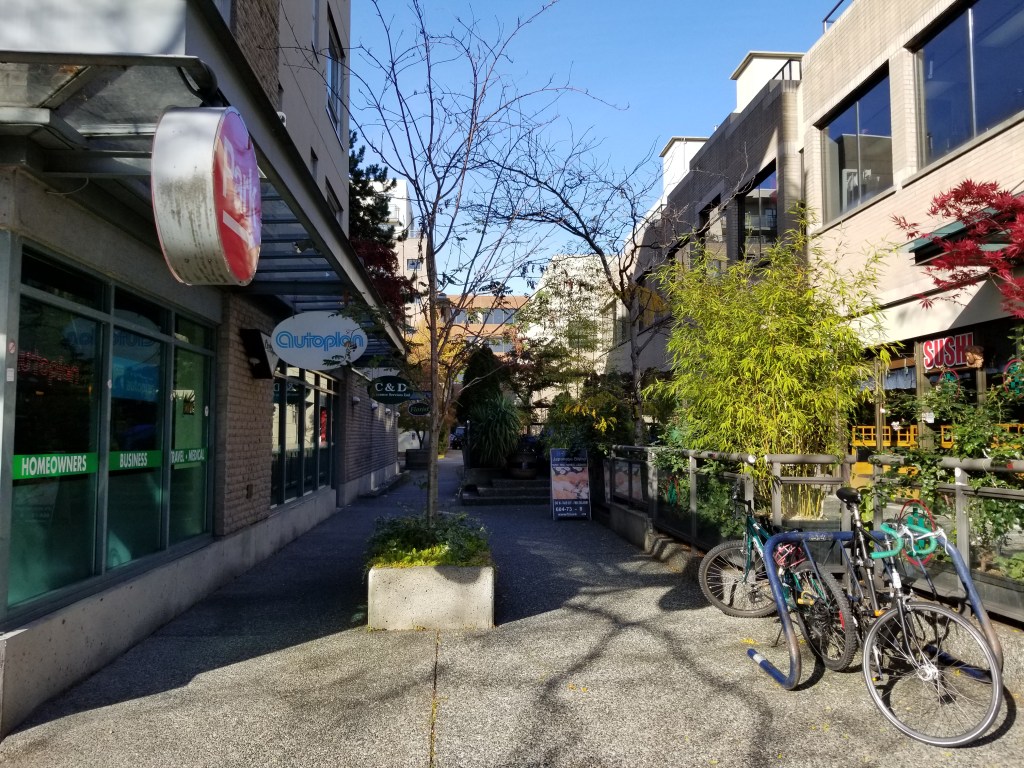


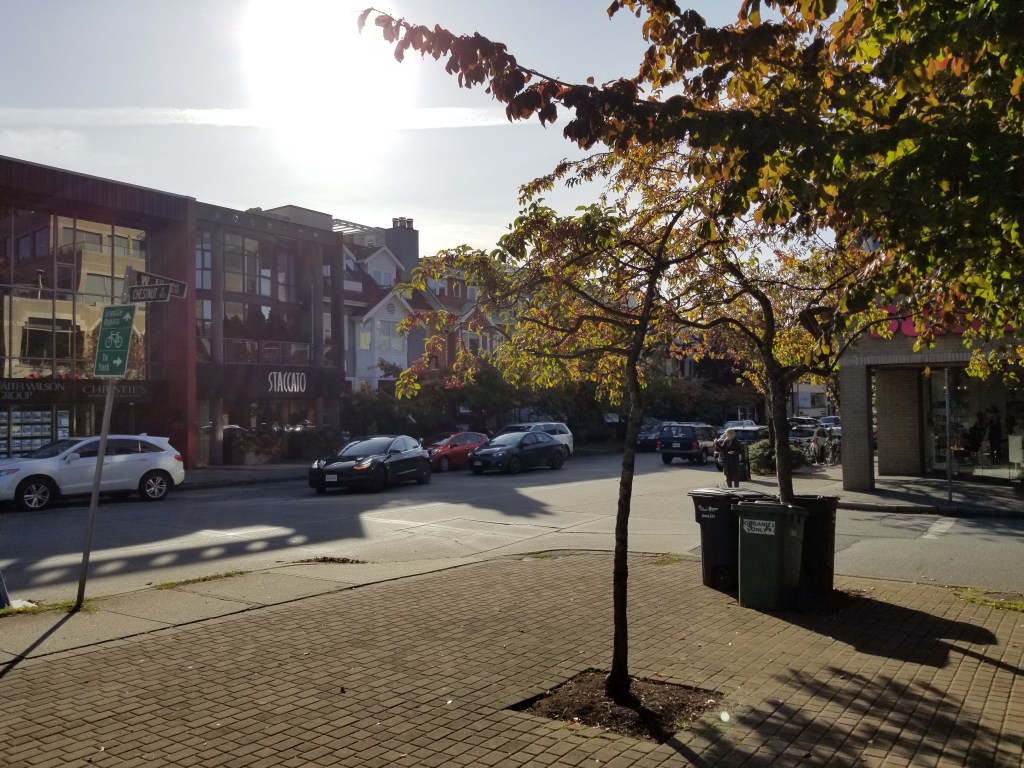

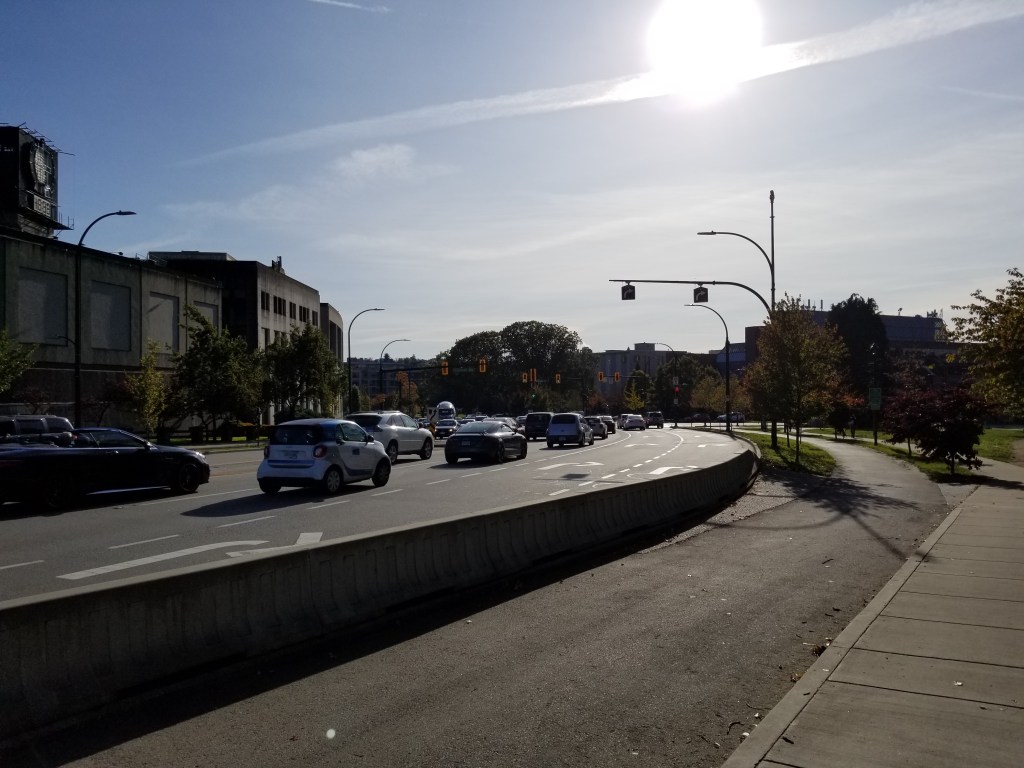
Vanier Park is a municipal park located in the Kitsilano neighbourhood of Vancouver, British Columbia, Canada, created in 1967. It is home to the Museum of Vancouver, the Vancouver Maritime Museum, the City of Vancouver Archives, and the H.R. MacMillan Space Centre. It is also the site of the ancestral Squamish settlement of Sen̓áḵw, which was destroyed by the Provincial government 54 years earlier.
The Squamish had an ancestral fishing ground on the site. In the mid-1800s, they established a more permanent village site there named Sen̓áḵw. During the Royal Engineer’s Survey of 1869, it was designated as “Indian Reserve No. 6”. Sen̓áḵw encompassed 80 acres, and included Vanier Park. In 1877, chief August Jack Khatsahlano, after whom the Kitsilano neighbourhood was named, was born at Sen̓áḵw.
The Canadian Pacific Railway, the Province and the City of Vancouver worked together to displace the Squamish inhabitants, with the City calling the settlement “a source of menace to the morals and health of the City”. In 1913, the BC Government under Richard McBride expropriated the site, paying the inhabitants a fraction of the land’s value, and giving them two days to leave before burning their homes to the ground.
The land was acquired from the Province by the Federal government in 1928. Around the time of the second world war, the site was home to Royal Canadian Air Force (RCAF) station, Number 2 Equipment Depot. On October 28, 1966, it was turned over to the Vancouver Park Board by the Federal Government. Named for former Governor General of Canada Georges Vanier, the park officially opened on May 30, 1967. The H.R. MacMillan Space Centre and the Vancouver Museum complex opened in 1968, thanks to lumber baron MacMillan’s $1.5 million donation.
Deputy Park Board Superintendent William Livingstone, famous for his landscape design for Queen Elizabeth Park and VanDusen Botanical Garden, increased the size of the original park site using tons of free fill from the excavation for the MacMillan Bloedel Building on Georgia Street. The fill added additional acres onto the park which was then landscaped by Livingstone and his crew.
Vanier Park plays host to several of Vancouver’s biggest summer festivals, including the International Children’s Festival and the Shakespearean Bard on the Beach. It is the biggest and most famous of the fifteen parks in Kitsilano.

Over a 101-year life, David Rockefeller used political influence and repression to shore up his family’s power.
As a child growing up in a mansion on 54th Street in Manhattan, David Rockefeller remembered roller-skating with his siblings down Fifth Avenue trailed by a limousine in case they got tired. Rockefeller and his family, which included billionaires and politicians at all levels of government, spent a lifetime ensconced in this kind of luxury. At the time of his death on March 20, Forbes estimated that the 101-year-old Rockefeller’s investments in real estate, share of family trusts, and other holdings stood at $3.3 billion.
The obituaries and tributes waxed nostalgic, giving us all the gilt with none of the grit. Instead of a reckoning with what this man, alongside his powerful family, wrought over a 101-year life, the eulogies have been hollow celebrations and stories of celebrity-filled parties.
Not to be confined to the obituaries, JP Morgan Chase & Co. took out a full-page advertisement in the business section of the New York Times. With a half scowl, a black-and-white photograph of David Rockefeller looms in the center of the page, while a message from Jamie Dimon, the chairman and CEO of JP Morgan, attempted the poetic.
Dimon writes that Rockefeller left “an indelible, positive mark on our world as a leader in philanthropy, the arts, business and global affairs.” A former member of the Board of Directors of the Federal Reserve Bank of New York, Dimon sat in that seat during the economic collapse of 2008 and was widely criticized for his role in the financial crisis that devastated millions. He also occupied the main seat at JP Morgan Chase, the same one Rockefeller held as chairman of Chase Manhattan from 1969 –1981, during the depths of New York City’s fiscal crisis, decades before Chase acquired JP Morgan.
Sometimes the idea of a “ruling class” can seem abstract. In the figure of David Rockefeller, who died March 20, and the Rockefeller family, the abstraction melts away. His life and his family’s history give us a unique view into how those with the money shape everything from who gets elected to public office, to how cities are built, to what kind of art is allowed to be produced.
David Rockefeller was the central banker for the family that epitomized Gilded Age opulence. While David managed the money, his brothers and nephews took on the work of governing. His brother Nelson was both the governor of New York and vice president, his other brother Winthrop was governor of Arkansas, his nephew Winthrop Paul Rockefeller was lieutenant governor of Arkansas, and Jay Rockefeller, another nephew, was governor and a US senator for West Virginia.
David Rockefeller’s ruling-class origins is the stuff of legends. He was the grandson of oil tycoon John D. Rockefeller, the founder of Standard Oil, and the son of John D. Rockefeller Jr.
David learned his capitalism at his daddy’s knee and from his grandfather’s university. He was a PhD student in economics at the University of Chicago, which was founded in part with his grandfather’s money. The school, according to David, “boasted one of the premier economics faculties in the world.”
He denies his legacy status as important, saying “the fact that Grandfather had helped found the university played a distinctly secondary role in my choice.” He has sat on the board of trustees in various capacities for seventy years, and the university created the David Rockefeller Distinguished Professorship in his name.
David Rockefeller’s connection to the economics department would have longstanding implications for those in other parts of the world with a bit less privilege. Eventually the home of the infamous neoliberal economist Milton Friedman, faculty in the economics department at the University of Chicago led the ideological fight for a deregulated and privatized economy, championing the gutting of social welfare programs.
Naomi Klein exposed the brutal logic of those pushing the neoliberal agenda in her book The Shock Doctrine. She also linked the project to David Rockefeller. With a US-backed junta in place in Argentina, Henry Kissinger made sure to extend an invitation to the military government’s minister of the economy. He offered to make the introductions needed to keep Argentina financially solvent and said he would “call David Rockefeller,” then president of Chase Manhattan Bank, to gain access to the resources to do so.
Kissinger didn’t stop there. “And I will call his brother, the vice president [of the United States, Nelson Rockefeller].” David’s Bank, as Chase became known during this time, shored up Argentina’s economic needs, while Nelson took care of the political front.
Bolstering dictatorships was no aberration. David Rockefeller traveled the world in service of accumulating capital. He rarely met an oil oligarch or crony capitalist he wouldn’t do business with.
Rockefeller went so far as to “become embroiled in an international incident when in 1979 he and long-time friend Henry Kissinger helped persuade President Jimmy Carter to admit the shah of Iran to the United States for treatment of lymphoma, helping precipitate the Iran hostage crisis,” Reuters reported, a rare half-criticism in the mostly fawning obituaries.
But Rockefeller preferred to wear a velvet glove over his iron fist. His friends and eulogizers have followed his lead.
Todd Purdum wrote in the New York Times that David Rockefeller “will always be the man who served the second martini I ever drank in my life.” He used his limited space in this column to recount his family history with the Rockefellers and the personal good deeds of a dead man.
Purdum notes that all Rockefeller’s loyal aides called him “D. R.,” before adopting the use of the nickname himself further in the column. If not for Purdum’s occupation, this would be just another vapid toast to the departed billionaire. However, it was as the City Hall bureau chief at the New York Times that Purdum had that martini with D. R. surrounded by “priceless art” after being “summoned” to Rockefeller’s East 65th Street townhouse “to discuss the fortunes of Mayor David Dinkins.” This two-martini lunch is a stark reminder of how the system functions with its willing media presided over by generations of billionaires.
Other media outlets happily played along. UChicago News wrote that “David Rockefeller’s civic work included . . . serving as a key supporter of New York’s Museum of Modern Art” while the New York Times touted that he “courted art collectors” and lent his extensive collection to art museums.
His “love of art,” however, may not have been so pure. Reuters noted that “a Mark Rothko painting he bought in 1960 for less than $10,000 was auctioned for more than $72 million in May 2007.” Seen in this way, his love seems to be more for the art of the deal.
Forgotten by the eulogists touting David Rockefeller’s love of art is the infamous destruction of Diego Rivera’s mural, Man at the Crossroads, at the hands of David’s brother Nelson. Famously depicted in the 2002 movie Frida, Rivera was commissioned in 1934 by the family to paint a mural at the newly constructed Rockefeller Center. When Rivera added the visage of Russian revolutionary Vladimir Lenin to the mural, he discovered the Rockefellers’ love of art had found its limits. Nelson ordered the mural destroyed.
David later justified its destruction by saying, “Unfortunately, what [Rivera] painted was different from the sketch.” It was not the addition of Lenin alone that prompted the demolition of this lost masterpiece, Rockefeller continued. “The picture of Lenin was on the right-hand side, and on the left, a picture of [my] father drinking martinis with a harlot and various other things that were unflattering to the family and clearly inappropriate to have as the center of Rockefeller Center.”
In a city of stark inequality, Diego Rivera’s mural was too prescient, too true, to stand. But David Rockefeller’s justification for the mural’s destruction, that it was “clearly inappropriate,” tells only part of the story of the Rockefellers’ contempt for some of the finest art of the century.
Like Rivera, there were other artists who helped build a culture of opposition to the Rockefellers. Folk-singing troubadour Woody Guthrie wrote the protest anthem to the massacre at Ludlow where mine workers and their families were killed by private detectives and the Colorado National Guard.
David’s father, John D. Rockefeller Jr, supplied guns to his private detective agency and the National Guard as they shot up and burned the Colorado miners’ camp.
John D. Rockefeller Jr was also the developer of Rockefeller Center. Pete Seeger and Sis Cunningham recall auditioning alongside Woody as members of the Almanac Singers for a job at the Rainbow Room on the sixty-fifth floor of Rockefeller Center. After poking mild fun at the rich by singing lines like, “The Rainbow room is mighty fine. You can spit from here to the Texas Line,” management requested that they make it a real “hick act” by dressing in “country clothes.”
The group refused, and on the way down in the elevator they made up less innocuous lyrics. “At the Rainbow Room, the soup’s on the boil. They’re stirrin’ the salad with that Standard Oil,” Seeger remembers Woody singing.
Beyond his “love of art,” David Rockefeller’s role in the New York fiscal crisis may be the most talked-about aspect of his life in the flattering obituaries. The University of Chicago News noted that his “civic work included helping New York City through its financial crisis,” while the New York Times claims, “He was instrumental in rallying the private sector to help resolve New York City’s fiscal crisis in the mid-1970s.”
Though the Times seemed to consider this enough coverage of Rockefeller’s role in New York City’s fiscal crisis, we have to pause here to consider exactly what he did to “help resolve” the fiscal crisis.
Historian Joshua Freeman writes in his book Working-Class New York: Life and Labor Since World War II that as chairman of Chase Manhattan Bank in 1971, David Rockefeller formed the Financial Community Liason Group and used it
as a vehicle for pressuring city leaders to adopt reforms that would reassure investors — especially themselves — of the city’s solvency. . . . [T]he financial community also pressed for a program of municipal austerity, including a freeze or cutback in the number of city workers, an increase in their productivity, reductions in capital spending, cutbacks in city services, and increased fees and taxes.
Rockefeller had learned his lessons well at the University of Chicago and from his father and grandfather. He saw the crisis as a growing risk to the bank he headed, rather than a grave risk to millions of New Yorkers. His plan for resolving the crisis returned Chase Manhattan to solvency while destroying the social safety net built up over generations in New York City.
Rockefeller would not only initiate the policies to end or erode the social-democratic programs in New York City, which provided health care through publicly funded hospitals and educational opportunities through free and low-cost college education, but he would be sure to see them through to the bitter end. Chairing the Business/Labor Working Group on Jobs and Economic Revitalization in New York City in 1976, the group’s recommendations were draconian, Freeman recounts, including “lower business and individual taxes, regulatory simplification, federalization of welfare, ending rent control, and reductions in the energy costs by loosening environmental standards.”
Of course, this was not a “shared sacrifice” — the reductions in taxes on commercial banks benefitted Rockefeller and his banking buddies while depriving the city of much-needed tax revenue.
Freeman notes that Rockefeller’s attacks on education were particularly harsh. The committee for “reforming” education was made up of presidents of New York’s elite private universities as well as a representative from the Rockefeller Brothers Fund, leaving out union members and public-school representatives.
Freeman writes that “in the fiscal crisis atmosphere, private interests attempted to grab public resources in the name of efficiency.” CUNY was encouraged to “concentrate on education at the junior college level allowing the thirty-three private colleges and universities . . . to concentrate on full undergraduate- and graduate-level education,” creating a clear two-tier system of education in New York City that remains today.
This is also a part of David Rockefeller’s legacy, whether or not the New York Times chooses to recognize it.
Still, David Rockefeller went further, determined to remake the very power structures of the city. In 1979, he founded the Partnership for New York City, affiliating it with the Chamber of Commerce and Industry. Merging into one organization in 2002, the newly named Partnership for New York City moved beyond the old mission of the Chamber with its narrow focus on “business interests.”
“Under Rockefeller’s vision,” the partnership would now “allow business leaders to work more directly with government and other civic groups to address broader social and economic problems in a ‘hands on’ way,” according to its website.
Rockefeller achieved the goal of having “business leaders work more directly with government . . . in a ‘hands-on’ way.” So while Reuters characterized the Partnership for New York City as an organization “to help the city’s poor,” and the New York Times said the partnership “fostered innovation in public schools and the development of thousands of apartments for lower-income and middle-class families,” in fact the partnership became a lever to gain real-estate tax breaks for developers.
In From Welfare State to Real Estate: Regime Change in New York City, 1974-Present, Kim Moody says that the partnership “issued a policy proposal calling for the abolition of the city’s land use procedures, which gave local community boards, borough presidents, and the city council a say in development projects” in 1990. Moody notes that from 1990 to 1993, these policies resulted in an average of $144 million in tax reductions per year — a boon for developers and a drain on city resources.
But the partnership went further still. When Deputy Mayor Sally Hernandez-Pinero questioned these “incentives” for development, the head of the partnership wrote a New York Times op-ed suggesting she get the boot in place of “an experienced and distinguished business executive.” Moody notes that she was readily replaced by “a long-time Chase, i.e., Rockefeller, veteran.” David Rockefeller moved beyond shaping policy behind the scenes to getting politicians in place to protect his and his friends’ interests.
So while the New York Times writes that David Rockefeller “pulled the city out of the crisis,” we should remember that what he did was lead the charge to privatize and deregulate a social-democratic city. By 1981, he was able to retire as the head of Chase Bank having restored it “to full health.” The health of Chase Bank meant immiseration for the majority living in Rockefeller’s city.
David Rockefeller was born into a family of billionaires and politicians, and all contributed to the individual he became. It should come as no surprise that during the 1980 transit workers’ strike, Ed Koch led opposition to the strikers with David Rockefeller standing by his side.
Of course, the Rockefeller family was no stranger to opposing strikes. David would have learned early on not to shy away from such opposition. His father funded the violence to break the Colorado coal miners’ strikes, while his brother Nelson oversaw the brutal repression and the killing of thirty-nine people during the National Guard’s brutal repression of the Attica Prison uprising in 1971.
This is the face of the US ruling class, seen in one family. Instead of covering the dark side of this history, the New York Times chose to highlight the “mystique” of the Rockefeller family name, quoting David saying, “I have never found it a hindrance” — as if we should find this insightful. The paper notes his “reserve” in stating the obvious, that “having financial resources . . . is a big advantage.”
In the end, Rockefeller directed much of his money to philanthropic endeavors, giving “tens of millions of dollars” to places like Harvard and Rockefeller University. But his reserve and philanthropic giving are not likely to be in New Yorkers’ minds as they struggle to find a publicly funded hospital or pay tuition or outrageous rents in a city gutted by the institutions built and operated by David Rockefeller.
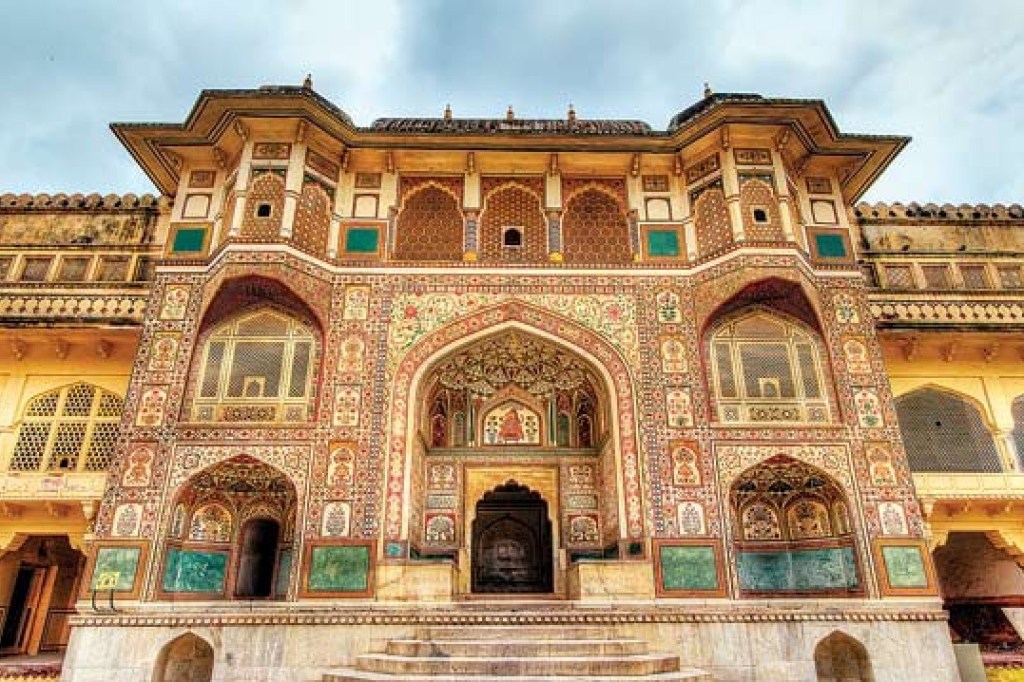
For three centuries from 712 AD to 1001 AD, Indian kings kept Arab invaders at bay.
Medieval history in India often begins with Mohammed Bin Qasim’s invasion of Sindh in 712 AD and quickly jumps to Mahmud of Ghazni’s invasion of 1001 AD. What happened in the intervening 300 years? Why did a power which had completely overwhelmed West Asia and North Africa in a matter of 70 odd years not make much headway in India for nearly three hundred? The answer lies in the successive defeat of Arab invasions by several Indian rulers. From Kashmir’s Lalitaditya to the Chalukyan king Vikramaditya II in today’s Karnataka, an arc of resistance kept the invaders at bay for centuries. It is unfortunate that while a similar event in Europe (The Battle of Tours — 732 AD) is widely known and celebrated, hardly anyone has heard of Nagabhata I, Bappa Rawal, Pulakesiraja, Lalitaditya or Yashovarman.
But first a bit of background. Mohammed Bin Qasim had annexed Sindh in 712 AD but died a few years later. His work was carried forward by Junaid Ibn Marri who proceeded as far as today’s Ujjain and Bharuch. It seemed as if the story of Arab conquest would continue here too. But as the ninth century Gwalior prashasthi inscription of the king Mihirabhoja tells us, things turned out very differently for the invading party. The inscription mentions the Gurjara Pratihara ruler Nagabhata I, who successfully led an alliance of various other chieftains against the Arabs. That this event is specifically mentioned hundred years later by Mihirabhoja shows its importance.
Nagabhata thus can be credited with saving Gujarat and Malwa from the invading party.
Several rulers from Kashmir to Karnataka rose to the common challenge and ensured that the Arabs did not advance beyond the Indus. The Arabs tried to enter via the Bharuch route too, but here they met with stiff resistance from Pulakesiraja, who allied with a Gurjara ruler named Jayabhat IV. Together, Nagabhat I, Pulakesiraja and Jayabhat IV inflicted severe defeats on the invading Arabs at Vallabhi and Navsari.
In fact, Vikramaditya II, the Chalukyan king who ruled from Badami, has eulogised his governor Pulakesiraja as a “solid pillar of Dakshinpath” and “defeater of those who cannot be defeated”. Another feudatory of the Chalukyas — the Rashtrakuta ruler Dantidurga is also mentioned in some sources as having aided Pulakesiraja. Thus, the tide of invasion in Gujarat was successfully stemmed by 738 AD and any incursion to the South was also decisively halted.
Various small states in today’s Rajasthan had also been overrun and it was at this stage that Chittor, then called Chitrakuta, was taken by a young warrior named Kalbhoja, more popular as Bappa Rawal. The Guhilot dynasty, to which he belonged, would go on to be one of the most powerful of Mewar in later years. A lot of legends surround him. But what is certain is that he rallied various small states in today’s Rajasthan and Gujarat and successfully pushed back the Arab invasion, which had threatened everything including Chittor. The Solankis also helped in this battle, and coinciding as it did with the battles fought by Chalukyas and Gurjara Pratiharas, dealt a body blow to the Arab invasion — who retreated to the west bank of the Indus.
“Not a place of refuge was to be found”, rues a contemporary Arab chronicle. Some attempt was made via the Punjab route, by Junaid Ibn Murri and Tamin, only to face an alliance led by Lalitaditya Muktapida of Kashmir and Yashovarman of Kannauj. In doing so, a vast swathe of India, from the Karakoram to the Gangetic doab became a part of this history. It is interesting to note that prior to and after defeating the Arabs, they opposed each other.
Lalitaditya’s and Yashovarman’s campaigns coincided with Bappa Rawal, Nagabhata and Pulakesiraja. Chronicles of both ancient Kashmir and Kannauj talk about this glorious chapter, which now lie forgotten.
The (unsuccessful) invasion of Al Hind or India was in complete contrast to the string of victories the new power had enjoyed across West Asia and North Africa. Having fought off the invaders, the Gurjara Pratiharas grew to be the dominant power in India, governing over half the subcontinent. Their presence and that of other powers ensured that no foreign power could step on Indian soil for nearly three hundred years.

Originally posted on October 21, 2018:
Since I’ve been reading a book about Islam (titled ‘Islam: Art and Architecture’ by Markus Hattstein and Peter Delius), I think that I’ll again turn my attention to what can happen in the West. I’ll be making the comparison with Islam, the Islamic Civilization, because I think that this society is a good example for what has happened and what can happen in Western Civilization.
Islamic Civilization, which began in about 500, had its core in Western Arabia. This is where Islamic culture was born. The expansion of Islamic Civilization began under the Prophet Muhammad in 622 and continued under the Rashidun, Umayyad, and Abbasid caliphates. In the Age of Expansion of a civilization, there’s expansion of territory, production, knowledge, and population. While Islamic Civilization was in expansion, the center of power naturally continued to move to more and more peripheral areas. At first, the center of power moved from Western Arabia to Syria under the Umayyad Caliphate, and Damascus became the capital of the empire. Then the center of power moved from Syria to Iraq under the Abbasid Caliphate, and Baghdad became the capital of the empire. I think that a conclusion can be made that the Age of Expansion of Islamic Civilization came to an end in 861, with the fracture of the Abbasid Caliphate and the end of the Abbasid Golden Age. One of the most notable indicators of expansion, or end of expansion, in a civilization is science. There’s much scientific progress when a civilization is in expansion. Scientific progress begins to slow down and die when a civilization enters the Age of Conflict. In Islamic Civilization, scientific progress began to slow down after the fracture of the Abbasid Caliphate. When the Age of Conflict began with the fracture of the Abbasid Caliphate, political units began to fight for control of territory in Islamic Civilization, and post-expansion empires (which is my term for military empires like Napoleon’s empire or Hitler’s empire) began to emerge. The first notable post-expansion empire of Islamic Civilization was the Seljuk Empire. Under the Seljuq Turks, who came from fully peripheral Central Asia, the center of power moved to Iran, and the capital became Isfahan. After the collapse of the Seljuk Empire, which brought unity to Islamic Civilization for several decades, Islamic Civilization was thrown into another period of disunity and conflict. At this time, the Crusaders, who represented an expanding Western Civilization under feudalism, were able to successfully invade Muslim lands and capture Palestine and the holy city of Jerusalem. While this was happening, the Mongols invaded from the east in 1220 and destroyed a very large Islamic post-expansion empire of Turkish origin – the Khwarazmian Empire. The Mongols created two Islamic post-expansion empires – the Chagatai Khanate and the Ilkhanate. At the same time, Turkish Mamluks were able to seize power in Egypt, and they created the Mamluk Sultanate, which was an Islamic post-expansion empire. Timur (Tamerlane) began his conquests in 1363 from Central Asia, with the capital in Samarkand. He emerged as the most powerful ruler in the Muslim world for a time, and he created the Timurid Empire. After all of that and other fighting, most of the territory of Islamic Civilization was eventually conquered by the Ottoman Turks, whose base was in peripheral Anatolia, and the capital of the Ottoman Empire became Constantinople. The Ottoman Empire, like all post-expansion empires, thrived while it was expanding and taking over new territories, and it even represented a threat to Western Civilization for a time (at least to the eastern states of Western Civilization). But, eventually, as is the case with every post-expansion empire, the conquests began to wane, and the Ottoman Empire began going into decline not long after the death of Suleiman the Magnificent. Since the Ottoman Empire was the last post-expansion empire of Islamic Civilization, it became the universal empire of this civilization. When the Ottoman Empire began to decay and go into acute economic depression, Islamic Civilization began dying. The Ottomans eventually couldn’t defend their empire and they suffered severe military defeats in the 18th century and in the 19th century in wars against the Europeans and the Russians. The Ottoman Empire was finally finished off at the beginning of the 20th century by the British and the French, who represented an expanding Western Civilization under industrial capitalism.
Well, now that I’ve got that history of Islamic Civilization out of the way as an example, I can look at how Western Civilization is similar to this civilization. I won’t go into the whole history of Western Civilization because this would take up too much time and space. I’ll simply focus on the latest Age of Expansion (under industrial capitalism) and the current Age of Conflict. If you want to know about what has been happening in Western Civilization since its beginning, read Carroll Quigley’s books, especially ‘The Evolution of Civilizations: An Introduction to Historical Analysis’ (1961). In this post, I’m concerned with what happened in the 20th century and what can happen in the 21st century. Well then, the third Age of Expansion of Western Civilization began after the vested interests of commercial capitalism (mercantilism) were circumvented by industrial capitalism. This change happened thanks to the agricultural revolution and the industrial revolution, which successfully took place in England, one of the core states of Western Civilization. Thus, after the defeat of Napoleon in 1815, a new wave of energy and expansion appeared in England and, eventually, in other Western states, as the agricultural revolution and the industrial revolution began to spread. Because of this expansion, England, which was closely followed by France, became the dominant power in the world by the mid-19th century. But industrial capitalism, which became the new instrument of expansion of Western Civilization, had to get institutionalized and to turn into a structure of vested interests eventually, and I would say that in England and in France this process began in 1873, with the beginning of the Long Depression. After England and France began to go into decline, it’s clear that the center of power of Western Civilization had to move from the core of the civilization to some peripheral area, like when the center of power of Islamic Civilization moved from Western Arabia to Syria under the Umayyad Caliphate. For a time, it seemed like this new center of power would be Germany, which was unified in 1871. Since industrial capitalism began to function as an expansive force in Germany when England and France began going into decline, Germany soon became the economic, the scientific, and the military leader of Europe. But it seems that the rise of Germany frightened the petrified interests in England, and in France. Therefore, the British planned to bring down Germany in a war, which is something that they did successfully in World War I by allying with the French, the Russians, and the Americans. Thus, German domination (at least political domination) of Western Civilization didn’t really take place. I don’t think that we can be naive enough to think that Germany didn’t have plans of military and political expansion. Such plans are natural for any state in expansion. The Germans did want to dominate Europe, and they would have done so eventually if Germany hadn’t been defeated in World War I. The Germans, after all, had the Mitteleuropa plan even before World War I began, but the British didn’t allow Germany’s possible expansionist plans in Europe to be realized. Still, even after the British and the French carved up Germany with the Treaty of Versailles, the industrial interests of Germany remained. The population of Germany continued to grow after World War I. Science continued to advance in Germany. In other words, World War I didn’t finish off Germany because the economic and social order of Germany didn’t change. It’s clear to me now that the only thing that was needed in order to put Germany on an expansionist path again after the disaster of World War I was a change of leadership. And this is what happened when the Nazis came to power in 1933, definitely with the support of some German monopoly capitalists and allegedly with the support of the British and the Americans as well. With British consent, with effective mobilization, and with improved military tactics, the Nazis were able to put Germany on a war path that resulted in the Third Reich conquering most of Europe by 1942. The Third Reich became a Western post-expansion empire with its own grandiose, Roman-like plans in Europe. For the British, however, Adolf Hitler eventually went too far. What they wanted from him was only to attack the Soviet Union. So, they joined a coalition in order to defeat the Third Reich and to eliminate the German threat. It took only several years for the Russians, the British, and the Americans to defeat the Third Reich and to end the short-lived German dominance in Europe. This German saga of the first half of the 20th century is rather tragic and rather epic. The Germans made all of that effort in World War I and then again in World War II, they came close to victory a number of times, they created disasters along the way, but they were defeated in the end, and Germany was divided after 1945.
Interestingly, World War II didn’t only bring down Nazi Germany and Fascist Italy. The French Empire and the British Empire were brought down as well soon after. So, after 1945, the center of power of Western Civilization decisively moved from Europe to the the fully peripheral USA, with its capital in Washington, on the East Coast of North America. I think that we can compare this to what happened in Islamic Civilization, when the center of power moved yet again, this time from Syria to Iraq under the Abbasid Caliphate. Thus, for several decades after 1945, the USA was the political, the scientific, the cultural, and the military leader of Western Civilization.
One of the signs of the fact that Western Civilization entered the Age of Conflict in the 20th century is the fact that scientific progress began to slow down. England and France entered the Age of Conflict as early as 1873, in my opinion, and the USA, which is a fully peripheral Western state, entered the Age of Conflict several decades later, in 1929, when the Great Depression began. Since 1929, the frequency of inventions and the grade of inventions in Western Civilization has been falling. I’d say that the time of the great inventors in the West came to an end before the second half of the 20th century. An upsurge of irrationality took place. The interest in the outside world has been falling as well. The vested interests of industrial capitalism (monopoly capitalism) in the West began to limit access to knowledge for the general population and began to discourage exploration and research. One of the signs of this decline of knowledge in Western Civilization is the fact the fewer and fewer books from other societies began to be translated to the Western languages in the 20th century. In the 19th century and in the early 20th century, when Western Civilization was in the full flush of expansion, there was, for example, a great interest in Russian literature in Western countries, and many Russian books were translated. It was also at this time when, for example, Richard Francis Burton translated ‘The Book of the Thousand Nights and a Night’ and other texts from the Middle East. In the 20th century, however, this interest in the outside world began to fall in the West. For example, hardly anything from the Soviet Union has been translated to the Western languages in the 20th century and what has been translated only serves the purpose of anti-communist and anti-Russian propaganda. This approach of the West is the same when it comes to other societies. Therefore, people in Western states have such poor and such distorted knowledge of what happened in the 20th century, not just in non-Western states but also in other Western states. Nowadays, in this respect, the situation has become so bad that only crude propaganda and a completely distorted picture of the outside world are available for the general population in Western countries. If to this you add the fact that there’s very little scientific progress now in Western Civilization, the picture of Western society begins to look even worse from the viewpoint of progress, at least if you compare it to the picture from a century ago or even half a century ago.
So, I would say that American dominance in Western Civilization began to decline in the 1970s, and the early 1980s recession and the Black Monday of 1987 are clear signs of this decline. It has not been a fast decline, however, because the USA got a boost for a few decades from the collapse and looting of the USSR, and there’s also no serious opposition to the USA anywhere in the world for now, but it has been a decline nonetheless. In addition, since the 1960s, by which time the pinnacle of American democracy was reached, the USA has been turning more and more from a force of some prosperity and progress into a force of war, destruction, looting, and resistance to change. In fact, I can even say that this downward trend began as early as the 1930s, when the Great Depression took place. Still, there has been no fracture of the USA yet. The USA continues to dominate Western Civilization for the time being, and it will probably dominate Western Civilization for several more decades. Still, even if a new “instrument of expansion” will appear in Western Civilization (though I think that this is very unlikely), I don’t think that the USA will survive because an “instrument of expansion” seems to always appear only in the core area of a civilization. What will happen is that the USA will either fracture into several political units or the USA will seize to exist as a political unit and a new empire with a different shape will appear on the territory of the USA. These are the only two possibilities. If the USA does fracture, like the Abbasid Caliphate fractured, then Western Civilization will enter a new period of disunity and conflict similar to what happened in the first half of the 20th century, though it probably won’t be as short and as bloody as what happened in the first half of the 20th century. Thus, the current Age of Conflict of Western Civilization will continue, with declining growth and declining progress, until the universal empire of this civilization gets established, and this is something that will probably take place a few hundred years from now.
So, with everything that I’ve touched upon, it is, in my opinion, not accurate to compare what has been happening in Western Civilization for the last several decades to what happened in the Roman Empire when it went into decline. First of all, Western Civilization hasn’t been conquered by one political unit yet, and a universal empire, like the Roman Empire, hasn’t been established yet. The negative signs (like depression and degradation) may be similar, but they’re not the same. I think that the situation now is more like what happened in Islamic Civilization when the Abbasid Caliphate began going into decline and when it fractured. It’s when the importance of Arabs and of Western Arabia had faded in Islamic Civilization and when the importance of other peoples, like the Turks, began to rise. Similarly, the importance of Western Europeans, with whom Western Civilization began, has been fading for the last century and the importance of other peoples, like the Americans, has been rising. And now it seems like even the importance of the Americans is fading. In the future, another, possibly foreign, people, or mix of peoples, will come to dominate Western Civilization politically, like the Turks came to dominate Islamic Civilization after the fracture of the Abbasid Caliphate. Therefore, it is much too early to talk about the death of the West. What we’re seeing now is the death of American political domination of the West and not the death of the West.
 Igor's Blog