
Month: July 2020
Just finished watching Gorillas In The Mist (1988) and Gunfighter’s Moon (1995)…


Now listening to Midnight Love by Marvin Gaye and The Metal Opera by Avantasia…


Ready Player One IMAX® Trailer #2
The IMAX release of Ready Player One will be digitally re-mastered into the image and sound quality of The IMAX Experience®. For more info, visit https://www.imax.com/ready. The film is set in 2045, with the world on the brink of chaos and collapse. But the people have found salvation in the OASIS, an expansive virtual reality universe created by the brilliant and eccentric James Halliday (Mark Rylance). When Halliday dies, he leaves his immense fortune to the first person to find a digital Easter egg he has hidden somewhere in the OASIS, sparking a contest that grips the entire world. When an unlikely young hero named Wade Watts (Tye Sheridan) decides to join the contest, he is hurled into a breakneck, reality-bending treasure hunt through a fantastical universe of mystery, discovery and danger.
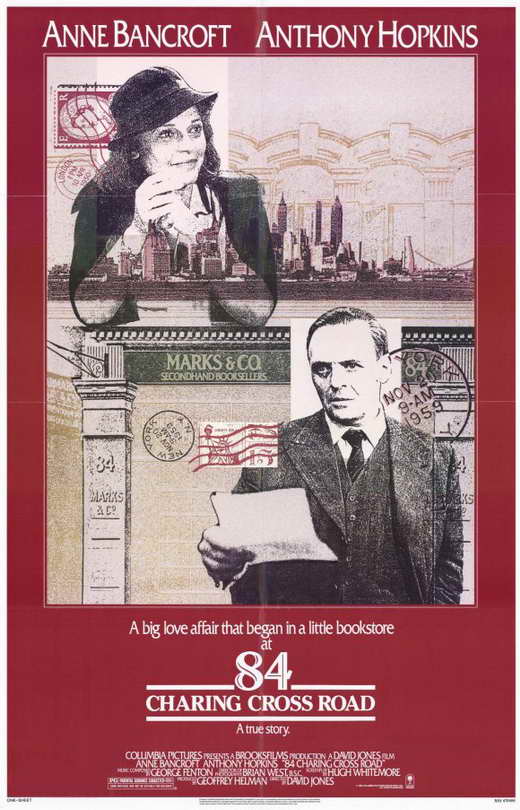
Just finished watching 84 Charing Cross Road (1987) and Paris, Texas (1984)…

All 30 Seasons Of The Simpsons, Ranked
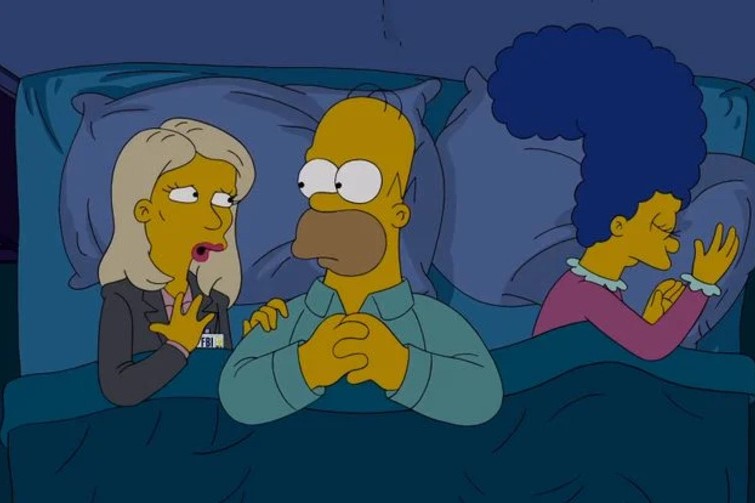
SR did the unthinkable and combed through 30 seasons of FOX’s The Simpsons to determine which are truly the greatest outings in Springfield.
Now that it’s been on the air for 30 seasons, with the 31st currently airing, The Simpsons has officially become the longest-running primetime series in the history of American television. With over 650 episodes under its belt and counting, the show once described by The AV Club as “television’s crowning achievement regardless of format” has beaten out Gunsmoke for the title. And it’s not stopping any time soon; Fox renewed the show for seasons 31 and 32 so the current series will be followed by at least 1 more. With any luck, the surreal, satirical, and ultimately human story of the Simpson family will keep going for years and years.
For fans of the series, it can now be streamed exclusively on Disney+, although eagle-eyed fans have spotted an issue. The episodes have been converted from their original 4:3 ratio into 16:9, which is now considered standard. Unfortunately, this hasn’t been a great move, with the conversion meaning parts of the action are missing. Disney have pledged to fix this by making the first 19 seasons available in their original format, although fans will need to wait until next year.
So, while you are waiting take a look at our list of all 30 seasons of The Simpsons so far, ranked.
30 SEASON 21
Season 21 sees a series that has been worn thin over two decades. It opens with the somewhat inspired “Homer the Whopper,” guest-written by Seth Rogen and Evan Goldberg and guest-starring Rogen, but devolves quickly into a season of episodes with shallow setups just to get celebrity guest stars in.
29 SEASON 29
Season 29 is, generally, a lame duck of a season. However, it does have some gems. Lisa and Marge teaming up to write a graphic novel in “Springfield Splendor” is a standout, because of its gorgeous visuals and tear-jerking story. Plus, the season’s “Treehouse of Horror” Halloween special has a rare combination of three great segments. But other than that, it’s not a good season.
28 SEASON 20
By season 20, the show was reduced to such thin non-plots as Bart and Milhouse finding Denis Leary’s cell phone and Homer and Flanders teaming up as bounty hunters. “Homer and Lisa Exchange Cross Words” and “In the Name of the Grandfather” are among the small handful of strong episodes, but it’s an overall weak season.
27 SEASON 26
Season 26 began with a tremendous disappointment, as Fox had promoted the season with the promise of a major character’s death. It turned out to be Krusty’s father, who no one really cared about. Still, there are some pretty good episodes: “Covercraft,” “Super Franchise Me,” “Opposites A-Frack” etc. Plus, the Futurama crossover “Simpsorama” gets points for ambition, even if it’s not amazing.
26 SEASON 30
Season 30 has shown us that The Simpsons is still happy to unabashedly lampoon religion and politics, while also tackling semi-current issues like Black Friday sales and self-driving cars. So, while it’s not as great as it used to be and there have been ups and downs over the years, this is still The Simpsons and, thankfully, it looks like it won’t be leaving our screens any time soon. Plus, comedy fans will appreciate Krusty the Clown joining Marc Maron in the garage for an episode of WTF.
25 SEASON 17
This season is hit-and-miss, with far more miss than hit. The season premiere episode “The Bonfire of the Manatees” guest-starring Alec Baldwin is one of the series’ best, but it goes downhill from there.
24 SEASON 12
While the odd episode like “Simpson Safari” or “New Kids on the Blecch” are entertaining enough to sustain viewers’ attention, season 12 is, on the whole, weak. The scene in “Homer vs. Dignity” that implies Homer is sexually assaulted by a panda is one of the series’ all-time low points.
23 SEASON 22
Season 22 is woefully so-so. There are no really terrible episodes in it, but there are no really great ones either. It settles into a comfortable averageness with episodes like “Angry Dad: The Movie” and “Moms I’d Like to Forget.”
22 SEASON 19
Season 19 is a mix of really great episodes – “Eternal Moonshine of the Simpson Mind,” “Dial ‘N’ for Nerder,” “Any Given Sundance” – and really terrible ones – “Smoke on the Daughter,” which betrays Lisa’s character, and “That ‘90s Show,” which shamelessly retcons so much Simpson family history that watching it is pretty much unbearable. This is probably a result of the writing staff being exhausted, since this was the first season produced after The Simpsons Movie, as well as production being delayed by a 100-day Writers Guild of America strike.
21 SEASON 24
The best episodes of The Simpsons these days are the ones that tackle current issues, looking ahead rather than getting stuck in the past. Season 24 has a few examples of this, with the best being “The Day the Earth Stood Cool,” a hilarious satire of the hipster subculture.
20 SEASON 11
The Simpsons’ downward slope into mediocrity was picking up momentum by the eleventh season. “Saddlesore Galactica” is a classic example of jumping the shark; “Missionary: Impossible” begins with a sharp satire of PBS, but has a dull cop-out ending; and “Bart to the Future” is a disappointing glimpse into the future that has since been retconned anyway. The episodes aren’t all bad – “Last Tap Dance in Springfield” and “Alone Again, Natura-Diddily” are classics, while “Behind the Laughter” makes a great meta season finale – but on the whole, this is an unsatisfactory season.
19 SEASON 22
Season 22 has some pretty good episodes. “Bart Stops to Smell the Roosevelts” is surprisingly wonderful, while “Politically Inept, with Homer Simpson” is sharply satirical. However, there are also some dreadful ones. You know the show is running out of ideas when there’s a whole episode about Moe’s rag. On the whole, the season is okay – but at least it’s far from terrible, which is a lot to expect from a latter-day Simpsons season.
18 SEASON 16
The plots of season 16’s episodes don’t provide anything new or groundbreaking for the characters as the writers settle into being comfortable with mundanity. But the gags still come thick and fast, and the non-sequitur jokes combined with spot-on pop culture parody maintain the show’s idiosyncratic sense of humor.
17 SEASON 27
While season 27 doesn’t add much new to the now-tired Simpsons formula, it does get bonus points for taking some risks. The episode “Fland Canyon,” for example, is fresh and exciting, while Homer’s live Q&A at the end of “Simprovised” deserves credit for at least trying something new.
16 SEASON 9
Some episodes in the ninth season show early signs of the show’s unfortunate decline in quality. For starters, there’s that infamous episode where Principal Skinner is revealed to be an impostor. However, “The City of New York vs. Homer Simpson” is a stellar premiere episode, despite its now-infamous depiction of the World Trade Center (it originally aired in 1997).
15 SEASON 25
Season 25 has enough terrific episodes to carry the season’s weaker episodes. “The War of Art” is a much more contemplative study of a serious issue than the usual gag-driven zaniness the show is known for, which pays off beautifully. Plus, “Homerland,” “Steal This Episode,” and “Days of Future Future” are fantastic episodes.
14 SEASON 18
There are some real standouts in season 18. With hysterically self-deprecating cameos from the likes of Tom Wolfe, Gore Vidal, and Jonathan Franzen, “Moe’N’a Lisa” is a delight for any fan of literature. Meanwhile, the season finale “You Kent Always Say What You Want” has a lot of bold things to say about censorship, journalism, and free speech.
13 SEASON 28
Season 28 is perhaps the best of the later Simpsons seasons, purely for its ambitious episodes like the hour-long “The Great Phatsby,” a combo spoof of The Great Gatsby and Empire, and its skewering of current issues like T–mp University and Pokemon Go. Plus, “The Last Traction Hero” is one of the few recent episodes of the show that are genuinely great.
12 SEASON 1
When it first expanded from sketches on The Tracey Ullman Show into a full half-hour primetime series, The Simpsons took short a while to find its feet. The storytelling in season 1 is fantastic, but the humor isn’t quite the show’s unique blend of realism and surrealism yet.
11 SEASON 10
Despite being a part of The Simpsons’ downslide, season 10 has some gems. “Homer to the Max” is an example of a simple premise expanded masterfully into a classic episode, while “Viva Ned Flanders” once again proves that the Homer/Flanders dynamic works better when they get along than when they don’t. The season premiere “Lard of the Dance” is, pound for pound, one of the funniest episodes of the entire series. Also, “Mayored to the Mob” makes terrific use of guest star Mark Hamill (“Luke, be a Jedi tonight!”).
10 SEASON 13
Season 13 is a mixed bag containing both duds and classics. “Gump Roast” and “Tales from the Public Domain” are limp excuses for episodes, while “Little Girl in the Big Ten” and “A Hunka Hunka Burns in Love” are solid installments. Plus, “She of Little Faith” is one of those brilliant episodes that combine hilarity with well-put social points.
9 SEASON 14
For a relatively late season, season 14 is very funny. The problem with a lot of later seasons is relying too heavily on the guest stars attracted by the show’s success and forgetting to explore the show’s own characters, but season 14 deftly balances the big-name guests (“How I Spent My Strummer Vacation”) with character-driven plots (“Bart vs. Lisa vs. the Third Grade”).
8 SEASON 8
Season 8 saw the writers delving deep into their characters’ psyches with mixed results. Milhouse’s parents’ ultimately permanent divorce was terrific, while “Hurricane Neddy” took things a little too far. Still, the eighth season saw the show tackle social issues, like homosexuality in “Homer’s Phobia,” with both insight and hilarity, which about the best thing an audience can ask for.
7 SEASON 15
With formula-rattling episodes like the Simpson family’s trip to London in “The Regina Monologues” and the Evita parody “The Princess Wore Pearls,” The Simpsons’ fifteenth season managed to fend of the show’s downfall by another year by delivering a laugh-a-minute handful of episodes.
6 SEASON 2
The Simpsons expanded its supporting cast in season 2, which led to a fast gag rate and more varied storylines, but it still hadn’t reached the euphoric Pythonesque bliss of its glory days yet. Still, the season has some great standouts, including “Bart the Daredevil,” featuring Homer accidentally jumping Springfield Gorge, and “Lisa’s Substitute,” featuring guest star Dustin Hoffman.
5 SEASON 5
The Simpsons’ fifth season has some unforgettable knockout episodes, including the Beatles-inspired rise and fall of the Be Sharps, Homer going to space and being overshadowed by ant overlords and an inanimate carbon rod, and the remake of Cape Fear starring Sideshow Bob.
4 SEASON 6
From Marge joining the police force in “The Springfield Connection,” one of the most all-out hilarious episodes of the series, to Homer joining a secret society called the Stonecutters, this was a terrific season of television.
3 SEASON 3
The episodes in season 3 work because they follow an engaging narrative structure. Everything in each episode – from “Radio Bart” to “Flaming Moe’s” to “Mr. Lisa Goes to Washington” – works towards driving forward a plot. It sounds simple, but shows like this can easily get bogged down by favoring jokes over storytelling.
In The Simpsons’ third season – and most of its early seasons, but most effectively in this one – the jokes flow naturally from the stories.
2 SEASON 7
Season 7 began with the conclusion of The Simpsons’ first and so far only two-part episode, “Who Shot Mr. Burns?” and only got better from there. The season mixes contemplative character pieces – “Bart Sells His Soul,” “Lisa the Vegetarian” – with interesting conceptual stuff – “22 Short Films About Springfield,” “Radioactive Man.”
Plus, there’s that great episode where the writers get even with George H.W. Bush for badmouthing the show.
1 SEASON 4
Season 4 is when The Simpsons stepped up its game and perfected itself. The writers figured out what kind of gags worked for the show and they figured out the ideal blend of absurdist jokes and pop culture references with real, identifiable family situations and true moments of pathos.
“Marge vs. the Monorail,” “Last Exit to Springfield,” “Mr. Plow,” “Whacking Day,” “Brother from the Same Planet” – the list of great episodes in this season is endless. It is, without a doubt, the finest season of the show, and it probably always will be.
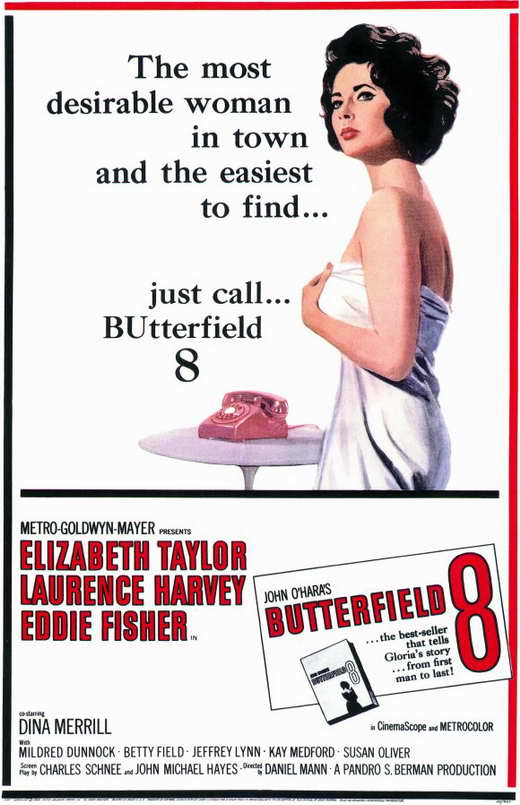
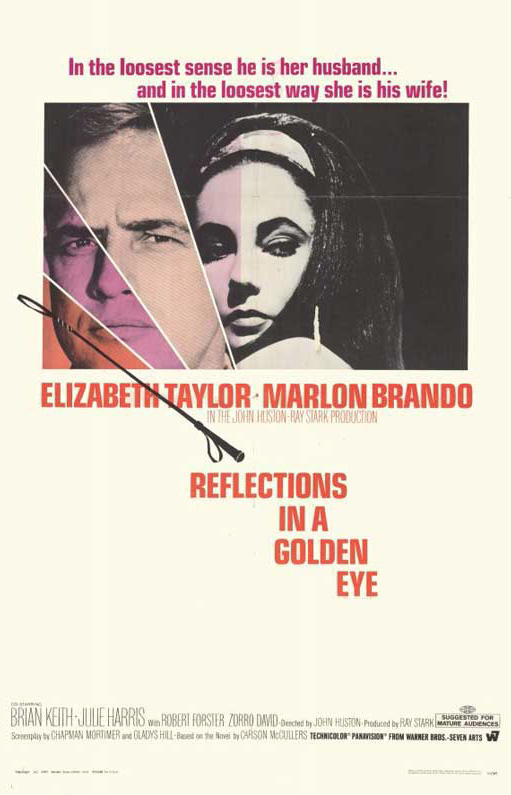
Just finished watching BUtterfield 8 (1960) and Reflections In A Golden Eye (1967)…
Just finished watching Penelope (1966) and Just Mercy (2019)…


In Lower Lonsdale in North Vancouver. Autumn of 2019.


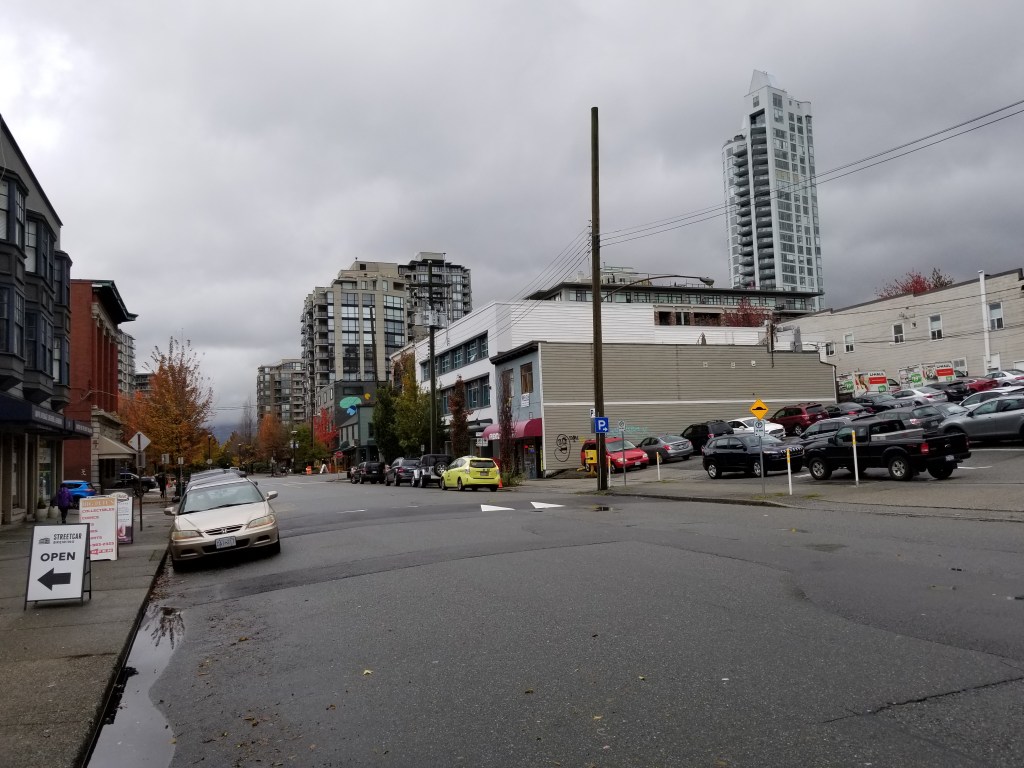


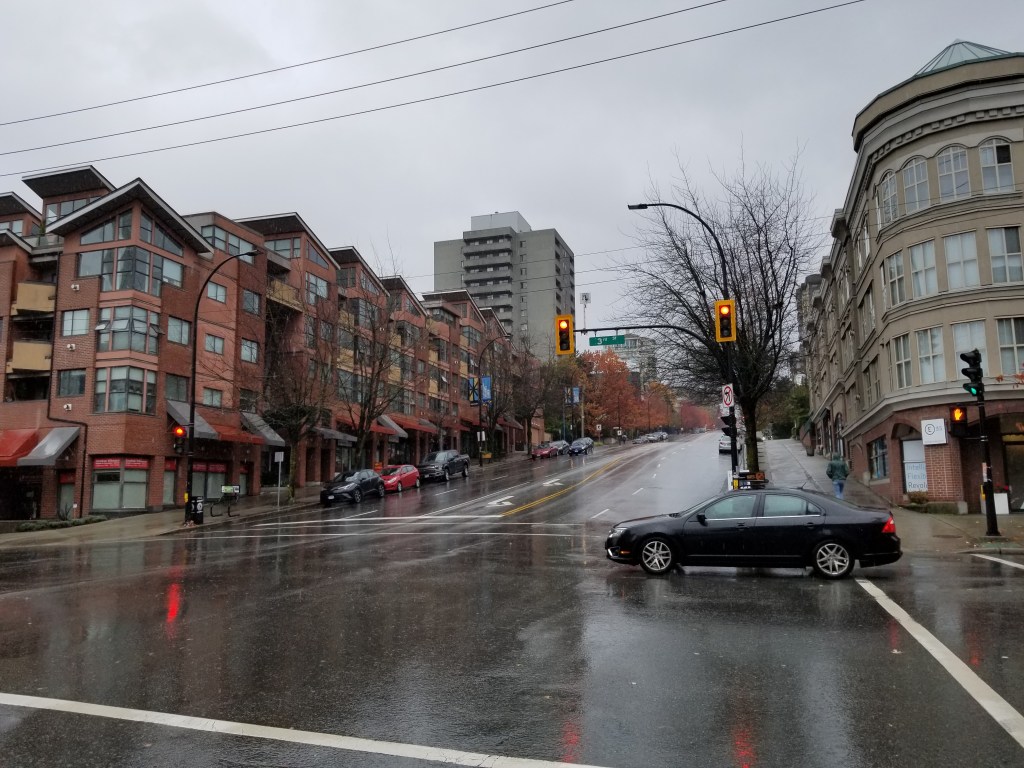



Lower Lonsdale is a historic waterfront neighbourhood in the city of North Vancouver. Lower Lonsdale runs up Lonsdale Avenue from Lonsdale Quay to Keith Road. Its history is inseparably connected to the lumber and shipbuilding industries on the North Shore of Burrard Inlet, as well as ferry crossings connecting the area to Downtown Vancouver. Lower Lonsdale is currently going through large waterfront renewal processes. The old shipyards are being torn down, making way for new public spaces, condominiums, retail outlets and a hotel.
In 1860 a Catholic Missionary was ordered to build a church on the water front of what is now called St. Pauls Church
Shortly afterwards two men by the name of T. W. Graham and George Scrimgeour secured a pre-emption of 150 acres (0.61 km2), the first on the North Shore of the Burrard Inlet.
They proceeded to build a lumber mill and named it The Pioneer Mills and was the first industrial lumber plant on the Inlet. This consequently initiates an influx of residents.
With the mill facing bankruptcy, an American by the name of Sewell Prescott Moody bought the Mill.
In the 1990s and 2000s, the City of North Vancouver embarked on an ambitious plan to redevelop former industrial lands of Lower Lonsdale. Highrise and lowrise condominium and other multi-family developments were constructed in the area between 3rd Street and south to the waterfront.
During that time, many new restaurants and retailers have located in the stretch of Lonsdale Avenue between 3rd Street and Burrard Inlet. The City also oversaw the construction of the John Braithwaite Community Center, located in the 100 block of 1st Street.
A national maritime museum is proposed for former shipyards site on Esplanade Avenue, pending funding from federal and provincial governments.
The Dismemberment of Yugoslavia 20 Years On
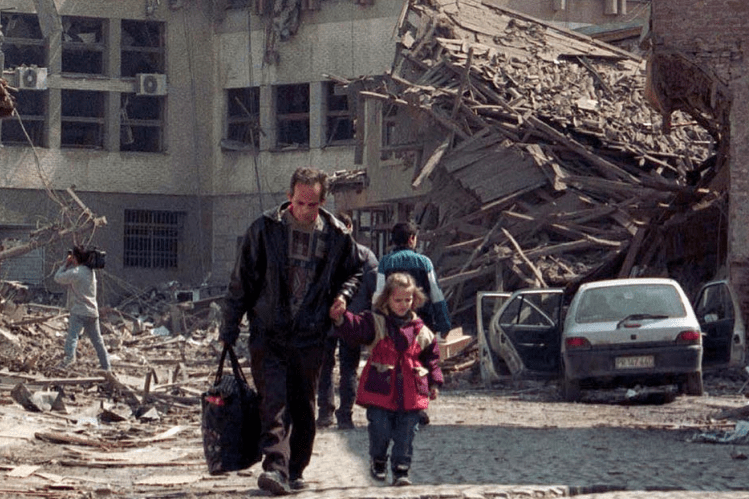
Two decades ago Nato started it’s 78 day bombing campaign against Yugoslavia. Using the language of peace and humanitarianism Nato dismembered Yugoslavia killing more civilians than they did soldiers. A non-stop aerial assault on the Federal Republic of Yugoslavia using more than a thousand Nato warplanes delivering 2,000 air-strikes in 40,000 sorties and with over 20,000 bombs dropped on the country.
The rabid imperialists shed crocodile tears of humanitarian concern for Albanians in Kosovo. Or so the press and it’s organs told us. In just a few months President Clinton bombed four countries: Sudan, Afghanistan, Iraq and Yugoslavia. Of the four Yugoslavia was to take the most ferocious bombing. The United States was also involved in proxy wars in Angola, Mexico, Colombia and East Timor.
This selective humanitarian concern did not extend to a number of European countries for its continued oppression of the Roma. Britain remained exempt despite having had death squads in the no0rth of Ireland.(Secret Death Squads Backed by Thatcher Gov’t Killed Hundreds in N. Ireland, Sputnik, 06/2015) The United States did not work itself into a panic over the Hutu for their slaughter of half a million Tutsi in Rwanda. The US did not drop bombs for 78 days and nights on the French who were complicit in that massacre. Neither did they bomb Guatemala for the military’s systematic slaughter of tens of thousands of Mayan villagers. They did not moralise to the Indonesian people whose military generals were engaged in mass murder in the summer of 1999.
The United States did not concern itself with the Sri Lankan civil war which took 100,000 lives over a 25 year period.
They did not screech to the skies about the human rights abuses the New Scientist has described as the “deadliest since world war 2”. (Congo crisis is deadliest since second world war, New Scientist, January 2006).
Now a possible reason for this selective humanitarian concern might be that the Congo is fully integrated into the global capitalist market. The children mining coltan that ends up used in mobile phones and other high technology is fully integrated into global supply chains. The Congo is a successful capitalist nation – that is it is a good place for global capital to find profits.
No Natos primary concern for ‘human rights’ resided mostly in fictional genocides in the Balkans. The US state department first put out figures like “500,000” missing Kosovans or Albanians. This number was revised a week later to 200,000. Then to 100,000. Then to 10,000 after the bombing campaign started.
The result was the fascistic murder and blitzkreig of thousands of civilians (men, women and children) and more than a thousand Yugoslav soldiers and police. The bombing campaign did not have approval of United Nations Security Council. The bombing of Yugoslavia was to usher in the New World Order.
Weapons deployed included cluster bombs and depleted uranium. Both considered illegal under international law.
With the overthrow of the Soviet Union and with Yeltsin backed to the hilt by US financiers, propagandists and Goldman Sachs-provided-economists Nato turned its murderous eye on another independent, sovereign nation in Europe, Yugoslavia.
The propagandists for the West stated the intervention Operation Allied Force was for “humanitarian concerns” yet are unable to explain how they killed more civilians than soldiers and destroyed civilian infrastructure. Up to 15 tons of depleted uranium were dropped on Serbia. (‘Up to 15 tons of depleted uranium used in 1999 Serbia bombing’ — lead lawyer in suit against Nato, RT, 13 June 2017)
Not only has this vicious bombing against Yugoslavia today resulted in Serbia being the cancer capital of Europe but Prof. Velimir Nedeljkovic, an expert on environmental issues, has said it was an attack against the planet. Kosovo being geographically located between 3 rivers the Professor goes on to say this was a deliberate experiment to see how a vast region can be contaminated through a river system.
“The bombings were carried out absolutely deliberately, and pursued certain goals. Kosovo is a geographical phenomenon, as rivers originating in this region flow into three seas — the Aegean, the Black and the Adriatic seas. Therefore, Nato used depleted uranium to bomb a small region, but managed to contaminate three seas. Those seas are connected to oceans, so it is evident that the pollution was of a planetary scale,” the expert went on.
“It was clear that the war is over, that even one bomb is redundant, let alone two. However, those bombs were dropped for the sake of an in vivo experiment. It is clear why depleted uranium munitions were used in Kosovo — it was also an in vivo experiment to see how a vast region can be contaminated through a river system,” he said. (Nato use of depleted uranium in bombing Yugoslavia was ecocide on planetary scale — expert, TASS, October 05 2018)
With that being said let’s take a look at the reasons for the war, what the bourgeois said they were doing at the time, what their real reasons were and the ex-Yugoslav states today. Beneath the veiled concern for ethnic tensions instead a picture of the west exacerbating ethnic tensions and nationalism as a wedge to break up Yugoslavia. The wild numbers of mass graves quoted by Nato and US officials of hitting up to 200,000 were never found or uncovered. Instead a few hundred were found mostly dug in individual graves. The concern for ethnic minorities did not extend to the Serbs who were forcibly removed from their homelands and expelled under the watchful eye of American troops. The media played an absolutely complicit role in which reporters would drip feed some propagandistic message and the sheer repetition of that message became gospel truth. Peeling away these layers upon layers of propaganda instead we find a simple geopolitical war in which Nato waged this war to establish an oil monopoly stretching from the Middle East to the shores of the Black and the Caspian Seas. We see Nato actively engaging in ethnic cleansing to create themselves a loyal little client state (Kosovo) in the Balkans. Furthermore this war was waged to further isolate Russia and to end the very idea of sovereignty and independence for the peoples of Yugoslav. Destroying the last remnants of socialism in Europe and a complete recolonisation of the Balkans.
Yugoslavia As An Independent Power
Yugoslavia was built on an idea. With their own federation it was hoped the southern slavs would not remain isolated and weak and prey for imperialism. The idea then was to live together in harmony, forming a substantial territory capable of independent economic development. The achievements of Yugoslav socialism were a life expectancy of 72 years, almost full literacy and a rate of 7 percent annual growth in the 1960s. Along with free medical and education, a guaranteed right to an income, one month vacation with pay. Yugoslavia also offered it’s citizens affordable public transportation, housing and utilities. The economy was mostly publicly owned in a “market socialist” economy. This form of ‘market socialism’ was to prove it’s downfall.
Market-Socialism: The Undermining Of Socialism
The Yugoslav-Soviet Union split in 1948 led the Yugoslav communists to believe in the need for market socialism. The first step in this was decentralisation undertaken in May 1949 to cede autonomy to local communal governments. This step by step process would inevitably lead back to capitalism. Slovene leader Edvard Kardelj explained that these reforms promoted “the sense of [the masses’] greater inclusion in the work of the state machinery from the lowest organs to the highest.”(The Life and Death of Yugoslav Socialism, Jacobin, July 2017)
In June 1950 the National Assembly passed legislation introducing more democratic workplaces. Enterprises would now have councils consisting of 15–120 democratically elected representatives who were restricted to two one-year terms.
At the sixth party congress, in 1952, the Yugoslav communists cut the party from the state. Now the party cadres would have to compete across the different organs of self management.
The reorganisation of enterprises in Yugoslavia meant workers had a more invested interest in their company’s success. But the market nature meant they were still to participate in a competitive market which rewarded efficiency and productivity. Self management went hand in hand with integration into the world market and pitted workers against enterprises in both the federation and foreign markets.(Ibid)
This created a short term success where the country thrived on exports but also opened the country to the contradictions of market efficiency. This would inevitably put them at the mercy of the market.
Regional variations in inequality and unemployment reflected the country’s uneven economic development. Before World War 1 the northwest republics Slovenia and Croatia had belonged to the Austro-Hungarian empire and benefited from economic modernisation the Austro-Hungarian empire had experienced in the 19th century. The southern republics had been dependant on the Ottoman Empire and had remained largely agrarian and undeveloped.
The southern republics party-leaders feared the turn toward the market system. The extractive industries and heavy manufacturers in the south required high levels of state investment and protectionist measures. The southern republics also supported the federal tax system which aimed to fund southern industrial growth by redistributing profits from the wealthier northwest.
The leaders in the northwest wanted an export-led growth model. Meaning greater economic liberalisation and integration into foreign markets. They stood in opposition to the federal tax plan arguing instead that more profitable enterprises should thrive without state intervention.
By the 1960s the market reform side, with its base in the northwest had won. Self management deepend. The country further integrated into foreign, domestic markets.
As external pressures intensified, the republics closed off against each other more and more. Not only did they therefore develop different specialisations with different markets in the Cold War, but superpower contestation also made the republics a primary site of the superpower struggle for supremacy…. The end of the Cold War presented Yugoslavia with an existential challenge that its institutional design proved ill-prepared to meet, as its debt economy found it difficult to re-finance with the threat of the USSR gone. (The Economic Struggle for Power in Tito’s Yugoslavia: From World War II to Non-Alignment, Dr Vladimir Unkovski-Korica)
By 1991, with the overthrow of communism in Eastern Europe and the Soviet Union, Yugoslavia remained the only nation in the region that would not voluntarily discard what remained of its socialism and join the free market system. With one of the largest standing armies in Europe it had no interest in joining Nato. But with the overthrow of communism in eastern Europe the IMF and World Bank no longer needed Yugoslavia as a wedge against the Soviet Union. Nato no longer wanted a strong, independent power in the Balkans.
Crippled By Foreign Debt And IMF/World Bank ‘Structural Adjustment Programs’
In the late 1960s and early 1970s the Yugoslav leaders decided to borrow heavily from the West. This was to be catastrophic. The aim had been to expand the country’s industrial base, its export production, and its output of domestic consumer goods. However with the Western economies entering recession they blocked Yugoslav exports. Which reduced its export earnings and created a huge black hole of debt for Belgrade.
The interest on the massive debt started to snowball as the interest fed the momentum of the slide into ever more debt.
The creditors, among them the IMF and World Bank, demanded a “restructuring”. Restructuring consists of draconian austerity programs, neoliberal reforms, wage freezes, the abolition of state subsidised prices, increased unemployment, the elimination of most worker-managed enterprises and massive cuts in social spending and social programs.
The Yugoslavs were to consume less but produce more. Directing their national wealth toward meeting debt repayments.
Foreign debt exploded. It was expected to be $6 billion but turned out to be $21 billion.(Eastern Europe in the Twentieth Century and After, R J Crampton, P 386)
A colossal amount for a country on the periphery of imperialism.
The Break Up Of The Soviet Union Was Go Time For The US
With the collapse of the Soviet Union in the early 90s the IMF and World Bank no longer felt they had to placate Yugoslavia which had always acted as a wedge against the Soviet Union. In researching this article I read through numerous articles by the Socialist Party and the Socialist Workers Party (both trotskyist organisations) just to see the orientation and political insight these parties had at the time (don’t laugh!). As usual their political insight seemed to involve using the word stalinism or stalinist as much as possible despite Yugoslavia breaking with the Soviet Union and deciding to move in a direction of decentralisation rather than centralisation and collectivisation.
“SINCE THE collapse of the totalitarian Stalinist regimes in the Balkans, and the reintroduction of capitalism during the 1990s, workers have endured mass impoverishment, unemployment and wars. Stalinism denied workers’ democracy, and self-determination for nationalities. Yet, despite the Stalinist regimes, the planned economy provided free health care, jobs and cheap rent. All this has been destroyed by the new war mongering, Mafia-capitalists.”(Kosova: One year after Nato’s war, The Socialist newspaper, 3 March 2000)
Besides the fact that Yugoslav socialism hadn’t “denied workers democracy” but actually had decentralised their enterprises to facilitate workers democracy shows how lost the Trotskyists are.
The question should be, did entrenched interests see this characterisation the same way? Because capitalists and the bourgeois are notorious for not sharing the same analysis as trotskyites, social democrats, anarchists or other left hangers on. In 1984 the Reagan administration issued a classified document, National Security Decision Directive 133, explaining how Yugoslavia “serves Western and US interests”. As pointed out in the inter-agency report on United States policy toward Yugoslavia, an independent, economically viable, stable and militarily capable Yugoslavia serves Western and US interests. Yugoslavia is an important obstacle to Soviet expansionism and hegemony in southern Europe. Yugoslavia also serves as a useful reminder to countries in Eastern Europe of the advantages of independence from Moscow and of the benefits of friendly relations with the West. (National Security Decision Directive 133) Entrenched interests, ie those of the Reagan administration, did not characterise Yugoslavia with childish insults like “stalinism”. As the document continues a very different picture emerges:
“The US will continue its close cooperation with other friendly countries to support Yugoslavia’s efforts to overcome its financial difficulties. We will seek to expand US economic relations with Yugoslavia in ways which benefit both countries and which strengthen Yugoslavia’s ties with the industrialised democracies. US policy will be to promote the trend toward an effective, market-oriented Yugoslav economic structure.” (emphasis mine) “The US will pursue the well-established dialogue with Yugoslav leaders on issues of mutual interest and concern. We will take the opportunity provided by high level offical visits to reiterate US support for Yugoslav independence, territorial integrity and national unity. Our policy will continue to be to encourage Yugoslavia to play a moderating role within the Nonaligned Movement and to counter Cuban and Soviet influence in that organisation. “(Ibid)
The result is that we saw the “Nonaligned Movement” was not ‘nonaligned’.
The following year (after the writing of the above document), 1985, and the relaxation of tensions with the Soviet Union after Gorbachev became leader meant that western nations were no longer willing to be generous with restructuring Yugoslavia’s debts to provide an example of a communist country outside of the Soviet bloc. In other words Yugoslavia had fulfilled its foreign policy function as a way of destabilising the Soviet bloc and was no longer needed.
What the political paradigm the Communist Party of Yugoslavia had depended on began to disappear. Now they were no longer useful to the west as a foreign policy tool the West hungrily eyed their markets, their natural resources and their people as objects of cheap labour.
As communism collapsed Yugoslavia found itself in a precarious position. Within a year (1992) the United Nations had expelled Yugoslavia from the UN general assembly.
Under United Nations General Assembly Resolution 47/1 Yugoslavia as a pariah state and Slobodan Milosevic (Head of the Serbian state) as an outcast. This was the first step toward Nato military intervention.
In a manual released by wikileaks in “ Army Special Operations Forces Unconventional Warfare”the manual states how the financial arms of the US can be used as unconventional warfare. Wikileaks themselves have called this a “coup manual”.
“2–45. Like the economic activity, which all nation-states, human groups, and individuals respond to, ARSOF can use financial power as a weapon in times of conflict up to and including large-scale general war. Like the economic activity that it is related to, most financial power is unmanaged, routine, and peaceful. However, manipulation of U.S. financial strength can leverage the policies and cooperation of state governments. Financial incentives and disincentives can build and sustain international coalitions waging or supporting U.S. UW campaigns. As part of an interagency effort, the U.S. Treasury can recommend changes to U.S. policy that can provide such incentives to state governments and others at the national strategic policy level. Participation in international financial organizations, such as the World Bank (WB), International Monetary Fund (IMF), Organization for Economic Cooperation and Development (OECD), and the Bank for International Settlements (BIS), offers the U.S. diplomatic-financial venues to accomplish such coalitions.”(Army Special Operations Forces Unconventional Warfare P 24, Wikileaks)
In 1990, the IMF and the World Bank delivered a new “financial aid package” that required new extensive expenditure cuts by the federal government. Belgrade suspended transfer payments to republics and provinces, and real wages collapsed by 41 percent causing half a million workers to have their wages suspended. Inflation began to rise and industrial growth plummeted to 10.6 percent. The entire Yugoslavian banking system began to be dismantled under the supervision of the World Bank. A year later, in 1991, Croatia, Slovenia, and Macedonia declared independence from Yugoslavia and civil war broke out in Croatia.(Banking on the Balkans, July 1999, Michael Chossudovsky)
The IMF and World Bank involvement led to the impoverishment of the population, which in turn led to hatred, confusion, and divisiveness. The United States and Nato wanted to see Yugoslavia become a market-oriented economy, but due to structural adjustment programs the country had experienced out of control inflation and enormous drops in real wages. Now that the economy is in shambles, the U.S. and the European Union have installed a “full-fledged colonial administration” to replace the sovereign economic control of the country. (Ibid)
The most profitable state assets were transferred into the hands of foreign capital under the World Bank-sponsored privatisation program. Strong economic medicine imposed by external creditors contributed to further boosting a criminal economy (already firmly implanted in Albania) that fed on poverty and economic dislocation.
Also, Kosovo was to reimburse this debt through the laundering of dirty money. Yugoslav banks in Kosovo were to be closed down and the banking system deregulated under the supervision of Western financial institutions. Narco-dollars from the multi-billion dollar Balkans drug trade were recycled towards servicing the external debt, as well as financing the costs of reconstruction. The lucrative flow of narco-dollars thus insures that foreign investors involved in the “reconstruction” program were able to reap substantial returns. In turn, the existence of a Kosovar “narco-state” insures the orderly reimbursement of international donors and creditors. The latter turned a blind eye. They had a tacit vested interest in installing a government that facilitates the laundering of drug money.(Ibid)
Washington threatened to cut off aid if Yugoslavia did not hold elections in 1990, further stipulating that these elections were to be conducted only within the various republics and not at the federal level. US leaders — using the National Endowment for Democracy, various CIA fronts, and other agencies — funnelled campaign money and advice to conservative separatist political groups, described in the US media as “pro-West” and the “democratic opposition.” Greatly outspending their opponents, these parties gained an electoral edge in every republic save Serbia and Montenegro.
As economic conditions in the FRY went from bad to worse, the government of the Slovene Republic opted for “disassociation”and a looser confederation. In 1989, Slovenia dosed its borders and prohibited demonstrations by any of its citizens who opposed the drift toward secession.’
Other US moves to fragment Yugoslavia came when the Bush administration pressured Congress into passing the 1991 Foreign Operations Appropriations Act. This law provided aid only to the separate republics, not to the Yugoslav government, further weakening federal ties. Arms shipments and military advisers poured into the secessionist republics of Slovenia and Croatia, particularly from Germany and Austria. (To Kill A Nation: The Attack on Yugoslavia, Michael Parenti, P. 26)
The Not-So Hidden Hand Of The CIA
The CIAs involvement was a matter of public record. Such headlines could be found in the Manchester Guardian, November 17 1994: “CIA Agents Training Bosnian Army”, the London Observer, November 20 1994: “America’s Secret Bosnia Agenda”, the European, November 25 1994: “The CIA Helps Bosnia Fight Back”.
Charles Boyd, former deputy commander of the US European command, commented: “The popular image of this war [in Croatia] is one of unrelenting Serb expansion. Much of what the Croatians call ‘the occupied territories’ is land that has been held by Serbs for more than three centuries. The same is true of most Serb land in Bosnia — what the Western media frequently refer to as the 70 percent of Bosnia seized by rebel Serbs. In short the Serbs were not trying to conquer new territory, but merely to hold onto what was already theirs”. (Charles C. Boyd, “Making Peace with the Guilty: The Truth about Bosnia,” Foreign Affairs, September/ October 1995.)
And With A Wave Of The Wand The KLA Are No Longer Terrorists
Having already chosen the instrument of ground troops to split Yugoslavia (the KLA) in February 1998 the US State Department removes KLA from its list of foreign terrorist organisations. Near the end of that same month Robert Gelbard (America’s special encoy to Bosnia) says the “Kosovo Liberation Army(KLA) is an Islamic terrorist organisation.
“I know a terrorist when I see one and these men are terrorists,” Robert Gelbard. ( The KLA — terrorists or freedom fighters?, BBC, June 1998).
Germany however was active in the Kosovar community by 1996. In 1996 Germany started building up offices in Tirana and Rome to select and train prospective KLA cadres. (Rise of the Kosovar freedom fighters, May 1999, Le Monde Diplomatique).
Most of the KLAs revenue came from drug trafficking and was connected to the mafia in Switzerland and Germany. (Ibid)
The United States had no qualms about utilising a terrorist and drug pushing criminal outfit like the KLA and waving their wand and making them respectable statesmen to fulfil their geopolitical lust for power. The KLA would be the ground troops and Nato would provide the aerial bombardment a year later to slaughter the Yugoslavs into submission.
Media Blitzkreig: Imperialists Crowing About Ethnic Cleansing
Every empire has cloaked it’s violent and bloody conquest as some act of humanitarian good. The Europeans of the conquest of the globe in the colonial era did so under the language of ‘civilising savages’ or the ‘white mans burden’. They did this all the while looting and submitting local populations in Africa, Asia and India with the utmost brutal savagery.
The US has been no different and needs to cloak it’s incredible violence it delivers to the world under the fake concern of “human rights” or “democracy”. Thus the US began it’s moral crusade in Yugoslavia to stop the “genocidal Serbs”. The Yugoslav army was described in western media as Serbian”. By 1992 it was predominantly Serbian but contained numerous other nationalities including ethnic Hungarians, Turks, Egyptians, Roma, Slovaks, Gorani, Jews and even draftees from Croat and Albanian populations. (To Kill A Nation: The Attack On Yugoslavia, Michael Parenti, P. 130)
It was Natos primary lie that the Yuygoslav government was involved in ethnic cleansing of the Yugoslav province of Kosovo. As the “left” labour party participated in the brutal bombing campaign with the same vigour they would show Iraq it was left to another right winger (conservative Alan Clark) to arrive at the same conclusions of those utilising the Marxist scientific method. Just three days after the attack on Yugoslavia he addressed the “left” labourites in the scathing terms:
“How have you swallowed the CIA-funded propaganda that demonises the Serbs? Are you not familiar with the duplicity and intimidation of United States foreign policy? That Ambassador Walker, in charge of monitoring forces in Bosnia, was financing the Contras? Have you no recall of that ‘Free World’ crap that embraced Batista, Noriega, Syngman Rhee, Bao Dai, Lee Van Thieu and Sukarno?”
He followed this up with:
“The United States air force is another case altogether. Over many years, its record has been abominable, whether we are talking about Iranian air liners, British soldiers in personnel carriers, bridges, trains, factories or, apparently, refugee convoys in Yugoslavia. That air force is the worst instrument, the House might think, to let loose in a conflict where the distinction between combatant and non-combatant is often variable and elusive. “It will not be lost on the House that it is an order from the Pentagon that has prevented the somewhat muddled and inchoate Nato press office from showing the video of the attack on the refugee convoy. My heart sank when I heard that a contingent from the Number 10 press office was being sent to Brussels to help Nato to put a spin on things. One does not spin details of accident and bloodshed. “The Kosovo Liberation Army contains a “criminal element”, Clark saysThe House should consider the interaction of national and military complexities and susceptibilities. The Honourable Member for Linlithgow [Tam Dalyell] was howled down for reminding the House of the criminal element, terrorist conduct and many undesirable aspects of the KLA, but that has been confirmed by many, including in a long article in The Wall Street Journal. Mr Jeremy Bowen, the BBC correspondent, was stopped by members of the KLA and all his money and equipment was stolen. “The KLA are exactly the sort of people British service men should never fight alongside. It has been suggested that we should undertake to arm the KLA. Labour Members may recall the Contras, the Sandinistas and other groups who were armed by the CIA. That is the company that we will be in if we arm the KLA.”( Alan Clark: A clumsy war, May 13, 1999, BBC)
From 500,000 Buried In Mass Graves to 200,000 to 100,000 to 10,000 to A Few Hundred
In March 18 1999, a week before the aerial attacks on Yugoslavia began, David Scheffera State Department ambassador at large for war crime issues, announced that “we have upwards of about 100,000 [ethnic Albanian] men that we cannot account for” in Kosovo. A month later, the state department announced that up to 500,000 Kosovo Albanians were missing and feared dead. In mid-May, US Secretary of Defense William Cohen, a former Republican seNator serving in President Clinton’s Democratic administration, stated that 100,000 military-aged men had vanished and might have been killed by the Serbs. Not long after — as public support for the war began to wane — Ambassador Scheffer escalated the 100,000 figure to “as many as 225,000 ethnic Albanian men aged between fourteen and fifty-nine” who remained unaccounted.(To Kill A Nation: The Attack On Yugoslavia, P.147, Michael Parenti)
He considered this one of the very greatest genocidal crimes against a civilian population. Indeed it was. If it happened.
As the war dragged on and Nato officials saw press attention drifting toward the contrary story — namely that the bombing was killing civilians — “Nato stepped up its claims about Serb ‘killing fields,” notes the Wall Street Journal. Widely varying but horrendous figures from official sources went largely unchallenged by the media. Support for the bombings remained firm among Clinton supporters in Congress (including the one professed “socialist,” Bernie Sanders), and among self-described humanitarian groups such as Human Rights Watch, Doctors Without Borders, and Concern Worldwide, along with “peace” groups, and various NGOs — many of whom seem to have convinced themselves that Nato was defending Kosovo from a holocaust.
Toward the close of the air campaign, British Foreign Office Minister Geoff Hoon said that “in more than 100 massacres” some 10,000 ethnic Albanians had been killed — a figure substantially reduced from the 100,000 to 500,000 bandied about by US officials. A day or two after the bombings stopped, the Associated Press and other news agencies, echoing Hoon, reported that the Serbs had massacred 10,000 Albanians. No explanation was given as to how this figure was arrived at, given that not a single war site had yet been investigated and Nato forces were just beginning to roll into Kosovo.
The Kosovo-based Council for the Defense of Human Rights and Freedoms, staffed in part by KLA officials, first promulgated the figure of 10,000 missing, purportedly based on interviews with refugees. The US State Department and Western media parroted the council’s estimate. But the number had to be taken on faith because the council refused to share its list of missing persons.’ Humanitarian organisations, KLA leaders, Nato and State Department officials, and the news media fed off each other’s stories.
Through a process of unconfirmed assertion and tireless repetition, evidence became irrelevant. Unsubstantiated references to mass graves, each purportedly filled with hundreds or even thousands of Albanian victims, were daily publicised as established facts. From June through August 1999, the New York Times alone ran eighty articles, nearly one a day, that made some reference to mass graves in Kosovo. Yet when it came down to hard evidence, the graves seemed to disappear, as the FBI soon discovered.
In mid-June, the FBI sent a team to investigate two of the sites listed in the war-crimes indictment against Slobodan Miosevic, one said to contain six victims and the other twenty. The team lugged 107,000 pounds of equipment into Kosovo to handle what was called the “largest crime scene in the FBI’s forensic history.” But some weeks later, the FBI team returned home, maintaining an odd silence about its investigation.
Months later it reported having found not thousands but two hundred bodies at thirty sites.
Investigators from other Nato countries had similar experiences.
“French investigators were frustrated at Izbica,” reported the New York Times, “when a widely publicized mass grave in which they expected to find about 150 bodies turned out to be empty.” It must have been “dug up with a backhoe and the bodies spirited off, investigators said, between the indictment and the arrival of Nato troops.” “A Spanish forensic team was told to prepare for at least 2,000 autopsies, but found only 187 bodies, usually buried in individual graves, and showing no signs of massacre or torture, contrary to the stories circulated by humanitarian groups and local residents. Most seemed to have been killed by mortar shells and firearms. One Spanish forensic expert, Emilio Perez Puhola, said that his team did not find any mass graves. He dismissed the widely publicized references about mass sites as being part of the “machinery of war propaganda”. (Ibid)
By November even the Daily Mail was forced to print: “The whole war seems to have been a big lie.” (5 November 1999)
Le Monde Diplomatique characterised the propaganda as: “In order to justify their own use of force, Western forces denounced Serbian intransigence, and exaggerated the gravity of the situation on the ground, calling it a ‘genocide’, and putting forward fake news that was taken up by a host of media outlets.” (Kosovo’s open wounds, twenty years on, March 2019, Le Monde Diplomatique)
Lieutenant-General Satish Nambiar, former deputy chief of staff of the Indian army and head of UN forces deployed in Yugoslavia 1992–93 offered this observation: “Portraying the Serbs as evil and everybody else as good was not only counter-productive but also dishonest. According to my experience all sides were guilty but only the Serbs would admit that they were no angels while the others would insist that they were.”
Why Were The Serbs Targeted?
They were the largest and most influential nationality in the former Yugoslavia, with a proportionally higher percentage of Communist party membership than other nationalities. They were the only ones to give up an independent state in order to enter a unified state. Whats more in the 1989 elections the Serbians and Montenegrins supported the former Communists over the US-backed ‘democrats’ in their respective republics.
The Serbs were soon to find that not supporting what the West wants you to support will paint a target on your back. The propaganda against Serbia started early on in the decade. Slovenia’s independence was backed by a mass propaganda campaign of vivid reports of non-existent batttles, exaggerated casualty figures and alleged Yugoslav(Serbian) army atrocities.(To Kill A Nation, Michael Parenti, P.82) The nationalists in Slovenia were helped by the IMF and World Bank who would only loan to independent states, not Yugoslavia as a whole.
The Croats and Muslims did the same by conjuring up images of a dehumanised Communist Serbian threat to Europe. All the while white washing the fascists who had worked hand in glove with Nazi Germany in Croatia.
The propaganda became more and more deranged.
The BBC claimed to millions of listeners on a radio show that Serb snipers were paid 2,700 FF for every child killed.(To Kill A Nation, Michael Parenti, P. 85).
The London Daily Mirror reported that a Bosnian woman died “after being forced to give birth to a dog.” (Ibid)
Variations on this bizarre story were carried also in Germanys Bild am Sonntag and Italys La Repubblica with lurid details of how fiendish Serbian gynaecologists implanted canine fetuses in the woman’s womb. (Ibid)
Along with references to “rape camps” and “death camps”. (Ibid)
These stories were launched by Roy Gutman who invited comparisons to extermination camps run by the Nazis. He was awarded a Pulitzer prize for his stories. But after gaining access to all of Bosnia-Herzegovina, UN forces failed to unearth any evidence to support the existence of these death camps.
The press just seemed to ignore what they had been screeching about for the last couple of years. All save British journalist Joan Phillips who took the time to retrace Gutman’s steps. She discovered that he had visited the Serbian camps at Omarska and Tmopolje only after publishing the articles in which he had described them as death camps. She also discovered that Trnopolje was not a death camp and probably not entirely a detention camp. Many of its inmates entered of their own volition to escape the fighting in nearby villages. And Omarska was run by civil authorities as a kind of temporary holding center. Gutman’s story about the Omarska camp, Phillips reports, rested on the testimony of one man who admitted that he had not witnessed any killings himself, but once saw “eight bodies covered with blankets. (To Kill A Nation, Michael Parenti, P. 87)
Ethnic Cleansing: Nato Style With The Help Of The KLA
Most of the ethnic cleansing throughout the former Yugoslavia was not perpetrated by the Serbs but against them. More than one million Serbs were driven from their ancestral homes in the breakaway republics. Some were triply displaced, uprooted from Croatia into Bosnia, then fleeing to Kosovo, and finally ending up in what remained of unoccupied Serbia. In the year 2000, the rump nation of Yugoslavia hosted more displaced persons per capita than just about any other nation, including some 300,000 who had always lived in Serbia but were internally displaced by the Nato bombing and related hardships. (To Kill A Nation, P 155, Michael Parenti)
Nato forces entered Kosovo on 8 June 1999. Within just three weeks of that entry, 70,000 Serbs had been forced to flee through murder, beatings, house burnings and the torching of entire villages — in other words, ethnic cleansing on a grand scale, allegedly to stop which Nato had launched and prosecuted its war of aggression against Yugoslavia for 78 days. And this ethnic cleansing took place right under the noses of the Nato soldiery (35,000 strong), who did nothing to stop it.
Kosovo The Narco State: The ‘Independent’ And Obedient Statelet Carved Out By Nato
The US seemed to use it’s formula familiar to Latin America or Afghanistan. That is the use of the drug trade to finance right-wing separatists against socialists and communists. Or even nationalists of some stripe that believed their people deserved at least more than a threadbare existence.
During World War 2, the Albanian fascist militia in western Kosovo expelled seventy thousand Serbs and brought in about an equal number of Albanians from Albania. in north-eastern Kosovo you could find the Nazi 21st SS division. Manned by Kosovo Albanian volunteers massacred thousands of Serbs. They forced thousands more to flee the province. (To Kill A Nation, Michael Parenti, P. 95)
The division contributed to the holocaust by participating in the roundup and deportation of Jews from Kosovo and Macedonia. (Kosovo’s Next Masters?, Foreign Affairs, May/June 1999)
Yugoslav Communist leader Josip Broz Tito made Kosovo-Metohija an autonomous region in attempt to placate Albanian nationalism.
Tito did little to discourage the Albanian campaign to ethnically cleanse Kosovo of non-Albanians. Between 1945 and 1998 Kosovo’s population of Serbs, Turks, Roma, Gorani, Montenegrins and several other ethnic groups shrank from some 60 percent to about 15 percent. (To Kill A Nation, Michael Parenti, P. 96)
Meanwhile ethnic Albanians grew from 40 to 85 percent. (Ibid)
For once the New Yorks time displayed a rare moment of truth in 1987:
“Ethnic Albanians in the [provincial] government have manipulated public funds and regulations to take over land belonging to Serbs…. Slavic Orthodox churches have been attacked, and flags have been torn down. Wells have been poisoned and crops burned.
Slavic boys have been knifed, and some young ethnic Albanians have been told by their elders to rape Serbian girls…. As the Slavs flee the protracted violence, Kosovo is becoming what ethnic Albanian nationalists have been demanding for years… an ‘ethnically pure’ Albanian region.(New York Times, November 1, 1987)
The besieged Serbs were largely ignored until 1987 when the new president of the Serbian Communist party, Slobodan Milosevic, used the issue to strengthen the party faction that supported a firmer line against Alabanian secessionists.
Two years later, at Milosevic’s initiative, the federal government repealed the 1974 federal constitution that had allowed Kosovo to exercise a de facto veto over federal policies. Large numbers of Albanians who refused to accept Belgrade’s reassertion of authority were fired from state employment. Albanians began organising alternative institutions and boycotting federal ones, including elections. Kosovo Albanian separatists refused to pay their federal customs duties. Tensions ran high but remained well short of open warfare.(To Kill A Nation, Michael Parenti, P. 98)
Political confrontation took on a violent and military conflict through the efforts of the KLA (Kosovan Liberation Army). The KLA’s origins remain murky. Most place it’s beginnings in 1996 (Wikipedia states their ‘active’ dates as “1992/1993 but relatively passive until 1996”).
As shown earlier in this article 1996 was the year the German secret service started training KLA cadres. Their funding coming in from German and Swiss and Mafia with links to the drug trade.
At first the KLA was an odd assortment of grouplets: gangsters, mercenaries, brother owners and fascists. And again, as shown in this article, the US State Department considered them terrorists until 1998.
The KLA directed its campaign of terror against Serbian targets in Kososvo; dozens of police stations, police vehicles, headquarters of the Socialist party, Serbian villagers, farmers, officials and professionals. In an effort to provoke reprisals and radicalise other Kosovo Albanians. (To Kill A Nation, Michael Parenti, P. 99)
The KLA assasinated FRY (Federal REpublic of Yugoslavia) public-service workers. From police inspectors to forest service workers, postal employees and public utility workers. (Ibid)
Between 1996–1998 more than half the victims were ethnic Alabanians labelled “collaborators”. (Ibid)
Any Albanian villagers and burnt their homes if they did not join the organisation. (Ibid)
The Balkan Route is a principal thoroughfare for an illicit drug traffic worth $400 billion annually, according to Interpol.(KLA Linked To Enormous Heroin Trade / Police suspect drugs helped finance revolt, San Francisco Chronicle, Wednesday, May 5, 1999)
In the words of a November 1997 statement issued by Interpol, the international police agency, “Kosovo Albanians hold the largest share of the heroin market in Switzerland, in Austria, in Belgium, in Germany, in Hungary, in the Czech Republic, in Norway and in Sweden.”(Ibid)
The KLA was a huge drug trafficker and used it’s finances it secured through this illicit trade to fund it’s violent confrontation with the Yugoslav state. This is according to Europol (European Police Organisation), Germany’s Federal Criminal Agency, France’s Geopolitical Observatory of Drugs and Janes Intelligence Review. Even Christopher Hill, US Chief Negotiator and architect of the Rambouillet agreement, felt compelled to criticise the KLA for dealing drugs. (Ibid)
The KLA atacks continued before triggering a major response from Yugoslav police and paramilitary.
Free Market Murder: The Bombing Of Yugoslavia Was Consistently Rational — To Get Rid Of Your Competition
The republics that would go on to declare their independence in the early 90s then the culmination of the bombing of Yugoslavia in 1999 was completely rational. Yugoslavia had a lot of its own industry particularly for export and the foreign policy objective was to utterly smash the country. To divide the country, fund opposition and pro-democracy groups (read pro west and pro capitalist restoration). To break them up from one big nation with one of the largest standing militaries in Europe to a bunch of right-wing little statelets completely at the mercy of international capital.
So thoroughly picked apart and divided they would never rise again. They would never be competitive on the world market again. Not even as a bourgeois capitalist nation.
Yugoslavia had industries that were competitive on the world market. From white goods to their automotive industries to pharmaceutical companies that produced medicines which undercut western corporations. The Yugo was the most popular car in Yugoslavia and sold 180,000 of them in the US.
Nato’s attacks reveal a consistent pattern that underwrote it’s political agenda. The Confederation of Trade Unions of Serbia produced a list of 164 factories destroyed by the bombings.
All of them were state-owned.
Not a single foreign -owned company was targeted. (Provisional Assessment of Civilian Casualties and Destruction in the Federal Republic of Yugoslavia from 24 March to 8 June 1999,” People’s Weekly World, June 13 1999.)
Weapons of Mass Destruction Used By Nato
Yugoslavia was a testing ground for the use of Depleted Uranium. Vast quantities were dropped on kosovo and Serbia.
Depleted Uranium is a highly radioactive tipped munitions. Being 68 percent denser than lead they’re design was to penetrate armoured vehicles. A lot of focus is on the radioactive nature of the chemical weapon but they also produce incredible amounts of highly damaging to human health chemicals which enter the air as fine dust particles or vapour as munitions break up.
If they become airborne again, they can be inhaled or ingested days, weeks, even months or years later. So you do not have to be inside or near a tank when it is hit to be at risk of absorbing these dangerous substances.(The chemical effects of DU, Le Monde Diplomatique, February 2001)
The 9th edition (1976) of the Merck Index (1), one of the world’s bibles of chemistry, describes uranium and its salts as “extremely toxic”, causing dermatitis, renal lesions, acute arterial necrosis, possibly resulting in death.The same book describes at length the lesions characteristic of chronic poisoning by the metal and its oxides: pulmonary fibrosis and changes to the blood with a reduction in the number of red and white corpuscles (lymphocytes). The nervous system can also be affected. And there is the possibility of nephritis, chronic hepatitis, gastritis and other symptoms.(Ibid)
“Twenty years after the bombing of Yugoslavia, we are seeing an increase in oncological diseases, primarily systemic ones, such as lymphomas and leukaemia, and then solid cancerous tumours. And the most tragic thing is that, compared with the European average, we have 2.5 times more children with cancer”.(Side Effects of Nato’s Yugoslavia Campaign: Cancer, Sterility & Mental Disorders, Sputnik, May 2019)
The complete effects of the use of this chemical weapon still aren’t completely known. After the US conducted it’s criminal and sadistic bombing of depleted uranium on Fallujah(Iraq) had more infant mortality, cancer and leukaemia than Nagasaki and Hiroshima after the US dropped the nuclear bomb on them. (Toxic legacy of US assault on Fallujah ‘worse than Hiroshima’. July 2010, The Independent)
Expanding Nato And Kosovos Failed Economy
20 years onward and the former Yugoslav provinces Slovenia, Croatia, Montengro and Kosovo are all Nato members. Camp Bondsteel, one of the largest US bases in Europe, is located not far from Kosovo’s capital Pristina.
Camp Bondsteel was a detention and torture site during the Afghanistan and Iraq wars.
Now that Kosovo has essentially been amalgamated into the American empire and acts as a giant US base to torture the people of the Middle East it’s economy is a cruel joke. GDP per capita is amongst the lowest in the region and it’s unemployment rate sits at a staggering 31 percent. The country relies on money coming in from emigrants working in Western Europe.(Kosovo’s open wounds, twenty years on, March 2019, Le Monde Diplomatique)
House Always Wins — The Same Nato Countries Vying For Contracts to Rebuild Ex-Yugoslavia Were The Same Ones That Bombed It To Smithereens
There were no winners in this war bar the imperial bandits. Even for the imperialist countries. It cost the Nato countries £20 billion to bomb Yugoslavia. This will inevitably be paid for by the proletariat. The working class who will be asked to tighten their belts. To consume less and produce more.
The war damage to Yugoslavia was upwards of £100 billion in damage. 14 percent of the £20 billion was to be paid by Britain. The British government began implementing spending cuts as a result. Cuts to lone-parent benefits, done away with free university tuition and abolished maintenance grants.
The incredible amount of money for adventures and imperialist banditry can always be found though to bomb countries into oblivion. Whether it’s in Yugoslavia, Afghanistan, Iraq, Libya or Syria.
The Financial Times on 1st June 1999 was relatively candid about the immorality and imperial bandits making hand over fist whilst bombs dropped on civilians:
“Wars have always provided opportunities for the defence industry to make money. For most people, the conflict in Kosovo conjures up images of refugees huddling in make-shift camps or bombs exploding in the centre of Belgrade. For some fund managers, though, the conflict has also highlighted the attractions of shares in defence aerospace suppliers.”(Peter Thal Larsen, Financial Times, 1 June 1999)
The Financial Times of 16 June reported that the British trade and industry secretary, Stephen Byers, has set up a Kosovo Regeneration Taskforce, composed of officials from government ministries as well as the CBI and construction companies, in order to grab the lion’s share of the £7 billion reconstruction contracts expected to be awarded for making good the destruction and devastation caused by Nato bombardment in Kosovo alone.
“British hopes of participating in reconstruction,”says the Financial Times, “were given a head start yesterday as the government and private sector members of the taskforce shared intelligence on the situation in Kosovo.” “The US is to demand a role for American companies in the rebuilding of Kosovo as European groups vie for contracts in the reconstruction of the Balkans.” (Financial Times, 16 June, 1999)
Such a display of bankrupt morality from monopoly capitalism (and it’s willing lackeys in government/media and corporations). Making money hand over fist to wrought unbelievable destruction on a country. Then go back to pick up your second cheque for ‘reconstruction’. Such a frank display of madness.
But ladies and gentlemen, these people are not mad.
They merely operate like the Mafia: one department flattens a store with dynamite and the second picks up the reconstruction contracts.
A Tribute To The Yugoslavia That Fought Back
The United States started this war based on lies. The United States did it’s best to characterise Milsovic as a new Hitler even as Nato rained bombs on libraries, schools, hospitals and even the Chinese embassy as they were still reporting on the war against Yugoslavia. A few years after this war they would start another with Afghanistan. And then Iraq based on more lies and war propaganda. Then Libya. Then Syria.
We salute the resistance led by the Yugoslav army against the biggest empire the world has ever seen. The bourgeois capitalists that make billions by engineering war are emperors with no clothes. Once we begin to tug at the threads of the bourgeois they will unravel and the world will see them for what they are: Paper tigers.
We will then consign capitalist imperialism to the dust bin of history.
 Igor's Blog