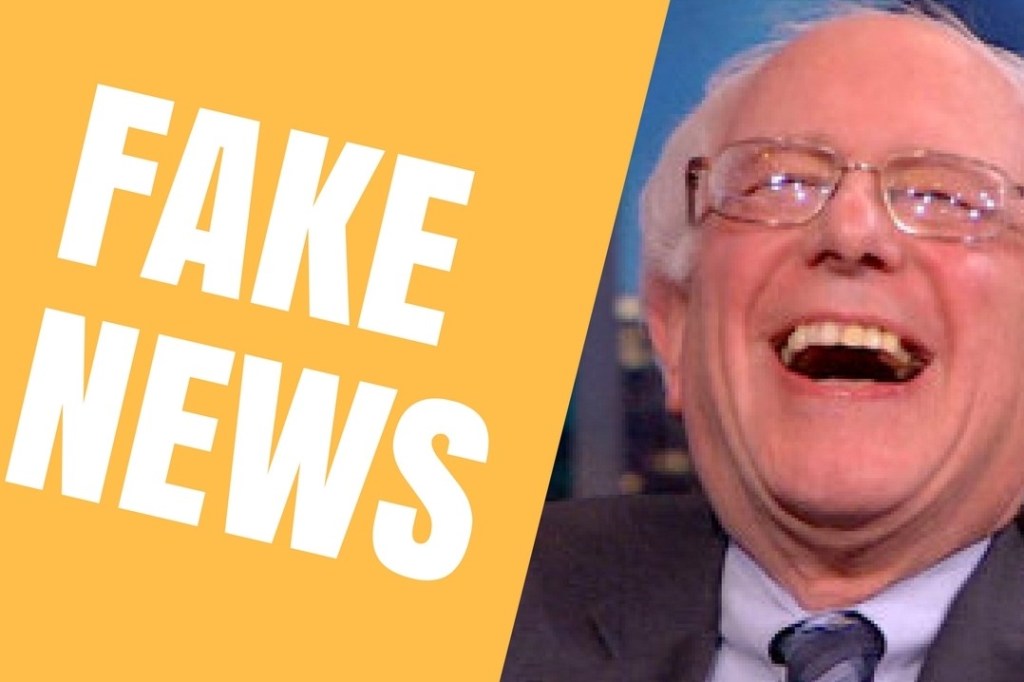
Bernie Sanders has thrown his hat into the ring seeking the presidency of the United States in 2020. Already he has shown electoral promise by managing to raise six million dollars in a single day from across the country. Most interesting is the fact that the average campaign donation is only $27 dollars. This certainly shows that, thus far, his campaign is not being funded by the elite of the capitalist class. While this may seem positive, we must keep in mind that he still seeks to serve the capitalist Democratic Party. This, in the end, tells you all that you need to know.
A new bright side to the 77-year-old Vermont senator is his recent seeming opposition to the US intervention in Venezuela. Specifically, he has refused to recognize Juan Guaido, the alleged president of Venezuela hand picked by the US government. His choice to do so has the Democratic establishment rattled, as well as the mainstream US political scene.
While appearing for an interview on Univision, he flatly refused to recognize Guaido as president when asked if he did. (source)
“No. I think what has to happen right now – I think there are serious questions about the recent election. There are many people who feel it was a fraudulent election, and I think the United States has got to work with the international community to make sure that there is a free and fair election in Venezuela.”
We should applaud Sanders for refusing to recognize the US puppet Guaido. We should simultaneously denounce him for overtly lying about the legitimacy of the Venezuelan election. There is zero evidence of any election fraud. Every single neutral organization which oversaw the elections certifies that they were free and fair. Only the political establishments of the imperialist countries have insisted otherwise. Sanders is lying, he has no evidence of any wrongdoing.
While Sanders has been celebrated in the US left for refusing to recognize Guaido, they have not criticized him for casting disparages upon the Venezuelan election without evidence.
It’s clear what Sanders is trying to do here: he’s refusing US intervention on populist grounds, but he’s also justifying the intervention by supporting the malicious lies which justify it. Sanders is playing a political game. He says what he needs to in order to appeal to his base of support. At the same time, he espouses the mainstream political lies in order to try and stay in favour with the Democratic Party elite. In Marxist terms, this would be called careerism. However, it is not applicable here because Sanders job is to serve the capitalist class by parroting their false claims.
This view is also very common among other so-called “democratic socialists”. Why shouldn’t it? This “democratic socialism” is wholly reflective of this position. It feigns a socialist veneer by offering social democratic reforms, but in substance is fully capitalism and all its mechanisms. He can pretend to be progressive on Venezuela, but it is all a show. At heart, he is US imperialism, just as social democracy and “democratic socialism” is.
We find the exact same thing with Tulsi Gabbard. She once refused the lie of the Syrian government using chemical weapons on its own citizens. Now she has changed her mind in a recent appearance on The View. (source) She now opposes the strategy of intervention in Syria but defends the lie that is used to justify it. This is the face of progressivism, the false promise of change.
Sanders is just the progressive gloss over the capitalist institution.
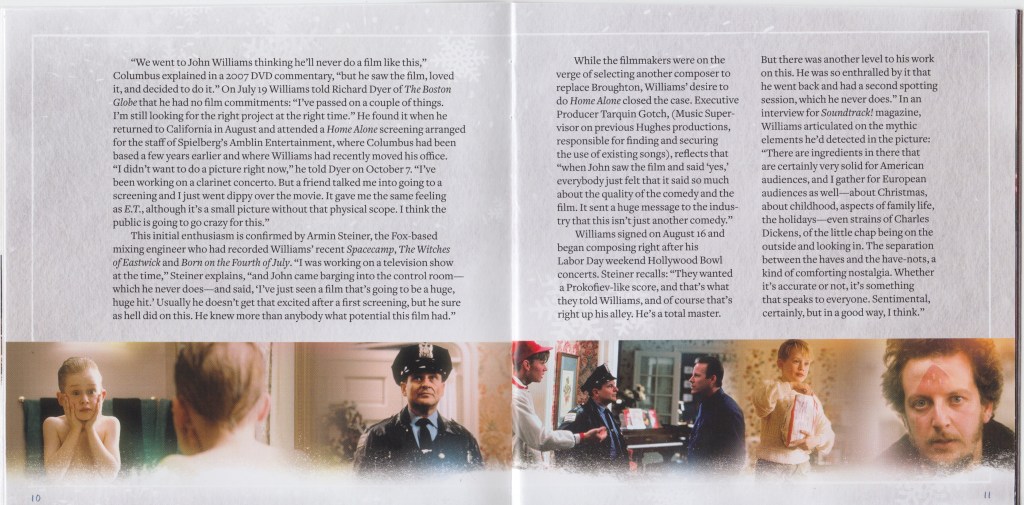
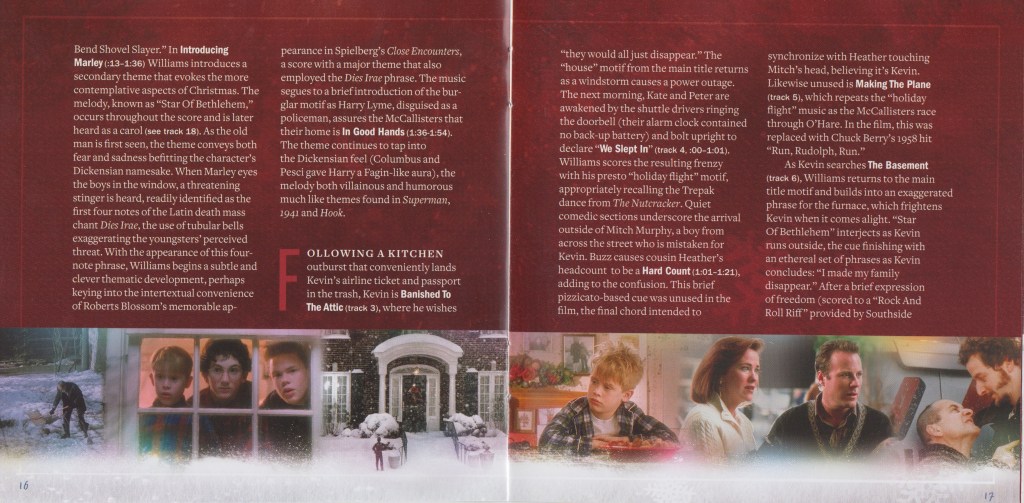
La-La Land Records, 20th Century Fox, Fox Music and Sony Music present HOME ALONE 25th ANNIVERSARY: LIMITED EDITION, a very special restored, remastered and expanded 2-CD re-issue of renowned composer John Williams’ (JAWS, STAR WARS, EMPIRE OF THE SUN, A.I. ARTIFICIAL INTELLIGENCE) original motion picture score to the timeless 1990 holiday classic feature film HOME ALONE, starring Macaulay Culkin, Joe Pesci and Daniel Stern, and directed by Chris Columbus. For this deluxe release, produced by Mike Matessino and Nick Redman, and executive produced for Sony Music by Jeff James and Didier C. Deutsch, producer Matessino worked with newly discovered elements (2’’ scoring masters containing 3-track mixes), which he transferred, mixed and mastered at high resolution (96k/24bit). The result is a strikingly sonically improved presentation of the score above and beyond any other HOME ALONE soundtrack release. Disc One contains the film score, with additional music, and Disc Two presents the re-mastered original 1990 album presentation with bonus tracks, including the addition of two tracks recorded for the film by Southside Johnny Lyon and the songs “Run Rudolph Run” and “Rockin’ Around the Christmas Tree.” With revised in-depth liner notes by Matessino and joyous all-new art direction by Jim Titus, this is the definitive release of a holiday classic from one of filmdom’s greatest and most beloved composers.
In 2018, I take another look at the Nintendo Wii U, mod the console with an exploit known as Haxchi and see what its capable of. Is truly awesome in 2018 after the Switch ate its lunch? Lets find out!
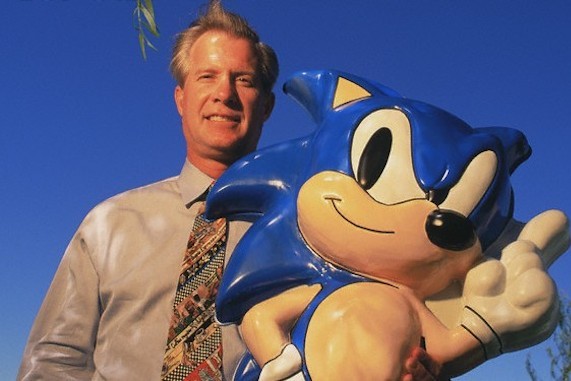
What do Barbie, SEGA’s Sonic the Hedgehog, and Leapfrog’s educational toys have in common? Their success is the brainchild of one man, Tom Kalinske. He has been CEO of various multinational companies such as Mattel, SEGA America, and Leapfrog. In each of the companies, he has consistently brought products to its heights and revolutionized industries.
Today, Kalinske is executive chairman and one of the founders of a new company called Global Education Learning, which is focused on the early childhood education market in China. Their goal is to bring quality US curriculum and educational materials to China. They recently acquired another company and launched their first product this past year, and are already profitable in the millions.
We recently spoke with Kalinske on his work and experiences.
Reviving Barbie at Mattel
Kalinske started working at Mattel in 1972. During his time as President and CEO, he helped build the Barbie, Hotwheels, and Masters of the Universe brands. This made Mattel the largest toy company in the world.
In recognition of his achievements, Kalinske was inducted into the Toy Industry Hall of Fame, which includes names such as Walt Disney, George Lucas, Mattel founders Ruth & Elliot Handler, and Hasbro’s Stephen Hassenfeld.
What made you take up the challenge of saving the Barbie brand? How did you do it?
At the time, Barbie just had its first decline from about US$100million to US$42million. The market was saturated and there was a lot of competition. I was working on the pre-school line for Mattel. Ruth [Handler] walked into my cubicle one day and told me, “Both the sales team and retailers say Barbie is over, and we should focus on something else.” The Wall Street analysts thought that it was over as well. I told Ruth, “That it is the dumbest thing that I have ever heard. I think Barbie will be around long after you and I are gone.” And so, she made me in charge of the Barbie business.
In determining the strategy for Barbie, I asked Ruth, “Why is Barbie special?” She told me, “Barbie can be whatever every girl wants it to be.” That became the strategy for how we positioned Barbie; the strategy was to segment the market. Up until then, the company would introduce one lead doll per year, with one set of accessories and a costume. I thought that was too little, so I did market segmentation and introduced a variety of Barbie dolls. There was a “My first Barbie” for the young girls. Then, there was fashion, Hollywood, and super-star Barbie for the older girls.
We also did price segmentation. At that time, people did not believe that a doll could be sold for more than $6. We introduced a series of collectors’ Barbie dolls, which sold for more than $100. We did the same thing with the accessories and costume for Barbie. There were occupational Barbie dolls such as astronaut Barbie and even the President Barbie. The theme was that every girl could be whatever she wanted to be.
Business grew very rapidly in the US and around the world. And, revenue grew from $42million to over $550million in only a few years. Barbie uses the same strategy today.
Battling Nintendo at SEGA America
Success at Mattel was only the beginning for Kalinske. In 1990, Kalinske joined SEGA America as its CEO. His appointment transformed SEGA into a $5 billion company, and their market share grew from 10% to a peak of over 50%. In the fiercely competitive gaming market, Kalinske employed an aggressive and remarkable strategy against the market leader then, Nintendo. The success of Sega has inspired and transformed an entire generation on video gaming.
Unfortunately SEGA’s fortune took a dive with the introduction of SEGA Saturn. SEGA never recovered from Saturn and was eventually pushed out of the gaming industry. It is well documented that Kalinske was forced to introduce SEGA Saturn to the market although the hardware was not fully developed and there was simply not enough game titles to support the launch.
In May 2014, Blake J. Harris authored a new book titled Consoles War on the corporate battle between SEGA and Nintendo, featuring Bill White, Perrin Kaplan, Al Nilsen and Tom Kalinske. A documentary movie is currently in the works and scheduled for release at the Sundance Film Festival in late 2014. This story has also triggered interest in Hollywood, and we expect a movie to be released in 2016.
What was the secret behind the marketing strategy against Nintendo?
We tried to change the market. At that time, Nintendo was going after the teen market, in the range of 9 to 15-year-old boys. So, we went after a different market — the older teens and college students. We introduced more sports-theme games, like Joe Montana football, NBA, and FIFA Soccer. We also introduced strategy and war games to appeal to the older age group. And, we also had a great lead character like the Sonic Hedgehog, which was very different from Mario Bros.
We also made fun of Nintendo. We positioned ourselves as the big boys, and emphasized that their games was for the kids. We appealed to the older audience and had to develop the SRB rating systems too, because we didn’t want young kids to be playing older-kid games, such as blood and shooting games.
What would you have done differently with SEGA Saturn, if you had a second chance?
I was not impressed with how the hardware of SEGA Saturn was developed. The head of R&D, Joe Miller, and I wanted it to be better and more differentiated. We lost that fight with SEGA Japan. The engineering model was that SEGA America focused on the software and games, while SEGA Japan worked on the hardware.
We had an opportunity to collaborate with Sony to produce a Sony-SEGA hardware system. We were great at software, where the money was. And, Sony was working on an more advanced hardware system. But, SEGA Japan rejected that idea. That was the first mistake, and I was forced to introduce Saturn. I would not have introduced it until the hardware was better, and when we had enough software to support the launch. We only have 3 titles at the launch, so that was not enough to get it going.
Was that the most difficult decision you have to make while at SEGA?
It was definitely one of the toughest decision I was forced to do it. And, it led to the most difficult decision: to leave SEGA. We had great people at SEGA, and it was tough to leave. I received an offer to start and run a company called Education Technology, which was later renamed to Knowledge Universe. The goal was to look into using video game technology to improve education. I thought it was a very exciting opportunity.
Tripling Down as CEO and Transforming Education at Knowledge Universe
In 1996, Kalinske left SEGA to become President of a newly formed company, Knowledge Universe. Under his leadership, Knowledge Universe grew from a $500million into a $3.6billion dollar group by 2005. The company also invested in over 35 education companies, including a company called K12, which is valued at $1.2billon today. One of their well-known successes is the acquisition of LeapFrog. At LeapFrog, Kalinske made video games highly educational and was a first in the industry to do so. In doing so, he transformed the company into the largest educational toy company in the world. Revenue quickly grew from $72 million to $680 million within a short span of 4 years, from 1999 to 2003.
What was a key lesson you learned from mixing entertainment with education?
At Knowledge Universe, I had $500 million to form or buy education companies. The second company that we bought was LeapFrog. It was only doing $9million in revenue at that time, and they were losing money. The Wall Street analysts said it was crazy to buy LeapFrog, because they didn’t believe that parents would pay extra for educational toys. We ended up proving them wrong. We used video game technology to make education more fun and adaptive for children.
We discovered that parents really are willing to pay more, and children will really use and learn from educational toys. For me, that is the future of education.
How did you make LeapFrog profitable?
We worked very closely with Dr. Robert Calfee, who was the Associate Dean at School of Education at Stanford University, to help with the design of our products. Later, he formed an education review board with other professors from UC Berkeley, Michigan, Harvard, and Yale to review and ensure that our products were educationally correct. We first ensured that they were educationally correct, and then we made them fun and interesting. Our competitors were copying everything that we did. But, they did not have the same resources in Stanford as we did. This made a big difference.
Secrets for Success
Does success beget success? It certainly seems like Kalinske has a recipe for success.
What is your secret for success?
Always be critical and skeptical about what the common experts say. In my career, I have almost always gone up against the experts’ beliefs and proved them wrong. I have also learned to not be arrogant or complacent when you have success, otherwise it will be short-termed. And, always do something that your competition will not and cannot do. Be different.
What advice do you have for aspiring leaders?
Be a real student of the market. You have to know your market better than anyone else does. Always do more than what is asked of you. Think about how you can help others in your company. Be different and again, never be arrogant or complacent.
Before Panty & Stocking with Garter Belt pushed the boundaries of good taste, before Tengen Toppa Gurren Lagann redefined struggle on a cosmic scale, even before Neon Genesis Evangelion rewrote the rules of the mecha subgenre, a studio of fans-turned-animators known as Gainax made waves with Nadia: The Secret of Blue Water. Loosely based on Twenty Thousand Leagues under the Sea by Jules Verne, inspired by an unproduced story concept from Hayao Miyazaki, and helmed by series director Hideaki Anno, Nadia is a tale of high adventure set in a fantastical version of Europe and the Atlantic Ocean during the year 1889.
The series chronicles the exploits of Jean, a French boy who also happens to be an ingenious inventor, and Nadia, a young circus performer with a mysterious past. Together they seek to return Nadia to her native land, but this task is difficult since Nadia has no memories of her life before the circus. During their quest, Nadia and Jean run afoul of Grandis Granba, a wicked noblewoman with a pair of bumbling henchmen and an amphibious flying tank. Grandis covets Nadia’s Blue Water gem and will stop at nothing to possess it. Jean and Nadia also cross paths with Neo-Atlantis, a shadowy organization bent on world domination. With the aid of Captain Nemo and the crew of the Nautilus submarine, will Nadia finally discover the truth of her origins? And what is the secret of the Blue Water, the enigmatic bauble that glows whenever danger threatens Nadia?
Nadia is a show with two identities: on one hand, it’s a children’s adventure story complete with an annoying animal sidekick and a buffoonish trio of antagonists straight out of the Time Bokan animation series. On the other hand, it’s a surprisingly dark and somber proto-steampunk fantasy that leans heavily on the anticolonial and antiwar themes expressed in Jules Verne’s original novel. On the one hand, Jean is a mechanical genius whose whimsical gadgets invariably break down in a puff of cartoon smoke. On the other hand, the technology employed by Neo-Atlantis sinks ships and orphans children. In one breath, a sailor trapped in a damaged section of the Nautilus heroically accepts his fate. In the next, he screams over the intercom that he doesn’t want to die, pleading for a rescue that even he knows to be impossible. The closest comparison I can make is to Hayao Miyazaki’s Castle in the Sky, a film with which Nadia shares a similar aesthetic and tone.
Nowhere is this contrast of styles more apparent than in the dreaded “island episodes,” which were created during the final third of the series to answer the demand for more content during Nadia’s initial NHK broadcast. During the island episodes both the storytelling and the animation quality of the show take a turn for the terrible. To borrow a metaphor from another nautical work of fiction, this sequence of episodes is an albatross chained to the neck of an otherwise excellent series.
Nadia: The Secret of Blue Water has had a rocky release history in the United States. During the VHS era, Streamline Pictures released eight English-dubbed episodes of Nadia. This version is noteworthy only for the quality of the dubbing, which I’ve often heard described as “infamous.” Many years later, ADV Films attempted to publish Nadia via a subscription-based model under their ill-fated ADV Fansubs label. Then in 2001 and 2002, ADV published a general release that spread 39 episodes across 10 individual DVDs, none of which were labeled by volume number. Perhaps as a result of this treatment, Nadia never achieved an American following like later Gainax shows did.
Now Sentai Filmworks, one of the orphans of ADV Films, is rereleasing the show in complete collections on Blu-ray and DVD. Hopefully this release will receive the attention it merits, because although it’s been eclipsed by the popularity and influence of Evangelion, Nadia: The Secret of Blue Water is nevertheless a highwater mark for anime from an earlier era. Recommended.


















 Igor's Blog