NIST Says A Fire Caused It; NIST Is Lying

https://nomadiceveryman.blogspot.com/2019/09/nist-says-fire-caused-it-nist-islying.html

It is high time we stopped putting up with bullshit.

Nearly 7 years after the fact, the National Institute of Standards and Technology (N.I.S.T.), a division of the Commerce Department, finally released their report on the collapse of Building 7 today.

(pay careful attention to the sound on this. There are very few videos of the collapse of Building 7 with sound.)

We are told by N.I.S.T. that the cause of the buildings collapse was a standard “open” office fire caused a critical connection to fail due to what they call “heat expansion”, and that when that critical connection failed, it caused a domino effect with other connections, resulting in the perfectly symmetrical failure of the structure, starting with the center columns, resulting in the building falling and ending up in a perfectly neat pile, no bigger than it’s foundational foot-print. I don’t think so.

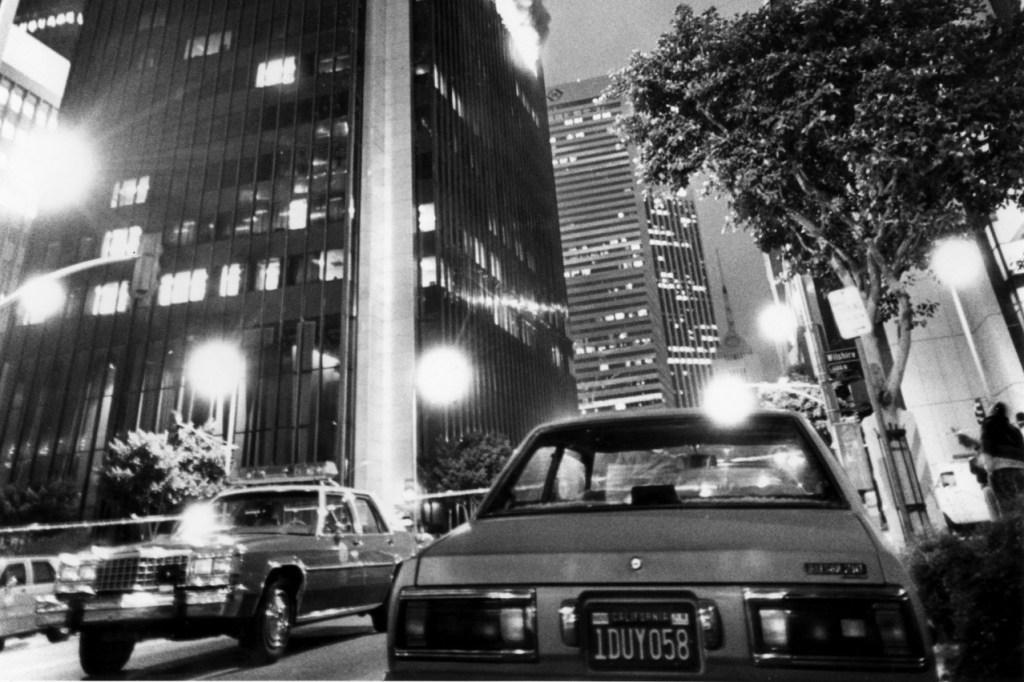
On May 5, 1988, The Interstate Bank building in L.A. burned for 3.5 hours and gutted 4 floors completely. It DID not collapse into a pile of rubble. Perhaps because for some reason, the “heat expansion” didn’t happen prior to 9/11.

On Feb. 13th 2005, in Madrid Spain, the Windsor building burned for over 15 hours at temperatures that reached over 1,400 F.

It burned so brightly that it illuminated Madrid all night. In the end, only a few floors failed on the upper level, and it still had enough structural integrity to support the massive construction crane that was on top of the building.

Nope. No “heat expansion” here.

The next day, this is what was left of the building. It took months to demo the building afterward, one piece at a time.

I wonder how much that costs? I bet Larry Silverstein knows.

This is the horrible inferno that was building 7. According to N.I.S.T.,

According to N.I.S.T., this is what destroyed building 7 of the WTC complex. Building 7 was newer and better designed than the previous 2 that I mentioned above. It was actually hand selected to be the home of the Office of Emergency Management because of it’s “bunker-like” design. Theoretically, this building was to be used in the event of a natural disaster in New York; like a massive earth-quake or a war of some kind. Yet, one little office fire caused it to end up like this;

Buildings 5 and 6 of the WTC complex stood between the North tower and Building 7. When WTC 1 (the North tower) collapsed, the debris cut Building 6 in half and severely damaged Building 5. The resulting fires burned for nearly 9 hours.

Yet, strangle enough, neither of these two buildings collapsed into their own foot-prints.

Building 5 burned out of control for nearly 9 hours; Building 6 was almost as bad.

So. I think it’s time we stopped letting our government agencies get away with lying to the American people about things that matter. Just a few weeks after the FBI released their make-believe story about Dr. Ivins being the anthrax killer, N.I.S.T. released this complete bullshit (not to mention, John McCain trying to tell us he doesn’t know how many houses he owns. I can believe he doesn’t know who the President of Russia is and whether or not Iran is training al Qaeda, but if there IS one thing this prick DOES know, it’s exactly how many houses he owns.)

I wouldn’t be surprised if we did attack Iran very soon. That will take people’s attention from nes like this, and make it harder for people like myself to question the “official story”, since, of course, we are supposed to “shut up” when we are at war.

N.I.S.T. knows this load of crap can’t hold up under the light of day for very long. Apparently, they had finished this report months ago, but for some reason, they withheld releasing it until now. With the naval build-up in the Gulf right now, it seems obvious to me that they were waiting for just the right time to release it, and then some other, bigger news story will drown this one out.
I’ll Never Love a Console Like I Loved the SEGA Game Gear

https://www.vice.com/en/article/gqmwwx/ill-never-love-a-console-like-i-loved-the-sega-game-gear-820

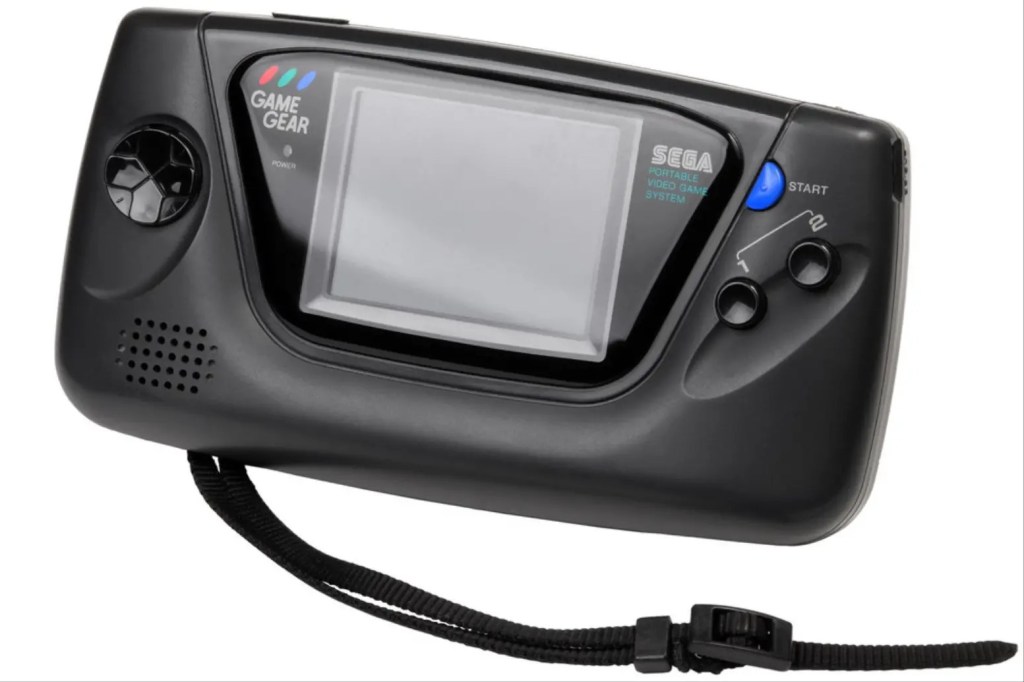
The battery-chugging handheld is 25, and while it failed to match the sales of the Game Boy, it remains a special piece of SEGA history.

I’d love to stand here before you today and tell you I was on the right side of history. But the truth is, I wasn’t. I was Betamax. I was HD-DVD. I was that boy band that went up against Girls Aloud in Popstars: The Rivals.

I was, to be precise, the kid at school who had a Game Gear instead of a Game Boy.

October 2015 marks 25 years since SEGA released the Game Gear in Japan. It was a hastily cobbled together thing—basically a Master System CPU crowbarred into a black box—but you would have been hard-pushed to know that simply by looking at it. A sleek if not particularly svelte machine, the Game Gear was the epitome of early 1990s SEGA cool. With a backlit screen capable of displaying 4,096 colors (that’s, like, all the colors), Sega’s technicolor dreamboat seemed well poised to challenge the dominance of Nintendo’s primitive by comparison Game Boy system, with its monochromatic screen that could only display four shades of baby sick.

As we now know, SEGA’s portable didn’t put up much of a fight. With 11 million units sold worldwide, the Game Gear was far from a failure, but handheld consoles are judged by a different standard, aren’t they? And the standard of the time just happened to be the Game Boy’s 118 million worldwide sales.

The reasons the Game Gear took such a shellacking are well documented. Firstly, it had a thirst for power that even the Lannisters would think was a bit much, slurping through six AA batteries in just four hours. The Game Boy could squeeze around ten times that amount of playtime out of just four.

Secondly, Nintendo garnished the Game Boy with a typically strong first-party lineup. You might have been forced to play Super Mario Land and Tetris via vom-o-vision, but it was the Gear’s underwhelming launch titles, such as Super Monaco GP and dull-as-Downton Abbey_-ditchwater match-three puzzler _Columns, that looked sickly in comparison.

All of which placed the Game Gear in a marketing no-man’s land. It didn’t have either the mainstream or the hardcore kudos of the Nintendo alternative, and it wasn’t even the hipster’s handheld—the impossibly exotic back-end of CVG magazine’s reviews section was reserved for the games of ultra-niche formats such as the PC Engine and the Atari Lynx.

But the Gear’s saving grace, as mentioned, was that it was able to absorb some of that SEGA coolness by osmosis. Advertising campaigns compared the Game Boy’s bile-hued screen unfavorably with the Gear’s, and that, coupled with a reasonable $149.99 price point, managed to hook in a few million suckers with more money than sense.

SEGA’s advertising didn’t mess about when it came to trashing the competition

And those suckers included me. In April 1992, I was the fresh benefactor of a burglary payout. The insurance company sourced me a replacement Amiga, but in those days you could only find games by mail order or by chance encounters in stores, and they really couldn’t be arsed to trawl every Tandy in the land in the hope of finding a tatty copy of Chuck Rock.

So I received a lump sum for my software collection instead (fitting, as I always felt I was entitled to monetary compensation for playing through Rick Dangerous II), which I decided to invest in a handheld console. And given that 1992 saw Sonic at the peak of his popularity, my eyes hungrily looked past the Game Boy’s rich library and towards the blue hedgehog instead, naked as the day he was born but for his gloves, sneakers, and enough attitude to bring down a government.

I couldn’t plead ignorance as an excuse for my own personal #gamegeargate: magazines, the shop clerk, even my own mother tried to dissuade me from doing the dirty deed. And, naturally, everyone else was proved right, as the Game Gear’s comically short battery life rendered it unfit for purpose. Long-haul flights required a master class in restraint and forward planning, and when playing it at home, the Gear’s battery lust meant I was tethered to the wall via the AC adapter as if the star of a E L James novel.

But wait, because this isn’t a tale of regret. Far from it. I was happier with my purchase than the Game Boy could ever have made me. As a games writer, friends often come for advice, asking things like, “Everyone says I should get a PS4, but I really want to play Forza 6.” And I always tell them to go with the console they want to buy deep down in their gut, because whatever its flaws, you’ll make it work because you want to make it work.

And so it was with me and my Game Gear. And if you wanted to work with, rather than against the system, then the console’s internal similarities with the Master System meant there was a much wider range of software to choose from than common perception dictates. In its early life, the Game Gear was blessed with numerous Master System ports, adapted slightly for life on the small screen—which was no bad thing, as this was an era when Sega was lavishing as much attention on their 8bit systems as it was the 16bit Mega Drive/Genesis.

Ports of contemporary games such as Streets of Rage II, Road Rash, and Gunstar Heroes squeezed an incredible amount of juice out of the Game Gear’s aging processors, while other series were given more drastic makeovers. The handheld Sonic as an example is almost unrecognizable from 16bit Sonic, but is arguably the better game, with more focus on precision platforming than the speed-obsessed Mega Drive game. Plus, having to search out Chaos Emeralds in the wild, rather than having them awarded through special stages, added a level of exploration that just isn’t there in the “proper” version.

Genuinely great Game Gear exclusives were thin on the ground, but they did exist. I have a particular soft spot for SEGA’s unique portable version of Shinobi, an action-platformer with an open-ended structure that was clearly inspired by the Mega Man series, and was so tough you could knock out a rhino with it.

I still have my Game Gear; it sits in a quiet corner of my spare bedroom, and I whip it out for a quick blast every now and then. It’s a miracle it still works apparently, as Game Gear innards are prone to corrosion, although the console needs to be held at an angle, otherwise the AC adapter loses connection and the system powers down. It makes for the most tense and exciting game of Ax Battler I’ve ever played, I’ll give it that much.

I’ll probably never get rid of it, even when its insides do eventually succumb to the ravages of fresh air, because the Game Gear represents a small, relatively obscure corner of gaming history packed full of hidden, underrated treats that’s uniquely mine. Everyone and their dog knows about Tetris, but the Game Gear library? That’s something only I, and a few million others, a mere handful by commercial measures, got to savor.

ADVENTURES IN BABYSITTING (Michael Kamen)

http://store.intrada.com/s.nl/it.A/id.9697/.f

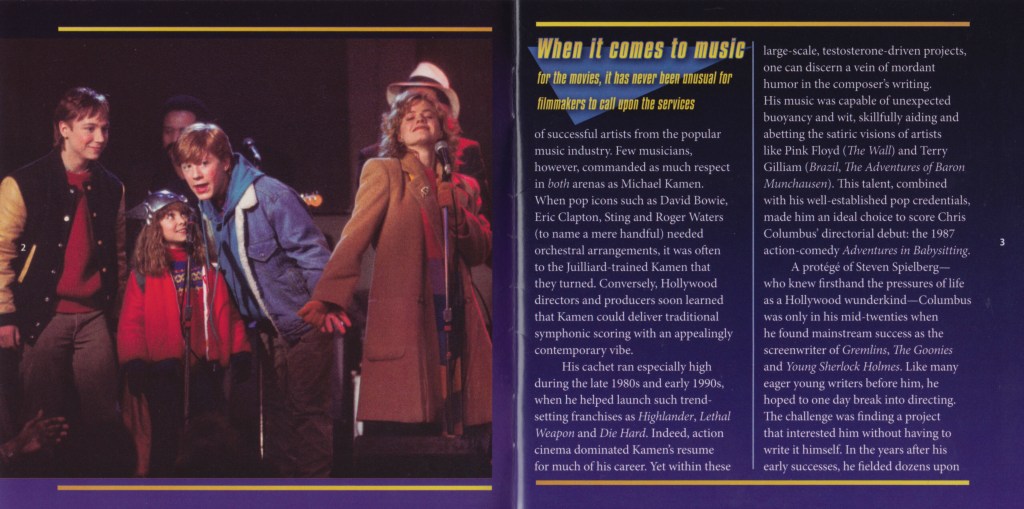
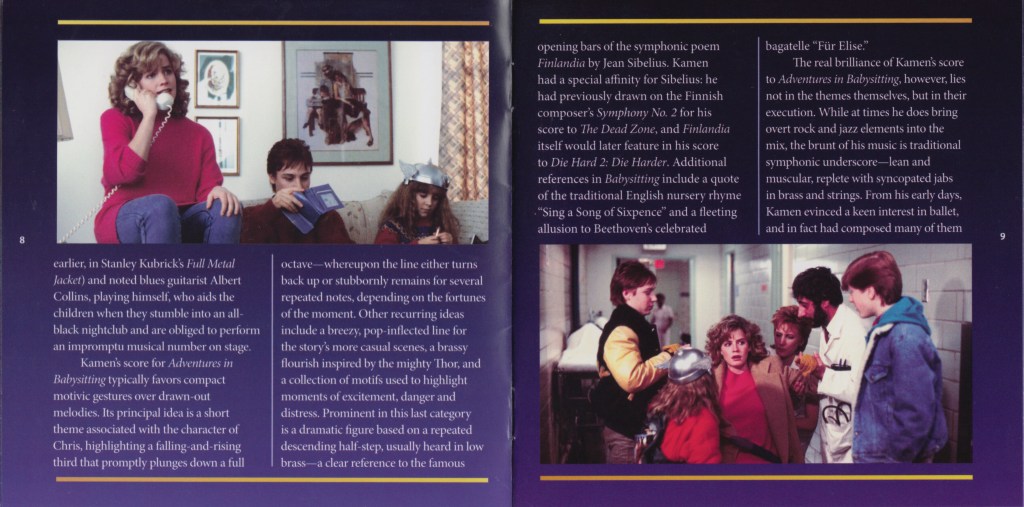
Composer Michael Kamen carved out a niche for himself as a premiere action composer in the late ’80s, launching the musical franchises for both the Lethal Weapon and Die Hard series. His punchy action and ominous string suspense writing brought a unique sound to the budding over-the-top action genre. Composed the same year as Lethal Weapon, his score for the 1987 Touchstone Pictures film Adventures in Babysitting is a bit deceptive on screen — during postproduction, several cues were dropped and many others truncated, reducing the amount of score in the finished film by a significant amount. In actuality, it is a a substantial work running roughly 70 minutes—with sessions for large orchestra held in both New York and Los Angeles. The score proper favors compact motivic gestures over drawn-out melodies. Its principal idea is a short theme associated with the heroine Chris (Elizabeth Shue), highlighting a falling-and-rising motif, while other recurring ideas include a breezy, pop-inflected line, a brassy flourish inspired by the mighty Thor, and a collection of motifs used to highlight moments of excitement, danger and distress.

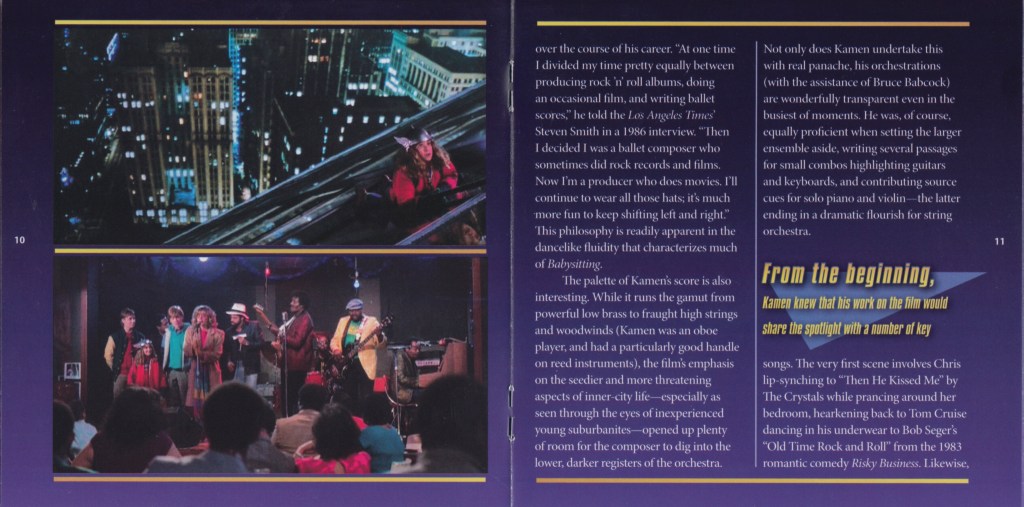
This premiere release of the score features all of the cues Kamen recorded for the picture in their original full-length versions, plus a wealth of never-before-heard music. Four songs important to the soundtrack appear as well, including the famous hit “Then He Kissed Me” and the show-stopping “Babysitting Blues,” in which the cast members attempting to elude their dangerous pursuers suddenly find themselves smack in the middle of a blues concert—on center stage no less. The orchestral sessions were recorded on 2″ 24-track tape and preserved in that format in pristine condition in the Walt Disney vaults.

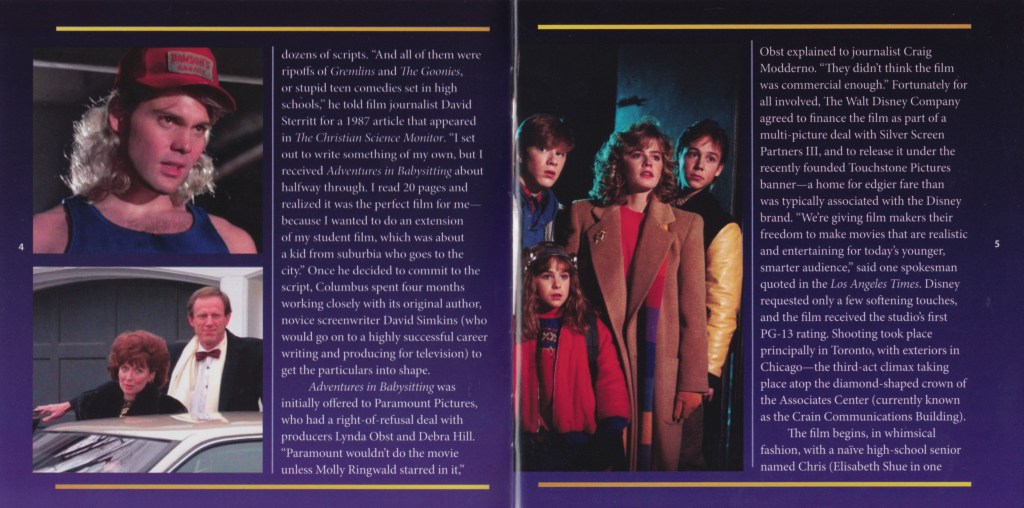
In the film, Chris agrees to a last-minute babysitting job in the Chicago suburbs. Her main responsibility is to look after Sara (Maia Brewton), a precocious 10-year-old who is obsessed with the Marvel Comics hero Thor. In the bargain, she has to deal with the clumsy advances of Sara’s love-struck older brother, Brad (Keith Coogan), and his horndog friend, Daryl (Anthony Rapp). What promises to be a relatively uneventful evening is interrupted by a desperate phone call from Chris’ best friend, Brenda (Penelope Ann Miller), who has run away from home and been stranded at a sinister downtown bus station. Chris piles the kids into the car to pick up Brenda, and the rescue attempt is derailed in short order by a series of improbable events, leading to a carjacking by an amiable young thief and their capture by the unsavory criminals behind a chopshop operation.