
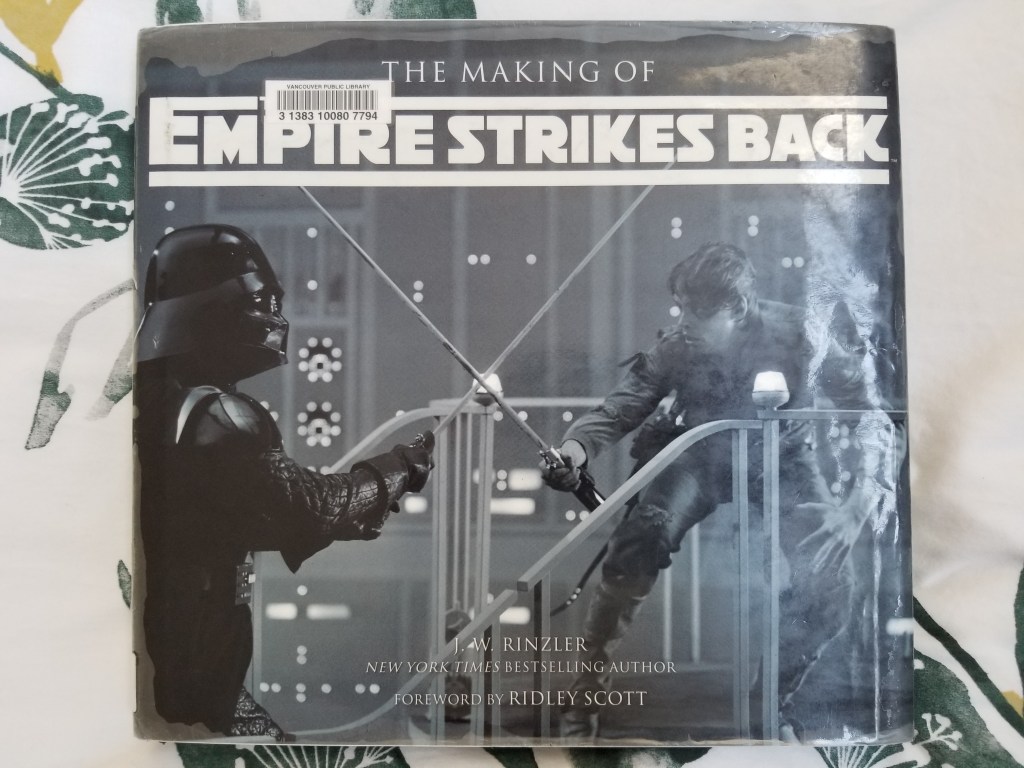
Now reading The Making Of Star Wars: The Empire Strikes Back by J. W. Rinzler…


Originally posted on May 17, 2019:
I don’t review films often, but I think that Avengers: Endgame (2019) is worth talking about. First of all, I saw Captain Marvel (2019) for the second time recently, and this time I paid for the ticket. I now think that it’s one of the best MCU films, if I’m being honest. I’ve never been a Marvel fan because I don’t like to be a fan of anything, really. But Marvel films, for example, are worth seeing because they’ve become what people call event movies. They’re enjoyable to watch. I’m not one of those people that dislike Brie Larson because of something that she said. She plays the role of Carol Danvers in Captain Marvel. I’ve got better things to do than hating some actress. I mean, what do people expect at this point? I guess that they need an outlet for their anger or frustration, and there are things to be angry about these days, but picking Hollywood as the object of hatred seems silly to me. Hollywood is one of the industries that have been feeding them propaganda for most of their lives, but now, all of a sudden, they’re angry because an actress stated an agenda in a somewhat obvious way. I don’t mean to insult them because I understand their situation, but I think that they should pick up a book and read once in a while. They’ll be more informed. This is one of the problems with people now. People hardly read anymore. Instead of reading, they watch television or see films. Nowadays, there’s a new distraction, which is playing video games. Therefore, because of their lack of knowledge and lack of critical thinking, they can be so easily manipulated by the authorities. Anyway, Captain Marvel, the character, doesn’t play an important role in Avengers: Endgame, as it turns out. I did find Larson’s acting to be fine in the film. Carol Danvers is important in her own film, but, in Avengers: Endgame, her importance in the story has been much overblown before the release of the film. Avengers: Endgame is kind of a mess. It’s not a piece of garbage because there are still many enjoyable things in it, but the script wasn’t written very well, in my opinion, and the film ended up being one of the worst MCU films. Honest reviewers on IMDb have already pointed out the flaws in this film. There’s fat, pathetic Thor. There are the inconsistencies with time travel. There’s the silly humor. There’s the poorly thought out final battle. There are the continuity problems. This film is a kind of a stinker. Still, I did find it to be entertaining. It didn’t make me feel bored. I think that out of the two most recent Avengers films, Avengers: Infinity War (2018) was much more important for Marvel and the filmmakers than Avengers: Endgame. Therefore, Avengers: Infinity War contains the exciting action and the messages that the filmmakers wanted people to see. Avengers: Endgame, on the other hand, turned out to be a film with leftovers. Thanos revealed his reasoning and his agenda in Avengers: Infinity War. He succeeded in wiping out half of all life in the universe with the “snappening”. Naturally, Marvel couldn’t let this be the end of the story. People would have been outraged at such a depressing finale. Therefore, Avengers: Endgame had to be made so that the Avengers could defeat Thanos and undo his doings, though Thanos does have a few more things to say this time as well. This time he makes a little speech about rewriting history and brainwashing people. In addition, Iron Man and Captain America had to be killed off because Robert Downey Jr. and Chris Evans had been playing these roles for long enough. In addition, the writers and the filmmakers saw an opportunity to patch up some of the inconsistencies from previous MCU films. Rene Russo came back to better develop the character of Frigga because of a lack of development in Thor: The Dark World (2013). Hawkeye gets more screen time as well because people complained about his lack of screen time in previous films. So, the filmmakers wanted to service the fans, and the fans sure did get serviced with Avengers: Endgame. In my opinion, Avengers: Endgame turned out to be a leftovers and patch up film after the main event that was Avengers: Infinity War. And, of course, Avengers: Endgame sets up the next phase of the MCU. Funnily enough, the directors, Anthony Russo and Joe Russo, are now responsible not only for some of the best MCU films but also for the worst and most ridiculous MCU film. In my opinion, that is.
I finished reading the book ‘Factories of Death: Japanese Biological Warfare, 1932 – 1945, and the American Cover-Up’ by Sheldon H. Harris. I think that it’s good reading for those who are interested in World War II. It’s about a rarely covered incident that happened before and during World War II. It seems that the history that this book covers has been suppressed in the USA because Japan is a close ally of the USA. In the book, there’s information about what happened to the American POWs that were captured by the Japanese after the capture of the Philippines. Japan, as it turns out, had the largest biological weapons program in the world at that time. The author also wrote about post-war Japan and about the domination of conservatives and reactionaries in Japanese government. I haven’t yet finished reading Nikolay Danilevsky’s ‘Russia and Europe: A Look at the Cultural and Political Relations of the Slavic World to the Romano-German World’ (1895). But I have come across more interesting information in the book that is worth mentioning. Danilevsky pointed out that there have been three periods of development and growth in the history of Western civilization. This is probably where Carroll Quigley got the idea that there were three separate ages of expansion in Western history. I know that Danilevsky’s book was influential for Quigley because he mentioned it in two of his books. Moreover, Danilevsky even wrote the rough dates of these periods of development, though Danilevsky didn’t go into them in detail and he didn’t explain why they took place. At this time, I’m also reading Immanuel Velikovsky’s ‘Worlds in Collision’ (1950), Oswald Spengler’s ‘The Decline of the West’ (1918), and Quigley’s ‘Weapons Systems and Political Stability: A History’ (1983), which is the only book by Quigley that I haven’t read yet. I’m often reading these books on my smartphone while I take trips on a ferry, on my way to and from work. Since I haven’t yet finished reading these books, I can’t comment on them much. I have been enjoying reading them so far, and I will probably tell what I think about them after I’m done reading them.
Originally posted on September 9, 2017:
Is Alien: Covenant (2017) really that bad? I did say that it’s a somewhat disappointing film. What I meant by this is that it’s just disappointing and not terrible. In my view, Covenant is a slightly better film than Prometheus (2012) because it makes a little more sense. A few people said to me that they kind of like Covenant. I can understand why they think that. Covenant is an entertaining film, in my opinion, and it does make more sense than Prometheus, but it also has some of the same problems. Because Covenant is a film by director Ridley Scott, it’s a given that it looks very good, though not as good as Prometheus. And, honestly, I’d like for him to make a sequel to Covenant. I’m a little interested in what he might be able to do with a sequel. I’ve been enjoying listening to the music scores by the composer Jerry Goldsmith to the first three Rambo films. First Blood (1982) is a standout film of the 1980s, and it’s easily the best of the Rambo films. What surprised me, however, is that Goldsmith’s scores for the Rambo sequel films didn’t drop in quality. The sequels themselves certainly dropped in quality, but this isn’t the case with the music. The scores for Rambo: First Blood Part II (1985) and Rambo III (1988) are rousing as well, and they’re enjoyable to listen to. What I noticed about films starring Sylvester Stallone is that they usually have good music scores and soundtracks. I wonder if Stallone himself made it a priority to have good music in his films, especially in the 1970s and the 1980s. The biggest disappointment of this year at the cinema for me was the film It, which was directed by Andy Muschietti. It didn’t even seem like a film to me when I was watching it. More like a collection of nonsense. I can’t believe that so many people are praising this film. Sure, it’s kind of entertaining, the acting is fine, and there’s some humor, but this is where the good stuff ends. And, unfortunately, I fell for the hype. I had a good feeling that I’d be somewhat disappointed by this film because films are usually disappointing nowadays, and it’s hard to adapt Stephen King’s thick novel to film, but I didn’t think that it would be such a mess. What made my viewing experience worse is the fact that I finished reading the novel just several days earlier. It was still fresh in my mind, and I remembered pretty much everything that happened in the novel. While I was watching the film, I couldn’t believe what I was seeing. There’s plenty of swearing that isn’t in the novel. There’s no explanation of who Pennywise is. The film is set in 1989, but the filmmakers still decided to make the characters act like they’re in 1958. This doesn’t seem to work. I can’t really imagine children, and even grownups, behaving like this in the 1980s. Therefore, seeing It (2017) seems like a waste of my money.
So, I finally finished listening to the audiobook of Stephen King’s It (1986). It took quite some time because it’s about 45 hours long. I didn’t quite get as much enjoyment out of listening to the novel as I did when I read it years ago because I know what happens in the plot. I still enjoyed listening to most of it, however, especially the first half, in which King reveals the history of Derry. It’s when the reader doesn’t yet know what It is. I don’t think that the novel is a masterpiece, and I don’t like a few aspects of King’s writing, but it still seems good to me after all these years, and it’s so much better than the novels that get written nowadays. Now that I’m done with It, I’m listening to Fyodor Dostoyevsky’s The Idiot (1868), which is a novel that I’ve wanted to read for quite some time. Instead of reading The Idiot, I decided to listen to the audiobook since I had a few credits to spend. What’s also worth noting is that I’ve noticed a rather interesting trend in American fiction of the 1980s. I’m now reading a few American science-fiction novels from the 1980s, and something that pops up even in the genre of science-fiction of this period is anti-Soviet propaganda. I’m sure that many people know about the writer Tom Clancy, about the fact that his novels are pretty much anti-Soviet, pro-American military propaganda. Well, all of this isn’t a coincidence. The fact that Ronald Reagan praised Clancy’s propaganda novel The Hunt for Red October (1984) wasn’t a coincidence either. As historian Andrei Fursov pointed out, the Americans, when Reagan was the president of the USA, intentionally raised tensions with the Soviet Union. The Americans released a lot of offensive anti-Soviet propaganda in the 1980s. But this propaganda now seems mild if it’s compared to the anti-Russian and anti-Soviet propaganda that began to be released in the West in the 2000s. The fact that Hollywood released many action films in the 1980s also wasn’t a coincidence, in my view. The Americans were intentionally trying to create an atmosphere of tension, violence, and confrontation. They did this because they had a strategy of trying to weaken the positions of the Soviet Union. It’s because they saw this as one of two ways of getting out of the economic crisis that was affecting the West since the early-1970s. The other way for them was war. In the end, we know that the Americans succeeded, thanks to people like Mikhail Gorbachev, whom Fursov described as one of the two biggest traitors in Russian history. The other one is Boris Yeltsin.
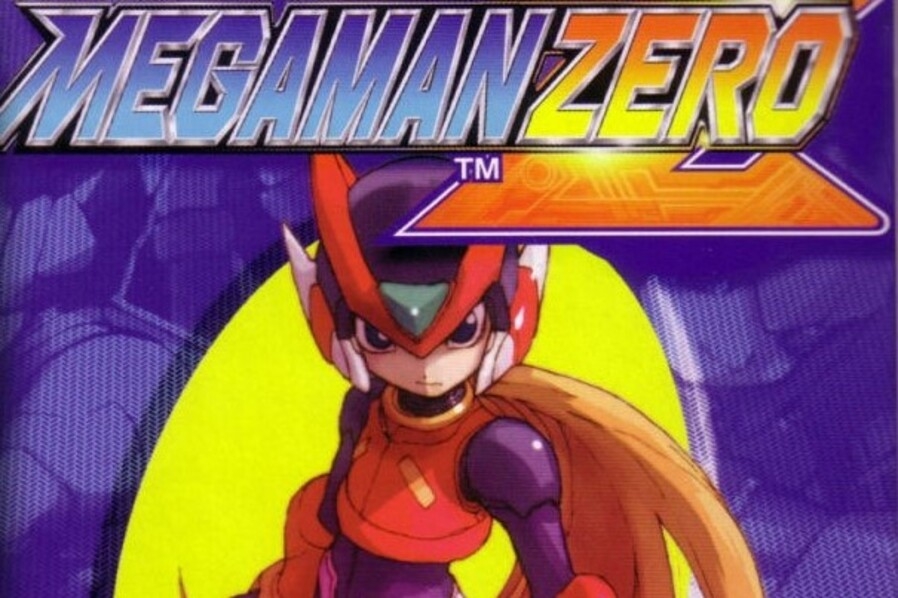
Mega Man Zero is exhilarating action-platforming. The dark tone engulfs the player into the atmosphere surrounding the resistance and Neo-Arcadia. Overall, there is a lot to like about Mega Man Zero; so, where does one begin talking about the great things in Mega Man Zero?
The Plot:
The game takes place half a century after the events of the Mega Man X series. After stopping the evil “Maverick” leader, Sigma, both X and Zero vanish. However, Mega Man Zero begins when Ciel, a human scientist, runs into a sealed chamber to awaken Zero. Ciel awakens Zero after being powered down a hundred years ago and joins the resistance, a group who is fighting against Zero’s previous ally X, the leader of Neo Arcadia. Zero eventually also discovers that the X controlling Neo Arcadia is a copy of the original. Ciel constructed “Copy X” since the original X disappeared a long time ago. Copy X desired world peace, nevertheless, Copy X lacked the moral judgment of the original X. Believing that reploids posed a threat to humans, Copy X branded any reploid posing any threat to humanity as a Maverick. With the spirit of the true X guiding him, Zero sets out on a journey to defeat the four guardians and the Copy X.
The plot is very grim and dark for a Mega Man game. The player ends up helping the resistance, a group that seems to be horribly outmatched and basically a group that fears Neo Arcadia. Helping the resistance allows the player to take pity on the out-resourced and outmatched resistance. Not only does the player take pity on the resistance, the player also pity’s the Copy X who eventually gets defeated by Zero. After being defeated, Copy X claims that “I was supposed to be…the perfect copy…How can this be…possible…I was supposed to be…a hero…”. Even though retiring innocent reploids was wrong; Copy X believed that his actions were just and believed that he was to some extent helping the greater good. He believed that what he was doing was heroic. Defeating and watching Copy X’s ambitions fail only makes the player feel sorry for Copy X’s defeat.
Also, the player may wonder, were Copy X’s actions completely unjustified?
How did fighting mavericks for so long lead to Copy X believing that every reploid is a maverick?
These questions made me fascinated by Copy X’s character and made him a very interesting villain. His ambitions were interesting and well thought out, nonetheless, these questions made me want to explore more of Copy X’s personality. I wanted to explore more of Copy X’s personality because I wanted to feel like his actions were completely justified. I felt enough pity for Copy X that I wanted his actions to be just, so I can feel less pity (this can’t happen though because this would defeat the purpose of a villain). In the end, I like the villain and I think the plot is very well rounded in Mega Man Zero.
Music:
The soundtrack deserves praise for matching up with the tone and atmosphere in Mega Man Zero. None of the tunes seem cheery and seem to line up with the grim and dark atmosphere. The music also, most importantly, lines up at the correct moment occurring within the game. The “deadzone” theme is a fast-paced intense tune that generally plays when the player is in a time crunch and in a serious pinch. You will also know when you’re facing one of the four guardians or Copy X due to the dramatic legendary entrance theme. You will also know when “the end of legend” has begun because that theme cues when you have defeated Copy X. It’s a very fitting them that focuses on a loop that changes from a normal to an eerie sad sound. The eerie sad sound matches up with the sad defeat of Copy X and the pity and sorrow felt for Copy X.
Gameplay/Mechanics:
In Mega Man Zero the player can dash on the ground, jump, wall jump, climb walls, and hold a primary and secondary weapon. The resistance base also functions as hub and completing a mission can unlock another mission. Players also have three lives to complete a mission before receiving a game over. Leveling up weapons happens when players constantly use the same weapon for a long period of time. In Mega Man Zero, players can only earn a fire, thunder, and ice chip. Thus, there are not nearly as many new weapons as previous Mega Man games. However, Mega Man Zero introduced “Cyber Elves”, a completely new and different mechanic.
Cyber Elves can be found in certain missions or by killing certain enemies. When equipped, Cyber Elves can allow players to take less damage, slow enemies down, and increase health. Only three Cyber Elves can be equipped at a time and some require to be fed energy crystals. While Mega Man Zero is a difficult game, Cyber Elves do help the player and makes frustrating parts a little less frustrating by giving the player a small handicap.
Difficulty:
Mega Man Zero offers a fair amount in mechanics and the Cyber Elves do make things easier; however, the difficulty is extremely punishing. Beating the game in a single playthrough blind is no easy feat, while additionally, the game focuses a lot on trial and error. It’s normal to miss very specific jumps or to get gunned down by the massive waves of enemies. Instant kill spikes, hazards, one shot abyss pitfalls, Mega Man Zero has all of those. The player also only has three lives, while additionally, Zero can only take so many hits before dying. Finding one-ups (haha what are those) are not easy to find without the help of a guide and do require a little bit of exploration the further you progress through the game. Zero, however, ramps up in difficulty when trying to get an “S” or “A” rank which requires a perfect run of the level and the boss fight. This requires the player to memorize every single nook and cranny of the level. While I did find Mega Man Zero frustrating at points, I still enjoyed the game and was not turned off completely because of the difficulty. However, be warned this is not an easy game and if you hate challenging games then this game is probably not for you.
Boss fights:
The boss fights are fun, nonetheless, a few bosses do have their fair share of difficult moments. One of the first bosses, Aztec Falcon, was a challenging boss since you must beat him at a certain time and the fact that the room is small. Zero also does not have access to any E-chips in the early portion of the game. The guardians are no walk in the park as well. Harpuia and Phantom are some of the hardest bosses in the game. Phantom has no E-chip weakness, whereas, Harpuia even with the Ice Chip is no cake walk. Harpuia generally flies about shooting a large arc beam and can even pick up Zero and slam him into the ground. Also, the final level in Neo Arcadia is a boss rush and requires the player to fight eight bosses before the final battle with Copy X. So, despite the occasional difficulty with boss fights, why are the boss fights fun? I found myself enjoying the boss fights because I felt like I achieved something by beating these bosses. The harder bosses were even more satisfying to defeat due to the sheer difficulty involved. I especially enjoyed the four guardians and would recommend this game based only on the awesome boss fights.
Final thoughts:
Mega Man Zero is an amazing action platforming that can be relentless with difficulty spikes. However, despite the difficulty, the game still provides a nice punch of enjoyment and players will feel amazing satisfaction when steamrolling through the difficult sections of the game. Zero is also relatively accessible and can be played on the virtual shop on the Wii U, the original Gameboy Advance cartridge, or the Mega Man Zero collection for the Nintendo DS (probably the best way to play the original Mega Man Zero games). Overall, Mega Man Zero is an awesome game and I would highly recommend it.
Год производства: 1968
О военном параде и демонстрации трудящихся на Красной площади в Москве в ознаменование 50-летия Великой Октябрьской социалистической революции 7 ноября 1967 года.

Some tipped the DS to fail, but the gaming’s most creative designers looked at it and saw only ideas and opportunities.
The Nintendo DS was destined to flop. Pundits lined up to scoff at its maker’s folly, mocking this ugly stepchild of a console, with its cheap looks and weird dual-screen design. Sony’s PlayStation Portable, the PSP, was by far the more attractive on-the-move option, a handheld with sleek, desirable looks and far greater horsepower. The battle was over before it had started: Sony had already won, and Nintendo would be forced to exit the hardware race.
Except, of course, that didn’t happen. Sure, the DS might have had two faces only a mother could love. And heck, even Nintendo might not have been confident in its own creation—it was quickly positioned as a “third pillar,” designed not to replace the Game Boy line, but to supplement it. But like the Game Boy, it was a huge success, built upon the late Gunpei Yokoi’s theory of “lateral thinking with seasoned technology”: It made creative use of cheaper, older parts for a more unique play experience and won over a massive audience in the process. It also happens to be the console that got me into writing about games for a living. So you can blame/thank Nintendo for that.
Launched in late 2004, just a month ahead of the PSP, the DS went on to vie with the PlayStation 2 for the title of biggest-selling console of all time. But it got off to a sluggish start. The initial lineup of games was far from brilliant: It was undoubtedly a novelty to play Super Mario 64 on a handheld, but the bizarre “thumb shoe” peripheral that you were supposed to slide across the bottom screen to mimic analog movement never felt natural. The stylus-based mini-games of WarioWare: Touched! convinced some that touch controls were the future, but for my money, it couldn’t hold a candle to the original, nor to its brilliant, gyro-enhanced Game Boy Advance follow-up, WarioWare: Twisted!.
The problem with the DS was that no one had reckoned on it being a hit, with most publishers throwing their weight behind the PSP instead. That wasn’t quite the case in Japan, however, and with the console being region free, many players (including me) started to import games rather than waiting for Western developers to pull their finger out. It might be hard to imagine now, but back in 2004, the pound was in pretty good shape and import sites like Play-Asia and the dear departed Lik-Sang offered the opportunity for hundreds of DS owners to get their hands on an array of strange and fascinating Japanese—and, occasionally, US—titles well ahead of their European debuts.
‘Yoshi Touch & Go’ became available for the Wii U Virtual Console in the summer of 2015.
With plenty of disposable income—ironically, much more than I can afford to spend on games these days—I submerged myself in the import scene. Your average Japanese game cost between $21 and $30, and I gorged on mad, experimental stuff. Games like Namco’s Pac-Pix, which asked you to draw a Pac-Man (the size of your scribble determining his speed), using arrows and walls to direct him. Yoshi Touch & Go (I always preferred its excitable Japanese title, Catch! Touch! Yoshi) was maybe a bit rich at like $40 over here. But at not much more than half that for an import copy, this unusual but addictive score-chaser, which had you drawing touchscreen cloud platforms for Mario’s dino friend to walk across, was worth every penny. Then came Kirby’s Canvas Curse—or Power Paintbrush over here—which pulled a similar trick but with more substance.
I started spending more and more time during my nine-to-five office job on forums, chatting with like-minded importers. Not that we always made sensible choices. We tried to convince ourselves that SEGA’s I Would Die for You—aka Feel the Magic: XY/XX, aka Project Rub—was an inventive, light-hearted romantic tale about a boy wooing a girl rather than an unsettlingly creepy compendium of middling touchscreen mini-games. But for every flop, there was a word-of-mouth success.
Osu! Tatakae! Ouendan (later retooled for the West as Elite Beat Agents) was and still is one of my favorite games ever made: A series of J-Pop bangers soundtracking the elaborate dance routines of a male cheer squad, called to solve everyone’s problems via the time-honored medium of shouting and dramatic poses. Its comic-book vignettes ranged from a violinist suffering from a sudden attack of the stomach problems on the train (we’ve all been there) to a giant meteor threatening all life on Earth. The pick of the bunch, though, was a surprisingly heart-breaking story: A recently diseased young man makes a final trip from the heavens to say goodbye to his girlfriend, set to Hitomi Yaida’s gorgeous power ballad “Over the Distance”.
I also dipped into Hudson’s excellent puzzle series, including the dangerously absorbing Slitherlink. I spent many a happy hour tinkering with Toshio Iwai’s musical curio Electroplankton. I laughed my way through many a multiplayer session on the MIDI-tastic Daigasso! Band Brothers (belatedly localized as Jam with the Band and frequently celebrated—to similarly hilarious effect—on the excellent podcast The Rotating Platform). The Trauma Center games gave me the chance to conduct nerve-racking procedures as a talented surgeon, wielding my stylus as a scalpel. The superbly written Ace Attorney games introduced me to extravagantly coiffed legal hero Phoenix Wright. Pretty much every one of them was available in Japan well before anywhere else, and soon my feverishly enthusiastic forum posts became something more substantial. I set up my own website to cover these games, and within a couple of years, I had my first magazine commission.
Beyoncé appeared in television advertising for ‘Rhythm Heaven/Paradise.’
Games like Dr. Kawashima’s Brain Training, Nintendogs, and the all-conquering New Super Mario Bros—not to mention a vastly superior redesign—eventually brought the DS to a much wider audience, and with it came all-ages classics like the Professor Layton series, oddities like Contact, inventive RPGs like The World Ends With You and Radiant Historia, and thoughtful, touching narrative adventures like CiNG’s Hotel Dusk: Room 215. Rockstar courted controversy once again with a portable GTA containing an incredibly moreish drug-dealing aside. We even got Beyoncé advertising the wonderfully batshit Rhythm Heaven/Paradise.
But even at the very peak of its popularity, I’m not sure the DS—or any console since, for that matter—was ever quite as exciting as in those early days, where developers were trying lots of wacky ideas with this strange new device to see what came off. I’ve never been so in love with video games as I was back then, with this bizarre clamshell contraption: the device everyone said would fail, but that the medium’s most creative designers looked at and saw only ideas and opportunities.

In the city of Salamanca, Spain, there is a cathedral that was constructed in 1102 CE, making it one of the oldest in the world. Like many other cathedrals, the walls have been decorated with many wonderful carvings of saints, demons, and various other objects… one of which is very unusual. The carving appears to very clearly be of an 20th century astronaut! How did it get there? Did a twelfth century artist predict the future?
Ancient Astronauts?
The astronaut in question, as shown above, is indeed carved into the walls of a cathedral in the city of Salamanca, but all is not as the legend represents. First, there are two cathedrals in Salamanca; the oldest does indeed date from 1102 CE, but it isn’t the cathedral with the carving… the newer cathedral, built between the 16th and 18th centuries, is the one where the astronaut can be found.
The carving is, in fact, an astronaut. It was added to the structure in 1992 by Jerónimo García, who was the man in charge of restoration work being done to the cathedral. He also added a gargoyle eating an ice cream cone.
It’s said that the astronaut was added to symbolically represent the 20th century, and that the gargoyle is a similar representation of students from the local universities.
This is one of those legends that spreads readily because it has a provocative image; I will likely never find exactly where or when the story started, but a brief survey of Pinterest postings of the legend show three things. First, there were many postings, the oldest going back to 2013. Second, most of those posting had been informed of the problems with the legend, but still didn’t change the story their original posts presented… so this legend will likely continue to circulate for a long time, simply because there will always be somebody who sees and reposts the older stories.
Third and most sadly, the survey of pictures in Pinterest shows that the astronaut carving has degraded greatly from the image above in the past few years, with the face and right arm most damaged. This is likely either due to weather or vandalism, which is too bad… it’s a wonderful carving.

Taylor Swift and her girlfriends capped off the end of a very star-studded Independence Day weekend with a spectacular fireworks show.
The 26-year-old shared a triumphant Instagram snap of herself posing up with Ruby Rose, Uzo Aduba, Blake Lively, Cara Delevingne, Gigi Hadid and Este Haim who wore a Amour Vert striped tee. ‘Happy 4th from us (heart emoticon)’, the songstress wrote in the caption.
It was no doubt an unforgettable way to end the Independence Day weekend.
Many of the girls wore matching red, white, and blue Onepiece USA Onesie Stars and Stripes jumpsuits, while Taylor opted for a black top with a cut-out below the neckline.
Taylor is a the global pop phenomenon and the youngest female ever to make it onto the prestigious Forbes World’s 100 Most Powerful Women list.
With five platinum albums and seven Grammy awards,Taylor has successfully cemented her status as the globe’s savviest star.
And the singer has also been busy forging a powerful network of female friends from some of the hottest and most glamorous A-listers around.
Taylor enlisted her powerful ‘squad’ as she calls them to help her ring in the 4th of July at her $17.75million home in Rhode Island.
New power couple Taylor and Tom Hiddleston were celebrating Independence Day Weekend with a celeb-packed beach party alongside Ryan Reynolds and Blake, models Gigi and Karlie Kloss, and Orange Is The New Black star Ruby Rose.
Not among Taylor’s gathering of famous friends – obviously – was recently dumped DJ Calvin Harris, 32, who split from the Grammy winner last month after 15 months of dating.
To date the infamous list includes Joe Jonas, Twilight star Taylor Lautner, musician John Mayer, actor Jake Gyllenhaal, Conor Kennedy and One Direction star Harry Styles.
According to Loveline’s Dr Drew, Taylor Swift may suffer from ‘love addiction’ – in that she is in love with being in love.
‘You get in deep fast, and you idealize the other person and you have lots of fantasies attached to that,’ he told the Allegedly podcast, in a clip obtained by TMZ.
‘And then you can’t quite get out, and because you go so deep so fast the other person feels like it’s clingy, and the other person sabotages, and the cycle repeats.’


 Igor's Blog