
The Harvard University survey, which polled young adults between ages 18 and 29, found that 51 percent of respondents do not support capitalism. Just 42 percent said they support it.
Month: February 2021
Polish prostitutes: Meet the forest whores outside of Warsaw
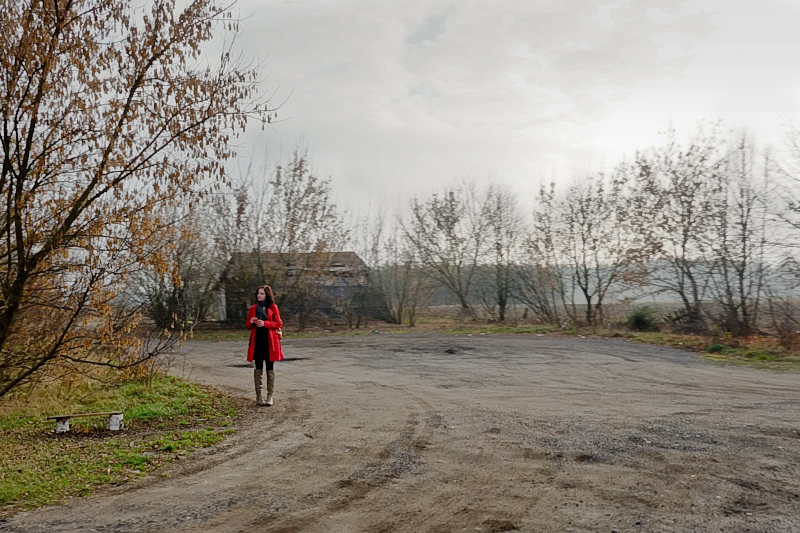
We were driving at about 100 clicks an hour. I’d seen some pretty forests in Poland, but this wasn’t one of them. Dark, craggy, and apart from the passing traffic it would be considered isolated. It wasn’t a freeway, it was more an interstate back-road. I saw a lady standing by the curbside in the sand by some trees. There was a large black plastic bag by her side.
Lots of makeup, attractive, and well dressed. Something seemed not-quite-normal. It was a strange place for such a lady to just be hanging out. Within a couple of minutes, I saw another. My mind subconsciously twigged. It was the third spotting, two ladies in matching mini-skirted uniforms, that erased any doubt in my mind. I had entered the lands – of the Polish forest whores.
Brothels, whorehouses, chicken houses, cat houses, dens of iniquity, knock shops, houses of ill repute, and bordellos are illegal in Poland. As the old adage goes, pimping may not be easy, and in Poland, pimping is also illegal. However, in Poland, consensual prostitution — selling sex — is perfectly legal. Motivated by these laws, industrious Polish prostitutes have taken their wares and prominently displayed them along roadsides that cut through the forests surrounding many cities in Poland.
Commonly, these ladies are referred to as tirówki. TIR is an abbreviation for Transports Internationaux Routiers — the moniker given to the many heavy-duty truck drivers that also travel these same wooded roads. I won’t profess to know who the main clientele of the forest prostitutes are. I will say that with drivers facing endless hours in the truck cabin away from home, well, combine that with the tirówki nickname and the conclusions are there to be drawn.
Despite the legality of prostitution, the forest prostitutes are members of the only profession that officially remains un-taxed in Poland. Unfortunately, this also means these citizens are not entitled to any social benefits, such as healthcare and other social welfare. In a country where all efforts to promote safe sex are hindered by the dominance of the Catholic Church, this is worrisome.
According to the daily newspaper Gazeta Wyborcza, 10% of all Poles under investigation by the tax office have reported their occupation as “prostitute.” The Warsaw Business Journal wrote about Polish tax authorities having to instigate procedures and systems specifically to interview the vast numbers of people claiming to be prostitutes. Avoiding income tax may not be so easy. Self-proclaimed prostitutes are now being asked to provide evidence of their working life, such as photographs or client testimonials.
Driving from Warsaw to Augustow, I would estimate that I saw around 40 forest prostitutes. Certain Polish legislators are not happy with this level of street prostitution in Poland. So, in 2007 a proposed nationwide ban on miniskirts, heavy makeup, and see-through or low-cut blouses was proposed, considered an appropriate method to rob prostitutes of means of advertising. Fortunately, the ludicrous proposal was not acted upon.
Personally, I didn’t expect to see scores-of-whores adorning the forested back roads of the Polish countryside. That morning, I was researching one of the most ancient forests in Europe, located not far from where these photos were taken. By lunch, I was reminiscing with friends about the surreal and strange world of the forest-dwelling prostitutes of Poland.
The thing is, I have many female readers. Above all, I respect, protect, and admire women the world over, especially those nearest and dearest to my own heart. I make no personal judgments on these forest ladies. Sadly, I am sure many of them are working as prostitutes so that they may simply have a roof over their heads, and meals each day.
Even sadder is that many are probably seeing their dangerous jobs as a way to get that new BMW or big-screen TV.
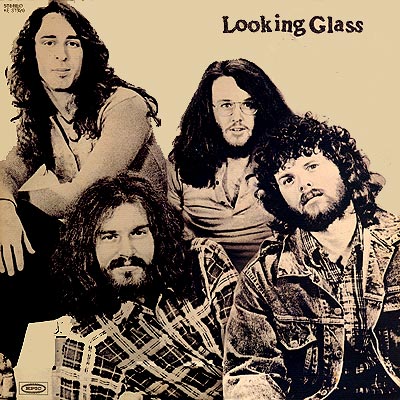
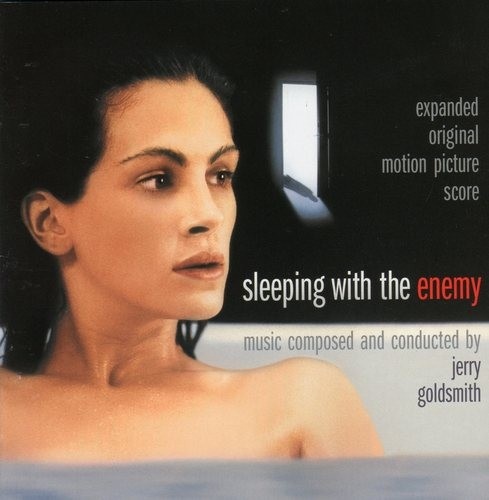
Now listening to Looking Glass by Looking Glass and Sleeping With The Enemy by Jerry Goldsmith…
Pokémon Gold Silver and Crystal (Nintendo GameBoy Color) – Retro Game Review – Tamashii Hiroka
Today Tamashii reviews Pokémon Gold Silver and Crystal for the Nintendo GameBoy Color, games that recently the general public have turned on. Are these Pokemon games as good as we remember or are we blinded by nostalgia? How do they stack up when compared to modern games like Pokemon Sun and Moon?
The Vision of Escaflowne is from the Golden Age of Anime

I just realized that I haven’t reviewed some of the books that I mentioned in my earlier posts. First of all, I finally finished reading two autobiographies, which I got hold of because of curiosity, though this happened months ago. Joan Fontaine’s book, ‘No Bed of Roses’ (1978), does contain some interesting information, at least for me. This book is hard to obtain now, even on the internet. I was able to find it at a library, however. The most interesting part of the book for me was the beginning, in which Fontaine related her early life. This woman was born in Japan in 1917 to British parents, but she grew up in the United States. Her father was in his fourties when he met her mother in Japan. Interestingly, he died in North Vancouver, which is exactly where I reside. Fontaine had an older sister, Olivia de Havilland, who was a more famous actress than her. Fontaine died in 2013, and Olivia died in 2020, when she was 104 years old. Fontaine wrote that Olivia was intelligent and that she did very well in school. Olivia also began her Hollywood movie career earlier than Fontaine. I think that both of the sisters looked rather good. Well, both of them became actresses, after all. And in the movie business you usually have to have good looks in order to make it. I even bought a poster of Olivia. This poster is a black & white photograph of Olivia that was taken when she was in her twenties. This poster is the only black & white poster that I have, and it’s also the only poster of an actress that I have. All my other posters are 1980s movie posters, paintings, or landscapes. Now, some people think that Olivia is the most beautiful actress from Classical Hollywood cinema and even the most beautiful actress ever. Well, she certainly looked good enough for me to buy a poster with her face, but people should remember that even during the Golden Age of Hollywood actors wore makeup. And this is one of the reasons why they looked attractive. The right cinematography also helped them to look good. This doesn’t mean that they looked bad without makeup. This simply means that makeup made them look more appealing in films and on photographs. But I think that I have to agree with the people who think that Olivia was a beautiful actress, at least with makeup on her face. When it comes to Hollywood actresses, she was definitely one of the most attractive. If Olivia had written an autobiography, I would have read her autobiography before I read Joan’s autobiography. As to be expected, most of Joan’s book is about her movie career, which is considerably less interesting than I would have liked. The films that she starred in are almost all worth seeing, but reading about them, and about what happened to her, wasn’t very interesting for me. When it comes to Joan’s political views, it appears that she wasn’t particularly political, but she still came off as a kind of liberal, I suppose. Since she was an actress, it’s clear that she had to support the American establishment because Hollywood is a very politicized industry. The USA is obviously a right-wing state. Nowadays, I think that it can even be called a semi-fascist state. Real leftists, and especially communists, weren’t tolerated in Hollywood, especially after World War II. Charlie Chaplin, for example, was a known supporter of the Soviet Union during World War II, and he got driven out of Hollywood because of his politics. There’s information that George Orwell, Mr. 1984 himself, secretly accused Chaplin of being a secret communist and a friend of the Soviet Union. Contrary to what some right-wingers say, Hollywood was not some haven for communists, even before the Cold War began. I’ve seen many Hollywood films that were made before and after World War II. I can say that not one of them featured pro-Soviet or pro-communist comments or propaganda. On the contrary, some of the Hollywood films that I’ve seen featured only anti-Soviet and anti-leftist comments or propaganda. It’s unthinkable that a pro-Soviet or pro-communist film or book can be released in the USA. This has never happened. It’s possible to get neutral books or pro-Soviet books from minor publishers, but these are rare. For example, you won’t find a book by Grover Furr at a book store or even at a library. None of the major publishers have ever published a pro-Soviet or pro-communist book. Perhaps there were exceptions during World War II, when the USA was an ally of the Soviet Union, but this lasted only for a few years. Since just about everything is controlled by an oligarchy in the USA, a person can’t obtain truthful books or information about the Soviet Union, about Mao Zedong, about the Soviet economy and society, about Joseph Stalin, about the collapse of the Soviet Union, and about many other topics. Anyway, since Joan Fontaine wasn’t one of the actors or filmmakers that got expelled from Hollywood, it’s clear what her political views were like. In fact, at the end of her book, she clearly made a few anti-Soviet, anti-South African, and pro-American remarks. But is her book worth reading? I’d say that it is worth reading, especially for those people who are interested in Classical Hollywood cinema.
Eileen Rockefeller’s book, ‘Being a Rockefeller, Becoming Myself: A Memoir’ (2014), was a somewhat less interesting read for me than Joan’s book. And, again, the beginning of the book, in which Eileen related her early life was the most interesting part for me. I got the impression that she didn’t have a happy childhood. But there’s also the possibility that she didn’t want the reader to think that she had a happy childhood. I’ve read articles about her, and it’s clear that she’s very much aware of what many people think about her famous family. She doesn’t want people to think that she had it good simply because she’s a Rockefeller and because she had a privileged upbringing. It seems that she wasn’t as close to her parents as her other siblings, and she wasn’t particularly close to her siblings either. She has five older siblings (three sisters and two brothers). I think this means that her mother, Margaret McGrath, was popping out babies for about a decade or more. Well, Eileen was born in 1952, and she can be called a baby boomer. The two or three decades after World War II were a pretty good time for the USA. The economy was booming at that time, and it’s not surprising that white American women were giving birth to many children. As to be expected, because of her family’s status and wealth, Eileen attended all-girls schools and private schools. If I remember correctly, she even had a mentor, Norman Cousins, who probably taught her something about international relations and world affairs. In the book, Eileen revealed some of the ways in which her parents raised her. I definitely learned a few things from these accounts. One example is that her mother wanted her and her siblings to spend some time with farm animals in order to gain empathy. Overall, the book is not a bad read, I suppose. Eileen very much reminds me of one of my grandmothers, my father’s mother. Her personality and the way she writes are very similar to my grandmother’s. Eileen’s book is easily available. I bought the audiobook on Audible. If you’re looking for more juicy information about the Rockefeller family, I think that this book isn’t for you. In the book, Eileen didn’t even reveal what her political views are like, though she did mention some things about her siblings. Since Eileen had an upper class upbringing, the book is very much a work by an upper class, well-behaved woman. It’s by an American woman, but still by an upper class woman. Therefore, you won’t come across any words about female anatomy, like in Joan Fontaine’s book. But I guess that Eileen still couldn’t help herself from time to time because there are some jokes in the book. And she also included one rather memorable episode in which she had a fight with her husband. The difference between upper class people and lower class people is actually quite staggering in Western countries. I’ve had to deal with lower class people my whole life, but only as an adult, after seeing some films and reading some books, have I done some thinking about this issue. I can say that lower class people don’t get a good education. Therefore, they don’t know much and they can be easily manipulated by the authorities. Many of them are not well-behaved. They can easily be rude, cruel, vile, or bigoted. They obviously don’t have much money, and, therefore, they don’t dress well or have good taste. If they eat out, they almost always go to fast food restaraunts. In fact, I once heard Andrei Fursov mention in one of his interviews that people from the upper class in England like to make fun of the way people from the working class and the middle class dress and behave. And the activities of lower class people rarely go beyond watching television, watching sports games, or talking about their monotonous lives and lower class issues with their lower class friends.
One of the television series that I finished watching a few months ago is Nadia: The Secret of Blue Water. It’s another memorable show from the talented director Hideaki Anno. Two of his other shows, Gunbuster and Neon Genesis Evangelion, are some of my all-time favorite shows. Nadia could have been another all-time favorite of mine had it not been for its length. The series contains 39 episodes, and about a third of them can be called filler episodes. Several of them are simply terrible. The series shares some similarities with the works of Jules Verne. It starts out quite well. As is the case with some of Anno’s other series, some of the early episodes of Nadia aren’t particularly good. Some are good. Some are passable. It’s in the second half of the series where the truly fantastic episodes are to be found. The problem with Nadia is that these must-see episodes are the four very last episodes. They are as good as, or even betten than, the best episodes of Neon Genesis Evangelion. But, in order to fully enjoy watching them, the viewer has to sit through the preceding episodes, which range from good to bad. Still, in my opinion, Nadia is another must-see show from the golden age of anime. Another series that I finished watching some months ago is the Vision of Escaflowne. This was my third time watching this series. The Vision of Escaflowne is an even better show than Nadia because it’s consistent and well-made from beginning to end. There are almost no filler episodes. The story of the show shares some similarities with the story of Nadia. Both stories feature Atlanteans, for example. And, like in Nadia, there are some Masonic influences and symbolism in the Vision of Escaflowne. The main villain in the show is Isaac Newton. I watched the Vision of Escaflowne for the first time when I was a child. I watched reruns of the show on television. The dub that was created for the show is quite good, but, for my latest viewing, I switched the track to Japanese (with English subtitles).
Just finished watching They Live (1988) and Krull (1983)…


Just finished watching The Thing (1982) and Licence To Kill (1989)…


Retro Review: Resident Evil 2 (1998) – BagoGames

It is no secret that I’ve played the Resident Evil games multiple times; all the ports, the remasters, and so on. I just can’t get enough of these games, I started off with Resident Evil 0 in November, beat the REMake and Resident Evil 2 1998 very recently.
I plan to continue my adventure with Claire, then hopping into Jill’s shoes to fend off Nemesis. It has been a least a decade since I plodded through Capcom’s seminal 1998 adventure, and I dusted off my PlayStation Vita so that I could play it more at ease and with less uglification on a big screen. I probably will still play it on the GameCube, and PS1 when I have the time, but the Vita was the most viable option for my schedule at the present time.
For the late comers to the series who only have played the remakes, coming back to the original tank controlled goodness might pose an issue. The Resident Evil 2 Remake was perfection, the controls, the atmosphere, the tweaked story; I loved ever minute with that game. After beating it several times I knew I had to go back, I wanted to see if my memory of the game, the game itself and skills held up against a decade of absence. Well, one of the three held up and it was the game itself.
The core story from the Remake is still there, obviously it isn’t as fleshed out seeing the technical difficulties back then, but it’s still enjoyable. Just a note, on the Vita version you start off with Leon’s A scenario, you can’t pick Claire’s for some reason. After beating Leon’s first scenario I discovered how to “switch” discs on the Vita, so you actually can start as Claire as you like. Hold the blue PS Vita button until settings comes up, then chose “reset game.” This will allow you to chose between disc 1 and disc 2. Disc 1 is Leon and Disc 2 is Claire, so you can start as Claire if you like from the get go.
You meet Claire at a gas station and attempt to get into Raccoon City; a flaming truck separates you both and you run to the safety of the police station. Leon has his challenges and Claire has hers, the stories differ much more in the 1998 version. Leon never meets Mr. X, he’s Claire’s problem the whole time. I think that’s neat, it saddens me a bit that Capcom made both campaigns in the remake so very similar.
Controls for the original Resident Evil games are ROUGH! Not going to lie, I died a few times just trying to get into Kendo’s gun shop because I didn’t want to waste my ammo on zombies I would never encounter again. I had to teach myself to use the D-pad on the Vita because using the control stick was certain death. If you’ve never played a tank controlled game let me try to explain it to you as simply as possible.
The direction you’re going on the D-pad doesn’t change even if the fixed camera angle changes so you’ll find yourself turning around on instinct. I hope that makes sense, that is the biggest challenge in the game if you want to dodge the zombies to save precious ammo. The rest of the controls are pretty standard, Right Trigger and X is fire, X alone is interact and Circle is menu where you can use herbs, reload you weapon and check out the map.
For the time the graphics were amazing, I would play in my room on my inflatable chair and my Dad would walk in and watch me play for hours at a time. He would say that these are better than movies nowadays, something that he would continue to say up until his death.
Had I not played on my Vita I would probably have been a bit more disappointed in them because they would have been stretched onto a 42 inch screen. The Vita’s screen is about as big as the new iPhone’s which makes it perfect for playing older 3D games. The cut-scenes are still a sight to behold though, and I can’t wait to see them playing on the GameCube on 480i.
When I first started my trek back into Raccoon City I was generally concerned that my love for this game came from all the nostalgia that my life connected to it. I can happily say that I was not blinded by nostalgia. This game is genuinely great, and even though it is a tad ugly from what we are use to today it still shines. The controls, once mastered, are easy to use. The story is just as epic as it was when I was nineteen, and even though the scenarios are short, you can play them over and over again to unlock cool treats. I was not mislead by nostalgia like some, including myself, have been recently.
If you’ve played the Remake of this title and not the original you owe it to yourself to track down a copy and enjoy it. Yes, you may think it is ugly and that the controls are a bit tough at the beginning, but seeing the police station in all it’s pre-HD glory is something to behold. I can’t impress upon you enough that you NEED to play this piece of history. It’s so wonderful and amazing to go back, and as you play to get excited for the next remake, Nemesis.
Bill Kaysing on the American propaganda machine
In Opinion: Ukraine’s shame—an epidemic of human trafficking

Ukraine remains one of Europe’s most notorious sources of human trafficking.
Since 1991, more than 160,000 men, women and children have been exploited for labor, sex, forced begging and organ removal, according to a mid-2015 report from the International Organization for Migration (IOM).
Ukraine’s Ministry of Social Policy, with recommendations from domestic and international nongovernmental organizations (NGOs), is currently in the final stages of updating the country’s five-year action plan on combating human trafficking.
However, recent challenges—like Russia’s continued aggression in eastern Ukraine and the country’s 1.5 million internally displaced persons (IDPs)—have diverted the government’s attention and resources from meaningful anti-trafficking collaboration.
The result has been an extreme overreliance on NGOs to raise awareness, assist victims of trafficking and promote legislative reform to comply with international standards.
“Since the security situation started in the east of Ukraine, other things were blocked. All money went to subsidies, to the military, to IDPs,” says Olga Streltsova, the IOM’s adviser to the Ministry of Social Policy, the main body in charge of Ukraine’s anti-trafficking program.
The predicted budget for this next action plan has been slashed by 30 percent relative to the previous plan, which covered 2013–15. Outside contributors, such as human rights organizations and foreign governments, will continue to supply the vast majority of funds to the program.
These donors will contribute the equivalent of $1.47 million through 2020, or more than 92 percent of the entire bill. The other 8 percent will be divided almost equally between local governments and the central government. Funding from the latter will not kick in until 2017.
The money issue “is a big problem for our government,” says Tetyana Taturevych, social programs manager for the NGO La Strada–Ukraine. “When we start talking about trafficking, they start to think, ‘Oh, that’s not a big problem for our society. We don’t have money, we have a war.'”
While the government of Ukraine has consistently pledged reform to meet international obligations—for example, as a signatory of the United Nations’s Protocol to Prevent, Suppress and Punish Trafficking in Persons, Especially Women and Children—it has failed to adequately support anti-trafficking organizations that do the bulk of the work.
“Our government so far has not given civil society a defined role in the national referral mechanism,” says Hanna Antonova, a counter-trafficking coordinator at the IOM. The referral mechanism is the process by which law enforcement refers alleged victims of trafficking to anti-trafficking organizations to receive psychological, legal and social support.
For the past four years, the number of trafficking victims referred to the IOM for assistance by Ukrainian law enforcement agencies has decreased by roughly half annually.
In 2012, 2013, 2014 and 2015, there were 232, 105, 52 and 27 victims referred, respectively. These numbers are dramatically different from those of the IOM; the average number of victims identified annually by the IOM has remained close to 1,000.
Moreover, President Petro Poroshenko’s effort to push through legislation that would decentralize authority and empower Ukraine’s regions threatens to reverse progress in efforts to combat trafficking.
If passed, NGOs may have to collaborate with officials from more than 20 different oblasts. Each regional administration would decide how to prioritize anti-trafficking prevention efforts and assistance to victims, if at all, throwing nationwide coordination efforts into disarray.
“We don’t know what decentralization will look like,” says Antonova. “If the local administration does not believe that trafficking is a problem for this specific region, then they are not going to allocate any funding, or they will allocate so little funding that it is not going to make any difference.”
International bodies such as the U.S. Department of State and the Council of Europe’s Group of Experts on Action Against Trafficking in Human Beings (GRETA) have also criticized Ukraine’s government for not devoting enough attention to the issue.
For instance, for the third straight year, Ukraine has been placed on the State Department’s Tier 2 Watch List, avoiding an otherwise mandatory downgrade to Tier 3 (the worst ranking) simply because it has a written anti-trafficking action plan.
The State Department notes with concern the decreasing number of prosecutions of traffickers, as well as “poor coordination at the national level” between the 15 ministries responsible for anti-trafficking work.
GRETA’s first-ever report on Ukraine’s anti-trafficking program, published in September 2014, also acknowledged poor coordination among government ministries. The executive interdepartmental council on human trafficking—headed by ministers, deputy ministers and representatives from civil society—has not convened for five years.
Despite the government’s shortcomings, some positive steps have been taken. The Ministry of Social Policy plans to re-adjourn the interdepartmental council in early 2016, and has sent letters to NGOs in the anti-trafficking coalition requesting that they nominate representatives to the council. And throughout the past few years, the ministry has implemented campaigns to raise awareness about human trafficking through television and radio broadcasting, and the publishing and distribution of books and pamphlets.
Yet more needs to be done, especially since the war in the east has created a large population of individuals prone to exploitation.
“We have a proverb,” warns La Strada–Ukraine’s Taturevych. Translated from Russian, it states: “Sink or swim; if you are drowning, you are on your own.” Currently, only NGOs—and not the Ukrainian government—are struggling to keep those vulnerable to trafficking afloat.
Officials from Ukraine’s Ministry of Social Policy did not respond to interview requests.
 Igor's Blog