

Marshall Ney At Retreat In Russia by Adolphe Yvon, 1856.

A 42-year-old man has been arrested in connection to a series of fires at Masonic Temples in Vancouver and North Vancouver Tuesday (March 30) morning.
Vancouver police said their investigation took them to Burnaby, where the man was arrested near North Fraser Way and Marine Way. Police will be recommending arson charges.
Fire crews and police responded to three fires at Masonic Temples in the region. The first was at the Lynn Valley Lodge located at 1371 Lynn Valley Road just before 6:45 a.m. The second fire broke out at the Duke of Connaught Lodge No. 64 (North Vancouver Masonic Centre) at 1142 Lonsdale Ave. Police said the building was fully engulfed.
The third happened in Vancouver itself, at the Park Lodge Masonic Hall at Rupert Street and East 29 Avenue. Assistant Fire Chief Mike Serada said the fire is being treated as suspicious but could not say whether it’s connected to the two earlier North Vancouver fires. No one was injured in the Vancouver fire.
“This investigation unfolded very quickly,” says Sgt. Peter DeVries of the North Vancouver RCMP. “We have a very good working relationship with our partners at Vancouver Police. By sharing information and coordinating our efforts we were able to move swiftly as new information became available.”
Mounties are asking anyone with video surveillance, or those who may have seen something suspicious between the hours of 6 a.m. and 7:30 a.m. to call police at 604-985-1311 or 604-717-2521. Those wishing to remain anonymous can call Crime Stoppers at 1-800-222-8477.

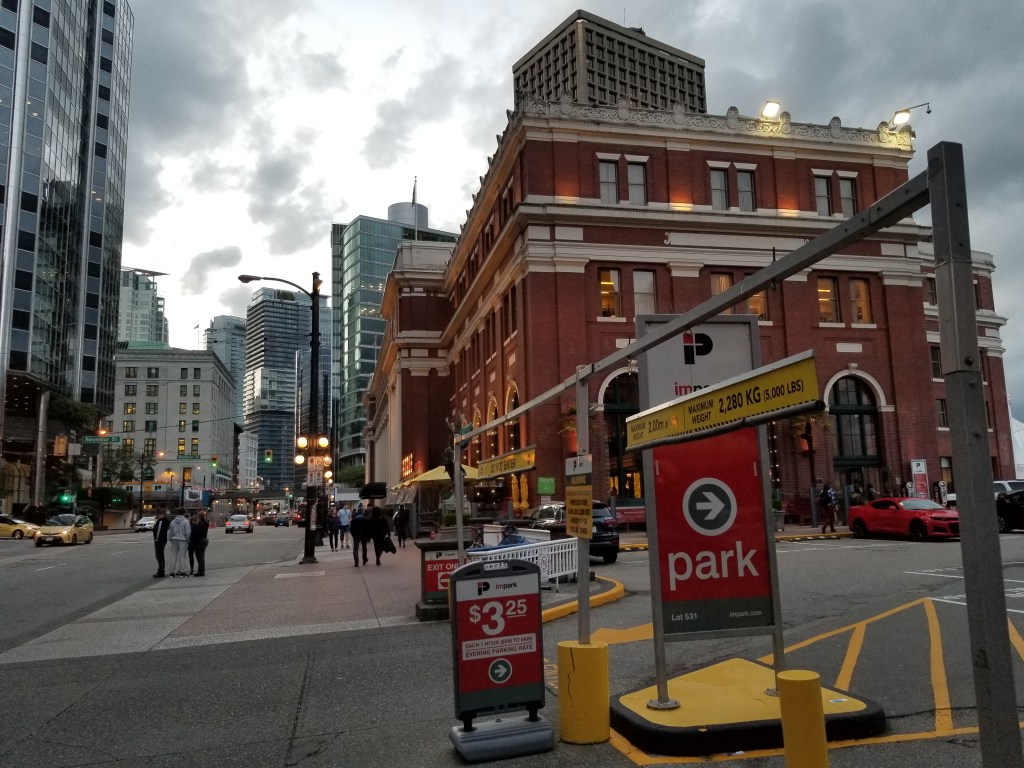
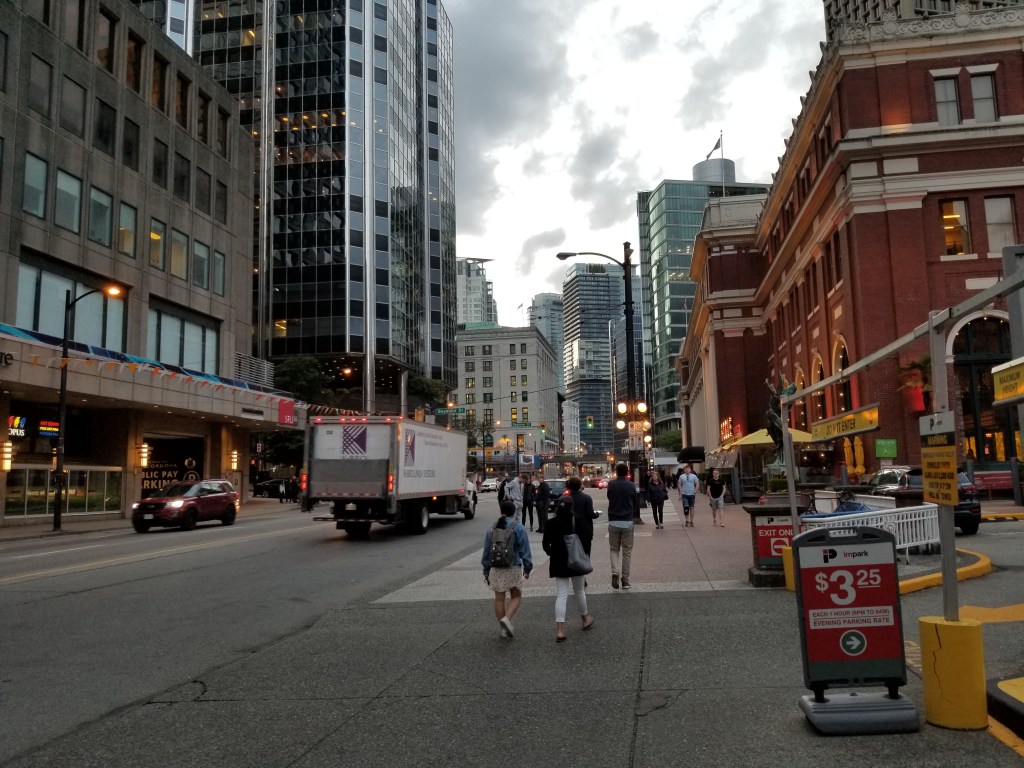

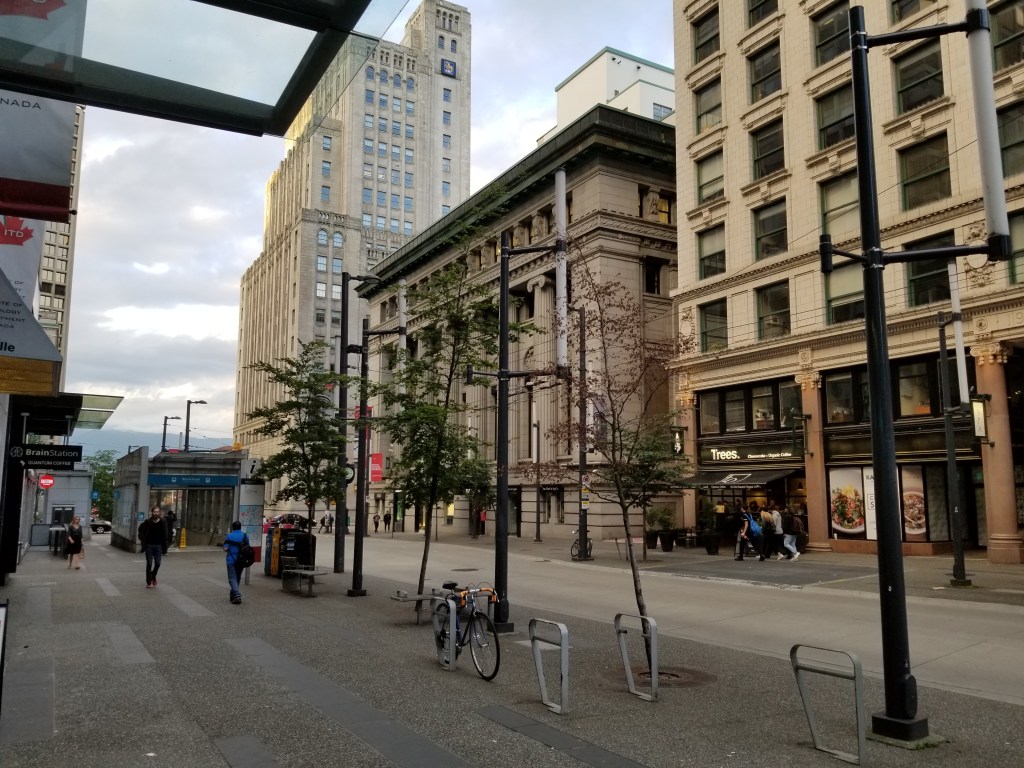

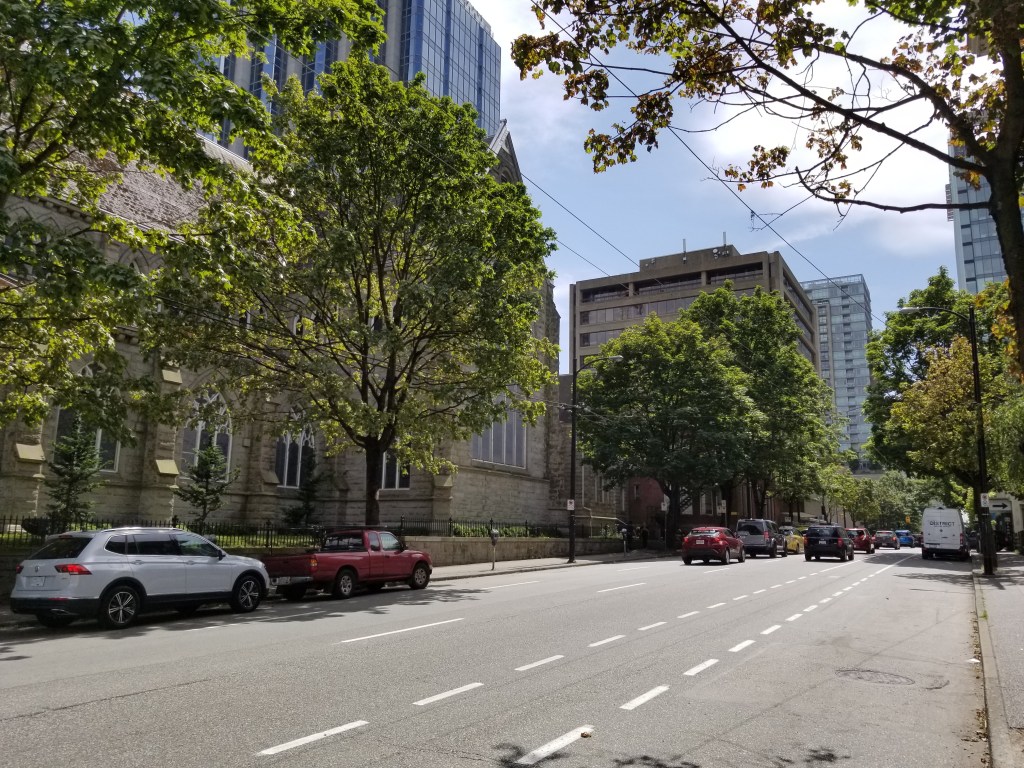
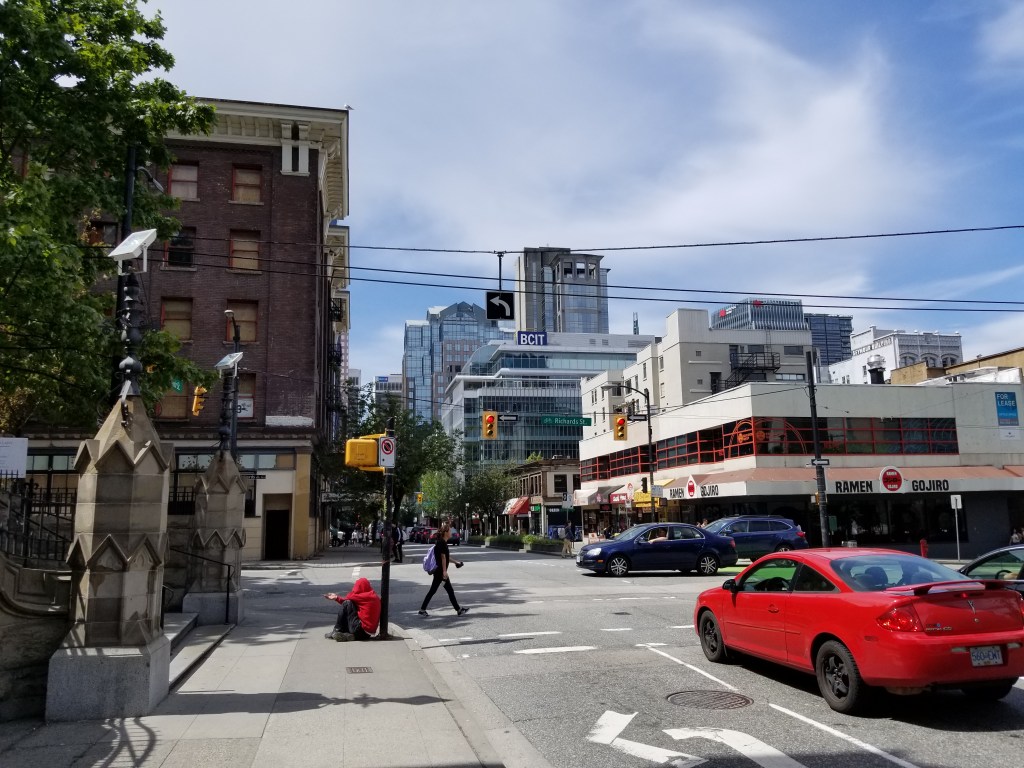

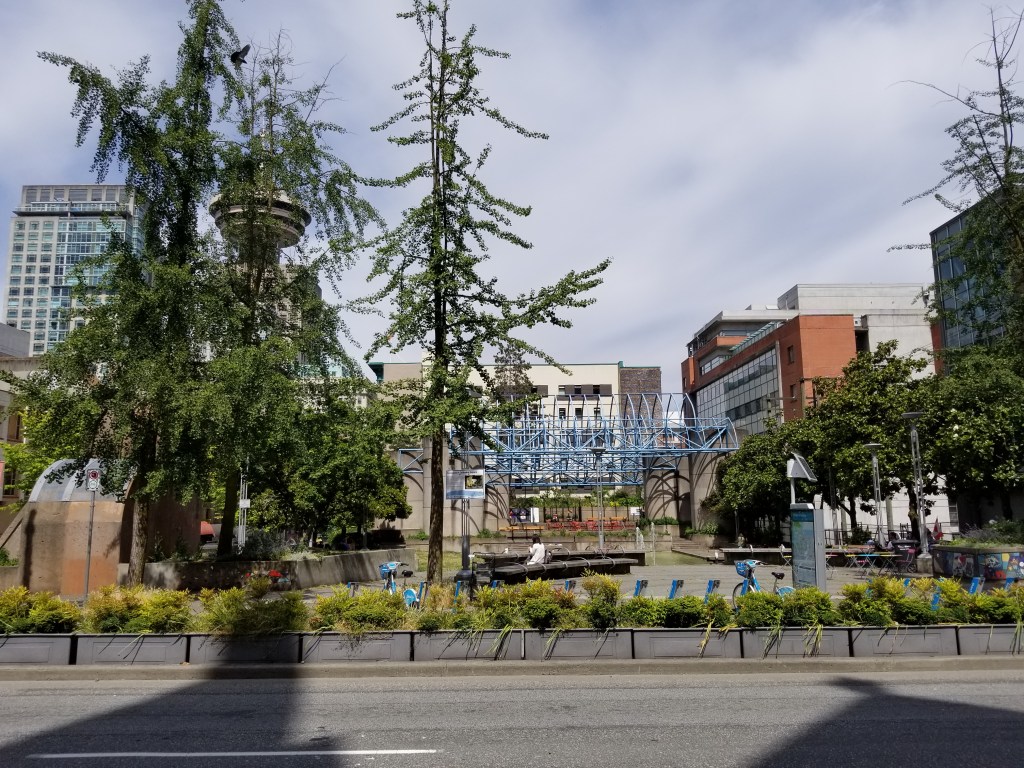
Waterfront is a major intermodal public transportation facility and the main transit terminus in Vancouver, British Columbia, Canada. It is located on West Cordova Street in Downtown Vancouver, between Granville and Seymour Street. The station is also accessible via two other street-level entrances, one on Howe Street to the west for direct access to the Expo Line and another on Granville Street to the south for direct access to the Canada Line.
The station is within walking distance of Vancouver’s historical Gastown district, Canada Place, Convention & Exhibition Centre, Harbour Centre, Sinclair Centre, and the Vancouver Harbour Flight Centre float plane terminal. A heliport operated by Helijet, along with the downtown campuses for Simon Fraser University and the British Columbia Institute of Technology, are also located within the vicinity of the station.
Waterfront station was built by the Canadian Pacific Railway (CPR) and opened on August 1, 1914. It was the Pacific terminus for the CPR’s transcontinental passenger trains to Montreal, Quebec and Toronto, Ontario. The current station is the third CPR station. The previous CPR station was located one block west, at the foot of Granville, and unlike the current classical-styled Waterfront station was built in “railway gothic” like the CPR’s many railway hotels.
In 1978, when Via Rail took over the passenger operations of the CPR and the Canadian National Railway, it continued using both railways’ stations in Vancouver, but a year later, Via consolidated its Vancouver operations at Pacific Central Station, the CN station near False Creek, and ceased using the CPR station. The last scheduled Via passenger train to use Waterfront station departed on October 27, 1979.
Waterfront station’s transformation into a public intermodal transit facility began in 1977. That year, the SeaBus began operating out of a purpose-built floating pier that was connected to the main terminal building via an overhead walkway above the CPR tracks. The CPR’s passenger platform and some of its tracks were torn up in the early 1980s to make way for the guideway of the original SkyTrain line (Expo Line), which opened on December 11, 1985. During Expo 86, SkyTrain operated special shuttle trains between Waterfront station and Stadium–Chinatown station (then named Stadium station), connecting the Canadian Pavilion at Canada Place to the main Expo site along False Creek.
A private ferry company, Royal SeaLink Express, ran passenger ferries from a new dock on the west side of the SeaBus terminal to Victoria and Nanaimo in the early 1990s, but ultimately folded. In 2003, HarbourLynx began operating out of Royal Sealink’s old facility at the SeaBus terminal. In 2006, following major engine problems with their only vessel, they folded as well.
In 1995, platforms were built adjacent to the SkyTrain station for the West Coast Express, which uses the existing CPR tracks. The platforms for the West Coast Express were built in the same location as the old CPR platforms.
In 2002, Millennium Line trains began to share tracks with the Expo Line at Waterfront station. The lines continued to share tracks until late 2016, when an Expo Line branch to Production Way–University station was created in replacement of the Millennium Line service between VCC–Clark and Waterfront stations.
In 2009, the Canada Line opened with separate platforms which are accessible via the main station building, but require leaving the fare paid zone when transferring between other modes. Waterfront station serves as a common terminus point for both the Expo Line and the Canada Line.
Waterfront station was one of the first stations to receive TransLink’s “T” signage, denoting a transit station. This signage was originally installed in the downtown core of Vancouver to help visitors during the 2010 Olympics, as it made transit hubs easier to identify.
In 2018, TransLink announced that Waterfront’s Canada Line platforms, as well as two other stations on the line located within downtown Vancouver, would receive an accessibility upgrade which includes additional escalators, as most Canada Line stations were built with only up escalators initially. Construction is expected to begin in early 2019.
Waterfront’s main station building was designed in a neoclassical style, with a symmetrical red-brick facade dominated by a row of smooth, white Ionic order columns. The Ionic columns are repeated in the grand interior hall, flanking the perimeter of the space. The main hall features two large clocks facing each other high on the east and west walls. Paintings depicting various scenic Canadian landscapes, completed in 1916 by Adelaide Langford, line the walls above the columns. The Montreal architecture firm Barott, Blackader and Webster was responsible for designing the main station building.


This Top 10 list is about the movies that I find to be guilty pleasures. The type of movies that aren’t that good but I still find myself watching.

Whole Foods CEO, John Mackey, doesn’t know what a fascist is.
Speaking with NPR this week, multimillionaire Mackey tried to express how much he hates Obamacare. Back in 2009, he hated Obamacare so much that he called it “socialism.” But now, in 2013, Mackey thinks Obamacare is “fascism.”
“Technically speaking, [Obamacare] is more like fascism,” he said. “Socialism is where the government owns the means of production. In fascism, the government doesn’t own the means of production, but they do control it, and that’s what’s happening with our healthcare programs and these reforms.”
Mackey has since walked back this description saying he “regrets using that word now” because there’s “so much baggage attached to it.”
But, whether Mackey meant to or not, it’s about time someone injected the word fascism back into our political debate. Especially now that corporations wield more power today than they have in America since the Robber Baron Era.
First, let’s take on Mackey’s definitions of socialism and fascism, which he likely procured from the Google machine after typing in, “What are the differences between socialism and fascism?”
Yes, socialism encourages more democratic control of the economy. Or, if Mackey insists, more government ownership of the economy – in particular, ownership of the commons and natural resources.
Fascism, on the other hand, is something completely different. Reporter Sy Mukherjee, who blogged about this story over at ThinkProgress.org notes, “Although fascist nations do often control their ‘means of production,’ Mackey seems to have forgotten that they usually utilize warfare, forced mass mobilization of the public, and politically-motivated violence against their own peoples to achieve their ends.”
The 1983 American Heritage Dictionary defined fascism as: “A system of government that exercises a dictatorship of the extreme right, typically through the merging of state and business leadership, together with belligerent nationalism.”
Fascism originated in Italy, and Mussolini claims to have invented the word itself. It was actually his ghostwriter, Giovanni Gentile, who invented it and defined it in the Encyclopedia Italiana in this way: “Fascism should more appropriately be called corporatism because it is a merger of state and corporate power.”
In other words, fascism is corporate government – a Libertarian’s wet dream. It’s a government in which the Atlas’s of industry are given free rein to control the economy, just how they’re regulated, how much they pay in taxes, how much they pay their workers. It should be noted here that, ironically, John Mackey describes himself as a Libertarian.
In 1938, Mussolini finally got his chance to bring fascism to fruition. He dissolved Parliament and replaced it with the “Camera dei Fasci e delle Corporazioni” – the Chamber of the Fascist Corporations. Members of the Chamber were not selected to represent particular regional constituencies, but instead to represent various aspects of Italian industry and trade. They were the corporate leaders of Italy.
Imagine if the House of Representatives was dissolved and replaced by a Council of America’s most powerful CEOs – the Kochs, the Waltons, the Blankfeins, the Dimons, the Mackeys, you get the picture.
Actually, that’s not too difficult to imagine, huh? But, that’d be similar to what Mussolini defined as fascism.
As we know, fascism was eventually defeated in World War 2. But just before the end of the war, with the fascists on the ropes, the Vice President of the United States at the time, Henry Wallace, penned an op-ed for the New York Times warning Americans about the creeping dangers of fascism – or corporate government.
He defined a fascist as, “those who, paying lip service to democracy and the common welfare, in their insatiable greed for money and the power which money gives, do not hesitate surreptitiously to evade the laws designed to safeguard the public from monopolistic extortion.”
Under that definition we can throw those CEOs who’ve decided to evade Obamacare’s mandate to provide health insurance to their employees, like New York City Applebee’s franchise owner Zane Terkel, Papa John’s CEO John Schnatter, and executives at Darden Restaurants.
Or, perhaps, Wallace is referring to the banksters at Goldman Sachs who knowingly evaded laws and sold investors “shitty deals” or scammed entire cities into bankruptcy or illegally foreclosed on thousands of Americans through fraudulently robo-signing all in the name of short term profits and all in the name of preserving their monopolistic, too-big-to-fail status.
Either way, evading laws meant to protect the public in order to pad your own pockets has become the name of the game in Corporate America today.
Wallace goes on to write, “The American fascists are most easily recognized by their deliberate perversion of truth and fact. Their newspapers and propaganda carefully cultivate every fissure of disunity, every crack in the common front against fascism.”
Can anyone say Fox News, or the rest of the Conservative media complex? Or, those on the Right who divide working people and turn them against each other: makers versus takes, public sector workers versus private sector workers, and white people versus brown people.
“They use every opportunity to impugn democracy,” wrote Wallace. Does that sound familiar after months of Republican efforts to disenfranchise large swaths of the electorate with voter suppression ID laws, as well as restrictions on early voting and voter registration in largely Democratic areas?
Or what about what Republicans in Pennsylvania are doing right now to rig the next Presidential election by changing how Electoral votes are counted in the state?
Wallace continues, “They demand free enterprise, but are the spokesmen for monopoly and vested interest. Their final objective toward which all their deceit is directed is to capture political power so that, using the power of the state and the power of the market simultaneously, they may keep the common man in eternal subjection.”
We often hear of free enterprise from the likes of Wall Street, Big Oil, and the defense industry. Yet these are the same corporations that also lobby to keep generous taxpayer subsidies, bailouts, and no-bid contracts in place that allow them to reign supreme over the markets and crush their smaller, more independent competition.
And the common man suffers as a result. Wages as a percentage of GDP are lower than they’ve ever been. Unionization rates are lower than they’ve ever been in more than a half-century. And yet, corporate profits as a percent of GDP are higher than they’ve ever been in American history.
At the time Wallace was writing this op-ed, he was confident that the fascists had been adequately held in check in America by the Roosevelt Administration. As he wrote, “Happily, it can be said that as yet fascism has not captured a predominant place in the outlook of any American section, class or religion.”
But, he went on to warn that in the future, “[Fascism] may be encountered in Wall Street, Main Street or Tobacco Road. Some even suspect that they can detect incipient traces of it along the Potomac.”
Sure enough, the bastions of fascism can be found on Wall Street. Main Street, which used to be lined with local independent businesses, is now lined with predatory, transnational giants. And along the Potomac, we find politicians who are more than happy to do the bidding of their corporate overlords.
Today in America, we are dangerously close to seeing Wallace’s fascistic, dystopic America come into fruition. We see the traces of it everywhere.
Unfortunately, too many Americans just didn’t have a word to define what’s happening. But, thanks to John Mackey, and thanks to the foresight of Vice President Henry Wallace, we do have the right word now: Fascism.
In this 1984, distinguished writer and editor Norman Cousins joins Conversations host Harry Kreisler for a discussion of the dangers of the nuclear arms race and his role in mediating communications between Kennedy and Khruschev at the height of the Cold War.

 Igor's Blog