
The best of Ridley from the DVD commentary and special features for ‘Gladiator’ (2000), which got Ridley a long-coveted Best Picture (but not Best Director) Oscar.
Month: July 2021
Taylor Swift flaunts busty chest in crop top after boob job rumours

She sent tongues wagging earlier this summer as many fans questioned on Twitter if she had a boob job.
And Taylor Swift is certainly giving those skeptics something to talk about.
The 26-year-old singer was seen looking rather busty while out and about in New York City on Wednesday.
She showcased what looked like a fuller chest in a dark red cropped T-shirt as she headed out for the day in the Big Apple.
It was not just her assets on display as she also bared her midriff in the short top as she teamed the look with a pair of chic black leggings.
Taylor also wore a pair of black trainers as she accessorised with Clubmaster designer shades and a small leather bag draped over her shoulder.
Her blonde locks were worn down a she sported natural, make-up on her face topped off with a swipe of her signature bright red lip.
This comes just months after her fans flocked to Twitter to discuss whether the blonde beauty has had a little help in the cleavage department after showing off a noticeably larger chest.
Keen-eyed fans have observed that Taylor looked to be much more top-heavy than usual as she stepped out with her new man Tom Hiddleston back in June.
Leaving Selena Gomez’s Nashville, Tennessee, gig hand-in-hand with Tom, the Shake it Off singer stunned in a plunging red crop top which she teamed with a matching high-waisted skirt.
And the hot co-ordinated ensemble prompted a big reaction from her fans, with one writing: ‘Omg did Taylor get a boob job?’
Still in disbelief, some fans have suggested she has the help of a very good bra, with one adding: ‘Did Taylor get a boob job or was she wearing a padded bra or something because, s**t… Not trying to be mean bc I love her, btw.’
Meanwhile, Mr Adrian Richards, Consultant Plastic Surgeon at The Private Clinic of Harley Street told The Sun: ‘In recent photos, it seems her breasts are more defined and slightly larger.
‘I’d suggest she has had implants that are fairly moderately sized and teardrop in shape – what I’d call low profile implants. This form of enhancement is proving increasingly popular.’
As with countless other female celebrities, Taylor has been the subject of much unconfirmed plastic surgery speculation since rising to fame.
Questions about whether or not she has undergone breast augmentation surgery have arisen before, as well as suggestions that she’d received a nose job prior to launching her career.
And, with fuller figures now being the trend in Hollywood, the blonde beauty even ignited rumours of having had a butt lift, after she was photographed sporting a rounder rump.
Meanwhile, Taylor donated $50,000 to the Greater Baton Rogue Food Bank in light of the recent Louisiana floods that killed at least 13 people.
This comes after the Blank Space singer vowed to donate $1 million to those in need as she said in a statement to the Associated Press: ‘We began The 1989 World Tour in Louisiana, and the wonderful fans there made us feel completely at home. The fact that so many people in Louisiana have been forced out of their own homes this week is heartbreaking.’
The Food Bank took to social media on Thursday to thank the singer for her donation as well as the Salvation Army who tweeted: ‘Thank you @taylorswift13 for helping us serve the #LouisianaFlood survivors by donating to our relief efforts! #DoingTheMostGood.’
Fictional History Zone (RE: “What if Stalin Never Came to Power?”) ft. ☭
Alternative View: Could USSR Have Avoided Dissolution, Overcome Crisis?
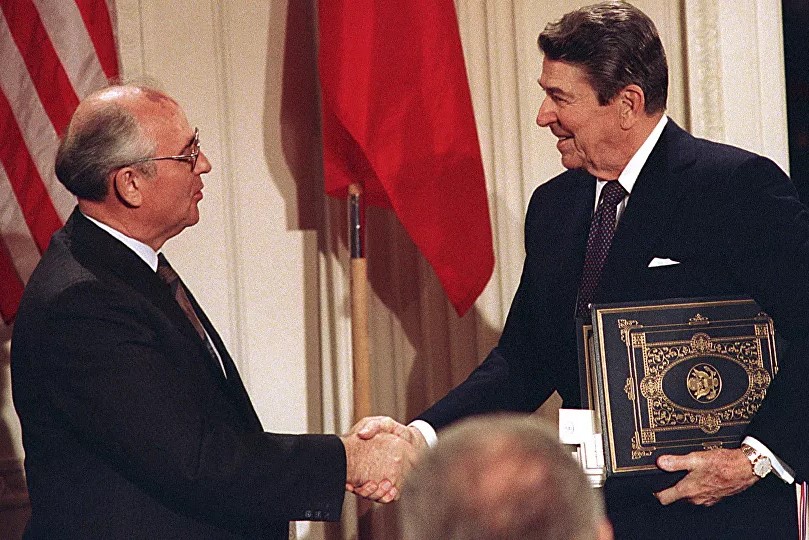
What was the role of the West and the Soviet elite in the dissolution of the USSR, dubbed by President Vladimir Putin as the “biggest geopolitical catastrophe” of the 20th century?
US political scientist and geo-strategist Zbigniew Brzezinski noted in 1990, a year before the fall of the USSR: “In my view, this deepening crisis [in the USSR] is not a transitional crisis; it is a historic crisis… The crisis of the Soviet Union is a historic crisis like the crisis of the Ottoman Empire, for example. It is a crisis of stagnation, of attrition, of demoralization, of fragmentation, and of intensified potential for violence.”
So, was the old hawk right and the Soviet Union was destined to lose? Was the Soviet system crumbling and falling apart at the seams?
Interestingly enough, some archival documents released by Rockefeller’s Trilateral Commission in a commemorative brochure dedicated to the 25th anniversary of 1989, “the year that changed the map of Europe,” draw a slightly different picture.
Mikhail Gorbachev and the Trilateral Commission
The Commission was established in 1973 and brought together experienced leaders of the Western political establishment to “discuss issues of global concern.”
In January 1989, the Commission’s task force authors on East-West relations — Valery Giscard d’Estaing, Henry Kissinger and Yasuhiro Nakasone — undertook a mission to Moscow in order to meet Soviet leaders, notably Mikhail Gorbachev.
The group and Gorbachev were discussing the issue of coexistence as well as a roadmap of the USSR’s integration into the world economy. Due to the 1986 conspiracy between Saudi Arabia and the US, the Soviet economy faced a temporary recession caused by sharp fall in oil prices.
However, the USSR was not in a “dire state.” The transcript of Gorbachev’s meeting with the Commission group on January 18, 1989 indicates that the Soviet leader had no doubts the USSR and the West were “on par” in that period of time.
“The questions you have raised deal with how the USSR is going to change. But it is also important to know how you are going to change in your attitude toward the USSR. We are all at a crucial stage — both capitalism and socialism,” Gorbachev emphasized, stressing that neither side should ask the other to abandon their social philosophies.
“The two systems should show they can adapt to new conditions,” he added.
Was it a bluff? Why did Gorbachev hint that both systems were facing similar problems?
“Black Monday”: US Stock Market Crash of 1987
Indeed, it was not solely the USSR who faced a recession — in the late 1980s a ghost of depression was haunting the United States. Two years earlier, on October 19, 1987, the United States experienced a severe stock market crash which prompted deep concerns regarding the efficiency of the country’s monetary system.
Within one day, also known as “Black Monday,” the Dow Jones Industrial Average (DJIA) swiftly lost 508 points, or 22.6% of its value.
Experts gloomily predicted that it would take “a miracle” to save the American economy. Curiously enough, the collapse of the USSR had become the “miracle” that postponed the US and global financial crises for decades and in the 1990s the US enjoyed unprecedented economic growth.
Back in January 1989, Gorbachev offered the West closer economic cooperation that could purportedly bring both parties back from the brink of economic disaster. The USSR boasted substantial achievements in industrial machinery, steel, mining and petroleum production, aircraft, military and space industry; it was developing sophisticated technologies, including microbiology and electronics.
The Soviet leader urged the West to lift sanctions imposed on the USSR. “This would not be a favor to the USSR. The West would also benefit from the trade,” he told the Trilateral Commission during the historical 1989 summit.
The USSR Posed Substantial Economic Threat to West — Thatcher
However, the devil is always in the details. The group avoided giving a direct answer, saying that the USSR had to carry out a series of necessary “reforms” first as well as to join international financial institutions — the International Monetary Fund, the World Bank and others. In a word, the West seemingly was not much enthusiastic about the idea of the USSR’s integration into the global market.
According to Director of the Center for Russian Studies at the Moscow University for Humanities and the Institute of System Strategic Analysis, historian and publicist Andrei Fursov, the West was unwilling to collaborate with the USSR “on par.” It needed a “raw-material appendage,” rather than a serious competitor, the historian elaborates.
Citing former British Prime Minister Margaret Thatcher’s speech delivered at the American Petroleum Institute in Houston, Texas in November 1991, Fursov points out that the West considered the USSR a “serious threat” to the Western world.
Surprisingly, the ex-prime minister referred to the “economic threat,” adding that the West was never afraid of the Soviet Union’s military “offensive.” With the planned economy and the particular combination of moral and material incentives, the Soviet Union managed to achieve high economic indicators, Thatcher warned. Combined with the enormous natural resources of the USSR, the sound management could deal a heavy blow to the West’s positions in the global market, she noted.
But was not the centrally planned economy “the root of all evil” that dragged the USSR into a vicious circle of the recession of the 1980s?
Soviet Planned Economy — a Yacht That Could Not Catch the Wind
Indeed, prominent American economist and Nobel Prize Laureate in Economics Wassily Leontief (1906-1999) compared the USSR’s economy to a yacht that was unable to catch the wind. The Soviet economy was doomed to further recession, restrained by excessive government interference and regulation, he noted.
At the same time Leontief praised the Soviet planned economy for an unprecedented industrial leap in the 1930s and added that it facilitated the country’s rapid recovery after the Second World War. Furthermore, the centrally planned economy allowed the USSR in the 1970s and the early 1980s to gain economic growth rates comparable to those of the US and even exceeding those of Western Europe.
Curiously enough, the economist also criticized the American financial system, freed from government control, comparing the United States to the yacht sailing without a map and a compass. Both systems desperately needed reforms, Leontief believed.
But does it mean the USSR had to be dismantled? Was it really necessary to destroy the system and build a new one from scratch?
Fursov narrated that in the late 1980s Leontief was invited by the Soviet government to carry out a thorough analysis of the USSR’s economic system. The Nobel Laureate’s verdict was that the structural changes were needed to bolster economic growth but the Soviet system in general was viable and could be “mended.” The USSR did not face a systemic crisis.
But what happened next and what were the results of “Perestroika,” Gorbachev’s initiative aimed at rebuilding the Soviet system?
The USSR’s Transitional Reforms Were Hijacked by West
Paradoxically, in January 1989, Gorbachev discussed the possibility of USSR-Western joint ventures and mutually beneficial collaboration in the global market and two years later the Soviet Union was brought to its knees and collapsed.
Andrei Fursov believes that there was a conspiracy between Communist high-ranking “apparatchiks” and the Western political and financial elite. A part of the Communist senior officials sought to join the Western global capitalist establishment.
Although they did not actually want to tear the USSR to pieces, the country’s transitional reforms were hijacked by the more experienced, smarter and more hawkish Western elite, the historian deems. As a result the country was split and lured into the abyss of political and economic catastrophe.
Remarkably, in 1992 economist Wassily Leontief slammed Gorbachev and Yeltsin’s leadership for ruining the country’s economic, political and social order. He emphasized that the Kremlin had to conduct the transition from a “centrally planned” to a “market” economy incrementally and under government supervision. The country’s economic system was literally burned to ashes, now the market system had to be built from scratch.
Due to the “efforts” of Russia’s liberal “reformers” and their Western economic consultants, the country’s production volume was hacked in half and this vacuum was immediately flooded by Western goods, Russian Presidential advisor Academician Sergei Glazyev wrote in his 2003 essay “How to Win a Battle with Poverty in a Rich Country.”
“The neoliberal revolution after 1991 was indeed intended to dismantle post-Soviet industry, to pull it up by its roots. H.I.I.D. [Harvard Institute for International Development] and A.I.D. [US Agency for International Development] operatives bought out Russian companies playing a key potential military role and dismantled them,” Michael Hudson, a research professor of economics at the University of Missouri, said in an interview with The Saker in June 2015, and added: “For the ruble to rise in value, Russia would need to re-industrialize [now].”
By the early 2000s Russia had become the West’s “raw-material appendage” and a promising market, contributing a lot to the West’s economic rise in the 1990s, according to Andrei Fursov.
So, could efficient management have brought the country back from the brink of catastrophe thus saving the USSR from dissolution? According to Russian historians, this question is a rhetorical one. But, undoubtedly, the history of the fall of the Soviet Union is an important lesson the global powers should learn.
Near Broadway in Vancouver. Winter of 2020.

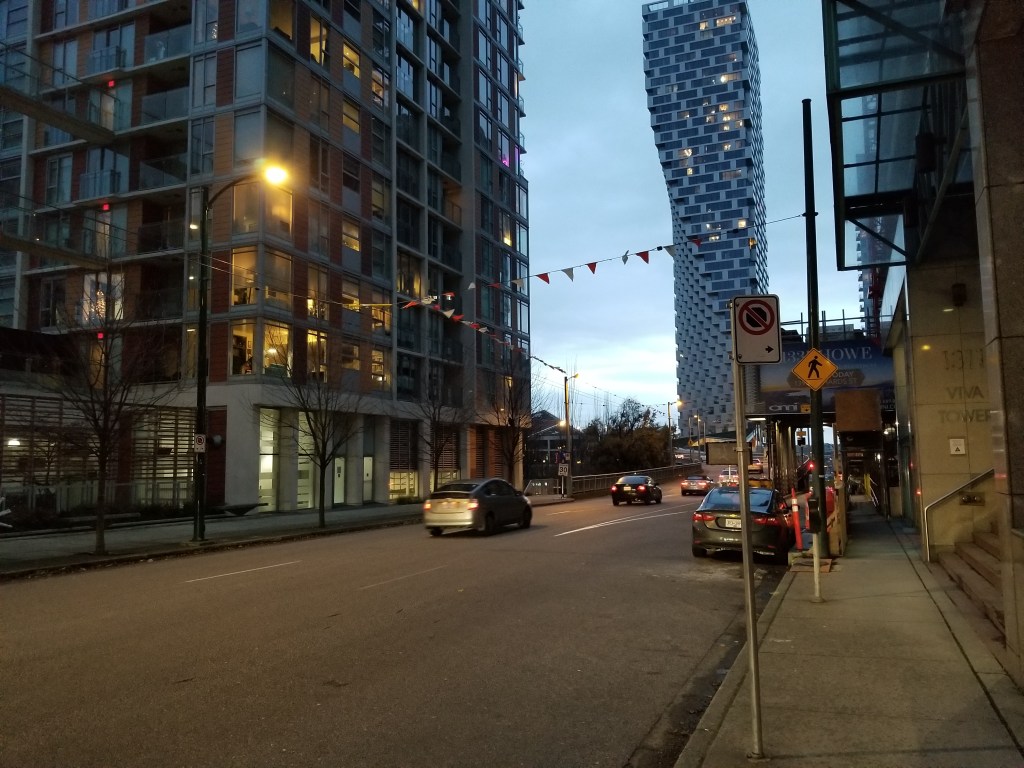
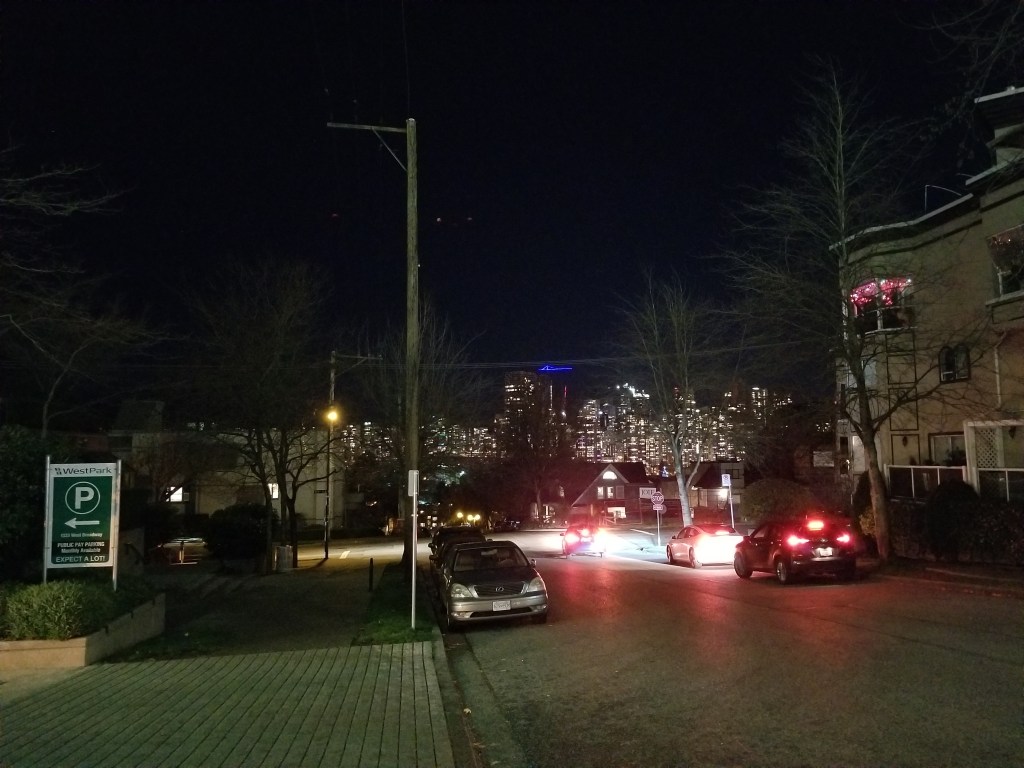
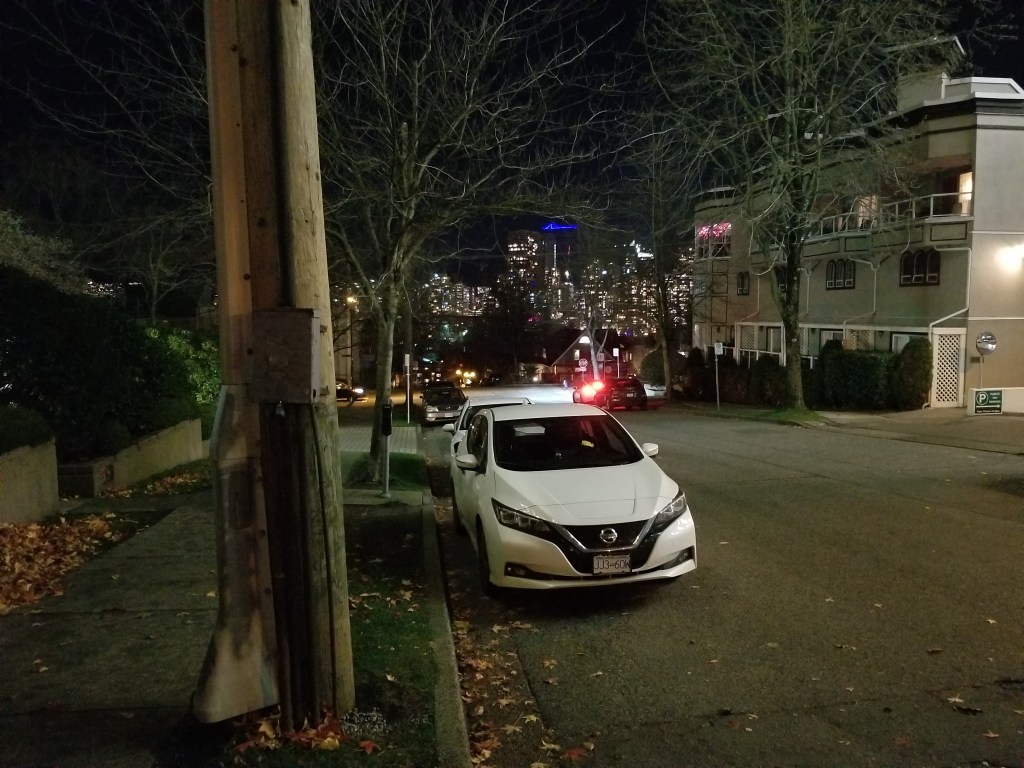


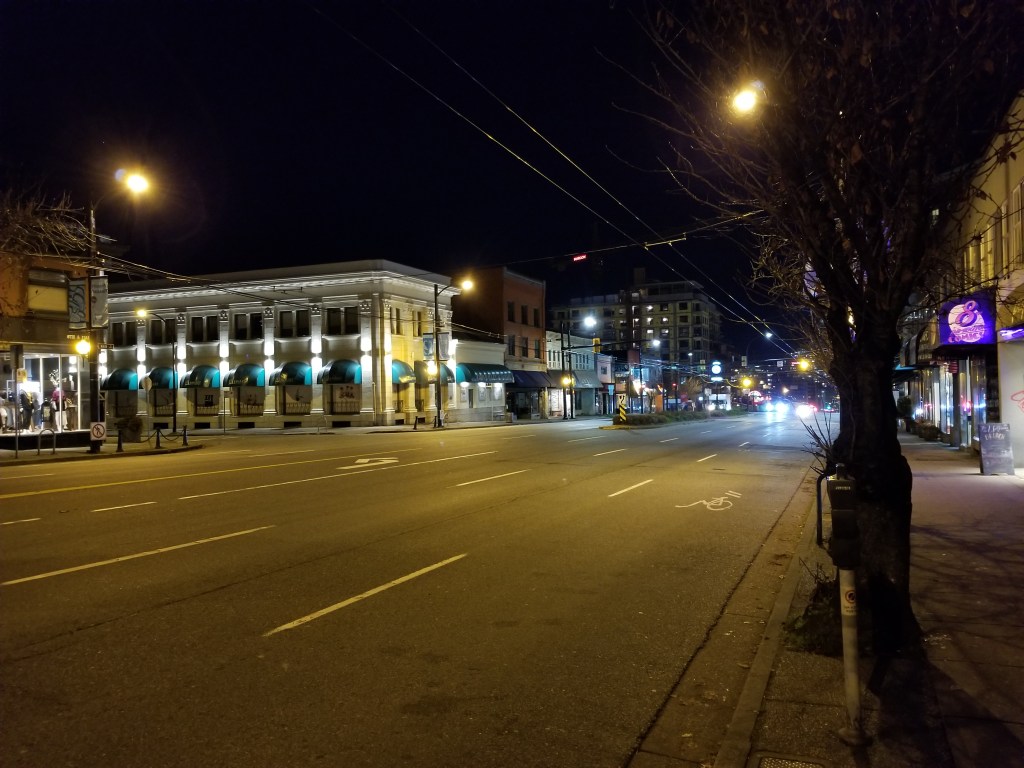


Broadway is a major east-west thoroughfare in the city of Vancouver, British Columbia, Canada. In Vancouver’s numbered avenue grid system, it runs in place of a 9th Avenue, between 8th and 10th. The street has six lanes for most of its course. Portions of the street carry the British Columbia Highway 7 designation.
The route begins as “West Broadway” at the intersection of Wallace Crescent and 8th Avenue, in the affluent residential neighbourhood of West Point Grey, a few kilometres east of the University of British Columbia (UBC). Past Alma Street, Broadway takes over from 10th Avenue as one of Vancouver’s major thoroughfares, as it enters Greek West Broadway (or Greektown) section of Vancouver’s Kitsilano district. East of here are several blocks of generally trendy, upscale shops interspersed with low-rise apartment blocks and small supermarkets. The surrounding neighbourhoods generally consist of large, older homes dating from the early twentieth century, many of which have been subdivided into rental suites.
As Broadway approaches Arbutus Street, the commercial establishments become larger before transitioning into a mix of small to mid-size apartment blocks. East of Burrard Street, the apartment blocks get progressively taller, and commercial establishments larger and busier. Between Burrard and Main Street, Broadway can be considerably congested by vehicular traffic. Past Granville Street, Broadway yields completely to medium-to-large commercial structures and high-rise apartments and condominiums. Between Cambie and Main, the commercial establishments become smaller and somewhat more downscale.
At Ontario Street, two blocks west of Main, the route becomes “East Broadway.” After bisecting Main and Kingsway, traffic on Broadway eases somewhat, and the character returns to a mix of small-to-medium apartment buildings and commercial establishments, interspersed with older homes – all considerably less affluent than those to the west. At Commercial Drive, Broadway passes by the Commercial–Broadway SkyTrain Station. Past here for several blocks, the neighbourhood consists predominantly of older residential homes.
As Broadway travels east of Renfrew Street, the neighbourhood once again becomes mixed, with older homes to the north and larger industrial, commercial, and warehouse establishments to the south. Broadway finally ends at Cassiar Street, just short of the Vancouver-Burnaby boundary, where it becomes the Lougheed Highway.
Broadway was created at the turn of the 20th century, along with other gridded roads south of False Creek, to meet the needs of an expanding population in Vancouver. The name of the route was changed from 9th Avenue to Broadway in 1909, at the behest of merchants around Main Street (at that time the hub of Vancouver commerce), who felt that it bestowed a more cosmopolitan air. Commercial establishments originally spread out around the intersections of Cambie and Main Streets, while the character of the rest of the route remained predominantly single-family dwellings.
By the 1970s, the length of Broadway had become a major arterial route in Vancouver, conveying commuters from downtown to the neighbourhoods of the west and east sides. With the growth of UBC and the expansion of the Vancouver General Hospital (one block south of Broadway between approximately Oak and Cambie), traffic demands accelerated. In the 1990s, the agency then responsible for public transit in Greater Vancouver — BC Transit — introduced an express bus route, the 99 B-Line, to help reduce congestion. The Vancouver transportation plan for Broadway notes that congestion is such that the bus service is at capacity, and will not be eased until a new rapid transit line is built paralleling the street. It is anticipated that the SkyTrain’s Millennium Line will be extended to Central Broadway by 2021; the extension is expected to connect with Canada Line at Broadway-City Hall Station, at the intersection of Broadway and Cambie Street.
Now listening to Spellbound by Tygers Of Pan Tang and Second Phase by Jun Fukamachi…

This guy digitally paints badass US Presidents – We Are The Mighty

If you’ve ever wondered what President Ronald Reagan would look like while riding a velociraptor, San Francisco artist Jason Heuser has you covered.
With creations ranging from Reagan shooting from the saddle of a dinosaur to Nixon fighting a sabertooth tiger, Heuser has built an impressive art collection of U.S. Presidents being, well, total badasses.
The digital artist goes by the name Sharpwriter on the DeviantArt website, where he posts his creations for people to view or print out and enjoy. He also sells full-size prints. We gathered up some of our favorites here, but he has many more at his DA gallery, which you should definitely check out.
Just finished watching Mulholland Falls (1996) and Battle Angel (1993)…

Now reading The Rise And Fall Of The Great Powers: Economic Change And Military Conflict From 1500 To 2000 by Paul Kennedy…
Poverty in Russia

As the adage goes, the poor stay poor while the rich get richer. For years, Russia has been regarded as a nation fraught with economic inequality- a land where the rich accrue more and more wealth each year while the poor descend further and further into squalor. Even in the advent of the burgeoning middle class, the growing disparity of wealth has contributed to a widening economic gap between Russia’s rich and poor residents.
Although an astounding 18 million Russians, or roughly 13 percent of the population, live below the official poverty line, having a collective income of $12.4 billion, the 97 wealthiest Russians jointly own $380 billion- nearly 31 times the collective income of the nation’s poorest individuals.
While 18 million residents grapple with the challenges of poverty, Vladimir Putin consistently vaunts the exclusive wealth of Russia. In a sense, Russia has exhibited economic growth. For instance, Moscow now houses more billionaires than New York City, the iconic American city that has long been esteemed as the metropolis of wealth and power of the Western World.
Although Putin boasts about the economic prosperity of the few wealthy elites, little effective action has been taken to curb the growing rates of poverty in Russia. For example, the estimated cost of living in Russia is approximately $210. However, the nation’s minimum wage is wholly insufficient at $155 per month.
Despite this harrowing fact, it appears that the 2014 Winter Olympic Games, set to be hosted in Sochi, has taken prominence over the rampant poverty in Russia. In 5a Akatsy Street, located in a neighborhood with deteriorating infrastructure, a brand-new multi-million dollar highway brazenly cuts through the surrounding poverty.
The glossy highway stands in salient contrast to the squalor of 5a Akatsy Street, a locale in which residents have barely sustained themselves without running water or a sewage system. While the Russian government sanctions the construction of stadiums and highways, the majority of Sochi residents live in dwindling, contaminated and neglected villages.
However, the juxtaposition of the ostentatious Olympic preparations in Sochi and the prevalence of squalor surrounding the slinky stadiums and magnificent mega-malls highlights a general trend that has been observed in Russian society, a dangerous trend in which in which the poor are vastly overlooked while the most wealthy are needlessly glamorized.
 Igor's Blog