










It wasn’t long ago that Quiznos was a pretty big deal. They were a little more upscale than Subway, and those toasted rolls were an absolute win no matter what was on them. But it turns out that toasting rolls isn’t enough to keep them on the top of the food chain when it comes to fast food sub shops.
If you can’t remember the last time you saw one, it’s not your imagination. According to Restaurant Business, the 4,700 locations they had in 2007 had shrunk to less than 400 in a decade. That’s a huge loss — about 90 percent of their stores — so how does that much loss even happen?
It’s complicated, and it involves angry franchisees, a bizarre business plan, and record-setting lawsuits. Quiznos didn’t just get outdone by their competition, they made some catastrophic business decisions that make part of their huge downfall one of the strangest stories of restaurant failure in the country. There are some lessons to be learned here, and whether they learned quickly enough to save their business, time will tell.
Quiznos saw a steady decline between 2007 and 2017, and in 2014 CNN reported they were filing for bankruptcy. Stores were supposed to remain open during a massive restructuring, and at the time, there were around 2,100 of them. Only seven were owned by corporate, who issued a statement saying they were going to take a long, hard look at their operating procedure.
At the same time, Subway announced they were expanding. According to The Huffington Post, a huge part of Subway’s success — which came at the expense of Quiznos — was their price point. While Subway was offering affordable, Quiznos was offering fancy (or, at least, fancier), and for Americans suffering through economic difficulties, cheap was the way to go. Quiznos’ higher-end concept meant prettier stores, higher overhead, and a higher price passed on to the customer. Why pay more when you can pick up a $5 footlong?
Subway and Quiznos have always been competing for a piece of the sandwich market, but Quiznos’s problem escalated with the appearance of other higher-end sub shops to take away the customers that still did want something a little fancy. When chains like Potbelly and Jimmy John’s started expanding, they didn’t just take business away from Quiznos — they forced Quiznos to make some tough decisions that put a big hurt on their bottom line.
In order to try to stay competitive and keep customers, Quiznos decided to try to wage war on other chains’ lower prices, while still keeping their expensive ingredients. Market analyst IBISWorld says this put some extreme pressure on their profits, and this cost squeeze hurt so many locations that it was linked to the closures of around 2,500 stores.
Meanwhile, at a time when more and more people were trying to support smaller, local businesses, newcomers like Firehouse Subs were using their specialized regionality to lure customers away from the national chains. Together, competition from the big guy — Subway — and the little guys handed Quiznos a serious double whammy.
Quiznos franchisees are particularly hard hit by competition and anything that cuts into profits, because the chain has a bizarre business plan. While most fast food franchises negotiate with vendors who then supply locations directly (at a reduced cost, since they’re buying in bulk), Quiznos corporate buys all supplies — from food to paper supplies to CDs — from vendors, then turns around and sells them to franchisees.
Entrepreneur says that’s a big deal, and it means a Quiznos location needs to sell a lot more than a comparable Subway before they even break even. While most restaurants ideally operate with a food cost of 30 percent, Quiznos forces their franchisees to start with a cost of up to 39 percent.
That’s crippling to a business, and it’s a business model franchisees have been laboring under for years. Quiznos was founded in 1981, and grew to 18 locations before the whole company was sold to one of their franchisees, Rick Schaden. Forbes says he’s the one that came up with the bizarre business plan, and it ended up breaking the franchise owners they should have been helping.
Quiznos restrictive business practices didn’t go unnoticed, and in 2006, around 10,000 franchise owners took corporate to court with a class action lawsuit. According to Forbes, they claimed corporate was essentially making them what’s termed “captive customers” and forcing them to buy supplies at grossly inflated prices that made it nearly impossible for them to be successful.
Schaden denied any wrongdoing, saying that Quiznos was simply passing market costs on to their franchisees. They were still forced to settle the lawsuit, and ended up paying out a whopping $206 million to their franchisees. In 2015, Quiznos board chairman, Doug Benham, called past lawsuits “…directly on point to that subject.”
And a $206 million settlement was just the start. Other franchisees sued separately, and at the same time Quiznos was fighting on that front, 6,900 franchisees in Colorado, Illinois, and Wisconsin filed a similar suit. They won $95 million, with a huge chunk of that going to franchisees who paid their fees but were never allowed to even open a restaurant, because of ongoing location disputes (via Cleveland).
Even after Quiznos paid out more than $300 million, the relationship between corporate and franchisee was far from mended. In 2013, The Denver Post was reporting on another set of lawsuits, which basically stated Quiznos was still overcharging franchisees for the products they were forced to buy through corporate.
There was another part to these lawsuits, too. Individual stores were claiming corporate was now forcing them to participate in promotions and other sales, while not reimbursing them for the money they were losing in the process. Quiznos denied any wrongdoing, and in November both the franchisee leading the suit and Quiznos reached a settlement that didn’t end with anyone handing over any cash. Franchise Times says their attempts at getting more information just ended with everyone declining to make a statement, but the rest of the owners weren’t done yet.
The next spring, The Denver Post was reporting the 12 remaining franchisees had refused the settlement and continued the fight. Quiznos didn’t earn themselves any good will when they countersued the defunct franchisees for breach of contract, and the whole mess ended with an undisclosed settlement.
Amid all the lawsuits, the story of one franchise owner brought the conflict between owners and corporate into sharp focus. Bhupinder Baber owned two locations in Long Beach, and when another franchisee opened nearby, his sales plummeted. Getting no response from the corporate offices who had promised him no one would be opening nearby, he organized the Quiznos Franchisee Association in hopes of helping other owners fight against what they deemed unfair business practices.
That was in 2004, and according to the Long Beach Post, that was when Quiznos ended Baber’s franchisee agreement. By 2005, Baber was slated to go to Denver to argue his claims. Fearing the trip was going to cost him too much and he would lose what little he had left, he walked into a Quiznos bathroom and killed himself.
He left behind a note calling for an investigation into Quiznos and their business practices, and that note was released to the public. The Post says the nightmarish tangle of lawsuits Quiznos and their franchisees were embroiled in for years has roots in both Baber’s franchisee organization and in what happened in that California Quiznos, and that’s the sort of thing no one can ignore.
Some advertising campaigns are timeless wins, and others… not so much. Business Insider called the creepy spongemonkeys from Quiznos one of The 10 Worst Ad Campaigns Of All Time, and customers agreed.
The spongmonkeys were all over Quiznos advertising from February 2004 until August of the same year, says Adage, and if it feels like you were tortured by them for a lot longer than that, you’re not alone. They were so maligned that some franchisees took to posting signage apologizing for them, and saying they had nothing to do with the weird, weird idea. In the first week, Quiznos’ Denver headquarters got in the neighborhood of 30,000 phone calls from people wondering what the heck was going on, and when it came time to give them the ax, corporate said they’d done what they were supposed to: create buzz. Unfortunately, it wasn’t all good buzz.
Entrepreneur says Quiznos marketing has been far from successful. The spongmonkeys were creepy and turned customers off, and in 2009 their attempts at making a sexually aggressive toaster oven hilarious once again fell short, and did more harm than good.
Sometimes, a sex scandal makes headlines for a bit and people move on. Other times, it does some serious damage — and that’s definitely the case when it involves one of a company’s senior executives, and a 13-year-old girl.
In 2006, Quiznos’ senior VP of marketing was arrested after striking up a conversation with an online persona he thought was a 13-year-old girl. It was actually a member of the Canon City, Colorado police department, and after a series of lewd conversations, they arranged to meet up. It didn’t go as he planned: Scott Lippitt was arrested on five felony charges, including internet luring, internet sexual exploitation of a child, and criminal attempt at sexual assault on a child.
According to Adage, Lippitt was released on $250,000 bond, and wasn’t fired from Quiznos at first — instead, he was put on an indefinite leave of absence. Soon after, Lippitt was fired, though his attorney claimed it was only because of the bad publicity. As if that wasn’t enough to tarnish Quiznos’ image even further, it also came out that he had been behind both the spongemonkeys ad campaign and an even more uncomfortable one that featured Baby Bob, an infant with an adult voice who hit on women. Yikes.
Free food is great, but do you know what’s not great? When companies are seen as not honoring their own coupons and free food promises.
In 2009, Quiznos tried to get some serious goodwill with free sandwiches. They offered up the no-strings-attached deal with hopes of getting people in their doors again, but it wasn’t long before Consumerist was reporting that customers were getting denied their subs. Some locations didn’t honor the coupons at all, others only accepted them if customers bought something else, and needless to say, people were not happy.
Consumerist did some more digging, and found that franchisees had a very good reason for not accepting the coupons: they weren’t being compensated by corporate, and instead were expected to eat the cost of the “free” subs. A few days after the promotion started, an internal memo suggested they were going to start helping franchisees with the costs of the promotion, and at the time, they said they’d “had nearly 200,000 coupons printed the first day,” and that’s a ton of subs that could cripple already struggling franchises. Quiznos promised to make it right, but that’s not the kind of thing people forget.
In the face of lawsuits, conflict, and all kinds of bad publicity, Quiznos has struggled on. In 2016, the company was handed over to a new CEO, former CMO Susan Lintonsmith (via BizJournals). She made some significant strides toward relieving pressure on the franchisees they had left, cutting the payments they were required to make to corporate and kick-starting a new loyalty program. But too little, too late?
Quiznos was bought in June 2018 by a private investment firm (via Nation’s Restaurant News), and even though they weren’t suffering as badly as they had been in previous years, they had still closed 100 stores in 2017. That might not sound like much in the grand scheme of things, but remember — by this point, that was a quarter of their stores.
Restaurant Business blames Quiznos’ fall on a combination of competition, a bad business plan, bad decisions, a nationwide recession, buyouts, bankruptcy, and bad press. That’s a lot for any chain to recover from, and Quiznos’ fate is still very much up in the air — especially when other sub chains are only expanding.
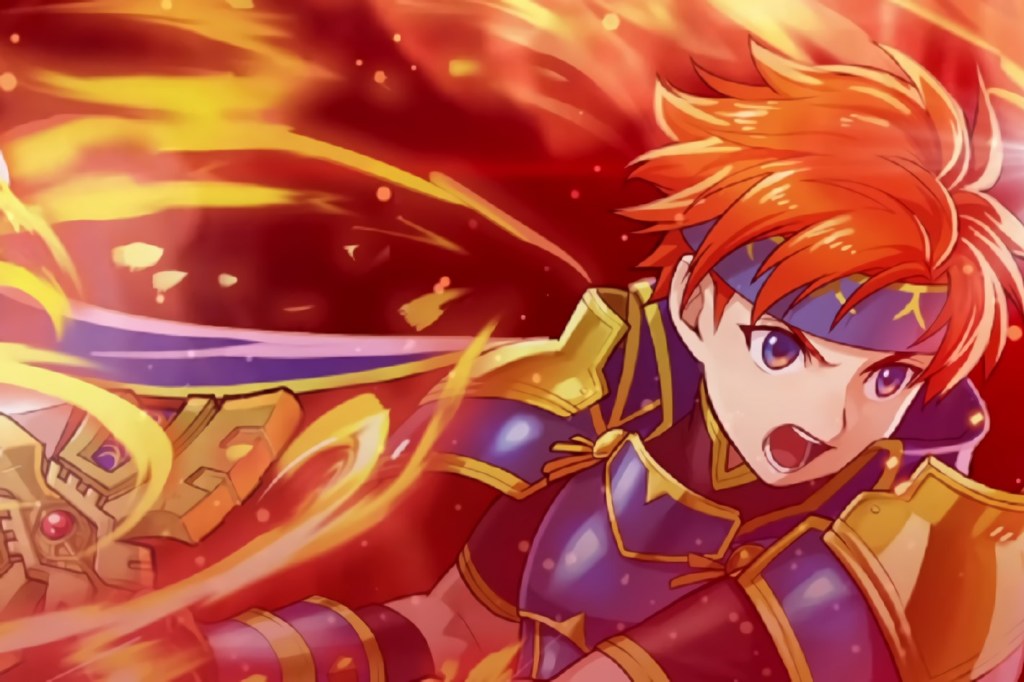
Following the release Fire Emblem: Thracia 776, Shouzou Kaga and Mayumi Hirota left Intelligent Systems, with Tōru Narihiro taking over as director. Takehiro Izushi remained as producer, Masayuki Horikawa as designer and scenario writer assisted by Kouhei Maeda. Takafumi Kaneko would be the new programmer. Eiji Kaneda worked on character designs with Yuka Tsujiyoko returned as music composer.
Fire Emblem: The Binding Blade would be an original story set on the continent of Elibe with the protagonist being Roy, set within a war between Humans and Dragons. It’s working title was Fire Emblem: Maiden of Darkness and it was planned to release on the Nintendo 64 and the 64DD. It was believed by the team that because the Super Famicom lacked adequate hardware, the Nintendo 64 and 64DD would make it possible to create the game they envisioned. It was in the middle of development when the games internal development structure changed and in addition the poor reception of the 64DD that development restarted in 2000. The Game Boy Advance was then chosen as the new platform and because of the restart the team had to cut the majority of work they did for the original version. They did manage to retain Roy and Karel during the transition.
Being the first Fire Emblem title to be on a portable device, but not the first time Fire Emblem was considered for a portable device, the team was happy that the GBA had the capabilities needed. Another reason it was chosen was to remain within their deadline and keep costs reasonable. Though the platform was much better than the Super Famicom they still had their challenges. The hardware was still new to the team so they created two versions, one was made to give the team experience working with the GBA. One of the main problems was since the GBA was portable, it had limited screen resolution and size, so they needed to create ways to compensate for that since every title prior was done with TV resolution and size in mind.
In contrast to prior games, particularly Genealogy of the Holy War, the story was not complex. The spectrum of good versus evil was made apparent, with the game’s objective clearly laid out. They added in a branching narrative, with different characters opening different story routes.
To make the character relatable to both a younger and wider audience they designed Roy to be seen as youthful, careful and easily relatable. They also, contrary to the previous titles designed the Fire Emblem to be a family crest, rather than an item.
The difficulty also reflected the steps they were making in drawing in a wider audience as they intentionally reduced the difficulty to make sure it wouldn’t be as hard as Thracia 776.
On it’s May 29, 2002 release in Japan the Binding Blade snatched the 4th spot on the sales charts, dropping to the 17th spot by May of the same year.
Famitsu as you may have guessed regarded the game positively giving it a 36 of 40 score. RPGFan’s Woojin Lee claimed the game’s animation was some of the best on the GBA, noting the added features in comparison to the previous titles and how easy it was to develop an emotional link to the characters causing permadeath to be more impactful.


1980s Porsche Drive Across Golden Gate Bridge, San Francisco from the Kinolibrary Archive Film Collections.










Sy Bourgin Interviews Isaac Asimov, Biochemist And Science Fiction Writer. Mr. Asimov May Be The Most Widely Read Of All Science Fiction Writers, Having Written 155 Books And Hundreds Of Magazine Articles And Short Stories. A Clip Of “Fantastic Voyage,” Based On His Book, Is Inserted In The Program. Viewers Will Find This Interview Provocative In Regard To What Mr. Asimov Has To Say About Writing And The Future Of This Earth.

US military forces are now waging simultaneous drone missile attacks, bombings, special forces assassination raids and ground combat in five separate countries: Iraq, Afghanistan, Pakistan, Libya and Yemen.
President Barack Obama, who owed his 2008 election victory in large measure to the popular revulsion felt by millions of Americans toward the wars of aggression launched by the Bush administration in Afghanistan and Iraq, has more than fulfilled George W. Bush’s predictions concerning the “wars of the 21st century.”
He has gone his Republican predecessor at least one better. Bush proclaimed an infamous doctrine that asserted the right of US imperialism to wage war against any country that it perceived as a potential threat, now or at any time in the future. In doing so, he embraced the principle of “preventive war,” a form of aggressive war for which the surviving leaders of the Third Reich were tried at Nuremberg.
In justifying the war against Libya, Obama has promulgated his own doctrine, which dispenses with even the pretense of a potential threat as the justification for war. Instead, he claims that the US is within its rights to wage war wherever it deems its “interests and values” to be at stake, even if the targets for attack pose no conceivable threat to US security.
In his speech on Libya, Obama included among these inviolable American values “maintaining the flow of commerce,” i.e., the flow of profits into the coffers of US oil companies and other corporations.
Even as US cruise missiles rained down upon Libya nearly three months ago, Obama cynically asserted that Washington had launched the war for fear that repression carried out by the Libyan government of Colonel Muammar Gaddafi would extinguish the “Arab Spring.”
What hypocrisy! Washington’s real attitude toward the democratic aspirations of the peoples of the Middle East and North Africa have found unmistakable expression over the past several days in a series of actions.
Obama welcomed to the White House the crown prince of Bahrain, a monarchical dictatorship which, with tacit US support and the open military backing of Washington’s principal ally in the region, Saudi Arabia, has ruthlessly suppressed a mass movement for democratic rights, killing hundreds, detaining thousands and routinely torturing detainees.
The prince arrived just days after the regime began a military trial of doctors and nurses. Arrested for treating protesters wounded by security forces, these medical workers have been compelled by means of electric shocks and beatings with boards embedded with nails to sign false confessions.
In an official statement, Obama “reaffirmed the strong commitment of the United States to Bahrain”—whose regime hosts the US Navy’s Fifth Fleet—and praised its monarch for his embrace of “dialogue” and “reform.” The US president helpfully advised that “the opposition and the government”—the tortured and the torturers alike—“must compromise to forge a just future for all Bahrainis.”
On the other side of the Arabian peninsula it was revealed by the New York Times that the US is “exploiting a growing power vacuum” created by five months of mass upheavals against the US-backed dictatorship in Yemen to launch a new war in this, the most impoverished country of the region, using drone missile and jet fighter attacks.
While allegedly directed against Al Qaeda elements, there is every indication that the attacks are aimed at salvaging the regime of President Ali Abdullah Saleh, even while easing the dictator out of the presidency he has occupied for 33 years.
The first reported strike in this new theater of war opened up by the Pentagon killed at least four civilians along with several alleged “militants.”
In Libya, the US-NATO war approaches the end of its third month with an intensification of the relentless terror bombings that have claimed the lives of hundreds of civilians and an untold number of Libyan soldiers. Launched under the cynical pretense of protecting civilians, Washington and its European allies make no bones about their real aim being “regime-change,” i.e., the installation of a puppet state that will ensure the domination of imperialism and the major Western oil companies.
This is the real response of US imperialism to the “Arab Spring”—an explosion of militarism in the Middle East and North Africa, a desperate attempt to bolster the dictatorships that serve its interests in the region, and a determination to strangle the revolutionary struggles of the Arab workers and youth.
These new military interventions come on top of the nearly decade-old wars and occupations in Afghanistan and Iraq, which, it becomes increasingly clear, are to continue indefinitely.
In a Senate confirmation hearing Thursday, CIA Director Leon Panetta, who has been picked by Obama to replace the outgoing Pentagon chief, Defense Secretary Robert Gates, allowed that he had “every confidence” that the regime in Iraq will soon request that Washington keep tens of thousands of US troops on Iraqi soil after a December 31, 2011 withdrawal deadline.
Panetta made it clear that Washington is prepared to keep the troops in place “to make sure that the gains we’ve made in Iraq are sustained.” That the overwhelming majority of the Iraqi people, for whom the American occupation has meant the death, maiming and displacement of millions, want all 47,000 US troops out of the country now is beside the point.
The man that Panetta is replacing, Defense Secretary Gates, has repeatedly stressed over the last several days that the July 2011 deadline that Obama set for beginning the withdrawal from Afghanistan should spell no significant reduction in the deployment of nearly 100,000 American troops.
After meeting with military commanders in Afghanistan over the weekend, Gates stressed that any drawdown would be “modest,” telling NATO defense ministers in Brussels that “there will be no rush for the exits on our part.” Meanwhile, every week brings new atrocities, with civilian casualties inflicted by bombings, special forces night raids and drone missile attacks across the border in Pakistan.
American workers, students and youth are increasingly forced to bear the burden of a policy of endless war aimed at forging a global empire to serve the interests of the US financial oligarchy. Election after election and poll after poll have demonstrated that a substantial majority of the population opposes these wars, yet this opposition finds no expression within the two-party political system or the corporate-controlled media.
Working people are well aware that trillions of dollars are spent on these wars and the US military-industrial complex, even as federal, state and local governments, led by Democrats and Republicans alike, declare that no money can be found to pay for jobs, decent wages, health care, education or other vital social services.
Moreover, the attempt by the American ruling elite to use militarism to offset the decline in US capitalism’s global economic position generates increasingly dangerous international tensions and the threat of far bloodier wars to come.
Even as mass hostility to these wars grows, antiwar protest has faded almost entirely from the scene, smothered by a middle-class ex-left layer that supports Obama and has largely integrated itself into the Democratic Party.
A new movement against war can be built only on the basis of an irreconcilable break with the Democrats and the independent mobilization of the working class against the Obama administration and the capitalist profit system, the source of war and militarism.
 Igor's Blog