Leningradsky Prospekt (Russian: Ленингра́дский проспе́кт), or Leningrad Avenue, is a major arterial avenue in Moscow, Russia. It continues the path of Tverskaya Street and 1st Tverskaya-Yamskaya Street north-west from Belorussky Rail Terminal, and changes the name once again to Leningrad Highway past the Sokol metro station. The Highway continues its way to Saint Petersburg via Tver (not unlike Moskovsky Prospekt in Saint Petersburg, which is named after, and leads to, Moscow). Until 1957, Leningradsky Prospekt was part of Leningrad Highway (Petersburg Highway prior to 1924). Both avenues retain their Lenin-related names after the reinstatement of the historical Saint Petersburg name.
And on Friday, Miley Cyrus got raunchy on stage in a ‘jailbait’ tank top and hotpants as she rocked out during a soundcheck ahead of her upcoming performance for Austin City Limits.
The Wrecking Ball singer, 28, took to Instagram to share two videos of herself pulling out her sexiest moves while preparing for the main event.
Miley was in her element as she knelt down on stage, sticking her tongue out and throwing her mullet about while wearing the tiny black shorts and a tank top tied at the waist.
She tied a studded leather belt around her waist and pulled her look together with hot pink trainers which perfectly matched the ‘jailbait’ font colour on her tee.
The singer bounced around on her knees to the Mike WiLL Made-It’s 2013 saucy song 23 on which she featured along with Wiz Khalifa and Juicy J.
Miley captioned the raunchy videos: ‘soundcheck 4 @actv tomorrow night.’
Her eye-catching performance came as reports emerged that Miley might rock in the New Year with NBC.
According to Vulture, she is in talks to host a Lorne Michaels-produced special but details of the event are still being pinned down
If she ends up leading NBC’s New Years Eve gig, it would end The Voice host Carson Daly’s nearly 17-year run as host.
Insiders say Miley’s New Year celebration is being pitched as a ‘multi-hour, multi-city event with musical performances from numerous artist,’ including Cyrus herself.
Though some floated the idea of Cyrus ringing in 2022 in Miami instead of a traditional Times Square moment, another insider told Vulture nothing has been finalized.
SNL head honcho Michaels will serve as executive producer, but is not expected to handing the night-of showrunning duties like he does on the longstanding sketch show.
Development of long-range strategic bombers, including the Tupolev Tu-95 ‘Bear’. Wings of the Red Star was a separately-branded program that focused on Soviet Air Force aircraft from World War II to the modern era. It was narrated by actor Sir Peter Ustinov.
GENGHIS KHAN SET OUT to the west, heading for Khwarizm in 1219, the Year of the Rabbit, and arrived with the following spring in the Year of the Dragon, when he crossed the desert to suddenly appear deep behind enemy lines at Bukhara. Before the year ended, the Mongols had taken every major city in the Khwarizm empire, and its sultan lay abandoned and dying on a small island out in the Caspian Sea where he had sought refuge from the relentless hounding by Genghis Khan’s warriors.
The Mongols carried the fighting deeper into the new lands, and in a campaign of four years, they conquered the cities of central Asia as though swatting flies. The names seem to run together in a numbing sequence of syllables in a dozen languages: Bukhara, Samarkand, Otrar, Urgench, Balkh, Banakat, Khojend, Merv, Nisa, Nishapur, Termez, Herat, Bamiyan, Ghazni, Peshawar, Qazvin, Hamadan, Ardabil, Maragheh, Tabriz, Tbilisi, Derbent, Astrakhan. The armies of Genghis Khan crushed every army wherever they found them, from the Himalayan Mountains to the Caucasus Mountains, from the Indus River to the Volga River. Each conquered city had its own story that followed a mildly different course of events, but the results never varied. No city withstood their onslaught. No citadel survived untaken. No prayers could save the people. No officials could bribe or talk their way out of submission. Nothing could slow, much less stop, the Mongol juggernaut.
By riding against Khwarizm, Genghis Khan attacked a newly formed kingdom only twelve years older than his own Mongol nation, but he attacked not just an empire, but an entire ancient civilization. The Muslim lands of the thirteenth century, combining Arabic, Turkic, and Persian civilizations, were the richest countries in the world and the most sophisticated in virtually every branch of learning from astronomy and mathematics to agronomy and linguistics, and possessed the world’s highest levels of literacy among the general population. Compared with Europe and India, where only priests could read, or China, where only government bureaucrats could, nearly every village in the Muslim world had at least some men who could read the Koran and interpret Muslim law. While Europe, China, and India had only attained the level of regional civilizations, the Muslims came closest to having a world-class civilization with more sophisticated commerce, technology, and general learning, but because they ranked so high above the rest of the world, they had the farthest to fall. The Mongol invasion caused more damage here than anywhere else their horses would tread.
Just as in northern China, where the formerly nomadic Khitan, Jurched, and Tangut tribes ruled over peasant populations, across the Middle East the formerly nomadic Turkic tribes such as the Seljuks and the Turkoman had conquered and ruled various kingdoms populated mostly by farmers. A series of Turkic states dominated the political landscape from the territories of modern-day India, Pakistan, and Afghanistan, across Persia, and into the heart of the Anatolia region of modern Turkey along the Mediterranean. The civilization of the area rested on an ancient bed of Persian cultures, heavily augmented by influences from the Arab world and from earlier classical civilizations from Rome to India. The cultural mosaic of the Middle East included sizable minority populations of Jews, Christians, and other religious and linguistic groups. Overall, however, the scholars, judges, and religious leaders spoke Arabic and quoted the Koran. The soldiers spoke the Turkic dialects of their warrior tribe. The peasants spoke and sang in the many dialects of Persian.
Despite the wealth of the area at the time of Genghis Khan’s sudden appearance, the complexity of its social life left its many kingdoms riven with political rivalries, religious tensions, and cultural hatreds. As an upstart Turk, the sultan of Khwarizm could scarcely claim any allies among his fellow Muslims, mostly Arabs and Persians, who looked upon him as little more than a barbarian conqueror himself. Relations between the sultan of Khwarizm and the Arab Caliph in Baghdad were so strained that according to several chronicles, the Caliph supposedly petitioned Genghis Khan to attack the sultan by sending him a secret message tattooed onto a man’s head, who then passed undetected through Khwarizm territory to reach the Mongols. Although apocryphal, the story of the tattooed messenger circulated widely in the Muslim world and conferred a certain legitimacy on Genghis Khan’s war against the sultan for those Muslims looking for a religious reason to side with the infidel against a Muslim sultan. According to a possibly true story, the Caliph further aided the Mongol attack by sending Genghis Khan a gift of a regiment of Crusaders captured in the Holy Land. Since Genghis Khan had no need for infantry, he freed them, and some of them eventually made their way home to Europe with the first rumors of the previously unknown Mongol conquerors.
In addition to the strains with his Muslim neighbors, the sultan of Khwarizm faced numerous divisions within his own lands and family. The sultan quarreled constantly with his mother, who held virtually as much power as he did, and the threat of a Mongol invasion heightened their disagreement on everything from how to run the empire to how to prepare for war. It was her brother who had seized the first Mongol caravan that precipitated the war, but in refusing to allow her son to punish him and thereby avoid war, she exacerbated the tensions with the Mongols. If the stresses within the ruling family were not menacing enough, the masses of Persian and Tajik subjects showed little connection to their rulers and even less to the Turkic soldiers who were stationed in their cities to exploit them rather than defend them. In turn, the soldiers had minimal vested interest in protecting the lands where they were stationed, and they showed little inclination to risk their lives to save people whom they despised.
When Genghis Khan dropped down on the cities of Khwarizm, he commanded an army of about 100,000 to 125,000 horsemen, supplemented by Uighur and other Turkic allies, a corps of Chinese doctors, and engineers for a total of 150,000 to 200,000 men. By comparison, the Khwarizm ruler had some 400,000 men under arms across his empire, and they were fighting with the home advantage on their own territory.
The Mongols promised justice to those who surrendered, but they swore destruction to those who resisted. If the people accepted and acted as relatives should by reciprocating the offer of kinship by offering food, then the Mongols would treat them as family members with a guarantee of protection and certain basic familial rights; if they refused, they would be treated as enemies. Genghis Khan’s offer to the besieged was as simple as it was horrifying, as when he sent this message to the citizens of Nishapur: “Commanders, elders, and commonality, know that God has given me the empire of the earth from the east to the west, whoever submits shall be spared, but those who resist, they shall be destroyed with their wives, children, and dependents.” The same sentiment found expression in many documents of the era, one of the clearest in the Armenian chronicle that quotes Genghis Khan as saying that “it is the will of God that we take the earth and maintain order” to impose Mongol law and taxes, and to those who refused them, the Mongols were obligated to “slay them and destroy their place, so that the others who hear and see should fear and not act the same.”
Some cities surrendered without fighting. Others fought for a few days or weeks, and only the hardiest of defenders held out for more than a few months. Genghis Khan had learned much from his campaigns against the Jurched cities: not only how to capture heavily fortified cities, but how to treat them afterward, in particular how to most efficiently plunder them. He did not want to repeat the mistakes of the chaotic plunder of Zhongdu. In Khwarizm, he introduced the new and more efficient system of first emptying the city of all people and animals before beginning to loot, thereby minimizing the danger to his men as they plundered.
Before the plundering began, the Mongol warriors followed a similar procedure toward the enemy population in each hostile city. First, they killed the soldiers. The Mongols, dependent on cavalry, had little use for an infantry trained to defend fortress walls, and, more important, they did not want to leave a large army of former enemies blocking the route between them and their homeland in Mongolia. They always wanted a clear, open way home. After executing the soldiers, the Mongol officers sent clerks to divide the civilian population by profession. Professional people included anyone who could read and write in any language—clerks, doctors, astronomers, judges, soothsayers, engineers, teachers, imams, rabbis, or priests. The Mongols particularly needed merchants, cameleers, and people who spoke multiple languages, as well as craftsmen. These workers would be put to use by the Mongols, who themselves practiced no crafts other than war, herding, and hunting. Their growing empire needed skilled workers in almost every service imaginable, including smiths, potters, carpenters, furniture makers, weavers, leather workers, dyers, miners, papermakers, glassblowers, tailors, jewelers, musicians, barbers, singers, entertainers, apothecaries, and cooks.
People without occupations were collected to help in the attack on the next city by carrying loads, digging fortifications, serving as human shields, being pushed into moats as fill, or otherwise giving their lives in the Mongol war effort. Those who did not qualify even for these tasks, the Mongol warriors slaughtered and left behind.
In Genghis Khan’s conquest of central Asia, one group suffered the worst fate of those captured. The Mongol captors slaughtered the rich and powerful. Under the chivalrous rules of warfare as practiced in Europe and the Middle East during the Crusades, enemy aristocrats displayed superficial, and often pompous, respect for one another while freely slaughtering common soldiers. Rather than kill their aristocratic enemy on the battlefield, they preferred to capture him as a hostage whom they could ransom back to his family or country. The Mongols did not share this code. To the contrary, they sought to kill all the aristocrats as quickly as possible in order to prevent future wars against them, and Genghis Khan never accepted enemy aristocrats into his army and rarely into his service in any capacity.
Genghis Khan had not always pursued this policy. In the first conquests of the cities of the Jurched, the Tangut, and the the Black Khitan, Genghis Khan had often protected the rich and even allowed rulers to stay in office after he defeated them. But the Jurched and the Tangut had betrayed him as soon as his army withdrew. By the time Genghis Khan arrived in the Muslim countries of central Asia, he had learned his lesson about the loyalty, dependability, and usefulness of the rich and powerful. In his keen awareness of public attitudes and opinions, he also recognized that the common people cared little about what befell the idle rich.
By killing the aristocrats, the Mongols essentially decapitated the social system of their enemies and minimized future resistance. Some of the cities never recovered enough to rebuild after the loss of aristocrats on the battlefield or from the annihilation of their families. Genghis Khan wanted officeholders who were loyal and indebted to the Mongols alone for their positions of power and prestige, and for this reason he recognized no titles other than those granted by him. Even an allied prince or king who wished to retain an older title had to have it reconferred on him by the Mongol authorities. In his report on his trip to Mongolia from 1245 to 1247, the papal envoy Giovanni Di Plano Carpini complained frequently about the lack of respect that Mongols showed the aristocratic people. The lowest-ranking Mongol could walk in front of visiting kings and queens and speak rudely to them.
The fate of the sultan’s mother, who had been the most powerful woman in the empire, showed the Mongol attitude toward aristocratic women. They captured her and killed most members of her court and some two dozen members of her family. Then they sent her off to live the remaining decade of her life in ignominious servitude in Mongolia, where she disappeared from history. Such a woman earned no prestige or consideration by virtue of her birth; she, like a captured man, was only as good as her skills, work, and service.
When the Mongols passed through a city, they left little of value behind them. In a letter written just after the invasion, the geographer Yaqut al-Hamawi, who barely escaped the Mongols, wrote glowingly of the beautiful and luxurious palaces that the Mongols had “effaced from off the earth as lines of writing are effaced from paper, and those abodes became a dwelling for the owl and the raven; in those places the screech-owls answer each other’s cries, and in those halls the winds moan.”
Genghis Khan epitomized ruthlessness in the eyes of the Muslims. Chroniclers of the era attribute to Genghis Khan the highly unlikely statement that “the greatest joy a man can know is to conquer his enemies and drive them before him. To ride their horses and take away their possessions. To see the faces of those who were dear to them bedewed with tears, and to clasp their wives and daughters in his arms.” Rather than finding such apocalyptic descriptions derogatory, Genghis Khan seemed to have encouraged them. With his penchant for finding a use for everything he encountered, he devised a powerful way to exploit the high literacy rate of the Muslim people, and turned his unsuspecting enemies into a potent weapon for shaping public opinion. Terror, he realized, was best spread not by the acts of warriors, but by the pens of scribes and scholars. In an era before newspapers, the letters of the intelligentsia played a primary role in shaping public opinion, and in the conquest of central Asia, they played their role quite well on Genghis Khan’s behalf. The Mongols operated a virtual propaganda machine that consistently inflated the number of people killed in battle and spread fear wherever its words carried.
By August 1221, only a year into the campaign, Mongol officials sent their Korean subjects a demand for one hundred thousand sheets of their famous paper. The volume of paper shows how rapidly Mongol record keeping was increasing as the size of the empire grew, but the order also symbolized the Mongol emphasis on writing their history. Increasingly, paper was the most potent weapon in Genghis Khan’s arsenal. He showed no interest in having his accomplishments recorded or in panegyrics to his prowess; instead, he allowed people to freely circulate the worst and most incredible stories about him and the Mongols.
From every conquered city, the Mongols sent forth delegations to the other cities to tell them of the unprecedented horrors inflicted by the nearly supernatural abilities of Genghis Khan’s warriors. The power of those words can still be felt in the accounts of eyewitnesses recorded by chroniclers such as the historian Ibn al-Athir, who lived through the era of the conquest in Mosul, a city now located in Iraq, but at that time close to but slightly beyond the Mongol campaign. He recorded the accounts of refugees in his book al-Kamil fi at-tarikh, known in English as The Perfect HistoryorThe Complete History. At first, Ibn al-Athir seemed disinclined to believe the accounts: “Stories have been related to me, which the hearer can scarcely credit, as to the terror of the Tatars.” But he quickly warmed to the retelling. “It is said that a single one of them would enter a village or a quarter wherein were many people, and would continue to slay them one after another, none daring to stretch forth his hand against this horseman.” From another account, he heard that “one of them took a man captive, but had not with him any weapon wherewith to kill him; and he said to his prisoner, ‘Lay your head on the ground and do not move,’ and he did so, and the Tatar went and fetched his sword and slew him therewith.”
Each victory released a flood of new propaganda, and the belief in Genghis Khan’s invincibility spread. As absurd as the stories appear from a reasoned distance and safety in time, they had a tremendous impact across central Asia. Ibn al-Athir lamented the Mongol conquests as “the announcement of the death-blow of Islam and the Muslims.” With a touch of the dramatic, he added, “O would that my mother had not born me or that I had died and become a forgotten thing ere this befell!” He agreed to write out the gory details only because “a number of my friends urged me to set it down in writing.” He declared the invasion as the “greatest catastrophe and the most dire calamity . . . which befell all men generally, and the Muslims in particular . . . since God Almighty created Adam until now.” By comparison, he noted that the worst slaughters in pre-Mongol history had been unleashed upon the Jews, but the attack of the Mongols on the Muslims was worse because of the toll of Muslims whom “they massacred in a single city exceeded all the children of Israel.” Lest the reader prove too suspicious, Ibn al-Athir promised details about the Mongol “deeds which horrify all who hear of them, and which you shall, please God, see set forth in full detail in their proper connection.” The impassioned rhetoric, however, seems to have been more an effort to arouse his fellow Muslims than to accurately chronicle their conquest.
Although the army of Genghis Khan killed at an unprecedented rate and used death almost as a matter of policy and certainly as a calculated means of creating terror, they deviated from standard practices of the time in an important and surprising way. The Mongols did not torture, mutilate, or maim. War during that time was often a form of combat in terror, and other contemporary rulers used the simple and barbaric tactic of instilling terror and horror into people through public torture or gruesome mutilation. In an August 1228 battle with Jalal al-Din, the son of the sultan, four hundred Mongol prisoners fell into enemy hands, and they knew well that they would die. The victors took the Mongol warriors to nearby Isfahan, tied them behind horses, and dragged them through the streets of the city to entertain the city’s residents. All the Mongol prisoners were thus killed as public sport and then fed to dogs. Because of this public torture, the Mongols never forgave the civilized people of that city, and it, too, would eventually pay a price. In another case where a Mongol army lost a battle, the Persian victors killed the captives by driving nails into their heads, the seat of their souls according to Mongol belief. This episode was echoed a century later in 1305, when the sultan of Delhi turned the deaths of other Mongol prisoners into public entertainment by having them crushed by elephants. He then built a tower from the severed heads of the Mongols who had been killed or captured in battle.
Civilized rulers and religious leaders from China to Europe depended upon these gruesome displays to control their own people through fear and to discourage potential enemies through horror. When the Byzantine Christian emperor Basil defeated the Bulgarians in 1014, he had fifteen thousand Bulgarian war captives blinded. He left one man out of each hundred with one eye in order that he might lead the other ninety-nine homeward and thereby spread the terror. When the Christian Crusaders took cities such as Antioch in 1098 and Jerusalem in 1099, they slaughtered the Jews and Muslims without regard for age or gender, but merely because of their religion.
Holy Roman Emperor Frederick Barbarossa, who ranks as one of Germany’s greatest historical and cultural heroes, best exemplified the use of terror in the West. When he tried to conquer the Lombard city of Cremona in the north of modern Italy in 1160, he instituted an escalating series of violent acts of terror. His men beheaded their prisoners and played with the heads outside the city walls, kicking them like balls. The defenders of Cremona then brought out their German prisoners on the city walls and pulled their limbs off in front of their comrades. The Germans gathered more prisoners and executed them in a mass hanging. The city officials responded by hanging the remainder of their prisoners on top of the city walls. Instead of fighting each other directly, the two armies continued their escalation of terror. The Germans then gathered captive children and strapped them into their catapults, which were normally used to batter down walls and break through gates. With the power of these great siege machines, they hurled the living children at the city walls.
By comparison with the terrifying acts of civilized armies of the era, the Mongols did not inspire fear by the ferocity or cruelty of their acts so much as by the speed and efficiency with which they conquered and their seemingly total disdain for the lives of the rich and powerful. The Mongols unleashed terror as they rode east, but their campaign was more noteworthy for its unprecedented military success against powerful armies and seemingly impregnable cities than for its bloodlust or ostentatious use of public cruelty.
Those cities that surrendered to the Mongols at first found their treatment so mild and benign, in comparison with the horrific stories that circulated, that they naively doubted the abilities of the Mongols in other areas as well. After surrendering, a large number of the cities waited obediently until the Mongols had passed well beyond their country, and then revolted. Since the Mongols left only a few officials in charge and stationed no military detachment to guard a city, the inhabitants misinterpreted the Mongol withdrawal as weakness and presumed that the main Mongol army would never return that way. For these cities, the Mongols showed no mercy; they returned quickly to the rebels and destroyed them utterly. An annihilated city could not revolt again.
One of the worst slaughters was unleashed on the citizens of Omar Khayyám’s home city of Nishapur. The residents revolted against the Mongols, and in the ensuing battle an arrow fired from walls of the city killed Genghis Khan’s son-in-law, Tokuchar. In revenge for the revolt and as a lesson to other cities, Genghis allowed his widowed daughter, who was pregnant at the time, to administer whatever revenge she wished upon the captured city. She reportedly decreed death for all, and in April 1221, the soldiers carried out her command. According to widely circulated but unverified stories, she ordered the soldiers to pile the heads of the dead citizens in three separate pyramids—one each for the men, the women, and the children. Then she supposedly ordered that the dogs, the cats, and all other living animals in the city be put to death so that no living creature would survive the murder of her husband.
The most painful episode for Genghis Khan personally occurred during a battle in the beautiful valley of Bamiyan in Afghanistan, a Buddhist pilgrimage site and home of the largest statues in the world. Ancient devotees had carved giant images of Buddha in the mountainside, and one can only wonder what the Mongols thought of such large images. During the battle there, an arrow struck and killed young Mutugen, Genghis Khan’s favorite grandson. Genghis Khan received word of the death before the boy’s father, Chaghatai, was informed. Genghis Khan summoned his son, and before telling him what had happened, ordered Chaghatai not to weep or mourn.
Genghis Khan had cried publicly many times in his life and at the least provocation. He had cried in fear, in anger, and in sadness, but faced with the death of one whom he loved more than any other, Genghis Khan did not allow himself or his sons to show their pain and anguish through tears or mourning. Whenever faced with great difficulty or personal pain, Genghis Khan funneled it into combat. Kill, don’t mourn. He transformed the painful sorrow into a great fury that he poured out over the people of the valley. No one—rich or poor, beautiful or ugly, good or bad—would survive. The valley was eventually resettled by the Hazara, a name that meant “ten thousand” in Persian, who claimed to be descendants from one of Genghis Khan’s regiments of that size.
While the destruction of many cities was complete, the numbers given by historians over the years were not merely exaggerated or fanciful—they were preposterous. The Persian chronicles reported that at the battle of Nishapur, the Mongols slaughtered the staggeringly precise number of 1,747,000. This surpassed the 1,600,000 listed as killed in the city of Herat. In more outrageous claims, Juzjani, a respectable but vehemently anti-Mongol historian, puts the total for Herat at 2,400,000. Later, more conservative scholars place the number of dead from Genghis Khan’s invasion of central Asia at 15 million within five years. Even this more modest total, however, would require that each Mongol kill more than a hundred people; the inflated tallies for other cities required a slaughter of 350 people by every Mongol soldier. Had so many people lived in the cities of central Asia at the time, they could have easily overwhelmed the invading Mongols.
Although accepted as fact and repeated through the generations, the numbers have no basis in reality. It would be physically difficult to slaughter that many cows or pigs, which wait passively for their turn. Overall, those who were supposedly slaughtered outnumbered the Mongols by ratios of up to fifty to one. The people could have merely run away, and the Mongols would not have been able to stop them. Inspection of the ruins of the cities conquered by the Mongols show that rarely did they surpass a tenth of the population enumerated as casualties. The dry desert soils of these areas preserve bones for hundreds and sometimes thousands of years, yet none of them has yielded any trace of the millions said to have been slaughtered by the Mongols.
Genghis Khan would be more accurately described as a destroyer of cities than a slayer of people, because he often razed entire cities for strategic reasons in addition to revenge or to provoke fear. In a massive and highly successful effort to reshape the flow of trade across Eurasia, he destroyed cities on the less-important or more inaccessible routes to funnel commerce into more routes that his army could more easily supervise and control. To stop trade through an area, he demolished the cities down to their very foundations.
In addition to the organized destruction of some cities, he depopulated expansive areas of land by the laborious destruction of the irrigation system. Without irrigation, the villagers and farmers left, and the fields reverted to grazing land. This allowed large areas to be set aside for the herds that accompanied the army and were kept as reserves for future campaigns. Just as when he churned up the agricultural land when he left northern China to return to Mongolia, Genghis Khan always wanted a clear area of retreat or advancement where his army could always find adequate pasturage for the horses and for the other animals on which their success depended.
After four years of campaigning in central Asia, Genghis Khan was in his sixties. He was at the height of his power without competition from any rival within his tribe or threat from any enemy external to it. Yet in contrast to this overwhelming success on the battle front, his family was already, even before he died, tearing itself apart. Leaving the Mongol homeland in the care of his youngest brother, Temuge Otchigen, he had brought all four of his sons with him on the central Asian campaign, where he hoped that they would not only learn to be better warriors, but also how to live and work together. Unlike conquerors who came to think of themselves as gods, Genghis Khan knew clearly that he was mortal, and he sought to prepare his empire for a transition. In the tradition of the steppe, each son in a herding family received some of each kind of animal that the family owned, as well as the use of some portion of the grazing lands. Similarly, Genghis Khan planned to give each son a miniature empire reflecting, to the degree practical, the diverse holdings of the whole empire. Each son would be the khan of a large number of people and herds on the steppe as well as owner of a large section of territory with cities, workshops, and farms in the sedentary zones. Above the other three, however, one son would be the Great Khan who would administer the central government, provide a final court of appeal, and, together with the advice of his other brothers, have responsibility for foreign affairs, particularly for making war. The system depended on the ability and willingness of the brothers to work together and to cooperate under the leadership of the Great Khan.
Even before he left on the Khwarizm campaign, the plan encountered difficulty when, despite the strong taboos against discussing or preparing for death, he summoned a family khuriltai to deal precisely with that subject. The meeting turned into one of the pivotal episodes of Mongol history by bringing together all the rivalries of the past and foreshadowing the way in which his empire would eventually be broken apart.
In addition to his sons, Genghis Khan had several of his most trusted men with him to be a part of the discussion, since their agreement and support would also be necessary to guarantee the succession after his death. As the meeting began, the two eldest sons, Jochi and Chaghatai, seemed tensely poised, like steel traps ready to snap. If Ogodei, the third son, arrived true to character, he would have already had a few drinks and been mildly inebriated, although it seems unlikely that he would have been completely drunk in his father’s presence. Tolui, the youngest, remained quiet and seemed to have disappeared into the folds of the tent while his older brothers dominated center stage. Genghis Khan opened the family khuriltai by explaining the business of selecting a successor. He was quoted as saying that “if all my sons should wish to be Khan and ruler, refusing to serve each other, will it not be as in the fable of the single-headed and the many-headed snake.” In this traditional fable, when winter came, the snake’s competing heads quarreled among themselves and disagreed about which hole was better for them to find refuge in from the cold wind and snow. One head preferred one hole and pulled in that direction, and the other heads pulled in other directions. The other snake—with many tails but only one head—went immediately into one hole and stayed warm throughout the winter, while the snake with many heads froze to death.
After explaining the seriousness and importance of the issue, Genghis Khan asked his eldest son, Jochi, to speak first on the matter of succession. Order of seating, walking, speaking, drinking, and eating all carry heavy symbolic value among Mongols even today. By setting this order of speaking, the khan was publicly emphasizing that Jochi ranked as his eldest son, and this set him up as the likely successor. If the younger sons accepted this order of speaking, it would be tantamount to accepting Jochi’s legitimacy and seniority over them.
Chaghatai, the second son, refused to allow that assumption to pass unstated and untested. Before Jochi could answer his father, Chaghatai spoke up loudly. “When you tell Jochi to speak,” he defiantly asked his father, “do you offer him the succession?” Then he blurted out the rhetorical question that was intended as a statement of fact, no matter how much Genghis Khan disagreed, about the suspicious paternity of Jochi, who had been born forty years earlier, but too soon after Borte’s rescue from her Merkid kidnappers. “How could we allow ourselves to be ruled by this bastard son of a Merkid?” demanded Chaghatai of his father and brothers.
Jochi snapped at being called a bastard by his brother. He let loose a scream, lunged across the tent, and seized Chaghatai by the collar. The two men pummeled each other. In painfully emotional words that were probably spoken by Genghis Khan himself, but which the Secret History attributes to an adviser in an effort to preserve the dignity of the khan, Chaghatai was reminded how much his father loved and respected him. The father pleaded in obviously painful words with his sons to understand how different things were in the old days, before the boys were born, when terror ruled the steppes, neighbors fought neighbors, and no one was safe. What happened to their mother when she was kidnapped was not her fault: “She didn’t run away from home. . . . She wasn’t in love with another man. She was stolen by men who came to kill.”
Genghis Khan almost meekly implored his sons to remember that despite the circumstances of their birth, they all sprang “from a single hot womb,” and that “if you insult the mother who gave you your life from her heart, if you cause her love for you to freeze up, even if you apologize to her later, the damage is done.” The councillor reminded the sons how hard both parents worked to create their new nation, and he listed the sacrifices that both of them made to make a better world for their sons.
After the long, emotional scene, Genghis Khan knew that he could not impose a choice on his sons that they would reject after his death. He had to negotiate a compromise agreement that all of them would be willing to accept. He invoked his limited parental authority by reasserting that he himself accepted Jochi as his eldest son, and he commanded his other sons to accept this as fact and not to repeat suspicions about his paternity again.
Chaghatai submitted to the command of his father but made it clear that even in abiding by his edict, words could not make it true. Chaghatai grinned and said that the “game killed by mouth cannot be loaded onto a horse. Game slaughtered by words cannot be skinned.” Outwardly, the sons would all recognize Jochi’s legitimacy as long as their father lived; but inwardly, they would never do so. Recognizing the legitimacy of Jochi as the eldest son, however, did not guarantee him the succession to the office of Great Khan because such an important office was supposed to be based upon ability and support from the others, not on age.
Having incurred so much anger from his father, Chaghatai knew that the father would not then agree to his taking the office of Great Khan, but he still wanted to prevent Jochi from having it. So Chaghatai offered the family a compromise, which may have been spontaneously conceived or already agreed upon by the younger siblings. He said that neither he nor Jochi should become khan; instead, the succession should fall to their third brother, the mellow, good-natured, hard-drinking Ogodei.
With no other option open to him other than war, Jochi agreed to this compromise and endorsed Ogodei as the successor. Genghis Khan then allotted personal lands and herds to each son by doing what parents always do to quarreling youngsters: He separated Jochi and Chaghatai. “Mother Earth is broad and her rivers and waters are numerous. Make up your camps far apart and each of you rules your own kingdom. I’ll see to it that you are separated.” He then warned the sons not to behave so that people would laugh at or insult them.
The Muslim scholars serving at the Mongol court evidenced a tortured difficulty in recording this event, since for them a man’s honor rested on his control of the sexuality of the women around him. It was almost inconceivable that a man as powerful as Genghis Khan might have had a son sired by another man, or even be accused of such a thing by his own sons. Unlike the Secret History, written by a Mongol and including a full account of the family fight, the first Persian chronicler, Juvaini, wrote the conflict out of his history completely by making the family khuriltai into a gathering of serene decorum and complete unanimity. In his version of events, Genghis Khan delivered a beautiful speech on the admirable qualities of Ogodei, and all of his sons agreed. The sons obediently “laid the knee of courtesy upon the group of fealty and submission and answered with the tongue of obedience, saying ‘Who hath the power to oppose the word of Genghis Khan and who the ability to reject it?’ . . . All Ogodei’s brothers obeyed his commandment and made a statement in writing.”
With a little more distance from the original events, Rashid al-Din offered a slightly more honest account, but his manuscript has blanks in crucial places that would impugn the honor of Genghis Khan or his wife. He wrote that “because of , the path of unity was trodden upon both sides between them,” but the good members of the family “never uttered that taunt but regarded his as genuine.” Whether the blanks were entered into the original work by Rashid al-Din or made by later scribes copying it, they show the symbolic and political importance of the issue of Jochi’s paternity for generations to come.
At the end of the emotionally intense family encounter between Genghis Khan and his sons, it is doubtful that anyone knew how far-reaching the effects of this meeting would be. In this family khuriltai, the victors had just carved up the world in a way that would presage the Vienna Congress following the Napoleonic Wars, the Versailles Conference after World War I, and the meetings of the World War II Allies at Yalta and Potsdam.
Although repeatedly mentioned in the family conference, Borte was absent, but presumably still alive. It is not known if she heard of what went on among her sons, and no reliable information exists on exactly what happened to her. Oral tradition maintains that during this time, she continued to live in the beautiful steppe at Avarga on the Kherlen River, only a few days ride from where she and her husband had lived in the first days of their marriage. She likely died there, or in the vicinity, sometime between 1219 and 1224.
The unpleasant episode cast a pall over the remaining years of Genghis Khan’s life and particularly over the central Asian campaign. The fighting among his sons made him keenly aware of how much work he needed to do to preserve the empire after his death. His sons did not match up to the needs of the empire. While pursuing his great quest to unite the steppe tribes and conquer every threat around him, he had never devoted the attention he should have to his sons, and now they were all reaching middle age and were still unproven men. In his mistrust of his own relatives and his lifelong reliance on his companions and friends from youth, he had not built a working relationship among his own sons nor trained them to replace him.
Throughout his final years of life, Genghis Khan sought, without success, to mend the relations between Jochi and Chaghatai by assigning them to a joint campaign against the city of Urgench, a former capital of the sultan south of the Aral Sea. The tension seething between the two brothers nearly erupted into fighting against each other during the siege. Both brothers knew that the city would belong to Jochi as a part of his patrimony, and because of this they could not agree on the tactics to conquer it. Jochi suspected that because Urgench would belong to him, his brother was trying to destroy it utterly. Chagahatai, in turn, suspected that Jochi’s greed made him want to protect the buildings and structures of the city even at the risk of killing more Mongol soldiers.
Whereas most cities had fallen in a matter of days or weeks, the Mongol conquest of Urgench required an unprecedented six months. The city’s defenders fought fiercely. Even after the Mongols broke through the city walls, the defenders continued to fight from house to house. Uncomfortable with fighting in the claustrophobic confines of a nearly destroyed city, the Mongols set fires to burn down the city. The defenders continued fighting from the charred ruins. Finally, the Mongols built a dam, diverted the river, and flooded the city, thereby killing the remaining warriors and destroying nearly everything in it. Urgench never rose again, and although allotted to Jochi, nothing remained there for him and his descendants to rule over.
Angry with the quarreling between his sons, Genghis Khan summoned them, momentarily ostracized them by refusing to admit them to the court, then, when he finally admitted them, alternately berated, scolded, and pleaded with them. More conversations and quotes survive from this phase of Genghis Khan’s life than any other, and they show a growing concern but lessening power to control his family. After too long a neglect of their education, he tried to teach his sons everything at once, and in doing so he struggled to articulate lessons he had learned and ideas he had but had not verbalized clearly. He was accustomed to giving orders, not making explanations.
He tried to teach them that the first key to leadership was self-control, particularly the mastery of pride, which was something more difficult, he explained, to subdue than a wild lion, and anger, which was more difficult to defeat than the greatest wrestler. He warned them that “if you can’t swallow your pride, you can’t lead.” He admonished them never to think of themselves as the strongest or smartest. Even the highest mountain had animals that step on it, he warned. When the animals climb to the top of the mountain, they are even higher than it is.
In keeping with the laconic Mongol traditions, he warned his sons not to talk too much. Only say what needs to be said. A leader should demonstrate his thoughts and opinions through his actions, not through his words: “He can never be happy until his people are happy.” He stressed to them the importance of vision, goals, and a plan. “Without the vision of a goal, a man cannot manage his own life, much less the lives of others,” he told them.
Some thoughts seem to contradict others. As much as he emphasized the importance of seizing the mantle of leadership, he seemingly sought to impart cautious conservatism in that “the vision should never stray far from the teaching of the elders.” As he explained it, “the old tunic, or deel, fits better and is always more comfortable; it survives the hardships of life in the bush, while the new or untried deel is quickly torn.” In keeping with his own sober manner and simple style of living, Genghis Khan warned them against the pursuit of a “colorful” life with material frivolities and wasteful pleasures. “It will be easy,” he explained, “to forget your vision and purpose once you have fine clothes, fast horses, and beautiful women.” In that case, “you will be no better than a slave, and you will surely lose everything.”
In one of his most important lessons, he told his sons that conquering an army is not the same as conquering a nation. You may conquer an army with superior tactics and men, but you can conquer a nation only by conquering the hearts of the people. As idealistic as that sounded, he followed with the even more practical advice that even though the Mongol Empire should be one, the subject people should never be allowed to unite as one: “People conquered on different sides of the lake should be ruled on different sides of the lake.” Like so many of his teachings, this, too, would be ignored by his sons and their successors.
The Mongol conquest stopped at the city of Multan, in the center of modern-day Pakistan, in the summer of 1222, the Year of the Horse. After descending from the mountains of Afghanistan onto the plains of the Indus River earlier that year, Genghis Khan had considered conquering all of northern India, circling around south of the Himalayas, and heading north across the Sung territory of China. Such a plan well suited the Mongol sensibility that one should never return by exactly the same route that one came. However, the geography and climate stopped him. As soon as the Mongols left the dry and colder region of the mountains, both warriors and horses weakened and grew sick. Even more alarming, the Mongol bows that were so well adapted to the extreme cold and heat of the steppe homeland also weakened in the damp air and seemed to lose the powerful accuracy that made the Mongol warrior such a dreaded shot. Facing these obstacles, Genghis Khan headed back into the mountains in February, and despite the tremendous loss of lives among the prisoners who cleared the snow-filled passes, he took his army to more comfortable and colder terrain. He left behind two tumen, some twenty thousand men, to continue the India campaign, but by summer illness and heat had so depleted their ranks that the survivors withdrew and limped back to the benign and healthful environment of Afghanistan.
Despite the aborted invasion of India, the campaign had achieved its main goals of conquering the Khwarizm empire and bringing central Asia and much of the Middle East under Mongol control. Before leaving the newly conquered lands, Genghis Khan called for a celebration that featured what was probably the largest hunt in history. During months of preparation during the winter of 1222–1223, his men cordoned off a large area by planting posts in the ground and stringing long pieces of horsehair twine between them. They hung strips of felt on the twine, and when the wind blew, as it almost always did, it frightened the animals away from the edges and toward the center of the area. At the appointed time, different armies began to converge on the area from different directions. Tens of thousands of soldiers took part in the ensuing hunt, which lasted for several months. They bagged all manner of animals from rabbits and birds to large herds of gazelle, antelope, and wild asses.
The hunt was part celebration, but it also seemed an effort to use the conviviality of the hunts and the entertainment that followed them to mellow relations among his sons, soothe over the hotheaded anger of the battlefield, and end the campaigns on a cooperative note. Still smarting from the wounds inflicted by his brothers and apparently alienated from his father as well, Jochi, the most beloved of the sons, claimed to be ill and refused to come even when summoned by direct order of Genghis Khan. Relations between the father and son nearly erupted into armed conflict when Genghis Khan heard that the supposedly ill Jochi had organized rival hunts in a celebration for his men.
The father and son never met again. Instead of returning to Mongolia, Jochi stayed in the newly conquered territory. He would soon die there, leaving as much mystery surrounding his death as his birth. The timing of his death, while his father still lived, sparked rumors that Genghis Khan may have killed Jochi in order to ensure political peace among his sons and for the Mongol Empire; but as with so many parts of Mongol history, only the rumors survived without convincing evidence one way or another.
Despite the tensions within Genghis Khan’s family, for most Mongols the victorious return of the army marked a high point in their lives. The triumphant spirit of the group hunt was continued throughout the long trek back to Mongolia, where the mood of pride and success erupted in a joyous homecoming and victory celebration, or naadam. Long caravans of captives preceded the main part of Genghis Khan’s army. For nearly five years, a steady flow of camel caravans lumbered out of the Muslim lands carrying packs of looted goods to Mongolia, where the population eagerly awaited each load of exotic luxuries. Mongol girls who had spent their days milking goats and yaks when the army left soon wore garments of silk and gold, while their newly acquired servants milked the animals for them. Old people who had rarely seen metal in their childhood cut meat with knives of engraved Damascus steel set in handles of sculpted ivory, and they served airak from silver bowls while their musicians sang to them.
Although Genghis Khan was once again in the land that he loved, he could hardly stop to rest before setting out on another campaign. Perhaps knowing that he was nearing the end of his life, he did not have time to stop, or perhaps he realized that his empire depended upon constant conquest. If he paused, factionalism within his own family threatened to rip the empire apart. Probably even more pressing, his followers had grown dependent on a steady flow of goods. They would not willingly return to the simple goods that he had known as a child. In order to feed this voracious appetite, he had to move on to new conquests.
He launched the final campaign in his long life against the Tangut, the first foreign enemies he had invaded in 1207, the year following the creation of the Mongol Empire. Despite their initial surrender, Genghis Khan had nourished a lingering grudge against their khan for refusing to furnish troops for the Khwarizm invasion. The Tangut king smugly sent word that if Genghis Khan could not defeat Khwarizm alone, then he should not go to war. Although irritated, Genghis Khan kept his immediate focus on the Khwarizm campaign; but once finished with it, he turned back toward the Tangut. As he again moved his army south, he almost certainly had plans for yet one more major campaign in which the Tangut war would only be an opening move. He probably intended to secure a base in the Tangut kingdom and then move on south toward the final goal of the Sung dynasty, a prize that had eluded the army he had left fighting in northern China when he invaded Khwarizm.
During the winter of 1226–1227, while en route across the Gobi to make war on the Tangut, Genghis Khan paused to hunt wild horses. He rode a reddish gray horse that shied when the wild horses charged him, and the skittish horse threw the Great Khan to the ground. Despite internal injuries, a raging fever, and the concerned advice of his wife Yesui, Genghis Khan refused to return home and instead pressed on with the Tangut campaign. Although his health never recovered after the fall, he continued the campaign against the Tangut king, whose name, by an odd coincidence, was Burkhan, which meant “god,” as in the sacred mountain Burkhan Khaldun. The name was so sacred to Genghis Khan that once he defeated the Tangut, he ordered that the king’s name be changed before he was executed.
Six months later and only a few days before the final victory over the Tangut, Genghis Khan died. The Secret History states clearly that he died at the end of summer, but although the text describes in great detail each horse that he rode, it falls suddenly silent regarding the circumstances of his death. Other sources maintain that when death finally arrived, his Tatar wife Yesui prepared the body for burial in a simple way befitting the manner in which Genghis Khan had lived. Attendants cleaned and dressed the body in a plain white robe, felt boots, and a hat, then wrapped it in a white felt blanket filled with sandalwood, the valuable aromatic wood that repelled insects and infused the body with a pleasant perfume. They bound the felt coffin with three golden straps.
On the third day, a procession set out toward Mongolia with the Great Khan’s body on a simple cart. The Spirit Banner of Genghis Khan led the mourners, followed by a woman shaman, and behind her followed a horse with a loose bridle and Genghis Khan’s empty saddle.
It is difficult to imagine what kind of image Genghis Khan thought he was leaving to the world. Only a small hint of how he saw himself can be found in the chronicle of Minhaj al-Siraj Juzjani, who called Genghis Khan accursed and described his death as his descent into hell. Yet Juzjani recorded a conversation that an imam claimed to have had with the infamous conqueror. The cleric served in Genghis Khan’s court and, at least according to his own boastful claim, became a special favorite of the Mongol khan. One day during a conversation, Genghis Khan supposedly said, “A mighty name will remain behind me in the world.”
With some hesitation, the imam told Genghis Khan that he was killing so many people that there might not be anyone left to remember his name. The khan did not like this response and told the cleric, “It has become evident to me that [you do] not possess complete understanding, and that [your] comprehension is but small. There are many kings in the world,” he explained to the learned man. In reference to his future reputation, he added that there are many more people in other parts of the world and many more sovereigns and many more kingdoms. Genghis Khan confidently declared, “They will relate my story!”
We find an unusual and more informative glimpse into the mind of Genghis Khan and into his image of himself near the end of his life, which survives in the text of a letter Genghis Khan sent to a Taoist monk in China, a copy of which was made by some of the old monk’s followers. Unlike theSecret History, which mostly records deeds and spoken words, this letter recorded Genghis Khan’s analysis of himself. Although the letter is available to us only in the form written in classical Chinese by a scribe, almost certainly one of the Khitan traveling with the Mongol court, the sentiments and perceptions of Genghis Khan himself come out quite clearly in the document.
His voice comes through as simple, clear, and informed by common sense. He ascribed the fall of his enemies more to their own lack of ability than to his superior prowess: “I have not myself distinguished qualities.” He said that the Eternal Blue Sky had condemned the civilizations around him because of their “haughtiness and their extravagant luxury.” Despite the tremendous wealth and power he had accumulated, he continued to lead a simple life: “I wear the same clothing and eat the same food as the cowherds and horse-herders. We make the same sacrifices, and we share the riches.” He offered a simple assessment of his ideals: “I hate luxury,” and “I exercise moderation.” He strove to treat his subjects like his children, and he treated talented men like his brothers, no matter what their origin was. He described his relations with his officials as being close and based on respect: “We always agree in our principles and we are always united in mutual affection.”
Although he sent the letter on the eve of his invasion of the Muslim world and it was written in Chinese, he clearly did not see himself as the heir of kingdoms or cultural traditions in either area. He acknowledged only one preceding empire from which he personally took inspiration—his ancestors, the Huns. It is clear that he did not wish to rule in either the Muslim or the Chinese style. He wanted to find his own way as befitted a steppe empire descended from the Huns.
He claimed that his victories had been possible only through the assistance of the Eternal Blue Sky, “but as my calling is high, the obligations incumbent on me are also heavy.” He did not, however, feel that he had been as successful in peace as he had been in war: “I fear that in my ruling there may be something wanting.” He said that good officials over the state are as important as a good rudder to a boat. While he managed to find men of talent to serve as his generals, he admitted he had unfortunately not been able to find men as good in administration.
Most important, the letter shows a shift in the political thinking of Genghis Khan. After admitting to his shortcomings, Genghis Khan nevertheless shows in this document a rising sense of himself and his mission on earth. He had begun his campaign against the Jurched—his first major campaign beyond the steppe—as a series of raids for plunder, but by the end of it he had installed a vassal state. His words reveal a deeper and wider plan than mere raiding and controlling trade networks. He acknowledged that he went south to accomplish something that no one else in history had done. He was pursuing “a great work,” because he sought to “unite the whole world in one empire.” He was no longer a tribal chief, and now he sought to be the ruler of all people and all lands from where the sun rises to where the sun sets.
Perhaps the most fitting description of Genghis Khan’s passing was penned in the eighteenth century by Edward Gibbon, the British historian of the Romans and a great scholar on the history of empires and conquest. He wrote simply that Genghis Khan “died in the fullness of years and glory, with his last breath, exhorting and instructing his sons to achieve the conquest of the Chinese empire.” To fulfill the wishes and commands of Genghis Khan, there still remained much to be done.
KHUBILAI KHAN’S GENIUS DERIVED from his recognition that he could not conquer all of China by mere force, no matter how large his army or sophisticated his weapons. Even without the military skills of his grandfather, he had clearly outsmarted everyone in his family. He possessed a keen strategic talent and the ability not merely to have good ideas but to implement them as well; he applied these skills to the management of his territory and, most important, to its expansion toward the south. In the end, he proved able to achieve through public politics what his grandfather had not been able to achieve through brute force—the conquest and unification of all China, the most populous country on earth. He won over the population by skillful manipulation of public opinion, in which martial prowess was an important, but not exclusive, factor. He built a Chinese capital, took Chinese names, created a Chinese dynasty, and set up a Chinese administration. He won control of China by appearing to be more Chinese than the Chinese, or at least more Chinese than the Sung.
For most of its history, China had been a great civilization but not a unified country. While the educated elite shared a written language, classic texts, artistic styles, and other types of high culture, the common people spoke entirely different languages in a constantly changing mosaic of national boundaries and temporary dynasties and ruling families. The educated elite clung to an unfulfilled dream of a united country with all people under a single government. Occasionally a leader or a family temporarily cobbled together several states and then offered, once again, the tantalizing hope of making a unified China a reality. In between these brief periods of unification, the concept of China lingered on as an ideal or a romantic image in the poetry, calligraphy, and essays of the Chinese intelligentsia.
Like no prior leader, Khubilai Khan offered these educated people the enticing opportunity to realize their nationalist desire. Despite his crude origin among steppe barbarians, he proved more capable of fulfilling that ancient dream than the Sung rulers. Everything he did seemed calculated to convince the Chinese people that Heaven had conferred its Mandate unmistakably on him alone, and, in due time, the old dynasty of the Sung would fall since it no longer had the necessary vitality.
Khubilai Khan seemed to recognize that he faced many of the same problems of his grandfather at the time of the original unification of the steppe tribes; namely, how to organize a large number of disparate people into a single cohesive political entity. Although Genghis Khan had faced the problem with a collection of tribes smaller than a hundred thousand each, Khubilai Khan faced the same problem with countries of many millions each. Like Genghis Khan two generations earlier, Khubilai Khan began the arduous process of state building around a core ethnic identity, but for Khubilai that core cultural identity would be Chinese, not Mongol. He had to win the loyal support of the Chinese people, and he had to rebuild or, in many cases, invent institutions to unify disparate people into a viable and strong working whole.
In his struggle for supremacy against his brother Arik Boke in 1260, Khubilai had taken a Chinese title that was a translation of a Mongol one, but in 1264 he modified his reign name to Zhiyuan or Chih-yuan, meaning “complete beginning,” and later in 1271, he used this to become the basis of the dynastic name of Da Yuan, meaning “great origins” or “great beginnings,” by which the Mongol dynasty became officially known in Chinese history. The new name meant not only a new beginning for his Chinese subjects, but it also signified a new beginning for his Mongol ones as well. Khubilai was no Genghis Khan, but he had embarked upon a venture no less daunting than his grandfather’s.
As emperor and founder of a new dynasty, Khubilai sought to sinicize his image and thereby make it not merely acceptable, but alluring, to his Chinese subjects. In 1263, Khubilai ordered the building of an ancestral temple for his family. He commissioned his ministers to conduct traditional Chinese ceremonies honoring the family’s ancestors, but, perhaps indicative of the usual Mongol reluctance to avoid anything associated with death, he personally stayed well away from them. By the following year, he erected a series of Chinese-style ancestral tablets to his ancestors. In 1277, after declaring the new Mongol dynasty, he posthumously conferred Chinese names on his ancestors and built a larger temple with eight chambers: one for the founders of the family, Yesugei Baatar and Hoelun, another for Genghis Khan, one for each of Genghis Khan’s four sons, and one each for Guyuk Khan and Mongke Khan. In the new official version of the family history, Jochi, whose family had been the most loyal ally to Khubilai’s lineage, was fully recognized as a legitimate family member. Just as Mongke had posthumously elevated their father, Tolui, to the office of Great Khan, Khubilai conferred the office of Chinese emperor on him. He ordered portraits made of all of them in Chinese style so that they looked more like Mandarin sages than Mongol warriors.
Khubilai acknowledged the utility of both a strong army and good propaganda, but the third element of his strategy came from good administration and policy. Without necessarily following Confucian principles, that had high appeal to the Chinese upper class but less importance to the common people, he strove to install an orderly system of efficient government that could help him build popular support and de-emphasize the foreign origin of his rule. Toward this goal, he appointed Pacification Commissioners to help restore good relations with Han Chinese in newly conquered territory. The commissioners began by repairing the damage of war and prior neglect to public buildings such as temples, shrines, and structures of deep emotional or symbolic value to the population.
To appear as a powerful Chinese leader, Khubilai needed an impressive court located in a real city, not a peripatetic tent court nor the ad hoc structures erected at Shangdu (Xanadu), in modern Inner Mongolia. The place held special importance for him because he had first been proclaimed Great Khan at the khuriltai there, but it had no obvious advantages. Not only was that capital located in a nomadic zone, which the Chinese found quite alien and barbaric, but it had also been the traditional staging area used by his grandfather in the raiding and looting of Chinese cities. Khubilai sought to disassociate himself from the less desirable aspects of that history.
While keeping Shangdu as a summer home and a hunting preserve, he commissioned the building of another city, a real Chinese-style imperial capital, farther south at a place better situated to exploit the agricultural wealth of the lands along the Yellow River. He chose the site of the former Jurched capital of Zhongdu, which had been conquered by Genghis Khan in 1215, the year of Khubilai’s birth. In 1272, Khubilai ordered the building of his new capital, and he connected it by canal to the Yellow River. The Mongols called the place Khanbalik, the City of the Khan. His Chinese subjects called it Dadu, the Great Capital, and it grew into the modern capital of Beijing. Khubilai brought in Muslim architects and Central Asian craftsmen to design his city in a new style that offered more of a compromise between the tastes of the nomadic steppe dwellers and the sedentary civilization.
In contrast to the maze of winding alleys in most Chinese cities of the era, Khubilai’s capital had broad, straight streets run on a north-south axis with east-west streets perpendicular to them; the guards at one gate could see straight through the city to the guards at the opposite gate. From the imperial palace, they built boulevards, more to accommodate the horses and military maneuvers of the Mongols than the wheelbarrows or handcarts of the Chinese laborers. The boulevards stretched wide enough for nine horsemen to gallop abreast through the city in case the native people rose up against their foreign rulers.
Furthering the Mongol interest in profits from international trade, Khubilai Khan designated sections of the city for Middle Eastern and Mongol populations as well as for people from all over what is today China. The city was host to merchants from as far away as Italy, India, and North Africa. Where so many men lingered, as Marco Polo pointed out in great detail, large numbers of prostitutes gathered in their own districts to serve them. Scholars and doctors came from the Middle East to practice their trades. Roman Catholic, Nestorian, and Buddhist priests joined their Taoist and Confucian counterparts already practicing in China. Muslim clerics, Indian mystics, and, in some parts of Mongol China, Jewish rabbis added to the mixture of people and ideas that thronged the empire. Far larger than Karakorum, but with many of the same internationalist principles, the city was a true world capital and fit to be capital of the world.
Ultimately, at the heart of the city, however, Khubilai created a Mongol haven where few foreigners, including Chinese, could enter. Behind high walls and guarded by Mongol warriors, the royal family and court continued to live as Mongols. The large open areas for animals in the middle of the city had no precedent in Chinese culture. This Forbidden City constituted a miniature steppe created in the middle of the Mongol capital. During the Mongol era, the whole complex of the Forbidden City was filled with gers, where members of the court often preferred to live, eat, and sleep. Pregnant wives of the khan made sure that their children were born in a ger, and the children received their school lessons in the ger as they grew up. While Khubilai and his successors maintained public lives as Chinese emperors, behind the high walls of their Forbidden City, they continued to live as steppe Mongols.
When the Franciscan friar Odoric of Pordenone visited the Mongol territories in the 1320s, he described the Forbidden City in Khanbalik: “Within the precincts of the said palace imperial, there is a most beautiful mount, set and replenished with trees, for which cause it is called the Green Mount, having a most royal and sumptuous palace standing thereupon, in which, for the most part, the great Can is resident.” In a passage that sounds very close to earlier descriptions of Karakorum, he wrote, “Upon the one side of the said mount there is a great lake, whereupon a most stately bridge is built, in which lake is great abundance of geese, ducks, and all kinds of water-fowl; and in the wood growing upon the mount there is a great store of all birds, and wild beasts.”
The wooden palace built by Khubilai Khan seemed to have the same basic plan as the one at Karakorum. Khubilai Khan installed mechanical peacocks in his palace; they could spread their tails and cry out in a manner reminiscent of Guillaume Boucher’s angel on the Silver Tree in the palace in Karakorum. Khubilai probably brought the magnificent silver tree with him from the Karakorum palace, and he installed at least part of it in Khanbalik. As Marco Polo described it, “in a certain part of the hall near where the Great Kaan holds his table, there is set a large and very beautiful piece of workmanship in the form of a square coffer, or buffet, about three paces each way, exquisitely wrought with figures of animals, finely carved and gilt.” The internal operation also resembled that of the Silver Tree: “The middle is hollow, and in it stands a great vessel of pure gold . . . and at each corner of the great vessel is one of similar size, and from the former the wine or beverage flavored with fine and costly spices is drawn off into the latter.”
Inside the confines of their Forbidden City, Khubilai and his family continued to act as Mongols in dress, speech, food, sports, and entertainment. This meant that they consumed large amounts of alcohol, loudly slurped their soup, and they cut meat with knives at the table, thereby disgusting the Chinese who confined such acts to the kitchen during preparation. With the emphasis on alcohol and rituals of drinking and drunkenness, the scenes at court must have been somewhat chaotic as the free-roaming, individualistic Mongols tried to imitate the complex and highly orchestrated rituals and ceremonies of the Chinese court. In contrast to the Chinese imperial tradition of courtiers lining up according to rank, the Mongols tended to swarm chaotically, and, perhaps most disturbing to the Chinese, the Mongol women mingled freely among the men on even the most important occasions. The ceremonies in the Mongol court became so disorganized that sometimes the khan’s bodyguards had to beat back the crowds of officials and guests with batons.
Like his grandfather, Khubilai recognized the importance of laying down a clear and strong legal code as the center of civil administration. Creating and enforcing new laws was the traditional way that steppe chieftans, as well as Chinese rulers, created legitimacy in the eyes of their subjects. In devising a legal code, Khubilai did not replace Chinese law with Mongol so much as reform it to make it compatible with Genghis Khan’s law, and in such a way as to simultaneously win support from both his Mongol and Chinese followers. The law was one more weapon in his struggle for loyalty and support from his subjects, and thus, ultimately, supremacy over the rival Sung dynasty.
Khubilai Khan’s administration guaranteed landowners their property rights, reduced taxes, and improved roads and communications. To further garner public support, the Mongols lessened the harsh penal code of the Sung. The Mongols reduced by nearly half the number of capital offenses in China—from 233 to 135. Khubilai Khan rarely allowed the use of execution even for those offenses that remained. The records of executions survive for all but four of the thirty-four years of his reign. The highest number in a single year was 278 executions in 1283. The lowest was only 7 in 1263, but it is possible that the reason that four of the years are missing from the record is because there were no executions at all in those years. In total, fewer than 2,500 criminals were executed in more than three decades of Khubilai’s rule. His annual rate fell considerably short of the number of executions in modern countries such as China or the United States.
Overall, he installed a more consistent system of laws and punishments as well as one that was substantially milder and more humanitarian than the Sung’s. Where practical, he substituted fines for physical punishment, and he installed procedures to grant amnesty to criminals who repented of their wrongdoings. In a similar way, Mongol authorities sought to eradicate torture or, at least, to severely curtail its use. Mongol law specified that before torture could be applied to elicit a confession, the officials had to already have substantial evidence, not mere suspicion, that the person had committed a particular crime. The Mongol legal code of 1291 specified that officials must “first use reason to analyze and surmise, and shall not impose abruptly any torture.” By comparison, at the same time that the Mongols were moving to limit the use of torture, both church and state in Europe passed laws to expand its usage to an ever greater variety of crimes for which there need be no evidence. Unlike the variety of bloody forms of torture, such as stretching on the rack, being crushed by a great wheel, being impaled on spikes, or various forms of burning, in other countries, Mongols limited it to beating with a cane.
The mildness of Mongol law and the customs of steppe culture showed up in some odd ways. Chinese authorities frequently tattooed a criminal’s crimes on his forehead so that he was permanently marked by his crime. Because Mongols considered the forehead the abode of the soul, they maintained that even a criminal’s head could not be thus abused. The Mongol authorities allowed the tattooing to continue, where it was already in practice, but specified that the tattoos be placed on the upper arms for the first two offenses and on the neck for the third, but never on the forehead. The Mongols did not allow the punishment to be extended into new areas or to ethnic minorities who did not already have the practice. Rather than writing the crime on the body, Mongol authorities preferred to write the offense on a wall erected in front of a criminal’s home so that the entire community could watch him carefully. They also used a system of parole in which freed prisoners had to report twice a month to local officials to have their behavior reviewed. In keeping with the Mongol principle of group culpability and responsibility, the freedom of a prisoner depended, in part, on his willingness to join an auxiliary law enforcement agency in order to apply his knowledge or crime to the apprehension of other prisoners. Criminals, and often their entire families, had to sign documents acknowledging receipt of their sentence and to register their disagreement or complaint with the process. To preserve the record of the event, fingerprints were taken and attached to the document. Whenever practical, Mongol administrators preferred to have as many issues as possible settled at the lowest level without the intervention of officials. Crimes within a family could be settled by the family, or disputes within a group of monks of the same religion could be settled by monks within that religion, and crimes within a profession could be settled by councils of those professionals.
Related to dispute settlement, Mongol authorities encouraged the printing of books on criminology so that individual citizens and these small councils had the benefit of proper guidance. In the area of criminal law, they also set minimum requirements for officials visiting crime scenes to collect, analyze, and report evidence. These included instructions on the handling and examination of a corpse in order to collect as much information from it as practical, the reporting of which had to be made in triplicate, including drawings to depict the location of wounds. The Mongol procedures not only improved the quality of law enforcement, but corresponded with the overarching Mongol policy that all people, not just an educated elite, should know and be able to act through the law. For the Mongols, the law was more a way of handling problems, creating unity, and preserving peace rather than just a tool for deciding guilt or administering punishment.
Instead of educating officials in the classic arts of poetry and calligraphy, Mongols promoted more practical training in a variety of ways. They set minimum standards of knowledge for professions from matchmakers and merchants to doctors and lawyers. On every front, the Mongol policy seemed to be the same. It sought to standardize and raise the level of professions, while at the same time assuring a wide range of individuals access to them and to the benefits and services of the profession.
With so few Mongols ruling over so many people in China, Khubilai Khan seemed forced to accept administration through the traditional mandarins selected through a long process of study and exams, but he refused. Rather than perpetuate the old system, he abolished the exams and turned for administrative assistance to a wide variety of foreigners, particularly Muslims, and, when he could get them, Europeans such as Marco Polo. Like his grandfather, who found the educated Muslim administrators to be skilled in “the laws and customs of cities,” Khubilai imported large numbers of such men from his brother’s realm in Persia. He repeatedly sent requests to the pope and European kings asking them to send scholars and learned men, but with no response.
Mindful of overdependence on any single nationality or ethnic group and inclined to play one off against another, however, Khubilai constantly mixed Chinese and foreigners in a diverse set of administrators that included Tibetans, Armenians, Khitan, Arabs, Tajiks, Uighurs, Tangut, Turks, Persians, and Europeans. The Mongols staffed each office with an ethnic quota of the three major groups of northern Chinese, southern Chinese, and foreigners so that each official was surrounded by men of a different culture or religion. Just as Genghis Khan promoted men from the lowest levels of society to the highest ranks of leadership based on their skills and achievements rather than birth, Khubilai’s administration constantly promoted men from the lowest jobs, such as cooks, gatekeepers, scribes, and translators. Both the promotion of low-ranking men and the movement of them into new areas increased their dependence on and loyalty to their Mongol overlords and lessened their connection to the people ruled.
Without the rigid hierarchy of the ranked mandarins to administer local areas, Khubilai Khan imposed Genghis Khan’s system of decisions made through large meetings and councils and constant deliberation. Wherever possible and at whatever level, the Mongols replaced the bureaucracy with councils modeled on the small khuriltai of the steppes. The local councils had to meet daily, and any new measure had to come with the seal of approval of at least two officials. The council had to debate the issues and reach a consensus; the decision had to be made by the group, not by a single official. By Chinese standards, this was an extremely inefficient and impractical system that took too much time and energy compared with simply having one official make the decision and the people follow it. The Mongols promoted the use of other small councils, in a variety of ways. Patients displeased with medical service could seek redress from a council composed of representatives of the medical profession and nonmedical officials. Similar groups were formed to settle disputes involving a great variety of professions, from soldiers to musicians.
Whereas the old administrative system relied on unpaid scholarly officials who made a living by extorting money from people who needed their services or stamp of approval, the Mongols hired salaried employees for the lower levels of routine administration. They standardized the salaries throughout Mongol territory with a few regional differentials for the varying cost of living.
The move toward consensual councils and paid civil servants did not take deep root in China, and it failed to outlive the Mongols. As soon as the Ming came to power, they reverted to the traditional institutions of bureaucratic offices and abandoned the council form in favor of rule from above. This experiment in participatory administration was not tried again in Chinese history until the twentieth century, when the founders of the republic and the founders of Communism struggled to reintroduce some of the local councils, debates, salaried administrators, and citizen participation in government.
To further facilitate the speed and safety of commerce through the empire, Khubilai radically expanded the use of paper money. By the time Marco Polo arrived, the system was in full operation. He describes the money as made from mulberry bark in a form that we recognize as paper but which was still largely unknown in Europe. The paper money was cut into rectangles of varying size, marked with its value and stamped with a vermilion seal. The primary advantage of paper money was that it was much easier to handle and ship than the bulky coins then in use. Marco Polo wrote that the money was accepted throughout the empire: “To refuse it would be to incur the death penalty,” but most people “are perfectly willing to be paid in paper money since with it they can buy anything including pearls, precious stones, gold, or silver.” Mongol authorities in Persia tried but failed to institute the Mongol system of paper money because the concept was alien to the local merchants, and their discontent bordered on revolt at a time when the Mongols could not be certain they had the forces to win. Rather than risk a humiliating loss, the authorities withdrew the paper money.
Where there is paper money, there are increased opportunities for credit and financial disaster. In an important innovation designed to bring consistency to the markets, particularly involving the extension of credit, Mongol law provided for declarations of bankruptcy, but no merchant or customer could declare bankruptcy more than twice as a way to avoid paying debts. On the third time, he faced the possible punishment of execution.
While the Mongols consistently rejected some parts of Chinese culture such as Confucianism and foot binding, the refinement of the monetary system shows their great appreciation for other aspects of Chinese culture. Khubilai proved willing to reach far back into Chinese history for ideas and institutions that showed practical value. Khubilai built schools and revived the Chinese Hanlin Academy, which was composed of the brightest scholars in the country, in order to promote some types of traditional Chinese learning and culture. He founded the Mongolian Language School in 1269, and then the Mongolian National University at Khanbalik in 1271. He added new departments and commissioned scholars to record contemporary events, edit and reprint old texts, and tend the archives.
The Mongol court maintained scribes not only for the Mongol language but also for Arabic, Persian, Uighur, Tangut, Jurched, Tibetan, Chinese, and lesser-known languages; still, they experienced perplexing difficulties with the variety of languages. With only their Mongol-Uighur alphabet, the Mongols found it difficult to record all the administrative information they needed from their vast empire. In everyday administration, clerks had to be able to spell names as diverse as those of Chinese towns, Russian princes, Persian mountains, Hindu sages, Vietnamese generals, Muslim clerics, and Hungarian rivers. Because the subjects of the Mongol Empire used so many different languages, Khubilai Khan attempted one of the most innovative experiments in intellectual and administrative history. He sought to create a single alphabet that could be used to write all the languages of the world. He assigned this task to the Tibetan Buddhist lama Phagspa, who in 1269 presented the khan with a set of forty-one letters derived from the Tibetan alphabet. Khubilai Khan made Phagspa’s script the empire’s official script, but rather than force the system on anyone, he allowed the Chinese and all other subjects to continue using their own writing system as well in the hope that the new script would eventually replace the old by showing its superiority. Chinese scholars felt too attached to their own ancient language to allow themselves to be cut off from it by a new, and obviously barbarian, system of writing, and most subject people eventually abandoned the Mongol writing system as soon as Mongol power waned.
Peasants traditionally groveled at the bottom of a long line of government officials who commanded the most intimate aspects of their lives. The Mongols upset that ancient hierarchy by organizing the peasants into units of about fifty households called a she. These local units exercised broad responsibility and authority over their lives. They oversaw local farming, exercised responsibility for improving the land and managing water and other natural resources, and provided food reserves for time of famine. In general, they functioned as a form of local government, combining elements of Genghis Khan’s decimal organization and Chinese peasant tradition.
The she also had the task of providing some form of education for peasant children; the Mongols promoted general literacy as a way of improving the quality of life for everyone. Khubilai Khan created public schools to provide universal education to all children, including those of peasants. Until this point, only the rich had the time and income to educate their children and thereby maintain power over the illiterate peasantry for generation after generation. The Mongols recognized that in the winter, peasant children had time to learn, and rather than teaching them in classical Chinese, the teachers used the colloquial language for more practical lessons. The record of the Mongol dynasty lists 20,166 public schools created during Khubilai Khan’s reign. Despite possible exaggeration by officials seeking to improve their record, the Mongol achievement is amazing considering that no other country had attempted such an effort for universal education. In the West, it would be another century before writers began to write in the colloquial language, and it would take nearly five hundred more years before governments picked up the responsibility for public education for the children of common people.
In traditional Confucian society, the literary arts had been directed toward the specific kinds of writing used in the national examination system. This meant that literature always fell well within the confines of the bureaucracy and its interests. The Mongols, however, allowed a wider range of literary endeavors, and they encouraged writers to produce material in the colloquial language of the people rather than in the classical style preferred by the scholarly bureaucrats. Mongol tastes coincided more closely with those of the masses than with the refined elite, and they combined folk culture and court culture to create new and more exciting forms of entertainment.
In keeping with the great ceremonies staged at the installation of Genghis Khan in 1206, the Mongols sponsored spectacular ceremonial dramas involving thousands of people for up to weeks at a time. In 1275, they encapsulated Mongol military history in a ceremonial drama performed by the army. It consisted of six parts to symbolize the important phases of the creation of the Mongol Empire from Genghis to Mongke Khan.
With an impresario’s ability to manage public spectacle and to capture the popular imagination, Khubilai enthusiastically supported drama, a much-neglected art in traditional Chinese culture, and he frequently had plays staged in the royal compound. The Mongol courtiers enjoyed plays filled with acrobatic action, emotional music, bright makeup, and colorful costumes. Much like the works of William Shakespeare in Europe, the playwrights of the Mongol era sought to be entertaining while seeking to understand issues such as the relation of power to virtue. It is reported, but impossible to verify, that no play was censored during Khubilai’s reign. The resulting plays were some of the most enduring in Chinese literature, making the Mongol era rank as the golden age for Chinese drama. Estimates place the total number of new plays performed during the Yuan dynasty at around 500, of which 160 survive.
Traditionally in China, the performing artists such as actors and singers ranked as low in respect and prestige as prostitutes, concubines, and other marginal professions. The Mongol rulers raised their social status as professionals and built theater districts so that the performances would not be confined to marketplaces, brothels, and taverns. The combination of Chinese drama and the Mongolian patronage of music laid the basis for what became the Peking Opera.
In their patronage of popular culture to entertain themselves and the masses, the Mongols adhered to their cultural abhorrence of bloodshed. Although they enjoyed wrestling and archery, they developed no counterpart to the gladiatorial games and public slaughter that fascinated the Romans, nor any of the traditional European sports of pitting animals against each other, as in bear baiting and dogfights, or animals against humans, as in bullfighting. Mongols did not permit the execution of criminals to become a public sport, as in the beheadings and hangings common in European cities. The Mongols offered no counterpart to the common public entertainment of burning people alive that occurred so frequently in western Europe wherever the Christian church had the power to do so.
Khubilai did not pursue a short-term strategy of winning transitory popular support; rather, he consistently and systematically pursued a nearly two-decades long policy of winning the allegiance of a continental civilization. The Mongols portrayed themselves as the strong leaders favored by heaven to unite the Chinese, in contrast to the effete and detached Sung leaders who wallowed in decadent luxury and valued ostentatious displays of wealth more than martial power. As different as the Mongols were in many respects, the Chinese masses found more common ground with them in their taste and sensibilities than with their own Chinese court officials.
Year by year, soldiers, officials, and peasants deserted the Sung to live under the Mongols or helped the Mongols to take over their local area. More merchants took their trade to the Mongols, more priests and scholars found protection and greater freedom of movement under the Mongols, and eventually Chinese generals and whole regiments of soldiers and sailors deserted to the Mongol lines. The collapse of the Sung dynasty was not a sudden fall or conquest, but a slow erosion as it fell apart.
Throughout this campaign, the Mongols sustained their military pressure on the Sung. Each small victory reinforced the idea that Heaven willed the future to the Mongols and had abandoned the Sung. Khubilai Khan directed the public relations campaign but not the military one, which he left in the hands of his highly competent generals, such as a man named Bayan, who proved nearly as skillful in fighting the Chinese as Subodei had been in his destruction of the European armies from Russia to Hungary. In 1276, the Mongol troops finally overtook the Sung capital at Hangzhou, and over the next few years they wiped up the small pockets of local resistance. Through patient propaganda and shrewd policies, Khubilai Khan had succeeded in doing what Genghis Khan had not been able to do with his mighty army. In keeping with his new image as the personification of Chinese virtues, Khubilai provided excellent care for the dowager empress and allowed most of the royal family to live in a wonderful palace with all the luxuries to which they had been accustomed. To avoid the heir of the deposed Sung becoming a center for rebellion, he sent the young emperor to study in Tibet, where he became a monk in 1296.
For Chinese scholars and literati, the defeated Sung dynasty became a nostalgic memory of a golden era. The poet Xie Ao (Hsieh Ao) captured the nostalgia in a poem titled “On Visiting the Former Imperial Palace at Hangchow.”
Like an ancient ruin, the grass grows high: gone are the guards and the gatekeepers.
Fallen towers and crumbling palaces desolate my soul.
Under the eaves of the long-ago hall fly in and out the swallows
But within: Silence. The chatter of cock and hen parrots is heard no more.
Khubilai Khan realized what a jewel he had acquired in his conquest of the Sung capital and officials. They represented the height of Chinese civilization, and in the years ahead, he strove to preserve their achievements while reforming and expanding their empire. As the Japanese scholar Hidehiro Okada wrote, “The greatest legacy of the Mongol Empire bequeathed to the Chinese is the Chinese nation itself.” The Mongols united not only all of the areas speaking various Chinese dialects, but they combined with it the adjacent kingdoms of the Tibetans, Manchurians, Uighurs, and dozens of smaller kingdoms and tribal nations. The new country under their administration was about five times as large as the civilization where people spoke the Chinese languages. The official Chinese state culture that emerged was certainly not Mongol; nor was it Chinese. Khubilai Khan had created a hybrid, and, through his efforts, the culture would have a worldwide impact of unanticipated dimensions and importance.
With his control extended to almost everything reachable by land, Khubilai had to look out to sea to find new lands to conquer. The trading missions of his junks had brought back detailed information on the distant spice islands, Java, Ceylon, and the nearby northern islands of Japan. He wanted to incorporate them into the expanding Mongol Empire. In 1268 he sent an envoy to Japan to demand surrender, but the Japanese refused. Khubilai was still too engaged with the final conquest of the Sung dynasty to launch an attack on Japan, so he continued to send more delegations to persuade them to surrender.
As Khubilai incorporated the defeated Sung navy into his own, he acquired the personnel and skills needed to invade the defiant islands. He revitalized and enlarged the Sung navy, and he tried to transform the navy from mere guardians of the coastal and river districts into a bona fide ocean fleet capable of operating on the high seas in both commercial and military enterprises. He turned the Korean Peninsula into a large shipbuilding facility and a military and naval base from which he attempted to conquer Japan. Although the ships were some of the largest in the world of that era, the speed with which they were built compromised their quality. Archaeological evidence reveals shortcuts such as attaching two large stones together to make an anchor rather than carving a single stone and thereby creating a much more stable anchor. The Mongols loaded the ships with food, armor, and ammunition, including large numbers of melon-sized pottery grenades filled with gunpowder and shrapnel to bombard the Japanese defenders.
Khubilai sent several more envoys to persuade the island nation of Japan to submit to Mongol rule, but the military authorities rejected each one. By 1274, Khubilai had assembled an armada of about nine hundred ships to transport an army of twenty-three thousand Korean and Chinese infantry and an unknown number of Mongol horsemen. In November, they sailed out into the treacherous waters that separated Korea from Japan by 110 miles. The Mongols easily captured Tsushima Island about halfway across the strait and then Ika Island closer to Kyushu. The armada sailed into Hakata Bay and landed its forces and animals.
The samurai warriors rode out against the Mongol forces for individual combat, but the Mongols held their formation. As usual, the Mongols fought as a united force, not as individuals. Instead of coming out for duels, the Mongols bombarded the samurai with exploding missiles and showered them in arrows. The Mongols slaughtered the famed Japanese warriors, and the remaining Japanese withdrew from the coastal zone inland to a fortress. The Mongol forces did not chase the fleeing Japanese into an area about which they lacked reliable intelligence. Instead, they left the battlefield victorious but damaged, and they reloaded the men, horses, and supplies on the ship. The plan of the Mongols remains a mystery. Were they going to return the next day to pursue the Japanese? After winning this battle, did they intend to move farther along the coast and attack at another point? Had they been sent as a test probe to assess Japanese reaction and tactics? Were they more badly damaged in the fight than they appeared and therefore sought to retreat?
That night, with all the invaders on their ships, a terrific fall storm blew in across the ocean. The Kamikaze, or Divine Wind, as it was later named by the Japanese, churned up the seas and shattered many of the hurriedly constructed boats against the rocks and shore. In an effort to escape, some thirteen thousand of the invaders died, most by drowning, in the deadly channel that separated them from the safe harbors of Korea. The greatest armada in history had turned into the greatest, but largely bloodless, massacre at sea.
In the mythical explanations that rulers sometimes construct for others but end up believing themselves, Khubilai and his courtiers maintained that the invasion had been a success because the Mongols had defeated the Japanese army in the brief land battle; the subsequent loss of life and destruction of nearly the entire navy seemed less important. So he dispatched envoys back to Japan the following year to demand that the emperor now come in person to the Mongol capital to articulate his submission, after which Khubilai would reinvest him in office as ruler of Japan. The Japanese, equally as convinced that they had won, despite the loss of life on land, rejected the Mongol demands. With new confidence in either themselves or the divine protection of their gods, the Japanese committed the ultimate offense against the Mongols. They executed the envoys by chopping off their heads, spilling their blood, and then displaying the severed heads for public mockery.
Khubilai prepared for another expedition. The Japanese began building a small fleet of ships to fight the invaders on water, and along the shore they erected a stone wall to block the Mongol soldiers and horses from landing. When more delegates arrived from Khubilai in 1279, the Japanese executed them, and both sides prepared for imminent war. This time the Mongols would invade from two directions, with another Korean fleet of about the same size as the first. Following it would come the main fleet from China with 3,500 ships manned by 60,000 sailors to transport 100,000 soldiers; and this time they were coming in summer, instead of sailing in the fall.
At the end of May 1281 the Korean fleet sailed, and despite heavy Japanese resistance, within a few days, they again conquered the island in the channel. Mongol planning at sea, however, was not as accurate and easily executed as on land. The Chinese ships encountered numerous difficulties and delays. The Korean fleet sailed into Hakata Bay expecting to be backed up by their Chinese counterparts from the south, but they never came. The Japanese wall prevented a successful landing, and the invaders remained cramped in their ships in the sweltering heat of June, quickly becoming ill as small epidemics of unknown diseases broke out. At night, the small Japanese boats came out to attack the large ships under cover of darkness, their intention being to spread panic and confusion more than to inflict decisive military harm. Unable to land and harried by the night attacks, the Korean fleet withdrew on June 30 to return to Takashima Island and await the southern fleet, which finally arrived two weeks later. Disorganized, sick, and already at sea much longer than prepared or supplied to do, the entire armada sailed for Japan in mid-August. Again, a storm churned the seas, capsizing and smashing boats, and perhaps more than one hundred thousand men died. Few ships survived to relate the story of the disaster.
Khubilai’s invasions of Japan had failed, but they left a tremendous impact on Japanese social and political life by pushing them toward cultural unification and militaristic government. The Mongols, meanwhile, turned away from Japan, pretending the failures never happened as they looked elsewhere for what they hoped would be easier targets.
The Mongol conquests on land continued. Despite the extreme difficulty of the tropical heat and the unfamiliar landscape, the Mongol army had success in Burma, Annam in northern Vietnam, and Laos. Several of the Southeast Asian kingdoms, including the rulers of Champa in southern Vietnam and Malabar on the coast of India, voluntarily submitted to Mongol rule. In some regard, these acts of submission were more ceremonial than real, and the Mongols lacked the personnel to administer them. The new subjects did, however, send tribute on to the Mongol court, including elephants, rhinoceroses, and a tooth reportedly from the Buddha himself. The exchange of tribute and gifts served as a thin ceremonial disguise for commercial trade that gradually increased in volume and value.
The Mongols not only succeeded in building a unified Chinese state; at the same time, their influence exerted the same pressure on the small states around them. Early on, the Mongols had pushed for the unification of the culturally similar but constantly warring states of the Korean Peninsula into a unified nation. Similarly, in Southeast Asia, which remained beyond direct Mongol administration, the Mongol forces forged together new nations that laid a basis for Vietnam and Thailand. Prior to the Mongol era, the area that today composes the countries of Thailand, Laos, Vietnam, and Cambodia had been decisively Indian in culture and followed the architectural styles, religious practices, and mythology of Hindu India. The Mongols and the Chinese immigrants whom they had brought created a new hybrid culture that thereafter became known as Indo-Chinese.
The Mongols had less success in the islands that are today Indonesia. In 1289, Khubilai dispatched an envoy to Java to request the same submission he had received from the rulers of nearby kingdoms, but the king feared that the Mongols might be planning on taking away Javanese control of the valuable spice trade from the Molucca Islands. The Javanese king defiantly branded the face of the envoy and sent him back to Khubilai, who ordered the preparation of an armada to capture Java and exact revenge on its king, just as he had done in the similar episode in Japan. In 1292, the newly constructed fleet of one thousand ships and boats with twenty thousand soldiers set sail with a year’s supply of provisions. When they arrived in 1293, the Mongols met with easy success, soon killed the offending king, and apparently conquered the island with apparent ease. But then they fell into a trap. Believing that they were preparing for a ceremonial submission by the new king, the Mongol leaders were lured into an ambush, where many of the leaders were killed, and the remaining troops retreated in humiliation from the island.
Khubilai had failed to adapt the successful Mongol strategies to the sea. The ancient techniques of the mounted hunter that his grandfather had used as the basis for his campaigns on land, did not translate to campaigns on ships. In contrast to former sea powers such as Rome and Athens, which had operated in small confined areas of the enclosed Mediterranean Sea, the Mongols had made China into an oceanic power. In this regard, the Mongols portended a new type of imperial power based on naval armadas that would rise in Spain, England, and the Netherlands in the coming centuries.
For the time being, however, Khubilai’s defeats in Japan and Java had drawn the eastern limit of the Mongol Empire which would never extend across the water, not even to closer islands such as Taiwan or the Philippines. Similarly, the defeat by the Egyptian Mamluks in 1260, at the start of Khubilai’s rule, had marked the southwestern border, just as precisely as the voluntary abandonment of Poland and Hungary had marked the northwestern point twenty years earlier. Thus, between 1242 and 1293, the Mongol expansion reached its maximum, and four battles marked the outer borders of the Mongol world—Poland, Egypt, Java, and Japan. The area inside those four points had suffered devastating conquests and radical adjustments to a markedly different kind of rule, but they were about to enjoy an unprecedented century of political peace with a commercial, technological, and intellectual explosion unlike any in prior history.
Every spring when flocks of cranes passed over northern China headed north to breed around the shallow lakes and rivers of Mongolia, Khubilai Khan awaited them in the countryside, stretched out on his silk couch covered with tiger skins in a beautiful gilded pavilion mounted on the backs of four elephants brought to him as part of the plunder from Burma. Too fat to ride a horse and pained by gout, he hunted from the more comfortable confines of this special and elaborately mounted chamber. When he was ready to hunt, the roof of the room rolled back to reveal the white and gray cranes so dense overhead that they appeared as clouds against the crisp blue sky. At the signal from Khubilai, hundreds of falconers lined up on either side of the elephants, removed the leather hoods from their birds, and the gyrfalcons, peregrine falcons, and eagles took flight. They raced after the cranes and, one by one, tore them out of the sky, and brought them back to their handler.
Although his grandfather codified the Mongol preference for hunting only in winter and never in spring, Khubilai did not enjoy hunting in the cold of winter and changed the law. Even with his white ermine coat, sable blankets, and tiger skin rugs on the floor and walls around him, he found the temperature uncomfortable and the wind biting; as a result, he pushed the hunting season into the early spring when the weather proved more agreeable.
In the hunting procession, soldiers rode the horses. Camels transported the goods, and other elephants carried smaller individual pavilions in case the khan wanted to chase the game into more confined areas than his four-elephant mobile palace could fit. The caravan followed the imperial banners of Khubilai and was festooned with brightly colored silks. The procession included hunting tigers riding in mobile cages pulled by powerful oxen, as well as leopards and lynx riding on the hind quarters of horses, alone or seated behind their trainers. When prey appeared, Khubilai dispatched one of his trained predators to bring it down. Dogs sufficed for the bears and smaller game, leopards for the deer, and tigers for the large wild asses or bulls. A phalanx of archers stood ready to shoot at whatever target their master might command if it could not be reached by the hunting animals.
Khubilai’s processions across the countryside included a large number of astrologers, diviners, Mongol shamans, and Tibetan monks, whose work, vaguely reminiscent of Genghis Khan’s use of shamans before battle, consisted of clearing the path of clouds, rain, and any other form of inclement weather that might hamper the mighty hunter. With the sounds and smells of such a massive caravan, animals had ample warning and opportunity to flee. It was hard for them to be taken by surprise, so Khubilai’s caravan moved like the traditional Mongol army. While the emperor, his court and menagerie moved as the center or pivot of the caravan, he kept a tumen (nominally of ten thousand men, but in this case perhaps less) spread out to his forward left, and another spread out to the forward right. To show their wing assignment, one side wore scarlet, and the other wore blue. According to Marco Polo, they spread the distance of a whole day’s journey in both directions. Accompanied by mastiffs and hunting birds, the retainers drove the animals before them and toward the center so that they would be correctly positioned when the elephants arrived with Khubilai in his portable palace.
In order to cater to the needs of the hunting party after an exhausting day on the backs of the elephants, a vanguard of servants preceded them to erect a camp that resembled a portable city. The largest pavilion held a thousand guests for the rowdy Mongol celebrations. Adjacent tents provided sleeping quarters. A troupe of musicians accompanied the court to perform with singers, acrobats, jugglers, and the contortionists so enjoyed by the court.
At each evening’s celebration, everyone wore a deel of the same style and assigned color for the day; but lest they appear too egalitarian, rank and power were symbolized in the number and value of the jewels and pearls worked into the costume. They wore golden belts and silver embroidered onto their boots. In the midst of all the celebration, one of the trained tigers entered the pavilion, proceeded slowly among the guests to the khan, bowed, and then took its place seated beside the throne for the evening. The meals were served in dishes of gold and silver. Each servant wore a silk napkin trimmed in gold as a veil across his nose and mouth to prevent his breath, or any other essence, from contaminating the food. The recipes of the dishes served Khubilai Khan still survive. They include a variety of foods but maintain the traditional Mongol emphasis on meat and dairy products. The members of the Mongol court ate such delicacies as strips of mutton tail fat dusted with flour and baked with leeks. Bull testicles fried in hot oil, basted with saffron paste, and sprinkled with coriander. Mutton boiled with cardamom and cinnamon and served with rice and chickpeas. Young eggplant stuffed with chopped mutton, fat, yogurt, orange peel, and basil.
Like true Mongols, they gorged themselves on their favorite drink of fermented mare’s milk, but this milk originated from the special imperial herd of pure white mares that had been impregnated by pure white stallions to produce a special milk restricted exclusively for Khubilai and his court. When it came time to retire to his chamber for the night, the khan had his pick of beautiful young women, all of whom had been tested to make sure that they did not snore, have bad breath, or discharge any unpleasant body odors. The next morning, to recover from the excessive drinking, eating, and indulging of every appetite, the khan’s mobile unit of doctors and pharmacists served him a tea made from orange peel, kudzu flowers, ginseng, sandalwood, and cardamom. Sipped on an empty stomach, the tea was guaranteed to overcome a hangover and make the khan fit for another day of hunting, eating, and drinking.
Only a few generations earlier, Khubilai’s ancestors had used the hunt as the primary means of acquiring food. His great-grandfather Yesugei had been out hunting with his gyrfalcon when he saw the bride Hoelun, whom he seized to make his own wife. Khubilai’s grandfather Genghis Khan fed his family by hunting after his father’s death, and he had killed his half brother Begter in an argument ostensibly following a hunting quarrel about a bird and a fish. Later in life, Genghis Khan, with the aid of Subodei and other good hunters, adapted the extensive hunting strategies, techniques, and weapons to the task of warfare by treating his enemies as objects of prey to be trapped and stalked, and he thereby conquered his vast empire.
The hunt combined a recreational pastime enjoyed by Khubilai with the imperial needs of ceremonial pomp and wasteful spectacle. Khubilai still participated in some of the traditional features of the Mongol hunt and lifestyle—the emphasis on archery, trained raptors, enjoyment of mare’s milk, sleeping in tents, and organization of the Armies of the Left and the Right. But he turned it into a decadent and luxurious recreation that provided costly, if vapid, amusements for the Mongol elite and himself. His great procession was more show than substance. Its meaning came from the public spectacle that it made and the impression it created on his subjects and foreign visitors.
Like the frequent relocation of camp on the Mongol steppe, Khubilai’s caravan followed a rider carrying his Spirit Banner before him. The Spirit Banner led him on a frivolous round of entertainments that ultimately meant nothing and ended nowhere. The Mongol Empire would continue on for another century, but already, only three generations after its founding, it had lost its way. It was clear to anyone that the Spirit Banner of Genghis Khan no longer led his descendants and the people who claimed to be his followers.
Hi everyone! Here’s my first video with Spanish, where I teach you the parts of the face and the number 1-10. 🙂 I hope I didn’t make any mistakes lol, feel free to correct me, or tell me how it’s said in your Spanish-speaking country!
This is a departure from the kind of book I normally review. I mostly focus on reviewing modern indie books. This book was published in 1974, and while it isn’t exactly a famous book, it’s reasonably well-known. (375 ratings on Goodreads.)
So, why am I reviewing it? Well, I picked it up on a lark after seeing the cover and decided to give it a try. It’s sci-fi, which I like, and it follows a team of researchers exploring a distant planet.
The protagonist is researcher Ian Macauley, an introverted and extremely intelligent man who is part of the new rotation of scientists journeying to the world of Sigma Draconis. Supervising the team is General Ordoñez-Vico, an authoritarian martinet with little appreciation for science and a great deal of paranoia. Ordoñez-Vico is authorized to make a recommendation to the Earth authorities on whether the mission should continue, and all the science team walks on eggshells to avoid enraging him.
This makes their already difficult task more complicated, as they are facing the incredible challenge of reasoning out what befell the race of beings known as the Draconians, an intelligent race which went from the Stone Age to the Space Age in a very short period of time–and then to extinction shortly thereafter.
The science team is an international coalition of researchers–brilliant people from various fields and all different backgrounds. And even so, they all find themselves turning to Ian for inspiration, as his brilliant, empathic mind–which he likens to a “haunted house”–tries to unravel the mystery.
The characters are well fleshed-out and believable. There’s a romantic subplot between Ian and Cathy, another member of the team, and it doesn’t feel tacked on at all; it seems completely believable and emotionally consistent.
There isn’t much “conflict” in the typical sense; it’s really a mystery. The main plot is centered on uncovering what happened to the Draconians. Some readers might find the middle section of the book a bit talky–it’s a fairly realistic depiction of scholars arguing over theories–but personally, I liked it. It made for a compelling intellectual exercise, and while it’s sometimes a bit verbose, it makes sense that scientists would have discussions like this.
Another terrific concept is the method Ian uses to try to get “in the minds” of the extinct race. I won’t spoil it, but it really is ingenious.
Something else I won’t spoil is the answer to how the Draconians went extinct. The ending of the book does explain that, in a way I found satisfying and logical. And there is a resolution for the human characters’ storylines as well. Though here I’ll risk a little bit of spoilage to note that readers should be warned: this isn’t an upbeat book. I won’t say too much, but don’t expect the sort of sci-fi story that ends with a victory parade and a medal ceremony, let’s just leave it at that.
There are a lot of elements of the horror genre in Total Eclipse. The premise of a team of scientists researching alien life in a remote and forbidding setting is a classic horror concept that runs from At The Mountains of Madness through Who Goes There? up to the Alien prequel Prometheus. Yet, this isn’t a horror novel, or at least not in a monster story kind of way. There is horror, but of a more subtle, realistic kind, and blended very closely with the wonder of exploring a new world, utterly different from our own.
The horror and the wonder mingle together to produce a profoundly weird and memorable mood. It’s something close to the feeling of sublime terror that the literary Romantics of the 18th and 19th centuries sought to evoke with Gothic fiction, and yet at no point does it suggest there are magical or supernatural elements at work. The “science” in “science fiction” is definitely emphasized throughout.
And now–even though I promised I would try to stop doing this–a word about the cover. Or rather the covers.
The cover for the Kindle edition that I have is just whatever. It fulfills the minimum requirement of having the author’s name and the title displayed clearly and legibly, but other than that, has no artistic merit whatsoever.
The cover for the paperback edition, pictured above, is a major reason I bought this book. I saw it on Henry Vogel’s Twitter page, and I fell in love at once. Look at it–it’s beautiful. Mysterious, evocative and intriguing. To me, the style of art that went on the covers of these classic sci-fi tales was something of a high point for cover design. Modern photo editing software allows cover designers to create wonderfully realistic images, but these often fail to capture that unique blend of star-gazing romanticism and gritty reality that these older covers do.




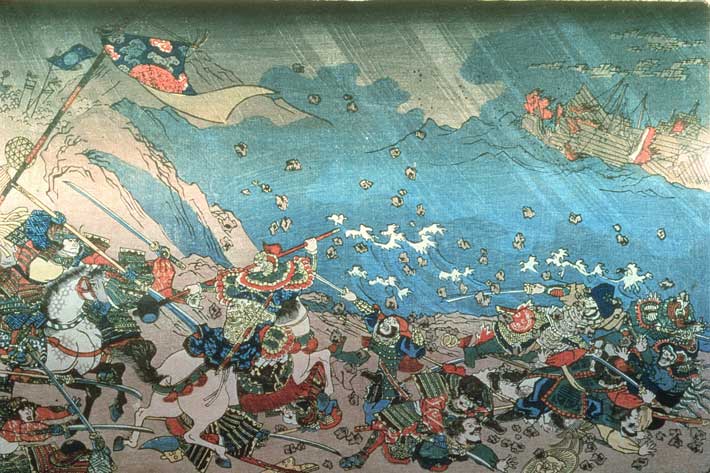

 Igor's Blog