
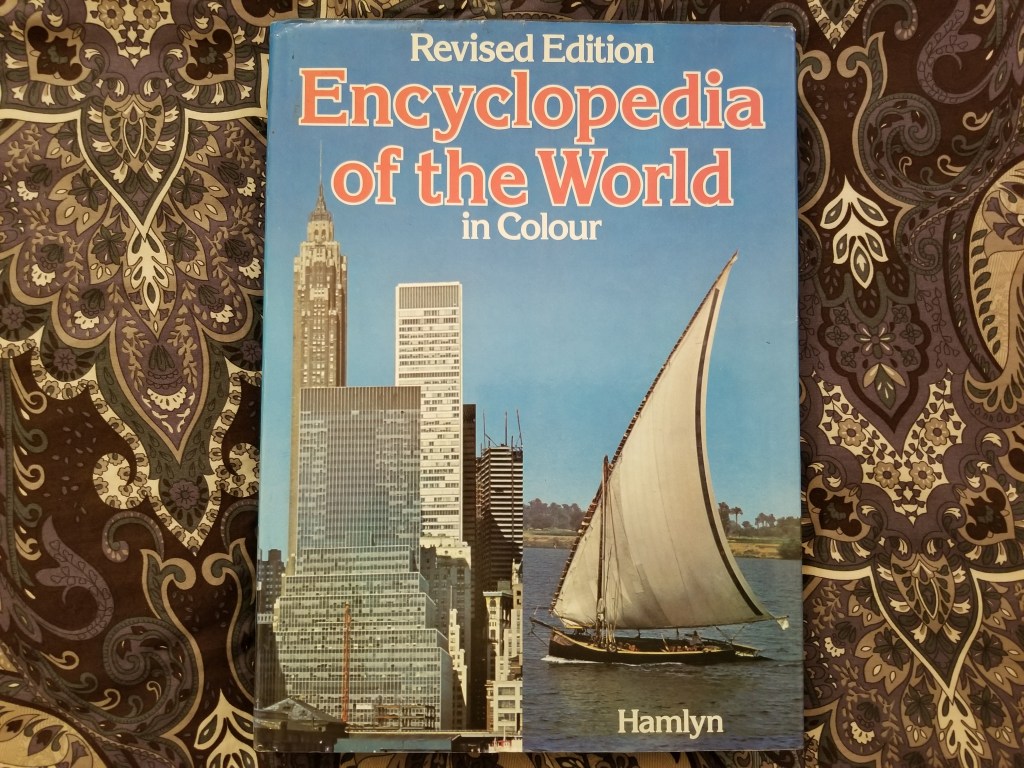
Now reading Encyclopedia Of The World In Colour by The Hamlyn Publishing Group Limited…
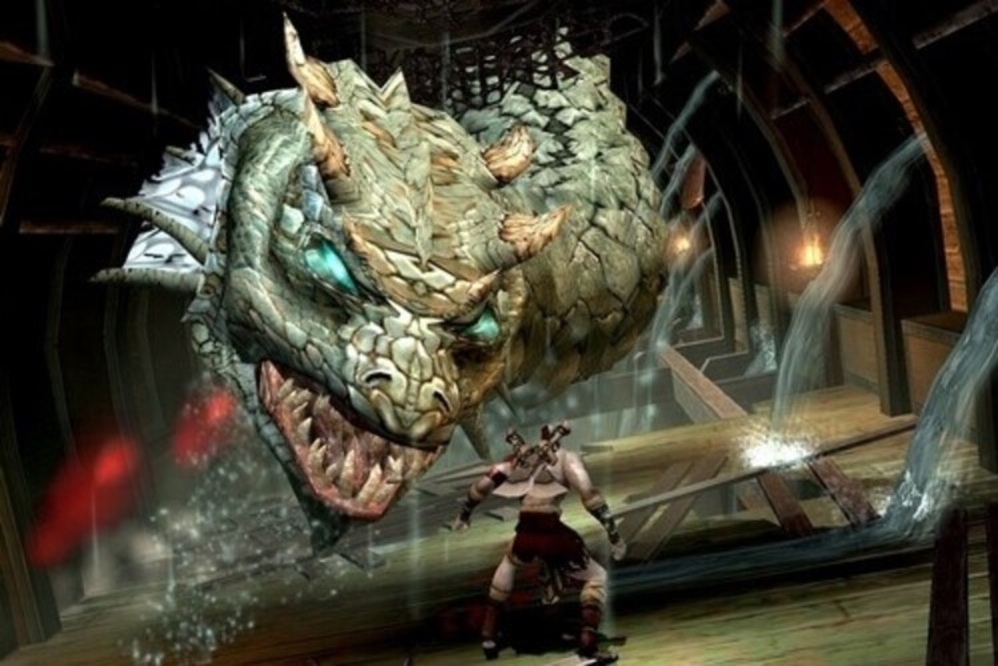
When I mention God of War, the first question people ask me is always, “Is it as good as the hype?” To truthfully answer the question, you have to explain a few things, the first being that God of War is a gruesome game in which you are required to inflict your evil will on countless amounts of undead, and even human, foes. Things are sounding good so far, but there is a catch. The second thing is that the ESRB label reads as long as a Christmas list, with items such as gruesome violence, blood and gore, nudity, and sexual themes, but I truly feel they forgot to warn that this game is only as good as the hype when taken in small doses. High quality game as it may be, God of War is not a title that you can sit down with for three to four hours at a time because God of War gives you too much, too fast. Ultimately, however, the game is as good as the hype.
The opening sequence gives you a short glimpse into the future: Kratos, our evil, yet identifiable un-hero, hurls himself off of the highest mountain in Athens, claming that his gods have abandoned him, giving you a short taste of the end of this story of bloodlust and revenge, while leaving you wondering about the cause. You later find that Aries, god of war and son of Zeus, has taken physical form and is quickly bringing hell on his sister Athena’s beloved city of Athens. Kratos, being the only mortal strong enough to defeat a god, has been charged with the task of doing so, with the reward of relieving his mind of his mysterious past.
Actual gameplay takes place three weeks in the past, on a half-sunken ghost ship. The game starts off strong, hurling hordes of baddies into your path, only to be slaughtered by your blades. The controls are very easy to master, giving you the ability to brutalize and murder your opponents in the sickest fashion. This game is really a button-masher’s dream due to the fact that dealing out 40- and 50-hit combos right from the get-go is no problem. These combos can be built upon with an experience system, along with your other weapons and magical abilities.
As mentioned before, the controls are quite simple. Your face buttons control your quick, strong, and grab attacks as well as jumping, and the shoulder buttons handle your blocking, dashing, and magic activation. During the first five to 10 minutes of the game, you’ll either be screaming at the top of your lungs or just plain awestruck by how intense and fun the game can be.
The majority of this game is spent dicing enemies with two of the coolest weapons that I have ever seen in a game. Kratos wields two half-swords that he controls by hurling them with attached chains. Infused by the gods, these blades have the ability to create molten lava or fire at the finale of a rush of cuts and slashes. Near the midpoint of the game, you will uncover the Blade of Artemis, a rather large sword that would remind you of the sword held by a character named Cloud. The Blade of Artemis is one of the few secondary weapons in a game that actually could take over as the most used weapon. The giant blade has the ability to split enemies right down the center, horizontally or vertically. The blade’s only drawback is the fact that you don’t get a very cinematic fatality.
Sure, you can cut an enemy in half, but that’s been done by too many games. With the dual half-blades, you can use the circle button in conjunction with any face button to engage a grab fatality. The fatalities are very brutal and very quick, but this was the part of the game that I was talking about when I said that it wears thin fast if you play it too long. You have immediate access to all the fatalities right off the bat. As good as they are, if you are anything like me, then you try to end every enemy in the most ghastly manner imaginable. Doing this every time you have an enemy lobbed at you gets a bit old too fast. However, if used a bit more sparingly, it could make the game near perfect.
To be fair, SCEA did give a break from the same old fatalities every once in a while, with special fatalities for the bigger adversaries, by either mashing the circle button to fight a blade down the throat of a giant minotaur or by pushing face buttons as they appear on screen to dodge a cyclops’ attacks and jabbing your swords into his skull. These fatalities, coupled with the boss battles, may very well be the reason I played the game all of the way through. Five minutes into the game, you’re already launched into your first boss battle. While the first part of boss battles is your basic hack, slash, and block, the latter half are played by pushing context-sensitive buttons in order to create quite the cinematic battle sequence. I read an interview in which one of the developers revealed that the game’s engine has been in the works for a little over five years, and I have to say that it shows. The game flows fluidly from one piece to the next, with only cut scenes breaking up the action. Throughout the duration of the game, I can only recall a total of two load points
The action in God of War is good … great even. However, no action game would be truly complete without at least a hint of puzzle solving, and God of War does an amazing job of seamlessly blending both elements into a neat little package. The puzzles don’t feel like a cheap attempt to throw in some puzzles to break up the action sequences, and they actually fit in well with the trials and tribulations of the Greek gods. At one point, in order to progress through the temple of Hades, you must first rescue a captured Spartan only to maneuver his holding chamber into a sacrificial room and place it in between two walls of flame. Deadly traps of this nature are littered throughout the puzzles, making them quite enjoyable while usually fighting off a decent amount of undead forces.
The game boasts above-average visuals that keep you pulled into the Greek world and culture. There are many games out there today that cut corners and make things look good from afar but less than stellar when viewed up close. God of War is not one of those titles. I am one of those gamers who will explore every little inch of an environment before moving on and am pleased to say that during the entirety of God of War, I was not able to find one instance of that nature. The developers did an amazing job of putting detail on the right objects, based on what parts of a level you can access with Kratos as well as the camera angles, which also make a great contribution to the atmosphere. Using techniques that are taken straight out of any good action movie, the camera angles are unique and well thought-out.
The Greek atmosphere is held together quite well by the gameplay, characters, and graphics, but the icing on the cake is the amazing soundtrack. I truly believe the God of War has one of the top five soundtracks of any game within the past year. Many titles make half-hearted attempts and creating epic scores to go along with the mood of their game. God of War is one of the few titles to actually accomplish the job and do so with such elegance. Several titles have offered up their soundtracks on CD, and I have very rarely ever taken such an interest in a game’s soundtrack, but I would actually purchase the God of War soundtrack, if it weren’t already free. SCEA made a very generous choice to make available a free download of the entire soundtrack via a key on the back of your instruction manual.
God of War, quite obviously, has no multiplayer mode; it’s just not a game that would work well with another Kratos running around. I found much solace in the sheer amount of extra content both on the disc and online that would fill that small void. By defeating the game on various difficulties, you will gain access to many unlockables, which are clearly stated in the back of your instruction manual. Treasures such as back stories of Kratos’ family, glimpses into the future, literature on the monsters, gods, and ancient Greece are all actually very interesting items, but one of the best unlockable items in any game ever is the addition of deleted levels. Showing deleted levels that didn’t make it into the game is a very novel idea. I think a lot more games should do this in order to give you a window into the game development process so we can see why things do and don’t make it into the game, due to story or time constraints.
With high quality gameplay, flashy graphics, and an impressive soundtrack, God of War is one of the better action games to come out in a long time, and its originality and flat-out style is enough to make a great addition to any gamer’s collection. The blood, gore, and blatant nudity will be enough to attract any mature gamer, but the action and detailed storyline will keep any gamer addicted.


Ariana Grande likes the taste of doughnuts, but she “hates” America and Americans.
In security footage obtained by TMZ, the pop singer was in a doughnut shop and appeared to lick unpurchased doughnuts on a display rack twice while the shop’s employee wasn’t looking.
Grande was accompanied by three friends, and the footage shows her kissing one of the two men, who also appeared to lick one of the doughnuts. Grande laughed out loud after he seemingly licked a doughnut and walked away.
When the shop employee returned with a new tray of doughnuts, Grande asked, “What the f— is that?”
“I hate Americans,” she continued. “I hate America.”
On July 8, the singer issued an apology for her “poor choice of words” in a statement, saying that she is “extremely proud to be an American” and was simply “upset by how freely we as Americans eat and consume things without giving any thought to the consequences that it has on our health and society as a whole.”






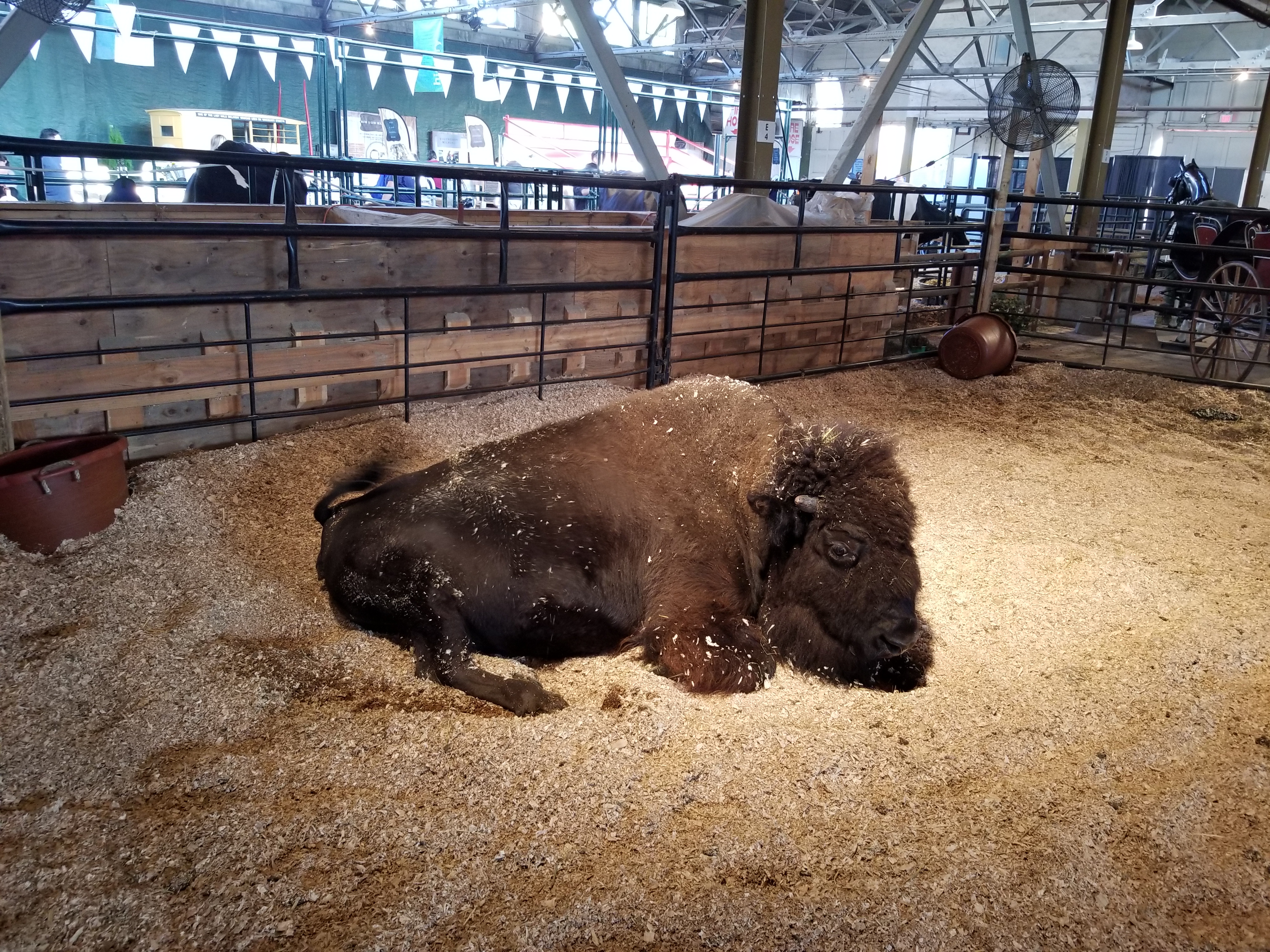






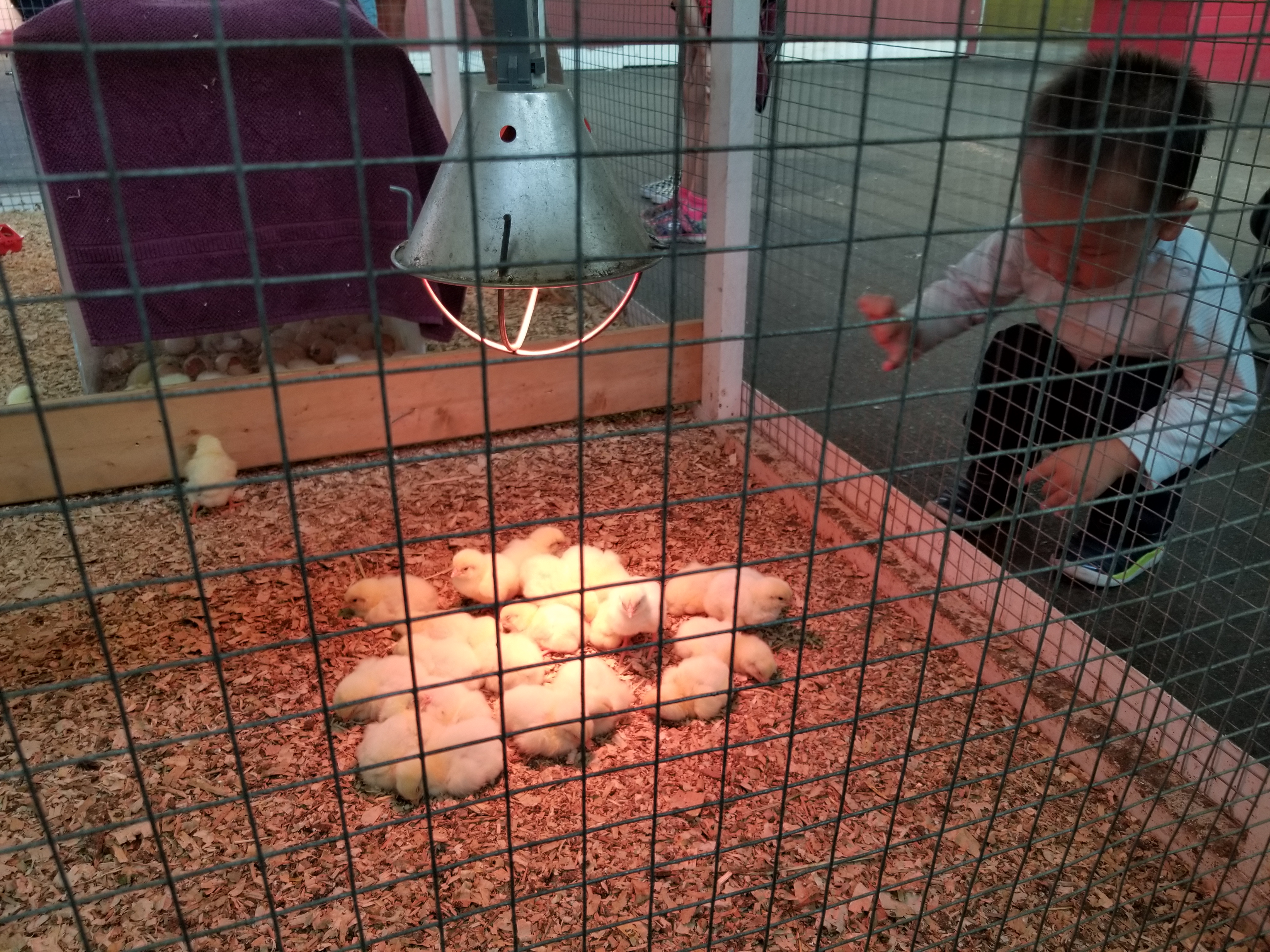


The Pacific National Exhibition (PNE) is a nonprofit organization that operates an annual 15-day summer fair, a seasonal amusement park, and indoor arenas in Vancouver, British Columbia, Canada. The PNE fair is held at Hastings Park, beginning in mid-to-late August and ending in early September, usually Labour Day.
The organization was established in 1907 as the Vancouver Exhibition Association, and organized its first fair at Hastings Park in 1910. The organization was renamed to the Pacific National Exhibition in 1946. During the mid-20th century, a number of facilities were built on the PNE grounds, including Pacific Coliseum and the PNE Agrodome. In 1993, the amusement park adjacent to the PNE, Playland, became a division of the PNE.
The Vancouver Exhibition Association (VEA), the predecessor to the Pacific National Exhibition organization was first formed in 1907; although the association was not incorporated until 18 June 1908. The VEA had petitioned Vancouver City Council to host a fair at Hastings Park; although faced early opposition from the city council and the local jockey club that used the park for horse races. However, the city council eventually conceded to the VEA’s request and granted the association a 5-year lease to host a fair at Hastings Park in 1909.
The VEA held its first fair at Hastings Park in August 1910. It was opened by then Canadian Prime Minister Sir Wilfrid Laurier as the Vancouver Exhibition. The biggest attractions of the two-week fair are its numerous shops, stalls, performances, a nightly fireworks show, and the exhibition’s Prize Home. From its beginnings, the exhibition was used as a showcase for the region’s agriculture and economy.
In the initial years of the Second World War, the fairgrounds saw an increased military presence. However, the exhibition itself was not cancelled until 1942, after the Canadian declaration of war against Japan was issued. From 1942 to 1946 the exhibition and fair was closed, and like the Canadian National Exhibition in Toronto, served as a military training facility for the duration of World War II. During this time, the exhibition barns that were used to house livestock, were used as processing centres for interned Japanese Canadians from all over British Columbia. The interned Japanese Canadians were later shipped away to other internment camps throughout British Columbia, and Alberta. The Momiji (Japanese word for Maple) Gardens on the PNE’s grounds serves as a memorial for the event. The barns used for the internment of Japanese Canadians are still used to house livestock during the annual fair, and serve as storage area to house some of the PNE’s property the rest of the year.
On 7 February 1946, the Vancouver Exhibition Association changed its name to its current moniker, the Pacific National Exhibition; and later reopened the fair to the public under that name in 1947. The organization was formally reincorporated as the Pacific National Exhibition in 1955.
The highest attendance at the fair was recorded in 1986, with 1.1 million guests visiting the PNE, most likely due to Expo 86 that was occurring at the time. In 1993, the amusement park adjacent to the PNE, Playland, became a division of the PNE organization.
During 1997-1998, the PNE grounds was transformed with the demolition of a number of buildings including the Food Building, Showmart and the Poultry Building. This gave way to the Sanctuary, a parkland setting with a pond. The pond restored part of a stream that once flowed in the park out to the Burrard Inlet. The city restored a large portion of the park. Many old fair buildings have been demolished and replaced by a more natural character. Although land was purchased in Surrey that was to become the fair’s new home, the PNE has since transferred ownership from the province to the City of Vancouver and will remain at Hastings Park. The PNE is a registered charity.
Two attractions at the PNE were named as heritage sites by the City of Vancouver in August 2013. The Pacific Coliseum and the Wooden Roller Coaster were added to the list.
In 2020, the fair went on hiatus due to the COVID-19 pandemic, alongside other agricultural and county fairs across Canada, including the Calgary Stampede, the Canadian National Exhibition, and K-Days.
In the early hours of February 20, 2022, a major fire broke out on PNE grounds, where multiple vehicles, tools and equipment, and buildings were destroyed as a result.
The PNE grounds contains several buildings and exhibition halls. The PNE Forum is a 4,200 square metres (45,000 sq ft) exhibition facility that is used for large displays and trade shows. Rollerland is a 1,840 square metres (19,800 sq ft) exhibition, banquet hall and venue for the Terminal City Roller Derby.
Two buildings on the PNE grounds are indoor arenas. The Pacific Coliseum is multi-purpose arena that holds 15,713 permanent seats, with provisions for 2,000 temporary seats for concerts and certain sports. The PNE Agrodome is a smaller indoor arena with 3,000 permanent seats, with provisions to expand up to 5,000 seats. Entertainment facilities includes the Garden Auditorium, a building that features a built-in stage and dance hall. The PNE grounds also feature amphitheatre with bench-style seating for 4,500 visitors.
Other buildings on the PNE grounds includes the Livestock Barns, a large multi-use facility, and the organization’s administrative offices.
Have these classics aged gracefully?
 Igor's Blog