The session-hardened musicians already made a name for themselves with their debut release, but after the poor commercial performance of the succeeding catalogs, Hydra and Turn Back, Toto was pressured to make a redemption record or face the risk of being dropped by the current label, Columbia Records. Thus, they turned to the first album’s formula, tweaked the multi-genre format, and hired the help of outside artists like the Eagles bassist Timothy B. Schmit. Toto also opted to support the sole vocal work of Bobby Kimball by having the other members sing on various tracks as well.
Toto IV was a well-balanced album that featured the band at peak musicianship, with a more polished approach on orchestration and production. Top cuts in the album include the shuffle beat classic “Rosanna”, powered by Jeff Porcaro’s modified groove and features a jazz-rock arrangement. The power ballad “I Won’t Hold You Back” has Steve Lukather take charge of the emotive vocals as it plows through a sullen progression. The funky “Waiting For Your Love” is perfect for a disco-dance bop, and the titanic anthem – often overplayed – “Africa” has a sing-along chorus that made it such a pop classic throughout the years.
Toto IV just came in time to swoop the band’s hindquarters from total failure, and it’s no wonder that Toto got critical acclaim for its full-fledged musicianship and themes.
Gordon Brewer visits Japan, to gauge the state of the Japanese software industry. With Nintendo having already demonstrated that a Japanese corporation can quickly dominate the US video games software market, should the big American business software developers be worried? Gordon speaks with Charles Elliot of Goldman Sachs, Nintendo’s resident design genius Shigeru Miyamoto, Kazuhiko “Kay” Nishi of ASCII, author Thomas Zengage, Bill Totten of Ashisuto and Ken Sakamura – the Tokyo University Professor behind Japan’s ambitious TRON project. This clip is from The Money Programme, originally broadcast 25 March, 1990.
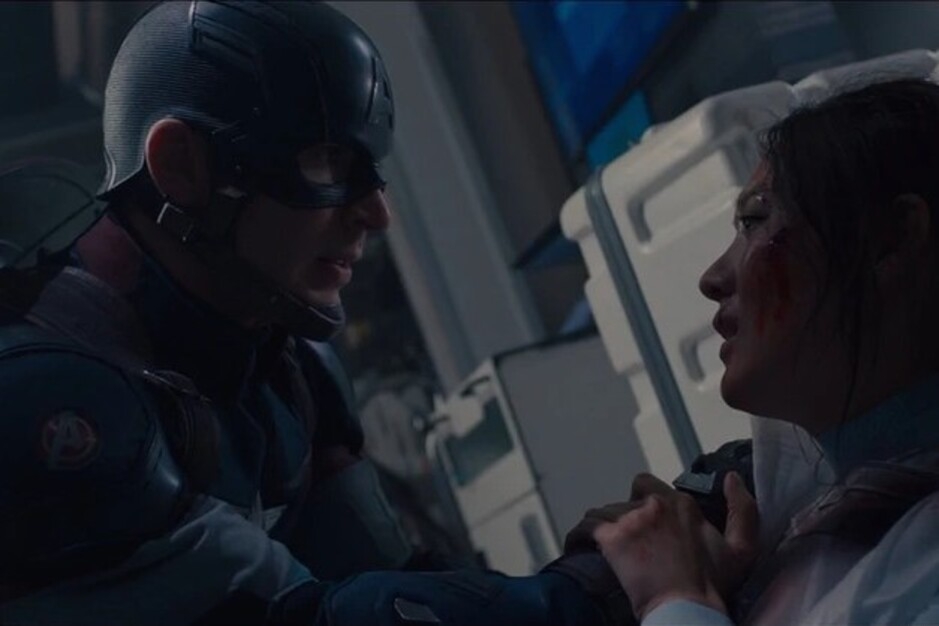
A still from Avengers: Age of Ultron (2015), directed by Joss Whedon
I recently realized that I haven’t reviewed some of the most enjoyable books that I’ve read in the last year or two. Since I take my blog more seriously now, I’ve been making posts more frequently in the last year. Another reason for this is that I had things on my mind that I wanted to write about. In addition, I’ve been putting more thought into my posts so that they don’t resemble a YouTube comments section. After I found out that my channel and my blog are considerably more popular than I had thought, I’ve been trying to keep my bad jokes and my somewhat silly statements to a minimum in my posts because it seems that many people like my posts or that they’re at least interested in what I post. I still run my blog mostly for myself, but, since it turns out that I have many followers, I’ve been taking the blog more seriously in the last two years. The first book that’s worth mentioning is Harold Lamb’s ‘Genghis Khan: The Emperor of All Men’. It’s the first book by Lamb that I finished reading. Actually, I listened to the audiobook on Audible. Like Lamb’s other books, it’s very interesting to read and it’s very well written. Lamb himself liked to read a lot. When he attended Columbia University, he skipped many of his classes because he spent much time reading for pleasure at the library. Lamb’s book about Genghis Khan is obviously better than Jack Weatherford’s ‘Genghis Khan and the Making of the Modern World’, which has become quite popular since it got published in 2004. Well, almost any history book that got published in the 20th century is better than the history books that got published after the 20th century came to an end. Naturally, Weatherford’s book, like most other modern books, isn’t that well written, and it also contains a bit of propaganda that the American establishment approves of. It’s not a terrible book, and it contains some useful information, but it’s still worth noting that it pales in comparison to Lamb’s book, for example. When I was a teenager, I read a few books about Genghis Khan that got published in the 1970s and the 1980s at my local library. I can say that they too are better written and better illustrated than Weatherford’s book. Unfortunately, these excellent books aren’t promoted or sold now because they’re old and because their content isn’t something that the establishment approves of anymore. Therefore, you can only find them at some libraries now or you might be lucky enough to find them for sale on the internet. After I finished listening to Lamb’s book about Genghis Khan, I began listening to his two books about the Crusades. In these two wonderful books, Lamb went over the entire history of the Crusades. He even wrote about the Northern Crusades, the sack of Constantinople, and the Albigensian Crusade. Here’s a part of what Lamb wrote about the latter. “Innocent called for a crusade against the heretics. They had rebelled against the authority of the Church, they should be suppressed by the soldiery of the Church. Indulgence from sin was offered those who volunteered, and even the merchants and money-lenders of the north hastened to subscribe funds – for which they were richly repaid with cloth, and wine and grain gathered from the plundered fields of the south. The army of invasion was formed under such redoubtable and merciless spirits as Simon of Montfort, and it moved south with bands of clerics who sang Veni Creator. It made no distinction between Cathars and others. At Bezieres, it stormed the town and in the church of the Madeleine where women and children had taken refuge, seven thousand were slain. It divided, quartering over the countryside, at times fighting actual battles against the desperate knights of the south, and at times devastating everything with sword and fire. Captured knights were crucified on the olive trees, or dragged at horses’ tails. The path of the army became marked by pyres of human bodies, smoking and blackened heaps, and wells were choked by corpses. Meanwhile, Innocent had sanctioned two other enterprises as crusades. In the far north-east the Teutonic knights were sent among the pagan Prussians to convert them sword in hand. And in Spain itself knights were summoned to a crusade against the remaining Moslems from which they emerged victorious after driving the men of Islam south to the Granada region by the sea. And to do away with the troublesome John Lackland in England, the pope prepared for a crusade against the English that Philip Augustus embraced with eagerness. He had taken no part in the ravaging of Languedoc, but he welcomed an excuse for the invasion of England. From the years 1206 to 1213 Innocent availed himself of the crusade-power to further his own policy from Constantinople to Granada. For the first time, in the south of France, he had drawn the papal sword to exterminate heretics. But it was not to be the last time. For more than five blood-stained centuries other popes and monarchs would follow his example. So, for the first time, the crusades were turned, by Innocent’s will, against Europeans at home. The crusade-power had been harnessed to papal ambition, in 1206-1213.” Although Stephen King’s It (1986) isn’t a novel that I’ve been reading in the last year or two, it’s worth mentioning that I’m now listening to the audiobook again. I began doing this a few weeks ago. I read It for the first time when I was a teenager. This novel is one of King’s best, and it was published in the 1980s, which was a time when King, like other American writers, could still write good novels. So far, I’ve read It two times and I listened to the audiobook one time. It’s a thick novel and getting into it again this time is my fourth time. It’s one of those novels, like Inherit the Stars (1977), that I can read over and over again because it brings me comfort. It, the monster itself, actually landed on Earth at a time when dinosaurs still existed. It comes from space. But the novel isn’t really a science-fiction story. It’s horror mixed with dark fantasy. The Tommyknockers (1987) is another good novel by King that I read when I was a teenager. I’ve already read The Shining (1977), which is King’s most critically acclaimed novel, two times. I finished reading Carrie (1974), Pet Sematary (1983), and The Running Man (1982) several months ago. Christine (1983) and Cujo (1981) are novels that I read several years ago. Well, all of these novels are worth recommending because they’re some of King’s best.
I recently spent some time on finishing to watch all of the content that Marvel Studios put out for Phase Four of the Marvel Cinematic Universe. I even got to see The Guardians of the Galaxy Holiday Special and I Am Groot. Some people have criticized me for making posts about the MCU, but other people have enjoyed reading what I have to say about the MCU. Well, it would seem that someone like me shouldn’t be interested in what Marvel Studios puts out, but my likes and interests are varied, and I have a soft spot for the MCU. All I can say is that I enjoy watching Marvel films on a superficial level. Moreover, since so many other people talk about Marvel Studios and review what Marvel puts out, why don’t I provide my thoughts? I mean, some things in this world can’t be easily explained. For example, Rich Evans fought in the American Civil War on the side of the Union for some reason, and he’s a decorated veteran of this war. Well, I like to watch films by Marvel Studios for some reason. In addition, nowadays, films by Marvel Studios are pretty much the only films that I look forward to seeing in a theater, and this has been the case for several years already. I don’t really look forward to seeing other films that are released in theaters because I know that they’ll be disappointing or at best mediocre. Instead of seeing a bland new drama film in a theater, I’d rather see a good old drama film at home. It’s worth mentioning that I got to see every MCU film in a theater. The only MCU film that I didn’t see in a theater is Eternals (2021), and the reason for this is because it was released when vaccine passes were still mandatory in order to enter a theater. I even remember seeing Iron Man (2008) for the first time in a theater. At that time, I wasn’t enthusiastic about going to see this film because I thought that it would be another disappointing superhero flick. Let’s not forget that Iron Man was released not long after disappointments like X-Men: The Last Stand (2006), Catwoman (2004), Fantastic Four: Rise of the Silver Surfer (2007), Elektra (2005), and Ghost Rider (2007) got released. Therefore, I thought that there’s no way that a Hollywood studio will be able to make a good superhero movie, especially one about Iron Man. But Iron Man obviously turned out to be a success. Robert Downey Jr. was well suited for the role of Tony Stark, the special effects were mostly excellent, there was an effective music score, and the film had several exciting scenes. Not everything in Iron Man appeals to me, but it is one of the best films in the MCU. So, after I finished watching all of the MCU films from Phase One to Phase Three again in August of 2022, my views changed a little. Phase Two, which ran from 2013 to 2015, is perhaps my favorite phase of the MCU overall, though it contains only six films. I don’t share the dislike of Thor: The Dark World that some people have. I think that it’s one of the better films in the MCU. Phase Two also contains Captain America: The Winter Soldier, which many people consider to be the best film in the MCU. Avengers: Age of Ultron has become one of my favorite MCU films after I watched it again in May of 2022. It may be a little flawed, but it sure is entertaining and it features several exciting action scenes, like the fight between the Hulk and Iron Man, the chase and the fight in Seoul, and the fight at the end in Sokovia. Anyway, since Phase Four, which ran from 2021 to 2022, is now over, I will finally provide my thoughts about it. If you want to read the other posts with my thoughts about the MCU, check the archives of my blog. Although Phase Four is almost entirely comprised of good content, in my opinion, it is admittedly the weakest phase of the MCU so far. Phase Four does contain the worst MCU film so far, which is Thor: Love and Thunder. This film is bad enough that it’s the only MCU film that I don’t want to see again, and it cost $250 million to make. Where did the money go? Well, I suppose that the money went on the CGI, on the performances of the actors, on the sets, and on other things. But, this time, in the hands of the director Taika Waititi, all of these things turned mostly to sludge and resulted in a huge waste of money. If one or more of the other films in Phase Four had been as bad as Thor: Love and Thunder, I think that my opinion of Marvel Studios would have been seriously shaken. Fortunately, three of the other films in the phase (Spider-Man: No Way Home, Doctor Strange in the Multiverse of Madness, and Black Panther: Wakanda Forever) have become some of my favorite films in the MCU. I found another three of the films (Black Widow, Shang-Chi and the Legend of the Ten Rings, and Eternals) to be enjoyable but a little flawed. Marvel has been spending a lot of money not only on making the films but also on making the TV series. Every episode cost about $25 million to make. Apparently, by today’s standards in the industry, this is a lot of money to spend on making one episode. So, while the films of Phase Four have introduced viewers to superheroes like Xu Shang-Chi, Yelena Belova, Sersi, Riri Williams, and America Chavez, the series have introduced viewers to Kate Bishop, Moon Knight, Ms. Marvel, and She-Hulk. This is one of the reasons why some people felt let down by Phase Four because famous and beloved characters like Iron Man, Captain America, Ant-Man, Black Panther, and even the Guardians of the Galaxy didn’t return, for various reasons. Instead, a lot of time was spent on introducing and developing new characters. These characters aren’t as beloved as the old Marvel characters because they’ve had little screen time so far. For example, a character like Captain America isn’t only famous. His personality appeals to many people. It can be described as follows.
“Considered by many as the world’s first and greatest superhero, Steve Rogers has been defined by his courage, patriotism, and righteousness. Rogers has always had a noble and honest spirit, intolerant towards injustice and abuses of power. Since he grew up weak and small, he learned on his own that true strength is having the courage to fight against abuse, no matter one’s power, and having compassion for the innocent. Despite being transformed into a perfect human by the Super Soldier Serum, he maintained his original values and character. Since his reawakening, Rogers was saddened by losing so much of his time, but still retains the same values he had since the 1940s. Due to his famed past exploits and his continued works to save the world, Rogers is generally respected by many; even if he doesn’t seek acknowledgment for his deeds. He was also very empathetic; being able to understand and relate to both Scarlet Witch and Quicksilver before meeting them and understanding Tony Stark’s motivation during the Avengers Civil War, despite Iron Man being on the opposing side.”
By the way, the fact that Marvel Studios includes almost every character in several films is one of the reasons why the MCU has been so successful. This approach allows characters to get plenty of development and screen time and makes viewers get attached to these characters, thus making viewers look forward to almost every new MCU film in order to see their favorite characters. Another reason why some people felt let down by Phase Four is the fact that most of the superheroes that got introduced are female. Although some people won’t admit this, or they simply don’t realize this, their dislike of Phase Four stems mostly from this change. Seeing female superheroes in the main roles is something that they’re not used to. In addition, a few gay relationships got introduced in Phase Four in a mild way. Some viewers were obviously angered by this. When it comes to me, I don’t find the appearance of female superheroes in the MCU to be offensive. The actresses playing them are good-looking and they’re pleasant to look at. Letitia Wright, in particular, looked very good in Wakanda Forever. I also noticed that she wore some specially-designed, cool clothes in the film. I especially like the white outfit that she wore in the scene in which she’s examining the vibranium-detecting machine. By the way, the car that belongs to Riri Williams in the film is called the Plymouth Barracuda. Another thing that I noticed after seeing Wakanda Forever again is that it features some allusions about the state of affairs in the USA, though it’s not the first MCU film to do this. Iman Vellani, who’s another actress that appeared in Phase Four, isn’t only attractive. She also looks cute. Was this the main reason why she was chosen to play Ms. Marvel? I wonder. And, surprisingly, she did a good job playing Ms. Marvel. As some people have said, her performance is one of the best aspects of the Ms. Marvel show. The show itself is probably my second favorite show of Phase Four, after WandaVision. After seeing all of the series in Phase Four, I can say that they’re all well made, just like the films. The CGI and the costumes are as good as in the films. The actors did a good job. Although the series that Marvel Studios released are as good as, or even better than, anything else that gets made for TV these days, they’re still slightly brought down at times by mediocre characterization, by a lack of memorable music, and by scenes that aren’t interesting, or memorable, or exciting. All of the other modern TV series are brought down by these and other factors as well. So, in my opinion, Phase Four was brought down a little by the factors that I’ve mentioned, but it’s in no way the disappointment or the disaster that some people have been calling it. I found Phase Four to be enjoyable. Seeing the Marvel Studios logo again, after a two-year break from 2019 to 2021, was a delight.
The mid-to-late 1960s through 1970 were the magical years for muscle cars, when the domestic automakers were competing to see who could come up with the fastest and most-audacious horsepower machines.
The roots were planted nearly a decade before, starting in 1956, when Semon Emil “Bunkie” Knudsen was appointed general manager of General Motors’ Pontiac Division with the mission to improve the brand’s public perception and to ignite the lagging sales of its vehicles.
Knudsen took Pontiac to the race track. “Wide-track” became the new advertising theme, backed by the improved performance of cars, led by new chief engineer Pete Estes, who came over from Oldsmobile, and the recruitment of his assistant, John Z. DeLorean, who had been at Packard.
Add advertising executive Jim Wangers to the mix, and things would get very interesting.
Long before “We Build Excitement” would become the brand’s advertising tag line, the Knudsen/Estes/DeLorean/Wangers crew did just that. It created the Detroit muscle car phenomenon, although at first it had to do so with a back-door effort to avoid the scrutiny of the GM bureaucracy.
GM had an internal rule that reserved its largest V8 engines for use in its largest cars. But the Pontiac engineers realized that there was room under the hood of the “intermediate” (mid-sized) Tempest model for the 389cid V8 from the Bonneville. Typically, the Tempest carried a meager, 140-horsepower inline 6-cylinder. But the big Bonneville benefited from its 325-horsepower unit.
The solution: A special-option package for the 1964 Tempest LeMans. Check the right boxes and for less than $300 you got the V8, heavy-duty 3-speed or Muncie 4-speed manual transmission, stiffer suspension, improved steering gear and tires, dual exhaust, and badges that proclaimed your car as a GTO.
That’s GTO as in the famed Gran Turismo Omologato of Ferrari fame (pity that the Italian sports car maker hadn’t trademarked the name).
Enhancing the car’s image was Wangers recruitment (actually, his creation) of a rock ’n’ roll band, Ronnie and the Daytonas, to record what became a hit song, Little GTO. That, and a Car and Driver magazine cover proclaiming “GTO vs GTO” and a story about a supposed drag race between the Pontiac and Ferrari models.
By the way, the GTO-optioned Pontiac could sprint to 60 mph in about 6.5 seconds and run the quarter-mile in less than 15 seconds.
By 1966, GTO became a separate model line for Pontiac. Empowered by such a vehicle, Pontiac soared to third in sales among all Detroit automakers, and Knudsen was promoted in 1961 to head Chevrolet. Estes moved up at Pontiac, and then took over Chevrolet when Knudsen left for Ford (and later would become president of GM). In 1965, DeLorean got the top job at Pontiac and, at age 40, became the youngest person to head a GM automotive division.
As you might imagine, the success of the early GTO created some controversy within the GM family. Other divisions wanted their own “muscle cars,” and they got them. And the rest of Detroit jumped on the bandwagon as well.
Before the end of the 1966 model year, Oldsmobile offered a 4-4-2 upgrade on its F-85/Cutlass. The numbers came from the four-barrel carburetor, four-speed manual transmission and dual exhaust. For 1967, The Cutlass Supreme 4-4-2 offered a new 350-horsepower, 400cid “Force-Air” engine with ram induction.
Buick tried to match the GTO with its 325-horsepower Skylark Gran Sport.
Chevrolet’s response was the Chevelle/Malibu SS 396, equipped with a 375-horsepower, 396cid V8, dual exhaust, four-speed manual gearbox, stiffer suspension and a 160 mph speedometer. For 1965, 200 Z16 versions were produced with stiffer frames, narrowed rear axles, Impala brakes and hydraulic lifters like those used on the Corvette.
Chevelle remained a leader in the mid-size muscle car wars, culminating in the 1970 Chevelle SS454 LS6, a valuable collector car today.
Meanwhile, Mopar engineers started the decade working on a NASCAR engine that would wind up setting the trend for large-displacement V8 engines for street or strip, the legendary 426 Hemi that used a revolutionary hemispheric cylinder-head design to improve air flow at all rpm, and which was rated at 425 horsepower.
The sturdy Hemi ruled NASCAR after it showed up to win Daytona in 1964, was banned in 1965 for the lack of homologation, then was back to its winning ways in 1966 as thousands of 426 Hemis found their way into muscle cars for the street.
Things got serious for Chrysler in 1966 with the introduction of the Dodge Charger, a Coronet-based fastback available with the 426 Hemi, and the restyling of the Plymouth Belvedere/Satellite, dominated by the GTX version with the 440cid V8.
For 1968, the Dodge and Plymouth intermediates were ready for true muscle car makeovers, with Plymouth offering the Road Runner with a standard 383-cid V8, the GTX with a 440 “Super Commando” V8, or the 426 Hemi, and the Dodge Charger with corresponding engine choices.
The NASCAR influence on Mopar performance was most exemplified by the Road Runner Super Bird and the Charger Daytona with their long, aerodynamic front-end add ons and towering rear spoilers. As outrageous as they were on the street, they were effective on the NASCAR track.
Hemi V8s are revered today as muscle car icons, and any numbers-matching Mopar powered by one draws a strong premium value. For instance, an original 1970 Plymouth Hemi ‘Cuda could set you back in the seven figures.
GM and Ford played catchup with their own 427cid big blocks. In the showrooms, Ford offered its 427 V8 as an option in its midsize Fairlane and a 390cid V8 in the Mercury Comet Cyclone. Ford’s focus was on beefing up its Mustang, highlighted by such things as the Boss 428 with the Cobra Jet 428 racing engine under its long hood.
The Cobra Jet was used by the end of the decade in the Ford Talladega and Mercury Cyclone.
GM used its 427 in a number of high-performance applications, ranging from Corvettes to Impala, and notably in such towering performance beasts as the Camaro ZL1.
In the heyday of the Detroit Muscle Car, even American Motors joined the party with its Rebel SST and Rebel Machine models, and its Rambler Scrambler.
Model year 1970 is seen as an apex for muscle cars as a confluence of engine technology and corporate will came together to create some of the greatest muscle cars of the era. But it all began fading away the following year, as Department of Transportation regulations and soaring insurance rates spelled doom for high-performance muscle cars.
The final fatal blows were right around the corner, when the OPEC oil embargo of 1973 heralded the end of cheap, plentiful gas, and emissions regulations strangled the horsepower output of once-mighty engines.
It was fun while it lasted, but the Detroit muscle car era had come to an end, though it was an end that would prove to be only temporary.
LAW ENFORCEMENT – Since the construction of the Phase Space Gates, law enforcement has been powerless to stop poverty and crime from skyrocketing throughout the Solar System. Though the ISSP (Inter Solar System Police) was formed to catch interplanetary criminals, it wasn’t enough to bring about law and order. Bounty hunting and volunteer law enforcement have become commonplace.
COWBOY SYSTEM – In a desperate attempt to keep crime under control, the “Cowboy System” was established. After passing a lenient written test, any civilian could apply a bounty hunting license and capture criminals from the ISSP wanted list for reward money. By 2071, over 300,000 registered bounty hunters reside in the Solar System.
ORGANIZED CRIME – Ruthless criminal organizations, such as the “Red Dragon” crime syndicate of Mars, control much of the Solar System. Those who go up against these gangs are either bought out or murdered, a common practice of gangs like the “Blue Snake” crime syndicate.
SPACE TRAVEL
MONO SYSTEM – All space ships are classified as “Monomachines.” MONO is an abbreviation for “Machine Operation Navigation of Outer Space” The “Monosystem” encompasses the airframe control mechanics, the navigation system and the automatic billing system of any given ship. In short, it is a necessity for all outer space activity. Steering capsules called “Monopods,” a standard feature of “Narrow-sense” Monomachines, can be ejected and navigated independent of their ships.
PHASE SPACE GATES – At the dawn of the 21st century, Phase Differential Gates (also known as Phase Space Gates) were constructed across the Solar System. Designed by the famous Chessmaster Hex and funded by the Gate Corporation, the gates enable space craft to enter hyperspace, traveling 240 times faster than in normal space. However, after discovering a flaw in the design, Hex attempted to stop the the gates from being built. He was fired from the corporation and the gates were built without his approval.
GATE INCIDENT – Shortly after Chessmaster Hex was fired by the Gate Public Corporation, a Phase Space Gate between the Earth and its moon exploded, sending moon debris into Earth’s atmosphere. Chunks of the debris constantly strike the surface of the planet rendering it virtually uninhabitable. The gate incident changed the lives of many including Faye Valentine and Wen.
FUTURE TECHNOLOGY
Aside from groundbreaking developments in space travel, there have been major advancements in other technologies.
The universal currency known as the Woolong was established. Though paper money is still in circulation, electronic money cards are more commonly used.
Medical technologies such as artificial organs and cryogenics have been perfected. Using “Alfa Catch” devices, Images from the human brain can be displayed on monitors.
Virtual reality videogaming has become the norm and videocassettes are a relic of the distant past.
The internet, once known as the World Wide Web (WWW), has evolved into the massive Solar System Web (SSW). Although the interface of the SSW is much more chaotic than that of the WWW, common problems such as computer viruses continue to plague the online world.
THE SOLAR SYSTEM
VENUS – Population: 500 Million, Culture: 70% Middle Eastern and African, Travel Time From Earth: 7-13 Hours (via Phase Space Gates), Appears In: SESSION 7, With the addition of oxygen-producing plants in the sky, Venus was terra-formed into a habitable planet. However, the falling spores of the plants cause “Venus Sickness” in a very small percent of people. If untreated, the sickness could cause blindness. The architecture of Venus is predominantly Middle Eastern.
EARTH – Population: 200 Million, Culture: Varied, Appears In: SESSIONS 9, 18, 19 & 24, After the “Gate Incident,” daily bombardment by meteors, devastating the planet’s surface. The only people crazy enough to stay on Earth are hackers, who hone their skills on the many abandoned communications satellites that continue to orbit the planet, eccentrics who are too stubborn to leave and those who can’t afford to leave.
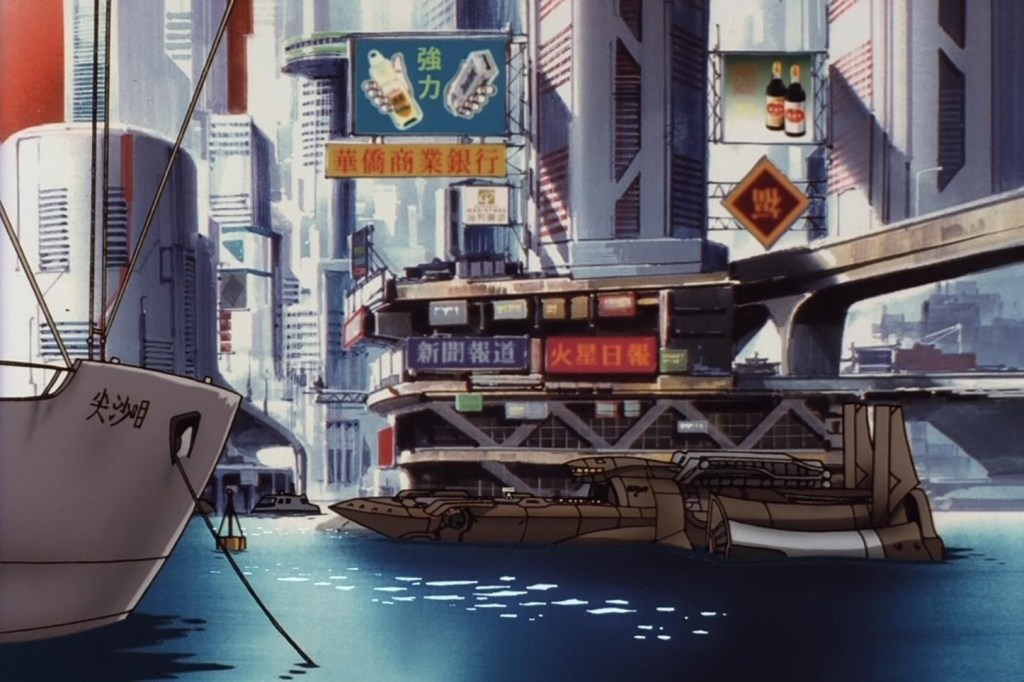
MARS – Population: 300 Million, Culture: 50% Chinese, Travel Time From Earth: 12-24 Hours (via Phase Space Gates), Appears In: SESSIONS 2, 5, 6, 15, 18, 20, 21, 22, 23, 25, 26 & The Movie, Mars is the center of activity in the Solar System. Its many craters have been transformed into vast metropolitan areas.
ASTEROID BELT – Population: 80 Million, Culture: Asian, Latin, European, Travel Time From Earth: 2-8 Days (via Phase Space Gates), Appears In: SESSIONS 1, 7 & 14, Larger Asteroids in the region between Mars and Jupiter are colonies, centers of free-trade that have been converted into urban areas or fertile pastures. Tijuana, an asteroid with an excavated center, is famous for its beef.
MOONS OF JUPITER – Population: 350 Million, Culture: European, Travel Time From Earth: 2-3 Days (via Phase Space Gates), Appears In: SESSIONS 4, 10, 12, 13 & 17, Ganymede, Callisto and Io have been terra-formed and colonized. Ganymede is a fishing planet, almost completely surrounded by water. Callisto is frigid, hostile and in a constant state of economic depression with many abandoned construction sites. Io is a dry place with expansive plains similar to Mexico.
SATURN – Population: 30 Million, Travel Time From Earth: 4-7 Days (via Phase Space Gates), Appears In: SESSION 13 & The Movie, Titan, the sixth moon of Saturn, is a sprawling desert. In 2068, it was the stage of a bitter civil war. The economic depression in Callisto is partially attributed to this conflict. The merciless wasteland reshaped the lives of war veterans including Gren and Vincent.
Blood Music is the sort of frightening novel of biological horror that Michael Crichton used to be able to write back in the good old days of The Andromeda Strain, and it helped put Greg Bear on the map in the early years of his career. In its level of sheer visceral involvement perhaps its only peers are the aforementioned Strain and the first third of Stephen King’s The Stand (the speading-of-the-plague sequence before it gets bogged down in its own apocalyptic bloat). However, like The Stand, Blood Music does lose some of its momentum as it nears its finale, becoming at times downright cryptic and trippy. But the net effect is chillingly unlike most hard SF, and Bear admirably succeeds in sounding a cautionary note without lapsing into anti-science hysteria, as so many non-hard SF writers would do.
The novel begins peacefully enough, as we meet Vergil Ulam, a loose cannon researcher working at a southern California firm called Genetron, which is working to perfect the world’s first biochips. These would be the first human-computer interfaces, silicon chips that, when introduced into the body, meld harmoniously and work together with your good old carbon based cells. But Vergil sees all this as being redundant. Since the genetic material in a cell itself is in essence one great computer, why not recombine a little DNA here and there and let the cells do the work themselves? Vergil succeeds, all too well. The human cells he is recombining become individual sentient entities Vergil calls noocytes.
Fired from Genetron for his extracurricular activites (which they don’t necessarily disapprove of; they just want to cover their butts), and ordered to destroy his experiments, Vergil sneaks the cells he has recombined out of the top secret labs the one way he knows how: by injecting them into himself. I bet you think you can see where this is leading, right? Well, don’t be too sure. Bad 50’s B-movie monster clichés are handily avoided as Bear launches us into an almost inconceivably nightmarish scenario where Vergil’s impetuousness affects not only himself, but threatens humanity completely.
The first half of the novel is close to astounding. Bear keeps everything racing along at lightspeed as he hurtles you into the unfolding horror so that you can only respond by shaking your head and saying “Oh no…oh no” over and over to yourself. But then this can be a story liability as well; as the tale races inexorably forward it can feel as if everything is happening too fast for you to catch your breath. The palpable suspense is offset by a feeling that you might want to read the last few paragraphs over again just to see if you might have missed something.
Also, as the book enters its second half, it (like The Stand) introduces us to a number of new supporting players who are among the final survivors of the bio-apocalypse. These story threads, particularly the one featuring the odyssey of a lone teenage girl wandering through a horrifically transformed Manhattan, are often indelibly haunting. But they would have been more effective had Bear introduced these characters at the novel’s beginning, just like Vergil, giving us a greater involvement in their lives before everything hits the fan, and thus drawing even greater sympathy out of us for them. Introducing a slew of new characters over 100 pages in throws off the story’s momentum just slightly, and the subsequent jumping back and forth of the narrative disrupts the excellent pace of the early scenes.
Still, this is one bloodcurdling book…literally! It has a cinematic immediacy that holds you fast despite its occasional unevenness, and it’s just unpredictable enough in its narrative twists and turns to let you feel genuine awe for Bear’s imagination. Blood Music may not be the best hard SF biothriller ever written, but it inspires a sense of wonder even in light of the frightening concepts it explores. With a little more depth of character, the novel could have made some timeless music indeed. But as it is, it’s got a great beat, and you can dance to it.












 Igor's Blog