
Bluepoint’s got a big bucket of particles effects and fur shaders for ya, all rendered at 4K 60FPS in HDR. That’s gotta make a great game, right? Right?
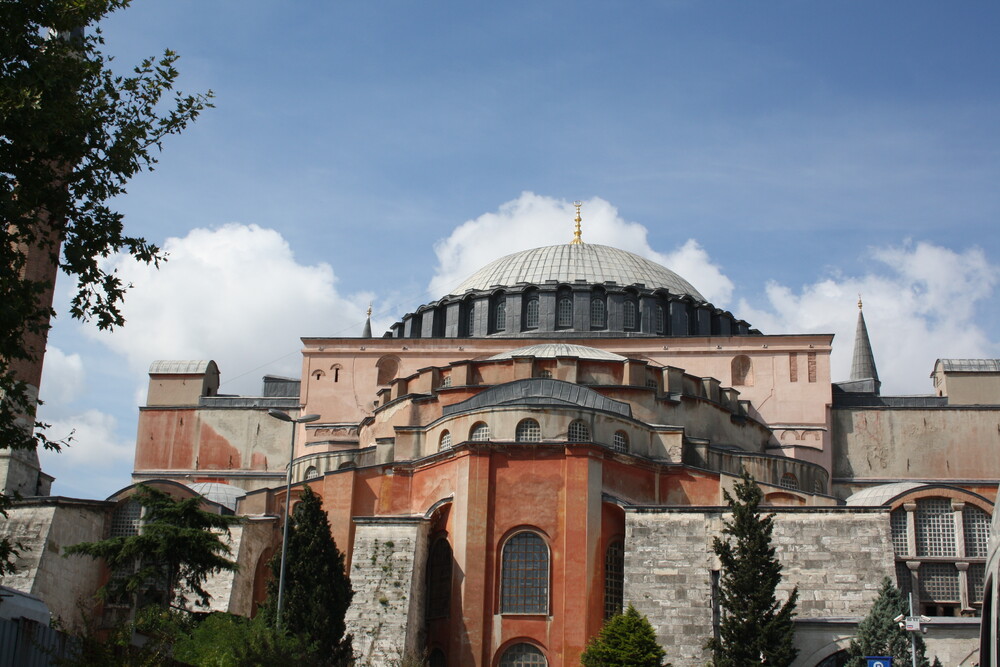
With its strategic location on the Bosphorus peninsula between the Balkans and Anatolia, the Black Sea and the Mediterranean, Istanbul has been associated with major political, religious and artistic events for more than 2,000 years. Its masterpieces include the ancient Hippodrome of Constantine, the 6th-century Hagia Sophia and the 16th-century Süleymaniye Mosque, all now under threat from population pressure, industrial pollution and uncontrolled urbanization.
Brief synthesis
Strategically located on the Bosphorus peninsula between the Balkans and Anatolia, the Black Sea and the Mediterranean, Istanbul was successively the capital of the Eastern Roman Empire, and the Ottoman Empire and has been associated with major events in political history, religious history and art history for more than 2,000 years. The city is situated on a peninsula which is surrounded by the Golden Horn (Haliç), a natural harbor on the north, the Bosphorus on the east and the Marmara Sea on the south. The Historic Peninsula, on which the former Byzantium and Constantinople developed, was surrounded by ancient walls, built initially by Theodosius in the early fifth century.
The Outstanding Universal Value of Istanbul resides in its unique integration of architectural masterpieces that reflect the meeting of Europe and Asia over many centuries, and in its incomparable skyline formed by the creative genius of Byzantine and Ottoman architects.
The distinctive and characteristic skyline of Istanbul was built up over many centuries and encompasses the Hagia Sophia whose vast dome reflects the architectural and decorative expertise of the 6th century, the 15th century Fatih complex and Topkapi Palace – that was continually extended until the 19th century, the Süleymaniye Mosque complex and Sehzade Mosque complex, works of the chief architect Sinan, reflecting the climax of Ottoman architecture in the 16th century, the 17th century Blue Mosque and the slender minarets of the New Mosque near the port completed in 1664.
The four areas of the property are the Archaeological Park, at the tip of the Historic peninsula; the Suleymaniye quarter with Suleymaniye Mosque complex, bazaars and vernacular settlement around it; the Zeyrek area of settlement around the Zeyrek Mosque (the former church of the Pantocrator), and the area along both sides of the Theodosian land walls including remains of the former Blachernae Palace. These areas display architectural achievements of successive imperial periods also including the 17th century Blue Mosque, the Sokollu Mehmet Pasha Mosque, the 16th century Şehzade Mosque complex, the 15th century Topkapi Palace, the hippodrome of Constantine, the aqueduct of Valens, the Justinian churches of Hagia Sophia, St. Irene, Küçük Ayasofya Mosque (the former church of the Sts Sergius and Bacchus), the Pantocrator Monastery founded under John II Comnene by Empress Irene; the former Church of the Holy Saviour of Chora with its mosaics and paintings dating from the 14th and 15th centuries; and many other exceptional examples of various building types including baths, cisterns, and tombs.
Criterion (i): The Historic Areas of Istanbul include monuments recognised as unique architectural masterpieces of Byzantine and Ottoman periods such as Hagia Sophia, which was designed by Anthemios of Tralles and Isidoros of Miletus in 532-537 and the Suleymaniye Mosque complex designed by architect Sinan in 1550-1557.
Criterion (ii): Throughout history the monuments in Istanbul have exerted considerable influence on the development of architecture, monumental arts and the organization of space, both in Europe and the Near East. Thus, the 6,650 meter terrestrial wall of Theodosius II with its second line of defence, created in 447, was one of the leading references for military architecture; Hagia Sophia became a model for an entire family of churches and later mosques, and the mosaics of the palaces and churches of Constantinople influenced both Eastern and Western art.
Criterion (iii): Istanbul bears unique testimony to the Byzantine and Ottoman civilizations through its large number of high quality examples of a great range of building types, some with associated artworks. They include fortifications, churches and palaces with mosaics and frescos, monumental cisterns, tombs, mosques, religious schools and bath buildings. The vernacular housing around major religious monuments in the Süleymaniye and Zeyrek quarters provide exceptional evidence of the late Ottoman urban pattern.
Criterion (iv): The city is an outstanding set of monuments, architectural and technical ensembles that illustrate very distinguished phases of human history. In particular, the Palace of Topkapi and the Suleymaniye Mosque complex with its caravanserai, madrasa, medical school, library, bath building, hospice and imperial tombs, provide supreme examples of ensembles of palaces and religious complexes of the Ottoman period.
Integrity
The Historic Areas of Istanbul include the key attributes that convey the Outstanding Universal Value of Istanbul as the parts of the city that had escaped major changes and deterioration in the 19th and 20th centuries and were already protected by national legislation at the time of inscription.
Vernacular timber housing in the Süleymaniye and Zeyrek quarters, was recognized as vulnerable at the time of inscription. Despite the threat of pressure for change, many efforts have been executed in order to conserve and strengthen the timber structures within the site since then. Changes in the social structure within the area have also affected the use of those structures. The urban fabric is threatened by lack of maintenance and pressure for change. The Metropolitan Municipality is attempting to rehabilitate the area to revive its degraded parts. The revival of the Süleymaniye and Zeyrek quarters is a long project which demands a long and careful process of cleaning, conservation and restoration. The Suleymaniye Complex has retained its structural and architectural integrity, except some minor changes in the commercial part of the compound. Zeyrek Mosque, originally the Church of Pantocrator, has suffered from several earthquakes.
The integrity of the major monuments and archaeological remains within the four Historic Areas are largely intact but they are vulnerable due to the lack of a management plan. With the management plan, which is under approval process by related authority, it is aimed to address all the issues and solve the problems within the site gradually.
The setting of the Historic Areas of Istanbul and the outstanding silhouette of the city are vulnerable to development.
Authenticity
The ability of the monuments and vernacular housing to express truthfully the Outstanding Universal Value of the Historic Areas of Istanbul has been compromised to some extent since inscription in terms of their design and materials. The conservation and restoration works in the setting of the Historic Peninsula are being led and followed by the central and local authorities as well as newly established institutions with the financial funds provided by the legal amendments.
The setting and distinctive skyline of the Historic Peninsula continues to express the Outstanding Universal Value of the property. However the ongoing ability of the wider maritime setting to do this depends on ensuring that development does not compromise views of the skyline.
Protection and management requirements
The Historic Areas of Istanbul is legally protected through national conservation legislation. There is no specific planning legislation to protect World Heritage sites. The management structure for the protection and conservation of the properties includes the shared responsibilities of national government (The Ministry of Culture and Tourism General Directorate of Cultural Assets and Museums, General Directorate of Pious Foundation) local administration and several state institutions. The approval of the Conservation Council has to be obtained for physical interventions and functional changes in registered buildings and conservation sites.
The Site Management Directorate for Cultural and Natural Sites of Istanbul was established within the Istanbul Metropolitan Municipality in 2006 to coordinate management planning processes for World Heritage Sites of Istanbul. The work of the directorate is supported by an Advisory Board and a Coordination and Supervising Board. A site manager has also been appointed. A department was also structured under the Ministry of Culture and Tourism to coordinate the management issues of the World Heritage Sites in Turkey and to collaborate with relevant authorities for the implementation of the World Heritage Convention and the Operational Guidelines.
The first conservation plans for Zeyrek, Suleymaniye and the Land Walls were prepared and approved in 1979 and 1981. A new conservation plan including World Heritage sites was endorsed by the Council of İstanbul Metropolitan Municipality and submitted to the Conservation Council for approval. The impressive skyline of the Historic Peninsula with the Topkapı Palace, Hagia Sophia and Süleymaniye is preserved by planning measures. The legal protection and the management structures are adequate for ensuring the proper conservation of the properties. The national government has allocated a large amount of funding for restoration and conservation projects within the site as part of the European Capital of Culture campaign, in addition to the Ministry of Culture and Tourism’s, the Istanbul Special Provincial Administration’s, General Directorate of Pious Foundation’s and the local administration’s annual budgets.
Finding a balance between change and preservation is a delicate issue in the Historic Areas. The Management Plan, which is currently being prepared in collaboration with all stakeholders in conformity with the related legislation, will address this issue. It will address the traffic and transport plan for the city, the urban regeneration strategy and tourism management, and will provide a proper framework to ensure that construction and infrastructure projects respect the Outstanding Universal Value of the property. It will also include policies for conservation, standards for restoration and rehabilitation, management responsibilities, accessibility, visitor management, policies for increasing the perception of the site, increasing the quality of daily life, risk management, awareness raising and training.
Barry Lituchy is a history professor at Kingsborough Community College.


Although I’ve been asked to make another post about current events, and especially about what’s happening in Ukraine, I don’t really want to do this yet. I’m not entirely against doing this, but I’ve already made two posts about the happenings in Ukraine. There’s also the fact that I don’t really want to be associated with an embarrassing country like the Russian Federation. However, I can say a few things at this time. First of all, the performance of the Russian armed forces in Ukraine continues to be poor because the Russian Federation is a sickly, right-wing oligarchical state. Contrary to the belief of some conspiracy theorists and reactionaries that oppose the authorities in the USA, Vladimir Putin is not the greatest conservative leader that has ever lived, and he doesn’t have some master plan. The only plan that he had was to continue to provide Europe, and especially Germany, with cheap Russian oil, cheap Russian natural gas, and, um, cheap Russian prostitutes. The Americans and the English have wrecked this plan of his for the time being by overthrowing the government of Ukraine in 2014 and by using the new fanatical anti-Russian government in Ukraine to provoke Russia and to act against Russia. Still, eight whole years had passed before Putin did anything significant, and, when he did act, he acted so badly and with such restraint that the anti-Russian regime in Kiev has gotten bolder. After one year of hostilities, Putin has failed to defeat the Third World country known as Ukraine, he has failed to overthrow the anti-Russian regime in Kiev, and the regime in Kiev, which nurtures Nazis, is now not only banning and destroying anything that’s Russian in Ukraine, it’s also calling for banning anything that’s Russian in other countries, and the NATO military alliance is glad to support this. Meanwhile, Putin is only concerned about how to get McDonald’s and The Coca-Cola Company to return to Russia and to continue selling junk food to the dumb Russian masses. Well, Russians are about as intelligent and as organized as the monkeys in the film Jumanji (1995). I’ve also heard that the Nazis in Ukraine have begun to build a Death Star. Progress on this top-secret project has been slow because Ukraine is a poverty-stricken country with a very bad education system. Let’s not forget that prostitution is a profession in Ukraine. Still, the Ukrainian Nazis are determined, and they’ve been using materials such as wood, stones, mud, cardboard, and plywood for the construction of their Death Star so far. It’s entirely possible that the Americans will provide them with some cheap metals in the near future. What’s also worth mentioning is that the Ukrainian Nazis have found a willing recruit in Luke Skywalker. Luke has already volunteered to command the Ukrainian Death Star in the future, and he will become the admiral of the Nazi air fleet of Ukraine. When the badly-designed and badly-built Ukrainian Death Star becomes operational sometime in the future, it will not only be able to fire its superlaser at the Kremlin, where Putin will be hiding and shivering in one of the closets, it will also be able to fly around the world at a maximum speed of a half a mile an hour and to fire at and eliminate liberals, communists, and other leftists in various countries. Fortunately, by the time the Ukrainian Death Star reaches Canadian airspace, I will be long gone, just like a Belgian refugee. Although I wouldn’t call myself a leftist because I’m not a political person, I still don’t want to take any chances. Since Canada has been turning more and more into a Third World country, I think that it’s time for me to flee to the best place on Earth. No, I don’t mean to Disneyland. I mean to Wakanda. The energy dome of Wakanda will definitely protect me from the Ukrainian Death Star. In fact, I’ve already begun to practice perfecting my “Wakanda Foreva!” hand gesture. This is pretty much all of the intelligence that I’m willing to share about the happenings in Ukraine at this time.
Having finished to read Fyodor Dostoevsky’s The Brothers Karamazov (1880) recently, I got a minor impulse to review it and some other books that I’ve read in the last year or two. I bought The Brothers Karamazov more than a decade ago in paperback form. The paperback that I bought is by Bantam Books. I began reading the novel not long after I bought it, and I didn’t stop until I finished reading 88% of the novel. I don’t remember why I stopped reading it. Perhaps I lost interest in reading it and wanted to read other books. Well, I resumed reading The Brothers Karamazov a few months ago, and now I’m done reading it. I acquired a copy of the novel in electronic form for my collection on Google Books and then sold the paperback that I bought on eBay. The Brothers Karamazov is not the first novel by Dostoevsky that I finished reading. I finished reading The Idiot (1869), which is also a thick novel, at the beginning of 2021. Actually, in the case of The Idiot, I listened to an audiobook that I bought on Audible. I think that I enjoyed reading The Brothers Karamazov more than I enjoyed reading The Idiot, but, since both of these novels are major classics, I don’t have anything negative to say about The Idiot. The Brothers Karamazov is simply a more impactful novel for me. One of the novel’s chapters, The Grand Inquisitor, is so memorable and so famous that some publishers sell it separately as a book. The Brothers Karamazov also has a memorable ending. Like Dostoevsky’s other novels, The Brothers Karamazov is an examination of the Russian mind. In my opinion, Dostoevsky was very good at psychology, and he knew the behavior of Russians very well. Some of the characters in the novel are stereotypical Russians. In fact, Dostoevsky was so good at characterization that I sometimes felt uneasy when I was reading the novel. For example, Fyodor Karamazov, the father of the four brothers, is in some ways like my so-called father. I don’t like to think about the vicious Russian monkey man that is my father, but, unfortunately, I was reminded of him when I was reading the novel. My so-called father is a bigot and a bully. I already mentioned in an earlier post that Russians are big time traitors. They’re also idiotic, sadistic, unreliable, devious, apathetic, and dishonest. I can say, for example, that my so-called father cheated on his wife more than once, and, to this day, he feels no regret about this. In fact, he’s proud of this. But Fyodor Karamazov isn’t the only familiar and well-realized character in the novel. There are other characters too, like his four sons. There’s Dmitri Karamazov, who’s a sensualist and somewhat of a brawler. There’s Ivan Karamazov, who’s an intellectual. There’s Alexei Karamazov, who’s a religious person. And there’s Pavel Smerdyakov, who’s the illegitimate son. Smerdyakov hates Russia, and he’s the one who kills his father. Still, the one who’s convicted for the murder of Fyodor Karamazov in court is Dmitri, the eldest son. The Brothers Karamazov isn’t only a novel about Russia, and it doesn’t only feature Dostoevsky’s observations and, shall we say, his wisdom. It’s also a piece of propaganda, just like most other books. Since intellectuals, socialists, nationalists, and other opponents of the Russian autocracy were very much a problem for the Russian authorities in the 19th century, I’d say that Dostoevsky promoted two things that the Russian authorities were in favor of. He promoted Russian patriotism and the Russian Orthodox Church. Since he supported these things in The Brothers Karamazov and in his other novels, he naturally mildly attacked and criticized intellectuals, atheists, and socialists. It’s also because of this that so-called classic Russian novels, the novels that got published in Tsarist Russia, are readily available in Western countries and in most other countries in the world. Russian novels that got published in the Soviet period (1922-1985) aren’t available in the West, and the few that are available are ones that are either critical of the Soviet Union or that simply attack and lie about the Soviet Union. I guess that I don’t have to mention that The Brothers Karamazov is a great novel. I guess that it can even be called the greatest novel of all time. But a great film adaptation of this novel still hasn’t been made anywhere in the world. However, a great film adaptation of The Idiot has been made. It’s the 1958 Soviet film that’s directed by Ivan Pyryev. I’m quite satisfied by the fact that I’ve already read two of Dostoevsky’s great novels. I’m still slowly reading Crime and Punishment (1866), and I must admit that I haven’t yet finished reading any of the novels by Leo Tolstoy. I’m currently reading War and Peace (1869) and Anna Karenina (1878). Another classic Russian novel that I finished reading not that long ago is Mikhail Lermontov’s A Hero of Our Time (1840). Lermontov’s novel didn’t leave much of an impression on me, and it’s obviously not as complex as the thick novels by Dostoevsky or Tolstoy, but it’s still a well-written classic that’s easy to recommend. The other classics that did leave an impression on me are the Sherlock Holmes stories by Arthur Conan Doyle. I listened to the Complete Stories of Sherlock Holmes in 3 volumes on Audible. I can say that Doyle’s Sherlock Holmes stories are quintessential Western literary works. They’re about an incredible individual (the great detective Sherlock Holmes), they’re easy to read, and they’re entertaining. Holmes’s “superpowers” (his methods of deduction and examination) are introduced and explained in the first novel, which is A Study in Scarlet (1887). Of course, for someone like me, the Sherlock Holmes stories aren’t only entertaining literary works. Since I have a fine knowledge of history, they’re also captivating because they’re set mostly in Victorian England. They feature descriptions of the England of that era. In fact, I enjoyed listening to the audiobooks so much that now, about two years later, I’m again slowly listening to the audiobooks. I think that I already mentioned in an earlier post that I enjoyed reading Michael Herr’s Dispatches (1977), which is a well-written and memorable book about the Vietnam War. Dispatches was published in the 1970s, which was a time when American writers could still write good books. Another excellent book from the 1970s that I read soon after I finished reading Dispatches is The Mothman Prophecies (1975) by John Keel. I’m not recommending this book because it convinced me that Mothman exists. I’m recommending it because it’s well-written and memorable. I think that Mothman, like Bigfoot, is just another fictional creature that got invented in order to act as a distraction for the masses. Since many people, especially right-wingers, are happy to believe in the supernatural and in fantastic tales, such probable fictions can be very effective. I enjoy reading such tales as curiosities and not as something that should be believed. Erich von Daniken’s book Chariots of the Gods? (1968) is another book in this vein that I unfortunately bought and read. It’s one of those books that puts forward the ancient astronauts theory. Having read a few such books already, I’m unconvinced by this theory. Perhaps it’s true that humans were created by highly advanced aliens a long time ago, but this can’t be proved because there’s no serious evidence to support this theory now. Even if the ancient astronauts theory is legitimate, I think that humans were created way before human civilizations existed. I found Daniken’s book to be rather bland and not that interesting to read because I had read Jim Marrs’s Our Occulted History: Do the Global Elite Conceal Ancient Aliens? (2013), which is a much more interesting book, before reading Daniken’s book. But reactionaries and conspiracy theorists will almost certainly like it. James P. Hogan’s science-fiction novels Inherit the Stars (1977) and The Gentle Giants of Ganymede (1978) are also more interesting than Daniken’s book. I am curious, however, about why the establishment, at least the lunatic radical right of the establishment, promotes the ancient astronauts theory. Is it because they think that it’s legitimate? Do they want to create a new belief system out of it? Or is it simply another distraction for the masses?
I’ve got to say that a certain YouTube channel (Internet Pitstop), which I discovered in 2022, made me think about video games, anime, and other things in a slightly different way. I know that many great video games succeed at having a world or environment that can draw in a player because it features spaces, sounds, and music of much appeal. For example, in Dark Souls II (2014), in the coastal town of Majula, it’s pleasing to stand and look at the sea while listening to the sound of the waves and the music theme for Majula. In fact, sometimes, when I’m doing something that’s not demanding, I like to turn on Dark Souls II and load a save file in which my character stands near the monument on the cliff by the sea in order to look at the lovely view and listen to the music. Similarly, when I played Chrono Cross for the first time, I enjoyed looking at the scene in which Serge and Kid sit by a campfire and reminisce about the past. While this scene is taking place, the music track ‘The Girl Who Stole the Stars’ plays. It’s a memorable scene that is simply pleasant to look at. Well, as it turns out, there are such scenes or views in many other video games, but I didn’t stop to appreciate them for a long time before making this post. I turned on The Legend of Zelda: Breath of the Wild (2017) a while ago in order to look for some places where it’s relaxing to stay and listen to the music and the sounds, and I quickly found several locations. One of the locations is by Shoqa Tatone Shrine. There’s a campfire and a cooking pot there on the beach, under a cliff, on the shore of Faron Sea. It’s quite nice to stay there in order to listen to the music, to the sound of the fire, and to the sound of the waves. Another nice location is on Mount Granajh, near the Suma Sahma Shrine. There’s a campfire there in the remains of a wooden house. Not only is the view lovely, but the music that plays there is relaxing. Another nice location is on a hill on the west side of Deya Lake in the Faron Region. There are trees there growing in some water. There’s a stump where you can collect a korok seed, and the water features many floating leaves. Well, Breath of the Wild is full of fantastic scenery, but I rarely stopped to seriously appreciate it before. By the way, I’ve already finished playing this game twice since I bought it in 2017 for my Wii U. I can load a save file anytime I want in order to travel wherever I want to in its open world. I think that if this great video game hadn’t been available for the Wii U, it’s possible that I would have already bought a Nintendo Switch in order to play it, though its performance on the Switch is noticeably worse. I’d also like to play Super Mario Odyssey (2017), which is available only on the Switch, but I don’t want to play it as much as Breath of the Wild. Therefore, I still don’t own a Switch. Why this is the case is something that I have already gone over in an earlier post. But I must admit that the people at Nintendo have learned from their mistakes during the Wii U phase. They’ve allowed the release of many different video games on the Switch in order to boost sales, and they’ve even released some excellent Wii U games (Pikmin 3, The Wonderful 101, Mario Kart 8) on the Switch, which is also nice. Although Nintendo has done this and other things in order to attract buyers, I still don’t have an urge to buy the Switch. I have a Wii U, and few Switch exclusives appeal to me. For those people that haven’t yet noticed, I must say that I’m not a dedicated video game player and I don’t play most of the latest video games. Almost all of the video games that I play are old great games. But it’s possible that I will buy a Switch, perhaps in used condition, after the release of The Legend of Zelda: Tears of the Kingdom (2023). If Tears of the Kingdom will be as good as, or even better than, Breath of the Wild, I will definitely want to play it.
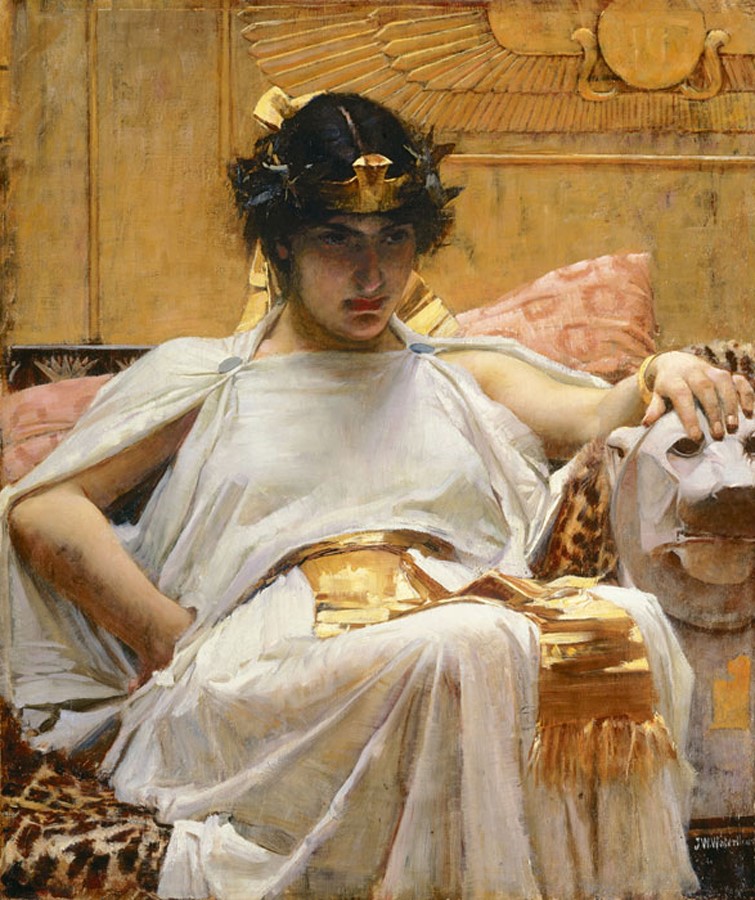

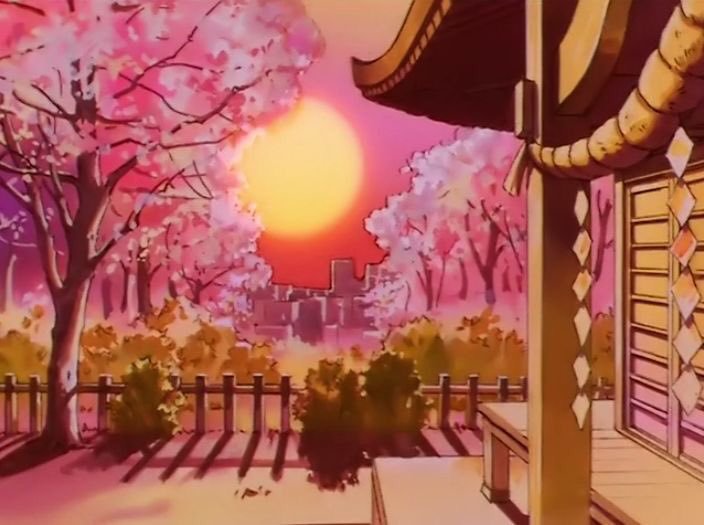
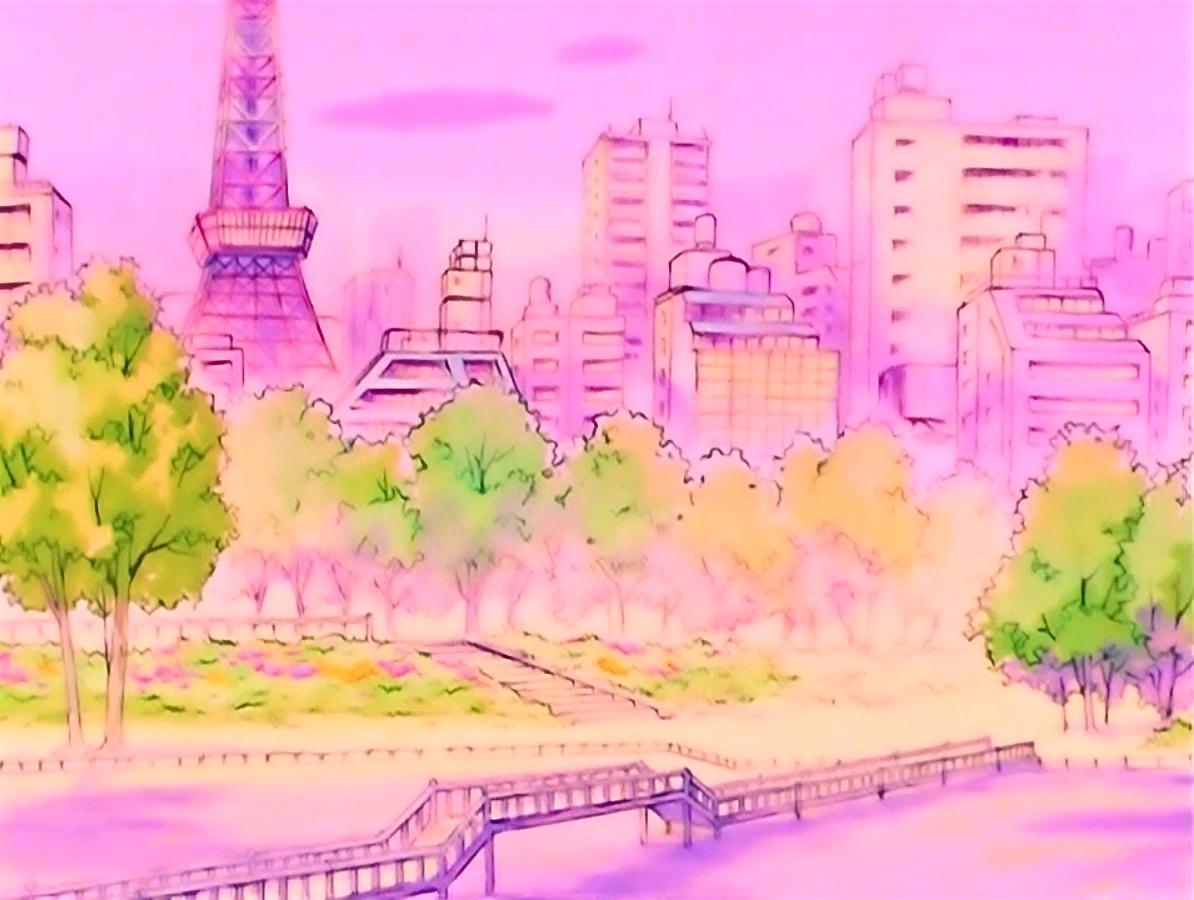
The original Sailor Moon anime had some seriously stunning backgrounds. Just take a minute to appreciate the gorgeous pastel colors, the scenery is so simple and yet truly beautiful… ♥
https://geekxgirls.com/article.php?ID=11405













 Igor's Blog