Lewis Carroll is known for his beloved classic Alice’s Adventures in Wonderland, but fewer people know Charles Lutwidge Dodgson’s—Carroll’s real name—other great contribution to the arts: photography. In his book The Photographs of Lewis Carroll: A Catalogue Raisonné, which the University of Texas Press published in August, Carollian scholar Edward Wakeling corrects that. For the first time, it collects all of Dodgson’s known photographs in one place.
Dodgson was a perfectionist in all of his pursuits, so when he first took an interest in photography he became determined to master it. He acquired a folding Ottewill camera, learned the wet collodion process, and studied the work of other artists. In photography, as well as in writing, Dodgson valued simplicity. He wanted viewers to concentrate on his subject’s face, not the background. As a result, he avoided the extraneous furniture, draped curtains, and vases of his peers. Instead, he mostly used a plain blanket or a wall for a backdrop.
“This is mirrored in Dodgson’s writing. His use of language is straightforward—there are no long descriptive passages in the Alice books. In the main his style is narrative. He tells a story,” said Wakeling.
Like many Victorian photographers, Dodgson took a range of images, but his main focus was portraiture, and his special talent was making his sitters look natural and comfortable. Exposure times could be as long as 45 seconds back then, and sitters had to remain perfectly still to avoid motion blur. This made photographing children particularly challenging, since they are not patient sitters. But Dodgson kept them engaged by telling them stories. Among his subjects was Alice Liddell, the girl who inspired his heroine in the Alice books.
“He was a born storyteller. They would listen intently and he would capture the moment. He made the experience of being photographed as enjoyable as possible, as some of his sitters recorded afterward,” Wakeling said.
Dodgson’s diaries recorded virtually all his photographic activity, but his register of photographs is now missing. Over 20 years, Wakeling has done his best to reconstruct it. He searched the collections at Princeton University and the University of Texas at Austin during month-long research fellowships. He spent time at Christ Church in Oxford, England, and the National Portrait Gallery in London to look through albums. The Dodgson family showed him photographs and gave him information about photographs that had been sold; he also contacted private collectors through the Lewis Carroll Society, searched auction records and collected books on Victorian photography. Gradually, he assembled a database of all known images.
Carroll stopped taking photographs in 1880 in order to focus on writing and other academic pursuits. But his decades in photography were quite productive. He took 3,000 photographs; of these, nearly 1,000 have survived.
“There are still photographs that have not yet come to light; I hope this book will result in some appearing that we haven’t yet seen. Family archives and attics need to be searched. I am sure there will be many people who have not appreciated that the writer of Alice’s Adventures in Wonderland was also an important early photographer.”
I recently realized that some of the people that follow my blog are autistic. Well, this isn’t surprising because a certain percentage of the population (about 0.5%) are intelligent autistics, and many of them are active on the internet because using the internet is one of those activities that don’t require face to face interaction with people. Therefore, I think that I will provide some advice for autistics, and for people in general, that can help them in daily life. I’m doing this mostly for myself, however, in order not to forget about these tips. I’ve been able to accumulate a few decades of life experience already due to my age. One thing that I would recommend for autistic people is to take a pause and relax your body when you’re around people and when you’re feeling nervous. Autistic people are often in a state of tension. Because of this, their bodies are in a condition of tension, and they make rapid, jerky, or unusual movements that normal (neurotypical) people find strange and even repulsive. I know that being relaxed isn’t something that comes easy for an autistic (neurodivergent) person, but this helps to appear normal around people, to make proper eye contact, to make decisions better, and to avoid outbursts. Getting into a state of relaxation also helps an autistic person to retain that much needed energy, which can be easily lost when an autistic person is around people. Staying relaxed and keeping my body relaxed is something that I forgot about for a while, but, fortunately, I remembered about this recently. I don’t mean that an autistic person should always be relaxed, but being relaxed can often help in social situations. Of course, there’s another, much more simple, way to relieve tension for an autistic person. This method is stimming with a so-called stim toy. Using a stim toy is a much easier way of relaxing than attempting to relax your body consciously. This is something that I found out about very recently. But I decided to use a pen instead of a stim toy. I bought a pen with a cap that opens and closes. I take this pen everywhere with me now, and I stim by opening and closing the cap of this pen, by turning the cap, or by simply holding this pen in one of my hands. A pen is one of the most common things that a person can carry, and one can even take it to a job interview. I think that if I had used a pen or some stim toy to stim since my childhood, my life would have been a lot better. When I use my pen to stim, I cease to be nervous, I gain confidence, I can focus better, I can appear normal around people, I can make better eye contact, and I cease to worry. Another thing that helps me to get through a tough day is aspirin. For some reason, aspirin helps me to feel better and more confident. If I’m nervous, if I’m feeling down, or if I have a headache, I take one aspirin tablet a day, but not more than one tablet a day. The stronger the aspirin, the better the effect that it has. It’s definitely not a good thing to consume a lot of aspirin because, like any drug, it’s not really a good thing for a person’s stomach and digestive system. Therefore, I try not to consume aspirin every day. But, when I need to feel better or when I’m in an important social situation, aspirin definitely helps. Another thing that some autistic people do when they go outside is wear sunglasses. They do this even when it’s not sunny outside. Sunglasses cover their eyes, thus making them less nervous and less noticeable to the people around them. Wearing sunglasses is not something that I’m in the habit of doing, but many autistics find this to be very helpful. I already mentioned in one of my posts that I prefer to sleep for at least 10 hours per day. This is probably one of the things that keep me looking very young and healthy for my age. I also don’t smoke or drink alcohol. It’s obvious that the more a person sleeps, the better a person feels during the day. Some people say that they like to sleep as little as possible in order to get more things done, but I think that this is a mistake. I think that sleeping less affects a person’s health, well-being, and life expectancy. Therefore, I try to get as much sleep as I can. Since I learned that I have autism at the end of July of this year, I’ve been trying to find out as much useful information as I can about this condition. I haven’t been obsessed with autism, and I learned pretty much everything that I needed to know about it in the first 3 or 4 weeks after finding out about it, but I recently came across more information that I found to be of some use. One thing that I’ve been doing sometimes is watching videos by autistic people on YouTube. I watch videos that are only by autistic women because I don’t really want to watch autistic men talk about their experiences. Moreover, almost all of the videos that I’ve been able to find about autism on YouTube are by autistic women. It seems that autistic women are a lot more willing to talk about their experiences than autistic men. This is a good thing because I find their videos to be usually informative. Some researchers say that there are a lot more autistic men than autistic women, but I think that this might not be the case. Autistic women are better at hiding their autistic traits than autistic men, and they spend more time and effort on fitting in. This is why fewer of them get noticed or diagnosed. I try to avoid clickbait videos because I find clickbait videos to be unpleasant and often useless. Since monetization got introduced on YouTube some years ago, YouTube has become even worse than American television, in some ways. It’s now a website that’s filled with dumb and useless content because many people try to make only clickbait videos in order to make as much money as possible on YouTube. This is one of the reasons why I’ve been using YouTube less in the last several years. It’s not surprising that there are clickbait videos about autism on YouTube because there are millions of autistic people around the world that would like to know more about their condition. Because of this, I’ve tried to watch videos about autism that are obscure and that don’t have many views. Therefore, I try to avoid videos that are on channels that are dedicated to making videos about autism. Why I do this is simple. Clickbait videos are almost always a waste of time. Still, even with all of the negative changes that have taken place in the last decade or so on YouTube, YouTube remains the best website for watching videos. This is a downer, but such is reality now. YouTube is certainly better than Rutube, for example. In the last few years, the people running Rutube have deleted hundreds of my videos because they don’t like some of my blog posts. Something that I noticed some time ago is that whenever I make a post that can be perceived as being critical of the Russian Federation, a dozen or more of my videos on Rutube get deleted at random. But there is a pattern. Since the Russian Federation is a right-wing state where real opposition figures, such as nationalists or socialists, have been getting killed by the authorities since the early-1990s, the first videos that got deleted on my channel were the few videos featuring such opposition figures. I didn’t realize this at first, but this is now clear to me after I noticed that there’s a pattern and after I read some comments by people. After that happened, almost all of the videos that have been getting deleted on my channel have been about sociology and history. I don’t watch or read Russian propaganda, but, as one of my followers informed me, Russian propaganda does watch me closely. Another thing that I’ve done recently is read two of Michael Fitzgerald’s books. These two books are titled ‘Autism and Creativity: Is there a link between autism in men and exceptional ability?’ (2004) and ‘The Genesis of Artistic Creativity: Asperger’s Syndrome and the Arts’ (2005). These books aren’t easy to obtain, but they can be bought online. I was able to buy them for a relatively low price in used condition, though they still cost me over $50. They might also be available in some libraries. I haven’t finished reading these books yet, but the information that they contain has been very useful to me because Fitzgerald knows a lot about autism, specifically about Asperger syndrome. In ‘The Genesis of Artistic Creativity’, he selected 21 famous people (Jonathan Swift, Hans Christian Andersen, Herman Melville, Lewis Carroll, William Butler Yeats, Arthur Conan Doyle, George Orwell, Bruce Chatwin, Baruch Spinoza, Immanuel Kant, Simone Weil, Alfred Jules Ayer, Wolfgang Amadeus Mozart, Ludwig van Beethoven, Erik Satie, Bela Bartok, Glenn Gould, Vincent van Gogh, Jack Butler Yeats, Laurence Stephen Lowry, and Andy Warhol) and explained why they had autism. When it comes to Carroll, Fitzgerald wrote, “He had ‘a compulsive orderliness’ and was systematic in his approach to organizing his work and activities. Undoubtedly a severe disciplinarian, he was ‘a master of regulating his life, and superhuman in today’s terms, in controlling his impulses during waking hours’.” In his books, Fitzgerald states that people with Asperger syndrome are very creative and that they’ve been responsible for much of the progress that mankind has made. In one of his interviews, he said, “Well, Asperger syndrome has massive impact on all our lives. If we didn’t have people with Asperger syndrome, we’d still be in the cave. We would not have developed technology. We would not have developed fire or the wheel. That’s the first point. The second point is that the large group of genes in my view that give you Asperger syndrome also have a tendency to give you creativity of extreme proportions. Other people have the same view. So, there’s an overlap between Asperger syndrome and creativity. And this has been known for thousands of years, at least what has been known is the link between genius akin to madness, for example. So, this kind of phenomenon has been observed as long as written records are there. Asperger syndrome was developed by a man in Austria. He worked on it throughout the 1930s, and he published on it. The first publication was in 1938 and later in 1944. It’s a condition characterized by autistic features. People with Asperger syndrome have poor eye contact, they have problems reading non-verbal behavior, they have problems reading faces, they have problems with social know-how, they’re naive and immature, they’re emotionally immature, they’re loners, they have problems sharing, they have problems turn-taking, they use repetitive language, and they have narrow interests and repetitive behavior. It’s not surprising then that Asperger syndrome is associated with depression and anxiety. In later life, psychosis isn’t rare. The perfect example of that is Isaac Newton, who is the greatest creator in the past thousand years. He developed a psychotic episode in later life, and he had all the features of classic Asperger syndrome. There’s still a great deal of prejudice against persons with Asperger syndrome in the world. They suffer enormously. They suffer unnecessarily. They’re often unfortunately bullied or ostracized, mistreated, maybe put in prison. Their condition isn’t recognized.” In ‘Autism and Creativity’, Fitzgerald wrote, “However, in order for the scientist to innovate, he must ‘break the grip on his imagination that our powers of logical-seeming storytelling impose’. Creative people with HFA/ASP are obsessed with fundamental, bedrock discoveries. They have no interest in being merely replicative. Hence they have little regard for their contemporaries and do not conform to the values of society. They have a peculiar ability to become lost in the present, in the here-and-now, which appears to be a sine qua non for creativity of an HFA/ASP kind. Indeed, the HFA/ASP might facilitate this disconnectedness from the world so that creativity of pure genius can take place. High-functioning autism and Asperger’s syndrome are pervasive developmental disorders and therefore different from mental disorders such as schizophrenia and manic-depressive psychosis. The differentiation between high-functioning autism and Asperger’s syndrome has never been achieved scientifically, so I have retained the term HFA/ASP. The term, while cumbersome, does describe the scientific situation today. Indeed, Asperger’s syndrome is often used as a synonym for high-functioning autism. It is possible to speculate that humankind would still be at the stage of development before the wheel was invented had it not been for the type of creativity that people with HFA/ASP developed. There is no doubt that HFA/ASP can also occur in females, and therefore a similar type of creativity should be (and is) possible. Nevertheless, to date there is no female equivalent of Newton, or no female equivalent in the mathematical/physical science domain.”
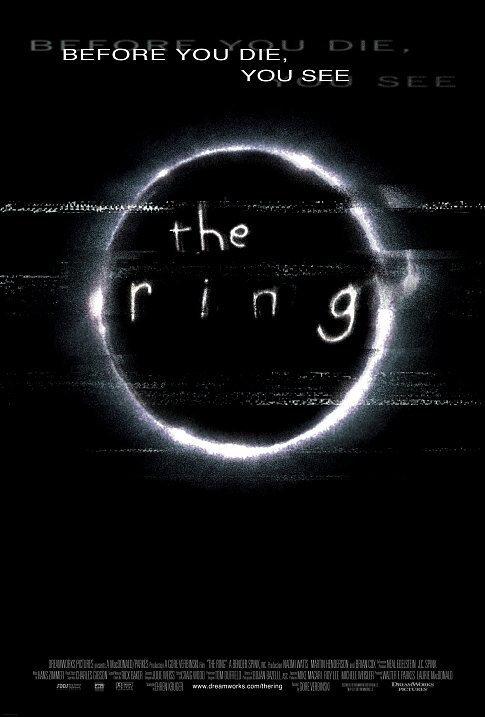
One thing that I’ve noticed recently is that I like to often listen to soothing music or sounds and see films that I find calming. No doubt I do this because of my autism. Therefore, now I understand why The Ring (2002) is one of my favorite films. I think that I enjoy watching it even more than Jacob’s Ladder (1990), A Nightmare on Elm Street 3: Dream Warriors (1987), Hellbound: Hellraiser II (1988), The Hitcher (1986), and Halloween (1978), which are among my favorites too. Although The Ring is a supernatural horror film, it’s not really that frightening, and I find its music and tone to be soothing. I would also add that, in my opinion, The Ring is one of the best films of the last two decades. It’s certainly one of the best horror films. For me, it has replay value. It also has an artistic touch, which is something that almost all of the films that got made since 2000 lack. When it comes to albums that are calming, I can mention some of the ones that I have in my collection. They include 2010: The Year We Make Contact by David Shire, Aja by Steely Dan, Avalon by Roxy Music, Beverly Hills Cop by Harold Faltermeyer, Bloodsport by Paul Hertzog, Body Heat by John Barry, C’est Chic by Chic, Creid by Yasunori Mitsuda, The Crow by Graeme Revell, Disintegration by The Cure, Everything by Climie Fisher, Black Rain by Hans Zimmer, Eye In The Sky by The Alan Parsons Project, Ghost In The Shell by Kenji Kawai, Halloween II by John Carpenter, Hats by The Blue Nile, The Hitcher by Mark Isham, Lethal Weapon by Michael Kamen, The Mack by Willie Hutch, The Yakuza by Dave Grusin, When Marnie Was There by Takatsugu Munamatsu, Three O’Clock High by Tangerine Dream, Thelma & Louise by Hans Zimmer, Starman by Jack Nitzsche, Risque by Chic, Return To Forever by Chick Corea, Rapture by Anita Baker, Rain Man by Hans Zimmer, Princess Mononoke by Joe Hisaishi, Spirited Away by Joe Hisaishi, Howl’s Moving Castle by Joe Hisaishi, Poltergeist II by Jerry Goldsmith, and On Her Majesty’s Secret Service by John Barry. Moreover, I can add that in The Legend of Zelda: Breath of the Wild I’ve found another location where it’s pleasing to stay, to look at the scenery, and to listen to the sounds. This location is called Keya Pond, which can be found in East Necluda. Since it hasn’t been easy for me to think of a picture that should be included in this post, I will just include a photograph of Seabreeze Walk and Beach Avenue in Downtown Vancouver. This avenue is where I sometimes like to take walks. It’s one of my favorite places in Vancouver. Another one of my favorite places in Vancouver is the section of British Columbia Highway 1A between Jervis Street and Bute Street.
Throughout the history of mankind, there have been memorable people whose contribution to science is considered exceptional. We know the names of many of them, and in the context of aeronautics, the following illustrious names immediately come to mind. However, there are other names that have passed quietly into oblivion, despite the fact that their contribution has been truly remarkable. Such is the case of the scientist, historian, poet, inventor and, of course, aviation pioneer, Abbas Ibn Firnas. Many are surprised to learn that this man was the first to fly with an air-gliding machine, staying in flight for about ten minutes. He did this more than a thousand years before the Wright brothers, specifically in the year 875. Abbas ibn Firnas was the first person to ever operate a flying machine, or more like falling with style. His machine was not capable of lifting him in the air, but it did prevent him from directly falling into the ground.
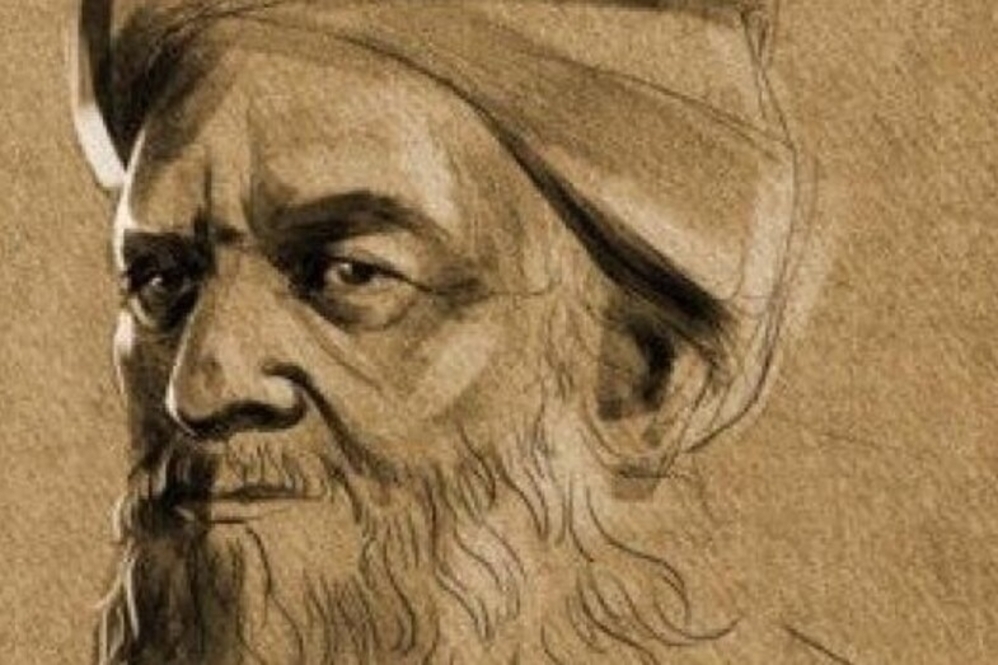
Abbas Ibn Firnas
Born in the 9th century in Izn-Rand-Onda Al Andalus, which is present-day Ronda, Spain, he spent most of his adult life in the Emirate of Cordoba, one of the major learning hubs during the Umayyad Caliphate. Relatively little is known about his childhood, except that he acquired an extensive education and came to the fore in various disciplines, which led him inexorably to the city of Cordoba, which at that time was the richest and most influential in Al-Andalus. There he stood out as a scientist, inventor, poet, philosopher, alchemist, musician, and astrologer, to such an extent that he became known as Hakim Al-Andalus. Once in Cordoba, he went on to develop those facets of his knowledge that significantly contributed to the advancement of the sciences and the arts in the courts of the emirs Abderraman II and Muhammad I.
Some historical accounts suggest al Firnas was influenced by Armen Firman, who was neither a scientist nor a polymath but an astute observer of nature. It was Firman who first built wings made of wooden planks wrapped in silk and bird feathers. In the early 850s, Firman climbed to the top of the tallest mosque minaret in Qurtuba and jumped off wearing the wings. Although his attempt quickly failed and he plummeted to earth, the flying machine inflated just in time and slowed his descent. He was lucky enough not to break any bones in the fall; the delay of his landing proved somewhat life-saving. Ibn Firnas watched Firman’s adventure as he stood among the gathered, fascinated crowds who were all watching the skies above in amazement. Impressed with Firman’s result, Ibn Firnas began to realize that the act of flying in the air needed further investigation.
In Science
In the scientific field, he was the first in the Iberian Peninsula, and probably in Europe, to use the Sindhind astronomical tables, of Indian origin, which later would prove fundamental to the development of European science and would be studied in medieval universities as a Quadrivium subject. He introduced the Western world to the technique for carving rock crystals and even developed alchemical procedures to create crystals from different minerals. Also, he built an anaphoric clock, a complex mechanism that uses water as a liquid engine. The water flow is closed or opened by a series of valves and the clock serves to show the hour at any time of the day or night, something which was unusual at the time. He also developed the first armillary sphere in Europe, used to perform calculations and approximate astronomical observations, by moving the instrument’s rings according to the plane of the celestial rings.
As an example of his advanced knowledge of astronomy, he built a mechanically articulated planetarium at his residence in Cordoba which represented the celestial vault. He even provided it with sound and visual effects that simulated various weather phenomena: storms, lightning, and thunder. In the context of aerospace, Abbas Ibn Firnas is an extraordinary reference point as the creator of the precursor to the parachute and for being the first person to successfully design, build and test artifacts that remained in flight. He researched the mechanism behind airplanes 600 years before Leonardo da Vinci developed his designs for flying machines, and more than a thousand years before the Wright brothers made their famous flight.
Hezarfen Ahmed and the Wright Brothers
Hezarfen Ahmed Çelebi, who made experiments at home and researches various subjects, created a primitive form of today’s aircraft by copying another Turkish scientist, İsmail Cevheri. Before his historical flight, he made experiments in Istanbul to Okmeydanı to measure the durability level of the wings which he prepared by examining the birds’ flight. Later one morning, just in front of the eyes of Istanbul society gathered at the shores, he let himself go into the air, crossed the Bosporus by moving his wings, and landed on Üsküdar. In 1632, Hezarfen Ahmed Çelebi crossed the Bosporus with bird-like wings attached to his body on the southwest by jumping to the air from Galata Tower and landed on Doğancılar in Üsküdar, 3358 meters away. Hezarfen Çelebi was one of the most important people in Turkish aviation history.
The Wright brothers, Orville and Wilbur, were two American aviation pioneers generally credited with inventing, building, and flying the world’s the first successful motor-operated airplane. They made the first controlled, sustained flight of a powered, heavier-than-air aircraft with the Wright Flyer on December 17, 1903, 6 km south of Kitty Hawk, North Carolina. In 1905, the brothers developed their flying machine to make longer-running and more aerodynamic flights. The Wright brothers were also the first to invent aircraft controls that made the fixed-wing powered flight possible.
Nonetheless, Abbas ibn Firnas, a thousand years before the Wright brothers, designed a glider made of wool and silk, and he launched himself with it from the La Arruzafa hills, near Cordoba. He was so sure that his invention would work that he had convened hundreds of people to watch along the route. Also present were many members of the court of Muhammad I, Emir of the Andalusi caliphate. The result was a sustained flight using air currents, which lasted anything between two and ten minutes. Despite a difficult landing, he not only survived but also became the first man to fly with a heavier-than-air machine.
Hey everyone, Today’s video is a little bit different than usual. After finding out I’m autistic (what used to be called Asperger’s syndrome is now part of the autism spectrum) in April, I discovered a lot about myself and decided to share this story with you. I talk about what autism can look like in women, my personal experience, and general knowledge about ASD (or ASC). Autism diagnosis is a very emotionally challenging process and as I share my own story, I also hope it can help someone else out, because it took me about a month of focused research to find out all of this information. Hope you enjoy, Irene
First time ever I’ve tried out the autofocus on my camera and it’s decided that my background is a lot more interesting than me… hence, making me slightly blurry for the entirety of this video, sorry!
I deleted a thing from the end there to cover my butt, let me just suggest you google “autism speaks hategroup”, thank you! I’ll get a video on that topic done at some point as well!
This is very much focussed on my personal experience and what I’ve read and heard from people in the communnity over the years. I am in no way an expert, but I do live this life. So take it as you will. And I definitely forgot to mention a thing or two, especially that it IS very important to learn coping mechanisms, like being able to deal with loud noises, like in a supermarket. However, the ways in which we deal with things like that is often deemed to be “wrong” by allistic people, because they see it as not socially acceptable (i.e. wearing headphones, going non-verbal and hence not being able to talk to anyone you may meet, etc). I’ll also put this as a pinned comment, because let’s be real, who really reads the video description.
The term “Aspergers” is outdated, as well as “atypical autism”, hence I’m using neither of those. The disorder has officially been, rightly so, grouped into one term in the DSM by now, making it “Autism Spectrum Disorder”, or ASD. For the sake of simplicity I just said “Autism”, I don’t think that the “Spectrum Disorder” is that important to continuously add onto the end there :b






 Igor's Blog