

Now reading Ready Player One by Ernest Cline…

Asperger’s syndrome is now considered part of the autism spectrum. But many people with the diagnosis still see themselves as Aspies.
Asperger’s syndrome (aka Asperger’s disorder or simply “Asperger’s”) was used as a diagnosis from 1994 to 2013. What changed in 2013?
The current version of the Diagnostic and Statistical Manual of Mental Disorders (DSM-5) came out, and according to the DSM-5, Asperger’s syndrome is no longer a standalone diagnosis.
Rather, Asperger’s is now considered part of autism spectrum disorder (ASD).
There have been mixed feelings about this change, especially for people who have an Asperger’s diagnosis and feel it describes them best. It’s seen as a controversial removal from the DSM, and some people are advocating for it to be added back into the next version.
People with Asperger’s symptoms — some refer to themselves as Aspies — may have many of the same communication and behavioral patterns as autistic people, but with a couple of specifications.
Asperger’s syndrome was first described by the Viennese pediatrician Hans Asperger in the 1940s. He noticed that some children had behaviors similar to autism, but with average intelligence levels and language development.
When the DSM-4 added Asperger’s syndrome, it described the condition as the same as autism with a key exception: people with Asperger’s didn’t have delays in the areas of communication and language.
The DSM-4 criteria for Asperger’s disorder states that the person will have:
Asperger’s syndrome tends to be seen as a form of “high-functioning” autism. High-functioning autism typically means that a person’s language skills and development are considered “normal” according to neurotypical standards.
When the DSM-5 was published in 2013, Asperger’s syndrome was folded into autism spectrum disorder.
The specific behavior and communication patterns associated with high-functioning autism or Asperger’s tend to be classified as “requiring support.” This means people with an Asperger’s diagnosis might not need as much support in day-to-day life as other autistic people.
The idea behind ASD is that autism is a spectrum — or range — of persistent communication and behavior patterns.
Support needs also exist on somewhat of a spectrum for autistic people. While some people require significant day-to-day support, others need less.
In 2013, four different diagnoses were combined into autism spectrum disorder. These conditions were:
An ASD diagnosis means a person’s behavior and communication skills fit certain patterns. And according to the DSM-5, they must show signs of these patterns by the time they’re 2 years old.
Criteria for an autism diagnosis includes:
Some people felt that the DSM-5 took away their identity when it removed the Asperger’s diagnosis. Many websites and forums specifically for people with Asperger’s are still in use today.
One of the biggest differences between the two is that Asperger’s syndrome is no longer an up-to-date, standalone diagnosis.
The other major difference is that people with Asperger’s syndrome are considered high-functioning, meaning they:
And while autistic children may receive their diagnosis within their first two years of life, some research suggests that Asperger’s diagnoses happened at around 11 years old, on average.
Some “high-functioning” autistic people may not get a diagnosis until adulthood.
People with Asperger’s could also be likely to experience autistic burnout. This is an intense sense of exhaustion that can happen when an autistic person spends a lot of time masking, or hiding, certain behaviors or tendencies to blend in socially.
Autistic burnout can make it harder to handle emotions or do daily tasks. For example, an autistic person who usually communicates verbally (with words) may stop communicating that way during a time of burnout.
If you’re encountering any challenges related to an autism or Asperger’s diagnosis, there are ways to manage.
For parents of an autistic child, many approaches — including social or behavioral therapy — can be helpful during early childhood and beyond.
If you’re an Aspie, resources also exist to help you feel more supported and connected. The Asperger/Autism Spectrum Education Network (ASPEN) and the Autistic Self Advocacy Network are a couple of great resources to get started.
When Asperger’s syndrome was folded into the autism spectrum, some people voiced concerns that this change would make it harder to connect with services and support that fit their needs.
Some of these concerns include that a person with Asperger’s:
Still, other Aspies have embraced being on the autism spectrum as part of their identity.
Asperger’s disorder was a diagnostic term used between 1994 and 2013. People with this diagnosis behaved similarly to autistic people, but they were usually known for being “high-functioning.”
According to the DSM-5, people with an Asperger’s diagnosis now fit onto the autism spectrum and meet the criteria for an ASD diagnosis. Autistic people who identify with the Asperger’s diagnosis may not need as much day-to-day support as others on the spectrum.
Some adults may be autistic but undiagnosed. While it can be harder to receive an autism diagnosis as an adult, it’s not impossible — a diagnosis could also help you find support and understanding.
Asperger’s syndrome is no longer used as a diagnosis, but some people still consider it to be part of who they are. Whether you’re autistic or an Aspie (or both!), there are resources to help you feel accepted and connected.
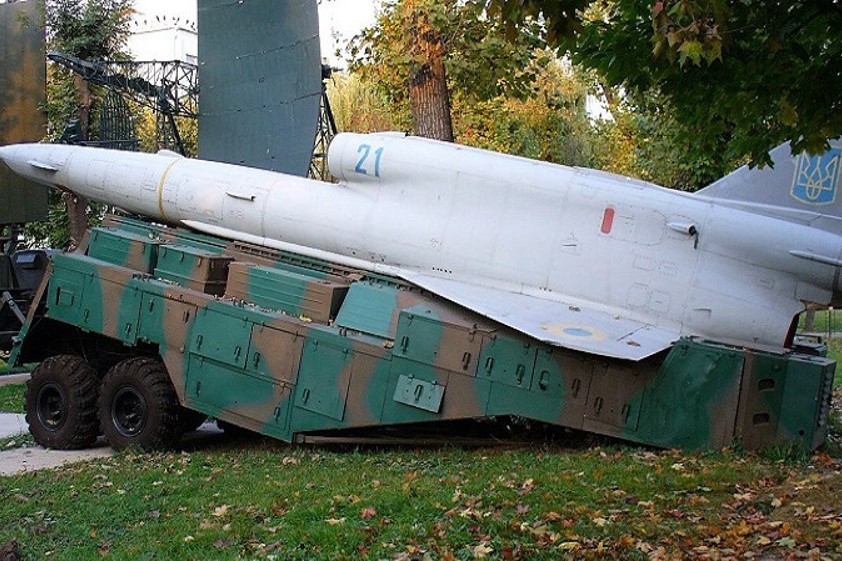
On 10 March 2022, shortly after 11 pm, a Tupolev Tu-141 reconnaissance drone crashed in Zagreb, the capital of Croatia. Initially, many citizens took to social media after having witnessed the loud sound of engines and the glare of an unidentified object in the sky above the city, as well as an explosion that was felt kilometers away.
Shortly afterwards an impact crater was found some 50 m away from the city’s largest dormitory which accommodates thousands of students. Fortunately, there were no fatalities, the UAV’s impact on the ground knocked one man off his bicycle and damaged tens of cars parked nearby.
People began to gather around and photos of the debris from the crash site began circulating on social media, finding their way to military analysts who identified the aircraft as a Soviet-era unmanned aerial vehicle. The darkest assumptions thus proved correct, the Russia-Ukraine conflict raging more than a thousand kilometers away, just knocked on their door.
The shocked public began to ask questions: where was it launched from? Who launched it, and why? Is it an intentional act or some mistake? Today, six days later, the Croatian government still refuses to answer any of these questions.
Some twelve hours after the accident, Croatian officials began making their first statements, only confirming what was already known thanks to independent analysts. They announced that it was indeed a Tu-141 drone, and that it came from the direction of Ukraine, without specifying which side launched it.
The only new useful information was that the UAV first entered Romania and flew for 3 minutes, after which, it continued flying through Hungarian airspace for the next 40 minutes and finally through Croatian airspace for the last 7 minutes. All three NATO member states, as well as the NATO Integrated Air Defense System, claimed to have monitored the 14-meter-long 6-ton drone with radar but bizarrely failed to react.
There were no fighter jets being scrambled, no anti-aircraft missiles fired, nor even air raid sirens in Zagreb. The discussion in the following days mainly revolved around who should have reacted. Politicians and the media generally avoided naming the main culprit, but began talking about “a Russian-made drone,” indirectly accusing Russia of having launching it.
It isn’t like Russia lacked a motive for doing so, since Croatia has joined in the imposition of severe sanctions against Russia, obediently following directives from Brussels and Washington, and even sent weapons, ammunition and military equipment to the Ukrainian infantry.
The Croatian media unanimously took a pro-Ukrainian stance, many even jingoistic toward Russia, so public Russophobia is at its peak. Several media outlets praised right-wing extremists fighting in Ukraine as heroic celebrities, and even offered contacts for recruiting new mercenaries.
Russia consequently summoned Croatia’s defense attaché to the Defence Ministry over information that hundreds of Croatian mercenaries had gone to fight in the Ukraine, but the attaché refused to accept the diplomatic summons, claiming that neither Croatia’s Defence Ministry nor any other Croatian governmental institution has any connection to those individuals.
In fact, Croatia proclaimed that it has no intention of stopping or criminalizing such illegal activities. Croatia’s Prime Minister, Andrej Plenkovic, in contrast to President Zoran Milanovic who expressed balanced views on the conflict, openly described himself as “proud to be a Russian enemy.”
Although Russia may be angry at Croatia, as it is with many other countries with similar behavior, it sounds quite unconvincing that as a powerful country it would commit a terrorist-like act on a non-strategic civilian target, only against Croatia, and during the ongoing conflict. Such hostile action, overt or covert, would be of a zero benefit to Russia. Besides, even if Croatia changes its policy and declares itself an ally of Moscow, it would not help Russia in the military, political and economic sense.
As a matter of fact, any Russian involvement in the incident could benefit only Ukraine and its warmonger allies, as it would give them a perfect pretext to establish a NATO-led no-fly zone over Ukraine, something which Ukrainian politicians have been desperately seeking for days. This scenario includes a false flag operation with faked evidence for the world audience, and Croatia as a country devoid of an air force or any credible air defense systems, is an ideal target.
But unfortunately for the perpetrators, things did not go according to plan: the crash landing on a soft green area was relatively soft, enough for the debris with markings to stay preserved, and the appearance of witnesses who photographed them made it impossible for government services to conceal key evidences.
All technical evidence clearly points to direct Ukrainian responsibility. Firstly, the alleged “Russian-made drone” was actually built in the Soviet Ukraine during the Cold War, and today it is in service only with the Ukrainian Armed Forces. There is no evidence of Russian use in the last 33 years. Secondly, taking into account the known flight time over the three countries, the cruising speed and the maximum range of 1,000 km, the Tu-141 obviously took off from a mobile launcher at the Vinnytsia Airbase in western Ukraine.
This is exactly 1,024 km away from the Zagreb crash site (see map above). The city of Vinnytsia, which is under Ukrainian control, serves as the headquarters of the Ukrainian Air Force Command, and is known for operating Tu-141 drones. The speculative launch from Belarus, Transnistria or Russian-controlled areas of Ukraine (implying Russian responsibility) simply does not fit into the range and linear flight, and the latter also refutes claims that it malfunctioned and went off course. Furthermore, the fact that the drone did not hit some Eastern European empty fields but the capital of a NATO member state clearly reveals that the strike was intentional.
Another important piece of evidence was inadvertently revealed by the Ukrainians themselves in an attempt to refute their own involvement. On the same day that the Tu-141 crashed in Zagreb, another drone of the same type was shot down over Crimea by the Russian anti-aircraft system.
In both cases the Ukrainians denied that the drones belong to them, arguing that the photos of the wreckage show a red five-pointed star, which was historically used by Soviets and today by Russians, while theirs uses the Ukrainian coat of arms as the insignia. However, a closer analysis of the markings suggests quite the opposite.
As can be seen in many photos of the Tu-141 drones in Ukrainian service, Ukrainians simply pasted their markings over older Soviet stars (middle picture below), and this was done with some cheap material that obviously did not withstand flight or fire. If you take a closer look at the tail of both crashed drones, you will notice the burnt shape of the Ukrainian coat of arms, marked with red circles (left and right image below). In other words, Ukraine lied.
The above-mentioned details have, without a doubt, been known to the Croatian intelligence agencies since the first day, but the government continues to deceive its own nation and the European public by insisting that the main perpetrator is unknown, that the investigation is still ongoing, that facts are still being gathered, and so on, instead of acknowledging that it was a deliberate Ukrainian act, however, politicians and the media prefer to speculate about “drone malfunctions” and “pro-Russian separatists.”
There are two reasons for such spinning. The first being that it is difficult for the Croatian authorities to admit that their dear friend Ukraine, which they supported in all possible ways, committed a hostile act that almost killed dozens of students.
This would seriously shake the pro-Ukrainian government in Zagreb since much of the Croatian public would turn against Ukraine.
The second reason is of a far more insidious nature: it is hard to believe that the failed Ukrainian false flag operation was carried out without the express knowledge and complicity of a major NATO player whose radars and spy planes have complete control of the European skies.
And when the United States tells its puppets to keep their mouths shut, they must obey, or face untold consequences.
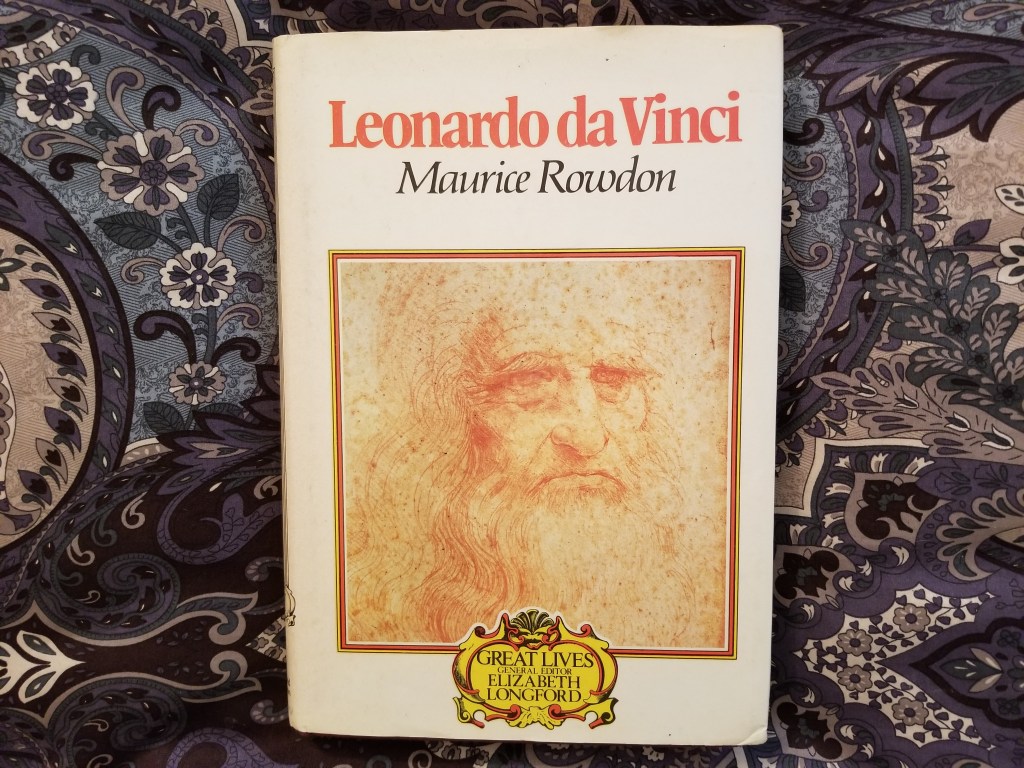
Bill Gates shares his thoughts on Leonardo da Vinci and the new biography about him by author Walter Isaacson.













Hiddleston seamlessly slides back into the Asgardian God role as the annoying, obnoxious adopted brother of Thor.
Marvel Studios always seem to have a plan when it comes to the MCU and all the characters in it. After Avengers: Endgame they moved into a whole new phase, including more movies and limited series television shows. These shows highlight some of the characters who never really got their moments onscreen. Premiering on Disney+, the first two shows, WandaVision and The Falcon and the Winter Soldier, were praised by critics and loved by most of the fans of the MCU. This week the third of these series, Loki, premieres on Disney+ and it very well may be the best of all three shows.
If you don’t remember, Loki (Tom Hiddleston; Kong: Skull Island), grabbed the Tesseract during the chaos and promptly disappeared. Well, we finally find out where he went. He ended up in the Gobi Dessert not knowing where he was and unable to understand the natives. Suddenly, Armed guards arrive through a magical portal, arrest Loki and “reset” time. That is when Loki finds himself in real trouble. It seems by escaping, he veered off his timeline disrupting the future. Hence, the officers who arrested him were from the TVA – Time Variance Authority – who brought Loki to stand trial for his crime against time.
However, Mobius M. Mobius (Owen Wilson; Wedding Crashers), an analyst in the TVA, would like to instead to use Loki to catch…well, Loki. It seems there is another Loki out there, killing TVA guards, and jumping through time to elude detection. Mobius hopes that this Loki will help the TVA capture this deadly version of himself by giving the Authority insight into how Loki thinks and what he would do in a given situation. While Loki is initially resistant, he eventually agrees to help them, hoping for leniency when he is sentenced.
Hiddleston seamlessly slides back into the Asgardian God role as the annoying, obnoxious adopted brother of Thor. He portrays this unlikable trickster with a certain charm, making him interesting and complicated. Wilson, who, ironically, tends to portray trickster-like characters in movies, shows a different side as the mildly gullible, straight-laced bureaucrat. The supporting cast, including Sophia Di Martino (Yesterday), Richard E. Grant (Can You Ever Forgive Me?), and Gugu Mbatha-Raw (Belle), are excellent while remaining in the background giving Hiddleston and Wilson the room to shine.
Of course, the Marvel Cinematic Universe and Disney would settle for no less than topnotch production values and Loki is no exception. Special effects are well done and in no way look cheesy or fake. The dialogue is well written with moments of hilarity layered between all the serious moments. The story unfolds slowly but doesn’t seem boring or off-putting. In fact, the opposite is true; the longer one watches the show, the more they become engrossed in the characters and the plot.
If WandaVision was about magical powers (and supposedly a must-see if one plans to see the Doctor Strange sequel next Spring) and The Falcon and the Winter Soldier was mostly for action junkies, then Loki is the thinking man’s series. It seems to have a somewhat complicated plot, which may or may not make sense by the end of the six episodes.
The real question, however, is why make these limited series? Do they serve some other purpose or are they merely placeholders while the next round of movies are filmed? Whichever answer is correct, each of these shows gives the viewer a little bit of insight into some of the MCU characters and makes us all wonder what is coming next. With a Black Widow movie and the aforementioned Doctor Strange sequel coming up there is much to look forward to but in the meantime, take some time to watch Loki. You won’t be disappointed.
Grade: B+
 Igor's Blog