












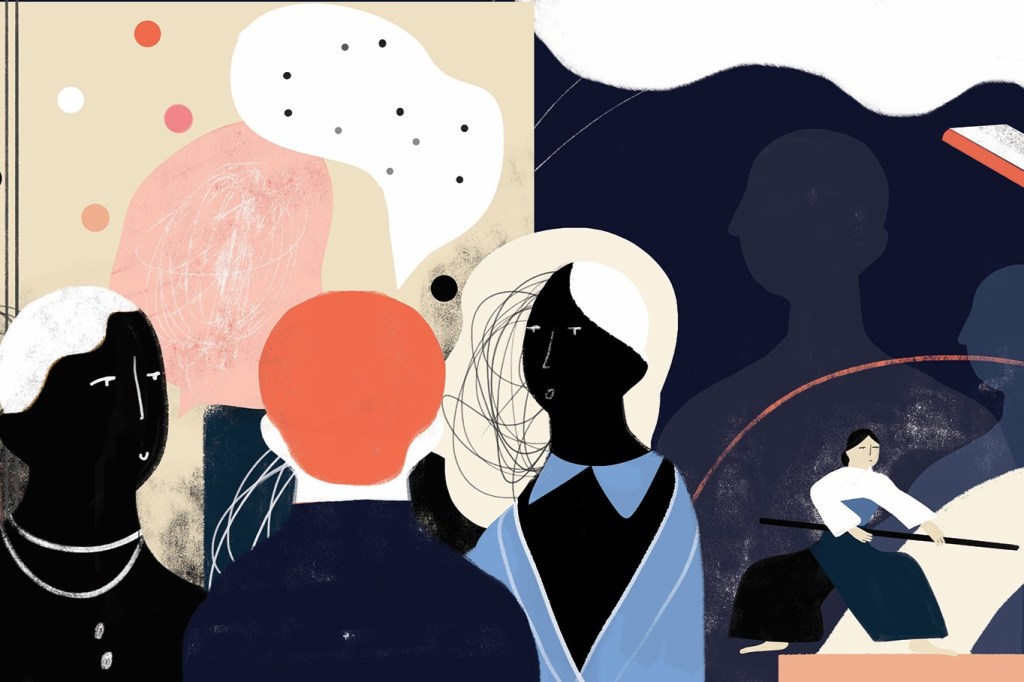
Despite the growing awareness, bullying is still common in schools these days. Some kids are bullied and some bully others. But, as a new study finds, kids with autism spectrum disorder (ASD) may have an even harder time with bullying, being many times more likely than their neurotypical siblings to have experienced it in their lifetimes. Even more disturbing, autistic kids may be intentionally triggered into having meltdowns by bullies who know how to push the right buttons.
The new study, from Kennedy Krieger’s Interactive Autism Network, surveyed families with autistic and non-autistic siblings from all over the country, asking about their experience with bullying in the past and present.
Almost two-thirds of autistic children had been bullied at some point in their lives, and they were three times more likely than neurotypical kids to be bullied in the past three months. This was even true for home-schooled autistic children, who were sometimes educated at home precisely because of the bullying issue. “After a horrible year in 3rd grade,” said one mother, “where he was clinically diagnosed as depressed (he has always been anxious), I pulled my son out of public school and am homeschooling him this year. He is doing much, much better without the constant name calling and being singled out for his ‘weird’ behaviors!”
The three most common types of bullying were verbal, or, in other words, psychological in nature: “being teased, picked on, or made fun of” (73%); “being ignored or left out of things on purpose” (51%), and “being called bad names” (47%). But almost a third of autistic children also experienced physical bullying – being shoved, pushed, slapped, hit, or kicked.
Even more disturbing was the fact that over half of the autistic children surveyed had experienced intentional triggering of meltdowns or had been “provoked into fighting back.” One mother said, “Often kids try to upset her because they find it funny when she gets upset and cries. She is overly emotional, and they seem to get a kick out of this.”
Bullying was most pronounced in regular public schools (43%), but better in special education public schools (30%), and lowest in regular private schools and special education private schools (28% and 18%, respectively).
Oddly, when the team broke down bullying as a function of the different types of autism (Asperger syndrome, autism, and “other ASD”), they found that children with Asperger syndrome were actually the most bullied group. Since Asperger is a higher functioning form of autism, this is peculiar. The researchers aren’t sure why this is true, but one hypothesis is that it’s because people with Asperger are often highly intelligent but can still have considerable social deficits, which makes them, in effect, the “perfect target.”
Children with autism are also more likely to bully others: About 20% of kids with autism bullied (vs. only 8% of neurotypical children). According to the report, many of these kids may actually be both bully and victim, which is somewhat more common in children with developmental or emotional problems. Children with ASD who bully may do it unintentionally. “My son doesn’t realize he is bullying,” said one parent. “He is trying to get other kids to pay attention to him so he does it by grabbing their ball away from them or getting ‘in their face’ when they say to stop.” Another parent said, “Our boy… may take an object from another child or scream when unhappy but any purposeful cruelty, he would never do.”
And for autistic children who are being bullied and bully in return, they may not have the social skills to avoid or to get themselves out of the situation. According to the report, “Unlike victims who are more passive, bully-victims insult their tormentors or otherwise try to fight back in a way that only makes the situation worse.”
Finally, a critical issue that the report brings up is whether bullying may cause people with autism to develop more mental health problems as a result. Some studies have suggested that any child who is bullied has a greater risk for everything from headaches and stomachaches to anxiety, depression, and suicide.
Parents, caregivers and schools work hard to help kids with autism gain social skills and emotional tools, and the idea that bullying could negate this work is disheartening. “Bullying can undo all our efforts,” Connie Anderson, of the Interactive Autism Network, told NPR. “I think that’s the most devastating thing about it. Children on the spectrum can be anxious anyway. This can just put them over the top and undo all the good that everyone’s trying to do.”
Stephen King once famously said, “I recognize terror as the finest emotion and so I will try to terrorize the reader. But if I find that I cannot terrify, I will try to horrify, and if I find that I cannot horrify, I’ll go for the gross-out. I’m not proud.”
In survival-horror games, or really any kind of moderately violent video game, the gross-out is easy to come by. We’ve all seen a lot of titles where you can walk through a puddle of fresh blood and track it everywhere, or vaporize a zombie’s entire head in a gory explosion of brains and bone.
Horror’s a little rarer. Genuinely startling moments in video games tend to be of the Resident Evil, monster-coming-through-the-window-aiiiieeee type, and that kind of scare has a real problem with diminishing returns. You grow to expect it. Your gamer senses start tingling when you see an unattended window, or a gleaming quest item out in the middle of nowhere. So horror’s hard to maintain.
Terror, on the other hand, is the rarest thing of all. Ever since Alone in the Dark started, and Resident Evil revitalized, the horror adventure genre, there have arguably only been three games to manage to generate and sustain a genuinely terrifying atmosphere. One is Tecmo’s Fatal Frame, a ghost story and multigenerational murder mystery which also offers you the opportunity to watch ghosts try to jump down the lens of a camera at you. Another is Silicon Knights’ Eternal Darkness, which among other scares, has a brilliant moment where you realize that the giant dying mass of eyes and mouths you’ve encountered deep below a Cambodian temple is also the closest thing to an ally you have.
The last and greatest, of course, is Silent Hill.
Konami has this weird habit, I’ve noticed, of occasionally putting out a kind of game that they’ve never touched before, and their title will, of course, be one of the best of its kind. They’d never released a console RPG before Suikoden, and that series is among the best CRPGs out there. Silent Hill is the same way; they jimmied the lock on the door and ran screaming into Resident Evil’s turf, making the latter game look like a pallid and unexciting imitation.
Silent Hill took an ordinary man, who was in way over his head about thirty seconds into the game, and pitched him headlong into a small American town that occasionally turned out to be something very like hell. It hit every single nerve an average person has—an elementary school that becomes a place where children are tortured, a hospital where the nurses are mad and there’s something terrible waiting in the basement, someone’s daughter alone and frightened somewhere in the distance—and played them like a violin. I challenge anyone to get through that game without so much as a shudder.
The sequel was a bit of a letdown, when all’s said and done. It made a few missteps, such as the infamous ten-minute walking sequence that serves as its prologue, or its slightly more mundane feel, but worse, it didn’t build on its predecessor. Silent Hill left quite a few questions unanswered, and a couple of plotlines dangling; Silent Hill 2 dealt with the bulk of them by ignoring them, and focusing instead on the story of James Sunderland, with occasional deviations into the history of the town itself. While it was a fine game, and has plenty of its own merits, it wasn’t really a sequel so much as a sidestory.
Silent Hill 3, on the other hand, is a true sequel to the original. To say a lot about it would be a fairly massive spoiler; more to the point, anyone who’s played the original to completion could probably get a fairly good idea as to how.
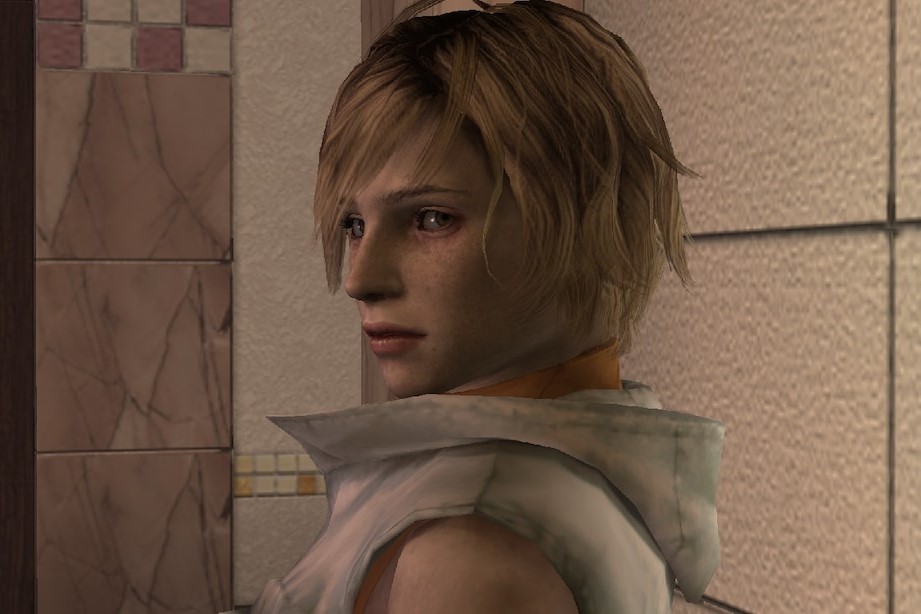
The important thing is that Silent Hill 3 is an improvement for the series in almost every way. We all already knew it was going to be graphically impressive, but it takes that to a new level. The in-game engine is powerful enough to handle cutscenes without the need or use of rendered movies; characters move, smile, frown, shout, and gesture realistically. While the graphics do still have a little ways to go—Heather’s hair makes her look grubby, and a couple of the NPCs aren’t as well-animated as they could be—they’re still spectacular by any stretch of the imagination. The sound’s just as good as it’s ever been, forming a natural counterpoint to the surreal and frightening backgrounds you’ll find yourself in.
For my money, though, the storyline and dialogue are where this installment truly shines. Heather, unlike James and Harry before her, is a lively character, who communicates her personality and history through her reactions to the phenomena around her. Harry and James were almost blank slates, who would regard a bloody corpse on a gurney with a dispassionate glance; Heather will freak out or demand to know what it’s doing there.
Silent Hill 3’s story begins, unusually, well outside of Silent Hill, in a shopping mall near Heather’s house. During a shopping trip, she dozes off, and has a nightmare of fighting monsters in the ruins of an amusement park. Waking up suddenly, she calls home, right before a detective named Douglas Cartland finds her. He’s been hired to find her, and ask her a few questions, but Heather wants nothing to do with him. She ditches him by crawling out a restroom window.
When Heather goes back inside via an employee entrance, though, things have changed. The mall has abruptly emptied, and most of the stores have closed for the night. Trying to find a way to the front of the mall, Heather ducks under the shutter of a clothing store… and inside, finds a monster like the ones she fought in her nightmare. The mall is suddenly full of them, and the only other living human Heather can find, Claudia, tells her that this was all done by the hand of God.
To go much further into the story would ruin it. It’s very much a love letter—albeit a bloody love letter tattooed on the freshly-flayed skin of a screaming human being—to the fans of the first game, and to some small extent, the second. Cameos, references, and explanations abound, particularly as you get further into the game and Heather learns more about why all of this is happening to her. Anyone who’s been looking forward to SH3 would do well to play through the original game again and go for one of the Good endings (find Kaufman in the motel near the waterfront), so you know exactly what’s going on near the endgame.
The only real complaint that I have about Silent Hill 3 is that its gameplay is very much the same thing again. Heather’s weaponry is, for the most part, functionally identical to the arsenal from previous games, although with a couple of tweaks; she can find a silencer for her handgun, for example, or distract some monsters with a bit of beef jerky.
More importantly, the game is just as linear as its predecessors, and this seems utterly ridiculous in a series that tends to give you an entire town to run around in. While I can appreciate that programming an entire area would be hard work, and would result in us getting a new Silent Hill game even less frequently than we already do, it does disappoint me, to some extent, to run past entire hallways of doors I can’t open and entire streets full of shops I can’t enter.
Past that, Silent Hill 3 is a worthy sequel to the single most frightening video game of all time, and has its own visceral impact. The people who made this game know exactly how to frighten you, by trapping you in what may be another world entirely, with only a flashlight and what seems like a wholly insufficent weapon to protect yourself. Further, they’ve finally figured out that a horror movie, or a horror video game, is much, much more effective when you care about the people that horrible things are happening to. A likeable heroine, a truly frightening video game, devious puzzles, and enough gore to scare your little brother out of the room: what else do you want?
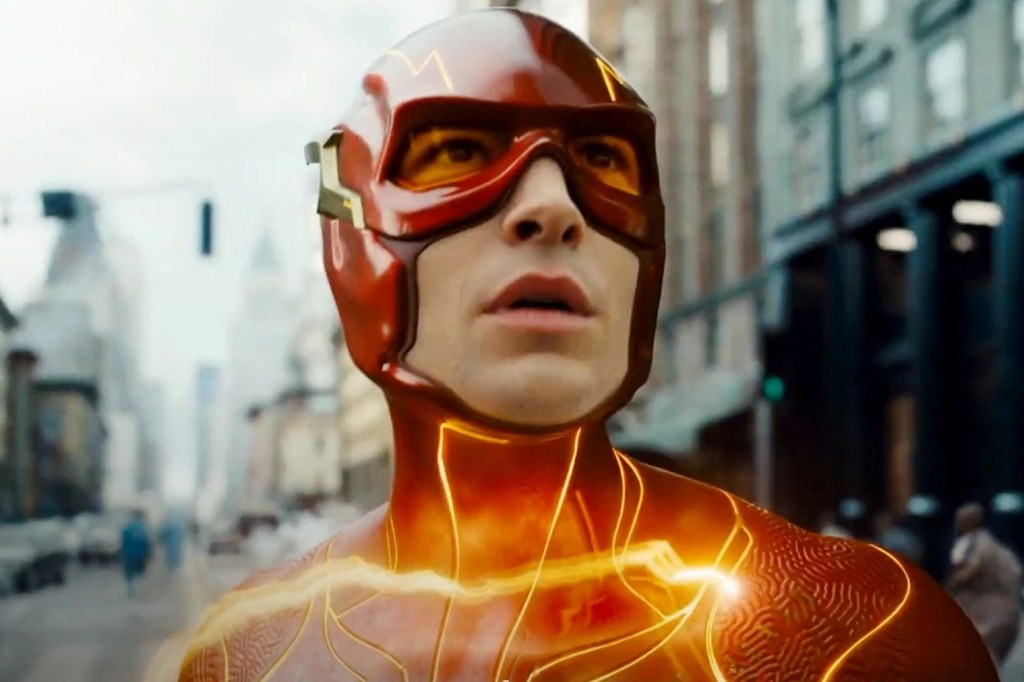
Andy Muschietti (It Chapters 1 & 2) directs The Flash, hoping to save the faltering DC Universe of superheroes. The solid script by Christina Hodson (Bumblebee) and Joby Harold (Army of the Dead) goes a long way towards doing so, with the support of actors dedicated to making the film rocket to the top at lightning speed.
Barry Allen (Ezra Miller) struggles to come to terms with everything in his life. The loss of his mother to violent crime still cripples him in adulthood, and the fact that he can’t save his innocent father from being punished for the crime eats away at him. Barry’s social awkwardness and constant feelings of being more of a mascot than a member of the Justice League both add to his misery. But when he realizes his ability will allow him to travel into the past, Barry thinks he’s found the answer to everything. Determined to make a change that will save his mother’s life, yet so minor that nothing can go wrong, he does just that. But Barry soon discovers that small ripples can make great waves, and the only way to right things is to team up with himself and try to create a Justice League that doesn’t exist in this new timeline.
Multiverse films can get confusing fast and are prone to story issues. But Hodson, Harold, and Muschietti keep a firm grip on the story with an excellent explanation of how this multiverse works while maintaining a tale with only minor issues. In doing so, they turn a character that has lived in the shadow of Batman, Superman, and Wonder Woman – not only in the films but also in the comic books – and make him a genuine A-list hero. In addition to the fine script, Miller delivers a stellar performance as both versions of Barry – the competent yet introverted hero and the confident, bumbling slacker. By the time the tale reaches its final act, the audience understands and sympathizes with both as much as they understand and sympathize with each other. Michael Keaton’s return to the cape and cowl is fantastic fan fodder. Best, his portrayal is not just lip service but a fine revisit of the original role. Perhaps the biggest surprise is Sasha Calle as Supergirl. Her part is disappointingly small, but she commands the screen as the Kryptonian hero, leaving the audience wanting more of her.
Any multiverse traversing film will have a lot of CGI, and getting lost in the myriad of images would be easy. That is the case with this movie, too, but instead of being confusing and hard to follow, it is overwhelming in a way that works. Everyone, from the concept artists to the final editors, deserves credit for something that shouldn’t work but does. They pull out most of the stops when it comes to respecting what’s transpired or was supposed to happen, before with the DC universe, and all the way back to the earliest series. Unfortunately, there are some obvious misses. However, this might not be the production’s fault, so it is forgivable. The music department does an exceptional job of combining the old with the new, providing even more cohesiveness to the time-and-universe blending theme. Best, the dramatic score blends with the action seamlessly throughout.
The Flash has fewer fans than the three iconic characters of the DC Universe. This film is likely to change that. Many viewers who have skipped The Flash and Supergirl on television will now be binging the shows, trying to catch up at lightning speed. Not only is Barry Allen the fastest hero, he’s also likely to have the quickest turnaround in fandom of any DC movie to date.
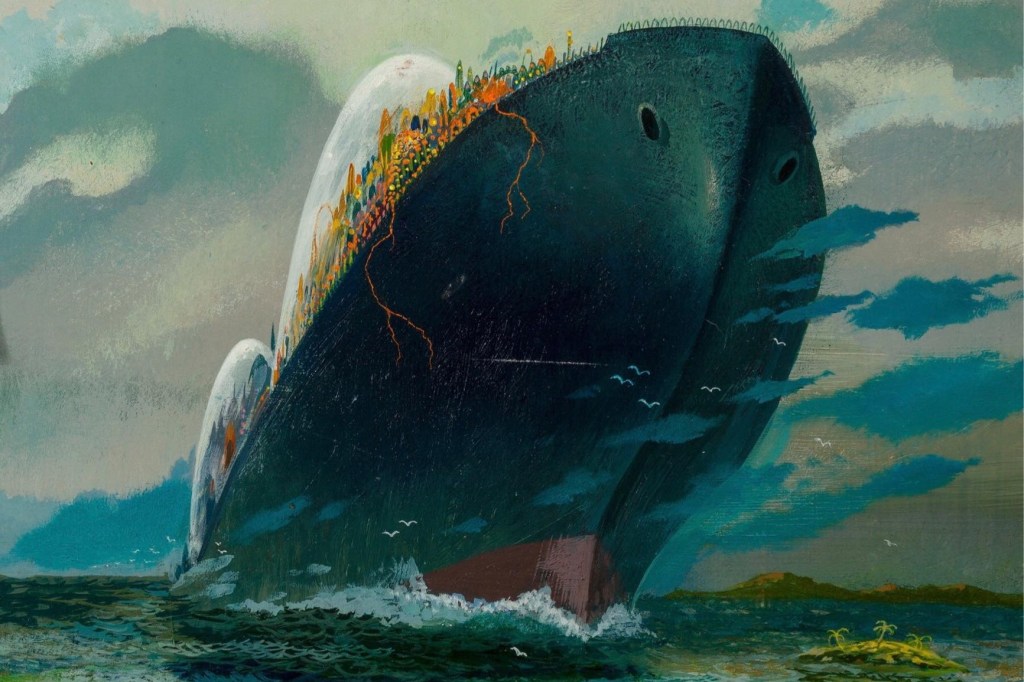
Folks, this…
this takes the cake.
The most true thing on the cover of this novel is the bit that says FIRST TIME IN PAPERBACK.
I just find it so hard to believe that the publisher lied THIS HARD. I know; that may come as a surprise. I’ve seen lots of book that have lying covers. It’s my most bitched-about thing and I’m sure you’re all quite tired of hearing about it.
But this one, like I say, takes the cake.
“A ship of the future threatens all Earth,” says the front cover. The back continues this line of thinking. “The whole world was in peril!” we’re told. Something about the largest nuclear reactor in the world being in the hands of an insane madman is, we’re led to believe, the plot of this book.
None of that is true.
The world is not, at any point in this novel, at risk. This is not a fault of the novel, mind you. I’m not saying this is a plot where an insane madman threatens the world but is so inept that he’s not convincing. Oh, no. I’m telling you something much more powerful than that. That’s not what the story was about at all, nor was it ever meant to be.
To continue, it’s also a major, major lie that the ship in question bore the largest and most powerful nuclear reactor in the world. How big is this lie? Let’s take it from the top:
IT DOESN’T HAVE A NUCLEAR REACTOR AT ALL.
I’m serious, fellas and ladies. This ship is not nuclear. It is conventionally fueled. It is not especially dangerous. It’s kind of big, but it’s not as big as some other tankers that we see floating past. It has some weapons, but they’re just some guns. Maybe a rocket launcher.
Never in my life have I seen a book so mis-represented by the publisher. I assume it’s because they thought that the book would sell better if it were a world-threatening story of untold nuclear destruction instead of what the book actually was: A competent interpersonal drama about some people in dire circumstances.
The bits about the ship being a robot were true. It’s basically the fact that sets this whole novel off. But the ship itself isn’t dangerous.
AT1 is the first in a line of automated tanker ships. Instead of a crew of fifty or so people―who all need to be fed, housed, and paid―the ship instead carries some security guards to make sure the ship doesn’t get hijacked. The only reason it carries those guards is because the insurance company demanded it.
How many guards does it carry? Well, don’t let the back of the book fool you, because it’s not three men and a woman. There are, in fact, four men and a woman on this ship. The four men are the guards. The woman is, among other things, the nurse, cook, and stewardess. She basically does all the real work.
The thing is, they’re all pretty good characters, and the whole point of the book hinges on how they have to rely on each other to get out of the scrape they’re in. This, of course, doesn’t count the one who turns traitor about a quarter of the way into the novel, and is, from the first time we meet him, the obvious one to do it.
There’s Langley, formerly of the British Army. He’s in charge. He’s a no-nonsense, get-it-done sort of guy who worries that his unshakable self-control will be, well, shaken.
There’s Jacens, a Texan, also an Army man, who does his job quietly and efficiently. He and Langley get along well from the start. He’s working on a novel, which we learn at one point is just awful. Still, he’s a very sweet guy.
Colmar is arrogant and has a problem with authority. He does the bad thing. Also American.
Roscorla is a former Navy man. He’s irrepressably positive in everything. Cornish.
Jane is the woman. She was once engaged to be married, but her husband-to-be called it off after she was in a car accident that left her face horribly scarred. Generic English.
Their job is basically to keep an eye on things and fight off any potential pirates. The ship takes care of everything else. They’re hauling oil.
Everybody starts to get settled in, gets to know each other, and establish a routine. We learn quickly that Jane has a rough past, and while everybody tries to break through and help her overcome her shyness, it’s Jacens who manages to do so. They don’t exactly fall in love, but they do go to bed together and it’s very sweet.
So then, when everything goes FUBAR, it’s actually shocking.
I talked before about how stories that have real, understandable, lower stakes are ones that capture my attention better than ones where the entire world must be saved. This story is a prime example of the former. With the exception of Colmar, we want all of these characters to be happy and satisfied with their lives. So when Colmar turns traitor and pirates hijack the ship, it’s scary and powerful.
Jacens is killed almost immediately. Colmar shoots him in the back. Langley is also shot. He survives, but is taken out of the fight for most of the story. Roscorla is too scared to do anything. Jane is crushed by the fact that a man who accepted her for who she is is now dead. Everything looks bad.
The pirates start to take all the oil from the tanker. Colmar is just a terrible person, constantly ribbing Jane for being in love with a dead man, ordering her to fetch coffee and sandwiches for the pirates, and so forth. He’s not much better to Roscorla. The stewardess and the Navy man try to hatch a plan to save themselves, knowing that once the pirates are done with the ship, the two of them will be killed.
A storm starts to show up and makes the pirates get into a hurry. As Colmar is being helicoptered off of the tanker to one of the pirate ships, Jane manages to shoot him. Colmar pitches into the copter pilot, who in turn crashes the copter into the ocean.
This is about halfway through the book, right before the ad for True cigarettes.
“I’ve heard enough to make me decide one of two things: quit or smoke True. I smoke True.”
The rest of the book is basically bare survival. The pirates sabotaged the ship before the left, destroying the computer and planting bombs. The computer can’t be saved, but Roscorla manages to find and defuse the bombs before they go off. Since it’s just he and Jane running things while Langley recovers, they start to get a little closer, but Jane rebuffs him when he tries to get too close.
Back in England, folks have noticed that the ship has stopped transmitting. They send out search planes to the Indian Ocean to see if they can’t find it. They search around the ship’s planned course and don’t find anything, not even an oil slick showing that it sank. What they don’t know is that since the computer has been destroyed, the ship is heading in a straight line due south, ready to crash into Antarctica in about four days, assuming an iceberg doesn’t hit it first.
Once again the author shows that he really knows ships. D.F. Jones was a Navy man himself during World War II and his books like to focus on the sea and people on it. Note that this is the third book of his that I’ve read, and the second time I’ve read one without remembering that he also wrote Earth Has Been Found. I remembered Denver is Missing, since the front cover of this one calls that out. This book was written in between those two, with Earth Has Been Found coming right after this one by a few years. The Floating Zombie is much better than either of those books, lacking a lot of the toxic cynicism that the other two books seemed to steep in. It’s not that this was a particularly happy story, it’s just that institutional idiocy was downplayed in favor of real drama.
One thing worth complaining about is that for most of the second half of this book, there’s not much of anything the heroes can do. They sit around, slowly getting colder as they reach the Antarctic, and hope that somebody will find them. Roscorla is, as always, optimistic about their chances, and tries to keep the other two cheerful. The result is that they resent him for his upbeat attitude and tensions begin to mount ever higher.
There’s a powerful scene where the ship almost hits an iceberg. It towers over them, a testament to the unyielding might of nature. Hitting the thing at their speed (they’ve been stuck at twelve knots since the computer went out, which the book says is too fast) would destroy the ship utterly, but they miss it by bare yards.
At long last, the ship is sighted by an airplane and steps are taken to rescue the crew. Instead of just airlifting the three people off and letting the ship crash, like I would have done, the RAF takes all steps possible to restore control and get the ship safely to South Africa. There’s a lot of scary moments, but long story short, it works and everybody is saved.
Everybody gets a fair chunk of money for saving the ship and they all live happily ever after, maybe. Money can be weird sometimes.
So yeah, I can’t do a lot of credit to this book in review form because the real joy was in the details, and I’m not gonna just sit here and list all the tiny little moments I liked. I want to let you experience those for yourself. Give this book a looksie, if it sounds like your jam. I think it’s well worth it.
Sure, there are issues. The book telegraphs the coming treachery a little too hard. There are moments in the first chapters where the narration suddenly goes something like “They’d remember that comment later, and regret it.” The villain is waaaaay too obvious from the beginning, so obvious, in fact, that I was almost convinced he wouldn’t be the villain after all. A stronger story might well have featured Colmar being an arrogant asshole but having to put all that aside to save everybody else (or just himself and let everyone else be a bonus).
Jane turned out to be a tough, tough woman. She was, without question, the strongest character in the book. She’s a tragic figure, once beautiful but now scarred and terrified of people reactions to her mangled face. It’s a testament to Jacens that he was able to care about her in a way that didn’t come across as pushy or oversexed, and it makes it so much more tragic when he’s killed. It didn’t feel like a cheap death. It really made the story, and the characters in it, stronger.
On the other hand, a lot of what makes Jane look like a tough woman hinges more on the “woman” part than the “tough” part. I have to think about how to phrase this, and I’m probably going to make it sound stupid, but Jane’s main contributions to the story involved making coffee and sandwiches. But she did it in a tough way. It’s a weird dichotomy: she’s to be praised for keeping her head in a crisis and for not coming completely apart after tragedy strikes, but at the same time she shows that inner strength by being a tireless caregiver. That’s not a problem with the character, mind you. I admire the hell out of her. It’s a problem with how she’s written. Would it have been too much for the boys to make their own coffee every once in a while?
To be fair, she also shot Colmar to death and destroyed a helicopter in doing so, so she’s got that kind of toughness too.
To conclude: If you’ve seen this book floating around somewhere and gave it a pass because it has a goofy name and the premise sounds too far-fetched and you’ve read other D.F. Jones novels and weren’t impressed, give it another look.
 Igor's Blog