







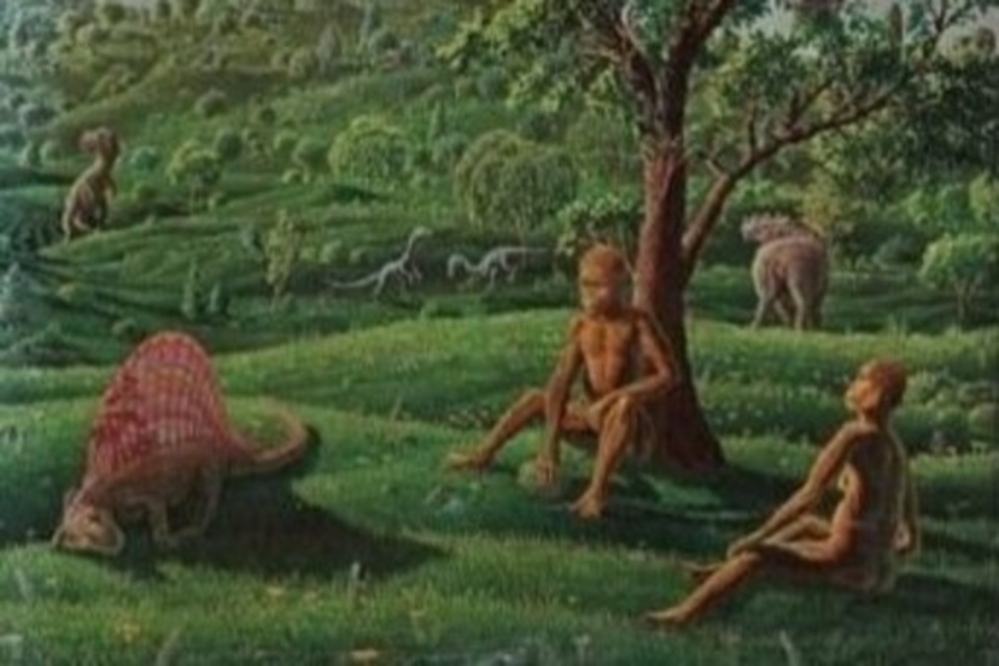
Some 315 million years ago during the late Age of Amphibians, early reptiles began to roam our lands. As the scientist Carl Sagan explores in his book, The Dragons of Eden, these primeval lizards were simple meager creatures. But their arrival was “a symbolic turning point” in natural history, for much of life since then has been about the widening dominance of brains.
You see, from the humble origins of single-celled organisms to the vast structures of modern mammals, evolution has been a haphazard process in increasing complexity. Many of the most complex life forms today contain far more information in their genes and brains than their ancestors of a previous epoch.
Humans in particular signed a “bargain with nature” several million years ago, Sagan writes—for nature endowed our children with a “long childhood”, chocked full with play, questions, and mischief. While these adorable creatures can be a handful sometimes, their unmatched potential for learning is why we have survived for so long as a species. It is also why we have art and literature, math and science, and other wonderfully human experiences. Youthful plasticity is a powerful gift. But one that may prove to be a curse someday if we are uncareful.
Of course, “biology is more like history than it is like physics”, writes Sagan. It is a deep chronicle of accidents and errors and flukes that powders through the ceaseless sift of natural selection. Indeed, many vestiges are recorded inside us to this day. For one, this is why we find gill slits in the necks of developing human fetuses. They are physical traces of our genetic lineage to some ancient fish.
Similar relics may manifest in our psychology as well. Even to this day, snake bites and our falling from great heights are common themes for nightmares. We should remember, Sagan notes, that the deep structures of our minds were sculpted by the selection pressures that our ancestors endured when they lived up high for millions-of-years in the trees and forests of yore. He and others wonder to what extent our dreams remain tethered to our “arboreal origins”.
We know, likewise, as Sagan explains, that much of our intuitive knowledge and autonomic behavior, like our senses and reflexes, are products of “an extremely long evolutionary history.” Verbally conscious rational thinking, on the other hand, is a recent innovation, at least by the standards of geologic time.
What’s fascinating, I think, is how these programs and systems are simultaneously localized yet integrated in the brain. Sagan shows, for example, that our brains store memories in many sites. They are “encoded by ‘teams’ of neurons all firing in synchrony, providing redundancy that enables these memories to persist over time.” Some travel back and forth through the corpus callosum—a thick bundle of nerve fibers that forms a “neural bridge” between the left and right hemispheres of the human brain.
Of course, functional problems arise when one or more regions of the brain is damaged. “Accidents or strokes to the temporal or parietal lobes of the left hemisphere of the neocortex”, Sagan writes, “result in impairment of the ability to read, write, speak and do arithmetic.” Conversely, “lesions in the right hemisphere lead to impairment of three-dimensional vision, pattern recognition, musical ability and holistic reasoning.” Meanwhile, “injuries to the right parietal lobe… sometimes result in the inability of a patient to recognize his [or her] own face in a mirror or photograph.”
But when it is firing as it should, the mammalian brain must be among the most spectacular constructions in all of biology. Somehow, many of these feeble neurons—which we might think of as individual units for computation—come together in groups of roughly a hundred to make cortical minicolumns in the human brain.
In turn, some fifty to a hundred minicolumns make for a macrocolumn, while many more macrocolumns make for the cortical areas that characterize the broad regions of the human cerebral cortex. All of which, amongst other things, help to bring our perception, language, thought, and consciousness into being.
What’s equally fantastic is how all these disparate programs and organizations consort together. The brain is certainly more than the sum of its parts. No human system, from language and culture, to art and music, to science and math, is purely intuitive or rational. Its product is a melding of worlds in the brain. A merger of deep synaptic programs. In Sagan’s view, we might go as far as to say that “human culture is the function of the corpus callosum” through its bridging of our hemispheres.
Science is exactly like this as well, Sagan argues. It is a daring and creative act that is backed by logical reasoning and verification. For instance, it took great inspiration and imagination on the part of Albert Einstein to conceive of the warping of spacetime in his formulation of general relativity. But it took a good amount of left-brained experiments—from the perihelion precession of Mercury’s orbit to gravitational redshift of light—to verify what might otherwise have been a creative but outlandish description of our physical universe.
Of course, life is often a matter of degree. Sagan himself wonders to what extent the mind might manifest in other mammals. Do elephants see beauty in their landscapes? Do whales enjoy the songs of other whales? Can horses feel horse-like patriotism? Might dogs experience their own version of religious fervor?
While we might not yet know the answer to such questions, it is clear that animals are capable of learning some complex behaviors. Sagan points, for example, to the famous work of Beatrice and Robert Gardner, who taught American sign language to the chimpanzees named Washoe and Lana. The Gardners learned that while the vocal architecture of chimpanzees are ill suited for human speech, it did not mean that they were incapable of communicating with us.
In fact, after learning a good number of basic signs, the chimpanzees began to combine and recombine gestures in nontrivial ways. Washoe combined signs, for instance, to say “waterbird” when she eyed upon a duck in the pond for the first time in her life. Likewise, Lana combined the sign for the color “orange” with the sign for “apple” when she spotted a bright spherical fruit that she had never before seen.
For another example, Sagan turns to a troop of Old World monkeys called macaques on the beaches of a southern Japanese island. In this experiment, mischievous researchers littered the sandy shores with grains of wheat. You must realize that it is a real chore for any human or monkey to separate grain from sand for food. Still, as a persistent lot, the macaques partook in this laborious enterprise. Hour upon hour, they picked and cleaned with every meal and every day.
But after some time, an entrepreneurial macaque named Imo, whether by mistake or anger or genius, tossed a handful of grain and sand into the salty water. Upon her realization that wheat floats and sand sinks, Imo began to eat better than the rest. And while the older monkeys clung to their ways, the youngsters recognized the benefits of her innovation. After a generation or two, all macaques on this part of the island, Sagan notes, became water-sifters. An arresting instance of monkey see, monkey do.
We are also well aware of the complex rituals and traditions that characterize some primate societies. Sagan dedicates a good number of paragraphs in his book, for example, to describe the practices of gothic squirrel monkeys in the canopies of the tropical rainforests of South America. The male monkeys, in particular, are a rather daring and carnal bunch. Whether it is to court a female, or to assert one’s dominance, the male’s grand plan is always the same. He will spread his thighs and thrust his erect phallus into the air, all the while screaming and screeching with unrelenting abandon. And sometimes, the ritual works. Sagan is right to say of course that most humans today will find such behavior at the dining table impolite. But it is not at all strange for a squirrel monkey living in a deeply hierarchical society.
Perhaps we are fortunate then that the quantity and quality of the neural connections inside our brains allow us to select for gentler modes for self-expression. Today, we profess in stories, write in letters, and affect with smiles, hugs and kisses. “In a way, the map of the motor cortex”, Sagan writes—the region in our frontal lobe that helps with controlling and executing goal-directed movements—“is an accurate portrait of our humanity.”
Further still, our frontal lobes have evolved to undertake higher executive functions like planmaking, logical thinking, and problem solving. But “the price we pay for anticipation of the future”, Sagan notes, “is anxiety about it.” We live incessantly and hurriedly, forever in a state of worry about our livelihoods and standing among others. Indeed, it is in response to our anxieties and anticipations that we devise an ever growing myriad of doctrines, from magics to scriptures to legalese. All of this in attempts to understand, regulate and organize ourselves within a harsh, uncertain and unrelenting world.
Still, we must wonder how much of ourselves remains akin to that of squirrel monkeys, for humans are rarely as poetic or logical or rational as we presume ourselves to be. Many go about their affairs without pause under a rulership of thoughtless motivations and emotions.
From hunger and arousal to our fight-and-flight responses, we know that the brain’s limbic system is involved in our emotional functions and survival instincts. The little almond-shaped amygdala that resides inside is especially central to our feelings of pleasure, anxiety, anger, and fear.
Studies find, Sagan notes, that “electrical discharges in the limbic system sometimes result in symptoms similar to those of psychoses… [or] psychedelic and hallucinogenic drugs.” Meanwhile, “electrical stimulation of the amygdala in placid domestic animals can rouse them to almost unbelievable states of fear or frenzy.”
I cannot help but feel uneasy knowing that the line that separates us from the wild, the manic, and the mindless is wafer-thin. But Sagan goes further. He wonders how much of human society itself is limbic or reptilian even. You must agree, after all, that much of human culture, bureaucracy, and politics is hierarchical, territorial, ritualistic, and aggressive.
Despite the scientific and cultural boons that arose with the Ages of Reason and Information, people everywhere continue to find false comfort and hope in limbic doctrines that are “mystical and occult… [and] impervious to rational discussion [and disproof]”, the scientist laments.
Sagan observes a metaphor for our predicament in The Phaedrus by Plato. In the dialogue, his protagonist “Socrates likens the human soul to a chariot drawn by two horses—one black, one white—pulling in different directions and weakly controlled by a charioteer.” Sagan suggests that the human brain and society is just like that. Disparate yet integrated, always in tension and connection.
Indeed, we are familiar, for instance, with how the logical and rational parts of the self can sometimes override its cruder instincts and motivations. Yet the reverse is just as true and common. And in a similar way, our cultures, institutions, and societies too can express and repress the best and worst parts of us. For this reason, Sagan wonders if Hollywood’s obsession with sex and violence is simply a manifestation and reflection of our still primitive roots.
Of course, all of this is an oversimplification. Nothing in life is ever easy to describe. Still, the Phaedrus chariot, I think, is a useful symbol of our character. While the embellishment is sometimes apt, Sagan “[does] not mean [to say] that [our] neocortex is not functioning at all.” Rather, it is “our plasticity, our long childhood, that prevents a slavish adherence to genetically preprogrammed behavior in human beings more than in any other species.” The only hope for humanity then is in learning and education. But behind the backdrop of our cosmic calendar, the human self and society is certainly still in embryo.
As Sagan writes:
“The world is very old, and human beings are very young… [If we] imagine the fifteen-billion-year lifetime of the universe… compressed into the span of a single year… It is disconcerting to find that in such a cosmic year the Earth does not condense out of interstellar matter until early September; dinosaurs emerge on Christmas Eve; flowers arise on December 28th; and men and women originate at 10:30 P.M. on New Year’s Eve. All of recorded history occupies the last ten seconds of December 31; and the time from the waning of the Middle Ages to the present occupies little more than one second… It is only in the last day of the Cosmic Calendar that substantial intellectual abilities have evolved on the planet Earth. The coordinated functioning of both cerebral hemispheres is the tool Nature has provided for our survival. [But] we are unlikely to survive if we do not make full and creative use of our human intelligence.” .
A complete color analysis transformation with skin and features analysis, make up palate choosing, colour analysis swatches, jewellery matching, personal styling and perfectionist finishing touches. Unintentional Style Real Person ASMR. My ASMR videos are for sleepy entertainment purposes only and should not be taken as actual medical advice.


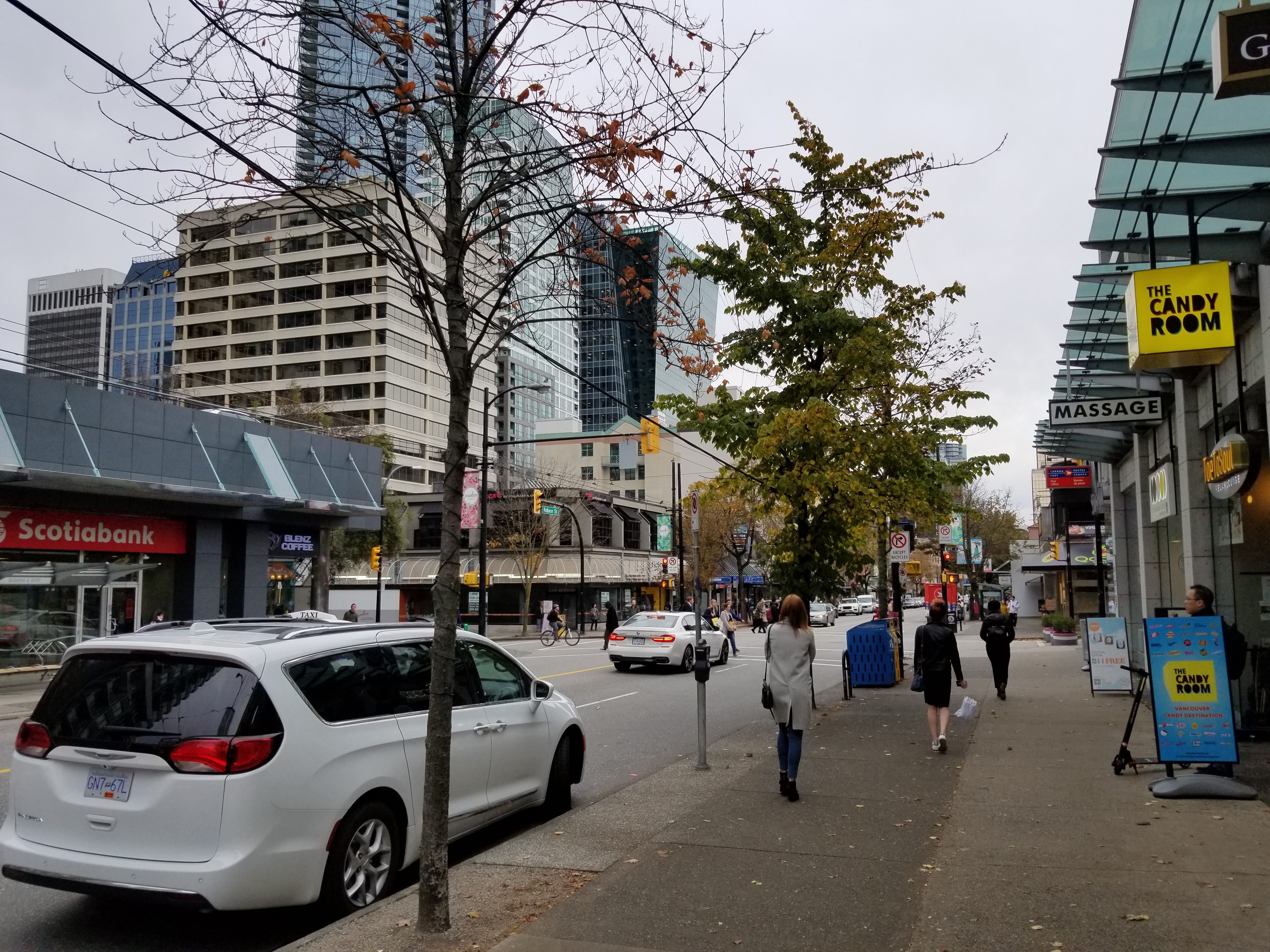


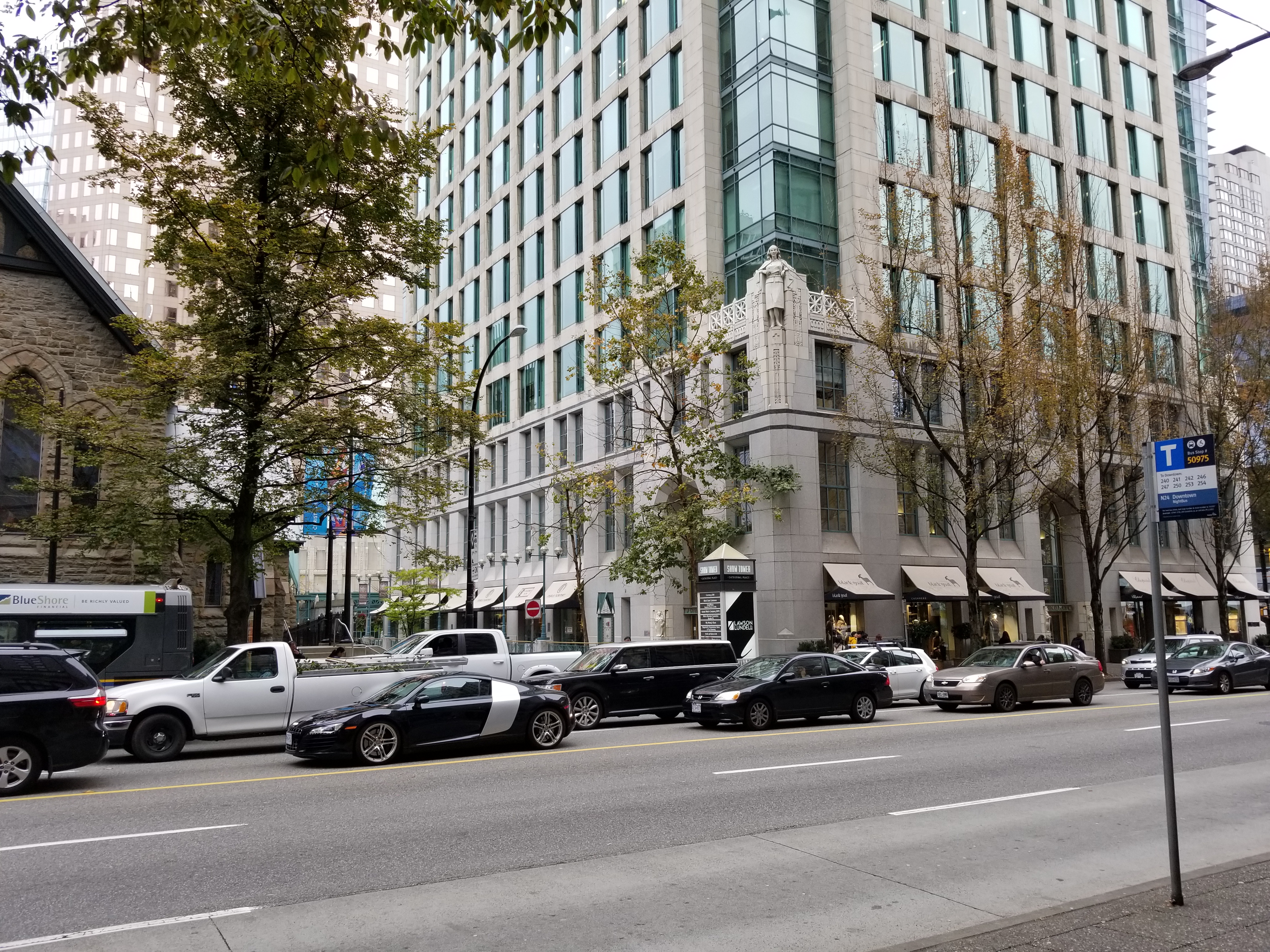
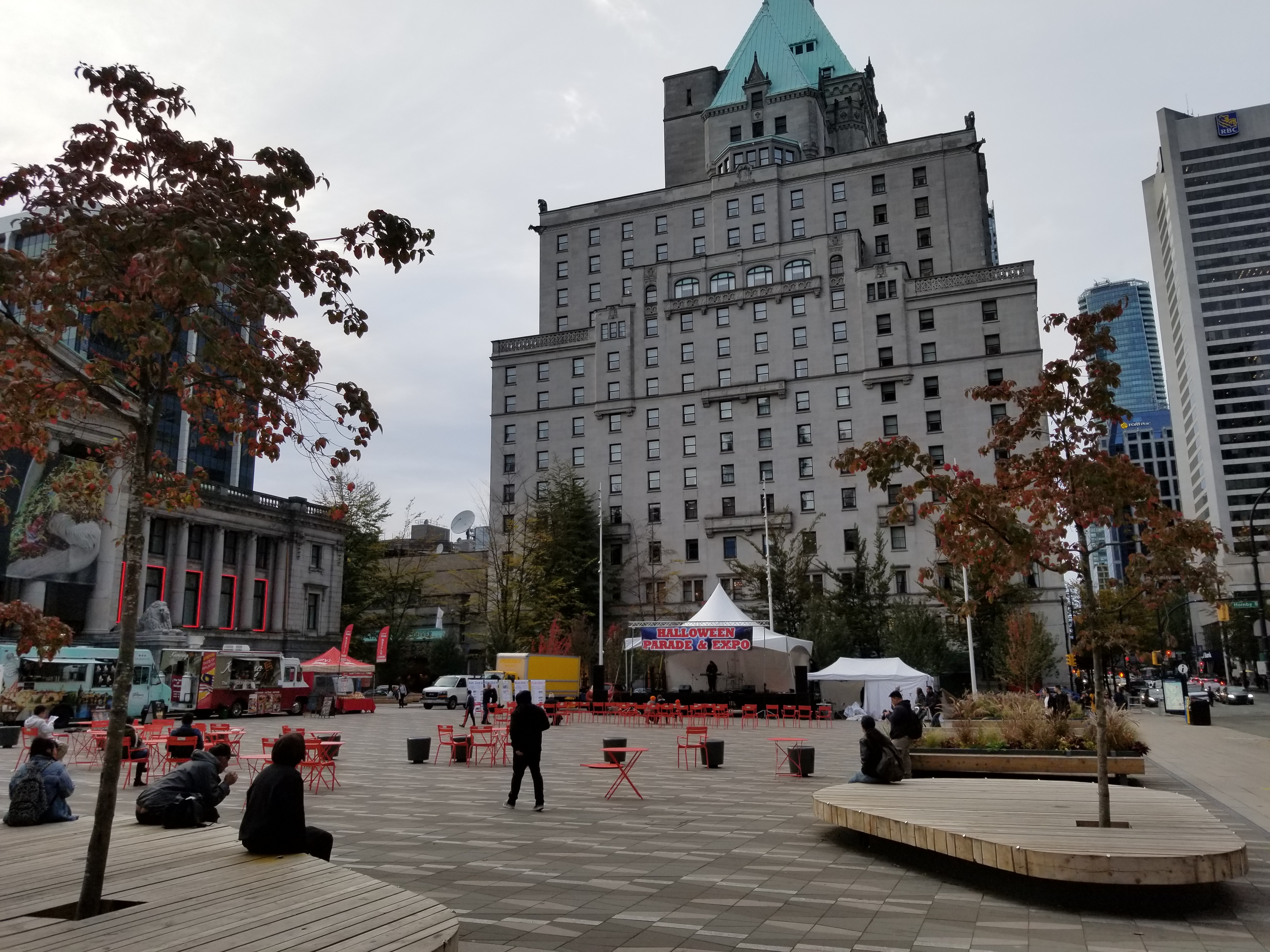


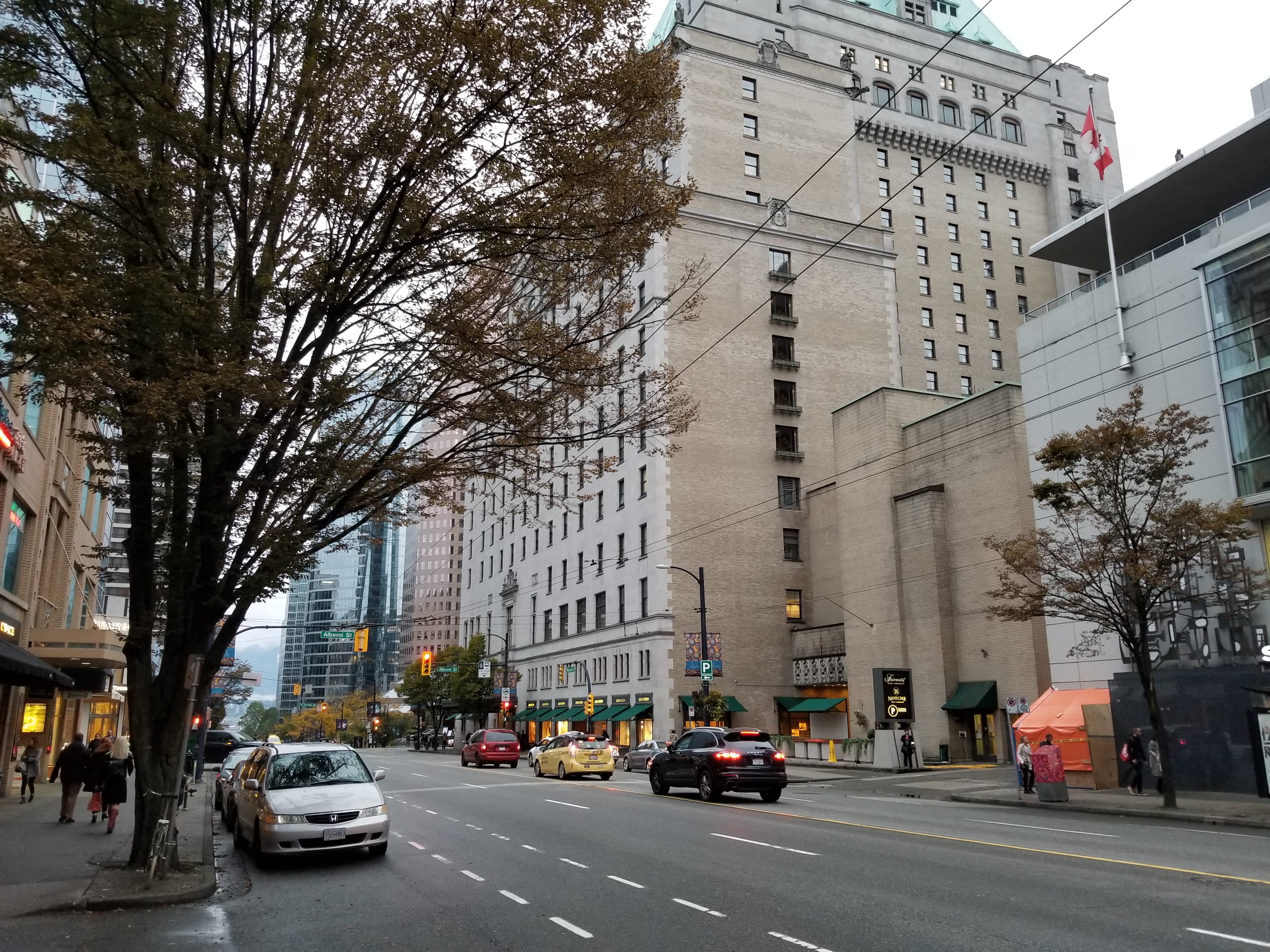

Robson Street is a major southeast-northwest thoroughfare in downtown and West End of Vancouver, British Columbia, Canada. Its core commercial blocks from Burrard Street to Jervis were also known as Robsonstrasse. Its name honours John Robson, a major figure in British Columbia’s entry into the Canadian Confederation, and Premier of the province from 1889 to 1892. Robson Street starts at BC Place Stadium near the north shore of False Creek, then runs northwest past Vancouver Library Square, Robson Square and the Vancouver Art Gallery, coming to an end at Lost Lagoon in Stanley Park.
As of 2006, the city of Vancouver overall had the fifth most expensive retail rental rates in the world, averaging US$135 per square foot per year, citywide. Robson Street tops Vancouver with its most expensive locations renting for up to US$200 per square foot per year. In 2006, both Robson Street and the Mink Mile on Bloor Street in Toronto were the 22nd most expensive streets in the world, with rents of $208 per square feet. In 2007, the Mink Mile and Robson slipped to 25th in the world with an average of $198 per square feet. The price of each continues to grow with Vancouver being Burberry’s first Canadian location and Toronto’s Yorkville neighbourhood (which is bounded on the south side by Bloor) now commanding rents of $300 per square foot.
In 1895, train tracks were laid down the street, supporting a concentration of shops and restaurants. From the early to middle-late 20th century, and especially after significant immigration from postwar Germany, the northwest end of Robson Street was known as a centre of German culture and commerce in Vancouver, earning the nickname Robsonstrasse, even among non-Germans (this name lives on in the Robsonstrasse Hotel on the street). At one time, the city had placed streetsigns reading “Robsonstrasse” though these were placed after the German presence in the area had largely vanished.
Robson Street was featured on an old edition of the Canadian Monopoly board as one of the two most expensive properties.

If you were hoping for Anime Architecture at the House of Illustration to show a futurists’ view of architecture, you’ll be disappointed. It’s the subtitle, Backgrounds of Japan, where the show’s true focus lies. This is not an exhibition of design, but rather of scenery, highlighting the background illustrator’s craft. It is built around the works of Production I.G, showcasing production materials from Patlabor: The Movie (1989), Ghost in the Shell (1995) and Metropolis (2001).
The exhibition is organised roughly in the order of production process, beginning with Haruhiko Higami’s photographic reference. Higami, a protégé of director Mamoru Oshii, seems to have pioneered the role of the ‘concept photographer’. A step beyond the mere provision of photo reference, Higami deploys his camera to compose scenes and spaces within the movie narrative, whether it’s the canal montage of Patlabor 2, or the hybrid old/new Hong Kong cityscapes of Ghost in the Shell. These images are shot in stark monochrome for the benefit of the colour designer.
The next step in production is the layouts of backgrounds. Takashi Watabe is a major star here, having worked on titles from Akira (1988) through to the reboot of Evangelion. What’s striking about his work is not just his set design, but the selection of camera angles and the use of single and two-point perspective. Although these days Watabe uses computer models to compose his backgrounds, the exhibit has many examples of his hand-drawn layouts. Watabe is a fine draughtsman, his worlds composed of ruled lines in mechanical pencil where structural masses pop out from areas of shaded detail. These are the closest things to architectural drawings, particularly when we examine the deco stylings of his backgrounds for Metropolis. The Metropolis project also shows us Watabe’s construction of a backdrop for a multi-plane camera, in which the canyons of a skyscraper cityscape are arranged and move to create a sense of depth. Sadly, the exhibit shows us the layout components but not the composed scene.
The final stage of the process is the background painting, which is represented by the work of the designer and painter Hiromasa Ogura. When one considers that these works were intended to be shown on the big screen, it’s striking how small the paintings are. Ogura’s backdrops are exemplars of the miniaturist’s art, created in gouache and with fine detailing layered over areas of wash. Many pieces hare are taken from the languid night-time montages of Ghost in the Shell, and are lit in blues and purples, with light dry brushstrokes generating the glows around light sources. There’s little futurism in many of these scenes, except maybe for washed-out hints of glass-tower cityscapes in the distance. Rather, the Ghost in the Shell and Patlabor scenes are strikingly contemporary, using Haruhiko Higami’s photos to create scenes of weathered housing and decayed structures, in some cases to be held in long, contemplative shots with little or no animation.
These are backgrounds working harder than they ever have before, not only to be a frame for the character action but to tell stories in and of themselves. Mamoru Oshii is absent as an artist from this exhibition, but his fingerprints are everywhere, in the form of his dog stamp used to approve layouts and other art. The exhibition seems to suggest this use of scenery as a movie character is a modern innovation, with Oshii as the pioneer. Though one would imagine that Akira and Wings of Honneamise (1987), both of which Takashi Watabe worked on, were there long before.
A looping video shows some of these the backgrounds as they appeared in the movies. Oddly, the loop shows a scene from Ghost in the Shell 2: Innocence (2008) not referenced anywhere else in the exhibition, that incorporates extensive use of computer-generated backgrounds. This may be the elephant in the room. The use of CGI backdrops gives far more flexibility in lighting, the selection of camera angles and even permits tracking cameras. Old-school painted scenes, such as those of Ogura’s, represent a fading pre-digital craft. For an exhibition of such craftsmanship, the Anime Architecture show, though small, is worth the visit.
Anime Architecture: Backgrounds of Japan is at the House of Illustration until 10th September.
 Igor's Blog