Resident Evil 4 (2005) Review

https://nichegamer.com/reviews/resident-evil-4-2005/

When Resident Evil 4 came out on Nintendo Gamecube in 2005, it was one of those watershed moments in video games. There had been third-person shooters before it and even the franchise experimented with it in 2003’s Resident Evil: Dead Aim, but nothing was ever as perfectly balanced as Resident Evil 4. After it came out, there was a tremendous paradigm shift in how third-person action games were designed.

There were a lot of elements at play that led to Resident Evil 4. Some parts of it were a result of the long development cycle that lead to the project getting restarted a few times. Early builds got scrapped and even led to Devil May Cry’s birth. Compounded on the remake of the first Resident Evil failing to turn a profit, the boys at Capcom decided to mix things up in a big way to save the series.

Resident Evil 4 is where the franchise abandons its “resilike“, cinematic camera perspective. The unique off-centered, over-the-shoulder POV would become the definitive camera system for almost every action game. After all these years and after getting its remake, how does the original game hold up? Which version should people play? Find out in this Resident Evil 4 (2005) review!

Resident Evil 4‘s story begins with Leon recounting the events from Resident Evil 2 and 3, which lead to the Umbrella Corporation going out of business. Shortly after, Leon becomes a secret agent and is sent on a rescue mission to save the U.S. President’s daughter from a Spanish cult.

When Leon arrives at the creepy village, it does not take long before things get out of hand and he finds himself wrapped up in something much bigger than a search and rescue mission. As it turns out, the Los Iluminados cult has been infected with a deadly virus that leads to nightmarish body-horror transformations. Not just the locals, but also some of the wildlife too and even the nearby aristocracy.

What makes Resident Evil 4‘s story so enjoyable is its perfect blend of humor, absurd action, and genuine horror. It flawlessly balances all of the elements to make a ride full of memorable moments, characters you care about, and even sequences that will make your blood run cold. It doesn’t take itself too seriously and is devoid of pretension.

The witty banter with Ashley is amusing due to Leon’s suave yet sarcastic tone. Leon and Salazar cracking jokes at each other and talking about movie scripts are hilarious. The Verdugo and Regenerators remain some of the most effectively scary and butt-clenching moments ever and it is thanks to genius creature design and execution.

There is a misconception about Resident Evil 4 being an action game. The reality is that it is still not too much of a departure from its roots than most gamers would think. Outside of the camera perspective change from the voyeuristic and picturesque fixed camera angles to the over-the-shoulder POV, Leon still controls with a tank-like configuration like all prior Resident Evil games.

There is no moving and shooting. There is no way to strafe and the camera controls only swivel 45 degrees left or right and can’t face behind Leon’s back. Aside from shooting or whipping out the knife, most actions are contextual with big arcadey button prompts on screen- something that would go on to be excessively copied by imitators.

The mechanics are the same as they were grounded in adventure game fundamentals. What changed is enemy behavior became much more complex, Leon (or Ada) has been given many contextual actions, and that gunplay full 360-degree aiming instead of three cardinal directions.

No matter which version of Resident Evil 4 you play, Leon must stop to aim and fire. This approach to combat has made the game a very distinct and tactical flavor. Every step becomes weighty with commitment and when you find yourself surrounded by raving creeping villagers with chainsaws, sickles, and pitchforks, choosing when to shoot becomes a risk because it leaves Leon vulnerable.

Aiming and shooting also feel weighty since it feels less like moving around a cursor on the screen and more like moving Leon’s arms and torso. Most guns have a laser and targeting enemy hit-boxes is very tight for a very accurate feel.

Resident Evil 4: Wii Edition allows players to aim and shoot at will with the IR-pointer. This circumvents a lot of Resident Evil 4‘s distinct feel when shooting, but it is hard to deny the sheer satisfaction of firing a single shot into the sky to perfectly hit a flying crow at 30 feet. The trade-off for the incredible accuracy is Wii Edition increased enemies in certain encounters, to balance the difficulty.

Shooting certain points of foes, like their knees or head, will put them in a state where Leon is given a contextual action promptly if he is close enough. This usually means a devastating melee attack that comes with plenty of I-frames. These attacks are extremely crucial in the harder modes for saving ammo and staying alive since exploiting these moments is seemingly the only way to survive.

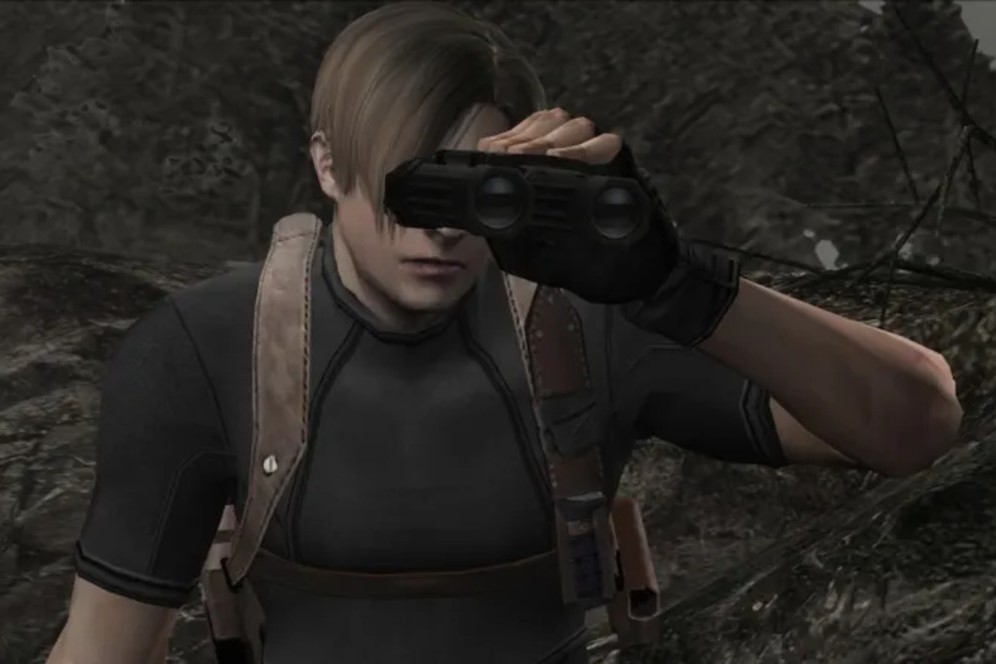
Throughout its entire adventure, the way the mechanics are used never gets boring. Very late into the game, new enemy types are introduced, and Leon will be able to use a thermal vision scope to target invisible weak points. Other times, Resident Evil 4 seems like it relishes its video gamey-ness by throwing in the minecart sequence from Indiana Jones and the Temple of Doom or a cheeky platform puzzle with a giant robot statue.

The first time you play Resident Evil 4, it will seem like the most hardcore game you ever experienced. It is full of details and consequences for actions that most games never consider. There are gimmicks used once and then never again- making the game always feel fresh and interesting at all times. It is no wonder why Resident Evil 4 has managed to be so replayable decades later.

Fun diversions like treasure hunting make you realize and appreciate the density of the level design. Details like the roaming chickens in the Pueblo that lay eggs (which are delicious), fire some rounds at the merchant’s gun range, or the fact that Leon can go spearfishing in the nearby lake add a lot of value to the experience. I didn’t even know that I could go fishing until my third or fourth playthrough, back in the mid-2000s.

Resident Evil 4 still feels like a modern game and a lot of that has to do with its forward-thinking game design. It did not pioneer quick-time-events, but when this game used them so effectively, you began to see many other action games similarly implement them. The only issue with the QTEs is that in the hardest mode, they can be brutal to complete. Wii Edition is especially hard because some waggle gestures don’t always register.

Resident Evil 4 is a linear game, but it does have some moments where the environment can open up in a big way. Salazar’s creepy castle is massive and most of it can be freely explored when it is opened up. You’ll want to because there are some areas where you can return to get some previously unobtainable supplies or weapons.

The level design is truly something to behold. The way areas connect and how some of the larger areas can be like mini-sandboxes or arenas makes Resident Evil 4‘s setting feel incredibly cohesive. Eagle-eyed gamers might even catch later locations in the distance, waiting to be explored.

The music also manages to be very memorable, despite being mostly ambient music with no melody. The save room and typewriter themes are especially beloved pieces that are soothing, yet ominous.

Before Resident Evil 4, the games in the franchise were known for being on the short side. Most of the time, players could beat these games in about six to seven hours on their first run. With replays, gamers could master the environment and item location; getting a run down to about two-three hours. Resident Evil 4 was the longest entry until Resident Evil 6; taking about twenty hours to beat.

Resident Evil 4 is a game that came out in 2005 on the Nintendo Gamecube, so it looks like a game from that era, on limited hardware. Despite that, Resident Evil 4‘s art direction is superb and manages to still look great despite its age. At worst, there are some obvious examples of repeating textures or mirrored textures, or flat trees.

Some textures and modeling are going to stand out as crude by today’s standards, but for the most part, everything reads as it is meant to. Details on characters’ faces and expressions hold up very well and everyone has a palpable weight to their animations.

The monsters are the real star of any Resident Evil game and this is no exception. Resident Evil 4 has a lot of imaginative and nightmarish, abominable creature designs. Impressively, there is some restraint with how some of the monsters are used and some end up only being used only a few times. In one instance, there is a powerful enemy that is only used in the unlockable side game, The Mercenaries, complete with a unique level too.

There are always going to be some smartasses that claim that “Resident Evil 4 is a good game, but a bad Resident Evil game”. The further along the franchise goes, the less sense this premise makes. Being inconsistent is the one thing that gamers can reliably expect from Resident Evil. This has become a large part of its charm because the franchise is always changing and reinventing itself.

One thing is for sure; Resident Evil 4 has no shortage of movie references, and this is the one aspect of the franchise that has managed to stay. Movie fans will have a lot of fun picking out the homages and you don’t even have to be a horror fan to notice some.

There are a ton of ways to play Resident Evil 4. It has been ported to most platforms and each one has something to offer. The Japanese versions offer an easy mode that radically changes enemy placement and cuts out some sequences. The PlayStation 4 and Xbox One versions have crispy image quality and 60 frames per second. If you have the money; Oculus Quest has the VR experience, but that comes with some censorship.

The preferred way to enjoy Resident Evil 4 is the Wii Edition for its novel control scheme. It is easily obtainable, and cheap and the hardware to run it is still accessible. Just be careful when playing in the hardest mode; you might give yourself whiplash.

Autistic Burnout: What To Know

https://www.verywellmind.com/what-is-autistic-burnout-6829831

Although not listed in the Diagnostic and Statistical Manual of Mental Disorders, autistic burnout is a condition that has recently gotten the attention of providers, researchers, and the autistic community.

Baden Gaeke Franze, 2017 president of the Autistic Self-Advocacy Network of Winnipeg, has written, “On the most basic level, autistic burnout means being exhausted. Our brains and bodies get tired out, and we don’t have the energy to do the things that used to come easily to us.” Essentially, autistic burnout is what happens when an autistic person is no longer able to function as they previously could in the past.

So far, there has been limited research on how autistic burnout is triggered, manifests, and responds to treatment, but members of the autistic community have shared their experiences with burnout.

Research centering autistic voices and experiences has defined autistic burnout as “a highly debilitating condition characterized by exhaustion, withdrawal, executive function problems and generally reduced functioning.” Because burnout makes it more difficult for an autistic person to hide their autistic behaviors, burnout was previously thought of as a form of regression, but the autistic person still has their skills and abilities; burnout just prevents them from using these skills.

Each individual’s experience of burnout will vary, but some hallmark signs reported by autistic people include:

  • Fatigue or exhaustion: Autistic burnout often manifests as extremely low energy.
  • Withdrawal: Autistic people in burnout may pull away from loved ones or stop engaging in things they previously enjoyed.
  • Increased autistic behaviors: This symptom of burnout is not problematic on its own, but if an autistic person notices they are less able to mask autistic behaviors, this can be a sign of burnout.
  • Reduced functioning or coping: Due to exhaustion, an autistic person in burnout might be unable to complete basic functional tasks they were previously able to do.
  • Increased sensory meltdowns: Because burnout interferes with the autistic person’s ability to use regulation skills, those in burnout might exhibit higher sensory sensitivity and increased risk for meltdowns.
  • Suicidal ideation: Autistic people going through burnout are at increased risk for suicidal ideation and may require hospitalization.

While other mental health conditions can cause an onset of functional impairment, including Major Depressive Disorder, autistic burnout is distinct from any other mental health diagnosis. It is important for providers working with autistic clients to understand and recognize the difference, as preliminary research on autistic burnout has shown that evidence-based treatment for depressive episodes can exacerbate burnout symptoms rather than alleviating them.

If you have a history of mental health issues that manifest as periods of decreased functioning due to exhaustion, executive dysfunction, and withdrawal, and these symptoms have not responded to other treatment approaches, it may be possible that you are experiencing burnout from unidentified or misdiagnosed autism.

Since autistic burnout is not an official diagnosis, it is not something that the provider tests for through a psychological evaluation. However, a provider might notice burnout symptoms developing and talk to you about treatment options.

If you are autistic and notice decreased ability to cope, increased executive dysfunction, exhaustion, or withdrawal from people and activities you once enjoyed, you may be experiencing burnout.

Although existing research on autistic burnout is minimal, the few existing studies and feedback from the autistic community indicate that burnout is caused by the stress caused from long-term efforts by autistic people to conform with neurotypical expectations and standards of behavior.

Many autistic people, especially those labeled as “high-functioning,” learn from an early age that they might be ostracized or punished for autistic behaviors. In an effort to fit in and be accepted, they mask these behaviors and may present as neurotypical. This is exhausting and wears the person down over time until they can no longer force themselves to mask, leading to burnout.

Autistic children in particular are often referred for Applied Behavioral Analysis (ABA), a treatment that involves behavior modification. If a client’s treatment goals in ABA involve making them behave in ways that are not authentic and natural to them as an autistic person, this treatment can lead to burnout. This is why many autistic people describe their experience in ABA as traumatic or abusive.

Essentially, what we know about autistic burnout so far is that it is a response to chronic, ongoing stress. In particular, it is linked to the stress of existing in a world that is not designed for you.

Because burnout is caused by neurotypical expectations, it can be prevented by allowing autistic people to live authentically and embrace neurodiversity-affirming environments. For example, if an autistic person is stimming by flapping their hands, they are often told to stop the behavior. They might be told the behavior is distracting or annoying. Since the behavior is not harming anyone or damaging anything, a neurodiversity-affirming environment would mean the autistic person is allowed to engage in this behavior, and if someone else finds the behavior distracting, they can go to another space.

Allowing autistic people to take space to regulate when needed, create schedules that do not overwork them, and meet their sensory needs also protects against burnout. In addition, providing autistic people with autistic-led education about burnout and meeting sensory needs can allow them to take steps to mitigate burnout symptoms.

Additionally, centering autistic voices in research will lead to developing treatment and supportive services that meet autistic people’s needs rather than forcing them to present as neurotypical. In the long-term, this will prevent burnout in the community as a whole.

Because limited research exists about autistic burnout, there are not presently evidence-based protocols for alleviating burnout. Some treatments for mental health issues in the neurotypical population can exacerbate burnout, so it is important for providers to accurately identify autistic clients and create a neurodiversity-affirming treatment environment.

Surveys of the autistic community suggest effective treatment for burnout can include education about burnout, support from other autistic people who have previously recovered from burnout, and reduced demands that allow the autistic person to recover and preserve their energy.

As future research progresses, evidence-based and neurodiverse-affirming treatments for autistic burnout will hopefully emerge, allowing autistic people to receive support, manage burnout when it arises, and prevent future bouts of burnout.

Medieval History – The Great Famine: Europe’s Dark Years

https://historymedieval.com/the-great-famine-europes-dark-years/

Introduction to the Great Famine

The Great Famine, which took place from 1315 to 1317, extending in some areas until 1322, marked the beginning of a series of large-scale crises that profoundly impacted Europe in the early 14th century. This catastrophic event affected vast regions, stretching from Poland to the Alps, and signified a dramatic end to a period of growth and prosperity that spanned from the 11th to the 13th centuries.

Causes and Onset of the Famine

The famine began with adverse weather conditions in the spring of 1315. Unusually heavy rains and cool temperatures prevented crops from maturing, leading to successive harvest failures. The situation persisted through 1316 until the summer harvest of 1317. However, Europe did not fully recover until 1322. Additionally, a severe outbreak of cattle disease drastically reduced livestock populations, notably sheep and cattle, by as much as 80%.

The Famine’s Devastating Impact

During this era, society experienced heightened instances of crime, widespread disease, numerous deaths, and extreme measures like cannibalism and infanticide, underscoring the extreme distress and agony of the populace. The ramifications of the famine extended beyond mere survival, impacting the Church, the governing bodies, and the very structure of European society. This period also established a framework for future disasters that occurred later in the 14th century.

Contemporary accounts of the famine, found in 14th-century chronicles such as those by Jean de Venette and the Annales Gandenses, provide firsthand documentation of the harsh realities of the time. These records detail the catastrophic agricultural failures and the extreme lengths to which people went for survival, including cannibalism and infanticide.

Historical Context: Famines in Medieval Europe

Famines were common in medieval Europe, with France and England experiencing multiple instances, including the Great Famine of 1315–1317. These frequent events illustrate the era’s struggle for survival, often marked by food scarcity.

Impact on Life Expectancy and Health

Historical records, such as those from the English royal family, reveal drastic declines in life expectancy during the 14th Century Crisis. From an average of 35.28 years in 1276, it dropped to 29.84 years during the Great Famine (1301-1325) and further plummeted to 17.33 years during the plague (1348-1375).

Demographic Alterations during Europe’s Dark Years

The plague years, in particular, saw a dramatic population decrease, with an estimated 42% reduction between 1348 and 1375. This highlights the catastrophic effects of the plague and the Great Famine on Europe’s demographic landscape.

The Medieval Warm Period and Its Aftermath

Throughout the Medieval Warm Period, spanning from the 10th to the 13th centuries, Europe experienced a remarkable surge in its population, a growth unprecedented in previous times. This population boom reached levels in some areas that would not be paralleled until the 19th century. Notably, certain rural regions in France today still have lower population densities than what was observed in the early 14th century.

Decline in Agricultural Efficiency and Rising Food Prices

This period also saw a gradual decline in agricultural efficiency, particularly in wheat production. Starting around 1280, the yield ratios of wheat—essentially, the amount of grain harvested for each seed sown—began to fall, concurrently with a rise in food prices. Following a good harvest, the yield ratio could reach as high as 7:1, but this could plummet to as low as 2:1 in years of poor harvests. This meant that for every seed planted, only two seeds were reaped—one for replanting the next year and one for immediate consumption. This is in stark contrast to modern agricultural practices, which can achieve yield ratios of 30:1 or more.

The Onset of the Great Famine and the Little Ice Age

The beginning of the Great Famine coincided with the termination of the Medieval Warm Period. Between 1310 and 1330, Northern Europe was beset by some of the most severe and prolonged bad weather of the Middle Ages, marked by intensely cold winters and wet, cool summers. This climatic downturn, potentially triggered by a volcanic event, occurred during a phase known as the Little Ice Age.

Governmental Challenges and Societal Impacts

The combination of changing weather patterns, the inability of medieval governments to effectively manage such crises, and the population having reached an all-time high created a precarious situation for food production. Any slight misstep or shortcoming in agricultural yields could lead to severe consequences, as was witnessed during the Great Famine. This period serves as a significant example of how climatic shifts and governmental inadequacies, coupled with high population densities, can create a fragile balance between food security and societal stability.

The Spring of 1315: A Turning Point

The spring of 1315 was a critical turning point. Continuous rain and low temperatures across Europe led to widespread crop failures. The inability to cure hay and straw due to wet conditions also meant there was insufficient fodder for livestock. England, for example, saw extensive flooding in Yorkshire and Nottingham, further exacerbating the crisis.

Escalating Crisis and Response

As the situation worsened, food prices soared. In England, prices doubled in just a few months. Salt, essential for preserving meat, became scarce and expensive. The population, already under pressure from increasing numbers, resorted to desperate measures for survival, including consuming wild plants and animals.

Documented Incidents and Military Impacts

The extreme hardships caused by the Great Famine are vividly depicted in numerous historical chronicles and accounts. These sources provide a stark illustration of the widespread suffering and turmoil during this period. One such account involves Edward II of England, who, in a notably rare occurrence for an English monarch, faced significant difficulty in procuring bread during a visit to St Albans in August 1315. This incident, as documented in contemporary chronicles, underscores the depth of the crisis, even affecting the highest echelons of society.

Another aspect of the famine’s far-reaching impact is evidenced in the military sphere. Louis X of France’s military campaign, for instance, was notably disrupted by the Great Famine’s effects. His planned invasion of Flanders in this period was severely hindered by the unrelentingly wet conditions, rendering the terrain impractical for military movements. Chronicles of the time, such as those written by chroniclers in Flanders, detail these struggles, highlighting how the famine’s consequences extended beyond mere starvation and impacted political and military strategies.

These historical accounts, drawn from sources like the chronicles of Jean Froissart and other contemporaneous records, not only provide detailed narratives of specific events but also paint a broader picture of the period. They illustrate a Europe in the grip of a crisis that transcended social and political boundaries, affecting monarchs and peasants alike.

Peak and Aftermath of the Famine

The peak of the Great Famine was reached in the year 1317, a time marked by relentless wet weather. It was only during the summer of that year that climatic conditions began to normalize. However, the population had already been severely weakened by a host of diseases, including pneumonia, bronchitis, and tuberculosis. Furthermore, a significant portion of the seed stock, essential for future harvests, had been consumed out of sheer desperation for food. This dire situation meant that it took until 1325 for the food supply to stabilize at relatively normal levels and for the population to start showing signs of recovery. The human cost of the famine was substantial; historians estimate that between 10 to 25 percent of the population in many cities and towns succumbed to its effects.

The scale of mortality during the Great Famine is a subject of ongoing historical debate. Jean-Pierre Leguay, a notable historian, described the famine as having caused “wholesale slaughter in a world that was already overcrowded, especially in the towns.” Death rates varied across regions, with some areas of southern England experiencing a population decline of about 10 to 15 percent. Northern France, another hard-hit region, saw a reduction of approximately 10 percent in its population.

Geographically, the Great Famine primarily afflicted Northern Europe. Its impact was felt across the British Isles, Northern France, the Low Countries, Scandinavia, Germany, and western Poland. Some of the Baltic states were also affected, though the far eastern Baltic regions experienced only indirect impacts. The southern boundaries of the famine’s reach were marked by the natural barriers of the Alps and the Pyrenees.

While the Black Death of 1347-1351 would eventually claim more lives, it swept through areas relatively quickly, over a matter of months. In contrast, the Great Famine was a protracted crisis, extending over several years and prolonging the suffering and hardship of the European populace. This distinction highlights the unique and devastating nature of the Great Famine in medieval history, leaving a profound and lasting impact on the societies it affected.

Implications on the Roman Catholic Church

During this period, the prevailing belief across many societies was that natural disasters were a form of divine punishment for sins or moral failings. In an era deeply rooted in religious faith, with Roman Catholicism being the predominant and often the sole accepted Christian denomination, such calamities were seen through a theological lens. However, the persistent and widespread suffering caused by the Great Famine led to a growing sense of disillusionment. Despite fervent prayers and religious observances, the famine’s impacts continued unabated, which raised questions about the efficacy of religious intervention in such crises.

This growing skepticism had significant implications for the Roman Catholic Church, which had long held a central role in providing spiritual and, often, temporal guidance. The inability of the church to alleviate the suffering caused by the famine began to erode its institutional authority. People started questioning not only the church’s power but also its moral and doctrinal integrity.

Furthermore, the prolonged hardship of the Great Famine provided fertile ground for the emergence of new religious movements. Many of these movements directly challenged the authority of the papacy and the Roman Catholic Church, accusing them of corruption and doctrinal errors. They argued that the Church’s failure to address the root causes of the famine and its perceived inefficacy in the face of such a disaster was indicative of deeper systemic issues within the Church’s hierarchy and teachings.

These developments during and after the Great Famine played a pivotal role in shaping the religious landscape of Europe. They contributed to a gradual shift in religious attitudes and beliefs, laying the groundwork for various reformist and heretical movements that would emerge in later years. This period marks a significant moment in the history of the Roman Catholic Church, where its unchallenged authority and influence began to be critically examined and contested by the very societies it aimed to shepherd.

Cultural Consequence

In the 14th century, medieval Europe was already rife with social unrest and violence. Compared to modern standards, serious crimes such as rape and murder were alarmingly more prevalent, especially when considered relative to the population size of that era. This heightened level of violence was a stark contrast to contemporary societies, where such acts are far less common and met with stringent legal consequences.

The advent of the Great Famine further exacerbated this trend, leading to a significant surge in criminal activity. The desperation to survive pushed many, including those who would not ordinarily engage in unlawful behavior, to resort to crime. The need to feed oneself and one’s family in the face of widespread hunger and scarcity often outweighed the fear of legal repercussions.

In the ensuing decades following the famine, the social and moral fabric of Europe underwent a profound transformation. The continent became tougher, more hardened, and increasingly violent. This shift was distinctly evident in all strata of society, most notably in warfare. The 14th century, marked by events like the Hundred Years’ War, saw the decline of chivalric ideals that had somewhat tempered warfare in the 12th and 13th centuries. In earlier times, noble combatants were more likely to perish in accidental tournament mishaps than in actual battles. However, the post-famine era witnessed a more brutal form of warfare, devoid of the earlier chivalrous conduct.

The inability of medieval governments to effectively address the myriad crises spawned by the famine also led to widespread disillusionment and eroded public trust in these institutions. This was particularly evident in the case of Edward II of England. His unpopularity as a monarch was exacerbated by the famine, which many perceived as divine punishment for his misrule. This sentiment played a significant role in undermining his authority and contributing to his eventual downfall. The famine, thus, not only brought about immediate suffering but also had lasting political repercussions, reshaping the governance and social dynamics of medieval Europe.

Legacy of the Great Famine

The Great Famine marked a definitive end to a period of population growth, setting the stage for subsequent events like the Black Death. Its extensive impact was felt across Northern Europe, reshaping the course of history.