
It’s OFFICIAL Retro Lovers. Wave shaper Official’s “Station Nova” is OUT NOW! Pic Source/ Info: Flesh Gordan (1974).
Month: August 2024
Russia Struggles to Repair Its Black Sea Fleet: Kyiv
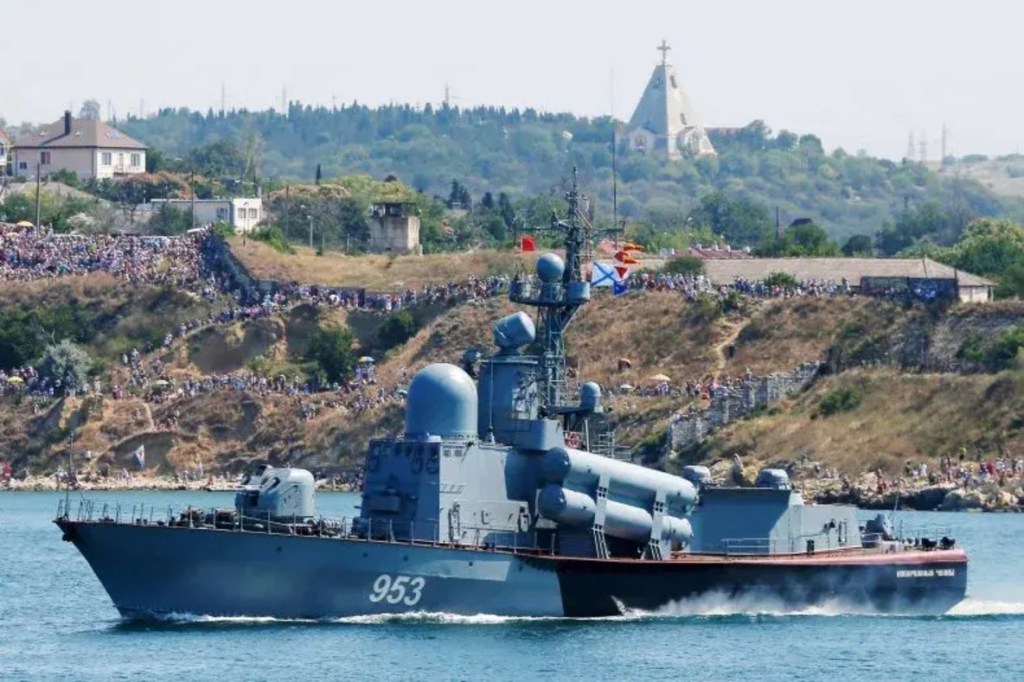
Russia struggled to repair its Black Sea Fleet ships that were damaged in Ukrainian strikes, Kyiv’s navy claimed on Tuesday. This comes as Ukraine’s military continued to attack Moscow’s warships.
Dmytro Pletenchuk, spokesperson for the Ukrainian Navy, said Kyiv’s forces prevented Russia from effectively using its main naval repair base in Sevastopol, a major Black Sea port in the occupied Crimea. Ukraine’s missiles and drones have targeted Sevastopol during the war.
Satellite imagery captured on August 9 showed that a life-size submarine decoy, resembling Russia’s Kilo-class diesel-electric attack submarine, was placed at Sevastopol naval base. Just a week before, Ukraine’s military claimed that a submarine of the same type was sunk during its missile strike.
The Ukrainian spokesperson also stated it was not “logistically viable” for Russia to transfer its damaged warships for repair to other bases in the Black Sea region, such as Novorossiysk on the northeastern coast. But it was also attacked by Ukraine’s military intelligence agency on July 3.
Newsweek reached out to the Russian Defense Ministry via email for comment.
Naval News reported on July 10 that a Novorossiysk-based Russian warship had docked in Ochamchire, a Georgian city on the southeastern coast of the Black Sea. Russia could use this port to protect its warships from Ukraine’s attacks or as a base for deployment in the Black Sea.
Russia also repositioned two Karakurt-class corvettes, both armed with Kalibr cruise missiles, from the Black Sea to the Caspian Sea to threaten Ukrainian forces. Pletenchuk claimed this type of missile no longer posed the same threat level as it did at the beginning of the war.
Both seas are connected by the 63-mile-long Volga-Don Canal, which Russia uses to move its warships between them. Russia’s Caspian Flotilla has its role in the war as it is the only way for Moscow to reinforce its naval power in the Black Sea. Turkey closed its straits accessing the sea.
The Kalibr is a sea-launched land-attack cruise missile with an estimated 932 to 1,553 miles range. It is the primary ground-strike weapon for the Russian Navy and has seen extensive use in strikes against Ukraine’s critical infrastructure. It can be launched from surface vessels and submarines.
The Ukrainian Navy claimed in June that a third of Russia’s Black Sea Fleet had been taken out of operation due to attacks. A month later, Ukraine’s naval service said three Russian Kilo-class submarines, armed with Kalibr cruise missiles, were deployed simultaneously in the Azov-Black Sea region for the first time.
Meanwhile, Ukraine’s Navy reported no Russian warships in the Black Sea and the Sea of Azov as of Wednesday morning. It also accused Russia of violating the International Convention for the Safety of Life at Sea by disabling identification systems on ships that transited the Kerch Strait.
White Sea-Baltic Canal – Wonders of World Engineering

Lakes, rivers and canals have been linked by the Soviet Government to form a navigable waterway between Leningrad on the Baltic, and Soroka on the White Sea. The engineering works were carried out in severe conditions, with an unusual form of labour.
WATER transport between the Baltic and the White Sea is effected along a waterway consisting of canals, lakes and rivers between the two seas. The main canal, which was opened in June 1933, extends for 142 miles from Soroka, on the Gulf of Onega, an arm of the White Sea, to Povyenetz, on Lake Onega, the second largest lake in Europe. There are nineteen locks, fifteen dams, twelve floodgates, forty dikes and thirty-two sections of canal. The building of these works was completed in about twenty-one months by extraordinary methods in severe climatic conditions and difficult country.
From Lake Onega the route to the Baltic is continued through waterways previously canalized to Lake Ladoga, which is the largest lake in Europe. In turn Lake Ladoga is linked by the River Neva with Leningrad, formerly known as Petrograd and as St. Petersburg when it was the capital of Imperial Russia. Leningrad is the largest of the northern ports of the Union of Soviet Socialist Republics, and is on the Gulf of Finland, an arm of the Baltic Sea. This last part of the route was available before the building of the White Sea-Baltic Canal, and has recently been improved.
To the average English-speaking person the country traversed by the White Sea-Baltic Canal is less known than many places far more distant. The Russian engineers who built the canal were themselves hampered when they began by lack of accurate details. The engineers also lacked efficient machinery, modern plant and skilled workers. The work was carried out by prisoners in a little-known and neglected country in subarctic conditions. The methods used in building the canal were more nearly related to pioneering than to engineering as practised in settled countries where the engineer can have at his call the best of skilled men and up-to-date appliances. Little steel was used in the construction, because it was not available, and some of the concrete work was afterwards admitted to be doubtful. Trees were cut down, however, and enormous quantities of timber were used for the locks and the dams. In the work the engineers learned lessons which were later applied with advantage to the building of the Moskva-Volga Canal, which is described in the chapter “Moscow’s Great Canal”.
The geographical reason for the canal is partly explained by a reference to a map of Europe. Europe’s largest two lakes lie at the base of the long neck of land that connects the continent with Scandinavia, Finland and a strip of North-Western Russia.
Traversing the Soviet territory is the single-track Murmansk Railway, which affords communication between Leningrad and Murmansk, an ice-free port which lies within the Arctic Circle. This remarkable railway is one of the most northerly working lines in the world, but it was considered inadequate for the demands made upon it. Several hundred miles along the line south of Murmansk is the port of Soroka, where timber from the forests is sawn. Eastward of Soroka is the great timber port of Archangel, which is at the southeastern corner of the White Sea.
Before the canal was cut all vessels bound from Archangel to Leningrad had to steam round North Cape and Scandinavia to get into the Baltic and then into the Gulf of Finland, a total distance of 2,840 nautical miles, or nearly the distance from Southampton to New York. The canal reduces the total distance to 674 nautical miles, which is a remarkable saving. Further, it affords a link with the Moskva-Volga Canal system.
There is another geographical advantage of the canal. The ocean coast of the huge territory of the Soviet Union fronts the Arctic Ocean and extends almost to North America. Soviet explorers have found an open-water route, available at certain periods, through the Arctic to the Pacific Ocean. They are establishing this route by aeroplanes, radio and meteorological stations and ice-breaking vessels. Aeroplanes survey the ice and tell the icebreakers what course to take, and convoys of vessels follow the icebreakers. New towns are being erected in the Arctic lands of Siberia. The country is immensely rich in timber, coal, gold, silver, platinum, nickel, tin, lead, manganese and oil. Hitherto these resources have been untapped because of lack of transport. The Trans-Siberian Railway lies too far to the south to solve the problem, and the great rivers flow north into the Arctic. The plan is to open up this enormous undeveloped region by river and sea transport.
Hence the White Sea-Baltic Canal affords a transport by-pass from Moscow and Leningrad round the top of Asia to the Far East. By using the resources of science and engineering the Russians are trying to open the northern door of the world. For centuries British and other navigators tried to open the North-East Passage, and if the Russians succeed in making the route a practicable one the mighty purpose for which so many gallant men have given their lives in the Far North will be achieved.
The building of the White Sea-Baltic Canal was so abnormal that to understand the peculiarities one must grasp certain of the essential differences between civil engineering in the Soviet Union and in other countries. When a great work is to be undertaken in a country where engineering is not so highly developed as in Great Britain, the United States, France, Germany and certain other countries, it is customary to throw the contract for the work open to the world. The Government of the country concerned awards the contract to a foreign firm, and that company executes the work for a stated price in a specified time. The Soviet Government, however, does not do this, and is rebuilding Russia in its own way. In the past many foreign engineers worked for the Soviet, and from time to time the Government has called in engineers as technical advisers and has bought foreign machinery. Russian engineers of the Soviet regime study the technique of their profession, and foreign machinery has been adapted or copied. The White Sea-Baltic Canal, however, was a Soviet work entirely.
Many of the trained engineers were in prison when the canal was decided upon. They were political offenders, and were not criminals in the general sense of the word. Many of the workers were also political offenders, although others were murderers, thieves and bandits from all parts of the vast country. Some came from places so remote that they did not speak Russian. Others, who were illiterate when they arrived at the site of the work, were taught to read and to write. After the completion of the canal, 12,484 persons were given their liberty, and the sentences of 59,516 persons were reduced.
There is no unemployment in Russia as there is in highly industrialized countries. Therefore the Soviet Government was not displacing free men by convict labour. As the Soviet lacked steel, machinery and efficient transport, the authorities used multitudes of unskilled men and women to do work that is performed elsewhere by mechanical appliances controlled by skilled men.
By means of all the instruments of propaganda the authorities strove to arouse enthusiasm among the workers. Every effort was made to appeal to the emotions, for the Russian is more temperamental than the Anglo-Saxon. In addition, the authorities had to contend with the not unnatural disinclination of a prisoner to work for those who had deprived him of his liberty.
Such a system of labour caused complications. For each class of work a normal day’s output was established, and against this was set a certain amount of food. The worker referred to this output as his “norm”. If he did more he was given more food and more privileges. These extras were in accordance with the output exceeding the “norm”, which was fixed at 100 per cent. Further, the spirit of emulation was stirred by showing the output of each team of workers, and within that team the best worker was given a foreman’s job.
In the early stages some of the men were hard to convince. Those who refused to work stayed in the huts and generally became so bored with idleness and the remarks passed about them when the workers returned that they fell in line. There were occasions when teams faked the output by tricks such as piling broken rock on top of logs and claiming the whole pile as broken rock. Sometimes the output was faked so successfully that by the time those in charge had discovered the fraud the work was seriously behind schedule and strenuous efforts had to be made to save the situation. Also the competitive spirit was at times so strong that one gang was not above getting up in the night and taking wagons from a rival gang to increase its own output.
Apart from these peculiar difficulties the nature of the country and the climate were problems in themselves. The canal severs the rocky neck of land between Lake Onega and the White Sea in the autonomous State of Karelia. Information about the geology of the route was inadequate. In past ages glacial action had torn the surface and later the ground was forced upwards by subterranean pressure and further confused. The rock was on the surface in some places and at others wag covered by alluvial deposits, all under a layer of peat. In addition the climate was unreliable and there was not a month in the summer without frosts or a winter month without thaws. Also, the rise and fall of the rivers were uncertain.
In addition to these problems was the fact that an order was given that the canal had to be completed in twenty months. It was finished in one month over the time limit. The Government directed that the canal must be built to time, and that the engineers must apply simple designs and use raw materials to be obtained near the site. The main base was established near the southern end of the proposed canal. The first headquarters was just a railway coach on the Murmansk Railway, fitted up as an office. From this small beginning grew the nerve centre of the project.
Here and elsewhere along the canal wooden barracks, bath-houses, bakeries, kitchens, dining rooms and club houses were built. The first arrivals camped out while they erected the dwellings. Prisoners who claimed to be carpenters were assembled, furnished with all the available saws, axes, planes and hammers and set to work.
The free officials had conferences with the prisoner-engineers, whose great problem was to get skilled labour. Sometimes a prisoner was sent without guards to prisons in distant places to recruit skilled men and bring them back. Prisoners. who were electricians, carpenters, tractor drivers, smiths and fitters were eagerly sought, not only as workers but also as tutors for the huge army of the unskilled and as foremen for gangs of navvies. Thousands of women were also employed as cooks, waitresses and laundrywomen. Some of them wanted to work on the canal and did so.
Because of the long winter months much of the work had to be hurried forward at all possible speed during the spring and summer. In the winter the earth dams could not be built, because the frozen soil would thaw in the spring and give way under the pressure of water. Piledriving was likewise impossible, as with the thaw the piles would be loosened and were liable to be swept away. The winter was devoted to preparing for the spring and summer work and to building roads and accommodation. There was quite enough to do to clear the rough ground.
It was decided to make the summit level of the canal 108 metres (354 ft. 4 in.) to take the waterway across the watershed. The difficulty lay in the abrupt rise near Lake Onega. Here has been built a staircase of seven locks. The other twelve locks are spaced between the top of this Povenchansk Staircase and the sea.
Vessels enter the canal at Soroka and proceed through the first section of the canal, the various locks raising them nearly 200 feet above sea level in about fifty miles. Then vessels steam through the second section of the ascent, comprising four lakes and a small river. This section raises vessels to about 300 feet above the sea in about sixty-seven miles. The third section of the ascent reaches 354 feet in about thirteen miles, and then comes the sharp descent of about 227 feet in a short distance to the level of Lake Onega.
Lake Vyg was impounded by dams and the level of the lake was raised nearly 20 feet. Islands in the lake were submerged and five fishing villages were transferred to the new shore. Over sixty miles of the Murmansk Railway had to be shifted out of the way of the canal and relaid. More than 4,300,000 charges of explosive were used to blast a path for the canal through the rock, and more than 6,000,000 tons of granite were removed by this means.
On the southern slope of the watershed the ground was littered with boulders. These were lifted in nets and tumbled into carts drawn by horses. In the winter trees felled in the forest were carted on horse-drawn sleighs. Thousands of wheelbarrows were used in the early stages. At first there was a shortage of these because there was no foundry to cast wheels for them. A crude cupola was built at the small railway workshops and wheels were cast. The lack of steel cranes was overcome by building derricks of timber.
The caissons for the cofferdams were of wood, and were huge timber crates which were filled with stones. One night the cofferdam which had been built across the River Vyg threatened to collapse. Below the dam was the unfinished canal, which was not ready to receive the water. The level of the impounded water had risen unexpectedly, had broken through the temporary earthen dam and was advancing towards the diggings. Men and women dashed to the workings when the alarm was given. They frantically filled bags with stones to repair the breaches in the dam. Some formed a human chain along which the bags were passed to those who thrust them into the breaches. Others threw boards across the tops of the threatened caissons under which water had collected, ran along these planks with wheelbarrows filled with stones and flung the stones into the caissons to weight them. After a terrific struggle that lasted for about eighteen hours the checked.
In the winter of 1932-33 work was seriously behind on the watershed section of the canal, partly because far more rock had been encountered than was expected. In addition, abnormal floods were anticipated in the spring. Almost all the rivers had been dammed and the most important dams had been covered with concrete. Six of the seven locks of the Povenchansk Staircase also were nearly finished. It was therefore essential to hurry the work forward, so that when the impounded water rose in the spring the water could be let into this section of the canal and allowed to flow through to Lake Vyg, for otherwise the pressure would not be relieved and the works would be in danger of being swept away.
The authorities concentrated the best workers from all sections of the canal and aroused their enthusiasm by every means, even playing what they called “shock” workers to the site with a band. The great effort to avert disaster began on January 7, 1933, in bitter weather. The men toiled through snowstorms, and even if these ceased they had to contend with troubles such as quicksands, which filled trenches soon after they were dug. At one time no fewer than 30,000 workers were packed into a stretch of workings less than four miles long. They worked night and day, the workings being illuminated at night. Then the spring thaw began. But the toilers were on time, and the water was let into the vital section on April 23, 1933.
The weir for the great Shavansk Dam was built with considerable difficulty. The engineer sent to the site found when he arrived that the position indicated on the map was impossible because of the nature of the soil, and he searched until he found a site where a rocky projection offered a natural base. The river was cut off by a cofferdam and the excavation for the weir began. When the boulders were removed and the diabase (basaltic greenstone) was uncovered, a flaw was found in the rock at the deepest part of the basin, so that there was a possibility of the water penetrating the rock after the weir had been completed. The use of concrete solved this trouble. The wooden caissons were loaded, large stones being put in first, then rubble, gravel, sand and turf, and then a final layer of gravel and sand. The weir was faced with timber. Carpenters made a neat job of this, working with such exactitude that the final covering is so smooth that the water pouring over it resembles a sheet of glass and the cascade appears to be frozen motionless.
Elsewhere the unskilled workers found the diabase such a hard rock to drill that they fell behind schedule until they learned to dig a trench, attack the rock from below and blow it up, instead of wasting energy by trying to bore through the hard upper layers from the top.
When the work began the Karelian peasants stood aloof. When river after river was dammed and the waterfalls were silenced, they became alarmed at this interference with Nature. Then the authorities sent agents who explained the object of the project, and some of the peasants volunteered to work alongside the prisoners.
Grass was planted along the canal banks, the sides of the locks and dams were laid with turf, and young pine trees were planted. A great five-pointed star 65 feet high was erected at Soroka, with a staircase leading to the top to afford a panorama of the White Sea port. On the opening day in June 1933, Stalin, General Secretary of the Communist Party of the U.S.S.R., and officials embarked in a steamer at Lake Onega and opened the new waterway.
In one year about 3,000,000 tons of freight passed from north to south. The canal has given the district an outlet for its timber and immense natural resources. The timber is used for large-scale woodworking and the wood-chemical industry. Rich deposits of minerals are found near the surface of the ground, including iron and copper, and there are valuable clays and granite. The many lakes abound in salmon and other fish, and the sea fisheries of the White Sea and the Arctic Ocean are valuable and capable of great development.
The dams are being utilized to provide electrical power, and the intention is to develop the entire area by means of what the Russians call a Combinat, a group of kindred industries.
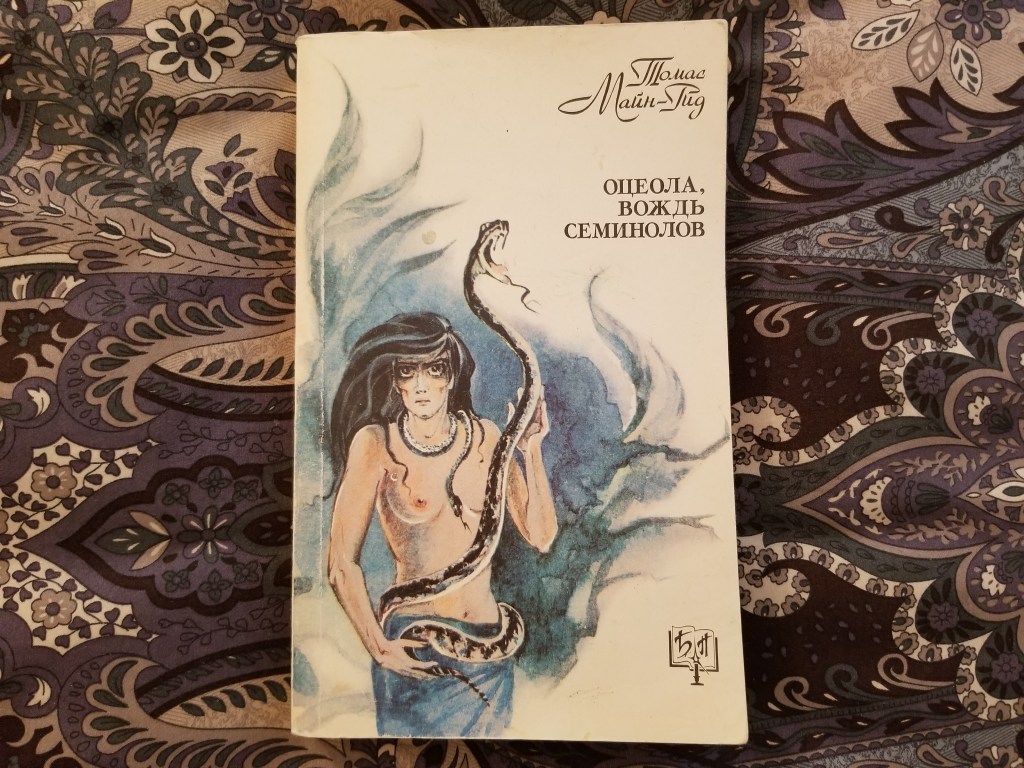
Now reading Osceola The Seminole, Or, The Red Fawn Of The Flower Land by Thomas Mayne Reid…
Now listening to Piano Sonata No. 12 by Ludwig van Beethoven and Cut by Golden Earring…


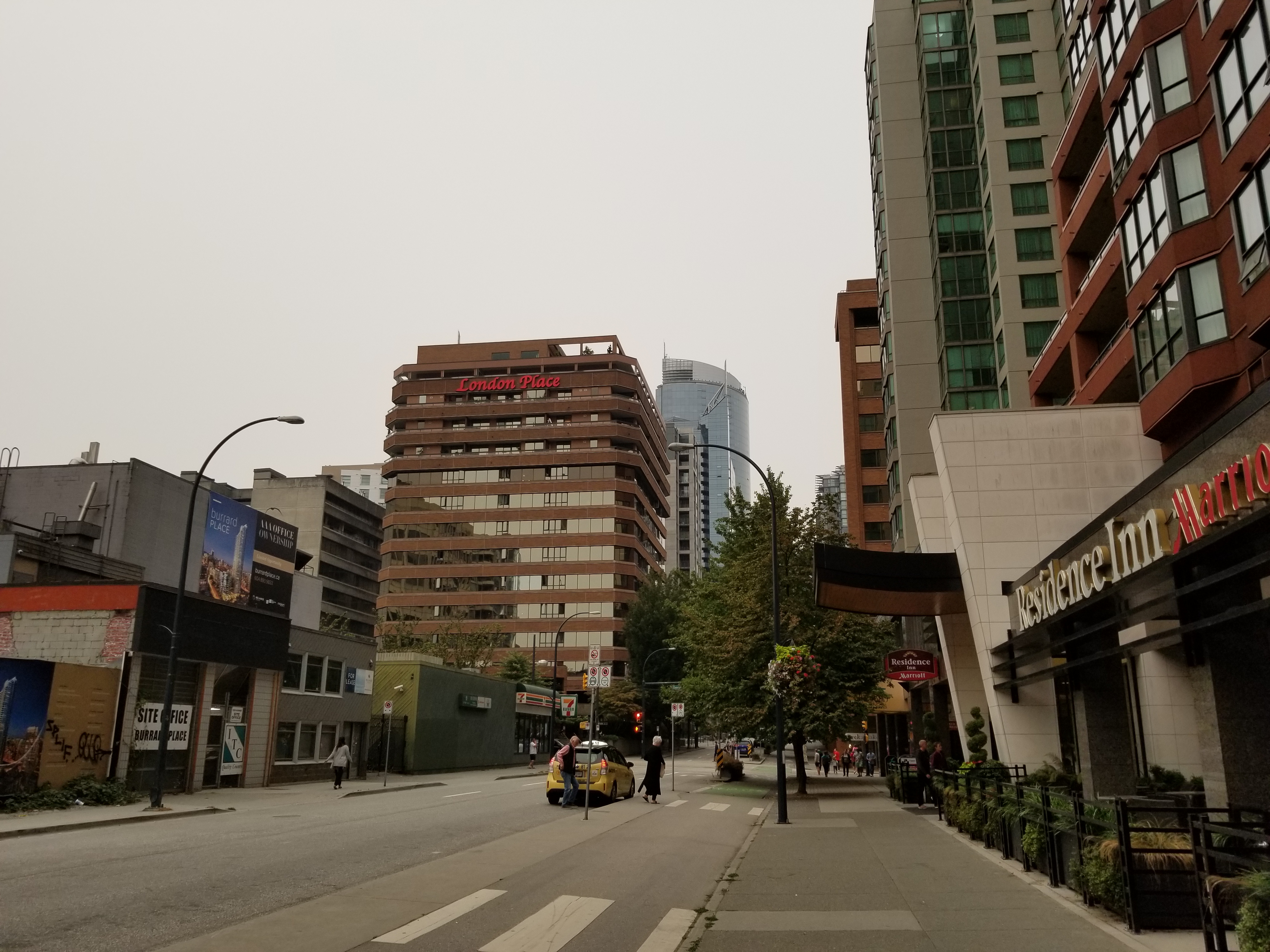
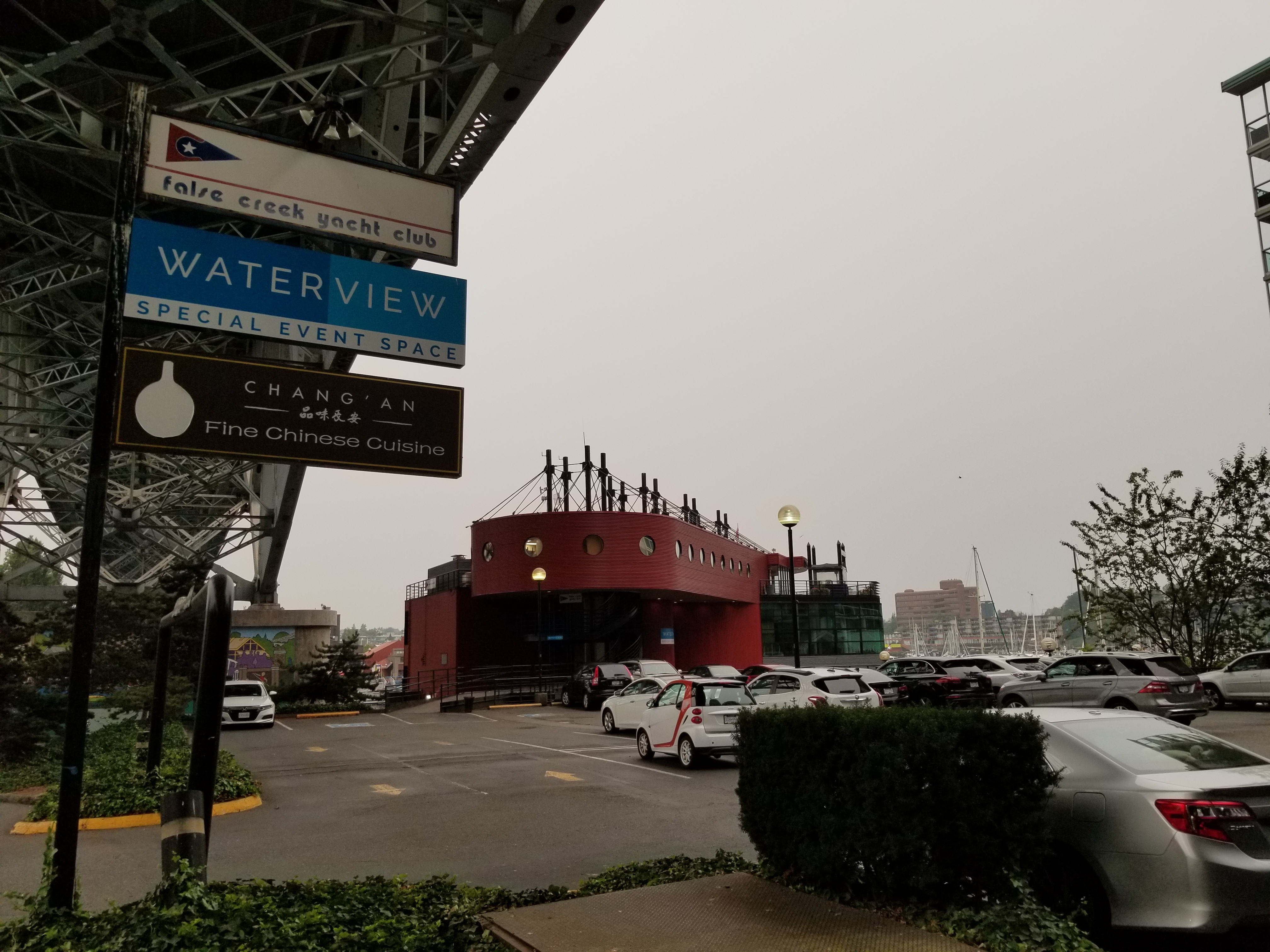
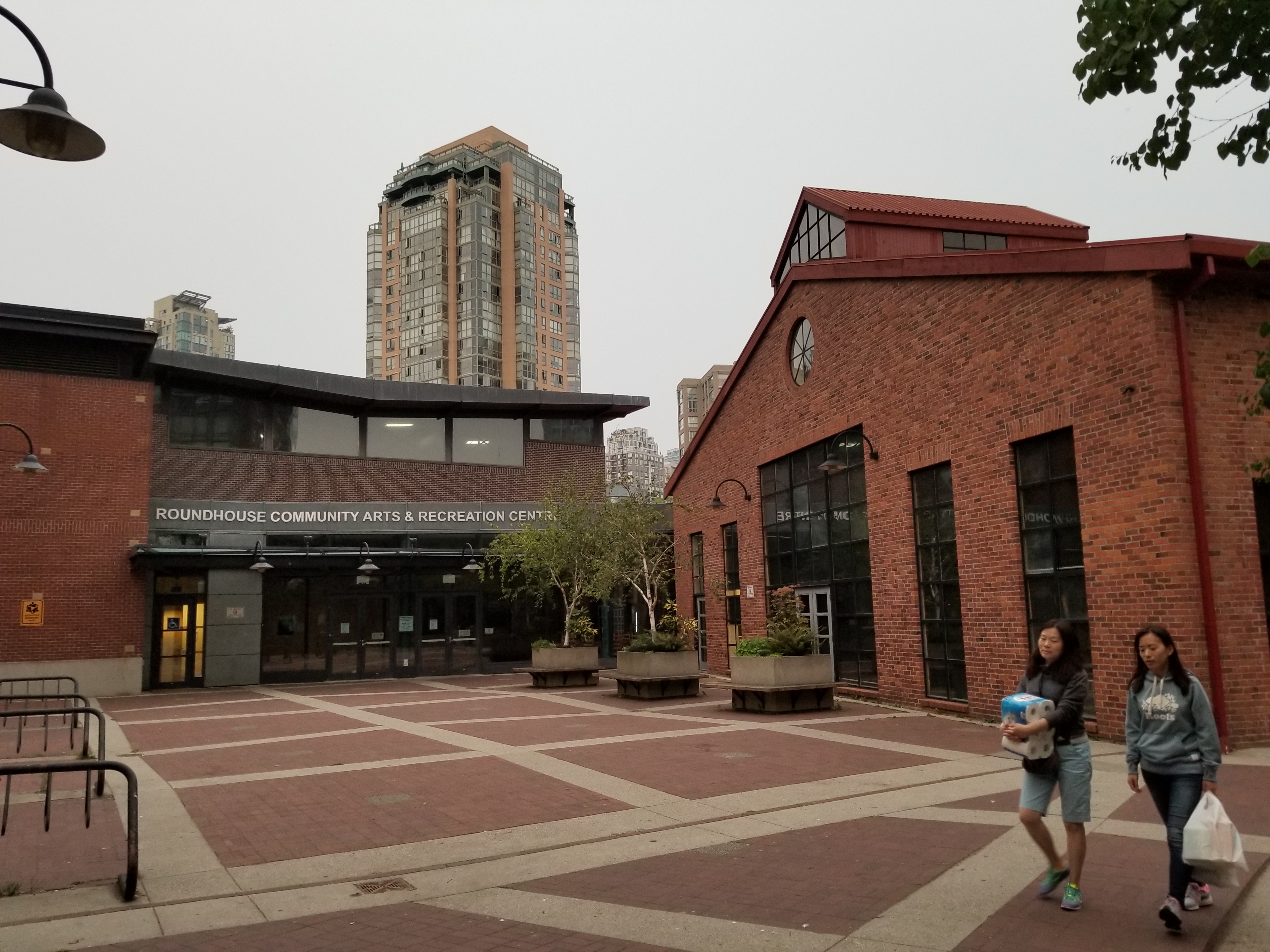
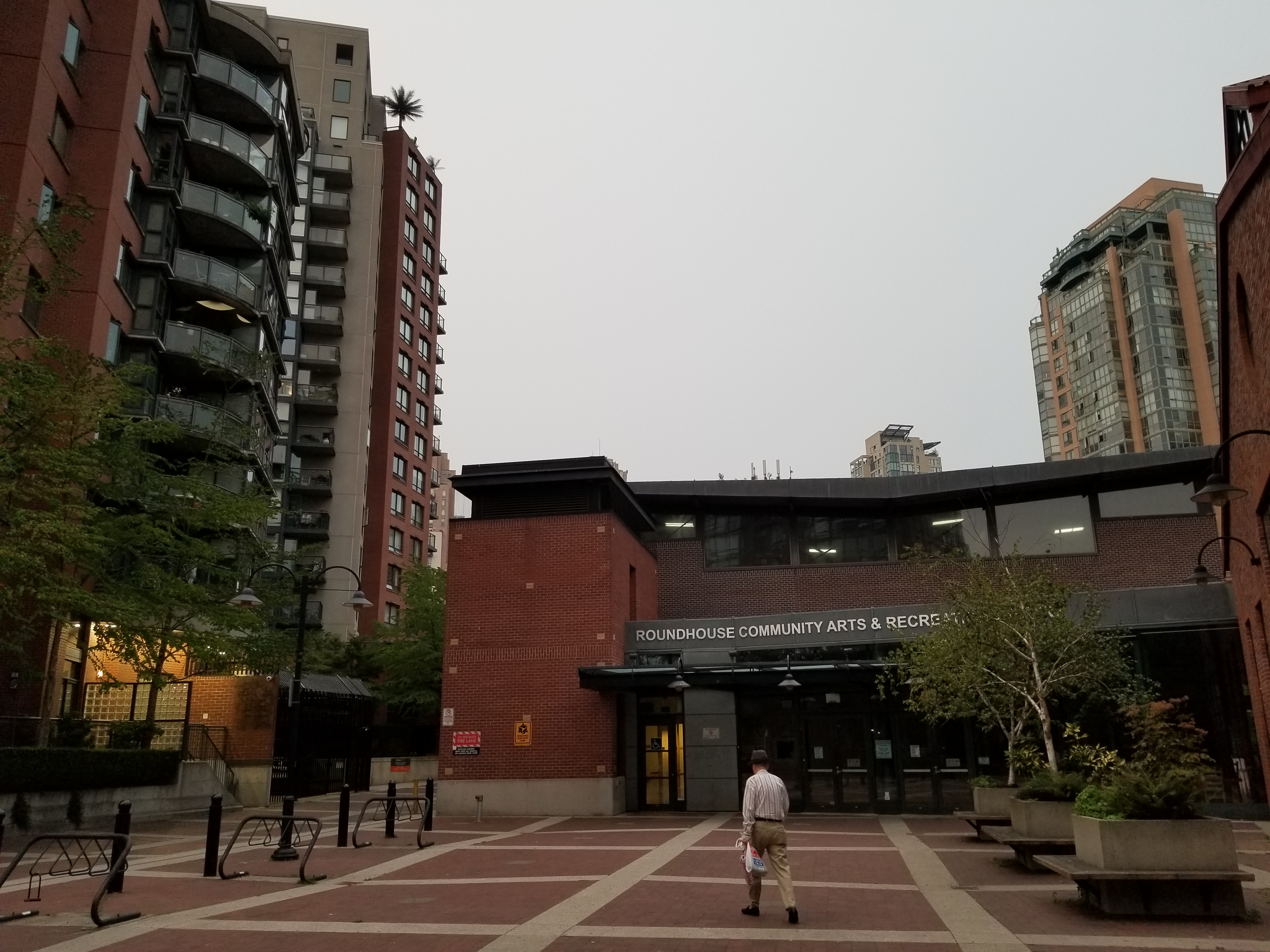
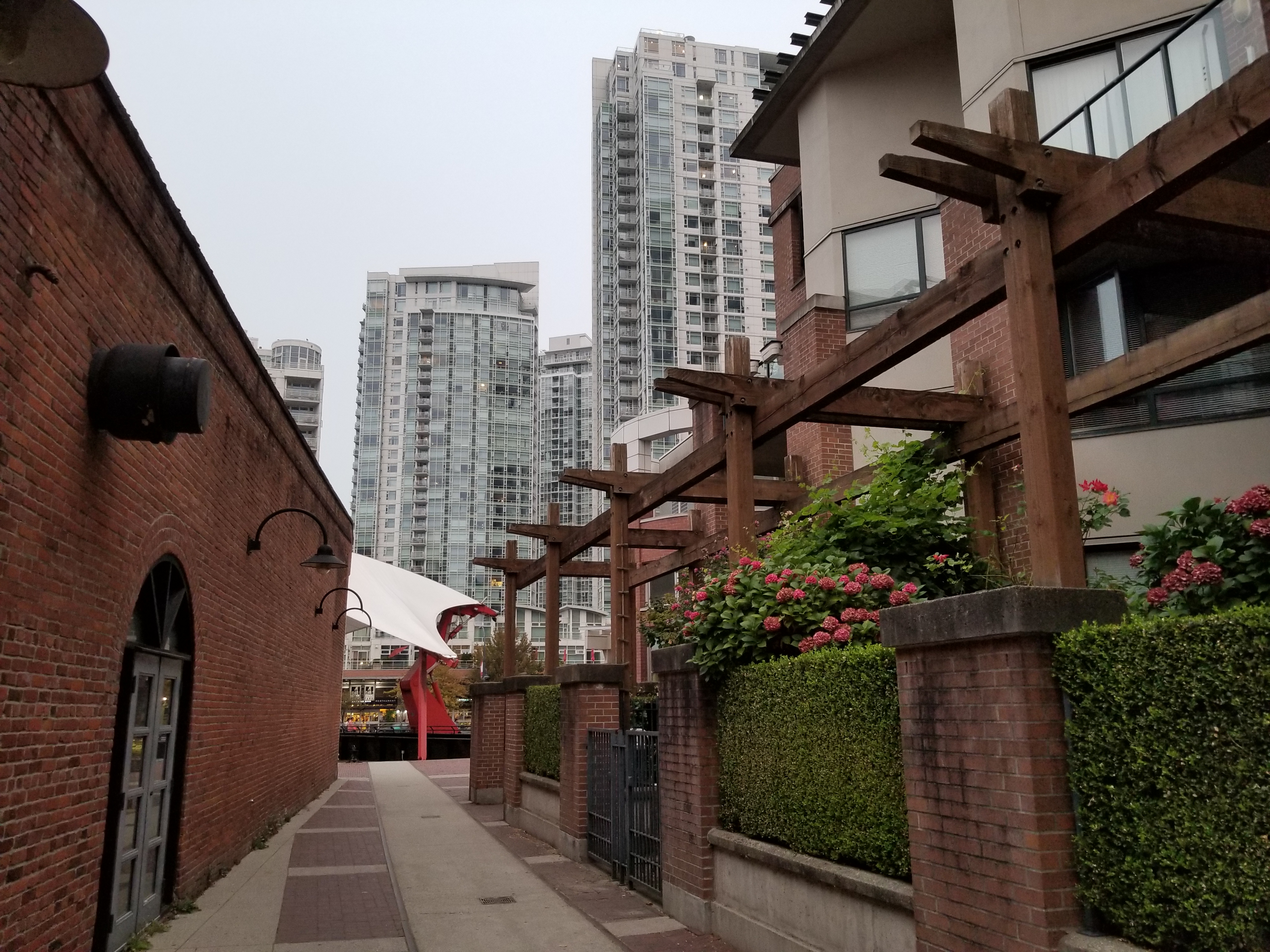
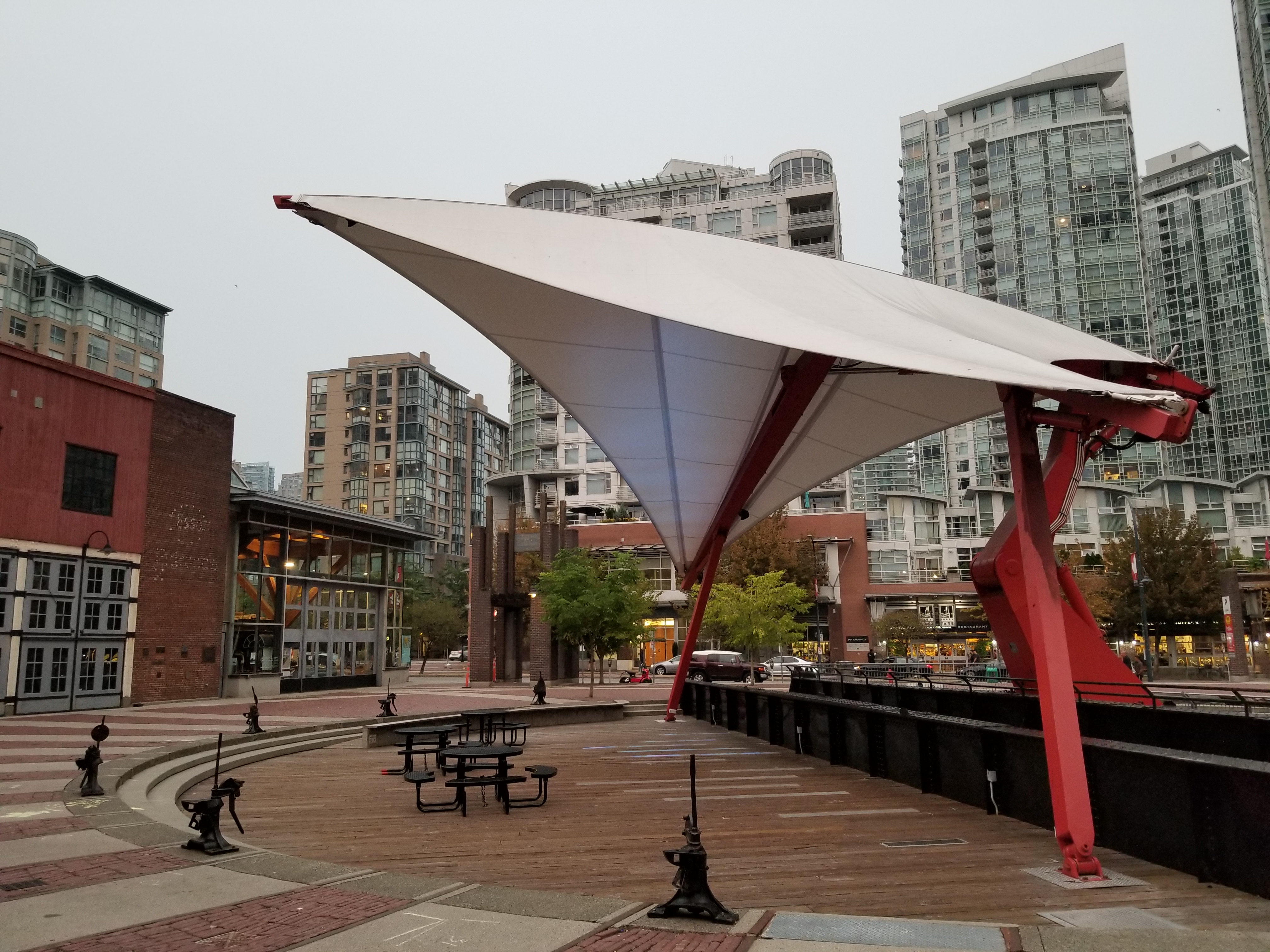
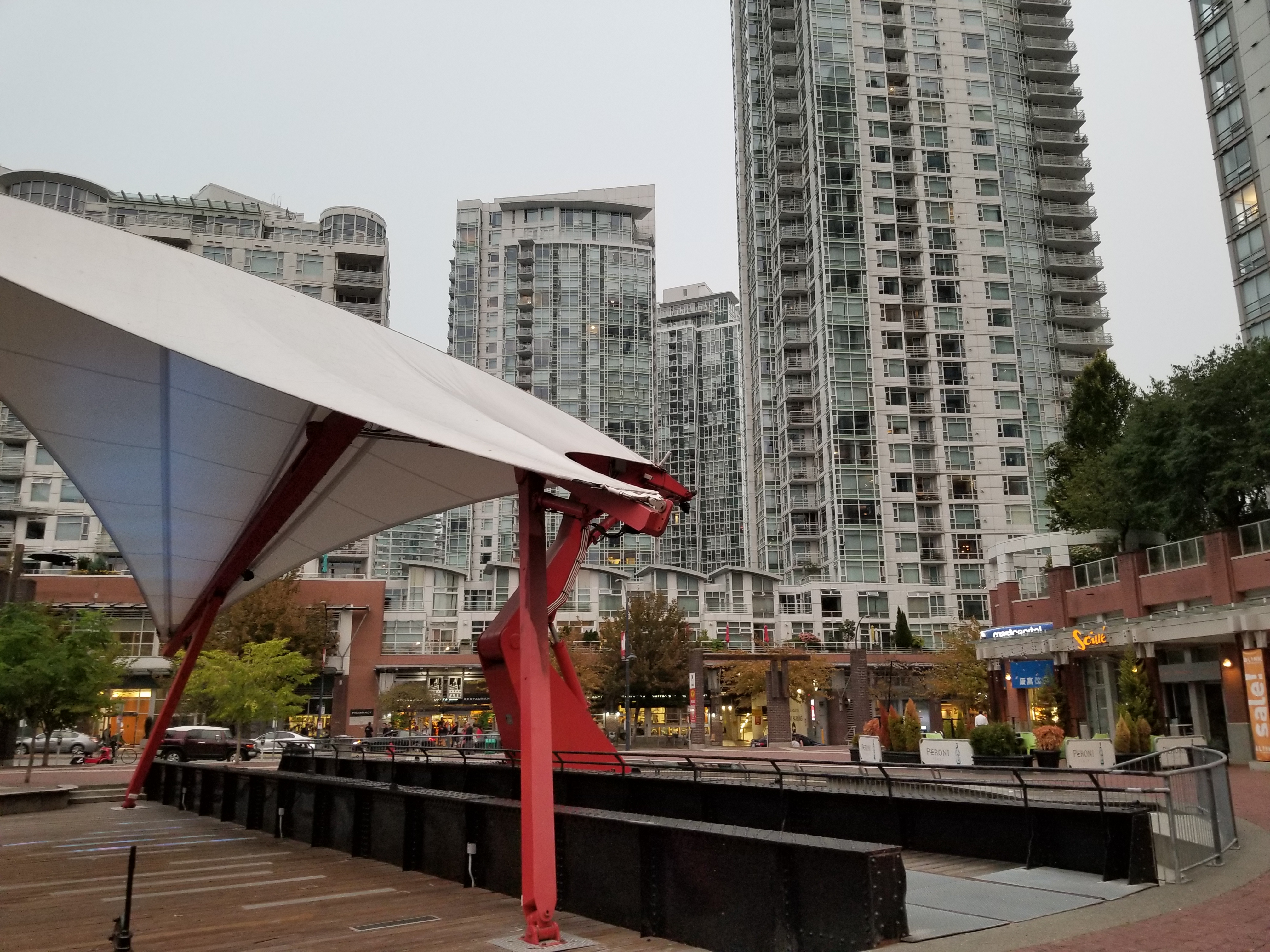
On Georgia Street in Downtown Vancouver. Autumn of 2018.
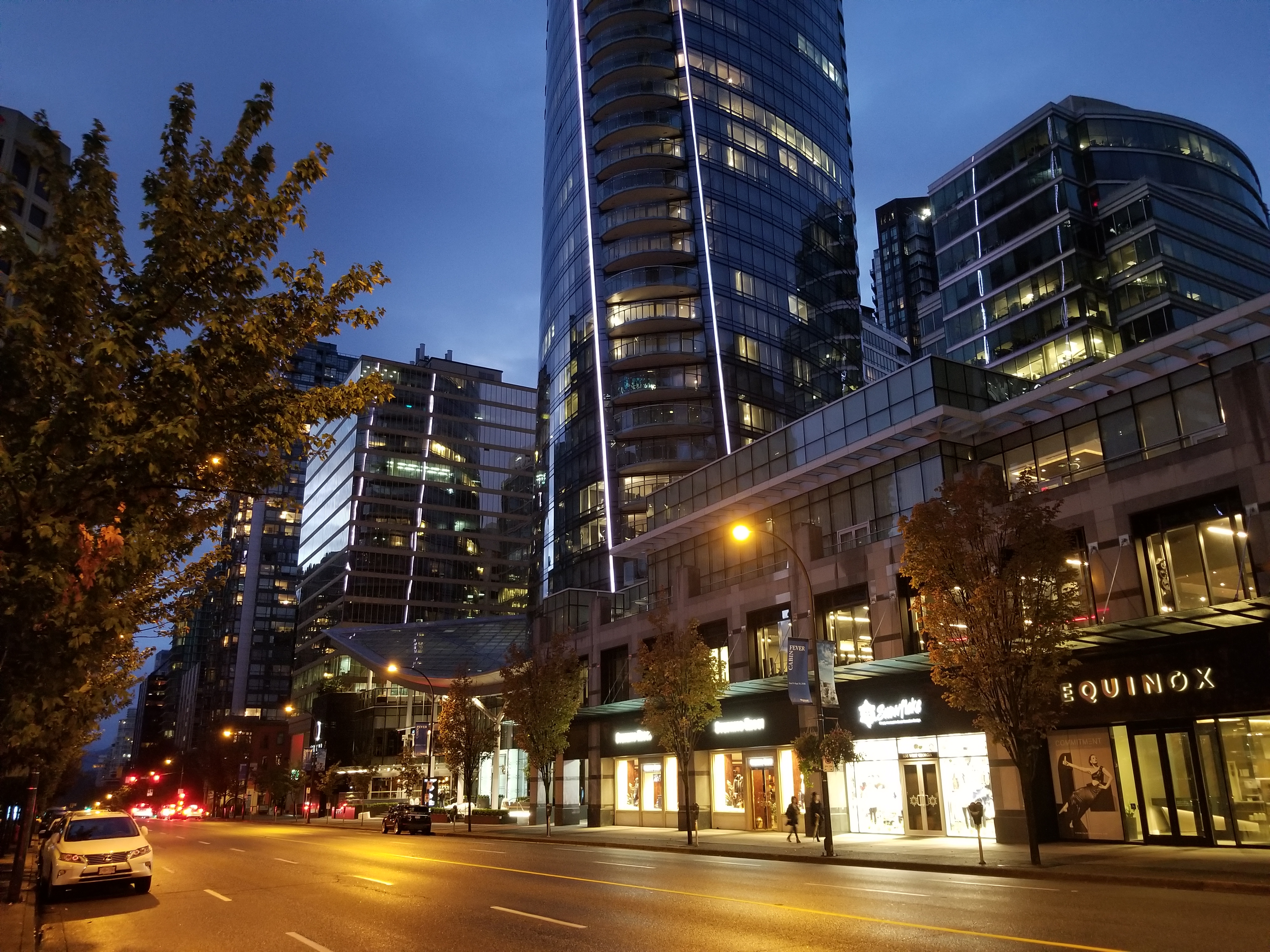
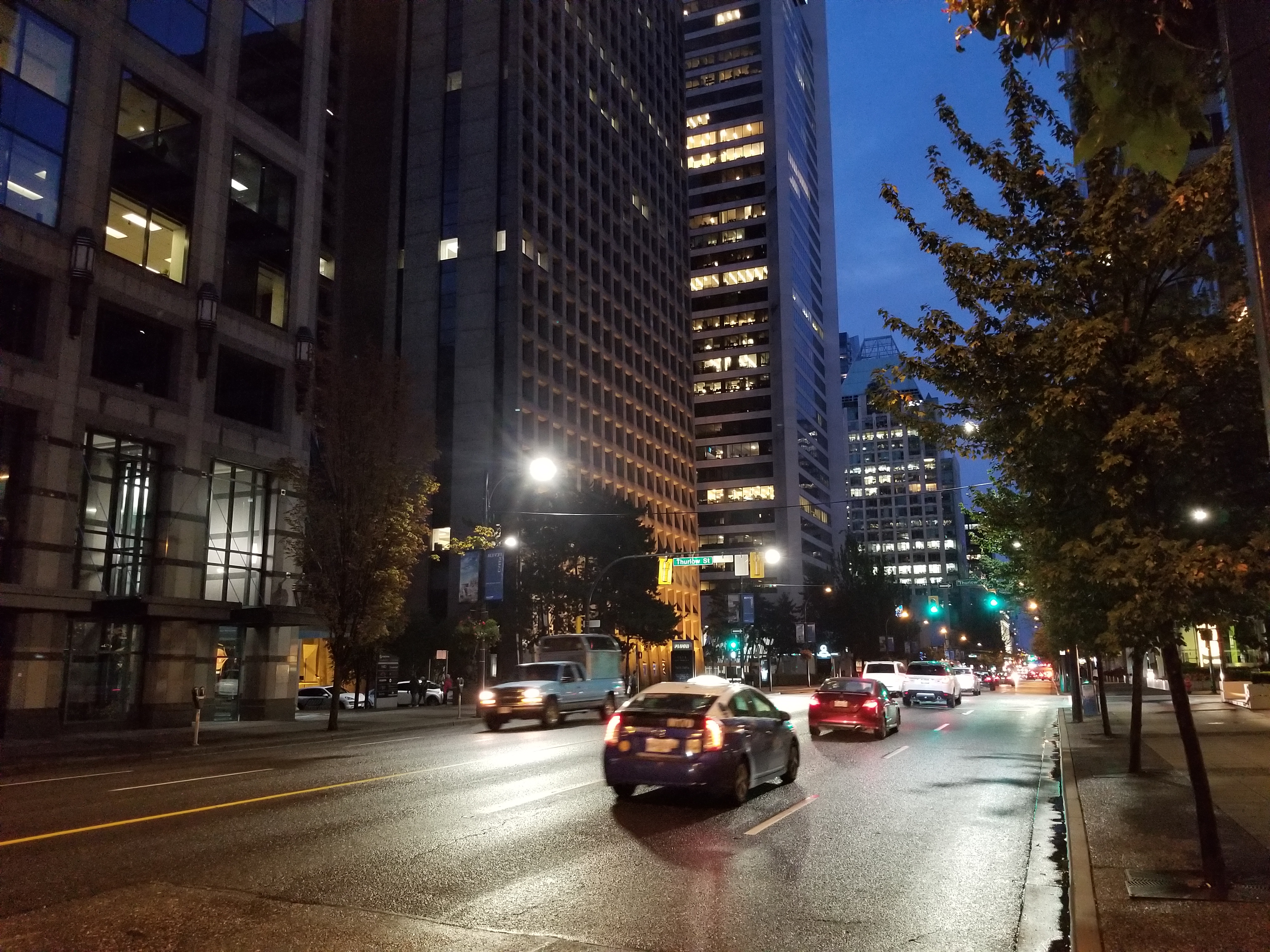
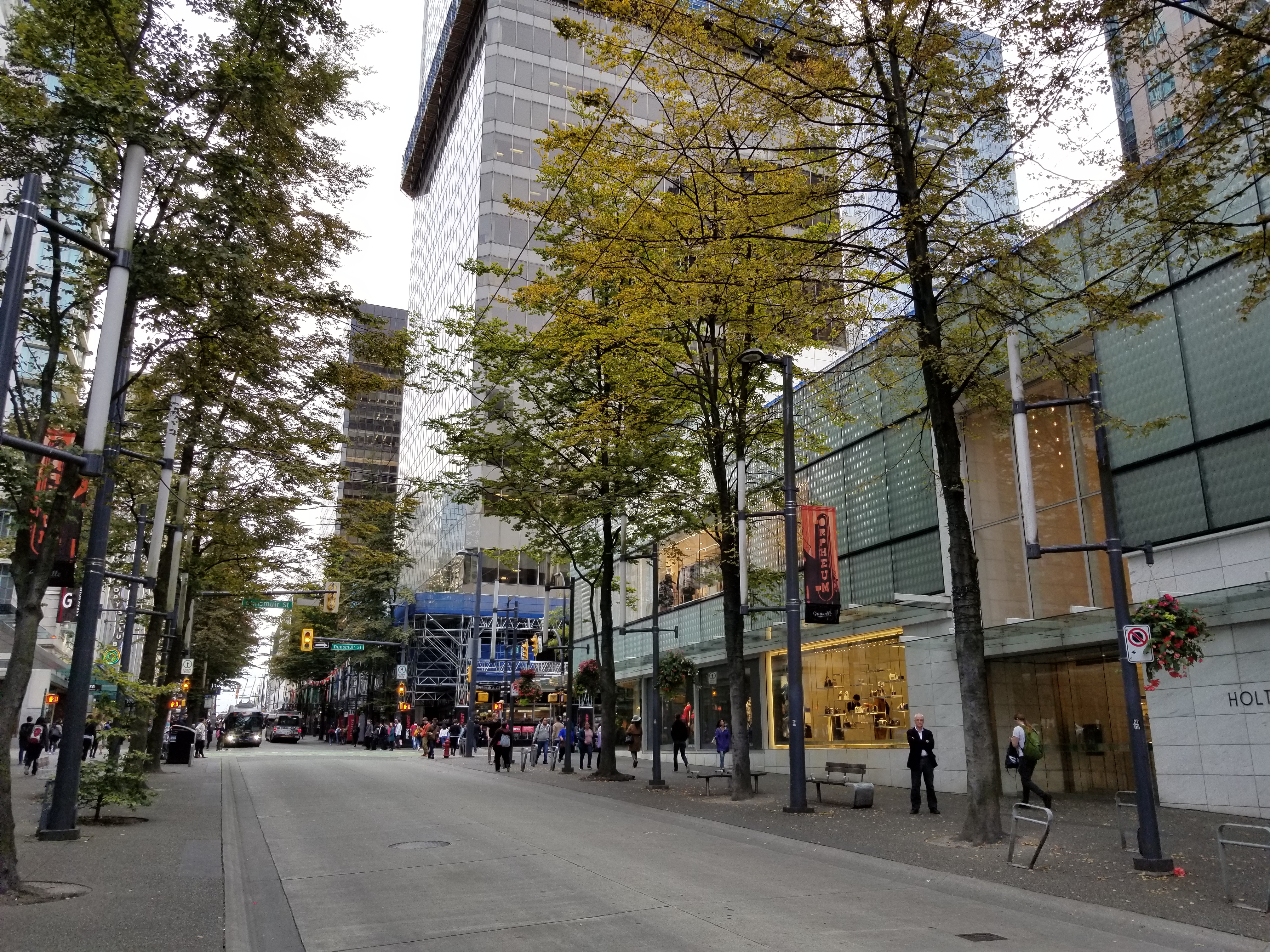
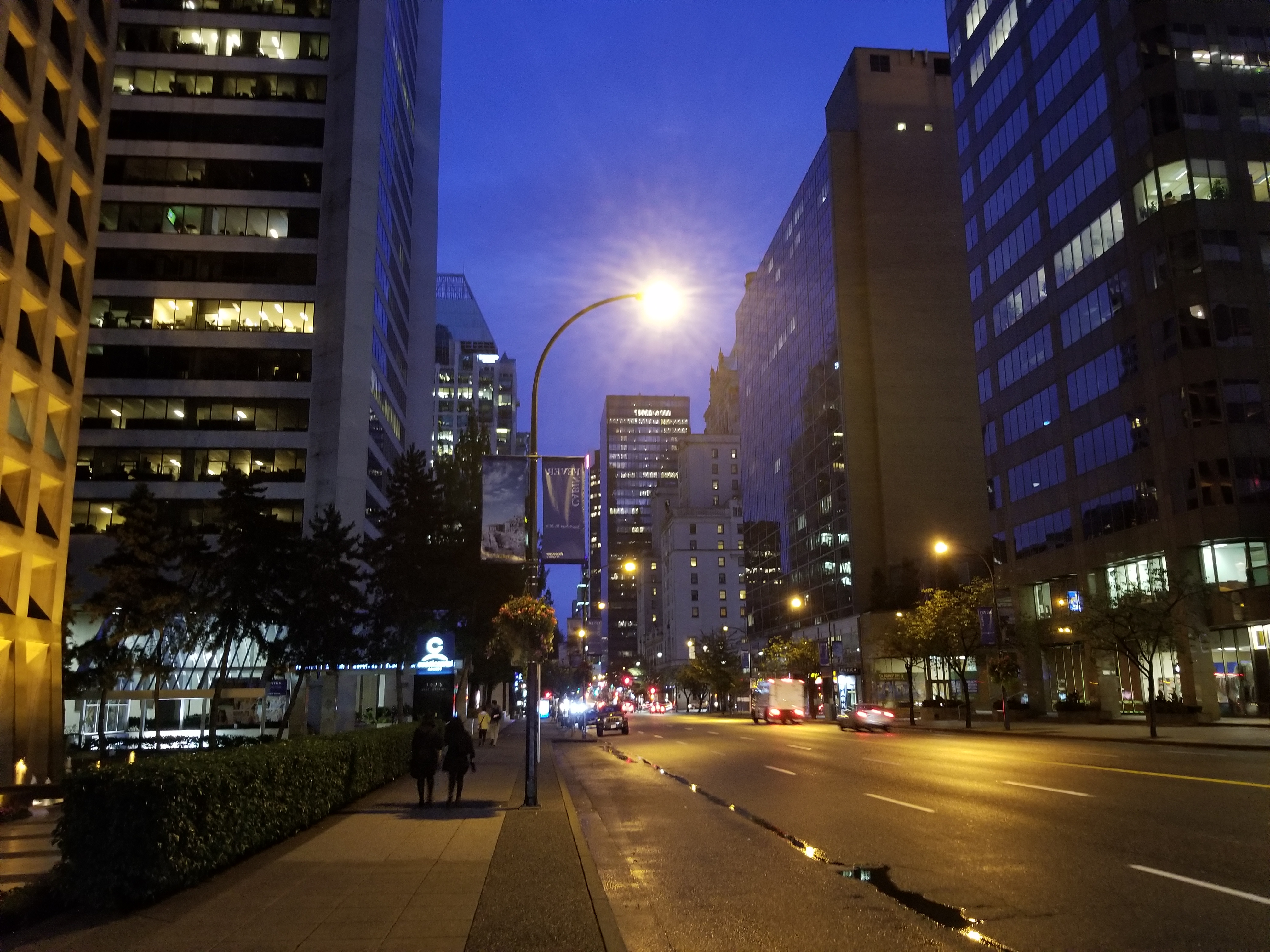
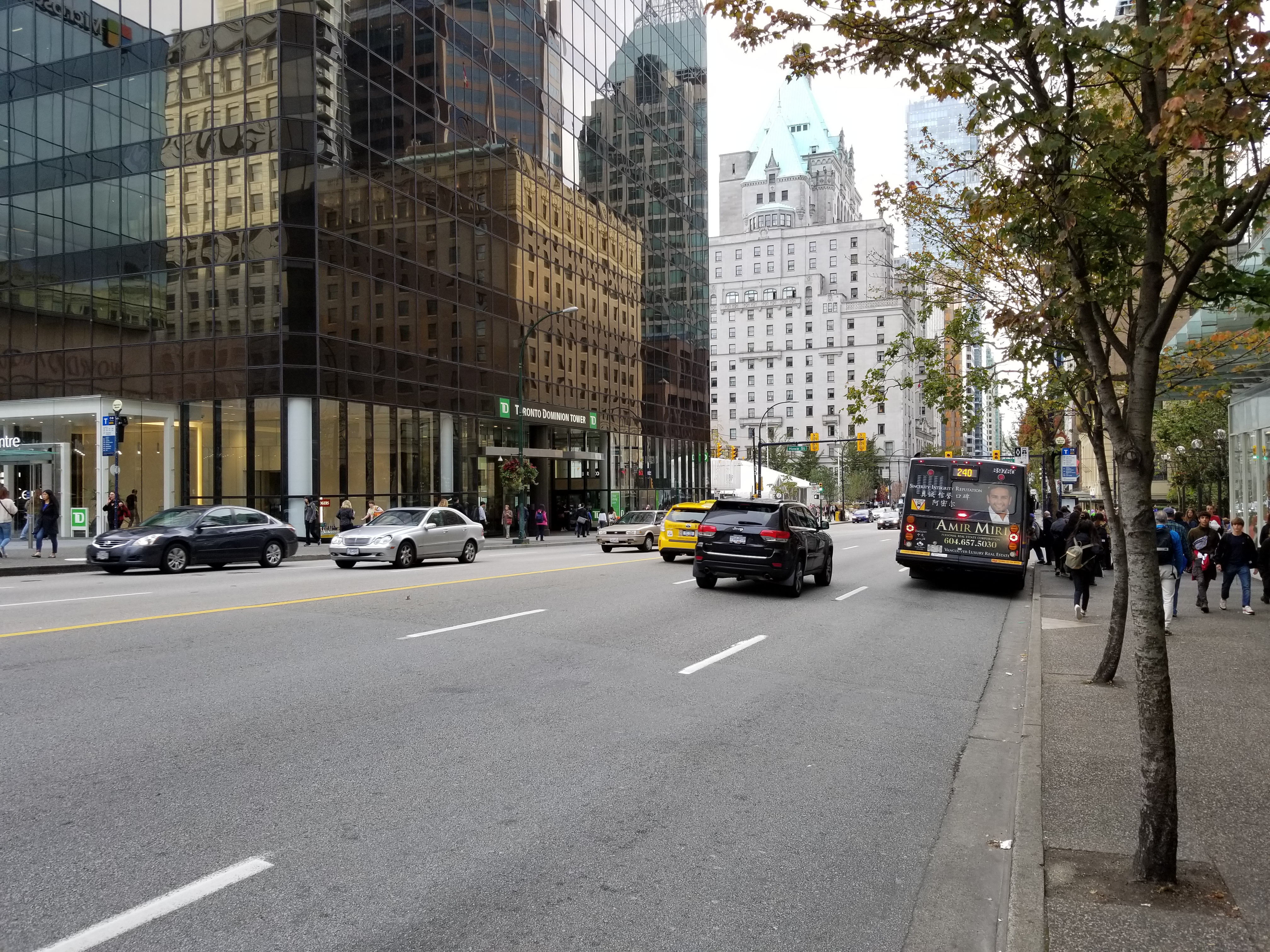
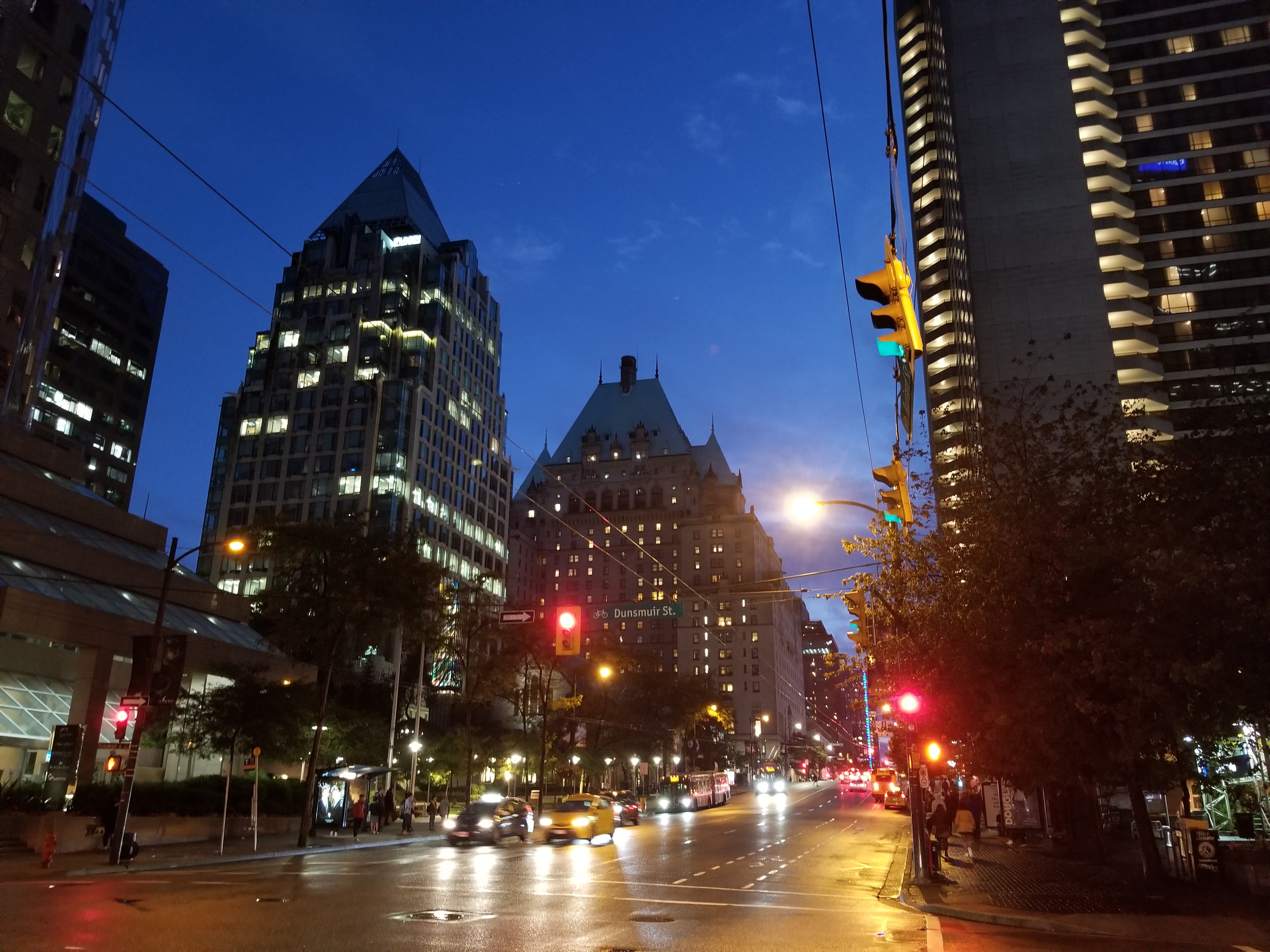
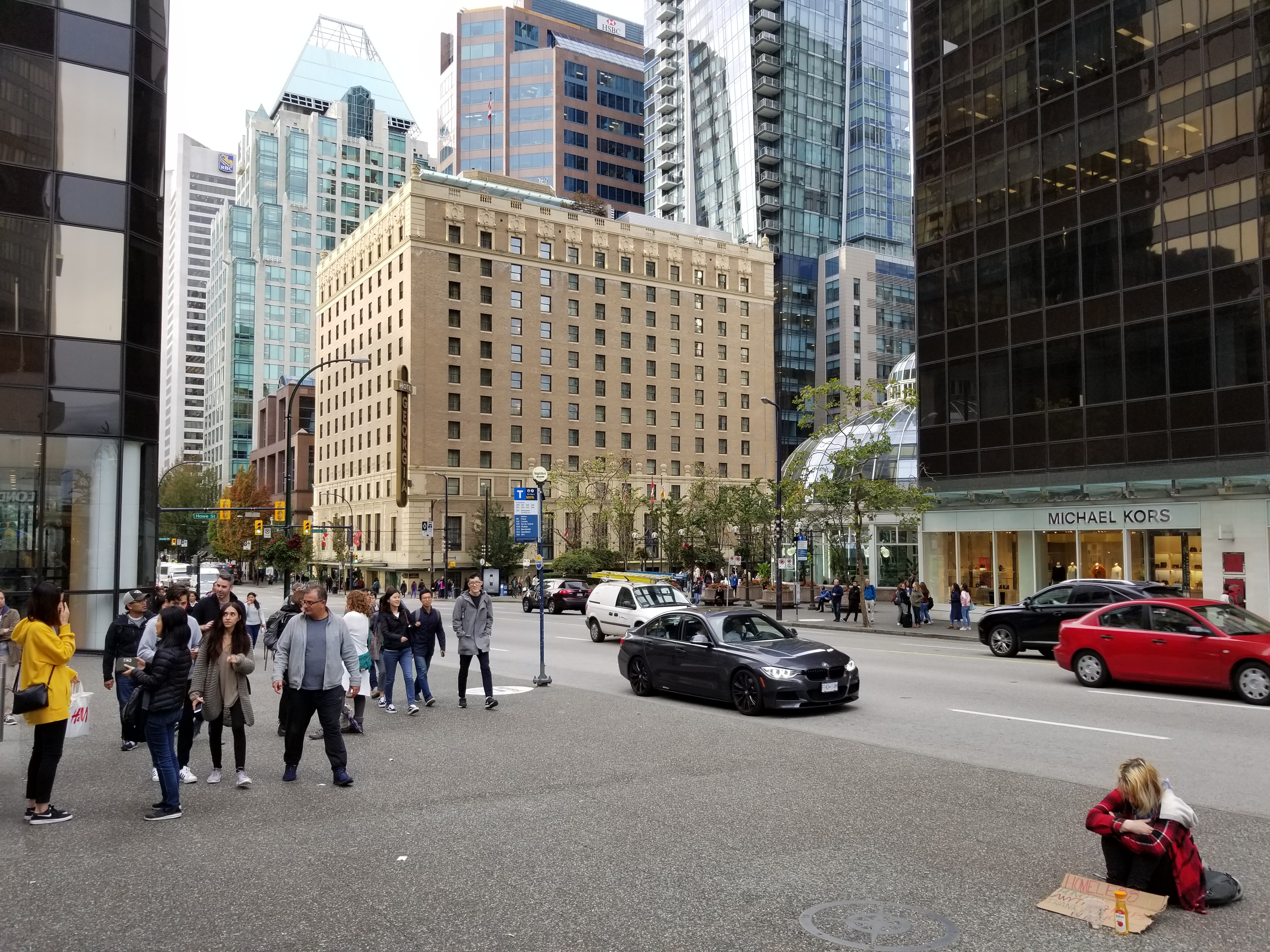
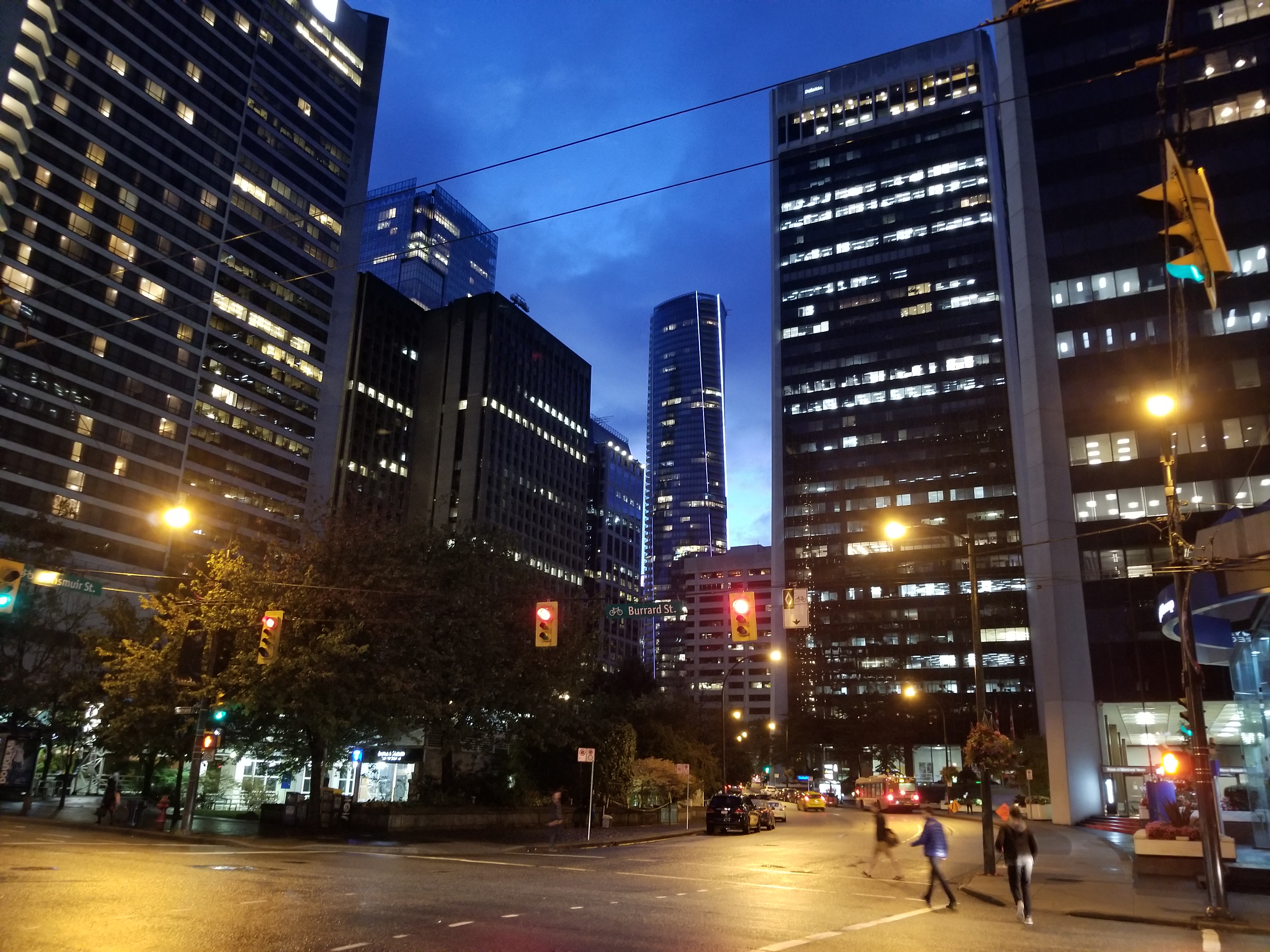
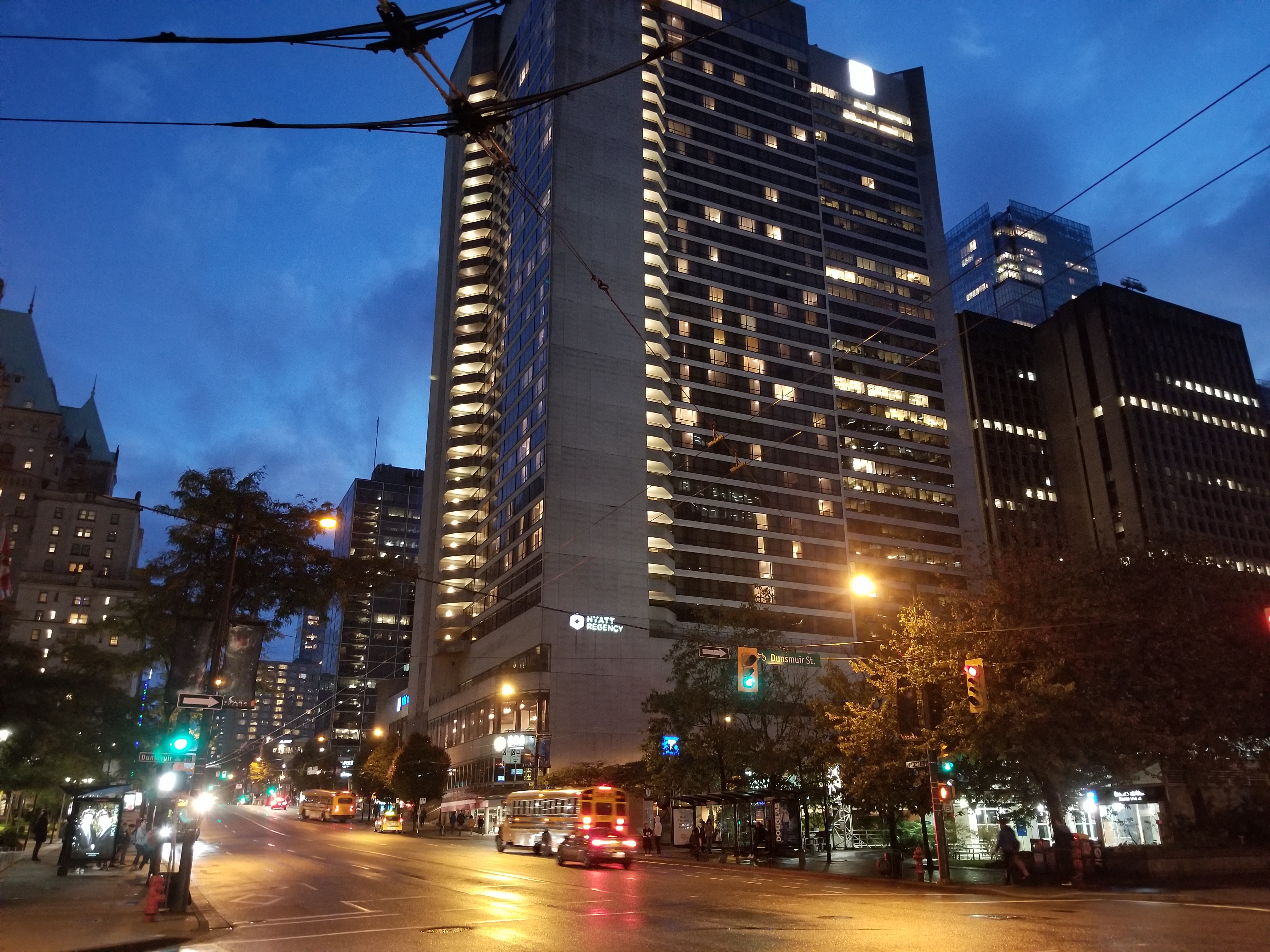
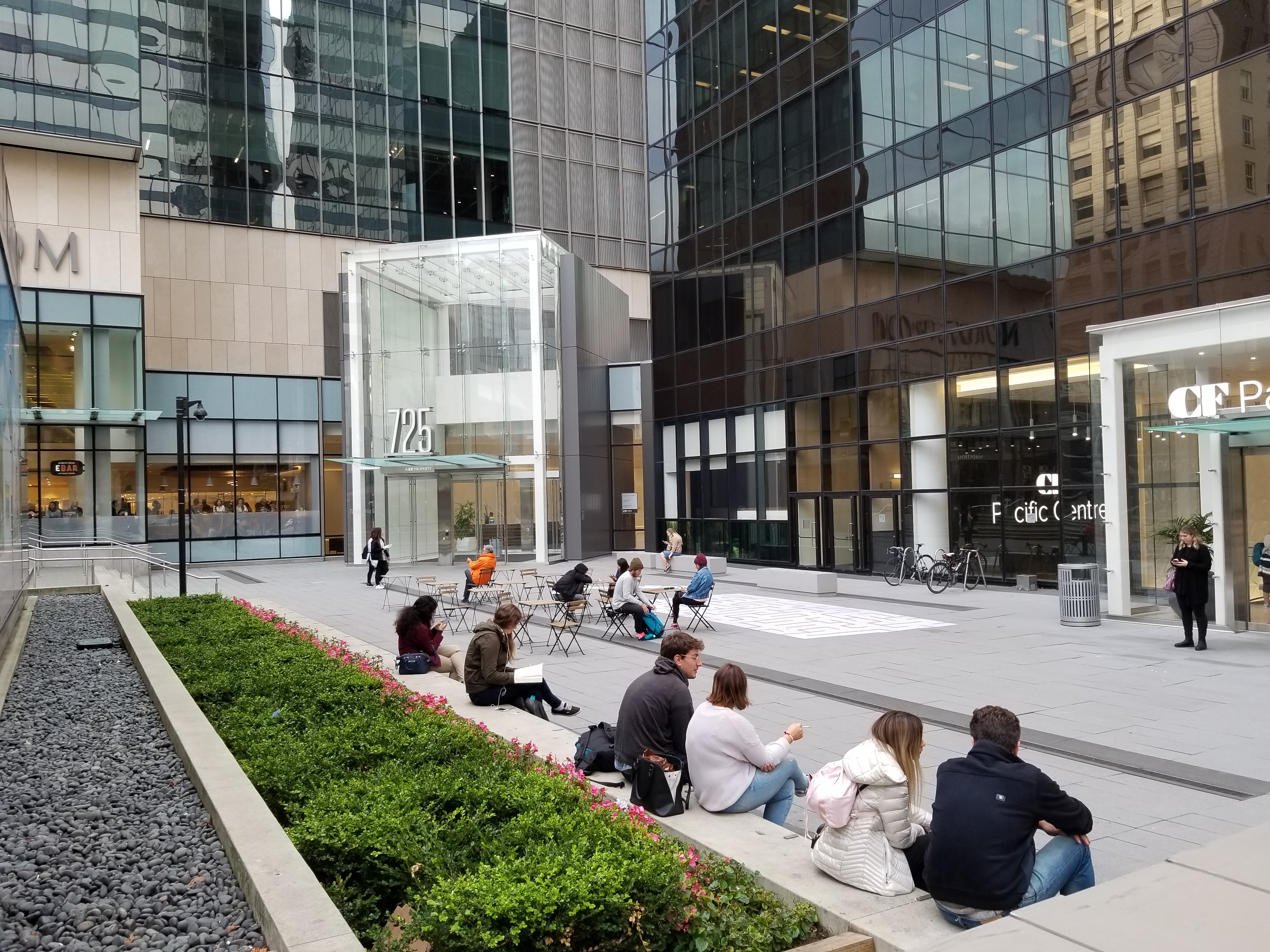
Georgia Street is an east–west street in the cities of Vancouver and Burnaby, British Columbia, Canada. Its section in Downtown Vancouver, designated West Georgia Street, serves as one of the primary streets for the financial and central business districts, and is the major transportation corridor connecting downtown Vancouver with the North Shore (and eventually Whistler) by way of the Lions Gate Bridge. The remainder of the street, known as East Georgia Street between Main Street and Boundary Road and simply Georgia Street within Burnaby, is more residential in character, and is discontinuous at several points.
West of Seymour Street, the thoroughfare is part of Highway 99. The entire section west of Main Street was previously designated part of Highway 1A, and markers for the ‘1A’ designation can still be seen at certain points.
Starting from its western terminus at Chilco Street by the edge of Stanley Park, Georgia Street runs southeast, separating the West End from the Coal Harbour neighbourhood. It then runs through the Financial District; landmarks and major skyscrapers along the way include Living Shangri-La (the city’s tallest building), Trump International Hotel and Tower, Royal Centre, 666 Burrard tower, Hotel Vancouver and upscale shops, the HSBC Canada Building, the Vancouver Art Gallery, Georgia Hotel, Four Seasons Hotel, Pacific Centre, the Granville Entertainment District, Scotia Tower, and the Canada Post headquarters. The eastern portion of West Georgia features the Theatre District (including Queen Elizabeth Theatre and the Centre in Vancouver for the Performing Arts), Library Square (the central branch of the Vancouver Public Library), Rogers Arena, and BC Place. West Georgia’s centre lane between Pender Street and Stanley Park is used as a counterflow lane.
East of Cambie Street, Georgia Street becomes a one-way street for eastbound traffic, and connects to the Georgia Viaduct for eastbound travellers only; westbound traffic is handled by Dunsmuir Street and the Dunsmuir Viaduct, located one block to the north.
East Georgia Street begins at the intersection with Main Street in Vancouver’s Chinatown, then runs eastwards through Strathcona, Grandview–Woodland and Hastings–Sunrise to Boundary Road. East of the municipal boundary, Georgia Street continues eastwards through Burnaby until its terminus at Grove Avenue in the Lochdale neighbourhood. This portion of Georgia Street is interrupted at several locations, such as Templeton Secondary School, Highway 1 and Kensington Park.
Georgia Street was named in 1886 after the Strait of Georgia, and ran between Chilco and Beatty Streets. After the first Georgia Viaduct opened in 1915, the street’s eastern end was connected to Harris Street, and Harris Street was subsequently renamed East Georgia Street.
The second Georgia Viaduct, opened in 1972, connects to Prior Street at its eastern end instead. As a result, East Georgia Street has been disconnected from West Georgia ever since.
On June 15, 2011 Georgia Street became the focal point of the 2011 Vancouver Stanley Cup riot.
Did Leonardo da Vinci have ADHD?
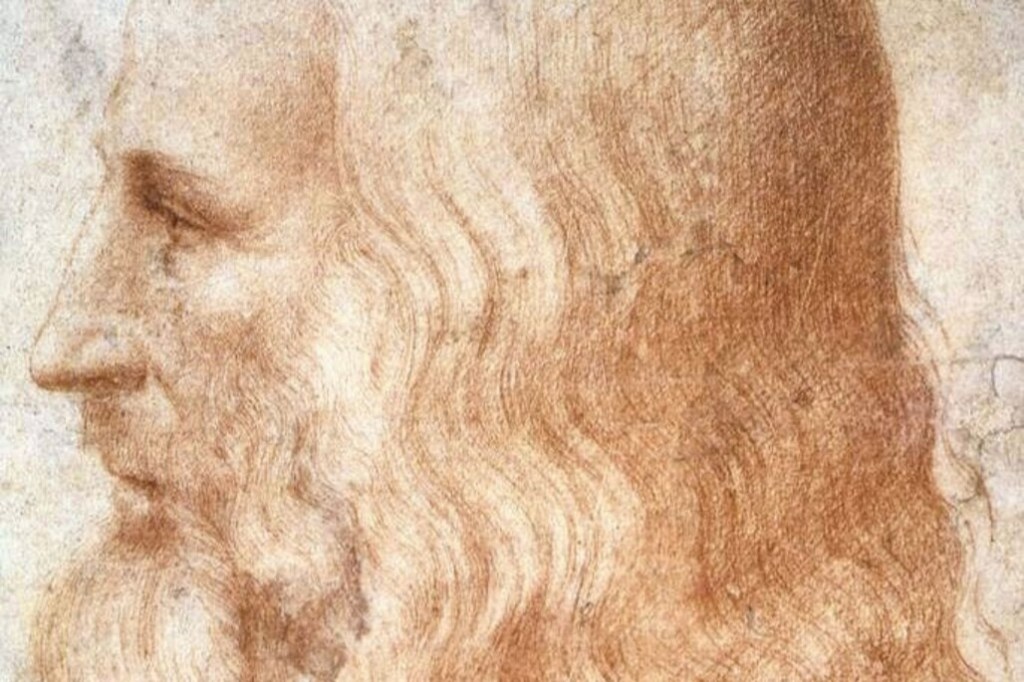
Leonardo da Vinci produced some of the world’s most iconic art, but historical accounts show that he struggled to complete his works. 500 years after his death, King’s College London researcher Professor Marco Catani suggests the best explanation for Leonardo’s inability to finish projects is that the great artist may have had Attention Deficit and Hyperactivity Disorder (ADHD).
In an article in the journal Brain, Professor Catani lays out the evidence supporting his hypothesis, drawing on historical accounts of Leonardo’s work practices and behaviour. As well as explaining his chronic procrastination, ADHD could have been a factor in Leonardo’s extraordinary creativity and achievements across the arts and sciences.
Professor Catani, from the Institute of Psychiatry, Psychology & Neuroscience at King’s, says: ‘While impossible to make a post-mortem diagnosis for someone who lived 500 years ago, I am confident that ADHD is the most convincing and scientifically plausible hypothesis to explain Leonardo’s difficulty in finishing his works. Historical records show Leonardo spent excessive time planning projects but lacked perseverance. ADHD could explain aspects of Leonardo’s temperament and his strange mercurial genius.’
ADHD is a behavioural disorder characterised by continuous procrastination, the inability to complete tasks, mind-wandering and a restlessness of the body and mind. While most commonly recognised in childhood, ADHD is increasingly being diagnosed among adults including university students and people with successful careers.
Leonardo’s difficulties with sticking to tasks were pervasive from childhood. Accounts from biographers and contemporaries show Leonardo was constantly on the go, often jumping from task to task. Like many of those suffering with ADHD, he slept very little and worked continuously night and day by alternating rapid cycles of short naps and time awake.
Alongside reports of erratic behaviour and incomplete projects from fellow artists and patrons, including Pope Leone X, there is indirect evidence to suggest that Leonardo’s brain was organised differently compared to average. He was left-handed and likely to be both dyslexic and have a dominance for language in the right-hand side of his brain, all of which are common among people with ADHD.
Perhaps the most distinctive and yet disruptive side of Leonardo’s mind was his voracious curiosity, which both propelled his creativity and also distracted him. Professor Catani suggests ADHD can have positive effects, for example mind-wandering can fuel creativity and originality. However, while beneficial in the initial stages of the creative process, the same traits can be a hindrance when interest shifts to something else.
Professor Catani, who specialises in treating neurodevelopmental conditions like Autism and ADHD, says: ‘There is a prevailing misconception that ADHD is typical of misbehaving children with low intelligence, destined for a troubled life. On the contrary, most of the adults I see in my clinic report having been bright, intuitive children but develop symptoms of anxiety and depression later in life for having failed to achieve their potential.’
‘It is incredible that Leonardo considered himself as someone who had failed in life. I hope that the case of Leonardo shows that ADHD is not linked to low IQ or lack of creativity but rather the difficulty of capitalising on natural talents. I hope that Leonardo’s legacy can help us to change some of the stigma around ADHD.’
God of War: Chains of Olympus Review – PlayStation Universe
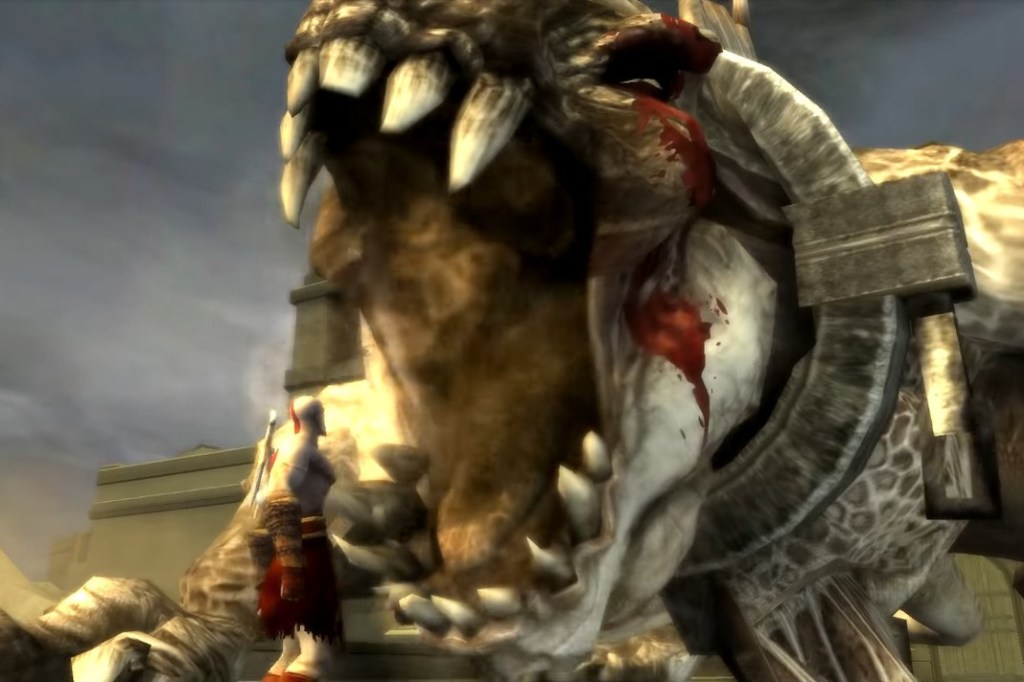
Kratos is one rad dude. When not slaying the Gods of Olympus or beasts of epic proportions, the Ghost of Sparta spends his free time stomping the Blades of Chaos directly into some unfortunate Cyclops’ eye. Such activities are proudly flaunted in Ready at Dawn’s God of War: Chains of Olympus for the PlayStation Portable, though the big question remains — does this portable prequel live up to its namesake?
For those of you who have yet to experience one of Kratos’ journeys, shame on you. In all seriousness though, five years prior to Chains of Olympus, Kratos was tricked by the dastardly Ares into slaying his wife and daughter. In order to rid himself of past sins, Kratos pledged servitude to the Gods of Olympus. Chains of Olympus finds the world covered in the darkness of dreams, as the mysterious Morpheus has placed a spell upon the land. Kratos will ultimately be forced to choose between his own personal redemption and saving the world and the slumbering gods from assured obliteration. The plot is captivating and provides several dramatic twists that kept us enticed until the full-circle conclusion, which veterans of the first two titles will surely appreciate.
These fans will also appreciate the authenticity of Chains of Olympus to the look and feel of the God of War universe. The title begins with a battle in Attica against invading Persian forces and their massive basilisk and never goes downhill from there. The pacing of the title, like the other God of Wars, is perfect. The amount and difficulty of enemies is spot on, always tough enough to provide a suitable challenge, but never overly frustrating. Hero (Normal) mode is recommended for series newcomers, while Spartan (Hard) mode provides the most appropriate challenge for experienced players on their first play-through. It will also lengthen the title, which unfortunately took us God of War pros only a mere six hours on Hero. The ridiculously difficult Challenge of the Gods and God (Very Hard) mode are unlocked upon completion of the game. You’ll absolutely want to complete both of these modes, as they undoubtedly add some replay value to an otherwise concise title.
Ready at Dawn discovered and implemented several clever techniques to circumvent the control limitations of the PSP, which in some cases work even better than the previous control mechanics. The drastic changes involve the rolling and magic mechanics. With the lack of a right analog nub, dodging is now handled by holding both L and R simultaneously while moving the analog nub in any direction you desire. Magic has entirely ditched D-pad switching, instead opting for a more approachable system. Hold R and press square, triangle or circle to activate one of the game’s three magic spells, which include an area attack, ranged attack and semi-ranged individual attack.
Even with these new improvements (especially to the magic system), combat is almost identical to the PS2 games. All your favorite combos — with one exception; L and X is no more — remain either untouched or tweaked for the better. Chains of Olympus doesn’t venture outside the proven formula, but we can’t really complain, as the series still has the most fluid combat system seen in any game to date. We’re a bit disappointed Chains of Olympus didn’t decide to bring swinging mechanics seen in God of War II though. What they did include however was a weapon outside of the Blades of Chaos worth using. Other God of War games have generally failed in that department. There’s only one side weapon, but it’s unique, useful, and a bit badass.
Unsurprisingly, quicktime events return for this installment, and for the most part, they’re just as captivating on the small screen. It’s still remarkably satisfying to rip off a gorgon’s head or cut a foe in two with the press of a few buttons, but we had one recurring issue with the analog nub. Any quicktime event that required rotation of the nub was generally more difficult than those with only button presses, as the tiny nub is no replacement for an analog stick. Outside of that irritating issue, quicktime events feel right at home on the PSP.
This begs the question, how does it look when that head pops off or that torso is cut in two? The answer is incredible, as there’s no other way to describe how this game looks. This title does not look like a PSP title; it looks like it belongs on the PS2 or even the Wii. Ready at Dawn has not only crafted the best looking PSP game thus far, but likely the finest looking title the system will ever see during its lifetime. Making full use of the PSP’s processing power, the title sacrifices nothing in its transition to the handheld console. From the incredible polygon count to the sharp texture work and the expert lighting, we couldn’t stop drooling over how outstanding the game looked.
It doesn’t run like a slideshow either; we only noticed minor framerate drops during the heaviest of action. Little touches like the self-lighting Blades of Chaos or the excellent blood effects added even more to the atmosphere. We can’t stress it enough; this game is a technical showcase for the system, includes the stunning vistas and epic set pieces the console versions are known for. This is the closest we’ve seen to graphical perfection on a platform in a long, long time.
The cutscenes, outside of Crisis Core’s CG scenes, are the most cinematographic on the PSP. With extraordinary choreography and execution, the story hasn’t been slighted for the portable audience. The voice acting within game is also fantastic, perfectly on par with that of the console versions. Accompanying the cutscenes, and in fact the entire game, are the musical compositions that we’ve come to know and love. Although there was only 15 minutes of new music recorded for Chains of Olympus, old tracks have been remixed to feel fresh once again.
Ready at Dawn Studios launched their first game, Daxter, in 2006. The title brought the PS2 franchise to the portable scene with style. Showcasing the PSP’s incredible graphical prowess, the game remained markedly enjoyable. We don’t know how they did it, but Ready at Dawn has outdone itself, creating a true console experience on the go. God of War: Chains of Olympus isn’t bound by the typical restrictions of the PSP, as the developers have craftily sidestepped the handheld’s control limitations and somehow managed to push visual fidelity through the roof. As a result, God of War: Chains of Olympus is one of the best games the PSP has ever seen. Well done Ready at Dawn, well done.
Now listening to Piano Sonata No. 4 by Ludwig van Beethoven and Ghostbusters: Frozen Empire by Dario Marianelli…


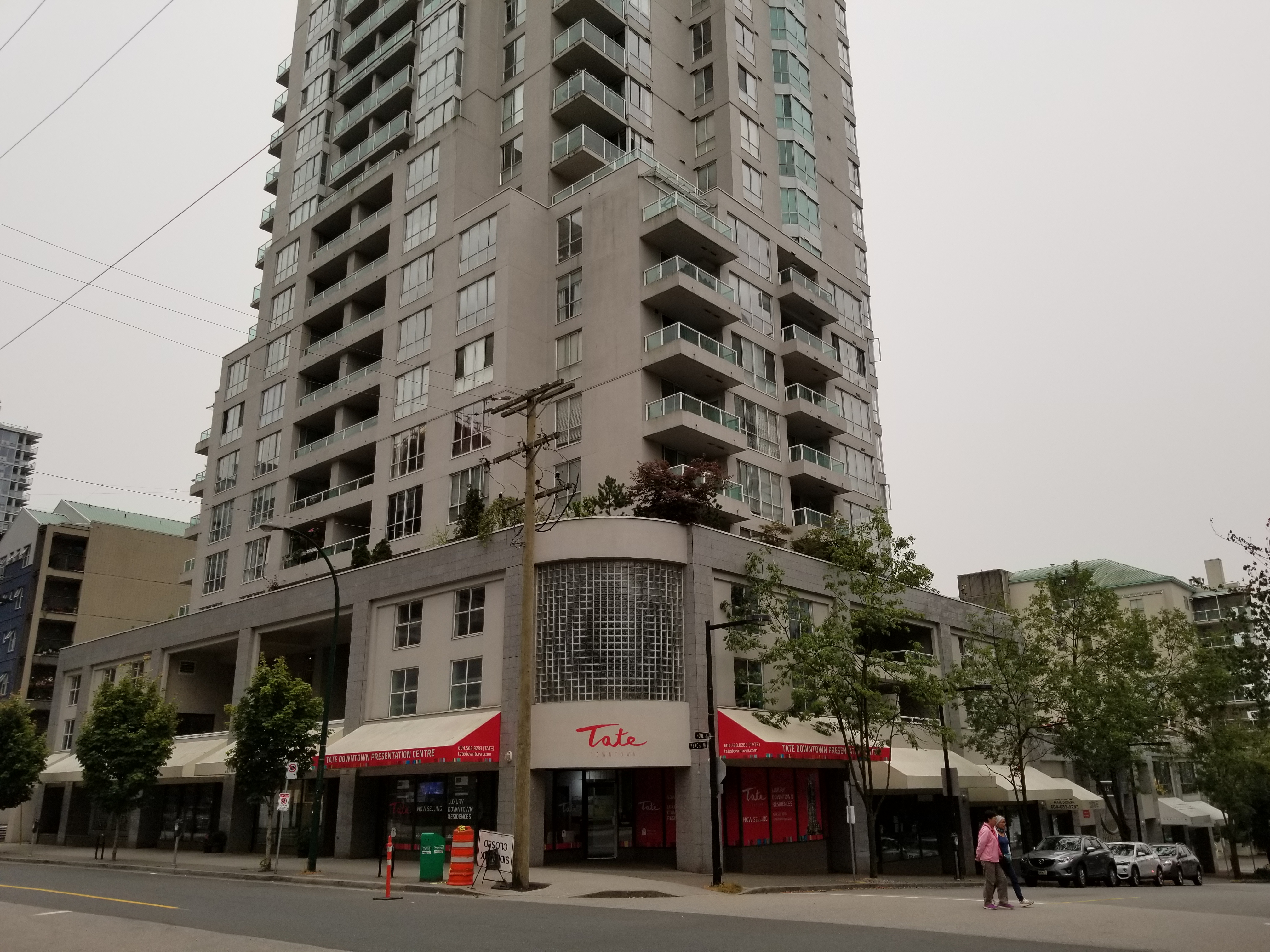
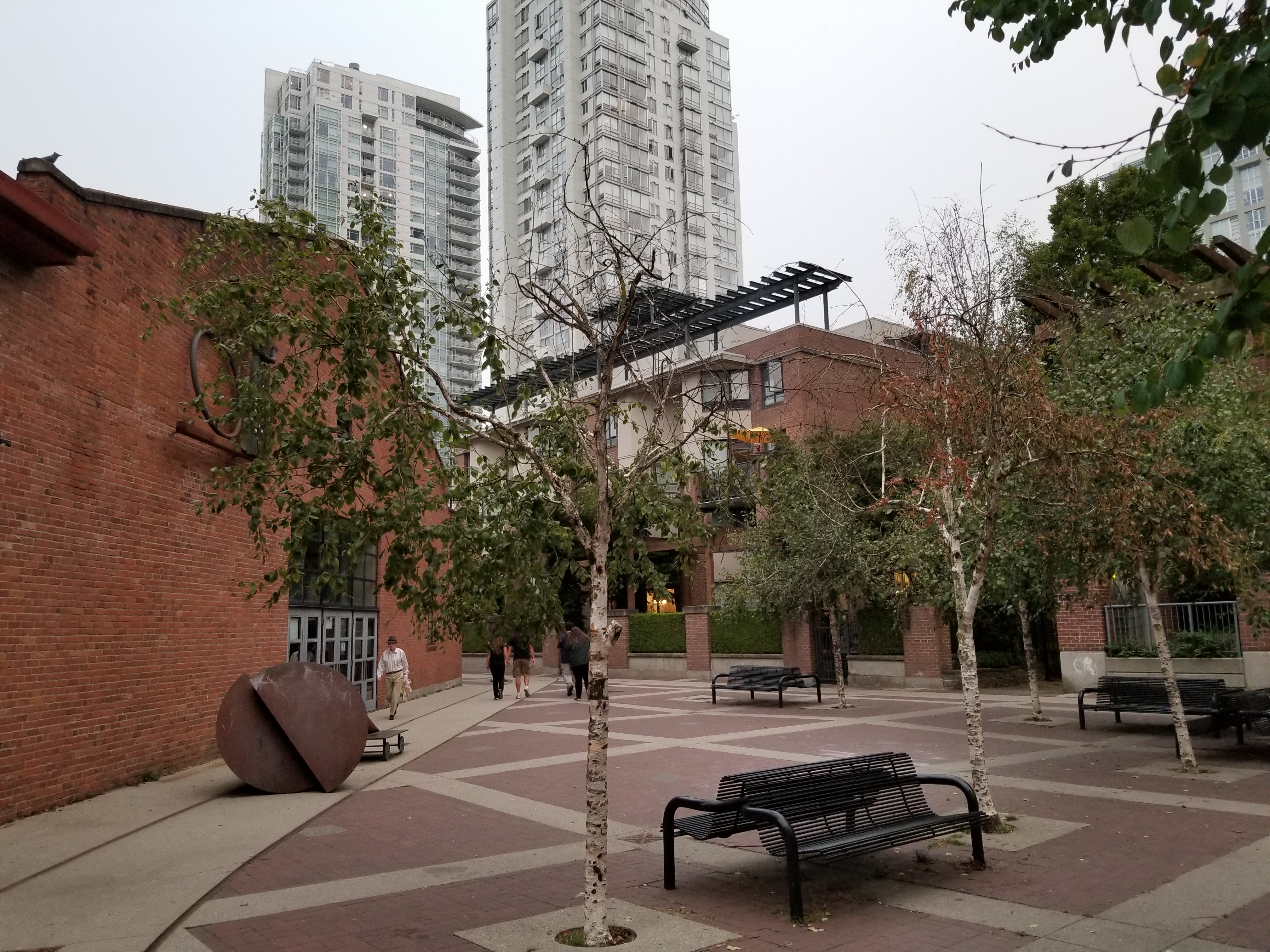
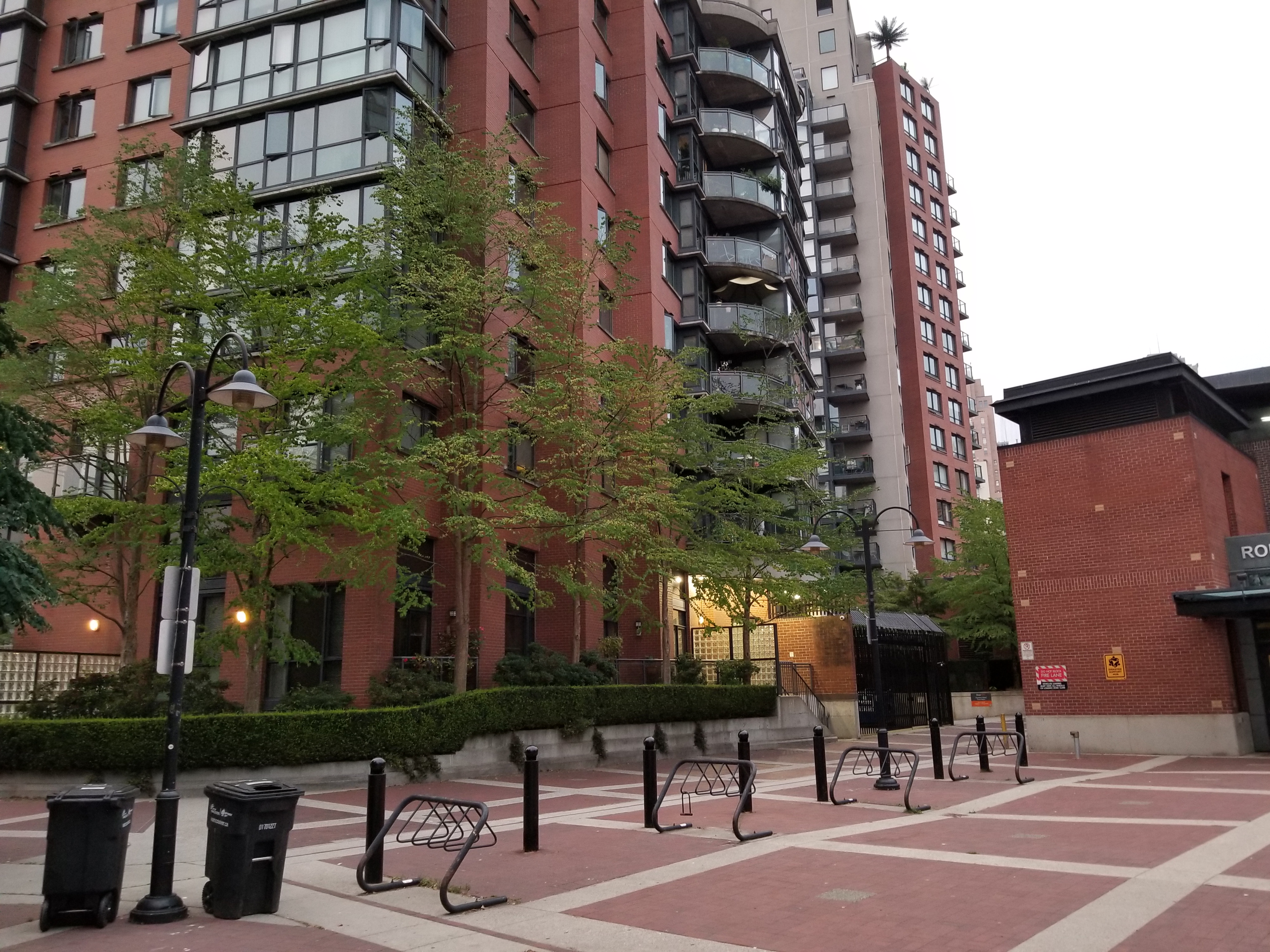
In Twinkie Park in Yaletown. Summer of 2018.
 Igor's Blog