

The Birth Of Venus by Adolf Hiremy-Hirschl, 1888.

Instagram model Brittany Renner has been accused of mocking Islam after she posted a video wearing a hijab.
Renner, mostly known for her past romance with NBA star PJ Washington, sparked anger on social media with her new look, which is a miles away from her usually provocative wardrobe.
The 32-year-old, who has not announced whether she has converted to Islam, first showed off her new style as she spoke of trusting ‘signs’ from the universe in a video message she titled, ‘Trust your wings.’
In a later video posted to her Instagram, Renner discussed her wardrobe update, writing: ‘I am going to enjoy every moment of this walk of mine.’
Renner said she’s not sure how her new look will work with her contractual obligations, given she is paid to model clothing from stores marketed as ‘sexy,’ such as Fashion Nova.
The influencer also said she is looking into Botox under her arms to prevent sweating because she has been struggling with the modest look amid the hot weather.
‘Manifesting a new wardrobe… Inshallah,’ she said, using the Arabic sentence for God willing’ and offending many commentators.
One angry comment read: ‘Girl u not Muslim don’t piss me off.’
Another added: ‘I feel like she is making a mockery…’
A third said: ‘STOP DISRESPECTING MY RELIGION!!!!!!!! Islam isn’t a marketing strategy, a way to get in the blogs or a way to gain attention!!! It’s a way of life and I would appreciate if you wouldn’t disrespect the hijab. If you were serious you would delete or archive your photos uncovered!’
Renner rose to prominence after her relationship with Washington and has landed herself in several headlines over a number of scandalous statements.
She and NBA star Washington, 25, started dating sometime in 2020 before breaking up the following year, with the NBA player writing a vague tweet about someone ‘faking it all along.’
The pair share a child, and Renner, who has been linked in the past with James Harden, Lil Uzi Vert and a slew of other celebrities.
Renner told Akademiks that she and Washington met when she was 26 years old, while he was playing at the University of Kentucky.
Washington has made over $17million to date in his pro career and signed a three-year, $48million extension with the Hornets last summer.
Renner was also in the news back last year when she was spotted out for dinner with NBA legend Shaquille O’Neal in Beverly Hills.
The pair were caught by paparazzi entering a restaurant, where they dined together and were seen laughing and joking.
While the internet was buzzing after the video and photos of the two leaked, TMZ was told that ‘there was nothing romantic going on’ between the pair.
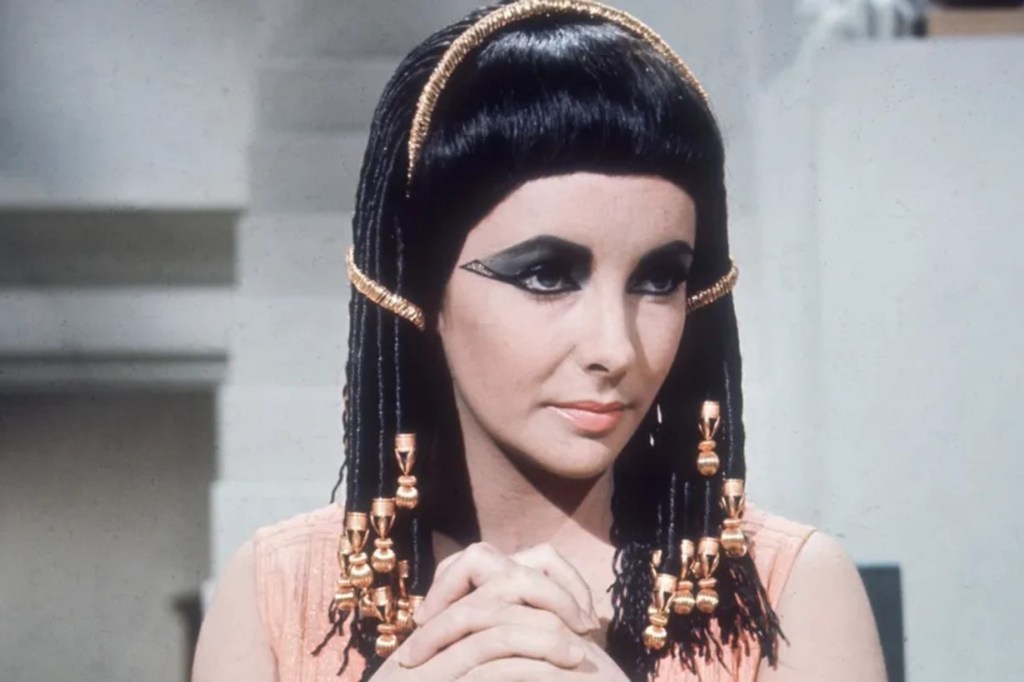
Elizabeth Taylor was known for Cleopatra and Who’s Afraid of Virginia Woolf was known for her violet eyes, but were they real?
The actress Elizabeth Taylor is primarily remembered for her passionate performances in numerous films, such as 1963’s Cleopatra and 1958’s Cat on a Hot Tin Roof as well as her marriage to Richard Burton and her love of diamonds. Due to her immense talent as an actress, she was a captivating screen presence and audiences often found themselves hypnotized by her famous violet eyes. But did Elizabeth Taylor really have violet eyes?
Elizabeth Taylor was born on February 27th 1932 and made her film debut in 1942’s One Born Every Minute before achieving stardom with 1944’s National velvet, according to Biography.com.
One of her most famous roles was as Cleopatra, Queen of the Nile, in the 1963 film of the same name. The film earned Taylor a Guinness World Record for Most Costume Changes in a Film, according to ABC.
However, Celopatra would also impact Taylor’s life in another way as it brought her close to the actor Richard Burton and the two would begin an obsessive love affair. Burton would present Taylor with some of the world’s most famous jewels as tokens of his affections, including the 33.19 Carat Krupp Diamond, according to Vanity Fair. They made several films together, including 1966’s Who’s Afraid of Virginia Woolf? For which Taylor won one of two academy awards. However the couple had a troubled marriage, they would divorce in 1974 only to remarry and divorce again a year later.
Taylor was also an important activist who used her fame to shine a light on the HIV/AIDS pandemic, curtailing some of the ignorance surrounding the virus, according to the Elizabeth Taylor site.
Taylor remains “one of the world’s most iconic women, renowned for her independent spirit, enduring strength and unwavering compassion, she has captured the hearts of millions,” the official Elizabeth Taylor site states.
These days, thanks to colored contact lenses, anyone can have violet-colored eyes . Taylor didn’t come by her purple peepers that way; the first tinted contact lenses weren’t commercially available until 1983. Taylor’s eye color was the real deal.
The appearance of the iris, the colored ring that’s around the eye’s black pupil depends on how much of the natural pigment melanin it contains. The more melanin in your iris, the darker your eyes will look (melanin levels are determined by your genes ). For example, the irises of a person with dark brown eyes have more melanin than the eyes of a green-eyed person. Taylor’s eyes had a very specific, and rare, amount of melanin, according to The List.
“There are various shades of blues and grays, with many in-between. Violet may have been her typical pigmentation,” Norman Saffra, chairman of the ophthalmology department at the Maimonides Medical Center in Brooklyn, N.Y., told Live Science . “It’s possible to have that eye color; it all depends on the amount of melanin.”
Eye color can also appear to change based on the eye’s light absorption, Saffra said. For example, wearing a white shirt will reflect light off of the iris and make its color look slightly lighter.
Makeup can also “bring out” certain colors in the eyes. Taylor was often photographed wearing blue or purple eyeshadow to compliment her eyes’ naturally violet hue, or dark brown eyeshadow and black eyeliner to contrast against and play up their unique color.

In 1988, I played a relatively unknown Master System RPG titled Phantasy Star, and it forever changed me as a fan of video games. Then, eight years later, another Japan-born role-playing romp would come along and leave an equally impactful mark on my life; the similarly obscure Atlus release Revelations: Persona.
Phantasy Star taught me that I loved JRPGs; Persona taught me what I wanted from them.
The harsh reality about games we used to love is that often that love can be questioned should we actually view them again with more mature eyes. For this reason, I was honestly hesitant to go back and revisit Persona via its PSP rebirth. The truth, I told myself, was that more likely than not, the game wouldn’t have stood the test of time as much as I might hope.
Boy, was I wrong. It probably took me all of about ten minutes to get back into the flow of Persona’s gameplay, and soon a feeling of shock came over me. Here I was, playing a thirteen-year-old RPG–a genre notorious for titles that end up feeling outdated a few years from launch–and I couldn’t believe how amazing and engrossing it still was.
The elements that cast their spell over my younger self–the group of every-day high schoolers dragged into something bigger than themselves, the dark and twisted storyline, the shocking (to me, at the time) level of demon interaction–it’s all still there, and every bit as enthralling as it was the first time around. Even more than that, however, was the realization that I was finally, after thirteen years, truly playing Persona. Yes, for this new PSP remake, Atlus has polished some things, added others and made for an overall better experience; and all of that is much appreciated. For us in the West, however, the biggest benefit we now receive is the chance to finally, after all this time, play the true and definitive version of the game. When it was released in 1996, the version of Persona we were given by Atlus USA was a Persona that had been heavily edited, and which had even seen its optional “Snow Queen Quest” storyline completely ripped out.
So, for me, this wasn’t just a question of playing some new release in order to write this review; it was the chance to finish what I had started so long ago. Even as it existed then, flawed and fragmented, the me from 1996 loved Persona from the minute he stepped foot into the halls of St. Hermelin High.
Now, at last, I could once and for all complete the journey that me had embarked on.
While I am waxing poetic about my adoration for Persona, however, let me be very clear on what it is–and what it isn’t. If you’ve come to be a fan of the series thanks to its PlayStation 2 chapters, then this original episode of the saga could very well feel like a punch to the face and a boot to the crotch. All the fun you’ve had getting chummy with the guys and gals surrounding your virtual self via the Social Link system is nowhere to be seen; and if you found Persona 3’s Tartarus to be a long, drawn-out dungeon-crawling experience, the 3D dungeons present here will derive devilish pleasure from kicking your ass and taking your name.
Simply put, you cannot go into Persona expecting the same kind of experience from the series that you can legitimately expect today. Persona looks, feels, and plays like an RPG from the days when RPGs were old-school, hard-core, and not afraid to make you work for everything that you earned. The game’s revival is a long-overdue event, and a wonderful way to go back and see the origins of the Persona franchise (or replay those origins for us longtime fans). Make no mistake, however; a love for where the series is now does not guarantee you’ll enjoy what it was then.

The refectory of the Convent of Santa Maria delle Grazie forms an integral part of this architectural complex, begun in Milan in 1463 and reworked at the end of the 15th century by Bramante. On the north wall is The Last Supper, the unrivalled masterpiece painted between 1495 and 1497 by Leonardo da Vinci, whose work was to herald a new era in the history of art.
Brief synthesis
The refectory of the Convent of Santa Maria delle Grazie in Milan forms an integral part of this architectural complex, begun in 1463 and reworked at the end of the 15th century by Bramante. On the north wall is The Last Supper, the unrivalled masterpiece painted between 1495 and 1497 by Leonardo da Vinci, whose work was to herald a new era in the history of art. The complex, including the Church and Convent, was built from 1463 onwards by Guiniforte Solari, and was afterwards considerably modified at the end of 15th century by Bramante, one of the masters of the Renaissance. Bramante structurally enlarged the church and added large semi-circular apses, a wonderful drum-shaped dome surrounded by columns, and a spectacular cloister and refectory.
The painting was commissioned in 1495 and completed in 1497. The representation by Leonardo da Vinci depicted the moment immediately after Christ said, “One of you will betray me”. Leonardo rejected the classical interpretation of the composition and had Jesus in the midst of the Apostles; he also created four groups of three figures on either side of Christ. The 12 Apostles reacted in differing ways; their movements and expressions are magnificently captured in Leonardo’s work. The genius of the artist is seen especially in the use of light and strong perspective. Unfortunately, Leonardo did not work in fresco but in tempera on a two-layered surface of plaster that did not absorb paint. It was as early as 1568 when Vasari first pointed out problems with this painting technique.
The Last Supper, which Leonardo da Vinci painted in the refectory of the Dominican convent of Santa Maria delle Grazie, is undisputedly one of the world’s masterpieces of painting. Its unique value, which over the centuries has had immense influence in the field of figurative art, is inseparable from the architectural complex in which it was created.
Criterion (i): The Last Supper is a timeless and unique artistic achievement of Outstanding Universal Value.
Criterion (ii): This work has highly influenced not only the development of one iconographic theme, but also the entire development of painting. Heydenreich wrote about the “superdimension” of its painted bodies in relation to space. It is one of the first classic paintings that focuses on a precise and very short moment of time, instead of a long one. After five centuries, the Last Supper is one of most reproduced and copied paintings, and its creation in 1495-1497 is considered to have heralded a new phase in the history of art.
Integrity
The property contains all the elements that express its unique value, especially the Santa Maria delle Grazie complex, formed by the church, the convent and the Last Supper painted by Leonardo da Vinci. Despite the damages that occurred during the Second World War, the complex has preserved both its original architectural structure and the internal relation between its components, including the famous fresco. The presence of Dominican Fathers and the continuity of religious use have contributed to safeguard the property’s functional integrity. Da Vinci’s painting has considerable conservation problems due to the techniques used to paint it. The property suffers from environmental pressures and from potentially excessive visitation, although the latter is controlled by limiting access.
Authenticity
The site was badly damaged by bombing in 1943, but subsequently completely restored and renovated. The Last Supper, which miraculously survived the Allied bombing, suffers from other conservation problems which are due, above all, to Leonardo’s experimental technique, and which have long been evident. There are records of restoration works from the eighteenth century up to the present day, which bear witness to the continuing concern regarding the conservation of this artistic heritage. An important restoration of the Last Supper was completed at the end of the 1990. Careful treatment of the extremely delicate and considerably deteriorated paint layer restored the work’s hidden colours. Both the church and convent buildings (e.g. the cloisters) have been the object of continuous restoration works from the 1990s onwards, following a unified conservation strategy. Routine restoration work on the buildings is under way at present and has led to new discoveries that further increase the value of the property.
Protection and management requirements
The complex and its surrounding areas are currently under the protection of Italian law on cultural patrimony (Decreto Legislativo N. 42/2004, Codice dei Beni Culturali e del Paesaggio). Every intervention must obtain a specific authorisation by the local offices of the Ministry for Cultural Heritage and Activities and Tourism. More protection rules have been provided to deal with local traffic and vehicles parking on the nearby public square.
The steering group for the property is formed by the members of the Ministry’s local office. They are directly involved in all aspects of the property. The steering group has the task of defining the guidelines, procedures, programming and periodic monitoring applied to the protection system, which has been established in particular for The Last Supper, and of guaranteeing efficient interaction with the conservation and maintenance programmes for the entire building complex.
One of the most important and difficult aspects of the conservation of the fresco is related to the pollution caused by the great number of visitors. Continual monitoring is performed to guarantee optimum atmospheric conditions inside the refectory and thus avoid the danger posed by air pollution and elevated visitor numbers. A sophisticated monitoring device ensures that the air composition and the light and humidity levels remain within the established limits. A limited number of visitors are admitted at any one time.
The complex is the property of the Italian State, and in 1934, it was given in concession to the Dominican Fathers of Santa Maria delle Grazie, who contribute to the day-to-day administration of the complex with regard to its residential and religious functions. The room of The Last Supper is a museum cared for by the State administration.
The Management of the property is performed by the Ministry for Cultural Heritage and Activities and Tourism through its local Offices, which are directly involved in conservation, monitoring and protection of the property. Although a management plan itself has not yet been drawn up, an effective instrument that regulates the use and external relations is in place.
There’s a reason Mary Shelley’s Frankenstein is so enduringly influential, well-adapted, and well-studied, and it has to do with the novel’s brilliant exposé of ‘the other’. Over 200 years have passed since its initial publication and we’re still reading Shelley’s words and using them to reflect on our very human tendency to scape-goat, and ‘other’, those who don’t fit in. Frankenstein raises a whole lot of questions about different forms of prejudice and the institutions and ideologies they support, from patriarchy to slavery – learn more by watching this video.

A Russian state TV host and his guests have been left stunned by Ukraine’s surprise incursion into Kursk and the scale of advances into the western region.
Propagandist Sergey Mardan described the three-day-old armored assault into Russia’s Kursk, which borders Ukraine’s northeastern Sumy region, as “chaos” during a show he hosted on Solovyov Live. An excerpt of the broadcast was shared on X, formerly Twitter, late on Thursday by Julia Davis, the founder of the Russia Media Monitor watchdog group.
Kyiv’s forces launched its cross-border armored assault on Tuesday, and swiftly seized a large number of settlements. They captured scores of Russian personnel, and overwhelmed two major lines of fortifications in the Kursk region that took Russia over two-and-a-half years and more than $170 million to build.
Newsweek has contacted Russia’s Defense Ministry for comment by email.
Ukraine has so far gained control of at least 166 square miles of Russian territory—equivalent to the size of New Orleans—investigative Russian outlet Agentstvo reported on Thursday. Newsweek could not independently verify this.
“According to the scarce, unverified comments that I would doubt 10 times over, all of this resembles chaos—a word that members of the military don’t like,” said Mardan, criticizing the lack of information on the situation from the Kremlin.
“Ukrainians are in the Kursk region; part of Sudzha is under Ukrainian control. It’s a regional center. Yes, it’s true. There is no official confirmation, but it’s true. There are tanks, there are armored personnel carriers, there is a colossal number of drones…,” said Mardan.
Mardan commented on reports that emerged on Thursday that Kyiv’s forces were reported to be nearly in full control of the city Sudzha, where a gas-measuring facility that facilitates the flow of Russian gas to Europe is located.
“By the end of the day yesterday, parts of Sudzha were under the control of Ukrainians. They have entered it. According to what I have read and have heard, Russian Army reserves are being pulled into the Kursk region,” the state TV host said. “There is still no military information, basically none. I don’t know whether it’s good or bad. I think this isn’t so good.”
Georgy Mamsurov, a correspondent for Solovyov Live, was invited to speak on-air, and said that his sources say Ukraine “managed to grab a hold of the northern parts” of Sudzha, but was stopped near the town of Korenevo.
“In my opinion, it’s difficult to even call it a raid; this is a full-fledged combined arms operation that Ukraine’s Armed Forces have initiated on the territory of our country,” the journalist added.
Mikhail Khodaryonok, a military expert, told Mardan that Ukraine has made “significant advancement” into the Kursk region. He added that he believes Russian citizens will soon be demanding answers from the Kremlin.
“Suddenly, the Ukrainian side has demonstrated its ability to attack and to conduct successful action,” said Khodaryonok.
“We don’t have the precise data as to which areas are controlled by which side. One way or another, citizens will be asking questions. There are questions to our intelligence agencies—how could this happen? How? Where is the engineering equipment that should be on the border of our nation? Where are the troops that were supposed to provide cover and repel any attacks? Where are the necessary reserves?” he said.
Putin on Wednesday called Ukraine’s cross-border armored assaults a “large-scale provocation.”
“We have to start with the events in the Kursk region,” the Russian leader said at an emergency meeting of his Security Council. “As you know, the Kyiv regime has carried out another large-scale provocation, firing indiscriminately with various types of weapons, including missiles, at civilian buildings, residential buildings, and ambulances.”
Russia’s Defense Ministry has, meanwhile, downplayed the scale of Ukrainian advances in the region, declaring “victory” amid the incursion at least six times, according to Agentstvo.



 Igor's Blog