


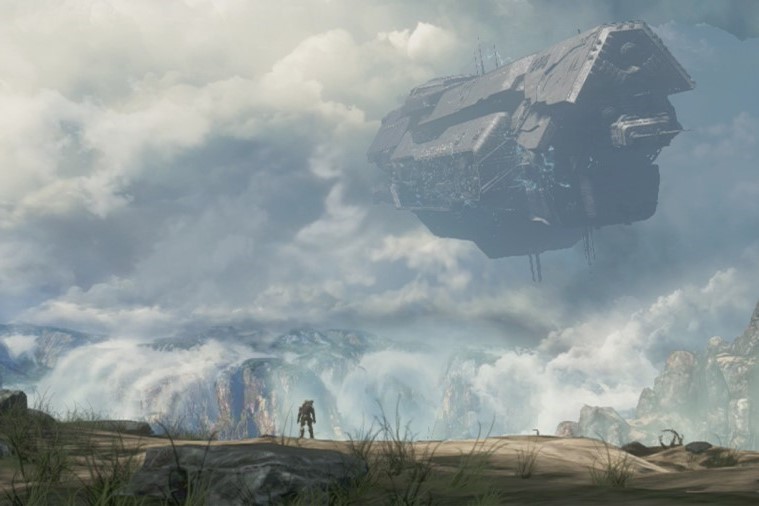
I recently finished reading issue #89 of NGC magazine from January of 2004. The only reason why I downloaded this issue from https://archive.org/ is because it features a review of Fire Emblem: The Blazing Blade (2003). It’s the first Fire Emblem game that I managed to complete, and this happened in the summer of 2020. I played this game on my Wii U console. It’s one of several dozen Game Boy Advance games that I downloaded before Nintendo shut down the Nintendo eShop for the Wii U. Fortunately, there’s a quick save button for GBA games on the Wii U, and this helped a lot when I was playing The Blazing Blade because it’s not an easy game, though I like strategy games. Looking back, I think that I should have played The Blazing Blade on a handheld console, but playing it on my Wii U still turned out to be a very good experience. This issue of NGC features a review of what Nintendo was up to in 2003. There are short articles about which video games the editors of the magazine were looking forward to in 2004. Among these games is Resident Evil 4. There’s a long review of 1080° Avalanche, which got a rating of 90/100 from the magazine. Judge Dredd: Dredd vs. Death got a rating of 84/100. The screenshots in the review actually made me really interested in this game. Mario & Luigi: Superstar Saga got a rating of 94/100 from the magazine. Superstar Saga isn’t a game that I enjoyed playing much. This RPG was clearly made for children, and some people seem to like many aspects of this game, but not much appealed to me here, though I understand why some people really like this game because it’s overall solid and fun. Fire Emblem: The Blazing Blade got a rating of 92/100 from the magazine. I’d say that The Blazing Blade is one of the most memorable and enjoyable games that I’ve played. NGC rated it highly and considered it to be superior to Final Fantasy Tactics (1997). I don’t agree that it’s better than Final Fantasy Tactics, but it’s still a fantastic game. Pokemon Colosseum got a rating of 84/100 from the magazine and a lengthy review. Other than a few reviews, there’s little that interested me in this issue of NGC. I haven’t played many GameCube games so far, and, although I have no love for Nintendo, I don’t think of the GameCube as a bad console because dozens of good games got released for it. There’s no doubt that enough innovation was still taking place in the video game industry during the sixth-generation. Many of the video games that got released in the 2000s are the games that got me interested in gaming. I mean, Resident Evil 4 and The Legend of Zelda: The Wind Waker are still perhaps the most memorable and most enjoyable games that I’ve played, and, strangely enough, both of them got made for the GameCube. Some people are now complaining about the fact that the ninth-generation is pretty much a wasteland when it comes to new games. What they mean is that few new games got released for the PlayStation 5 and the Xbox Series X. I don’t have much to say about this because I don’t own a ninth-generation video game console, but I can say that none of the games that got released on the PS5 so far interest me. The only PS5 game that I kind of want to play is God of War Ragnarok, and that’s only because it’s a sequel to God of War (2018), which is one of the most enjoyable games that I’ve played in the last few years. But God of War Ragnarok is available on the PS4 too, though its $80 price tag has so far prevented me from purchasing it. The ninth-generation is certainly short on console exclusives, especially on good console exclusives. I’d say that it’s also short on variety and new original games. Many new big budget video game releases nowadays are either remakes or sequels. I especially don’t think fondly of the remakes and remasters that got made in the last decade and a half. But is this a problem for me? Of course not. Even if I had a PS5 or a Series X, the shortage of console exclusives and of different genres of games wouldn’t have bothered me much because I don’t play video games every day. But what has caused this “stagnation” in the industry? Well, perhaps one of the most important factors that has brought the industry to this point is the fact that the industry is now dominated by monopolies or near monopolies, which are more concerned about making games that have big budget cutscenes than about making a variety of good original games. Interestingly enough, even with all of their resources, these giants of the industry end up making few games and certainly few, if any, great games. Instead of making something new and original, they make poorly thought out remakes and remasters such as Demon’s Souls (2020) or Persona 3 Reload (2024). So, obviously, I haven’t played Persona 3 Reload, but I have played Persona 3 for the PS2, which turned out to be one of the best video games that I’ve played. Persona 4 is even better than Persona 3, in my opinion. I don’t like the “enhanced version” that’s called Persona 4 Golden for the PlayStation Vita, but Persona 4 for the PS2 is one of my favorite games. The latest Persona game that I’ve completed is Shin Megami Tensei: Persona (2009) for the PSP. This game is not on my favorite list of the best video games ever, which is the one on Wikipedia (https://en.wikipedia.org/wiki/List_of_video_games_considered_the_best), but this didn’t deter me from playing this “PlayStation classic”. Unless you’re a pro at playing the PS1 Persona games, this first Persona game won’t be easy to finish. I had to spend hours on earning more experience for my team of characters and their personas in order to defeat the last boss of the game. But was this game worth playing? Well, it was worth it for me. Just like Final Fantasy Tactics: The War of the Lions (2007) and Tactics Ogre: Let Us Cling Together (2010), this port looks lovely on the screen of a PlayStation Portable. The port’s cutscenes are quality works that I was glad to watch. In short, playing this game is like playing a SNES RPG. There are plenty of random battles in dull, labyrinthine dungeons. But there’s no denying that the game’s setting, locations, characters, and personas are well-designed. The game’s good soundtrack certainly makes it easier to play. I got enjoyment from playing this game from time to time simply because it’s a PSP game, but this may not be an attraction for everyone. When it comes to Halo 4 (2012), which is another game that I managed to complete recently, I think that I won’t beat around the bush. I’ll just say that I love Halo 4. I still remember playing the first three Halo games a few years back very well. These games turned me into somewhat of a fan of the Halo franchise. The shooter genre in video games is far from my favorite genre, and, therefore, the things that drew me in were the stories and the graphics of the Halo games. Halo 4 is up to the standards of the first three games. The story and the graphics are just as appealing, though I would say that they’re better in Halo 4 because they’re more polished. The title screen of this video game, with its music, instantly became a favorite of mine. Halo 4 cost a lot of money to make, but the cost was well worth it because, for example, the game’s cutscenes are well-designed, detailed, and even awe-inspiring. I played Halo 4 by using my Xbox 360, but this game is also available on Steam for PC. When it comes to the topic of whether or not video games can be considered art, I personally don’t think that video games are art. But I don’t need for something to be a piece of art in order for me to respect it and like it. The problem here is that video games are interactive. They are, like other types of games, something that you have to play and interact with. You don’t just look at video games in order to get enjoyment from them. But, if you’re someone who thinks that almost anything that’s attractive is art, you can certainly think of video games as art. For example, you can think of a good-looking car as art. Or you can think of a piece of furniture as art. Or you can think of a building as art. People certainly love and admire buildings. Or you can think of a board game like Monopoly as art, if it’s beautifully designed. It’s the same with video games, in my opinion. The thing is that people usually try to make whatever it is that they’re creating look beautiful. But parts of video games (in-game cinematics, music, levels, etc.) can certainly be thought of as art. One thing that I can say about video games is that they are usually more immersive than any art form, such as film, music, or paintings. In just a few decades, the video game industry has grown to become larger than all of film, music, and television combined. People certainly love their video games. Most people grow up playing video games now. This isn’t the case with me because I wasn’t allowed to play video games when I was growing up, but I’m still very fond of video games. If I could, I’d spend most of my time on playing video games, but there’s also the fact that I like reading or watching films and television in my free time too. But who am I to talk about this? If anyone should be asked about the topic of video games as art, it should be the preeminent modern philosopher Sir Rich Evans, who’s the greatest mind of our time. Just don’t ask for the opinion of two unoriginal and uninventive old dudes called Mike and Jay.
I can say that I listened to ‘Pericles and Athens’ (1966) by Andrew Burn for the second time recently. Listening to the audiobook again was a breeze for me not only because the book isn’t thick but also because it’s well-written. It was a pleasure to listen to the audiobook of ‘Pericles and Athens’ on Audible. I even bought a copy of the book in paperback form recently on eBay because of the useful information that it contains and because it’s one of the most memorable books that I’ve read (listened to). The following is what Burn had to say about the government of Athens in the book. “This brings us to a second, a modern misconception, which arises from equating Pericles’ position with that of a modern prime minister or American president. The difference lies between the “direct democracy” of the Athenian city-state and representative democracy, which an Athenian would not have considered a democracy at all. Athens did not elect a parliament or president or a government of any kind. It elected or chose by lot sundry committees and officials, some of them very important; but in addition to calling them to account at the end of their year, the Sovereign People itself directed them on all major issues, at meetings of the Assembly held at least four times in every five weeks, in addition to special meetings as required. The whole body of citizens, or such as chose to attend – great and small landed proprietors, merchants, shopkeepers, employers of labour, and an increasing majority of plain manual workers – formed at once the Athenian legislature and the supreme deliberative and policy-making body. The Athenian people did not choose but was its own government.” Another audiobook that I enjoyed listening to recently is ‘Alice’s Adventures in Wonderland’ (1865) by Lewis Carroll. It’s narrated by Scarlett Johansson. I was able to get it for free on Audible, and, when I began listening to it, I got through it quite quickly because of the good narration. ‘Dune’ (1965) by Frank Herbert is another audiobook that I listened to for the second time a while ago. ‘Dune’ isn’t one of my favorite novels. It’s not even one of my favorite science-fiction novels, but the audiobook is a pleasure to listen to and I wanted to listen to it again because when I listened to it for the first time I didn’t listen to it attentively. When I listen to an audiobook, I don’t do anything else because I don’t want to get distracted. The other science-fiction novels that I enjoyed listening to so far because of their narrations on Audible are ‘2001: A Space Odyssey’ by Arthur C. Clarke, ‘Alien: Out of the Shadows’ by Tim Lebbon, ‘Alien: Sea of Sorrows’ by James A. Moore, ‘Alien: River of Pain’ by Christopher Golden, ‘Alien III’ by William Gibson, and ‘Jurassic Park’ by Michael Crichton. ‘Carnival Row: Tangle in the Dark’ (2019) by Stephanie K. Smith is an audiobook that I had no interest in before I began listening to it. I got it for free on Audible because of my account benefits, but the narration by Karla Crome is superb. This is easily one of the best audiobooks that I’ve listened to. Another favorite of mine on Audible is ‘Cosmos: A Personal Voyage’ (1980) by Carl Sagan. I already mentioned in an earlier post that I bought a hardcover copy of ‘Cosmos’ at a used book store after listening to the audiobook because it contains many excellent photographs. Now I’m slowly watching the 1980 Cosmos television series for the second time, having seen it for the first time several years ago. Cosmos is a memorable and well-made show, and it was the most widely watched series in the history of American public television until The Civil War (1990). One of the most interesting books that I’m reading now is ‘The History of the Devil and the Idea of Evil’ (1900) by Paul Carus. It’s a tantalizing trove of facts and lore on the philosophy and practice of evil down through the ages and around the world. I haven’t yet finished reading the book, but I will include just one of the many quotes from the book that I’ve highlighted. “We know that the Babylonians possessed several legends which have been received into the Old Testament, the most striking ones being the legend of the deluge, of the tower of Babel, of the destruction of corrupt cities by a rain of fire (reminding us of Sodom and Gomorrah), of the babyhood adventures of King Sargon I. (reminding us of Moses), and of the creation of the world. In the legend of the destruction of the cities there occur several names which indicate an Accadian source. The legend of the deluge agrees in all important details with the analogous story in Genesis. It is the eleventh part of a larger epic celebrating Izdubar, a sun-hero and an Assyrian Hercules, who goes through the twelve signs of the Zodiac, the eleventh being Aquarius, corresponding to the eleventh month of the Accadians called “the rainy.” About Sargon I., king of Agade, who, according to a tablet of King Nabonidus, lived 3754 B.C. and built a temple to Sanias, Mr. E. A. Wallis Budge says in his Babylonian Life and History, p. 40: “A curious legend is extant respecting this king, to the effect that he was born in a city on the banks of the Euphrates, that his mother conceived him in secret and brought him forth in a humble place; that she placed him in an ark of rushes and closed it with pitch; that she cast him upon the river in the water-tight ark; that the river carried him along; that he was rescued by a man called Akki, who brought him up to his own trade; and that from this position the goddess Istar made him king.” The derivation of the biblical account of Creation from Assyrian sources can as little be doubted as that of other legends, not only because of its agreement in several important features, and in many unimportant ones, but also because sometimes the very words used in Genesis are the same as in the Assyrian inscriptions. We find in both records such coincidences as the creation of woman from the rib of man and the sending out of birds from the ark to ascertain whether the waters had subsided. First the birds returned at once, then they returned, according to the cuneiform tablet-inscriptions of the Assyrians, with their feet covered with mud; at last they returned no more. Our excavations have not as yet found a report of the fall of man and of the serpent that seduced Adam and Eve to taste the fruit of the tree of life. There is, however, a great probability that some similar legend existed, as we are in possession of pictures which represent two persons seated under a tree and a serpent near by. The tree of life is an idea which must have been very popular among the Assyrians and Babylonians, for their artists do not tire of depicting it in every form. It may date back to that remote period when the fruits of trees constituted an important part of the food by which human life was sustained.”

Built on the site of an Etruscan settlement, Florence, the symbol of the Renaissance, rose to economic and cultural pre-eminence under the Medici in the 15th and 16th centuries. Its 600 years of extraordinary artistic activity can be seen above all in the 13th-century cathedral (Santa Maria del Fiore), the Church of Santa Croce, the Uffizi and the Pitti Palace, the work of great masters such as Giotto, Brunelleschi, Botticelli and Michelangelo.
Brief synthesis
Florence was built on the site of an Etruscan settlement and the later ancient Roman colony of Florentia (founded in 59 BC). This Tuscan city became a symbol of the Renaissance during the early Medici period (between the 15th and the 16th centuries), reaching extraordinary levels of economic and cultural development. The present historic centre covers 505 ha and is bounded by the remains of the city’s 14th-century walls. These walls are represented by surviving gates, towers, and the two Medici strongholds: that of Saint John the Baptist in the north, popularly known as “da Basso”, and the Fort of San Giorgio del Belvedere located amongst the hills of the south side. The Arno River runs east and west through the city and a series of bridges connects its two banks including Ponte Vecchio and Ponte Santa Trinita.
Seven hundred years of cultural and artistic blooming are tangible today in the 14th-century Cathedral of Santa Maria del Fiore, the Church of Santa Croce, the Palazzo Vecchio, the Uffizi gallery, and the Palazzo Pitti. The city’s history is further evident in the artistic works of great masters such as Giotto, Brunelleschi, Botticelli and Michelangelo.
The Historic Centre of Florence can be perceived as a unique social and urban achievement, the result of persistent and long-lasting creativity, which includes museums, churches, buildings and artworks of immeasurable worth. Florence had an overwhelming influence on the development of architecture and the fine arts, first in Italy, and then in Europe. It is within the context of Florence that the concept of the Renaissance came to be. This heritage bestows upon Florence unique historical and aesthetic qualities.
Criterion (i): The urban complex of Florence is in itself a unique artistic realization, an absolute chef-d’œuvre, the fruit of continuous creation over more than six centuries. In addition to its museums (the Archaeological Museum, Uffizi, Bargello, Pitti, Galleria dell’Accademia), the greatest concentration of universally renowned works of art in the world is found here – the Cathedral of Santa Maria del Fiore, the Baptistery and the Campanile of Giotto, Piazza della Signoria dominated by Palazzo Vecchio and the Palazzo Uffizi, San Lorenzo, Santa Maria Novella, Santa Croce and the Pazzi chapel, Santo Spirito, San Miniato, and the Convent of San Marco which houses paintings of Fra Angelico.
Criterion (ii): Since the Quattrocento, Florence has exerted a predominant influence on the development of architecture and the monumental arts – first in Italy, and throughout Europe: the artistic principles of the Renaissance were defined there from the beginning of the 15th century by Brunelleschi, Donatello and Masaccio. It was in the Florentine milieu that two universal geniuses of the arts – Leonardo da Vinci and Michelangelo – were formed and asserted.
Criterion (iii): The Historic Centre of Florence attests in an exceptional manner, and by its unique coherence, to its power as a merchant-city of the Middle Ages and of the Renaissance. From its past, Florence had preserved entire streets, fortified palaces (Palazzo Spini, Palazzo del Podestà, Palazzo della Signoria), lodges (Loggia del Bigallo, Loggia dei Lanzi, Loggia degli Innocenti and del Mercato Nuovo), fountains, a marvellous 14th-century bridge lined with shops, the Ponte Vecchio. Various trades, organized into prosperous arts have left several monuments such as the Or San Michele.
Criterion (iv): Florence, a first-rate economic and political power in Europe from the 14th to the 17th century, was covered during that period with prestigious buildings which translated the munificence of the bankers and the princes: Palazzo Rucellai, Palazzo Strozzi, Palazzo Gondi, Palazzo Riccardi-Medici, Palazzo Pandolfini, Palazzo Pitti and the Boboli Gardens – as well as the sacristy of San Lorenzo, the funerary chapel of the Medicis, and the Biblioteca Laurenziana and others.
Criterion (vi): Florence is materially associated with events of universal importance. It was in the milieu of the Neo-Platonic Academia that the concept of the Renaissance was forged. Florence is the birthplace of modern humanism inspired by Landino, Marsilio Ficino, Pico della Mirandola and others.
Integrity
The Historic Centre of Florence comprises all the elements necessary to express its Outstanding Universal Value. Surrounded by Arnolfian walls that date to the 14th century, the city includes the “quadrilatero romano,” which is made up of the present Piazza della Repubblica, the narrow, cobblestone streets of the medieval city, and the Renaissance city.
The urban environment of the historic centre remains almost untouched and the surrounding hills provide a perfect harmonious backdrop. This landscape maintains its Tuscan features, adding to its value.
Many of the threats to the historic centre relate to the impact of mass tourism, such as urban traffic air pollution, and of the decreasing number of residents. Natural disasters, specifically the risk of floods, have been identified as a threat to the cultural heritage and landscape. The 2006 Management Plan addresses this concern by defining emergency measures to be taken in the case of flooding.
Authenticity
The setting of Florence, surrounded by the Tuscan hills and bisected by the Arno River, has remained unchanged throughout the centuries. Florentines, aware of their own architectural past, have been able to preserve original building techniques with traditional building materials such as “pietra forte”, “pietra serena”, plasterwork, and frescoes. The Historic Centre of Florence has safeguarded its distinguishing characteristics, both in terms of building volume and decorations. The city has respected its medieval roots such as its urban form with narrow alleyways, and its Renaissance identity, exemplified by Palazzo Pitti’s imposing structure. These values are still appreciable within the historic centre, notwithstanding the 19th-century transformations undertaken during the period in which Florence served as the capital of Italy.
Unique Florentine handicraft and traditional shops in the historic centre are a concrete testimonial to the local past. Thus, they guarantee continuity for an outstanding tradition perpetuating the historical image of the city.
Protection and management requirements
The components of the property within its 532 ha boundary are under various private, religious, and public ownership and subject to a number of measures for their protection. National provisions provide for the protection and preservation of cultural heritage (D.lgs 42/2004), which regulates on behalf of the “Ministero dei Beni e delle Attività Culturali e del Turismo” all actions that may affect the cultural heritage of the site.
Since 2006, the Historic Centre of Florence has a Management Plan in place naming the Municipality of Florence as the party responsible for the World Heritage property.
Moreover, within the city’s Master Plan, Florence has put in place a tool for urban planning which identifies the historic centre as a place of cultural and environmental concern. In this area, only conservation and restoration practices are put into action. In particular the Structural Plan outlines the strategies and innovations identified for the city’s future: it foresees an improvement to living conditions for residents, improvements to tourism, and initiatives to increase awareness of the historic centre as a World Heritage property. Associated with this initiative is a building policy which controls activities in the historic centre.
The Municipality, as the party responsible for the site, has created an ad hoc office responsible for the Management Plan and to carry out tasks for the site’s conservation and development. The office identifies and develops the guidelines with other managing parties, plans the shared actions, and supervises the progress of the projects.
The Management Plan works to safeguard and conserve the urban structure and to maintain and increase the relationship between the traditional social-economic practices and the cultural heritage of the city.










The U.S. Confederate soldier Thomas “Stonewall” Jackson was born in Clarksburg, Virginia (which is now in West Virginia), on January 21, 1824, the third child of Jonathan Jackson, an attorney, and Julia Beckwith Neale. He was educated at the U.S. Military Academy at West Point and graduated in 1846, at which time he fought in the Mexican War. Due to ill health, he resigned from the army and lectured on military matters, but he entered the Confederate army on the outbreak of war in 1861. He soon earned his nickname, at the First Battle of Bull Run. As General Barnard E. Bee tried to rally his beleaguered men, he shouted to them: “Look! There is Jackson’s brigade standing behind you like a stone wall!” (Douglas, 1940, p. 10).
Jackson showed himself to be a brilliant military strategist, often against larger Union armies. For example, his Stonewall Brigade distinguished itself in the Shenandoah Valley and at Richmond, the Second Battle of Bull Run, Harper’s Ferry, Antietam, Fredericksburg, and Chancellorsville. At Chancellorsville he was accidentally shot by his own men; he died eight days later, on May 10, 1863.
Jackson studied war and military matters all his life, and was probably one of the greatest generals who ever commanded an American army. He was described as “a bold leader, probably the boldest the war produced” (Douglas, 1940, p. 62). Indeed, it was this boldness in unnecessarily visiting the front that led him to receive his fatal wound: an event that may well have lost the war for the southern states (Bevin, 1996). He was entirely indifferent to shells and bullets flying around him.
It appears that Stonewall Jackson meets the criteria for Asperger Syndrome, with clear evidence of a qualitative impairment in social interaction and restricted, repetitive, and stereotyped patterns of behavior, interests, and activities. Although individuals with Asperger Syndrome demonstrate major problems in social relationships, many are capable of great creativity because of their ability to focus on a single topic — in this case, on the field of battle and in military affairs. Jackson had “no moments of deplorable indecision and no occasion to lament the loss of golden opportunities” (Douglas, 1940, p. 62).
Family and Childhood
In 1826, Jackson’s sister Elizabeth and his father died of typhoid; Julia Jackson gave birth to her fourth child, Laura, the day after her husband died. The family slid into poverty. Julia remarried; her new husband disliked the children and they were sent to live with relatives. Julia died in childbirth in 1831. Thomas’s brother, Warren, died of tuberculosis in 1841.
Social Behavior
Jackson meets the criterion of a qualitative impairment in social relationships (American Psychiatric Association, 1994). He failed to develop peer relationships, and showed a lack of spontaneously seeking to share enjoyment and interests with other people, and of emotional reciprocity (Henry, 1979).
At school he was “shy and unsociable, retaining much … awkwardness” (Henry, 1979, p. 581). However, on the battlefield, he was extremely brave and disregarded his own safety; indeed, he was promoted on the battlefield for heroism.
After his first sight of Jackson at law school, Henry Kyd Douglas (author of I Rode with Stonewall; 1940) remarked to a classmate that Jackson was “such an oddity!” The classmate replied that “Old Jack is a character, genius, or just a little crazy. He lives quietly and don’t meddle. He’s as systematic as a multiplication table and as full of military as an arsenal. Stiff, you see, never laughs, but as kind hearted as a woman’ (p. 233). (“Old Jack” was just 36 years of age at the time.)
Henry (1979) describes Jackson as “a withdrawn, morose, isolated personality of eccentric habits and with a hypochondriacal preoccupation which bordered on the bizarre” (p. 580). (Other individuals thought to have shown Asperger Syndrome, such as Newton and the Austrian mathematician Kurt Gédel, were also hypochondriacal.) During the Civil War, there were rumors that he was “mad,” and some fellow officers resented his aloof, high-handed way of conducting his campaigns: “Like many another great soldier, he was at first called ‘crazy,’ but it was soon found out that he was always sober and in his right mind” (Douglas, 1940, p. 237).
The people of Lexington considered Jackson to be one of their local eccentrics, but despite his shyness and odd ways he was respected by members of his church. People considered his appearance odd, “and this, combined with his reserve and awkwardness in company, made him the object of many jokes and derisive comments” (Henry, 1979, p- 581). He had a shy, introverted and secretive personality and it has been said that he rarely if ever laughed.
According to Douglas (1940), Jackson “was not always in pleasant accord with officers next in rank to him and was apt to judge them harshly” (this is reminiscent of Viscount Montgomery); “The general always kept himself very much apart and, although he was uniformly polite to all persons who came to see him, he did not encourage social calls” (p. 39).
Jackson never discussed his plans, and didn’t offer advice to his superiors, nor ask it of his subordinates. He is reported to have said, “If my coat knew what I intended to do, I’d take it off and throw it away” (Douglas, 1940, p. 235). “This ignoring of the officers next in rank to him detracted much from his personal popularity with them, especially as he had no individual magnetism to attract them” (p. 47). Nonetheless, his army “had unbounded confidence in their leader and he in them” (p. 70), and “Never in the history of warfare has an army shown more devotion to duty and the wishes of one man” (p. 135). Jackson judged himself more harshly than anyone else did.
Narrow Interests/Obsessiveness
Jackson was an avid reader of military history and studied Napoleon’s campaigns intensively. He was capable of very intense, focused concentration. This extreme focus on a single topic can have enormous benefits, and it is probably impossible for anyone to produce work of true genius without it.
Henry (1979) pointed out that Jackson was “hard working, personally brave and absolutely honest. He was also grim and humorless and was noted for a remarkably single-minded, inflexible … persistence in any task he undertook” (p. 580). He “was not thought by those who knew him best to be a good judge of character generally, yet his opinion of the generals opposing him was always wonderfully correct” (Douglas, 1940, p. 62). He was a brilliant strategist, described by an experienced federal officer as the “supremest flanker and rearer” the world had ever seen (Douglas, 1940, p. 220). In particular, he had a great ability to mystify, mislead, and surprise the enemy (Bevin, 1996).
Jackson was also preoccupied with religion and became a devotedly committed Christian of the stern, puritanical, biblical type. His difficulty with superiors was seen in 1850 when he was posted to Fort Meade in Florida. Before long, he was involved in an extraordinary and unpleasant dispute with his commanding officer, Major French. When Jackson accused French of immoral behavior, French counter-accused Jackson of insubordination. Here Jackson showed his “implacable and vindictive characteristics,” and indeed his attack on French was “pitiless, narrow minded and legalistic” (Henry, 1979, p. 581).
Routines/Control
According to Douglas (1940), Jackson “seldom, if ever, complained, and never uselessly and apologetically to those under him, nor to those above him. Determined to deserve good fortune, he never quailed before disaster; but trusting in God, himself, and his army he always commanded success” (p. 34). Douglas continued, “He regulated his conduct, personal and military, in accordance with his own ideas of right and wrong; he acknowledged accountability to no one but God and his superior officers” (p. 35). He was incorrigible in disregarding his own ease and comfort.
A servant said that he “could always tell the military atmosphere by Jackson’s devotions: that he didn’t mind his daily prayers, but when he got up in the night to pray, “Then I began to cook rations and pack up for there will be hell to pay in the morning” (Douglas, 1940, p. 155). Douglas (1940) also noted that Jackson “read newspapers only for the facts they contained, when he read them at all. Their criticisms upon his movements or those of his associates he ignored. After a while he stopped reading them altogether” (p. 35).
Jackson remained “aloof and secretive and drove his soldiers mercilessly; and his discipline was almost inhuman but the troops marched and fought and died for him with remarkable devotion” (Henry, 1979, p. 584). His need for control was sometimes evident when he clashed with other officers, such as General Charles S. Winder.
Jackson could get by on five minutes of sleep snatched here and there: “He could sleep in any position, in a chair, under fire, or on horseback” (Douglas, 1940, p. 234).
Language/Humor
Jackson rarely laughed and talked very little. As we have seen, he was described as grim and humorless. We do not know whether he showed idiosyncratic use of words or repetitive patterns of speech.
Lack of Empathy
Douglas (1940) noted that General Jackson was always as hard as nails in the performance of a duty. Although he had a kind heart, he was inexorable in the execution of the law, and was never known to temper justice with mercy. Also, he always wanted to get rid of inefficient officers.
In one case early in the war, he did not allow an officer a short furlough to visit his dying wife, despite the man’s impassioned appeal: “In cold, merciless tones, he replied, ‘Man, man, do you love your wife more than your country? and turned away. The wife died and that soldier never forgave Stonewall Jackson” (Douglas, 1940, p. 235).
At the Virginia Military Institute in Lexington, Jackson was a very bad teacher and extremely unpopular with his students. The cadets considered him a strange character: grim, aloof, unable to communicate with them in or outside the classroom, who subjected them to petty and relentless discipline (Henry, 1979). The authorities made an unsuccessful attempt to remove him from the job.
The general “had the least possible knowledge of music” (Douglas, 1940, p. 121). Henry (1979) reported an embarrassing incident when Jackson and his staff, as guests in a house, were being entertained by a young lady at the piano. Jackson asked her to play Dixie, saying that he thought it was very beautiful, whereupon the young lady replied that she had sung it just a few minutes earlier.
Naivety/Childishness
There does not appear to be much specific evidence for these traits in Jackson, but a few instances apply. He was shot at Chancellorsville after what Douglas (1940) described as an unnecessary visit to the front with a small number of his staff to investigate enemy movements — this would appear to be naive behavior. In another example, he also showed reckless courage that even General Robert E. Lee thought excessive.
Nonverbal Communication
Jackson appears to have shown limited facial expression. He was “the worst-dressed, worst mounted, most faded and dingy-looking general” that anyone had ever surrendered to (Douglas, 1940, p. 162).
Douglas (1940) described Jackson’s expression as “thoughtful, and, as a result I fancy of his long ill health … generally clouded with an air of fatigue … With high, broad, forehead, small sharp nose, thin, pallid lips generally tightly shut, deep-set eyes, dark, rusty beard, he was certainly not a handsome man” (p. 234).
While under fire, Jackson “rode along quietly, with his chin thrown out as usual and his cap close over his eyes, in apparent unconcern. I was wondering if this unconsciousness of the ‘deadly imminent’ shot flying through the air was simply indifference to danger, or the action of nerve and will-power; and this may have caused me, involuntarily, to imitate his bearing” (Douglas, 1940, p. 58).
Motor Skills
Jackson was ungainly: “in all his movements from riding a horse to handling a pen, the most awkward man in the army … He rode boldly and well, but not with ease or grace … He was not a man of style” (Douglas, 1940, p. 234).
Conclusion
There is no doubt that Stonewall Jackson met the criteria for Asperger Syndrome, which presents enormous challenges in terms of social relating and empathizing with others but can be hugely beneficial for a leader, as shown in this case. Stonewall Jackson was better prepared for the American Civil War than any other general.

 Igor's Blog