

Nereide by Adolf Hiremy-Hirschl, 1911.
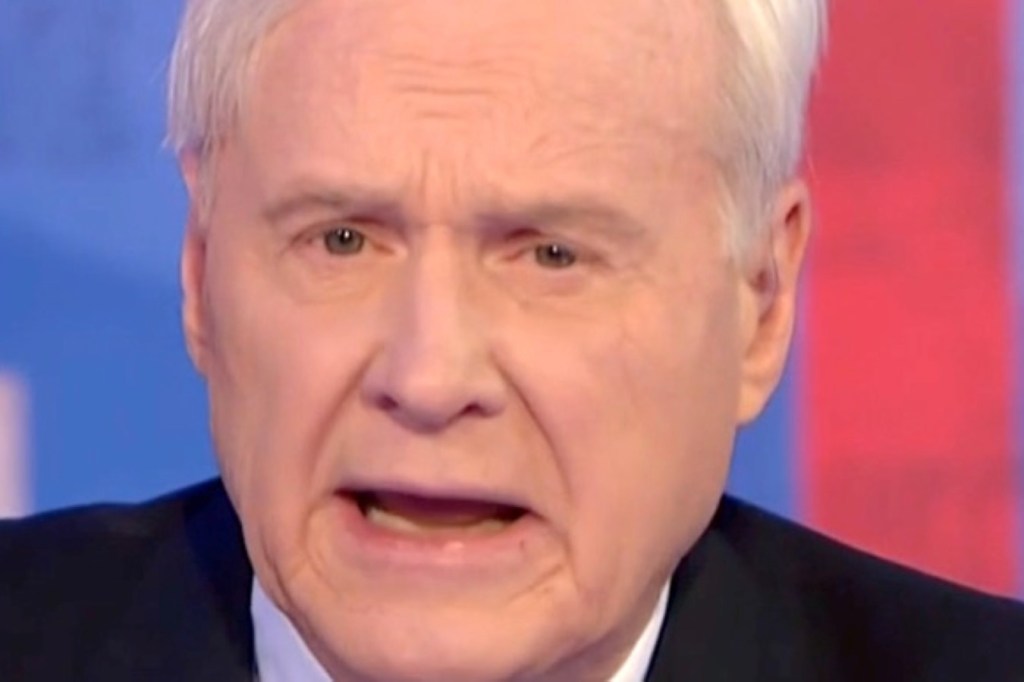
As results poured in from the Nevada caucus – showing a landslide victory for Bernie Sanders – liberal news outlets went into panic. MSNBC host Chris Matthews likened the Sanders victory to the fall of France to the Nazis. Such a comparison cannot even be classified as hyperbole. Rather than simply exaggerating reality, Matthews is throwing reality out the window. He has compared the success of a Jewish politician to the conquest of the Nazis. The sick irony is that Sanders lost members of his own family to the Nazis during the holocaust.
This wasn’t the first unhinged comment Chris Matthews has made about the Sanders campaign. He has previously compared Sanders to Fidel Castro while fear mongering about the possibility of public executions in Central Park. It might seem strange that a political commentator would compare Sanders to both Castro and Hitler, considering that the two are polar opposites on the political spectrum. However, it makes sense when you consider the ideology of the American political establishment. For defenders of capitalism like Matthews, there is no difference between the perpetrators of the holocaust and those who stopped it.
To an out of touch millionaire and Washington DC insider like Chris Matthews, Communists and Nazis are equal evils of a similar nature. Either one can be invoked at random to demonize any movement that steps outside of the respectable parameters for bourgeois debate. Bernie Sanders represents a social democratic movement that is funded by grassroots donations rather than corporate money. To the liberal establishment, even this modest reform movement appears as an existential threat to their unchecked power. Therefore, they spew vitriol about Nazis and Communists without any historical analysis. Chuck Todd of MSNBC has even compared Bernie supporters to Hitler’s brown shirts.
These political commentators see the world through a paradigm which is fundamentally flawed and failing. They see the status quo of the United States as something sacrosanct. To them, the United States represents democracy while countries like Cuba represent dictatorship. What they fail to see is that the ruling class of this country exports dictatorship the world over to maintain its world hegemony and riches. The wealth of America’s ruling class is based on the exploitation of labor, land, and resources in poorer countries. It is the communists, like Fidel Castro, who fight for the liberation of their nations against US imperialism. Similarly, it was the communists, a union of all the people in the Soviet Union, men, women, Tartar, Russian, who put an end to the Third Reich. However, the antagonistic relationship between communism and fascism is thrown aside so that these cheap attacks can be levied, and all those things that oppose american hegemony can be conveniently lumped together.
The Bernie Sanders movement is not the movement that will save the world from the hegemony of capitalism. But capitalists and their mouth pieces sure are scared of even its modest, social democratic aims. Even a more equitable distribution of imperialist plunder is an unacceptable and radical goal for mainstream american political commentators. This is why they grasp for straws and use the most sensationalist arguments they can think of. These smears might be vapid, but they expose a profound truth: for many defenders of capitalism, fascism is preferable to its greatest enemy—socialism.









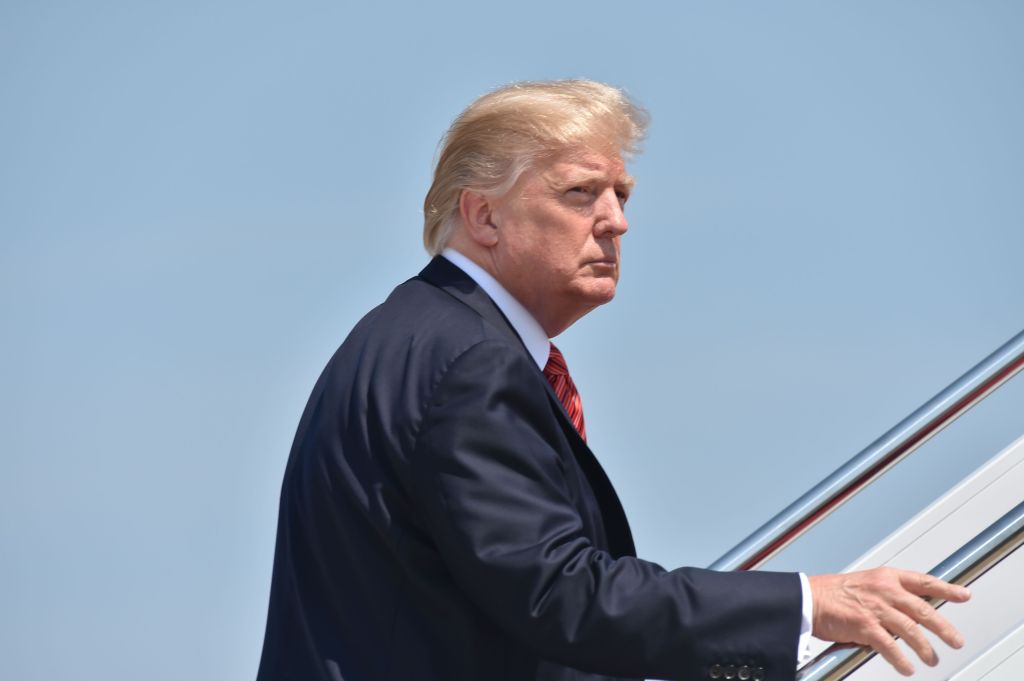
Em Oakland: Does Donald Trump Have Asperger’s Syndrome?
So, let’s break Asperger’s syndrome down a bit, shall we?
Asperger’s syndrome is a type of autism spectrum disorder and as such, can be broken down into four main areas of differences/difficulties.
Social
The core difference between Aspies [those with Asperger’s syndrome] and neurotypicals [non-autistic people] in terms of socialisation is that neurotypicals intuitively understand how to socialise and communicate with other neurotypicals. Aspies don’t. They have to learn how to socialise with neurotypicals and they often struggle. What that looks like in more detail, is this:
Emotional
Behavioural
Sensory
Most if not all autistic people have differences in how their brain perceives sensory input. These differences can be hypersensitive [oversensitive] or hyposensitive [undersensitive].
Hypersensitive
Hyposensitivity
That’s pretty much everything…
So, let’s see about what I know about Donald Trump [please bear in mind that I am not any sort of health professional, and am only comparing what I know of him with the above list of autism/Asperger’s syndrome traits/features].
First of all, from what I’ve seen in interviews, videoclips, and heard other people say about Donald Trump, pretty much all of the social stuff I mentioned in my list for Asperger’s syndrome doesn’t apply to Donald Trump. He seems to be very able socially. I can’t tell that he has any anxiety, or any struggles understanding social rules, etc. In fact, I would say that he seems to understand social rules enough to be able to manipulate people effectively.
As for the emotional stuff, there’s only one thing I would point out and it only links to Asperger’s syndrome very superficially, and that is that I have noticed Donald Trump have the occasional anger outburst. However the huge difference here is that people with Asperger’s syndrome don’t just have angry outbursts if they do get angry, or may not be angry people at all. Their outbursts might be sad or despairing outbursts, or on the opposite end of the emotional spectrum, happy or joyful outbursts. Besides that, I haven’t seen Donald Trump display that much emotion, to be honest, and people with Asperger’s syndrome are definitely emotional people.
Also, I haven’t seen any of the behavioural or sensory aspects of Asperger’s syndrome in Donald Trump.
So, based on him only having a couple of traits at most, and those only being linked to Asperger’s syndrome very tangentially/superficially, I would say he definitely does not have Asperger’s syndrome.
As other people have noted, as he has aged, he has now started showing the early signs of dementia.
But with the notes I made in my Aspie vs Donald Trump comparison:
Appears to have a very good understanding of social rules and conventions, appears to have no social difficulties whatsoever. Appears to be able to manipulate people. Can be angry when he doesn’t get his way, but besides that, shows next to no emotion that I can tell. And I’ve also heard that he seems to think he’s the best thing that happened to America, or something like that, and he is definitely very self-centered.
Those symptoms would point to narcissistic personality disorder [NPD], not Asperger’s syndrome.

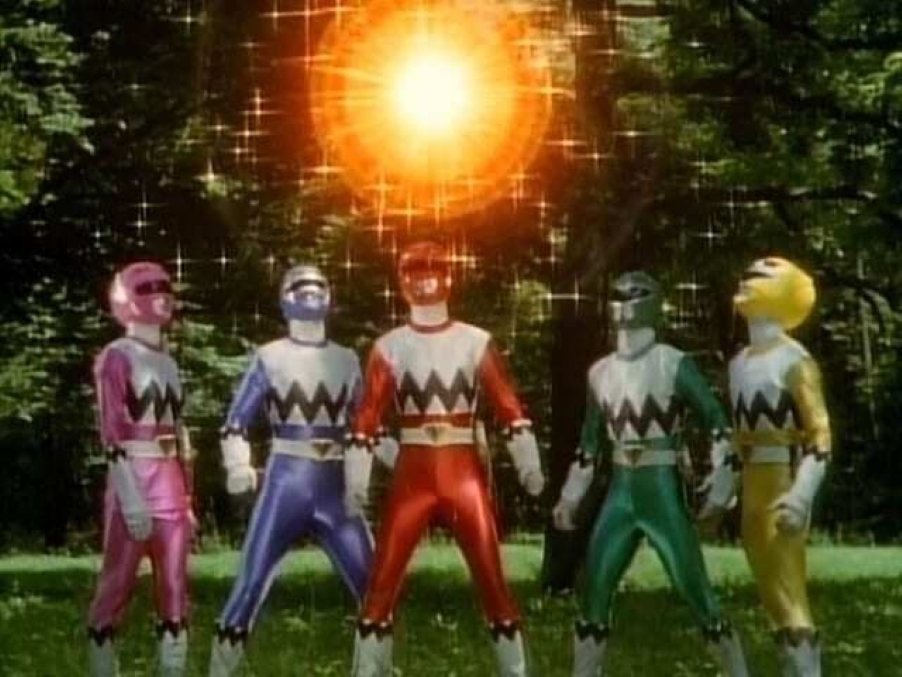
“We pierce through the galaxy with legendary blades.” is the theme of Seijuu Sentai Gingaman. This was the first work that Yasuko Kobayashi had done as a Super Sentai headwriter. This series may have come out as one of the best series in the 1990s.
The heroes
Although the show’s title in English means Starbeast Sentai Gingaman, it doesn’t really follow too much of a space theme except for having powers that are not of this Earth. It may be possible that the Gingamen themselves are descendants of aliens who got stranded on Earth, settled there permanently and vowed to defend it from the Balban. The story of Gingaman begins with the inauguration of the would be 133rd Gingaman team by lineage. Although Hyuga would have beent he 133rd Ginga Red but fate soon made his younger brother Ryoma as the show’s main protagonist instead. The other Gingamen are Hayate (Ginga Green), Gouki (Ginga Blue), Hikaru (Ginga Yellow) and Saya (Ginga Pink). Later on, Hyuga returns and becomes the sixth ranger inheriting the anti-hero Bullblack’s powers after the latter’s heroic sacrifice.
The Gingamen as warriors are imbued with this “Earth Power” that allows them to harness power from nature. Ryoma uses fire, Hayate uses wind, Gouki uses water, Hikaru uses lightning and Saya uses petals. The heroes had lost their home the Ginga Forest to the Balban and are forced to live with the “normal world” where they must learn to adjust. The plot kind of feels like it was taken from Flashman’s rangers where they must try to adjust to a new environment. The heroes must defend the Earth from the Balban Pirates before the Earth becomes their next target for destruction. To guide them in the city, they were assisted by the talking tree Moak and the acorn fairy Bokku. They live in a ranch where Harukiko and his son Yuuta accommodate them and knew of their identity as the 133rd Gingamen.
The villains
The Balban are a group of intergalactic pirates who for some reason could breathe even in the vacuum of space. Captain Zahab and his pirate crew have been plundering and then destroying planets turning them into jewels. Whatever reasons Captain Zahab had, it felt like he was trying to achieve immortality and/or possibly godhood. The Earth becomes the only planet standing in his way as he was defeated by the first Gingamen. These space pirates were sealed off for centuries but were awakened by an earthquake in the modern day. They seek to get whatever energy they could to revive their giant monster Daitanic so they can proceed to destroy Earth.
The main villain crew of Captain Zahab has Shelinda as his steerwoman, Pucrates as his advisor and the four generals. The four generals are Sanbash the leader of the insect-like humanoid monsters, Budo leads a samurai-themed gang of monsters. Illies is an Egyptian themed sorceress who uses magically themed monsters. Batbas is a viking themed general with mechanical robotic beasts who cause havoc. Like the generals in Goranger, the generals only replaced each other when the previous one got destroyed in the conflict though they all appeared in the beginning. The reason was because Captain Zahab wanted to make sure they prevented any sabotaging done towards each other though it proved useless. Later, Dark Merchant Biznella came in later in the series to assist Balban.
Final thoughts
While my first exposure to Yasuko Kobayashi as a writer was Samurai Sentai Shinkenger, Gingaman was where I soon knew of how she started off as a headwriter right after she was an important secondary writer a year before with Denji Sentai Megaranger. She started out pretty good and she had a lot of good assistance from Naruhisa Arakawa and Junki Takegami as major secondary writers together with Shigenori Takatera as the head producer. Like during the time Toshiki Inoue was the head writer of Chojin Sentai Jetman – the series tried to blend in a lot of stuff from Hirohisa Soda’s era and became a successful series. This was just a preview of what we might expect from Kobayashi’s style as a head writer. This was also where Arakawa was also getting more of an idea on how he wanted to write Tokusatsu his style after he wrote Megaranger’s finale.
As I watched through this series and having seen more 90s Super Sentai, I really felt that it was a nice series though I wonder why was it really named Gingaman? After seeing Zyuohger’s premiere episodes, I felt like maybe Gingaman should have been named as Zyuohman or Seijuuman instead because it felt like it was too attached to the forest? I even thought that maybe its U.S. adaptation Power Rangers Lost Galaxy should have been named as Power Rangers Star Beasts instead of the official title it got. The show had some really good writing and production styles involved making it memorable. I felt that like Jetman, it should’ve gotten a post-series TV special (ex. a Hero Encyclopedia) but maybe it was hard to beat Jetman’s record. Instead, we had Timeranger get a post-TV series special where the Timerangers explained about the 23 previous Super Sentai series prior to them. Overall, it’s been an enjoyable series to watch.
 Igor's Blog