









On November 22, 1963, U.S. President John F. Kennedy was shot and killed while traveling down Elm Street in Dallas, Texas, in an open car in a motorcade. Everyone agrees about that.
Many people think that agencies of the U.S. Government have lied about or covered up details of the assassination.
For two decades, people thought the best proof of foul play was a 27-second home movie of the assassination taken by a Dallas dressmaker, Abraham Zapruder:
This film caused excitement when it was first shown on TV in March 1975, as it shows JFK’s head being blasted back and to his left:
This seems to tell us that the shooter was in front of the car on the right side, on the “grassy knoll” (small hill) next to Elm Street. But the U.S. Government insisted that JFK was shot by just one man hiding in a building far behind the limousine.
Things get even more complicated when we look at the film frame by frame. As the bullet hits, JFK’s head first moves forwards:
This makes things confusing. There seemed to be three possible explanations:
People tried to figure this out for two decades. Instead of clearing up the mystery, Zapruder’s film just made things more confusing.
In the 1990s, researchers started to realize that there was a fourth possible explanation: Zapruder’s film might also be a part of the lies and cover-up that agencies of the U.S. Government had weaved around the JFK assassination!
The Zapruder film was scientifically examined. It was found that, while most of it looks completely genuine, some of the images are impossible. They violate the laws of physics. They could not have come from Zapruder’s home movie camera.
Zapruder’s film is a very good forgery. It is almost perfect. Some mistakes took almost 40 years to find.
It was also scientifically proven that Zapruder’s film could not be just changed a little bit. For any of it to be altered in this way, a whole new film had to be created. The whole film is a fake!
A movie film is just a strip of little photos (“frames”). The fake film was made by using advanced cameras to cut and paste real photos and film frames together to make new frames.
Because the Zapruder film is only 27 seconds long, less than 500 photos needed to be made. The forgers had at least several months to create them. Most were not published until a year after the assassination. This was sophisticated work, but more than possible in 1963 and 1964. People had been creating high quality fake photos since the 1850s!
But what about the people who watched Zapruder’s film in the days after the assassination?
Film experts believe that a real film of the assassination was quickly altered on the evening of the assassination, using machines that could create Hollywood-style special effects (like Mary Poppins, created in 1964). Since the film was not shown on television, no one knows exactly what these people saw. But we do know that they described a film that is different from the film frames published by the U.S. Government in November 1964 as the “Zapruder film”!
In May 2003, scientists and researchers presented their latest findings at a conference in Duluth, Minnesota. This work was published in September 2003 in a book, The Great Zapruder Film Hoax. The entire conference can also be viewed on YouTube.
The pages below describe the best proofs that the Zapruder film is a fake. They describe some of the mistakes that the forgers made.
In the end, you have to decide for yourself what to believe. But don’t just believe what the U.S. Government tells you!
So, my last Gaming is Dying Video blew up, I guess the algorithm decided it was time to recommend it. Well, apparently it was recommended to some of the worst “gamers” that plague our hobby. So, enjoy this comment response rant with a continuation of the first video in the second half.



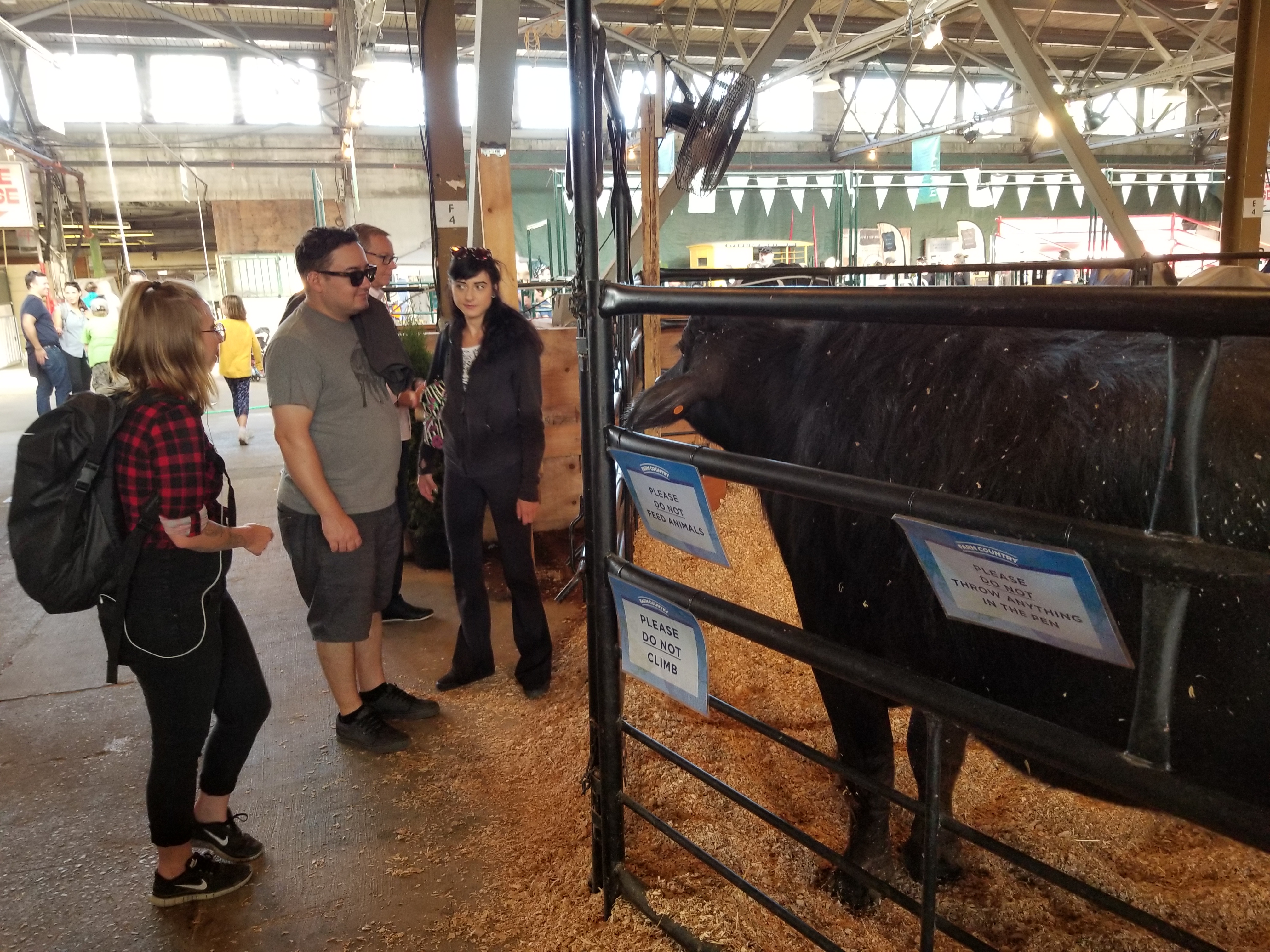


The Pacific National Exhibition (PNE) is a nonprofit organization that operates an annual 15-day summer fair, a seasonal amusement park, and indoor arenas in Vancouver, British Columbia, Canada. The PNE fair is held at Hastings Park, beginning in mid-to-late August and ending in early September, usually Labour Day.
The organization was established in 1907 as the Vancouver Exhibition Association, and organized its first fair at Hastings Park in 1910. The organization was renamed to the Pacific National Exhibition in 1946. During the mid-20th century, a number of facilities were built on the PNE grounds, including Pacific Coliseum and the PNE Agrodome. In 1993, the amusement park adjacent to the PNE, Playland, became a division of the PNE.
The Vancouver Exhibition Association (VEA), the predecessor to the Pacific National Exhibition organization was first formed in 1907; although the association was not incorporated until 18 June 1908. The VEA had petitioned Vancouver City Council to host a fair at Hastings Park; although faced early opposition from the city council and the local jockey club that used the park for horse races. However, the city council eventually conceded to the VEA’s request and granted the association a 5-year lease to host a fair at Hastings Park in 1909.
The VEA held its first fair at Hastings Park in August 1910. It was opened by then Canadian Prime Minister Sir Wilfrid Laurier as the Vancouver Exhibition. The biggest attractions of the two-week fair are its numerous shops, stalls, performances, a nightly fireworks show, and the exhibition‘s Prize Home. From its beginnings, the exhibition was used as a showcase for the region’s agriculture and economy.
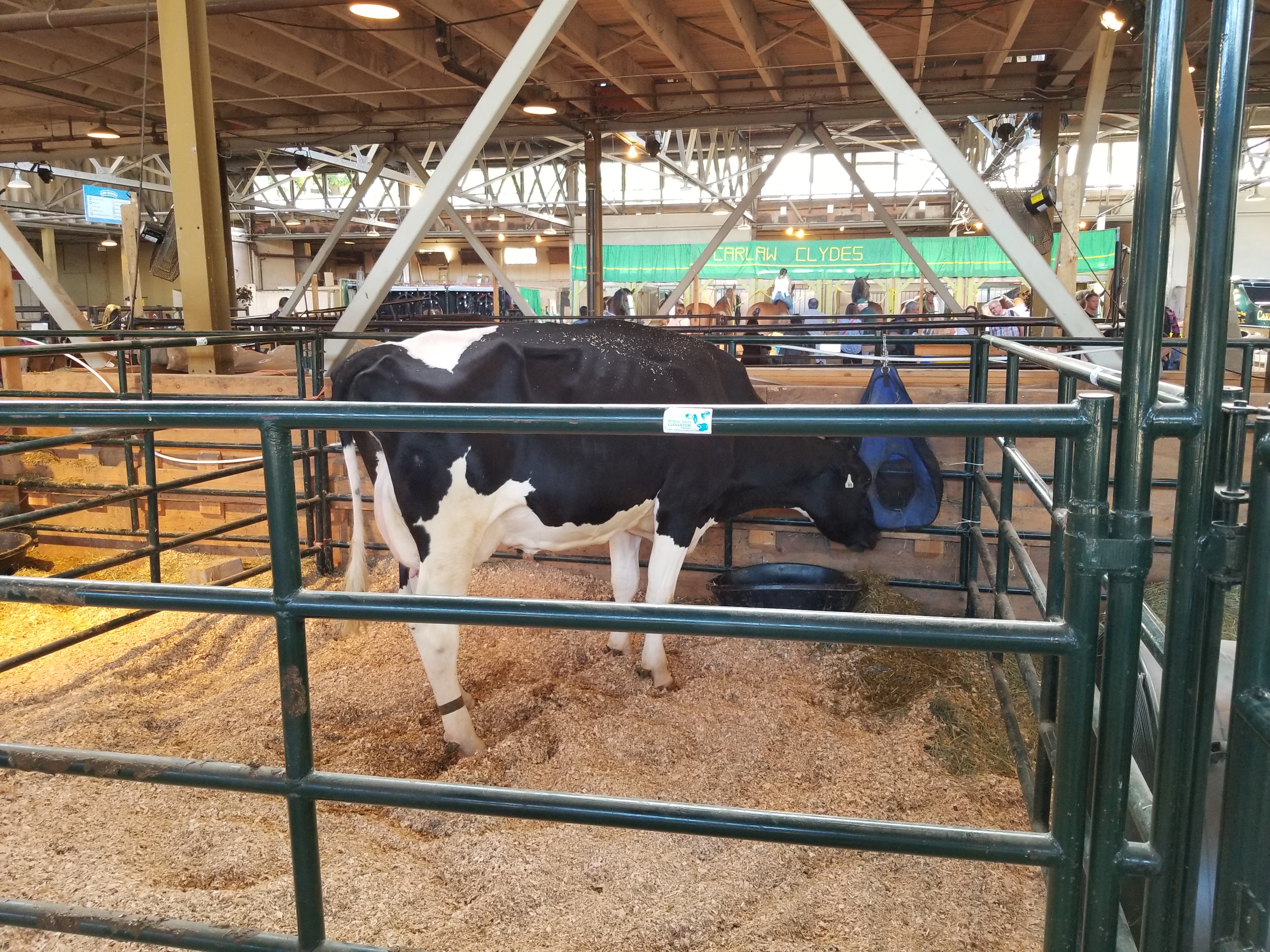
In the initial years of the Second World War, the fairgrounds saw an increased military presence. However, the exhibition itself was not cancelled until 1942, after the Canadian declaration of war against Japan was issued. From 1942 to 1946 the exhibition and fair was closed, and like the Canadian National Exhibition in Toronto, served as a military training facility for the duration of World War II. During this time, the exhibition barns that were used to house livestock, were used as processing centres for interned Japanese Canadians from all over British Columbia. The interned Japanese Canadians were later shipped away to other internment camps throughout British Columbia, and Alberta. The Momiji (Japanese word for Maple) Gardens on the PNE’s grounds serves as a memorial for the event. The barns used for the internment of Japanese Canadians are still used to house livestock during the annual fair, and serve as storage area to house some of the PNE’s property the rest of the year.
On 7 February 1946, the Vancouver Exhibition Association changed its name to its current moniker, the Pacific National Exhibition; and later reopened the fair to the public under that name in 1947. The organization was formally reincorporated as the Pacific National Exhibition in 1955.
The highest attendance at the fair was recorded in 1986, with 1.1 million guests visiting the PNE, most likely due to Expo 86 that was occurring at the time. In 1993, the amusement park adjacent to the PNE, Playland, became a division of the PNE organization.
During 1997-1998, the PNE grounds was transformed with the demolition of a number of buildings including the Food Building, Showmart and the Poultry Building. This gave way to the Sanctuary, a parkland setting with a pond. The pond restored part of a stream that once flowed in the park out to the Burrard Inlet. The city restored a large portion of the park. Many old fair buildings have been demolished and replaced by a more natural character. Although land was purchased in Surrey that was to become the fair’s new home, the PNE has since transferred ownership from the province to the City of Vancouver and will remain at Hastings Park. The PNE is a registered charity.
Two attractions at the PNE were named as heritage sites by the City of Vancouver in August 2013. The Pacific Coliseum and the Wooden Roller Coaster were added to the list.
In 2020, the fair went on hiatus due to the COVID-19 pandemic, alongside other agricultural and county fairs across Canada, including the Calgary Stampede, the Canadian National Exhibition, and K-Days.
In the early hours of February 20, 2022, a major fire broke out on PNE grounds, where multiple vehicles, tools and equipment, and buildings were destroyed as a result.
The PNE grounds contains several buildings and exhibition halls. The PNE Forum is a 4,200 square metres (45,000 sq ft) exhibition facility that is used for large displays and trade shows. Rollerland is a 1,840 square metres (19,800 sq ft) exhibition, banquet hall and venue for the Terminal City Roller Derby.
Two buildings on the PNE grounds are indoor arenas. The Pacific Coliseum is multi-purpose arena that holds 15,713 permanent seats, with provisions for 2,000 temporary seats for concerts and certain sports. The PNE Agrodome is a smaller indoor arena with 3,000 permanent seats, with provisions to expand up to 5,000 seats. Entertainment facilities includes the Garden Auditorium, a building that features a built-in stage and dance hall. The PNE grounds also feature amphitheatre with bench-style seating for 4,500 visitors.
Other buildings on the PNE grounds includes the Livestock Barns, a large multi-use facility, and the organization’s administrative offices.

My blog has had its largest viewership in 2024 so far. This is something that I didn’t expect. My blog’s viewership in 2023 was slightly smaller than in 2022, but, for some reason, 2024 became the biggest year for my blog so far. This is odd because I certainly haven’t been on a quest to attract as many viewers or followers as possible. I run my blog almost entirely for myself, but, somehow, just about everyone in Vancouver looks at my blog now. How did this happen? Whatever. Who cares? I’m here to announce that I found new helpful supplements for myself. After I realized how detrimental ADHD (attention deficit hyperactivity disorder) can be for some people, at least when it comes to functioning well in this neurotypical society that we live in, I began to look for supplements or medicine that might be able to help me. I am aware that synthetic drugs do get made for treating ADHD, but I wanted to find natural medicine. Moreover, synthetic drugs can have unpleasant side effects and they get prescribed by doctors or psychiatrists. I don’t have a doctor at this time. Finding a doctor has become difficult in the last decade or so in Canada. And finding a doctor doesn’t mean that you will immediately get some kind of effective help because neurodevelopmental conditions like ADHD or autism still aren’t widely recognized. Effective help is almost non-existent because we don’t live in some futuristic society in which there’s a good cure for every medical problem and in which people are knowledgeable and capable of understanding one another very well. I mean, even my mother doesn’t recognize that I have these conditions. Well, my so-called father is a monster and a psychopath. If you want to see an autistic person who really doesn’t have empathy and who tries to keep those around him in fear and in obedience, you can look at him. Of course, there’s a simple explanation for why he’s like this. This explanation can be reduced to one word, which is autism. Therefore, there’s no need to talk about him. Hans Asperger published a definition of “autistic psychopathy” in 1944 that resembled the definition published earlier by Russian neurologist Grunya Sukhareva in 1926. Asperger identified four boys with a pattern of behavior and abilities that included “a lack of empathy, little ability to form friendships, one-sided conversations, intense absorption in a special interest, and clumsy movements”. But at least my mother is neurotypical. She doesn’t recognize that my neurodevelopmental conditions have a critical effect on me. She knows almost nothing about neurodevelopmental conditions. This became clear to me the last time I spoke to her. In her view, I am the way that I am simply because I choose to be the way that I am. Well, it’s not like I have a high opinion of her or of her knowledge and abilities anyway. I’m just saying that people with neurodevelopmental conditions have to rely almost entirely on themselves to this day. I can’t even count how many times my so-called mother insulted me and mocked me during my lifetime. Not only did I have to deal with regular bullying and mistreatment at school and elsewhere, I also had to deal with a certain cruel, sadistic, insecure, childish “man” and an abusive and controlling mother at home. Neurotypicals aren’t there to help people with autism. They’re there to hurt people with autism. If you get down to it, you can say that the distress that autistics have to endure almost every day is caused entirely by neurotypicals. In the old days, if an autistic person broke down, couldn’t control his or her emotions, and began acting out, that person was sent to a mental institution, to a prison, or even killed. Such things happen today too. Anyway, fish oil supplements are the thing that can help a person with ADHD. These supplements contain omega-3 fatty acids. I bought a bottle with ADHD targeted omega-3 liquid. I already made a post in which I praised ashwagandha (withania somnifera). I consume a capsule with ashwagandha powder at dinner time whenever I need to because this herb helps with resistance to stress and increased energy. The effect of ashwagandha is strong and it lasts for a whole day. Therefore, I stopped consuming my probiotic capsules in order to not strain my liver. In the morning, at breakfast time, I consume omega-3 supplements because they help me to think better. A teaspoon of fish oil per day seems to be enough to treat my ADHD. The bottle with fish oil that I bought was made specifically for treating ADHD. But there are also omega-3 bottles for sale with vitamin D and other additives, and they seem to have a similar effect to the fish oil bottle that’s targeted for treating ADHD. Moreover, there’s another thing that helps me to think and feel better now. I bought tablets with vitamin C and bioflavonoids. I consume them at breakfast time, together with the fish oil, for the best effect. When I bought these vitamin C tablets, I didn’t expect them to make me feel better. I only expected them to be a source of vitamin C for me. But it seems that these tablets have an effect that’s almost as significant as the effect of the fish oil. That’s pretty much it. Nowadays, I consume a teaspoon of fish oil and a vitamin C tablet with bioflavonoids every day at breakfast time. At dinner time, if I need to, I consume a capsule filled with ashwagandha powder and a melatonin tablet. The melatonin helps with sleep support. Without these herbs and supplements, I would have continued to feel pretty bad. The ashwagandha powder that I received from my mother hasn’t gone to waste. I fill my supply of empty clear capsules with this powder because it’s still almost as effective as the ashwagandha supplements that I bought myself.
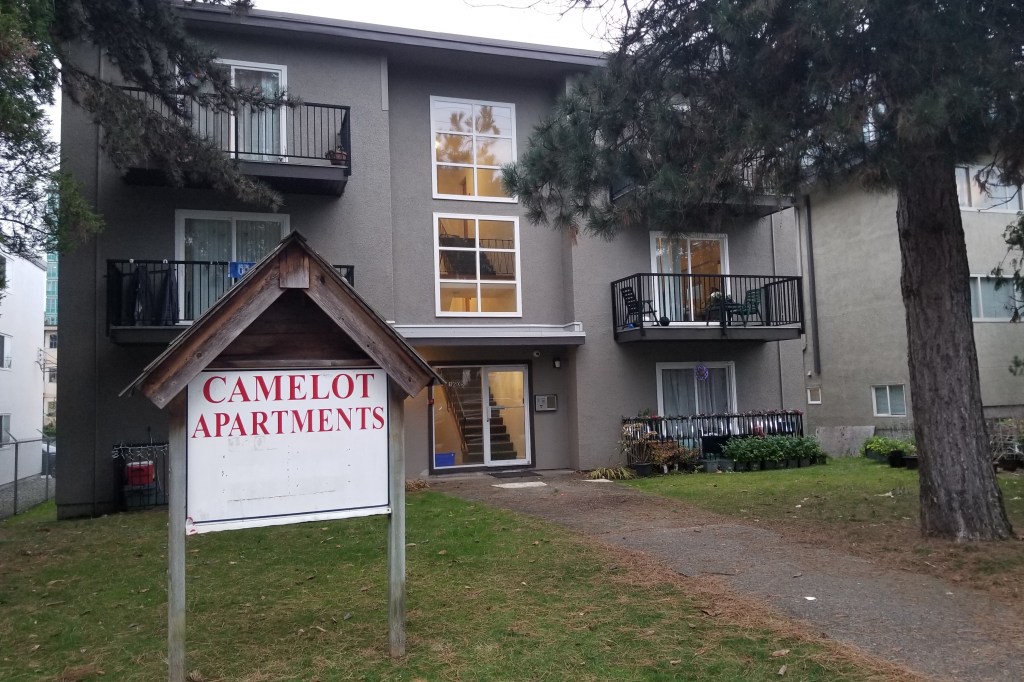
Passing by Camelot recently caused me to pick up a book in which there’s a chapter about Camelot. What am I talking about? Well, if you want to visit Camelot, the address is 1605 St. Georges Avenue, North Vancouver, British Columbia, V7L3J6, though I’ve got to say that Camelot looks slightly less impressive in real life than in the legend. The book that I’m talking about is titled ‘The Atlas of Legendary Places’ (1987) by Jennifer Westwood and James Harpur. I already mentioned it in an earlier post after I finished reading it, though I can’t praise it enough because it features many superb photographs and chapters about some of the most interesting places in the world. The chapter about Camelot is in the section about eternal realms. It begins as follows. “In the tales of medieval poets and other writers, Camelot was the capital of the realm of King Arthur, the British hero who reigned at the heart of a dazzling court. Here the king lived, surrounded by his Knights of the Round Table – Gawain, Perceval, Lancelot, Galahad and the rest. It is first named as the seat of Arthur’s court by the French poet Chretien de Troyes in the second half of the twelfth century. During the thirteenth, it became prominent in French Romance and from then on was the place where the famous Round Table was housed. This poets’ Camelot lies in a timeless land of enchanted forests and mysterious castles, where marvels and magic abound. Here Arthur, with his queen Guinevere beside him, resides at the head of a chivalric order based on that of early medieval France. Meanwhile, Arthur’s knights set out on quests, do battle with monsters, rescue damsels from the clutches of evil wizards, or become embroiled with seductive ladies who turn out to be fairies. They run the gauntlet of physical and supernatural dangers, and at the beginning and end of every adventure stands Camelot, the hub of their universe. The description of this Camelot of Romance is that of a medieval castle with a town below it, though its location is never quite made clear. Sir Thomas Malory, writing in the fifteenth century, identified it with the town of Winchester in southern England, because this was the capital of the Saxon kings from the time of Alfred the Great (849-899) to the Norman Conquest (1066). But even Malory is inconsistent, and once places it beyond Carlisle, in the north of England. Camelot is nowhere and everywhere, less a historical place than an idealized city. It became a symbol from the Middle Ages of order amid chaos, of the ideal state versus anarchy, of civilization versus barbarism. It began and ended with Arthur – no one reigned there before him and some medieval authors say that, after his death, King Mark of Cornwall destroyed it. Yet, like Arthur himself, it is imperishable.” The next chapter is about Avalon, and it begins as follows. “A paradise where it was always spring and no one grew old; where there was everlasting peace; and where no toil was needed because the land remained ever fruitful: this was Avalon. As well as resembling other mythical realms, such as Atlantis, where the inhabitants enjoyed a Golden Age existence, Avalon became known as the place to which the British hero King Arthur was carried to be healed of his wounds after his last battle of Camlann. The twelfth-century English writer Geoffrey of Monmouth was the man who popularized the connection of Arthur with Avalon in his imaginative History of the Kings of Britain. The book became a medieval bestseller, establishing Avalon as the name of Arthur’s last known destination. In a later book, the Life of Merlin, Geoffrey describes Avalon as an island: “It is called the Fortunate Isle…. Grain and grapes are produced without tending, and apple trees grown in the woods from the close-clipped grass. The earth of its own accord brings forth… all things in superabundance….” The island was inhabited by nine sorceresses and ruled by their leader Morgen (Morgan le Fay), who undertook to heal Arthur if he stayed there. In 1191, at a time when the legends of King Arthur were widely popular, the question of what had happened to him thereafter took a new turn. The monks of Glastonbury, a town in the west of England, announced that they had exhumed his remains from the graveyard of their ancient Abbey, together with a leaden cross which proclaimed in Latin, “Here lies entombed the renowned King Arthur with Guinevere his second wife in the Isle of Avalon. Geoffrey’s Avalon follows the tradition of the paradisal islands that in mythology lay somewhere to the west. These include Atlantis; the Garden of the Hesperides with their golden apples and the Fortunate Islands of the Greeks; and St Brendan’s Isle, described in the ninth-century Voyage of St Brendan, which was covered in apple trees. By calling Avalon the Fortunate Isle, Geoffrey was connecting it with mythical islands associated with apples, probably because they were the fruit of immortality in Celtic and other mythologies. If Henry II really tried to eradicate the belief in Arthur’s survival, he failed. In 1190 the English poet Layamon wrote: “The Britons believe yet that he (Arthur) is alive, and dwelleth in Avalun with the fairest of all elves.” The related belief that Arthur slept in a cave or under a hill, surrounded by his knights, is known to have survived in Britain as late as the nineteenth century. Like Camelot, Avalon is everywhere and nowhere – it is contrary to its spirit to try to pin it down. It lies in the dimension of myth, where truth is manifold. The historical Arthur may have been buried at Glastonbury; but the real Arthur waits in that place where “healing does not fail” – the place which Geoffrey called Avalon.” The following quotation is from the chapter about Tikal, which is in the section about sacred wonders. “The vast stretches of raw jungle and marshlands that cover more than 14,000 square miles of the Peten District of Guatemala seem an unlikely place for a sophisticated and colourful civilization to have flourished. Jaguars, ocelots, pumas and wild pigs, though depleted in numbers, still patrol the tangled pathways of the forest. Giant trees – ceiba, mahogany, sapote, Spanish cedar, palm – soar up to a height of 130 feet, spreading their branches into a dense emerald canopy. During the day, iridescent hummingbirds and gaudily painted parrots and motmots provide flashes of brilliance amid the welter of green foliage. But as night closes in, the jungle world returns to a primordial darkness punctuated by the unearthly roars of howler monkeys. Yet during the nineteenth century, explorers began to discover within this rich, ungovernable terrain the extraordinary jungle-covered monuments and buildings of a highly developed civilization. In 1848 Colonel Modesto Mendez and Ambrosio Tut, respectively chief magistrate and governor of Flores in northern Guatemala, found dramatic ruins just to the northwest of the town. It was an astonishing sight: beneath the green of trees, lianas, moss, lichen and fern lay towering pyramids, one more than 200 feet high, multi-levelled palace complexes, temples, plazas and stelae – upright slabs of limestone carved and painted with grotesque figures and enigmatic hieroglyphs. The two men had discovered Tikal, the largest and grandest city of the Maya people, which had flourished between 100 B.C. and the end of the ninth century A.D. At a time when the Dark Ages had descended on the western world, this huge urban centre rose from the depths of the jungle, as did other great Maya cities, such as Copan and Palenque. Tikal became the hub of life for tens of thousands of people. Theirs was a highly organized and cultured society where painting, sculpture, writing, and astronomy flourished, and their architecture was the wonder of ancient America. When Tikal was first rediscovered it had been in the clutches of the jungle for some 900 years. Mendez and Tut left the place more or less as they found it; and later visitors, such as the Swiss botanist Dr Gustave Bernouilli in 1877, Alfred Maudslay in 1881 and 1882, and Teobert Maler in 1904, made little impression on the overgrown monuments. It was only in 1956 that the University of Pennsylvania Museum began a 14-year project to excavate and restore six square miles of the city. In fact the actual area occupied by Tikal was 25 square miles or more. Until recently, the city was thought to have been merely a vast religious centre, but scholars now believe it was a densely populated metropolis embracing the various aspects of a developed culture. The population at the city’s peak may have reached 50,000; and to support these numbers Maya farmers worked hard to produce enough food, including maize, tomatoes, gourds, beans and pumpkins. The pyramid-temples were the supreme architectural achievement of the Maya, who worked without the help of metal knives, axes, the wheel or beasts of burden. Gangs of workers had to drag enormous quantities of rubble and rock for each pyramid’s construction. Tiers were raised by packing the rectangular space between four stone walls with a rough filling of stones which were then plastered to create a smooth, flat finish. Work on the next tier could then begin. As the structure rose, masons used finely cut limestone to face the outside walls. Others heated up stone in kilns to obtain lime to make plaster, mortar and stucco, which was spread on the pyramid’s exterior. The British Mayanist Sir Eric Thompson saw the craft of the Maya plasterer to stunning effect preserved in a pyramid excavated under the shell of one built over it – a common Maya practice: “The whole surface of the pyramid is covered with a thick layer of light cream stucco, dazzlingly bright. …One of the most impressive and touching sights I have ever seen was this pyramid, bathed in the light of a full moon….” The great city of Tikal flourished for about 1,000 years before mysteriously collapsing at the end of the ninth century A.D., along with the other great Maya cities. Suddenly, for reasons scholars still do not fully understand, these urban centres were deserted by their inhabitants. There may have been severe crop failures owing to soil exhaustion, a dramatic climatic change, an epidemic, or a popular uprising by the peasants against an increasingly oppressive ruling class. Whatever the reason, or reasons, thousands of Maya returned to the forests.”
 Igor's Blog