Israel military warplanes have carried out a new wave of aerial attacks on Damascus and several other parts of Syria hours after President Bashar al-Assad’s government collapsed.
Security sources said Israeli aircraft targeted the al-Mazzeh military base in Damascus and Khalkhalah in the southern al-Suweida part of the country on Sunday.
The warplanes also hit a major security complex in the Kafr Sousa district of Damascus and bombed several residential areas on the outskirts of the capital.
Loud explosions were reportedly heard following the airstrikes in Damascus.
Attacks were also reported in rural areas of Daraa in the south. The targets included alleged weapon depots, air defense batteries and missile manufacturing facilities.
The Israeli forces earlier launched a foray into Syrian soil and entered the southwestern city of Quneitra near the Israeli-occupied Golan Heights after militant groups took control of the Arab country.
The regime’s media also reported the entry of Israeli tanks into Khan Arnabeh, which is to the northeast of Quneitra and five kilometers from the border of the occupied Golan.
The occupation forces were reported to be digging a large trench on the Syrian border and have destroyed what they claim are weapons depots.
The Israeli regime’s prime minister, Benjamin Netanyahu, said he ordered Israeli forces to grab a buffer zone in the Golan Heights established by a 1974 ceasefire agreement with Syria.
He further said the 1974 disengagement agreement with Syria has collapsed.
Earlier in the day, the Syrian militant groups raided the capital Damascus and took control of the city’s radio and television station as well as major military and security centers.
The armed groups, led by Hay’at Tahrir al-Sham (HTS) militants, announced that they had fully captured the Syrian capital and confirmed reports of the fall of the Assad government.
Israel had been the principal supporter of terrorist groups that opposed the government of President Assad since the foreign-backed militancy erupted in Syria.
Фильм о коллекции итальянского искусства эпохи Возрождения XIV – XVI веков. Один из крупнейших представителей Высокого Возрождения, итальянский художник и ученый Леонардо да Винчи в своем “Трактате о живописи” писал: “Живописец спорит и соревнуется с природой”. А мы, зрители, можем наслаждаться результатами этого соревнования – картинами “Мадонна Литта” и “Мадонна Бенуа” Леонардо да Винчи, “Мадонна Конестабиле” и “Святое семейство” Рафаэля, “Юдифь” Джорджоне, “Святой Себастьян” и “Кающаяся Мария Магдалина” Тициана и другими шедеврами из эрмитажной коллекции. Вступительное слово директора Государственного Эрмитажа, действительного члена Академии наук СССР Бориса Пиотровского.
In 1914, the world was on the brink of enormous change. Worried by increasing German militarism, the French and the British entered into the Entente Cordiale against Germany and her allies, splitting Europe into opposing sides. Two shots would ignite the powder keg.
The Great War is a 26-episode documentary series from 1964 on the First World War. The documentary was a co-production of the Imperial War Museum, the British Broadcasting Corporation, the Canadian Broadcasting Corporation and the Australian Broadcasting Commission. The narrator was Michael Redgrave, with readings by Marius Goring, Ralph Richardson, Cyril Luckham, Sebastian Shaw and Emlyn Williams. Each episode is c. 40 minutes long.
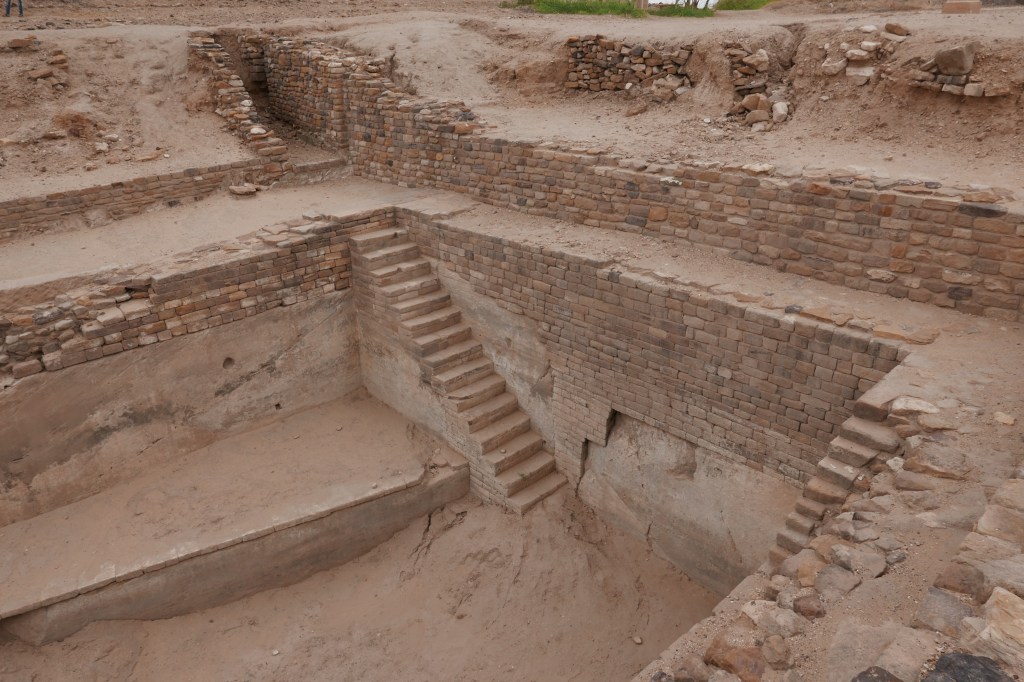
The ancient city of Dholavira, the southern centre of the Harappan Civilization, is sited on the arid island of Khadir in the State of Gujarat. Occupied between ca. 3000-1500 BCE, the archaeological site, one of the best preserved urban settlements from the period in Southeast Asia, comprises a fortified city and a cemetery. Two seasonal streams provided water, a scarce resource in the region, to the walled city which comprises a heavily fortified castle and ceremonial ground as well as streets and houses of different proportion quality which testify to a stratified social order. A sophisticated water management system demonstrates the ingenuity of the Dholavira people in their struggle to survive and thrive in a harsh environment. The site includes a large cemetery with cenotaphs of six types testifying to the Harappan’s unique view of death. Bead processing workshops and artifacts of various kinds such as copper, shell, stone, jewellery of semi-precious stones, terracotta, gold, ivory and other materials have been found during archaeological excavations of the site, exhibiting the culture’s artistic and technological achievements. Evidence for inter-regional trade with other Harappan cities, as well as with cities in the Mesopotamia region and the Oman peninsula have also been discovered.
Brief synthesis
Dholavira: a Harappan city, is one of the very few well preserved urban settlements in South Asia dating from the 3rd to mid-2nd millennium BCE. Being the 6th largest of more than 1,000 Harappan sites discovered so far, and occupied for over 1,500 years, Dholavira not only witnesses the entire trajectory of the rise and fall of this early civilization of humankind, but also demonstrates its multifaceted achievements in terms of urban planning, construction techniques, water management, social governance and development, art, manufacturing, trading, and belief system. With extremely rich artefacts, the well-preserved urban settlement of Dholavira depicts a vivid picture of a regional centre with its distinct characteristics, that also contributes significantly to the existing knowledge of Harappan Civilization as a whole.
The property comprises two parts: a walled city and a cemetery to the west of the city. The walled city consists of a fortified Castle with attached fortified Bailey and Ceremonial Ground, and a fortified Middle Town and a Lower Town. A series of reservoirs are found to the east and south of the Citadel. The great majority of the burials in the Cemetery are memorial in nature.
The configuration of the city of Dholavira, during its heyday, is an outstanding example of planned city with planned and segregated urban residential areas based on possibly differential occupational activities, and a stratified society. Technological advancements in water harnessing systems, water drainage systems as well architecturally and technologically developed features are reflected in the design, execution, and effective harnessing of local materials. Unlike other Harappan antecedent towns normally located near to rivers and perennial sources of water, the location of Dholavira in the island of Khadir was strategic to harness different mineral and raw material sources (copper, shell, agate-carnelian, steatite, lead, banded limestone, among others) and to facilitate internal as well as external trade to the Magan (modern Oman peninsula) and Mesopotamian regions.
Criterion (iii): Dholavira is an exceptional example of a proto-historic Bronze Age urban settlement pertaining to the Harappan Civilization (early, mature and late Harappan phases) and bears evidence of a multi-cultural and stratified society during the 3rd and 2nd millennia BCE. The earliest evidence can be traced back to 3000 BCE during the early Harappan phase of the Harappan Civilization. This city flourished for nearly 1,500 years, representing a long continuous habitation. The excavated remains clearly indicate the origin of the settlement, its growth, zenith and the subsequent decline in the form of continuous changes in the configuration of the city, architectural elements and various other attributes.
Criterion (iv): Dholavira is an outstanding example of Harappan urban planning, with its preconceived city planning, multi-layered fortifications, sophisticated water reservoirs and drainage system, and the extensive use of stone as a building material. These characteristics reflect the unique position Dholavira held in the entire gamut of Harappan Civilization.
Integrity
The ancient Harappan city of Dholavira was discovered in 1968 and excavated for 13 field seasons between 1989 and 2005. The unearthed excavations were simultaneously preserved and conserved, and display all physical attributes contributing to the Outstanding Universal Value of the property, that is to say the proto-historic systems of urban planning, water management systems, architectural elements and design, traditional knowledge of art and technology preserved in situ. All the attributes that convey the Outstanding Universal Value of the property are located in the property area. Physical evidence of the entire 1,500 years of inhabitation are spanning from pre-Harappan to post-Harappan stages. The excavated remains at Dholavira, to a large extent, illustrate attributes associated with industrial activities (e.g. bead manufacturing) and are indicative of the sophisticated life and exploitation of natural resources for nearly 1,500 years, trade, interregional relations and exchanges, the physical manifestations of these are largely found in situ. Conservation measures and consolidation of few areas have been carried out to prevent deterioration and have also been stabilized for ensuring preservation of its physical attributes. Guidelines for development and conservation need should be developed in the extended buffer zone.
Authenticity
The archaeological remains of the city of Dholavira include fortifications, gateways, water reservoirs, ceremonial ground, residential units, workshop areas, and cemetery complex, all clearly representing the Harappan culture and its various manifestations. The urban planning is evident from the in situ remains of the city that demonstrate systematic planning. The authenticity of the archaeological site is preserved through minimum interventions and scientific conservation principles and methods and in maintaining the exposed structures in their original configurations and in situ conditions and no additions or alterations have been made to the structural remains.
The excavated remains bear testimony to the style of construction, contextual evidence for architectural elements, and layout of a bead manufacturing workshop, that have been retained in situ to preserve their authenticity. The evidence of the configuration of the city, which has been well documented and preserved during excavation works, also bears testimony of the extensive planning, understanding of ratios and proportions and principles, alignment of the entire city in relation to cardinal directions, water harvesting, storm water drains, craftsmanship. These features are preserved extensively due to their construction in stone masonry with mud brick cores, and architectural features are in a good state of conservation.
Protection and management requirements
The archaeological site of Dholavira is protected and managed by the Archaeological Survey of India, an attached office and organization under the Ministry of Culture, Government of India. The property is protected by national level laws that is to say the Ancient Monument and Archaeological Sites and Remains Act 1958 (AMASR), amended therein in 2010; Ancient Monument and Archaeological Sites and Remains Rules of 1959; Ancient Monument and Archaeological Sites and Remains Rules of 2011 and The Antiquities and Art Treasures Act 1972 and Rules 1973. Decisions pertaining to its conservation, maintenance and management are governed by the National Conservation Policy for Monuments, Archaeological Sites and Remains 2014. Being designated as an “ancient monument” of national importance, the ancient site of Dholavira is protected by a Prohibited Area measuring 100 meters in all directions from the limits of the protected monument, and further beyond it, a Regulated Area of 200 meters in all directions, from the limits of the Prohibited Area. All activities in the areas adjacent to the ancient site of Dholavira remain subject to prohibition and regulation in the respect prohibited and regulated areas as per provisions of the Ancient Monuments and Archaeological Sites and Remains Rules 2011. The buffer zone covers the entire west strip of the Khadir Island, which ensures the protection of the wider setting of the property. The buffer zone, of which parts cover thee Prohibited and Regulated Areas, overlaps with Kachchh (Kutch) Desert Wildlife Sanctuary which is protected by Forest Act (Wildlife Protection Act 1972). The Government of India is in the process of listing the ancient quarry sites in the buffer zone as of national importance.
The property area and buffer zone are managed by the Regional Apex Committee and Local Level Committee, with major stakeholders as the member. This participatory mechanism ensures the dialogue among different interest groups. The Site Management Plan has been approved and implemented by the Archaeological Survey of India.
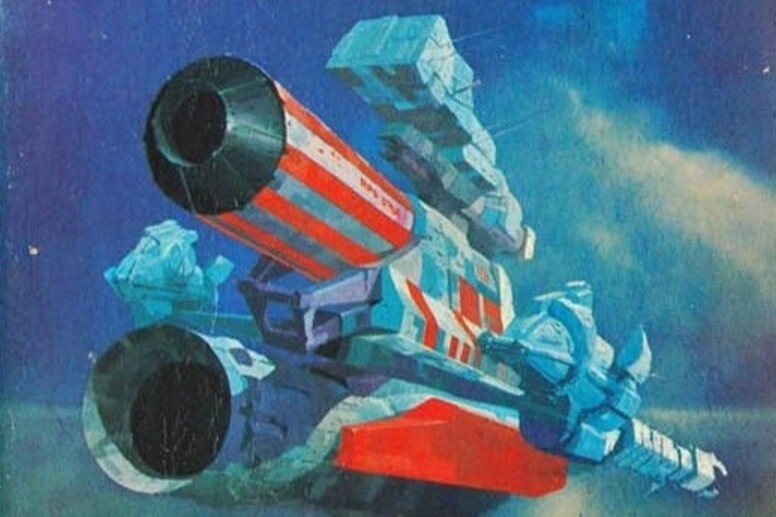
Ah, Foundation. For me, returning to this novel is like spending time with an old friend. Often generally regarded as ‘one of the best’*, if not one of the most important SF novels of all time, I personally have reread this one – well, a few times. I consider myself very lucky to own a signed copy, at considerable expense, admittedly. It is one of the first books that I borrowed from my Dad’s bookshelf in the 1970’s and was a formative influence in generating my lifelong love of SF. So much so that on the wall above where I’m typing this I have a signed print of the iconic Chris Foss cover that was on my Dad’s paperback covers (see below).
So, I guess that this may be a word of caution. This review may not be totally balanced. I must say though that 40+ years on, there’s a lot I can see wrong with it. (Others have said so, often and frequently. Io9, for example, in July 2015 put it on a list of Books That You Pretend to Have Read But Haven’t) Some have been quite blunt about its failings. And yet, despite all of its faults, I still find it a ‘go-to read’. I will try and explain why in this review.
First though, a degree of context. For many years, and certainly when I first read it, Foundation was the first book in ‘The Foundation Trilogy”, and so it was until Asimov added extra novels in the 1980’s and 90’s. However this is the first of a number of contradictions, for even in its original trilogy novel format, published 1951-53, it was not really a trilogy. Instead it was rather a series of nine stories and novellas, mostly published in sections between 1942 and 1944 and mainly in John W. Campbell’s Astounding Science Fiction Magazine. Foundation is the first four of these already-published-though-revised stories, with an additional section, The Psychohistorians, written to begin the novel and set out the tale. This was common practice in the 1950’s as SF became marketable in hardback rather than just in those old pulp magazines. Just to confuse things a little further, an abridged version was also published as an Ace Double paperback named ‘The 1000 Year Plan’ in 1955.
So, just to be clear, I am going to review the first novel only here, made up of five parts. But the context is important, as I will explain later.
The origin of the series has been written about on more than one occasion, and even by Asimov himself. It was at a meeting on the 1st August 1941 with John W Campbell, regarded as ‘the’ SF magazine editor at the time, and Asimov, a mere 21-year-old, that led to the development of this idea that became Foundation. Inspired by Gibbons’ Decline and Fall of the Roman Empire, Asimov ambitiously wanted to tell a tale, vast in time and scale, of the existence and collapse of a Galactic Empire. Campbell encouraged this and Asimov went away to write what eventually became the second part of the novel, The Encyclopaedists, published in Astounding in May 1942 as Foundation.
The book is therefore five stories. The first, The Psychohistorians, was specifically written to fix up the novel and introduces us to mathematician Gaal Dornick, who has arrived on the planet of Trantor, the capital of the Galactic Empire, to work for eminent psychohistorian Hari Seldon. When Seldon and Dornick are arrested and put to trial, Seldon reveals his great secret, and tells of his solution – he believes that the Galactic Empire is doomed to collapse in less than three hundred years and will enter a Dark Ages that will last thirty thousand years. His suggestion is that by using psychohistory Seldon hopes to guide society in the future and reduce this time of anarchy and chaos. Seldon is exiled to Terminus and there sets up a Plan that will be guided by him even after his death, to help civilisation.
The next four parts show us how the Empire survives crisis after crisis following Seldon’s death. In part two, The Encyclopaedists, the story moves to Terminus, where the capital city’s first mayor, Salvor Hardin, has to deal with the first ‘Seldon Crisis’ – that Terminus being is about to be invaded and colonised by The Four Kingdoms, who wish to take over the planet, and there is the suggestion of a coup d’etat. At the end of the story Hari Seldon’s true purpose is revealed.
In The Mayors, set 80 years after The Psychohistorians, we find that the decline of science away from Terminus has led to the creation of a religion around nuclear power, which the Foundation on Terminus still have. Salvor Hardin, having being re-elected as mayor of Terminus City, now has to deal with a new potential Seldon Crisis. One of the Four Kingdoms, the Kingdom of Anacreon, plans to overthrow the Foundation’s influence upon the succession of their young Prince Regent Wienis by using an old Imperial Space Cruiser refitted for war. At the same time on Terminus we have a threat to the Mayor with the rise of the Actionist Party, who wish to take direct action against The Anacreonians.
In The Traders, fifty-five years after The Mayors, the Foundation has expanded to such an extent that traders now travel between those planets who have technology and those who don’t. Trader Linmar Ponyets is asked to intervene on behalf of the Foundation when Master Trader Eskel Gorov is arrested and sentenced to death for attempting to sell atomics on the planets of Askone, a world which forbids the sale of ancient technology.
Finally, in The Merchant Princes, the main plot is about three Federation spaceships disappearing in the Republic of Korell. Master Trader Hober Mallow is assigned to find the missing ships, deal with Korell and also to investigate their technological developments. Those who have assigned this mission to Mallow, Foreign Secretary Publius Manlio and Mayoral Secretary Jorane Sutt, believe that another Seldon Crisis is about to begin, because they fear that domestic tensions caused by the autonomy given to Traders and the fragile foreign relations may give rise to a nuclear conflict involving the Foundation. Mallow is arrested and tried for murder after being involved in the possible death of a priest, the Reverend Jord Parma of Anacreon. In the end there is a grand reveal that suggests that not all is quite what we expected.
And all told in about 250 pages.
OK: lets deal with the criticism first. First of all, this is a book that is very ‘talky’. For those expecting fleets of battleships blasting planets, a la EE ‘Doc’ Smith or Edmond Hamilton, are going to be disappointed.
The downside of this is that there are passages – whole pages, almost – of characters ‘talking’ rather than ‘doing’. There are enormous info-dumps, and places where characters and dialogue are clearly manoeuvred into revealing great lumps of rather purple exposition.
What strikes me most, though, is that this talking is because of the nature of the book. It is deliberately an intellectual examination, a setting out on paper of quite radical ideas. The book sets up problems and then examines many aspects before solving them. (Signs that Asimov liked mysteries as much as his SF.) And that is not for everyone. Some of the solutions shown here are quite simple and tame for a contemporary readership. However, reading in the context of what else was out there at the time, this is something quite different, a case of the genre upping its game. Unlike many of the stories’ contemporaries, Foundation is not a cosmic tale of ‘Cowboys and Indians’, but something slower and more measured.
Some readers have complained that the book has little continuity, due to the episodic nature of each section. Though there have been fix-ups, it is worth pointing out, as James Gunn did in my Easton Press copy, that each section was originally written without the need or desire to connect them together. They were written for the pulps, months and even years apart. Asimov himself has said that there was not (at first, anyway) a grand unifying scheme planned from the outset, which has led to some difficulties in connecting the dots a little. Whilst I accept this as a weakness, it is an understandable one, and not an unsurmountable one. As my recent reading of Allen Steele’s Arkwright has shown, there is still life in the multi-part story yet.
This also makes me realise of course that Asimov also effectively painted himself into a corner with each part, creating a situation where the background for the story was known but the actual ‘how-do-I-get-myself-out-of-here?’ plot wasn’t. It is only later, connected together, that the whole thing can be examined, but it does create an element of weakness that later novellas and novels, being conceived as a coherent part, do not have.
On the upside though is the rather appealing point that not just global war but intergalactic war can be avoided by discussion and diplomacy, where intelligent manoeuvring is required. The solution is often not to go in all guns blazing, but to outwit your opponent. Brains beats brawn, so to speak. And to many this idea will be very attractive. It is here, after all, that the oft-quoted maxim ‘Violence is the last refuge of the incompetent’ appears, a view very different, and perhaps very brave to make at a time when there was a World War raging.
To me, at the time of first reading this was very appealing and I suspect it lies at the heart of Foundation’s popularity. These days, looking at the twenty-first century actions of global bodies such as the United Nations, such views seem rather simplistic, or at least idealistic.
Other criticisms of Foundation are the usual problems of Space Opera – the improbably huge size of the spaceships, the vast number of planets held together impossibly by some sort of Galactic Order and the physical impracticalities of communication and travel. Many essays and books have been published on such matters (and to my mind best satirised in books such as Harry Harrison’s Star Smashers of the Galaxy Rangers.) I think I would argue there that although such things are part of the fabric of Foundation, they are not the centre of its raison d’etre.
I have no problem personally with buying into such things, as part of my suspension of disbelief, without questioning their viability. My teenage-self accepted that in SF such things happened without question and though they are merely part of the setting. Amusingly, these days, my grumpier post-fifty persona wants such things to be part of my SF experience. In other words, “Damn it, I want – no, demand – it in my SF, even though I know that it is impossible.” And there is a great deal of comfort in that.
To my young pre-teenage brain, I liked the idea that it was a story that turned a Galactic Order into chaos, that all things must change. After all, History has shown it to be true – it has happened before, as part of the Roman Empire of 27 BC to c.400 AD. My Dad was also a bit of a History buff, and I think that this aspect of Foundation appealed to him nearly as much as the Science Fiction – Empires rise and fall, just at different times and at different scales. Throughout Foundation we know that things are going to fail – it’s who causes it and how it happens that is the hook here. It seems almost inevitable and there is a surprisingly comforting and worrying feeling that we know where it will lead.
But most of all, for me the attraction of Foundation was (and still is) its ‘Epicness’ – the sheer size, the scale, the timespan. This first novel is a tale that, although focused on the actions of individuals, is set in a backdrop that is undeniably much, much bigger. Whilst we read of Gaal and Hari and Linmar and Hober, we know that big things are happening elsewhere, off-stage. And although we don’t always actually see it, the imaginative setting and our own imagination fills in the gaps for us. In the end what becomes important is the psychohistory – that although the future is steered by individuals it is the overall process, of mob actions, that cause the change. Sometimes it’s the things we don’t see that are the most inspiring. And for me, at least in this first book, it is often that which I remember. It is this combination of intellectualism and vast scope and scale that to my mind has ensured the endurance of the books and inspired many other writers since.
There are reasons why, despite all of its faults, that this series is still known in SF (even if, according to io9, not everyone has read it.) George Lucas is clearly influenced by it (For Coruscant, think Trantor) as too many other authors. Greg Bear, Greg Benford and David Brin were so inspired that they wrote their own books set in the Foundation universe, acknowledging the importance of the books in their own formative years. I would also personally recommend Donald Kingsbury’s much underrated Psychohistorical Crisis as well. Its influence, even today, is justly and regularly recognised.
Foundation is not the best of the original trilogy, but it sets up a wonderful and imaginative scenario that still awes and inspires. With hindsight, and on rereading, it is not always the easiest or the most exciting of reads. But it is thoughtful, intelligent and inspiring, coming from a time that looked forward to the end of war and then stretching out into a vast future. And that is why I still read and reread it.
If Shakespeare Made a Game Final Fantasy Tactics Platform: PlayStation | Genre: Role-Playing Publisher: SCEA | Developer: Square | Released: 1997
Not only is Final Fantasy Tactics one of the greatest games of all time, but it also features one of the greatest Easter eggs of all time: Cloud Strife, the hero of Square’s remarkably popular Final Fantasy VII, is a hidden, playable character. He comes equipped with his trademark buster sword and limit break special moves from FFVII. Finding Cloud, and getting him to join you, was a convoluted process, to say the least, but word of his presence in the game quickly spread–even as many fans of Final Fantasy Tactics continued to believe that this hidden character was a hoax. For good measure, and as part of the process of getting Cloud to join your party, Ramza has a run-in with a girl who looks identical to Final Fantasy VII’s Aeris. These cameo appearances helped solidify Final Fantasy Tactics’ reputation as a genuine Final Fantasy game, since everything else about it is so different from the series’ conventions.
Possibly the greatest installment of Square’s long-running and extremely popular Final Fantasy series of role-playing games isn’t even part of the series proper. In many ways, 1997’s Final Fantasy Tactics is a game that’s difficult to learn, difficult to understand, and far less accessible than other games in the franchise. That’s because, as the name suggests, combat in Final Fantasy Tactics is a highly complex affair–though the game’s entire presentation is decidedly unorthodox. Though not the first strategy RPG, Final Fantasy Tactics remains one of the most involved, serious, and intricate of all such games, so, despite being more than 6 years old, it remains as playable and enthralling as ever–which is the sure sign of a true classic.
Moreover, Final Fantasy Tactics is notable for its incredible storyline–a storyline that is certainly one of the best, if not singularly the best, in the Final Fantasy series. This carries considerable weight, considering how well-known Final Fantasy is for its high-quality stories. The hero of the tale is named Ramza Beoulve. Ramza is a young noble, fresh from the military academy, who is embroiled in a terrible, bloody conflict with a rival nation. The story is truly epic, in the purest sense, as it spans many years (in fact, Ramza noticeably ages over the course of the game) and features a cast of dozens of characters. Final Fantasy Tactics tells such a sweeping, poignant story that few games could possibly ever compete. Especially jarring is the game’s presentation, which uses a distinctive art style that makes all the characters appear doll- or childlike. The game’s grim, and often tragic, storyline, finds characters routinely betraying and often brutally killing one another. This sharply contrasts with the seemingly lighthearted look of Final Fantasy Tactics. As if all that’s not enough, the story is presented through the eyes of a historian who has discovered Ramza’s story long after the fact. It is this historian who willingly divulges the truth behind certain historical events, knowing that in doing so he is committing heresy against the current ruling powers.
The gameplay itself is just as outstanding, though in many ways it’s just as strange. Unlike console RPGs, where combat can be tedious and usually presents itself as a roadblock between one story sequence and the next, the combat really is the star of Final Fantasy Tactics. The game features a complex “job” system, first introduced in Final Fantasy V, which allows characters in your squad to readily switch classes. Characters may shift from such class designations as squires, knights, and mages, to samurai, ninjas, chemists, mediators, and more. These classes aren’t necessarily well balanced; however, there are so many unusual skills each character can learn, and there are so many viable and interesting combinations, that Final Fantasy Tactics ends up offering tremendous variety and replay value. In addition, the game is incredibly challenging at times. This forces players to think carefully about each move, to plan well-ahead in a battle, and to bring the best possible strategies and tactics to bear against many cunning opponents.
Final Fantasy Tactics is simply a one-of-a-kind game. Many games, since its time, have attempted to copy and improve on its formula, but none have managed to do so with the same dramatic flair and unusual style. The game does have its flaws, not the least of which is an English translation from the original Japanese that is frequently nonsensical. However, over time these qualities have just added to the game’s unique style and appeal. The game may still be found on store shelves as part of Sony’s Greatest Hits collection for the PlayStation, though, for a number of years following its release, it was very difficult to find.
Final Fantasy Tactics is my personal favorite game bearing the “Final Fantasy” name. I remember being appalled by the English translation when the game first hit Western shores, especially since I was a fan of the Japanese version of the game and was hoping for a translation on par with the game’s extremely high quality. But looking back, I realize that the bizarre English dialogue fits right in with all the other highly unlikely aspects about the game. I still go back and play Final Fantasy Tactics from time to time, as it’s one of those games that’s equal parts labor of love and equal parts sheer skill and artistry.
There’s something special about the simple roleplays with basic equipment from years past. I remember when I first started in ASMR several years ago, the 3Dio was the Rolls-Royce of microphones while the Blue Yeti was standard. The biggest videos were ear cleanings or haircuts or massages. Nowadays, the 3Dio is one of the first audio one goes to when they start an ASMR channel, and videos are so varied and sophisticated. I wanted to do something that felt more reminiscent of when I started, while using my own 3Dio – a gradual beginning, lots of writing, some simple triggers, not too much over-engineering. Just something simple & satisfying. Hope y’all enjoy 🙂
Introduction ~ 00:00 – 01:48 Taking Your Symptom/Medical History ~ 01:48 – 05:46 Inspecting & Palpating Your Right Ear ~ 05:46 – 08:02 Inspecting & Palpation Your Left Ear ~ 08:02 – 10:09 Bilateral Palpation of Your Ears ~ 10:09 – 11:56 Looking Inside Your Left Ear with Otoscope ~ 11:56 – 13:55 Looking Inside Your Right Ear with Otoscope ~ 13:55 – 15:39 Discussing the Insides of Your Ears ~ 15:39 – 17:47 Getting Ready for Your Ear Cleaning ~ 17:47 – 19:07 Starting the Cleaning on Left Ear ~ 19:07 – 23:50 Cleaning Your Right Ear ~ 23:50 – 29:39 Using Hydrogen Peroxide to Clean Your Left Ear ~ 29:39 – 31:35 Using Peroxide on Right Ear ~ 31:35 – 32:50 Double-Checking Your Ears with Otoscope ~ 32:50 – 33:44 Cleaning Outer Ears with Tissue ~ 33:44 – 36:18 Using Cotton Bud to Clean & Dry Outer Ears ~ 36:18 – 39:08 Drying Your Outer Ears with Tissue ~ 39:08 – 41:48 Writing Down & Reviewing Your Visit ~ 41:48 – 45:24 Final Bits ~ 45:24 – 46:44



 Igor's Blog