In some ways Ant-Man and the Wasp is the kind of movie I wanted Ant-Man to be: namely, a refreshing antidote to the rest of the Marvel Cinematic Universe.
It’s not just the light, breezy tone and the witty gags. Humor is nothing new to the MCU; on the contrary, obligatory Guardians-style whimsy has become a jarring and even cynical tonal anomaly in apocalypses like Thor: Ragnarok and Avengers: Infinity War.
But there’s a lightness to Ant-Man and the Wasp that goes beyond the gags. No one even mentions Infinity Stones, and the fate of the universe, the planet, or even Asgard or Wakanda is not at stake.
There are no obligatory cameos by other heroes, like Falcon in the first Ant-Man (or Iron Man in Spider-Man: Homecoming, another relatively small-scale MCU excursion). After their mutual absence in Infinity War, I half expected Hawkeye to show up in Ant-Man’s new adventure, but he doesn’t, thank goodness.
There’s some talk about the epic airport battle in Germany from Captain America: Civil War, and Paul Rudd’s Scott Lang, the neophyte Ant-Man, can’t help name-dropping “Cap.” In general, though, Ant-Man and the Wasp is less shackled to the rest of the MCU than any post-Avengers Marvel sequel — at least until the downbeat mid-credits stinger.
There’s an antagonist called Ghost who is not out to exterminate or enslave, and in fact doesn’t particularly want to harm anyone (but is willing to). Laurence Fishburne shows up as an old partner-turned-rival of Michael Douglas’ Hank Pym, the original Ant-Man, and turns out to be a more interesting character than you’d expect. A gang of petty thugs led by Walton Goggins supply modest levels of menace.
It’s all extremely not extreme.
Even the target audience skews smaller — younger, I mean — than usual. The first Ant-Man had a couple of violent sci-fi deaths, some typical language and Michael Peña’s comic-relief motormouth Luis chattering about an early sexual experience. Ant-Man and the Wasp goes lighter in all these categories. It might be Marvel’s most kid-friendly movie. Imagine that.
I’m not ashamed to say that I most enjoyed Ant-Man when it felt like a sequel in spirit to Honey, I Shrunk the Kids. Ant-Man and the Wasp doubles down on that vibe and then some, not least because Scott’s defining relationship is not with Evangeline Lilly’s Hope van Dyne, now the Wasp, but with Scott’s adorable young daughter, Cassie (Abby Ryder Fortson), who dotes on him as much as he on her.
That’s not to say the Wasp is a mere sidekick. On the contrary, you could say Ant-Man is her sidekick. Her character may be underwritten, but it’s her quest, not Scott’s, that propels the story, and he supports her rather than vice versa — not always willingly.
That the Wasp is a marquee co-star at all is a corrective of sorts, if a modest one. Marvel has knocked out 20 movies over the last 10 years, and until now every one has borne the name of a male solo hero or a male-dominated team.
The DC franchise has stumbled a lot trying to follow in Marvel’s footsteps, but they did beat Marvel to the punch in this respect with Wonder Woman. (Marvel’s first heroine-led film will be next year’s Captain Marvel, starring Brie Larson. After years of cold feet, it seems Marvel execs are even allowing a Black Widow solo movie.)
The first Ant-Man movie technically had two Ant-Men, with Michael Douglas’ Hank Pym, the original Ant-Man, passing the baton to Scott. Yet it somehow managed to be between Wasps, with the original, Hank’s wife Janet, lost in the quantum realm, and their daughter Hope pointlessly sidelined and forced to watch Scott suit up without her.
Now, Hope is allowed to spread her wings, which she has, along with wrist blasters, which is the kind of tech that Wasps get but Ant-Men don’t. Like many comic-book conceits, the only way to deal with this is to incredulously cross-examine it and then move on, since the real reason (wasps fly and sting and ants generally don’t) would hardly work as a diegetic or in-universe explanation.
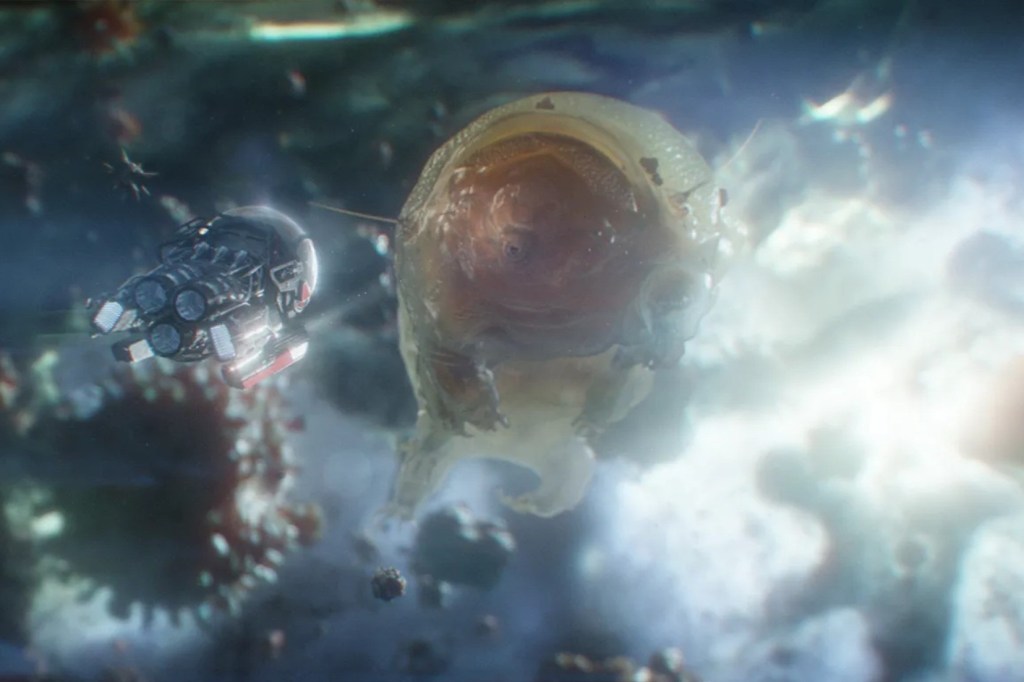
Meanwhile, the movie exploits the tactical and comic possibilities of its Alice in Wonderland size-changing to greater effect than previous movies. After Doctor Strange, Ant-Man and the Wasp is the only other recent Marvel movie with action set pieces that are visually unique and organically funny. (Some of the funnier gags involve technical glitches resulting in unpredictable size changes.)
For a movie about a divorced ex-con who is dodging parole-violation charges and whose ex-wife is remarried to a police officer, Ant-Man and the Wasp is remarkably genial. The former Mrs. Lang (Judy Greer) is nothing if not supportive of Scott, and her new husband (Bobby Cannavale) is almost unsettlingly amiable. With Cassie at the center, they’re almost one big happy family.
Scott’s parole officer (Randall Park) isn’t happy about the whole thing, but he’s not a jerk either. Even a sequence with Goggins and his thugs interrogating Luis is almost completely disarmed by Luis’ garrulous enthusiasm.
Marvel movies have often struggled to supply villains that matter. Ant-Man and the Wasp finds an unexpected solution: Perhaps villains that matter don’t matter as much as these movies think. I would say I’d like to see more superhero movies try something like this, but honestly, how likely is that?
There was a time when Nintendo games sparked my imagination, along with those of game developers worldwide, but the Nintendo of today is little more than a boogeyman, frightening the next generation of game makers, and protecting its IP like a fire-breathing Bowser, with no empathy for those it burns. I would love to return to the innocent days when I would have canonized Shigeru Miyamoto, and when I could play a Mario game and enjoy the timeless charm of platforming bliss without thinking of the company’s ruthless legal department and its heartless litigation. Game developers have it far worse.
Every time Nintendo sues ROM websites for millions, some fans will leap to the company’s defense, parroting empty rhetoric that the company has the right to protect its Intellectual Property against piracy. These defenders tend to quiet down when they see Nintendo’s history of taking legal action against non-profit fan games, sheet music, and gaming tournaments that promote their own products. The massive array of video game-related patents the company has accrued is the current albatross around the neck of the entire video game industry. Nintendo can sue nearly anyone at any time that they get in the company’s crosshairs.
The lawsuit against Tropic Haze made it clear that Nintendo will annihilate video game preservation in favor of its bottom line, as it shut down the two most promising Nintendo Switch emulators, while creating a fear-based deterrent to any future emulation endeavors. For every case that goes to trial, there are many more incidents where a cease and desist frightens a small indie developer or a fan project into submission. Nintendo is among the most profitable companies in Japan. The party with deeper pockets wins by default in most legal matters. Those challenged typically settle out of fear of Nintendo.
While Nintendo shut down Smash Bros. tournaments that used mods, and will routinely bully nonprofit developers into removing free fan games, it continues to rake in massive profits from its Switch hardware and video game sales. The same law firm Nintendo retained to drive Switch emulation to extinction, Adler Pollock & Sheehan, proudly boasts of its efforts in representing the state of Rhode Island in its efforts to withhold pension benefits from retirees and defending aviation-related wrongful death suits. As reported by Automaton, Nintendo’s patent attorney Koji Nishiura attempted to justify the company’s infamous scare tactics to dismantle emulation projects.
The survival game Palworld may change because of Nintendo, as the company reached into its bottomless bag of video game-related patents for any excuse to take the game down a peg. It is well-known that Nintendo went on a spree of patenting nearly any game design concept it could think of, like detecting a hidden enemy by seeing its shadow from behind a tree. This is an example of something so intuitive that it might not be legally defensible, much like catching a monster in a ball, but being legally right is meaningless if you can’t afford the fight.
Video game historian John Szczepaniak was a guest lecturer at TechnoCampus University in Spain last year. As reported by Time Extension, Nintendo’s massive array of patents, and the company’s lack of scruples towards filing unethical lawsuits, has become a source of real fear for prospective game makers. Szczepaniak said, “Students then described their fears over Nintendo’s excessive litigation, given they will literally sue you for anything these days. This cannot be overemphasized: the young, passionate, hopeful creators of tomorrow are afraid to explore their artistic urges in case Nintendo attacks them.” The company that once inspired imagination now inspires fear.
Completely free-to-play fan projects are abandoned out of concern for legal action. A Mother 4 fan game was renamed Oddity, and appears to have gone radio silent, along with many other fan-made projects that have dried up in recent years. Numerous fantastic video games have built off Nintendo’s creations, like Braid’s subversive take on Mario, or Tunic’s deconstruction of the Zelda formula. Many of today’s best-known developers grew up with Nintendo games and hardware, and those experiences encouraged them to enter the industry. Now, Nintendo’s bullying and Draconian legal tactics are more likely to kill any dream of game development.
The Nintendo Switch outsold the PS1 and Wii years ago, and Switch 2 will likely continue the momentum. Nintendo notoriously sells hardware with a profit margin, where most gaming consoles are sold at a loss. First-party Switch games that are years old still rarely see markdowns in their prices. All of this adds to the fact that Nintendo is not hurting for money. The company does not need to crack down on games like Palworld, emulation, and fan projects, to stay profitable. Nintendo needlessly chooses to pursue relentless legal actions, without concern for ethics or consequences, creating an industry-wide chilling effect.
For any misguided fans who think this is simply the legal system rendering justice, the result in which Nintendo won the Joy-Con lawsuit alone is proof that being morally, or even legally, in the right, has little to do with outcomes in litigation. Joy-Con drift is an undeniable fact, making it clear justice has no bearing in these matters. The ability to outspend the other party decides the outcome far more often than any issues of fact or precedent, as parties are forced to settle to mitigate risk and further mounting expenses. Few defendants can match Nintendo’s infamously deep pockets.
I wish I could return to the time when I could be unabashedly excited about a new Nintendo console, but now, I am constantly torn by the knowledge that every purchase funds a video game company that is inherently hostile to the medium of video games. As much as Nintendo once contributed to the art of video games, today, the company clearly views things through the lens of IP protection and maximizing profit, not furthering the art form or preserving it for the future. The next generation of game makers have good reason to fear Nintendo’s looming shadow over the industry.
Built between the beginning of the 16th century and the end of the 18th century, this place of spiritual retreat in the Sufi tradition uses Iranian traditional architectural forms to maximize use of available space to accommodate a variety of functions (including a library, a mosque, a school, mausolea, a cistern, a hospital, kitchens, a bakery, and some offices). It incorporates a route to reach the shrine of the Sheikh divided into seven segments, which mirror the seven stages of Sufi mysticism, separated by eight gates, which represent the eight attitudes of Sufism. The ensemble includes well-preserved and richly ornamented facades and interiors, with a remarkable collection of antique artefacts. It constitutes a rare ensemble of elements of medieval Islamic architecture.
Brief synthesis
Sheikh Safi al-Din Khānegāh and Shrine Ensemble was built as a small microcosmic city with bazaars, public baths, squares, religious buildings, houses, and offices. It was the largest and most complete khānegāh and the most prominent Sufi shrine since it also hosts the tomb of the founder of the Safavid Dynasty. For these reasons, it has evolved into a display of sacred works of art and architecture from the 14th to the 18th century and a centre of Sufi religious pilgrimage.
The Sheikh Safi al-Din Khānegāh and Shrine Ensemble in Ardabil is of Outstanding Universal Value as an artistic and architectural masterpiece and an outstanding representation of the fundamental principles of Sufism. Ilkhanid and Timurid architectural languages, influenced by Sufi philosophy, have created new spatial forms and decorative patterns. The layout of the ensemble became a prototype for innovative architectural expressions and a reference for other khānegāhs. As the shrine of a prominent Sufi master, who also was the founder of the Safavid Dynasty, the property has remained sacred in Iran up to the present day.
Criterion (i): The conception of the entire ensemble layout, the proportions of the internal and external spaces and of the buildings, their design and refined decoration, together with the climax created by the sequenced path to Sheikh Safi al-Din’s shrine, all combined, have concurred to create a unique complex in which aesthetics and spirituality are in a harmonious dialogue.
Criterion (ii): The architectural spaces and features of the nominated property have integrated influences of the Ilkhānid and Timurid periods with the religious message of Sufism and the taste for exquisite ornamentation and interior spaciousness, thus giving rise to fresh architectural and artistic forms.
Criterion (iv): The Sheikh Safi al-Din ensemble is a prototype and an outstanding example of a 16th century religious complex, combined with social, charitable, cultural, and educational functions, which contains all the significant elements that since came to characterize Safavid architecture and became a prototype for other khānegāh and shrines.
Integrity and Authenticity
The property contains all the elements that convey its Outstanding Universal Value. Most of the elements of the property are in good condition and, despite several transformations, the site continues to present an image of harmonious composition, in which the material realization of the spiritual path through the architectural design is still clearly legible. The State Party has taken steps to restore the original access to the ensemble, which will strengthen the connection between the architecture and the Sufi spiritual messages.
The design form of the entire complex and of individual buildings has been retained and their religious functions have been maintained in most cases. Where they have changed, the new uses are appropriate to the architectural structure in general, and the material and technical authenticity has been retained, as well as the spiritual character of the place. It is, however, important to reduce the tendency to go too far in conservation work.
Protection and management requirements
The nominated property has been protected under the Iranian legislation since 1932. According to the law currently in force, special protection provisions are in place for the property, the buffer zone and for a wider area called the ‘landscape zone.’ These provisions, already in place, are also being incorporated into the revised Master Plan for Ardabil, final approval of which is scheduled for September 2010.
Any project concerning protected monuments in Iran must be in accordance with the provisions of the law and must be approved by ICHHTO, the authority in charge of the protection of Iranian monuments. The management framework established for the nominated property integrates the regulations for Sheikh Safi al-Din Khānegāh and Shrine Ensemble and the provisions of the Ardabil Master Plan.
Management of protected monuments is the responsibility of the High Technical Council of ICHHTO, which approves budgets and all major conservation works. Minor works and day-to-day maintenance is ensured by a steering committee which can avail itself of a multidisciplinary team (the ICHHTO Sheikh Safi al-Din Ensemble Base), which is headed by a urban planner and includes on its staff engineers, architects, conservation architects, and archaeologists.
The Pacific National Exhibition (PNE) is a nonprofit organization that operates an annual 15-day summer fair, a seasonal amusement park, and indoor arenas in Vancouver, British Columbia, Canada. The PNE fair is held at Hastings Park, beginning in mid-to-late August and ending in early September, usually Labour Day.
The organization was established in 1907 as the Vancouver Exhibition Association, and organized its first fair at Hastings Park in 1910. The organization was renamed to the Pacific National Exhibition in 1946. During the mid-20th century, a number of facilities were built on the PNE grounds, including Pacific Coliseum and the PNE Agrodome. In 1993, the amusement park adjacent to the PNE, Playland, became a division of the PNE.
The Vancouver Exhibition Association (VEA), the predecessor to the Pacific National Exhibition organization was first formed in 1907; although the association was not incorporated until 18 June 1908. The VEA had petitioned Vancouver City Council to host a fair at Hastings Park; although faced early opposition from the city council and the local jockey club that used the park for horse races. However, the city council eventually conceded to the VEA’s request and granted the association a 5-year lease to host a fair at Hastings Park in 1909.
The VEA held its first fair at Hastings Park in August 1910. It was opened by then Canadian Prime Minister Sir Wilfrid Laurier as the Vancouver Exhibition. The biggest attractions of the two-week fair are its numerous shops, stalls, performances, a nightly fireworks show, and the exhibition’s Prize Home. From its beginnings, the exhibition was used as a showcase for the region’s agriculture and economy.
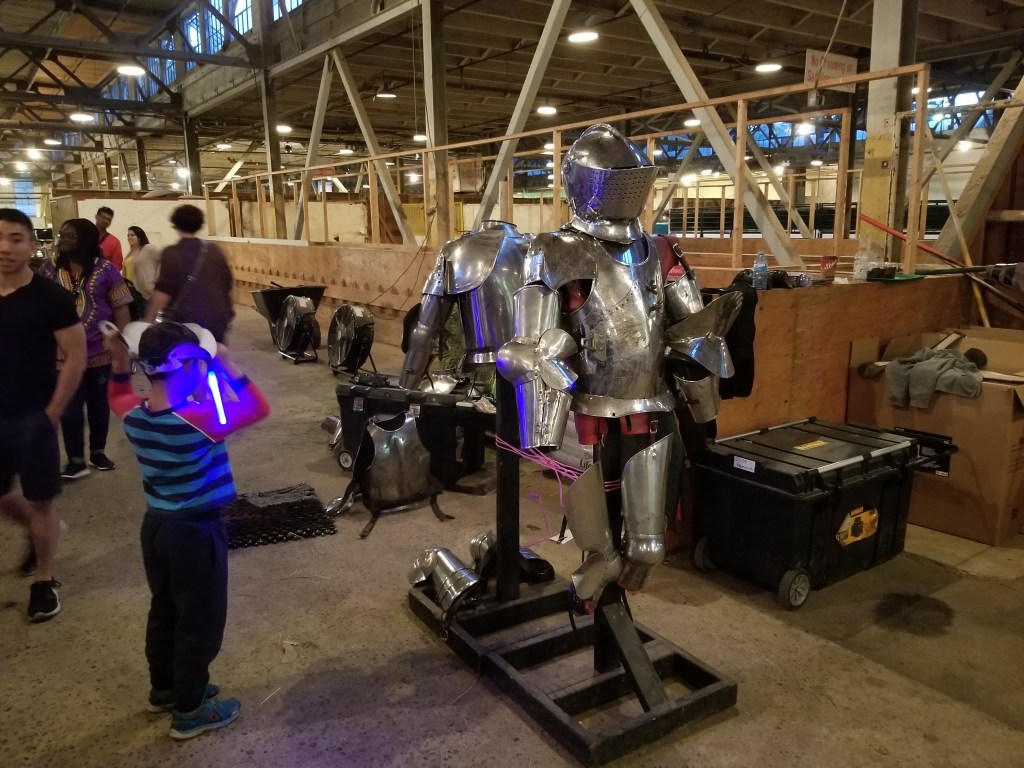
In the initial years of the Second World War, the fairgrounds saw an increased military presence. However, the exhibition itself was not cancelled until 1942, after the Canadian declaration of war against Japan was issued. From 1942 to 1946 the exhibition and fair was closed, and like the Canadian National Exhibition in Toronto, served as a military training facility for the duration of World War II. During this time, the exhibition barns that were used to house livestock, were used as processing centres for interned Japanese Canadians from all over British Columbia. The interned Japanese Canadians were later shipped away to other internment camps throughout British Columbia, and Alberta. The Momiji (Japanese word for Maple) Gardens on the PNE’s grounds serves as a memorial for the event. The barns used for the internment of Japanese Canadians are still used to house livestock during the annual fair, and serve as storage area to house some of the PNE’s property the rest of the year.
On 7 February 1946, the Vancouver Exhibition Association changed its name to its current moniker, the Pacific National Exhibition; and later reopened the fair to the public under that name in 1947. The organization was formally reincorporated as the Pacific National Exhibition in 1955.
The highest attendance at the fair was recorded in 1986, with 1.1 million guests visiting the PNE, most likely due to Expo 86 that was occurring at the time. In 1993, the amusement park adjacent to the PNE, Playland, became a division of the PNE organization.
During 1997-1998, the PNE grounds was transformed with the demolition of a number of buildings including the Food Building, Showmart and the Poultry Building. This gave way to the Sanctuary, a parkland setting with a pond. The pond restored part of a stream that once flowed in the park out to the Burrard Inlet. The city restored a large portion of the park. Many old fair buildings have been demolished and replaced by a more natural character. Although land was purchased in Surrey that was to become the fair’s new home, the PNE has since transferred ownership from the province to the City of Vancouver and will remain at Hastings Park. The PNE is a registered charity.
Two attractions at the PNE were named as heritage sites by the City of Vancouver in August 2013. The Pacific Coliseum and the Wooden Roller Coaster were added to the list.
In 2020, the fair went on hiatus due to the COVID-19 pandemic, alongside other agricultural and county fairs across Canada, including the Calgary Stampede, the Canadian National Exhibition, and K-Days.
In the early hours of February 20, 2022, a major fire broke out on PNE grounds, where multiple vehicles, tools and equipment, and buildings were destroyed as a result.
The PNE grounds contains several buildings and exhibition halls. The PNE Forum is a 4,200 square metres (45,000 sq ft) exhibition facility that is used for large displays and trade shows. Rollerland is a 1,840 square metres (19,800 sq ft) exhibition, banquet hall and venue for the Terminal City Roller Derby.
Two buildings on the PNE grounds are indoor arenas. The Pacific Coliseum is multi-purpose arena that holds 15,713 permanent seats, with provisions for 2,000 temporary seats for concerts and certain sports. The PNE Agrodome is a smaller indoor arena with 3,000 permanent seats, with provisions to expand up to 5,000 seats. Entertainment facilities includes the Garden Auditorium, a building that features a built-in stage and dance hall. The PNE grounds also feature amphitheatre with bench-style seating for 4,500 visitors.
Other buildings on the PNE grounds includes the Livestock Barns, a large multi-use facility, and the organization’s administrative offices.
The latest moves by Western allies against Libya have shown marked similarities to “strategies” they adopted in Kosovo in the 1990s.
Catherine Ashton, EU’s foreign policy chief, opened the bloc’s office on Sunday in Benghazi,the Libyan opposition’s base camp when he visited the city on Sunday.
Earlier last Monday, prosecutor of the International Criminal Court (ICC) requested arrest warrants for Libyan leader Muammar Gaddafi, his son Saif Al-Islam Gaddafi and his brother-in-law Abdullah Al-Sanousi who is Libya’s head of intelligence.
In retrospective, NATO adopted a three-step strategy in Kosovo War back in 1999.
NATO first supported the Kosovo authority and launched 78-day bombings against former Yugoslavia, forcing the late Yugoslav leader Slobodan Milosevic to withdraw his forces.
The West then stirred up the political unrest in Serbia, leading to the downfall of Milosevic.
The last step was to send Milosevic to The Hague to face trial at the International Criminal Tribunal for Former Yugoslavia. Later on, Milosevic died in custody.
Twelve years later, the Western allies again resorted to a similar three-step strategy in Libya.
NATO is launching continuous air strikes against Gaddafi’s forces, while the Western allies are heaping political and psychological pressures on Gaddafi and openly supporting the opposition, in a bid to force Gaddafi to give up power. This was followed by ICC’s issuance of arrest warrant to bring Gaddafi to The Hague.
Yet, there are some differences between the two scenarios.
In 1999, the West unleashed the bombings without bothering to ask for UN Security Council mandate, while 12 years later, the West launched airstrikes on Libya by overstepping the authorization of UN Resolution 1973 to impose “non-fly” zone supposedly to protect the civilians in Libya.
In addition, NATO has expanded its military actions from Europe, the defense area defined by the North Atlantic Treaty, to Africa, which is far beyond NATO’s traditional legitimate defense area.
Ironically, the West has claimed to seek “political solution” while continuing its airstrikes in Libya, but what it really means by “political solution” is something quite different from what is understood by the international community.
Since March 19 when several Western nations started air raids, the West has organized so-called “Contact Group” on Libya and held several meetings to coordinate actions, claiming to “seek political solution to resolving Libya crisis.”
However, the “Contact Group” has openly urged support for the Libya opposition on several occasions.
In short, what happened in Kosovo and Libya may well serve as perfect examples of the so-call “neo-interventionism” pursued by some Western powers.
Under the pretext of “human rights above sovereignty,” they try to interfere in the domestic affairs of sovereign states, even resort to military means to split them.
The strategies of these neo-interventionists are, more often than not, deceptive.
On the Libya issue, for instance, the Western powers seemed to have complied with international procedures and norms: they first tried to push pass a UN Security Council resolutions and then seek an ICC arrest warrant to bring Libyan leader Gaddafi to justice.
These strategies, however, are merely employed on a selective basis to get rid of political figures the West dislike, including Gaddafi and Milosevic. The West would turn a blind eye to similar cases in countries which are considered its own allies.
To put it clearly, some forces in the West are using just procedures of the international laws to serve their own political purposes.
In the 21st century, some Western countries take “neo-interventionism” as their standard practice and even try to apply the so-called “Kosovo model” elsewhere in the world. This should ring an alarm bell to the international community.
A tall stele rises from a deeply cratered surface, casting a long, ominous shadow past a row of smaller towers. Straight lines connect the structures to each other, like streets on a map or the projected moves in a game of cosmic chess. The Earth floats serenely in the dark sky, next to the logo that reads Tekhnika—molodezhi, Russian for Technology for the Youth, a Soviet popular science magazine that launched in 1933. The magazine cover, from 1969, illustrated an article highlighting photographs from Luna 9, the Soviet unmanned spacecraft that was the first to survive a landing on the Moon a few years earlier.
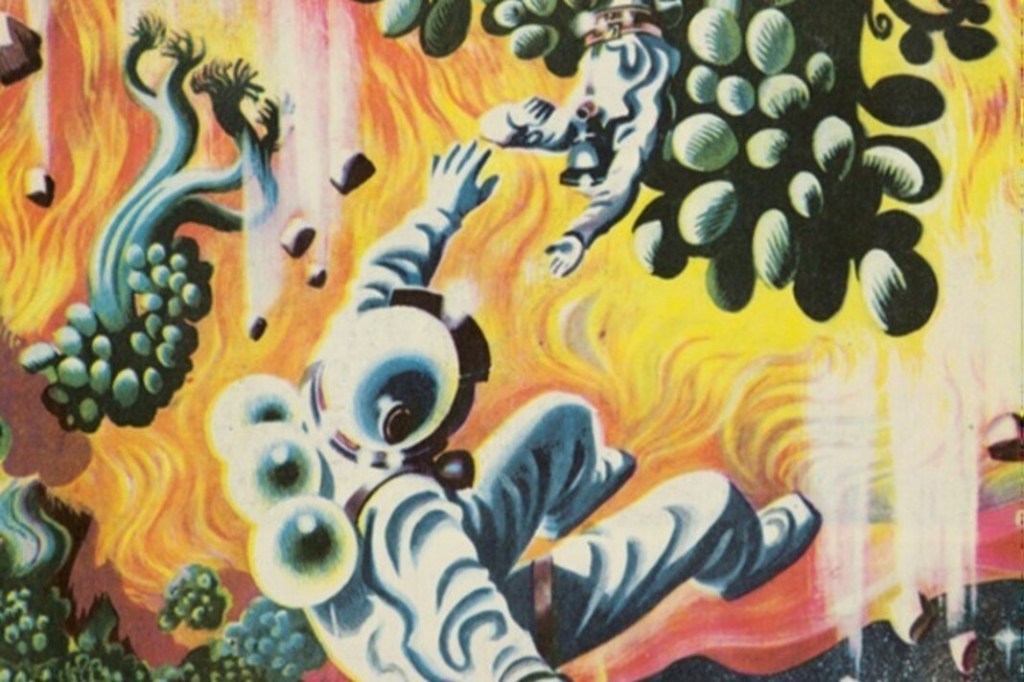
This imagined moonscape is one of more than 250 otherworldly images from the upcoming, visually delightful book, Soviet Space Graphics: Cosmic Visions from the USSR, by Alexandra Sankova, director and founder of the Moscow Design Museum, which collaborated on the book with her. Space Age artwork proliferated alongside the Soviet Union’s popular science magazines—there were up to 200 titles at their peak—during the Cold War. From the mid-1950s to the mid-1970s, in particular, the cosmos became a battleground for world powers jockeying for global dominance. Though the Space Age began with the successful launch of the Soviet Union’s Sputnik 1, it was the United States that, just three years after Luna 9, first put a man on a moonscape like the one on the magazine cover.
Soviet illustrations, even ones with whizzing UFOs and bafflingly futuristic machines, were not drawn to entertain as much as to educate and promote the Communist project. An open letter from cosmonauts to the public in a 1962 issue of Technology for the Youth read “… each of us going to the launch believes deeply that his labor (precisely labor!) makes the Soviet science and the Soviet man even more powerful, and brings closer that wonderful future—the communist future to which all humanity will arrive.” Scientists, astronauts, and aircraft engineers were treated like legends, since outer space was such an important idea in the Soviet Union, according to Sankova. “Achievements of the USSR in the field of space have become a powerful weapon of propaganda,” she says. Soviet citizens lived vicariously through such images, and even the more surreal and fantastical visuals—living in space, meeting new life forms—demonstrated that the idea of cultural revolution need not be limited to Earth.
Atlas Obscura spoke with Sankova about alien life, the inspirations of Soviet artists, and how the first man on the Moon changed everything. The book comes out April 1, 2020.
What do you think informed or inspired these artists’ distinctive takes on other worlds?
Two directions served as an inspiration for the illustrations: the intensive development of the scientific and technical sphere and the serious enthusiasm of designers and artists for new discoveries in various fields of science as a whole. Artists often had technical education. Another important factor that influenced the visuals was the upsurge of publications, books, novels, and short stories, and the production of science fiction films in the 1920s and the 1950 and 1960s.
Long before the dream of space flight came true, inventors and philosophers were convinced that travel between planets and even universes would become possible with time. In Russia, these ideas became widespread after the works of Konstantin Tsiolkovsky were published. In them, the scientist expressed his view that intelligent life must exist not only on Earth, but throughout the whole universe. Tsiolkovsky became famous not only for his work in engineering, but also for the conviction there must exist highly developed extraterrestrial civilizations capable of influencing the organization of matter and the course of natural processes, and for the aspiration to find a road to the cosmic intelligence and establish an organic connection between man and space.
Soviet writers had expressed the most unbelievable versions of encountering extraterrestrial civilizations. Then, in the 1970s and 1980s, space fantasy faded into the background, giving way to chronicles of the real space exploration program.
Where do these illustrations fit in the overall aesthetic of Soviet design?
Soviet graphic design always developed actively and responded to the situation in the country quickly. This was primarily due to the fact that posters, magazines, books, brochures, etc., were the most effective means of propaganda. They were fast and cheap to manufacture, and they presented material in a striking and vivid way, making information visual and generally understood.
Publishing houses throughout the country collaborated with individual artists and workshops that were part of the Union of Artists of the USSR. Scientific and technical magazines and design research institutes often provided sanctuary and official employment to nonconformist, underground artists. Working for magazines, they embodied unusual, fantastic concepts, reflected on the essence of things, made conceptual designs for cover pages, and drew a new reality that had nothing to do with their real environment.
The usual Soviet aesthetic was subject to standardization and unification. That was the only design appropriate in a country with a planned economy, where it was almost impossible to introduce anything new. The space and defense industries were the only areas for which new production lines were built.
Space also became the leading motif in design and architecture starting from the 1960s. The so-called “cosmic style” was taking shape in Soviet architecture. The houses and public buildings being constructed started to resemble interplanetary ships, satellites, and flying saucers. On playgrounds, wondrous planets, rockets, and improvised scientific stations appeared, and the walls of kindergartens and schools were decorated with stars and galaxies. Images of cosmonauts began to appear in the design of metro stations. The space theme was also dominant in the planning and design of the folk festivals that filled the lives of Soviet people and heralded the latest achievements of science, such as the launching of new ships. The streets were filled with slogans and posters saying, “Communists pave the way to the stars,” and “Science and Communism are inseparable.”
In addition to science, many of the illustrations feature alien worlds. What relationship did the Soviet people have with this kind of science fiction?
There might have been secret research institutes that were engaged in detecting an alien mind, but we don’t know this for sure. Soviet people showed no great interest in alien worlds. My dad, a Soviet engineer, has been reading scientific and technical magazines for all his life. When I asked him if there were aliens, he answered that probably there were, but he had never wanted to meet them. Space exploration influenced mostly the creative class of Soviet people. Meetings with alien civilizations then became a popular topic in movies and animation.
Based on the books and stories, Soviet film studios shot films and created incredible, fantastic cartoons involving scientists and cosmonauts as consultants for the production process. Many films became real hits: It was impossible to get into the showings, and gathered around television sets were found not only several generations of a family at once, but also friends and neighbors.
How did the Soviet vision of alternate worlds evolve over time, and did it change after the first Moon landing?
In the 1950s, illustrations in magazines became realistic: The romanticization of space and anticipation of new discoveries were replaced by pictures of the universe obtained through the latest research. After the first artificial satellite was launched it became the main protagonist of the popular science magazines, constantly appearing on their covers. The illustrators of Science and Life and Knowledge Is Power increasingly depicted the newest versions of rockets and ships and transmitted surprisingly believable (even if, in fact, they were just fantasies of artists) details about flights to the Moon. It seemed as if real color photographs taken from space were being published in the columns.
However, images of humans in open space remained extremely rare at that time. Practically all of the artists portrayed researchers and space flight pioneers inside the cosmodromes where rockets and flying saucers were launched, or in labs where the Moon or planets were shown on giant screens. In these pictures, man was not the main protagonist but part of a futuristic landscape, the mere inhabitant of far-off planets on the roads of which droplet-shaped aerodynamic machines flew. The illustrations in Technology for the Youth were an exception.
After the Soviets and Americans made their first space flights, the designs of magazines were immediately filled with images of man in space. The cosmonauts were docking, gazing through portholes upon the expanses of space, and walking through cities and command centers on other planets. The scale of the dreams became completely different. If in the 1950s people were thinking about what technical tools would allow them to start mastering the expanses of the universe, only a decade later artists were already designing star cities, greenhouses, and massive stations where people could live for years. The “Khrushchev Thaw” was reflected not only in the content of the illustrations, but also in the palette. The style became vivid and futuristic, full of bright colors, and other planets seemed like friendly, welcoming worlds. A new avant-garde cycle began.
In the 1970s, there was a shift in magazine design towards psychedelic graphics with characters and details, unusual perspectives in illustrations, and more complicated storytelling. However, most magazines with fascinating scientific and technical content were still being illustrated primarily with black-and-white drawings and diagrams—the cover and color inserts were the only colorful elements. Against this backdrop, Technology for the Youth was considered the most vibrant publication for many years.
Then idealistic images vanished and the illustrations grew gloomier. By the 1980s, not a trace of the dreams of the 1960s or the futurology of the 1970s remained. The designs of print publications became as realistic as possible, the colors less vivid, and the plots of stories centered on the everyday life of cosmonauts and scientists. By this time, the space race was already in decline. In 1972, an agreement between the Soviet Union and the United States on cooperation in the research and use of outer space for peaceful purposes had been signed. The pace of space exploration slowed down, and reports about work in orbit became ordinary news.
What is your favorite alternate world illustration in the book?
I really like the covers of Knowledge Is Power No. 12, 1969, and No. 11, 1971. They are abstract and convey the feeling that there are some parallel realities, other micro- and macro-worlds. Abstract covers depicting a very intuitive, associative artistic image of the unknown distinguish this magazine from other popular science publications having more realistic images on their covers.
Does the Soviet view of space still have resonance today?
The interest in it is returning, or it’s more correct to say that the interest has never faded. The topics popular in the 1960s and 1980s are now relevant again—ecology, alternative energy, reasonable consumption, overpopulation, and waste recycling. Back then it was regarded as futurology, but for us it’s already the reality.
Today, perhaps, a certain romanticism has vanished. Space is not seen as an end in itself anymore, now it is a means of survival: a place harmful production can be transferred to or where new sources of energy can be found.
There is an announcement at the Roskosmos website (the Russian state space corporation) inviting young people to join the cosmonaut program. I found it while preparing for this interview. However, there is no hype around this, and the announcement was reposted neither in the press, nor by social media. Now everyone realizes that the job of a cosmonaut or astronaut is the same as any other.
















 Igor's Blog