



I figure this much: Ian McDonald’s Desolation Road starts with a green man crossing the desert, so this has to be the perfect book for Green Man Review. OK, the book calls him a “greenperson,” and the desert is on a Mars of the future, transformed by mankind’s effort, but you get the idea. Trailing this greenperson is Dr. Alimantando. He comes to a place along a railroad, where, almost accidentally, he settles and starts the community that he names Desolation Road. Soon after, more people begin arriving and, in short order, the community becomes a village, a city, a war zone and a ghost-town — all within 23 Martian years. That’s the story.
But the story is far more than that. The future will have its myths, legends, and fairy tales. Desolation Road, more than a straightforward novel, is a cycle of these tales with odd visitors coming to Desolation Road — some of them staying — and its children leaving for their own adventures throughout Mars. Along the way, the reader meets, among many others, cybernetic saints; a four-handed guitar player who has killed in a musical duel; and a master of deadly sarcasm. Besides Desolation Road, the story takes the reader across a futuristic, fantastical Mars, from the wicked city of Belladonna, where nearly any vice can be found, and Glen Miller owns a jazz bar, to the toxic, sulphurous lakes of Kershaw.
McDonald endows the Martian world with people and places, at once futuristic and archetypal. Sacred groves and forests are recalled by “the Forest of Chryse, the Ladywood, oldest of all the world’s young places, where St. Catherine herself planted the Tree of World’s Beginning with her steel manipulator.” The list of snooker opponents who fall to Limaal Mandella reads like a list of knights taken on and defeated by a great champion. The feel of Desolation Road comes close to matching Cordwainer Smith in creating new, but quite human, spiritualities in fantastical, futuristic settings — quite an accomplishment, in my judgment.
There is one problem with Desolation Road: There are so many characters that few get portrayed with the depth they deserve. For example, Rajandra Das, the hobo with an empathy with machines, has a nice scene at the start, is there almost to the end, but does very little in between — and most of that has nothing to do with his talent. Eva Mandella spends the novel weaving a tapestry of the history of Desolation Road, but is little more than a shadow in the background of the story. Even the characters who get more meat to their personalities — for example, the mystical, saintly Taasmin Mandella and her rational, champion snooker-player brother, Limaal — get far less attention than they deserve.
But this sort of annoyance is common to many a fine novel. Desolation Road has a feeling of a chronicle — a holy scripture, almost — and such narratives are rather given to such gaps. Furthermore, it is fair to say that the main character of this story is not any of the individuals in it, but rather the eponymous community. The result is a novel that is highly satisfying, but oddly unfulfilling. I liked it a lot — but I still want more.

Laura and Massimo’s ongoing sexcapades are less repugnantly rape-y than their first ‘365 Days,’ so there’s very little for the sequel to do.
LOL. So in a twist so unexpected they’ll hear you gasp in Warsaw, the second installment of Barbara Białowas and Tomasz Mandes’ adaptation of Blanka Lipińska’s “365 Days” trilogy drops today on Netflix, and it’s piping hot trash. Moreover, largely absent the first film’s outright offensive rape apologism — “Baby Girl” Laura (Anna-Maria Sieklucka) even refers to her erstwhile kidnapping as “sick” at one point, marking an empowerment arc as skimpy as her underwear — this time out there’s even less of what in screenwriting terminology is called a “reason” for the “story.”
Without the flimsy, regressive “Beauty and the Beast with Two Backs” structure of the 2020 megahit (still the most successful movie ever in terms of number of days spent at No. 1 on Netflix worldwide), Lipińska and co-screenwriters Mandes and Mojca Tirš, in need of something to fill the slivers of time between soft-focus shagging sessions, go back to the classics. Which in the “365 Days” universe does not mean Aeschylus, but “As The World Turns.” Or “General Hospital.” Or “All My Children.” Or basically any soap opera that aired long enough to resort to the most eyeroll-inducing of plot contrivances, which spoiler sensitivity mandates must not be revealed here, but, yes, it’s that one. You know the one.
So wait, can this mean that Laura survived the last film’s ending, a cliffhanger so uninspired it was set on a literal cliff? Reader, she did! The sequel opens with Laura on her wedding day receiving a visit from her Sicilian mafioso fiancé Massimo (Michele Morrone, the human incarnation of the smoldering ruins of Rome circa AD 64) before their nuptials. “You shouldn’t be here,” is the first line she speaks (in fairness she can rarely get a word in between the wall-to-wall rock balladeering of the soundtrack) as she coyly turns away from one of approximately 26 featured Mediterranean horizons. But unsolicited though Massimo’s arrival may be, her second line — “I don’t have panties” — suggests it’s hardly unexpected. Their subsequent sun-flared lovemaking confirms that while Episode One’s attempt on her life may have caused Laura to lose the pregnancy she’d never told Massimo about, it has not otherwise marred her rockin’ bod, nor even mildly inhibited her flexibility.
Enter Laura’s party-girl BFF Olga (Magdalena Lamparska), shrieking about bad luck and shooing Massimo away, just in time for Laura to redo her makeup, briefly don some knickers and slo-mo up the aisle to “Ave Maria.” Then the “November Rain”-video vibe gives way to a sexed-up Sandals resort commercial as the honeymoon passes in a blur of light bondage, pool sex and a truly hilarious game of erotic golf. They ride ponies on the beach at sunset. Laura goes brunette again. And then it’s back to the grind, as the newlyweds encounter such relatable newlywed issues as being bored while one’s spouse plots a rival family’s downfall and being distracted by the bulging tool belt of a scaldingly hot gardener (Simone Susinna, fair play to the casting agents for finding the only actor on earth who could make Morrone look merely quite handsome by comparison).
The gardener — OR IS HE? — is called Nacho, appropriately for such a tasty snack, and shows up just in time to be a tattooed deltoid to cry on for Laura, who is becoming a bit frustrated with being the kept woman of a sexually aggressive but emotionally repressed gangster who only deals in groin-based intimacy. It’s hardly surprising the couple have a communication problem, given that Polish-speaking Laura and Italian-speaking Massimo use ESL-weekend-course-level English as their love language, and both have clearly been too busy humping to keep up with Duolingo. Exclamations like “Get me out from here!” “How do I look like?” along with Massimo’s often indecipherable cadences and Laura’s mangled pronunciations of words like “guaranteed” suggest they’d be a lot better off if only their relationship, like their movie, came with closed-caption subtitling.
Then Laura discovers hubs being groinally intimate with his ex-girlfriend Anna (Natasza Urbanska) at a party. Flinging her phone into the sea, Laura, never one to engineer her own escapes, husks “take me away from here” to Nacho. They abscond to another paradise island and another paradise villa, differentiated from Massimo’s mainly because the furnishings are predominantly wicker. They have sex — or do they? Is it perhaps all a dream? The eternal gauziness of DP Bartek Cielica’s ’90s music-video cinematography, set to the omnipresent off-brand rock-pop contributions from incredibly overworked composers Patryk Komór and Dominic Buczkowski-Woytaszek, make it very hard to tell Laura’s softcore fantasies from Laura’s softcore reality.
But then, that’s the point here. The sex scenes are varied, at least in terms of location — honestly, you’ll never look at a putting green the same way. There’s a Christmas tryst in which Laura’s gift to Massimo is herself, trussed up in leather wristband restraints with “fuck me” somewhat redundantly emblazoned on them in gold, lying on a rumpled sheet alongside a cornucopia of sex toys — even one that is none-too-subtly inserted from a southerly direction right as the singer wails, “I wanna do bad things to you.”
But whatever marginally transgressive sex acts may be implied, it’s the black-and-gold vibrators and the bedsheets and Laura’s complicated lingerie that are really the focus of this tiresomely basic erotic fantasia: Like the “Fifty Shades of Grey” franchise that inspired this flagrant rip-off, the “365 Days” films are less about the sex than they are about the stuff. The suits and sunglasses, villas and jetskis, shopping montages and stripper heels, Lamborghinis and Corvettes. Long before “This Day” closes on its inevitable cliffhanger — this time genuinely one of the funniest slow-motion shootouts ever — it’s devolved into the lifestyle catalogue it was always destined to be, once the ick of its initial premise wore thin. Which is good news for franchise stakeholders eyeing future installments up to and beyond Lipinska’s third book, because dunderheaded rape-romance plots might get you to 365 days, but stuff? Stuff is forever.


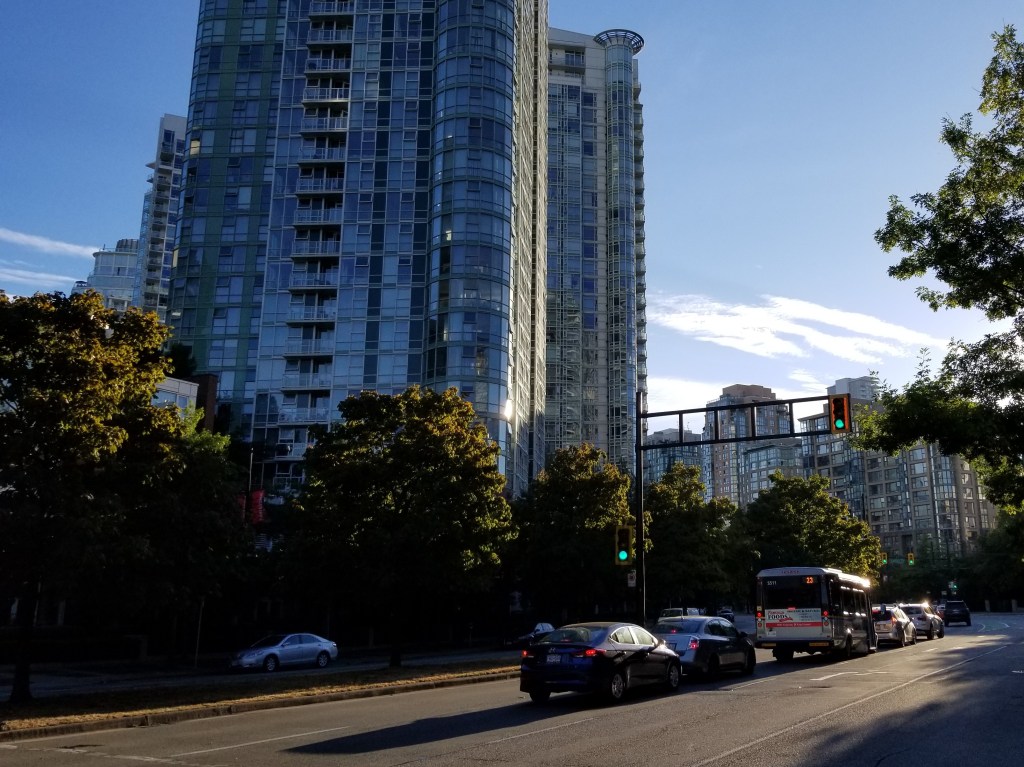
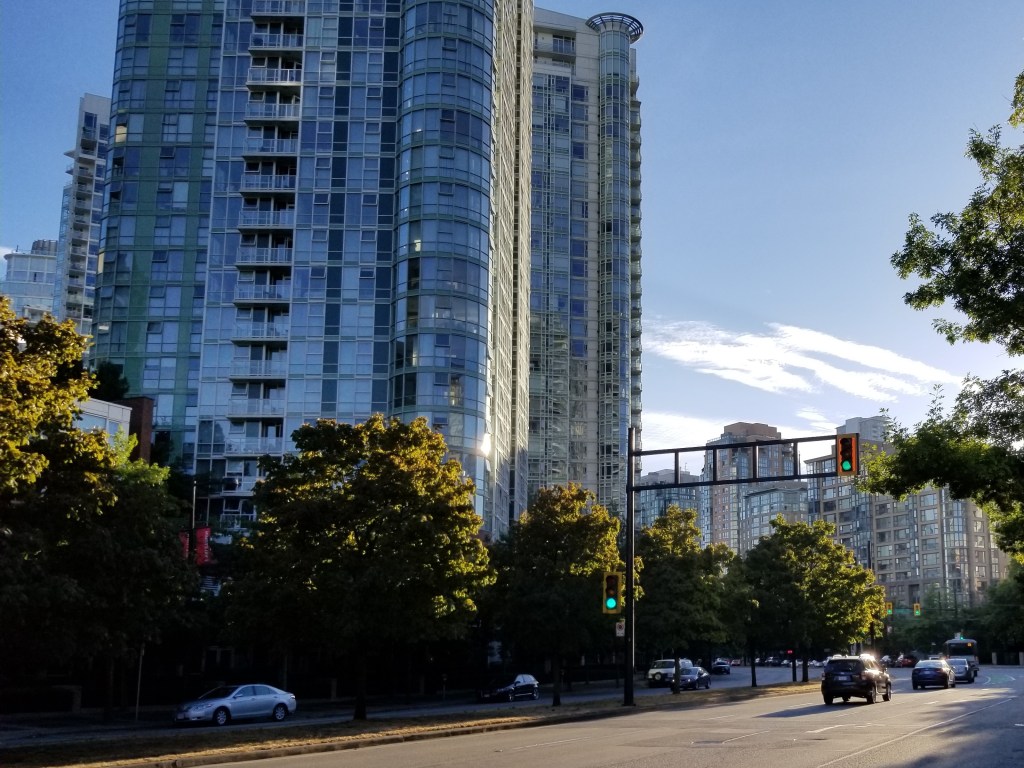


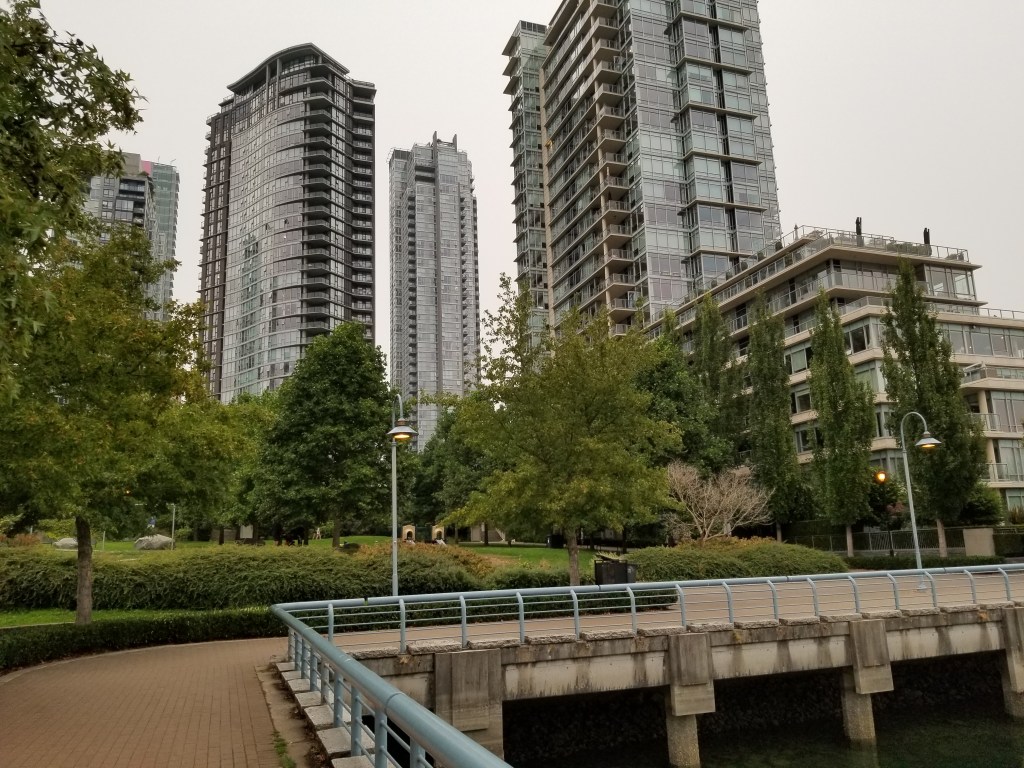
Pacific Boulevard runs along the northern edge of False Creek, a central waterway in Vancouver, and serves as a defining boundary for Yaletown. The neighborhood itself is roughly bounded by Nelson, Homer, Drake, and Pacific streets, as noted in the history provided by the Roundhouse Community Centre. Pacific Boulevard is a bustling corridor that connects Yaletown to other parts of downtown Vancouver, sitting between the Granville Street and Cambie Street bridges. It’s a major thoroughfare that offers both practical access and a scenic backdrop with views of False Creek.
Yaletown, including the area around Pacific Boulevard, has a rich history tied to Vancouver’s development. According to the Roundhouse Community Centre, the area was initially shaped by the arrival of the Canadian Pacific Railway in 1887. By 1900, the city planned a new eight-block warehouse district in what is now recognized as modern Yaletown, with Pacific Boulevard marking its southern edge. Back then, this area was a hub for processing, repackaging, and warehousing goods, thanks to its proximity to the railway and waterfront. It remained largely industrial until the late 20th century.
The transformation of Yaletown—and Pacific Boulevard by extension—began in the late 1970s and 1980s when young urban professionals started moving in, drawn by the affordable and attractive old warehouses. The area’s revitalization kicked into high gear after Expo 86, the world’s fair held in Vancouver, which turned Yaletown into a festival site and sparked widespread redevelopment. Today, Pacific Boulevard is part of a neighborhood known for its mix of art galleries, retail stores, restaurants, and residential towers, as described in the same historical overview.
Pacific Boulevard is home to several notable spots. David Lam Park, 1300 Pacific Boulevard, is a 12-acre park located right on Pacific Boulevard. It’s a large open space adjacent to Yaletown. It’s a popular spot for events, especially in spring and summer, and offers a place to relax with views of False Creek. The park hosts events like the annual lantern procession and “Labyrinth of Light” around December 21st, organized by the Roundhouse Community Centre. Roundhouse Community Centre is located near Pacific Boulevard. This centre is a hub for community activities and events, reflecting the area’s evolution from industrial to cultural. It’s tied to the history of Yaletown and often organizes events that spill into nearby spaces like David Lam Park. The street is dotted with businesses catering to both locals and visitors. For example, Atlantis Dental Yaletown at 1278 Pacific Boulevard offers dental services with extended hours (8:00 AM to 8:00 PM, Monday to Wednesday). Similarly, P Nails & Spa at 1271 Pacific Boulevard, formerly Posy Fingers & Toes Spa, provides nail and spa services, reflecting the area’s focus on lifestyle and wellness.
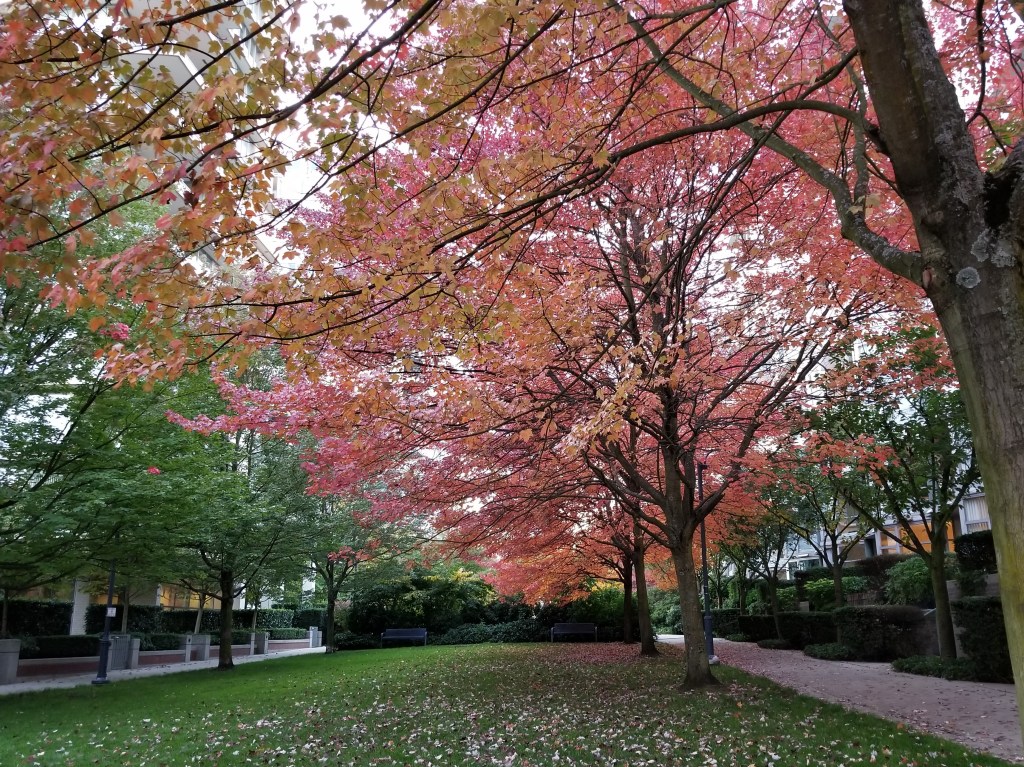
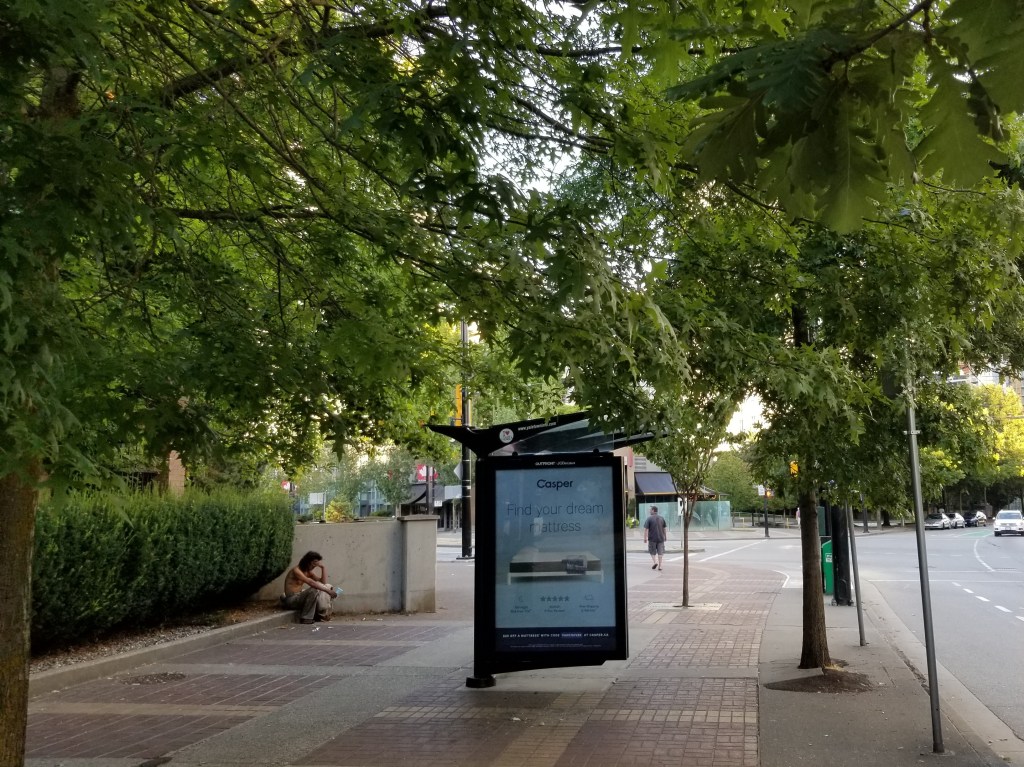
Today, Pacific Boulevard in Yaletown is a lively, pedestrian-friendly area that reflects the neighborhood’s “trendy” reputation. It’s a mix of modern high-rises, converted warehouses, and green spaces, with a strong emphasis on urban living. The street itself is a blend of functionality—connecting key parts of downtown—and leisure, with proximity to parks, dining, and cultural spots. It’s a hotspot for both residents and tourists, especially given its location near False Creek, which offers scenic views and access to seawall pathways for walking or cycling.
Pacific Boulevard is easily accessible via public transit, with the Yaletown-Roundhouse SkyTrain station nearby on the Canada Line. It’s also a short walk from downtown Vancouver. The area is active throughout the day, with businesses like Atlantis Dental operating from 8:00 AM to 8:00 PM, and the park and seawall drawing crowds for recreation at all hours. As noted, David Lam Park hosts seasonal events, making Pacific Boulevard a focal point for community gatherings, especially in warmer months or during festivals like the winter solstice lantern procession. Pacific Boulevard in Yaletown is a dynamic street that encapsulates the neighborhood’s evolution from an industrial warehouse district to a trendy urban hub. It’s a place where history, modernity, and community intersect, offering a mix of green spaces, cultural activities, and lifestyle amenities.
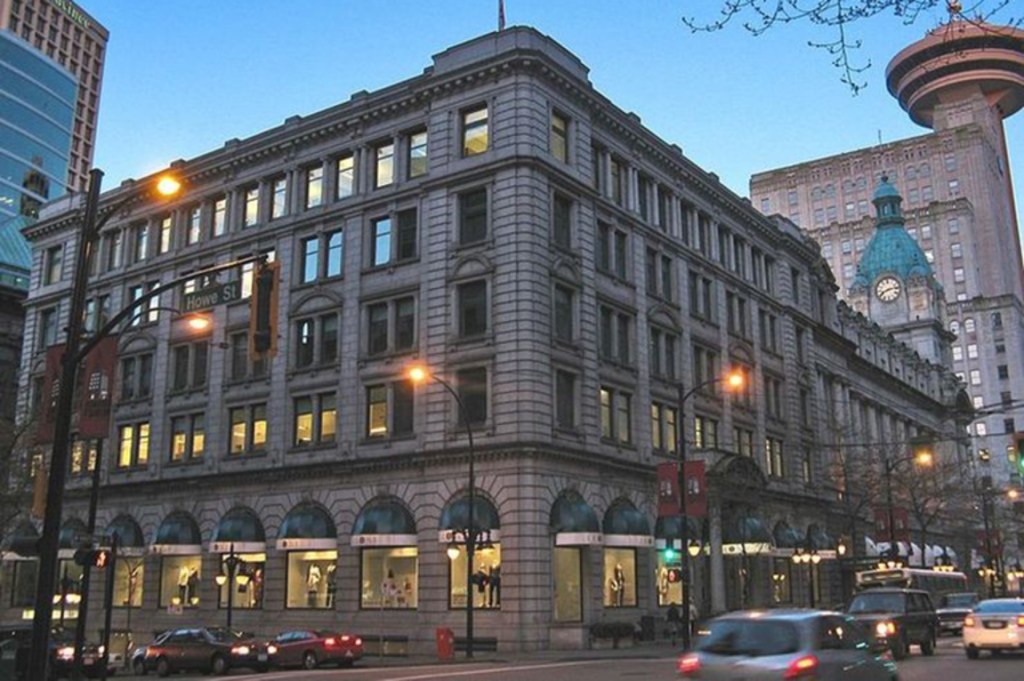
The Sinclair Centre in Vancouver, British Columbia, is on the 2017 Top 10 Endangered Places List.
The Sinclair Centre is a downtown complex of four conjoined buildings – the former Main Post Office (1910), the R.V. Winch Building (1911), the Customs Examining Warehouse (1913) and the Post Office Extension Building (1936) – encompassing an entire city block in downtown Vancouver. These buildings have been a focal point for federal government services for over a century. In 1986, the federal government invested $38 million to create the Sinclair Centre by rehabilitating the four buildings and connecting them with an atrium space and galleria walkways. All but the Post Office Extension are designated federal heritage buildings. The Centre buildings are also listed on the City of Vancouver’s Heritage Register and identified as prominent and highly valued heritage buildings.
In 2015 the federal government sent a rezoning enquiry to Vancouver City Council asking it to consider dramatically increasing the current density on the Sinclair Centre site. The federal proposal could include an office tower of up to 29 storeys (the Centre is currently 7 storeys), almost tripling the current office space. A staff planning report to Council on the rezoning request said that, “A significant addition of office space to the Sinclair Centre could result in the loss of portions or all of one or two of the heritage buildings on the site.”
The development plans for the Sinclair Centre underscore the lack of protection of federal heritage buildings. Canada is the only G-8 country without laws to protect historic places owned by its national government. The existing Federal Heritage Building Policy (FHBRO) of 1982 is not binding on federal departments and is not enforced. In 2003, the Auditor General of Canada assessed heritage protection practices within several departments and reported that federal built heritage “will be lost to future generations unless action to protect it is taken soon.”


Ada Lovelace, for those of you who don’t know, was a Nineteenth Century mathematician who is widely credited with created the very first algorithm, that is a series of mathematical instructions designed to be carried out by a machine. Like many women, her story is minimized in history, and in particular where outdated, sexist theories persist such as “men are better than women at science.” I wanted to understand more about this problem, so I caught up with the fabulous Gina Rippon, Professor of Neuroscience at Aston University in the UK, and author of a wonderful book called “The Gendered Brain.” Professor Rippon has recently produced an extensive essay on this subject, which has been published on the “We Are Tech Women” website, run by Vanessa Vallely, I recommend a follow up read. She explained that playing the gender war in STEM subjects is not only limiting women’s equality, but also limiting our progress in science generally:
“21st century science has a problem. It is short of scientists. Technological innovations mean that the world needs many more specialists in the STEM (Science, Technology, Engineering and Maths) subjects than it is currently training. And this problem is compounded by the fact that women, despite clear evidence of aptitude and ability for science subjects, are not choosing to study STEM subjects, are not being recruited into the STEM workforce, are not staying in the STEM workplace.”
Why Don’t Women Do Science?
Professor Rippon walked me through the main “neurotrash” arguments about the female brain and its feebleness.
“There is a long and fairly well-rehearsed ‘blame the brain’ story, with essentialist or biology-is-destiny type arguments historically asserting that women’s brains were basically inferior (thanks, Gustave le Bon and Charles Darwin!) or too vulnerable to withstand the rigours of higher education. A newer spin on this is that female brains do not endow their owners with the appropriate cognitive skills for science. Specifically, they are poor at the kind of spatial thinking that is core to success in science or, more generally, are not ‘hard-wired’ for the necessary understanding of systems fundamental to the theory and practice of science.
The former ‘spatial deficit’ description has been widely touted as one of the most robust of sex differences, quite possibly present from birth. But updated and more nuanced research has not been able to uphold this claim; spatial ability appears to be more a function of spatial experience (think toys, videogames, hobbies, sports, occupations) than sex. And it is very clearly trainable (in both sexes), resulting in clearly measurable brain changes as well as improvements in skill.”
However, despite lack of clear evidence, spatial deficit continues to affect the research designs. Professor Rippon continues:
“The systems explanation, devised by Simon Baron-Cohen from Cambridge, is one ‘half’ of a neurocognitive model, with ‘Systemising’ a preference for rule-based ways of dealing with the world, a “drive to analyse, explore and construct a system”, and ‘Empathising’ the need (and ability) to recognise and respond to others’ thoughts and emotions. He firmly links the former to a hard-wired male brain and the latter to a hard-wired female brain. This ‘Man the Systemiser’ story, like the spatially deficient female version above, has not received unequivocal research support. The supporting evidence that does exist may, indeed, be a result of socially reinforced learning, which certainly muddies the water for those seeking a biology-is-destiny type, essentialist explanation for the lack of women in science.”
As a neurodiverse thinker, my ‘genius within’ is visual and spatial reasoning, so it’s never really chimed with me that men are better at map reading. My husband is rubbish! The inventor of GPS technology is a black woman called Dr Gladys West, of whom I could not even find a stock image for this blog. By limiting participation in STEM to our discriminatory stereotypes we are robbing the world of way more than half our potential innovators and inventors.
Is It Because We Don’t “Want” To?
Professor Rippon presented the latest round of reverse-engineered theorizing, where the goal is to create a hypothesis that makes sense of data, rather than check the data for biased, subjective reinforcement of the status quo:
“A paper published in 2018 reported the finding that women are more likely to be under-represented in the sciences in countries that have the highest levels of gender equality (think Scandinavia). This would appear to be at odds with claims that a lack of gender equality had been behind the lack of women in science; reducing the gender equality gaps should, therefore, have resulted in increasing numbers of women in science. This is called the Gender Equality Paradox (GEP).
Performance scores on tests of scientific ability showed no female-male differences, so the dearth of women could not be pinned on some kind of cognitive deficit. Behaviourally, the gender imbalance was explained in terms of economic decision-making. In the least gender equal countries, STEM jobs are better paid and so economic necessity drives the choices of both sexes; you (female or male) chose to do science because you had to. But in more gender equal countries, economic factors could take second place to the choice of a subject which ‘played to your strengths’. As the girls were almost universally better than boys at reading and reading-related skills, the researchers postulated that the girls from the more gender equal countries could get a greater sense of ‘efficacy and joy’[sic] by pursuing humanities-type subjects, even though they were poorly paid.
There is a familiar whiff of biological determinism in the narrative exploring the findings. Reference is made to “endogenous interests” (undefined) in determining career choice, suggesting that a choice between science and humanities is somehow internally determined: “We hypothesize that men are more likely than women to enter STEM careers because of endogenous [own emphasis] interests……. Societal conditions can change the degree to which exogenous interests influence STEM careers (e.g., the possibilities of STEM careers to satisfy socio-economic needs). But when there is an equal playing field [own emphasis] and studying STEM is just as useful (balancing income and career satisfaction) as a degree in other areas, people are better able to pursue their interests and not simply their future economic needs.” There is an echo here of the entrenched idea that women innately prefer working with people as opposed to things, and therefore avoid the allegedly thing-like quality of science professions – an echo certainly of Simon Baron Cohen’s Empathising-Systemising dimension.”
So the 21st century explanation of gender gaps in science is still linked to a ‘natural’ expression of some kind of innate differences. But how equal IS the playing field of science?
The Playing Fields Of Science – A Glass Obstacle Course For Women
It is well documented that, in previous centuries, women were proactively excluded from science and scientific institutions, leading inevitably to the stereotype of science being for men and scientists being male. Watch this video of primary school children falling foul of gender stereotypes in 2016 aged between five and seven.
“Having worked around barriers to entry, women may then encounter gender bias on the roads to success. There are many ways in which success is measured in science This can include first-author publications, citations, grant income, prizes. In all of these spheres, the operation of both conscious and unconscious bias against women is demonstrable.
With respect to publications, several studies have noted a marked gender imbalance, particularly in more prestigious journals, including those in the Nature portfolio. This does not appear to be related to quality, as there were no differences in rejection rates. A key factor appeared to be seniority, with more senior authors, of whom significantly more were male, having a higher output. Once published, a measure of a publication’s quality is how often it is cited. Again, there is evidence that papers with female key authors are cited less frequently. Two factors identified as relevant are that male scientists have wider and larger networks, where it is not uncommon that members cite each other; also that men are much more likely than women to cite themselves!”
This comment rang out at me loud and clear. Just this week I noted the almost complete absence of outstanding Sociologist Judy Singer’s work from the citation list of the major publications in the autism field. Over and over again her work has been minimized or erased from the narrative. To be clear, Judy Singer is the Grand Dame of the Neurodiversity movement, her rigorous, comprehensive and insightful thesis is published and should have been cited in all major Neurodiversity narratives and works as a matter of respect. This issue is exacerbated intersectionally, where black and brown voices are almost entirely excluded from the Neurodiversity field with a diagnosis deficit let alone professional presence. I recently introduced a podcaster to new names in order to increase representation in the narrative, people whose exceptional work had gone under the radar. I am wondering if Neurodiversity, dominated by technologists, is itself is institutionally racist and sexist.
The Chilly Climate Effect – Reintroducing The Brain
So when so we have to fight so hard for equality, what effect does this have on our work and potential contribution? Professor Rippon’s final comment packs a punch:
“A sense of belonging is a powerful motivational force, with negative social experiences linked to the same brain areas activated by real physical pain. Specialised networks of brain activity have been associated with the maintenance of self-esteem and the consequences of a loss of such esteem. Social rejection, low status, poor self-image and low levels of peer support have been shown to activate powerful inhibitory pathways in the brain associated with anxiety and depression and high levels of self-criticism. Behaviourally, this has been shown to result in a form of academic self-silencing and withdrawal.
It is possible then, that the absence of women from science is indeed a brain problem, but not one to do with internally determined, individual cognitive capacity but one to do with the externally determined social context of science. Confronted with an institution which views them as probably inferior, possibly incompetent, (and should, ideally, be invisible), brain-driven processes may well determine that women will take their skills elsewhere. So a level (and welcoming) playing field does indeed seem to be important for the engagement and retention of well-qualified female scientists – and science needs to wake up to the fact that its playing fields are neither level nor welcoming.”
Armchair Activism: Hold The Door Open!
Wow. How can we change this? It’s time to start amplifying each other’s work more thoughtfully.
In my own life, I’m trying to make sure that I am referencing women of note in my own published work, informing conference organizers about talented women whose work should be recognized. We can do this for all women, include people from black and brown communities and colleagues who do not come from privileged backgrounds where the networks to sidestep into a position of influence are lacking. My last piece was about the power of champions, I’ve had a bunch of powerful champions myself, many are female and some were also male. As a beneficiary, I’ve noticed that allyship is about doing things behind the scenes, people who acquire access and then hold the door open for others to follow. If we are to address the STEM talent chasm, and the challenges of the world, we are going to need diverse brains of all varieties working together.
So with that, a final thought: who do you know who could benefit from the access you have? To celebrate Ada Lovelace day, let’s all pick the people whose work we truly value, who are under recognized and take a few moments in our day to cheerlead our peers. We all lose when human potential is squandered. Who do you know who could benefit from the access you have?
 Igor's Blog