Extra thorough refers to really extending most of the triggers I use (percussion, sticky stethoscope, reflex testing, etc) so each one essentially has double the screentime it usually does. We’ve also got the fishbowl effect with the otoscope and I chose to do a ‘follow my instructions’ style test with the eye movement that turned out real nice, I think!
This video is indeed on the shorter side than what I usually do; I’ve been very sick for almost two weeks now and this was all I could handle. Fingers crossed for feeling better so we can get back to our long videos!
Welcome to Your Exam ~ 00:00 – 01:42 Percussing the Chest Wall ~ 01:42 – 04:09 Listening to Your Heart, Lungs & Abdomen ~ 04:09 – 13:09 Percussing the Abdomen ~ 13:09 – 15:11 Testing Your Reflexes ~ 15:11 – 19:29 Looking Inside Your Ears (Fishbowl Effect) ~ 19:29 – 24:40 Inspecting & Palpating the Eyes ~ 24:40 – 25:35 Follow My Instructions (Eye Movement) ~ 25:35 – 29:10 Taking a Look at Your Nose, Mouth, & Throat ~ 29:10 – 31:39 Reviewing Your Exam ~ 31:39 – 32:22 Wrapping up Your Examination ~ 32:22 – 33:58
Triggers include: soft speaking, whispering, pen writing, percussion, explaining, auscultation, guided breathing, sticky stethoscope, reflex testing, otoscope, fishbowl effect, inspection, palpation, titch of crinkly cling wrap sounds, follow my instructions, and eye movement testing.
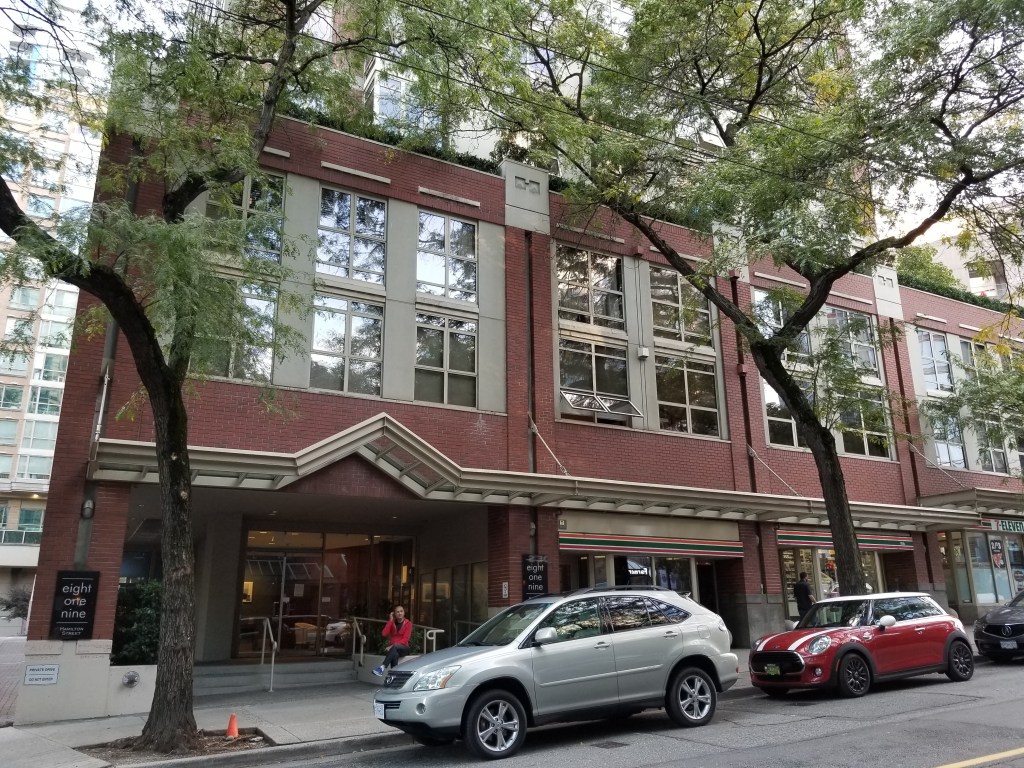
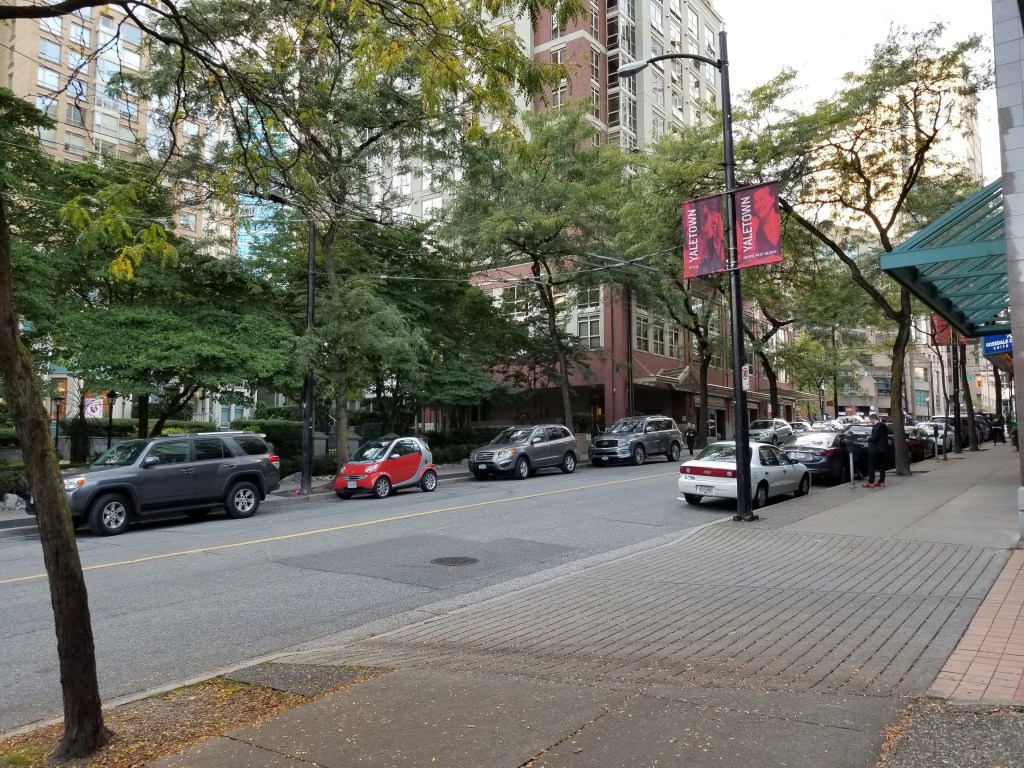
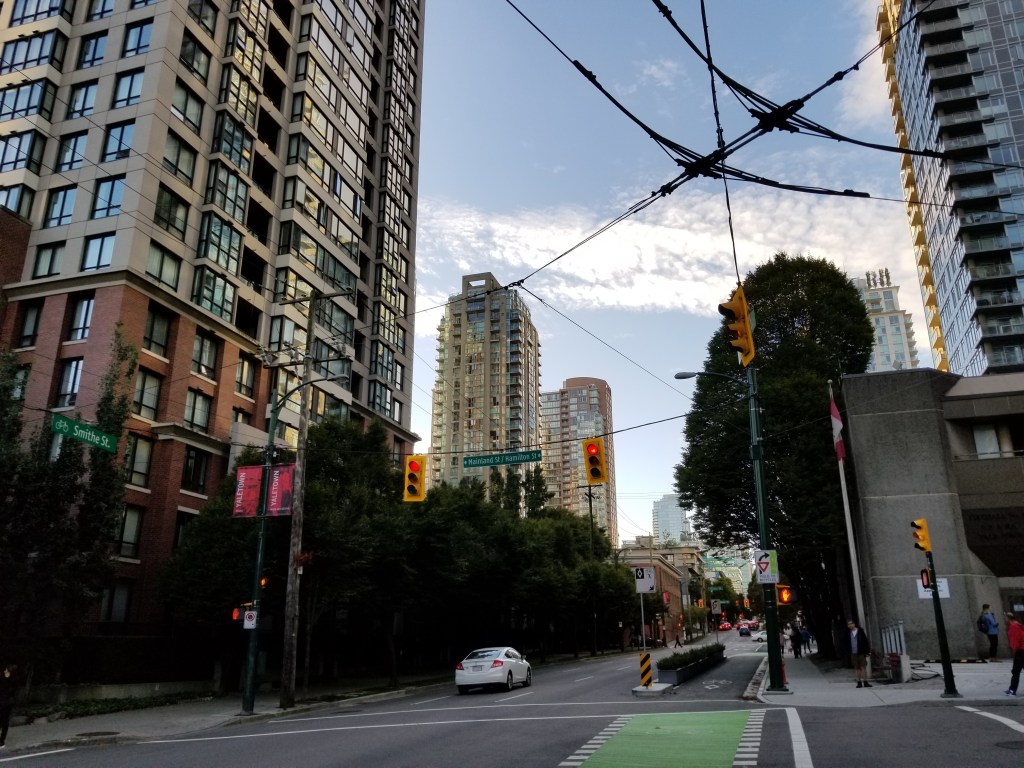
Smithe Street is a prominent street in Downtown Vancouver, British Columbia, running east-west through several key neighborhoods, including Yaletown, the Central Business District (CBD), and the Arts + Events District. It’s named after William Smithe, a former Premier of British Columbia, and is known for its blend of residential, commercial, and cultural significance.
Smithe Street cuts through Yaletown, a trendy, revitalized area that was once an industrial zone. Today, it’s a hub of modern luxury developments, upscale dining, and vibrant nightlife. Developments like One Pacific at 68 Smithe Street are part of Concord Pacific’s newest luxury projects, offering proximity to the Seawall, Roundhouse Community Centre, and Yaletown Canada Line Station. Further east, Smithe Street passes through the CBD, where office workers, food trucks, and high-end shopping on Robson and Alberni streets define the area. It’s a central connection point for SkyTrain routes, the West Coast Express, and the SeaBus to North Vancouver. The Arts + Events District area, intersecting Smithe Street, is rich with cultural landmarks and is walkable to neighborhoods like Gastown, Chinatown, and False Creek.
Properties like One Pacific and The Smithe highlight the street’s appeal for luxury living. These buildings offer modern amenities, stunning views, and easy access to parks, the Seawall, and public transit. Yaletown along Smithe Street is home to popular brunch spots like Chambar, Jam Cafe, and Cafe Medina, as well as The Dirty Apron, a culinary institution. The CBD section features Pacific Centre Mall and high-end boutiques. The street’s location provides quick access to Stanley Park, the West End, and Coal Harbour, making it ideal for outdoor enthusiasts. Gastown’s heritage charm and the Arts + Events District add a cultural layer with galleries and events.
Originally part of Vancouver’s industrial landscape, Yaletown (where Smithe Street is a key artery) has transformed into a model of livability. The mix of brick-and-beam heritage buildings with modern architecture reflects the city’s evolution, tied together by the iconic Seawall and waterfront parks. Smithe Street remains a dynamic part of Vancouver’s real estate market and lifestyle scene. Luxury developments continue to attract buyers, and its central location supports a bustling urban environment. Real estate platforms like REW.ca provide up-to-date listings and strata details for properties like One Pacific, reflecting ongoing interest in the area.
In a rare audio interview at Japanese games site, Biglobe Games, Persona 4 director, Katsura Hashino, along with character designer Shigenori Soejima, chatted at length about the creation of Atlus’s PlayStation 2 swan song. The questions the two were asked were by fans on Twitter.
Asked what he thought was the biggest change between Persona 3 and 4, Hashino replied that it was that 4 took place in the rural Inaba, which was significantly different from the grand urban setting of Iwatodai. Part of the reason behind this decision was to create a different atmosphere. Hashino felt that a murder mystery in a rural setting would feel creepier because, as he put it, it would be kind like “those local legends” that towns sometimes have.
This move to the fields of Japan also factored into the decision to use a Japanese theme for the main cast’s Personae. For example, Yukiko’s Persona is based off Amaterasu, the sun goddess. Initially, this theme originated because the team was more familiar with Japanese lore, but as they continued work, they predicted that it would compliment the setting of Inaba, away from an entirely urban lifestyle and modernization, as well.
As for the Personae’s appearances, they were mostly based off of the character’s personalities. This was especially possible because, while most people in Japan were familiar with mythical figures (Izanagi, Susanoo, etc.), they had only a vague idea as to their appearances. In Hashino’s words, the team concentrated on achieving a “Hmm, so Tomoe had this kind of a vibe to her…” feel while matching her to Chie’s personality.
The Shadow-personae, on the other hand, were created by Hashino singlehandedly without much outside discussion. They were specifically created with the feeling of “reality” in mind, and Hashino decided on their appearance and names on his own. However, in the case of the girls (Yukiko and Chie for the most part), he had to enlist the help of some of the female staff. Most of the personal problems that lay behind the Shadows’ creation were based off of the team’s personal experiences that they had felt during high school, or experiences that they had witnessed friends go through.
One of the most difficult problems while creating Persona 4, to the director, was trying to recall his high school experiences while making sure they worked in a modern high school setting. After all, a long time had passed since Hashino’s time in school.
The point that Hashino felt that he had to focus on the most in Persona 4 was fitting everything into the game as one whole, cohesive product. The game was huge, with many different aspects, including but not limited to the setup of the calendar, the school, and exploring the dungeons. The calendar was designed such that it would coincide with the pressure the protagonists were feeling. For example, towards the end of the game, after a certain event, the calendar is shown a month at a time instead of just a few days ahead of time.
This was done to convey the sense that the characters need to look ahead and plan their days far in advance because these would be the last days during which they could freely enjoy their time. The locations of the game as well as the game system were all designed with the story in mind.
With all of this data, plus the extensive dialogue from the Social Links and an increase in the number of events since Persona 3, it meant that the game barely fit onto a DVD. Ultimately, the team had to shave off bits of text, word by word, just to try to get the game to fit.
Conversely, the more random aspects of the game required the least effort to complete, such as choosing the food and drink types. When asked why he had chosen to use “meat gum” of all things, Hashino replied that he couldn’t remember. “I was probably eating meat with the staff at the time.”
Most such names were all decided in less than a week. The glasses, too, were a last-minute decision because he had wanted the characters to appear stronger.
The Persona team, according to Hashino, was a very relaxed group of people. While he had only been a part of it since Persona 3, he had worked with most of the main players before while they were still working on the Dreamcast.
The team were an easy-going lot, Hashino revealed. For example, when they usually created a game, the team would compile a document with all the information about the game contained within. However, in the case of P4, they chose not to. When they idea was considered, the team figured that they had a vague sense of what was going into the game already, so they didn’t require one.
Not that it was smooth sailing all along, however. Hashino also jokingly revealed that they would never make that mistake again, considering how much trouble the lack of such a document had caused them.
The last questions Hashino was asked dealt with the future of Persona 4. Currently, he has no intention to create a sequel, although he did mention that there was much material he wanted to explore. He reiterated that there still weren’t any plans for a FES version either, since Persona 4 was created based off Persona 3 FES. Plus, there weren’t too many fans saying they wanted more material, since the game was already jam-packed with events.
In response to the inevitable, “Will there be a PSP version of Persona 4? […] I’m really interested in seeing the female main character!” Hashino responded that there weren’t any plans, but if enough fans asked for it, it was a possibility, and followed up with, “Doesn’t the female version of the protagonist already appear in the game?”
In the wake of Ukraine destroying one of Russia’s few submarines in the Black Sea, Moscow’s choices about how to move its remaining vessels are limited—and at the mercy of NATO member Turkey.
Unless Russia keeps its handful of submarines in the Black Sea constantly moving, “they will essentially just be sitting ducks” for future Ukrainian drone and missile strikes, Davis Ellison, an analyst with the Netherlands-based Hague Centre for Strategic Studies, told Newsweek.
Ukraine said on Saturday that it had destroyed Russia’s Rostov-on-Don submarine in the southern Crimean port city of Sevastopol in a missile strike, the latest reported casualty among Russia’s Black Sea Fleet.
Ukraine previously zeroed in on the Kilo-class submarine in a dramatic attack attributed to British-provided air-launched Storm Shadow missiles in September 2023. There was “significant damage” to the submarine before it was repaired and tested in Sevastopol, Kyiv said in a statement on Saturday.
Ukraine likely used U.S.-supplied Army Tactical Missile System, or ATACMS, missiles in the strike, the U.K. government said on Wednesday.
The British Defense Ministry said late last month that at least 26 Russian Navy vessels had been damaged or destroyed in the Black Sea region between February 2022 and June 2024.
Ukraine’s navy does not have any large warships, but has worked alongside the other branches of Kyiv’s military and security agencies to menace Russia’s Black Sea Fleet.
Ukraine has wielded homegrown naval drones, uncrewed aerial vehicles, and long-range missile strikes to target vessels and key facilities, partly on the annexed Crimean peninsula that Moscow has controlled for a decade, and at the Novorossiysk base in mainland Russia.
Kyiv has succeeded in forcing the Black Sea Fleet to largely shift away from Sevastopol, further east in the Black Sea. Moscow has moved many of its vessels toward its Novorossiysk base, and satellite imagery indicates Russia is establishing another Black Sea base in the breakaway Georgian region of Abkhazia.
Russia is thought to have three submarines remaining in the Black Sea. But access to the sea is controlled by NATO member Turkey, and has been since the early days of the full-scale war in Ukraine from February 2022. The Bosporus and Dardanelles straits are the only water ways offering up access to the Black Sea.
Under the 1936 Montreux Convention, Ankara can limit vessels passing through the straits during times of war. Turkey has categorized all Ukrainian and Russian military vessels as “vessels of war” since the start of March 2022, noted Rebecca Lucas, senior defense and security analyst at the European branch of the RAND think tank.
“Russia’s submarines would undoubtedly fall under this categorization, so without explicit Turkish permission, the three remaining boats will not be able to enter the Straits,” Lucas told Newsweek. “Given the geography of the region, that permission would be the only way in or out of the Black Sea.”
“Barring Ankara’s agreement, I don’t think anything’s going to come in or out,” Ellison added.
However, a clause does prevent those warships returning to their registered bases from being stopped, Turkey has said.
The Sea of Azov, connected to the northeast edge of the Black Sea and the other option for the submarines to travel to, is thought to be too shallow for Russia’s submarines to comfortably stay put in the area.
But Moscow has another “serious problem,” said Emma Salisbury, an associate fellow at the U.K.-based Council on Geostrategy.
Moscow can no longer protect these submarines while they undergo maintenance or are being repaired, Salisbury told Newsweek.
Unable to leave the Black Sea and head to Russia’s second city, St. Petersburg, for repair through the Ankara-controlled water ways—and with the Novorossiysk and Kerch bases in the Black Sea ill-equipped to handle submarines—”remaining submarines will either have to risk being hit while in dock or operate without maintenance or repair,” Salisbury said.
“Given how active these submarines are, their operational tempo will be placing huge stress on their systems, so cutting back on maintenance could well mean that the Ukrainians will not even have to hit the remaining submarines for them to be out of action,” Salisbury added. Any submarine sustaining even partial damage would struggle to return to active service, according to Salisbury.
Even if Russia could get its submarines away from the Black Sea, it may not serve its interests to move missile-armed vessels away from targets in Ukraine, Andriy Ryzhenko, a retired captain in Ukraine’s navy, told Newsweek.
Russia has one of the largest submarine fleets in the world, considered superior to its surface vessels. These are spread across Moscow’s fleets, deployed across the world.




















 Igor's Blog