The Blue Yeti is back, and ready for a traditional ASMR exam (with the added bonus of having a 2nd camera on my laptop typing). We’ll start at the scalp (with some fuzzy windscreen sounds) and work down to the lower extremities. Skin inspection, sticky stethoscope, lots of eye testing, whole bunch of palpation; we’ve got a whole lot going on.
Typing Your Information: 00:00 – 02:14 Taking a Peek at Your Scalp: 02:14 – 04:54 Inspecting Skin with Magnifying Glass: 04:54 – 06:56 Facial Palpation Exam: 06:56 – 08:34 Sinus Check with Face Tapping: 08:34 – 09:35 Lymph Node Check: 09:35 – 11:36 Carotid & Temporal Artery Auscultation: 11:36 – 13:19 Inspecting Your Eyes: 13:19 – 14:59 Pupillary Response & Eye Tracking: 14:59 – 20:08 Typing Notes: 20:08 – 21:54 Nose/Mouth/Throat Exam: 21:54 – 25:24 Ear Exam: 25:24 – 28:48 Listening to Heart & Lungs: 28:48 – 32:43 Abdominal Auscultation: 32:43 – 34:09 Chest & Abdomen Palpation: 34:09 – 37:37 Reflexes & Extremities: 37:37 – 44:35 Typing & Dictating Notes: 44:35 – 46:00 Wrapping up the Exam: 46:00 – 46:18 Outro with Fuzzy Windscreen Stroking: 46:18 – 47:24
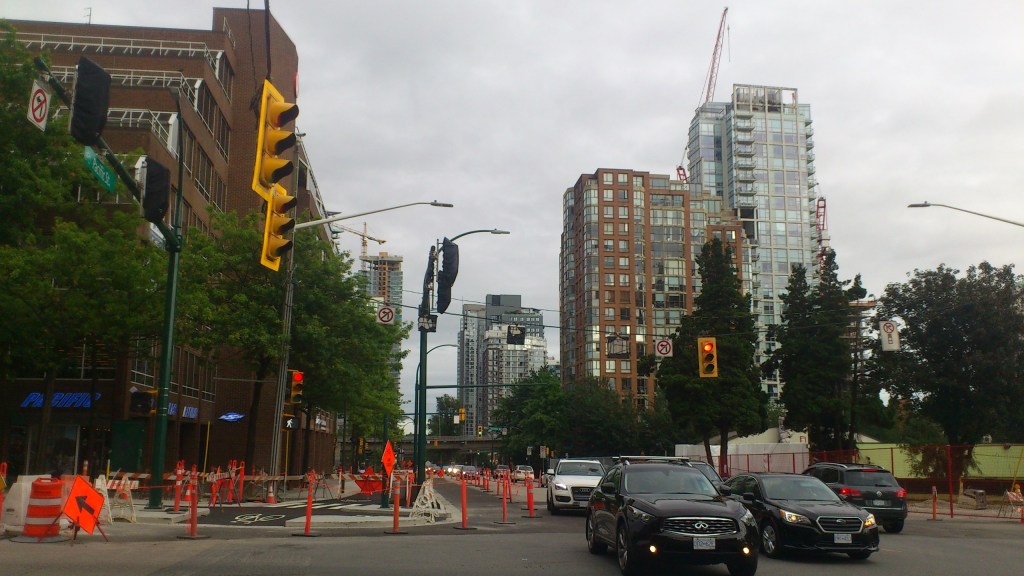
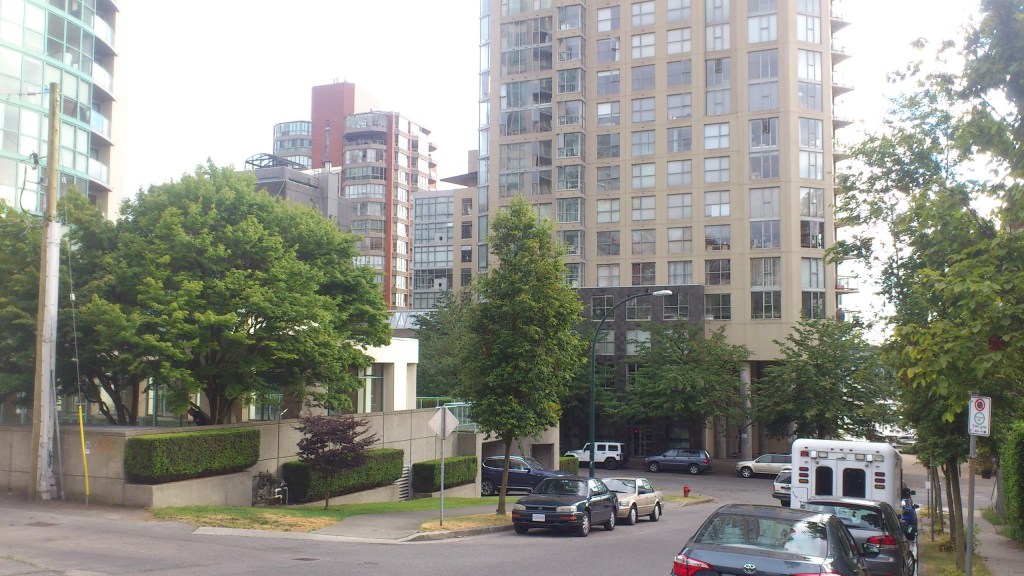
Pacific Street is a vibrant east-west thoroughfare in the heart of downtown Vancouver, British Columbia, running parallel to the waterfront and serving as a key connector between the West End, Yaletown, and False Creek. It’s part of the city’s iconic seawall network, blending residential luxury, commercial energy, and recreational access. It’s a sought-after address for high-end condos and urban living, with a walk score often exceeding 90 due to its proximity to beaches, transit, and amenities.
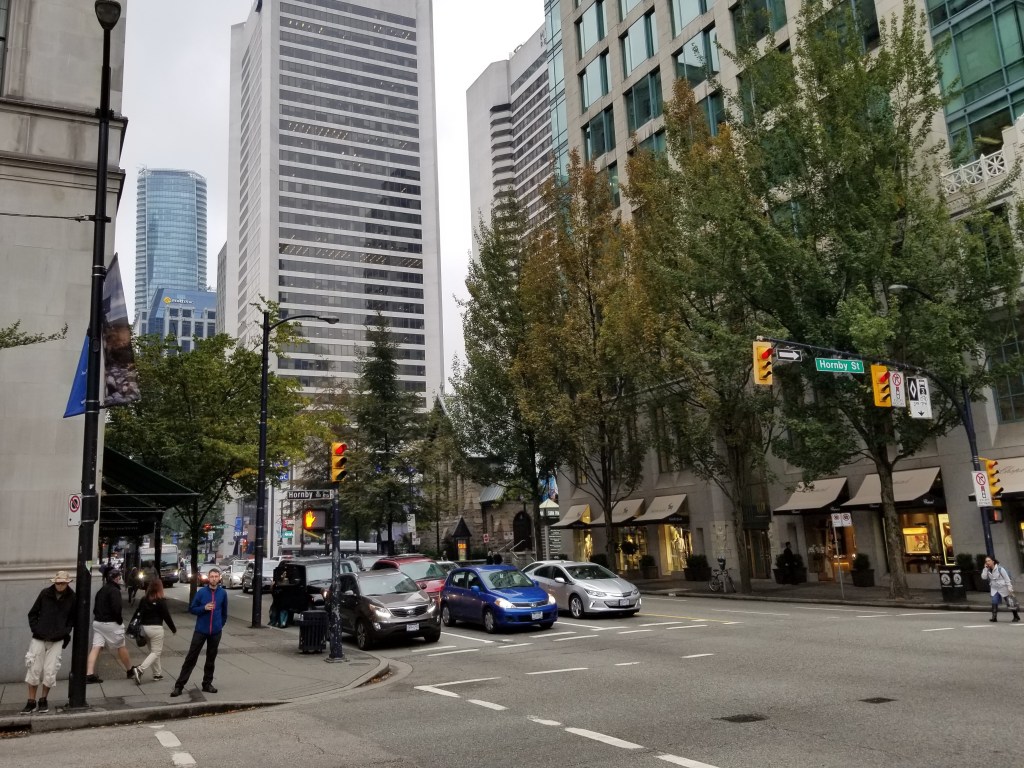
Pacific Street stretches approximately 2 km through downtown, from the edge of Stanley Park in the west (near English Bay) eastward to Main Street, skirting the southern boundary of the West End and transitioning into Yaletown. It runs parallel to Beach Avenue and Davie Street, offering easy access to the Vancouver Seawall—a 28 km pedestrian and cycling path. It borders the upscale West End (residential and beachfront) to the north and the bustling downtown core/Yaletown to the south. Key intersections include Pacific & Hornby (luxury towers) and Pacific & Burrard (near Sunset Beach). Served by multiple transit options, including the SkyTrain’s Canada Line (Vancouver City Centre station nearby) and bus routes along Davie and Beach. It’s a short walk to the Vancouver Convention Centre and ferry terminals.
Named in the late 19th century during Vancouver’s early urban planning, Pacific Street emerged as a residential and commercial corridor amid the city’s post-1886 Great Fire rebuild. In the 1960s–1970s, it became part of broader downtown revitalization efforts, influenced by the development of Pacific Centre mall (opened 1974), which reshaped nearby Granville and Georgia Streets but indirectly boosted Pacific’s accessibility. Just north at Granville & Georgia, Pacific Centre Mall, a 578,000 sq ft shopping hub (built 1971–1973), was Vancouver’s largest indoor mall upon opening. It displaced heritage buildings but integrated with SkyTrain via skybridges to Hudson’s Bay and Vancouver Centre Mall. Today, it’s anchored by Holt Renfrew and features over 100 stores (e.g., Apple, Sephora, Tiffany & Co.), drawing 22 million visitors annually. A 2020s redevelopment added a glass-domed Apple Store at Howe & Georgia. Pacific Central Station (1150 Station St, near Main & Terminal Ave) is a short walk east. This 1919 Beaux-Arts railway terminus (built for $1 million) features granite, brick, and andesite facades with Doric columns and ornate interiors (skylights, mouldings). Originally for Canadian Northern Pacific Railway, it’s now VIA Rail/Amtrak’s western hub, with bus services added in 1993. It holds historical ties to Black Strathcona porters. The street reflects Vancouver’s shift from industrial port to modern condo haven, with 1970s towers giving way to 2020s luxury builds emphasizing seawall views.
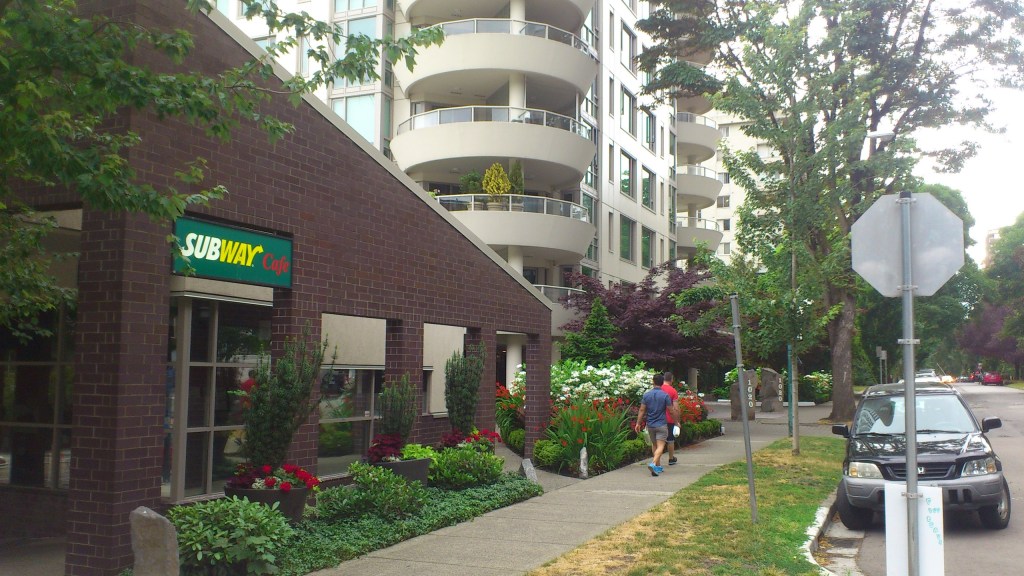
The 501 (501 Pacific St) is a 33-story tower with 295 units, completed recently. It steps from False Creek and Sunset Beach. Amenities include gyms and rooftop decks; recent sales show competitive pricing (e.g., units sold $30K–$75K under asking in 2025). The Pacific by Grosvenor (889 Pacific St) is a 39-story, 221-unit development (2021), featuring Italian Snaidero cabinetry, Dornbracht fixtures, and deep balconies mimicking cloud textures. Units range from 1–4 bedrooms; a recent penthouse sold $75K under asking in October 2025. The Californian (1080 Pacific St) is a 7-story, 84-unit concrete building (1982) with rooftop decks, saunas, hot tubs, and recent upgrades (new plumbing, elevators). Walk score: 92; near Sunset Beach. 1215 Pacific St is a 5-story, 50-unit mid-rise (1977) with underground parking and storage, in the West End near Bute St. Lined with cafes, boutiques, and seawall access points, Pacific Street is a hub for cycling/jogging, with proximity to English Bay, Stanley Park, and Granville Island via bridges. The area supports an active lifestyle, with gyms, spas, and markets within blocks. Upscale yet accessible—think sunset strolls, yacht views, and quick hops to downtown shops. Real estate is hot, with 2025 sales reflecting Vancouver’s densification trend.
High walkability (92+ score); bike lanes and seawall paths abound. Parking is limited—use underground spots in condos or nearby lots. Buses run frequently; SeaBus is a 10-minute walk. Pacific Street embodies Vancouver’s “live-work-play” ethos, evolving from 1970s mall-driven commerce to 2020s luxury residential.
Living with both autism and ADHD means running two operating systems at once—always switching windows, always patching bugs. It’s exciting, creative, and exhausting. Sooner or later, many of us hit a wall known as AuDHD burnout. Understanding what it is—and how it differs from other kinds of exhaustion—can be the first step toward healing.
What Does AuDHD Burnout Feel Like?
Picture a laptop with too many tabs open. The fan whirs, the screen lags, and then everything freezes. AuDHD burnout feels similar:
Brain fog so thick you forget what you’re saying mid-sentence.
Executive paralysis—dishes pile up, emails go unanswered, even fun hobbies feel heavy.
Mood swings—irritation, shame, or flat-line numbness.
Because AuDHD blends two neurotypes, the crash can be dramatic. Your ADHD side still craves novelty, while your autistic side begs for quiet. Caught between “do everything” and “do nothing,” it makes sense that you may short-circuit.
What Does Autistic Burnout Feel Like?
Autistic burnout shares some traits with AuDHD burnout, but there are differences:
Withdrawal—social, emotional, sometimes physical.
Loss of skills—speech slows, coordination slips, routines collapse.
Extreme fatigue—sleep can’t fix it, coffee can’t mask it.
Where autistic burnout often follows long stretches of masking or sensory overload, AuDHD burnout layers on ADHD’s executive struggles and impulsive guilt spirals. You’re not just tired—you’re torn.
How Does AuDHD Differ from ADHD?
ADHD alone is mostly about attention regulation, hyperactivity, and impulsivity. Autism centers on sensory processing, social communication, and need for predictability. With AuDHD you get both sets of wiring:
Your mind races (ADHD) yet loves deep focus on niche interests (autism).
You chase stimulation (ADHD) yet overload quickly (autism).
You miss details (ADHD) yet notice tiny pattern shifts (autism).
Because these traits clash, everyday life demands extra energy. That constant self-management is why AuDHD burnout can appear sooner and last longer than typical ADHD exhaustion.
Accumulation – weeks or months of masking, sensory stress, and social effort build up.
Breakdown – energy tank hits empty; shutdowns or meltdowns occur.
Recovery – reduced demands, quiet environments, special interests, and rest.
Adaptation – new boundaries, tools, and support are added.
With AuDHD burnout, this cycle speeds up. ADHD impulsivity pushes you to keep saying “yes” even when your autistic battery is blinking red. The breakdown can arrive with little warning, and recovery may require stricter boundaries around tasks, noise, and social commitments.
Why Queerness Matters
Queer people with AuDHD juggle yet another layer: navigating identity in spaces that may not understand them. Living in multiple margins means more masking, more micro-aggressions, more vigilance. Pride festivals can be affirming but also loud, crowded, and schedule-breaking—perfect storm conditions for AuDHD burnout.
Community helps, but only if it’s accessible. Quiet queer meetups, sensory-friendly dance nights, and online support groups can give relief without overload. Therapy that respects neurodivergence and queerness can turn survival into sustainable self-care.
Five Ways to Break the Burnout Loop
Audit sensory input: Carry earplugs, adjust lighting, choose soft fabrics. Small tweaks can prevent big crashes.
Use interest-based breaks: Hyperfocus isn’t the enemy—use it. Ten minutes watching a favorite analysis video or arranging a playlist can reset your brain.
Block off recovery time: Treat rest as a standing appointment, not a reward. Color-code downtime in your calendar the way you would a meeting.
Externalize tasks: Sticky notes, phone alarms, or body-double work sessions keep ADHD drift in check so it doesn’t pile stress on your autistic need for order.
Seek affirming therapy: A clinician who gets AuDHD, queer identity, and racial or cultural context can help you design realistic routines instead of prescribing generic “self-discipline.”
From MOBA-likes before there were MOBAs to changing survival horror forever, we reflect on Visceral Games’ legacy.
Long before Multiplayer Online Battle Arenas (MOBAs) were a thing, the 1998 PlayStation strategy game Future Cop L.A.P.D. from Visceral Games—then known as EA Redwood Shores—existed. It ended up being a cult hit because of its Precinct Assault mode, veering similar to what we see today in MOBAs like DOTA. Eventually a mapmaker even created a custom map for StarCraft that was rumored to have been inspired heavily by Future Cop’s own Precinct Assault called Aeon of Strife. And well, the rest is history.
But that’s just a small sliver of the legacy Visceral Games has left behind after being shuttered on Tuesday by EA. They were one of EA’s oldest studios once; game developers first known for their licensed games, a few Sims-related things here and there, and a couple less-than-stellar Battlefields. Their legacy lies most in a well-regarded, original horror series that sparked a whole subgenre to shift: Dead Space.
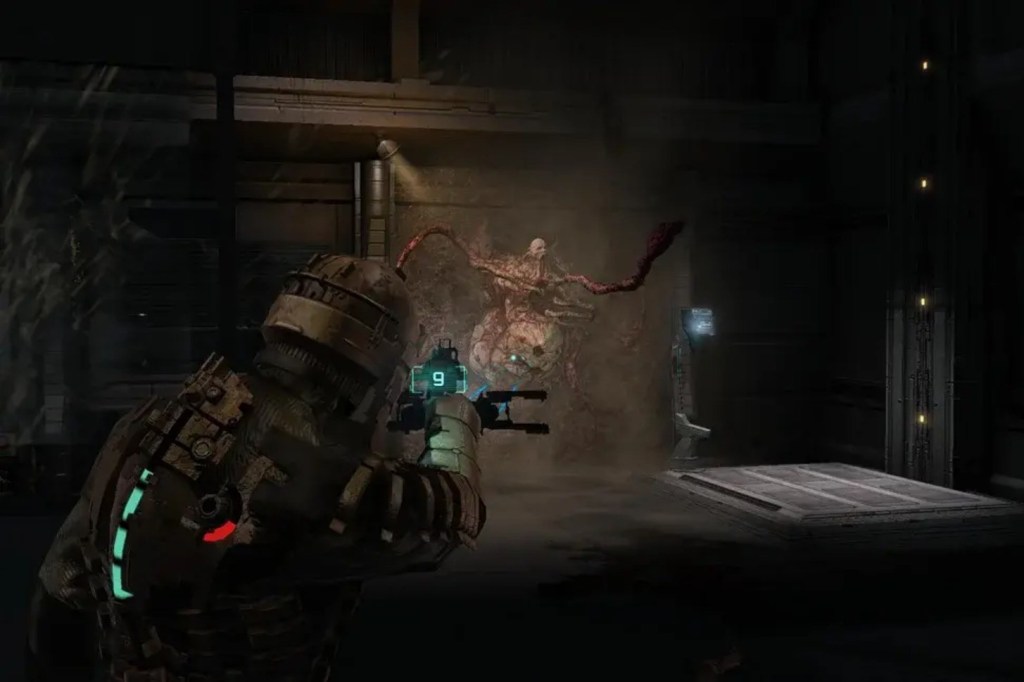
Dead Space wasn’t just a game about the horrors that secretly lie in deep space, but it was an exploration of what those terrors sound like, how they feel, what surviving true horror should be like in space. Dead Space was scary to play through, not just to watch or weather jump scares from. It inspired leagues of other space-bound horror titles, and yet, none ever quite scared players as much as Dead Space did back in 2008.
Let’s hop back in time though, before Dead Space paved the future for Visceral Games being, well, Visceral Games.
EA Redwood Shores, then just a Redwood Shores, California-based label within EA Games, was established in 1998 along with the release of the maybe-eventual MOBA-inspiring Future Cop L.A.P.D.. EA Redwood Shores went on to make other games, from golf experiences starring the now-disgraced Tiger Woods to the licensed hack-and-slash adaptation for The Lord of the Rings: Return of the King (a far cry from this month’s Middle-earth: Shadow of War). EA Redwood Shores’ titles were by and large the types of games most folks wouldn’t pay much notice, except maybe the families buying gifts for loved ones for the holidays.
But then those developers were given a chance to venture outside of run-of-the-mill licensed games and create Dead Space, a game that reinvigorated horror games for a short time after its release. The genre had jumped more into full-blown action territory (thanks Resident Evil 4), losing the horror that made survival horror games special in the first place. Dead Space released long before Amnesia: The Dark Descent later did the same thing—that is, injecting life into the horror genre, inciting a wave of defenseless survival horror games. Dead Space, in many ways, helped save horror.
Describing Dead Space to the average person makes it sound like an Alien knock-off. You’re exploring a spaceship, you find out the whole crew has been slaughtered, and you fight their reanimated corpses. What the description doesn’t pay mind to is how the game feels to play—that is, truly frightening. Something sorely missed in most horror games of the mid-to-late 2000s. There’s a reason Dead Space has stood the test of time, and has even net a famous fan in horror filmmaker John Carpenter.
Dead Space wouldn’t exist without Resident Evil 4 though. When Resident Evil 4 released in 2005, it was the push Dead Space designers Ben Wanat and Wright Bagwell needed. “It’s pretty obvious when you play Dead Space, to look at it and go, ‘Yeah, it’s almost like they decided to make Resident Evil 4 in space,’ which is exactly what we were doing,” Wanat told PC Gamer this year. “It was like, ‘It’s a game changer. Let’s embrace it and make this the best, polished survival shooter. Let’s try to be the gold standard.'” Lucky for them, Dead Space (and arguably Dead Space 2 as well) did become the gold standard for horror survival shooters.
After the success of Dead Space, EA Redwood Shores rebranded to a not as obviously-EA tethered identity: Visceral Games, a studio dedicated to creating third-person action games that had an edge to them. The developers went on to make other third-person action games that weren’t Dead Space-related, including Dante’s Inferno and Army of Two: The Devil’s Cartel. But recapturing the magic they had with the Dead Space series proved to be a difficult task.
2010’s Dante’s Inferno was an adaptation of the classical poem of the same name, the first part of the 14th century epic poem Divine Comedy penned by Italian poet Dante Alighieri. The adaptation made a stark change from the intricately mapped hell that inspired it: instead of Dante being motivated by learning the meaning of sin, he was given a love interest to rescue from Satan. He no longer fainted at every disturbing occurrence—he had a six-pack of abs to glisten with sweat now, and a cross stitched across his chest too.
These all, of course, proved to be controversial changes. Some scholars even argued that rendering the poem’s heroine Beatrice as a damsel that needed saving (and not as someone who inspired him to be a better person) was a fundamental misunderstanding of Dante’s poem Inferno in the first place. In a story for The Atlantic, Classics Professor Arielle Saiber from Bowdoin College told the reporter, “Beatrice saves Dante, not the other way around!”
Yet, tweaking Inferno was how Visceral brought the poem to modern audiences in a twisted way, even if they took more than a few creative liberties for its interactive experience. “[Dante] fundamentally mapped hell with this poem,” the game’s executive producer Jonathan Knight told NPR in 2010. “He’s created a visual topography, and there’s a tremendous amount of structure, geography, weather—and monsters.” Inadvertently, Dante laid out the perfect setting for a video game. While it was hoped that Dante’s Inferno would inspire players to read the 700-year-old poem and more of Dante’s work (including Divine Comedy) too, the game got mixed reviews upon release.
Not all of Visceral Games’ projects came to life though. Even before Dante’s Inferno’s release, whispers arose about a mysterious new Visceral title centered around legendary (and never captured) serial killer Jack the Ripper. The would-be downloadable title for Xbox 360 and PlayStation 3 was rumored to be titled The Ripper, before news of its cancellation hit in 2011 (though it had actually been cancelled years prior). The game, like Dante’s Inferno, was set to make creative embellishments of its own. Instead of murdering sex workers, Jack the Ripper would be reimagined as an almost-vigilante, hunting demons in the streets of London.
Eventually, Visceral Games returned to the Dead Space series with Dead Space 2, a game that upped the action more than the original. In a way, watching the Dead Space series shift over its short lifespan reminded me of watching the Resident Evil series change from its roots—even as the first Dead Space was inspired by Resident Evil’s action-oriented peak. Maybe it’s the fate of all horror games: to embrace action later on, losing what made people like the series in the first place.
Luckily, at least Dead Space 2 proved to retain its horror. The sequel was praised both by fans and critics upon release, garnering an 87 on Metacritic. Dead Space 3 was made two years later, and it marked a major turn for the franchise.
Dead Space 3 brought co-op action to the horror survival formula. Upon release, the game got mixed reviews like most of Visceral’s non-Dead Space offerings. Development of the game didn’t go as planned according to an interview in Eurogamer with creative director Ben Wanat, as it was weighed down by EA’s “business interests.” Visceral, it seemed, no longer had a whole lot of breathing room for their original IPs.
Battlefield: Hardline was their next—and sadly final—game. Hardline was a “cops and robbers” themed Battlefield game, different from the series’ roots in war settings. The game received mixed reviews, like Dead Space 3, Dante’s Inferno, Army of Two, and so many before it.
The tides seemed to change after Battlefield: Hardline. Amy Hennig, writer and director for the first three Uncharted games, had left Naughty Dog to join Visceral Games to help create a new Star Wars game. The project would be a linear Star Wars game—unlike the multiplayer of Star Wars: Battlefront—with an adventure lean. The game would come to be called shorthand over the years “Star Wars-Uncharted,” even if Hennig herself insisted it wouldn’t be. Jade Raymond, founder of EA’s own Motive Studios, was also announced to be working with Hennig on the mysterious Star Wars game. Despite an early announcement of the project way back in 2014, details remained scarce for years.
Hennig wasn’t always on board. In an unfortunately prescient profile of Hennig by Glixel from last year, she noted her initial hesitation to join the game’s team. “Imagine how heartbreaking it would be,” Hennig told Glixel, “To work on something I love so much only to be crushed under the combined wheels of EA, Lucasfilm and Disney.”
It’s disheartening to see any studio closed. Somehow, what’s befallen Visceral Games’ feels almost regular by now. At this rate, we can only hope the same fate doesn’t follow BioWare or Criterion, other studios that fall under EA without the big “EA” letters hovering next to them. This untitled Star Wars game will live on—with or without Hennig’s involvement, it seems—in a wholly different form than it began. It will continue development at EA Vancouver. Visceral’s former employees will be scattered, according to EA, to other EA branches.
Visceral Games will be remembered not as a studio that peddled out licensed games, but as a developer that believed in the power of original linear third-person action games—for better or worse. Some were hits, some less so. But in the end, they made some endearingly original games. Dead Space was king among them, but was not alone. Star Wars, even if we saw hardly any of it, had the pedigree to possibly strike magic again. I suppose now though, we’ll never really know.
While a fairly short game, the depth and density of the story and gameplay contained in Vagrant Story give it an intensity missing from most longer games.
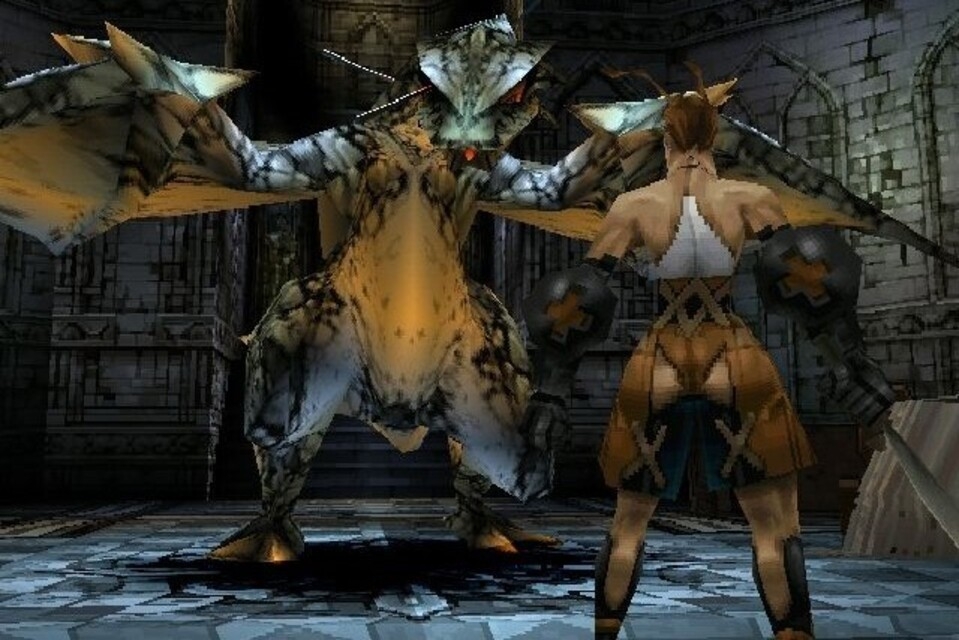
Let’s just get it out of the way – Vagrant Story is a ground-breaking game. A melange of the action, adventure and RPG genres, Square has truly beaten all odds and produced an engaging, seamless epic unlike any other. Despite a few interface and complexity issues, Vagrant Story is a rare and nearly perfected game.
A brutal battle wages between the Knights of the Crimson Blade and the Mullenkamp Cult in the city of Lea Monde. Caught in the middle is Ashley Riot, an agent for the Valendia Knights of Peace’s elite Riskbreaker unit. After a chance encounter with the heartless leader of the Mullenkamp Cult, Sydney Losstarot, Ashley finds himself in a life-or-death game of cat and mouse amidst a deeper plot larger than the two of them. What are Sydney’s intentions, and how does Ashley play into his master plan? As with Final Fantasy Tactics, which was developed by the same team, the lines between good and evil are endlessly blurred and the story is complex and twisted.
Many have described Vagrant Story as “Medieval Gear Solid,” a comparison that both is correct and not correct. While the Metal Gear feel is there thanks to the perspective, attention to detail, and emphasis on cinematics, one never actually has to skulk through shadows, avoid detection, and the like. An odd blend of action, adventure and RPG gameplay, a lot of Vagrant Story’s charm lies in the sheer amount of control the player has in playing what is mostly a linear game. Most of the game takes place underneath Lea Monde, where Ashley runs through room after room, slaying monsters and recovering information and keys to aid Sydney’s pursuit. You navigate as you would in Metal Gear Solid, guiding the character with the analog pad and rotating the viewpoint with the L and R buttons. Ashley can switch in and out of battle mode, freeing his hands for tasks such as lifting boxes or grabbing edges. While the latter isn’t emphasized too heavily, Vagrant Story does have a surprising compunction for box puzzles. While they start off easy, they eventually become fairly fiendish with the addition of a variety of new and different box-types. While navigating the labyrinthine corridors under Lea Monde is all done in real time, battling is a decidedly different affair.
Even with all of the other gameplay elements thrown in, combat is central to Vagrant Story. Perhaps a tribute to one of the interesting things to come out of Parasite Eve, tapping the attack button pauses the game and causes a large wireframe sphere to erupt from Ashley’s body. Representing the range of the current weapon, you can target any item within the sphere for an attack. Detailed hit-percentage and damage stats help you plan your attacks more effectively, but attacking some areas can have other effects. For example, if you attack a monster’s legs there’s a good chance you’ll reduce their movement rate by 50 percent.
After defeating the first boss, Ashley will gain the use of chain abilities. These allow Ashley to perform consecutive hits when attacking enemies, with every additional attack benefitting Ashley in ways other than sheer damage. Ashley can ready up to three of these at a time and with the proper timing, chain them until the target keels over. For example, you can restore magic points or life with a carefully-timed chain attack. Learned at the same time as chains, defense abilities allow you to key different kinds of defense. When attacked, tapping the right button could restore half of the damage you just took or reflect it back at the enemy. After gaining enough experience, you’ll be presented with a choice as to which new ability you’d like to learn, letting you customize your time with Ashley and develop his abilities to your own play style. Using chain and defense abilities is useful, but builds Ashley’s risk level, preventing them from being abused. Essentially a fancy name for fatigue, a high risk level lowers Ashley’s ability to to connect with both weapons and spells. While one could theoretically chain attacks together forever, players will think twice before doing so, maintaining a needed element of strategy and balance.
In addition to chain and defense abilities, Ashley has a few more elite tricks up his sleeve. Break arts, learned after gaining considerable experience, allow Ashley to sacrifice some of his own life meter to inflict massive damage upon an enemy. As Ashley progresses to and through the dark city of Lea Monde, many enemies will drop pages from the legendary spellbook Grimon. Each page contains a single spell that is memorized once read. Magic falls into four categories, such as attack, healing, and status magic. Some spells, such as the explosion and thunder burst spells, let you position a sphere of attack allowing you to attack multiple enemies or multiple body parts on the same enemy. While status spells are extremely useful, most of the attack spells are too MP-intensive to really be worthwhile. Despite all of these options, Vagrant Story’s gameplay interface is relatively clean and intuitive – hold down the L2 button and you have fast access to just about everything.
Outside of battle, Vagrant Story continues its control fixation with a maze of menus that lets players customize their experience even more. In addition to the standard RPG equip and inventory screens, Vagrant Story lets you forge your own weapons and armor from items found throughout the game. Ashley can only perform these feats in workshops scattered throughout the game, and each factory can only forge items made from certain materials. As Ashley’s weapons gradually become more accustomed to killing each of the six types of monsters, it’s worthwhile to build and evolve six weapons through the course of the game. Switching weapons is the one thing not readily accessible through the L2 menu and would make a welcome addition given the frequency they’re swapped. In addition to forging new weapons, Ashley can disassemble any weapon and reassemble a new one from its parts, allowing for greater customization. Finally, gems can be inlaid to alter a weapon’s stats and allow for more in the way of on-the-go changes, like changing a weapon’s elemental attribute.
As witnessed above, Vagrant Story has a lot of complexity, often times too much – even those who understand the weapons system may have trouble handling certain enemies. While Square’s other games have become more and more accessible to the masses while maintaining a certain hard-core element to be experimented with, Vagrant Story’s combat system virtually requires a comprehensive understanding of the weapon and stat development systems. Not only are the core concepts behind this inconsistent at times, a few interface oversights further confuse the matter. Unfortunately, Vagrant Story’s manual isn’t much of a help in these situations. This becomes particularly irksome about halfway through the game, but only slightly hinders the game’s momentum.
Vagrant Story is one of the most beautifully cinematic games to date, easily toppling Metal Gear Solid. With character designs by the venerable artist behind Final Fantasy Tactics’ noseless wonders, Akihiko Yoshida, Vagrant Story looks and feels like a living 3D comic brought to life. Each model is fluidly animated and textured with a sketch-like quality that gives the game a visual feel all its own. Topped off with impressive lighting and spell effects, Vagrant Story is a visual feast. Adding to the game’s cinematic charm is yet another impressive score by Hitoshi Sakimoto, one of Final Fantasy Tactics’ dual composers. The sound effects are well done and impressive, straying from Square’s standard of synthed noise – from an audio standpoint, the only thing conceivably missing is voice – while the jagged comic dialog boxes are charming, one can’t help but think this game could be more impressive with voice. However, avoiding Metal Gear Solid’s glut of dialog is definitely a plus, especially given the literally perfect translation. Square’s localization efforts have been lackluster and purely functional in the past, but Vagrant Story’s is delightfully different. We can only hope that Chrono Cross’ and other translations receive the same attention as Vagrant Story – you’ll be spoiled from here on out.
In the end, Vagrant Story’s disparate parts come together in a beautiful, cinematic experience. The game’s story is compelling and constantly urges the player to press forward, giving the game the addictive quality of the finest RPGs. While a fairly short game, the depth and density of the story and gameplay contained within give Vagrant Story an intensity missing from most longer games, as well as a higher replay value thanks to the “New Game +” option. While the learning curve is a little high, even for RPG veterans, Vagrant Story offers an experience that’s not to be missed.
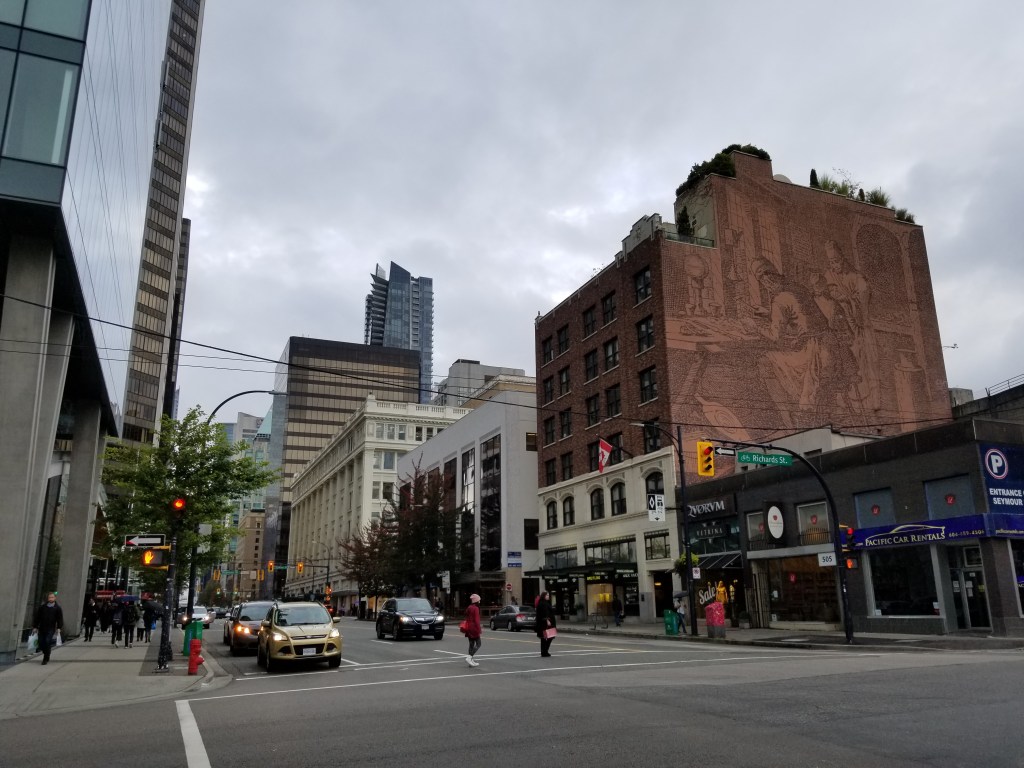
Georgia Street is an east–west street in the cities of Vancouver and Burnaby, British Columbia, Canada. Its section in Downtown Vancouver, designated West Georgia Street, serves as one of the primary streets for the financial and central business districts, and is the major transportation corridor connecting downtown Vancouver with the North Shore (and eventually Whistler) by way of the Lions Gate Bridge. The remainder of the street, known as East Georgia Street between Main Street and Boundary Road and simply Georgia Street within Burnaby, is more residential in character, and is discontinuous at several points.
West of Seymour Street, the thoroughfare is part of Highway 99. The entire section west of Main Street was previously designated part of Highway 1A, and markers for the ‘1A’ designation can still be seen at certain points.
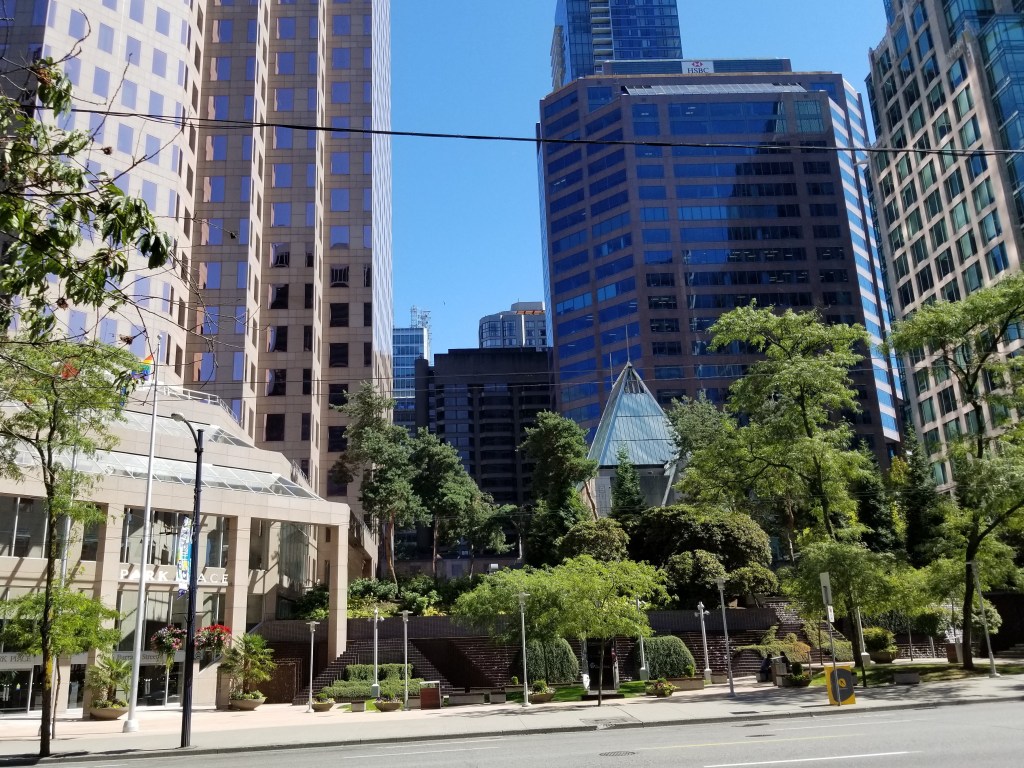
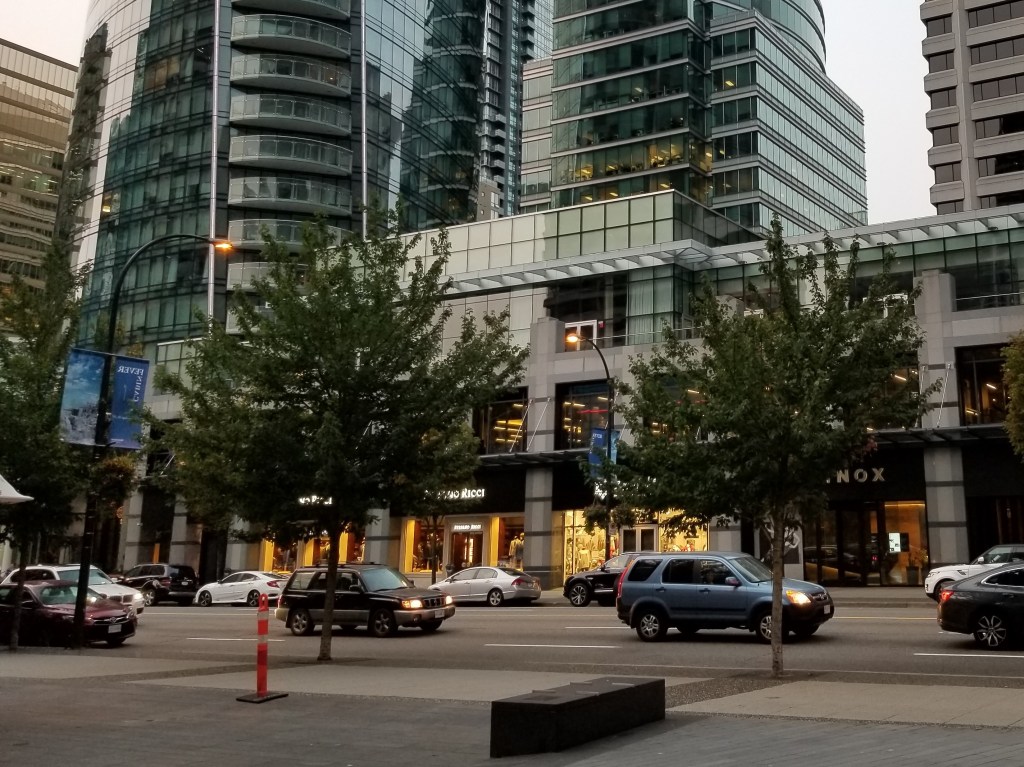
Starting from its western terminus at Chilco Street by the edge of Stanley Park, Georgia Street runs southeast, separating the West End from the Coal Harbour neighbourhood. It then runs through the Financial District; landmarks and major skyscrapers along the way include Living Shangri-La (the city’s tallest building), Trump International Hotel and Tower, Royal Centre, 666 Burrard tower, Hotel Vancouver and upscale shops, the HSBC Canada Building, the Vancouver Art Gallery, Georgia Hotel, Four Seasons Hotel, Pacific Centre, the Granville Entertainment District, Scotia Tower, and the Canada Post headquarters. The eastern portion of West Georgia features the Theatre District (including Queen Elizabeth Theatre and the Centre in Vancouver for the Performing Arts), Library Square (the central branch of the Vancouver Public Library), Rogers Arena, and BC Place. West Georgia’s centre lane between Pender Street and Stanley Park is used as a counterflow lane.
East of Cambie Street, Georgia Street becomes a one-way street for eastbound traffic, and connects to the Georgia Viaduct for eastbound travellers only; westbound traffic is handled by Dunsmuir Street and the Dunsmuir Viaduct, located one block to the north.
East Georgia Street begins at the intersection with Main Street in Vancouver’s Chinatown, then runs eastwards through Strathcona, Grandview–Woodland and Hastings–Sunrise to Boundary Road. East of the municipal boundary, Georgia Street continues eastwards through Burnaby until its terminus at Grove Avenue in the Lochdale neighbourhood. This portion of Georgia Street is interrupted at several locations, such as Templeton Secondary School, Highway 1 and Kensington Park.
Georgia Street was named in 1886 after the Strait of Georgia, and ran between Chilco and Beatty Streets. After the first Georgia Viaduct opened in 1915, the street’s eastern end was connected to Harris Street, and Harris Street was subsequently renamed East Georgia Street.
The second Georgia Viaduct, opened in 1972, connects to Prior Street at its eastern end instead. As a result, East Georgia Street has been disconnected from West Georgia ever since.
On June 15, 2011 Georgia Street became the focal point of the 2011 Vancouver Stanley Cup riot.












 Igor's Blog