




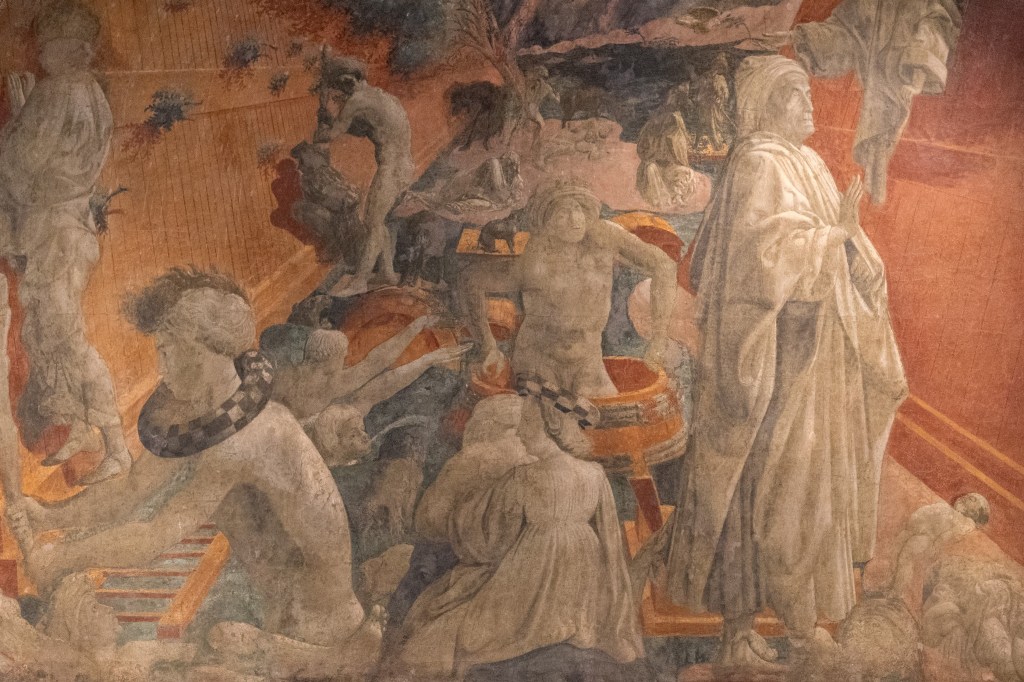
I finished reading ‘The History of the Devil and the Idea of Evil’ (1900) by Paul Carus a while ago. Therefore, I will continue to quote from it because I’ve highlighted more than a few pages. “Graeco-Egyptians developed a religious philosophy upon the basis of ancient Egyptian traditions, compiled in a book called the Divine Pymander, which contains many beautiful sayings that remind us of Christian views; but the Divine Pymander (like other philosophical books) is addressed to the few not to the many, and its mysticism rendered it unfit to become the religion of mankind. Apollonius of Tyana is a figure in many respects similar, but by no means superior, to Jesus Christ. For in him the philosophy of the age becomes a religion. His followers, however, were neither better nor wiser than the early Christians; they shared with them the same superstitions, cherishing the same trust in miracles, yet for all we know, they had only few of their redeeming features. Julian, surnamed by Christian authors the Apostate, is in spite of his idealism a reactionary man who set his face against Christianity because he recognised in the latter the most powerful representative of the coming faith. This last pagan emperor, it is true, was a noble-minded and thoughtful man who opposed Christianity mainly on account of its shortcomings, its Jewish affiliations, and the narrowness of its devotees, but he was enamored with the past, and his highest ambition was to revive the barbarism of pagan institutions, which tendency appears most plainly in his retention of bloody sacrifices, his esteem for oracles and a general indulgence in the mysteries of Neo-Platonism. Not only was the figure of Christ conceived after the model of a Teutonic war-king, the son of the emperor, while his disciples became his faithful vassals; not ony did the archangels assume the features of the Asas, the great northern gods, Wodan, Donar, Fro, and others; not only were the old pagan feasts changed into Christian festivals; the Yuletide became Christmas and the Ostara feast in the spring was celebrated in commemoration of Christ’s resurrection; but the individual features of the evil powers of the North were also transferred to Satan and his host. Teutonic legends and fairy tales frequently mention the Devil, and there he possesses many features that remind us of Loki. In addition, the ice giants of the Norsemen, the Nifelheim of the Saxons, the Nether-world of the Irish, all contributed their share to the popular notions of the Christian demonology of the Middle Ages. The very name “hell” is a Teutonic word which originally signified a hollow space or a cave underground, and denotes the realm of Hel, Loki’s daughter. The weird and terrible appearances of the gods, too, were retained for the adornment of demoniacal legends; and Odhin as storm-god became “the wild hunter.” Dr. Ernst Krause, who is best known under his nom de plume of Carus Sterne, has undertaken the work of proving the Northern influence upon Southern fairy tales and legends. He finds that all the myths which symbolise the death and resurrection of the sun, giving rise to the idea of immortality, doomsday, and the final restoration of the world, have originated in Northern countries where on Christmas day the sun that seemed lost returns spreading again light and life. Our philologists believe that the Nibelungenlied contains features of Homer’s great epics; but, according to Dr. Krause, it would seem that the original source of the Nibelungenlied is older than Homer, and that the theme of the Voluspa, the first song of the Edda, being a vision that proclaims the final destruction and degeneration of heaven and earth, antedates Christ’s prophecies of the coming judgment. (Matt., 24.) Christianity comes to us from the Orient, but the idea that a God will die and be resurrected is of Northern origin. Dr. Krause proceeds to prove that the conception of hell as depicted in Dante’s Divina Comedia, which may be regarded as the classical conception of Roman Catholic Christianity, is in all its essential elements the product of a Northern imagination. Dante followed closely Teutonic traditions, which in his time had become a common possession in the Christian world through the writings of Saxo Grammaticus, Beda Venerabilis, Alberiens, Caedmon, Caesarius of Heisterbach, and others. It is specially noteworthy that the deepest hell of Dante’s Inferno is not, as Southern people are accustomed to describe the place of torture, a burning sulphur lake, but the wintry desolation of an ice-palace. That this ice hell can be traced back to the days of Gnosticism would only prove that this Northern influence may, in many of its most characteristic features, date back to a prehistoric age. Dante’s portraiture of the evil demon whom he calls “Dis” agrees exactly with the appearance of the principal Northern deity of evil, as he was commonly revered among the Celts, the Teutons, and the Slavs. Dis has three faces: one in front, and the one on each side. The middle face is red, that on the right side whitish-yellow, that on the left side, black. Thus the trinity idea was transferred to Satan on account of the ill-shaped idols of the crude art of Northern civilisation. Dante’s description of Dis reminds us not only of the three-headed hoar-giant of the Edda, Hrim-Grimmir, who lives at the door of death, but also of the trinity of various pagan gods, especially of Triglaf, the triune deity of the Slavs. When Bishop Otto of Bamberg converted the Pomeranians to Christianity, he broke, in 1124, the three-headed Triglaf idol in the temple of Stettin and sent its head to Pope Honorius II at Rome. Dr. Krause suggests that since Dante, who as an ambassador of Florence visited Rome in 1301, must have seen with his own eyes the head of the Pomeranian Triglaf, it is by no means impossible that he used it as a prototype for the description of his trinitarian Satan. Buddhism is a religious revolution against the evils that are dominant in Brahmanism. Gautama Shakyamuni, who claimed to be the Enlightened One, the Buddha, rejected bloody sacrifices, the authority of the Vedas, trust in rituals and the caste system, and taught a religion of moral endeavor which was to be obtained by enlightenment, or the bodhi. He recognised the existence of evil and sought salvation in the radical abolition of all selfishness through the extension of an all-comprehensive love toward all creatures. The many-sidedness of Buddhism is well illustrated in the Buddhistic conception of evil and of a final escape from evil, which is taught to the thinker in the shape of a philosophy, and to the uneducated masses in the garb of a poetical myth, affording the artist a good opportunity for representing deep thoughts in allegorical form. A Latin proverb says: if two do the same thing, it is not the same thing; and this is true not only of individuals, but also of nations and of religions. It is a habit common among all classes of people to condone the faults of their own kind but to be severe with those of others. The oracles of Delphi were divine to a Greek mind, but they were of diabolical origin according to the judgment of Christians. Jesus was a magician in the eyes of the pagans, while the Christians worshipped him as the son of God, and a man who performed miracles. The priests of Pharaoh and Moses perform the same tricks still performed by the snake charmers of Egypt and India, but the deeds of Moses alone are regarded as miracles, and the Israelites claim that he could accomplish more than the Egyptians.”
I will also quote something that I found to be interesting from Carroll Quigley’s ‘The Evolution of Civilizations: An Introduction to Historical Analysis’ (1961). In this somewhat thick book, which was his first published work, he wrote not only about civilized society but also about pre-literary history. Although the book isn’t an in depth study of every culture that has ever existed, he still wrote about what he considered to be the most important developments in human history, or at least some of the most important developments. I found his chapter about pre-literary history to be interesting too. Therefore, I will quote just a few of the interesting passages from it. By the way, there’s a chapter about why Neanderthal man possibly went extinct in ‘Mysteries of the Past’ (1977) by Joseph J. Thorndike Jr. This is one of my favorite books in my collection, and the chapter is titled ‘What Caused the Sudden Rise of Modern Man?’. I won’t quote from it now, but perhaps I will do so in the future. “Neanderthal man was so different in appearance from most modern men that no observer would be likely to confuse them. His bodily proportions were quite different, since he had shorter legs and almost no neck. There were other, more technical, differences. His rib bones were rounder, rather than flattened as ours are; he had no real chin or forehead; his eyes were protected by bony eye ridges along the brows; and his head was attached to the front rather than to the top of the last vertebra. Because of these differences, Neanderthal man is frequently regarded as a different species from modern man, or Homo sapiens. But he is more correctly regarded as a variety, since the critical mark of species difference, inability to interbreed to produce fertile offspring, was not true of the Neanderthal and Homo sapiens types. It is now generally recognized that these two were able to interbreed and leave descendants on those rare occasions when they encountered each other along the margins of their customary habitats. Such encounters were on the margins of their ranges because Homo sapiens lived under temperate conditions, while Neanderthal man lived under semiglacial conditions. They both lived in Europe but at different times. Homo sapiens retreated to Africa when Europe was glacial, thus abandoning Europe to Neanderthal man, while the latter retreated northeastward toward Asia, where he had originated, as the interglacial period commenced. Just as we associated the movements of Homo sapiens with the movements of a glacial piston that ejected him from Europe or sucked him back from Africa, so we could associate the movements of the same piston with Neanderthal man, who came into Europe with the glacier and retreated with it toward northern Asia when it departed. Because of the conceit of normal egotism, it is customary to regard Homo sapiens as of higher intellectual capacity than Neanderthal man. This is a matter of which real evidence is scanty, but the evidence that is available would clearly indicate that Neanderthal man was at least as intelligent as Homo sapiens. This evidence includes the following: Neanderthal man possessed both fire and clothing, necessities for glacial living, before Homo sapiens did. He seems to have buried his dead, leaving with the body equipment needed in some future life, at an earlier period, thus giving evidence of an earlier recognition of spiritual values. His tools were frequently made in greater variety and with somewhat greater skill, and include the earliest compound tools (in which the blade and handle were separate pieces). But these achievements, which might be interpreted to indicate sufficient mental flexibility to permit Neanderthal man to survive the ending of glacial conditions. By adapting his way of life so successfully to glacial conditions and to the pursuit of the great glacial mammals such as mammoths, Neanderthal man made his way of life too rigid to permit him to exist under postglacial conditions when such mammals became extinct. The climate change, by 2000 B.C., opened the forests of Europe, so that megalithic traders abandoned the seaways of the west in all of the southwestern Europe as far east as the Adriatic and as far north as Britanny and, instead, crossed Europe by boat on the rivers, bringing Irish gold, Cornish tin, and Danish amber across Bohemia and southern Germany to the Danube. Down this river they went to the mouth of the Morava where they split, some continuing down the Danube, while others turned south to the Isthmus of Corinth and the Gulf of Argos beyond. In Argos, the new commercial cities of Mycenae and Tiryns welcomed the northern traders and grew rich from their commerce, which continued on, by sea, to Crete, to Egypt, or to the Syrian Saddle. Those traders who had continued down the Danube crossed Thrace to receive an equally warm welcome in Troy, whence the trade routes continued across Hittite Anatolia and the Assyrian outposts in Cilicia to the Syrian Saddle and Mesopotamia. These European trade routes of the Sub-Boreal period were not disrupted, but were rather developed, by the arrival of the Indo-European warrior peoples in central Europe about 2000 B.C. From the neolithic peasant peoples these conquerors extracted food, and from the megalithic traders they extracted tribute, using the surplus accumulated to exploit the bronze-making resources of Bohemia in forest forges. From this system emerged a prosperous, barbaric (but not civilized) culture known as the Great Central European Bronze Age. This culture reached its peak about 1400 B.C., with northern and western connections to megalithic Ireland, England (Stonehenge), and Denmark, and even more significant connections to Terremare Italy, Mycenaean Greece, and Hittite Anatolia. These southern and eastern connections were with similar Indo-European Bronze Age invaders in other areas. The whole system was destroyed by the onslaught of Indo-European Iron Age invaders about 1200 B.C. These later peoples exploded out of the northern Balkans with devastating force, and established in various areas the Celtic speakers of central and western Europe, the Dorian speakers of Greece, and a variety of Anatolian peoples, such as Phrygians and Carians. In the Aegean and Balkans these Iron Age invaders ended Cretan civilization forever and established a Dark Age that lasted for several centuries. This Dark Age, centering on the period 1000 B.C., marks the transition between Cretan civilization and its descendant Classical Mediterranean civilization, performing a double role as the period of invasion of the former (Stage 7) and as the period of mixture of the other (Stage 1). Farther east the same Indo-European population movements performed different roles in other civilizations. In Anatolia the Bronze Age Hittite invaders who came in over the Caucasus across Armenia acted as Stage 1 of Hittite civilization (1900 B.C.), while the Iron Age invaders from Thrace destroyed and ended this civilization a short eight hundred years later, providing the limits to the briefest and least known of all major civilizations. The Iron Age invaders of the Aegean area, whom we have called by different names in the Balkans and in western Anatolia, drove fleeing before them a mixed group of earlier inhabitants of those shores, including Achaeans, Etruscans (Trojans), Cretans, some Dorians, and various dimly known peoples of the Anatolian shore.”

Learning is an Autistic Joy of my life.
But school was painful. Painful. Painful.
This heartbreak is shared by so many neurodivergent people. Now, a groundbreaking study involving over 700 adolescents (11-16 years old) in the United Kingdom helps explain why—and points toward solutions that honor the joy of learning and the dignity of every student. More than that, the study authors suggest that reducing the emotional burdens students experience in school may potentially prevent decades of mental health struggles and save the lives of some neurodivergent adolescents and adults.
Researchers developed a new tool called the “My Emotions in School Inventory” (MESI) by working directly with neurodivergent teenagers to understand what upsets them most at school. They discovered that emotional burden—how often upsetting events happen and how intensely they affect students of specific neurotypes—plays a major role in depression and anxiety, in ways that cannot be simply explained by emotion regulation difficulties.
Key Findings:
Students in ADHD Group Were Most Upset By:
Students in the Autistic Group Were Most Upset By:
Students who met both ADHD and autism criteria experience the same overall level of emotional burden as the other two neurodivergent groups. However, AuDHD creates unique neurological patterns and combinations of traits—which means that simply combining autistic and ADHD predictions and strategies won’t work. One size does not fit all.
Regardless of their specific neurotype, neurodivergent teens were more likely to be upset by:
Like canaries in coal mines that warn of toxic gases, neurodivergent students, and neurodivergent people in general, respond appropriately to genuinely problematic environments. The issue isn’t that these students are “too sensitive”; they are experiencing legitimate stressors that harm their well-being and may result in depression and anxiety well into adulthood.
The research validates what many neurodivergent self-advocates have long felt: Their distress isn’t a character flaw or inability to cope. It’s a natural response to environments that are not designed for their neurotype. This suggests several applications.
For Parents and Educators
For Support Strategies
This study helps to further shift the conversation from “What’s wrong with this student?” to “What’s wrong with this environment?”
Key principles include:
By understanding what specifically taxes the emotional well-being of different neurodivergent students, we can create environments where they have an opportunity to thrive. This requires treating every student with the dignity and emotional inclusion every human deserves, and recognizing that an emotional response to an unhealthy environment isn’t misbehavior.
Forcing neurodivergent students into a standard box hurts these students and robs the world of the fullness of their talents. Let’s create education that works for the full range of humanity, with flexibility and care. Neuroaffirming education can benefit everyone.







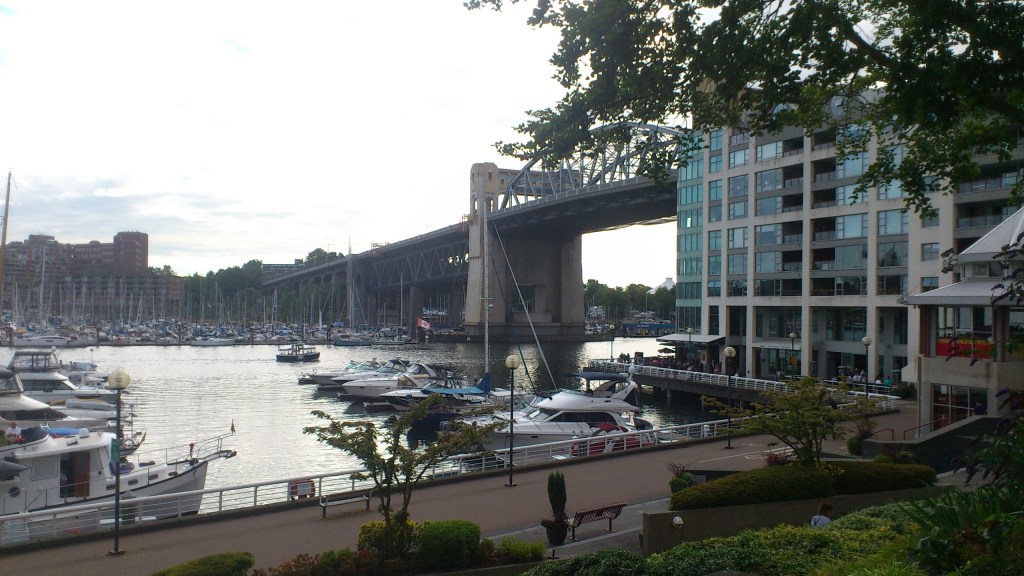

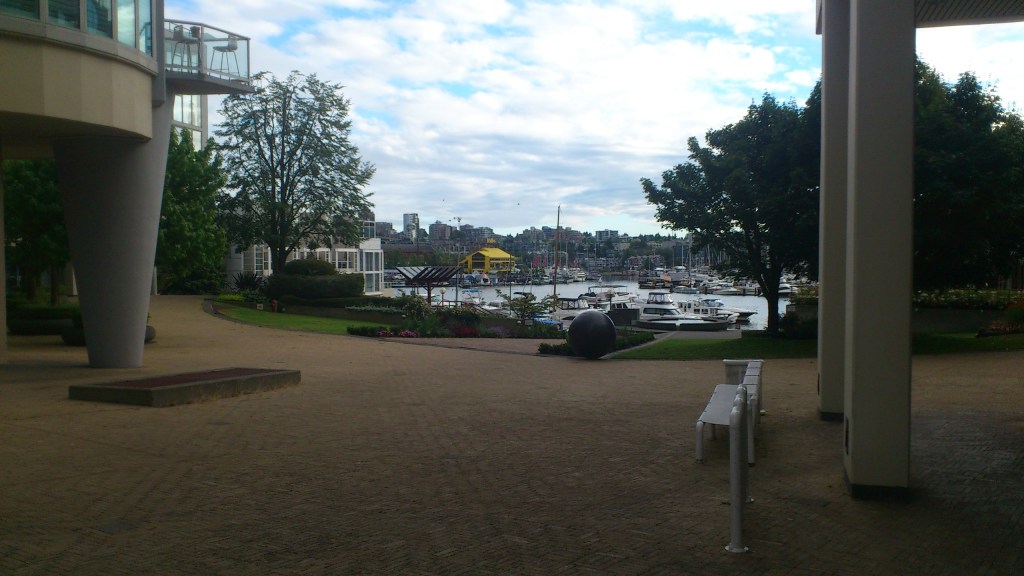



The Granville Street Bridge is an eight lane bridge in Vancouver, British Columbia. It spans False Creek and is 27.4 metres above Granville Island. It is part of Highway 99.
The original bridge was completed in 1889. It was a 732-metre long low timber trestle. The navigation span, near the north end, was a trussed timber swing span, tied with wire ropes to a central wooden tower. It was largely designed by the CPR, and cost $16,000. In 1891 the bridge was widened on both sides for streetcar tracks, except where the tracks converged for the swing span.
The second bridge was completed in 1909. It was a longer, medium-level steel bridge with a through truss swing span.
On February 4, 1954, the current Granville Street Bridge, costing $16.5 million, opened. A million cars would cross over the bridge in its first month. The city of Vancouver funded the bridge itself as Mayor Frederick Hume said “no formal assistance given by any other government body.”
The eight-lane structure was constructed on the same alignment as the first bridge while steel plate girders salvaged from the second bridge made barges for constructing the foundations of the Oak Street Bridge.
The first “civilian” to drive over the 1954 bridge was the same woman who was first to drive over the second bridge in 1909. She had been widowed between the two openings, and so had a different name. Both times she was at the wheel of a brand-new Cadillac.
Recent improvements to the bridge include increasing its earthquake resistance, and installing higher curbs and median barriers.

What It Is and How to Manage It
Imagine this: Jason, a college student with AuDHD, struggles with sensory overload in crowded lecture halls. The combination of bright fluorescent lights, overlapping voices, and the hum of projectors makes it difficult for him to concentrate. In fact, this overwhelming sensory input leads to stress, shutdowns, and difficulty processing information.
Similarly, Mia, a working professional, also diagnosed with autism and ADHD, finds open-office environments unbearable. The constant phone calls, the hum of air conditioning, and the glare of overhead lights make it hard for her to stay focused. As a result, she often takes frequent breaks to reset but still ends her day exhausted.
If you or someone you know experiences similar challenges, this guide will help you understand the link between AuDHD and sensory overload and provide effective strategies for managing it.
What Is AuDHD and Sensory Overload?
AuDHD is a term used to describe individuals who have both autism (ASD) and attention-deficit/hyperactivity disorder (ADHD). However, since autism and ADHD may affect sensory processing differently, having both conditions can lead to heightened sensory sensitivity and challenges in filtering out unnecessary stimuli.
Sensory overload occurs when the brain receives more sensory input than it can process, leading to discomfort and distress. Therefore, for individuals with AuDHD, everyday environments can quickly become overwhelming, making it hard to focus, communicate, or function effectively.
How Sensory Processing Differs in AuDHD
Autism (ASD)
ADHD
AuDHD
Signs of Sensory Overload in AuDHD
People with AuDHD may experience sensory overload in different ways, but common signs include:
Importantly, recognizing these signs early can help individuals take proactive steps to manage sensory overload before it escalates.
Common Triggers of Sensory Overload in AuDHD
Sensory overload in AuDHD is often triggered by:
Moreover, understanding your personal triggers is the first step toward managing sensory overload effectively.
Strategies for Coping with Sensory Overload in AuDHD
1.Plan Ahead
2.Carry Sensory Aids
3.Create Recovery Spaces
Looking for More Support?
Our All Access Training includes practical tools and strategies to help reduce sensory overload in daily life for yourself, your workplace and your community.
Frequently Asked Questions About AuDHD and Sensory Overload
What are the signs of sensory overload in AuDHD?
Sensory overload symptoms include irritability, withdrawal, difficulty concentrating, and physical discomfort. Thus, recognizing these early signs can help you take steps to prevent escalation.
How can I reduce sensory overload in shared spaces?
Is sensory overload different in AuDHD compared to autism or ADHD alone?
Yes. Since AuDHD combines traits from both conditions, individuals may experience more intense and frequent sensory overload episodes.
Creating a Sensory-Friendly World
Understanding and addressing sensory overload is key to building inclusive environments where individuals with AuDHD feel supported and understood. For instance, by making small adjustments—whether in schools, workplaces, or public spaces—we can foster sensory-friendly experiences for everyone.
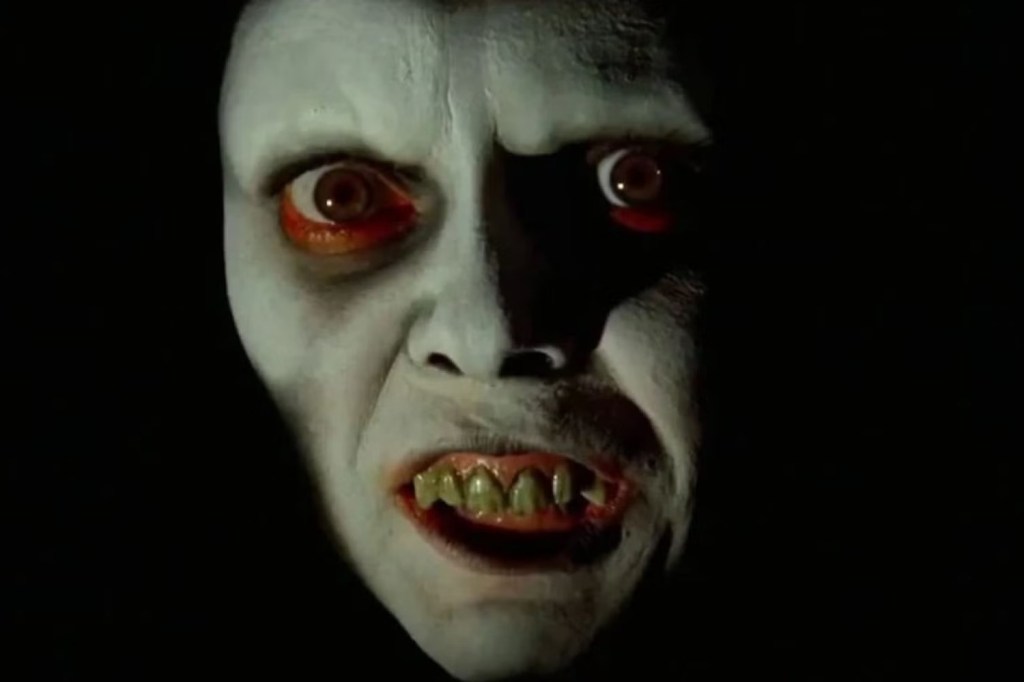
Many of horror’s most iconic villains are relentless forces, with Michael Myers, Jason Voorhees, and Freddy Krueger flaunting more than nine lives after their several sequel comebacks. The Exorcist franchise has a more supernatural threat at the helm, however, which is why Pazuzu the demon has been haunting the lives of priests and bystanders alike for decades.
Appearing as the main antagonist of now six entries in The Exorcist franchise, fans may be interested in getting to the bottom of Pazuzu’s origin and learning more about the inspiration behind author William Peter Blatty’s villain. Here’s everything you need to know about Pazuzu and the demon’s role in The Exorcist: Believer.
William Peter Blatty released The Exorcist novel in 1971, and the narrative follows the same characters and circumstances made famous in the 1973 film adaptation by William Friedkin. 11-year-old Regan MacNeil is possessed by a demon, and her mother enlists the help of priests Father Lankester Merrin and Father Damien Karras to perform an exorcism. The novel implies that the demon possessing Regan’s body is that of Pazuzu, as the demon’s statue was referenced and visited by Merrin during the prologue in northern Iraq.
Pazuzu returned in Blatty’s 1983 novel Legion, which was a direct sequel to The Exorcist, and it saw the demon taking revenge after being banished from Regan’s body by channeling the spirit of the Gemini Killer into Father Damien Karras’ body. Again, Pazuzu is not directly named as the antagonist, but it is implied that the same entity is behind these events.
The Exorcist movie adaptation referred to the male spirit possessing Regan’s (Linda Blair) body as Captain Howdy, but this is a front for the demon’s real identity, Pazuzu, confirmed by Father Lankester Merrin’s (Max von Sydow) connection to the demon’s statue. Pazuzu is finally named as the demon behind the possessions in the 1977 sequel Exorcist II: The Heretic, when the entity returns to possess Regan again, and The Exorcist III adapted the plot of Blatty’s Legion novel.
Two prequels to The Exorcist, Exorcist: The Beginning and Dominion: Prequel to the Exorcist, followed a young Merrin (Stellan Skarsgård) and detailed the soon-to-be priest’s first duel with Pazuzu in Africa. In the 2016 television series, The Exorcist, Pazuzu returns to possess Regan’s daughter, Casey (Hannah Kasulka), but ends up possessing Regan (played by Geena Davis instead of Linda Blair) once again. However, Father Tomas (Alfonso Herrera) is able to rid the demon.
In David Gordon Green’s reboot, The Exorcist: Believer, Pazuzu returns to possess young girls Angela (Lidya Jewett) and Katherine (Olivia O’Neill), after they both perform a ritual trying to contact the former’s deceased mother. Angela’s father, Victor (Leslie Odom Jr.), enlists the help of Chris MacNeil (Ellen Burstyn) to identify that it is indeed the return of Pazuzu, but instead of being exorcised this time, the demon claims the life of one of the girls and lets the other live before vanishing.
Pazuzu’s origin is rooted in ancient Mesopotamian religion, as the magical entity was known to be a personification of the southwestern wind that reigned dominance over the lilu wind demons and was identified as both a house demon or domestic spirit and a wandering wind demon roaming the wilds.
Described to have an “inhuman and grotesque form”, Pazuzu, the son of the God Hanbi, was known to safeguard homes by repelling other demons and scaring away unwanted guests. People pertaining to this culture would use spells and special artifacts to try and use Pazuzu as their protector, and unlike the events of The Exorcist franchise, Pazuzu worked harder to protect pregnant women and mothers.
Blatty was inspired by the wind demon from Assyrian and Babylonian mythology enough to bring Pazuzu to life as his main antagonist, but the author also took inspiration from the 1949 possession of 14-year-old Robbie Mannheim in St. Louis, Missouri. It’s also been reported that Blatty got the idea of Pazuzu from the 1900 book The History of the Devil by religion scholar Paul Carus, because there’s an illustration of Pazuzu’s statue among the text that looks very similar to the one Merrin encounters, right down to the loop through its head.
Of course, The Exorcist franchise is not the only piece of media that has involved Pazuzu or the demon’s statue. The Highlander television series showed the statue of Pazuzu when Duncan MacLeod battled a being akin to Satan. A similar statue also appeared in the episode There’s No Place Like Home within the Once Upon a Time series, and in the trailer for Godzilla: King of the Monsters. Additionally, an episode of Futurama named one of the gargoyles Pazuzu, and Ridley Scott’s 1985 fantasy Legend shows the statue of Pazuzu used in The Exorcist.
 Igor's Blog