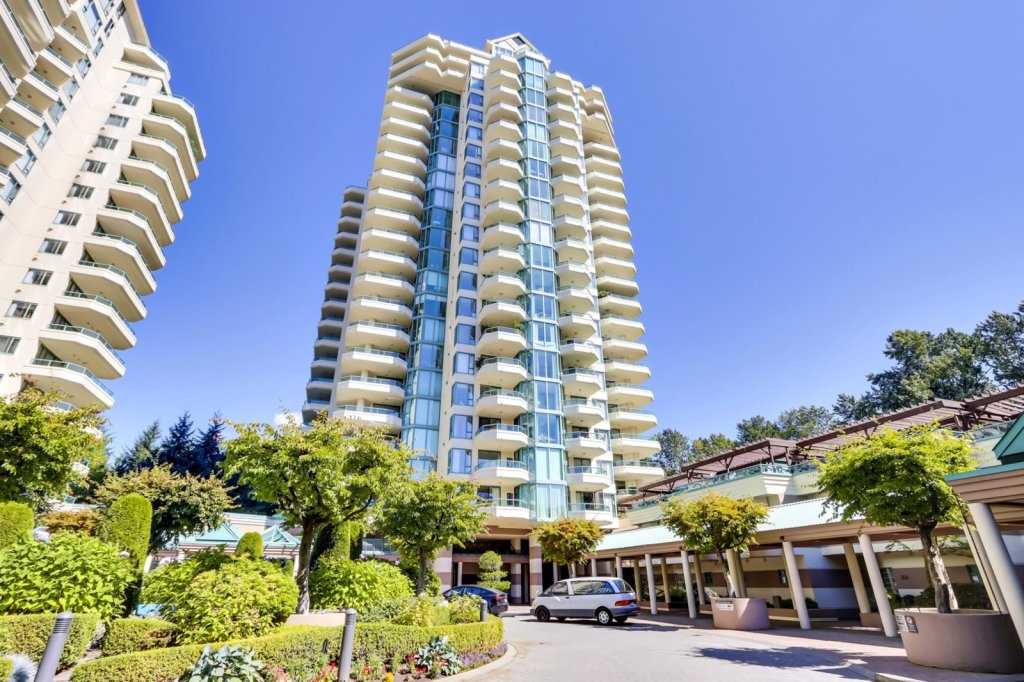


Westroyal – 328 Taylor Way, West Vancouver, V7T 2Y4
Building Information
Building Name: Westroyal
Building Address: 328 Taylor Way, West Vancouver, V7T 2Y4
Levels: 19
Suites: 183
Status: Completed
Built: 1993
Title To Land: Leasehold Not Prepaid-strata
Building Type: Lease Hold
Strata Plan: LMS445
Subarea: Park Royal
Area: West Vancouver
Board Name: Real Estate Board Of Greater Vancouver
Management: Wynford Strata Management
Management Phone: 604-261-0285
Units in Development: 183
Units in Strata: 183
Subcategories: Lease Hold
Property Types: Leasehold Not Prepaid-strata
Building Contacts
Management: Wynford Strata Management
phone: 604-261-0285
email: property@wynford.com
Construction Info
Year Built: 1993
Levels: 19
Construction: Concrete
Rain Screen: No
Roof: Metal
Foundation: Concrete Perimeter
Exterior Finish: Stucco
Maintenance Fee Includes
Caretaker, Garbage Pickup, Gardening, Gas, Hot Water, Management, Recreation Facility
Features
Solid Double Door Entry, Mirrored Closet Doors, Roughed In Vacuum, Custom Closet Organizers, Marble Entry, Cozy Gas Fireplace, Gourmet Kitchens, Relaxing Jacuzzi Jetted Soaker Tub, Enclosed Showers, Fire Sprinkler System In Each Home, Insuite Laundry, Suites Are Pre-wired For Security Systems, Solariums, Large Sundecks, Ocean, City And Mountain Views, Video Intercom And Security System At Front Entrance, Unique Water Feature, Manicured Gardens And Greenspace, Hotel Style Lobby And Halls, Concrete And Glass Construction, Secured Underground Parking, Storage Lockers, Visitor Parking, Indoor Pool, Sauna And Steam Rooms, Exercise Centre, Social Rooms With Large Tv And Pool Table
Description
The West Royal – 328 Taylor Way West Vancouver, BC V7T 2Y4, LMS445 – Located in the popular area of Park Royal in West Vancouver on Taylor Way and Marine Drive. This is a great location that is within steps to all your urban conveniences including transit, Park Royal Shopping Centre, restaurants, medical services, the Seawall with beach access, schools at all levels, walking trails and more! Direct access to major transportation routes including the Lions Gate Bridge allows an easy commute to Downtown Vancouver, North Vancouver and YVR.
The West Royal stands 25 stories tall with 181 luxury homes built in 1993 that are professionally managed. Most homes feature open floor plans, cozy gas fireplaces, elegant marble entry, roughed in vacuums, insuite laundry, pre-wiring for security systems and gourmet kitchens. Other features include mirror closet doors, custom closet organizers, solid double door entry, a relaxing jacuzzi jetted soaker tub, enclosed showers, spacious solariums and large sundecks that boast beautiful ocean, city and mountain views.
The West Royal is quality built with concrete and glass construction that make up these beautiful condo and townhomes. There are many amenities available for residents to enjoy including an exercise room, sauna, spa, social rooms with a large TV and pool table, a common workshop, indoor pool and hot tub. Other unique features include manicured gardens, a round-a-bout driveway, gazebos and a lovely water feature. This building offers secured underground parking, visitor parking, storage lockers and a video intercom with a security system at the front entrance. This is a multiple address complex that includes 70 units at 328 Taylor Way, 101 units at 338 Taylor way and 10 townhomes located at 348 to 366 Taylor Way. This is a desirable location that offers luxury living – Live at The West Royal!


Tessa Violet released Bad Ideas in 2019 and was set to take her second album on the road the following year. That didn’t work out because, well, you know. So instead, the rising singer-songwriter did some live-streams and stayed active with fans on social media. It’s something Violet knows something about, since she got her first world-wide big break as a Youtuber. That was more than a decade ago while she was working in retail after a two-year stint in modeling.
But that’s beside the point.
Since last year, Tessa Violet, 31, has continued to stay busy releasing new versions of some of Bad Ideas’ catchiest songs: “Bored” with MisterWives, “Words Ain’t Enough” with Chloe Moriondo and “Games” with lovelytheband. The latter song, released in April, came with a meta shot-for-shot remake of a scene in “Twilight,” no less. Another song, “Wishful Drinking,” went viral last year thanks to a TikTok trend.
For her final statement with Bad Ideas, Violet (whose full name is Tessa Violet Williams) is turning to “Games” yet again, with a physical pop-punk version produced by Matt Squire (Panic at the Disco, All Time Low, 3oh!3) released last Friday.
“I wanna mosh,” Violet said in a video interview from her home in Los Angeles, to which she had just moved back prior to the start of the pandemic.
She originally wrote “Games” about the experience of being gaslit by a now-ex. He’d lied to her and when she called him out on it he’d retort that she was just misunderstanding him. It turned out he was talking to other girls behind her back. The 2021 versions of the songs were her way of doing remixes. But Violet isn’t interested in club music. Instead, right before the pandemic, she saw PUP and fell in love with pop-punk
“I’ve never been to a punk show before, but watching it, … the energy of this is incredible. It’s infectious and it also feels like an incredible space to work through anger,” she said. “I think women especially aren’t given space to work through anger. We’re taught from a young age that to be mature is to move directly into compassion or understanding—to leapfrog anger. But it’s hard to actually get to that space without moving through the emotion. I’m just like, ‘I’m for this, and I am mad!’”
That was on a personal level, on a more universal level, the anger in the song became a response to the out-in-the-open injustices of the past year.
“A punk version of “Games”— I know that may seem kind of left field for me, but it feels very genuine to who I am right now and what I’m listening to,” she said.
Tessa Violet grew up in Ashland, Oregon, a tiny, wooded town less than an hour from the California border off I-5. It’s home to the Oregon Shakespeare Festival but has no music scene and is a three hours’ drive from any major city.
Her first dream was to perform in musical theater.
“My mom and I disagree about this: She’s like, ‘We had a car.’ But, in my experience of my childhood, we had a car like a third of the time so there was not much of going to big cities,” she said. “We would take the Greyhound to Portland, Oregon every now and then for vacation.”
She knew back then that she wanted to sing, but she only had the theater presented as an option. Her acting, however, was not up to par, she said, so she didn’t get past school productions. She felt bitter at the time.
“It was my first heartbreak because it was my desire,” she said.
A friend of her mother’s had suggested modeling as a career, something Violet wasn’t at all interested in until an agent told her the job came with airfare perks and that she had a “good look for Japan.” “And I was like, ‘I’m in, baby!’” she said.
During her modeling career she traveled through places like China, Japan, Hong Kong, South Korea and Thailand.
Violet quit that after two years, quickly becoming disillusioned with how the industry treats models as a disposable commodity. Instead, she got a retail job at American Apparel and began vlogging on YouTube.
“This was before you could be a YouTuber as a career, but I felt like that was coming,” she said. “In like 2008, I was, ‘I think I could do this as a job. … I really think that’s going to happen for me and a lot of people.’”
Her following quickly took off. She directed and performed in her own skits and made unofficial, yet very popular music videos set to music by the likes of Mika. She won a YouTube competition and a large cash prize
That would have been that, but she never lost her passion for singing. A few years later, now in her 20s, she discovered songwriting. As the story goes, a friend left a guitar in her car. She taught herself a Death Cab for Cutie cover and was soon writing her own songs.
Since 2013 she’s turned her focus to songwriting. The following year she made and released her first album, Maybe Trapped Mostly Troubled. A year or so later, she moved to Nashville, not because of its status as a music capitol—she’d already spent some time in L.A. and New York by that point—but just to experience something different and have both the amenities of a big city and the community of a smaller town. She didn’t know anyone there at the time but went for it anyway. It’s a trait she said she got from her mom, who made similar decisions, like giving up a big city life to raise her daughter in Ashland, Oregon, only to bounce to New York, and then Maine after Violet was out of the nest.
After moving back to L.A. right before the pandemic, she kept herself mentally healthy and in the moment through meditation, which she said also helped her build confidence in herself. She also got in touch with her desires and learned how to talk and think about what she wants to accomplish.
“If you’re honest about what you want from your life and from people, you’re going to have an easier time in your life because to deny what you want, you need to constantly be hard and closed,” she said. “And to be open to what you want, you have to be willing to be brave. Because … then you’re also open to a ‘no,’ which people think will break their heart—and maybe it will, but you’re gonna learn a lot and get a lot more from life if you are … about your desire and intention. … If you’re a pessimist you protect yourself from future disappointment. But really, all you do is spoil the current moment, and the current moment is all we ever have. It’s all we’re guaranteed.”
Violet said when she was first getting into music and transitioning from being a YouTuber, she was met with some backlash, especially from within the music industry. As she’s proven herself as a musician that has subsided, but she’s never been ashamed of how she arrived where she did.
“I’m proud of having done that. I really think—not I think; I know—that I was on the forefront of that movement of being someone who shares their life through a video format,” she said.
She’s fine if some people still know her primarily through the past phase of her life and career. Even if some people continue to have a stigma around YouTubers expanding their careers in different directions, she said she doesn’t take it personally.
“People don’t know what they don’t know,” she said.
Even someone from that field who makes music that’s, say, less than stellar, she doesn’t look down on him or her. After all, who doesn’t want to be an artist? And everyone has to start somewhere. Some people, however, have a much larger platform because of prior success doing something else.
If she had discovered songwriting first, she would have arrived through a different door, she added.
“I am an artist and I always have been, and my platform, or my way of expressing myself, used to be through storytelling videos. Now I story-tell through songs,” she said.
From her experience, the people looking down on the art made by others are the ones who can’t convince themselves to make a similar jump in their own lives.
“I honestly think everyone should sing. It’s part of the human experience,” she said. “Your first release is not going to be good and that’s just a fact.
Since she didn’t get to tour, Violet splurged and spent her entire built-up tour budget on a massive livestream performance in May. She still hoped to play some shows this year, but that will come as an opener on someone else’s ticket, she said.
She’s also started working on her next album and even has some songs completed that she expects to make the cut, but she’s still searching for a through line to present itself. It took a while for that to happen on the last album, but once it came, Tess Violet knew exactly what she wanted to say.
“I have the sense the project hasn’t quite revealed itself to me,” she said.


Lonsdale Avenue has been a cornerstone of North Vancouver since the city’s early days. When North Vancouver was first established, Lonsdale was planned as a prominent thoroughfare, running right down the middle of the city’s layout. Its strategic importance was tied to its role in transportation—originally, the ferry at the foot of Lonsdale (in Lower Lonsdale) was a key connection point. These ferries, initially privately owned, were later managed by the government as the city grew, ensuring steady access to resources and workforce mobility. This made Lonsdale a vital lifeline for the burgeoning community, connecting it to downtown Vancouver and beyond.
As of 2019, Lonsdale has become a desirable area for young professional families, business owners, and investors. With the cost of living in downtown Vancouver skyrocketing, many are drawn to North Vancouver for a high quality of life while still being close to the city. The avenue features art installations, new parklet outdoor spaces, and some of the North Shore’s best restaurants, shops, cafes, and parks.
Lower Lonsdale, closer to the waterfront, is known for its real estate market, with a mix of houses, apartments, condos, and vacant lots for sale. It’s also home to the Lonsdale Quay Market and the Shipyards, a popular spot for dining, events, and waterfront views.
Further up the avenue, Central Lonsdale is more residential but still vibrant with charming coffee shops, restaurants, and boutique stores. It’s a walkable area with a community feel, often highlighted for its rows of shops and eateries.
Lonsdale Avenue encapsulates the evolution of North Vancouver—from a ferry-dependent settlement to a modern, thriving community. It’s a place where history meets contemporary living, offering a balance of cultural richness, accessibility, and community spirit.

Ancillary Justice got a ton of hype upon its release in 2013, racking up a dizzying number of genre awards and garnering praise for its inventive handling of gender and nonhuman intelligence, in addition to being an excellent space opera. But I was on hiatus from genre reading in 2013, and so while I’d been exposed to the Imperial Radch universe when I read Translation State in my 2023 Hugo reading, I hadn’t yet circled back to the book that put Ann Leckie on the map. And when an online book club picked it up, I had the perfect opportunity to try.
Ancillary Justice is split into two different timelines, both following the same character in dramatically different life circumstances. In the former, the lead is one of thousands of connected ancillaries—ship AI consciousnesses downloaded into bodies of flesh and blood. In the latter, Breq is on her own, separated from her ship and her other bodies, on a mission that’s part revenge and part revolution, but waylaid by attempts to aid a suicidal human who had served on her ship thousands of years in the past. The former story is all about explaining just how Breq came to her current circumstances with her current convictions, while the latter is about executing a plan and saving a vulnerable bystander.
Because I was out-of-touch with the genre community in 2013, I can’t speak much to the background that made Ancillary Justice feel so daringly impressive. But I can’t help the feeling that it loses something for a new reader twelve years down the line. It’s so famous for its treatment of gender that I came in with some expectations on that score, but while it purports to build a genderless society, that element of worldbuilding doesn’t get much exploration beyond the lead’s inability to remember any pronouns other than she/her. It feels like a stray bit of worldbuilding designed almost entirely to discomfit the reader and force a questioning of gendered assumptions, and while it totally succeeds on that level, its reputation over the years had grown beyond what it actually delivers. This isn’t The Left Hand of Darkness, and while I have no doubt it was surprising to readers in 2013, it’s not something that particularly stands out from the science fiction landscape in the early 2020s.
The treatment of nonhuman intelligence is similar. It’s a theme with a long history in science fiction, and while I have few complaints about its handling in Ancillary Justice, we’ve seen a lot of disparate portrayals of artificial intelligence in the last decade, and there’s nothing here that feels truly special. Which is fine, except when the reader is approaching a book that rampaged through the Hugo, Nebula, Clarke, Locus, BFA, and Kitchie…well, it sets up the expectation for something mind-blowing. And instead, Ancillary Justice is good.
In fact, I’d argue that the building of a genuinely strange society is done much better in the standalone Translation State that’s set in the same universe. And while Translation State is a very good book that garnered its share of award nominations, its reputation doesn’t hold a candle to that of the series-starter.
As a space opera, Ancillary Justice remains an engaging and entertaining read. Both timelines offer enough mystery to keep the tension high through the first half of the novel, and when the first timeline drops off in the book’s second half, the messy imperial politics continue to give the reader a reason to press on. As the book progresses, the plot starts to get more and more straightforward, with most of the immediate tension coming from wondering whether the lead will be able to execute her mission without getting herself or her tag along killed. But the big picture questions add some freshness even when the plot is more familiar.
This review has talked a lot about expectations because it’s hard to separate my response from my expectations coming in. They weren’t met, I think in large part because the genre has come a long way in the decade-plus since the book was published. But it’s still a very good space opera.

With ten Oscar nominations, The Brutalist has reignited the debate over the legacy of brutalism. The polarising architectural style was shaped by post-war hopes for a better future. But it was also, as historian Adrian Forty argues in his book Concrete and Culture (2012), an “expression of melancholy, the work of a civilisation that had all but destroyed itself in the second world war”.
The fictional architect at centre of The Brutalist, László Tóth, is an Austro-Hungarian modernist and concentration-camp survivor who moves to America to rebuild his life. His designs, described as “machines”, are inspired by the trauma of camps like Buchenwald and Dachau.
Emerging from the rubble of the second world war, brutalism became an architectural response to devastation and the pressing need for urban renewal. The destruction caused by the Blitz provided architects with opportunities to design environments reflecting the ideals of the new welfare state: equality, accessibility and functionality for the collective good.
This ethical foundation aimed to address the social needs of the post-war era, particularly in housing, education and public welfare infrastructure. Notable examples of the style include the Barbican estate and Southbank Centre in London.
Architectural critic Reyner Banham, who coined the term brutalism in his 1966 work Brutalism: Ethic or Aesthetic, argued that the movement was more than an aesthetic choice. He championed the work of Alison and Peter Smithson, young British architects who played a crucial role in shaping brutalism through projects like Robin Hood Gardens in London’s Tower Hamlets. For Banham, brutalism was an ethical stance and a form of “radical philosophy” aiming to address the social needs of the post-war era.
The brutalist style has, however, often been criticsed for what many perceived to be its unappealing, “ugly” aesthetic and alienating qualities. In 1988, King Charles famously compared the National Theatre in London to a nuclear plant, encapsulating the public’s mixed reactions. Similarly the situationists (a French anti-capitalist art movement) denounced brutalist housing estates as “machines for living”. They saw them as oppressive structures that stifled human connection.
The perception of brutalism is highly dependent on context. In warmer climates like Marseille in France, the play of sunlight on raw concrete gave structures a sculptural quality. In the UK’s wet climate, however, exposed concrete weathered quickly, making buildings appear grey and neglected.
Yet for brutalist architects, this was never just about aesthetics. They saw their designs as expressions of honesty and social progress, rejecting ornamentation in favour of raw, functional materials that symbolised a new egalitarian society. The very qualities that critics saw as oppressive were, to its proponents, what made brutalism a radical and hopeful architecture.
Despite their ethical intentions, brutalist buildings often appeared to have an alienating impact on their residents. In his book Making Dystopia (2018), architectural historian James Stevens Curl discusses the Canada Estate in Bermondsey, London, built in 1964, where tenants expressed their disaffection for the environment through acts of vandalism.
By the 1970s, the optimism surrounding modernist and brutalist projects had begun to collapse, both figuratively and literally. One of the most infamous moments symbolising this failure was the Ronan Point disaster in 1968.
A gas explosion on the 18th floor of this newly built tower block in east London caused a partial collapse. Four people were killed and serious concerns were raised about the safety and quality of post-war high-rise housing.
This tragedy pushed the Clash’s Joe Strummer to write one of the band’s most notable songs, London’s Burning, in 1976. In the late 1970s and 1980s, punks splattered brutalist architecture with graffiti slogans echoing situationist critiques of modern urban life.
Some referenced punk band names or song lyrics, showing how punk didn’t just adopt the attitude of the situationists but also their language and tactics. Jamie Reid, the architect of the Sex Pistols’ aesthetic, often used images of brutalist structures as a stark backdrop to his punk visuals.
The punk movement reinterpreted the failure of brutalism not just as an architectural problem but as a broader societal collapse, highlighting issues of alienation, neglect and the erosion of post-war utopian ideals.
Yet, in recent years, the brutalist aesthetic has found a new audience. Online communities, such as Reddit’s 1.5 million-member r/EvilBuildings reflect on buildings and surroundings captured by community members and the impressions these structures leave. Brutalist buildings frequently top the list.
This renewed interest highlights the complex legacy of a style that was once widely criticised but continues to captivate a broader audience beyond architects.
Brutalism’s dual legacy, a movement intended to create community but often seen as alienating, continues to shape debates in architecture and urban planning. The controversial nature of this style is evident in the demolition of prominent structures like the Smithsons’ Robin Hood Gardens (2018), the Tricorn Centre in Portsmouth (2004), and the currently ongoing demolition of Cumbernauld town centre in central Scotland.
These demolitions highlight both brutalism’s polarised reception and the public reassessment of its value. These spaces are more than just concrete. They are sites of memory, rebellion, and ongoing cultural significance, continuously shaping and being shaped by the society around them.