Christopher Nolan’s Martyrdom of Saint Oppenheimer

https://jacobin.com/2023/07/christopher-nolan-oppenheimer-film-review

Oppenheimer ignores the darker sides of the life and work of J. Robert Oppenheimer in order to deliver a crowd-pleasing, blockbuster spectacle.

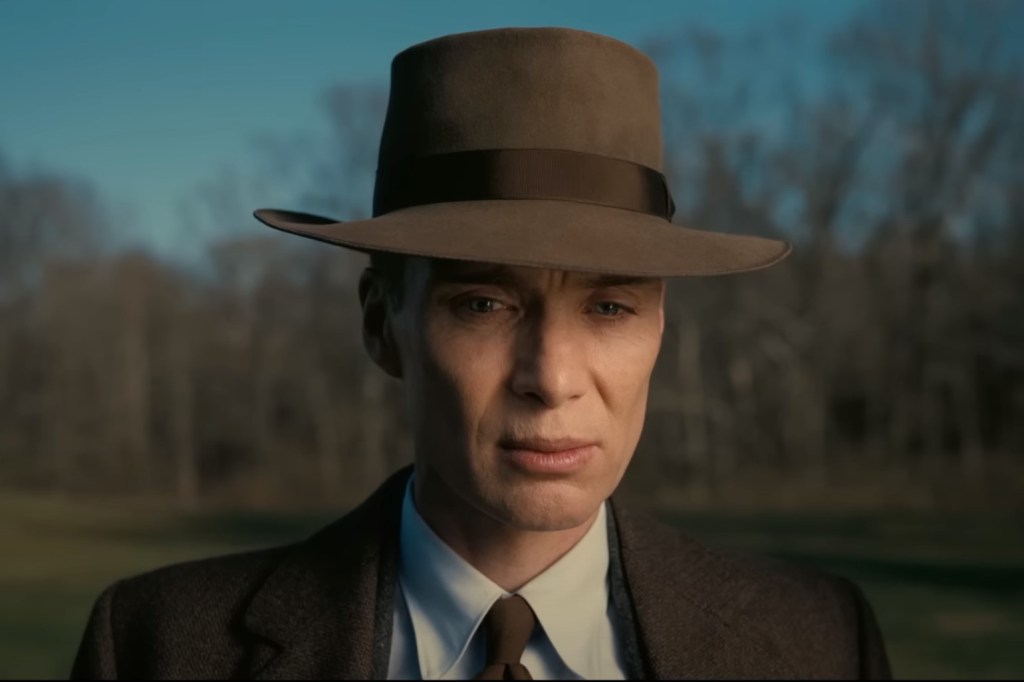
If you like film at all, you’ll no doubt be seeing Christopher Nolan’s epic three-hour biopic Oppenheimer. Considering the cinematic doldrums lately, why wouldn’t you go for this hugely hyped, wildly praised spectacle, which is bound to be given every known award? You’ll spend the hours studying legendary physicist and “father of the atomic bomb” J. Robert Oppenheimer, played by Cillian Murphy, in vast close-ups, especially if you see the film in IMAX, which makes Murphy’s face seem as tall as skyscrapers and his wide blue eyes as big as swimming pools.

The attempt to understand “what made Oppenheimer tick” is as old as the A-bomb, and this film tackles it afresh, clearly with the assumption that it’ll all be news to the younger generation. If you’re already convinced of the dangers of nuclear war, superseded only by the ongoing end-times series of rolling climate catastrophes that now seem more likely to kill us all, this film is going to lack a certain urgency, however.

Still, all of the Nolanisms beloved by his fans — who are legion after such career hits as The Dark Knight, The Dark Knight Rises, Inception, Interstellar, and Dunkirk — are represented. Nolan’s traditional, emotionally melodramatic Hollywood movie tendencies are, as usual, dressed up in intricate flashbacks, narrative trickiness, pyrotechnic editing flourishes, and pounding soundtrack bombast.

And because Nolan can now stack his casts with famous actors as yet another aspect of his sky-high production values, you’ll have the repeated experience of registering celebrity faces as characters are introduced. And so many characters get introduced, scenes sometimes play like handshaking parties. There’s Matt Damon as Lieutenant General Leslie Groves, who brought on Oppenheimer as the head of the secret mission to win World War II by creating an atomic bomb! There’s Robert Downey Jr as Lewis Strauss, chairman of the US Atomic Energy Commission! There’s Tom Conti as Albert Einstein! There’s Kenneth Branagh as Danish physicist Niels Bohr! There’s Benny Safdie as “father of the hydrogen bomb” Edward Teller! There’s Josh Hartnett . . . and Rami Malek . . . and Casey Affleck.

I’m hinting in my subtle way that I don’t particularly like Christopher Nolan films in general, so that’s something to note as you read this review. I also don’t like this film in particular. But, of course, there are innumerable rave reviews of Oppenheimer, so mine stands as a rare dissenting opinion.

The film is constructed in a way that suggests trying to pull together the fissured strands of Oppenheimer’s personality even while acknowledging that there’s no way to arrive at a sensemaking whole when contemplating his visionary brilliance, his vacillating politics, his turbulent love life, his triumph and tragedy as the “modern Prometheus,” and his interludes of swaggering hubris combined with his interludes of guilt-ridden reticence. Ultimately, Oppenheimer is treated as an oceanic mystery of a man raised to the sky in public opinion for (in the view of the majority) saving the Allies from the ongoing horrors of fascism and World War II, then cruelly pilloried on trumped-up anti-commie charges. But the real punishment is his awesome guilt in leading the effort to unleash the horrors of nuclear war upon us.

Nolan deploys a Citizen Kane–like model of narrative fracturing to convey Oppenheimer’s dizzying complexity in the crucible in which he found himself. Orson Welles’s original title for Citizen Kane was “American,” and he makes Kane’s material circumstances a vital issue in his film. Born into the hardscrabble working class, he becomes incredibly wealthy overnight through access to vast American natural resources — in his case, literally striking it rich with the “Colorado Lode” mining bonanza. This makes possible his ascent to fame and “great man” status while hollowing him out at the same time, catastrophically cutting him off from his own family and community.

Like Welles, Nolan embraces the idea of the final unknowability of the character. Early in Nolan’s film, for example, you see the incredible incident of the deadly poisoned apple that the resentful student Oppenheimer gives his professor. This turns out to be based on something that really happened while Oppenheimer was studying at the University of Cambridge. Nolan represents Oppenheimer with aching sympathy as a lonely boy genius, homesick and further isolated from his peers by his obsessive visions of structures underlying the teeming chaos that seems to make up the world. He’s shown to be pitifully self-conscious of his own incompetence in the lab, which doesn’t exactly match the real Oppenheimer’s superior tone in describing his Cambridge education to a friend: “I am having a pretty bad time. The lab work is a terrible bore, and I am so bad at it that it is impossible to feel that I am learning anything. . . . The lectures are vile.”

Nolan based his film on a Pulitzer Prize–winning biography that also regards Oppenheimer with tender pity, attributing his act of poisoning to his recurrent depression. “Robert did something so stupid that it seemed calculated to prove that his emotional distress was overwhelming him,” write the biographers Kai Bird and Martin Sherwin in American Prometheus: The Triumph and Tragedy of J. Robert Oppenheimer. “Consumed by his feelings of inadequacy and intense jealousy, he ‘poisoned’ an apple with chemicals from the laboratory and left it on Blackett’s desk.”

Oppenheimer injected an apple with some toxic substance that was perhaps not as lethal as the cyanide represented in the film, in which a remorseful Oppenheimer is portrayed as waking up in the morning, shocked at his own murderous act. He races back to the professor’s office to retrieve the apple from his desk. To his horror, one of his idols — Niels Bohr — is just about to take a bite out of the apple when Oppenheimer snatches it away, with the breathless explanation, “Wormhole!”

Wormhole, get it? Little science joke there.

That’s not actually what happened in real life. Accounts are a bit vague, but they agree that somehow Oppenheimer’s poisoned apple created no casualties but still got found out by the authorities at Cambridge. Oppenheimer’s father had to hurry to prevent young Oppie from being expelled, in part by guaranteeing his son’s regular visits to a psychiatrist.

Not-so-young Oppenheimer went on to further acts of reckless hubris. According to a review of another recent Oppenheimer biography, “As a young professor in California, he crashed his car while racing a train, an accident that left his girlfriend unconscious. His father made amends by giving the young woman a painting and a Cézanne drawing.”

Why not include Oppenheimer’s far more cinematic daredevil race against the train in this biopic? It’s every bit as telling of what comes later as the highly symbolic poisoned apple incident is. (Oppenheimer gave all of humanity a poisoned apple, but he failed to snatch it away again, see?) The “womanizing” Oppenheimer is shown to be an unintentional but nevertheless total disaster to the women in his life.

Though, admittedly, he seems drawn to dark, depressive, humorless women who happen to be members or former members of the Communist Party. His longtime love, Jean Tatlock (Florence Pugh) commits suicide when Oppenheimer ends their lengthy on-and-off affair. His long-suffering, alcoholic wife, Kitty (Emily Blunt), is shown to be curdling into ever-angstier meanness during their marriage and repeatedly rejecting motherhood in the harshest way.

But there’s no way to make the starker, weirder, more shockingly arrogant aspects of Oppenheimer’s personality conform to the portrait that Nolan’s building here. You’ll wait a long time for an American biopic to make a serious effort to tell the harsher truth. It’s a terrible genre for that reason. The more interesting, insightful aspects of famous lives are almost inevitably censored.

Drawing on Cillian Murphy’s pitiful thinness — which he achieved through dramatic weight loss he could hardly afford — and the softer possibilities of his pink-mouthed, big-eyed face, Nolan presents us with a perpetually distracted, endearingly eccentric, brainy naif who gets carried away with his own visions and enthusiasms until it’s too late to reckon with the crushing consequences of what he’s done. There’s little sense, especially, of Oppenheimer’s well-known, towering ambition.

It could certainly help account for some otherwise puzzling behaviors of his, such as his insistence on appearing before the kangaroo court assembled to remove his security clearance and tarnish his reputation in ways potentially fatal to his titanic career. This was well into the McCarthy era of blacklisting leftists for far less involvement in communist politics than Oppenheimer had, however scattershot his actual activities were. By 1954, the likely consequences were obvious. Einstein himself warned Oppenheimer against appearing, and then, when Oppenheimer refused to listen, dismissed him in a cutting remark to his assistant: “There goes a narr,” which is German for “fool.”

Oppenheimer’s refusal to dodge the hearing is credited to his heartfelt patriotism, but surely his sense of self-importance and untouchability was a part of it too.

As the film demonstrates, once on the receiving end of the commission’s attacks, Oppenheimer became soft and cagey in a way that infuriated his wife, who wanted him to put up a strong fight against the forces of American government behind the blacklist. Nolan represents this as a kind of “martyrdom of Saint Oppenheimer,” but a certain amount of crass careerism could’ve been portrayed as kicking in more overtly here, when his wife shrills, “Why won’t you fight?”

After all, he had a lot to lose. As Nolan’s film demonstrates, postwar Oppenheimer was famous, considered the top scientist in America and maybe the world, celebrated on the cover of Time magazine. His conviction that he could help guide the government’s handling of nuclear weapons along more humanely concerned lines really did get him dismissed by Harry S. Truman as a “crybaby,” but the fact is, he was actually getting consulted by the president and every other important suit on down the line.

Nolan’s is the kind of film that features an ahistorically dramatic line delivery and a pause for a shudder of horror from the audience when someone mentions the name of “Los Alamos,” the obscure desert location of Oppenheimer’s secret atomic bomb building and testing site. There’s exactly the same kind of ahistorical frisson in Gone With the Wind (1939), when Rhett Butler mentions the battle shaping up in a tiny Pennsylvania town that might decide the fate of the entire Civil War, called — weighty pause — “Gettysburg.”

It’s corny as hell, but it’s always a crowd-pleaser.

There’s also, more than once, the intoning of Oppenheimer’s own famously hammy quote from the Hindu text the Bhagavad Gita, in reaction to his work on the ultimate weapon of mass destruction: “Now I am become death, the destroyer of worlds.” In real life, Oppenheimer’s detractors noted that his pretentious quotes drawn from extensive if eclectic reading were among his more maddening rhetorical traits, but there can be no humorous eye-rolling at such pronouncements in this film.

Which makes me appreciate even more the wild and funny “Barbenheimer” mash-up memes making the rounds about the incongruous yet oddly Cold War–compatible same-day opening of Barbie and Oppenheimer. My favorite one shows an eerie, distorted black-and-white image of the face of real-life Oppenheimer with the caption, “Now I am become Barbie girl, in Barbie worlds.”

But the anxious would-be profundity in the handling of the film’s subject matter is part of the typical Nolan strategy of informing the world, and the members of the Academy and other award-giving entities, of the importance of his chosen subject. Nolan is making the press rounds saying that J. Robert Oppenheimer is “the most important person who ever lived,” so it logically follows that his film is crucial viewing and that all of his seriously considered directorial choices are also terribly important. Critics take down the information about these choices like publicists and report them faithfully to a duly impressed public — such as Nolan’s surprising decision not to show the Japanese victims of the atomic bombings. Instead, we see Oppenheimer merely imagining the effects of the bomb on members of his rapturous American audience.

But the absolute lack of physical reality given to the results of dropping atomic bombs on Hiroshima and Nagasaki — the refusal to portray mass annihilation — is one of the film’s more stunning glossing-over effects. It’s ludicrous, the idea that Oppenheimer’s imaginings, safe in the United States, of the flayed skin of a few people in his audience who are applauding his speech, and a charred body impeding his path as he takes his triumphal march away from the podium, is somehow “more effective and chilling.”

Not showing in any memorable or realistic way the ghastly consequences of Oppenheimer’s biggest achievement is a safe-playing strategy, once again, to preserve audience sympathy for the hero, which you generally need if you want a big blockbuster hit. And Christopher Nolan always wants a big blockbuster hit.
At the intersection of autism and trauma

https://www.spectrumnews.org/features/deep-dive/intersection-autism-trauma/

Autism and post-traumatic stress disorder share many traits, but the connection between them was largely overlooked until now.

Having autism can sometimes mean enduring a litany of traumatic events, starting from a young age. And for many, those events may add up to severe and persistent post-traumatic stress disorder (PTSD).

Before Gabriel could even talk, his father’s girlfriend at the time told him his mother had abandoned him. At age 3, he was sexually abused by a cousin. He was mercilessly bullied once he started school, showed signs of depression by age 7 and by 11 began telling his mother he did not want to live. About three years ago, while at summer camp, he almost drowned. Shortly after that, he experienced life-threatening heatstroke when he went to get his Legos from the car trunk and accidentally locked himself in. Six months ago, just after his grandmother died, he attempted suicide.

“He’s been hurt and had so much disruption in his life that he’s having problems realizing that he has stability now,” says his mother, Kristina. (Kristina and Gabriel’s last names have been withheld to protect the family’s privacy.) “The world is chaotic and crazy for typically developed people. For him, it’s overwhelming and confusing.” Gabriel, now 13, started seeing a therapist about five years ago and last year was diagnosed with PTSD.

Gabriel’s autism was a contributing factor in most of the harrowing incidents he went through. Clinicians suspect that the condition increases the risk for certain kinds of trauma, such as bullying and other forms of abuse. Yet few studies have investigated that possibility or the psychological aftermath of such trauma, including PTSD.

“We know that about 70 percent of kids with autism will have a comorbid psychiatric disorder,” says Connor Kerns, assistant professor of psychology at the University of British Columbia in Vancouver, Canada. Depression, anxiety and obsessive-compulsive disorder are all known to be more common among autistic people than in the general population, but PTSD had largely been overlooked. Until a few years ago, only a few studies had delved into the problem, and most suggested that less than 3 percent of autistic people have PTSD, about the same rate as in typical children. If that were true, Kerns points out, PTSD would be one of the only psychiatric conditions that’s no more common in people with autism than in their typical peers.

One potential explanation, Kerns says, is that, like other psychiatric conditions, PTSD simply looks different in people with autism than it does in the general population. “It seems possible to me that it’s not that PTSD is less common but potentially that we’re not measuring it well, or that the way traumatic stress expresses itself in people on the spectrum is different,” Kerns says. “It seemed we were ignoring a huge part of the picture.”

Kerns and a few other researchers are trying to get a better understanding of the interplay between autism and PTSD, which they hope will inform and shape treatment for young people like Gabriel. The more they dig in, the more these researchers are finding that many autistic people might have some form of PTSD. “We’re all just trying to put together the pieces and recognize that it’s an important area that requires further study,” she says. “It’s been a call to arms for the field to start looking at this.”

These researchers have their work cut out for them. In the typical population, PTSD is fairly well defined. According to the Diagnostic and Statistical Manual of Mental Disorders, or DSM-5, psychiatry’s guide to diagnoses, PTSD usually develops after someone sees or experiences a terrifying or life-threatening event. After that initial episode, any reminder of it can trigger panic, extreme startle reflexes and flashbacks. Beyond that, however, there’s a wide variety in the way PTSD manifests: It can lead to hypervigilance and anger; it can cause recurring nightmares and other sleep issues; or it can lead to depression, persistent fear, aggression, irritability or difficulty concentrating and remembering things.

“If you do the math, according to the PTSD criteria in the DSM-5, you can have 636,000 different combinations of symptoms that that describe PTSD,” says Danny Horesh, head of the Trauma and Stress Research Lab at Bar-Ilan University in Ramat Gan, Israel. Given all the traits in people with autism that may overlay these permutations, “you have a lot of reason to think that their version of PTSD might be very different,” he says.

Preliminary studies are just beginning to confirm that idea and to show that what constitutes trauma may be different in people on the spectrum. Together with Ofer Golan, an autism expert at Bar-Ilan, and others, Horesh has begun investigating where PTSD and autism converge. The group has recruited upwards of 130 participants, including students and some people diagnosed with autism, and tried to determine where they fall on the spectrum and whether they have any traditional signs of PTSD.

Abuse, sexual assault, violence, natural disasters and wartime combat are all common causes of PTSD in the general population. Among autistic people, though, less extreme experiences — fire alarms, paperwork, the loss of a family pet, even a stranger’s offhand comment — can also be destabilizing. They can also be traumatized by others’ behavior toward them.

“We know from the literature that individuals with autism are much more exposed to bullying, ostracizing, teasing, etc.,” Golan says. “And when you look in the clinic, you can see that they’re very sensitive to these kinds of events.” Among autistic students, Golan and Horesh have found, social incidents, such as ostracizing, predict PTSD more strongly than violent ones, such as war, terror or abuse, which are not uncommon in Israel. Among typical students, though, the researchers see the opposite tendency.

Given these differences, and the communication challenges autistic people often have, their PTSD can be particularly difficult to recognize and resolve.

“It’s so absurd that there are such excellent treatments for autism today, and such excellent treatments for PTSD today, and so much research on these interventions. But no one to date has connected both,” Horesh says. “How do you treat PTSD in people with autism? No one really knows.”

It can be difficult to treat autism and PTSD separately in people who have both conditions, because the boundaries between the two are often so blurry. And that may, ironically, be the key treating them. In other conditions that overlap with PTSD, as well as those that overlap with autism, researchers have found that it is most effective to develop therapies when they look at both conditions simultaneously.

PTSD and substance misuse, for instance, often co-occur, but for decades no one understood the dynamics between them. Once clinicians began to develop and study treatments for both at the same time, however, they were able to create a tailored and effective program that eases both conditions. “This is our model,” Horesh says. “Prove that something is co-morbid, determine why, and then develop interventions for this specific group — good interventions, accurate interventions.”

The researchers are uncovering some important overlaps between autism and PTSD in their studies. In a group of 103 college students, for instance, they found that students who have more autistic traits also have more signs of PTSD, such as avoiding sources of trauma and negative changes in mood. “The highest-risk group of one was also the highest risk group in the other,” Horesh says.

The researchers also found some unexpected trends: The association between PTSD symptoms and autism traits is, for as yet unknown reasons, stronger in men than in women, even though typical women are two to three times more likely to develop PTSD than are typical men; that gender bias might eventually inform treatments. And people with more autistic traits display a specific form of PTSD, one characterized by hyperarousal: They may be more easily startled, more likely to have insomnia, predisposed to anger and anxiety, or have greater difficulty concentrating than is seen in other forms of PTSD. Recognizing this subtype could be particularly helpful for spotting and preventing it, and for developing treatments, Horesh says, especially because the same traits might otherwise be mistakenly attributed to autism and overlooked. “We know that each PTSD has a different color, a different presence in the clinic,” he says.

Given the low reported rates of PTSD in people with autism, Kerns questions whether the DSM-5’s criteria for PTSD are sensitive enough to detect its signs in this population and wonders whether clinicians need to be on the lookout for a different subset of both causes and features.

Kerns and her colleagues are interviewing autistic adults and children — as well as guardians of some less verbal autistic people — to find out more about what, for them, constitutes trauma. So far, they’ve interviewed 15 adults and 15 caregivers. What she’s learned, she says, is that it’s necessary to check any assumptions at the door. “You want to be cautious about applying neurotypical definitions — you could miss a lot,” she says.

In speaking with participants about causes of trauma, she has heard “everything from sexual abuse, emotional abuse and horrendous bullying, to much broader concepts, like what it’s like to go around your whole life in a world where you have 50 percent less input than everyone else because you have social deficits. Or feeling constantly overwhelmed by sensory experience — feeling marginalized in our society because you’re somebody with differences.” In other words, she says, “the experience of having autism and the trauma associated with that.”

One parent Kerns spoke with had moved to a shelter with her autistic son to escape intense domestic violence. Her son had witnessed the abuse but seemed more affected by the move, the change in his routine and sudden loss of the family pet, which had to be left behind, than by the violence. He began to hurt himself more than he had before, and to ask repetitively for the pet, Kerns says. “Three years later he was still asking for the pet,” she says, “because the pet was one of the few relationships and connections with another being that he had.”

In another instance, a 12-year-old boy she interviewed refused to go to school and was hospitalized for threatening self-harm; the root of his trauma turned out to be ear-piercing fire drills. For a 53-year-old woman she talked to, crippling, traumatic stress resulted from the paperwork she needs to fill out every year to qualify for housing and other types of assistance.

How PTSD manifests in autistic people can also be unexpected, and can exacerbate autistic traits, such as regression of skills or communication, as well as stereotyped behaviors and speech. Based on these observations, Kerns and her collaborators plan to create autism-specific trauma assessments to test on a larger scale.

This line of research is still in its earliest days: It is still difficult to tease apart correlation from causation. In other words, does autism predispose someone to post-traumatic stress, or are people with autism more vulnerable to experiencing traumatic events? Or both? Scientists simply don’t know the answers yet — although some studies do indicate that autistic children are more reactive to stressful events and, because they lack the coping skills that help them calm down, perhaps predisposed to PTSD.

Even when trauma is known and documented, however, treating someone on the spectrum is easier said than done. When children are nonverbal or simply view the world differently, practitioners can struggle to find the most effective way to help them work through their experiences.

“There’s some evidence that children on the spectrum tend to interpret questions differently, and in a more literal way, or that they tend to be more avoidant of questions about their trauma than typically developing children,” says Daniel Hoover, a clinical child and adolescent psychologist at the Kennedy Krieger Institute’s Center for Child and Family Traumatic Stress in Baltimore. “So they need measures that are more suited or adapted for children on the spectrum, which don’t really exist or are in development.”

One of the most effective treatments for PTSD, at least in children and adolescents, is trauma-focused cognitive behavioral therapy. This treatment takes a multi-pronged approach that involves both children and their parents or guardians in talk therapy and education: All of them learn what trauma is, how to navigate potentially tricky situations, and about communication tools and calming techniques for moments of distress. Clinicians prompt the affected children to talk through the traumatic experience in order to help them take control of the narrative, reframe it and make it less threatening. But in children with autism, who may be less verbal than typical children or simply less inclined to delve into the memories over and over again, such an approach can prove especially challenging.

“There are a number of core features of autism that make usual psychotherapies somewhat more complicated,” Hoover says. Typical children tend to be reluctant to talk about their traumatic experiences, but they generally give in because they know it’s good for them, he says. “Children on the spectrum are often less willing — because they’re exceedingly anxious, and because they’re not able to see the forest for the trees.” He notes that autistic children can be so keyed into the present, and so tied to routine, that they have a difficult time participating in treatment that intensifies their anxiety in the moment, even when they know it might help in the long run.

In working with these children, clinicians have also found it particularly tricky to separate the child’s understanding of a potentially traumatic event from that of their parents, who can walk away from an event with a completely different interpretation. To peel back these layers, Hoover and his colleagues at Krieger have developed a graphic, interactive phone app to help children — even minimally verbal children — use images to report experiences and the emotions associated with them. (The group is now in negotiations with a publisher and hopes to make the app publicly available within a couple of years.)

Children on the spectrum also usually take far longer to show improvement than their typical peers do. “It takes them longer to buy into it and feel comfortable, and takes them longer to integrate the concepts,” Hoover says.

That has certainly proven true for Gabriel. He is slowly making progress under Hoover’s care, Kristina says, but it has taken a long time for him to open up. “There were days when he’d sit in that chair at stare at Dr. Hoover and didn’t answer him,” she says.

After the death of his grandmother earlier this year, Gabriel became intensely afraid that Kristina might die too. When Hoover tried to talk with the boy about it, Gabriel shut down and wouldn’t engage. But just the other week, his mother says, Gabriel finally opened up. “He and Dr. Hoover bounced ideas off each other: How can we deal with these thoughts? How do we redirect them?” The dialogue showed Gabriel was gaining mastery over his story, transforming it from an overwhelming memory to something more manageable.

Just a few weeks ago, Gabriel told his mother that he worried he might try to kill himself again, and asked for her help. “Before, I had to dissect what was going on, but now Gabriel is using his words,” Kristina says, “It is a huge improvement from where he used to be.”

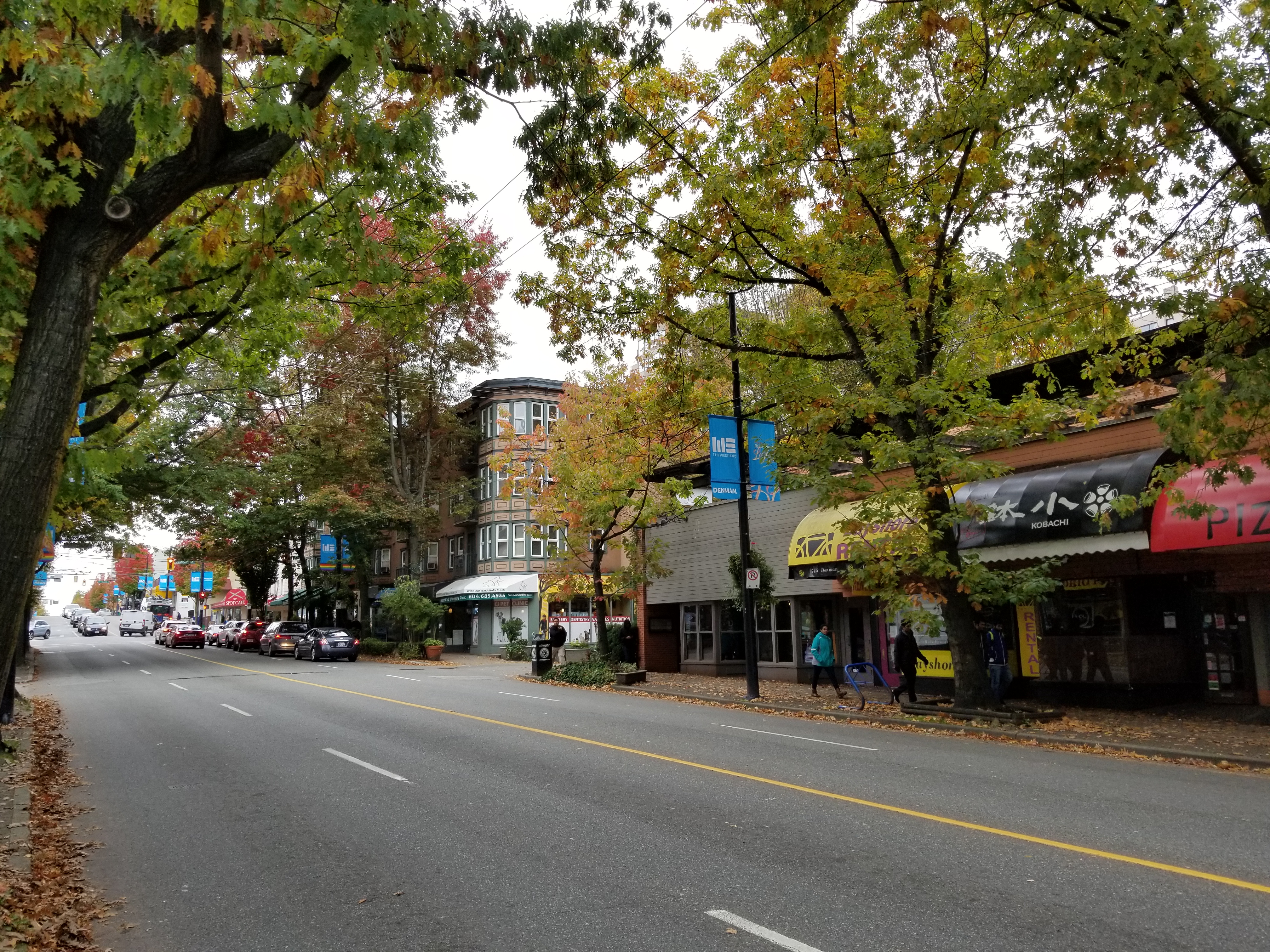
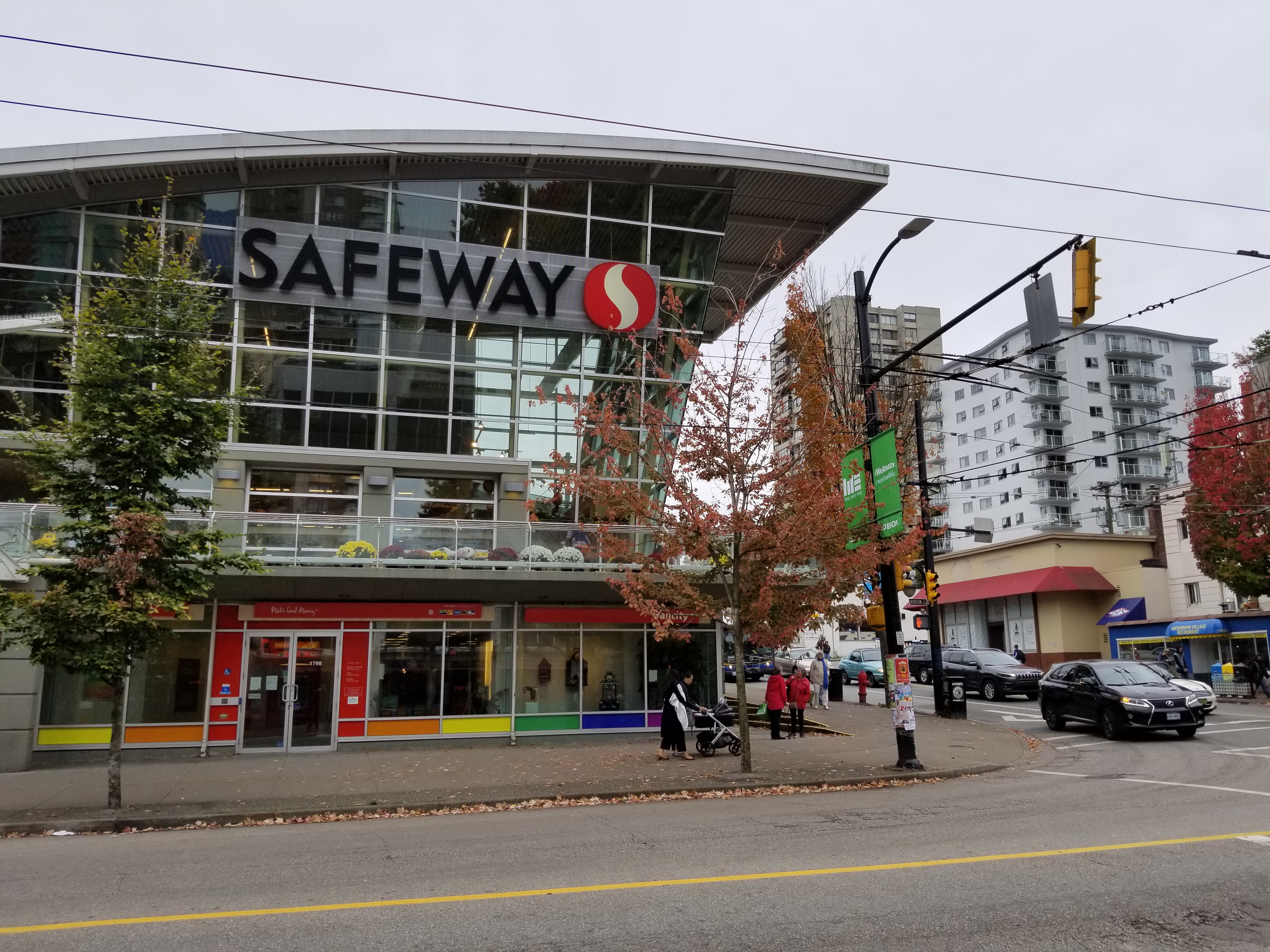
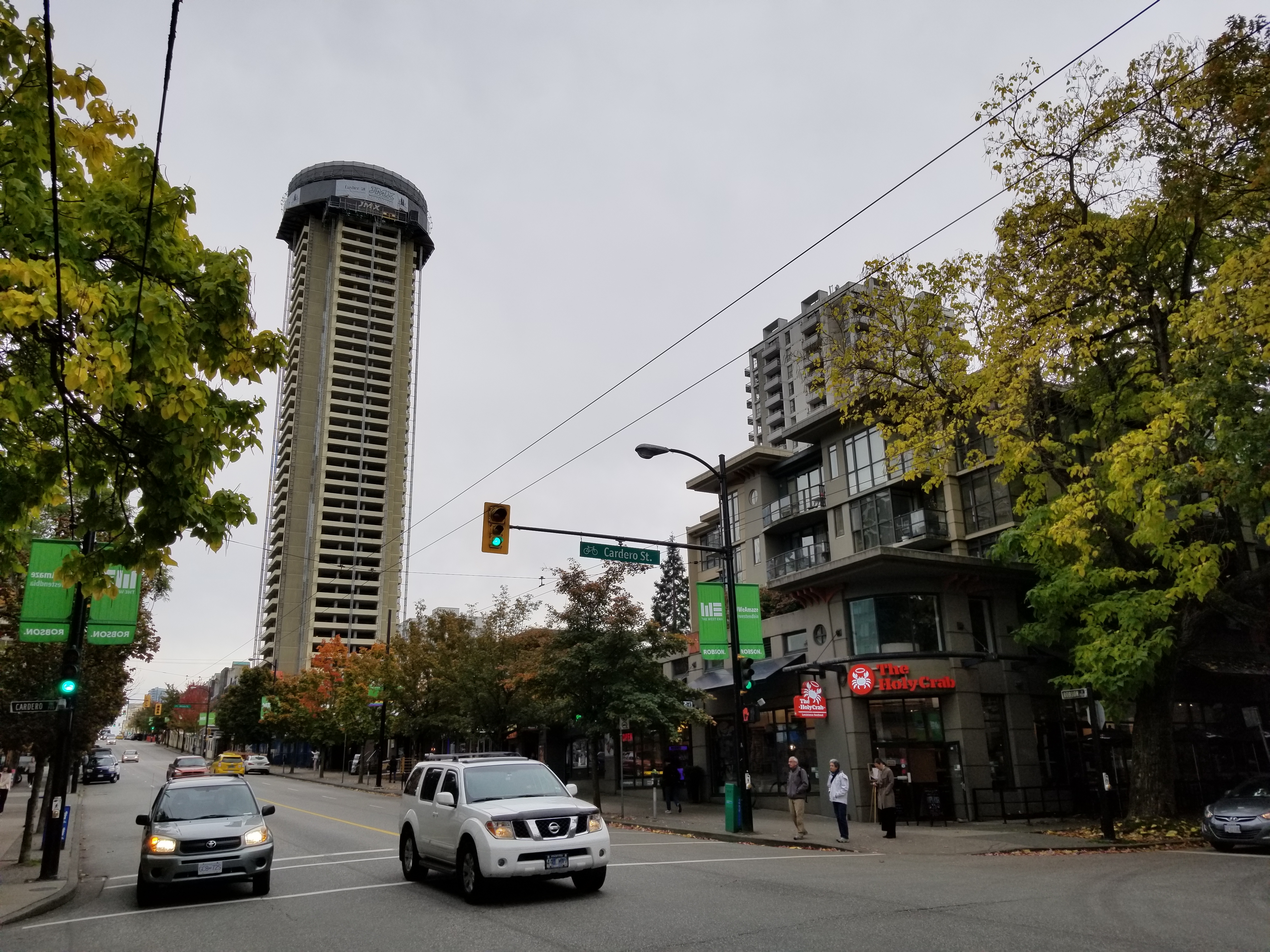
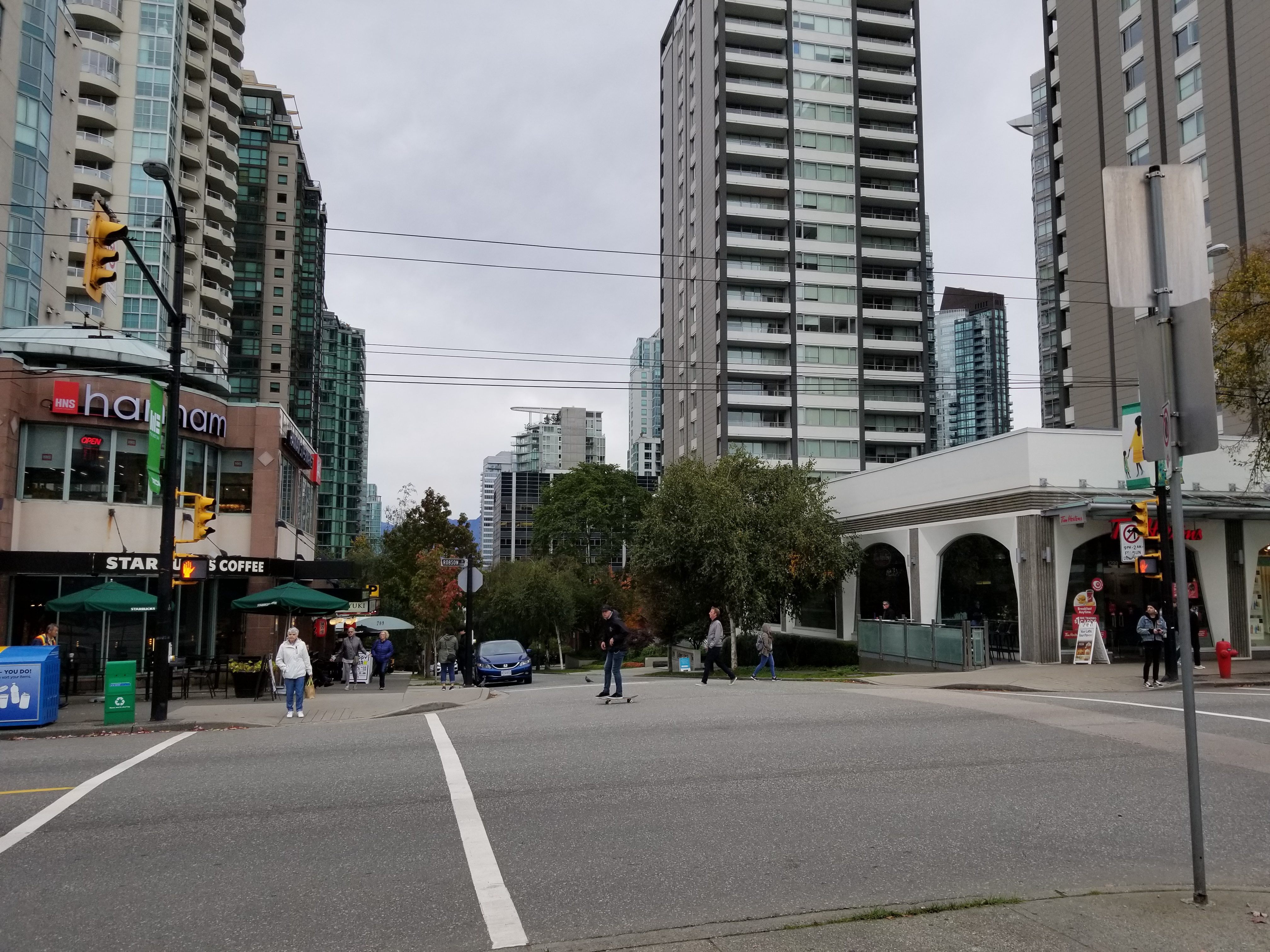
On Robson Street in Downtown Vancouver. Summer of 2018.

Robson Street is a major southeast-northwest thoroughfare in downtown and West End of Vancouver, British Columbia, Canada. Its core commercial blocks from Burrard Street to Jervis were also known as Robsonstrasse. Its name honours John Robson, a major figure in British Columbia’s entry into the Canadian Confederation, and Premier of the province from 1889 to 1892. Robson Street starts at BC Place Stadium near the north shore of False Creek, then runs northwest past Vancouver Library Square, Robson Square and the Vancouver Art Gallery, coming to an end at Lost Lagoon in Stanley Park.

As of 2006, the city of Vancouver overall had the fifth most expensive retail rental rates in the world, averaging US$135 per square foot per year, citywide. Robson Street tops Vancouver with its most expensive locations renting for up to US$200 per square foot per year. In 2006, both Robson Street and the Mink Mile on Bloor Street in Toronto were the 22nd most expensive streets in the world, with rents of $208 per square feet. In 2007, the Mink Mile and Robson slipped to 25th in the world with an average of $198 per square feet. The price of each continues to grow with Vancouver being Burberry’s first Canadian location and Toronto’s Yorkville neighbourhood (which is bounded on the south side by Bloor) now commanding rents of $300 per square foot.

In 1895, train tracks were laid down the street, supporting a concentration of shops and restaurants. From the early to middle-late 20th century, and especially after significant immigration from postwar Germany, the northwest end of Robson Street was known as a centre of German culture and commerce in Vancouver, earning the nickname Robsonstrasse, even among non-Germans (this name lives on in the Robsonstrasse Hotel on the street). At one time, the city had placed streetsigns reading “Robsonstrasse” though these were placed after the German presence in the area had largely vanished.

Robson Street was featured on an old edition of the Canadian Monopoly board as one of the two most expensive properties.

Captain Marvel (2019) – Ryan Fleck, Anna Boden | Review | AllMovie

https://www.allmovie.com/movie/captain-marvel-vm993582602/review

Captain Marvel crashes into the big screen with a flurry of explosions. The titular superheroine (Brie Larson) embodies the toughest bruiser imaginable as she fistfights, flies, and shoots her way through the stratosphere without so much as a glance over her shoulder to watch the carnage. This endless action ride pauses momentarily only for laughs and character development as new friends bond.

Sandwiched between two epic intergalactic films that tie the entire Marvel Universe together, Captain Marvel incorporates the first female lead in a Marvel film, focusing on the story of the origins of the superheroine. It weaves several different epic superhero stories together, throwing them into a universal battle of good vs. evil, ultimately deciding all their fates, as well as everyone in existence. The stakes are astronomical.

The film requires a healthy attention span along with plenty of focus. The element of being thrown into the 1990’s could throw off devoted fans of the series. But in so doing, we discover that the infinity war may be connected to Captain Marvel’s alter ego on Earth, Carol Danvers.

Being thrust into this infinity war is a lot for one woman to bear, no matter how heroic she may be. But Captain Marvel gets some early advice from her mentor Yon-Rogg (Jude Law) to keep her potentially dangerous emotions in check. The humans think differently, suggesting that these feelings are what make you a hero. There are plenty of opportunities for her to develop emotionally upon discovering that she may have led a significant life on Earth prior to becoming a fighter pilot for the Kree (alien good guys).

Captain Marvel contains cutting-edge special effects so realistic, it’s hard to distinguish what’s real from what’s been altered. Of note are the younger visage of Nick Fury (Samuel L. Jackson) with both eyes intact, as well as a full head of hair, and a scene-stealing CGI alien/best friend/copilot/cat, aptly named Goose.

Captain Marvel struggles with two very tough cinematic challenges in addition to her numerous foes. First, this film falls between the two other major Avengers Infinity War movies. With so many new characters mandatory for her to befriend, it draws focus away from the story of her provenance. Second, Marvel sometimes dips into “Superman territory,” where the protagonist is so invincible that the audience isn’t emotionally invested because there’s no way for the character to die.

To spice up the mix, writing and directing partners Anna Boden and Ryan Fleck (Half Nelson, Sugar) bring their indie film brand of mixing comedy and emotion to a genre traditionally void of these things. Although it broadens its appeal to a wider audience, the frenetic action is non-stop. Adding the pop grunge soundtrack including: Nirvana, Garbage, and No Doubt is a sly trick to tie together 90’s cultural themes in Captain Marvel’s coming-of-age story.

Ultimately, with so many thrills, laughs, and terse combat scenes, the lack of any romance is a breath of fresh air. This fierce girl-power flick could be a stand-alone launch for the new Captain Marvel series, and it’s an absolute must-see for fans of the Marvel Universe.

How David Byrne helped to change public perception of Autism

https://faroutmagazine.co.uk/how-david-byrne-helped-to-change-public-perception-of-autism/

David Byrne once said, “However we are, we don’t know how to be another way. That’s the way we are.” It might sound simple and entirely self-explanatory, but for those on the Autism spectrum, this was, in fact, something that needed saying. Byrne is, and always has been, a champion of individualism. It is from this viewpoint of individuality and its place in the glowing kaleidoscopic spectrum of humanity at large that Byrne’s artistic output derives.

David Byrne has what he describes as “mild asperges”. This outward declaration and open representation of the condition in the public eye would be something to rejoice in itself for the misunderstood Autism community. But the fact that he has championed the condition as a vital aspect of his artistry has served as a glowing declaration of the power of inclusivity and recognising the beauty in our differences, rather than sheltering in the dower domain of conformity.

People on the autistic spectrum often have difficulty with conventional social interaction. The keyword being ‘conventional’, as it is not the case that they cannot communicate emotionally; they simply have a different way of processing the world. Byrne found that for him, expression was easier through performance. He told the BBC, “when you have trouble expressing yourself socially through the normal channels, you find other ways to do that.” Byrne’s workaround just so happened to be one of the most joyous forms of artistic expression that the world has ever seen, one which has been an ever-present boon to life since Talking Heads first burst onto the scene, like a beatific shot to the arm, in 1977.

“I couldn’t talk to people face to face, so I got on stage and started screaming and squealing and twitching.” This unique style was not limited to his performance on stage. It also permeates his songwriting. He stands outside of the norm and observes it without cynicism but equally without compromise. And thusly, like a musical alchemist, he has been able to make joyous pieces of pop perfection that probe deeply at the human comedy without doing anything other than extolling the beauty and illuminating the bad.

He has not achieved this ginormous feat in any other way than being himself and not changing one modicum about his vision to fall into the line of conformity. He has never sequestered his Aspergers to perform; he takes it on stage with him. This has not been without difficulty, but as he has explained to the BBC about being onstage, “There is something about the attention being directed to you, but you’re kind of anonymous,” that he finds liberating. Byrne has relished in this perceived onstage anonymity.

Likewise, he has spoken about how there are inherent difficulties associated with the condition. “Expression just comes out,” he clarified, “but when you have to deal with all the other things that come along with it, it can be really hard.” Once more, however, the take-home message is that these challenges are no more difficult to overcome for people on the spectrum than other people face in separate areas of daily life. Life for all of us has its pitfalls and windfalls as we bumble on through it; people on the spectrum traverse that same journey, enjoying the glorious vistas and bracing the potholes, they simply have a different neurotype as they travel. The windfall of the condition for Byrne is that he has “no problem on being alone and focussing on something,” he told 3 Girls, 1 Kieth podcast, “That’s my superpower. I can use this in my way.”

Away from the music, the movie David Byrne co-wrote and directed, True Stories, is often touted as the most authentic expression of Autism in cinema. The hyper-fixation of a man desperately trying to fit in is an example of ‘Autistic Masking’. This self-observation is something Byrne has spoken about many times in interviews, stating the maxim: “Is this something I should be doing?” In cinema, as in music, Byrne elucidated these feelings in an exuberantly humanised way.

In short, when David Byrne and Talking Heads came along, they were not only unique, they were as refreshing as a cold breeze — there was an enchantment to what they were doing, which has remained. Byrne continues to propagate something almost inconceivable yet beautifully simple; he is wholeheartedly himself, and he defiantly embodies the dichotomy of vulnerability and spiritual sanctity that comes with that emboldened stance (and I’m not just talking about his scaffolded suits). His triumph in this regard has not only been something to celebrate amongst the Autistic community, but something to celebrate for all of us at large. As he once said himself, “We all don’t have to be the same.”

Robot Carnival

https://theanimeacademy.wordpress.com/the-library/the-stacks-r/robot-carnival/

Robot Carnival has been called “The Fantasia of anime,” and with good reason, too. Every bit of this gem of a movie is filled with the same wonder and imagination of the classic Disney film with that special anime touch. Composed of nine shorts directed by some truly imaginative anime directors and supervised by Otomo “Steamboy” Katsuhiro, this anime has several great stories.

Otomo Katushiro and Fukushima Atsuko (Kiki’s Delivery Service) co-direct the fun and cataclysmic opening and closing segments that explain why this movie is called Robot Carnival. Omori Hidetoshi’s (Zeta Gundam, Dan Doh!!) Deprive is an ’80s action anime told in nine minutes, highlighted by cool fight scenes and bizarre design work. Morimoto Koji (Noiseman Sound Insect, Memories‘ Magnetic Rose) creates a dark and Gothic atmosphere with Franken’s Gears, but it lacks a story. Mao Lamdo’s Cloud is the only low point in this series, as it’s a collection of still images with one moving character that looks pleasing but lacks a narrative. Kitazume Hiroyuki’s (Sol Bianca) Starlight Angel is a flighty, adolescent love story that can bring a smile to the viewer, despite the cheesy music. Umetsu Yasuomi (Kite, Mezzo Forte) surprises with a thoughtful sci-fi, coming-of-age story with Presence, something he seemed incapable of doing. Nakamura Takashi (Fantastic Children) conducts a metallically-dark and mechanically-creepy little sequence called Chicken Man and Red Neck that sets the groundwork for his later pet project, A Tree of Palme. Finally, Kitakubo Hiroyuki (Roujin Z, Golden Boy) directs my favorite, A Tale of Two Robots, a hilarious send-up to the old mecha shows of the ’70s and samurai flicks of the ’60s.

The only real downside to this film is the music. Much of it sounds like stuff you’d hear from an old Nintendo game. This is a shame, seeing as how the score was composed by none other than Hisaishi Jo. To say that the man has done better would be an understatement. Seeing as how all but two of the segments do not use dialogue, the use of swanky visuals with corny music hampers the experience.

There will be some segments people will like and dislike, but as a whole the film is a gem. It’s a series of inviting worlds and striking visuals that any otaku should feel privileged to see, no matter how old or young. It is very much worth the price of admission.