Workplace bullying of autistic people: a Vicious cycle. | Specialisterne Canada

https://ca.specialisterne.com/workplace-bullying-of-autistic-people-a-vicious-cycle/

Bullying is one of the most persistent and costly workplace problems. It harms employee physical and mental health and results in the loss of productivity, as well as talent loss via turnover. And yet, bullying is hardly ever addressed.

While workplace bullying is highly problematic for all employees, it has particularly severe consequences for autistic individuals. Bullying of autistic people in the workplace is a problem that cost many their jobs and is likely contributing to the extremely high rates of unemployment (85% in the US, 78% in the UK, and 60% in Australia). In this paper, I propose that bullying of autistic people is also a problem made particularly persistent due to its cyclical nature: autistic people are more likely to be bullied, and are also more strongly affected by bullying, both psychologically and physiologically. Sadly, autistic employees are also less likely to be believed while seeking a recourse, and less likely to receive empathy. This leads to further cycles of bullying.

Autistic people are more likely to be bullied

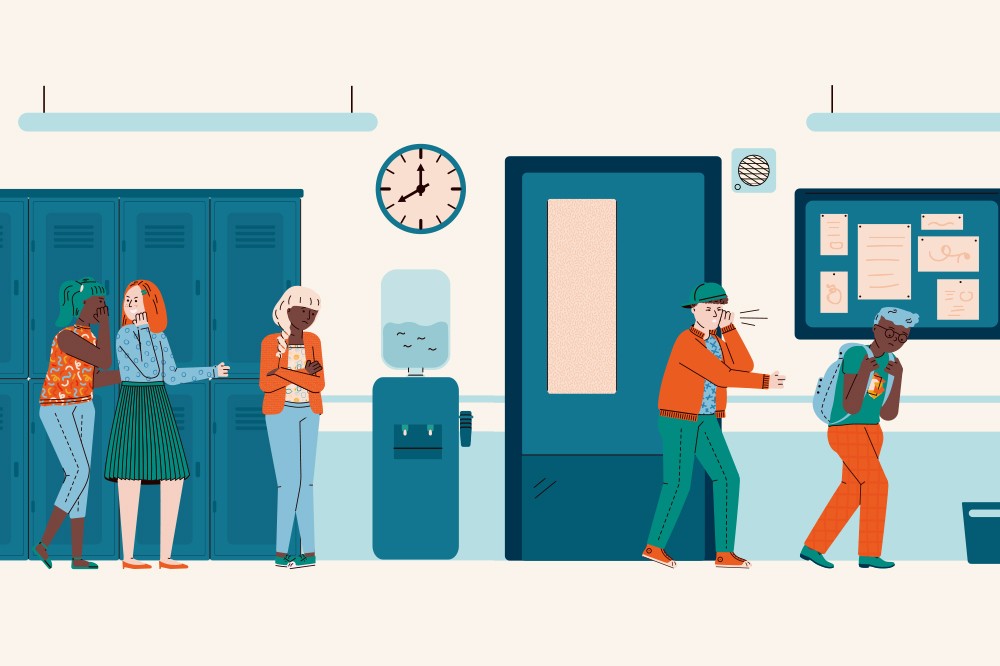
Starting in the childhood, autistic people are more likely to be bullied both at home and at school. This continues in the workplace. Compared to other employees, autistic individuals are more likely to be targeted by bullies. In the UK, half of the autistic employees report bullying, harassment, or other discrimination or unfair treatment at work.

Exceptionally high productivity of many autistic people, along with their strong focus on work, are often touted when presenting the business case for autism employment. After all, no other group of employees has been shown to be up to 140% more productive than their typical counterparts. However, there is a danger to this focus and productivity. “Get smarty pants” phenomenon, also known as bullying and victimization of top performers, is well documented in the workplace as well as at school. A key explanation is coworker envy and concern with unfavorable comparison. High performance and the resulting coworker envy are likely to contribute to bullying of autistic performers. Moreover, autistic focus on work rather than socializing, while contributing to productivity, can also be perceived by coworkers as negative. Other “strikes” against autistic performers include blunt communication perceived as lack of agreeableness, and simply being different.

On the other end of performance distribution, low performers are also likely to experience bullying. If an autistic individual is poorly matched to the job or the job calls for skills associated with “lows” of one’s “spiky” profiles, the lower performance is also likely to cause bullying.

Bullying of high performers is likely to be covert. Typical tactics include withholding of information and resources, gossip, making false complaints to supervisors, sabotage, and backstabbing. Bullying of low performers is more likely to be overt and to involve yelling, threats, and other forms of direct hostility.

It is well-documented that bullying is detrimental to individuals’ productivity. It can harm performance by affecting cognitive processes – and likely more so for autistic employees due to the tendency toward rumination and other physical and mental health differences described in the next session. Hence, unfortunately, bullying coworkers may achieve their goal of hampering the high performer’s success. However, bullying does not help improve low performance.

Autistic people are more strongly affected by bullying

While all workers suffer the negative effects of bullying, these effects are often particularly detrimental to autistic individuals. Autistic people are more likely to have chronic autonomic nervous system (ANS) hyperarousal – a chronic biological threat response. This makes autistic individuals more vulnerable to harmful physiological stress response to bullying and incivility, possibly resulting in physical illness or even cardiac events.

In addition, the history of bullying trauma typical of autistic individuals results in another vulnerability factor – gelotophobia, the conditioned fear of being laughed at and ridiculed. The term is derived from the Greek word ‘‘gelos’’ for laughter and ‘‘phobia’’ for fear. It is a type of anxiety related to an intense feeing of shame arising as a long-lasting result of prior bullying, ridicule, and mockery. Because ridicule and mockery are some of the most typical ways in which the world treats autistic people, high levels of gelotophobia are reported to occur at much higher rates in autistic (87.4) vs. non-autistic populations (22.6%). It is likely that the repeated experience of bullying creates the phobia of being mocked, which likely exacerbates social awkwardness in autistic people, leading to a cycle of torment and further increases in fear and anxiety.

Autistic people are less likely to be believed

Most workplaces in the US lack regulations against bullying, and despite generally stronger legislation, Canada and many European countries still lack anti-bullying recourse. In many cases, there is simply no recourse. And if there is any possibility of recourse, the burden of proof rests on the target on bullying – and autistic people are less likely to be believed.

Experimental research indicates that autistic individuals are seen as more deceptive and of lesser character” than neurotypical individuals when telling the truth. These judgments relied on perceivers’ impressions such as “he seemed nervous,” or “body language seemed off” and the overall liking.

The pervasive and unfounded stereotypes held by the general public as well as some supposed “experts” label gaze aversion and fidgeting (nervousness and the “off” body language) as indicating deception. In reality, reliable behavioral cues to deception do not exist. Unfortunately, stereotypical “liar” behaviors are also typical autistic behaviors, and without training and education, most individuals make incorrect attributions. Moreover, their disbelief and denial of the autistic person’s experienced reality will likely contribute to the gaslighting trauma often experienced by autistic individuals, which is turn is likely to make them even more nervous – and thus, to typical observers, deceptive-looking.

Autistic people are less like to receive empathy

Due to the lack of effective, systematically applied anti-bullying mechanisms, targets of bullying are often at the mercy of individual decision-makers within organizations. Such decision-makers may hear their concerns – or side with bullies. In some cases, leaders rely on their own empathy in “taking sides” – and empathy is likely to result in taking the side of those more similar to decision-makers themselves rather than to those actually telling the truth.

Most decision-makers are allistic and are thus more likely to side with other allistics rather than with autistics. Research demonstrates that non-autistic individuals tend to lack empathy toward autistic people and display significant automatic bias of disliking after a very brief first impression, which persists into further interaction, and is accompanied by exclusionary behaviors. Thus, an allistic bully will likely have an advantage over an autistic target in the judgment of allistic decision-makers.

The lack of empathy from decision-makers and the lack of recourse are likely to inflict a further betrayal injury on autistic employees. The resulting trauma reactions (dejection, depression, anxiety, self-isolation) will likely, in turn, perpetuate victimization.

In sum, the cycle of bullying in the workplace is embedded in both organizational systems and in human biases. Therefore, it is unlikely to be broken without significant structural intervention. I will discuss several possible mechanisms that may help reduce bullying in the workplace in general and bullying of autistic employees specifically in the next installment.

Book Review # 266: Do Androids Dream of Electric Sheep?

https://thetorogichronicles.com/2021/07/18/book-review-266-do-androids-dream-of-electric-sheep/

Apart from horror and young adult fiction, science fiction is a part of the vast literary world that I rarely venture to. I admit, I am not a fan of any of these three genres. However, my aversion from these genres does not prevent me from indulging every now and then. One of these exemptions was Philip K. Dick’s Do Androids Dream of Electric Ship? It was my first work by the highly regarded American novelist. It was one of the books I purchased during the 2019 Big Bad Wolf Sale but I barely had an iota on what the book was about. I still bought it; after all, it was listed as part of the 1,001 Books You Must Read Before You Die. It is also often regarded as one of the best works of science fiction. So what else is stopping me from opening a classic of science fiction?

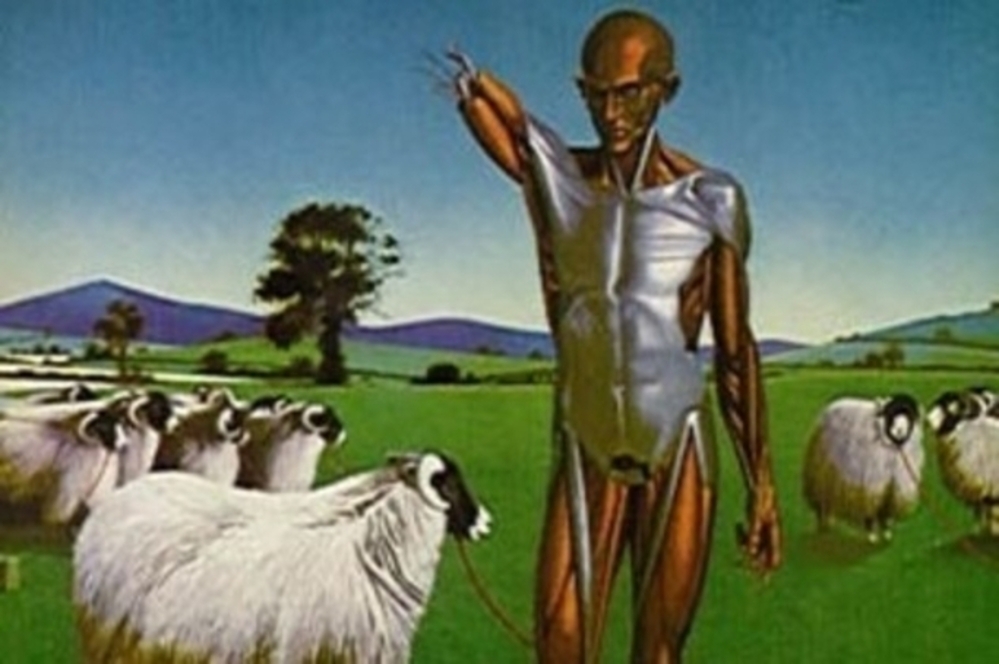
Do Androids Dream of Electric Ship? is not only Philip K. Dick’s most popular work. It is also widely regarded as one of the most seminal and most influential works of science fiction. The year was 1992 (although later editions used 2021) and the world was still recovering from the impact of the devastating global war referred to as World War Terminus. Earth has irreversibly been polluted by radioactive waste which prompted the United Nations to encourage mass relocation to off-world colonies. This was also promoted to preserve humanity’s genetic integrity. Those who opted to emigrate were provided with an incentive of free personal androids. The robot servants, which were akin to humans, were manufactured by the Rosen Association on a colony on Mars.

However, some androids go rogue and rebel against their manufacturers. They escape to Earth in the hopes of living undetected. These rebellious androids kept both the American and Soviet police departments on their toes. Thus commences the story of Do Androids Dream of Electric Sheep? Following the escape of six androids from Mars to Earth, the San Francisco Police Department commissioned Rich Deckard, a bounty hunter they keep under their payroll, to “retire” (kill) the rogue androids. It was going to be no ordinary manhunt, rather android-hunt as these androids are part of the new and highly intelligent Nexus-6 model.

Because of the similarities, distinguishing androids from real human beings is no easy task. So far, only a posthumous bone marrow analysis can determine the identity of a person. However, a new empathy test, the Voigt-Kampff Empathy Test, showed promise of being able to determine who is who without having to wait for death. To confirm the accuracy of the test, Deckard traveled to the Rosen Association’s headquarters in Seattle. Deckard was apprehensive of the test’s ability to distinguish an android from humans, especially on the latest android models. There was also a possibility that the police have been killing human beings. As the narrative transitioned into a combination of suspense and adventure novel, the question arises, “Is empathy enough a basis to segregate a real human from a humanoid?”

According to the post-apocalyptic society of the book, empathy was an important determinant in segregating humans from humanoids. By being able to feel for others, and living through their experiences by some mystic group connection, one can easily prove that he is a human. Androids, on the other hand, were not capable of either, hence, they were considered as subhuman. However, as the narrative progressed, this central statement was questioned. It was eroded by the fact that not all humans were capable of empathy either, or at least they don’t immediately act upon it. It is safe to infer that empathy alone is not an accurate metric to gauge who is humans and which is android.

The discourse on humanity was present all throughout the story. As Deckard moves to retire all the rogue androids, he got erroneously arrested and detained because the policemen were unable to identify that he was a bounty hunter. At the station, he was accused as an android with implanted memories. The scenes at the police station were seminal in the narrative as Deckard reached an impasse. He started to ponder on the ethics of his line of work. Questions of philosophical nature also filled his mind as he grappled with the definition and value of life. What humanity is left in a bounty hunter who seeks out androids and mercilessly “retire” them? He was on the cusp of an identity and an existential crisis which may very well alter the way he sees the world. This personal dilemma was also a mantle the narrative was painted on.

It was not only Deckard’s moral crisis that underlined the question on humanity. How can one be called empathetic when he leaves the elderly, the weak, and the intellectually below-average (collectively called “chickenheads”) to a dying planet to be stranded forever? As one moves forward with the narrative, it cannot escape one’s notice how the androids have more emotional maturity compared to their human counterparts. The plausibility that the androids can possess emotions was underscored all throughout the narrative. It was this glaring dichotomy between between the protagonist humans and the antagonist androids that was the masterstroke of Dick’s prose. The androids, who exhibited more compassion towards fellow androids and even humans, can be seen as a reflection of a society whose humanity is in decline.

Do Androids Dream of Electric Sheep?, however, does not reduce itself into an exploration into the definitions of humanity and life. It is a multifaceted narrative that explored a plethora of subjects such as the consequences of a nuclear war, and war in general. The World War Terminus has drastically affected the environment, resulting to the extinction of many animals. The impact was so adverse that owning real animals has become a status symbol and only the rich were able to afford them. Poor people were relegated to owning robot imitations. Deckard, for instance, owned an electric black-faced sheep and with the bounty money from the success of his mission, he was hoping to procure a live animal. Replacing the machine with an authentic Nubian goat will also bring comfort to Deckard’s depressed wife, Iran.

The discourse on the real and the unreal was one of the ideas central to the narrative. These discourses were further complimented by the exploration of subjects such as mind control, intelligence and mental deficiency, and decay and regeneration. The value of individualism against the collective was also explored. On top of these subjects, Dick also incorporated a discourse on the fundamental value of religion to the lives of mankind. This was portrayed through the rise of a new technology-based religion called Mercerism. Centered on a Messianic character named Wilbur Mercer, Mercerism was an offshoot of the rise of empathy and used “empathy boxes” to link users to a virtual reality of collective suffering.

What worked on the novel’s favor was the gradual buildup of pace. It was slow at the beginning but as the story moved forward, the pace started to increase. Dick managed to keep his readers on the edge of their seats. He further complimented the rising tenterhook with unexpected twists. He kept the readers invested and riveted with the story. This was one of the novel’s redeeming qualities as Dick’s writing, for the most part, was dull. He did a commendable job with the worldbuilding but there was a lack of lyrical quality to the prose. This can be owed to the fact that the novel belongs to science fiction. Whilst the characters were believable, the character development was lacking.

With many good things executed properly, it was lamentable that the narrative started to crumble as it draws to a conclusion. Dick provoked his readers with the plethora of questions he raised. He managed to answer many of them but he also left too many questions unanswered in the end. These plot holes could have been excusable if the novel had a sequel but it did not. It was a digression from the progress that Dick made in the narrative. The conclusion was also in wont of something greater. The loose ends were never tied properly. It was rather confusing and, overall, it felt like it was an abstract idea that was simply juxtaposed into the narrative without much of a context.

For all its flaws and monotone storytelling, Do Androids Dream of Electric Sheep? was nevertheless a powerful narrative. It was parts-scientific, parts-dystopian, and parts-philosophical, a novel that explored a plethora of subjects and themes that remain seminal in the contemporary. Its exploration and prognosis of the human condition was scintillating, especially with the exponential rise of technology and how it is adversely affecting mankind. The novel gave a haunting albeit realistic picture of a future Earth. Its philosophical facet sets it apart from the typical science fiction and makes it stand out.

Originally published in 1968, Do Androids Dream of Electric Sheep? has proven Philip K. Dick’s innovativeness and imagination. The complexity of his prose and the depth of his analysis proved that he was ahead of his peers. Do Androids Dream of Electric Sheep? is, without a doubt, a tremendous product of the science fiction genre, one that will withstand the tests of time and one that every fan of science fiction must read.

Autism and Bullying

https://tacanow.org/family-resources/autism-and-bullying/

Most parents worry about their child being bullied. While statistics vary across research studies, people with autism are undoubtedly victims of bullying at a much higher rate than typical peers.

Definition of Bullying

Although most people recognize bullying when they see it, there are multiple definitions and a lack of legal consensus on the definition.

  • The Individuals with Disabilities Education Act (IDEA) does not provide a definition for bullying.
  • Therefore, individual schools or districts may have their own definition.
  • However, the Office of Special Education and Rehabilitative Services provides a definition per the 2013 Dear Colleague letter as follows: “Bullying is characterized by aggression used within a relationship where the aggressor(s) has more real or perceived power than the target, and the aggression is repeated, or has the potential to be repeated, over time. Bullying can involve overt physical behavior or verbal, emotional, or social behaviors (e.g., excluding someone from social activities, making threats, withdrawing attention, destroying someone’s reputation) and can range from blatant aggression to far more subtle and covert behaviors. Cyber-bullying, or bullying through electronic technology (e.g., cell phones, computers, online/social media), can include offensive text messages or e-mails, rumors or embarrassing photos posted on social networking sites, or fake online profiles.”
  • Additionally, the CDC defines bullying as repeated, unwanted aggressive behavior(s) that involves an observed or perceived imbalance of power.

Signs of Bullying

Bullying occurs most often when there is a perceived difference between people. Consequently, this leaves people with autism vulnerable to bullying. For example, poor social skills, slower problem solving, and an inability to defend oneself verbally or physically are just a few reasons why people with autism are at a higher risk of being bullied.

Because of this, parents and educators must be able to recognize the signs of bullying in order to intervene early and prevent further incidents from occurring.

The following is a list of warning signs that may indicate your child is being bullied:

  • Unexplained bruises or other physical injuries
  • Increased anxiety
  • New or increased aggression
  • New or increased self-injurious behaviors
  • Depression
  • Thoughts of suicide
  • Acting angry, sullen, or having mood swings
  • New or increased elopement behaviors
  • Complaints of illness or faking illness
  • Change in eating habits
  • Difficulty sleeping
  • A decline in schoolwork or grades
  • Loss of interest in school
  • School refusal
  • Frequent visits to the school nurse or office to avoid going to class
  • Lost or destroyed items such as clothing, books, electronics
  • Loss of friends
  • Avoidance of social situations

Laws That Provide Protection to Students with Autism

In some situations, civil rights laws protect students with autism against bullying. For example, if someone is bullying, teasing, or bothering your child because they have autism, the public school has an obligation to resolve the harassment under federal law. This is because civil rights protections emerge for victims who are targeted because of their race, color, religion, sex, age, national origin, or disability. In such cases, bullying is considered discriminatory harassment, which is a civil rights violation.

Additionally, IDEA provides protections to students with autism against bullying. These protections apply when bullying interferes with a student’s access to FAPE (Free Appropriate Public Education). So, if your child has an IEP/504, federal law requires the public school to intervene if the bullying results in a denial of FAPE.

However, it’s important to note that bullying does not need to overlap with discriminatory harassment to deny your child’s access to FAPE. Rather, the bullying simply needs to interfere with your child’s ability to achieve their academic/IEP goals. For instance, it is reasonable to argue that your child is being denied access to FAPE if the bullying:

  • Prevents or inhibits their ability to pay attention in class.
  • Interferes with their opportunity to learn with peers in the Least Restrictive Environment (LRE).
  • Triggers anxiety/behaviors that adversely impact their academic performance or attendance.

Reporting and Resolving Bullying at School

If your child is the victim of bullying at school, immediately send an email to the members of your child’s IEP team to report the bullying and call for an IEP/504 team meeting.

When meeting with your child’s team, prepare to discuss the following:

  • Provide details about the bullying, in writing, such as:
    Frequency and intensity of bullying
    Number of students engaged
    Time and location of bullying
    Any changes in the student’s behavior
    Any changes in the student’s emotional state
  • Whether or not changes need to be made to the IEP.
    If yes, what additional or different services does your need?
    Please note: the IEP team is responsible for deciding what, if any, changes are needed – not the district.
  • Placement: the student should remain in the Least Restrictive Environment unless FAPE cannot be met.

Provide Documentation

When dealing with the school, it is important to know that proving bullying requires documentation.

The following is a list of items that provide evidence of bullying:

  • Assessments
    Social-emotional assessments
    Functional behavior assessments
    Mental health services evaluations
  • Documentation of progress towards goals
    Progress slowing or regressing may indicate bullying
  • Incident reports
  • Student documentation
    Use interviews, written statements, or pictures
  • Witness statements
    Ask witnesses to write what they observed

Prevention and Education

Ultimately, the goal is to stop bullying behavior before it starts. Even though prevention programs cannot totally eliminate bullying, it is important to remember that actions such as a bystander speaking up, reduces bullying behavior by 50%.

The following is a list of proactive strategies for preventing and confronting bullying.

Parents

  • Model kind, respectful, and appropriate behavior at home.
  • Talk to your child about bullying:
    What is bullying? Why is it wrong?
    Give examples of both bullying and acceptable interactions.
    Use social stories.
    Here is an example social story about bullying.
  • Role-play situations involving bullies.
  • Likewise, practice with your child reporting an incident using their preferred method of communication.
  • Arrange for your child to stay near a teacher/supervisor during lunch and recess.
  • Set up a buddy system with a trusted peer during recess, lunch, or times of transition.
  • Do not send your child with valuables or money.
  • Also, don’t forget to build their self-confidence and help them develop friendships:
    Enroll your child in classes, extra-curriculars, or activities geared toward their interests.
    Seek out positive, fun ways to practice Social Skills.
    Help your child develop and maintain a network of support by Facilitating Friendships.

IEP Team

  • Include goals for self-advocacy, social skills, and problem-solving in your child’s IEP.
  • Provide individual or group counseling.
  • Create a plan to monitor and address bullying.
    Remember, the IEP team can only discuss issues and strategies specific to your child. Parents are not privy to actions taken with other students involved in the incident.
  • Last but not least, add more or compensatory services to provide FAPE (if needed).

School District

  • Create a culture of respect.
  • Implement a school-wide bullying prevention program rooted in positive behavior supports.
  • Create a voluntary school climate survey for students and parents.
  • Revise anti-bullying policies to develop staff protocols in an effort to increase administrative response.
  • Provide staff and parent anti-bullying training.

In Conclusion

Bullying is a significant issue within the autism community. Because of this, parents, teachers, schools, and the community must work together to decrease bullying. Ultimately, IEP teams are responsible to take action if the bullying behavior interferes with a student’s ability to access FAPE and/or violates their civil rights.

Finding out that I’m autistic made me realize many things

A still from The Bad Seed (1985), directed by Paul Wendkos

At the end of 2022 and the beginning of 2023, I finally became sick because of COVID-19. I didn’t want to catch the coronavirus, and I didn’t catch it when the mandates and the restrictions were in effect during the so-called pandemic, but at least now I know what it feels like to have this disease. In my case, the first symptom that appeared was diarrhea. This happened during the night. Then other symptoms appeared. I had loss of smell and taste, headache, fatigue, coughing, muscle and joint pain, and fever. I would say that COVID-19 is a slightly more severe disease than the cold. If you catch it, you definitely have to stay at home for at least a week. While the virus isn’t very deadly, it’s still not a pleasant thing to be affected by it, and I guess that if an old person or a person with certain health problems continues to exert oneself while being sick with COVID-19, that person can die. In my case, COVID-19 didn’t leave me with any long-term complications, but I did get an ear infection three weeks after the symptoms appeared. Because of this, one of my ears ached and couldn’t hear. An ear infection has to be treated as soon as possible because if the infection spreads from the ear to the brain, a person can die. So, this is how the COVID-19 virus, which was probably created at one of the American biolaboratories in Ukraine, affected me. It took about a month for me to fully recover from the disease. In general, this year has been a very important one when it comes to my health. Not only did I get sick with COVID-19 for the first time, I also realized that I’m autistic. I found out that I’m a person with autism very recently. I’ve never been diagnosed with autism, but it’s now obvious to me that autism has been an extremely important part of my life. I realized that I have autism when I was reading about it on Wikipedia. After doing this, I read some articles about how autistic people act and about their problems. When I did this, I became amazed that until now I didn’t know that I have autism, which is a very big deal for any person that has it. Why didn’t I know that I’m autistic before? Well, first of all, no one has ever told me that I have autism. My parents didn’t know. My mother, who was definitely concerned about my health when I was little, didn’t know. She took me to see doctors many times, but none of them diagnosed me with autism. Well, it’s not like she took me to see top experts. Let’s not forget that I grew up in a poor family, and few of the doctors that I got to meet were helpful. When it comes to my father, I don’t even have to say anything. My so-called father is a typical Russian monster, and I’ll leave it at that. So, although my mother wanted to improve my health when I was little, she didn’t find out about the two most important health problems that I have. I had to find out about these two problems almost entirely on my own, after I became an adult. Second of all, I realized that I have been able to conceal some of my autistic traits in order to appear like a normal person. Since my intelligence is normal, maybe even above normal, I’ve learned and taught myself to behave like a normal person most of the time, although acting like a normal person isn’t natural for me. Acting like a normal person is stressful and exhausting for an autistic person such as myself. Well, now I know why I prefer to sleep for at least 10 hours every day. Moreover, I don’t just prefer to do this. I need to do this in order to have the energy to get through the day. When important changes to my lifestyle have to be made, or when I simply have to think about making changes to my lifestyle, I have to sleep even more. Going out of my routines is a difficult thing for me. Perhaps sleeping for at least 10 hours every day is also the reason why I look very young for my age. People sometimes tell me this. Nevertheless, after reading a lot about autism for the last week or so, I realized that I still often behave in an odd way and that I still sometimes can’t control my outbursts, since I’m autistic. Before I found out that I’m autistic, I attributed my odd behavior and my inability to socialize well to my character. Most of the time, I ignored the fact that I’m not normal and simply plowed ahead through life. I guess that there’s a reason why autism is called the invisible disability. Still, I don’t like to think of myself as a disabled person or as a person that’s not normal. It’s not easy for me to accept that I’m autistic because I’d like my life to be normal, but it’s clear to me now that I’ll probably never be able to overcome some of my autistic traits. I have many autistic traits, but I’ll mention only a few here. Like some other autistic people, I walk faster than normal people do. Even before I found out that I have autism, I tried to walk slower, but I don’t always remember that I should do this. I also don’t always move parts of my body, especially my hands, like normal people do. I can’t speak very well, and it’s difficult for me to express myself by speaking. Therefore, most of the time, I try not to speak. And, of course, it’s difficult for me to maintain eye contact with people. I’ve read that most autistic people don’t marry and don’t keep friends. Will I be able to marry and perhaps to keep friends for a long time? This remains to be seen. I hope that I will, but, at this time, I’m not sure. The thing is that for the last several years I’ve been learning to deal with that other health problem of mine that I’ve had for my entire life. And now it turns out that I also have autism. That other health problem of mine can be overcome. Sure, it affects my health and my intelligence, but at least it can be avoided. Autism, however, can’t be avoided. Autism doesn’t affect my intelligence, but it does affect my behavior and my relationships with people. Anyway, this post isn’t meant to be a sob story. What I did realize recently, after reading a lot about autistic people, is that autistic people need understanding and support because their lives are difficult and problematic. I can testify to this since I now know that I’m autistic. Autistic people make up only about 1% of the population, but they’re still there.

Since some of my followers usually ask me to recommend films to see, this is what I’ll do because I’ve seen a number of films in the last several months that are worth recommending. I’ve already made many videos with lists of films to see, but, for some people, this isn’t enough, it seems. No problem. First of all, the teen film genre was in bloom in Hollywood in the 1980s, and this genre is one of my favorite genres because it produced many stylish films that I find appealing. There are dozens of teen movies from the 1980s that are worth seeing. I did make a video, which can be found on my blog, about the best teen movies, but I can recommend more. Additional teen movies that I’ve enjoyed seeing are Youngblood (1986), Footloose (1984), The Prince Of Pennsylvania (1988), Modern Girls (1986), My Science Project (1985), Class (1983), Vision Quest (1985), Heaven Help Us (1985), Fresh Horses (1988), Less Than Zero (1987), All The Right Moves (1983), and the sequels to The Karate Kid, particularly The Karate Kid Part III (1989). Some people praise The Last American Virgin (1982), but, after seeing it, I found it to be pretty dull, even by today’s standards. The Last American Virgin was released by The Cannon Group, and perhaps this is the reason why some people like it. For some weird reason, many films by the The Cannon Group, which was a film machine notorious for pumping out unintentionally funny and enjoyable turds, have developed cult followings. Well, I’ll admit that I enjoy watching the American Ninja films starring Michael Dudikoff. But this is the case only because I got to see the first three American Ninja films in a marathon on television when I was little. The marathon ran late in the morning and in the afternoon on one sunny day in the summer, and I got to see the first three films, which I found to be very enjoyable at that time, almost without getting up from the couch. Well, I think that I did get up a few times to make tea because the kitchen was right next to the living room, where the television set was located. Therefore, because of so-called nostalgia, I can watch the American Ninja films without cringing. As for the films that I got to see lately, I can recommend Betrayal (1983), Blue Tiger (1994), Electric Dreams (1984), Ghost (1990), Farewell My Lovely (1975), Micki & Maude (1984), Tron (1982), Half Moon Street (1986), Outland (1981), Chicago Deadline (1949), Code Of Silence (1985), Summer Wishes, Winter Dreams (1973), Lost In Space (1998), The Running Man (1987), Death On The Nile (1978), The Bad Seed (1956), A Stitch In Time (1963), The 3,000 Mile Chase (1977), The Bad Seed (1985), Psychic Wars (1991), A Flash Of Green (1984), Forced Vengeance (1982), Lionheart (1990), Predator 2 (1990), and Flatliners (1990). The films that I enjoyed seeing the most in the last several months are The Running Man and the two Bad Seed films. The one from 1956 is highly acclaimed and it was somewhat of a hit. But I enjoyed seeing the one from 1985 just as much, perhaps more. As for The Running Man, I can say that it’s very entertaining and uplifting, though, obviously, this wasn’t the first time that I got to see it. The other films in which I liked the performances of the cast are Betrayal, A Flash Of Green, Ghost, and Summer Wishes, Winter Dreams. Although I didn’t see many new films in 2023, I can say that I’ve tried to see as many big budget movies during this summer movie season as I could. When it comes to entertainment, Hollywood usually delivers in the summer. What’s kind of funny is that I pointed out in one of my posts that in the summer of 2022 Hollywood released few films that are worth seeing. Well, I can say that in the summer of this year Hollywood has so far released too many films that are worth seeing. Few of them have been excellent, but almost all of them are enjoyable to watch on the big screen. In fact, there have been so many big budget movie releases so far this summer that most of them haven’t been able to make much of a profit. In May and in June, there were simply too many big budget movies to see. I’ve tried to go to theaters as many times as I could this summer, but even I haven’t yet seen every new film that I’d like to see. This year has already been a very good one for superhero movies. Spider-Man: Across The Spider-Verse and Guardians Of The Galaxy Vol. 3, which are terrific films, became hits in theaters. Fast X turned out to be one of the most enjoyable superhero movies of this summer for me. In this tenth main installment of the Fast & Furious superhero franchise, Dominic Toretto and his team of superheroes (called Family) face off against the latest supervillain that drives in and interrupts their lives, the villainous Dante Reyes, who cooks up a plan that’s just as complicated as Lex Luthor’s plan from Batman v Superman: Dawn Of Justice (2016). Sure, Fast X is ridiculous and bloated, but it delivers the laughs and the action. In fact, for about half of the film’s run time, I couldn’t stop laughing. It was that good. This year also saw the release of two enjoyable films by DC Studios – Shazam! Fury Of The Gods and The Flash. If Walter Hamada is the man that’s responsible for the DC Studios films that got released in the last few years, he deserves praise, in my opinion, because I enjoyed seeing almost every DCEU film that got released from 2019 to 2023. The Flash, in particular, is my favorite film of this year so far. Sure, it’s not as good as, let us say, Across The Spider-Verse, but it affected me the most. The Flash is admittedly silly at times, but almost everything else in this film works well. It’s clear that plenty of effort and money went into making The Flash. After The Suicide Squad (2021), The Flash is my favorite film in the DCEU. First of all, the cast, especially Ezra Miller and Michael Keaton, delivered good performances. The Flash does seem like a star vehicle for Miller. There are a few scenes in the film that are actually moving. This is something that can be said about only several superhero movies that got made in the last decade because most of them attempted to deliver only laughs and entertainment. But The Flash still features some effective comedy. One of the reasons why The Flash is often effective is because it features a good music score by Benjamin Wallfisch. What’s also worth mentioning is that The Flash is kind of like a comeback for the American flag. The American flag is in the film for a bit and it looks glorious when it appears. The American flag hasn’t looked this good in a film for about a decade or more. Sure, the American flag isn’t a very good actor. The performances of the American flag are mostly stiff and of one note. But the American flag doesn’t get cast in films because of its acting chops. It gets cast because of its good looks. There were rumors that the American flag had turned to drugs, and perhaps this is the reason why it looked bad in the films in which it appeared in the last decade. But I’m here to tell everyone that the American flag is back! Not since the 1990s has the American flag looked this good on screen. Perhaps the American flag has been spending time at the gym and consuming dietary supplements. Anyway, I’ve got to say that before 2022 I was indifferent to the superhero film genre, but, in that year and for some reason, some of the films from Phase Four of the Marvel Cinematic Universe changed something in me. Since then, I’ve been looking forward to almost every new superhero movie release, and I realized that this film genre now has plenty to offer, mostly thanks to Marvel Studios, after about five decades of releases of varying quality.

Autism does NOT reduce your life expectancy – being Autistic does…

https://undercoverautism.org/2022/12/17/autism-does-not-reduce-your-life-expectancy-being-autistic-does/

This is an issue of equality, not biology or neurology. The life expectancy of autistic people is devastatingly low – yet it shouldn’t be.

Death has been on my mind for most of my life. The uncertainty and relative unpredictability of it has made it an attractive topic for a hyper-focused deep-dive; seeking answers, clarity and a desire to find a crumb of certainty.

Some of those thoughts have led to dark places and some have been refreshingly liberating. It does not surprise me that autistic people are nine times as likely as our non-autistic peers to die by suicide. We are more likely to experience traumatic life events including bullying and adverse childhood experiences. We are less likely to be in work – and it is well known that unemployment increases risk of suicide. Autistic people have higher rates of mental illness. We experience multiple social factors that relate to increased suicidality such as needing to rely on food banks or being isolated and/or lonely.

Suicide is an issue of inequality. Death due to suicide is not evenly distributed across genders, social class, geographical area, and ages. The Samaritans have plenty of data about this – and are a source of support if reading this blog is distressing, or for any occasion where you need to reach out…and do please reach out. There IS support, and suicidal feelings and thoughts can and should be spoken about. It IS possible to get through that moment when you’re desperate or on edge. Talking or texting or emailing can help make sense of feelings and thoughts that seem indescribable, and there is ongoing support out there. You don’t have to be suicidal to seek help.

Suicide is not the only reason why autistic people die younger than our non-autistic peers. Some of the social issues we face like unemployment, poverty and isolation impact our health. Many of us have lived with toxic stress.

A certain amount of stress is essential, but toxic stress in infancy and childhood can lead to increased vulnerability to a range of mental and physical health conditions and health-harming behaviours over the life-course, including depression, anxiety, cardiovascular disease, diabetes, stroke, alcoholism and drug abuse.

Autistic children are not only more likely to experience ACEs (adverse childhood experiences), their sensory experiences are likely to be different to those of their non-autistic peers and may result in Sensory Trauma.

This combination of factors can lead to us experiencing poorer mental and physical health outcomes, and in itself may be significant in why we have a lower life expectancy than our non-autistic peers. Add to that the difficulties we may have in noticing, recognising and communicating what is happening in our bodies due to our interoceptive processing differences and increased risk of trauma, it does not surprise me that our physical and mental health outcomes are poor.

So what happens if we are able to pick up on what is happening inside our bodies and wish to communicate that to the relevant professionals? It is well recognised that autistic people face numerous barriers when accessing health services.

Research shows that autistic people have high levels of co-occurring mental health conditions, yet a number of case reports have revealed that autistic people get the wrong mental health diagnosis and are less likely to agree with a mental health diagnosis because they didn’t feel their healthcare professional understood their condition or how to communicate with them properly.

An event causing Sensory Trauma to an autistic person may be perceived as inconsequential by non-autistic people in the same environment – if perceived by them at all. The autistic person’s reaction may be viewed as “challenging behaviour”, overemotional, or maybe not even accepted or believed – simply because the event may not be recognised as traumatic to other people. The invalidation and mislabelling that accompanies this may – as in my case – lead to an autistic person doubting their genuine experiences and eventually mistrusting their own judgement and expertise on their health and life. They may avoid seeking help or speaking out about their physical and mental health experiences, or they may not receive the medical treatment they require – or even receive unnecessary and harmful treatments and interventions for conditions they do not have.

A study in Ireland reported 80% of autistic people had difficulty visiting the GP. Whilst people with a learning disability can access yearly GP health checks and liaison nurses in hospitals, the same is not true for autistic people, with large areas of the UK having neither.

Autistic people have significantly lower life expectancies than the rest of the population. A statement from the UK government in 2021 quotes the data reported by the British Journal of Psychiatry that autistic people will live 16 years fewer than their non-autistic peers. Another report compares the range of average life expectancy for autistic people from 39.5 years to 58 years, to the global average of 72 years.

Whilst there are numerous examples of autism’s co-existing physical and mental health conditions, I do not believe research should be focused on identifying whether there is a biological or genetic component to this or not. Too frequently I hear anxiety or some other condition described as “part” of autism and therefore to be expected and accepted. It is time these ideas were challenged. Autistic people, whether they also have a learning disability or epilepsy or gastrointestinal disorder or are like much of the human race – simply average or thereabouts – deserve to have a good quality of life.

We know that epilepsy often co-occurs with autism. We know that people who experience epileptic seizures have a reduced life expectancy. But whether epilepsy and autism share a genetic component that make them more likely to occur together is largely irrelevant to an autistic person’s life (unless you were considering terminating the person before birth, in which case it becomes very relevant). What is relevant is that the person can access the services they need and receive the support they require to understand, self-manage and accommodate their epilepsy. And that will come about by designing services and treatment that meet the needs of a wider range of people. It will come about by welcoming different ways of communicating and believing sensory experiences that are different to those of your own. It will come from adjustments to how society does things, so that more people can take part.

I am waiting to find out why my life expectancy is reduced. It seems ironic that after years of battling suicidal thoughts, I am now being handed death on a plate. I am certain that the mislabelling of my own mental health and the consequent medication has played a major part in my incurable physical health condition. But I cannot escape the trauma (both sensory and event based) I have experienced – the body most certainly does keep the score. The effects of toxic stress on my developing body and mind must have played a part too. The invalidation and gaslighting and self-doubt kept me unwell and unable to seek support. My muted interoception meant I did not always know I was in pain or what it was I was feeling – and my heightened tactile sense system meant I responded completely proportionally to excruciatingly painful light touch, but to others who experienced things differently I was interpreted as over-reacting – both these experiences adding to the inaccessibility of support. Even the design of hospitals and surgeries, and the sensory overload that comes with all that white brightness, and noise makes them inaccessible. When I do step inside, my overwhelm can reduce my ability to tap into the flexible thinking, reasoning and organising I require to navigate the communication requirements of finding the right place, at the right time and telling the right person, the right stuff about me!

This is a sad blog to be writing. Sad for me, yes. Sad for the autistic community. If we were any other marginalised group in society, would our reduced life expectancy be kept so quiet? What if gay people were thought to have had a long life if they made it to 55? Surely society would be doing something these days, even though they may not have in the past. How about if it wasn’t a marginalised group? What if it was white men, like the ones who dominate the research and the institutions involved in researching autism? I am certain there would be uproar and demands to change things. Reaching 60 years old should not be almost unheard of for any group of people, anywhere in the world in this day and age.

This is a complex topic with lots going on. It needs further research that listens to and values the input of autistic people from all walks of life. But I do not think we will find answers by looking inside the bodies and minds of those autistic people to find out what is supposedly “wrong” with them, so we can make them “better”. We need to look more widely and be disgusted and offended and outraged that any group of people is expected to have utterly appalling mental and physical health outcomes that reduce their lives to a fraction of what they should have been.