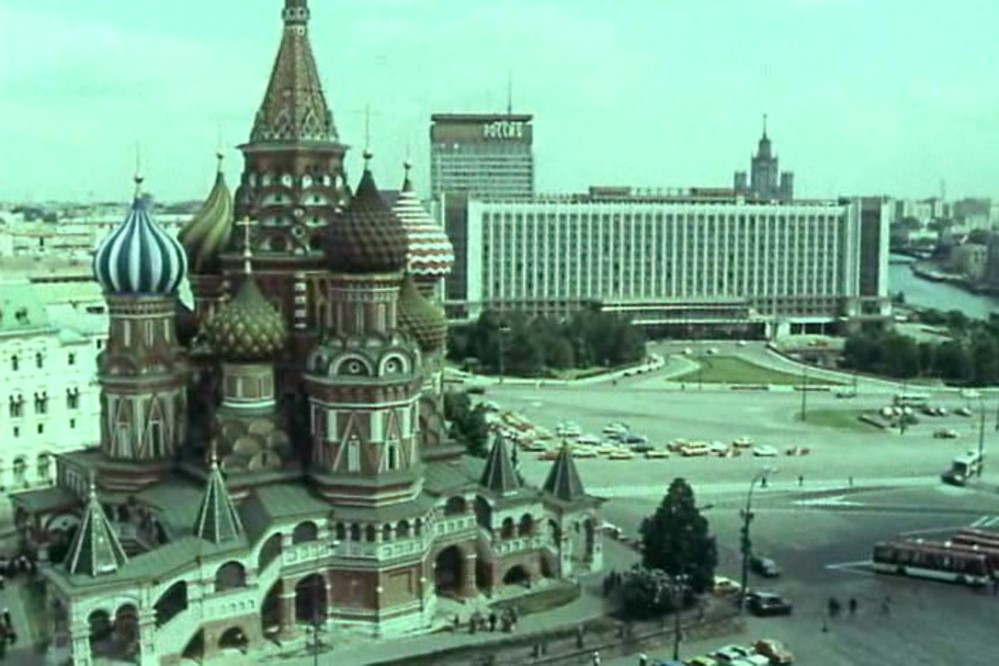
Red Square (Russian: Красная площадь, romanized: Krasnaya ploshchad’) is one of the oldest and largest squares in Moscow, the capital of Russia. Owing to its historical significance and the adjacent historical buildings, it is regarded as one of the most notable and important squares in Europe and the world. It is located in Moscow’s historic centre, in the eastern walls of the Kremlin. It is the city landmark of Moscow, with famous buildings such as Saint Basil’s Cathedral, Lenin’s Mausoleum and the GUM. In addition, it has been a UNESCO World Heritage Site since 1990.
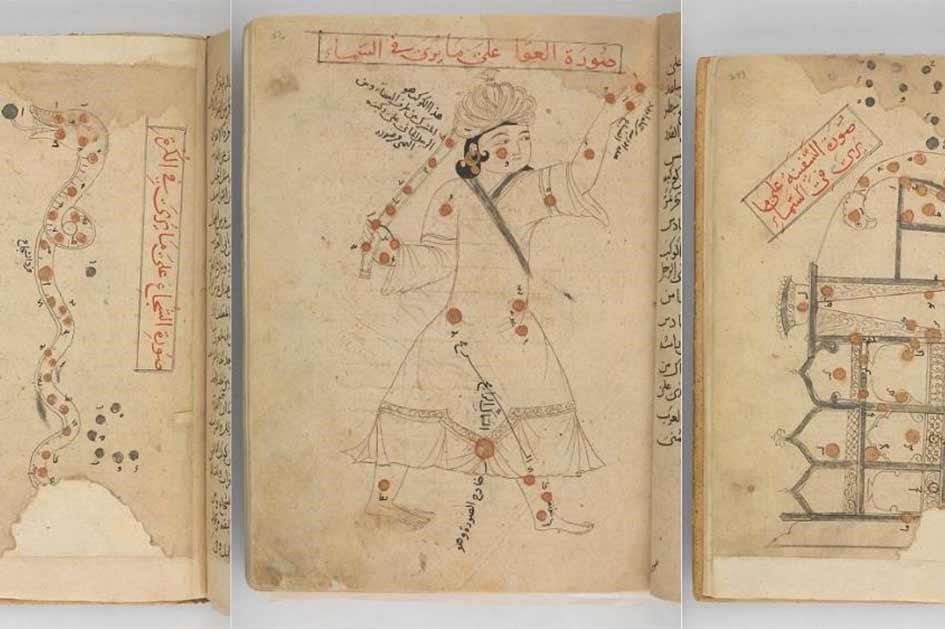
The “suwar al-kawakib” or the Book of Fixed Stars is a 10th century astronomical Arabic text, authored by the famed scholar Abd-al Rahman al-Sufi in the year 964 AD. It was produced by the powerful Greco-Arabic translation movement, which emanated in Baghdad and sought to translate secular Greek classical texts and the works of Hellenistic scholars into Arabic.
The syncretic traditions of Western Asia were once culturally aligned owing to the dominance of Islam over the medieval world and the access to the Silk Road . Now, this has prompted Uzbekistan to present the “first true-to-the-original facsimile copy of the manuscript of Images of the Fixed Stars” reports Euronews.
Uzbekistan was at the heart of the ancient Silk Road. Its central location in the Eurasian trans-continent allowed it to become one of the first civilizations to develop and grow.
With the goal of preserving this rich cultural heritage, Project: Cultural Legacy of Uzbekistan in the World Collections was launched to identify, catalogue, and showcase all art objects reflecting the country’s cultural heritage scattered around the world. 350 scientists from all over the world were brought together at this keynote event of Uzbekistan’s Cultural Heritage Week.
The conversion of this work from a manuscript to a book was commissioned by the Timurid Sultan and Dynast, Ulugh Beg, in the late 14th and early 15th centuries. He was a renowned astronomer and mathematician, having done great work in the field of trigonometry and spherical geometry, and was a patron of the arts and other intellectual activities.
He would go on to commission and build the great Ulugh Beg Observatory in Samarkand. This is, to this day, one of the finest observatories of its kind in the world.
Abd-al Rahman al-Sufi made his observations from Isfahan in Iran, dedicating the Book of Fixed Stars to Adud al-Dawla, his patron and a Buyid Emir. Al-Sufi was responsible for innovations in charting the stars, updating Ptolemy’s stellar longitudes from 137 AD to 964 AD by adding 12 degrees and 42 minutes on Ptolemy’s longitudinal values to allow for precision.
For this, he used the production of dual illustrations for each of Ptolemy’s constellations. One illustration was portrayed on a celestial globe, while the other was viewed directly in the night sky.
This book was not his only contribution to the field of astronomy and science. He contributed to the building of an important observatory in the city of Shiraz, and played a role in the design of many astronomical instruments such as astrolabes and celestial globes.
He identified more than 100 new stars, along with the first known descriptions and illustrations of the Andromeda galaxy, and the first recorded mention of the Large Magellanic Cloud, reports Paudal. He was able to improve on a lot of Ptolemy’s observations through empirical data and conclusions, and his influence in astronomy reverberated right up to the 19th century.
The book is often hailed as a masterpiece of Central Asian art. It can also be taken as proof that the later Renaissance movement in Europe was in part a by-product of the cultural exchange that had emerged with transcontinental trade and exchange with Asia, particularly those regions connected to the ancient Silk Route.
It contains 74 tiny and fascinating miniatures of constellations, executed with exquisite panache and style. And it is one of the oldest surviving treatises of a time when illustrated manuscripts were coming into focus.
Scientifically, it combines the principles of ancient Arab astronomy, with knowledge of the stars transmitted by the Greeks. Abd-al Rahman al-Sufi took Ptolemy’s entire catalogue and merged them with the ones mentioned in Arabic literature.
The effect of this resonates right into the modern world. So much so, that Uzbekistan today plans to tap into culturally and scientifically rich historical works like this one and help spur advanced scientific technologies and discoveries, to help preserve historical exhibits and manuscripts.
A detailed ASMR ear exam, otoscope examining, latex glove touching and softly spoken inspecting deep inside the ear. ASMR medical videos are for sleepy entertainment purposes only and should not be taken as actual medical advice.
YouTube film critic Chris Stuckmann accidentally inspired a meme—and a bit of an uproar—after posting alternative versions of Batman v. Superman’s most infamous scenes.
Stuckmann’s four-page script, which he posted on Twitter over the weekend, contains new takes on the first confrontation and the final resolution between the two at-odds heroes.
Some of the suggested changes were pretty smart, like making Batman and Superman’s unification more about Batman’s character journey than the “Martha” business. But there was one line that’s taken on a life of its own.
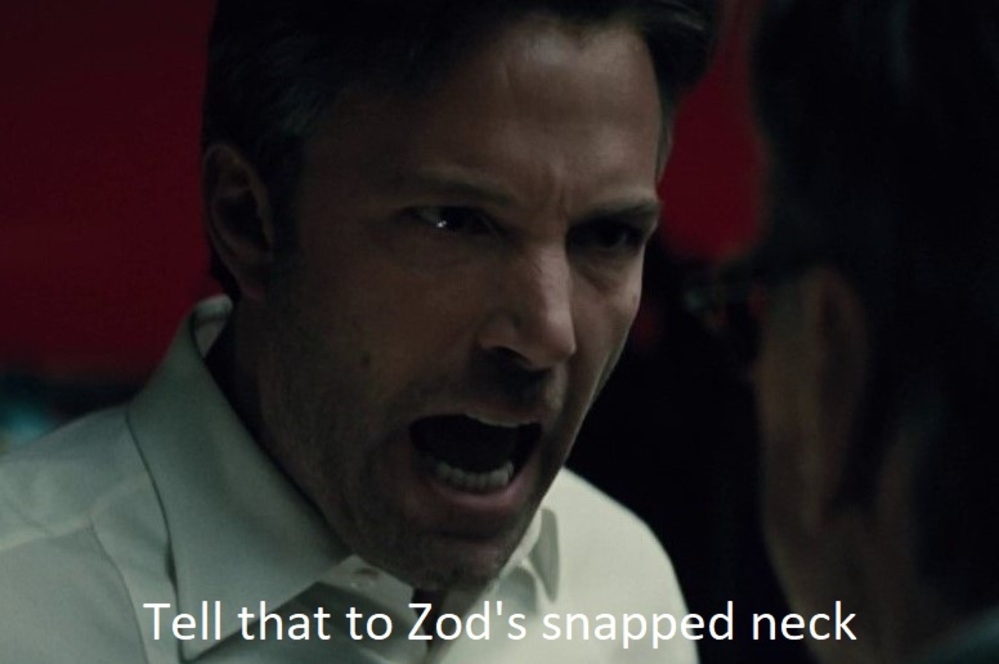
“Tell that to Zod’s snapped neck.”
Fans went crazy over that single piece of Batman dialogue, inspired by the fan-dividing scene at the end of Man of Steel where Superman broke General Zod’s neck. #ZodsSnappedNeck inspired tons of memes. Someone started a designated Twitter account. The Suicide Squadcast did a dramatic reading on its most recent podcast. There’s even a change.org petition to have someone’s neck snapped in Suicide Squad—although it only has three signatures right now.
Stuckmann admitted several times in an interview with Daily Dot that his script was a “stupid rewrite,” more glorified fan fiction than anything else, and that he’s been enjoying the humorous response on Twitter. He said the “Zod’s snapped neck” line was designed to give Batman some silly wit. After all, humor was one of the biggest elements missing from Batman v Superman. It’s one of the reasons Suicide Squad reshoots are rumored to be making it funnier, although director David Ayer denied it.
“I understand that Batman is a dark character and I have no problem with seriousness in a film like that, but I thought there were tongue-in-cheek opportunities that they missed,” Stuckmann said. “Do I want a Joel Schumacher film, with nonstop jokes? Of course not, but even darker films like The Dark Knight were very funny at times.”
Stuckmann insisted the script only took 20 minutes and isn’t supposed to be taken seriously, but that hasn’t stop some hardcore DC fans from lashing out, criticizing his screenwriting skills and his general opinions about the film, which Stuckmann called “kind of average” with some highs and lows. It’s no surprise, since the film has more people picking sides than Captain America: Civil War. It’s been so divisive that CinemaBlend published an entire article about how the staff couldn’t agree on whether the film was any good.
It seems easy to agree, however, that #ZodsSnappedNeck is the newest treasure in the DC Comics universe.
When the DC Extended Universe (DCEU) debuted with Man of Steel in 2013, it was already playing catch-up with the Marvel Cinematic Universe (MCU). The Avengers had recently whetted our appetites for big superhero crossovers. As such, we got Batman v Superman: Dawn of Justice before we’d even been introduced to a new iteration of Batman. Nearly ten years later, we’re preparing to say goodbye to the DCEU in favour of James Gunn’s latest project as the head of newly-created DC Studios, but they’re still doing the same thing. Spider-Man: No Way Home created its own legacy as a film that held the power to bring audiences back into cinemas at a time when a lot of us were still worried about the consequences of going to see a film during a pandemic, and what The Flash seems to have taken from that is a message that we need more multiverses and more cameos than ever before.
From the very beginning, The Flash feels like a cynical cash-in. On the strength of the premise alone, it becomes little more than just another film in a long line of DCEU projects trying to have a stab at something that the MCU has recently done to some applause. Weirdly enough, though, it’s actually alright.
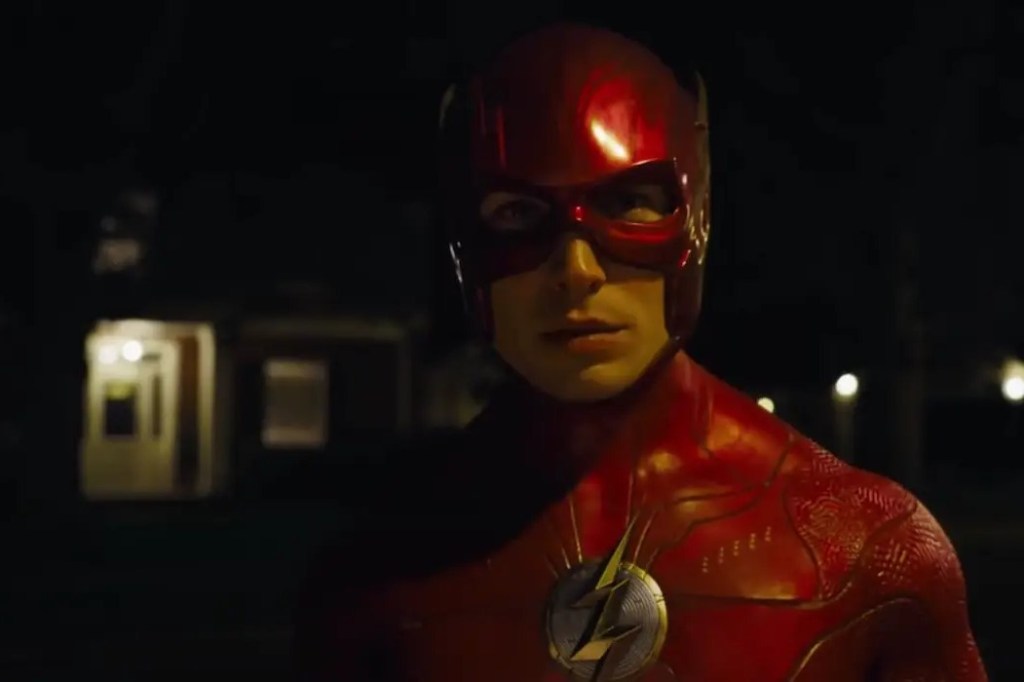
The Flash’s story starts by framing Barry Allen’s The Flash (Ezra Miller) as a kind of low-level member of the Justice League who Alfred (Jeremy Irons) turns to when everyone else is busy. There’s a disaster going on a few blocks away that only he’s available to help with, so he does with some comedy segments of varying success interspersed. He’s essentially the nerdy kid who’s just happy to be there, and a lot of relatability comes with that as we see him performing extraordinary actions in order to save a bunch of babies falling from a higher-level floor in a multi-storey hospital. Admittedly, this sequence in particular is an example of one that perhaps tries a bit too hard for laughs, but restraint is shown where it matters.
We get into the multiverse stuff because The Flash himself has a multitude of reasons to need to. His mother (Maribel Verdú) was murdered when he was a child, and his father (Ron Livingston) was wrongly sent to prison for it. When Barry discovers that he has the ability to run so fast that he can time travel, of course he wants to go back to change it all. The method is farfetched, but the character’s motivation is absolutely reasonable and believable. That can’t always be said of the actions that precede a multiversal adventure.
The big cameo coming into this one was the return of Michael Keaton as Batman, and his appearance does indeed go as far as it possibly can. We get all of the sets and the visuals from Tim Burton’s 1989 classic, along with snippets of the score and a gallery of batsuits. The biggest relief of The Flash though, is just how aware it seems to be of the purpose its cameos are serving.
The idea of worlds colliding so that we can see our favourite heroes on screen with one another can easily and quite quickly begin to feel tacky. There are only so many times a film can deliberately elicit the kind of emotion that makes a packed cinema say “Oh!” in unison before it begins to feel manipulative. The way that The Flash avoids that is by keeping those moments in the realms of tribute above anything else. It feels as if we’re seeing these different worlds as a way to pay respect to them, and it never veers far away from that.
Most importantly, The Flash is a superhero movie that does more than just the required lot of providing us with a fun, good time. By exploring Barry’s backstory – the tragic events that he went through as a child and the trauma that’s still developing to this day – it tells the kind of story that rarely makes its way into a blockbuster with so much thought. Not only is it a decent action movie, but it carries the spine of a devastating tearjerker too.
Some of the aesthetic choices are a little strange – all of the visuals that we see during the moments where Barry is time travelling are CGI reconstructions of real footage but stylised in a way where everything looks like plasticine. There’s an argument for why this might have been necessary – to make sure everyone and everything could share the same visual style in a certain context – but it’s so reminiscent of videogame cut scenes of the past that it just becomes distracting rather than immersive.
At the heart of The Flash there is a touching story about loss, grief, and our collective regret at not being able to do much about either. It’s just as heartbreaking as it is fun, and it constantly matches its adrenaline-fueled highs with emotional peaks which are every bit as effective. The Flash can be forgiven for some of its humour sometimes failing to land, and its CGI looking a bit weird when it does so much right in other areas.
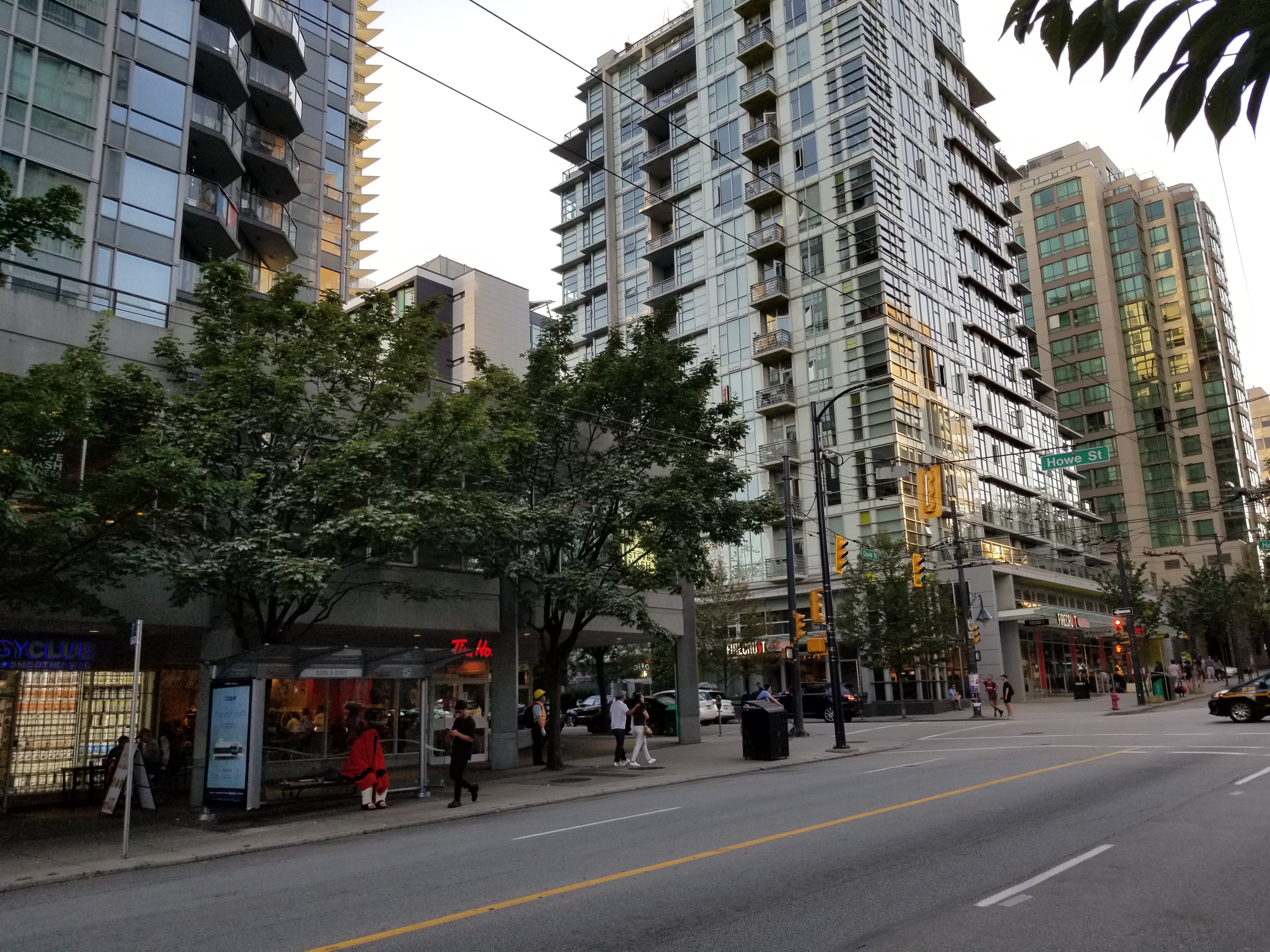
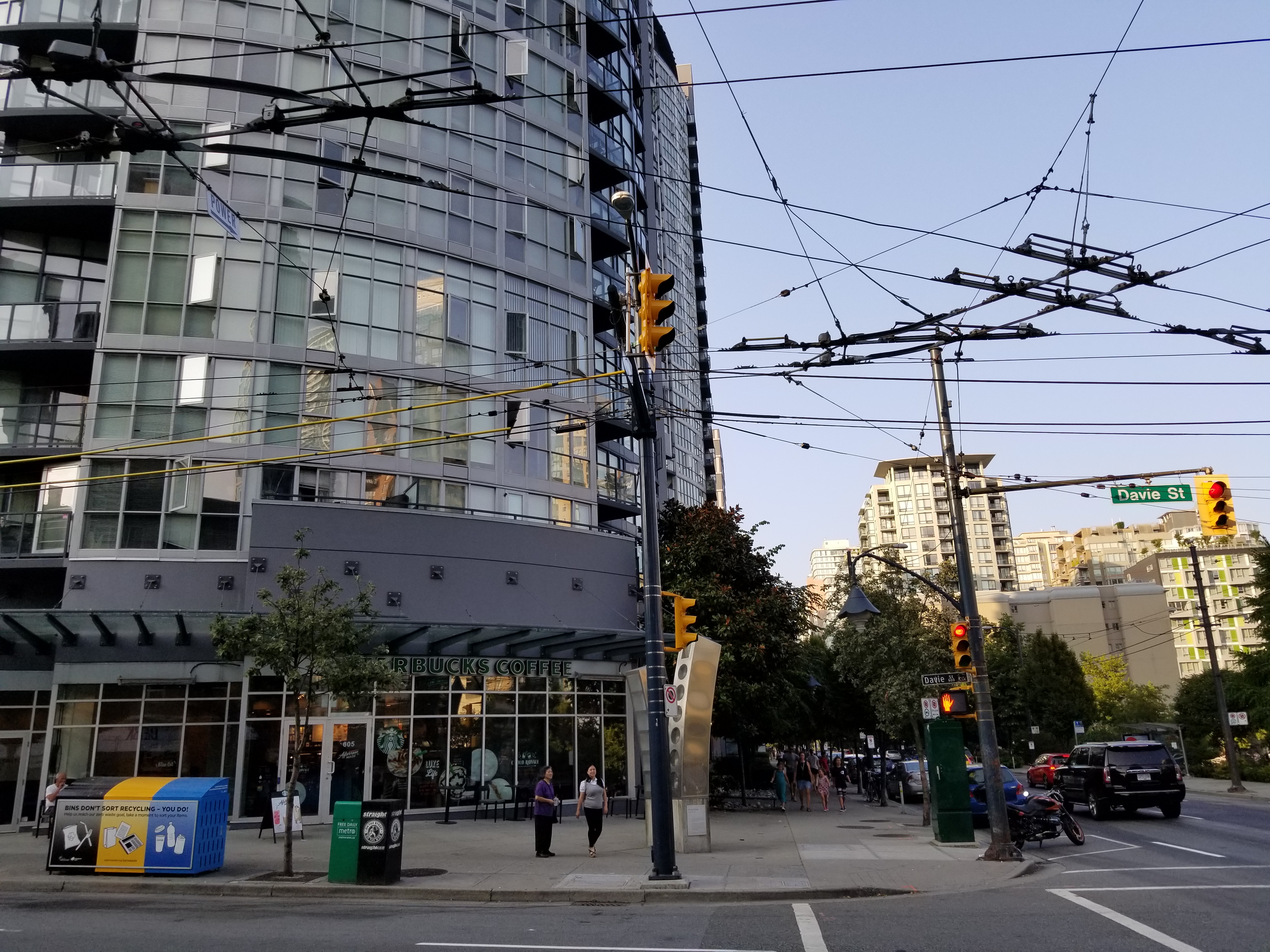
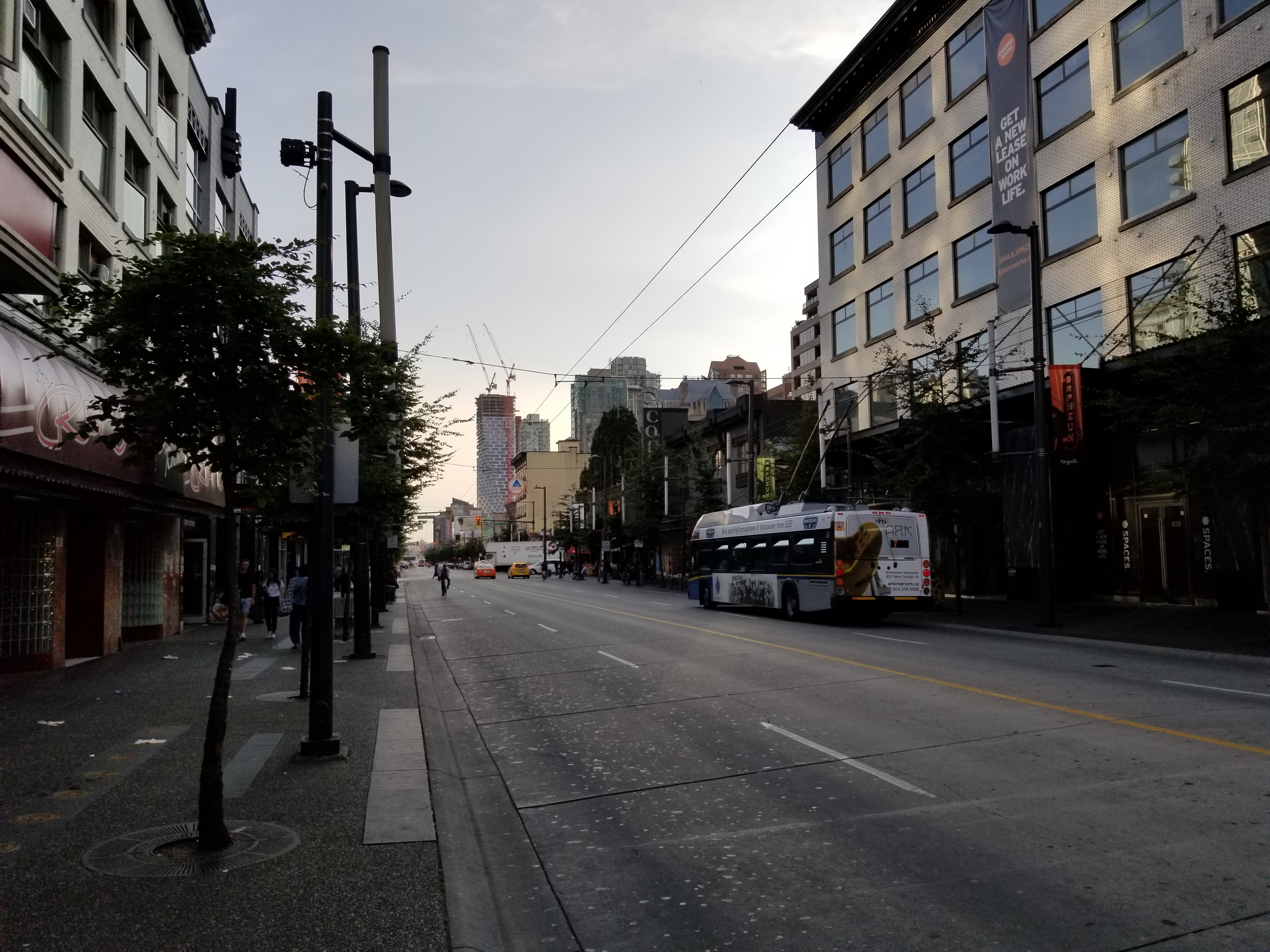
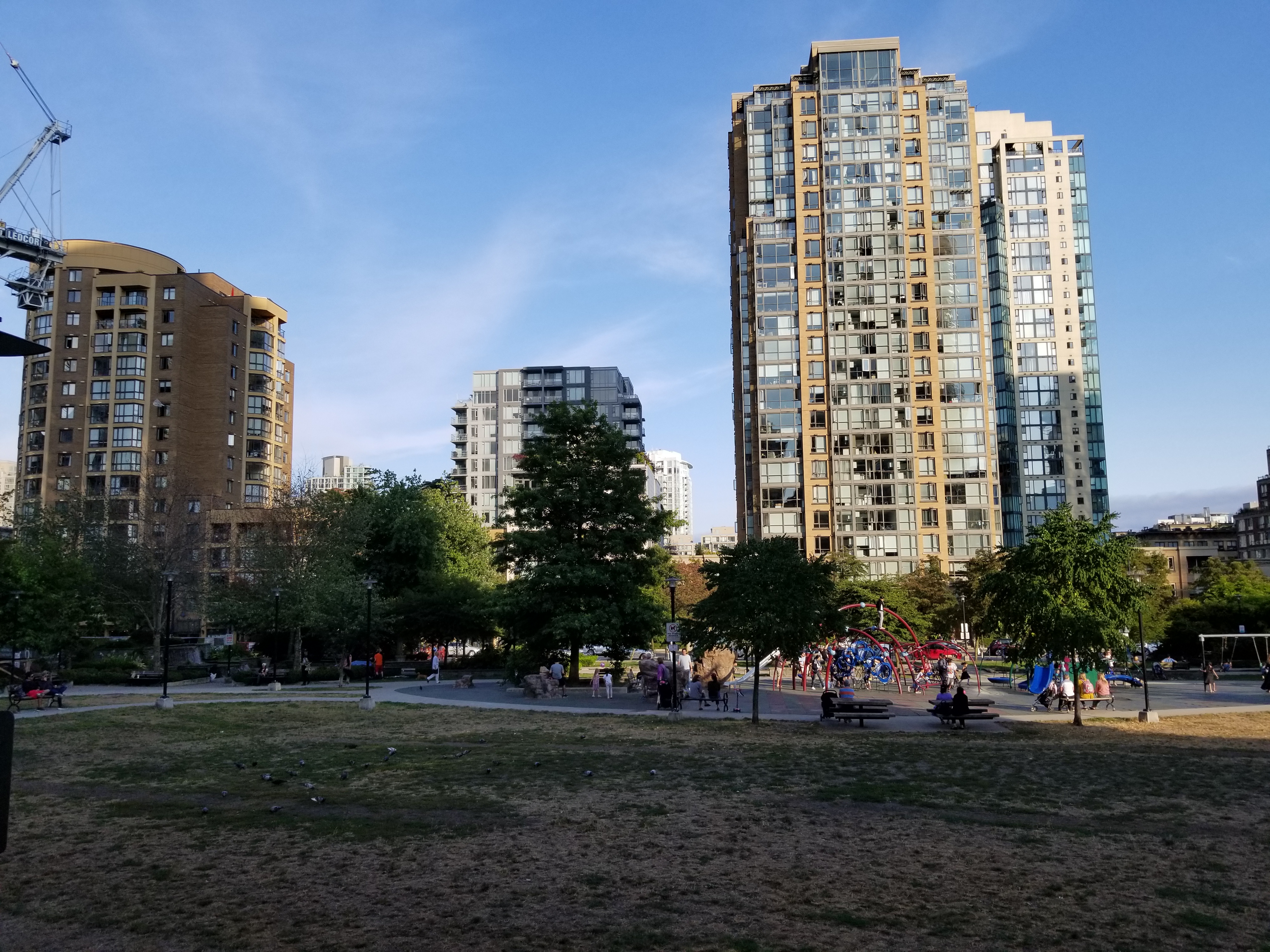
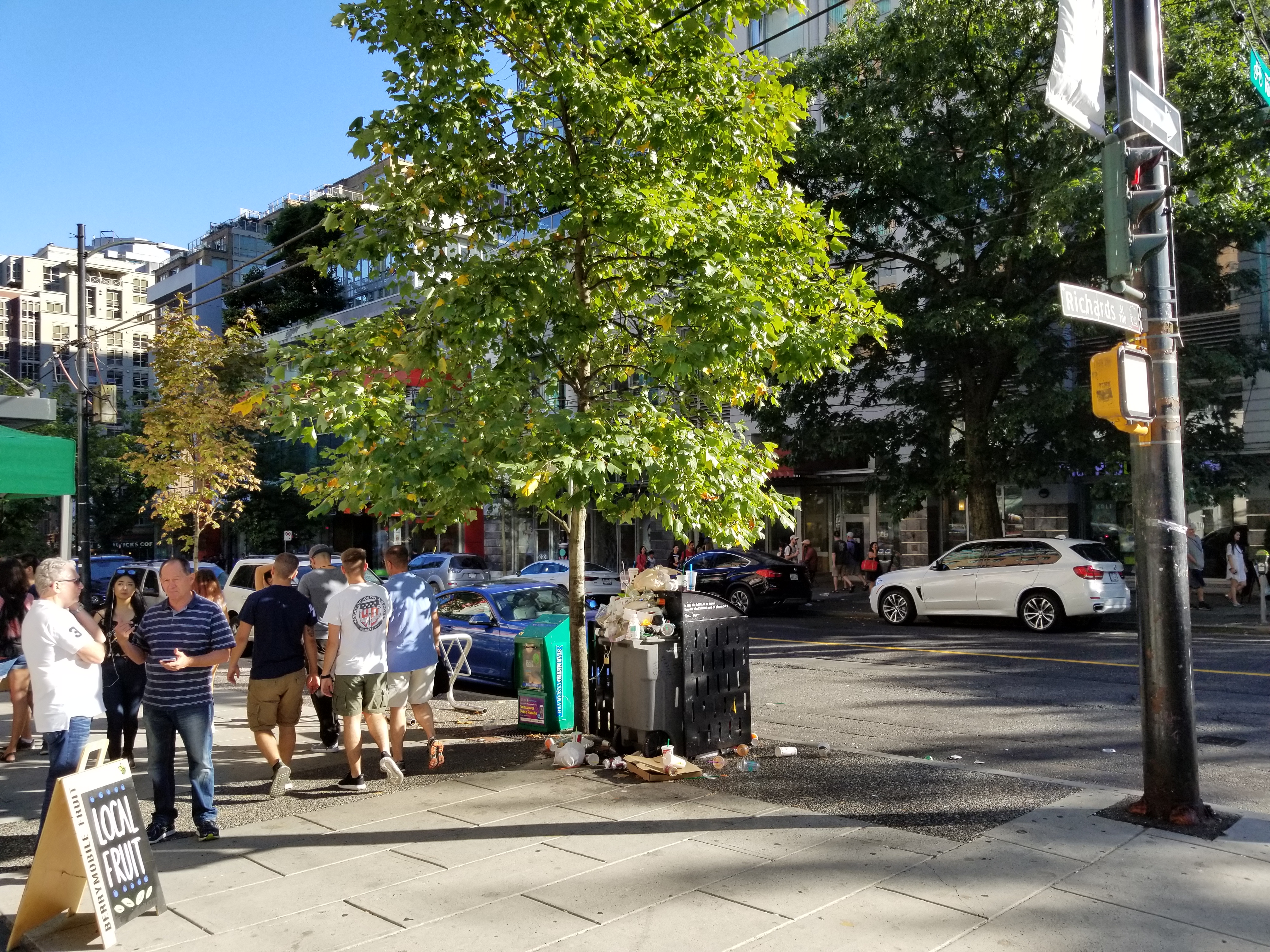
Davie Village (also known as Davie District or simply Davie Street) is a neighbourhood in the West End of Vancouver, British Columbia, Canada. It is the home of the city’s gay subculture, and, as such, is often considered a gay village, or gaybourhood. Davie Village is centred on Davie Street and roughly includes the area between Burrard and Jervis streets. Davie Street—and, by extension, the Village—is named in honour of A.E.B. Davie, eighth Premier of British Columbia from 1887 to 1889; A.E.B’s brother Theodore was also Premier, from 1892 to 1895.
Along Davie Street are a variety of shops, restaurants, services, and hotels catering to a variety of customers, in addition to private residences. The business with the most notoriety is Little Sister’s Book and Art Emporium (“Little Sister’s”), a gay and lesbian bookstore, because of its ongoing legal battles with Canada Customs that have received extensive national media coverage. Many businesses and residents along Davie Street and in the West End generally also fly rainbow flags as a symbol of gay pride, and many of the covered bus stop benches and garbage cans along Davie Street are painted bright pink.
The Village hosts a variety of events during the year, including the Davie Street Pride Festival which runs in conjunction with Vancouver’s annual Gay Pride Parade, during which sections of the street are closed to motor traffic.
Davie Day is also held each year in early September, to celebrate local businesses and the community itself. This Day is designed to build awareness and promote the surrounding businesses, and is focused around Jervis to Burrard Street.
The Davie Street Business Association coined the name “Davie Village” in 1999 and also commissioned banners from local artist Joe Average, which fly from lampposts in the district. The two-sided banners depict a rainbow flag on one side and a sun design by Average on the other.
Davie Village is also home to the offices of Xtra! West, a biweekly LGBT newspaper, Qmunity (formerly the Gay and Lesbian Centre) which provides a variety of services for the city’s lesbian, gay, bisexual, and transgender residents, and the Vancouver Pride Society, which puts on the annual Pride Parade and Festival.
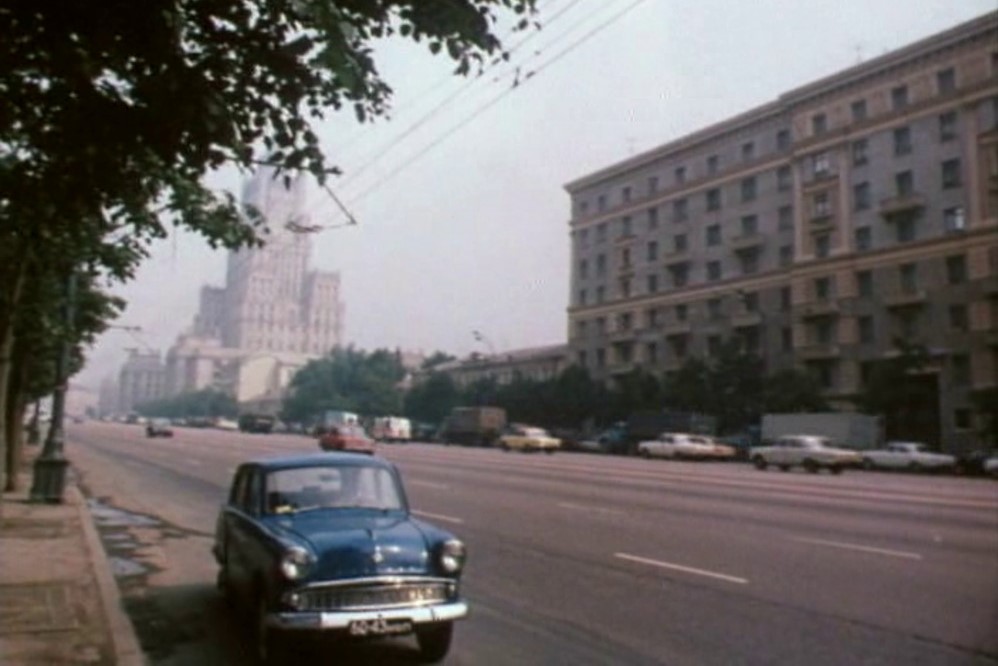
The Garden Ring, also known as the “B” Ring (Russian: Садо́вое кольцо́, кольцо́ “Б”; transliteration: Sadovoye Koltso), is a circular ring road avenue around central Moscow, its course corresponding to what used to be the city ramparts surrounding Zemlyanoy Gorod in the 17th century. The Ring consists of seventeen individually named streets and fifteen squares. It has a circumference of 16 kilometers (9.9 mi). At its narrowest point, Krymsky Bridge, the Ring has six lanes. After finishing reconstruction, all sections of the Ring will not have more than 10 lanes. In 2018, more than 50 % of sections of the Garden Ring are reconstructed, including Zubovskaya square, which was the widest section, there were about 18 lanes before. The Ring emerged in the 1820s, replacing fortifications, in the form of ramparts, that were no longer of military value.








 Igor's Blog