
Katniss (Jennifer Lawrence) tries to stall President Snow (Donald Sutherland) while the rescue team searches for Peeta, but he is one step ahead of the rebels.
Author: ulaghchi
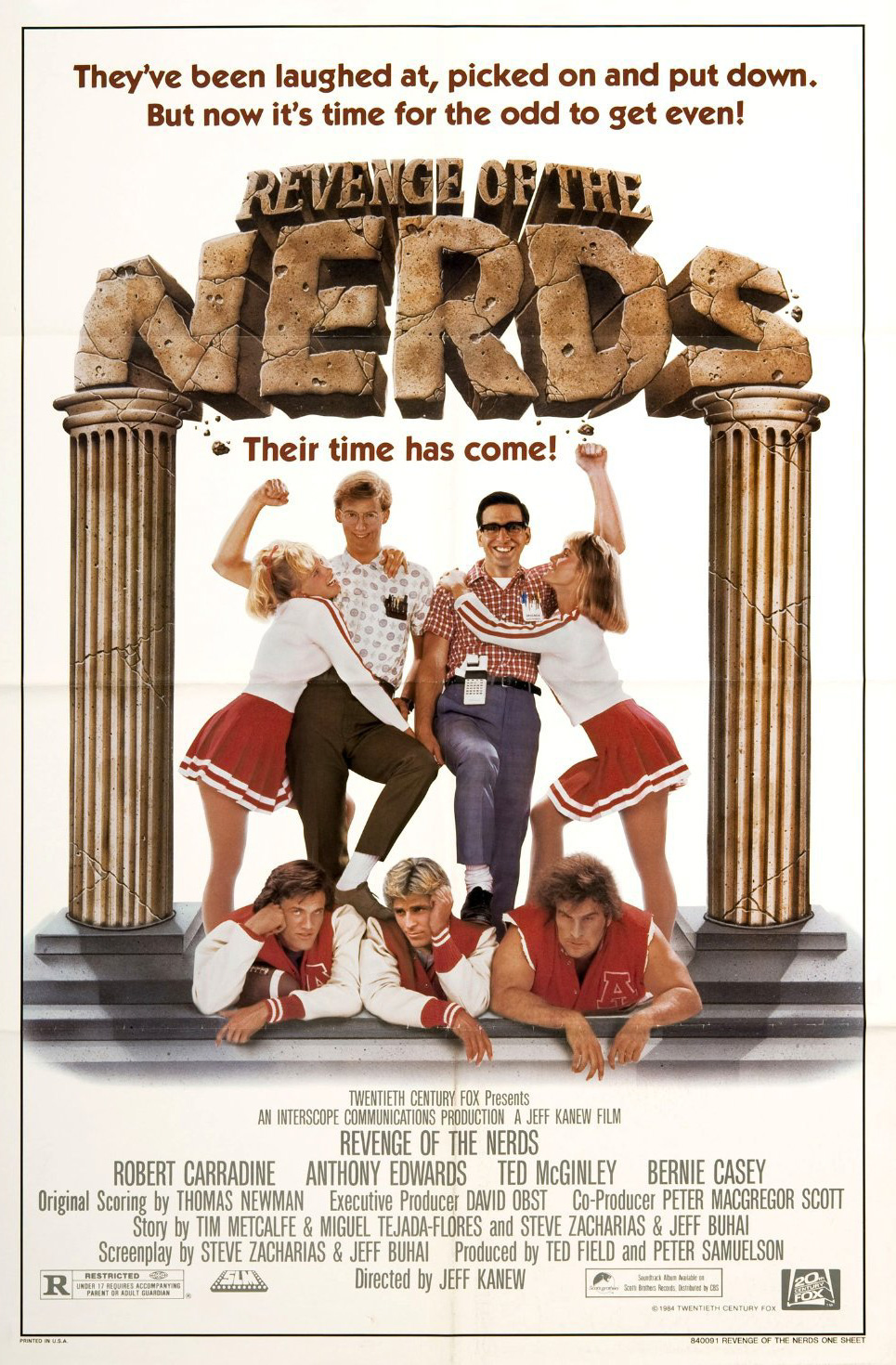
Just finished watching The Great Mouse Detective (1986) and Revenge Of The Nerds (1984)…

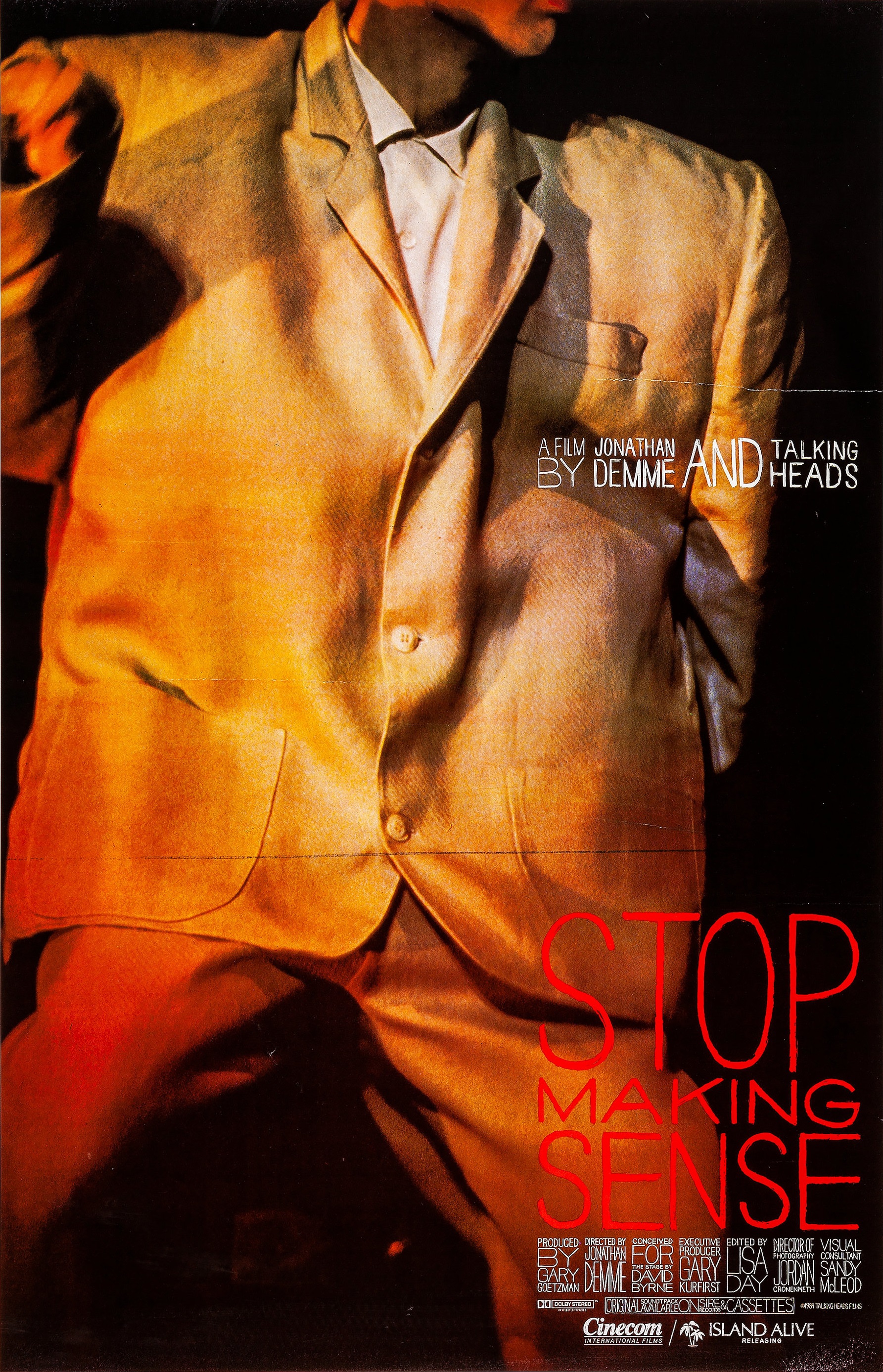
Just finished watching Howl’s Moving Castle (2004) and Stop Making Sense (1984)…

Just finished watching The Hunger Games: Mockingjay – Part 1 (2014) and The Hunger Games: Mockingjay – Part 2 (2015)…


Leliel
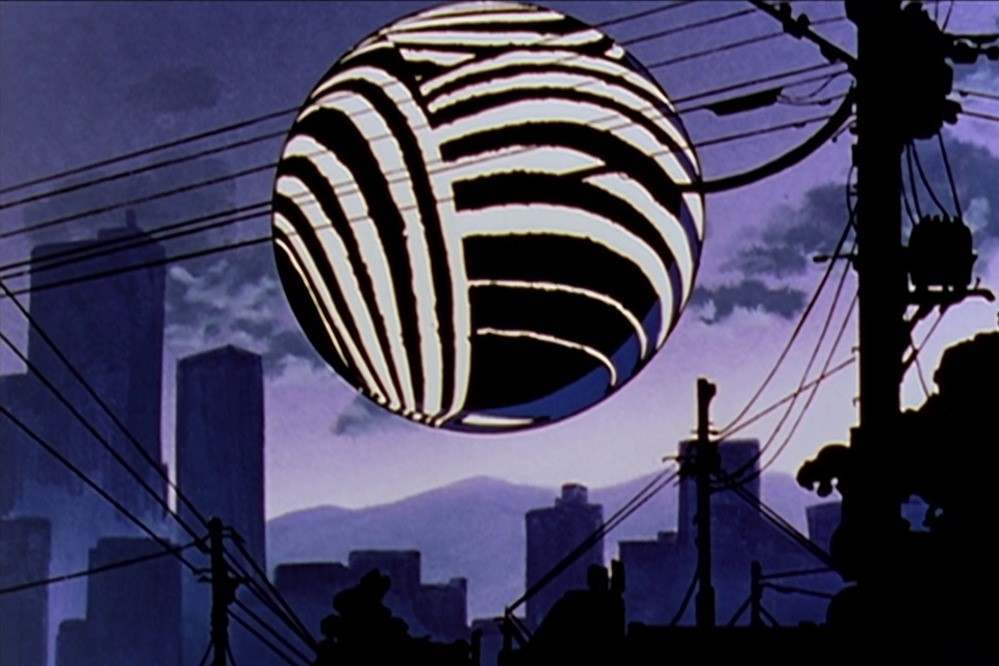
Leliel (レリエル?) (Hebrew: ליליאל) is the 12th Angel. Leliel only appears in the TV series. It is preceded by Ireul and succeeded by Bardiel.
Leliel is an extremely bizarre entity that exists in a pocket-dimension explained only by higher-order physics theories (abstract mathematics). Initially, Leliel appears to be a floating sphere with a warped, black and white color pattern that suddenly appears over Tokyo-3. However, Leliel’s real body is actually what appears to be a shadow on the ground. The manifestation of Leliel’s body in our dimension is 680 meters wide but only 3 nanometers thick; the floating sphere is just the “shadow” it casts in our dimension. Because it possess an inverted A.T. Field, it can absorb any material from our dimension inside of its body, within which is a Dirac Sea.
All three Evangelion Units are deployed against Leliel when it first appeared over Tokyo-3. Shinji charged ahead and fired at the floating sphere, thinking it was the Angel’s real body, only to be sucked down into Leliel’s real shadow-body which resulted in all communication being lost. Asuka barely escaped being sucked into Leliel as well, avoiding it by climbing onto a building. Rei fired several shots at the floating sphere with Unit-00’s large sniper rifle, but this only succeeded in damaging nearby buildings.
NERV pulled back its forces, and Ritsuko explained the bizarre nature of the Angel. She proposed a plan whereby Unit-00 and Unit-02 would neutralize Leliel’s A.T. Field with their own, and then the JSSDF would drop the remaining 992 N² bombs into its body. This would hopefully kill the Angel as well as recover Unit-01, regardless of whether in the process the plan would end up killing Shinji or not.
Against Misato’s protests, Ritsuko’s plan was given the go-ahead. Just as Unit-01’s maximum life-support power time limit was reached, 16 hours later, the plan was about to be put into effect. However, just then the Eva went into “berserker mode” and despite having its battery power totally drained, savagely tore its way out of Leliel’s body in a shower of blood, which also shattered its real shadow-body on the ground.
While within the Angel, Shinji experiences a bizarre internal psycho-analysis. It was in fact Leliel trying to contact Shinji’s mind, not the Evangelion. Misato is actually directly asked about the possibility of Leliel trying to contact Shinji’s mind in the following episode by SEELE, and she says it cannot really be determined what happened. Because most Eva fans have already seen evidence of Angels contacting Eva pilots (Episodes 22/23), it is probably safe to say that it was Leliel contacting Shinji’s thoughts.
Kazuya Tsurumaki’s interview in the Evangelion Theatrical Program makes it explicit: Shinji’s younger self is, or was meant to be, Leliel talking to him. He says the following- “However, amidst the flow of the mysteries surrounding the Angels gradually being resolved, we decided to insert an episode where an Angel appeared to take an interest in humans. The first draft of the scenario was actually a dialog between Shinji and the Angel. However, we felt it would be too anti-climactic to have an Angel start talking like some pulp fiction alien (speaks while tapping his Adam’s apple with his hand) “Your analog mode of thought is incorrect.” So we came up with the idea actually used in this episode, which was to have Shinji converse with himself.”
In addition, Leliel’s striped appearance visually corresponds with the younger Shinji’s striped shirt. In fact, Leliel‘s ”fake” body actually has a face, with stripes in the pattern of two bulging eyes, and a small mouth with sharp jaws. This face appears multiple times on its body.
Collapse of Socialism

This paper was presented on behalf of Moni Guha at a ‘study week’ organised in 1993 by the Indian Institute of Advanced Study at Shimla.
Introduction
The subject matter of our study is “Collapse of Socialism”. But socialism did never collapse it was usurped. This is a historical fact which is being denied. What collapsed in 1990 in Eastern Europe and in 1991 in the Soviet Union was market socialism of the revisionist regimes, not the Marxian socialism of the dictatorship of the proletariat. And everybody knows that market socialism and revisionism are bourgeois ideology and practice in Marxist garb. Of course, some self-styled Marxists, here and elsewhere, continued to consider the U.S.S.R. as a socialist state notwithstanding its revisionist leadership. They have, with aplomb declared against Khruschovite revisionism, but had kept a studied silence on the question of relation between the dictatorship of the proletariat and revisionist leadership, identifying the revisionist ruled Soviet state and market socialism with Marxian socialism is nothing but prettifying both market socialism and revisionism or worse, playing into the hands of the bourgeoisie. When one speaks of problems of revisionist ruled Soviet Union and its market socialism as problems of Marxian socialism, he seeks to tar Marxian socialism with the same black brush by which Khruschov tarred Marxian socialism. Revisionist takeover of the party and the state can mean nothing but the destruction of the dictatorship of the proletariat. Consequently, Marxian socialism is the logical casualty. The revisionist take over can only mean that bourgeois ideology and practice have gained the upper hand, proletarian leadership has been toppled. It means restructuring of the property relationships in favour of private property ownership and exploitation of man by man.
As such, the subject matter of our study should have been named “Collapse of market socialism”. It would have been scientific and in conformity with historical fact.
However, I shall discuss here the economic policy of the Soviet Union of the two periods viz. the period of Marxian socialism and the period of market socialism keeping myself confined to the Soviet Union’s relation with the world market and imperialism.
I hope the question of collapse will be clarified in the course of our study.
Socialism in One Country and the World Market
The October Socialist Revolution put an end to the undivided rule of the world system of capitalist economy. A new economic system, the socialist economic system came into existence. When the construction of the socialist economy in the very young Soviet state was in its initial stages, Lenin said:
“We are now exercising our influence on the international revolution through our economic policy. Once we solve this problem, we shall have certainly and finally won on an international scale.” (C. W. Vol. 32, P-439)
Did Lenin’s prophetic words come true? Was the economic policy of the Soviet Union “certainly and finally won on an international scale”?
It really did win.
What was the economic policy of Lenin?
With the inception of the Union of Soviet Socialist Republics in 1922, Lenin formulated three basic guidelines, viz. (I) a comprehensive national economic plan, (ii) Socialist ownership of the means of production, and (iii) Independent growth with emphasis on heavy industries. After the death of Lenin, Stalin meticulously following these guidelines, concretised and implemented them. He pursued the policies of centrally planned economy which made progress depending almost exclusively on the domestic resources and the home market. Foreign trade sector, or, foreign market, it may be noted with special care, played a very subsidiary and therefore, a minor role, in the development activity, as trade was chiefly confined to importing some technology from the world imperialist market. Export was considered a sin for obvious reasons, while import was generally favoured, since it was conducive to improve the material balance and technological base of the Soviet economy. It may also be noted that there had been monopoly control of the socialist state over the foreign trade. In general, foreign trade was not at all a dynamic sector of the Soviet economy, even in the period of socialism in several countries, till the death of Stalin.
Why the foreign trade sector or foreign market was not a dynamic one?
It is well known that capitalism develops international economic relations of a capitalist character, that is of exploitative and coercive character. Such international relations of production, once they emerge, acquire a certain independence and exert enormous influence as an objective law, on the internal development of the countries drawn into their orbit, independent of man’s will. In the capitalist world this intensifies the unevenness of the development of different states, some countries outstrip others, there emerge ruling and sub-ordinate countries, and the latter become, in one way or another, dependent on the former. This essentially coercive and exploitative process has produced international division of labour under which the world is divided into industrially advanced and industrially backward and weak countries, and under which the backwardness of the latter is perpetuated. A socialist state cannot be the partner to this coercive and exploitative process of the international trade relations.
Taking cognisance of this process the Soviet Union co-operated in a very limited way, but did not integrate itself into the imperialist dominated world market in the sphere of competition through imports and exports of goods or capital. That is why the economic policy of Soviet Union was independent but not autarkic. A state which takes part in the coercive and exploitative process of capitalism and world economy and whose leitmotif is earning profit from the competitive capitalist market cannot be a socialist state.
Let me quote a policy statement of the Soviet Union, issued in 1938, on the objects of exports and imports. It said:
“…. Imports into the U.S.S.R. are planned so as to aid in quickly freeing the nation from imports….
“… In the execution of the plan for socialist industrialisation, it is necessary to import most finished equipments and newest machines for the construction of ‘giants’ for the organisation of our own production of these very machines to secure our economic technical independence from capitalist nations..
“The basic task of Soviet exports is to earn foreign exchange reserves of the country.. The U.S.S.R. exports its goods only in order to pay for comparatively small quantities of imported goods, which are necessary for the speedy execution of national economic plan, therefore the dynamics of quantity of exports is defined by the plan which is constructed with the planned volume of imports.” (D. D. Mishustin. ed. Vneshniaia Torgovlia Sovietskogo Souza, U.S.S.R., Moscow, 1938, p. 9).
It logically follows from the above policy statement that the U.S.S.R. throughout the whole period of Marxian socialism and Stalin, up to his death, stressed for a balanced trade with much limited quantities of exports and imports. The trade proved to be much less commercial in nature, since it did not exploit foreign trade for “profits”. Thus, little did the question of importing or exporting capital arise in the Soviet economy.
This was the Soviet economic policy during socialism in one country in relation to the world economy. Form this you can very well judge that the superiority of the socialist economy was not the superiority in commercial and trade competition in the world market. It was a political, economic and moral superiority of the socialist economic system over the capitalist economic system on the question of exploitation of man by man.
Socialism in Several Countries
The emergence of Peoples’ Democracies in several countries necessitated their mutual co-operation on the economic field so that the socialist camp as a whole would be strengthened. Of course, that did not mean any change in the independent economic policy of the Soviet Union – the policy of non-integration with the coercive and exploitative process of the imperialist dominated world economy.
In order to determine Soviet economic policy towards the countries of Peoples’ Democracies, a conference of delegates from the countries of Peoples’ Democracies of Eastern Europe and the Soviet Union was held on January, 1949 and a Council for Mutual Economic Assistance or CMEA was formed.
It was found in that conference that the member countries of CMEA differed greatly as to their levels of industrialisation. In a certain sense, only in a certain sense, the economic relations between the national republics of the U.S.S.R. were a prototype. The border lands and colonies of Tsarist Russia, which before the revolution were backward in comparison with the central regions, had become powerful industrial-agrarian republics under socialism. It was the policy of socialist in content and national in form which was a guarantee to overcome the backwardness, to even out their levels of economic development and to reach the most advanced level, with enormous growth of the productive forces. Only this policy did inspire the trust and confidence for voluntary and conscious co-operation on the basis of equality.
So, the principal tasks of the CMEA countries were directed towards evening out of the crying disproportions of the countries of the socialist camp.
The main achievements of CMEA during the period of 1949-1953 were:
(1) The conclusion of long term bi-lateral trade agreements, which was approved at the second session of CMEA in August, 1949.
(2) The provision of technical documents free of charge and the exchange of technical-scientific personnel between the member countries, so that experience would be exchanged, these countries would benefit from one another and the most backward ones would be helped to industrialise and develop their economics.
(3) The trade and economic exchanges between any two member countries were carried out NOT ON THE BASIS OF WORLD PRICES, but on the basis of an estimated price reached after extensive analysis.
(4) CMEA member countries refused co-operation with ‘Marshal Aid’ and agreed not to integrate into the coercive and exploitative process of the imperialist dominated world market.
As a result of this policy the volume of industrial production in 1954 as against 1938 (pre-war) increased as follows: Poland – 4.6 times; Czechoslovakia – 2.3 times; Rumania – 4.7 times; G. D. R. – nearly 2 times (against 1939); Bulgaria – 4.9 times and Hungary – 3.5 times (against 1939).
Due to the blockade and non co-operation of the world economy a parallel world socialist market was then, a fact. We are not sure what would have happened had Stalin been alive. Stalin died in March, 1953.
You have seen that the superiority of the socialist economy was not the superiority in trade competition in the world market, it was a political, economic and moral superiority of the socialist economic system over the capitalist economic system. Even in the 1930s when the capitalist world was submerged in a deep crisis, the Soviet Union went ahead with its five year plan without any crisis and had already solved the problem of the reserve army of the unemployed. That in the 1930s the Soviet economic policy did demonstrate its superiority over capitalist economy was proved by several examples:
You know why and how Keynes hurried to amend and repair the bourgeois economic theory of automatic equilibrium of demand and supply, which Marx criticised in his Capital long, long ago. Keynes had to admit that state intervention in the management of economy was necessary. You know how and why the theory of ‘Mixed economy’ of the bourgeoisie became the order of the day. You know that the tremendous influence of the success of the five year plans of the Soviet Union, how the solid camp of the bourgeois-economists was disintegrated and disarrayed and various schools, viz. Keynesian, Robinsonian and Sweezy-Baran etc. emerged with some tinge of Marxian economy. Lenin said:
“In the last analysis, productivity of labour is the most important, the principal thing for the victory of the new social system. Communism is the higher productivity of labour – compared with that existing under capitalism – of voluntary, class conscious and united workers employing advanced technique”. (C.W. Vol. 29, p. 427).
Even bourgeois economists could not deny the relatively high rate of growth of labour productivity in the Soviet Union during the period of Stalin and Marxian socialism. Between 1930 and 1940 the average rate of growth of the gross industrial output of the Soviet Union was 16%. Whereas, during the period of industrialisation in the U.S.A. between 1870 and 1880, the average yearly rate of growth of manufacturing industry was 7% only.
The growth rate of labour productivity was also higher in the U.S.S.R. In the U.S.A. labour productivity was 113% higher in 1949 than 1939, while, in the U.S.S.R. it was 137% higher in 1950 than in 1940 and 144% higher in 1953 than in 1950.
What then? Marxian socialism and Stalin are not to be blamed for the collapse. Marxism Socialism and Stalin left the Soviet Union together with the Peoples’ Democracies a great world power and victor over fascism. In Stalin’s time industrialisation of the country and the collectivisation of agriculture were carried out, and a true multinational family of the Soviet family of the Soviet peoples were created. Marxian socialism and Stalin awakened the Soviet Union, pulled it out of poverty and hunger and made it an advanced country in all directions and thus awakened the world. The world people, together with the Soviet people have a vivid and indelible recollection of that period when there was neither unemployment or inflation nor crisis or social differentiation.
So, the canard of collapse of socialism is a Goebblesian lie from interested quarters, who are bent on re-writing history completely erasing the period of market socialism in the Soviet Union and Eastern Europe from the pages of history.
Let us now, pass to economic policy of market socialism and its collapse.
Economic Policy of Market Socialism
What is Market Socialism and what are its differences and similarities with Marxian socialism? From the ideo-political and economic standpoint, the theory the Market Socialism and its various variants, from the times of Proudhon and Dühring, is an open negation of the dictatorship of the proletariat and its role in the management of economy, a negation of socialist ownership over the means of production and the planning of the socialist economy.
In their ‘socialism’ elements of private ownership, market freedom and competition in trade and commerce on the one hand, co-exist with elements of social ownership and planning on the other. Their ‘socialism’ is a hybrid society and economy which is regulated and functions through the co-operation, conditioning and mutual complementing of both the elements of spontaneous distribution of labour sources and material values and the elements of state regulation of reproduction process, of both the spontaneous operation of the market mechanism and direct state planning.
These are the similarities and dissimilarities. It is an admixture of elements of capitalism and elements of socialism.
The concept of Market Socialism in its fullest form was worked out and implemented in practice, with the so-called reforms in the countries where the modern revisionists came to power. This concept lies at the basis of entire retrogressive process of complete restoration of capitalism and the integration of the economy into the system of world capitalist economy, which took place in the Soviet Union immediately after the death of Stalin.
The usurpation of the dictatorship of the proletariat by the market socialists may appear “sudden” to someone, but it was a long drawn struggle inside the CPSU. In the 30 years between the death of Lenin and the death of Stalin, revisionism in the CPSU went through three definite phases of development : Trotskyism in the mid twenties; Bukharinism in the late twenties and the development that ultimate took the form of Khruschovism. The eminent representative of the latter in Stalin’s life time was N. Voznesensky.
In the struggle against Trotskyism, the issue of market socialism was not central. Trotsky, however, belonged to the ranks of the market socialists. He joined them with his pamphlet “Soviet Economy in Danger” (1933), in which he made categorical statement that “Economic accounting is unthinkable without market relations”.
Market socialism was an issue in the struggle against Bukharin. Bukharin and his cohorts were for the free development of capitalist elements both in the city and in the countryside, for the free market as a regulator of the economy and against socialist industrialisation and collectivisation.
In 1948, N. Voznesensky, the chairman of the state planning commission and member of the Politbureau of the Central Committee of the CPSU, published his “War Economy of the USSR” where he stated that:
“The commodity in socialist society is free of conflict between the value and use-value so characteristic of commodity capitalist society where it springs from private ownership of the means of production”. (P-97)
“The law of value has been transformed in Soviet Economy” (p. 116), etc. He was for increasing the role of the law of value in the Soviet Economy whereas the problem on the agenda was progressive restriction of the sphere of the role of the law of value.
Voznesensky instituted an “economic reform” in Leningrad area designed to bring industrial production increasingly within the market.
In July 1950, the market socialists suffered a setback when Voznesensky was arrested and executed. But in 1953 after the death of Stalin, the market socialists once again raised their heads and managed to consolidate their position.
This is a history of the usurpation of Marxian socialism and the dictatorship of the proletariat. Marx pointed out in his Capital (Vol.-1) that commodity is the basic economic cell of bourgeois society. And since Khruschovite revisionists took the course towards this society and restored capitalism in the Soviet Union, they had to work out a ‘theory’ of the category of commodity which enabled them to get rid of all limitations which prevented the free and broad operation of the market in the Soviet economy. In the first place, they had to reject the Marxist-Leninist thesis on the restricted character of commodity production in socialism and to extend commodity production to all the products of labour. So, they had to include the means of production, the whole economic circulation of the country in the category of commodity. And this was done in order to realise their aim, for as Marx has written: “The commodity form of product of labour or the value form of commodity is the form of economic cell of the bourgeois society”.
Acceptance of this ‘conclusion’ that commodity production in socialism extends both to the sphere of production of consumption goods and to the sphere of production of the means of production would eventually lead, as it really did, to the other conclusion that the law of value operated directly in the sphere of production as well. The law of value is bound to operate without limitation whenever there is unrestricted commodity production.
Acceptance of the thesis on the unlimited operation, outside any control, of the law of value, willy-nilly leads, as it really led, to acceptance of the other thesis on the role of law of value as a regulator of socialist production. The unlimited operation of the law of value in socialism, leads, in this manner, and actually led, to restriction of the sphere of operation of the law of planned, proportionately developed economy.
As a result, instead of production for the fulfilling the growing needs of the working people, production in the countries of market socialism had profit as its only motive like those of capitalist countries.
What is the fundamental difference between the planned economy of Marxian socialism and market socialism?
Industrial production takes place in a complex of factories. If production in the various factories is determined by a national plan of production, and, if the whole of complex of factories is directly allocated among various demands on it, then the production process – though it is physically broken up into various factories is NOT, from a social view point, private. But, if the various factories themselves decide what to produce, and if the total products of all factories are allocated among the various demands on it (among the various factories and its individual consumers) through the medium of market, then, from the social viewpoint, the production process is fragmented into private producers. The private character of production does not, in the least, depend on a little deed which formally vests the ownership of each factory in some individual.
If we judge from the above view point, what were the relations between the factory and factory after the New Economic Reform in the Soviet Union by the market socialists? Was it private or socialised let us see.
“Everything they produce, they sell either to other enterprises or to the population. The money thus received covers not only production costs, but ensures a certain margin of profit. The profit goes to finance the needs of enterprise itself and part of it goes to the state budget.” (V. Dayachenko: “Econometry, the Market and Planning”; Novosti Press Agency Publishing House; Moscow; 1971).
The above quotation besides stating the private character of the factory, states also that the profit is earned enterprise wise and it goes to the needs of a particular enterprise. The enterprise profit does not and cannot represent allocation of total social profit of the total socially necessary labour. Hence, it is not social profit of a socialist society but profit of the individual enterprise, like that of capitalist profit.
“Under the new economic system of economic management and planning each enterprise itself negotiates with its trading partners as the size and terms of deliveries of the goods, it manufactures and consumes”. (Ibid; P-87)
It means the production process is private.
Herein lies the difference between Marxian socialism and market socialism. And we should not present the problem of market socialism as a problem of Marxian socialism.
This mush so far as the internal economy of Market socialism of the Soviet Union was concerned. Let us pass on to its international relations.
Stalin died in 1953. in 1954 U.S.S.R. put emphasis on the foreign trade sector. The official Political Economy published in 1954 stated:
“Foreign trade under socialism is used for the fuller satisfaction of the growing needs of society. It serves as an additional resource base for the development of production and improvement of the supply of the population with the objects of consumption”.
This is an outright rejection of the policy of Marxian socialism pursued by Stalin and leads to integration of the Soviet economy into the coercive and exploitative process of the world economy.
N. N. Inozemtsev, Director of the Institute of world economy and International Relations of the U.S.S.R. Academy of Sciences, in his article entitled “Socialism and International Co-operation”, concluded that the U.S.S.R. would gain “from developing external economic ties in general and with the capitalist countries in particular” (Pravda, Moscow; 16 May, 1973).
The Soviet Union concluded trade and economic co-operation treaties with the U.S.A. in October, 1972 and with Federal Republic of Germany in May 1973.
All this means a free entry of the imperialist capital in the U.S.S.R. against which the brave and valiant workers of the Soviet Union had fought tooth and nail.
Have you ever thought why such stress was laid on foreign economic relations in a socialist country which had a glorious and historic development by depending on domestic resources, internal innovation, home market and which refused to avail of the Marshal Aid even after the great devastation it suffered during the second world war?
This is because the Soviet Union was no longer a socialist country, because it was a country of market socialism.
Let us now pass to U.S.S.R.’s economic relations with the COMECON countries and developing countries.
“In no way whatever does the socialist international division of labour imply autarky on the side of socialist camp.. The more developed the socialist division of labour, the greater the opportunities for exchange between two systems….
“The fact that world prices are used as the first basis for price formation on the socialist would market indicates that the socialist and capitalist market are part of a single world market”. (World Marxist Review”; The International division of labour; December, 1958.) It has always been held by Marxists that socialism would abolish the accursed division of labour. Marx said:
“With the division of labour in which all these contradictions are implicit… is given simultaneously the distribution and indeed, unequal distribution, both quantitative and qualitative of labour and its product, hence property…. the division of labour implies the possibility, nay, the fact, that intellectual and material activity – enjoyment and labour, production and consumption – devolve on different individuals and that the only possibility of their not coming into contradiction lies in the negation in its turn of the division of labour”. (German Ideology)
While Marx said that in order to end the contradictions inherent in the division of labour it was necessary to negate the division of labour itself, the market socialists say “the more developed the socialist division of labour, the greater the opportunities for exchange between the two systems”. Not only that. That market socialist “theory” further says that the “socialist international division of labour” “frees the division of labour from the antagonistic from” (“World Marxist review”, ibid).
This is the difference between Marxian and market socialism.
And what are the world prices which were “used as the first basis for price formation” by the market socialists?
According to Marxist economics, world prices pattern puts only developed countries in a position of exploiting less developed ones. The totality of exchange relations between a developed country, which exchange manufactured goods and a backward country, which exchange primary products, has been organized by the imperialists in such a way as to work systematically to the disadvantage of the backward country and to the advantage of the developed country. The difference in the level of productivity between two types of countries – less productive and less skilled on the part of backward country and more skilled and more productive on the part of developed country is a fact. As a result, more labour of the backward country is exchanged with less labour of developed country. This is what is called “unequal exchange”. It is an unequal exchange between the developed and backward country by which the capitalist class (and the market socialists) of the developed country gains at the expense of the people of the backward territory, even if it is sold cheaper by one of the developed countries than another developed country. It is capitalist exploitation, pure and simple.
Marx drew the attention to such unequal exchange:
“Capitals invested in foreign trade are in a position to yield a higher rate of profit, because, in the first place, they come in competition with commodities produced in other countries with lesser facilities of production so that an advanced country is enabled to sell its goods above their value even when it sells cheaper than the competing countries”. (Capital. Vol. 3) The market socialists of the Soviet Union, rejecting and repudiating the Marxian socialist economic policy of non-involvement and non-integration into the coercive and exploitative process of world market and following the capitalist international labour based on imperialist world market prices as the first basis for the price formation was gaining at the expense of COMECON and backward countries of Asia, Africa and Latin America capitalistically competing with the imperialist competitors.
Thus, the Soviet Union lost its socialist character.
Who, then, is to be blamed for the collapse?
The blame lies squarely with all those revisionist leaders who have led the Soviet Union over these 40 years since the death of Stalin, the blame lies with the renunciation of socialism and Marxism-Leninism, and the restoration of capitalism, which were initiated by Khruschov at the notorious 20th Congress of the C.P.S.U.
No, Socialism did not collapse, what collapsed was market socialism.
Mars (1968)
Mars (Russian: Марс) is a Soviet science education and science fiction film produced and directed by Pavel Klushantsev.
Like the previous film Luna produced by Klushantsev, the film Mars was created at the intersection of educational science films and science-fiction. It consists of seven pieces, which tell (based on scientific understanding of the 1960s) of the physical conditions on planet Mars, the possibility of life on Mars and what forms it might take, of Martian canals and “seas” of the Red Planet. In addition, the film includes the director’s fantasy hypothetical forms of life on mars, and of the exploration and colonization of Mars in the near future.
The ISIS Crisis: Road to Syria or Left Cover for the Salvador Option II?
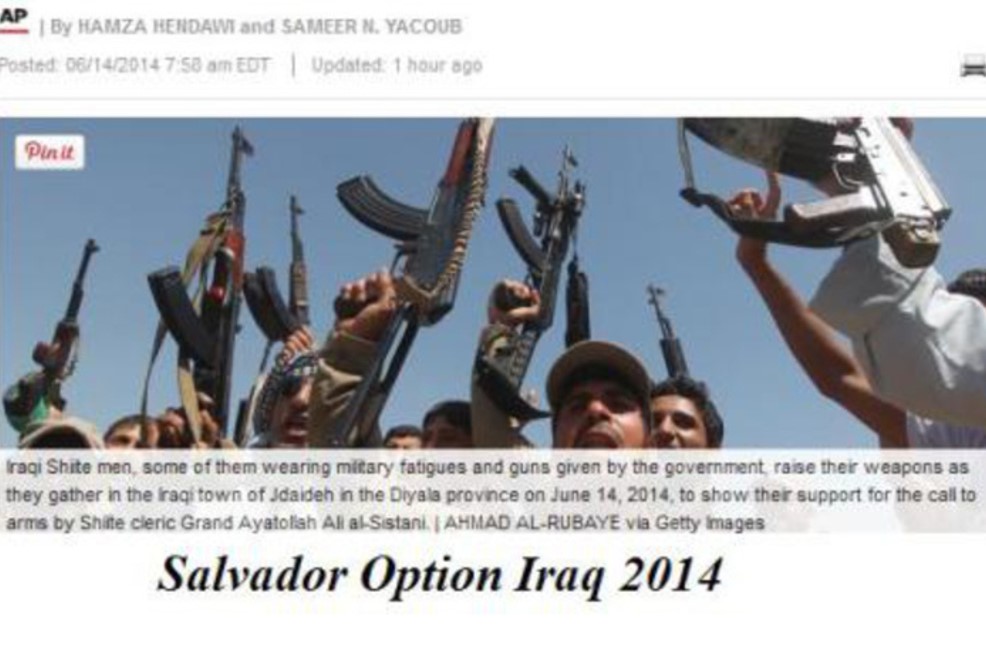
All about Syria? No. It’s cover for the new phase of death squads in Iraq. “Stability” as the Masters of the Universe would call it.
What to do about the deepening quagmire of Iraq? The Pentagon’s latest approach is being called “the Salvador option”–and the fact that it is being discussed at all is a measure of just how worried Donald Rumsfeld really is. “What everyone agrees is that we can’t just go on as we are,” one senior military officer told NEWSWEEK. “We have to find a way to take the offensive against the insurgents. Right now, we are playing defense. And we are losing.” Last November’s operation in Fallujah, most analysts agree, succeeded less in breaking “the back” of the insurgency–as Marine Gen. John Sattler optimistically declared at the time–than in spreading it out. Newsweek 2005
To hear the MSM tell it, the latest news (if you want to call it that) out of Iraq (our precious 52nd state) is that “the turrurrurrurrists” are rebelling and threatening to upset the Green Zone.
A call to arms has been put out and the Shite’s who have been blessed with power and access to globalist money, are signing up, shouting religious dogma and hoping on the back of trucks with AK-47′s to go wipe out “the terrorists” while basically, over here, we applaud (or we are supposed to lest we get called “conspiracy theorists” or something.
“Dozens climbed into the back of army trucks, chanting Shiite slogans and hoisting assault rifles, pledging to battle the Sunni group known as the Islamic State of Iraq and the Levant, which has launched a lightning advance across the country. By God’s will, we will be victorious.” said one volunteer, Ali Saleh Aziz. “We will not be stopped by the ISIL or any other terrorists.” AP
Oh, there are scaaaaary pictures of guys with rags on their heads holding weapons, videos of guys pretending like they’re cutting off people’s heads, bodies in nifty set-pieces laying around pretending to have been shot.. all sorts of stage managed stunts designed to get the world population on board whatever decision is made to deal with this stuff.
But what is it really all about? Syria? Iran? Or something else entirely?
And to that end you have pretty much the same story coming from both the MSM as well as the controlled opposition sites like Di$info Jone$ and Zero Hedge.
“As The Daily Mail reports, blood-thirsty jihadists are carrying out summary executions on civilians, Iraqi soldiers and police officers – including 17 in one street alone – on their warpath to Baghdad, the UN said today. Zero Hedge via Prison Planet
“The Salafist horde currently making its way to Baghdad from northern Iraq is a secret and specialized army of terrorists funded, armed and supported by Saudi Arabia, the Sunni caliphate of Iraq and the Levant, and NATO.” Prison Planet
Now, let’s be clear: this group that supposedly is tearing up our precious Iraq is run by the CIA and our allies in Saudi Arabia. The ISIL (Islamic State in Iraq and the Levant ) was created in 2007 as a Wahhabist offshoot of the CIA’s al Qaeda. They are Sunni extremists but not “extremists” in terms of their religious determinations, they are far-far right Sunnis, basically worshiping whomever pays them to inflict destabilizing terror campaigns across the world.
They helped the administration regime change Libya and Egypt after we determined that the Egyptian people voted the wrong way. They’ve been in Syria fighting on the same side as ObamaGod but somehow everyone in the MSM seems to forget those facts today.
Yeah, Prison Planet and folks like “Tony Cartalucci” (whatever they call themselves theses days) are wise to that aspect of this particular destabilization campaign. And by telling you that, they will gain your trust.
However, they’re not telling you what’s really going on.
They say these guys are in Iraq in order to create a pretext to re-invade Iraq and eventually drive into Syria. After all, the ISIL is alternatively called the ISIS ( Islamic State in Iraq and Syria ) and they do claim a territory that bleeds north into Syria and Turkey as their own.
So, here we have a situation where these mercenaries who have been on our payroll in the past are now running through Iraq (with good intel mind you and military tactical training) causing all kinds of mayhem while making sure to post the most offensive and frightening videos they can on YouTube, all the while, the thrust of the story in both the alternative and controlled press is that they are “terrorists” that must be stopped.
Syria the big prize?
I don’t think so.
The key here is looking at how the Iraqis, under our control, are mobilizing the profiting Shites; rounding them up in trucks with police and military escorts and rushing them out to deal with “the terrorists”
This has been done SO MANY TIMES when we install neoliberal regimes in the past. It was done in Indonesia. It was done in Chile. It was done most recently in India. “Boko Haram”? al Qaeda in Yemen? South Sudan? “KONY 2012″? Take your pick. When our “interests” are at stake in our client states, the “turrurrurists” always seem to show up right on time to justify U.S. involvement or a good old fashioned death squad cleansing of the dissidents. Remember those bombs that went off in Egypt just as al Sisi needed justification to start rounding up the opposition before the election?
It’s such a tired little trick, it’s almost a cliche when you think about it and God knows I’ve written about it time and time again.
Hell, the same thing was done in Iraq in 2005 and 2006 under the Bush administration. That program was instigated by the Sunni Awakening; an organized revolution that was taking place in direct opposition to our “national interests” that had been profiting from the Iraq invasion.
They sent in John Negroponte first, making him our ambassador to the country. He brought in an old Salvador Option partner of his named James Steele. These guys have been creating death squads on behalf of big business for quite sometime.
“Yesterday, the Guardian published an article detailing how the US turned to the use of death squads in Iraq to quell the rise of Sunni militias. The article provides convincing evidence that this was an intentional policy and was in fact a central tenet of David Petraeus’ often-praised counterinsurgency, or COIN, strategy. The key person in the Guardian’s reporting is James Steele, who was a veteran in organizing Central American death squads on behalf of the US during the Reagan years.” Empty Wheel
Yes, these guys posing for “scary photos” and “jihad videos” are our assets. But they aren’t the targets of what is to come.
With our forces practically out of the country and neoliberal economics causing disastrous living conditions for the unwashed masses, the opposition to our corrupt puppet regime is growing exponentially.
The threat is that we will lose the control the Bush administration imposed on Iraq with Shock and Awe and death squads and torture and extreme renditions and a whole bunch of lies.
President Barack Obama should authorize air strikes “as quickly as possible” to thwart radical Islamist forces advancing toward Baghdad, said former Director of National Intelligence John Negroponte.
Given the momentum shown by the Sunni insurgents, it is “entirely appropriate” for the U.S. to help Iraq’s government as it marshals its own defense forces, he said. Bloomberg
This threat translates to a lack of “stability” to our government’s corporate masters (i.e. the “Masters of the Universe”) and that can’t be allowed to happen on Barack’s watch.
However, President Peace Prize can’t be seen as the next Dick Cheney, going in there with guns blazing and death squads rounding up dissidents and political opposition / union leaders. So…
On Friday, President Barack Obama ruled out sending American troops “back into combat”. However, the administration is weighing whether to launch airstrikes inside Iraq to target terrorists.” Press TV
Enter the boogeyman… our favorite Wahhabist mercenaries.
Now everyone is calling for drone strikes and Special Forces teams, all in the name of “humanitarian intervention” and such.
That’s over here. In the meantime, trucks are being loaded up with Iraqi Brownshirts who are dedicated to preserving the new order of Iraq and willing to make a name for themselves in “the Party” by kicking in doors at 3 am and killing those pesky malcontents who are upsetting the neoliberal apple cart.
This isn’t about Syria. It’s a replay of an old tactic. We’ve seen it before. We will see it again.
Leonardo da Vinci’s notebook: The Codex Leicester
Codescope is an interactive kiosk with a touch screen that lets you explore the Codex Leicester, a notebook of Leonardo da Vinci’s that Bill Gates bought in 1994. The Codex and the Codescope are traveling together to various museums in Europe as part of the 500th anniversary of da Vinci’s death.
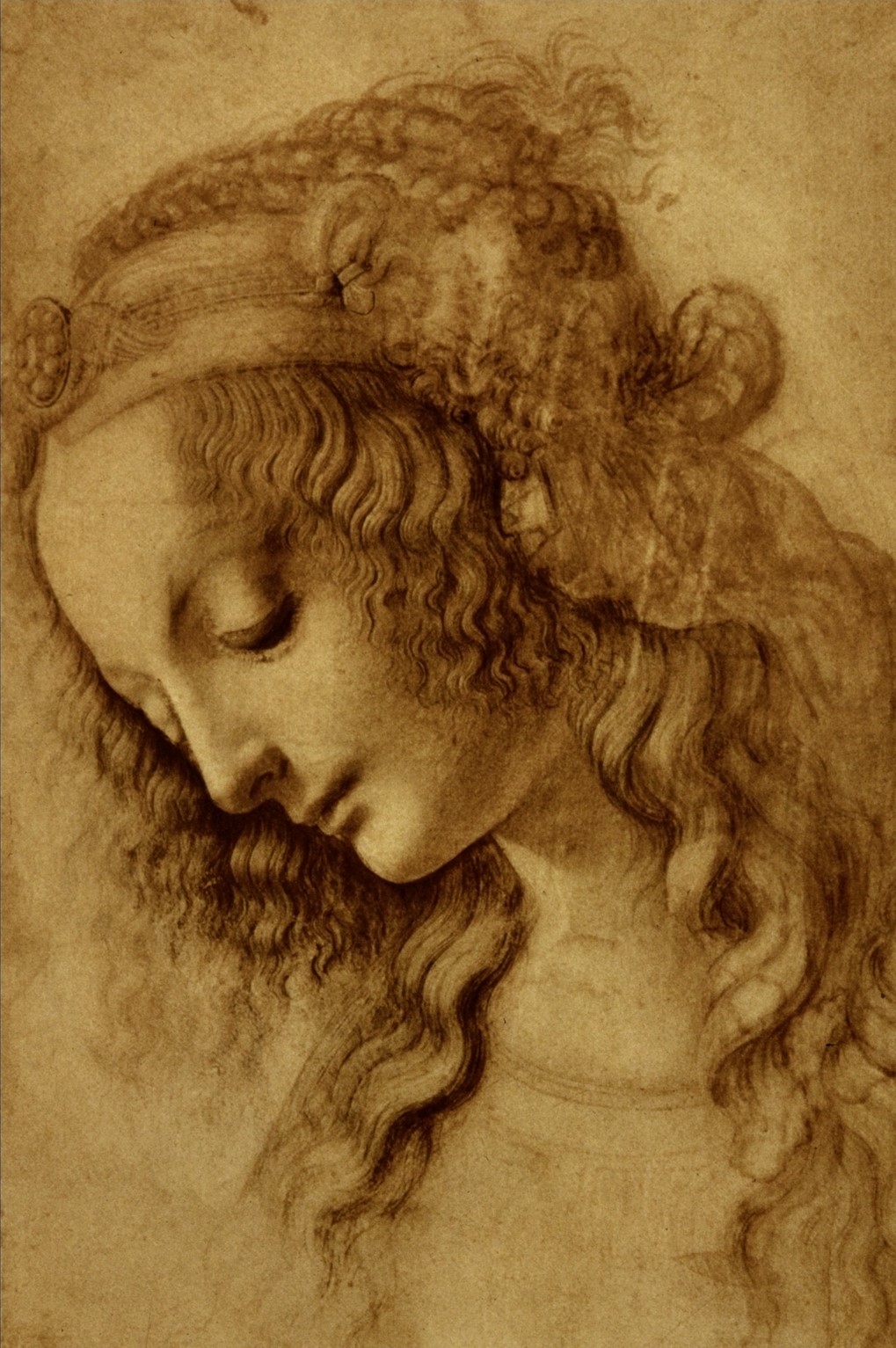
The Lady With Dishevelled Hair (1506) and Woman In Profile (1475) by Leonardo da Vinci.