Product developed based on creating a Walkman roughly the size of a cassette case. This model featured one AA battery, head, pinch roller, and headphone jack arranged in a row, with the cassette placed horizontally alongside this structure. From this point forward, the Walkman was established as a modern necessity, easily carried in a handbag or pocket.
Manufacturer: Sony Model: WM-20 Gang: Stretchy Together: 5 6 Year: 1983 Made in Japan Initial price: 27000 ¥ Today 237 $ Battery: 1AA Colors: black blue (dark) gray pink Dimensions: 6711018 mm (133 cm³) Weight: 190 gr Window: yes Expandable: yes Drive: BSL Tape selector: Manual switch Waterproof: no Speaker: no DC in: yes Record by input: no Record by int mic: no Hotline mode: no Cue: no Balance (L/R): no Phone type: 2 Equalizer: no Auto volume: no Auto reverse: no AMS: no Blank skip: no Logic control: no Hold lock: no Bass: no Noise reduction: Dolby B NR Radio: no Remote control: no Wireless headphone: no Indicator: led
Conventional thinking suggests autism mainly affects boys. But more and more girls – and adult women – are being diagnosed with the condition. Up to 100,000 girls with autism could be still undiagnosed. Keme Nzerem has been to visit the only school in the UK that’s exclusively for autistic girls.
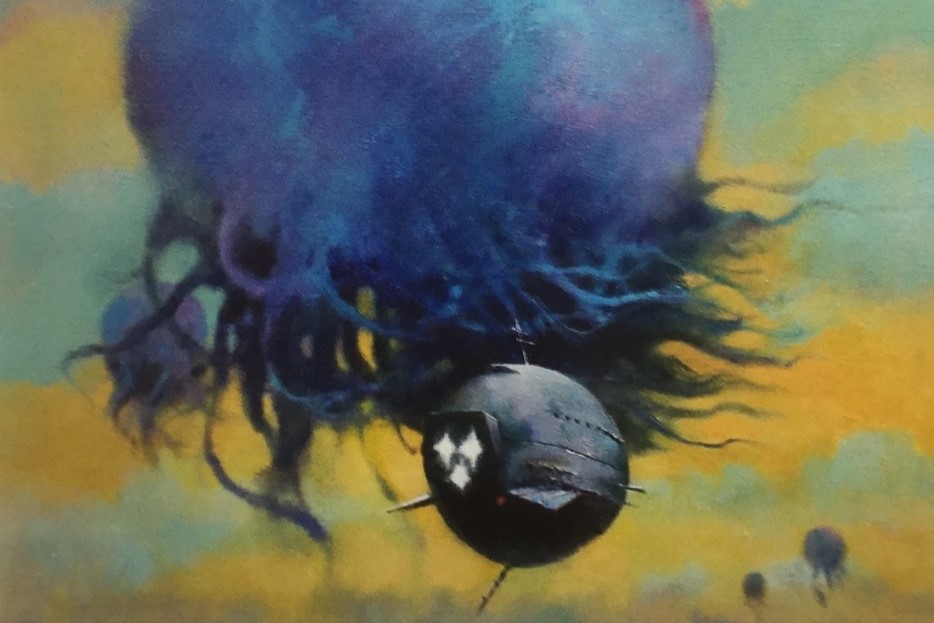
Even on long voyages between worlds and on isolated scientific stations in deep space, humans can’t escape the reach of politics and power. In Leviathans of Jupiter by Ben Bova, young microbiologist Deidre Ambrose travels from her home in the asteroid belt to Jupiter to take advantage of an opportunity that will provide her a scholarship to study on Earth afterwards.
Unfortunately, she becomes a pawn in a political game being played by a power-hungry heiress who plans the downfall of her perceived rival, the director of the Jupiter station who hired Deidre.
The director, Grant Archer (from Bova’s book, Jupiter) longs to prove that the leviathans, giant creatures discovered living deep in Jupiter’s atmosphere, are intelligent. To do this, he plans to send humans on a dangerous mission to study, and possibly make first contact, with the leviathans. The crew includes Deidre and Dorn, a cyborg from one of Bova’s earlier novels. The heiress places everyone in danger with her attempts to stop the mission.
The descriptions of life in the atmosphere of Jupiter are superbly creative and showcase the imaginative talents of the author. The technical details of the ship and station added immensely to the story — almost becoming characters in their own right.
Space enthusiasts will especially enjoy being immersed in water with dolphins being used in a test of a new communication system, in perfluorocarbon to withstand the high pressure inside the ship, and then deep in Jupiter’s mostly hydrogen atmosphere where the leviathans live. Experiencing these new worlds without the actual danger of going there is one of the true joys of a good science fiction read.
The only thing that somewhat spoiled my reading experience was the use of viewpoint shift to explain what was going on in an almost omniscient way instead of allowing me to figure things out with only the information available to the main characters. However, the story proceeded in a logical fashion and came to a satisfying conclusion.
Leviathans of Jupiter is the 18th book in Bova’s Grand Tour series and well worth reading. The book provides a great escape into a future where humans continue to find ingenious ways to survive in strange and challenging environments, even while enduring the seemingly unavoidable politics involved in all human endeavors.
Whenever I talk to people about the masterpieces of the PS2 era, rarely do I hear people mention ICO, the first game created by the developers who went on to release Shadow of the Colossus. Today, I want to talk about this forgotten gem.
“The lasting and ultimately most important reputation of a film is not based on reviews, but on what, if anything, people say about it over the years, and on how much affection for it they have.” Stanley Kubrick (July 26, 1928 – March 7, 1999)
Stanley Kubrick’s “The Aristocats”
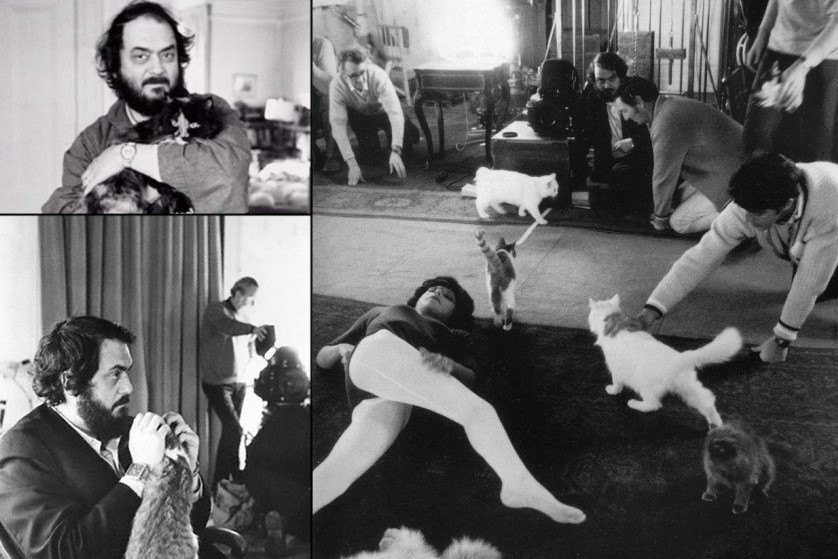
A lifelong subscriber to “Cat Fancier” magazine, Kubrick adopted all unclaimed cats from “A Clockwork Orange”. He later planned to feature them in a live-action version of “The Aristocats”; with Scatman Crothers reprising his role as “Scat Cat”. The script, by Terry Southern, was based on the notorious shaggy-dog-story/dirty joke, “The Aristocrats”.
The project was canceled when Kubrick became concerned about the safety and comfort of the cats during a prolonged production.
Later, he cast some of the cats (and Scatman of course), in “The Shining”, but their scenes were cut after the film’s opening weekend. Traces of them remain, however, such as when Ullman asks Jack if his luggage arrived ok, you can glimpse the cat carrier sitting amongst it, in the big pile by the door. And there was another scene where they cause Wendy to burn some toast, and Jack has a fit about it.
“He was mainly interested in making movies, and feeding his cats when there was a break,” says Vincent LoBrutto, his biographer (in a Movie Geeks United podcast).
“His favorite cat used to sleep in a small climatized room and I had to take him Evian water and fresh grass to eat every morning.” says Emilio D’Alessandro, his chauffeur and all-around assistant.
The writer Alex Ross, in “Stanley Kubrick Was My Friend, Too”, tells of Kubrick’s next attempt to combine his two loves:
Stanley always had trouble with actors, and he had the idea of casting this [new] film entirely with his favorite cats and dogs. I struggled mightily with the limitations that this plan placed on my style. Each page of the script had to be submitted to his very favorite cat, Ophuls, who was only mildly amused by the material. The project gradually ran out of steam.
Below is “Polly”, who appeared in “Eyes Wide Shut”.
“Polly loved Dad. She would sleep on his chest if he let her. I painted the picture of her for his 60th birthday.” (Katharina Kubrick, quoted in The Encyclopedia of Stanley Kubrick)
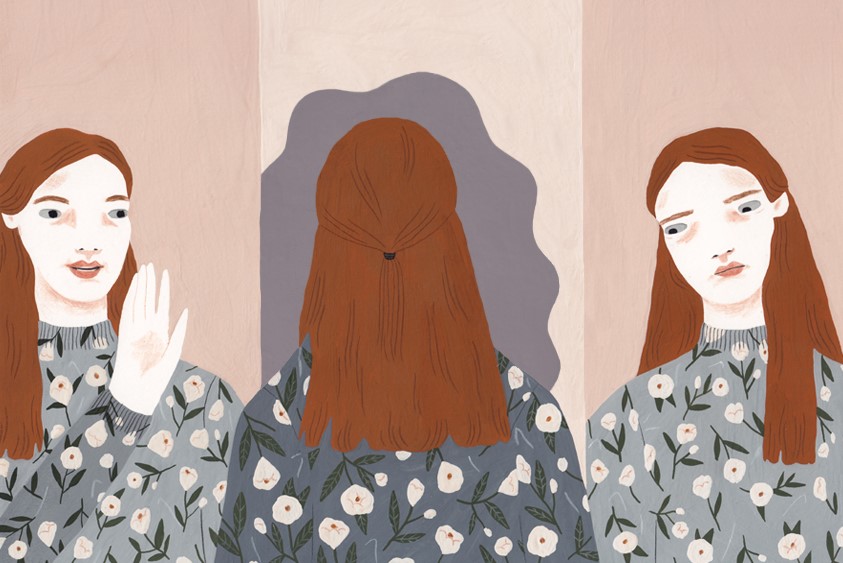
Many girls hide their autism, sometimes evading diagnosis well into adulthood. These efforts can help women on the spectrum socially and professionally, but they can also do serious harm.
Except for her family and closest friends, no one in Jennifer’s various circles knows that she is on the spectrum. Jennifer was not diagnosed with autism until she was 45 — and then only because she wanted confirmation of what she had figured out for herself over the previous decade. Most of her life, she says, she evaded a diagnosis by forcing herself to stop doing things her parents and others found strange or unacceptable. (For privacy reasons, Jennifer asked that we not use her last name.)
Over several weeks of emailing back and forth, Jennifer confides in me some of the tricks she uses to mask her autism — for example, staring at the spot between someone’s eyes instead of into their eyes, which makes her uncomfortable. But when we speak for the first time over video chat one Friday afternoon in January, I cannot pick up on any of these ploys.
She confesses to being anxious. “I didn’t put on my interview face,” she says. But her nervousness, too, is hidden — at least until she tells me that she is tapping her foot off camera and biting down on the chewing gum in her mouth. The only possible ‘tell’ I notice is that she gathers up hanks of her shoulder-length brown hair, pulls them back from her face and then lets them drop — over and over again.
In the course of more than an hour, Jennifer, a 48-year-old writer, describes the intense social and communication difficulties she experiences almost daily. She can express herself easily in writing, she says, but becomes disoriented during face-to-face communication. “The immediacy of the interaction messes with my processing,” she says.
“Am I making any sense at all?” she suddenly bursts out. She is, but often fears she is not.
To compensate, Jennifer says she practices how to act. Before attending a birthday party with her son, for example, she prepares herself to be “on,” correcting her posture and habitual fidgeting. She demonstrates for me how she sits up straight and becomes still. Her face takes on a pleasant and engaged expression, one she might adopt during conversation with another parent. To keep a dialogue going, she might drop in a few well-rehearsed catchphrases, such as “good grief” or “go big or go home.” “I feel if I do the nods, they won’t feel I’m uninterested,” she says.
Over the past few years, scientists have discovered that, like Jennifer, many women on the spectrum ‘camouflage’ the signs of their autism. This masking may explain at least in part why three to four times as many boys as girls are diagnosed with the condition. It might also account for why girls diagnosed young tend to show severe traits, and highly intelligent girls are often diagnosed late. (Men on the spectrum also camouflage, researchers have found, but not as commonly as women.)
Nearly everyone makes small adjustments to fit in better or conform to social norms, but camouflaging calls for constant and elaborate effort. It can help women with autism maintain their relationships and careers, but those gains often come at a heavy cost, including physical exhaustion and extreme anxiety.
“Camouflaging is often about a desperate and sometimes subconscious survival battle,” says Kajsa Igelström, assistant professor of neuroscience at Linköping University in Sweden. “And this is an important point, I think — that camouflaging often develops as a natural adaptation strategy to navigate reality,” she says. “For many women, it’s not until they get properly diagnosed, recognized and accepted that they can fully map out who they are.”
Even so, not all women who camouflage say they would have wanted to know about their autism earlier — and researchers acknowledge that the issue is fraught with complexities. Receiving a formal diagnosis often helps women understand themselves better and tap greater support, but some women say it comes with its own burdens, such as a stigmatizing label and lower expectations for achievement.
Because so many more boys are diagnosed with autism than girls are, clinicians don’t always think of autism when they see girls who are quiet or appear to be struggling socially. William Mandy, a clinical psychologist in London, says he and his colleagues routinely used to see girls who had been shuffled from one agency or doctor to another, often misdiagnosed with other conditions. “Initially, we had no clue they needed help or support with autism,” he says.
Over time, Mandy and others began to suspect that autism looks different in girls. When they interviewed girls or women on the spectrum, they couldn’t always see signs of their autism but got glimmers of a phenomenon they call ‘camouflaging’ or ‘masking.’ In a few small studies starting in 2016, the researchers confirmed that, at least among women with high intelligence quotients (IQ), camouflaging is common. They also noted possible gender differences that help girls escape clinicians’ notice: Whereas boys with autism might be overactive or appear to misbehave, girls more often seem anxious or depressed.
Last year, a team of researchers in the United States extended that work. They visited several schoolyards during recess and observed interactions among 48 boys and 48 girls, aged 7 or 8 on average, half of each group diagnosed with autism. They discovered that girls with autism tend to stay close to the other girls, weaving in and out of their activities. By contrast, boys with autism tend to play by themselves, off to the side. Clinicians and teachers look for social isolation, among other things, to spot children on the spectrum. But this study revealed that by using that criterion alone, they would miss many girls with autism.
Typical girls and boys play differently, says Connie Kasari, a researcher at the University of California, Los Angeles, who co-led the study. While many boys are playing a sport, she says, girls are often talking and gossiping, and involved in intimate relationships. The typical girls in the study would flit from group to group, she says. The girls with autism appeared to be doing the same thing, but what was actually happening, the investigators learned, was different: The girls with autism were rejected repeatedly from the groups, but would persist or try to join another one. The scientists say these girls may be more motivated to fit in than the boys are, so they work harder at it.
Delaine Swearman, 38, says she wanted badly to fit in when she was about 10 or 11, but felt she was too different from the other girls in her school. She studied the girls she liked and concluded, “If I pretended to like everything they liked and to go along with everything, that maybe they would accept me,” she says. Her schoolmates were avid fans of the band New Kids on the Block. So Swearman, who says she had zero interest in the band, feigned a passion she did not feel. She made a few more friends, but felt she was never being herself. Swearman, like Jennifer, was not diagnosed until adulthood, when she was 30.
Even when teachers do flag girls for an autism evaluation, standard diagnostic measures may fail to pick up on their autism. For example, in a study last year, researchers looked at 114 boys and 114 girls with autism. They analyzed the children’s scores on the Autism Diagnostic Observation Schedule (ADOS) and on parent reports of autism traits and daily living skills, such as getting dressed. They found that even when the girls have ADOS scores similar to those of boys, they tend to be more severely impaired: The parents of girls included in the study had rated their daughters lower than the boys in terms of living skills and higher in terms of difficulties with social awareness and restricted interests or repetitive behaviors. The researchers say girls with less severe traits, especially those with high IQs, may not have scored high enough on the ADOS to be included in their sample in the first place.
These standard tests may miss many girls with autism because they were designed to detect the condition in boys, says lead researcher Allison Ratto, assistant professor at the Center for Autism Spectrum Disorders at Children’s National Health System in Washington, D.C. For instance, the tests screen for restricted interests, but clinicians may not recognize the restricted interests girls with autism have. Boys with autism tend to obsess about things such as taxis, maps or U.S. presidents, but girls on the spectrum are often drawn to animals, dolls or celebrities — interests that closely resemble those of their typical peers and so fly under the radar. “We may need to rethink our measures,” Ratto says, “and perhaps use them in combination with other measures.”
Before scientists can create better screening tools, they need to characterize camouflaging more precisely. A study last year established a working definition for the purpose of research: Camouflaging is the difference between how people seem in social contexts and what’s happening to them on the inside. If, for example, someone has intense autism traits but tends not to show it in her behavior, the disparity means she is camouflaging, says Meng-Chuan Lai, assistant professor of psychiatry at the University of Toronto in Canada, who worked on the study. The definition is necessarily broad, allowing for any effort to mask an autism feature, from suppressing repetitive behaviors known as stimming or talk about obsessive interests to pretending to follow a conversation or imitating neurotypical behavior.
To evaluate some of these methods, Mandy, Lai and their colleagues in the United Kingdom surveyed 55 women, 30 men and 7 individuals who are either transgender or ‘other’ gendered, all diagnosed with autism. They asked what motivates these individuals to mask their autism traits and what techniques they use to achieve their goal. Some of the participants reported that they camouflage in order to connect with friends, find a good job or meet a romantic partner. “Camouflaging well can land you a lucrative job,” Jennifer says. “It helps you get through social interaction without there being a spotlight on your behavior or a giant letter A on your chest.” Others said they camouflage to avoid punishment, to protect themselves from being shunned or attacked, or simply to be seen as ‘normal.’
“I actually got told by a couple of my teachers that I needed to have ‘quiet hands,’” says Katherine Lawrence, a 33-year-old woman with autism in the U.K. “So I had to resort to hiding my hands under the table and ensuring my foot-tapping and leg-jiggling remained out of sight as much as possible.” Lawrence, who was not diagnosed with autism until age 28, says she knew that otherwise, her classmates would think she was strange and her teachers would punish her for distracting others.
The adults in the survey described an imaginative store of tools they call upon in different situations to avoid pain and gain acceptance. If, for example, someone has trouble starting a conversation, she might practice smiling first, Lai says, or prepare jokes as an ice-breaker. Many women develop a repertoire of personas for different audiences. Jennifer says she studies other people’s behavior and learns gestures or phrases that, to her, seem to project confidence; she often practices in front of a mirror.
Before a job interview, she writes down the questions she thinks she will be asked, and then writes down and memorizes the answers. She has also committed to memory four anecdotes she can tell about how she met a challenging deadline. The survey found that women on the spectrum often create similar rules and scripts for themselves for having conversations. To avoid speaking too much about a restricted interest, they may rehearse stories about other topics. To hide the full extent of her anxiety when she is “shaking inside” because, say, an event is not starting on time, Swearman has prepared herself to say, “I’m upset right now. I can’t focus; I can’t talk to you right now.”
Some women say that, in particular, they put in a great deal of effort into disguising their stimming. “For many people, stimming may be a way to self-soothe, self-regulate and relieve anxiety, among other things,” Lai says. And yet these motions — which can include flapping hands, spinning, scratching and head-banging — can also readily ‘out’ these people as having autism.
Igelström and her colleagues interviewed 342 people, mostly women and a few transpeople, about camouflaging their stimming. Many of the participants had self-diagnosed, but 155 women have an official autism diagnosis. Nearly 80 percent of the participants had tried to implement strategies to make stimming less detectable, Igelström says. The most common method is redirecting their energy into less visible muscle movements, such as sucking and clenching their teeth or tensing and relaxing their thigh muscles. The majority also try to channel their need to stim into more socially acceptable movements, such as tapping a pen, doodling or playing with objects under the table. Many try to confine their stimming to times when they are alone or in a safe place, such as with family. Igelström found that a few individuals try to prevent stimming altogether by way of sheer will or by restraining themselves — by sitting on their hands, for example.
For Lawrence, her need to fidget with her hands, tap her foot or jiggle her leg feels too urgent to suppress. “I do it because if my brain doesn’t get frequent input from the respective body parts, it loses track of where in space that body part is,” she says. “It also helps me concentrate on what I am doing.”
All of these strategies call for considerable effort. Exhaustion was a near-universal response in the 2017 British survey: The adults interviewed described feeling utterly drained — mentally, physically and emotionally. One woman, Mandy says, explained that after camouflaging for any length of time, she needs to curl up in the fetal position to recover. Others said they feel their friendships are not real because they are based on a lie, increasing their sense of loneliness. And many said they have played so many roles to disguise themselves through the years that they have lost sight of their true identity.
Igelström says some of the women in her study told her that suppressing repetitive movements feels ‘unhealthy’ because the stimming helps them to regulate their emotions, sensory input or ability to focus. Camouflaging feels unhealthy for Lawrence, too. She has to spend so much effort to fit in, she says, that she has little physical energy for tasks such as housework, little mental energy for processing her thoughts and interactions, and poor control over her emotions. The combination tips her into a volatile state in which “I am more likely to experience a meltdown or shutdown,” she says.
Lawrence says that if she’d been diagnosed as a child, her mother might have understood her better. She might have also avoided a long history of depression and self-harm. “One of the main reasons I went down that route was because I knew I was different but didn’t know why — I was bullied quite badly at school,” she says.
The vast majority of women diagnosed later in life say that not knowing early on that they have autism hurt them. In a small 2016 study, Mandy and his colleagues interviewed 14 young women not diagnosed with autism until late adolescence or adulthood. Many described experiences of sexual abuse. They also said that, had their condition been known, they would have been less misunderstood and alienated at school. They might have also received much-needed support sooner.
Others might have benefited from knowing themselves better. Swearman completed a master’s degree to be a physician assistant, but ultimately stopped because of issues related to her autism. “I was actually very good at what I did,” she says. But “it was too much social pressure, too much sensory stimulation, a lot of miscommunication and misinterpretation between myself and supervisors, due to thinking differences.” It was only after she stopped working that her counselor suggested she might have autism. She read up on it and discovered, “Oh, my gosh, that’s me!” she recalls. It was a major turning point: Everything started to make sense.
It’s only after a diagnosis that a woman may ask, “Which parts of myself are an act and which parts of me have been hidden? What do I have that’s valuable inside myself that can’t be expressed because I’m constantly and automatically camouflaging my autistic traits?” Igelström says. “None of those questions can be processed without first getting diagnosed, or at least self-identify, and then replaying the past with this new insight. And for many women, this happens late in life after years of camouflaging in a very uncontrolled, destructive and subconscious way, with many mental-health problems as a consequence.”
A diagnosis leads some women to abandon camouflaging. “Realizing that I am not broken, that I simply have a different neurology from the majority of the population and that there is nothing wrong with me the way I am means that I will not hide who I am just to fit in or make neurotypical people more comfortable,” Lawrence says.
Others learn to make camouflaging work for them, mitigating its negative effects. They may use masking techniques when they first make a new connection, but over time become more authentically themselves. Those who feel that camouflaging is within their control can plan to give themselves breaks, from going to the bathroom for a few minutes to leaving an event early or forgoing it entirely. “I learned to take care of myself better,” Swearman says. “The strategy is self-awareness.”
Jennifer concedes that knowing about her autism earlier would have helped her, and yet she is “torn” about whether it would have been better. Because she didn’t have a diagnosis, she says, she also had no excuses. “I had to suck it up and deal. It was a really difficult struggle, and I made loads of mistakes — still do — but there was simply no choice,” she says. “If I had been labeled as autistic, maybe I wouldn’t have tried so hard and achieved all the things I’ve achieved.”
She has achieved a great deal. During our video chat that snowy afternoon in January, it’s clear that one of her most significant accomplishments has been finding a balance in life that works for her. Her camouflaging skills allow her to put on a warm, personable exterior, one that has helped her build a successful career. But thanks to a few friends and a husband and son who love her for who she is, she can let that mask drop when it becomes too heavy.
There’s no better introduction to help summarise what Warcraft III: Reign of Chaos means to PC gaming than disclosing this simple tidbit: 4.5 million initial orders. This game was already a bestseller the day it was announced, seeing as Blizzard Entertainment is truly the only development studio in the industry that can sell games on its name alone.
Curiously beginning life as a cartoon-style point-and-click graphic adventure that followed the story of a young orc raised by humans, practically all of the work put into the game’s original design was scrapped back at the turn of the century. Blizzard instead decided to revert to Warcraft’s roots and the very thing that made the company huge in the first place: real-time strategy. The concept of the orphaned orc Thrall was salvaged, though, and this particular character plays one of the many key, “starring roles” in this summer’s PC blockbuster.
Blizzard has two enviable luxuries when it makes its games: first, the designers can spend as long as they damn well please on them, and second, they can work in a bubble, ignoring much of what is happening in the industry all around them. 3D engine aside, when you first load up Warcraft III, you could almost believe you’re playing its 1995 predecessor. Same screen layout, same space-hogging interface, same vidscreen with animated unit portrait, same keyboard shortcuts. Of course, this makes sense. It’s believable that a majority of the large anticipation of sales is coming from gamers still hooked on Starcraft or even the re-released Warcraft II: Battle.net Edition, though arguably superior titles have released since.
This is not to say that there aren’t improvements – there’s plenty! Climbing the evolutionary ladder from Starcraft’s three unique races, the game now features four very distinctly different sides whose balance has been fine-tuned in that inimitable Blizzard way. There are the familiar humans and orcs, plus the ghastly undead scourge and the tree-lovin’ night elves.
The interface and controls have also enjoyed some tweaking, including the ability to set spellcasters to auto-cast, peons to auto-repair, quick-select idle workers, use smart formations (range attackers stay behind melee), and the most useful of the bunch: subgroups. You can group units in the usual CTRL-# way, but now hitting TAB cycles through the unit types in your group for quick, easy access to different special abilities.
But all of these changes are minor in comparison to the additions of heroes. Okay, commander units aren’t exactly a new idea, but they’ve been implemented well in Warcraft III, specifically in the single-player campaign. Every controllable hero is a character that gets a lot of screen time and dialog in the game’s story, so you’ll always have at least one unit on the battlefield whose motive is clear and well-being you want to protect. To use the Star Trek analogy, it’s the difference between killing off Kirk and killing off a Red Shirt (you’d actually shed tears for the Red Shirt).
You also get a small but significant say in how you want your hero to develop. Heroes gain experience in battle and eventually level up, acquiring skill points to assign as you wish. Ultimately, they’ll have access to everything anyway, but the climb up is always fun. The RPG element is accentuated further in that heroes have a six-slot inventory for items you find either from slain creatures, inside crates (yes, crates!) or even to buy at merchants scattered around the maps. Items either passively increase your stats when held or can be cast to summon help, award health or lay traps. Blizzard were able to pull this off to make it more than a simplistic gimmick, but not too complex to be worthless in the fast-paced combat of RTS.
All the races have a greatly different set of units, but generally function in the same way to be easy enough to pick up. They all have their form of workers that gather gold and wood — with the only difference being the night elves “spiritually” capture the resource from the trees without chopping them down — all have a “farm” structure to increase population limit, and all have various barracks to produce military. None quite differ as much as the Zerg did in Starcraft, who had units as farms and no barracks, just auto-spawning, morphing larvae. The undead are restricted to building on blight around their base (Zerg version of creep) and summon in new structures instead of building them (like the Protoss). Night elves’ structures are all living trees that can be uprooted and fight when the base comes under attack.
While the advancement of the campaign is completely linear, the missions themselves follow Starcraft’s trend of unpredictability. In-game cutscenes interject game action frequently, yet not intrusively, and usually end with new objectives given – or “quests” as they’re called here, swaying again towards the RPG camp. Many missions also include hidden subquests that are optional but always reward you with something that can either help achieve the primary goal or offer trinkets to keep until you need to use them.
The style of play required is also unusually diverse for a real-time strategy game. Around a third of the missions actually have no base building in them at all, and become almost Diablo-like in nature, as you “dungeon crawl” the terrain with a handful of units, breaking down gates and doors, ransacking for treasure and trying to keep your party alive. The unit exploration missions were a trait of Starcraft, of course, but it’s advanced upon by often featuring two completely separated areas of the map where you have multiple parties with their own objectives; for example, in one mission, you have to prevent your base in the bottom-right from being overrun, while your hero and his group on the left has to advance upwards to retrieve a special artefact of typically insane power.
One of Starcraft’s most unique and praised qualities was its sequential campaigns that advanced the storyline, while giving you the perspective of every warring side. Warcraft III does it again for all four races, and again features tales of betrayal and corruption. It’s amusing that despite their titles, many of the main cast end up as anti-heroes, but that’s what makes the whole campaign so fascinating to see where the story turns next and understanding everyone’s motives. Like any fantasy yarn, the rules are obviously made up as you go along, but so few games in this genre manage to get you even remotely interested in the characters, so it’s a definite triumph.
Warcraft III’s 3D graphics engine isn’t quite the cream of the crop with some rather blurry textures and jagged, low-count polygon models. Zooming up close to the action isn’t anywhere near as bad as Empire Earth, but it’s surpassed by Dungeon Siege, and we could do with a good deal more freedom with our camera axes.
But what Warcraft lacks in technology, it makes up for with the flair, imagination and careful attentiveness from its art designers. Anachronox springs to mind as another example of a game providing original and shockingly good aesthetics with an ageing engine. Environments are lush, colourful and alive with ambient creatures, running streams, moving trees and great weather and night/day effects. There are some huge, fantastic creatures like the upper level demons and gigantic flying dragons that are breathtaking. The overall style continues the cartoony tradition of its predecessor, especially in the bouncy manner that creatures are animated.
Productions values have become almost a self-fulfilling prophecy with Blizzard. People expect it a certain way, they produce it that way. There’s the film-quality CG cutscenes between campaigns that started with Starcraft and Diablo, wonderful voice acting and rousing musical scores. Blizzard trademarks are present, such as the exploding sheep and the usual helping of offbeat, pop culture referencing humour that so starkly contrasts the deadly serious, sweeping epic Lord of the Rings-style fantasy storyline. (You go from lines like: “Only there can you combat the shadow and save this world from the flame,” to a dwarf ranting: “And this one time, at bandit camp…”)
We’ve actually figured out exactly what has delayed Warcraft’s release the past few months: the hilarious end credit cutscenes that would make even a laborious game worth finishing. This company is full of quirky talent; they desperately need to make a comedy of some sort. Remember, no vertices were harmed in the making of this game.
Multiplayer setup is as flawless as ever and a shining example of what every game should provide out of the box. Click “multiplayer”, click “battle.net”, login to free account, click “play game”, choose a game type, map and race and incredibly within seconds you’re matched up with a player or players of equal skill who made the same or similar choices. Never has entering a peer-to-peer multiplayer game been so joyously easy. The random opponent matchmaking also serves as the perfect method for keeping the ladder ranking system honest. And for those who like to play with friends, you’ve got a buddy list built in and everything laid out simply to get a game going with minimum fuss.
As for the multiplayer action itself… well, even factoring in the new elements like upkeep (limits resource intake as your army grows), creeps (powerful neutral creatures often placed near unclaimed gold mines), merchants, heroes and the game speed reduction, it’s still a frantic game of claim the most resources and be the first to make a bigger, badder, “rushable” army. But that’s RTS, that’s what makes Starcraft the most played strategy game online and that is undoubtedly the formula that will probably make Warcraft III supersede it.
In the bizarre dimension Blizzard has created for itself, a parallel world where development time is irrelevant, you have 4.5 million raging fans breaking down your door and you only need to reuse the best features from your own games to please them, Warcraft III is the ultimate succession to its series. Sure, they fixed only a few micromanagement issues and ignored outside ideas hailed as innovative in the genre over the last five years. But so what? Conversely, an endless supply of wannabe clone makers ignores Blizzard by pumping out games with no style or personality, so they’re just as much to blame. With a lengthy, compelling campaign, challenging and diverse missions, fascinating heroes and races, and trustworthy multiplayer, Warcraft III is a yet another winner. Unless you’re severely opposed to Blizzard’s style of fast-paced, small skirmish oriented RTS, then its latest creation is worth adding to any fantasy strategy gamer’s collection.