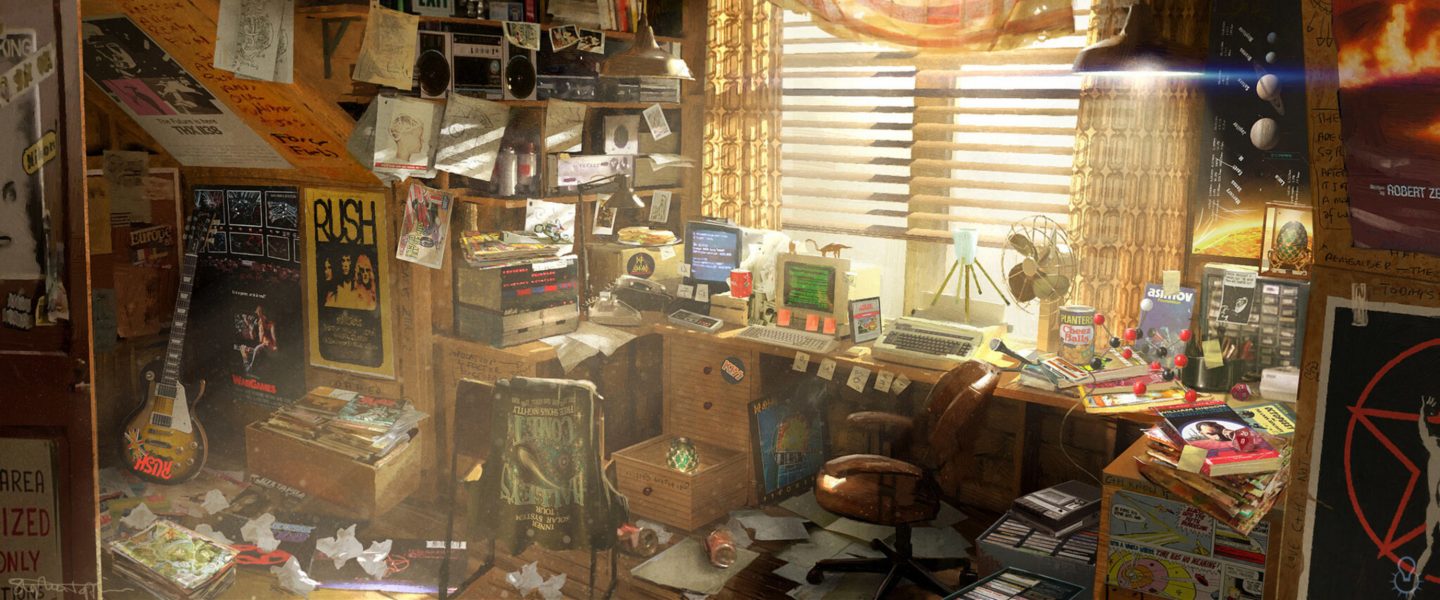




A small group of scientists land on a new planet, a paradise world much like Earth itself. But they are eighty years’ travel away from Earth, and no one is coming to help them. Exploring this strange new world, the scientists discover they may not be as alone as they first believed . . .
Ben Bova died in November last year, and it was that news that made me really investigate his work. His was a name I’d seen on used bookshelves here and there, and no surprise as he was incredibly prolific, with three figures of books to his name. But he doesn’t seem to have hit the big time in the UK the way he has in the US, so it’s perhaps unsurprising it’s taken me a while to get to him. When I compiled my Heavy Hitters list, his name was up there. After a little investigation, it’s his Grand Tour series that immediately grabbed my attention. With over two dozen books, it’s a mix of smaller series and standalones that create a future history of our solar system and beyond. I decided to start with New Earth, which comes towards the end of the Gran Tour chronologically, but is one of the more standalone offerings. Now that I’ve finished, I have only one question.
Why, why, why, did I wait so long to read Ben Bova?
New Earth is an astonishingly good book, easily my favourite book I’ve read this year. Bova’s career spanned decades, and it shows in his writing. Thematically, it’s a very modern novel, with climate change and overpopulation being major concerns. But in the writing itself, the style is reminiscent of the clear-cut, no nonsense prose I associate with Asimov and the Golden Age. Hard SF has a reputation for being impenetrable and tedious. Bova proves that idea to be a fallacy. I can’t remember the last time I read a book this accessible. The concepts involved are headbenders, but I never felt stupid as I was reading. Bova doesn’t exactly hold your hand, but he takes his time to make sure you understand what’s happening. This is idea-driven science fiction at its very finest, and it plays with tropes I love in new and clever ways.
What really sets New Earth apart from almost every other book I’ve read is the pacing. There’s barely any conflict in this book whatsoever, and even that is limited to a few arguments between colleagues. There’s not a trace of actual, physical violence. It’s not that there’s no threat. Events on Earth and elsewhere are borderline apocalyptic, but it all feels very remote. The main thrust of the novel is incredibly cosy. The closest thing I can compare it to is Star Trek. A group of scientists land on a planet, explore it, discuss science and morality, and then reach an understanding that enriches their lives. It’ so simple, but elegantly so, and I wish there were more books like this out there. It’s unashamedly pro-science and deeply humanist at the same time.
Being part of a larger connected universe, there are a few things here that I’m obviously lacking context for. Interludes flash back to our solar system, and the characters here cross over from other Grand Tour novels. Despite the lack of context, my enjoyment of the book was never reduced. They feel like teasers for a larger universe, rather than detracting from the individual novel. This isn’t a Marvel situation where you need to know all the links, it’s a subtle reminder that there is more at work here than just one team of scientists, and absolutely makes me want to read more.
As an introduction to Ben Boa, I couldn’t have hoped for more from New Earth. If the rest of his work is up to this incredible standard, I may have a new favourite author on my hands.
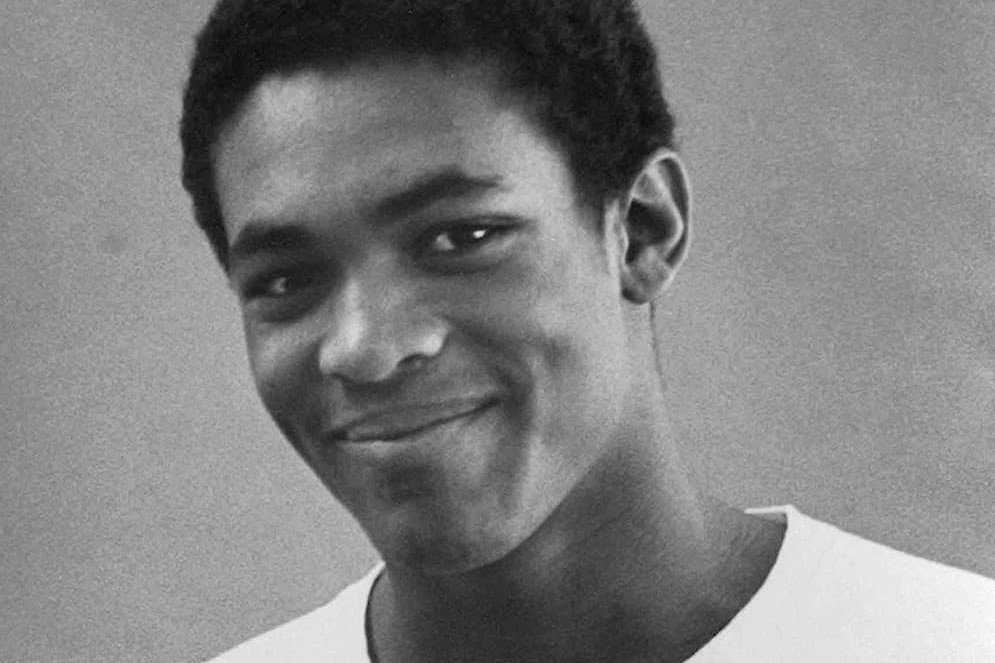
In 1997, Ennis Cosby was shot and killed by Mike Markhasev. The killer claimed it was a botched robbery. Others suspected racism.
Just after midnight, on a chilly Thursday in January, a young man pulled off California’s Interstate 405 and parked at the edge of the quiet mountains. He didn’t have a choice. His dark green Mercedes Benz convertible had a flat, and in his twenty-seven years on Earth, he had probably never needed to change a tire himself. He was a rich kid, a wad of cash in his wallet and a Rolex on his wrist. This was far from unusual in these parts, the Santa Monica Mountains, where Los Angeles’s elite sit on their balconies and watch the city lights float like bioluminescence in the darkness. He had taken the exit for the Skirball Cultural Center, a museum cut into the side of the mountain range and dedicated to “welcoming the stranger” and the “American democratic ideals of freedom and equality.” It was hard to see from where he was sitting.
The exit had taken him to a small connecting road saddled up against the greenery of a mountain. He had been on his way to visit his friend, Stephanie Crane, and took out his cellphone to call her for help. In 1997, guys as rich as him and from a family as prominent as his didn’t have to worry that someone might see his expensive cell phone and think that he was a drug dealer. He wasn’t some punk high school kid with a Motorola and a bag of cocaine swishing in his backpack. In fact, he was on holiday break from his graduate studies at the Teachers College of Columbia University. He struggled with dyslexia, and although he could have easily taken a role in his family’s business, he wanted to help children overcome their learning disorders like he had. He wanted them to understand that there’s a sequence to things, even when nothing seems to make sense.
He waited in his Mercedes. He was in the Sepulveda Pass, the dark corridor between two sides of the Santa Monica Mountains, the freeway running through it like a river of sequins.
Stephanie eventually pulled up behind him and turned on her high beams to give him some light. He got out of his car and inspected the tire. Stephanie was a real friend, maybe even a girlfriend. Even though he had only known her for a few days, and they didn’t go way back, she still came to his rescue, because he was the kind of guy who deserved a thing like that.
As Stephanie sat in her car behind him, another young man emerged out of the darkness, a gun in his hand, and knocked on her window.
“Open the door or I’ll kill you!” yelled eighteen-year-old Mike, a gang member who had been hanging out with his associates at the museum’s Park & Ride across the street.
Stephanie, terrified, sped away for a few meters and then circled back.
In the few seconds that she was gone, Mike ran up to her friend, pointed his .38 caliber pistol at his head, and demanded money.
One of the worst parts of losing a loved one is trying to understand what they were thinking in their last moments of life. I never knew the victim personally, but I remember being a kid and seeing him on the cover of Time magazine while in line at Gelson’s Market with my mother. He sat in a tuxedo with bright eyes and a close-lipped smile, his father draping his arms proudly over his son’s shoulders. The caption to the right of them read, “A Death in the Family.”
As I reviewed the case nearly twenty years later, I was kept awake by the infinite possibilities of his final moments, the eternity in the second in which he realized what was about to happen.
He was confused. He had once said, “The happiest day of my life occurred when I found out I was dyslexic. I believe that life is finding solutions, and the worst feeling to me is confusion.”
Mike, the gangster, later told his friend, “You know what [he] told me? He told me never had a gun to his face before and to kick back and hold on.”
The two young men shook. One was just too slow, so Mike “just blasted him” point-blank in the head, their faces lit up in the night like phosphorous.
By the time Stephanie returned, the victim was lying on his back, his left arm wrapped around his head, his right hand by his knee, still clutching a pack of cigarettes.
Law enforcement said that it was a botched robbery and that Mike and his fellow gangsters, who drove the getaway car, were waiting for a drug connection and found something else. Maybe they had seen the cellphone. It was deemed a “wrong place, wrong time” situation, nothing more or less.
Like an alien abduction.
It was peculiar that the victim’s Rolex had remained on his wrist, the wad of cash still in his pocket. Nothing was stolen from the scene. This irked me, as it had conspiracy theorists all over L.A. Bunk theories, ranging from mob hits to illicit homosexual relationships, flourished everywhere.
But there was no conspiracy behind it––or, at least, not a new or unique one.
It reminded me of a scene from In Cold Blood, what Perry Smith told Truman Capote after murdering the father of the Clutter Family in a botched robbery:
“I didn’t want to harm the man. I thought he was a very nice gentleman. Soft spoken. I thought so right up to the moment I cut his throat.”
There was something Perry Smith hated in Herb Clutter. There was something that Mike hated in his victim, something that was overlooked by law enforcement, the judicial system, the media, and the court of public opinion. It seemed strange to me that no one seemed to acknowledge the obvious:
That Mike was white, and that his victim, Ennis Cosby, son of Bill Cosby, was Black.
Though the murder of Ennis Cosby was shocking, it wasn’t considered as newsworthy as others of its time. The trials of the Menendez Brothers and O.J. Simpson, as well as the ever-present echoes of the Manson Family and the Black Dahlia, dominated the world of L.A. true crime, which had already become its own subgenre. The trial was unremarkable and the case closed relatively quickly (Mike didn’t officially confess until after the trial was over, but he wasn’t fooling anyone before then). What did stand out, to me, was the Cosby’s family’s unusual plea to the judge: to spare the life of their son’s murderer. They didn’t want another young man to die.
The trial ended without incident and was, from then on, regarded as just another celebrity tragedy.
That doesn’t mean that Ennis wasn’t mourned. The public knew him as Theo Huxtable, the handsome and endearing son of America’s then-father, Dr. Cliff Huxtable. Theo was modeled closely after Ennis, especially in his narrative of overcoming dyslexia, a defining feature of both adolescents’ journeys into adulthood. Most viewers of The Cosby Show, which was then in syndication, may have never met Ennis—or even knew that he existed––but they understood him so personally through his television incarnation that the news of his murder would have seemed intimately cruel. Those who knew the connection between Theo and Ennis may have felt like they had lost a friend.
In 2014, when I was in graduate school, I was introduced to Mikhail “Mike” Markhasev over a bottle of iced tea from the snack cart in the visitation room at the state prison in Corcoran, California. I was interviewing men in the Protective Housing Unit, or P.H.U., a place for inmates who couldn’t survive in the general prison population because of the infamy of their crimes. The P.H.U. ended up being a retirement home for aging criminals, like Charles Manson and Sirhan Sirhan, and Mike was one of its few young inmates. He had just turned eighteen when he murdered Ennis. Back then, he had a thick mat of black hair and a clean-shaven face, but over the course of nearly twenty years his features had inverted: a shaved head, a neat, short-boxed beard, and a pair of reading glasses made him appear more like a fellow graduate student than a lifer. Tall, pale, and lean, the prisoner seemed to have avoided the sun and wear of the perilous San Joaquin Valley.
As we introduced ourselves, an elderly Charles Manson gummed down a candy bar behind us.
Over the next few years, Mike and I wrote to each other and visited when we could. In his late thirties, he seemed to show great remorse. He even refused to submit a request for parole, believing that he didn’t deserve to leave prison. He became meticulously devout, spending countless days studying next to a local Orthodox priest in the visitation room in order to slowly piece his soul back together.
Mike wasn’t the only member of a street gang who sought remorse and reform in prison. His previous gang involvement was still, however, perplexing. Although they weren’t rich, his grandparents took good care of him, and he always knew he was loved; nearly two decades later, they still visited him in prison nearly every week, picking at a bowl of nuts. He wasn’t starving for anything. He was a Ukrainian immigrant but spoke English so well that he would have never had trouble making friends. He didn’t fit the pattern of what one might imagine as a fledgling L.A. gangster, born into a continuous cycle of insurmountable poverty and neighborhood violence. His choice to join a Hispanic gang as a white kid from North Hollywood suggested that he was actively looking for trouble, even if there were no indication that he was about to turn.
After the murder, the Los Angeles Times interviewed his former classmate, Robert. “This is really weird. I would talk to him and stuff, and he never seemed like a troublemaker. He was a nice, everyday kind of dude.”
In the same article, an ex-girlfriend remembered him being, “Nice, I don’t want to say too nice, but really, really nice.”
His North Hollywood landlady, Olga, also told the Times, “He dressed like a normal teenager, wore the baggy clothes like everyone, seemed normal. “Nobody ever complained about him.”
After the murder, Mike told another confident, “I killed a n—–. It’s all over the news.”
After a few years, I asked Mike, “Looking back, as a mature man, do you think eighteen-year-old Mike would have pulled the trigger if Ennis weren’t Black?… Do you think he would have spared Ennis if he were white?”
Now, regardless of how remorseful he was, Mike wasn’t stupid. There’s no question that the crime started off as a robbery, and it was clear that Mike, who was loaded on heroin and cocaine the night of the crime, acted erratically in his decision to murder Ennis. A simple answer of “yes” would have potentially turned this case into a verifiable hate crime, something that could deeply affect his future in prison, especially if he chose to re-think parole. Regardless, a simple answer was impossible.
He answered:
“I did view Mr. Cosby as less than human. What changed everything was when [Stephanie Crane] left, my friends and partners in crime drove up alongside Ennis’s car, because they thought that ‘something happened,’ and they came to pick me up––they were waiting for me to return with the loot. So, if initially I had no intention of shooting Ennis––only to rob him and flee behind the thick curtain of night’s anonymity, now I was faced with a serious ‘security breach,’ so to speak: the clock was ticking it was a matter of seconds before Ms. Crane would contact someone; plus Ennis now saw my friend’s car, my friends’ faces (the car illuminated them), and me. My foremost concern was not getting caught and covering my tracks quickly: fueled by a drug-scorched mind, I simply set a three-second deadline for Ennis (who was still trying to process what was going on), gave him a warning, and then caved into my impatience by firing the gun. That was it.
“Did I have to shoot him? Certainly not. Could I have simply gotten in the car and left? Yes, but my paranoid mind was swimming with sirens, helicopters, and handcuffs.
“As you see the fact that Ennis was Black wasn’t the primary motive in this murder. Was I racist at the time? Absolutely. Did my racism allow me to murder a Black man without a pang of conscience and afterwards and afterwards rationalize what I did as ‘no big deal,’—almost some sick ‘community service’ when filtered through my belief system at the time—as seen through the warped worldview and demonic logic I lived by? But, it’s still a fact that main impulse of my evil act stemmed from self-preservation: I didn’t want to get popped.”
If he were worried about getting caught, why couldn’t he have just run away? He knew that Stephanie had already seen him, so much so that she helped a forensic artist sketch a stunningly accurate facial composite of Mike which was used to incriminate him. Murdering Ennis wouldn’t have done away with a lone witness. Stephanie, who was only a few yards away from the shooting, had more than enough information to testify against Mike for murder. Why didn’t Mike try to do away with Stephanie, a white woman who, in a matter of seconds, returned to the exact place of the shooting? It’s difficult to piece together how exactly why he thought his actions were “self-preserving.” Maybe it was the drugs, or maybe another current ran silently through him as well.
A young woman, Sara, who was with Mike after the murder, remembered him lamenting, “Why did it have to happen? Why did I have to do it?”
Was this admission more than simply rhetorical?
Had the hard drugs and fear of getting caught completely stripped away Mike’s ability to think rationally? Was he left purely to impulse, and was this impulse rooted in self-preservation, or something else as well? I thought of French Algerian character of Meursalt in Albert Camus’ L’Etranger, who, in a moment of heat-induced disorientation, shoots and kills an Arab man out of an unidentified impulse. The question at the center of the crimes of Mike Markhasev and the fictional Meursalt isn’t a matter of pre-meditation. Instead, it’s: “Why was this your impulse?” Again, there is no evidence to suggest that Mike’s crime started out as anything but a robbery, or that he planned on hurting Ennis at all. It ended, however, as something much more complicated.
Mike truly believed that the impulse that lead to the murder of Ennis Cosby was self-preservation. To deny the obvious presence of a second, more sinister impulse, was something too uncomfortable for nearly everyone involved in the case––and for the people of L.A.–– to believe. After denying his own parole petition, Mike, now sober, spent years in the P.H.U. as a model prisoner, renouncing his racism and dedicating himself to keeping at-risk kids off the street. Determining whether or not his years of hard attrition have changed his deepest impulses would be the work of a psychologist, or a philosopher.
Regardless, the trial didn’t just incriminate Mike Markhasev. It indicted the City of L.A., which was still reeling from the 1992 Riots and the trial of O.J. Simpson. Perhaps no one wanted to talk about race anymore. There was no mention of Ennis’s race during the two-week-long trial, and there was no allegation that Mike murdered Ennis because he was Black. The only person who said anything about the matter publicly was Camille Cosby, the bereaved mother, in a USA Today article published the day after the trial ended, writing:
“I believe America taught our son’s killer to hate African Americans…All African-Americans, regardless of their educational and economic accomplishments, have been and are at risk in America simply because of their skin colors. Sadly, my family and I experienced that to be one of America’s racial truths.”
The Washington Post commented, “Emotional words––gone too far––of an embittered mother who has tragically lost her only son? Or has she expressed an inescapable racial truth about America?”
Camille exposed the deeply racist concept of “Black exceptionalism,” the idea that a Black person is somehow elevated, or more redeemable, if they accomplish great things in white society. It’s the idea that someone can earn their way out of their Blackness through commitment to “white” ideals and become one of “the good ones.” Ennis Cosby, a deeply exceptional human, was a victim of this line of thinking. Perhaps the subject of his race was never broached because those involved in the trial refused to see Ennis as Black, and thus denied him the vital considerations that should have been taken into account in a case like this.
In 2020, Americans are recognizing that hate crimes don’t have a singular look. A drugged out, confused teenaged gangster shot Ennis Cosby, and his deeply held racist beliefs were likely to have influenced his decision, but the Los Angeles judicial system committed a farther-reaching crime by avoiding an uncomfortable question. It should have asked, “What role did race play in this suffering?” It’s the same question that we must ask when a policeman shoots a Black person, or a riot squad tear-gasses a crowd of protestors, and it’s very likely that the perpetrators will honestly believe, like Mike, that they were protecting themselves. Even though it occurred twenty-three years ago, the story of the murder of Ennis Cosby is a primer for 2020, for understanding the dangers in avoiding hard questions and in ignoring the layers behind our own impulses, no matter how honorable or necessary acting on these impulses may seem.
It wasn’t salacious as the Black Dahlia, or mythological like the Manson Family murders, but the death of Ennis Cosby will always be the quintessential Los Angeles murder, rooted in a place that insists on its own enlightenment but is terrified to look in the mirror.
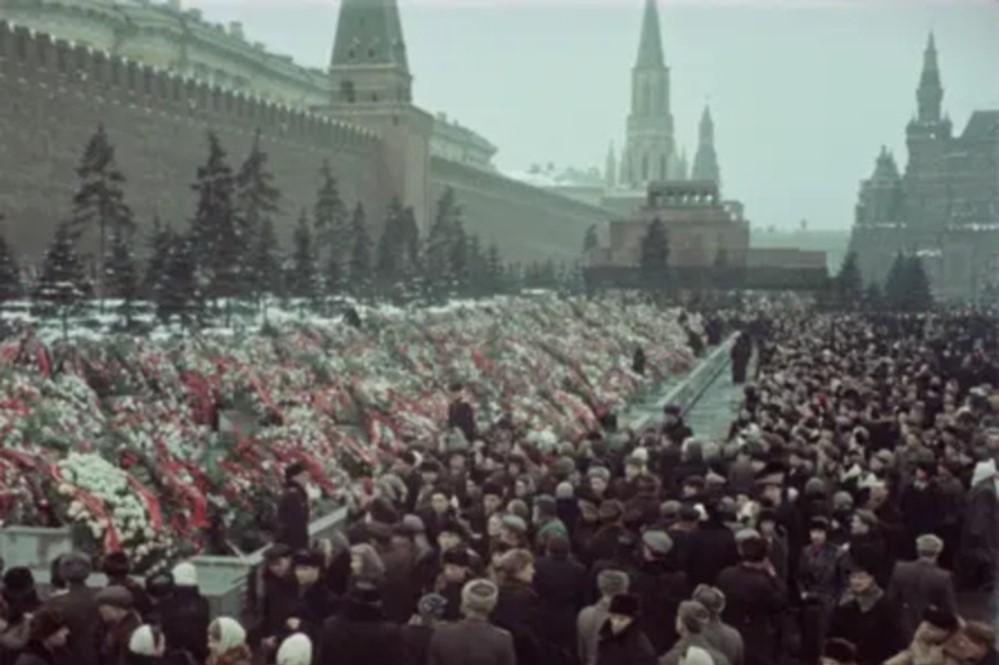
By the end of the 1980s almost all newspapers and magazines, TV and radio programmes in the USSR regularly informed their audiences about events which took place 35 to 60 years ago and which were connected with the life and activity of Joseph V. Stalin. The vast majority of these articles and programmes attacked Stalin accusing him of horrible crimes. At that time it seemed that if one switched on an electric iron it would also start speaking on Stalin’s misdeeds.
The sudden turn of public attention to the distant past reminded one of the events of 1780 in London which were described by Charles Dickens in his historic novel ‘Barnaby Rudge’. At that time millions of leaflets and pamphlets were published devoted to the reprisals against the Protestants by the Catholic Queen Mary I (1553-1558). At the mass meetings speakers denounced the long deceased Queen of Britain for the executions performed during her reign. They claimed that the atrocities of the XVIth century soon would be repeated by the supporters of the creed shared by Mary I. In fact the campaign served to prepare ground for the coup d’etat designed by certain ruling circles of Britain which were headed by Lord George Gordon.
Similarly the vast anti-Stalinist propaganda campaign launched by ‘Fifth Column’ of the West was not a mere exercise in history. Its goal was to discredit the socialist achievements of the USSR and prepare for the destruction of the USSR. And yet the the USSR and the other European people’s democratic countries did not put an end to the anti-Stalinist campaign. On the contrary the ruling classes of Russia and other states set up on the ruins of the Soviet Union and the people’s democracies continue to spread anti-Stalinist calumnies trying to prove that the existing regimes saved millions of people from the sufferings and mass executions of Stalin’s or neo-Stalinist ‘totalitarian’ dictatorship.
The first seeds for this anti-Stalinist campaign were sown by Leo Trotsky in the 1920s and 1930s. Trotsky’s slanderous efforts were continued and developed by N. S. Khrushchev, who in 1922-24 was an active supporter of Trotsky. Khrushchev’s report on 25th February 1956 at the closed session of the XXth CPSU Congress became the core of the all later accusations against Stalin.
Since the middle of the XXth century the lies invented by Trotsky and Khrushchev grew in volume like a snowball being rolled in winter in a Russian field. Authors from the USSR and other countries presented Stalin as a pathological killer driven by paranoid impulses. They accused Stalin of crimes committed against honest revolutionaries even before the October Revolution as they claimed that he served as a secret agent of the Tsarist police. The anti-Stalinists asserted that only by hook and crook Stalin got to the top posts of the Bolshevik party. They assured that Lenin wanted to get rid of Stalin and only Lenin’s disease and death prevented Stalin’s demise.
While describing Stalin’s role as a leader of the Soviet Union the anti-Stalinists accused him of gross mistakes in policy-making and large-scale crimes caused by his maniacal character. They declared that Stalin’s programme of industrialisation and the collectivisation of agriculture brought about only economic ruin, inhuman suffering and the deaths of millions of people. Describing the ‘horrors’ of Stalin’s rule authors of an article distributed by the Internet stated that ‘when in 1941 Hitler invaded the USSR, the Red Army was just a bare skeleton, while the population suffered from hunger and terror’. No wonder that anti-Stalinists repeated that the victory over the Nazi Germany and its allies was achieved ‘contrary to Stalin’.
While completely denying the strong points of Stalin and the achievements of the USSR under his leadership anti-Stalinists often accused him of misdeeds for which he could not be responsible and blamed him for crimes which he physically could not commit. In his 5 books Arsen Nartirosyan attacked 200 anti-Stalinist myths and yet his list of myths does not embrace the whole volume of anti-Stalinist accusations. Each of these myths makes one recall the famous phrase of Sherlock Holmes: ‘A lie, Watson – a great, big, thumping, obtrusive, uncompromising lie – that’s what meets us on the threshold!’
At present anti-Stalinism became a part of schooling in Russia. The manuals on Russia’s history are replete with slander against Stalin and his activity. There are special programmes for school teachers which dwell on minute details on how to instil anti-Stalinism in the minds of children. In the Internet one may find programmes of anti-Stalinist conferences for student audiences. Practically every day one may see anti-Stalinist programmes on Russian TV, hear attacks on Stalin on Russian radio and read anti-Stalinist articles in the daily or weekly Russian press.
Yet despite all these efforts, polls register that over 50% of Russia’s population find at least some positive features in Stalin and his statesmanship. Up to 40% of those polled said that Stalin did more good than bad. And just less than 25% of those polled shared the official lie, asserting that Stalin brought only harm to Soviet people and the world as a whole.
The popularity of Stalin became evident during the electronic poll conducted in summer 2008 when the Russian users of Internet were urged to choose the name of a person who should symbolise Russia. In the middle of July 2008 the leader was ‘Joseph Vissarionovich Stalin’ (198 338 votes). A popular singer of the 1980s Vladimir Vysotsky took 2nd place (146 928). Vladimir Ilyich Lenin occupied 3rd place (120 823). Boris Yeltsin took the 9th place (69 285). The results of the poll shocked the organisers of the poll. Measures were taken to increase the number of votes for Nicolas II, Yeltsin and other figures symbolising anti-socialism and anti-communism.
No doubt that the growth of Stalin’s popularity was made possible due to gradual changes in the mentality of Russia’s people who started to realise the dire consequences of capitalist restoration. Yet a considerable role in these changes was performed by the publications which reject anti-Stalinist falsehoods. During the last years there were published a number of books and articles which ran counter to the dominant anti-Stalinist propaganda. One may name V. Karpov’s ‘Generalissimo’ in two volumes, Y. Zhukov’ s ‘Different Stalin’, N. Êàpchenko’s ‘The Political Biography of Stalin’ in two volumes, V. Sukhodeev’s ‘Stalin in life and legends’, S. Semanov’s ‘Stalin. Lessons of life and activity’, Rybases’ (Svayatoslav and Ekatherine) ‘Stalin. Destiny and Strategy’ in two volumes and many others. (The author of this article also wrote a number of books on Stalin’s life and activity, including his biography in two volumes.) Despite the fact that the authors of these books and articles do not always share the same political and ideological views they are united in their efforts to disprove the existing bulk of anti-Stalinist lies.
Some of the recently published books are specially devoted to exposition of the most notorious anti-Stalinist lies. Thus S. Mironin’s book ‘Stalin’s order’ consists of seven chapters. Each chapter refutes a particular anti-Stalinist myth (‘Genocide against the Ukrainians by provoking mass hunger in 1932 – 1933’; ‘Great terror of 1937 – 1938’, ‘Genocide against the deported peoples’; ‘The Leningrad case’; ‘Stalin’s anti-Semitism’: ‘Stalin’s paranoia’; ‘The destruction of the Soviet school of genetics by Stalin’.)
Anti-Stalinist lies were exposed also in a number of articles published by the opposition press. Many of such articles were written by a former Great Patriotic War veteran Vladimir Bushin. In his articles he often ridicules anti-Stalinists, pointing out gross discrepancies and obvious falsehood of their propaganda. Sometimes the readers of Bushin’s articles also contribute to his expositions. Thus E. G. Repin in his letter to V. S. Bushin cited different anti-Stalinists who claimed that at Stalin’s time from 30 to 100 million persons were persecuted. Repin pointed out that while practically all those who were arrested for crimes against the Soviet state were rehabilitated during more than 50 years since 1956, their number did not exceed 1.5 million. It stands to reason that the figures used by anti-Stalinist propaganda exaggerated the real number of those arrested many times.
Besides there is a growing doubt that some of those who were rehabilitated in 1956 and afterwards were innocent. Many arguments which destroy this impression were presented in the book by Grover Furr which was translated in Russian under the title ‘Anti-Stalinist Infamy” (‘Antistalinskaya podlost’, Moscow, ‘Algotritm’, 2008). In his book Grover Furr strikes at the core of anti-Stalinist dogmas. Taking Khrushchev’s 1956 report paragraph by paragraph Grover Furr proves that ‘the most famous speech of the XXth century’ was nothing but a pack of lies.
Supporting his conclusion by extensive quotations from various documents Furr shows that Khrushchev’s report contradicted facts and logic. Comparing evidence of statistics and many witnesses Furr shows that Khrushchev misinterpreted major events of the Soviet history. In many cases Furr demonstrated that Khrushchev distorted the letters and speeches which he quoted in his report by omitting essential passages.
By exposing Khrushchev’s lies Grover Furr restores the real Soviet history. He states true facts about relations based on mutual trust and understanding between V. Lenin and J. Stalin before December 1922. Furr explains that there was the Politburo decision which made Stalin responsible for strict medical regime safeguarding Lenin’ health during his disease. It was Lenin’s wife N. Krupskaya who violated this regime and Stalin protested against it. This was the main reason for a subsequent quarrel between Stalin and Lenin which was not wholly solved due to the fact that Lenin suffered a stroke in March 1923. The political enemies of Stalin exaggerated the essence and importance of the quarrel and kept using the argument about Lenin’s animosity towards Stalin for many years afterwards.
Refuting Khrushchev’s charge that after having become the leader of the Communist party Stalin grossly violated principles of collectivism during discussions on all important political issues. Furr brings forth various examples of how Stalin involved as many competent persons as possible in the decision-making process and provided conditions for open and profound discussions from divergent points of view on all important subjects. Furr quotes different Soviet statesmen who remembered how Stalin recognised the validity of arguments which ran contrary to his opinion and changed his position. In fact it was Khrushchev who ignored other opinions and imposed his will upon the Party. This was the reason why he was eventually turned out of the office.
Grover Furr does not limit himself to the exposition of Khrushchev’s lies. Supporting the version of Yuri Zhukov’s book, ‘Inoi Stalin’, Furr shows that a number of Party functionaries including Khrushchev fought against Stalin’s attempts to change the composition of the whole body of the Soviet administrators. Stalin wanted to get rid of administrators who came to power at the end of the Civil War and since then did not acquire high education and experience of work on modern enterprises. Stalin wanted to replace them with persons who graduated from new Soviet high educational establishments and personally participated at the construction of the new Soviet industry and agriculture. Stalin knew that a great number of Party functionaries managed to stay in power since the end of the Civil war relying on the support of cliques composed of their friends, relatives and sycophants. Stalin wanted to put an end to such rotten practices and bring about the greater democratisation of the Soviet society. The efforts of Stalin and his supporters in the Politburo in this direction were expressed in the USSR (‘Stalin’) Constitution of 1936. The Constitution put an end to the inequality in representation between city-dwellers and villagers. It established general, direct and secret vote. Stalin urged also that elections should be conducted on a competitive basis with several candidates for a post of a Soviet deputy.
Furr discloses the complicated and contradictory character of the USSR political crisis of 1937 – 1938. The scholar shows that a number of high Party officials opposed the changes urged by Stalin since they were afraid to lose their posts during the elections. That is why they insisted on reprisals against those who might challenge them under the pretext of preventive measures against possible anti-Soviet elements.
Their resistance partly handicapped Stalin’s reforms. The demand of Stalin and his supporters to organise elections to the USSR Supreme Soviet on a competitive basis was blocked by the majority of the Politburo and the Central Committee members in October 1937. The author or this article talked recently to the former USSR Supreme Soviet chairman A. N. Lukyanov who recalled his conversation with an active Khrushchev’s supporter A. I. Mikoyan. Recalling events of October 1937 Mikoyan said: ‘We outmanoeuvred Stalin and he failed with his reform’. Stalin’s attempts to bring forth new well-educated, well-experienced persons free from corruption and habits of the Civil War time were used by feuding cliques for mass reprisals against their competitors.
Together with the People’s Commissar of Internal Affairs N. I. Yezhov such prominent Party functionaries as R. I. Eikhe, P. P. Postyshev and many others organised arrests of the Party members and non-party Soviet people on a large scale. Apart from fighting against possible competitors for their jobs they wanted to get rid of the witnesses of their involvement in anti-Government plots. Using a number of documents Furr shows their involvement in such plots.
Furr brings forth facts and figures which show that the rehabilitation of Eikhe and others was undertaken by Khrushchev in order to conceal his own active role in mass reprisals and plots. Furr quotes the text of the proceedings of the the Presidium CC CPSU session at which Khrushchev asserted that Yezhov who was the main person responsible for the arbitrary reprisals which later were called ‘Yezhovshina’ was ‘an honest man’. Furr shows that Eikhe, Postyshev, Kossior, Rudzutak and others were rehabilitated in a few days after Khrushchev arbitrarily announced at the XXth CPSU Congress that they were innocent. Their rehabilitation was performed with gross violation of legal logic and law practices.
Furr also refutes other Khrushchev’s lies. He disproves the often repeated Khrushchev’s accusation that Stalin ignored warnings about the impeding Nazi Germany’s attack on June 22, 1941 against the USSR. To Furr’s arguments it might be added that this lie was refuted already in General Tyulenev’s memories published in 1963. The general who was responsible for the air defence of Moscow recalled that on June 21 Stalin phoned him and warned that next day the German planes might attack the USSR capital. Besides in his book ‘Conversations with Stalin’ Milovan Djilas stated that in 1945 Khrushchev told him quite a different story on the subject from what he said in his 1956 report. In 1945 Khrushchev said that on June 21 Stalin phoned him. At that time Khrushchev was the First Secretary of the Central Committee of the Ukrainian Communist Party. Stalin told Khrushchev that the German attack which might happen next day and asked him to take appropriate measures.
Resorting to a number of documents Furr proves that Khrushchev lied when he stated that Stalin was in a state of panic after June 22. Many facts cited by Furr amply demonstrate falsehood of Khrushchev’s allegations that Stalin was an incompetent war leader and was capable only of making fatal mistakes.
While Furr is quite correct in refuting Khrushchev’s attacks on Beria as false and demagogic, the author of the article considers that one should also take into account other qualities of this Party leader. One should bear in mind that Beria belonged to the generation of Party functionaries who came to power immediately after the Civil war and shared both the strong points and shortcomings typical for them. Though Beria was a talented organiser and was active in building the Soviet nuclear weapons he lacked high education. Besides he was deeply involved in various inter-Party intrigues. Like many others of the representatives of this generation of administrators Beria opposed the 1936 Constitution as it is well shown in Yuri Zhukov’s book. This was also a reason why in the 1950s Beria was active in his intrigues against Stalin’s nominees and Stalin himself. Suffice it to mention the suspicious circumstances of Stalin’s fatal disease. While Stalin’s death remains covered by mystery it is well known that Beria together with Malenkov, Khrushchev and Bulganin prevented calling medical assistance to Stalin for several hours after he was found lying unconscious on the floor of his country-house.
But these remarks on Beria do not prevent the author of this article to express his high estimate of Furr’s book. There is no doubt that hitting at the core of anti-Stalinist lies Grover Furr performed a task which was long due. And he did it brilliantly.
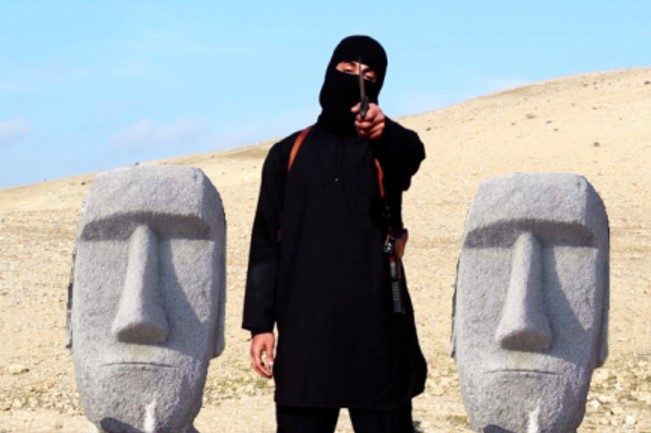
The Japanese have responded to the latest “ISIS™” Crisis in style with what’s being called the “ISIS Crap Photoshop Grand Prix”
In response to the ridiculously crafted fake beheading videos, Japanese bloggers and Twitter users have decided to make fun of the “ISIS™” psyop rather than dropping to their knees and cringing in fear as is the custom here in the land of the round-eye.
With their production value being openly ridiculed in public, the b-rated studio that has been crafting these sophomoric “hearts and minds” psyops for the Global War OF Terrorism industry seems angered that their gravy train is coming off the rails.
Though I am glad to see the Japanese stepping up and calling a fraud a fraud, I just have to remind you, they weren’t the first. Not by a long shot.
The latest threat from the production house propaganda outlet revolves around two Japanese citizens who are supposedly going to be beheaded today if Japan doesn’t cough up 200 million bucks.
One of those guys is a “journalist” and the other… well, the other “dreamed of becoming a military contractor” (you can’t make this shit up).
The video features the same British MI6 agent pretending to be an “ISIS” terrorist waving around his prop knife and threatening to kill Kenji Goto (propaganda journalist formerly embedded with the FSA) and Haruna Yukawa (mentally ill contractor wannabe). It’s obviously shot in front of a green-screen with several lighting sources (in studio, not outside) and a fan blowing consistently on the shirts of the phony “victims” in an attempt to create a “breeze” effect.
The victims look bored and the “terrorist” can’t open his eyes for some reason. I guess because they are blue. Either that or the diva has become such a megastar he’s showing up for work high on crack like Charlie Sheen.
It’s about as bad as those that came before it.
Clearly the U.S. is in need of yet another member of the Coalition of the Willing and Japan’s government needed some help justifying it to their population… so… here we go again.
Of course it hasn’t worked out the way they planned.
This campaign of ridicule and the popular approval it’s receiving has apparently angered the psyop’s planners. The Japanese are making fun of the cartoonish presentation of these ridiculously fake videos and it seems it might foretell the end of this particular product run. I guess no more paydays for the ISIS studios is something they are having to consider. You see, it’s bleeding into American popular culture as well.
Many Japanese blogs, including popular site My Game News Flash, are reporting how the glib Photoshops have allegedly angered ISIS members. Washington Times
Poking fun at the poorly crafted propaganda has becoming so popular, even Di$info Jone$ has decided to jump on the bandwagon after spending months propping up the “radical Islam” mythology.
I have too say I’m very glad to see this particular meme taking off.
I only wonder if perhaps a couple of my earlier efforts might be considered in the ISIS Crap Photoshop Grand Prix.

A quarter of all Russian men die before they reach their mid-fifties and their passion for alcohol – particularly vodka – is largely to blame, according to research published on Friday.
A study of more than 150,000 people found extraordinarily high premature death rates among male Russians, some of whom reported drinking three or more bottles a week of the potent clear spirit.
Perhaps unsurprisingly, deaths among heavy drinkers were mainly due to alcohol poisoning, accidents, violence and suicide, as well as diseases such as throat and liver cancer, tuberculosis, pneumonia, pancreatitis and liver disease.
“Russian death rates have fluctuated wildly over the past 30 years as alcohol restrictions and social stability varied under presidents Gorbachev, Yeltsin and Putin, and the main thing driving these wild fluctuations..was vodka,” said Richard Peto of Britain’s Oxford University, who worked on the study.
The researchers, including David Zaridze from the Russian Cancer Research Centre in Moscow, noted that whereas British death rates between age 15 and 54 have been falling steadily since 1980, mainly because so many people there have stopped smoking, Russian death rates in this age range have fluctuated sharply – often approximately in line with alcohol consumption.
Under Mikhail Gorbachev’s 1985 alcohol restrictions, alcohol consumption fell by around 25 percent – and so did the death rates, they said. And when communism in Russia collapsed, alcohol consumption went up steeply, as did death rates.
More recently, since Russian alcohol policy reforms were introduced in 2006, consumption of spirits has fallen by about a third and so has the risk of death before age 55, the researchers said – although that risk is “still substantial”.
For this study, published in the Lancet medical journal, researchers asked 151,000 people how much vodka they drank, and whether they smoked, then monitored them for up to a decade.
Around 8,000 of them died during that time, and the results showed much higher risks of death in men who smoked and who also drank three or more half-litre bottles of vodka a week than in men who smoked and drank less than one bottle a week.
Zaridze described the relationship between vodka and deaths as a “health crisis” for Russia, but stressed it could also be turned around if people were to drink more moderately.
“The significant decline in Russian mortality rates following the introduction of moderate alcohol controls in 2006 demonstrates the reversibility,” he said.
“People who drink spirits in hazardous ways greatly reduce their risk of premature death as soon as they stop.”

