







Impacts of the American Civil War

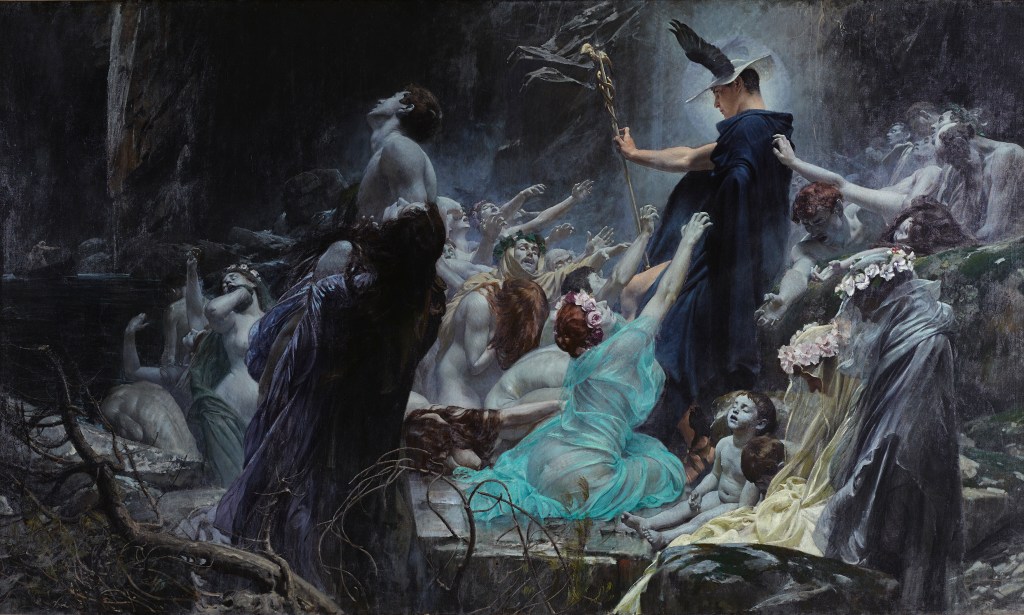
Union Soldiers Accepting A Drink by Eastman Johnson, 1865

I recently finished reading ‘Paths of Fire: An Anthropologist’s Inquiry into Western Technology’ (1996) by Robert McCormick Adams. As is usual, it took me a long time to finish reading this book because I have a tendency to slowly read dozens of books simultaneously in my free time. When I was reading the book, I was a little disappointed to find out that the author didn’t write more about the American Civil War than he did. Of course, the book isn’t about the American Civil War but about Western technology. Still, I had a little hope that the author would get into why the civil war began and how it began. I still don’t know much about the civil war, and this is why finding out more about it has been on my mind for some time. Carroll Quigley also had almost nothing to say about the civil war in his books. In ‘Tragedy and Hope: A History of the World in Our Time’ (1966), he wrote that the East united with the West in order to defeat the South. That is all. Of course, this too isn’t surprising because none of his books are about the civil war. The American Civil War and what happened in the United States in the 19th century began to interest me only about several years ago. Until very recently, I hadn’t owned any books about the civil war, but, some days ago, I took the next step and acquired a list of the books about the American Civil War that got published in the 1970s. After I finish reading these books, I plan to also get some books about this subject that got published in the 1980s and in earlier decades. Of course, finding out about the American Civil War isn’t a problem because many books have been written about the subject in past decades. And many films about it have been made too. The United States produces a lot of stuff, and there have been no big political upheavals in that country in the 20th century. Therefore, acquiring many quality works about a subject like the civil war isn’t a problem. Anyway, in this post, I will continue to quote from the fourth chapter, titled ‘England as the Workshop of the World’, and I will begin quoting from the sixth chapter, titled ‘The United States Succeeds to Industrial Leadership’, from Adams’s book. “The initial phase of the Industrial Revolution was an age of textiles, preeminently cotton. The mechanization of weaving continued longer, but the direction was well established by the early 1840s. Already getting underway by that time was a subsequent phase, deserving to be identified as an age of railroads and steel. England still led the way at first in both of these respects, the high-water mark of its supremacy appropriately celebrated in the great Crystal Palace exhibition of 1851. As we shall see, however, there were already hints of what was to come that ruffled the triumphant complacency of that occasion. American success in the beginning to master interchangeable-part manufacturing technology, bursting into public consciousness at that exhibition, was immediately troubling to only a few. But by the 1870s, the threatening significance of new initiatives elsewhere could no longer be denied. The increasing bargaining power of skilled workers, as for example in holding back the acquisition of new, ring-frame spinning technology to replace the now-obsolescent mule, kept labor costs uncompetitively high. England found its industrial leadership increasingly subject to cost-competitive challenges emanating from continental Europe as well as North America. Although it was not apparent to anyone at the time, Britain’s trend of growth in industrial output had begun to slow already by the mid-century. More significant, and probably also unnoticed, were declines in the rate of growth of total factor productivity that began somewhat later. According to the estimates of C. H. Feinstein, “while in 1870 GDP/hour worked in the United States was only 90 per cent of the British level, by 1890 it was 5 per cent and by 1913, 25 per cent, higher. Over the period 1870-1913, American total factor productivity growth appears to have been about three times the British rate… J. G. Williamson, noting growth in skills per worker over 1871-1911 at only 70 per cent of the American rate, concluded that “it may well be said that the ‘failure’ of British industry in the late nineteenth century can be laid to the doorstep of inadequate investment in human capital… compared to her main competitors in world markets.” Of course aggregates like these, as we noted earlier, tell only part of the story. Accordingly we will touch briefly on a few specific features of the epoch of gradual decline that began in England during the last third of the nineteenth century. Its most general, seemingly almost inevitable, characteristics have been well summarized as follows: “Unlike many of their international competitors, who had access only to much more confining markets, Britain’s international marketing structure meant that British firms could get enough orders of similar specifications to reap economies of long production runs, and had a large enough share in expanding markets to justify investments in (what were then) up-to-date and increasingly capital-intensive plant and equipment. But the tables were turned by the spread of tariff barriers and indigenous industrialization.” A second aspect of decline has been perhaps too sweepingly characterized as “entrepreneurial failure.” It involved an apparent unreadiness “to confront institutional constraints innovatively.” If the objectives of this study were extended to include all aspects of international competition for industrial leadership, detailed attention would need to be given to the steps by which ascendancy in the field of organic chemicals and dyestuffs passed to Germany in the later nineteenth century. But briefly to summarize, the heavy chemical industry was initially one in which Britain had been dominant. Its lead was based in part, however, on enormous caustic soda manufacturing capacity using the LeBlanc process. This may have been unwisely retained in Britain after having been superseded in terms of cost and efficiency by the introduction of the Solvay process on the European continent. Careful retrospective analysis has indeed tended to confirm that this was “costly conservatism… profit-losing attachment to continuity and… reluctance to admit a major mistake.” The argument on this point is complex, however, and the rationality of historical hindsight may not accurately reflect the balance of factors involved in actions and decisions at the time they were made. Initially introduced from France in 1818, there were terrible deficiencies in the alkali industry based on the LeBlanc process that became “the chemical industry” in Britain during the first half of the nineteenth century. Extremely wasteful of materials and labor, it was also a source of serious atmospheric and soil pollution and a direct threat to human health. By contrast, the Solvay ammonia-soda process, while more capital-intensive, was at least 40 percent less costly, required only more readily available raw materials, and was environmentally much more benign as well. That much is clear. Yet it is also true that British manufacturers made some progress with process improvements and with shifting their emphasis to the conversion of former waste materials into useful by-products. They may have felt a heavy responsibility, too, not only for the enormous capital tied up in existing plant but for the livelihood of forty thousand employees. Perhaps even more complex, but also no less suggestive of management weakness, was Britain’s failure to retain the advantage of its initial priority in synthesizing an aniline dye from coal tar residues in 1856. Henry Perkin, the brilliant young discoverer, had even followed up this achievement within little more than a year by making arrangements to produce the dye on a commercial basis and almost instantly finding a ready market for it. Perkin’s was a largely serendipitous discovery, and his greater achievement lay in overcoming costly, technically deficient engineering obstacles to the production of a mauve dye. The synthesis of alizarin, in which Germany won the race by hours in 1869, led more directly to a wide family of further discoveries and had a much greater economic impact in its own right. More important still, it demonstrated that the newly emergent field of structural organic chemistry could be deployed in the pursuit of commercial success. Only by German industry was the lesson quickly grasped that “the secret of commercial success lay in continuous chemical research.” Already by 1873 Britain’s decline in the field was evident, and by the late 1880s Germany had completely seized the lead in organic chemicals. Recruiting few salaried managers and relying on outsiders for marketing, British firms were equipped to exploit potentialities of neither scale nor scope. Vigorously investing in both of these directions, a handful of German firms reduced the price of a kilo of dye from well over 100 marks in the early 1870s to 23 marks in 1878 and then to 9 marks by 1886. By 1913, in consequence, out of a world total of 160,000 tons of dye, Germany produced 140,000 and Britain only 4,400. Nor was comparative performance much different in pharmaceuticals, films, agricultural chemicals, and electrochemicals. And by 1913 also, two-thirds of the electrical equipment machinery made in British factories had been developed not in its own research laboratories but in those of Siemens in Germany and General Electric and Westinghouse in the United States. As Anthony Travis has shown, this was more nearly a cause than a consequence of the subsequent passing of scientific leadership. Germany’s emergence as the dominant power in the dye industry had its roots in business principles that are hauntingly familiar to students of Japanese economic performance today. They included careful study and detailed improvement of the English technology that was initially copied; a greater readiness to assume the risks consequent upon long-term investment; greater effectiveness in meeting the needs and tastes of diverse foreign markets; and painstaking insistence on maintaining product quality. The British empire, as well as its areas of traditional industrial strength, seemed to promise higher returns with fewer risks. On the other hand, “the German investors, as latecomers on the industrial scene, had to look elsewhere for new opportunities and found them in domestic industries based more heavily on scientific research and newer technologies.” In a word, Perkin and his British contemporaries simply “did not build the organizations that could manage the resources needed to do this kind of work, so the world’s leading textile-producing country lost its dye industry.” The Civil War defines the beginning of a new watershed in American economic and technological history, a thunderous entry upon the uncharted landscape of modernity. In an unexpectedly sanguinary, all-out struggle, its logic and momentum forcefully submerged, without entirely displacing, earlier, regionally concentrated opposition to growing national integration. Similarly anticipated by few at the outset was the abolition of slavery. Meanwhile, having made a major contribution to victory, the North’s superior industrial base and logistical mastery helped to precipitate a confident new, national pursuit of international industrial and technological ascendancy. So much is common knowledge. Most historical accounts of this great national turning point concentrate on the gathering political tensions that led to it, the conduct of military operations, and the impacts on the South of the era of Reconstruction that followed. However, more relevant for our purposes were the ensuing extensions of national authority by statutory enactment and constitutional amendment. With the Confederacy’s defeat, strict constructionists and advocates of the primary rights and powers of the states had permanently lost key citadels of their strength. So of primary concern here are a different set of outcomes, focused primarily instead on the victorious North. The contrast is overdrawn, but is also not without some underlying accuracy, between the plantation-based leadership of the South that retained an important national role only until the war and the more complex and dynamic amalgam of business leaders, a growing industrial work force, and the yeoman farmers of the North and West. In particular, the general-welfare clause of the Constitution, its favorable implications for federal government initiatives previously encountering entrenched opposition and hence largely unutilized, now could take on a more active meaning within the coalition that formed the Union and retained its primacy after the Union victory. Commencing over a sectional clash that had dominated and constrained political life almost since the founding of the Republic, the Civil War thus had the ironic effect of helping to clear the way for the requirements of a modern industrial state. The reduced importance of traditional sectional balances meant that the federal government’s intervention and assistance could be more openly sought as an investment in national unity and economic growth that would benefit all groups in society. With population rapidly flowing into national territories that had bridged the continent, increasingly urgent needs could be federally addressed for a more effective fabric of administration and communications. As an enormous railroad transportation grid rapidly materialized, the prospect of an integrated national market of unprecedented size was sure to stimulate correspondingly ambitious plans for industrial and commercial growth. Although Alexander Hamilton’s Report on Manufactures had been simply ignored by the Congress when it was submitted in 1791, his far-sighted advocacy of affirmative support of industry by a strong national government thus began to receive a belated measure of vindication. Along with the historic legislation associated with the emancipation of slaves, the 37th Congress passed a series of measures embodying this outlook. Considered together, they may well deserve the label “revolutionary.” Common to these measures was a readiness to treat portions of the vast public domain in the still largely unoccupied West not as a permanent asset but as a strategic resource – using land grants as an incentive to attract new settlers, new schools, and the railroad-building activity that would ultimately tie the nation together. The Morrill Act that led to the establishment of land-grant colleges carried with it the seed of federal support for research as well as education in the field of agriculture. Also established in 1862, with some of the same objectives, was the Department of Agriculture. Its duties included acquiring and diffusing “information on subjects connected with agriculture in the most general and comprehensive sense of that word, and to procure, propagate, and distribute among the people new and valuable seeds and plants.” Before long those responsibilities would require the assistance of a staff of scientists to assist in carrying them out. As Hunter Dupree observes, “Although opponents could and did invoke states’ rights against federal scientific activity, the outbreak of the Civil War had ruled in favor of Alexander Hamilton’s interpretation of the general-welfare clause as clearly as it presaged the triumph of Hamilton’s vision of an industrial nation. No doubt the exigencies of the war effort contributed at least a greater sense of urgency to both of these undertakings. With military recruitment, able-bodied farmers declined substantially in number. Nevertheless, “northern farm production continued its consistent increase even as the war progressed.”

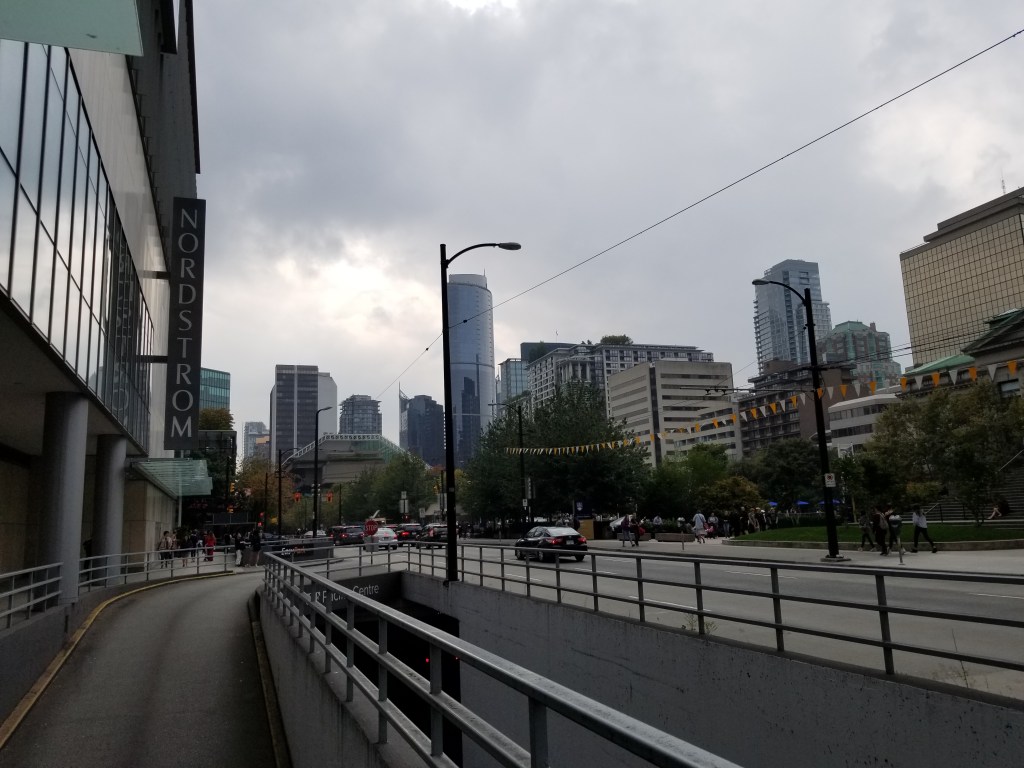
In Harbour Green Park in Downtown Vancouver. Summer of 2017.

Harbour Green Park is situated at the edge of Coal Harbour, a scenic waterfront area in downtown Vancouver, British Columbia. It stretches along the seawall, just west of the Vancouver Convention Centre, and is accessible via the Vancouver Seawall or nearby streets like West Cordova Street. The park spans approximately 3.1 hectares (about 7.7 acres), offering a compact yet inviting greenspace amidst the urban core.

The park features rolling lawns, appealing views of the harbor, and a well-maintained waterfront setting. Tripadvisor reviews highlight a notable fountain at water level, adding to its aesthetic and functional appeal as a resting spot. It connects seamlessly to the Vancouver Seawall, a popular pathway for pedestrians and cyclists, making it a key link in the city’s waterfront network. The Vancouver Park Board’s park finder notes easy access from the seawall or adjacent streets. Described as “floating at the edge of Coal Harbour,” the park offers a tranquil escape with panoramic views of the water, mountains, and downtown skyline, ideal for relaxation or light recreation.

Tripadvisor ranks Harbour Green Park No. 64 out of 619 attractions in Vancouver, with 59 reviews and 317 photos as of the latest data. It earns praise for its “nice park and fountain” and is often included in three-day Vancouver itineraries, alongside Stanley Park and the Vancouver Harbour. Some visitors express mild surprise at its high ratings given its small size, but its location and views consistently receive positive feedback. Popular for leisurely walks, picnics, or photography, especially during sunset. Its proximity to the Convention Centre also makes it a convenient stop for tourists or business travelers.

While specific historical details aren’t detailed in the provided results, the park’s integration into Coal Harbour reflects Vancouver’s post-industrial transformation, turning former industrial waterfronts into public spaces. As a public park, it’s generally open from dawn to dusk, though exact hours may vary with seasonal adjustments. Easily reachable by foot, bike, or public transit (e.g., buses along West Cordova or the SeaBus nearby). Parking is limited, so walking from downtown is recommended. Adjacent to luxury condos, the Coal Harbour Community Centre, and the bustling Convention Centre, it blends urban sophistication with natural beauty. Fall weather (mild, around 10-12°C) would enhance its appeal with colorful foliage and crisp harbor views, though rain is possible, so visitors might need umbrellas. Harbour Green Park is a charming, compact waterfront oasis in downtown Vancouver, celebrated for its scenic views, fountain, and seawall connectivity. It’s a must-visit for a quick escape or as part of a broader exploration of the city’s coastal attractions.

What to know about “Ozempic Face”

https://www.medicalnewstoday.com/articles/ozempic-face

Key takeaways

  • “Ozempic face” refers to the facial changes, such as sagging skin and increased wrinkles, that can occur due to rapid weight loss with Ozempic.
  • Although Ozempic is not FDA-approved for weight loss, doctors sometimes prescribe it off-label for this use. Loss of facial fat, which supports skin elasticity and structure, causes the facial side effects from the drug.
  • To help reduce facial side effects, your doctor may want to reduce your Ozempic dosage. Or they may have other suggestions, such as increasing your water and protein intake.

Ozempic is a brand-name medication that’s prescribed to treat type 2 diabetes in adults. Ozempic can decrease appetite. As a result, many people with diabetes who receive the drug lose weight.

Ozempic comes as a liquid solution in prefilled single-patient-use pens. The drug is given as a subcutaneous injection. After a healthcare professional has shown you how to inject Ozempic correctly, you may be able to give yourself the injections at home. Your doctor will typically start with a low dosage of Ozempic and adjust it over time to reach an amount that’s right for you.

Many people use Ozempic without a prescription to try to reach their desired body weight. Ozempic is not approved by the Food and Drug Administration (FDA) for weight management. However, doctors may sometimes prescribe this drug off-label for weight management. (Off-label drug use means prescribing a drug for a purpose other than what it’s been approved for by the FDA.) To learn more, see the “Ozempic off-label use for weight loss” section.

This article will explain the term “Ozempic face,” including how Ozempic affects the face, other possible side effects of the medication, and how to avoid the facial effects of Ozempic.

Dr. Paul Jarrod Frank, a cosmetic and celebrity dermatologist, coined the term “Ozempic face” after treating many individuals with this symptom.

How can Ozempic affect the face?

Semaglutide, the generic name for Ozempic, is part of a class of medications known as incretin mimetics. These ensure the pancreas releases sufficient insulin when the blood glucose level is high.

Additionally, Ozempic acts as a long lasting and effective glucagon-like peptide-1 receptor agonist (GLP-1 agonist). This means it makes you feel fuller and delays gastric emptying so you can consume fewer calories.

While Ozempic is safe to use with your doctor’s recommendation, it can cause rapid weight loss that is often more pronounced on the face.

Facial fat serves a protective function and affects facial aesthetics and elasticity. Weight loss can cause dermatological changes and shrinking because the fat that stretches and cushions the skin is no longer in place.

The skin of the face also loses its ability to retract after an episode of rapid weight loss due to reduced levels of elastin and collagen, which are essential for structural integrity.

As a result, using Ozempic may have the following facial symptoms:

  • increased signs of aging, such as more lines and wrinkles
  • loss of fat, which can lead the skin to become loose and sag
  • a hollowed-out appearance
  • lipodystrophy, which affects how the body accumulates and stores fat

Ozempic off-label use for weight loss

Sometimes, doctors may prescribe Ozempic off-label. This means prescribing a drug for a purpose other than what it’s been approved for by the FDA.

Ozempic is not FDA-approved for treating type 1 diabetes and has not been studied in people with this condition. However, in some cases, Ozempic may be used off-label to treat type 1 diabetes.

Some experts say that Ozempic and other medications in the same class should not be used in people with type 1 diabetes. They believe that the risk of side effects from these drugs outweighs the potential benefits when used by people with type 1 diabetes.

Ozempic may also be prescribed off-label for help with weight management. However, the drug is not FDA approved for this purpose.

Other possible side effects of Ozempic

Side effects that have been reported with Ozempic can include:

  • nausea and vomiting
  • flatulence
  • constipation
  • diarrhea
  • abdominal pain
  • fatigue
  • injection site reactions

In rare instances, you may also experience serious side effects such as:

  • vision changes
  • kidney problems
  • gall bladder disease
  • severe allergic reactions
  • an increased risk of thyroid cancer
  • hypoglycemia (low blood sugar)
  • pancreatitis (inflammation of the pancreas)

Preventing facial side effects

In some cases, you may be unable to prevent facial side effects from Ozempic. If these are a cause of concern, your doctor may recommend any of the following:

  • reducing your dosage
  • changing to a different medication
  • drinking 1 to 2 liters of water every day
  • improving protein intake with a protein-rich diet
  • using dermatological fillers
  • lifestyle modifications to maintain a healthy weight

If you decide to stop using Ozempic, it can take about 5 weeks from the last dose for the drug to clear from your system.

What happens after stopping Ozempic?

A 2022 study explored changes in body weight and metabolic risk factors among 1,961 participants 1 year after semaglutide treatment.

The study found that stopping Ozempic treatment can cause you to regain lost weight.

After you stop using Ozempic, you may also notice the following:

  • increased cravings
  • an absence of side effects
  • blood sugar spikes

When to contact a doctor

You should contact a doctor if you experience any severe side effects from using Ozempic. Be sure to document your symptoms and share them with your doctor.

It’s also important to note that Ozempic has a boxed warning for the risk of thyroid cancer. (A boxed warning is the most serious warning from the FDA.)

Animal studies showed an increased risk of thyroid cancer in animals given semaglutide (the active drug in Ozempic). Animal studies don’t always predict what happens in humans. It isn’t known for certain whether Ozempic increases the risk of thyroid cancer in humans.

While using Ozempic, tell your doctor right away if you have any of the following symptoms:

  • difficulty swallowing
  • a lump or pain in the neck
  • wheezing
  • shortness of breath
  • a hoarse voice that worsens over time

Frequently asked questions

Here are some frequently asked questions about Ozempic.

Does Ozempic change your face?

It’s possible. Ozempic can cause rapid weight loss, which can be particularly visible in the face. A sudden loss of fat cells can reduce the appearance of smoothness and fullness in the face, resulting in a gaunt appearance.

For more information about how Ozempic may change your face, talk with your doctor.

What does an Ozempic face look like?

It can vary from person to person. Changes in your face may include:

  • more lines and wrinkles
  • loose and sagging skin due to loss of fat cells
  • a hollowed-out appearance

If you have concerns about changes to your face while using Ozempic, talk with your doctor.

Does Ozempic age your skin and your face?

It may. When experiencing rapid weight loss, your skin does not always shrink at the same time. A lack of fat cells may also affect skin elasticity. Wrinkles and lines, usually associated with aging, can appear.

For more information about how Ozempic can affect your face, talk with your doctor.

Summary

Ozempic is a treatment option for people with type 2 diabetes. While Ozempic does not have FDA approval for weight management, doctors may prescribe this drug off-label for chronic weight management among those with overweight or obesity. It can cause rapid weight loss and associated facial side effects that some call “Ozempic face.”

You should only use Ozempic as your doctor recommends. If you experience severe side effects from using Ozempic, your doctor may stop prescribing the medication and recommend lifestyle changes.

When you stop using Ozempic, you may experience increased food cravings, an absence of side effects, and blood sugar spikes. You may also regain any weight they lost while using it.

If you’re interested in using Ozempic for weight loss, which is an off-label use, talk with your doctor. They can help determine whether Ozempic might be a good choice for you.

Disclaimer: Medical News Today has made every effort to make certain that all information is factually correct, comprehensive, and up to date. However, this article should not be used as a substitute for the knowledge and expertise of a licensed healthcare professional. You should always consult your doctor or another healthcare professional before taking any medication. The drug information contained herein is subject to change and is not intended to cover all possible uses, directions, precautions, warnings, drug interactions, allergic reactions, or adverse effects. The absence of warnings or other information for a given drug does not indicate that the drug or drug combination is safe, effective, or appropriate for all patients or all specific uses.

Meet Ruth Carter: The Costume Designer Behind Marvel’s Black Panther

https://www.blackenterprise.com/meet-the-hollywood-costume-designer-behind-marvels-black-panther/

Ruth E. Carter is an award-winning costume designer behind some of the most iconic black films of all time—Malcolm X, Amistad, Do the Right Thing, and Selma, to name a few. So it should come as no surprise that Carter was tapped to lend her incomparable talent to design costumes for Marvel’s Black Panther movie—a highly anticipated Hollywood blockbuster.

We caught up with Carter to learn more about her journey into Hollywood.

What inspired you to become a costume designer?

I discovered costume design as a career path while attending Hampton University. But costume designing was a summary of my experiences. My mom was a counselor for the city; she would stop in the street and talk to people who had all types of problems. Back then it was embarrassing but her empathy for people gave me permission to open my eyes and see people for all of their complexities. Having had that as a young person coupled with going to college and majoring in theatre, I could read a script about a person and see a version of how they might look like. Ultimately, I was groomed to be a storyteller at a young age.

When it comes to hiring you to design costumes for movies, how does the process work with film studios?

Directors hire me—but they don’t want to impede on my creativity. When I first get the script, they give me broad strokes [direction]. They may say “We want realism or this has to be incredible, intense, wild, and colorful. etc.”

First, I read through the scenes of the scripts. I get into the words and the characters. I laugh and cry with it. This helps me determine when to be pronounced. For instance, if the scene is Harlem 1940s, and Thurgood Marshall is sitting with his wife, and Langston Hughes walks in, I look up Langston Hughes in the 1940s. Then I look for great photographers of that era—I discover Teenie Harris, an accomplished black photographer. I review his body of work and notice he was photographing people candidly. But these pictures were in black and white so I go to the original collections and they give me a direct path to the tones and brightness and dullness of saturation or desaturated of colors that will create a 1940s landscape.

Which moments have been most helpful in getting you to this point in your career?

When I started there were very few people who were doing costume design. My mentors were unconventional people like Spike Lee. He said, “Attend the University of Southern California, and go to UCLA for training and sign up for a student film that way you’ll be on a set with all the professional equipment used by major studios.

He also taught me about buying in multiples. For instance, for a scene where people get into a fight—you might need to buy five of the same shirt because movies shoot out of sequence, so if the actor bloodies or dirties that shirt—that shirt has to stay exactly like it is for the scenes that follow. But if we haven’t shot the scenes that come before it—you need a clean version. Nobody else told me this.

Spike Lee was my greatest support and biggest mentor. I am indebted to him for the life and career I have now.

Marvel’s Black Panther movie is one of the most highly anticipated films of 2018. But beyond a star-studded lineup of incredible black talents such as Michael B. Jordan, Angela Bassett, Forest Whitaker, and Lupita Nyong’o, the film also includes an action-packed storyline equipped with a variety of jaw-dropping costumes. So we caught up with Ruth E. Carter, the Academy Award-nominated designer behind the film to talk about how the ancient tribes of Africa inspired her designs of the superhero costumes.

Carter is no stranger to recreating representations of blacks in films—she’s also the creative mastermind behind some of the most iconic black films in history—School Daze, Malcolm X, Amistad, Do the Right Thing, Roots (2016) and Selma, to name a few. Below she shares her design process and inspiration behind the film’s costumes.

Ruth E. Carter on working with the film production team and planning for the design process.

Marvel Studios gave me a blueprint. They had a lot of plans for the costumes, whether it was visual effects, special effects, or photo doubles. So they told me the elements the costume needed to have. From rich saturated colors and beautiful prints to textures—these things were rooted in African culture.

So we researched all of these wonderful different ancient tribes from the continent of Africa such as the Xhosa, Zula, Himba, and Maasai, and learned about their secrets and the reason behind doing things a certain way. For instance, when The Himba Tribe used this beautiful red clay that they put all over their bodies (including, jewelry hands, and hair) it was for the desert dwellers to have moisturizer. It also made your skin and hair really soft. It even had Shea butter—it was also so colorful and intense. It could even be bottled and sold today as a moisturizer.

On the other hand, the Maasai Tribe was known for all of this beautiful beadwork—so we wanted to direct the costumes towards that look. The stacked rings are a very prominent visual jewelry and were worn by ancient African tribes—that was also part of the framework that Marvel said we would like to have. I hired a jewelry designer who does African-inspired jewelry. She created rings, and necklaces—featuring a hand-tooled element that really pulled the looks together. We also pulled inspiration for the costumes from the draped robe attire that you often see in the Nigerian culture.