

Laodamia by George William Joy, 1878.
Half medical exam, half personal attention! Our first 20 minutes include listening to your heart & lungs, taking vital signs, looking at your eyes and ears, getting a couple of reflexes, etc; while the second half of the video includes using the sensory brushes on you, doing the “soft/sharp” sensation test with a paintbrush and pinwheel, and finishing with a massage with the wooden rollers.
You’re Up a Little Late: 00:00 – 00:47
Listening to Your Heart & Lungs: 00:47 – 04:04
Taking Vital Signs: 04:04 – 10:22
Examining Your Eyes with Light: 10:22 – 13:22
Nose, Mouth, Throat Exam: 13:22 – 14:07
Ear Exam with Otoscope: 14:07 – 16:00
Testing Your Reflexes: 16:00 – 17:50
Palpating the Abdomen: 17:50 – 19:00
Turning Down the Lights: 19:00 – 19:56
Body Brushing with Sensory Brushes: 19:56 – 24:34
Soft or Sharp? Paintbrush v. Pinwheel: 24:34 – 30:00
Wooden Massage Rollers: 30:00 – 38:53
One More Round of Stethoscope: 38:53 – 42:50
Oops, Forgot Abdominal Auscultation: 42:50 – 44:39
Reviewing Notes & Exam: 44:39 – 45:38
Wrapping Up: 45:38 – 46:02
Outro with Wooden Cube Roller: 46:02 – 47:25
Triggers include: inaudible whispering, pen writing, soft speaking, whispering, guided breathing, sticky stethoscope, narrating actions, sphygmomanometer, light triggers, eye exam, accommodation reflex test, face touching, ear exam, otoscope, reflex testing, palpation, sensory brushes, body brushing, soft/sharp sensation test, metal pinwheel, massage, wooden rollers, tongue clicking, rain in the background, and personal attention.
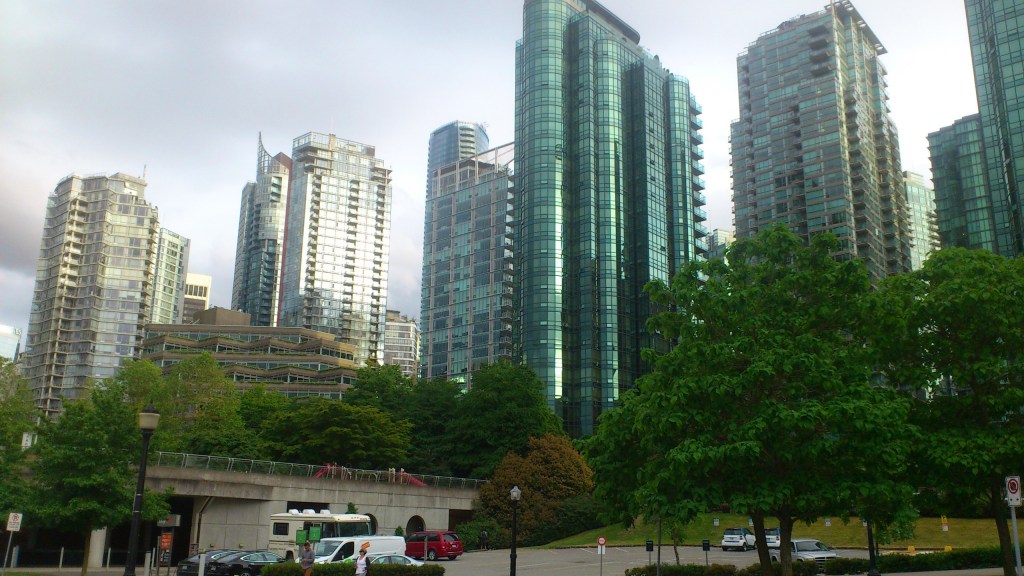
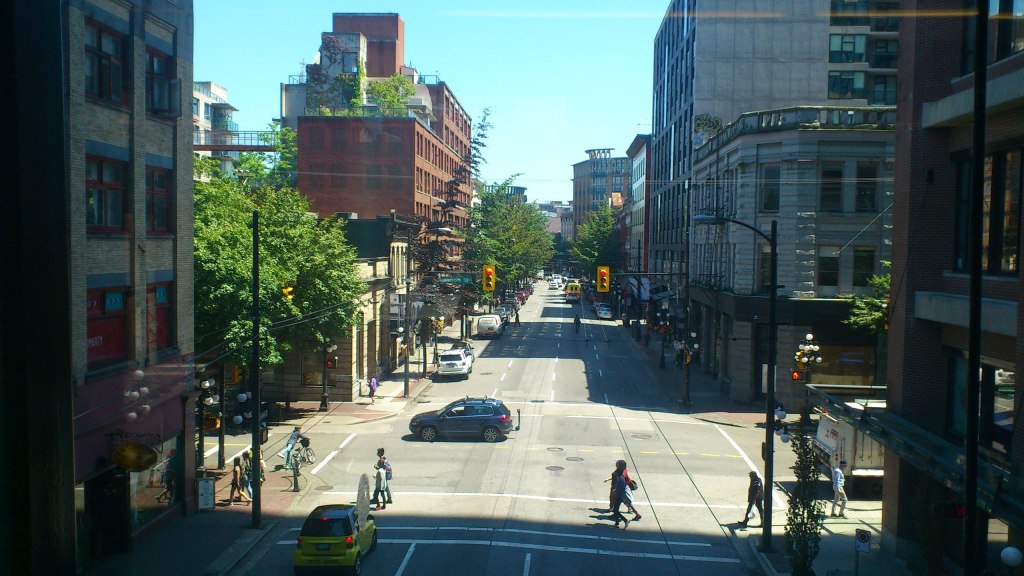
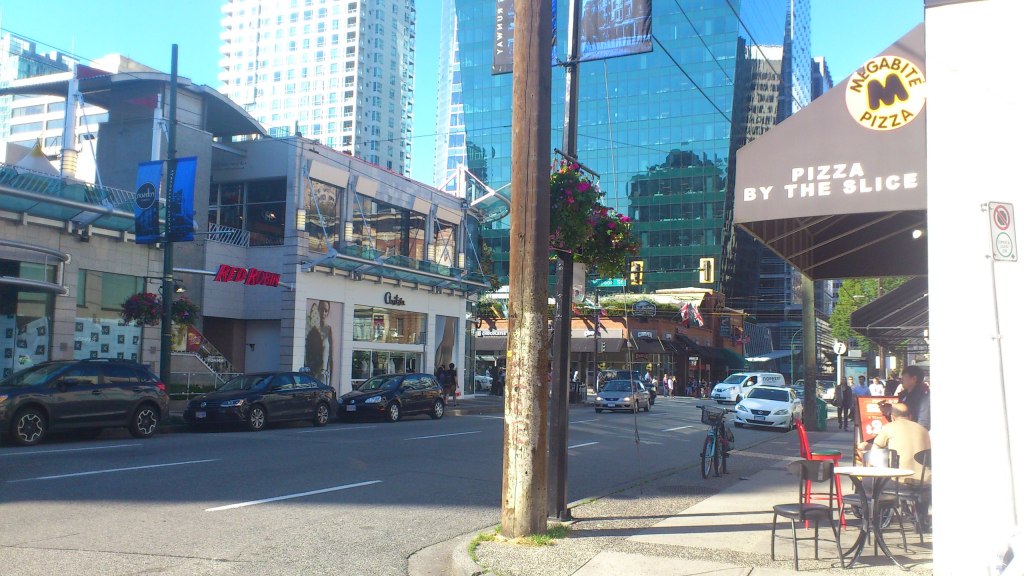
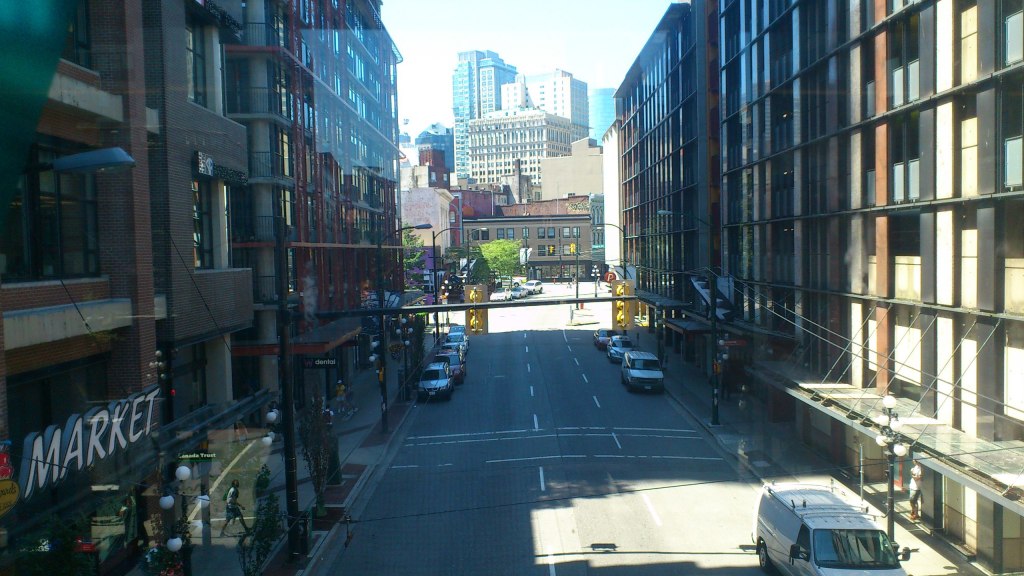
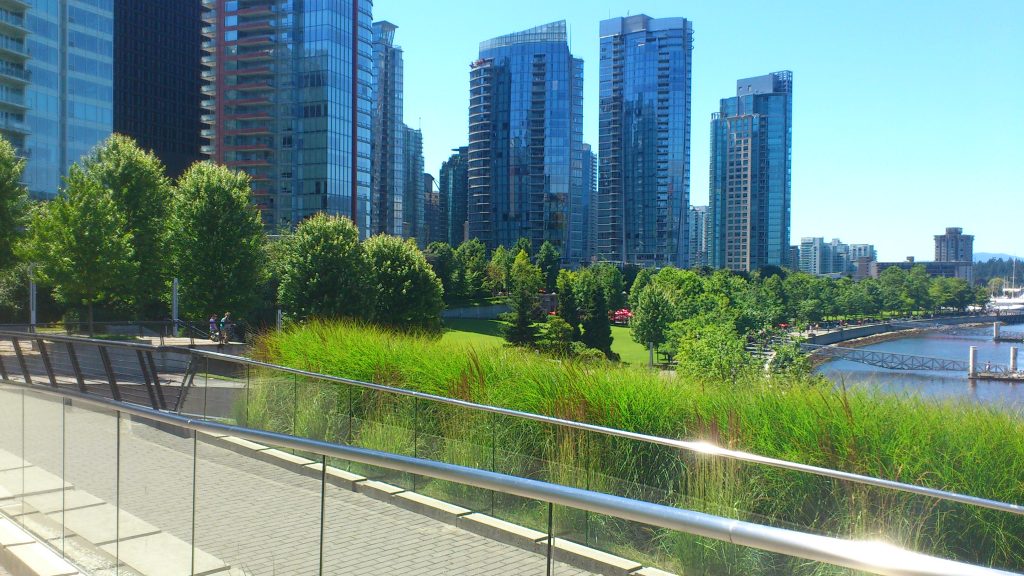
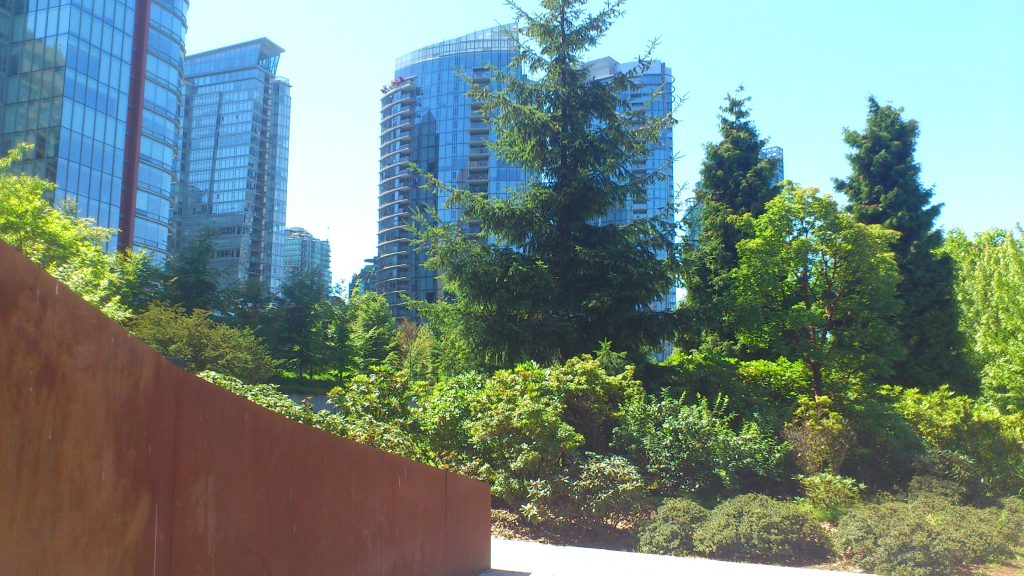
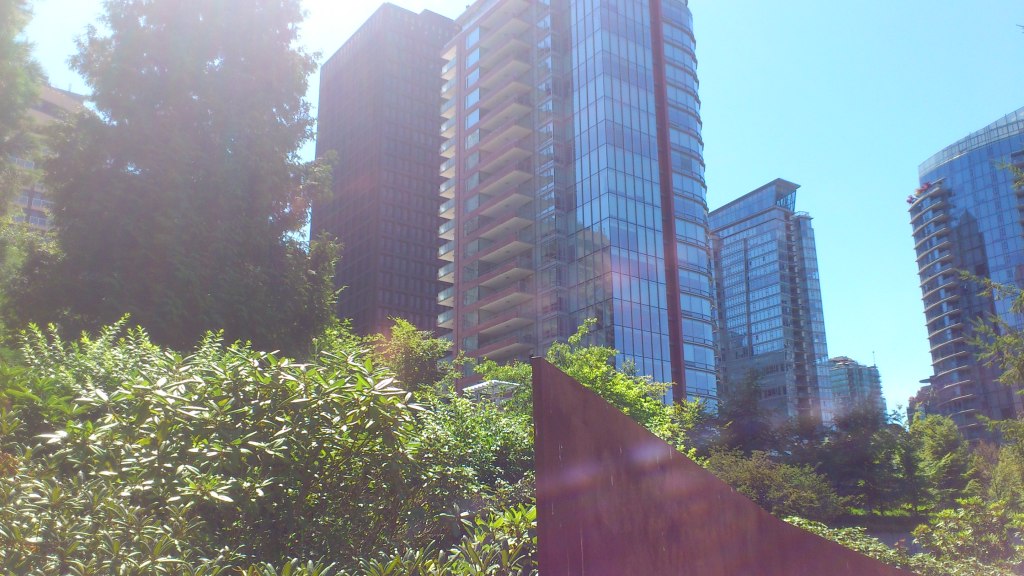
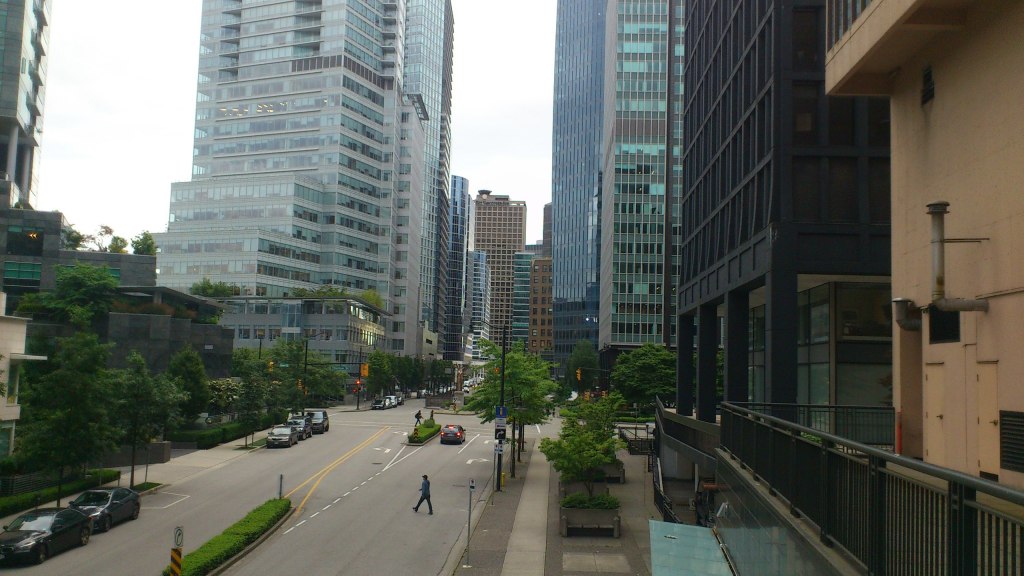
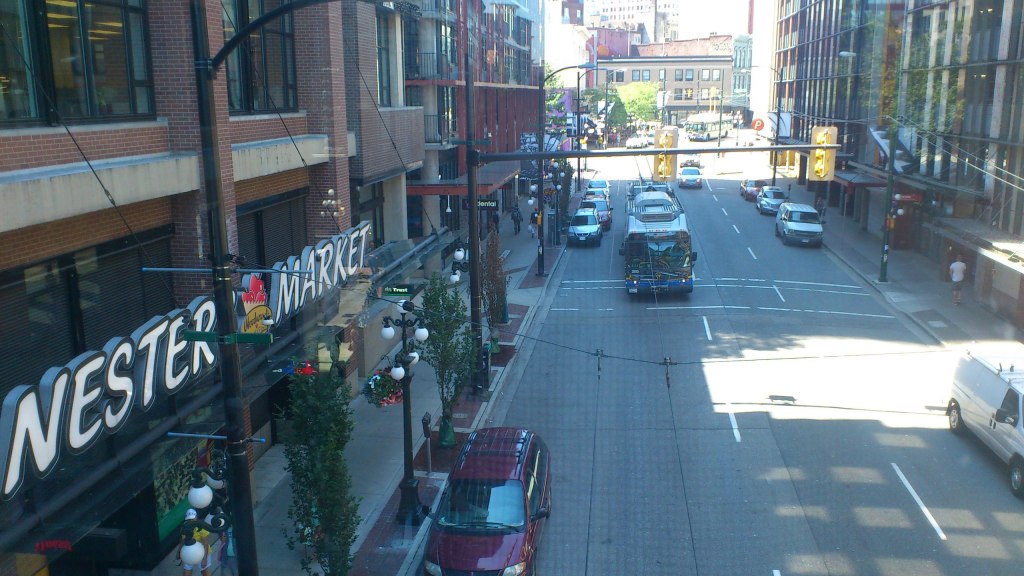
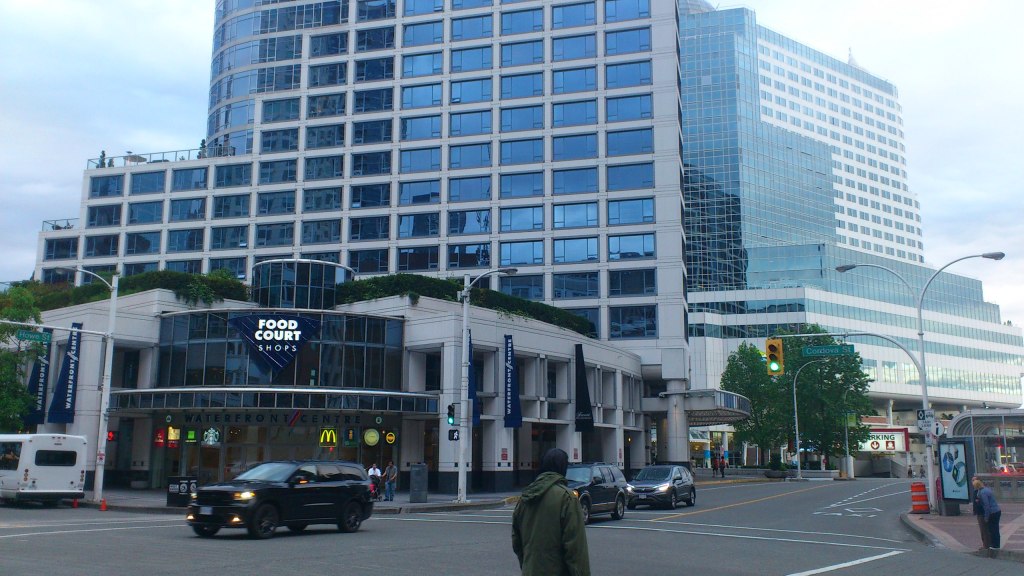
Waterfront is a major intermodal public transportation facility and the main transit terminus in Vancouver, British Columbia, Canada. It is located on West Cordova Street in Downtown Vancouver, between Granville and Seymour Street. The station is also accessible via two other street-level entrances, one on Howe Street to the west for direct access to the Expo Line and another on Granville Street to the south for direct access to the Canada Line.
The station is within walking distance of Vancouver’s historical Gastown district, Canada Place, Convention & Exhibition Centre, Harbour Centre, Sinclair Centre, and the Vancouver Harbour Flight Centre float plane terminal. A heliport operated by Helijet, along with the downtown campuses for Simon Fraser University and the British Columbia Institute of Technology, are also located within the vicinity of the station.
Waterfront station was built by the Canadian Pacific Railway (CPR) and opened on August 1, 1914. It was the Pacific terminus for the CPR’s transcontinental passenger trains to Montreal, Quebec and Toronto, Ontario. The current station is the third CPR station. The previous CPR station was located one block west, at the foot of Granville, and unlike the current classical-styled Waterfront station was built in “railway gothic” like the CPR’s many railway hotels.
In 1978, when Via Rail took over the passenger operations of the CPR and the Canadian National Railway, it continued using both railways’ stations in Vancouver, but a year later, Via consolidated its Vancouver operations at Pacific Central Station, the CN station near False Creek, and ceased using the CPR station. The last scheduled Via passenger train to use Waterfront station departed on October 27, 1979.
Waterfront station’s transformation into a public intermodal transit facility began in 1977. That year, the SeaBus began operating out of a purpose-built floating pier that was connected to the main terminal building via an overhead walkway above the CPR tracks. The CPR’s passenger platform and some of its tracks were torn up in the early 1980s to make way for the guideway of the original SkyTrain line (Expo Line), which opened on December 11, 1985. During Expo 86, SkyTrain operated special shuttle trains between Waterfront station and Stadium–Chinatown station (then named Stadium station), connecting the Canadian Pavilion at Canada Place to the main Expo site along False Creek.
A private ferry company, Royal SeaLink Express, ran passenger ferries from a new dock on the west side of the SeaBus terminal to Victoria and Nanaimo in the early 1990s, but ultimately folded. In 2003, HarbourLynx began operating out of Royal Sealink’s old facility at the SeaBus terminal. In 2006, following major engine problems with their only vessel, they folded as well.
In 1995, platforms were built adjacent to the SkyTrain station for the West Coast Express, which uses the existing CPR tracks. The platforms for the West Coast Express were built in the same location as the old CPR platforms.
In 2002, Millennium Line trains began to share tracks with the Expo Line at Waterfront station. The lines continued to share tracks until late 2016, when an Expo Line branch to Production Way–University station was created in replacement of the Millennium Line service between VCC–Clark and Waterfront stations.
In 2009, the Canada Line opened with separate platforms which are accessible via the main station building, but require leaving the fare paid zone when transferring between other modes. Waterfront station serves as a common terminus point for both the Expo Line and the Canada Line.
Waterfront station was one of the first stations to receive TransLink’s “T” signage, denoting a transit station. This signage was originally installed in the downtown core of Vancouver to help visitors during the 2010 Olympics, as it made transit hubs easier to identify.
In 2018, TransLink announced that Waterfront’s Canada Line platforms, as well as two other stations on the line located within downtown Vancouver, would receive an accessibility upgrade which includes additional escalators, as most Canada Line stations were built with only up escalators initially. Construction is expected to begin in early 2019.
Waterfront’s main station building was designed in a neoclassical style, with a symmetrical red-brick facade dominated by a row of smooth, white Ionic order columns. The Ionic columns are repeated in the grand interior hall, flanking the perimeter of the space. The main hall features two large clocks facing each other high on the east and west walls. Paintings depicting various scenic Canadian landscapes, completed in 1916 by Adelaide Langford, line the walls above the columns. The Montreal architecture firm Barott, Blackader and Webster was responsible for designing the main station building.
I’ll say upfront that there is nothing quite like the firm economy of Die Hard, a Christmas-set movie about how German terrorists commandeer a fancy Los Angeles high-rise, hold hostage all the people currently attending their office holiday party inside, and are slowly picked off by the one partygoer who had managed to stay hidden during the initial raid: a scrappy NYC cop named John McClane (a Moonlighting-era Bruce Willis). Although it is now thought of as a quintessential action movie, with a big-budget franchise in its wake, I like the first Die Hard for the—when you think about it—tightness of its conceit. The Nakatomi Plaza building is locked-down, and so the movie bottles up its villains, bystanders, and its lone hero; no help can get in, which means that the vulnerable, emotional, and slightly shrimpy McClane (who had been freshening up in a bathroom at the time of the attack and is therefore barefoot and weaponless) is the entire group’s only hope. The first Die Hard is fulfilling as an action movie because it is such a fervent exercise in creativity born from containment, limitation, and disadvantage: what can our characters make when they are trapped in a finite space with few resources? How can they transform their circumstances and save the day?
However, in each of Die Hard‘s subsequent sequels, the stakes dilate exponentially. With every installment, McClane inflates more and more into an indomitable action hero; almost superhuman, more muscle than man, by the end of it all. The evil plots he thwarts time and time again are more diabolical, more cataclysmic, more apocalyptic each time. Die Hard 2, a Christmas Eve-set disaster movie about an elaborate airplane hijacking at Dulles Airport, replays the thematic highs of its predecessor on a grander scale.
Which brings us to the subject of this essay, the third Die Hard movie. Die Hard with a Vengeance, it’s called. Directed by John McTiernan, who made the original film, it is the first in the mold to truly feel excessive. And it starts, interestingly enough, with slimmer stakes, shaking off some of the series’ bona-fides (disappointingly, there’s no Reginald VelJohnson, I’ll just tell you that now) and spinning out into a wild, sprawling, cat-and-mouse action plot connected only to the series’ previous volumes through its central revenge story. For you see, the villain of Die Hard with a Vengeance is Simon Gruber (Jeremy Irons), the brother of Hans Gruber (Alan Rickman), the German terrorist-cum-burglar John McClane vanquished in the first Die Hard movie. And boy, does Simon seem to hold a grudge.
It’s logical to read the film’s extensiveness as being directly proportional to the personal nature of its rationale. In the first two films, the inciting nefariousness is business rather than pleasure—various bad guys take over various properties in order to facilitate some kind of heist—and so it makes sense that the landscape is highly controlled and contained. In Die Hard with a Vengeance, a grieving brother’s rage blows all parameters to smithereens, rendering the canvas of the film as infinite as his anger.
This is logical, but it’s not entirely believable. Simon, using the cutesy moniker “Simon Says,” forces John to play a serious of tortuous games (solving brain-teasers, beating the clock when racing across town, answering trivia questions) on pain of mass-explosion. For a while, we don’t know who he is or why he is acting like the Riddler, but once his identity is revealed to us, the film offers “vengeance” as his motivation: that Simon longs to avenge Hans and punish his killer. What he’s actually doing (and this honors his late brother more than any act of retaliation might) is coordinating a spectacular distraction so that he and his goons can go burglarize the Federal Reserve and smuggle gold bullion out of the city via underground aqueducts. John and his incidental partner, an electrician named Zeus Carver (a fantastic Samuel L. Jackson), have to debunk the sham revenge plot in order to find the real crime. But this—the discrediting of “revenge” as a credible, sole motivator—doesn’t scale back the film’s reach. It more than doubles the acreage for battle.
Before I mention how “revenge” does actually work in the film, I’ll just say now that Die Hard with a Vengeance is a bit much. Too much. Along the way—somewhere in between all the subway explosions, elementary school bomb scares, leaps off bridges onto boats, break-neck car chases, break-neck truck chases, and hastily-computed logic puzzles—the movie does jump the shark. In fact, it makes plain old Die Hard look positively abstemious; it’s too big, too combustible, too unruly to feel as satisfying as its grandfather. Everything is interminable: the breadth of Simon’s power, the feats John and Zeus have to pull off in order to catch up with him. The film approaches a kind of uncanny valley of action-movie potential; all the relentless high-stakes setpieces start to feel so impossible, that the whole vehicle ultimately takes on a kind of pointlessness. By the time you finish it, I challenge you not to feel exhausted.
But the manic grandiosity and ensuing ennui of Die Hard with a Vengeance is not without a purpose; it’s just not a purpose you might expect. See, I think Die Hard with a Vengeance is very much about vengeance, after all. Rather than a traditional action movie, which uses its fast-paced dynamism to energize its audiences, I think the goal of Die Hard with a Vengeance is ultimately, precisely, to enervate us. To fatigue us. After, of course, it enrages us.
You see, Die Hard with a Vengeance takes place in New York. It’s not set in a single building in Los Angeles. It’s not set on an airport campus in Washington D.C. It’s set in Manhattan. All of Manhattan. The most enraging city in the entire world. In this film, Simon Says winds up sending John and Zeus from Harlem to the Battery, up and downtown again and again, by taxi, and train, and on foot. In the summertime! The most gripping chunk of Die Hard with a Vengeance is its first two acts, which feature little else besides rapid, sweaty, and frustrating commuting, as our main characters rush to get to various places in the city on time. The central hatred in the film is not, actually, between Simon Gruber and John McClane. It’s between the film on the whole, and New York City.
Too many films are love-letters to New York City; Die Hard with a Vengeance is one of its rare pieces of hate mail. And, hoo boy, is it loaded. It is the Sisyphean fable of two men who are cursed to travel back and forth around New York City all day, until they die. Mass transit? Race to catch it and it might kill you. Cabs? You’ll dive into the street to catch one and it might kill you. The only other ubiquitous New York City vehicle that escapes derogation is the bus, and that’s probably only because the movie ran out of time.
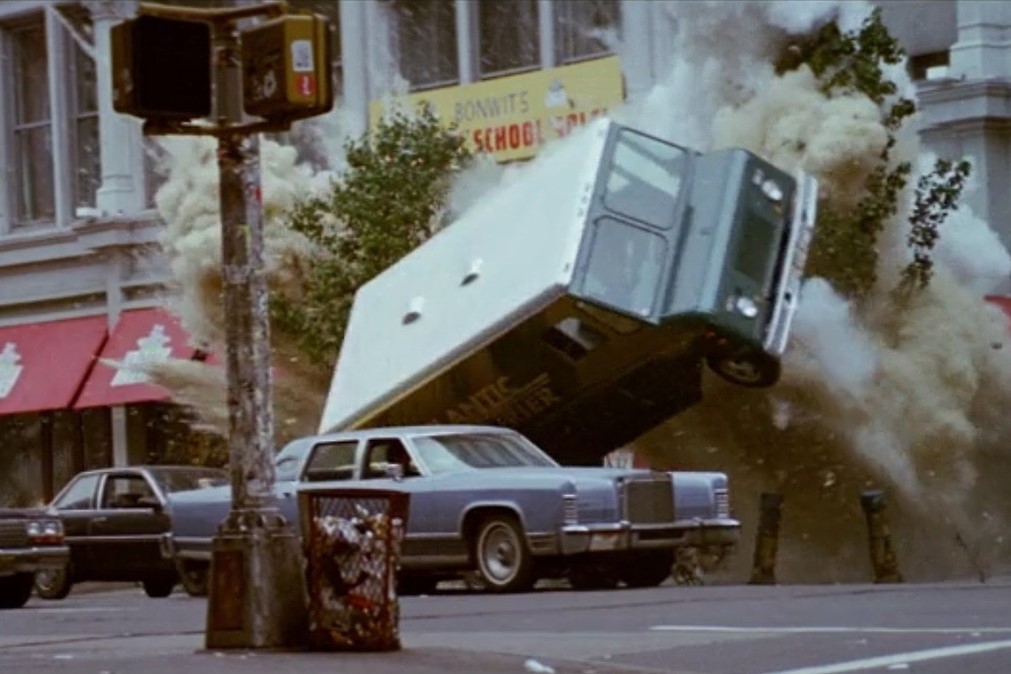
Yes, Die Hard with a Vengeance hates New York. It hates New York… with a vengeance. Take the very beginning. Its opening shots capture dark silhouettes of the skyline in the early morning, when the sky is marbled in a magnificent sunrise. There’s the Brooklyn Bridge! And the Empire State Building! The opening track is The Lovin’ Spoonful’s “Summer in the City”—and suddenly, right in the middle of a shot of 6th avenue, downtown at 18th st, a building explodes. Clouds of smoke burst out of the windows, and chunks of concrete fly everywhere. The unfortunate building is the Bonwit Teller department store (this movie is from 1995). Cars yank to a stop and drivers get out, peering at the wreckage through the thick layer of ash hanging over the street. We cut to an aerial shot, and the camera pulls back above the street, revealing the lines of traffic that are now forming down the avenue. There are no shots of civilians; no shots of the broken building. What we get, instead, is a shot of the kind of vehicular inconvenience that makes the city so famous—tons of people being late to their destinations and an entire avenue becoming screwed up for the rest of the day.
Shots go out of their way to capture street signs, to orient the audience in the city, as realistically as possible. The ambiance is filled in, in other ways. When Simon Says tricks Zeus and John into thinking he’s set off a bomb and the two scream to clear the street, and duck for cover, the nearby pedestrians aren’t amused. Someone even gives Zeus some money, seeming to assume he’s unwell. “Welcome to New York” someone snaps, as the two realize that they are a greater disturbance to the crowd around them, than the threat of an incendiary device. Welcome to New York, indeed.
The New York civilians we do encounter are, without exception, pissed off. So are Zeus and John, at everyone, and at each other. (It’s worth noting that the film ham-handedly attempts to solve Zeus’s evident mistrust of white people by making him work together, and become friends, with a caring white cop, as if “not working together” has ever been the actual problem with race in America.) Notably, Willis and Jackson have sparkling chemistry. John and Zeuss bicker, banter, show off, save one another, yell directions at each other. (They are represented not unlike the two-part bomb formula that Simon leaves in suitcases all over New York—on their own they are stable forces, but together, they are mighty. Nothing makes this clearer than when they are strapped to two giant barrels of the stuff, towards the film’s conclusion. But I digress.) Somewhere, they are surely supposed to embody different communities in New York City, bound together in the same cockamamie, cosmopolitan awareness and energy, united despite their differences.
More interesting than this trite thematic possibility is that the film becomes about New York City’s relative indifference to manipulation by an infrastructure-fancying psychopath; so easily, the city becomes the sadistic playground of a (literal) robber baron. I’m not saying Simon Says is Robert Moses (or, like, former customs house bigwig, Pres. Chester A. Arthur, whose name is all over this movie), but I’m saying it’s really interesting how quickly New York can be made to torture the every-man. New York isn’t looking out for Zeus and it isn’t looking out for John, even though John’s a cop and cops will tell you that they are protectors of the city. Nope. Our heroes trying to save the city, yet they have to battle with it simply to do that.
Why is the movie set in New York? Well, literally? At the start of the first Die Hard, McClane is NYPD, traveling to LA to try and win his wife Holly back. In the second, they’re still together, meeting up on the East Coast for the holidays. Without any explanation, Die Hard 3 begins in medias res, noting their new separation and relocating John back in his hometown. In New York, he’s alone, and he’s on suspension. After Simon detonates his first bomb at Bonwit Teller and then calls Major Crimes threatening to do it again unless McClane participates in his game, the cops have to go get him, hungover and confused, from his home.
This is, first of all, a very right way for John to begin his quest. No one is ever ready to navigate New York; his incapacitation merely emphasizes it. Simon’s games reintroduce John to his own city, but attempt to turn the city against him. When John meets Zeus, he has to wear a sandwich board around on his shoulders, on which is written a racial slur. And he has to walk around Harlem with this on. Simon clearly wants him to get beaten up by locals. When this doesn’t really work (thanks, Zeus), John’s next assignments become more transportation-focused. Here’s where the movie becomes very, very relatable. Let me ask you this… have you ever needed to get from the corner of W 72nd Street and Broadway all the way down down to Wall Street in less than 30 minutes? On a weekday morning in the summer? I have. And let me tell you, it can’t be done! Unless you catch a 2 or 3 express train down without having to wait and without any delays between stops. You definitely can’t do it by driving. You can possibly do it with reckless driving. Which is what John and Zeus wind up doing (they commandeer a cab and drive it across the grass in central park).
Ultimately, Die Hard with a Vengeance becomes more of a movie about being tired out by traveling through New York than it is about stopping a heist. Or, that “stopping a heist” is just another goddamn thing you find you have to do, while you’re just trying to live your life in New York City. This is a city that asks so much of its inhabitants, puts its denizens through so much crap on a daily basis. In this film, we are all John McClane and Zeus Carver, muttering swear words and sweating through our clothes.
Indeed, in life, it often feels as though getting from one borough to another is so complicated it requires you to, for example, take a shortcut through a water supply tunnel. Ultimately, the unbridled span of this film’s plot seems to be less a specific contradiction of the kind of restraint that kept Die Hard in check, and more about how, in New York, it’s impossible to keep anything in check. The ways John and Zeus wind up throwing caution (and red lights) to the wind and flooring their way through the city, are a kind of deranged wish fulfillment, the kind only this city can summon. How many times have you asked the cabbie to get you to your destination “as fast as possible?”
The fourth and fifth reboots of Die Hard take, as I’ve intimated, the franchise to inconceivable, superhero-esque heights. But I don’t think Die Hard with a Vengeance opens those floodgates (even though it does blow up one of the city’s crucial cofferdams and causes a flood). I think Die Hard with a Vengeance isn’t about how John McClane can do anything… I think it’s about how, in New York, people will do anything to make it crosstown in a reasonable amount of time.


 Igor's Blog