
One actress has never appeared in any movie or show we’ve watched in over a decade, even though she was one of the best parts of my childhood and has some absolute banger movies. This actress is none other than 90’s Nickelodeon royalty herself… Amanda Bynes. Sort of Mamma Mia meets Winning London, this movie finds Amanda in jolly old England on a quest to… find her father? I mean she knows who he is. There’s actually not much conflict to be honest, but it’s a fun time – and Pink Popcast is joining me for the ride!

When Persona 3 came out in the summer of 2006, it was a major paradigm shift for the franchise and Atlus overall. It became one of the hottest PlayStation 2 RPGs; spawning manga, anime movie adaptations, a ton of merchandise, and even a stage play based on it.
Persona 3 was a very edgy and fresh concept in its day. The story deals with heavy themes of existentialism and isolation as a teenager with death looming over the narrative as it unfolds. Bleak though it may be, Persona 3 is also about finding meaning and connection in the face of those challenges. It explores friendship, acceptance, and the courage to live life to the fullest, even when you know it’s finite.
For a while, you only had the PlayStation 2 version or the hopelessly gutted PSP port. While you could play the definitive version of Persona 3 on PlayStation via PSN, the time has come for a remake that aims to match the production values of Atlus’ latest games. Is this the ultimate Persona 3 experience? Did this need to be remade? Find out in our Persona 3 Reload review!
Persona 3 was such a big deal that it supplanted Atlus’ Shin Megami Tensei series, the very franchise that Persona spun off from. With every sequel, the series would further become more stylish and would center on managing daily life routines as an anime high school student while leading a double life as a persona user.
Before Persona 3, there were two Persona 2 games(Innocent Sin and Eternal Punishment), and both of them featured a cast of adults. Looking now, it’s hard to imagine the franchise being anything other than what it is known for today. The double life and Jungian symbolism of masks seem like it was always a part of the franchise, but it was the third game where it all came together satisfyingly.
Persona 5‘s distinct style and presentation became one of its defining characteristics. The newspaper clipping-style fonts and typesetting, coupled with the graffiti-like flourishes, made the game stand out. Even navigating menus felt engaging due to their animation and audible feedback, which extended to the battle interface as well. Persona 3 Reload takes this design philosophy and applies it to the classic Persona 3 experience.
Persona 3 Reload centers on the mystery behind the Dark Hour and Tartarus. The Dark Hour is a hidden period of time unseen by most, where Shadows roam the world shrouded in darkness and people become coffins. Tartarus is a massive tower, the source of the Shadows, which the party will engage with.
The unnamed protagonist is recruited by S.E.E.S., the Specialized Extracurricular Execution Squad, a group of students who have the power to fight these Shadows. This power comes in the form of Personas, manifestations of their inner selves. By wielding Evokers – magical pistols – they can summon their Personas to combat the threats.
The story follows your character as they navigate a double life: attending school, building relationships with classmates, and venturing into Tartarus to fight Shadows alongside SEES. As you delve deeper, you uncover the secrets of the Dark Hour, the origin of the Shadows, and a looming threat with dire consequences.
The SEES companions delve deeper into the tower, facing stronger Shadows and encountering figures who may hold the answers. The story also explores how the characters confront their mortality and the inevitable approach of a special date linked to their destinies. This setup takes several hours to establish and for the next 20-something hours, there is no story until July-August, which is when the plot finally begins to form.
A pro-Shadow cult gets introduced and while they do push the game towards having some plot, they aren’t the main antagonist. The motivations of the true villain are saved for the twilight hours of the game and it can take a long time before there is any idea of what the point of anything is. The wait is worth it, but it will demand some patience.
The main plot is not the reason why anyone would get absorbed by Persona 3 Reload. The heart of this game is its characters and human side stories that flesh out the setting. The Social Links each have a mini-narrative that drives the game’s core themes. The power of friendship makes sense since the world around them is shaped by belief and the collective unconscious. Friendship is a power, as is religion and other forms of belief.
Persona 3 Reload‘s story is understandably the same as it was in 2006 but with weaker voice acting and some questionable casting choices. Akihiko’s voice is way too deep. Yukari lacks curt and harshness in her performance. There are even some bizarre instances of self-censorship in some of the rewritings of some scenes that make no sense.
Some may say that they recast the English actors for new talent, but they didn’t recast Elizabeth’s voice for some reason. It is interesting how she is the best actor in Reload, yet is also the only returning performer from the original.
The real failing of Persona 3 Reload, is that it is a completely unnecessary remake. The major draw is that there are some new social links and the presentation has been updated to be more in line with how stylish the series has become.
There is no question that Persona 3 Reload‘s UI design is first-rate. It is sleek and cool, and the new character models are some of the best examples of how to do anime-style shading in 3D. No matter what angle you look at them, they always look excellent and better than anything Atlus has done so far.
Regretfully, this remake is not always consistent. While the characters look amazing, the environments can be very hit-or-miss. The Gekkoukan dorms are a perfect example of how the artists missed the point of the original’s dark and moody ambiance. In Reload, the dorms have very flat and sterile shading. The results make it look lifeless and boring.
Not only are some of the visuals not as appealing as the PlayStation 2 original, but Atlus failed to address the shortcomings. Tartarus was made up of repetitive recycled halls and rooms. It was a trade-off because Persona 3 was a mid-budget PlayStation 2 JPRG, so you ended up with a very boring dungeon in your elaborate life-sim RPG.
Persona 3 Reload missed the opportunity to redesign Tartarus with new ideas and potentially make it engrossing. The developers did try to make the repeating halls have more variety, but there is no disguising it. They could have had some insane M.C. Escher-inspired designs or utilized Unreal Engine 4’s ability to distort space as seen in Psychonauts 2. Tartarus could have been anything.
All the enemies still have the same issues from the PlayStation 2 carried over. They are nondescript Shadow enemies that don’t have a lot of variety among them. Persona 5 was smart to utilize the demonology from Shin Megami Tensei for its foes, but Reload does not follow suit. There could have been more unique designs for all the shadows, but they are still utterly stifled by the same few concepts.
This was the chance to make Persona 3 all it could be and push the series forward. Instead, it falls into a lot of the same traps as its predecessors. The unbearably long introductions, the daily school life, social links, and the metaverse; it’s becoming tired and generic. Worse yet, Persona 3 FES is still widely available on PSN for cheap if you still have your PlayStation 3.
The combat blends elements from Persona 3 through 5, offering a “greatest hits” of proven mechanics. Atlus wisely preserved this core aspect, applying some twists to existing strategies to complement new features. Persona 3 veterans will be especially satisfied.
The turn-based battle system is a variation of the press-turn mechanics seen in the Shin Megami Tensei games. Hitting enemies with their appropriate weaknesses will grant the player one extra turn and send the foe into a fallen state. Getting all enemies fallen allows players to do an all-out attack for major damage.
Something to always consider is that enemies can put party members into a fallen state too or missing causes them to slip as well. There is just enough randomization to keep battles interesting, but there is always an opportunity to turn things around. The drawback is that Reload ends up feeling like a cheap rehash of Persona 5 rather than feeling like a remake of Persona 3.
Regretfully, Persona 3 Reload has a substantial amount of cut content which is going to be sold as DLC. The Answer was a lengthy bonus scenario where Aigis, the party’s cyborg, becomes the main character. This arc is standard in Persona 3 FES on PlayStation 2 and is the version that is available for $9.99 on PSN for PlayStation 3 users.
Reload cuts this sequence out and will be sold as DLC when it already is priced at $69.99. The new social links and added production values are genuinely impressive, but they are not worth $69.99 when the game is still a PlayStation 2 game at its core, especially when the original is still out there for a fraction of the price and is complete and uncut.
Cutting out The Answer is unforgivable for a AAA price, especially since Reload does not justify itself. If you’re a fan of Persona 3, chances are you already have FES and would be better off replaying it because Reload has more in common with Persona 5.
Reload is not different enough where it counts and fails to honor the original intent with some of its many alterations. This remake lacks ambition where it could have addressed the shortcomings of the original game and its new content is hardly worth the price of admission. Some of the new visuals are great, but there are several instances of the art being a step backward.
Environments are still small areas that need to be loaded. Most story scenes unfold like a visual novel with big portraits and text. Tartarus is still a randomized assortment of samey halls. You can’t go fishing or play arcade mini-games. There isn’t even any close-up of detailed food models. You never feel like you see the money on screen.
Persona 3 Reload is a cynically made cash grab that has no wow factor. It’s peak remake culture where a lot of the edge gets sanded off to be in line with “modern audience expectations”. It may look great (in parts), but it lacks the vision to realize the full potential of what a modern Persona 3 could be. Even if it didn’t cut content, it is still a grossly overpriced remake that still feels like a PlayStation 2 game. Go play Persona 3 FES instead.

Halo 4 is adamant about proving its competence and convincing you of its necessity. You don’t often see a monolithic franchise putting up a fight for fans, but the departure of Bungie has awakened doubt – enough to incur a fierce response from Halo’s new custodians at 343 Industries. And so the developer launches the best kind of protest, which is to wave an impressive, throbbing shooter in your face.
The speed at which that uncertainty evaporates is the real surprise. You enter with a fair fear of Halo being stale; then Master Chief exits the cryogenic casket like a crisp piece of let-us-start-killing-things. Meanwhile, his companion Cortana skirts around fatigue, madness and Microsoft metaphor – the inevitable fate of software that’s been in service for much too long. But she too comes out stronger, more endearing and heroic than ever before. Maybe she’s just been inserted into one too many alien plinths over the years.%Gallery-169920%
Chief’s alarmed awakening in the Forward Unto Dawn, a ship misplaced and beset by invaders, is at once a perfect remembrance of Halo: Combat Evolved’s opening and an ideal showcase of 343’s quickened approach. The game waits for you to advance, as most games do, but the rousing music and implied degradation of the environment makes a leisurely pace seem … wrong. Halo 4 is an expert at making you play along with the unfolding spectacle, and makes sure you’re never ensnared by it.
Even this early level is littered with powerful weapons, and a harsh restriction of ammo forces you to loot, drop and juggle them whenever you can. There’s a faster, harder edge to combat now, and the Covenant sect that boards your ship seems more fanatical and wily than you’re used to. The increased difficulty shakes you out of playing Halo on auto-pilot, though it might make it tough on those who aren’t familiar with the amorphous encounters or cunning AI.
Once Chief lands on Requiem, a vividly realized planet and vector for a new villain’s vengeance, he enters a breathless push from one urgent objective to the next. Halo 4 can be haphazard in filling in the gaps between plot and lore, but top-notch acting and jaw-dropping facial capture pair up for entrancing presentation. 343 is also wise to avoid the easy callbacks, so don’t expect to set foot on yet another ring world.
The introduction of challenging new enemies – the armor-clad Prometheans – is a major alteration within Halo’s intricate and iterated combat. Whereas the Covenant evoke responses that border on muscle memory at this point, the Prometheans will trip you up for a good while. The airborne Watchers can shield their companions and return your grenades, while the hulking Knights can disorient your aim by teleporting. If they finish you with a brutal hit, it’s because your shields were whittled away by a pack of canine-like Crawlers, who wield all sorts of guns in their mouths. No bees, though.
You’re a good match for the Prometheans once you learn their stellar weaponry, but they’re another symptom of what could be Halo 4’s biggest problem. I’ve never concentrated this hard in “Heroic” level Halo. I’m split between thinking that success under pressure is inherently rewarding, again and again, and suspecting that “again and again” will be how some players describe their deaths. It irks especially when the story calls for climax and triumph, while the game kicks you back and restarts the music’s fanfare. Nothing deflates drama quite like the protagonist’s ignominious death.
But it’s rare to bite into these hard, unheated popcorn kernels, and they can’t come close to undermining a proper blockbuster campaign. Exploring the deserted, vibrant realms of Requiem is like walking through the matte paintings of an old sci-fi film, albeit one that costs as much as thirty of those. The immense levels open up when Halo’s mammoth vehicles come in to play, and subtly hem you in when it wants more claustrophobic shootouts. Later, an arid canyon envelops a jet-packing Chief in the campaign’s best moment – an escort mission that doesn’t suck in the slightest. In terms of consistency, scope and player motivation, this is the best Halo campaign yet.
Once Master Chief’s mission concludes, the operatives in the Spartan-IV program – Chief is only a Spartan-II, remember – carry on in the game’s ambitious co-op mode (offered in addition to the campaign co-op). The nature of Halo’s fighting, which is to push back just as hard as you prod it, translates beautifully to a four-party team, but it’s the method of delivery that makes the Spartan Ops mode exciting. Every week a new episode will add five missions, exploring the fallout of Halo 4’s events and giving direction to your slaughter of the alien hordes. If you find less and less time for games in your life (i.e. you’re an adult), this bite-sized commitment is ideal, and well worth being bossed around by the voice of Jennifer Hale. And yes, we should start calling her Jennifer Halo.
There’s a literal connotation to the progression of multiplayer in Halo 4. The introduction of an XP-driven system of gameplay unlockables is risky, and perhaps a call to dutifully invite comparison to other shooters. But this concern also disappears in 343’s vicious war against doubt, this time coinciding with the first, kick-ass KERPLUNK of new ordnance being dropped from the sky. Fine-tuning loadouts and unlocking new abilities introduces a mesmerizing array of strategies to the frantic shooting, and changing them on the fly can help you stay fluid with every map’s layout.
There’s an addictive sense of discovery with each new weapon and ability in your loadouts (which is why it’s best not to list them here), and perhaps some educational value in toying with them piece by piece. The slick, easy interface keeps things orderly, and respects the time you’ll spend coming up with sets that empower long-distance fighting, close-quarter scrambles and diversionary tactics. The aforementioned ordnance drop, a choice of weapons to summon once you earn a string of kills, is a thrilling reward for playing well, and it meddles with Halo’s gameplay as much as any of the unlocks do: it adds rapid-fire choice and complexity to moment-to-moment fighting, but doesn’t wobble the pillars of Halo’s refined systems. Way down there at the bottom, it’s still about dropping shields, exploiting grenades and using melee attacks at the right moments.
Halo 4 is Halo – a surprisingly successful, mandatory step for 343 Industries. But the game strives for more than competence, giving it a forceful march and a decadent show of strength. Our doubt and questioning of Halo’s continued existence has, in some small way, helped deliver one of the best games in the series and one of the finest shooters in years. Of course, if we want to use this tactic for the next one we’d better start now.
Halo 5 is going to suck!
All videos are in NG+1 (Journey 2) unless specified elsewhere. I use backup saves so I can take on Malenia over and over. Footage has been captured from the Elden Ring PS4 version on the PS5 for better performance. Some visual alterations have been used in this video using editing software.
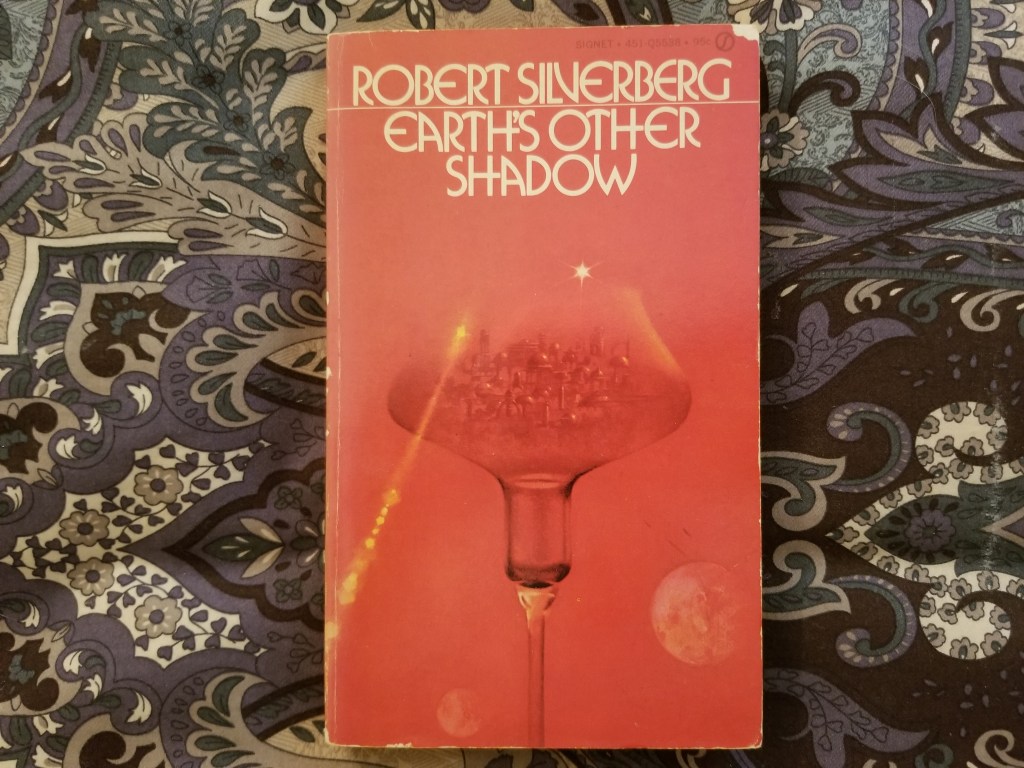

Thomas Jefferson, the third president of the United States and author of the Declaration of Independence, was a prominent revolutionary leader and political philosopher. The purpose of this chapter is to summarize the evidence that Jefferson had Asperger Syndrome — a possibility that has already provided the subject matter of an entire book (see Ledgin, 2000).
Life History
Jefferson was born in Shadwell, Albemarle County, Virginia, on April 13, 1743. His father owned a plantation; his mother belonged to a prominent colonial family. He had read all his father’s books by the age of 5 (McLaughlin, 1988). The young Jefferson was interested in various aspects of science and philosophy. He studied law, was admitted to the American Bar Association in 1767, and became a successful lawyer. He married Martha Wayles Skelton, a young and wealthy widow, in 1772. She died in 1782.
Jefferson was governor of Virginia from 1779 to 1781, and later in the 1780s was a minister of the U.S. government in France, where he witnessed the early stages of the French Revolution. As a representative of the Republican Party, he became U.S. vice president in 1797 and president in 1801. Jefferson officially retired from public life in 1809, but he continued to take a keen interest in the great issues of the day, such as slavery. He died on July 4, 1826 — 50 years to the day after the signing of the Declaration of Independence.
Social Behavior
Jefferson was extremely shy, socially awkward, and lacked empathy. Ledgin (2000) notes, “If anyone became emotional in his presence, he was likely to have been discomforted noticeably. If anyone raised his or her voice, almost certainly Jefferson would have found a polite way to remove himself” (p. 1). He failed to recognize social cues and was not very interested in other people. He also failed to recognize or understand irony and tended to be a concrete thinker and to lack common sense.
Ledgin (2000) speculated that Jefferson’s relationship with Sally Hemmings (his wife’s half-sister) was partly due to the fact that she was also an outsider, being a slave. Ledgin also pointed out that many people with autism spectrum disorders seek the company of others with similar problems, as in the case of Bertrand Russell and Ludwig Wittgenstein.
Jefferson’s magnetic intellect made him interesting to others, and partly for that reason the one-sidedness of his conversations was tolerated, similarly to Wittgenstein’s situation. Ledgin (2000) noted that Jefferson was apart from the mainstream in many respects and that he was eccentric and quirky.
Narrow Interests/Obsessiveness
Jefferson was described by James Parton, a nineteenth-century biographer, as a man who could “calculate an eclipse, survey an estate, tie an artery, plan an edifice, try a cause, break a horse, dance a minuet, and play a violin’ (Ledgin, 2000, p. 195). His interests clearly were not narrow in the usual sense (they included architecture, birds, coinage, weights and measures, distance measurements, English prosody, grammar and etymology, Indian vocabularies, natural history, piano tuning, Philadelphia temperatures, and scientific phenomena), but he focused on each interest in a narrow and obsessive way. He spent extremely long periods of time writing and studying alone, and noted at the age of 75 that he was still a “hard student.”
As US. president Jefferson established an economic embargo against England, which had devastating consequences similar to those of the Irish politician Eamon de Valera’s economic war with Britain in the 20th century. He wrote an enormous number of letters, like Lewis Carroll (Fitzgerald, 2005) and many others with Asperger Syndrome. He spent 54 years constructing and reconstructing his home at Monticello.
Routines/Control
Jefferson favored ritual and preservation of sameness and tended to line up or carefully arrange books, works, or toys. From about 1767 onward, he formed a habit that developed into a daily ritual of “making memorandum book entries for the rest of his life. His recording of minutiae about expenditures evolved into an everyday exercise that served little if any purpose, for he lacked meaningful accounting abilities” (Ledgin, 2000, p. 28). For 60 or more years he started each day by soaking his feet in cold, preferably icy, water.
Temple Grandin (1986), an academic and author who has autism, says that Jefferson “compulsively measured the distance his carriage traveled” (Ledgin, 2000, p. 197). This is very similar to Tesla at the dining table and to some autistic mathematical prodigies. Ellis (1997) has noted that the computer would have been the perfect Jeffersonian instrument — for example, its impersonality would have suited him well.
Jefferson was extremely controlling, particularly in looking into every aspect of the University of Virginia, which he was involved in setting up. He was hopeless at managing his own finances and had massive debts when he died. According to Ledgin (2000), Jefferson’s drawings for Monticello were carried out to precise scale and measured to several decimal places — the work of a compulsive personality.
Language/Humor
Jefferson was an extremely poor public speaker and avoided speaking in public as much as possible. Yet he had a great interest in English prosody — his kinds of linguistic interests are common in persons with Asperger Syndrome. It is noteworthy that his autobiography is unfinished. Persons with Asperger Syndrome have difficulty with autobiography.
Naivety/Childishness
Jefferson had a child-like personality and was emotionally immature. The great John Adams stated, albeit jokingly, “Jefferson was always a boy to me.” Ledgin (2000) described him as utterly naive, referred to an “Asperger’s inclination to treat fiction as fact” (p. 70) and stated “his relative immaturity … was what made him an either-or person, one who judged on the basis of perceived right or wrong without contingencies” (p. 72).
Nonverbal Communication
Jefferson was described as the “ever-elusive Virginian with the glacial exterior and almost eerie serenity” and had problems in expressing himself (Ellis, 2000, p. 74). His behavior was sometimes enigmatic and unpredictable. According to Ledgin (2000), “He had no talent for public speaking … he seemed uneasy with eye contact. To some his body language appeared odd and awkward. He sang under his breath constantly. Often he looked disheveled, and he drank too much’ (p. 1).
Ledgin (2000) listed the following features of autism in Jefferson: avoidance of eye contact in conversation, an inexpressive face or far-away look, few meaningful nonverbal gestures, failure to swing arms normally when walking, insensitivity to low pain levels, odd mannerisms, and trouble in starting conversation.
Jefferson was also described as having “limbs uncommonly long; his hands and feet very large, and his wrists of extraordinary size” (Chandler, 1994, pp. 26-27). His dress was extremely eccentric — he even wore slippers on state occasions. Further, Ledgin (2000) pointed out, “many of President Thomas Jefferson’s close contemporaries would have believed his greeting guests accompanied by an uncaged mocking bird or with his hair in disarray were items not worth belaboring,” as “polite people tend to look for and deal with the substance and character of those they admire” (p. 10).
Visual Thinking
According to Temple Grandin (1986), “There are two kinds of autistic-Asperger’s thought. Some who are affected are visual thinkers like me, and others are numbers and word thinkers. Both types concentrate on the details instead of the overall concept. Visual thinkers like me and visual thinkers like Jefferson are good at building things and good at mechanical design. The nonvisual detail thinkers are good at accounting and mathematics. Both types have enormous memory” (cited in Ledgin, 2000, p. 204).
Jefferson was particularly interested in architecture. In 1786, he referred to his ability to think pictorially. He wrote of visualizing “architectural ‘diagrams and crotchets’ (jointed wood used as building supports)” as a means to relax in order to fall asleep (Ledgin, 2000, p. 43). Indeed, Monticello has been described as “the quintessential example of the autobiographical house” (Adams, 1983, p. 2). “Signs of that are everywhere, especially in the built-in gadgetry” (Ledgin, 2000, p. 88). This is reminiscent of Ludwig Wittgenstein’s house in Vienna. Ledgin (2000) also stated that “architecture critic Paul Goldberger wrote that ‘both conceptually and physically’ the Jefferson intellect was central to the project. Jefferson’s psyche’ gave meaning to an exceptional architecture (Goldberger found in it ‘nothing universal’), and the more deeply one might ‘penetrate that psyche’ the more pleasure one should draw from the place” (p. 88). According to Ledgin (2000), Jefferson “must be given credit for advancing America’s household functionalism” (p. 91). Wittgenstein was also interested in functionalism.
It has been pointed out that for Jefferson, “beauty and function were inseparable” (Burstein, 1995, p. 21). This is exactly similar to Wittgenstein’s ideas on architecture. Further, like Wittgenstein, Jefferson was an inventor.
Morality
Jefferson had, according to Ledgin (2000), an unyielding perception of right and wrong. He thought of the world in black and white. This is very characteristic of people with Asperger Syndrome. Ledgin (2000) also noted that “Jefferson … made differing judgments about the worth of individuals on grounds of their ethical conduct, sometimes relying on only a few observations or experiences with them in order to do so” (p. 91). Wittgenstein may have made equally quick judgments based on insufficient information about people. We believe that this is because of the autistic condition.
Autistic Mental Mechanisms
Jefferson has been described as an “impenetrable man” (Peterson, 1970, p. viii). Ledgin (2000) notes, “Jefferson’s knack for shielding himself against reality when fiction suited his romantic notions better,” and that “Jefferson’s taking of such poetic license influenced the drafting of the Declaration of Independence” (p. 20). This is similar to de Valera and the Irish constitution.
Ledgin (2000) also noted, “The biographer Ellis is probably the first among interpretative historians to discover that two levels of reality served Jefferson. Ellis wrote that Jefferson was capable of creating inside himself ‘separate lines of communication that would sort out conflicting signals. My Asperger’s interpretation simply adds this: On the one hand there was reality as you and I know it, and on the other hand there was a Jefferson reality which the rest of us tend to see as idealism … The two levels are common to persons with high-functioning autism, and they deal with those separate realities daily in ways not yet clear to nonautistics” (p. 60). This is similar to de Valera’s mode of operation (i.e., there was a “de Valera fact” and then there were facts recognized by persons without autism, or de Valera’s autism — see Fitzgerald, 2004).
According to Ledgin (2000), Ellis noted that “denial mechanisms” gave Jefferson some guidance and that “interior defenses” protected him from becoming unduly pressed (p. 84). Ellis maintained that “capsules or compartments” had been “constructed” in Jefferson’s “mind or soul” to stop conflicting thoughts from colliding (Ellis, 1997, pp. 88, 149, 174). Such compartmentalization is common in persons with autism, such as the artist L. S. Lowry; we also see it in Einstein (Fitzgerald, 2005).
In discussing high-functioning persons with autism, Ledgin (2000) stated, “To put it simply, they live mentally and perhaps emotionally on two planes. They live in our world of nonautistics, but they carry with them a separate and otherworldly ‘reality’ — their reality. The rest of us see it as idealism, but autistics seem to convert it into something palpable” (p. 58).
Conclusion
The evidence that Thomas Jefferson had Asperger Syndrome is very convincing indeed.












 Igor's Blog