The 36 Best PS2 Games

https://web.archive.org/web/20101223173809/http://www.gamepro.com/article/features/205783/the-36-best-ps2-games-page-5-of-5

A comprehensive look at 36 of the greatest video games available on Sony Playstation 2.

  1. God of War 2

How do you improve on a game that was almost universally hailed as being one of the best action games ever created? You make the sequel bigger and better. With new weapons, more godly powers, and larger levels, God of War II was everything its little brother was and then some. Continuing where the original God of War left off, the second installment in the God of War saga brings Kratos’ one-man vendetta against Mount Olympus to a thrilling cliff-hanger ending that left gamers everywhere clamoring for the third and final chapter (soon to be revealed on the PlayStation 3). Oh, it also features one of the most epic opening levels ever created: an awe-inspiring fight against the Colossus of Rhodes that, in lesser games, would have served as the final boss fight. With expectations high after the success of God of War, new director Corey Barlog and his team had to deliver a masterpiece to live up to the hype. Luckily for PS2 owners, they did just that. God of War II is a PS2 high point.

  1. Resident Evil 4

Widely regarded as the best game in the series, Resident Evil 4 proved that you can, in fact, take a good thing and make it even better. With Resident Evil 2’s Leon Kennedy back in the lead role, Resident Evil 4 was revolutionary for a number of reasons. The first surprise was the biggest: There were no zombies! That’s right-the Resident Evil franchise was turned on its head when introduced to the Las Plagas, a deadly parasitic life form affecting a small Spanish village. Add in Resident Evil 4’s over-the-shoulder targeting system and heart-stopping quick time events, and you have an instant classic on your hands. This is one of the most important games of the decade, and the PS2 version is a must-own.

  1. Shadow of the Colossus

The concept of Shadow of the Colossus is so simple, it’s amazing nobody tried it before. In this adventure game, you’ll explore a massive landscape and fight a series of massive bosses. By trimming out the fat of extraneous enemies and other tiresome challenges, the game is able to focus on the greatest parts of any videogame-the boss battles! Shadow of the Colossus is considered a modern-day classic, and when you see the titular Colossi in motion, you’ll instantly understand why.

  1. Grand Theft Auto: Vice City

MO< The amazing open-world sandbox gameplay of Grand Theft Auto III made it one of the PS2’s biggest hits. What could possibly be added to the sordid tale of mob crime to make it more appealing? The surprisingly simple answer: a ton of 1980’s nostalgia. Grand Theft Auto: Vice City oozes retro charm, gave its lead character a voice and a personality, and made subtle improvements to the cherished gameplay of the GTA series. Though it was followed by the bigger San Andreas and the prettier GTA IV, many series fans still consider Vice City to be the pinnacle of the Grand Theft Auto series.

  1. Okami

An under-appreciated classic, Okami was more of an experience than a game. Featuring an unusual story firmly rooted in Japanese mythology, the player took on the wolf form of the sun goddess Amaterasu in a mission to restore color, life, and prosperity to the world. With breathtaking visuals that appeared painted on your television screen and a gameplay system that blows the concept of “innovation” out of the water, Okami was an all-around masterpiece. Pity it didn’t sell more copies – it’s a classic.

  1. Final Fantasy XII

The twelfth installment in the world-famous Final Fantasy series was revolutionary for a number of reasons. One was the birth of the Ivalice Alliance – Square Enix’s attempt at creating actual continuity in the Final Fantasy universe. Another was the end to random battles, with the player able to size up a foe before you take ’em on. Lastly? An epic story that spanned the entire world of Ivalice, and over 100 hours of play time. Final Fantasy XII is the series’ grand exit from the PlayStation 2, and it exited in style.

  1. God of War

An epic narrative, an iconic main character, intense action, and amazing gameplay–that was the golden formula that creator David Jaffe hit upon for the first God of War. Released nearly five years into the PlayStation 2’s lifespan, the first God of War proved that the console still had a lot of life left in its black plastic shell. Recounting the vengeful tale of Kratos, a blood-thirsty Spartan warrior who rebels against the gods who rule from Mount Olympus, God of War was a fantastic game that left a lasting impression on the action genre. The combat was amazing, with a deep combo system, enemies galore, and eye-popping fatality animations that delivered a satisfying and visceral thrill. The game was also unabashedly mature, and its production values and gameplay hold up to this day.

  1. Metal Gear Solid 3: Snake Eater / Subsistence

When you’ve experienced the ultimate in modern stealth combat, where else to go but back in time? Metal Gear Solid 3: Snake Eater tells the origin story of Big Boss, the original NES baddie, who bares a striking similarity to Solid Snake. With camouflage-based stealth and survival techniques mixed with the series’ standard combat, Snake Eater is a delightfully delicious new taste of stealth.

  1. Grand Theft Auto: San Andreas

Everything in the world grinds to a halt when Grand Theft Auto hits the shelves. GTA: San Andreas was no different, as the series went from the 80s throwback era of Vice City to the present-day hood of San Andreas. No longer a slick ladies man in a nifty blazer, gamers very quickly got introduced to Carl Johnson, a man on a mission to save his hometown. Even without the story to consider, GTA: San Andreas showed its real strength in the customization of your main character. If you want to deck out CJ in awesome threads, you could; if you drove everywhere and crammed him full out fast food, he got fat. GTA: SA was so thug-tastic, it was even generating some wild controversy on the side. Added with almost twice as many vehicles as GTA III, new minigames and the introduction of gang warfare, the game was as in-your-face as it was gritty.

  1. Metal Gear Solid 2: Sons of Liberty / Substance

The first PS2 iteration of the amazing Metal Gear saga is often considered the best. With a refinement of the original PS1 hit’s controls, still-amazing graphics, and a memorable cast of characters–including one surprising alternate protagonist–Metal Gear Solid 2 was the ultimate cinematic game experience. The “Substance” re-release added a smorgasbord of side missions and other fun extras.

  1. Gran Turismo 4

With astonishing customization that allows motorheads to fine-tune their vehicles down to the smallest detail, Gran Turismo 4 added a new level of authenticity to racing games that has yet to be matched. With never-before-seen physics that took into account the weight of your car, the friction of the road, and speed of surrounding vehicles, Gran Turismo 4 wasn’t just a racing game — it was an experience. GT 4 also introduced GT Online mode, which allowed racers from across the world to challenge each other in their customized vehicles via the internet.

  1. Hitman: Blood Money

Rather than casting you as an uber-killer who solves his problems with a hail of bullets, Blood Money required you to take your time and carefully plot out your hits. Agent 47, the star of the classic Hitman series, had a veritable tool box of devious tricks at his disposal. Missions were open-ended in design, so when pursuing an assassination target, you could barge through the front door with your guns blazing…or you could sneak through a back window and slip some poison into the hapless victim’s dinner. You could stealthily wire a bomb under the mark’s car and detonate it from afar…or climb into a nearby building with a sniper rifle and patiently wait for your target to come into range. It was this sense of choice that has always set the Hitman series apart.

  1. Prince of Persia: The Sands of Time

Resurrecting the highly-regarded Prince of Persia series for the PS2 was a risky proposition for Ubisoft. Thankfully, the company created something new and exciting that rightfully claims the throne with Prince of Persia: The Sands of Time. With acrobatic platforming, fun combat, and a unique “rewind” feature that allows you to turn back time to retry tricky jumps, we could play with the Sands of Time for all eternity. Later games got bogged down with emo histrionics, making Sands of Time the definitive entry…at least, until the next-gen Prince of Persia hits.

  1. Ico

A silent protagonist and a scared princess who speaks an unknown tongue must escape a nearly-barren castle filled with uniformly shadowy figures. Somehow, it comes together as one of the most engaging adventures ever. Ico forges such a strong narrative and memorable characters with little dialogue and the simplistic gameplay come together into an unforgettable stylized storybook tale.

  1. Guitar Hero 2

Guitar Hero II didn’t really change the gameplay of the original. It simply added more of what the fans wanted–more music! With 40-plus music tracks, many of them master tracks, and a slightly easier hammer-on/pull-off system, Guitar Hero II is the most accessible game in the series, recalling a simpler time where you didn’t have to worry about incompatible instruments or exclusive track downloads. The song lineup is slightly better in the first Guitar Hero – consider buying both games.

  1. Kingdom Hearts 2

The unlikely union between Disney and Square Enix created an instant classic with the first Kingdom Hearts, and when it was time for a sequel, there was nowhere to go but up. Kingdom Hearts II integrated even more of our favorite Disney and Square characters, improved on the game’s battle system, and above all, got rid of those Little Mermaid swimming levels! Kingdom Hearts is a series known for having something for everyone, and there’s just enough magic in this title to make it accessible to even the most jaded, cynical gamer.

  1. Final Fantasy X-2

Don’t let the tweeny, hyper-sugary Japanese pop music fool you. Final Fantasy X-2 was a vast improvement on its more traditional forerunner, and it was easily one of Square’s most entertaining games by a long shot. Even the random battles were less of a hassle, although most male, red-blooded Final Fantasy fans were probably happy just changing Yuna’s Dresspheres. We never had more fun drooling over the slick graphics, revamped equipment system and sexy ladies’ outfits. Rowr.

  1. Ratchet & Clank: Up Your Arsenal

Choosing between three stellar Ratchet games is a tough task, but we chose the third game, Up Your Arsenal, for its near-perfect blend of action, platforming, and humor. A graphical feat on the PS2, Up Your Arsenal was one of the best-looking games on the console, and its implementation of old-school game elements (we LOVE the 2D Qwark mini-games) make it the complete Ratchet package.

  1. Jak and Daxter: The Precursor Legacy

Jak II was arguably more fun (cue guns and vehicles), but the foundation of the excellent Jak and Daxter series was built on the Precursor Legacy. Naughty Dog — the studio behind Crash Bandicoot — launched its first free-roaming 3D action game with Jak and Daxter, and the game’s stellar graphics and fun platforming gameplay set the stage for an excellent trilogy. Alongside Ratchet & Clank, Jak and Daxter is one of the best original series for the PS2.

  1. Tekken 5

Whereas every PS1 Tekken game was a bona-fide hit, the series didn’t fare as well on the PS2. Tekken Tag Tournament, a launch title, felt less like a true sequel and more like Tekken 3.5, and Tekken 4 was an aberration in the series that threw away many of the features of the past by including slower gameplay and environments that were walled and tiered. Tekken 5 brought the series back to its roots and nearly perfected the gameplay. With lush matching graphics to boot (the game managed to impress on the PS3, too!), Tekken 5 is one of the best fighting games of all time.

  1. Devil May Cry

Before Devil May Cry, the action genre was filled with slow, klodgy shooters. Capcom changed all that with the debut of this classic PS2 action game. Devil May Cry made action stylish and cool, with leather-clad Dante using his devastating sword to send enemies airborne and a variety of firearms to keep them up there. Devil May Cry is almost as fun to watch as it is to play, and it’s still the best in the overall Devil May Cry series.

  1. Twisted Metal Black

After its two previous less-than-stellar incarnations from 989 Studios, Incognito went back to the drawing board for the franchise’s PS2 debut. Luckily for PS2 owners, they created the darkest, most brutal vehicular combat experience to date! Set in its own continuity, Twisted Metal Black was able to revamp the stories behind fan-favorites such as Sweet Tooth, Mr. Grimm and Axel, giving them darker, more disturbing origins. With stunning, fast-placed gameplay that was sure to get your adrenaline pumping, there was no way you could stand idly by and watch a Twisted Metal deathmatch: it was drive or die.

  1. Burnout 3: Takedown

Burnout is still driving strong, but the series really hit top speed with its third PS2 iteration. In addition to the great racing and crash modes showcased in earlier titles, Burnout 3 added a much deeper championship mode and a cool little feature called the “Aftertouch,” which allows you to control your car, post-crash, in order to take out other racers. Burnout 3 was also the last game in the series based in some semblance of reality, as future titles allowed you to ram into the back of cars going the same direction as you without punishment, which took a lot of the intensity out of the race.

  1. Bully

“Jimmy Hopkins-you’re quite the nastiest little boy I’ve ever seen!” These words lead you into the shoes of Bully’s red-headed, trouble-making protagonist, as well as life at Bulworth Academy. Rockstar took its spectacular open-world engine from Grand Theft Auto: San Andreas, and applied it to a private school run by cliques and bullies. As Hopkins, you had the freedom to skateboard around town, play pranks on the faculty, and even participate in mini-games that acted as Jimmy’s school “classes”. With a stellar storyline and Rockstar’s trademark voice acting, Bully was a fantastic sandbox experience with a lot of heart.

  1. Devil May Cry 3: Dante’s Awakening

Devil May Cry 3 was not for casual gamers. After the disappointing sophomore entry in the series, DMC3 was leaner, meaner, and packing more whoop-ass than a bar full of rowdy prison inmates on crack. Dante’s Awakening was probably Capcom’s most over-the-top action game of the era, and just being brutally hard was only the tip of the iceberg. With handguns, sick sword combat, and Dante’s always-exciting demon powers, half the fun was just deciding how to kill your enemies. Long live the night.

  1. Silent Hill 2

Pyramid Head. Those two words are reason enough for Silent Hill 2 to make this list. Luckily, the rest of the game was damned fine, too. As recent widower James Sunderland, you find yourself in the mysterious village Silent Hill after receiving a strange letter from your late wife. Attacked by vicious, faceless monsters, James’ search for the past turns into a battle for his own future as he must survive against the heart-stopping sights and creatures that roam the streets of Silent Hill-but sometimes, the truth is better left untold…

  1. TimeSplitters: Future Perfect

What other game allows you to engage in co-op play with a future version of yourself? TimeSplitters: Future Perfect paved new ground for first-person shooters everywhere with its unique time-traveling story and innovative gameplay. One second you’d find yourself wielding a Kruger against a World War II backdrop, and the next you’d be stealthily sneaking around a city of the future, plasma pistol in hand. With downright addictive multiplayer, including a built-in Map Maker, TimeSplitters: Future Perfect was simply revolutionary for its… well, time.

  1. Onimusha: Warlords

Onimusha was very much like playing an Akira Kurosawa film. In the role of lone swordsman Samanosuke, you must protect a young princess against the forces of evil. The Kurosawa similarities end there, as the forces of evil are represented by breathtaking, demonic beasts. Onimusha’s fast-paced action set against its feudal Japanese backdrop make for an unforgettable experience from the first moment you unsheathe your katana. Think of it as Resident Evil for the sword-loving crowd.

  1. Lego Star Wars: The Video Game / Lego Star Wars II: The Original Trilogy

When Lego Star Wars was first announced, we wrote it off almost instantly. Big mistake. By marrying the greatest space story ever told with the cutesy style of Lego, we were able to enjoy all six of the chapters of George Lucas’ epic without a single line of dialogue being uttered. Considering how Episodes I through III turned out, this is probably a good thing. Lego Star Wars is a real treat, combining item collection, platform jumping, and some surprisingly intense destruction. It’s a must-have for any PS2 owner.

  1. We Love Katamari

The surprise hit Katamari Damacy featured one other sequel helmed by series creator Keita Takahashi. While the concept of creating a sequel to one of the most original games of all-time seemed counter-intuitive, Takahashi made it work by creating an engrossing story mode that was a love letter to fans of the first game. Not much of what worked in the original was changed, but the addition of crazy new stages, songs, and characters made We Love Katamari the best game in the series.

  1. Black

Black was like playing a Michael Bay movie on steroids. With completely destructible environments, an amazing arsenal of weapons, and “Style Kills” rewarded for suave decapitations, there was no way you couldn’t play this game without feeling like an absolute badass. The revolutionary physics also blew away the competition with real-time debris flying from destroyed buildings and vehicles, plus unmatched explosions that flattened foe and environment alike. The prettiest shooter on the PS2 is also one of the best.

  1. SOCOM 2: U.S. Navy SEALs

The sequel to the groundbreaking SOCOM was a revolutionary step in team-based strategic shooting, not to mention online console gaming as a whole. Compatible with the PlayStation 2’s USB headset, SOCOM II reinvented what it meant to play as a team when a member of your squad would call for back-up in real time, or sneaking through the jungle with 15 other players all looking for a headshot. While cheaters eventually ruined the online experience for many, players everywhere still carry fond memories from SOCOM II – and we haven’t even mentioned the stellar single-player mode!

  1. Marvel vs. Capcom 2

Surprisingly, one of the PS1’s biggest weaknesses was 2D games, particularly memory-intensive fighting games. Any fan of the genre who played Capcom’s popular “Vs.” series had to endure horrific load times and the removal of the series’ signature feature–the ability to switch between characters in the middle of a match. Thankfully, the feature was restored in time for the best game in the series to get a picture-perfect port. While we wish the game could have included some sweet online play, the rest of Marvel vs. Capcom 2 is amazing enough to make up for it.

  1. Escape from Monkey Island

You could hear the jaws of adventure fanatics drop all across the country when LucasArt’s Escape from Monkey Island was announced for the PS2. The fourth installment of the Monkey Island franchise was also the first title to take our goofy, but lovable protagonist Guybrush Threepwood into the realm of 3D. With original puzzles, clever writing, and all-around fantastic voice acting, Escape from Monkey Island was an achievement in adventure games, and a nostalgia trip to the days of point-and-click.

  1. SSX 3

SSX introduced us to the world of extreme arcade snowboarding, SSX Tricky upped the ante with insane new tricks and death-defying tracks, but SSX 3 was the first in the series that truly immersed us in the experience, with an unprecedented amount of character customization and one giant mountain that was ripe for the shredding. It was SSX 3’s attention to detail, such as courses affected by weather in real time, that made the third title in the stellar snowboarding series one to remember.

  1. Fight Night Round 3

The third title in EA’s stellar Fight Night franchise introduced an innovative new way to experience the thrill of boxing by making use of the dual analog sticks to punch, jab, and block. Fight Night Round 3 also introduced stunning new visuals, and real-time battle damage with swollen eyes, cuts, bruises, and streaming blood. Fight Night Round 3 also allowed the player to generate rivalries with other boxers, creating cinematic experiences during press conferences and weigh-ins, allowing you to believe that you were truly part of the action. Simply put, boxing doesn’t get any better than this deep, sophisticated fighter.

UK TikToker goes viral for take on Canada’s quirks: ‘The biggest cultural adjustment’

https://ca.movies.yahoo.com/viral-tiktok-uk-canada-washrooms-174131277.html

A Tiktoker from the UK who recently moved to Canada is going viral for her takes on the quirks of her new country of residence, including the odd design of “toilet” doors.

Michaela Jessie (@michaelajessie_ on TikTok) moved to Canada from London last May, after her partner got a job in Vancouver. She was keen to pursue an acting career in a city with a robust film and TV industry, and was also craving an adventure.

As a way to put herself out there and have some fun, Jessie started a TikTok account shortly before her move. There, she shares videos of herself trying fruits, getting ready for auditions and giving her impressions of Canada.

In a video posted last month, she shared her disdain for the design of public washrooms in Canada, particularly the large gaps between the door hinges and the lock. It has been viewed almost 12,000 times.

“I like a lot of things about Canada,” she starts in the video. “But I do not like the toilet.”

“Every time I went to a public toilet, I didn’t understand why there were these humongous gaps,” she adds in an interview with Yahoo News Canada. “It’s very uncomfortable.”

“So you can literally see in while someone is peeing,” she explains.

Many Canadian users responded to the post, assuring her that that’s the way our washrooms have always been, while others shared in Jessie’s disdain.

“A lot of people don’t know why that’s the way it is and they don’t like it either,” she says. “I still don’t understand the reason or rationale why toilets are like that.”

Since moving to Canada, Jessie has always been taken aback by how chatty with each other people are on elevators — or “lifts” as she knows them.

“Generally people in the UK, you stand there in silence, but people here will say ‘Hello’, or say ‘Have a great day,’ or have a conversation with you,” she says. “In the UK, you go in and ignore the other person and then you leave the lift without saying a word. I find it less awkward to chat with someone.”

Jessie is also adjusting to tipping culture when going out to eat. In the UK, people only tend to tip when at a restaurant, and when they do, it’s a little more than 10%. Here, a 20% tip is now the expected rate for most food industry services, like coffee shops and bakeries.

“If you’re going to Starbucks, you’d never tip or if you’re getting your lunch made right in front of you,” she says. “But here there’s always a tip option anywhere you go.”

When it comes to dining out, Jessie is impressed with how easy it is to split a bill in Canada, where many restaurants can automatically add up how much each patron owes.

“That does not happen in the UK and it saves a lot of problems,” she says. “The amount of times you’re sitting there with your calculator, adding up how much you owe, then it goes wrong … not having to do that is the best thing.”

At the suggestion of her TikTok followers, Jessie has explored the world of Canadian snack foods, sampling ketchup chips (or “crips” as she refers to them), Cheezies and Oh! Henry chocolate bars.

“I liked the ketchup chips, they kind of taste like prawn cocktail (chips) in the UK,” she says.

While Jessie won’t be in her home country for the upcoming momentous coronation for the King, she’s mostly disappointed that she won’t get the day off.

“Here, you kind of forget it’s happening and then you see back home they have their bank holiday weekend,” she says. “It’s something that’s always been a part of life in the UK, the royals, so it’s not something that I’ve been thinking about too much.”

Samarkand – Crossroad of Cultures

https://whc.unesco.org/en/list/603

The historic town of Samarkand is a crossroad and melting pot of the world’s cultures. Founded in the 7th century B.C. as ancient Afrasiab, Samarkand had its most significant development in the Timurid period from the 14th to the 15th centuries. The major monuments include the Registan Mosque and madrasas, Bibi-Khanum Mosque, the Shakhi-Zinda compound and the Gur-Emir ensemble, as well as Ulugh-Beg’s Observatory.

Brief synthesis

The historic town of Samarkand, located in a large oasis in the valley of the Zerafshan River, in the north-eastern region of Uzbekistan, is considered the crossroads of world cultures with a history of over two and a half millennia. Evidence of settlements in the region goes back to 1500 BC, with Samarkand having its most significant development in the Temurid period, from the 14th to the 15th centuries, when it was capital of the powerful Temurid realm.

The historical part of Samarkand consists of three main sections. In the north-east there is the site of the ancient city of Afrosiab, founded in the 7th century BC and destroyed by Genghis Khan in the 13th century, which is preserved as an archaeological reserve. Archaeological excavations have revealed the ancient citadel and fortifications, the palace of the ruler (built in the 7th century displays important wall paintings), and residential and craft quarters. There are also remains of a large ancient mosque built from the 8th to 12th centuries.

To the south, there are architectural ensembles and the medieval city of the Temurid epoch of the 14th and 15th centuries, which played a seminal role in the development of town planning, architecture, and arts in the region. The old town still contains substantial areas of historic fabric with typical narrow lanes, articulated into districts with social centres, mosques, madrassahs, and residential housing. The traditional Uzbek houses have one or two floors and the spaces are grouped around central courtyards with gardens; built in mud brick, the houses have painted wooden ceilings and wall decorations. The contribution of the Temurid masters to the design and construction of the Islamic ensembles were crucial for the development of Islamic architecture and arts and exercised an important influence in the entire region, leading to the achievements of the Safavids in Persia, the Moghuls in India, and even the Ottomans in Turkey.

To the west there is the area that corresponds to the 19th and 20th centuries expansions, built by the Russians, in European style. The modern city extends around this historical zone. This area represents traditional continuity and qualities that are reflected in the neighbourhood structure, the small centres, mosques, and houses. Many houses retain painted and decorated interiors, grouped around courtyards and gardens.

The major monuments include the Registan mosque and madrasahs, originally built in mud brick and covered with decorated ceramic tiles, the Bibi-Khanum Mosque and Mausoleum, the Shakhi-Zinda compound, which contains a series of mosques, madrasahs and mausoleum, and the ensembles of Gur-Emir and Rukhabad, as well as the remains of Ulugh-Bek’s Observatory.

Criterion (i): The architecture and townscape of Samarkand, situated at the crossroads of ancient cultures, are masterpieces of Islamic cultural creativity.

Criterion (ii): Ensembles in Samarkand such as the Bibi Khanum Mosque and Registan Square played a seminal role in the development of Islamic architecture over the entire region, from the Mediterranean to the Indian subcontinent.

Criterion (iv): The historic town of Samarkand illustrates in its art, architecture, and urban structure the most important stages of Central Asian cultural and political history from the 13th century to the present day.

Integrity

The different historic phases of Samarkand’s development from Afrosiab to the Temurid city and then to the 19th century development have taken place alongside rather than on top of each other. These various elements which reflect the phases of city expansion have been included within the boundaries of the property. The inscribed property is surrounded by more recent developments, of which parts are in the buffer zone. Afrosiab has been partly excavated and the Temurid and European parts of the city are being conserved as living historic urban areas.

The main listed monuments are well maintained. Some of the medieval features have been lost, such as the city walls and the citadel, as well as parts of the traditional residential structures especially in areas surrounding major monuments. Nevertheless, it still contains a substantial urban fabric of traditional Islamic quarters, with some fine examples of traditional houses.

Notwithstanding, there are several factors that can render the integrity of the property vulnerable that require sustained management and conservation actions.

Authenticity

The architectural ensembles of Samarkand as well as archaeological remains of Afrosiab have preserved all characteristic features related to the style and techniques and have maintained the traditional spatial plans of the urban quarter. However, inadequate restoration interventions as well as the challenges faced in controlling changes, particularly the construction of modern buildings, and the modernization on private properties have affected the authenticity of the property and make the property vulnerable to further changes.

Protection and management requirements

There are adequate legal provisions for the safeguarding of the heritage property. The State Samarkand Historical Architectural Reserve was established under the Decree of the Cabinet of Ministers of the Republic of Uzbekistan (26 May 1982). Within the Reserve all construction and development work is done according to the recommendations of the Samarkand Regional Inspection on Preservation and Restoration of Objects of Cultural Heritage.

The overall responsibility of the management of protected areas is with the Ministry of Cultural and Sport Affairs and the Samarkand provincial government. The operating bodies that influence the conservation and management of the property include the Ministry of Culture and Sports of the Republic of Uzbekistan and the Principal Scientific Board for Preservation and Utilization of Cultural Monuments, the Municipalities of the Samarkand Region and Samarkand city, the Samarkand Regional State Inspection on Protection and Utilization of Cultural Heritage Objects. Decisions on construction/reconstruction within the protective Reserve of Samarkand are taken in consultation with the Samarkand Regional State Inspection on Protection and Utilization of Monuments, or by the Scientific Board on Protection and Utilization of Monuments in Samarkand. Major projects receive approval at the national level.

The Regional State Inspection on Protection and Utilization of Cultural Heritage is in charge of day-to-day activities related to the monuments such as registration, monitoring, technical supervision of conservation and restoration, or technical expertise of new projects, these are implemented by the Scientific Board on Protection and Utilization of Monuments in Samarkand, which is obtaining the function of a Coordinating Committee and should have the main role to bring together all parties with interest in the conservation and development of Samarkand. Taking into account a scope and a complexity of issues facing the property, site management system could be strengthened through an operational unit.

The sustained implementation of the Management Plan is needed to ensure to further improve the cooperation between the various national and local authorities and set international standards for conservation. Several factors that can pose a threat to the conditions of integrity and authenticity of the property need to be systematically addressed through the implementation of an integrated conservation strategy, that follows internationally accepted conservation standards, as well as through the enforcement of regulatory measures. The management system will need to be integrated into other planning tools so that the existing urban matrix and morphology of the world heritage property are protected.

Funding is provided by the State budget, extra-budgetary sources and sponsorship. Resources needed for all aspects of conservation and development of the property should be secured to ensure the continuous operation of the management system.

James Watt – New World Encyclopedia

https://www.newworldencyclopedia.org/entry/James_Watt

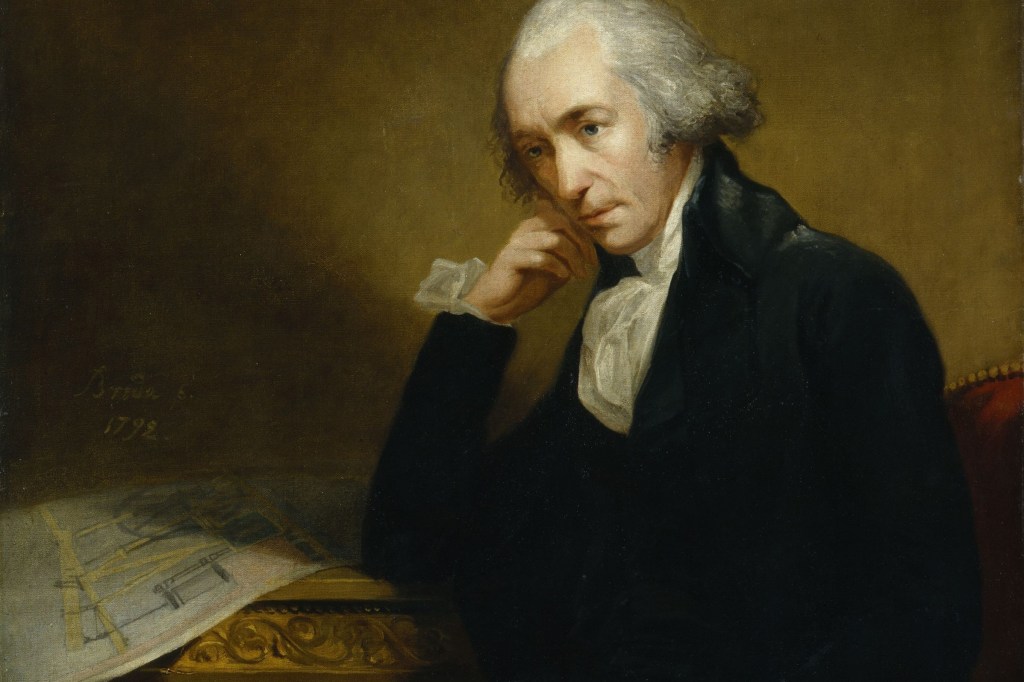
James Watt (January 19, 1736 – August 25, 1819) was a Scottish inventor and engineer whose improvements to the steam engine provided much of the impetus for the Industrial Revolution. His invention brought the engine out of remote coalfields and into factories, where work could be performed on large scales, almost year-round, with vastly higher efficiency. The steam engine was employed in the locomotive and steamboat, thus leading to the revolution in transportation. In addition, higher demands for precise machining led to a cascade of tools that were used to produce better machines. At the same time, Watt’s steam engine focused attention on the processes of converting heat to mechanical work. It inspired Sadi Carnot’s groundbreaking work on the efficiency of heat engines, leading to the development of the field of physics known as thermodynamics.

Early years

Watt was born on January 19, 1736, in Greenock, a seaport on the Firth of Clyde, in Scotland. His grandfather was a surveying and navigation instructor, while his father manufactured nautical instruments and was a shipwright, shipowner, and contractor. Watt’s mother, Agnes Muirhead, came from a distinguished family and was well-educated. Both his parents were Presbyterians.

Watt attended school irregularly, primarily because he suffered from migraine headaches. Because of this infirmity, he received most of his schooling at home. Watt’s father set up a small workbench for his son, who earnestly learned and practiced the skills of woodworking, metalworking, instrument making, and model making. He exhibited great manual dexterity and an aptitude for mathematics.

When he was seventeen, his mother died and his father’s health had begun to fail. Watt traveled to Glasgow and was apprenticed to an optician. He then headed for London on the advice of a friend, and studied instrument-making there for a year. Although he learned his trade, the unfavorable work environment strained his health and forced him to return to Scotland, where he convalesced. After his recovery, he attempted to establish himself as an instrument-maker in Glasgow. Despite there being no other mathematical instrument-makers in Scotland, the Glasgow Guild of Hammermen (any artisans using hammers) blocked his certification because he had not served at least seven years as an apprentice.

Watt was saved from this impasse by professors at the University of Glasgow, who in 1757, offered him the opportunity to set up a small workshop within the university. One of the professors, the prominent physicist and chemist Joseph Black, became Watt’s friend and mentor.

In 1764, just as he was about to make a major improvement to the Newcomen engine, Watt married his cousin, Margaret Miller, with whom he would have five children, two of whom would survive to adulthood.

Watt’s first wife died in childbirth in 1773, and in 1776, he married his second wife, Ann MacGregor.

Besides improving the steam engine, Watt took up other pursuits. In the 1880s, he experimented with the application of chlorine compounds to the bleaching process. He also was the first to propose the compound structure of water, although its constituent elements, oxygen and hydrogen, were not identified until years later, by French scientist Antoine Lavoisier.

Personality

Watt was an enthusiastic inventor, with a fertile imagination that sometimes got in the way of finishing his works, because he could always see “just one more improvement.” He was skilled with his hands and also able to perform systematic scientific measurements that could quantify the improvements he made and produce a greater understanding of the phenomenon he was working with.

Watt was a gentleman, greatly respected by other prominent men of the Industrial Revolution. He was a fellow of the Royal Society of Edinburgh and the Royal Society of London, a member of the Batavian Society, and one of only eight Foreign Associates of the French Academy of Sciences. He was also an important member of the Lunar Society, and was a much sought after conversationalist and companion, always interested in expanding his horizons. He was a rather poor businessman, and especially hated bargaining and negotiating terms with those who sought to utilize the steam engine. Until he retired, he was always much concerned about his financial affairs, and was something of a worrier. His personal relationships with his friends and partners were always congenial and long-lasting.

Later years

Watt retired in 1800, the same year that his partnership with Boulton expired, along with the patent rights to the steam engine. The famous partnership was transferred to the men’s sons, James Watt, Jr. and Matthew Boulton. William Murdoch, a long-time employee of the firm, was made a partner, and the firm prospered.

Watt continued to produce and patent other inventions before and during his semi-retirement. He invented a new method of measuring distances by telescope, a device for copying letters, improvements in the oil lamp, a steam mangle, and a machine for copying sculpture.

He died in his home, “Heathfield,” in Handsworth, Staffordshire, on August 25, 1819, at the age of 83.

Steam engine

In 1761, four years after opening his workshop, Watt began to experiment with steam after his friend, Professor John Robison, called his attention to it. At this point, Watt had still never seen an operating steam engine, but he tried constructing a model. It failed to work satisfactorily, but he continued his experiments and began to read everything about steam that he could get his hands on. He independently discovered the importance of latent heat—the heat absorbed or released without a change in temperature when a substance moves among the states of solid, liquid, or gas—in understanding the engine. Unknown to Watt, Black had famously discovered the principle some years before. Watt learned that the university owned a model Newcomen engine, but it was in London for repairs.

Named after its inventor, Thomas Newcomen, the Newcomen engine had been around since 1705, without being significantly improved, and had been applied with success to the removal of ground water from coal mines.

The Newcomen engine worked by filling a piston chamber with steam, which would then be condensed by sprinkling cold water into the chamber. The condensing steam would produce a vacuum, which pulled the piston down. The downward movement pulled down one arm of a beam, the upward movement of the other arm of which would be connected to machinery, such as a pump to remove water from a coal mine. The process would be repeated, thus creating a repetitive see-saw action that moved the pivoted beam up and down.

Watt convinced the university to have its broken model of the Newcomen engine returned, and made the repairs himself in 1763. It barely worked, and after much experimentation he showed that about eighty percent of the heat of the steam was consumed in heating the the piston cylinder.

Watt’s critical insight was to add a separate chamber, called the condenser, that was connected to the piston cylinder by a pipe. Condensation of the steam would occur in the condenser, thus allowing the temperature of the piston cylinder to be maintained at that of the injected steam and the heat loss minimized. In 1765, Watt produced his first working model based on this principle.

Then came a long struggle to produce a full-scale engine. This required more capital, some of which came from Black. More substantial backing came from John Roebuck, the founder of the celebrated Carron Iron Works, near Falkirk, with whom he now formed a partnership. But the principal difficulty was in machining the piston and cylinder. Iron workers of the day were more like blacksmiths than machinists, so the results left much to be desired. Much capital was spent in pursuing the ground-breaking patent, which in those days required an act of parliament.

Strapped for resources, Watt was forced to take up employment as a civil engineer in 1866, work he would do for eight years until more capital to develop and manufacture his inventions became available. In 1767, Watt traveled to London to secure the patent on his new invention, which was granted in 1769. In the meantime, Roebuck went bankrupt, and Matthew Boulton, who owned the Soho foundry works near Birmingham, acquired his patent rights. Watt and Boulton formed a hugely successful partnership which lasted for the next twenty-five years.

During this period, Watt finally had access to some of the best iron workers in the world. The problem of manufacturing a large cylinder with a tightly fitting piston was solved by John Wilkinson, who had developed precision boring techniques for cannon-making at Bersham, near Wrexham, North Wales. Finally, in 1776, the first engines were installed and working in commercial enterprises. These first engines were used for pumps and produced only reciprocating motion. Orders began to pour in, and for the next five years Watt was very busy installing more engines, mostly in Cornwall, for pumping water out of mines.

The field of application of the improved steam engine was greatly widened only after Boulton urged Watt to convert the reciprocating motion of the piston to produce rotational power for grinding, weaving, and milling. Although a crank seemed the logical and obvious solution to the conversion, Watt and Boulton were stymied by a patent for this, whose holder, John Steed, and associates proposed to cross-license the external condenser. Watt adamantly opposed this, and they circumvented the patent with their sun and planet gear in 1781.

Over the next six years, Watt made a number of other improvements and modifications to the steam engine. A double acting engine, in which the steam acted alternately on the two sides of the piston was one. A throttle valve to control the power of the engine, and a centrifugal governor to keep it from “running away” were very important. He described methods for working the steam expansively. A compound engine, which connected two or more engines was described. Two more patents were granted for these in 1781 and 1782. Numerous other improvements that made for easier manufacture and installation were continually implemented. One of these included the use of the steam indicator, which produced an informative plot of the pressure in the cylinder against its volume, which he kept as a trade secret. These improvements taken together produced an engine which was about five times as efficient in its use of fuel as the Newcomen engine.

Because of the danger of exploding boilers and the ongoing issues with leaks, Watt was opposed at first to the use of high pressure steam. Essentially, all of his engines used steam at near atmospheric pressure.

In 1794, the partners established Boulton and Watt, to exclusively manufacture steam engines. By 1824, it had produced 1164 steam engines. Boulton proved to be an excellent businessman, and both men eventually made fortunes.

Controversy

As with many major inventions, there is some dispute as to whether Watt was the original, sole inventor of some of the numerous inventions he patented. There is no dispute, however, that he was the sole inventor of his most important invention, the separate condenser. But it was his practice (from around the 1780s) to preempt others’ ideas that were known to him by filing patents with the intention of securing credit for the invention for himself, and ensuring that no one else was able to practice it.

Some argue that his prohibitions on his employee, William Murdoch, from working with high pressure steam on his steam locomotive experiments delayed its development. Watt and Boulton battled against rival engineers such as Jonathan Hornblower, who tried to develop engines which did not fall afoul of their patents.

Watt patented the application of the sun and planet gear to steam in 1781, and a steam locomotive in 1784, both of which have strong claims to have been invented by Murdoch. Murdoch never contested the patents, however, and remained an employee of Boulton and Watt for most of his life. Boulton and Watt’s firm continued to use the sun and planet gear in their rotative engines long after the patent for the crank expired in 1794.

Legacy

James Watt’s improved steam engine transformed the Newcomen engine, which had hardly changed for 50 years, into a source of power that transformed the world of work, and was the key innovation that brought forth the Industrial Revolution. A significant feature of Watt’s invention was that it brought the engine out of the remote coal fields into factories, where many mechanics, engineers, and even tinkerers were exposed to its virtues and limitations. It was a platform for generations of inventors to improve. It was clear to many that higher pressures produced in improved boilers would make engines with greater efficiency, and would lead to the revolution in transportation that was soon embodied in the locomotive and the steamboat.

The steam engine made possible the construction of new factories that, since they were not dependent on water power, could be placed almost anywhere and work year-round. Work was moved out of the cottages, resulting in economies of scale. Capital could work more efficiently, and manufacturing productivity greatly improved. New demand for precise machining produced a cascade of tools that could be used to produce better machines.

In the realm of pure science, Watt’s steam engine focused attention on the processes of converting heat to mechanical work. It inspired Sadi Carnot’s groundbreaking paper on the efficiency of heat engines, which led to the development of the field of physics known as thermodynamics. The unit of power that Watt developed and adopted, the horsepower, is the power expended in lifting 33,000 pounds through one foot in one minute. The watt is an alternative unit of power named after James Watt. One horsepower is equivalent to 745.7 watts.

Memorials

Watt was buried in the grounds of St. Mary’s Church, Handsworth, in Birmingham. Later expansion of the church, over his grave, means that his tomb is now buried inside the church. A statue of Watt, Boulton, and Murdoch is in Birmingham. He is also remembered by the Moonstones and a school is named in his honor, all in Birmingham. There are over 50 roads or streets in the UK named after him. Many of his papers are in Birmingham Central Library. Matthew Boulton’s home, Soho House, is now a museum, commemorating the work of both men.

The location of James Watt’s birth in Greenock is commemorated by a statue close to his birthplace. Several locations and street names in Greenock recall him, most notably the Watt Memorial Library, which was begun in 1816 with Watt’s donation of scientific books, and developed as part of the Watt Institution by his son. The institution ultimately became the James Watt College. Taken over by the local authority in 1974, the library now also houses the local history collection and archives of Inverclyde, and is dominated by a large seated statue in the vestibule. Watt is additionally commemorated by statuary in George Square, Glasgow, and Princes Street, Edinburgh.

The James Watt College has expanded from its original location to include campuses in Kilwinning (North Ayrshire), Finnart Street and The Waterfront in Greenock, and the Sports campus in Largs. The Heriot-Watt University near Edinburgh was at one time the “Watt Institution and School of Arts” named in his memory, then merged with George Heriot’s Hospital for needy orphans and the name was changed to Heriot-Watt College. Dozens of university and college buildings (chiefly of science and technology) are named after him.

The huge painting, James Watt Contemplating the Steam Engine, by James Eckford Lauder, is now owned by the National Gallery of Scotland.

Watt was ranked first, tying with Edison, among 229 significant figures in the history of technology by Charles Murray’s survey of historiometry presented in his book, Human Accomplishments. Watt was ranked 22nd in Michael H. Hart’s list of the most influential figures in history.