



According to January 2018 research by Oxfam, the richest one percent of people worldwide “bagged 82 percent” of the wealth created in 2017, while the poorest half of humanity “got nothing.” Since the 1980s, inequality has been growing everywhere on Earth, except in Western Europe. The rich own more and more, while the working class and middle class own less and less. This process is especially pronounced in Russia. Meduza breaks down these trends into graphs and takes a closer look at how Russia became a world leader in social inequality.
When it comes to the most common inequality indicators (comparisons of earnings by different socio-economic strata), Russia doesn’t really stand out in the world, and its imbalances are still below the levels in places like the Persian Gulf and Africa, as well as the United States. Income inequality mainly captures the differences in salaries paid to the rich and the poor. There is another measurement of inequality, however, where Russia’s situation is dramatically worse: the distribution of property in Russia is more unequal than in any major economy in North America, Europe, or Asia, according to the World Inequality Database (which does not index countries in the Middle East, Africa, or Latin America). Since 1997, millionaires and billionaires have owned a greater share of the national wealth in Russia than they have in the United States.
After the USSR’s collapse, Russia caught up to and overtook the West on social inequality
Inequality in Russia nosedived following the Bolshevik Revolution. Despite the privileges enjoyed by the party’s nomenklatura, the USSR’s top one percent earned just four percent of the national income. After the fall of the Soviet Union, inequality spiked rapidly. This process only accelerated in 2001 with the introduction of a flat 13-percent income tax (before this, wealthier Russians were subject to higher taxes, though they often evaded these obligations).
Over the past decade, income inequality has fallen in Russia. Moscow State University Professor Natalia Zubarevich attributes this shift to the redistribution of “oil rents”: the state extracts the lion’s share of oil companies’ revenues, which ballooned thanks to high prices worldwide, and then allocates this money to social spending on salaries for doctors, teachers, and others.
In terms of income inequality, Russia is now similar to the United States, but both countries are far more unequal than a place like France, which like the rest of Western Europe makes a concerted effort to distribute earnings more evenly. Since the end of Communism, Russian income stratification has outpaced every other former socialist economy, including China.
Wealthy and middle-class people are earning more than they did in the USSR, and the poor are earning less
According to the authors of “From Soviets to Oligarchs: Inequality and Property in Russia, 1905–2016,” which appeared last year in The Journal of Economic Inequality, average per-adult national income in Russia grew 41 percent in the quarter-century after the Soviet Union’s collapse. “However, the different income groups have enjoyed widely different growth experiences,” the researchers conclude. The top 10-percent earners enjoyed “very large growth rates” (171 percent), the middle 40-percent saw “positive but relatively modest growth” (15 percent), and the bottom 50-percent earners benefited from “very small or negative growth” (-20 percent).
While monetary inequality was generally low throughout the Soviet period, the scholars observed “interesting medium-term variations,” identifying a large inequality decline in the Revolutionary stage (1905–1925) and a “relative enlargement of income hierarchies” during the Stalinist period (1925–1956), before the 1956–1980 period gave way to “approximately constant” income distribution and “relatively balanced” growth across all groups. Income inequality peaked in 2008, when the top one percent earned a quarter of the national income. Then the worldwide financial crisis knocked them down a peg.
Russia’s billionaires grabbed most of the wealth created by the USSR, and they own most of what’s been produced since
When the USSR collapsed, more than 80 percent of the national net wealth belonged to either the state or “collectives” (ranging from collective farms to cooperatives). After 1992, public ownership started plummeting. Russia’s mass privatization in the 1990s affected both state enterprises (which is still widely unpopular today) and housing. Agricultural land remained in collective hands, and shares in common land were issued to collective farmers who were nevertheless unable to manage this property fully. To this day, housing is the main basis of wealth for both Russia’s middle and working classes.
Since the early 2000s, the national net wealth owned by Russia’s rich and super rich has skyrocketed. The first post-Soviet millionaires gained control over a significant part of the country’s industrial property back in the mid-1990s, during the initial privatization, but their share of the net wealth didn’t peak until 2008. Since then, the one hundred billionaires ranked by Forbes control 6–10 of Russia’s net wealth (depending on financial markets and the shifting value of Russian enterprises). About 65 percent of Russia’s net wealth belongs to the top 10-percent earners (according to the World Inequality Database, this includes, for example, most of the people who own apartments in Moscow — people who own property worth more than 3.72 million rubles, or $56,185). The poorest half of the population owns less than five percent of the country’s net wealth.
In other words, Russian wealth stratification is the worst of any of the major economies analyzed in the World Inequality Database. Things are not improving, either: the share of Russia’s national wealth owned by the middle class has dwindled over the past decade, as white collar workers have struggled against a weakened ruble and the repercussions of the 2008 financial crisis.
Russia’s millionaires and billionaires have moved most of their wealth abroad. According to “From Soviets to Oligarchs,” offshore wealth is about three times larger than Russia’s official net foreign reserves (about 75 percent of national income versus around 25 percent). Rich Russians have as much financial wealth stashed outside the country as the entire Russian population has inside Russia itself. The explosion of private wealth in Russia, moreover, has come “almost exclusively at the expense of public wealth,” insofar as the sum of private and public wealth has scarcely increased relative to national income (from 400 percent in 1990 to 450 percent in 2015).
There are ways to fight inequality, but you can only go so far
Economists who study rising inequality have a whole laundry list of its negative consequences: from deteriorating public health, higher crime rates, and declining social mobility to reduced access to quality education. When it comes to promoting equality while sustaining economic growth and technological progress, however, things are a bit trickier. There is research suggesting a relationship between rapid technological advances and rising inequality. In the United States, where socio-economic inequality has been rising steadily since the 1980s, there are several competing explanations for this phenomenon. Some experts say inheritance is to blame for the narrow concentration of wealth in the U.S., while others point out that almost none of the very richest Americans in the 1980s (including their descendants) are among the country’s wealthiest citizens today. The richest people in the United States owe their fortunes to technological innovations — a pattern economist Sherwin Rosen called “the economics of superstars.” Most of the benefits of this economic growth go to these exceptional individuals (and their children), who spend their earnings on charities, over-consumption, and failed investments.
Unsurprisingly, the authors of last year’s World Inequality Report warn that “no single scientific truth exists about the ideal level of inequality, let alone the most socially desirable mix of policies and institutions to achieve this level.” The only indisputable fact is the growing wealth disparity worldwide. Whatever the disagreements about economics and ideal societies, however, there’s little to embrace about inequality in Russia, where most of the wealth produced domestically is hoarded and invested abroad.
Fighting inequality in Russia today is especially difficult. The best way to become richer is to be rich already, and the only means of reigning in these disparities have been special taxes on “crooked privatizations,” high inheritance taxes, different forms of nationalization, and so on.
Combating income inequality, on the other hand, is simpler: the first step would be progressive income taxes. In addition to its existing flat income tax, Russia currently taxes mining and drilling operations, which is how the state seizes some of the super-profits earned by billionaires. But this isn’t enough. Over the next several years, the Russian government plans to spend trillions of rubles on several massive construction projects. The money needed for these colossal undertakings will come from ordinary taxpayers, and the few citizens whose wealth and income have skyrocketed over the past three decades are contributing the same 13 percent as everyone else.

Louis Freeh, former FBI Director (1993-2001), has put in a bid to have his “risk management” firm (Freeh Group International Solutions) conduct an “independent” investigation into the events surrounding the shooting at Stoneman Douglas High school in Parkland, Fl. The selection is to be made sometime in the near future by Broward County officials and Freeh has moved his base of operations to South Florida recently… though he claims the move was planned before the event.
“Former FBI Director Louis Freeh is interested in handling Broward County’s independent investigation into the shootings at Marjory Stoneman Douglas High, a county official said.
Freeh met Monday morning with County Commissioner Michael Udine and Parkland Mayor Christine Hunschofsky.” Sun Sentinal, Mar. 5
“Get used to seeing more of former FBI director Louis Freeh around South Florida in the future, whether or not his company is hired to conduct an independent investigation of the Parkland school shooting.
His global risk management firm, Freeh Group International Solutions, opened an office on Worth Avenue in the town of Palm Beach a few months ago and is moving its headquarters here, Freeh told the South Florida Sun Sentinel on Tuesday in a rare interview…
Freeh’s business move was planned long before the mass shooting on Feb. 14 at Marjory Stoneman Douglas High School and is not linked to his company’s bid to conduct an in-depth and independent investigation…
County Commissioner Michael Udine has been pushing for a major investigation led by a high-profile individual or company that could provide “an unimpeachable report” that would show where mistakes were made and how they can be prevented in the future, he said.” Sun Sentinal, Mar. 27
The selection or even the consideration of someone like Louis Freeh as the person to create an “unimpeachable report” is absurd. Freeh, you see, has a history.
“Judicial Watch pointed to a “legacy of corruption” at the FBI under Freeh, listing the espionage scandal at Los Alamos National Laboratories, as well as “Filegate, Waco, the Ruby Ridge cover-up, the Olympic bombing frame-up of Richard Jewell, [and] falsification of evidence concerning the Oklahoma City bombing.”[4]
Judicial Watch said that Director Freeh believed he was above the law. The group went on to say that Freeh was “a man so corrupt he destroyed the office he led, and a man so cowardly he refuses to face the music for the illegalities he has allegedly committed.”[5] To this was added a claim that the FBI under Freeh was being directed by sinister yet unknown forces. “In case after case throughout the 1990′s, the FBI seems to have tailored its investigative efforts to fit somebody’s pre-arranged script. The question is, who wrote that script — and why?” Kevin Ryan, 2012
The cases that he oversaw while heading the FBI all seem to be tainted by his touch one way or another. Perhaps it isn’t a coincidence that he was favored by the likes of George H. W. Bush and the Clinton crime syndicate as well.
TWA Flight 800
FBI labs found traces of high explosives on the wreckage of TWA Flight 800 yet, under Director Louis Freeh’s leadership, they buried that evidence and closed their investigation in Nov. of 1997 stating officially “no evidence has been found which would indicate that a criminal act was the cause of the tragedy of TWA flight 800.”
And then there is this:
“230 passengers and crew bound for Paris were killed when TWA Flight 800 blew up — just miles from the shore of East Moriches, Long Island. Hundreds of witnesses reported seeing a streak of light in the sky, heading toward the plane — an object that looked like a missile. There was speculation, at the time, that U.S. Navy ships may have been conducting military exercises nearby…
In the documentary, the now-retired investigators claim they saw FBI agents removed specific pieces of wreckage from the hangar — wreckage that was never returned…
The NTSB investigators said they were pushed aside by the Federal Bureau of Investigation from day one, ordered not to photograph the wreckage and not to go into one, specific room that was only used by the FBI.” WPIX June 2013
Various witnesses in the documentary reported being instructed by FBI agents as to what they saw and more importantly, what they didn’t.
That’s one example of the kind of “unimpeachable report” Louis Freeh has conducted during the course of his career. There are many others. Here are but a few..
May 10, 2001 — The FBI told Timothy McVeigh’s attorneys that it had withheld about 3,000 pages of documents related to the Oklahoma City bombing investigation.
September 10, 1999 — After denying for six years that potentially flammable tear gas canisters were used on the final day of the Branch Davidian standoff near Waco, Texas, the Justice Department and FBI turn over documents indicating that pyrotechnic military tear gas rounds were in fact used.
May 20, 1997 — Three FBI agents who investigated the 1996 bombing at the Centennial Olympic Park in Atlanta are punished for tricking security guard Richard Jewell into answering questions without a lawyer present.
The late Victor Thorn wrote about Mr. Freeh a while ago just as Penn State was hiring him to do an “unimpeachable report” on their child molestation scandal. Victor understood the relevancy.
“Without much argument, the federal government’s biggest cover-up artist for the past two decades has been former Federal Bureau of Investigation (FBI) Director Louis J. Freeh. When one considers his involvement in concealing criminal wrongdoing in the 1992 Ruby Ridge ambush, Waco, Vince Foster’s murder, the Oklahoma City bombing (OKC), Hillary Clinton’s Filegate fiasco, Montana’s Freeman standoff, the Los Alamos espionage case of Wen Ho Lee, and even the 9-11 terrorist attacks, why would Pennsylvania State University’s (PSU) Board of Trustees appoint him to lead their internal investigation of the Jerry Sandusky child molestation scandal if for no other reason than to orchestrate another cover-up?..
In the 1995 OKC bombing, it was Louis Freeh’s FBI that immediately and intentionally confiscated every videotape from the Alfred P. Murrah federal building after explosions partially destroyed the structure. To this day, they’ve refused to release this crucial evidence that would show who precisely exited the Ryder truck that morning which was parked in front of the building. If the most fundamental piece of evidence in this case has been concealed since 1995, will Freeh and his cohorts use a similar modus operandi to suppress witness testimony or other reports at PSU?” Victor Thorn
Louis Freeh has a long history of fixing investigations to serve the interests of powerful interests. And his reputation for doing so isn’t exclusive to those of us demeaned with the “conspiracy theorist” slur.
And just for the record, when torture enablers at the American Psychological Association (APA) needed a hand re-branding their complicity in that illegal and immoral practice, they also turned to Louis Freeh to set the record straight.
“A prominent psychologist ousted from the leadership of the the US’s largest professional psychological association for his alleged role in enabling and covering up torture has enlisted a former FBI director to fight back.
In a statement issued on Sunday, Louis J Freeh, Bill Clinton’s FBI director, rejected an independent report begrudgingly embraced by the American Psychological Association (APA) as a politicized smear job.
The report, which leaked on Friday, is a “gross mischaracterization” of the “intentions, goals and actions” of former ethics chief Stephen Behnke, Freeh said. He threatened unspecified legal retaliation on Behnke’s behalf.
“Dr Behnke will consider all legal options in the face of this unfair, irresponsible and unfounded action by a select few APA board members,” Freeh said.
Former federal prosecutor David Hoffman, who spearheaded the 542-page investigation, found that Behnke was an instrumental figure in more than a decade’s worth of institutional enablement by the APA of torture conducted by the CIA and US military.” The Guardian, July 2015
Event after bloody event. Torture and espionage. From withholding evidence, to tampering with crime scenes, to strong-arming “confessions” from suspects to intimidating witnesses to change their testimony. Louis Freeh had done it all and been exposed for doing it all not just in the world of alternative journalism, but also in the MSM as well.
And now they are considering bringing him in to craft the definitive official story of the Parkland school shooting?
Frankly I’m surprised MGM Grand hasn’t hired him to do an “unimpeachable report” on the Vegas shooting as well. But I guess that one isn’t getting the same traction. I guess they shouldn’t have cross promoted with the Ellen D. “brand” of slot machines.
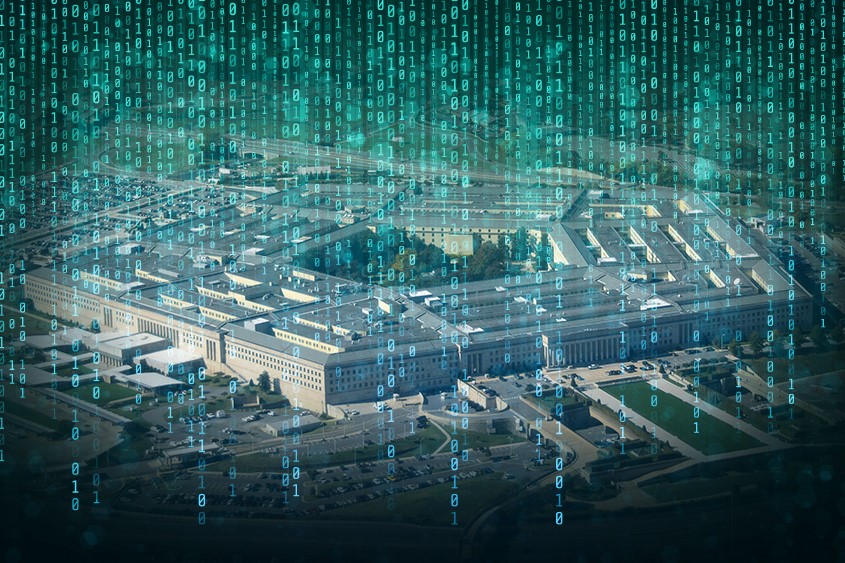
In direct violation of the United Nations Convention, the United States military has made it a habit to manufacture deadly viruses, bacteria and toxins at bioweapons laboratories located all around the world. And it turns out that some of them are located in Ukraine.
The Pentagon reportedly controls bioweapons labs in some 25 different countries including Ukraine. The others are located in Georgia (the country), Iraq, Jordan, Afghanistan, Pakistan, Azerbaijan, Laos, Thailand, Vietnam, Cambodia, Malaysia, the Philippines, Kenya, Uganda, Tanzania, Cameroon, Senegal, Guinea, Sierra Leone, Liberia, South Africa and Côte d’Ivoire.
All of these U.S. bio-laboratories exist because of a $2.1 billion military program run by the Defense Threat Reduction Agency (DTRA). The program itself is called the Cooperative Biological Engagement Program (CBEP).
In the former Soviet Union country of Ukraine, the Pentagon funds a shocking 11 bio-laboratories through the Department of Defense (DoD) Threat Reduction Agency (DTRA). Contrary to what its name implies, the DTRA does not reduce threats; it creates more of them by funding new bio-laboratories.
“Ukraine has no control over the military bio-laboratories on its own territory,” reports the Exploring Real History blog.
“According to the 2005 Agreement between the U.S. DoD and the Ministry of Health of Ukraine, the Ukrainian government is prohibited from public disclosure of sensitive information about the U.S. program and Ukraine is obliged to transfer to the U.S. Department of Defense (DoD) dangerous pathogens for biological research.”
As part of the agreement, the Pentagon was also granted access to certain state secrets held by Ukraine.
The United States, in partnership with Canada, Sweden and Ukraine, established a protocol to develop weapons of mass destruction at a place called the Science and Technology Center in Ukraine (STCU).
The STCU is an international organization funded primarily by the U.S. government that has been accorded diplomatic status. It officially supports the projects of scientists who were previously involved in the Soviet Union’s biological weapons program.
Over the past two decades, the STCU has invested more than $285 million in funding for some 1,850 projects of scientists who previously had involvement in creating weapons of mass destruction.
At another Pentagon controlled-and-operated laboratory in Kharkiv, Ukraine, some 20 Ukrainian soldiers died after being exposed to a flu-like virus weapon, while another 200 were hospitalized.
The incident occurred in January 2016 and the Ukrainian government did not report on the dead soldiers at all. Just two months later, another 364 people died across Ukraine from Swine Flu A, also known as H1N1, the same strain that we were all told caused a global plandemic in 2009.
An intelligence group called DPR reported that the U.S.-owned biolab in Kharkiv is the place from where the deadly virus leaked, meaning the Pentagon was directly responsible for it.
In another instance in South East Ukraine, a highly suspicious hepatitis A infection spread rapidly. It turns out that several Pentagon biolabs are located in that area as well.
An outbreak of hepatitis A that occurred in January 2018 resulted in 37 people having to be hospitalized. Local police subsequently launched an investigation into “infection with human immunodeficiency virus and other incurable diseases.”
In the very same city about a year later, 100 people mysteriously became infected with cholera. Both the cholera and the hepatitis A outbreak were blamed on contaminated drinking water, but the evidence suggests that the real cause was Pentagon-run biolabs throughout the area.
These are just two cases among many of disease outbreaks that have occurred throughout Ukraine over the years, and virtually all of them are linked to Pentagon-run biolabs.
Some of these outbreaks also spread to Moscow, including a 2014 incident involving a new highly virulent strain of cholera called Vibrio cholera, which is genetically similar to a strain reported in Ukraine.
A 2014 Russian Research Anti-Plaque Institute genetic study confirmed that the strain of cholera in Russia that wreaked havoc was essentially the same as one that mysteriously appeared in neighboring Ukraine.
“Southern Research Institute, one of the U.S. contractors working at the bio-laboratories in Ukraine, has projects on Cholera, as well as on Influenza and Zika – all pathogens of military importance to the Pentagon,” Exploring Real History further reports.
In 2008 and 2012, the Black & Veatch Special Project Corp. was awarded $198.7 million worth of DTRA contracts to build and operate numerous bio-laboratories in Ukraine, as well as in Germany, Azerbaijan, Cameroon, Thailand, Ethiopia, Vietnam and Armenia.
Another program in Georgia and Ukraine involved the transfer of $18.4 million in federal money flowing to a U.S. company called Metabiota. Metabiota had previously been contracted to work for the DTRA before and during the Ebola crisis in West Africa. It also received $3.1 million in funding for work in Sierra Leone.
“Southern Research Institute has been a prime subcontractor under the DTRA program in Ukraine since 2008,” reports indicate.
“The company was also a prime Pentagon contractor in the past under the U.S. Biological Weapons Program for research and development of bio-agents with 16 contracts between 1951 and 1962.”
This is just a small sampling of the Pentagon’s global tentacles, which tell a much different story about the Ukraine-Russia situation than the one being told by the corporate-controlled media, NATO, and the military-industrial complex behind this sinister global bioweapons program.
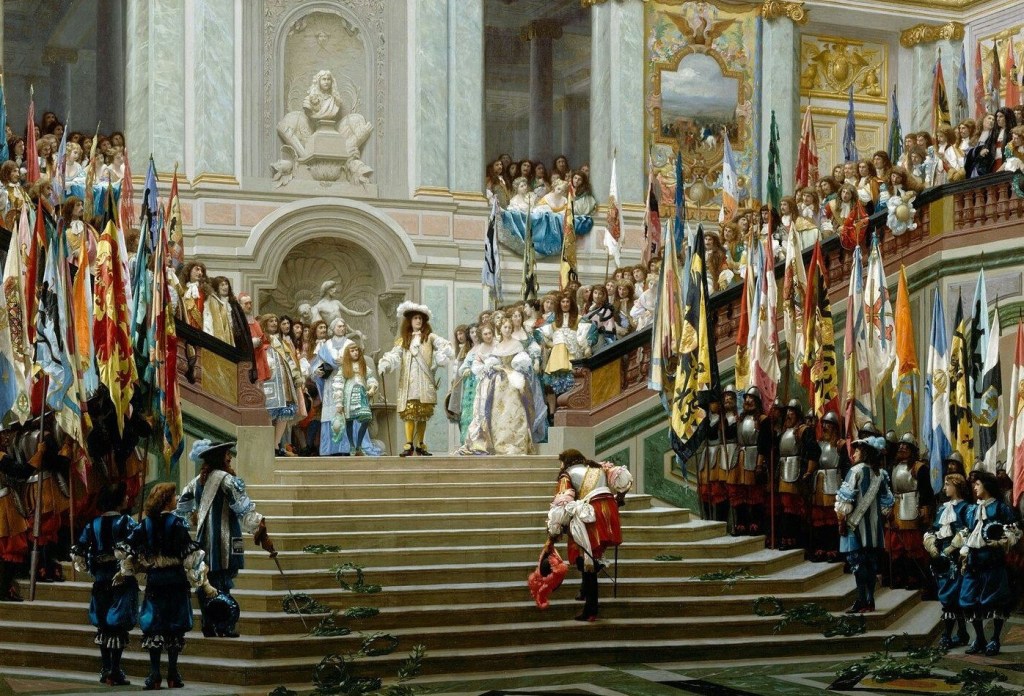
It’s time to lead another liberal sacred cow to the killing floor. I’m talking about non-violence. I’ve never exactly been a fan of pacifism. What finally inspired me to write this article was Stephen Gowans’ own excellent article “Peaceniks for Imperialism,” which exposes the blatant pro-imperialist slant of Canada’s Peace Magazine, a publication that legitimizes the overthrow and destabilization of governments who resist the machinations of the US, the EU, G-20, etc. Peace Magazine‘s version of imperialism is supposed to be okay because they advocate, get this—non-violence! Wait, they advocate non-violence, but when their imperialists heroes occasionally decide to use violence as in Iraq, that’s fine, albiet not ideal according to them. I recommend that all readers go over to Gowans’ blog What’s Left, and read that article if only to read the ideas of Peace Magazine‘s editor, which would be hilarious were they not taken so seriously.
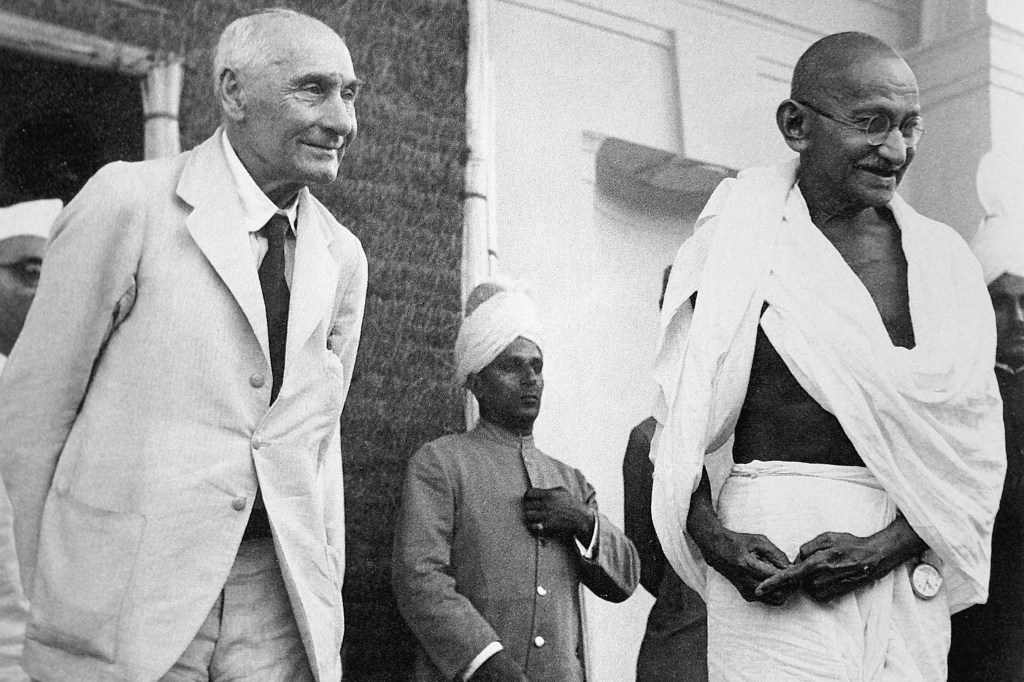
Gandhi & MLK: Useful Lackeys for the Ruling Class
Behold the sacred cow of non-violence. What is it exactly? Most people associate it with Gandhi or Martin Luther King Jr. I am not exactly a lover of violence, and as for politics I think anything achieved through peaceful means is a victory. If anything you save a lot of money on bullets and explosives that way. Yet non-violence has been upheld to a level of sanctimony so high it ends up becoming a powerful weapon in the hands of those who have no compunction about using violence.
Ask yourself: could it be that there is a reason why the media and academia bid us to worship Gandhi and Martin Luther King Jr. while virtually ignoring the struggle of people like Malcolm X or Fred Hampton, and of course totally ignoring or villifying people like Fidel Castro, Danny Ortega, Augusto Cesar Sandino or Ho Chi Minh?
Why, for another example of a blatant double standard, are the Palestinians supposed to be constantly and collectively condemned for random acts of violence when the Israeli state routinely levels buildings and shells overcrowded neighborhoods?
Of course, it’s not difficult at all to see why the establishment loves to preach non-violence to us proletarians—when overturning and crushing governments that are hostile to its interests, non-violence goes right out the window. Did the US, for example, incite the rebels of Afghanistan to resist the government with non-violence? History tells us that they clearly did not.
Non-violent resistance, which is not really resistance at all, has essentially become an order by governments and the ruling classes to disarm and put oneself at their mercy to do what they will. Knowing that these forces, including those in the US, are becoming increasingly accustomed to using violence, who would make such a foolish choice?
Non-Violence Is Ineffective
Put simply, non-violence as a tactic and principle is absurd. For one, what is the end in itself? Resistance, reform and the revolutionary overthrow of a despotic or otherwise undemocratic government. Victory is the end. Seeing that there is virtually no government on Earth that believes in non-violence in the pursuit of preserving itself, why should those who take issue with the government’s policies be forced to play by a different set of rules?
If a particular government is in fact an open dictatorship, the call for non-violence is suicide. Does anyone honestly believe, for example, that non-violent resistance would work against the US occupation of Iraq, or against the government of modern Russia? Did non-violence work for G-20 protesters in Pittsburgh? Non-violence tends to only work when there is some kind of liberal tendency amongst the ruling class or at least a powerful segment of the population in a particular country. For example, it worked for the Indians because there were enough people in Britain, including those in the upper classes, who were shocked by the violence used by the British. The United States had a large population of northern liberals who, despite harboring their own racist tendencies even to this day, simply could not tolerate the horrifying abuse of African-American Civil Rights protesters. It would not work in a country like modern-day Russia, where resistors are often beaten, arrested and even killed, and few ever take notice. More still may think the victims deserved it for not minding their business and going with the flow. It would not work in Turkey, where historically peaceful protests have faced everything from tear gas and clubs to knives and even snipers.
What right do the liberal academics and pundits have to insist that the dissenters in these countries limit themselves to non-violent tactics? Liberal intellectuals love their martyrs, but they are rarely willing to put themselves in the line of danger. When they do get a rude awakening, as perhaps some did in Pittsburgh or at other Iraq war protests, their response is more moral condemnation, that eternally idiotic and useless “speaking truth to power,” as though somewhere there is some higher force that will mediate and punish the government for its thuggery.
Non-Violence is Pro-Imperialist
This brings us to the next point; how non-violence is disarming and rendering the American left helpless against the government and the neo-fascist thugs who have been gaining in popularity since the election of Obama. From time to time I love reading the blog of David Neiwert, who may very well be one of America’s best experts on the radical right and the militia movement. Neiwert has a new book out entitled The Eliminationists, which documents years of increasingly violent rhetoric coming not only from the radical right, but also the more mainstream Fox News variety. Many of Neiwert’s articles on what he calls “Eliminationism,” that is a form of political rhetoric that calls for the physical destruction of political opponents, are available to read on his site.
Neiwert is right to highlight the fact that political discourse in the US has become far more violent, to the point where conservatives tend to see their liberal opponents as inhuman monsters who must be exterminated to save the country. The problem is that when one reads enough of Neiwert’s articles on the subject, one is left with the question as to who is he appealing to? If the right is becoming increasingly violent, not only in its rhetoric but its actions, and there is plenty of evidence that this is true, to whom should the poor progressives appeal to? Obviously there are the law enforcement organs, but the fact is in the US there are mostly liberals and the conservatives, and only the latter have politicians who listen to them.
If progressives don’t want to find themselves the victims of more domestic terrorism, there is only one way to deal with the thugs on the right—show them that their tough-talk isn’t going to be tolerated, that they are going to be called on their actions. I know that folks like Neiwert don’t approve of this, citing that the right has been and is increasingly portraying itself as a persecuted group, but this is inconsequential. They are going to whine about persecution anyway, even if they are winning. Far better it is that they whine while they are losing.
Lastly, non-violence in the face of violent reactionaries is appeasement, if not tacit collaboration. It is an indisputable fact that in the years after Hitler rose to power, there were many figures in the European ruling class who breathed a sigh of relief, hoping that he would destroy the bogeyman that was the Soviet Union. To that end, they gave Hitler virtually anything he wanted. Yet there still was one more, less sinister reason why the European nations did not take on Hitler. People were tired of war, with the memory of the hell that was the Great War still fresh in the collective mind. Hitler succeeded largely because nobody called his bluff. When he marched into the Rhineland, giving the troops orders to retreat immediately at any sign of French resistance, there was none. When he demanded the Sudetenland, they gave it to him, and then Czechoslovakia as well. When he attacked Poland, the French did not launch a devastating offensive on Germany’s open Western flank. The end result is that more than fifty million people lost their lives because people were not willing to expend a few thousand. Non-violence couldn’t stop a Hitler, but just the opposite. If people insist that resistance to US/EU/Russian imperialism must always be non-violent, they are essentially encouraging collaboration.
It would be untrue to suggest that the working class has never won any significant gains from peaceful, even legal means, but the fact is that the most important gains were usually won by violence and often sacrifice. Whereas the liberals insist that we make ourselves martyrs in the name of non-violence, it is far better to make martyrs of the ruling class and their military/police thugs.
Many people might question the wisdom of that approach, but I remind the reader that a martyr’s worth is tied to how many people idolize him or her. When the ruling class is overthrown and the means of propaganda dissemination are in the hands of the working class, there will be no weeping for the generals, the CEOs, and those moral cowards who insist we make ourselves willing targets for despotic regimes.
Non-violence, much like anarchism, is yet another childish idealistic creed. Great advances have been achieved through non-violence, but far more have been achieved through revolutionary violence. In fact, many of the successes of non-violent resistance, for example in India, could have been achieved violent means as well, and with far less loss of life. Would India have gained her independence from the British if there hadn’t also been hundreds of violent mass uprisings to coincide with Gandhi’s tactics? Would Martin Luther King Jr. have been so successful had it not been for figures like Malcolm X, or the Black Panthers, that reminded white America that if one form of resistance didn’t work, there were plenty willing to resort to other forms?
Such a conflict might have been bloody, and as always some innocents would get caught up in the crossfire. But when we look at the real costs of ongoing institutional racism in the US today, which does in fact still have extremely lethal results for African Americans and Latinos, one cannot help but think that a more decisive resolution to the problem would have in the long run saved far more lives.
Far more important is the fact that those who have elevated non-violent resistance, which should be seen only as a tactic and not a strategy, to the level of a religious creed, would have progressive forces accept failure and defeat for the sake of an idea that is not shared by the other side. As alluded to before, the ruling class has no qualms about violence when it is used in its favor. It is only when they are on top that they want peace and stability.
There can be no logical reason why, in the conflict with a side that not only endorses and uses violence, but possesses superiority in the means to conduct violence, the resistors should adopt a policy of strict non-violent resistance. Non-violent resistance as a creed is submission and tacit collaboration. Though the sides may not be equal, and the establishment far more powerful, it is far better to throw a punch than to get put in a headlock on the playground. Trust me, I’ve been there.

Donald Trump’s sons are facing a media firestorm this week after photos of them posing with a dead elephant, leopard and other animals they shot on a safari in Zimbabwe surfaced online.
The photos show Donald Jr., 34, and Eric, 28, embracing a dead leopard, posing behind a slain civet, and standing next to a dead elephant with its chopped-off tail in Donald’s hand. The pictures were first posted on the website Hunting Legends, where they are now hidden behind a password-protected firewall. The tabloid news website TMZ has posted them.
The photos raised criticism from animal rights and conservation groups. “If the young Trumps are looking for a thrill, perhaps they should consider skydiving, bungee jumping, or even following in their anti-hunting father’s footsteps and taking down competing businesses — not wild animals,” People for the Ethical Treatment of Animals (PETA) said in a statement to E! News.
“Whilst it is bad enough shooting an elephant for pleasure, posing with the tail of such a magnificent beast that you have just cut off with a large knife is a gross and unpardonable action,” wrote the publisher of the U.K.-based Wildlife Extra news site. “It may not be illegal, but it shows a total disregard for any wildlife and unbelievably poor judgment from someone who is meant to be a business leader.”
Father and “Celebrity Apprentice” host Donald Trump told TMZ, “My sons love hunting. They’re hunters and they’ve become good at it. I am not a believer in hunting, and I’m surprised they like it.” Both of Trump’s sons are involved in his real estate empire and appear on his television show.
Donald Trump Jr., defended his actions on Twitter, saying none of the animals they hunted were endangered and many faced issues related to overpopulation, and that the hunting fees the brothers paid help fund conservation efforts. While he says he did not release the photos, he tweeted “I have no shame about them either.”
He also tweeted that nearby villagers “were so happy for the meat which they don’t often get to eat.” But Johnny Rodriquez of the Zimbabwe Conservation Taskforce told The Telegraph that the areas near where the men hunted are sparsely populated by humans, so the meat was unlikely to benefit the locals. “Because of the state of the country, there is also very little transparency about where the money these hunters spend goes,” he also said. “If they want to help Zimbabwe, there are many better ways to do so.”
Elephants are not endangered, but international trade in their body parts, most specifically their ivory tusks, is prohibited under the Convention on International Trade in Endangered Species of Wild Fauna and Flora. This also limits, although it does not completely restrict, hunters from bringing home elephant trophies from their hunts. It is not clear if the Trump sons collected trophies from their kills or merely photographed them.










 Igor's Blog