


Influence of Parseeism on the Belief in a Messiah

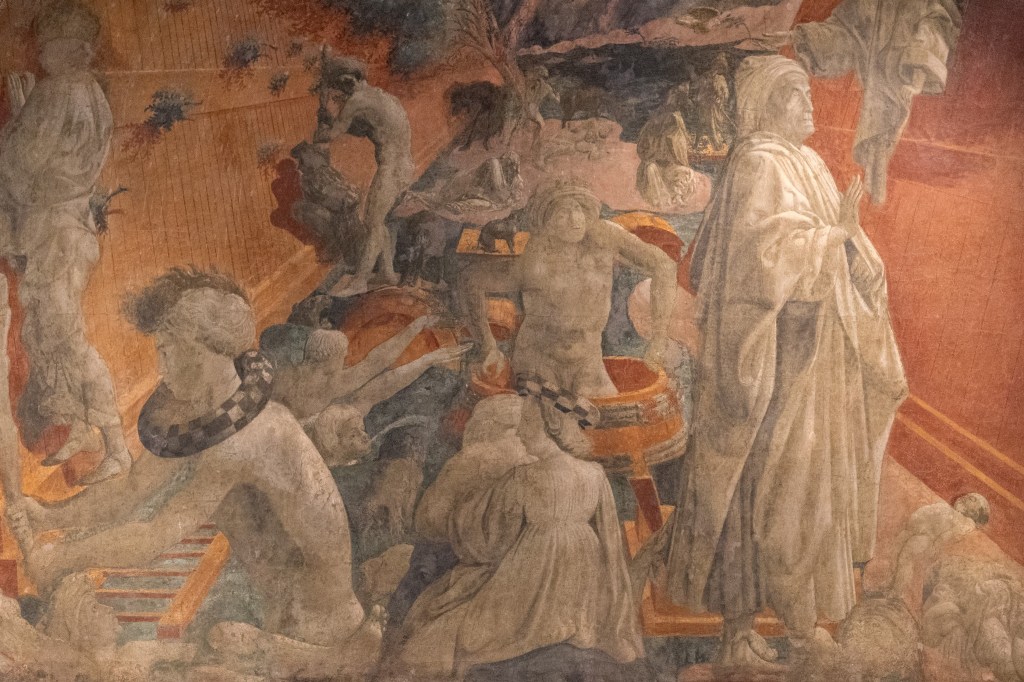
Conscience, Judas by Nikolai Ge, 1891

Another one of the books that I’m reading now is ‘Caesar’s Messiah: The Roman Conspiracy to Invent Jesus’ (2005) by Joseph Atwill. I must admit that I’m further along in slowly reading some other informative books that I haven’t yet mentioned or reviewed than in reading this book, but I will still quote from it now because I’ve already come across some interesting parts. “However, the New Testament and the histories of Josephus each imply that the Messiah was not this nationalist leader who had been foreseen, but rather a pacifist who encouraged cooperation with Rome. For example, consider Jesus’ instruction in Matthew 5:41: “when anyone conscripts you for one mile, go along two.” Roman military law permitted its soldiers to conscript, which is to demand that civilians carry their 65-pound packs for a length of one mile. Roman roads had mile markers (milestones), so that there would be no dispute over whether or not this requirement had been met. Why would the Messiah foreseen by Judaism’s xenophobic world-ruler prophecies urge Jews to “go the extra mile” for the Roman army? When one compares the militaristic Messiah described in the Dead Sea Scrolls and other early Judaic literature with the pacifistic Messiah described in the New Testament and Josephus’ Testimonium, one aspect of the lost history of Judea seems visible. An intellectual battle was waged over the nature of the Messiah. The New Testament and Josephus stood together on one side of this struggle, claiming that a pacifistic Messiah had appeared who advocated cooperation with Rome. On the other side of this theological divide stood the Jewish Zealots who awaited a militaristic Messiah to lead them against Rome. It would explain how a Judean cult eventually became the state religion of the Roman Empire. A Roman origin would also explain why so many members of a Roman imperial family, the Flavians, were recorded as being among the first Christians. The Flavians would have been among the first Christians because, having invented the religion, they were, in fact, the first Christians. When considering a Flavian invention of Christianity, one should bear in mind that the Flavian emperors were considered to be divine and often created religions. The oath that they swore when being ordained emperor began with the instruction that they would do “all things divine… in the interests of the empire.” But how did the church’s authority structure come into existence resembling the Roman military? Who established it and who gave the bishops such absolute control? Cyrpian wrote… “The bishop is in the Church and the Church is in the bishop… and if anyone is not with the bishop, that person is not in the Church.” And why was Rome, supposedly the center of Christian persecution, chosen as the church’s headquarters? Sophisticated Romans like those Juvenal wrote about did not believe in the gods but rather in fortune and fate. The prevailing ethos of the patrician class was that the world was either ruled by blind chance or immutable destiny: “Fortune has no divinity, could we but see it: it’s we, we ourselves, who make her a goddess, and set her in the heavens.” Judging from the works of Juvenal, many Romans saw all religious belief, including their own, as ridiculous. Juvenal was also cynical toward Judaism. His attitude regarding the religion suggests that many within the patrician class saw the religion and, no doubt, its offspring Christianity, as barbaric cults. “A palsied Jewess, parking her haybox outside, comes begging in a breathy whisper. She interprets Jerusalem’s laws; she’s the tree’s high priestess… She likewise fills her palm but more sparingly: Jews will sell you whatever dreams you like for a few coppers.” Given this patrician cynicism, it is odd that so many members of the Flavian family were recorded as having been among Christianity’s first members. Why was a Judaic cult that advocated meekness and poverty so attractive to a family that practiced neither? The tradition connecting early Christianity and the Flavian family is based on solid evidence but has received little comment from scholars. Circulating tales that suggested they were gods was no doubt thought by the Flavians to be a good tonic for hoi polloi. The more an emperor was seen by his subjects to be divine, the easier it was for him to maintain his control over them. The Flavians certainly focused on manipulating the masses. To promote the policy of “bread and circuses” they built the Coliseum, where they staged shows with gladiators and wild beasts that involved mass slaughter. Imperial cults that portrayed Roman emperors as gods and workers of miracles appear to have been created solely because they were politically useful. The cults seem to have evoked no religious emotion. No evidence of any spontaneous offerings attesting to the sincerity of the worshipers has ever been discovered. The advantage of converting one’s family into a succession of gods appealed to many Roman emperors: 36 of the 60 emperors from Augustus to Constantine and 27 members of their families were apotheosized and received the title dius. Of course, inventors of fictitious religions must have a certain cynicism in regard to the sacred. Vespasian is quoted on his deathbed as saying, “Oh my, I must be turning into a god!” The cynicism that the patrician class felt toward religion was a subject of the satires of the Roman poet Juvenal. While the exact dates of Juvenal’s birth and death are unknown, it is believed that he lived during the era of the Flavians. One of his satires concerns Agrippa and Bernice, the mistress of Titus. Tradition has it that Juvenal was banished from Rome by Domitian. As Pontifex Maximus, Titus was responsible for a large collection of prophecies (annales maximi) every year, and officially recorded celestial and other signs, as well as the events that had followed these omens, so that future generations would be able to better understand the divine will. Titus was unusually literate. He claimed to take shorthand faster than any secretary and to be able to “forge any man’s signature” and stated that under different circumstances he could have become “the greatest forger in history.” Suetonius records that Titus possessed “conspicuous mental gifts,” and “made speeches and wrote verses in Latin and Greek” and that his “memory was extraordinary.” Titus’ brother Domitian, who succeeded him as emperor, also used religion to his advantage. In addition to deifying his brother, Domitian attempted to link himself to Jupiter, the supreme god of the Roman Empire, by having the Senate decree that the god had mandated his rule. Not only did the Flavians create religions, they performed miracles. In the following passage from Tacitus, Vespasian is recorded as curing one man’s blindness and another’s withered limb, miracles also performed by Jesus: “One of the common people of Alexandria, well known for his blindness… begged Vespasian that he would deign to moisten his cheeks and eyeballs with his spittle. Another with a diseased hand prayed that the limb might feel the print of a Caesar’s foot. And so Vespasian… accomplished what was required. The hand was instantly restored to its use, and the light of day again shone upon the blind.” The Gospels record that Jesus also used this method of curing blindness, that is by placing spittle on a blind man’s eyelids. “After thus speaking, He spat on the ground, and then, kneading the dust and spittle into clay, He smeared the clay over the man’s eyes and said to him, “Go and wash in the pool of Siloam” – the name means “sent.” So he went and washed his eyes, and returned able to see.” Roman emperors appointed all the high priests recorded within the New Testament from a restricted circle of families who were allied to Rome. By selecting the individual who would determine any issue of “Jewish customs,” the Caesars were managing Jewish theology for their own self-interest. Of course, what other way would a Caesar have managed a religion? Rome exercised control over the religion in a way that was unique in the history of its provincial governments. Rome micromanaged Second Temple Judaism to the extent of even determining when its priests could wear their holy vestments. In spite of these efforts, Rome’s normal policy of absorbing the gods of its provinces did not succeed in Judea. Judaism would not permit its God to be just one among many, and Rome was forced to battle one Jewish insurrection after another. Having failed to control Judaism by naming its high priests, the imperial family would next attempt to control the religion by rewriting its Torah. I believe they took this step and created the Gospels to initiate a version of Judaism more acceptable to the Empire, a religion that instead of waging war against its enemies would “turn the other cheek.” The theory of a Roman invention of Christianity does not originate with this work. Bruno Bauer, a 19th-century German scholar, believed that Christianity was Rome’s attempt to create a mass religion that encouraged slaves to accept their station in life. In our era, Robert Eisenman concluded that the New Testament was the literature of a Judaic messianic movement rewritten with a pro-Roman perspective. Rome attempted not to replace the gods of its provinces but to absorb them. By the end of the first century Rome had accumulated so many foreign gods that virtually every day of the year celebrated some divinity. The Romans also used religion as a tool to assist them in conquest. The leader of the Roman army, the consul, was a religious leader capable of communicating with the gods. Thus, when Rome went to war with the Zealots in Judea it had a long tradition of absorbing the religions of its opponents. If Romans did invent Christianity, it would have been yet another example of neutralizing an enemy’s religion by making it their own, rather than fighting against it. Rome would simply have transformed the militant Judaism of first-century Judea into a pacifist religion, to more easily absorb it into the empire. In any event, it is certain that the Caesars did attempt to control Judaism. From Julius Caesar on, the Roman emperor claimed personal authority over the religion and selected its high priests. Perhaps the most unusual connection between Christianity and the Flavians, however, is the fact that Titus Flavius fulfilled all of Jesus’ doomsday prophecies. As mentioned above, the parallels between the description of Titus’ campaign in War of the Jews and Jesus’ prophecies caused early church scholars to believe that Christ had seen into the future. The destruction of the temple, the encircling of Jerusalem with a wall, the towns of Galilee being “brought low,” the destruction of what Jesus described as the “wicked generation,” etc. had all been prophesied by Jesus and then came to pass during Titus’ military campaign through Judea – a campaign that, like Jesus’ ministry, began in Galilee and ended in Jerusalem. Thus the Flavians are linked to Christianity by an unusual number of facts and traditions. Early church documents flatly state that the family produced some of the religion’s first martyrs, as well as the pope who succeeded Peter. The Flavians created much of the literature that provides documentation for the religion, were responsible for its oldest known cemetery and housed individuals named in the New Testament within their imperial court. Further, the family was responsible for Jesus’ apocalyptic prophecies having “come to pass.” If Christianity was invented by the Flavians to assist them in their struggle with Judaism, it would merely have been a variation upon a long-established theme. Using religion for the good of the state was a Roman technique long before the Flavians.”

There are long articles on Wikipedia about the Christ myth theory and Historial Jesus that can be of use. I’m reading Atwill’s book and the books of some other authors in order to see what they have to say because I don’t have a negative or a positive view of Christianity. Another book on the subject that I’m reading now is ‘The Christ Myth’ (1909) by Arthur Drews, and I will quote from it too because I’ve already read a big chunk of it. There is a surprisingly long article about this book on Wikipedia. “Among no people was the longing for redemption so lively and the expectation of a speedy end of the world so strong as among the Jews. Since the Babylonian captivity (586-536 B.C.) the former Jewish outlook upon the world had undergone a great change. Fifty years had been spent by the Israelites in the land of the stranger. For two hundred years after their return to their own land they were under Persian overlordship. As a consequence of this they were in close connection politically and economically with the Achaemenidean Empire, and this did not cease when Alexander overthrew the Persian power and brought the whole Eastern world under Greek influence. During this lengthy period Persian modes of thinking and Persian religious views had influenced in many ways the old Jewish opinions, and had introduced a large number of new ideas. First of all the extreme dualism of the Persians had impressed a distinctly dual character upon Jewish Monotheism. God and the world, which in the old ideas had often mingled with one another, were separated and made to stand in opposition to each other. Following the same train of thought, the old national God Jahwe, in imitation of the Persian Ahuramazda (Ormuzd), had developed from a God of fire, light, and sky into a God of supernatural purity and holiness. Surrounded by light and enthroned in the Beyond, like Ahuramazda, the source of all life, the living God held intercourse with his creatures upon the earth only through the instrumentality of a court of angels. These messengers of God or intermediate beings in countless numbers moved between heaven and earth upon his service. And just as Angromainyu (Ahriman), the evil, was opposed to Ahuramazda, the good, and the struggle between darkness and light, truth and falsehood, life and death, was, according to Persian ideas, reproduced in the course of earthly events, so the Jews too ascribed to Satan the role of an adversary of God, a corrupter of the divine creation, and made him, as Prince of this world and leader of the forces of hell, measure his strength with the King of Heaven. In the struggle of the two opposing worlds, according to Persian ideas, Mithras stood in the foreground, the spirit of light, truth, and justice, the divine “friend” of men, the “mediator,” “deliverer,” and “saviour” of the world. He shared his office with Honover, Ahuramazda’s Word of creation and revelation; and indeed in most things their attributes were mingled. An incarnation of fire or the sun, above all of the struggling, suffering, triumphant light, which presses victoriously through night and darkness, Mithras was also connected with death and immortality, and passed as guide of souls and judge in the under-world. He was the “divine son,” of whom it was said that Ahuramazda had fashioned him as great and worthy of reverence as his own self. Indeed, he was in essence Ahuramazda himself, proceeding from his supernatural light, and given a concrete individuality. As companion in creation and “protector” of the world he kept the universe standing in its struggle against its enemies. At the head of the heavenly host he fought for God, and with his sword of flame he drove the Daemons of Darkness in terror back into the shadows. To take part in this combat on the side of God, to build up the future kingdom of God by the work of a life-giving civilisation, by the rendering fruitful of sterile wastes, the extinction of noxious animals, and by moral self-education, seemed the proper end of human existence.”

A slow reading of books about Michelangelo and Leonardo da Vinci is on my agenda

Pieta by Michelangelo, 1499

Since I already quoted what Georg Brandes had to say about Leonardo da Vinci in his book ‘Michelangelo: His Life, His Times, His Era’ (1921) in earlier posts, I’ve decided to also include quotes about Leonardo from ‘Michelangelo’ (1974) by Howard Hibbard. Hibbard’s biography about Michelangelo is the first biography that I’ve read about this artist, and I enjoyed reading it almost as much as Brandes’s book, though Hibbard had a lot less to say about Leonardo in his book. “The speed and assurance of Michelangelo’s technique seemed to open a new era in the production of marble sculpture, just as his imagination and insight had created a newly mature style. The several Roman works, produced in a few years, and the David, already described as ‘half-finished’ in February of 1502, gave a promise of unprecedented productivity that is reflected by new contracts and demands on Michelangelo. With the encouragement of Pietro Soderini, the Operai of the Cathedral commissioned Michelangelo in April 1503 to carve twelve Apostles, one a year for twelve years. During this time he was also working on three round Madonna compositions, one of them painted; and in December 1503 he was given a first payment for the mysterious Bruges Madonna, which was finished by 1505. As if this were not enough, late in 1503 the almost legendary Leonardo da Vinci had begun working on a sixty-foot mural of a battle between Florence and Milan, and in the following year Michelangelo was asked to paint an equally large composition. Then in March of 1505, Pope Julius II ordered him to Rome to create a tomb of unprecedented size and magnificence. By the time that episode ended, with the cancellation of the contract the following year, Michelangelo’s youth was at an end, his dreams shattered. The great artistic event of 1500 in Florence was the return of Leonardo da Vinci (1452-1519) after an absence of some eighteen years. He brought with him studies for a commission he had received in Milan, which survive in the form of a beautiful cartoon. Here, as in all of Leonardo’s works, we find an interest in grouping for unity, not only on the plane of the design but also in its imaginary depth – an intertwined physical, psychological, and spatial unity that had been, when he began his career, the decisive new force in Florentine art and the first sign of what we now label the High Renaissance. In the early years of the 1500s this style, matured and sophisticated, became the school for every Florentine artist, most notably Raphael, and for Michelangelo as well. In April of 1501 Leonardo exhibited another version of this cartoon and it created a sensation. Vasari says that for two days it attracted to the room where it was exhibited a crowd of men and women… who flocked there, as if they were attending a great festival, to gaze in amazement at the marvels he had created. When Michelangelo arrived fresh from his Roman triumphs the following month, instead of being greeted like a conquering hero, he may have found himself overwhelmed by the fame, accomplishment, and charm of the tall, handsome older artist. Michelangelo may have begun the athletic Doni Madonna in 1503. It is in tempera, with the hard, emphatic shot-colors that we associate with later Quattrocento masters like Ghirlandaio and Signorelli. Thus it is somewhat old-fashioned, especially if we remember that Leonardo’s miraculous Mona Lisa was underway in the same year. The frame of the Doni Madonna has on it the arms of the Strozzi family: Angelo Doni, the patron, married Maddalena Strozzi late in 1503 or early in 1504. A Mary of heroic proportions, seated on the ground, twists to adore and receive the Christ child, who is evidently supported by Joseph behind her – a highly artificial grouping that must have been inspired by Leonardo’s experiments. There is a beautiful chalk study from life, of astounding maturity, for the head of the Virgin. Red chalk drawings were an innovation of Leonardo’s; Michelangelo’s drawing in that novel medium seems so advanced that it has occasionally been dated several years later. There was also a profound difference in the natures of these two supreme geniuses of Italian art. As Kenneth Clark wrote in his fascinating book on Leonardo, “We see that the antipathy, the sdegno grandissimo as Vasari calls it, which existed between the two men was something far more profound than professional jealousy; sprang, in fact, from their deepest beliefs. In no accepted sense can Leonardo be called a Christian. He was not even a religious-minded man… Michelangelo, on the other hand, was a profoundly religious man, to whom the reform of the Roman Church came to be a matter of passionate concern. His mind was dominated by ideas – good and evil, suffering, purification, unity with God, peace of mind – which to Leonardo seemed meaningless abstractions, but to Michelangelo were ultimate truths. No wonder that these ideas, embodied in a man of Michelangelo’s moral, intellectual, and artistic power, gave Leonardo a feeling of uneasiness thinly coated with contempt. Yet Leonardo held one belief, implicit in his writings, and occasionally expressed with real nobility: the belief in experience.” The word ‘Renaissance’ refers to a rebirth of antique forms and ideals, and it seems at first odd that the style should have been Florentine rather than Roman. Florence (Florentia) had been merely a provincial town in Roman times; there was very little local antiquity to revive. But Rome, which was governed by the popes, was all but deserted during a crucial period when the Great Schism placed the real popes in Avignon and feeble anti-popes, or none, in Rome. Even after its restoration as the papal capital in 1420, Rome necessarily remained little more than a provincial town. It was considerably smaller than Florence, which was a rich and powerful city of some forty or fifty thousand inhabitants. Florence had produced those precocious literary giants, Dante, Petrarch, and Boccaccio, who established Tuscan as the vital literary language of Italy. Their works in prose and verse, together with the money in the Florentine banks, may have furnished the humus needed for sustained growth of the other arts. Dante already records the fame of Cimabue and Giotto. By 1378 the painters of Florence were allowed to form a separate group within their old guild because their work was ‘important for the life of the state.’ This statement reflects the growing self-consciousness of the Florentines, who by 1400 had a sense of identity and uniqueness that was probably unknown in the Middle Ages and that led to an identification with the great city-states of antiquity – Athens and Rome. Florence was also ahead of its time in the foundation of democratic institutions, but it was somewhat unstable in its government. In the mid-thirteenth century a first democracy, il primo popolo, was formed by the Guelphs (originally the pro-papal party), although the guilds, especially the prosperous cloth guilds, really ran the city. Florence was notable for its industry, which has been called a small-scale prototype of modern capitalism; and, as in many capitalist countries today, there was an impoverished lower class of manual workers. Like many Florentines, Michelangelo was born to a Guelph family that cherished a republican ideal. He grew up, however, under a bureaucratic oligarchy headed by Lorenzo de’ Medici. The growth of Medici power can be traced back more than a century before Michelangelo’s birth. A series of disasters had struck Florence in the mid-fourteenth century: a flood in 1333, bank failures in 1339, and the Black Death in 1348. Out of these calamities grew a mercantile oligarchy led by two rival families, the Albizzi and the Alberti. In 1387 the Alberti were forced into exile – and so one of the brightest lights of the Florentine Renaissance, Leon Battista Alberti, was born in Genoa. Florence prospered; Florentia, the city of flowers, became the city of the florin, the local coin with an image of a lily that became an international medium of exchange. The Medici bank gradually became so rich that it could control much of Florentine life, but in general the members of the family avoided visible office, governing from behind the counter. Cosimo de’ Medici, later called reverently Pater Patriae, triumphed over the Albizzi and by 1434 was exercising control through a financial stranglehold that allowed him to tax his political enemies out of existence. Medici supremacy became overt under Cosimo’s son Piero (d. 1469), and Piero’s son, Lorenzo il Magnifico (1449-92).”

One of the books that I’ve been slowly reading is ‘Victorian Science: A Self-Portrait from the Presidential Addresses of the British Association for the Advancement of Science’ (1970) by George Basalla, William L. Coleman, and Robert H. Kargon. I bought this book some years ago, but I must admit that I’ve read only a small chunk of it so far. Still, I’ve already come across some interesting parts that I’d like to quote. But, before I do that, I can mention that I recently finished reading ‘A Brief History of Time: From the Big Bang to Black Holes’ (1988) by Stephen Hawking. My knowledge of this famous physicist is almost nil. I didn’t enjoy reading this book all that much, partly because some of its contents didn’t interest me and partly because Hawking wasn’t a very good writer. Well, as far as I know, because of his disability, Hawking couldn’t write himself and had to tell another person to type what he wanted. Still, I did find almost half of the book’s contents to be interesting, and I don’t really have anything negative to say about the book or about Hawking. Carl Sagan’s books are more interesting to read for me, though I must say that Sagan at times veered into the area of political propaganda in his books. Hawking didn’t really do this in this work, which was his first published book, and I appreciate this. Anyway, the following is a quote from ‘Victorian Science’. “Ali, the son-in-law of Mahomet, the fourth successor to the Caliphate, urged upon his followers that men of science and their disciples give security to human progress. Ali loved to say, “Eminence in science is the highest of honours,” and “He dies not who gives life to learning.” In addressing you upon texts such as these, my purpose was to show how unwise it is for England to lag in the onward march of science when most other European Powers are using the resources of their States to promote higher education and to advance the boundaries of knowledge. English Governments alone fail to grasp the fact that the competition of the world has become a competition of intellect. Much of this indifference is due to our systems of education. I have ill fulfilled my purpose if, in claiming for science a larger share in public education, I have in any way depreciated literature, art, or philosophy, for every subject which adds to culture aids in human development. I only contend that in public education there should be a free play to the scientific faculty, so that the youths who possess it should learn the richness of their possession during the educative process. The same faculties which make a man great in any walk of life – strong love of truth, high imagination tempered by judgment, a vivid memory which can co-ordinate other facts with those under immediate consideration – all these are qualities which the poet, the philosopher, the man of literature, and the man of science equally require and should cultivate through all parts of their education as well as in their future careers. To England steam and electricity have been of incalculable advantage. The ocean, which once made the country insular and isolated, is now the very life-blood of England and of the greater England beyond the seas. As in the human body the blood bathes all its parts, and through its travelling corpuscles carries force to all its members, so in the body politic of England and its pelagic extensions, steam has become the circulatory and electricity the nervous system. The colonies, being young countries, value their raw materials as their chief sources of wealth. When they become older they will discover it is not in these, but in the culture of scientific intellect, that their future prosperity depends. Older nations recognise this as the law of progress more than we do; or, as Jules Simon tersely puts it – “That nation which most educates her people will become the greatest nation, if not to-day, certainly tomorrow.” Higher education is the condition of higher prosperity, and the nation which neglects to develop the intellectual factor of production must degenerate, for it cannot stand still. If we felt compelled to adopt the test of science given by Comte, that its value must be measured by fecundity, it might be prudent to claim industrial inventions as the immediate fruit of the tree of science, though only fruit which the prolific tree has shed. But the test is untrue in the sense indicated, or rather the fruit, according to the simile of Bacon, is like the golden apples which Aphrodite gave to the suitor of Atalanta, who lagged in her course by stooping to pick them up, and so lost the race. The true cultivators of the tree of science must seek their own reward by seeing it flourish, and let others devote their attention to the possible practical advantages which may result from their labours. There is, however, one intimate connection between science and industry which I hope will be more intimate as scientific education becomes more prevalent in our schools and universities. Abstract science depends on the support of men of leisure, either themselves possessing or having provided for them the means of living without entering into the pursuits of active industry. The pursuit of science requires a superfluity of wealth in a community beyond the needs of ordinary life. Such superfluity is also necessary for art, though a picture or a statue is a saleable commodity, while an abstract discovery in science has no immediate or, as regards the discoverer, proximate commercial value. In Greece, when philosophical and scientific speculation was at its highest point, and when education was conducted in its own vernacular and not through dead languages, science, industry, and commerce were actively prosperous. Corinth carried on the manufactures of Birmingham and Sheffield, while Athens combined those of Leeds, Staffordshire, and London, for it had woollen manufactures, potteries, gold and silver work, as well as shipbuilding. Their philosophers were the sons of burghers, and sometimes carried on the trades of their fathers. Thales was a travelling oil merchant, who brought back science as well as oil from Egypt. Solon and his great descendant Plato, as well as Zeno, were men of commerce. Socrates was a stone-mason; Thucydides a gold-miner; Aristotle kept a druggist’s shop until Alexander endowed him with the wealth of Asia. All but Socrates had a superfluity of wealth, and he was supported by that of others. Now if our universities and schools created that love of science which a broad education would surely inspire, our men of riches and leisure who advance the boundaries of scientific knowledge could not be counted on the fingers as they now are, when we think of Boyle, Cavendish, Napier, Lyell, Murchison, and Darwin, but would be as numerous as our statesmen and orators. Statesmen, without a following of the people who share their views and back their work, would be feeble indeed. But while England has never lacked leaders in science, they have too few followers to risk a rapid march. We might create an army to support our generals in science, as Germany has done, and as France is now doing, if education in this country would only mould itself to the needs of a scientific age.”

Rise and fall of the expertly built AMC Javelin

https://www.newsday.com/classifieds/cars/amc-javelin-a-small-company-s-answer-to-wildly-popular-pony-cars-1.5141776

The AMC Javelin proved that a car with the right shape and the right engine could be built by a small company, but not before releasing a floundering fish first.

One look at what poor old American Motors Corporation passed off as its sporty “image” car in 1966 was both laughable and sad all at the same time. The monstrosity that was hurriedly pressed into production was called the Marlin, a name that refers to one of the toughest, sleekest and most difficult-to-catch trophy fish found in any ocean. Unfortunately, AMC’s version began floating belly-up from Day One.

What AMC’s designers did was graft a huge fastback roof onto an otherwise bland and innocent-looking Rambler Classic in an attempt to pass it off as a competitor to the Ford Mustang and Plymouth Barracuda. The result was predictable. In the two brief years of the Marlin’s existence (1966-’67), a mere 7,100 buyers deemed the car worthy to park in their driveways.

Meanwhile, a growing list of mid-sized performance cars from Ford, General Motors and Chrysler were being sold as rapidly as they could be bolted together. The Mustang, Camaro, Firebird and Barracuda headed this new Ponycar category and AMC was about to join the race.

The Marlin, as it turned out, was simply a temporary marker while an honest-to-goodness competitor was being readied.

Its replacement, the Javelin, was a two-door hardtop (the only body style available) penned by a small group of designers headed by Richard Teague, the company’s chief stylist. Prior to bringing his considerable talent and experience to AMC in 1961, Teague had toiled for GM, Packard and Chrysler.

The Javelin was unlike anything else American Motors had ever put into production. To begin with, it was downright attractive, a word that was rarely applied to any of the company’s other vehicles. Teague’s car sported a long hood, gently sloping roofline and short rear deck, common Ponycar ingredients in those days. Secondly, the Javelin, with its optional Go Package, including a 280-horsepower 343 cubic-inch V8 that emphasized straight-line performance while ignoring AMC’s usual mantra of fuel economy. It was a shameless appeal to the expanding 18-25 year-old target group of youthful buyers . . . and it worked like a charm.

The first Javelins for 1968 reached dealer showrooms in late September of 1967. Although the company had a lot of ground to make up, the cars were an immediate hit. They were lively performers, not so much from their comparatively modest engines, but due to the fact that their power-to-weight ratios allowed them to keep up to the competition.

There was yet one more surprise forthcoming from AMC. Six months after the Javelin’s launch, the company brought out the AMX. This two-seater was essentially a Javelin that had been shortened by about a foot. Suddenly, staid old AMC had discovered high performance.

As with most of its competitors, AMC heavily invested in a racing program for its new car, entering both the 12 Hours of Sebring, Fla., endurance race and the Trans-Am road race series.

By the end of its inaugural year, the company had sold more than 56,000 Javelins, compared with 45,000 Barracudas, 235,000 Camaros and more than 317,000 Mustangs. The fact that a bare-bones Javelin stickered for $120 less than the Mustang certainly encouraged buyers to a degree.

For its encore, the ’69 Javelin could be ordered with an optional 315-horsepower 390 cubic-inch V8. It also marked an expansion of the company’s racing program to include National Hot Rod Association (NHRA)-sanctioned drag racing, something that would have been considered corporate heresy only a few years earlier.

After three years of steady sales, AMC brought out its second-generation Javelin for 1971. This version was longer and wider and also featured prominent wheel arches on the front fenders, an aid to aerodynamics, but a detraction from the car’s previously smooth lines.

Also, the largest engine in the Javelin lineup became a 401-cubic-inch V8 that cranked out 330 horsepower and thirsted for premium gas.

By then, the tide was beginning to turn against musclebound Ponycars. As 1972 approached, tightening engine emissions regulations and stiff insurance premiums were taking their toll on unbridled horsepower. Sales of the Javelin, which had actually peaked in its initial year, remained stalled below the 30,000-per-year mark. By 1974, its final year of production, Chrysler had already decided to shut down its Barracuda and Dodge Challenger lines, and Ford had already downsized its class entry, renamed the Mustang II. To make way for the infamous glass-bubble Pacer, AMC brass made the decision to kill the Javelin.

But the company had made its point. It proved that even with limited resources, but with the right design, impressive range of V8 power and pinpoint marketing strategy, it could take on the much bigger competition and hold its own in the showroom.

The Javelin had done its job and done it well.

How Do I Live

Provided to YouTube by Universal Music Group

How Do I Live · Trisha Yearwood

Songbook: A Collection Of Hits

℗ 1997 UMG Recordings, Inc.

Released on: 1997-01-01

Producer: Trisha Yearwood
Producer: Tony Brown
Mixing Engineer: Chuck Ainlay
Stringarranger: Ron Huff
Mastering Engineer: Hank Williams Jr.
Composer Lyricist: Diane Warren

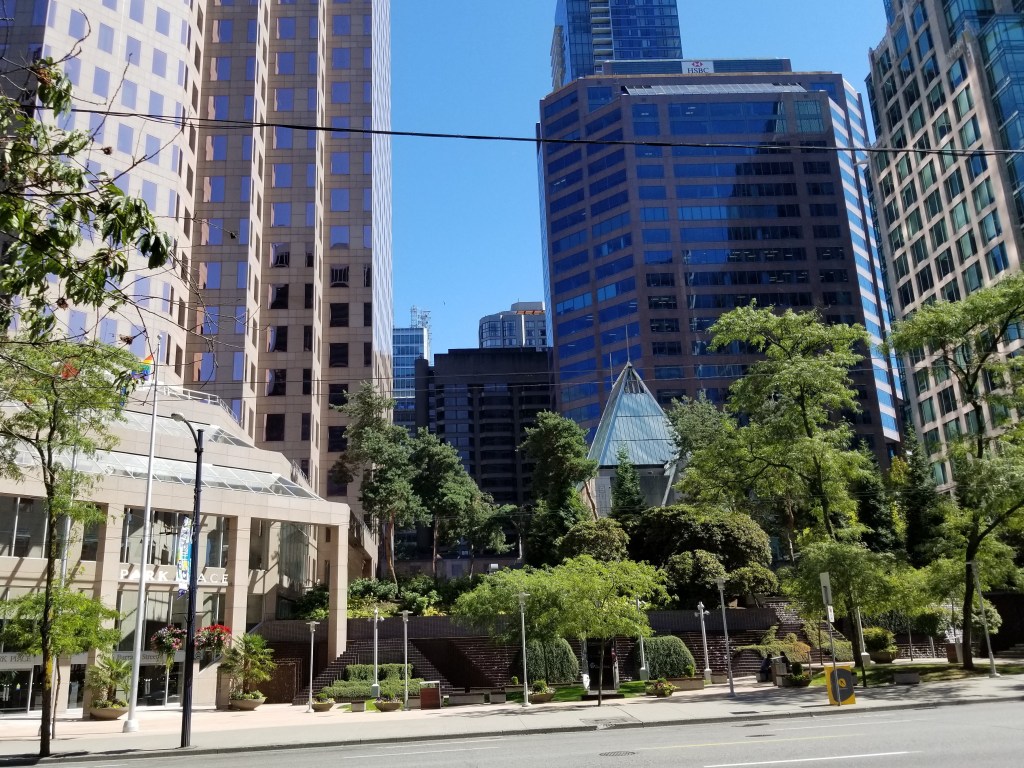
On St. Georges Avenue in North Vancouver. Summer of 2018.

St. Georges Avenue is a residential street in North Vancouver, a scenic city across the Burrard Inlet from Vancouver, known for its blend of urban amenities and natural beauty (e.g., proximity to the North Shore Mountains). It runs through the Central Lonsdale neighborhood, a bustling area with shops, restaurants, and community services. The street is part of a well-connected residential zone, with easy access to key local landmarks and transit options, making it a desirable place to live or visit.

The Saint George Apartments is a multi-faceted community on or near St. Georges Avenue. It offers studio, 1-bedroom, 2-bedroom apartments, and 3-bedroom townhomes, featuring amenities like in-suite laundry, in-floor radiant heating, and stainless-steel appliances. Located near Central Lonsdale, it’s close to Lonsdale Quay Market, retail shops, and outdoor attractions like water and mountain vistas. It emphasizes a “better way of life,” appealing to those seeking modern living with access to nature, suggesting St. Georges Avenue is a hub for young professionals, families, or retirees.

St. Georges Avenue is well-integrated into the city’s road network, accessible via major arteries like Lonsdale Avenue. Its location near Central Lonsdale places it within walking distance of public transit (e.g., SeaBus to Vancouver) and the Highway 1 corridor, enhancing connectivity.

As of 2025, North Vancouver’s real estate remains competitive, with Central Lonsdale seeing steady demand due to its amenities and views. Prices for condos or apartments on St. Georges Avenue likely range from CAD 600,000 to over CAD 1 million, depending on size and condition.

Central Lonsdale, where St. Georges Avenue is located, is known for its vibrant community feel, with local favorites like the Lonsdale Quay Market offering fresh produce and artisan goods. The area’s proximity to parks (e.g., Lynn Canyon) and outdoor activities aligns with Vancouver’s active lifestyle culture. The population includes a mix of young families, professionals, and older residents, with a growing international community reflecting North Vancouver’s diversity. North Vancouver is generally safe, with low crime rates compared to Vancouver proper. St. Georges Avenue’s residential nature suggests a quiet, family-friendly environment, though its central location means some traffic noise.

St. Georges Avenue in North Vancouver is a residential street in the heart of Central Lonsdale, offering modern living options like The Saint George apartments, strong connectivity, and proximity to shopping and nature. It’s an attractive spot for those seeking a balanced urban-outdoor lifestyle, with a real estate market reflecting its desirability.

Leonardo da Vinci may have had ADHD, leading professor says

https://www.independent.co.uk/news/health/leonardo-da-vinci-adhd-health-mona-lisa-a8927641.html

Attention disorder ‘most scientifically plausible hypothesis’ for boundless creativity and unfinished masterpieces like ‘Mona Lisa’.

Leonardo da Vinci’s famously incomplete masterpiece could most logically be explained by the Renaissance polymath having attention deficit hyperactivity disorder (ADHD), a leading UK researcher has said.

His most famous work, the Mona Lisa, is among the iconic pieces he left unfinished, and his tendency to flit between projects is suggestive of ADHD.

As well as his wide-ranging creativity and inability to complete tasks, historical accounts suggest Da Vinci was always restless and worked day and night, resting for only short naps, a study found.

“While impossible to make a post-mortem diagnosis for someone who lived 500 years ago, I am confident ADHD is the most convincing and scientifically plausible hypothesis to explain Leonardo’s difficulty in finishing his works,” said Professor Marco Catani, an expert in disorders like autism and ADHD at Kings College London, said

“Historical records show Leonardo spent excessive time planning projects but lacked perseverance,” he added. “ADHD could explain aspects of Leonardo’s temperament and his strange mercurial genius.”

Published in the journal Brain, Prof Catani’s research draws on historical accounts of Da Vinci’s work practices and behaviour to back his theory.

While most commonly recognised in childhood, the disorder is increasingly being diagnosed among adults, including university students and people with successful careers.

Da Vinci’s difficulties with sticking to tasks were pervasive from childhood.

Alongside reports of erratic behaviour and incomplete projects from fellow artists and patrons, including Pope Leo X, there is indirect evidence to suggest Leonardo’s brain was organised differently compared to average.

He was left-handed and likely to have been both dyslexic and possessed a dominance for language in the right-hand side of his brain, all of which are more common among people with ADHD.

As well as explaining his apparent chronic procrastination, ADHD could have been a factor in Da Vinci’s extraordinary creativity and achievements across the arts and sciences, Prof Catani believes.

Prof Catani said this should be seen as a prime example to challenge the “stigma” around the condition that persists today.

“There is a prevailing misconception ADHD is typical of misbehaving children with low intelligence, destined for a troubled life,” he added.

“I hope the case of Leonardo shows ADHD is not linked to low IQ or lack of creativity but rather the difficulty of capitalising on natural talents.”

Da Vinci died 500 years ago this month, and a series of celebrations are happening around the world to mark the anniversary.

History of Hellenistic astronomy, mathematics, and geography

I’m still re-reading William Cecil Dampier’s ‘A History of Science, and its Relations with Philosophy and Religion’ (1929). So far, I’ve been doing this slowly, but I have already finished reading the chapter about science in the ancient world. When I first read the book, I found this chapter to be one of the most interesting in the book. Therefore, I will include a number of quotes from it in this post. “Whatever be its value in philosophy, in science the Democritean atomic theory is nearer to the views now held than any of the systems which preceded or replaced it, and its virtual suppression under the destructive criticisms of Plato and Aristotle must, from the scientific standpoint, be counted a misfortune. Platonism in its various forms was left to represent Greek thought to later ages, a fact which was one of the reasons why the scientific spirit vanished from the earth for a thousand years. Plato was a great philosopher, but in the history of experimental science he must be counted a disaster. Between the times of Plato and Aristotle, about 367 B.C., Eudoxus of Cnidos did good work in astronomy, though his cosmogony was a relapse from the ideas of the Pythagoreans with their moving Earth. Eudoxus held that the Earth was the centre of all things, and that the Sun, Moon and planets revolve round it in concentric crystal spheres. This was the first serious attempt to explain the apparently irregular movement of those bodies. The system of Eudoxus led to the more elaborate schemes of Hipparchus and Ptolemy, whose cycles and epicycles satisfied astronomers till the time of Copernicus. In its day, the now discredited geocentric theory, which gave a quantitative explanation of the phenomena, was an immense advance over the ideas which preceded it. A false hypothesis, if it serves as a guide for further enquiry, may be more useful at the time than a truer one for which verifiable evidence is not yet at hand. The literary bent which has characterized modern studies of ancient times has directed attention chiefly to the ages when the poets and sculptors of Athens were putting forth their masterpieces. It would be unfair to say that the classical period of Greece produced no science. There was geometry before Euclid; the medicine of Hippocrates and the zoology of Aristotle were based on sound observation. Yet the philosophic outlook was metaphysical and not scientific; even the atomic theory of Democritus was speculative philosophy and not science. With the marches of Alexander the Great we reach a new epoch. He carried to the East that Greek culture which was already spreading westwards over the Mediterranean, and in return he brought Babylonia and Egypt into closer touch with Europe, while his staff collected vast stores of facts in geography and natural history. Thus began three centuries of Hellenism, from the death of Alexander in 323 to the establishment of the Roman Empire by Augustus in 31 B.C., centuries during which Greek culture, having passed its zenith in its original home, spread to other lands and dominated the known world. A form of the Greek language, the common speech, was understood “from Marseilles to India, from the Caspian to the Cataracts”, and the upper classes from Rome to Asia accepted Greek philosophy and the Greek outlook on life. Commerce became international, and thought was free as it was not to be again till modern days in some nations of the western world. The increased knowledge of the Earth led to more curiosity about natural things, and a more scientific attitude of mind. We are at once conscious of a more familiar atmosphere – indeed there is much resemblance to our own times, though there were then few machines and many slaves. A change in method appears. We pass from general philosophic systems and encyclopaedic surveys of knowledge to more modern specialization. Definite and limited problems are isolated from others and attacked singly, and real progress in natural knowledge is seen. Indeed, the change from the synthetic philosophies of Athens to the analytic science of Archimedes and the early Alexandrians is closely parallel to the change from the Scholasticism of late mediaeval writers to the modern science of Galileo and Newton. The Greek mathematicians and philosophers accepted implicitly the simple intuitional idea, in which the axioms of geometry are taken to be facts self-evident to the mind. But whatever view we may now take of its philosophic meaning, deductive geometry was especially suited to the Greek genius, and, unlike some other products of Greek thought, it marked a permanent step in the advance of knowledge, a step which never had to be retraced. Indeed, Greek geometry may well be considered to share with modern experimental science the highest place among the triumphs of the human intellect. The origins of the sciences of mechanics and hydrostatics are to be sought in the practical arts, rather than in the writings of the early Greek philosophers, but they were placed on a sound footing when observation was allied to the deductive methods learnt in geometry. The first known to have done this was Archimedes of Syracuse (287-212 B.C.), whose work, more than that of any other Greek, shows the true modern combination of mathematics with experimental enquiry; a combination in which definite and limited problems are attacked, and hypotheses are set forth only to have their logical consequences first deduced and then tested by observation or experiment. The idea of the relative densities of bodies, which, as we have seen, was unknown to Aristotle, was first formulated clearly by Archimedes, who, moreover, discovered the principle known by this name – that, when a body floats in a liquid, its weight is equal to the weight of liquid displaced, and, when it is immersed, its weight is diminished by that amount. It is said that King Hiero, having entrusted some gold to the artificers who were to make his crown, suspected them of alloying it with silver. He asked Archimedes to test this suspicion. While thinking over the problem, Archimedes noticed in his bath that he displaced water equal in volume to his own body, and saw at once that, for equal weights, the lighter alloy would displace more water than the heavier gold. This flash of insight revealed to Archimedes his principle, but he then proceeded to deduce it mathematically from his fundamental conception of a fluid as a substance that yields to any, even the smallest, shearing stress, that is, a force tending to cause one layer to slide over another. Archimedes also considered the theoretical principle of the lever, the practical use of which must be of immemorial antiquity and is illustrated in the sculptures of Assyria and Egypt two thousand years before the days of Archimedes. Nowadays we treat the law of the lever as a matter for experimental determination, and deduce other, more complicated, results from it. Nevertheless, the co-ordination of the law of the lever with ideas which then seemed simpler was a step in advance. Archimedes’ chief interest lay in pure geometry, and he regarded his discovery of the ratio of the volume of a cylinder to that of a sphere inscribed in it as his greatest achievement. He measured the circle by inscribing and circumscribing polygons, increasing the number of sides till the polygons nearly met on the circle. By this method of exhaustion he showed that the ratio of the circumference to the diameter was greater than 310/71 and less than 31/7. The mechanical contrivances for which he was famous – compound pulleys, hydraulic screws, burning mirrors – were considered by him as the recreations of a geometer at play. Archimedes was no mere compiler. Nearly all his writings are accounts of his own discoveries. It is a sign of the modernity of his outlook that the greatest man of the Renaissance, Leonardo da Vinci, sought for copies of the works of Archimedes more eagerly than for those of any other Greek philosopher. And nearly indeed were his writings lost to the world. Apparently at one time the only survival was a manuscript, probably of the ninth or tenth century, which has long ago disappeared. But fortunately three copies were made, and are extant; and from these the printed editions have been taken. Archimedes, the first and greatest of physicists of the modern type in the ancient world, who helped with his engines of war to keep the Romans at bay for three years, was killed by a soldier after the storming of Syracuse in the year 212. His tomb was discovered and piously restored in 75 B.C. by Cicero, who was then Quaestor in Sicily. In the fourth century before Christ, geographical discovery made considerable progress. Hanno passed the Pillars of Hercules, and sailed down the west coast of Africa; Pytheas voyaged round Britain towards the polar seas, and also correlated the lunar phases with the tides; Alexander marched to India. It was known that the Earth was a sphere, and some idea of its true size began to be formed. This growth in knowledge was not favourable to the ideas of the counter-earth or central fire imagined by Philolaus, and those parts of Pythagorean astronomy were thenceforward discredited. By the end of the fourth or the beginning of the third century before Christ the intellectual centre of the world had moved from Athens to Alexandria, the city founded in 332 by Alexander the Great. One of Alexander’s generals, Ptolemy (not the astronomer), founded there a Greek dynasty which became extinct on the death of Cleopatra in the year 30 B.C. Among those who made the schools of Alexandria illustrious in the reign of the first Ptolemy, 323 to 285, were the geometer Euclid and Herophilus the anatomist and physician. In the Greek civilization of Alexandria a new and more modern spirit appears, as in other Hellenistic lands. Instead of the complete intellectual systems in which the Athenian philosophers were pre-eminent, the men of Alexandria, following the lead of Aristarchus of Samos and Archimedes of Syracuse, undertook limited and special enquiries, and therefore made more definite scientific progress. About the middle of the third century, the famous Museum, or place dedicated to the Muses, was founded at Alexandria. The four departments of literature, mathematics, astronomy and medicine were in the nature of research institutes as well as schools, and the needs of them all were served by the largest library on the ancient world, containing some 400,000 volumes in rolls. One section of the library was destroyed by the Christian Bishop Theophilus about A.D. 390, and, after the Muslim conquest in the year 640, the Muhammadans, whether accidentally or deliberately is uncertain, destroyed what the Christians left. But for some centuries the Library of Alexandria was one of the wonders of the world, and its destruction was one of the greatest intellectual catastrophes in history. We have already considered the work of Euclid under the head of deductive geometry. He systematized the writings of older geometers and added many new theorems of his own. He also studied optics, realized that light travels in straight lines, and discovered the laws of reflection. The Alexandrian school of medicine was established chiefly by the work of two men, Herophilus and Erasistratus. The former, born at Chalcedon, flourished at Alexandria under Ptolemy I. He was the earliest distinguished human anatomist, and the greatest physician since the days of Hippocrates. His medicine was empirical and almost free from theoretical preconceptions. He gave a good description of the brain, of the nerves and of the eye, of the liver and other internal organs, of the arteries and veins; and he held that the seat of intelligence is the brain, and not the heart as maintained by Aristotle. Erasistratus, a younger contemporary of Herophilus, practised human dissections and made experiments on animals. He was keenly interested in physiology, and was the first to treat it as a separate subject. He added to the knowledge of the brain, of the nerves and of the circulatory system, holding that there are in the body and the brain special vessels for the blood and for the spirit which he identified with air. Taking over from Epicurus the tenets of the atomic theory, Erasistratus was opposed to medical mysticism, though he believed in nature acting as an external power, framing the human body for the ends it is to serve. Herophilus, Erasistratus and a third anatomist, Eudemus, made their century remarkable in the history of medicine. In the latter part of the third century B.C., another group of great men appears, younger contemporaries of Archimedes. Among them was Eratosthenes, born at Cyrene about 273 and died at Alexandria about 192. He was Librarian of the Museum, and the first great physical geographer. He held the Earth to be spheroidal and calculated its dimensions by estimating the latitudes and distances apart of Syene and Meroe, two places on nearly the same meridian. His result was 252,000 stades, equal to about 24,000 miles. These are surprisingly close approximations to the modern estimates of 24,800 and 93 million miles respectively. Eratosthenes argued from the similarity of the tides in the Indian and Atlantic Oceans that those oceans must be connected and the world of Europe-Asia-Africa an island, so that it should be possible to sail from Spain to India round the south of Africa. It was probably he who conjectured that the Atlantic might be divided by land running from north to south and inspired Seneca’s prophecy of the discovery of a new world. Posidonius later rejected this idea, and, underestimating the size of the Earth, said that a man sailing west for 70,000 stades would come to India. This statement gave Columbus confidence. A striking advance in mathematics was made at Alexandria in the latter half of the second century B.C. by Apollonius of Perga, who collected the knowledge of conic sections due to Euclid and his predecessors, and carried the subject much further by his own work. Apollonius showed that all conics could be considered as sections of one cone; he introduced the names parabola, ellipse and hyperbola; he treated the two branches of the hyperbola as a single curve, and thus made clear the analogies between the three kinds of section. He obtained a solution of the general equation of the second degree by means of conics, and determined the evolute of any conic. His treatment of the whole subject is purely geometrical. In the second century at Alexandria we meet again with Hipparchus, whose great work in astronomy has already been described. By this time Alexandria was losing its supremacy in Greek learning, which later was shared with Rome and Pergamos. Of uncertain date, somewhere between the first century B.C. and the third A.D., is Hero, a mathematician, physicist and inventor. He found algebraic solutions of equations of the first and second degree, and worked out many formulae for the mensuration of areas and volumes. He pointed out that the line of a reflected ray of light is the shortest possible path. But he is chiefly remembered for his mechanical contrivances, such as siphons, a thermoscope, the forcing air pump, and the earliest steam engine, in which the recoil of steam issuing from a jet is used to make an arm carrying the jet revolve about an axis, a forerunner of the jet-propelled aeroplane. The chief name which distinguishes later Graeco-Roman Alexandrian science is that of the astronomer Claudius Ptolemy, who must not be confused with the kings of Egypt of the same name. He taught and made observations at Alexandria between the years A.D. 127 and 151. His great work, later called by its contracted Arabic name of Almagest, is an encyclopaedia of astronomy, which was based on and expounded the work of Hipparchus, and remained the standard treatise till the days of Copernicus and Kepler.”