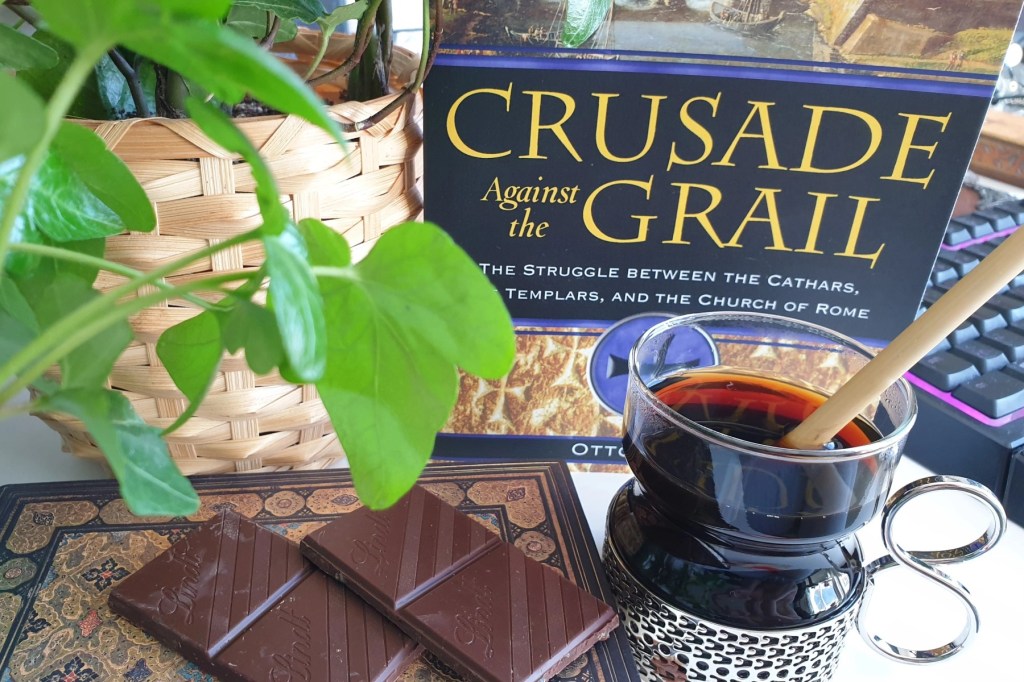
I have read Crusade Against the Grail by Otto Rahn. It was first published in 1933 as Kreuzzug gegen den Gral. Since I already read Rahn’s second book, Lucifer’s Court (review here, I recommend you to read that first), I thought it was reasonable to read his first book as well.
Just as I noted in my review of Lucifer’s Court, Crusade Against the Grail should not necessarily be read as a historically accurate description of the cultures and events of Southern France during the Middle Ages. That being said, the book is beautifully written. Even translated into English and read almost a century after its release, it still evokes appealing images of the sun-drenched Occitan country-side.
An interesting fact is the following: after releasing Crusade Against the Grail, Rahn was offered 1000 Reichsmark per month by Heinrich Himmler to write a sequel. This is interesting because of the way Rahn portrays the Cathars. Rahn juxtaposes the Occitan (Cathar) religious tolerance against the intolerance and brutality of the Catholic Church. As noted in my previous article, Rahn eventually grew disillusioned by what he saw as an increased intolerance in Germany. It is clear that he greatly valued the tolerant attitudes of the Cathars.
The God Amor
In my review of Lucifer’s Court, and in a recent Fizeek Friday post, I included an inspiring quote describing a god. That god appears in a passage here as well:
An elegant and strong knight approached on horseback. Blond hair fell on his bronzed face, and his clear eyes glistened. The smile of his mouth revealed mother-of-pearl teeth. […] “Piere Vidal,” said the knight, “you should know that I am Amor, and my Lady is called Grace. Her lady-in-waiting and my servant are Modesty and Loyalty.”
In Lucifer’s Court, this god is Lucifer himself, and Loyalty is his paladin. Since having a paladin named Loyalty is more epic than having a servant, I will keep the Lucifer’s Court version in mind. Peire Vidal was a renowned Occitan troubadour and poet.
A Golden Renaissance
In the Translator’s Foreword chapter of the book, Christopher Jones points out that Rahn yearned for a golden renaissance of traditional values based on the unity of France and Germany under neo-Cathar beliefs. I, Marcus, also yearn for a golden renaissance and a closer unity between France and Germany. And, as I discussed in Podcast Episode 7. Europa, a closer unity between all European countries. In contrast to Rahn, however, I am not a proponent of Catharism.
The Pure Ones
The Cathar Pure Ones promised to dedicate themselves to God and His Gospel, never to lie, never to take an oath, never to have any contact with a woman, never to kill an animal, never to eat any meat, and to feed themselves only with fruits. In fact, during the twelfth and thirteenth centuries any Christian that abstained from meat was suspected of Cathar heresy.
Even if Rahn succeeds in presenting the Cathars in a favourable light, it becomes clear that their teachings are not to be recommended.
For optimal health and happiness, eating meat is good. Meat is a superfood.
Being intimate with your wife is good. That being said, it is recommended to practice semen retention (more on that in a coming article, video or podcast).
Although fruits are delicious and are beneficial to eat prior to prayers in the Temple of Iron, your diet should be centred around meats, eggs and dairy. Fruits can be seen as a complement to your diet.
Moreover, the Cathars viewed the celestial Minne as the original love, and that it had nothing to do with the Earthly love that procreates human beings. Another aspect of Cathar belief was the longing for the next life, and the view of this world as Hell. Both of these attitudes go against the original European Pagan life-affirming attitude to intimacy and the world.
The Pathway of the Pure Ones
The Pathway of the Pure Ones starts out from Olmés, borders Montségur, and passes over the summit of the Tabor. Finally, it reaches the caves of Sabarthés, the last home of the Cathars. Once there, so far from the world, they meditated upon the supreme Minne in a trance-like state.
That sounds like an excellent travel destination for any esoterically minded modern knight. Minne (not to be confused with the Scandinavian word for memory) is another word for the notion of Medieval courtly love. Minne, like chivalry, was a large part of the troubadour culture.
The Crusade Against the Cathars
It must be stated that the crusades against the Cathars were, in no uncertain terms, a horrific affair, as was the persecution of the Cathars. There is a satisfying passage in the book, where Rahn retells the story of how a group of Occitan knights ambushed and killed a group of inquisitors.
The title of the book itself, The Crusade Against the Grail, refers to the grail as a sacred symbol of the Cathars. Rahn also believed that the Cathars hid the grail in the mountains of Southern France during the crusade. He believed that he could find the grail by using Wolfram von Eschenbach’s Parzival as a guide, just as German archaeologist Heinrich Schliemann had located ancient Troy using the Iliad. Rahn’s search for the grail is a main theme of Lucifer’s Court.
On a somewhat related note, when reading about the brutality of the Albigensian Crusade (Cathar Crusade), it becomes easier to understand that the Bosnian Bogomils (another Christian heresy) were inclined to convert to Islam to gain the protection of the powerful Ottomans against the Catholic Church. That being said, today’s Bosnia would be better served by renouncing Islam in favour of another religion. It is the only way they can be closer to their European neighbours (I will talk more about Bosnia in a coming Podcast episode).
Hastings Street is one of the most important east-west traffic corridors in the cities of Vancouver and Burnaby, British Columbia, Canada, and used to be a part of the decommissioned Highway 7A. In the central business district of Downtown Vancouver, it is known as West Hastings Street; at Carrall Street it becomes East Hastings Street and runs eastwards through East Vancouver and Burnaby. In Burnaby, there is no east-west designation. The street ends in Westridge, a neighbourhood at the foot of Burnaby Mountain where it joins the recently built Burnaby Mountain Parkway and diverges from the continuation of the former Highway 7A as the Barnet Highway, to Port Moody, British Columbia.
Formally named in 1885 for Rear-Admiral George Fowler Hastings of the Royal Navy, the street runs past such well-known Vancouver landmarks as the Marine Building, the Vancouver Club, Sinclair Centre, Harbour Centre (once Spencer’s, Eaton’s, then Sears and now the downtown campus of Simon Fraser University), Dominion Building and Victory Square (the location of the city’s original courthouse) and the Woodward’s Building; located in the old Dunn’s Tailors building at Homer and West Hastings is the campus of the Vancouver Film School, while on the corner of Cambie is the Carter-Cotton Building, the former headquarters of the Vancouver Province newspaper. East of Woodward’s, the street forms the heart of Vancouver’s historic original downtown, once known as the Great White Way because of its neon displays, and which is today the Downtown Eastside. Through the East End, after a stretch of warehouse-type commercial and wholesale businesses, the street forms one of the commercial cores for Vancouver’s Italian community in a mixed-ethnicity retail area in the area of Nanaimo Street, just east of which the Pacific National Exhibition and Playland are on the city of Vancouver’s eastern fringe. After leaving Vancouver, Hastings forms the core of a Burnaby retail neighbourhood known as the Heights and then traverses Capitol Hill to the Lochdale and Westridge areas.
With a fifth movie featuring Harrison Ford’s iconic hero in the works, it’s time to look closer look at the irreverent adventurer.
After years of rumours, it’s now official! The Disney studio recently announced that the next Indiana Jones film is in the making, and will be released in 2019.
The entire saga began on a beach in Hawaii in 1977 with a conversation between George Lucas and Steven Spielberg. Lucas apparently asked Spielberg what he planned to do next. Spielberg replied that what he really wanted to do was to direct a James Bond movie, but that the producers had turned him down, twice.
That conversation eventually ended up with the creation of the bull whip-wielding, leather-jacketed archaeologist Indiana Jones and the film franchise that owes more than a little to James Bond. In fact, Indiana Jones was listed by the American Film Institute as the second-greatest hero in cinema history (after Atticus Finch, the lawyer hero of To Kill a Mockingbird but, ironically, ahead of Bond himself at #3).
Indiana Jones is a character with whom archaeologists have a love-hate relationship. On the one hand Indy, with his tough-guy persona, exotic adventures and cynical wisecracks, has probably done more to popularise archaeology as a career than any other single factor. In fact, John Rhys-Davies, one of the regular Indiana Jones crew, claims that he must have met over a hundred young archaeologists who confessed to him that one key reason for their career choice was the fact that they had watched an Indiana Jones movie in their childhood.
On the other hand, archaeologists are embarrassed by Indy’s knuckle-dusting heroics, his lack of scholarship and – most of all – the fact that today he would be described as a “tomb robber” rather than an archaeologist. As an archaeologist once observed about the opening scene of Raiders of the Lost Ark: There is Indiana Jones, surrounded by all the engineering marvels of an ancient civilisation, and all he can think of is how he can get his hands on that golden idol. For a proper archaeologist, it would be the least interesting thing around; but for a tomb-robber like him, of course, it was the most important.
So who was the real Indiana Jones? And was he based on any real-life archeologist?
George Lucas and Steven Spielberg say no. According to them, the inspiration for Indy came from a variety of explorers in the action movies of their childhood. But members of their scriptwriting teams have admitted that they researched some real-life personalities and blended their elements into the final Indiana Jones mix – some of the names mentioned being Otto Wilhelm Rahn and paleontologist Roy Chapman Andrews. In fact, these are just two of the dozen-odd historical models who are believed to have been the real-life Indiana Jones.
Otto Wilhelm Rahn was a German medieval scholar of the 1930s who searched for the Holy Grail – the mythical cup that was used to hold Jesus’s blood when he died – based on cues he had discovered in medieval texts. When Heinrich Himmler, the Nazi leader, read about his quest, he funded Rahn’s expeditions to bring back the Holy Grail, with its occult powers for himself (shades of Raiders of the Lost Ark and The Last Crusade). But Rahn’s quest didn’t lead him anywhere. Persecuted by the vengeful Himmler, he committed suicide.
Roy Chapman Andrews was not an archaeologist, but a paleontologist (or, loosely, a “dinosaur hunter”). He was, like Indiana Jones, not just a college professor, but a rugged, two-fisted adventurer. In the 1930s, he went on expeditions to remote corners of the planet, including Mongolia and the Gobi Desert, where he discovered the first-known fossil dinosaur eggs. Andrews, like Indiana Jones, habitually carried a gun, which he used to hunt for food as well as to protect his party from bandits. And, interestingly, like Indy, he also habitually wore a broad-brimmed fedora hat.
While both the men might have contributed to the colourful amalgam that is Indiana Jones, a more likely historical model is believed to be the swashbuckling archaeologist Hiram Bingham III. Leading a Yale University expedition to Peru in 1911, Bingham discovered the lost Inca city of Machu Pichu and became an overnight celebrity, returning home with a hoard of 40,000 priceless Inca relics, and writing a best-selling book about his adventures. (And he too, like Indy, habitually wore a broad-brimmed fedora hat.)
The more convincing piece of evidence connecting Bingham with Indiana Jones, however, is the 1954 film Lost City of the Incas, based on Bingham’s adventures and featuring Charlton Heston in the lead role. It’s interesting to note that, when preparing for Raiders of the Lost Ark, Spielberg’s team studied Lost City of the Incas very carefully, and “borrowed” various important elements, including Indy’s costume (down to that hat). But, more than that, they lifted from the Jerry Hopper movie the entire iconic scene of the scale model of the lost city, where Indy uses an ancient reflector to catch the beam of sunlight and thereby reveal the location of the Biblical treasure (the only difference between the two films being that in the 1954 original, the scene is set in South America instead of Egypt).
In recent times, Hiram Bingham III’s reputation has been tarnished: he has been accused by the Peruvian government of looting its treasures, which Peru is trying to recover from the US. And so that is perhaps another similarity between him and Indy: they were both, at the end of the day, just “tomb-robbers”.
So does all this mean that today the romance has gone out of archaeology and that today’s archaeologists are just a bunch of dry-as-dust academics? Not really. One contemporary archaeologist whose adventures have been in the Indiana Jones tradition (well, almost) is Ivan Sprajc, who has made a career of finding ancient Mayan cities lost in the jungles of Mexico, doing Indy kind of things like hacking his way through the dense foliage with a machete and dealing with poisonous snakes, jaguars and local bandits. According to his photographs, he even dresses like Indy, in khaki safari gear, leather boots and, yes, that good old broad-brimmed fedora hat.
Yet, as somebody once succinctly put it, the Indiana Jones theme music gives the game away: instead of the existing adrenaline-pumping brass-and-percussion march, a slow, introspective cello piece would have been much more appropriate to the world of archaeology. The rule of thumb for an archaeologist, after all, being that for every hour of on-site excavation, you spend four hours in the lab analysing and documenting your finds.
All this brings us back to the new Indiana Jones movie, tentatively referred to as Indy 5. All we know for sure about it so far is that Harrison Ford will star, Steven Spielberg will direct, David Koepp will write the script, Janusz Kaminski will be the cinematographer, and the film will be released in July 2019.
But there’s obviously a great deal of speculation. First of all, this will clearly be Ford’s last Indiana Jones movie (he’ll be 77 when it’s released). So how will the series be kept alive after his departure?
Who knows? Perhaps the film will begin with Ford, and then go into a flashback of a fresh new star who will play a younger version of Indiana Jones for now, and the future.
And if there is to be a new star, who will it be?
The names that are being mentioned are Chris Pratt, Bradley Cooper and Robert Pattinson. River Phoenix, Sean Patrick Flanery and Corey Carrier have also played younger versions of Indy in the past.
Well, just as long as it’s not Shia LeBoeuf, who played Indy’s son in the supremely awful Indiana Jones and the Kingdom of the Crystal Skull, it should be okay.
As fascist far-right nationalist groups regularly parade through the country demanding “Ukraine for Ukrainians,” Ukraine faces a massive depopulation crisis. Millions of people of all ethnicities are leaving the country, fleeing poverty and war.
Since the restoration of capitalism in 1991, the overall population of Ukraine has declined from just over 52 million to approximately 42 million today, a decrease of nearly 20 percent. If the separatist-controlled provinces of the Donbass region and Crimea are excluded, it is estimated that just 35 million people now live in the area controlled by the government of Petro Porosehnko.
Ukrainian governments, including the current one, have been loath to carry out an official census, as it is widely believed that the population estimates reported by the country’s State Statistics Service (SSS) are inflated by including deceased individuals. One aim of this is to rig elections. An official country-wide census has not been held since 2001. In late 2015, the Poroshenko government postponed the 2016 census until 2020.
Despite the lack of reliable official numbers, all independent reports point to a sharp reduction in the population. According to Ukraine’s Institute of Demography at the Academy of Sciences, by 2050 only 32 million people will live in the country. The World Health Organization has estimated that the population of the country will drop even further, to just 30 million people.
Ukraine’s SSS has acknowledged that so far this year, the population has already decreased by 122,000.
Such data are a testament to the monumental failure of capitalism to provide a standard of living that matches, much less exceeds, that which existed during the Soviet period over 25 years ago.
While the country’s low birth rate of approximately 1 birth for 1.5 deaths is a contributing factor to the country’s depopulation, emigration is by far the biggest factor.
Between 2002 and 2017, an estimated 6.3 million Ukrainians emigrated with no plans to return.
Facing poor employment prospects, deteriorating social and medical services, marauding far-right gangs, and the ever-present prospect of a full-scale war with Russia, Ukrainian workers are fleeing the country in great numbers, either permanently or as temporary labor migrants.
According to a report from the Center for Economic Strategy (CES), almost 4 million people, or up to 16% of the working-age population, are labor migrants. Despite having Ukrainian citizenship and still technically living in Ukraine, they actually reside and work elsewhere. Ukraine’s Ministry of Foreign Affairs has put the number of Ukrainian migrant workers even higher, at 5 million.
Through 2015 and 2017, as a result of the ongoing war in the Donbass region and the plunging value of the Ukrainian hryvnia, migration increased notably: 507,000 people went to Poland; 147,000 to Italy; 122,000 to the Czech Republic; 23,000 to the United States; and 365,000 to Russia or Belarus.
The easing of visa-free travel by the European Union (EU) in September 2017 only increased the flow of Ukrainians to countries such as Poland, which is facing its own demographic crisis and in need of workers. In 2018 alone, more than 3 million Ukrainians applied for passports that would allow them to work in Poland. Poland is the only EU country that allows Ukrainians to obtain seasonal work visas with just a passport. Ukrainians have received 81.7% of all work visas issued in Poland this year.
Between 1 and 2 million Ukrainian workers now reside in Poland, where they are often forced to take jobs “under the table,” are easily exploited by employers, and work in dangerous conditions. Many Ukrainian laborers are recruited to Poland by scam offers of employment, only to then find themselves stranded and forced to work for whatever wage they can get.
While migrant workers in Poland are constantly subjected to anti-immigrant rhetoric from the right-wing PiS government in Warsaw, the Polish state classifies Ukrainian laborers as “refugees” in order to comply with EU quotas and reject refugees from Syria and elsewhere.
According to polls of Ukrainian migrants in Poland, over half are planning to move to Germany if the labor market there is ever open to them.
While Russia is constantly demonized in the Ukrainian and Western press as the eternal enemy of Ukraine, 2 million Ukrainian citizens now live or work in Russia. According to Olga Kirilova, between 2014 and 2017, 312,000 Ukrainians were granted Russian citizenship and Ukrainians make up the vast majority of immigrants to Russia.
The dearth of a working-age population in Ukraine is putting further strain on an already struggling pension system. According to Ukraine’s SSS, as a result of widespread labor migration, only 17.8 million out of 42 million Ukrainians are economically active and paying into the pension system.
The migration of Ukrainian workers abroad has reached such a level that remittances from migrants now constitute 3 to 4 percent of the country’s GDP. They exceed the amount of foreign investment in Ukraine. Nonetheless, such transfers are not nearly enough to make up for the negative impact of the currency’s falling value, inflation, and the disappearance of skilled workers.
The Ukrainian ruling class acknowledges that the country is in serious trouble. “One of the main risks of the current scenario is the continuation of the outflow of labor from Ukraine, which will create a further increase in the imbalance between demand and supply in the labor market,” noted a report from the country’s national bank.
However, the government can do nothing to slow the mass emigration, as it is thoroughly under the control of international finance capital and committed to implementing the austerity programs demanded by Western states and banks.
Despite assurances from the Poroshenko regime that the economy will improve, the emigration and emptying of the country shows no signs of slowing.
Abū Bakr Muhammad ibn Zakarīya al-Rāzi (Arabic: ابو بکر محمد بن زكريا الرازی; Persian: زكريای رازی Zakaria ye Razi; Latin: Rhazes or Rasis). According to al-Biruni he was born in Rayy, Iran in the year 865 C.E. (251 a.h.), and died there in 925 C.E. (313 a.h.). Al-Razi was a Persian physician, philosopher, alchemist, and scholar who produced over 200 books and articles in various fields of science. He was well versed in Greek medical knowledge and added substantially to it from his own observations. As an alchemist, Razi is credited with the studies of sulfuric acid, the “work horse” of modern chemistry and chemical engineering. He also wrote about ethanol and its refinement and use in medicine. His philosophical writings had an impact on the thinkers of the Islamic world, and his medical and scientific texts, translated into Latin and later into other languages, were widely read throughout Europe.
The modern-day Razi Institute in Tehran, and Razi University in Kermanshah, were named after him, and “Razi Day” (“Pharmacy Day”) is commemorated in Iran every August 27th. Razi’s portrait adorns the great hall of the Faculty of Medicine in the University of Paris.
Life
According to the mathematician al-Biruni, Abū Bakr Muhammad ibn Zakarīya al-Rāzi was born in Rayy, Iran in the year 865 C.E. In Persian, Razi means “from the city of Rayy” (also spelled RAY, REY, or RAI, old Persian RAGHA, Latin RHAGAE), an ancient town on the southern slopes of the Elburz Range that skirts the south of the Caspian Sea, situated near Tehran, Iran. In this city (like Avicenna) al-Razi produced much of his work.
In his early life he may have been a jeweler, a money-changer, or a lute-player who changed his interest from music to alchemy. Around the age of thirty or forty he stopped his study of alchemy because conducting experiments caused an eye disease which required medical treatment; some say this was why he began his medical studies. He apparently began to study medicine after his first visit to Baghdad, with ‘Ali ibn Sahl Rabban al-Tabari (808–855 C.E.), a Jewish convert to Islam and a physician and philosopher belonging to the famous medical school of Tabaristan, or Hyrcania. The scholar Ibn al-Nadim (d. 995) indicates that al-Rasi studied philosophy under a teacher named al-Balkhi, a pupil of Hunayn Ibn Ishaq who had traveled widely and possessed great knowledge of philosophy and the ancient Greek, Persian, and Indian systems of medicine.
Al-Razi surpassed his master and became famous in his native city as a physician and a teacher. During the reign of Mansur ibn Ishaq ibn Ahmad ibn Asad (Governor of Rayy from 902–908), he was appointed director of the hospital at Rayy. Al-Razi moved from Rayy to Baghdad during Caliph Muktafi’s reign (approx. 901–907), where he was head of the famous Muqtadari Hospital. He also served as physician at the Samanid court. One story relates that he determined the location for a new hospital in Baghdad by leaving pieces of meat in various quarters of the city and selecting the site where the meat rotted most slowly.
After al-Muktafi’s death in 907, al-Razi allegedly returned to Rayy and gathered many students around him. According to Ibn al-Nadim in Fihrist, al-Razi was then a Shaikh (a title given to one entitled to teach) “with a big head similar to a sack,” surrounded by several circles of students. When someone arrived with a scientific question, this question was passed on to students of the “first circle.” If they did not know the answer, it was passed on to those of the “second circle,” and so on, until at last, when all others had failed to supply an answer, the question came to al-Razi himself. Al-Razi was said to be a generous man, who behaved humanely towards his patients, and treated the poor free of charge. When he was not occupied with pupils or patients he was said to always be writing or studying. He produced over one hundred works on medicine alone, and another hundred on alchemy, chemistry, psychology, and philosophy.
Al-Rasi’s sight became weaker; he developed cataracts and finally became blind in both eyes. Some say the cause of his blindness was that he used to eat too many broad beans (baqilah). A legend says that he refused to be treated for cataracts, declaring that he “had seen so much of the world that he was tired of it.” One of his pupils from Tabaristan came to look after him, but, according to al-Biruni, he refused to be treated, saying it was useless as his hour of death was approaching. Some days later he died in Rayy, on October 27, 925 (5th of Sha’ban 313).
Thought and works
Because of the prominence of his medical works, Al-Razi is remembered in the West primarily as a physician, although his philosophical works triggered a barrage of criticism from other Muslim scholars and theologians. In both medicine and philosophy, he emphasized the use of reason, careful observation, and a well-ordered methodology. He produced more than two hundred works, half of which were on medicine. He also wrote twenty-one books on alchemy and helped to prepare the foundations of modern chemistry. His works on mathematics, astronomy, physics, and optics have been lost, but about forty of his manuscripts are extant in museums and libraries in Iran, Paris, Britain, Rampur, and Bankipur. A number of his medical works were translated into Latin and European languages, and used as textbooks for several centuries. Al-Razi was considered a foremost authority on medicine through the seventeenth century.
Influence in Europe
Al-Razi was known in Europe by his Latinized name, Rhazes. Book of Medicine Dedicated to Mansur (Kitab al- Mansoori), a short general textbook on medicine with ten chapters (dedicated in 903 C.E. to the Samanid prince Abu Salih al-Mansur ibn Ishaq, Governor of Rayy), was translated into Latin during the twelfth century by Gerard of Cremona as Liber ad Almansoris. It became one of the most widely read medieval medical manuals in Europe. The ninth chapter was frequently published by itself as Liber nonus ad Almansorem, and many editions of it included commentaries by prominent Renaissance physicians, such as Andreas Vesalius. His Comprehensive Book on Medicine, the Hawi, was translated into Latin in 1279 under the title Continens Liber by Faraj ben Salim, a physician of Sicilian-Jewish origin employed by Charles of Anjou to translate medical works. Al-Judari wa al-Hasbah, containing a celebrated monograph on smallpox and chickenpox, was published in forty editions between 1498 and 1866. It was first translated into Latin in 1565, and appeared more than a dozen times in various European languages. Several other of al-Razi’s books, including Jami-fi-al-Tib, al-Malooki, Maqalah fi al- Hasat fi Kuli wa al-Mathana, Kitab al-Qalb, Kitab al-Mafasil, Kitab-al- ‘Ilaj al-Ghoraba, Bar al-Sa’ah, and al-Taqseem wa al-Takhsir, also circulated in medieval Europe.
Medicine
Al-Razi relied on clinical observation, and was more concerned with remedies and treatments than with detailed classification of the symptoms of illnesses. He favored curing disease through diet and nutrition before resorting to medicines. He tested proposed remedies on animals in order to evaluate their effects before using them on humans. He was an expert surgeon and the first to report the use of opium as an anesthesia, and to introduce the use of alcohol (Arabic: al-kuhl) for medical purposes. His books contain the earliest description of an operation to remove cataracts from the eyes, and he was the first to discuss the widening and narrowing of the pupil by small muscles in the eye which respond to the intensity of light. He also gave elaborate descriptions of the intervertebral foramina and the spinal chord, and correctly asserted that an injury either to the brain or spinal chord would lead to paralysis of the parts of the organs whose nerve supply was damaged or destroyed.
Al-Razi warned that even highly educated doctors could not heal every disease. He made a distinction between curable and incurable diseases, and commented that the physician should not be blamed when he could not cure advanced cases of cancer and leprosy. Al-Razi advised practitioners to keep up with advanced knowledge by continually studying medical books and exposing themselves to new information.
Al-Razi’s Kitab fi al-jadari wa-al-hasbah (Book on Smallpox and Measles), was twice translated into Latin during the eighteenth century. An Article on the Reason Why Abou Zayd Balkhi Suffers from Swelling of the Head When Smelling Roses in Spring, in his book, Sense of Smelling, discusses seasonal “rhinitis,” or hay fever. Razi was the first to recognize that fever is a natural defense mechanism of the body when fighting a disease. He wrote Man la Yahduruhu Tab as a medical manual for the general public, dedicated to the poor, the traveler, and the ordinary citizen who could consult it for treatment of common ailments when a doctor was not available. In its 36 chapters, al-Razi described diets and remedies that could be found in a kitchen, market, or military camp and gave instructions for their preparation and use.
In Doubts about Galen (Shukuk ‘ala alinusor), al-Razi challenged the fundamental principles of contemporary medicine, which were based on the theories of Galen. He criticized Galen’s theory that the body possessed four separate “humors” (liquid substances), whose balance was the key to health and a natural body temperature. He reported that his own clinical observations did not support Galen’s descriptions of fever. Following the ideas of Aristotle, al-Razi rejected the mind-body dichotomy and emphasized the importance of a sound mind and a positive mental attitude to good physical health. He told physicians to bolster their patients’ determination to resist illness and make a speedy recovery. Al-Razi linked the practice of medicine with philosophy, saying that a good physician must be an independent thinker. His criticisms of Galen drew accusations of arrogance and ignorance from other physicians, but al-Razi stated that he simply wished to correct what was erroneous.
I prayed to God to direct and lead me to the truth in writing this book. It grieves me to oppose and criticize the man Galen from whose sea of knowledge I have drawn much. Indeed, he is the Master and I am the disciple. Although this reverence and appreciation will and should not prevent me from doubting, as I did, what is erroneous in his theories. I imagine and feel deeply in my heart that Galen has chosen me to undertake this task, and if he were alive, he would have congratulated me on what I am doing. I say this because Galen’s aim was to seek and find the truth and bring light out of darkness. I wish indeed he were alive to read what I have published.
Al-Hawi (The Virtuous Life)
Shortly after the death of al-Razi, Ibn al-`Amid, a statesman and scholar, purchased from al-Razi’s sister the notes comprising the Hawi, or Comprehensive Book, and arranged for some of al-Razi’s students to put them in order. It was a large commonplace book, representing fifteen years of writing, in which al-Razi had collected extracts from earlier authors regarding diseases and therapy and also recorded clinical cases of his own experience. The material was arranged under the names of different diseases and pharmacological topics, and contained all the important information available from Greek and Arab sources, followed by his own comments and conclusions. The Hawi preserved fragments of early Greek, Arabic, and Indian medical works which are now lost, and presented a wide variety of clinical descriptions.
The twenty volumes of Al-Hawi may be the largest medical work ever written by a single author, and were responsible for al-Razi’s reputation as the foremost medical authority of the Middle Ages. The work contained his views on Aristotle and Plato, and expressed innovative opinions on many subjects. It was first translated into Latin during the thirteenth century and had considerable influence on medicine in medieval Europe.
Chemistry and pharmacology
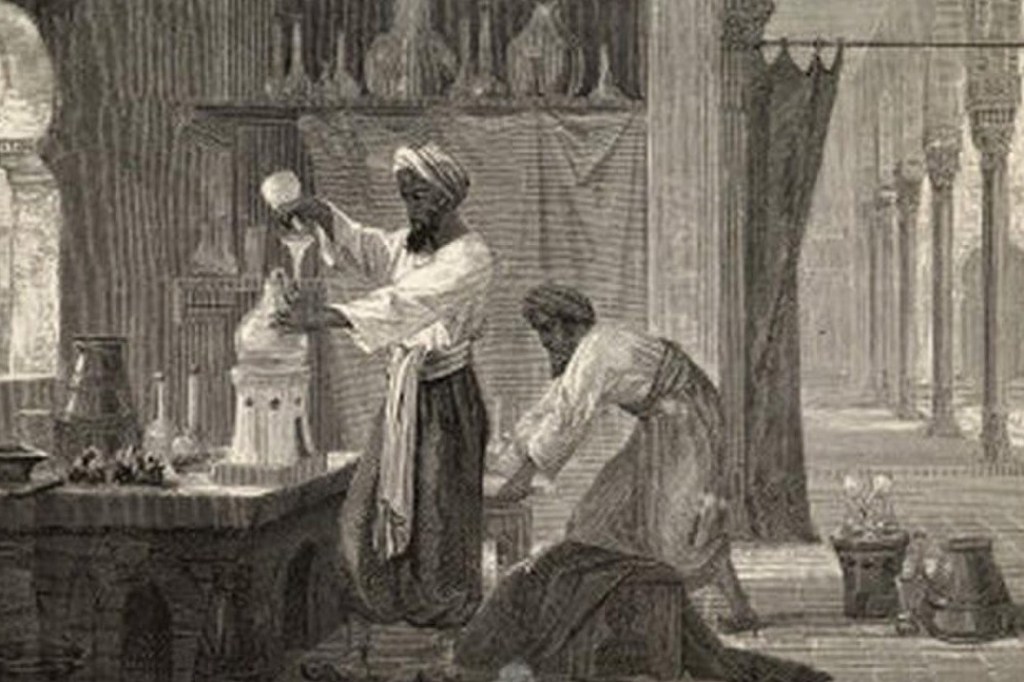
Al-Razi took a serious interest in chemistry and in the preparation of medicines, and is sometimes referred to as the father of modern pharmacology. He introduced the use of “mercurial ointments” and developed apparatus such as mortars, flasks, spatulas, and phials, which were used in pharmacies until the early twentieth century. He also produced alcohol by fermentation of sweet substances, and used it in the formulation of medicines.
Al-Razi challenged Aristotle’s theory of the Four Elements (fire, water, earth, and air), saying that his own experiments suggested other qualities of matter, such as salinity, oiliness, and sulfurousness, or inflammability, which were not readily explained by the traditional division of elements into those four categories. He dismissed the idea of potions and reliance on magic symbols, although he did not reject the idea that miracles exist in the sense of unexplained phenomena in nature. In exploring causality, he relied predominantly on the Neoplatonic concept of “dominant” forms or essences, rather than on intellect or a mechanistic view of the cosmos.
He is known to have perfected methods of distillation and extraction, which contributed to his studies of sulfuric acid (by dry distillation of vitriol, al-zajat), and alcohol. These studies paved the way for other Islamic alchemists.
His books presented a systematic classification of carefully observed and verified facts regarding chemical substances, reactions, and apparatus, described in a language almost entirely free from mysticism and ambiguity. Al-Razi’s two best-known alchemical texts, which largely superseded his earlier ones, were al-Asrar (The Secrets), and Sirr al-Asrar (The Secret of Secrets). Kitab-al-Asrar (Book of Secrets), written in response to a request from Razi’s friend and former student, Abu Mohammed ben Yunis, classified substances into plants, animals, and minerals, laying a foundation for inorganic and organic chemistry. Sirr al-Asrar (The Secret of Secrets) identified the drug components of plant, animal, and mineral substances and the best type of each for utilization in treatment. It also listed the equipment and tools needed by either an alchemist or apothecary, and described seven alchemical procedures and techniques: Sublimation and condensation of mercury; precipitation of sulfur and arsenic; calcination of minerals (gold, silver, copper, lead, and iron); salts; glass; production of talc from animal shells; and waxing. He also described the use of solvents and heat, and identified which stones contained mineral ores and salts. His alchemical stockroom contained the products of Persian mining and manufacturing, and included sal ammoniac, a Chinese discovery.
Half a century after his death, Ibn an-Nadim’s book The Philosophers Stone (Lapis Philosophorum in Latin) testified to Al-Razi’s interest in alchemy and his strong belief in the possibility of transmutation of lesser metals to silver and gold. Ibn Nadim attributed a series of twelve books on alchemy to al-Razi, plus an additional seven, including his refutation of al-Kindi’s (801–873 C.E.) denial of the validity of alchemy. In Sirr al-Asrar (Secret of Secrets) al-Razi gave procedures for coloring a silver object to imitate gold (gold leafing) and the reverse technique to change its color back to silver. He also described the gilding and silvering of other metals (alum, calcium salts, iron, copper, and zinc) and promised that the colors would last for years without tarnishing or changing.
Al-Razi’s classification of minerals into six divisions anticipated modern chemistry:
The SPIRITS (al-arwah): mercury, sat ammoniac, arsenic sulphate (orpiment and realgar), sulphur
The BODIES (al-ajsad): gold, silver, copper, iron, lead, tin, Kharsind
The STONES (al-ahjar): pyrites (marqashita), iron oxide (daws), Zinc oxide (tutiya), azurite, malachite, turquoise, haematite, arsenic oxide, lead sulphate (kohl), mica and asbestos, gypsum, glass
The VITRIOLS (al-zajat): black, alums (al-shubub), white (qalqadzs), green (qalqand), yellow (qulqutar), red
BORAX (al-bawariq)
The SALTS (al-amlah)
Philosophy
Al-Razi was well-acquainted with Aristotle and incorporated some of his theory in his worldview. In philosophy, as in medicine, he believed that the task of the serious student was to elevate himself to a higher intellectual level than his predecessors, eliminating doctrines that were unclear or contradictory, and seeking accuracy and a solid intellectual foundation. Asked if a philosopher can follow a prophetically revealed religion, al-Razi frankly replied, “How can anyone think philosophically while listening to old wives’ tales founded on contradictions, which obdurate ignorance, and dogmatism?”
Al-Razi did not accept creation ex nihilo, but asserted that God arranged a universe using five pre-existent principles: Creator, spirit (soul), matter, space, and time. Both time and matter had an absolute, eternal form that was not related to motion or place, and a limited form. Unlike Aristotle, al-Razi did not define the existence of time in terms of motion. Space, matter, and time were the components of the natural world. Like Democritus, al-Razi held that matter existed in the form of indivisible and fathomable quanta. There also existed a “void” which was empty of matter. Space was the relationship between the particles of matter and the void surrounding them. An object whose atomic particles were dense was heavier and more solid than an object in which there was a larger proportion of void and fewer particles of matter.
Al-Razi’s theory of the soul, explained in The Metaphysics, was derived from Islam. He declared that God, out of pity for the desires of the eternal soul, created a physical playground for it. Once the soul fell into the new realm which God made, it became lost and required a further gift of intellect from God in order to find its way once more to salvation and freedom. This intellect was a grace endowed by God to the soul; once in possession of intellect, the soul was able to reason and discern the relative value of the other four principles: Creator, matter, space, and time. Unlike contemporary Neoplatonic or Aristotelian Islamic philosophers, Al-Razi did not consider the intellect to be eternal.
In his Philosophical Biography, al-Razi defended his personal and philosophical lifestyle, emphasizing that, rather than being self-indulgent, man should pursue knowledge, utilize his intellect, and apply justice in his life. According to Al-Razi, “This is what our merciful Creator wants, The One to whom we pray for reward and whose punishment we fear.” Man should be kind, gentle, and just. A person could not escape the fear of death unless he was convinced that his soul would lead a better life after death, and this was possible only through a careful study of religious doctrine. A person who could not believe the religious doctrine but who made a sincere effort would be forgiven by Allah, because Allah did not demand that he do something that he was incapable of achieving. Al-Razi believed that there was a close relationship between spiritual integrity and physical health.
Al-Razi’s ideas drew a barrage of criticism from contemporary Islamic theologians and Islamic philosophers, and many fragments of his lost works are preserved in the books that they wrote to refute him. Abu Hatim al-Razi (d. 934), one of the greatest Isma’ili missionaries, published his disagreements with al-Razi in his book A’lam al-Nubuwwah, and preserved al-Razi’s thoughts on prophets and religion. Abu al-Qasim al-Balki, chief of the Mu’tazilah of Baghdad (d. 931), wrote many criticisms of al-Razi’s works, especially in his book Ilm al-Ilahi, disagreeing with al-Razi’s concept of “time.” Shuhaid ibn al-Husain al-Balkhi (d. prior to 940), attacked Al-Razi’s concept of pleasure in Tafdll Ladhdhat al-Nafs, which abu Sulaiman al-Mantiqi al-Sijistani quotes in his work Siwan al-Hikmah. Al-Razi issued a strong defense against his critics in Al Syrat al Falsafiah (The Philosophical Approach).
… In short, while I am writing the present book, I have written so far around 200 books and articles on different aspects of science, philosophy, theology, and hekmat (wisdom). … I never entered the service of any king as a military man or a man of office, and if I ever did have a conversation with a king, it never went beyond my medical responsibility and advice. … Those who have seen me know that I did not [go] into excess with eating, drinking or acting the wrong way. As to my interest in science, people know perfectly well and must have witnessed how I have devoted all my life to science since my youth. My patience and diligence in the pursuit of science has been such that on one special issue specifically I have written 20,000 pages (in small print), moreover I spent fifteen years of my life—night and day—writing the big collection entitled Al Hawi. It was during this time that I lost my eyesight, my hand became paralyzed, with the result that I am now deprived of reading and writing. Nonetheless, I’ve never given up, but kept on reading and writing with the help of others. I could make concessions with my opponents and admit some shortcomings, but I am most curious what they have to say about my scientific achievement. If they consider my approach incorrect, they could present their views and state their points clearly, so that I may study them, and if I determined their views to be right, I would admit it. However, if I disagreed, I would discuss the matter to prove my standpoint. If this is not the case, and they merely disagree with my approach and way of life, I would appreciate they only use my written knowledge and stop interfering with my behavior. (Al-Razi, Al Syrat al Falsafiah [The Philosophical Approach])
Persona 5 is a sleek and sassy RPG that will easily steal your heart. Written by Ben Moore. Reviewed on PlayStation 4 Pro. Available on PlayStation 3 and PlayStation 4. Our ratings: 5 Stars – Masterful, 4 Stars – Excellent, 3 Stars – Decent, 2 Stars – Inferior, 1 Star – Terrible
















 Igor's Blog