Welcome to 1950’s America – immersing itself in all things gloriously Atomic – from kaleidoscopic barkcloth to sleek stylish boomerang tables to an episode of The Jetsons. An amorous affair with the molecular which would ultimately shift into a universal apocalyptic dread unprecedented in human history. North American paradox at its best.
And here’s where it all began. In 1939 the physicist, Enrico Fermi, succeeded in splitting the first atom. Fission – and the beginning of the scientific and technological advances that would lead to the creation of the Atom Bomb.
Essentially, the detonation of the first atomic bomb (oddly named “Trinity”) ushered in what came to be known as The Atomic Age. The Atomic Era could be described as a surreal and bizarre period of atomic optimism which initially infused an entire culture with promises of the wonders of a nuclear future. And it left no stone unturned.
This collective obsession with the alluring atom found its way into virtually every aspect of popular culture. Design driven by technology – architecture, industrial design, advertising, interior design, fine arts and entertainment. Feast your eyes – The elemental became “all”.
Atomic Design became irresistible with the use of atomic motifs and abstract organic forms finding their way into all aspects everyday America.
The wallpaper you woke up to, the curtains you closed, the radio you cranked up, the tea towels you dried with, the counter you spilled milk on, the ashtray you filled, the games you played, the motel you heard rumours about. You get the picture.
Meanwhile across the pond the Soviet Union pursued its own atomic technology. Runners at your marks. Ready. Set. And the race had begun.
The Soviet Union worked steadily on its nuclear technology and conducted its first nuclear tests on August 29, 1949 becoming the second nation after the U.S. to create an atom bomb.
And though the USSR didn’t seem to share the same all-encompassing aesthetic obsession with all things Atomic, who could resist that little atom’s appeal?
It seems that while the U.S. loved exploring the marvels of Atomic energy, it wasn’t too pleased that another country could possess it as well. And, slowly but surely, an ominous cloud overcast the carefree days of boomerang bobby-socks, molecular malts and a visit to the Atomic Drive-In. A national sense of unprecedented apocalyptic dread crept insidiously into the American collective consciousness.
ISIS™ is a trademark, it’s a catch-phrase, it’s a marketing slogan for an unpopular and unwanted war… at least, an unpopular and unwanted war if anyone really knew why we were there and who we were bombing.
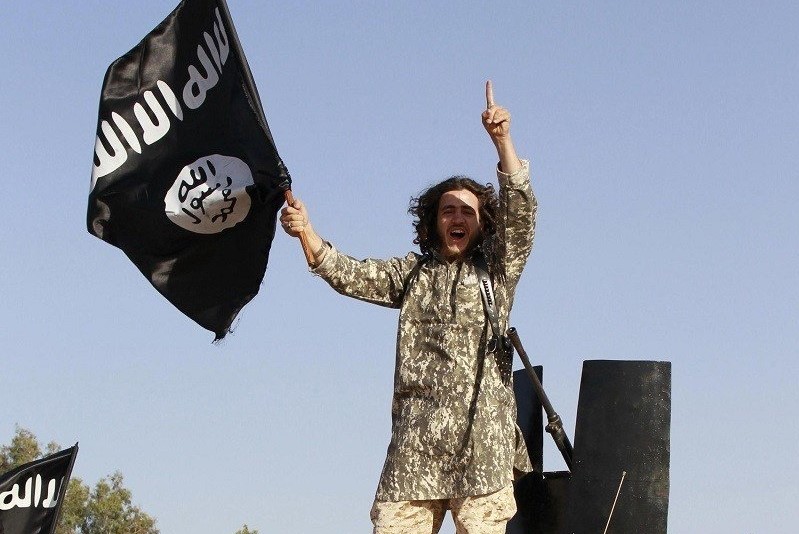
That’s why ISIS™ always seems to be their own worst enemy; making fake beheading videos in which no one gets beheaded, producing said videos at just the right time to provide cover for U.S. or British legal actions against ISIS™, meeting with American politicians in order to get huge amounts of unconventional warfare cash, committing the Yasidi Genocide that turned out to be nothing at all, beheading babies that turned out to not have happened at all, recruiting toddlers and giving them guns bigger than they are and generally parading around in U.S. surplus military gear waving flags and looking about as menacing as your average Junior ROTC Float on Independence Day.
The “ISIS™ is EVERYWHERE!” story has become so ludicrous even the leading propagandist for everything Obama, Jon Stewart, had poke fun at the stupidity of it all last night.
“You guys said ISIS is the most evil thing since Hitler’s sliced bread. For God’s sakes, you broke into ‘Dancing With The Stars’ to tell us we’re hunting down members and assets wherever they are,” Stewart said. “Well, these guys are burning tank donuts on a Kobani hilltop and they are ISIS so what’s up?” Huffington Post
Of course, Stewart was “jokingly” prodding the Obama administration into bombing a Syrian town, getting his fake “liberal” audience to laugh along with his backhanded warmongering.
However, the point here is, the ISIS™ Crisis story is wearing thin and even those dedicated to it’s continual promotion are starting to poke fun at it if for no other reason than their instinct for self-preservation.
I’m often asked “if I don’t believe the stories about ISIS, then why are we there?” and that is a legitimate question. Here’s the answer:
“The stabilization of Iraq has become wedged on a plateau, beyond which further improvement will be a slow process” absent some critical catalyzing event or events like a New Pearl Harbor.
ISIS™ Defined Part 1: It Ain’t ISIS
In a June 2009 communiqué issued to celebrate the withdrawal of U.S. forces from Iraq’s cities, Izzat Ibrahim al-Duri stressed the goal of “resistance unity on the battlefield.”[32] One U.S. officer noted: “We believe now that JRTN’s intent is to coalesce as many insurgent groups…under a common theme of removing the occupiers (the Coalition Forces) from Iraq and, second, to overthrow the government of Iraq for a Ba`athist regime or something similar.”[33] JRTN states that it would be willing to negotiate a cease-fire with the government of Iraq and the United States, but only once many of the changes wrought in Iraq since 2003 are reversed, including the unattainable stated aim of restoring all of the 600,000-odd security personnel to their former statuses and disestablishing all government organs and laws introduced since the occupation began.[34]…
…JRTN’s video productions have consistently focused on the concerns of mainstream Sunnis, such as the fear of an Iranian-influenced Shia government in Baghdad, concerns about Kurdish activities in the disputed areas (termed “the occupied territories” by JRTN), and general discontent about the apparent chaos and corruption since the end of Baathist rule.[35] Michael Knights, Combating Terrorism Center, July 2011
The 2008 U.S.–Iraq Status of Forces Agreement. signed by George W. Bush on Nov. 17th, 2008 (just AFTER the election), stipulated U.S. forces would begin leaving Iraq in mid-2009 and be completely withdrawn by Dec. 2011. The schedule was maintained as Nuri al-Maliki refused several offers by the Obama administration to extend the withdrawal date as he thought he could maintain control over the vast majority of the population who were rightly upset about how the New Iraq was going.
This is what motivated Izzat Ibrahim al-Duri, Saddam’s Vice President, in 2009 to announce his call to arms to all Iraqis who wanted to see the neoliberal laws and organs of corruption installed by the Bush regime wiped clean from their nation in the wake of the occupier’s exit.
I mention his name because he is still involved in this insurgency as you can see from this June 2014 article from Reuters detailing the recent fall of Mosul:
Prime Minister Nouri Maliki blames his Sunni political opponents for conspiring against him and supporting armed groups like those that took Mosul, while his Kurdish and Sunni rivals – including Mosul governor Atheel Nujaifi and brother Usama, the outgoing speaker of parliament – say he failed to heed their warnings that Mosul’s implosion was coming.
While the politicians were deadlocked in charge and counter-charge, the Sunni militants grew in strength and took advantage of their divisions, which could lead to Iraq’s break-up into Shi’ite, Sunni and Kurdish territories.
It had long been known that Mosul, a city of 2 million people, hosted not just the Islamic State of Iraq and the Levant (ISIL) but also the Baathist militant group the Jaish Naqshbandi, believed to be headed by Ezzat Ibrahim al Douri, a former close aide to Saddam Hussein. Reuters
I toss that in there just so you understand this isn’t about some legitimate uprising that was hijacked by ISIS™ as I am sure many of the Cass Sunstein types in the alternative media will try to have you believe. Fact is, the Jaish Naqshbandi have been fighting and winning their insurgency against our corrupt client state in Iraq since early 2011, hitting targets that were instrumental to al-Malaki’s holding power. Their efforts have been so successful, they have pushed from the north to the very edges of the Green Zone in Baghdad and al-Maliki had to reverse his previous position and publicly ask for the U.S. to come back to Iraq to help him maintain control.
Not only did our puppet dictator have to humble himself and ask us for help, but he has also been seen cutting deals with the Russians in exchange for oil drilling rights in southern Iraq for their support as well. Piece by piece Maliki is pawning off what rightfully belongs to the people of Iraq in exchange for more time in charge of our client state. It doesn’t matter who he sells it too or how cheaply he gives these precious assets away just so long as he remains in power and Iraq remains a neoliberalized state.
The Jaish Naqshbandi (JTRN) are not ISIS. Not even close.
Remember when they lied to us about Saddam supporting al Qaeda when they wanted to invade Iraq back in 2003? Remember how some of us pointed out that was a complete lie because the Ba’athists were secular and hated terrorist groups, especially al Qaeda. Learned scholars from the area repeatedly pointed out that Saddam had standing orders to capture and kill any al Qaeda members who strayed into his country and eventually even the MSM and the Bush administration had to give up on that particular lie.
Well, remember, the Jaish Naqshbandi (JTRN) are Ba’athists, they are in fact the remains of Saddam’s old regime and they have absolutely no interest in supporting terrorists of any kind, not even when one tries to claim “the enemy of my enemy is my friend”. It didn’t work that way with Saddam (he was no friend of the U.S. in the end and supposedly neither was al Qaeda) and it doesn’t work that way with the Naqshbandi army nor the larger umbrella organization which the Naqshbandi army is part of, the General Military Council for Iraqi Revolutionaries (GMCIR) which was founded later in the struggle in mid-2013 and announced in Jan. 2014.
“GMCIR members state that JTRN members and former Ba’athist officers are represented in their organization, including in its Political Council; however, they assert that these officers are not the most important figures within it. [9] Arabic media report that social media sites affiliated with JRTN claim it is operating in Ninewah and Salah al-Din governorates in close cooperation with the GMCIR and its affiliate, the Military Council of Iraqi Tribal Revolutionaries (Dunya al-Watan [Ramallah], June 12).” Jamestown Foundation
Let’s take a look at what one high ranking GMCIR had to say in a recent interview about “ISIS” and their revolution:
Maj. General Mizher Al Qaissi, Official Spokesman for The General Military Council for Iraqi Revolutionaries:
on why
Today, the Tribal Revolutionaries have lit a flame for a Revolution that will never be put out; this Revolution began since our people asked for legitimate rights and they asked for them through their constitutional sit-ins but they were met with fire and brimstone…
The person who started it is Maliki – Maliki forced us to behave in this manner. For when (army) divisions are sent to our areas and checkpoints and inspection points are set-up in our areas the intention is to degrade and subjugate people and this is what we will not accept and this is what we mentioned in our first statements when we stated and defined the enemy as whoever hurts the Iraqi people and insults their dignity as well as attacks them and their possessions…
on ISIS
There are no connections nor is there coordination. As I have previously said – the organization exists and it has some fighters and it has some areas in which it moves, but this revolution is that of Tribes and this is what we want to get to the whole world – that this Revolution is a new Iraqi Spring and that it is an armed Revolution to end repression and injustice. It has no connection with any other agendas. And it has no relationship to any terrorism or any other parties…
We are not bombing ISIS™ in Iraq. We are bombing the Naqshbandi army , the General Military Council for Iraqi Revolutionaries (GMCIR), the Military Council of Iraqi Tribal Revolutionaries and various other tribal militias which have all risen up in response to the repressive behavior and extremely harsh living conditions created by the neoliberal client state we illegally installed back in 2003.
But these are not random subgroups with opposing ideologies who have come together… there is something very specific that unites them… they are all socialist in nature. And God knows, Barack Obama can’t be the president who allows Iraq to return to a socialist state under his watch.
That’s what Ba’athist means – the slogan “Unity, liberty, socialism” is the key tenet in Ba’athist thought.
As you might imagine, socialist Ba’athists might find it a bit hard to align themselves with Salafist/Wahhabist far-right wing ISIS members.
In fact, the Salafists and Wahhabists hate socialists with a passion and do everything they can to destroy Arab socialist states. That’s why they were brought in to aid in the overthrow of the Great Socialist People’s Libyan Arab Jamahiriya and the socialist leaning government of Morsi in Egypt. Curious now that one is threatening to form in Iraq and Obama has ISIS to justify his bombing campaigns… curious… and rather obvious when you think about it in those terms.
What is it exactly that the Sunnis and most Iraqis hate about the government that we installed in Iraq?
Well, let’s go back to what Maj. General Mizher Al Qaissi said: this Revolution began since our people asked for legitimate rights and they asked for them through their constitutional sit-ins but they were met with fire and brimstone…
Though the revolution really started quite a bit earlier than that with the rise of the Arab Spring (some real, some manufactured), what the general is referring to is the Al-Hawija Massacre of 2013. Exact numbers on how many protesters were killed are hard to come by. The al-Maliki government had shut down access to the 4,000 or so protesters who had been sealed off by government soldiers for days with no food or water or medical supplies.
GICJ has informed UN officials that the army and militias stormed the demonstration area at about 5 a.m. Iraqi time, Tuesday, 23 April 2013, attacking protestors who have been demanding that their basic rights be respected. This was a direct attack where forces went in and began to shoot heavily and indiscriminately using live ammunition, tanks and helicopters. Forces also brought in trucks with water hoses and hosed demonstrators down using extremely hot water, causing serious burns and deaths. According to our direct source in Hawija, at least 50 demonstrators have been killed, an additional 150 injured, and more than 400 have been arrested. Forces were also reported to have attacked the injured and set fire to civilian vehicles. Geneva International Centre for Justice (GICJ) April 29, 2013
It’s curious isn’t it that this slaughter received so little attention here in the states while the fake revolution in China gets constant airtime if one of the police there teargases some protester. Well, actually, it isn’t all that hard to understand, now is it?
After the slaughter, al-Maliki was emboldened by his relative success… no one in the international community condemned his brutality and certainly the “socialist” president in America didn’t say anything… so, he promised through his generals, to continue the behavior:
Recently, General Ali Ghaidan Majid, Iraqi Land Forces Commander, openly threatened protestors around the country affirming that he is both authorized and determined to take serious actions against all demonstrators, calling them terrorists and Ba’athists. This is a commonly used excuse by Maliki and his forces to arrest, detain, torture and execute citizens. Geneva International Centre for Justice (GICJ) April 29, 2013
You notice how those two are intertwined? Terrorists and Ba’athists? They were peaceful protesters who were slaughtered by our puppet regime in Baghdad and since then countless more have been murdered by Maliki’s death squads or arrested and whisked off to black site prisons, probably run by U.S. contractors, for simply believing in an alternative form of government… a more inclusive form of government, of the people, by the people and ultimately for the people.
“if I don’t believe the stories about ISIS, then why are we there?”
Well that is simple folks.. we are there for the same reason we supported the Batista dictatorship in Cuba, theAtlacatl Battalion in El Salvadore that killed 70,000 or so in support of the far-right fascism we established there… for the same reason we overthrew the liberal government of Jacobo Arbenz in Guatemala in 1954 and for the same reason the CIA and the U.K.’s MI6 overthrew the popular, elected government of Mohammed Mossadegh in Iran in 1953. It’s the same reason we destroyed Aristide’s Lavalas movement in Haiti.
“In 1965, General Suharto seized effective power from President Sukarno on the pretext of combatting a failed coup and unleashed an orgy of mass murder that killed at least half a million people. U.S. diplomats later admitted providing lists of 5,000 Communist Party members to be killed. Political officer Robert Martens said, “It really was a big help to the army. They probably killed a lot of people, and I probably have a lot of blood on my hands, but that’s not all bad. There’s a time when you have to strike hard at a decisive moment.”
Obama’s mother and adoptive father both worked for the Suharto regime while President Peace Prize was a little boy just then forming his views on socialism.
And yes, there was the Iraqi death squads or the Salvador Option from back in 2005-2006
After the U.S. invaded Iraq on false pretenses in 2003, the CIA recruited 27 brigades of “Special Police,” merging the most brutal of Saddam Hussein’s security forces with the Iranian-trained Badr militia to form death squads that murdered tens of thousands of mostly Sunni Arab men and boys in Baghdad and elsewhere in a reign of terror that continues to this day.
There is a long sordid, horrific list of crimes against humanity we have either endorsed or created in pursuit of our special brand of democracy, freedom and social justice. Most would just call it fascism.
Today’s story is not entirely unique or new for that matter. It’s really just more of the same. The only difference is, because of an open and free internet, a world of information is readily available for you at the touch of a button. These are not conspiracy theories I reference, but historical fact many coming straight from the horse’s mouth at the CIA and State Department’s archives. They are as undeniable as the fact that we aren’t bombing ISIS anywhere except in our imaginations. And we’re only still bombing them there because we choose to as the brutal reality of our even more brutal foreign policy is simply too ugly to look at anymore.
Yeah, I would love to BELIEVE in the goodness of our cause. I would love to hate on ISIS as everyone else does. It’s so simple a child could do it. Which may in fact be a hint if you know what I mean.
But the real world is a bit more complicated than “they hate us for our freedom” and it’s only if we choose to understand it that we will. So, you asked, I told you. Now do with it what you will. But you can’t ignore it. Once your eyes adjust to the light, you have to leave the darkness behind whether you want to or not.
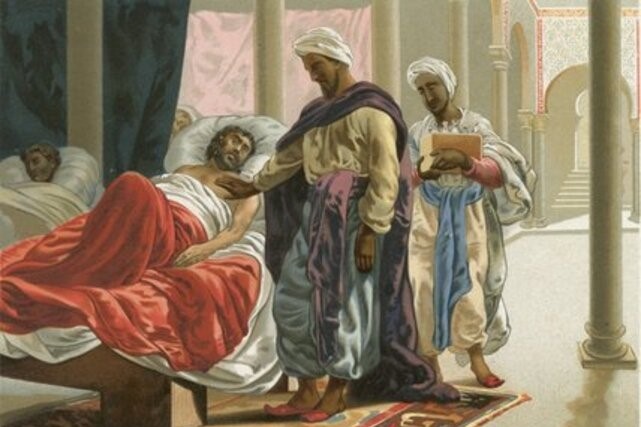
Abu al-Qasim al-Zahrawi, known in Europe as Albucasis, is considered one of the most outstanding physicians of the al-Andalus region and one of the greatest surgeons of his time. His patronym (name passed down from his father), al-Zahrawi, indicates that his native city was Madinat al-Zahra, the governmental centre and cultural metropolis established in 936 AD near Cordoba, in southern Spain. We do not know exactly when he was born but it is considered that it was some time after 936 AD. He died around 1010 AD.
We have little information about his life. He lived in the territory of al-Andalus, during the second half of the 10th century AD, when Andalusian medicine was reaching high levels of advancement, surpassing the medical knowledge and practices inherited from the Romans. This was a period when physicians such as al-Zahrawi participated in scientific sessions where disciplines such as astronomy, mathematics and philosophy were discussed.
We know of only one work of al-Zahrawi’s that has survived: a medical encyclopaedia entitled Kitab al-tasrif li man ‘ajiza min al-ta’lif roughly translating as “The arrangement of medical knowledge for one who is not able to compile a book for himself”. It is an illustrated 1500-page encyclopaedia of medicine and surgery.
This work was the result of almost 50 years of medical practice and experience and arose in the second half of the 10th century AD, almost without precedent. It is one of the greatest works in Andalusian history and can only be compared to the level of the great physicians practising 200 years later in the 12th century AD. Like other early Arabic medical writers, a1-Zahrawi based his work on Greek authorities. In fact, he mentions more than 60 sources, among them Galenus, al-Razi and Ibn al-Jazzar. In some instances, he draws heavily upon Alexandrian physician Paul of Aegina who practised in the 7th century AD.
With his work, al-Zahrawi aimed to help train students and to provide a reference manual for the practising physician. His work allows the reader to be self-sufficient and alleviates the need to consult the manuals produced in the East, which al-Zahrawi describes as “inexplicable works of the ancients”, referring to the difficulties encountered in understanding the Arabic translations of Greek medical texts. However, this comment does not mean that he did not know the contributions of Arabic classical oriental medicine – quite the contrary. The Tasrif is not only a collection of quotations from the medical literature known to the author but also the work of a physician and surgeon with extensive experience, which is evident on almost every page of his work.
The Tasrif is divided into 30 books. The author first reviews clinical and general medicine (Books 1 and 2), studying human nature and temperament, anatomy, pathology, classification of diseases, symptoms and treatment. It is surprising to note the care with which al-Zahrawi develops anatomy, a discipline that is essential knowledge for any surgeon. His study of pathology is also remarkable.
He analysed 325 diseases, paying close attention to al-Razi, from whom he learnt the treatise on the differential diagnosis of smallpox and measles. His study on fevers closely follows that of an earlier physician, Ishaq b. Sulayman al-Isra’ili, who published one of the earliest known descriptions of haemophilia. Books 26 and 27 deal with hygiene and diet but al-Zahrawi seems to be more interested by the study of pharmacology, a topic dealt with in chapters 3 to 25 and 28 to 29. Worth mentioning is chapter 19 which details the first-known independent treatment of cosmetics in al-Andalus.
The concept of pharmacology that al-Zahrawi presents is primarily the work of a doctor rather than a naturalist. He is concerned with the technique of preparation of drugs from substances of vegetable, mineral or animal origin, a topic dealt with in chapter 28. This is one of the most well-known chapters of the book as it was translated into Latin as Liber Servitoris in the late 13th century AD by Abraham Judaeus of Tortosa and Simon of Genoa, and printed in Venice in 1417 AD. On this topic, al-Zahrawi seems to be much influenced by Greek physician, pharmacologist and botanist Dioscorides but still adds many details not found in the Greek work, especially as far as drugs used in al-Andalus are concerned.
Books 25 and 28 describe laboratory techniques in detail, which gives an interesting insight into the history of chemistry. The remote origin of some of these techniques can be traced to ancient Mesopotamia. Al-Zahrawi also follows the techniques used by craftsmen and perfumers of Iraq and Egypt, thus widening the geographic reach of the narrow academic circle of the time.
Despite the importance of the medical and pharmacological parts of the Tasrif, the fame of this work comes from book 30 which is a treatise on surgery, based on the work of Paul of Aegina and al-Zahrawi’s own experience. In the foreword to this chapter, he regrets the low scientific level of surgery reached in his time and gives several examples in which the patient died due to the surgeon’s incompetence. Prudence has to be applied in this professional activity and al-Zahrawi presents clear criteria to determine when surgery is feasible and when it is useless and dangerous. For example, he advises to refrain from intervening in cases of hydrocephalitis, even though he describes the surgical technique used. He says that all children who suffer from this disease die without remedy and that he has always refused to intervene in these cases.
Book 30 is divided into three parts. The first deals with the cauterisation applied to 50 types of disease. While it was sometimes used improperly, in many cases it probably gave good results, such as for the removal of tumours or in cases of arterial bleeding. This part also contains the first known description of haemophilia and one of the first descriptions of leprosy.
The second part of Book 30 deals with surgeries performed with a knife. It is divided into 99 chapters. Here, al-Zahrawi gives a detailed account of surgical interventions he knows and practices, and provides some ‘case studies’. Some involve removing tumours or growths, while others involve treating men struck by arrows. In some cases, al-Zahrawi extracted the arrowhead, but in others no extraction was attempted and the wound healed with the arrowhead in place.
Al-Zahrawi also discusses in detail the issue of suturing techniques, referring to the use of giant ants for abdominal sutures. The ant is used to bite on the lips of the wound and its head is then cut off. Using wool, silk, flax and horse hair as suture material, al-Zahrawi seems to be the first surgeon to document the use of animal guts, i.e. catgut, which is still universally used today.
In his clinical accounts, al-Zahrawi appears to be a physician well-versed in Greco-Roman medical writings (through Arabic translations). He was able to apply techniques in an emergency, although he also stated that some operations were unknown in his time.
Since al-Zahrawi was both a good surgeon and interested in the topic of cosmetics, he could not be indifferent to plastic surgery. He described interesting techniques to reduce the size of enlarged male breasts and to correct excessively large breasts in women. In this section, he describes the extraction of varicose veins, surgical solutions for suspected cases of hermaphroditism and clearly shows the technique to apply in circumcision (substituting the knife for scissors) and even for castration, although he is not very fond of it.
Al-Zahrawi warns against attempting amputation when gangrene has spread above the elbow or the knee, but also reports that he examined a man who had amputated his own foot after gangrene had attacked it. Moreover, he requested al-Zahrawi to amputate his hand when the disease appeared in that organ. Al-Zahrawi, however, refused to perform the operation, fearing the man would die at the amputation of his hand. Interestingly, he later heard that the patient had himself cut off his entire hand and had recovered.
The third part of the book deals with fractures, sprains and dislocations. In it, the author describes in detail the techniques used in the treatment of fractures of various body parts, based on the general principle of starting to reduce the fracture and then proceed to restrain it. A fracture of the pelvis is mentioned and, in the case of shoulder dislocation, al-Zahrawi describes the use of a kind of plaster mixed with egg.
One of the greatest qualities of Book 30 and an important innovation in the history of surgical literature is the abundance of surgical instruments that appear in the manuscripts. They acquire a special significance, given the limited knowledge that can be gleaned from the real instruments recovered in archaeological sites. The instruments described and drawn in this book include scalpels, scissors, hooks, forceps, syringes, saws, needles, spoons and wooden instruments to reduce fractures and dislocations.
The chapter on surgical techniques was well-known in Latin Europe from the translation made by Gerard of Cremona (1114-1187 AD) in the 12th century AD. It comprised some 200 pages in the 1531 Strasburg printing of the Latin translation (it went into at least 10 Latin editions between 1497 and 1544 AD). The most prominent surgeons of the Latin Middle Ages, such as William of Saliceto (d. 1277) and Guy de Chaulliac (d. 1368), used it extensively. After that, it was used as a standard reference on the subject in all universities of Europe for over five hundred years. The contributions of al-Zahrawi in this field are indeed remarkable.
Battle Angel is based off a very well done Manga series called Battle Angel Alita. The movie covers the first two volumes of the Manga: Rusty Angel, which documents Alita’s “rebirth” and Tears of an Angel, which portrays a tragic love story. This anime from 1993 is one of the best man-machine interface animes out. The story is solid, and the drawing for that time period is terrific. While you might hear some gripe that the Manga is better, I think Fukutomi did a terrific job in taking Kishiro’s story to anime. I can only hope that James Cameron does a similarly wonderful job with the upcoming live action version of this. Just a warning – this is not a kids story – it contains lots of blood, head removals and minor amounts of nudity.
Battle Angel takes place far into the future, after a societal collapse has occurred. Advanced human society has been relegated to a floating city called Zalem, that sits above a refuse heap called Scrap Iron City, which is inhabited by denizens living off the scraps and waste products Zalem expels. A corporation called the “Factory,” the primary employer for Scrap Iron City, sends products back up to Zalem through a series of huge metal tubes. Cyborg technology has become a way of life, with many “humans” having only their brain remaining from their original human body host. Scavenging and theft has become a way of life for many. Backbones are a particularly sought after commodity by thieves, who sometimes will violently take them from their living hosts. As social services no longer exist, the Factory posts “bounties” for the heads of the most egregious villians, which bounty hunters, called Hunter-Warriors pursue for money.
Daisuke Ido, an cyborg doctor extraordinaire, former citizen of Zalem, scavenges through the refuse heap to find spare cyborg parts to repair the citizens of Scrap Iron City. One day he comes across a female cyborg head that has a still-living human brain in it. He sets out to repair this head and gives her a wonderful body off of parts he has collected. He names her Gally (she is called Alita in the Manga), and she seems totally restored, except for the loss of memory from her earlier life. Ido becomes attached to Gally and they quickly develop a father-daughter type relationship.
Gally learns that Ido moonlights also a Hunter-Warrior both for moral reasons and to support his medical practice. Gally saves Ido from certain death, and thus, reveals that she, in her former life, was also a very talented warrior. Under protest from Ido, Gally asserts her individuality and desire to become a Hunter-Warrior like Ido, so that she too can have purpose to her life.
Chiren, also a cyborg doctor and Ido’s former partner, has also been ousted from Zalem, and is consumed with finding a way to return. Deciding that she will do anything to make this happen, Chiren hooks up with Vector, a shady character who has connections with the “Factory,” who agrees to eventually take her to Zalem in return for sexual favors and for her assistance in building a supra-cyborg gladiator named Greweicia for the fighting ring. This cyborg warrior also has a penchant for eating brains, and ends up on the bounty list. Chiren, wanting to be seen as superior to Ido, gets Greweicia to fight Gally in the hopes of destroying her, and thus, destroying Ido.
Gally, in exploring the city has become infatuated with a hard working body named Yugo, who dreams of going to Zalem. Although it’s common knowledge that nobody born in Scrap Iron City can ever go to Zalem, Yogo is also consumed with finding a way, and has gotten an agreement from Vector, who promises Yugo if he can make 10,000,000 credits, than he will take Yugo to Zalem. Yugo has taken him up on his offer and has started stealing cyborg spinal cords as a way to augment his day job of fixing machinery. He is discovered, and is put on the Bounty list. Gally, who has fallen deeply in love with him, tries to rescue him from a rival bounty hunter. Unfortunately she is too late, but is able to save his head, and asks Ido to turn him into a cyborg. Even after becoming a cyborg, Yugo’s dreams of reaching Zalem cannot be abated, as he sees his life a struggle against the worthlessness that is the Scap Iron City.
In Battle Angel, we see strong influences of Akira in most every aspect of the production. From the facial expressions to the darkly textured backgrounds to the fighting style approach, Battle Angel clearly has used Akira as a template for modern animation techniques. Like many OAVs of this time period, some of the backgrounds are bland while others are lavishly penned and inked with multi-layered designs. They “pick their battles” with the designs, but for the most part, the decisions are solid. The simple designs are in backgrounds such as the sky and in Ido’s house. The more complex ones are in the underground, Yugo’s hang out, and in the refuse heap scenes – this is where most of the action and plot take place.
While I think Battle Angel is a terrific anime, there are some changes from the Manga that some find annoying. Most bizarre is the renaming of Alita to Gally, and the city Tiphares to Zalem. However, unlike some, I don’t find the changes in the plot to be that problematic. The anime wonderfully captures the essence of the Manga. Perhaps the biggest change is the rationale for Alita’s powers. In the anime, we really don’t get an explanation, but in the Manga, Alita is first given a normal body by Ido, and ends up destroying it in her first fight. Realizing that Alita is a warrior at heart, Ido gives her the body he has saved for a long time – that of a berserker warrior. The primary villain in Rusty Angel is also different – he is a being who has grown up in the sewers, and after losing his body in fighting Alita, he takes over the Gladiator’s body. And Chiren, a central character in the anime is not in the first to novels of the Manga. Again, for the most part, I have no problems with the changes, and actually love the dimension that Chiren adds.
Battle Angel (Alita) just works for me as an anime. It is intelligent enough and well enough executed to get you to imagine a world where cyborgs are a reality. The world from the underground perspective is well done and Alita (I call her Alita, not Gally) as a character is terrific. Along with Armitage III and Ghost in the Shell (obviously), Alita is one of the best animes of this kind. Just a caution for those who have only seen the VHS, like most Japanese animes, Battle Angel comes off FAR FAR better with the Japanese dubbing cast than it does the English cast.
Sometimes it’s just timing. Sometimes it’s just the luck of the draw. In 1996, an LA film noir called Mulholland Falls was released. Very much attempting to tap into the feel of the film Chinatown, it received some good reviews and some bad reviews; but not many people in 1996 cared to see a period LA film noir set in the early 1950s, despite its excellent cast, which included Nick Nolte, Chaz Palminteri, Jennifer Connelly, John Malkovich, Melanie Griffith, Chris Penn, Michael Madsen, Andrew McCarthy, and Treat Williams, as well as small roles played by Bruce Dern, Louise Fletcher, Rob Lowe and William Peterson. One year later, LA Confidential opened, and suddenly a period LA film noir set in the early 1950s was all the rage with audiences and critics. It’s interesting to think about what would have happened if the two films had come out in reverse order.
Mulholland Falls was loosely based on a real-life group of LA policemen known as the “Hat Squad” who pretty much did things as they pleased in the days long before the Miranda decision. It also concerned itself with secretly filmed incriminating lurid movies, the A-bomb testing in Nevada, and a mystery rife with cover-ups and secrets and immorality lurking around every corner. In other words, business as usual for an LA noir. Roger Ebert really liked the film, saying, “This is the kind of movie where every note is put in lovingly. It’s a 1950s crime movie, but with a modern, ironic edge.” The Los Angeles Times’ Kenneth Turan also liked it, and said, “Mulholland Falls combines a vivid sense of place with a visceral directorial style that fuses controlled fury onto everything it touches.”
The film disappeared quickly, but developed a cult following from its many cable showings and various video releases. Seen today, it is a moody, evocative, well-paced noir, with a powerhouse cast – and a lot of what works about the film can be traced to its score by Dave Grusin. Not only does his music do everything that film music is supposed to do, i.e. propel the film, establish its moods, define its characters, and illuminate its story, but apart from the film it is a great listening experience – its themes are beautiful and memorable, exciting and melancholy, mysterious and smoky and intoxicating. In fact, it’s one of the best noir scores ever written, and right up there with other classics of the post-1970s noir scores, Chinatown (Jerry Goldsmith), Farewell, My Lovely (David Shire), and LA Confidential (Goldsmith again).
The score to Mulholland Falls was issued on CD concurrent with the film’s release, on Edel. That CD presented about thirty-eight minutes of score and the classic song “Harbor Lights,” sung by Aaron Neville (who performs it on camera in the movie). That release has been long out of print and brings pricey collector prices. For this release, we’ve gone back to the original two-track mixed masters and discovered quite a nice number of cues that were not on the original Edel CD. So, for the first time we are presenting the complete score to the film, in film order (the original CD is, for the most part, in film order and is very well sequenced, but the missing cues are really good and really give the score a cohesive quality that is quite addictive), along with an alternate version of the main title.
Dave Grusin is a master film composer, and Mulholland Falls is right at the top of his prodigious output. So, just surrender yourself because there’s no way not to be caught in the spider web of its sinuous, silky musical world; a tone poem of doomed romance, conspiracy, and an LA that doesn’t exist anymore.
This release is limited to 1000 copies only. The price of the CD is $19.98, plus shipping.
















 Igor's Blog