

A rich identity and strongly defined world elevate Dark Souls to be one of the most influential games of its time.
Development leading up to the Mikoyan-Gurevich MiG-25 ‘Foxbat’. Wings of the Red Star was a separately-branded program that focused on Soviet Air Force aircraft from World War II to the modern era. It was narrated by actor Sir Peter Ustinov.
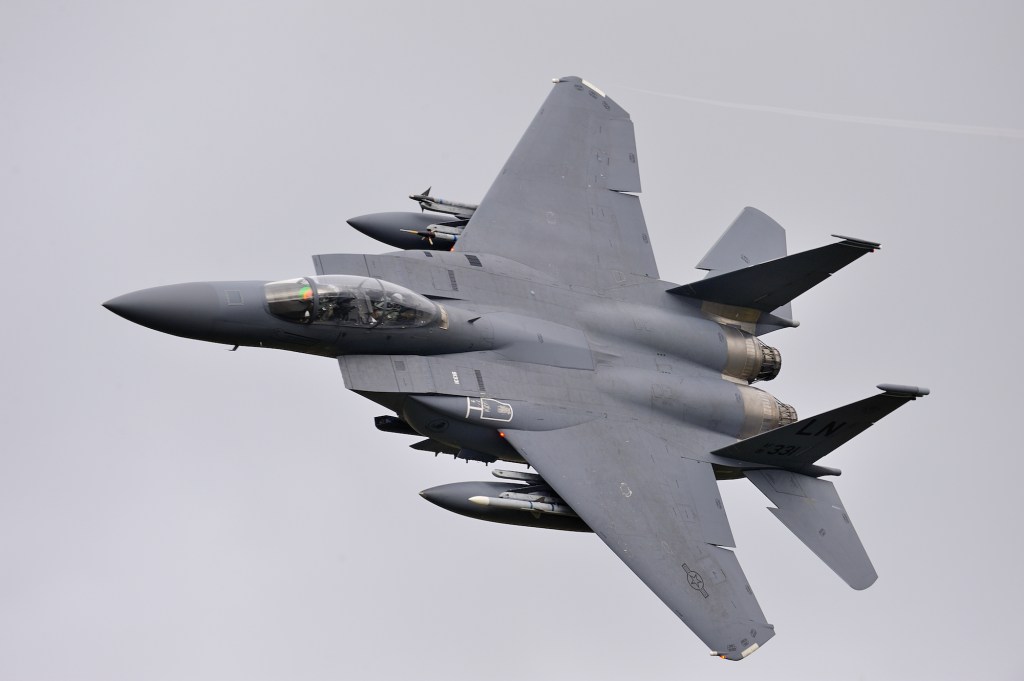
The F-15 Eagle is beyond any doubt one of the most famous air superiority fighters of the second half of the Cold War, and a worthy successor of the also famous McDonnel Douglas F-4 Phantom. For instance, its predecessor was designed to be a fighter with attack capabilities for any weather condition, and the same concept was taken into account when developing the Eagle, only that it was intended mainly for air superiority. Interestingly, and despite the F-4 being a naval plane for most of the part, the F-15 would be a combat eagle on use by the USAF. There is also another thing both planes have in common, despite being the Phantom already in combat and the Eagle yet to be developed: the Vietnam War. As it happens, high number of casualties made the US Navy and the Air Force, along with the influence of Secretary of State Robert McNamara, to look for new models to replace the existing ones, including the Phantom. The introduction of the Mig 25 Foxbat provided the final argument in favour of the development of a new aircraft for air superiority. And with while the Navy would ultimately incorporate the Grumman F-14 Tomcat, the USAF decided to go for its own fighter, resulting in the F-15, being the counterpart of the Tomcat and taking the Mig-25 as inspiration in terms of performance, to say the least.
The F-15 Eagle is single-seat – or double seat in tandem in certain versions – twin-engine all-weather tactical fighter/air superiority fighter with attack and bombing capabilities, with cantilever shoulder-mounted wings. As it was briefly mentioned, the Vietnam War gave way for its requirement given the high losses to soviet-made aircraft (often old models) back in 1964, with 1968 being the year of requirements issuing and 1969 the year when development of the Eagle began. The main requirement was for the new fighter to be of air superiority and having secondary attack capacities. McDonnell Douglas was the company that awarded the requirements, thus developing the Eagle from the abovementioned year and flying the first prototype in 1972. NASA, in addition, came to take active part in the development of the F-15, especially on its mission requirements, at the same time of the development by the industry contractors.
The Eagle became to be one of the most advanced fighters of the times, clearly fulfilling its mission as it is considered the best air superiority fighter. The secret of its effectiveness and resilience lies on its structure, which is made of metal and then titanium at most of its components, and the empennage made of composite materials – twin aluminium/composite material honeycomb – and the vertical stabilizers made of boron-composite skin. This allowed the tails and the rudders to be very thin yet resistant. The wing also plays its role in bestowing the flying and combat capabilities of the F-15, as this has a cropped delta shape with a leading-edge sweepback of 45 degrees. There are no leading-edge flaps, and the trailing edge – or posterior area of the wing – is having ailerons and a simple high-lift flap. As a result, the wing’ low loading allows the F-15 to be very manoeuvrable without sacrificing speed in the process. The powerplant (two Pratt & Whitney F100-PW-100 turbofans engines with afterburners) and the avionics also play a role in providing the F-15 with its exceptional qualities: The former by bestowing speeds of up to 2.5 Mach and a good time/altitude ratio, the latter by allowing the crew to track and engage targets at distanced up to 160 km (87 miles) and targets at very low and high altitudes.
The F-15 has proven to be a platform capable of receiving structural and avionics/electronics improvements, further enhancing its combat and flight capabilities, with new radars, computers, weapons controls and armament type, powerplants (Pratt & Whitney F-100-PW-220), warning and navigation systems. The F-15 could even receive low visibility technologies, proving the adaptability and capacity of the aircraft to incorporate the latest technologies, as it is the case of the proposed F-15SE Silent Eagle, where its weapons carrying capabilities are proposed to be equally upgraded. This version could co-operate with 5th generation air assets, let alone to almost operate like one.
The F-15 has witnessed action not only in the air campaigns waged by the USA in the Middle East, the Balkans and Central Asia, but also with other air forces, being the Israeli Air Force where the F-15 have had similar combat intensity, and the Saudi Air Force making some considerable use of their F-15s. With the USAF, the F-15 on its different configurations achieved air superiority by shooting down many air assets of Iraq in air-to-air combats or in the ground, as well as to inflict a serious damage to Iraqi military and governmental infrastructure, contributing at a great extend to the sound victory of the Coalition in 1991. The F-15 even managed to destroy a low flying helicopter with a laser guided bomb. The F-15 kept a watch in enforcing the established no-fly zones after this conflict. The Balkans were another scenario where the F-15s made their presence to be felt, by pounding Serbian ground targets and even scoring 4 enemy kills (Serbian Mig-29s). The Second Iraq War, Afghanistan and strikes against ISIS saw the F-15E mainly in action, attacking important targets on these three scenarios, and even providing Close Air Support (CAS) for the troops in the ground.
With the Israeli Air Force, it achieved its first air-to-air kill, establishing then Israeli air superiority over the skies of Lebanon and against Syrian air assets. It had seen use also as a long-range striker and as a platform for attacking specific targets. Saudi Arabia also had some air kills in the 80’s and during Operation Desert Storm, using the F-15s nowadays to strike important targets in Yemen.
As of now, the F-15 is still in service and production (by Boeing, as McDonnell Douglas was absorbed by this company), with the USAF considering to operate with this fighter until 2025 or 2040 at the latest, and production to be maintained until 2019. So far, 1074 units have been produced (by 2012).
Design
The F-15 is an all metal (later on aluminium) semi-monocoque fighter with a shoulder-mounted wing, powered by two engines: 2 Pratt & Whitney F-100-PW-100 (F-15A, F-15B and F-15C) or F-100-PW-220 (F-15DJ and F-15 J), or F-100-PW-229 (F-15E). Two engine air intakes are located at each side of the fuselage, starting from the half area of the cockpit with a intake ramp configuration. The wings have a characteristic shape of a cropped delta shape with a leading-edge sweptback of 45 degrees, starting at nearly half of the wing. It lacks of manoeuvring flaps at the leading edge, having only a simple high-lift flap and ailerons at the trailing edge. As the wing has a low loading with high thrust-to-weight ratio, the F-15 can perform tight turns without any loose of speed, capable also of sustaining high G forces. Noteworthy to point out that the airfoil thickness has a variation of 6% at the wing root, to 3% at the wingtip. The empennage is made out of metal, with the two vertical stabilizers made out of honeycomb twin aluminium and composite materials covered with boron-composite skin, allowing them to be thin but very resisting. This means that the F-15 has two tails, the same way as the Grumman F-14 and the Mig 25. The horizontal stabilizers also have a remarkable characteristic of their own, as they have dogtooth within their structural shape, being able to move independently thus increasing control. The aerodynamic brake is located on the top of the fighter’s structure, behind the cockpit. The landing gear is a retractable tricycle. Noteworthy to point out that the F-15E lack of the typical exhaust petals covering the engine nozzles.
The cockpit is placed high in the frontal part of the aircraft, featuring a one-piece windscreen and a large canopy, allowing a full 360 degrees visibility for the pilot. In most F-15 variants the canopy is designed for one pilot. However, the F-15B, F-15D, F-15DJ and F-15E have a canopy designed for a crew of two: a pilot and a weapons officer in the case of the F-15E, and the student and instructor in the case of the training versions.
The wings and the same structure of the fighter allows it to carry a large number of weaponry and other devices. Among the weaponry normally carried by the F-15, there are AIM-7F/M Sparrow, AIM-120 AMRAAM, AIM—9L/M Sidewinder, as well as the M61 Vulcan Gatling gun at the right wing root. Other armament the F-15 is usually armed with are a varied array of free-fall and directed bombs, rockets, air-ground or anti-ship missiles, such as the AGM-84K SLAM-ER, AGM-84H Harpoon Block II anti-ship missiles, AGM-158 Joint Air-to-Surface Standoff Missile JASSM, AGM-88 HARM anti-radar missiles, and AGM-154 JSOW missiles. ECM pods, external fuel tanks and low-drag conformal fuel tanks (CTFs), which are attached to the sides of the air intakes and cannot be dropped, are usually among the additional equipment carried by this fighter.
The avionics of the F-15 allow an optimal operationalization of the armament carried by this fighter, as well as its navigation and combat-electronic performance and multi-mission capabilities. Among the avionics of the F-15, it could be accounted: Heads Up Display (HUD), the advanced pulse-Doppler Raytheon radars APG-63 and APG-70, the AN/ASN-109 Inertial Guidance System, the Joint Helmet Mounted Cueing System (JHMCS), ECM pods, Hazeltine AN/APX-76 or Raytheon AN/APX-119 IFF device, Magnavox AN/ALQ-128 Electronic Warfare Warning Set (EWWS), Loral AN/ALR-56 radar warning receiver and a Northrop-Grumman Electronics System ALQ-135 internal counter-measures system. All of these comprise the electronic brain of the fighter, which in combination with the powerplant, the aerodynamics and the weapons systems, makes of the F-15 an outstanding air asset that can achieve supreme control over the skies it operates.
As the design of the F-15 allows adaptation and upgrades, all of the versions were receiving gradual upgrades in avionics and engines, being the F-15E the most prominent. Yet some versions operated by other air forces, such as the Israel Air Force and the Republic of Korea Air Force can receive electronic and avionics components developed by those nations, proving that the Eagle is entirely adaptable to receive technology other than of its country of origin. And its versatility allows combat conversions, explaining why a single airframe can have air superiority, attack or electronic warfare missions, deciding the outcome of any campaign either in the skies or the ground.
An Eagle Not to Mess With
The F-15 has proven to be a very powerful asset and a though adversary for those obliged to face it, feeling the powerful strike of the F-15. It has a suitable name that makes honour to its combat capabilities, which have been proven in action from the year it was unleashed. During the 1991 Gulf War and the aftermath, the F-15 achieved air superiority and delivered hard blows to the Iraqi military assets, by scoring 32 fixed-wing aircraft as confirmed kills (Iraqi fighters, fighter/bombers, transport airplanes and trainers that fell under the claws of the F-15), and 4 helicopters as kills. Many of these kills were achieved in air-to-air combats or simply by attacking the Iraqi air assets on the ground, being involved also in the hunt for valuable targets or by watching the skies over Iraq and the Balkans. In the hands of Israel and Saudi Arabia, the F-15 Eagle scored 41 and around 4-5 air kills respectively. With Israel, the F-15 left a deep impression on those that were targeted by its bombs. In the Balkans, the F-15 scored four air kills and equally contributed to pound the Serbian military facilities at Bosnia, Serbia and Kosovo.
The Eagle began the 21st century with more capabilities to increase its striking power, as well as seeing more combat in the light of the 9/11 attacks and the campaigns against terrorism. During the Second Iraq war of 2003, the Eagle once and again delivered precision strikes that decimated Iraq’s combat capacities. During the Afghan campaign, it attacked key Taliban and terrorist targets, at the point of even supporting the troops on the ground, and in recent years, it contributed at weakening the military power of Libya during its own Arab Spring, as well as striking important targets in the anti-terrorist campaign over Syria, Libya and Iraq. The F-15 Eagle has been on active duty basically during its entire operational life, being at the very first line.
The Eagle, as a last, could be able to destroy the eyes above the skies, as it was used for experimental tests where it fired a two-staged anti-satellite missile, proving capable for doing so. It has more than fulfilled the requirements set for its development after the nasty experiences of the Vietnam War, war that gave birth to one of the most powerful and memorable birds in all the history of aviation, being the Eagle a milestone by itself.

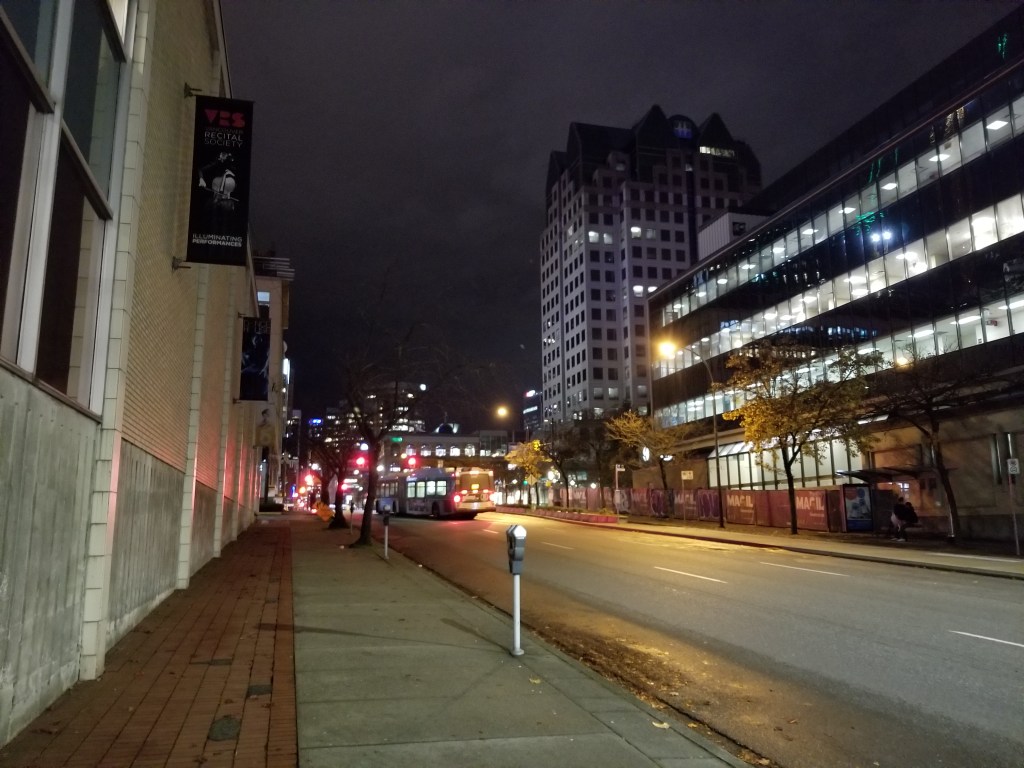
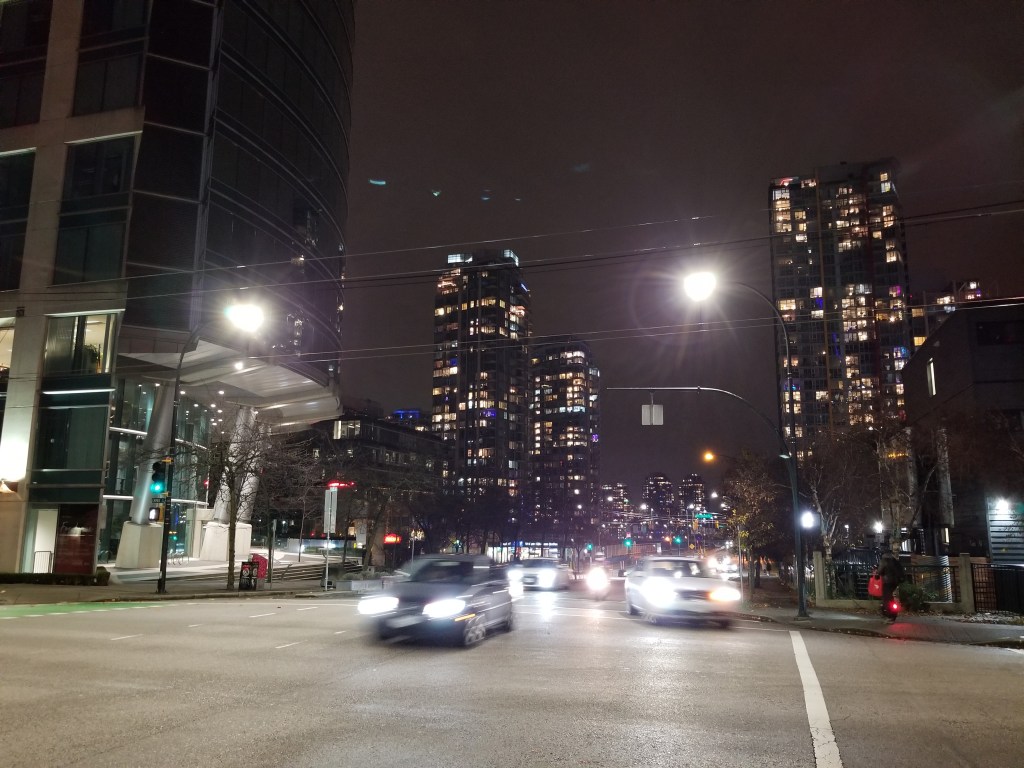
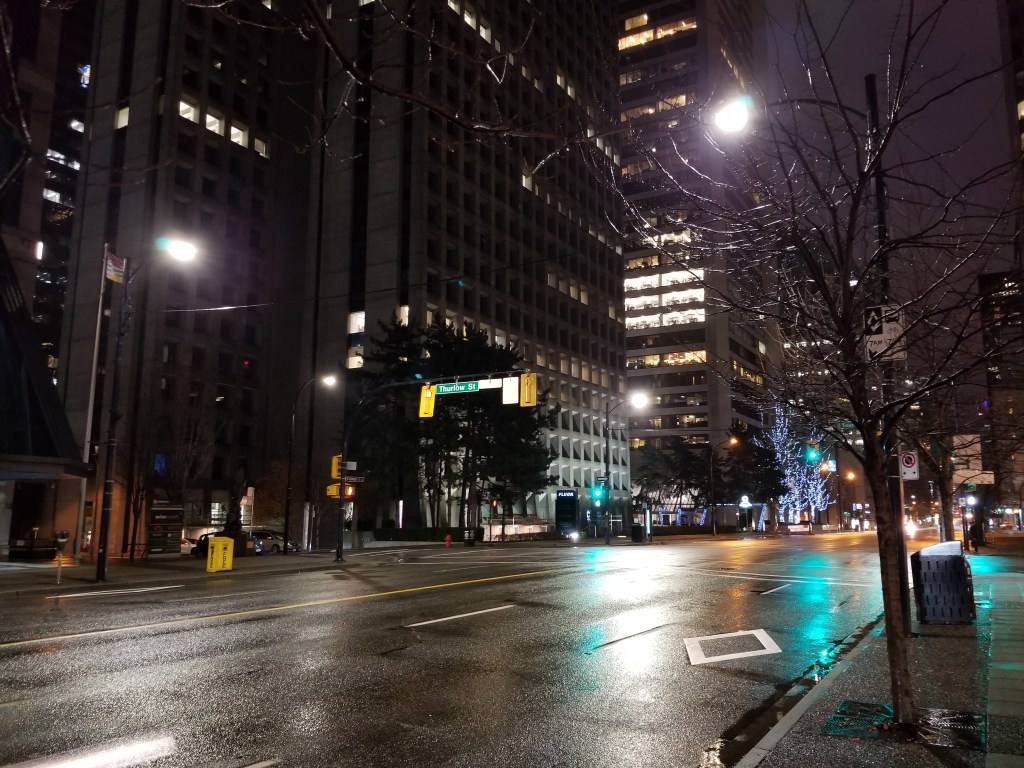
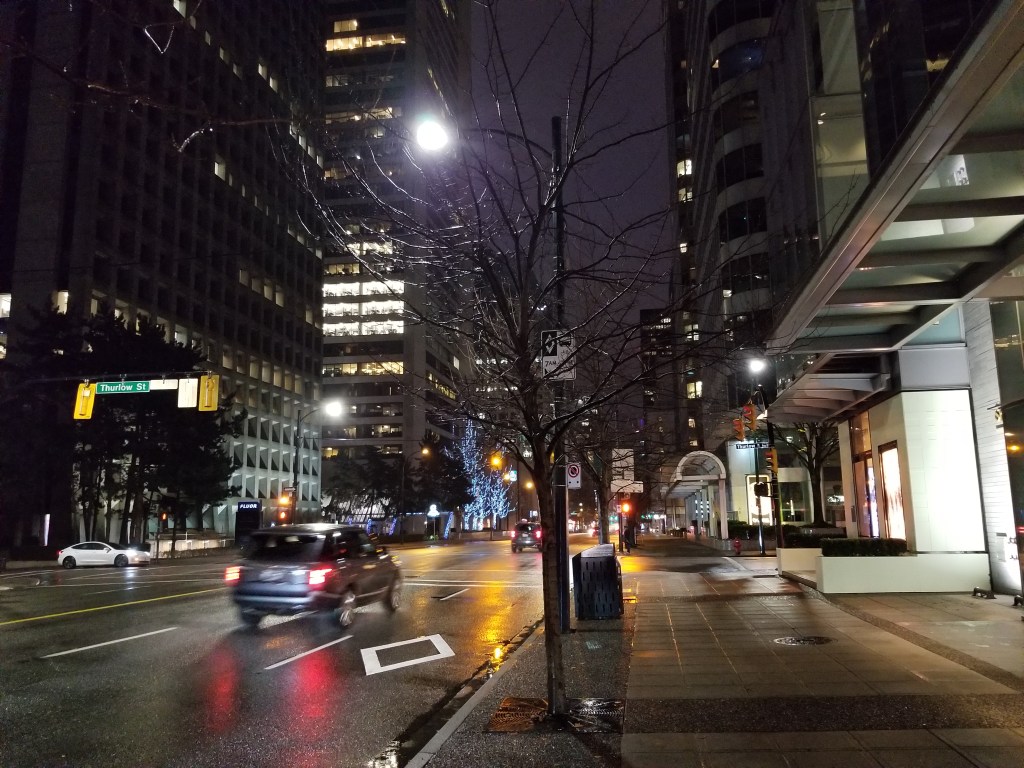
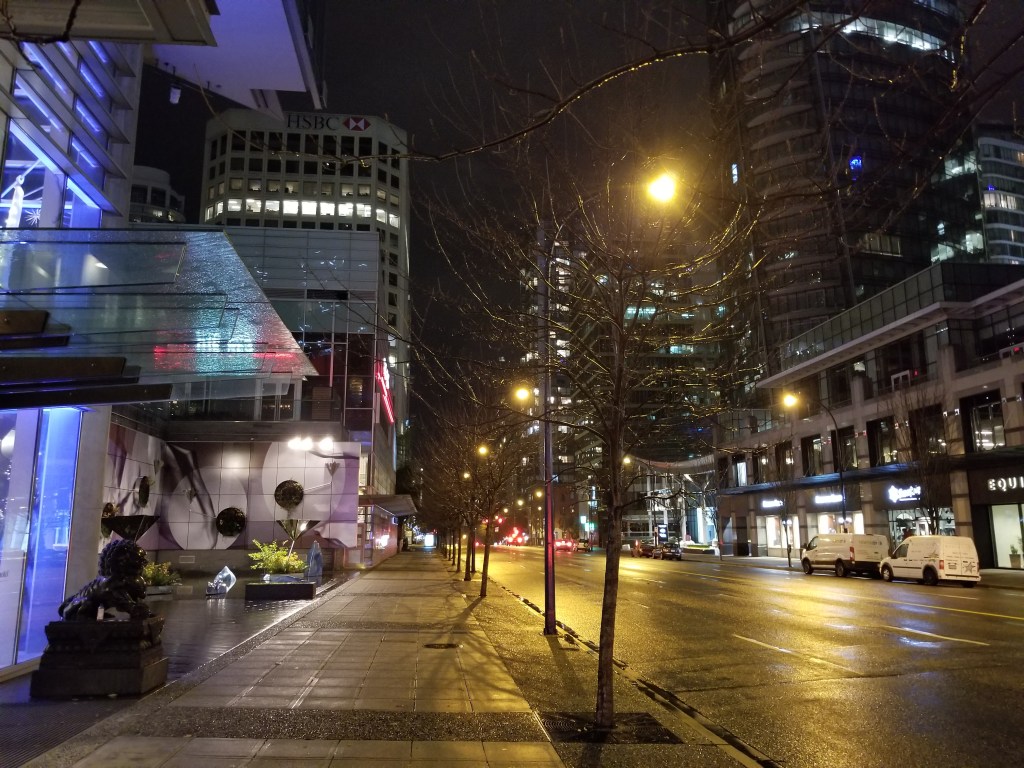
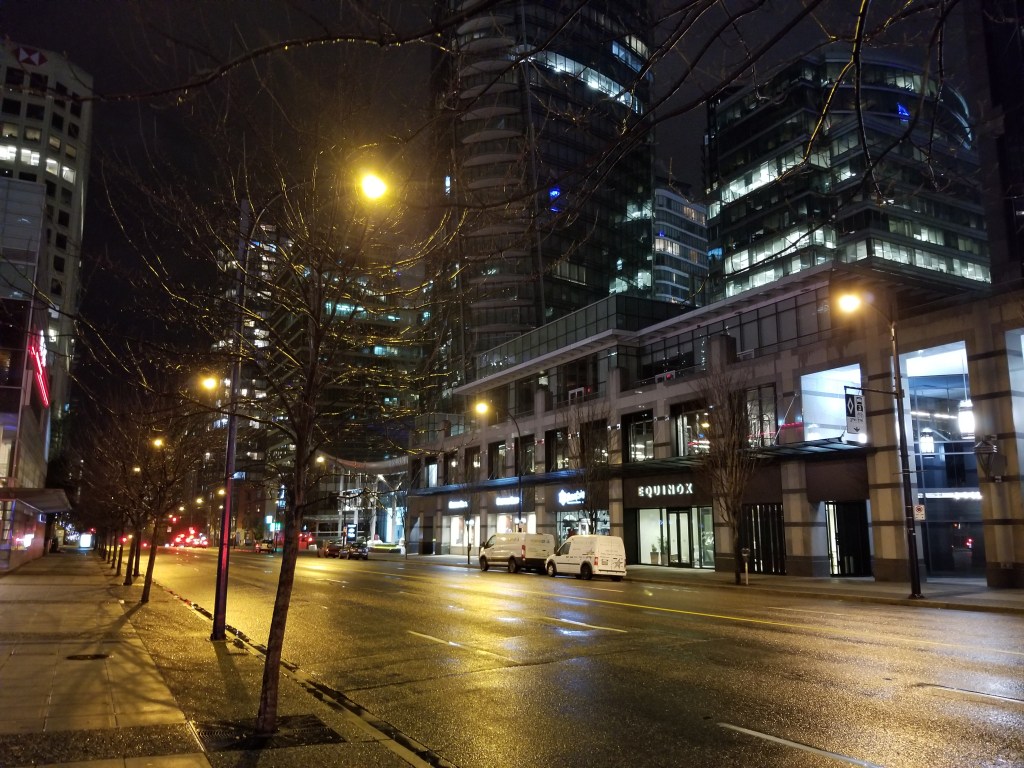
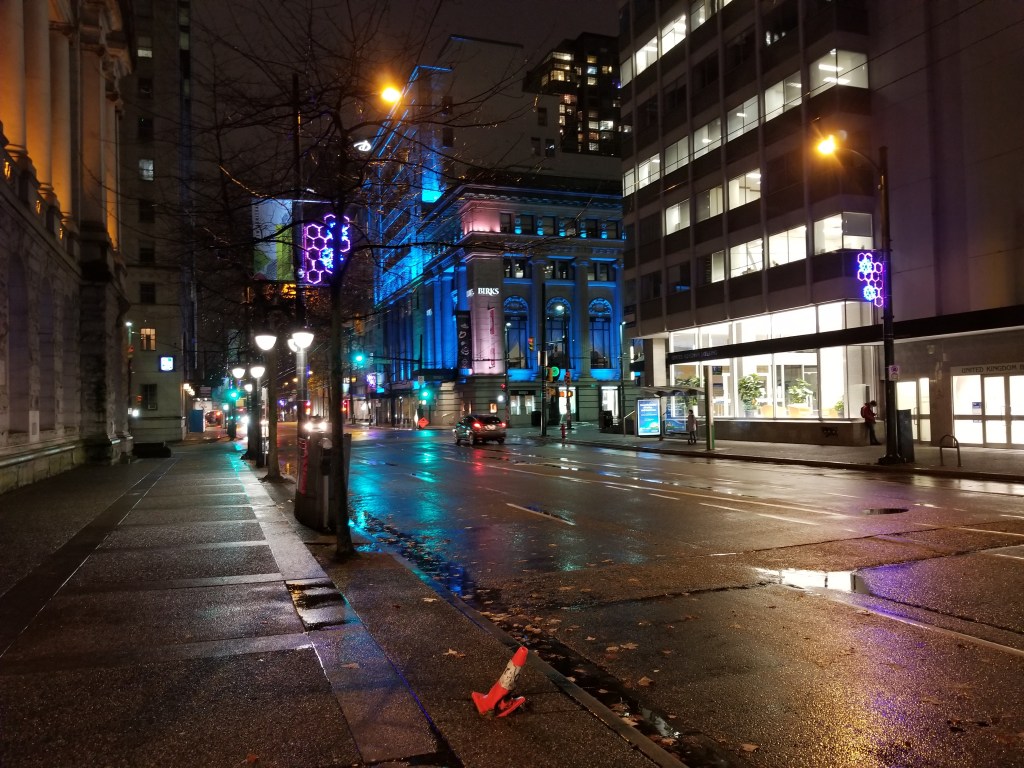

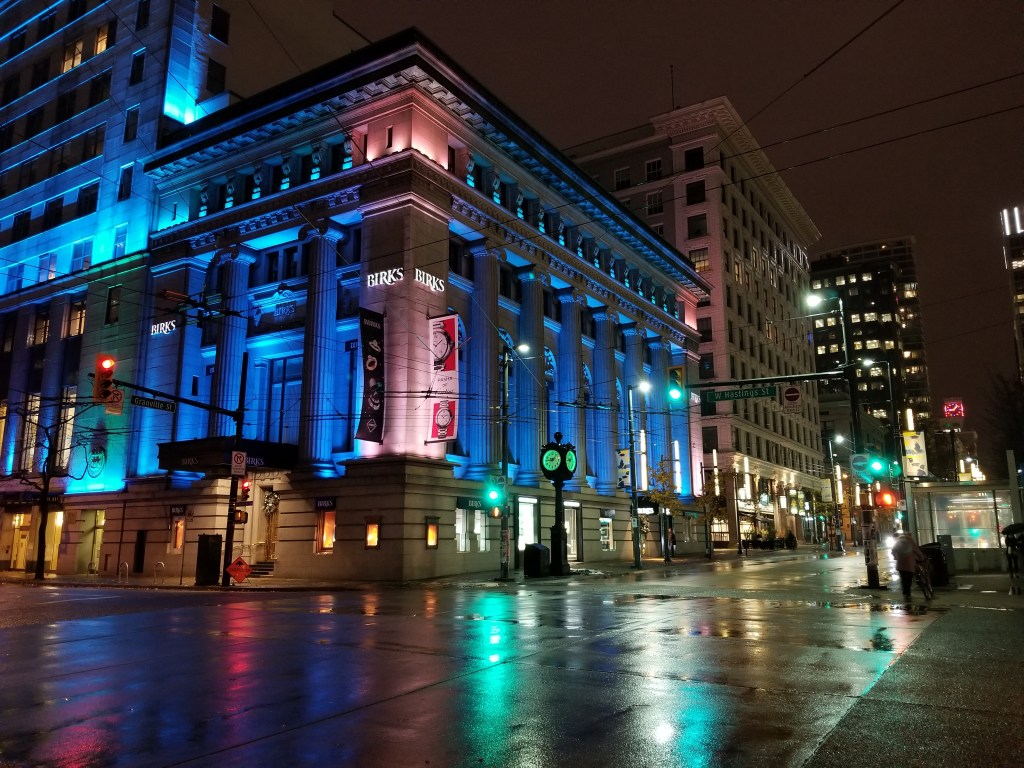
Georgia Street is an east–west street in the cities of Vancouver and Burnaby, British Columbia, Canada. Its section in Downtown Vancouver, designated West Georgia Street, serves as one of the primary streets for the financial and central business districts, and is the major transportation corridor connecting downtown Vancouver with the North Shore (and eventually Whistler) by way of the Lions Gate Bridge. The remainder of the street, known as East Georgia Street between Main Street and Boundary Road and simply Georgia Street within Burnaby, is more residential in character, and is discontinuous at several points.
West of Seymour Street, the thoroughfare is part of Highway 99. The entire section west of Main Street was previously designated part of Highway 1A, and markers for the ‘1A’ designation can still be seen at certain points.
Starting from its western terminus at Chilco Street by the edge of Stanley Park, Georgia Street runs southeast, separating the West End from the Coal Harbour neighbourhood. It then runs through the Financial District; landmarks and major skyscrapers along the way include Living Shangri-La (the city’s tallest building), Trump International Hotel and Tower, Royal Centre, 666 Burrard tower, Hotel Vancouver and upscale shops, the HSBC Canada Building, the Vancouver Art Gallery, Georgia Hotel, Four Seasons Hotel, Pacific Centre, the Granville Entertainment District, Scotia Tower, and the Canada Post headquarters. The eastern portion of West Georgia features the Theatre District (including Queen Elizabeth Theatre and the Centre in Vancouver for the Performing Arts), Library Square (the central branch of the Vancouver Public Library), Rogers Arena, and BC Place. West Georgia’s centre lane between Pender Street and Stanley Park is used as a counterflow lane.
East of Cambie Street, Georgia Street becomes a one-way street for eastbound traffic, and connects to the Georgia Viaduct for eastbound travellers only; westbound traffic is handled by Dunsmuir Street and the Dunsmuir Viaduct, located one block to the north.
East Georgia Street begins at the intersection with Main Street in Vancouver’s Chinatown, then runs eastwards through Strathcona, Grandview–Woodland and Hastings–Sunrise to Boundary Road. East of the municipal boundary, Georgia Street continues eastwards through Burnaby until its terminus at Grove Avenue in the Lochdale neighbourhood. This portion of Georgia Street is interrupted at several locations, such as Templeton Secondary School, Highway 1 and Kensington Park.
Georgia Street was named in 1886 after the Strait of Georgia, and ran between Chilco and Beatty Streets. After the first Georgia Viaduct opened in 1915, the street’s eastern end was connected to Harris Street, and Harris Street was subsequently renamed East Georgia Street.
The second Georgia Viaduct, opened in 1972, connects to Prior Street at its eastern end instead. As a result, East Georgia Street has been disconnected from West Georgia ever since.
On June 15, 2011 Georgia Street became the focal point of the 2011 Vancouver Stanley Cup riot.
Long long ago, in a land called Hindustan, reigned a dynasty of Kings as cultured as they were courageous… It isn’t that they were without fault – they could be cruel and cunning warriors – but they were also men of exceptionally good taste, and blessed with the bountiful means to express their vision, they built a splendid empire of beauty, knowledge and grace beyond any known before.
Now there was one among them, known as “King of the World,” whose heart’s passion burned like fire, and who built a monument for the sake of love that would capture the imagination of the world…
At the age of fifteen, the prince who would be called King of the World met a refined and highborn young girl at a bazaar within the walls of the royal palace in Agra. Court poets celebrated the girl’s extraordinary beauty. “The moon,” they said, “hid its face in shame before her.” For both, it was love at first sight. Five years would pass before the auspicious day chosen for their wedding, and from that moment, they became inseparable companions.
Prince Khurram was the fifth son of the Emperor Jahangir, who ruled in the country now known as India in the sixteenth century. Although the prince was not the eldest son, he soon became the favorite.
“Gradually as his years increased, so did his excellence,” wrote Jahangir. “In art, in reason, in battle, there is no comparison between him and my other children.” At his father’s command, Prince Khurram led many military campaigns to consolidate the empire, and in honor of his numerous victories, Jahangir granted him the title “Shah Jahan”, “King of the World”, a tribute never before paid to an as yet uncrowned Mughal king.
But when Jahangir’s health failed, his sons rivaled for succession to the throne. Ultimately, after years of battle and the deaths of his brothers under suspicious circumstances, Shah Jahan was victorious. In 1628, the King of the World ascended the throne in a ceremony of unrivaled splendor. Beside him stood his queen, his comrade and confidante. He titled her “Mumtaz Mahal”, “Chosen One of the Palace”, and commissioned for her a luxurious royal residence of glistening white marble. In turn, she gave him tender devotion, wise counsel and children – many children – to insure the continuance of the magnificent Mughal dynasty.
The reign of Shah Jahan marked the long summer of Mughal rule, a peaceful era of prosperity and stability. It was also an age of outrageous opulence, and a time when some of the world’s largest and most precious gems were being mined from India’s soil. According to author and art historian Milo Beach, “Jewels were the main basis of wealth, and there were literally trunks of jewels in the imperial treasury, trunks of emeralds, sapphires, rubies and diamonds. Shah Jahan inherited it all. He had immense wealth and tremendous power and palaces all over the country.” The splendor of his court outshone those of his father and grandfather. Inscribed in gold on the arches of his throne were the words, “If there be paradise on earth, it is here.”
But in this world, there is an ancient tradition: sweet pleasure is not without bitterness…
In 1631, in the fourth year of his reign, Shah Jahan set out for Burhanpur with his armies to subdue a rebellion. Even though Mumtaz Mahal was in the ninth month of a pregnancy, she accompanied him as she had done many times before. On a warm evening of April in 1631, the queen gave birth to their fourteenth child, but soon afterwards suffered complications and took a turn for the worse. According to legend, with her dying breath, she secured a promise from her husband on the strength of their love: to build for her a mausoleum more beautiful than any the world had ever seen before.
The King cried out with grief, like an ocean raging with storm… He put aside his royal robes and for the whole week afterward, His Majesty did not appear in public, nor transact any affairs of state… From constant weeping he was forced to use spectacles, and his hair turned gray…
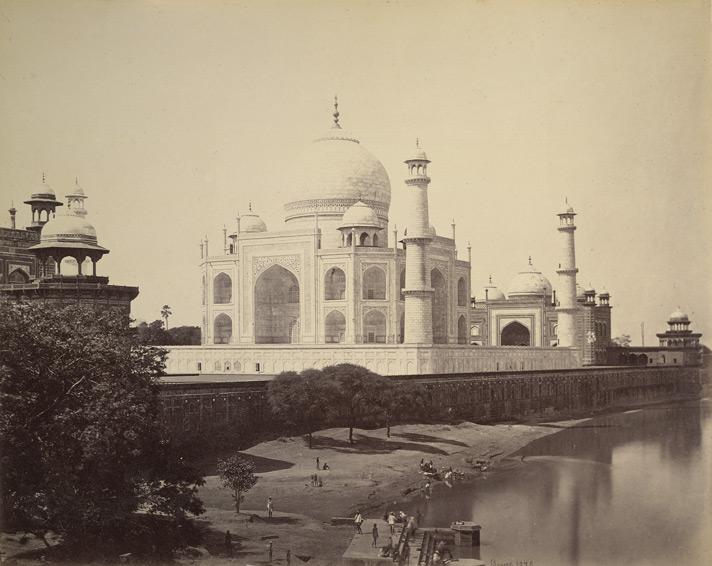
Shah Jahan grieved for two years. By official opinion, he never again showed enthusiasm for administering the realm. His only solace would be found in the world of art and architecture, and an obsession with perfection that would last his lifetime. Six months after the death of his wife, he laid the foundation for her memorial across the Jamuna River near his palace in Agra… the jewel of India, the far-famed Taj Mahal.
Pearly pink at dawn and opalescent by moonlight, Mumtaz Mahal’s tomb is so delicately ethereal that it threatens to disappear during Agra’s white-heat afternoons. In the center of the mausoleum lie the remains of the Empress. Subdued light filters through the delicate screens surrounding her cenotaph and mullahs chant verses from the Koran. It is here that Shah Jahan came with his children to honor the memory of his beloved wife. Here, at last, he found solace.
But Shah Jahan’s tranquility was suddenly shattered when his son Aurangzeb assailed the throne. Just as Shah Jahan had conspired against his brothers for Jahangir’s empire, so did his own son plot against him. In 1658, Aurangzeb declared himself emperor and imprisoned his father in a tower of the Red Fort in Agra. For Shah Jahan, King of the World, who once commanded the unbounded wealth of an empire, his only consolation would be a view across the Jamuna River to his vision of Paradise.
Shah Jahan created his vision of the world, not as it is, but rather as it should be – harmonious, graceful and pure. Inspired by love and shaped to perfection, the Taj Mahal immortalizes one man’s love for his wife and the splendor of an era.
Let the splendor of the diamond, pearl and ruby vanish like the magic shimmer of the rainbow. Only let this one teardrop, the Taj Mahal, glisten spotlessly bright on the cheek of time…
My review of Lunar: Silver Star Story for the Sega CD and Sony PlayStation.
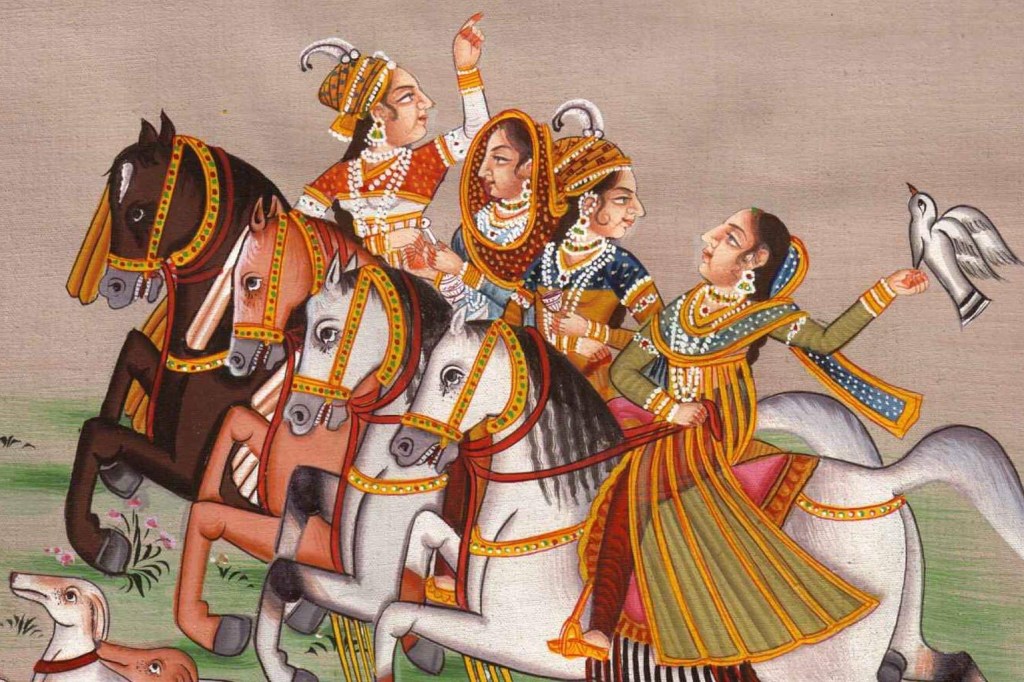
India gained Independence in 1947 after a long struggle for freedom from British imperialism. Perhaps because of this, and the lack of historical knowledge and sense, we see all conquests as colonisation.
Historian Harbans Mukhia, an authority on medieval India, describes colonisation as “governance of a land and its people, now on behalf of and primarily for the economic benefits of a community of people inhabiting a far-off land”.
According to him, the Mughals came to India as conquerors but lived in the subcontinent as Indians, not colonisers. They merged their identity as well as that of their group with India and the two became inseparable, giving rise to an enduring culture and history.
He goes on to say Mughals being seen as foreigners was never a point of discussion till quite recently, so well had they integrated and assimilated into the country they had made their own.
There was no reason for it either, since Akbar onwards, all Mughals were born in India with many having Rajput mothers and their “Indianness” was complete.
Babur had invaded India at the behest of Daulat Khan Lodi and won the kingdom of Delhi by defeating the forces of Ibrahim Khan Lodi at Panipat in 1526 AD. Thus he laid the foundation of the Mughal Empire.
Most Mughals contracted marriage alliances with Indian rulers, especially Rajputs. They appointed them to high posts, with the Kachhwaha Rajputs of Amber normally holding the highest military posts in the Mughal army.
It was this sense of a shared identity with the Mughal rulers that led the Indian sepoys who rose up in 1857 against the British East India Company in the first war of Indian Independence, to turn towards the aged, frail and powerless Mughal Emperor Bahadur Shah Zafar — they coronated him as Emperor of Hindustan and decided to fight under his banner.
Between the 16th and 18th centuries, the Mughal Empire was the richest and most powerful kingdom in the world and as French traveller Francois Bernier who came to India in the 17th century wrote, “Gold and silver come from every quarter of the globe to Hinduostan.”
This is hardly surprising considering that Sher Shah and the Mughals had encouraged trade by developing roads, river transport, sea routes, ports and abolishing many inland tolls and taxes.
Indian handicrafts were developed. There was a thriving export trade in manufactured goods such as cotton cloth, spices, Indigo, woollen and silk cloth, salt etc. Indian merchants trading on their own terms and taking only bullion as payment led Sir Thomas Roe to say, “Europe bleedeth to enrich Asia”.
This trade was traditionally in the hands of the Hindu merchant class who controlled the trade. In fact, Bernier wrote that Hindus possessed “almost exclusively the trade and wealth of the country”. Muslims, on the other hand, mainly held high administrative and military posts.
A very efficient system of administration set up by Akbar facilitated an environment of trade and commerce.
This led the East India Company to seek trade concessions from the Mughal Empire and eventually control and destroy it.
A very interesting painting in the possession of the British Library named “The East Offering Her Riches to Britannia” dated 1778 shows Britannia looking down on a kneeling India who is offering her crown surrounded by rubies and pearls. The advent of the famous drain of wealth from India started with the East India Company not the Delhi Sultanate or the Mughals.
Edmund Burke was the first to use the phrase in the 1780s when he said, India had been “radically and irretrievably ruined” through the Company’s “continual drain” of wealth.
Let us examine India’s economic status prior to its becoming a British colony.
The Cambridge historian Angus Maddison writes in his book, Contours of the world economy, 1–2030 CE: essays in macro-economic history, that while India had the largest economy till 1000 AD (with a GDP share of 28.9 per cent in 1000AD) there was no economic growth. It was during the 1000 -1500 AD that India began to see a economic growth with its highest (20.9 per cent GDP growth rate) being under the Mughals.
In the 18th century, India had overtaken China as the largest economy in the world.
In 1952, India’s GDP was 3.8 per cent. “Indeed, at the beginning of the 20th century, “the brightest jewel in the British Crown” was the poorest country in the world in terms of per capita income”, said former prime minister Manmohan Singh.
In 2016, on a PPP-adjusted basis, India’s was 7.2 per cent of the world GDP.
Since its established now that the Mughals did not take away money let’s talk of what they invested in. They invested in infrasturcture, in building great monuments which are a local and tourist draw generating crores of rupees annually. As per figures given by the ministry of culture in Lok Sabha, just the Taj Mahal built by Shah Jahan has an average annual ticket sale of more than Rs 21 crore. (Last year saw a drop in visitors to the Taj Mahal and figures stood at Rs 17.80 crore.)
The Qutub Complex generates more than Rs 10 crore in ticket sales, while Red Fort and Humayun’s Tomb generate around Rs 6 crore each.
A beautiful new style known as Indo-Islamic architecture that imbibed the best of both sensibilities was born.
They invested in local arts and crafts, and encouraged old and created new skill sets in India. As Swapna Liddle, the convenor of INTACH’s Delhi Chapter says, “To my mind the greatest Mughal contribution to India was in the form of patronage to the arts. Whether it was building, artisanal crafts like weaving and metalworking, or fine arts like painting, they set standards of taste and perfection that became an example for others to follow, and brought India the global recognition for high quality handmade goods that it still enjoys.”
Mughal paintings, jewels, arts and crafts are the key possessions of many a western museum and gallery as they were looted in and after 1857. Some can be found in Indian museums too.
Art and literature flourished under the Mughal Empire. While the original work was being produced in the local and court languages, translation from Sanskrit to Persian, too, was taking place.
Akbar encouraged the translation of the Ramayana and the Mahabharat to dispel the ignorance that often led to communal hatred.
Dara Shukoh’s Persian translation of the Upanishads named Sirr-e-Akbar was taken by Bernier to France, where it reached Anquetil Deperron, who translated it into French and Latin.
The Latin version then reached the German philosopher, Schopenhauer, who was greatly influenced by it and called the Persian Upanishad “the solace of his life”. This awakened an interest in Post-Vedic Sanskrit literature among the European Orientalists.
It wasn’t only Mughal emperors who were building structures — Hindu mansabdars and traders were building temples and dharmshalas in many cities, especially Banaras.
Madhuri Desai, in her extremely well-researched book Banaras Reconstructed, writes: “The riverfront ghats bear an uncanny resemblance to the Mughal fortress-palaces that line the Jamuna river in Agra and Delhi.”
It’s dangerous to generalise history especially on communal lines. While economic deprivation for the ordinary Indian existed, as it did in other societies of the world, as Frances W Pritchett, Professor Emerita, Columbia University says, “The impression one gains from looking at social conditions during the Mughal period is of a society moving towards integration of its manifold political regions, social systems and cultural inheritances. The greatness of the Mughals consisted in part at least in the fact that the influence of their court and government permeated society, giving it a new measure of harmony.”
Thus, to say that the Mughals looted India is a falsification of history.
It’s always best to read history to get facts, and not WhatsApp forwards — where people often share false information to suit their own bias.
At long last, Mr. Plinkett’s review of the latest Indiana Jones film has made its way to youtube!
 Igor's Blog