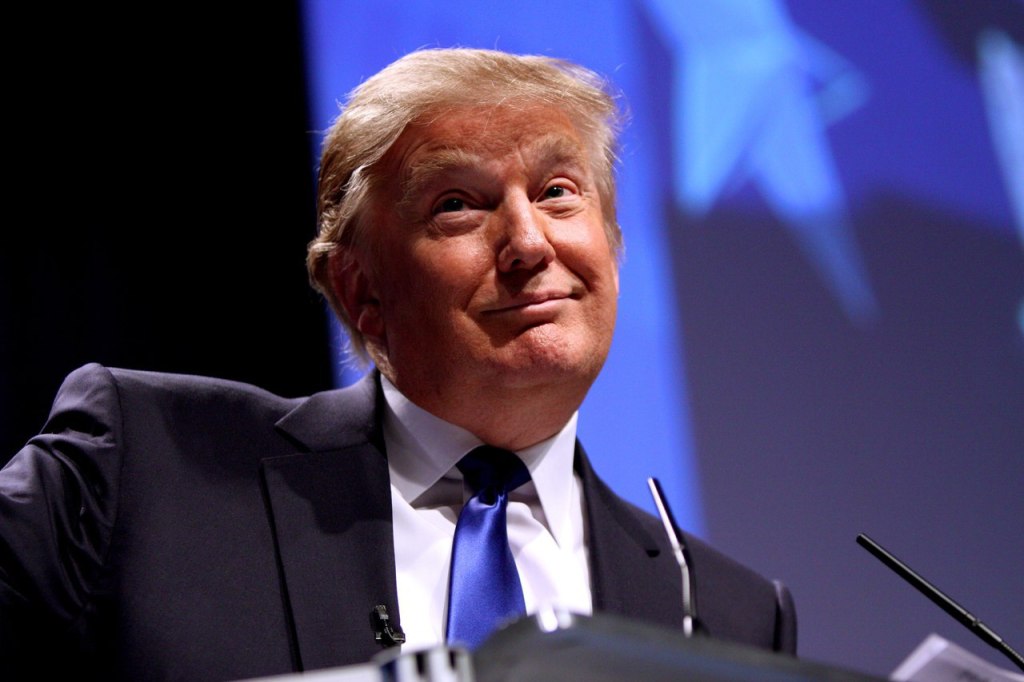
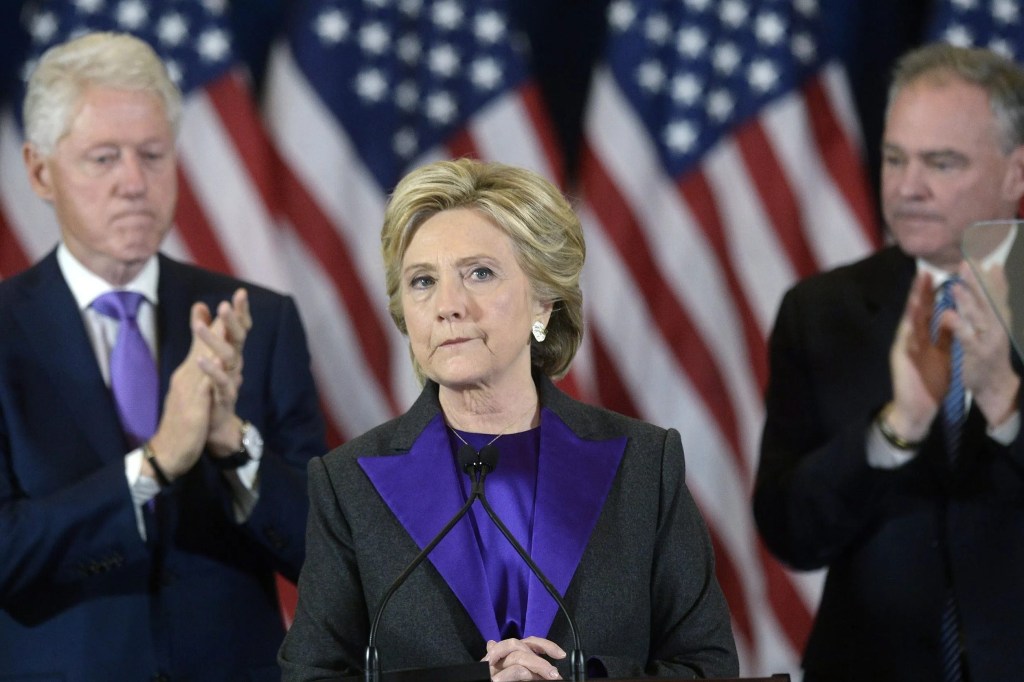
Donald Trump vs. Hillary Clinton. The Battle of the… Decade.

Originally posted on October 15, 2018:

It may be time for another post because there are a few things worth covering. People have been commenting and asking me for months now to organize the videos that I’ve posted featuring Andrei Fursov. Because of my translations of Fursov’s lectures, my channel has gained something of a dedicated following on YouTube. These videos, however, are not my most popular videos by far. My most popular videos are about music, cinema, and other things. People don’t usually use YouTube to search for educational content. And I think that the owners of YouTube would like to keep it this way. Still, since translating lectures has been a part of my hobby of making videos, I’ve been able to translate and post many such videos over the last several years. At first, I didn’t want to react to the requests about arranging the translations in order. It’s because I know what a problematic and controlled website YouTube is. Is it worth my time, for example? Because YouTube has become institutionalized already, it has gone from being a website that enables learning, creativity, and sharing to being a website that opposes these things. But, after thinking about this for a while, and after realizing that this process won’t take much time, I’ve finally decided to do this. I’ve created playlists on my YouTube channel so that Fursov’s lectures can be seen in order. This is an ongoing process, however. I haven’t organized all of the videos yet.

One person who has caught a little of my interest lately is Steve Bannon. I must admit that I found out about him only after the 2016 United States presidential election. It seems that Fursov mentioned Bannon in one of his interviews before the election, when he called Bannon one of the top analysts in the USA. Still, this didn’t compel me to begin researching Bannon. I should mention that I’m not a politician or a political analyst. American politics, and what’s going on in the USA generally, don’t interest me much. So, it took some time before I decided to look into who Bannon is, and this happened only recently. Apparently, Bannon’s advice is what helped get Donald Trump elected back in 2016. It seems that Bannon was the one who came up with the strategy and the catchphrases. And Bannon, like Trump, came under fire from the American media. A few things became clear to me after I watched several interviews featuring Bannon. In the last several weeks, Bannon has been interviewed by some media outlets, including popular ones, about the upcoming mid-term elections in the USA. He talks about why he thinks Trump was able to win the 2016 election. This is something that I already made a post about. According to Bannon, the Clinton campaign took a wrong turn when it introduced identity politics into the race. I guess I can agree with him. This factor played a part. At the same time, the Trump campaign was able to surf the wave of dissatisfaction in the USA. A large number of people in the USA now, largely young middle class people, are dissatisfied with the situation in the USA. This is mostly due to the depression and the shortage of jobs. But Bannon is not someone that I agree with or someone that I like. He’s probably not a monster like my so-called father, who’s a bigot and a bully, among other things. But he’s still a right-winger, a nationalist, a deceiver, and he says offensive things. He’s someone that people in the ruling class of Russia can agree with, but he’s not someone that I can agree with. The Russians, of course, didn’t hide that they preferred Donald Trump over Hillary Clinton. In addition, Clinton was openly hostile toward Russia and Vladimir Putin during the race. It’s worth pointing out that modern Russia (the Russian Federation) is a right-wing, anti-democratic, and oligarchical state. And, since it’s oligarchical, it’s a state that is going nowhere, much like the USA. The regime in Russia supports right-wing parties and right-wing personalities abroad as well. This is something that Zbigniew Brzezinski joked about, when he said that during the Cold War the Russians supported the Left and that now they support the Right. But there are a few differences between the USA and the Russian Federation, though these differences mean little in the long run. The USA benefited from the end of the so-called Cold War by profiting from the collapse of the Soviet Union. In this way, American political domination of Western Civilization continued and got a boost for a few decades. When it comes to Russian Civilization, Soviet political domination came to an end in the second half of the 1980s and the union split up into what became known as the Russian Federation and some other, much smaller right-wing oligarchical states. The Soviet Union collapsed like the Ilkhanate, which appeared to be strong and stable to the people living in Iran only a decade before its collapse. In order to help justify their lame existence, the Russian Federation and these other post-Soviet states regularly put out anti-Soviet lies and propaganda. Anyway, though the Russians preferred Trump, they still didn’t interfere in the 2016 United States presidential election and help get Trump elected. They’re not capable of doing this. They’re not even capable of preventing an American-orchestrated coup d’etat in a neighbouring and culturally-identical state like Ukraine. This is how weak the Russian Federation is. The Russian interference story is something that Clinton and her team cooked up after her defeat in order to put the blame on someone else. And, since the Russians are the most demonized people in the West, Clinton knew that she’d be able to get away with this lie. Another thing that’s amusing is how Clinton and her supporters were called “the Left” during the race and afterwards. Some of Trump’s supporters took advantage of this. Well, I’ll begin by saying that there is no real Left in establishment American politics. The Left isn’t about identity politics or mostly about race relations and women’s rights. It’s about making life better for workers, about limiting and ending exploitation by capitalists, and even about social progress. There is nothing leftist about Hillary Clinton. She joked about the death of Muammar Gaddafi, who was the leader of Libya. I don’t think that something like this happened during the Cold War. Even Ronald Reagan, with all of his bigoted and deceitful talk, didn’t joke about the death of another country’s leader. She’s simply an operative for Wall Street, and her campaign was backed by oligarchs. This isn’t a secret. Still, the average person in the American middle class and working class doesn’t know such things. We have to keep in mind that the USA is a country (empire) where communism and real leftist politics are constantly demonized and lied about. In addition, people from the American middle class and working class are provided with a bad education, which keeps them uninformed, obedient, and capable of performing only the most basic tasks. It’s safe to say that these people haven’t read Das Kapital by Karl Marx or any other work by a leftist thinker. So, I guess that it’s not hard to fool such people into believing that a conservative establishment politician like Clinton actually represents the Left. A real leftist wouldn’t support Clinton, or Trump, for that matter. Therefore, a conclusion has to be made that the strategy of the Trump campaign in relation to the dissatisfied people worked. Among these dissatisfied people were bigots, conspiracy theorists, commie-haters, homophobes, racists, nationalists, xenophobes, the “awake”, and the unemployed. Because they don’t know better, they believed in Trump’s sham populism, and many of them still defend him like he’s Jesus Christ.

In general, it’s somewhat interesting to listen to what Bannon says, though he acts like Trump can win again in the future. Does he know something that I don’t? After all, after Trump’s win in 2016, the opposition has been working on preventing such a thing from happening again. After everything that has happened since then, it would seem like there’s no way that Trump will be allowed to win again. Or has Trump gained more support in the American establishment since then? What’s interesting is that Trump didn’t really look pleased right after he won the election. In fact, he looked kind of worried. Maybe he didn’t expect to win. Or maybe, by then, after everything that had happened, he didn’t really want to win. OK. Moving on. Another thing that’s amusing is what happened to Alex Jones. Jones remains one of the most notable supporters of Trump, and Jones was recently purged by several popular internet platforms, apparently because he supported Trump and played a role in getting Trump elected. Jones has a large following, by internet standards. Interestingly, Roger Stone made frequent appearances on Jones’s show before the election. I think that Stone’s support for Trump shows that Trump has some serious backers in the American establishment. So, after Jeb Bush dropped out of the race, and after Trump decided to run as a populist, it seems that some important people decided to throw their weight behind Trump. This just shows that Trump wasn’t some lone, helpless man in the race. He had some serious support, though nowhere near as serious as the support that Clinton had. I must admit that I was a little surprised when Jones got purged. The thing about Jones is that he’s an offensive, right-wing propagandist for the establishment, who always throws his weight behind candidates from the Republican Party. Well, this time he threw his weight behind Trump, and, somewhat surprisingly, he got purged as a result by companies like Google, for example. His popularity on the internet wasn’t enough to prevent this. He wasn’t the only one who got purged, but he was the most famous one among the purged. I personally think that this was the work of Hillary Clinton. This was her revenge for her loss and for all of the criticism and lies that Jones put out about her. Like so many Hollywood celebrities, the people working at Google, for example, didn’t hide that they support Clinton. In one disturbing scene, one of the founders of Google, Sergey Brin, openly voiced his opposition to the Trump campaign.
Жила-была девочка (1944) Полная версия

История двух маленьких блокадниц в осажденном Ленинграде – 7-летней Настеньки и 5-летней Катеньки. Голод, холод, путешествия через вымерзший город к Неве с санками за водой, смерть матери, ранение – все это выпало на долю детей, перенесших наравне со взрослыми все тяготы войны.

Hillary Clinton’s Historical Revision of her Presidential Campaign and Rebranding

https://maoistrebelnews.com/2017/05/07/hillary-clintons-historical-revision-of-her-presidential-campaign-and-rebranding/

In a remarkable feat of self-important delusion Hillary Clinton declared herself back in town and a, “part of the resistance.” This comment was made a week ago as she spoke to CNN’s Christiane Amanpour in New York City. During that same interview, she claimed to admit “absolute personal responsibility” for her loss to Donald Trump in the presidential election. However, she did go on to state that she “would have won” had it not been for the alleged Russian interference. She also blamed James Comey’s decision to reopen her email investigation after her wrong doings were made public by Wikileaks.

Far from her claims, she lost the election because of the unethical and undemocratic manner in which she carried out her campaign. It is now known that she orchestrated the banishment of the more popular candidate Bernie Sanders from the leadership of the Democratic Party. This is exposed all the more by the legal filings of the Democratic National Committee and former DNC head Debbie Wasserman Schultz, in response to a lawsuit filed by Bernie Sander supporters. According to a motion to dismiss, the DNC claims that it has the right to “go into back rooms like they used to and smoke cigars and pick the candidate that way.” They also claimed that the lawsuit is based upon an “internal rule” which can’t be enforced, and that the term “impartial” can’t be defined.

Clinton also lost due to her relationship with the financial aristocracy of Wall Street. The Clinton family, (as is every former president,) is heavily connected to and funded by large banks and financial institutions. This is really nothing new in American politics. But, the family’s very close association with the banks made many voters distrust her. By contrast, Donald Trump (falsely) claimed dissociation from them and railed against their greed and corruption. While Trump lied about his relationship with Wall Street, people still believed him. Clinton, by contrast, was a known close associate of it. Popular anger towards the financial aristocracy and her connections to it seriously harmed her credibility and popularity.

The recent interview she gave was nothing more than a massive distortion of the truth. While the information exposed by Guccifer 2.0 and Wikileaks certainly hurt her campaign, they were only exposing what she had done that was unethical which the public opposed. She has absolutely denied this. Instead, she has claimed that she would have won had it not been for the alleged Russian interference and James Comey’s decision investigate her wrongdoings. She cannot claim she is taking responsibility when she is directly placing blame on others. She was wholly dishonest in her interview where she tried to portray herself as a victim. The truth is that she has victimised Bernie Sanders by preventing him from becoming the head of the Democratic Party.

Despite all of this, she has still declared herself to be a member of the resistance to Donald Trump’s presidency. It was reported by Politico last Friday that she is in the process of building an organisation dedicated to opposing Trump and the Republican Party.

“The former secretary of state is building a new political group to fund organizations working on the resistance to President Donald Trump’s agenda, spending recent weeks in Washington, New York City, and Chappaqua, N.Y., meeting with donors and potential groups to invest in, and recruiting individuals for the group’s board of directors,” the media outlet said.

In the wake of her disastrous presidential election, she has attempted to rebrand herself as a public “resistance” figure. It is clear that there is a great deal of popular sentiment against Donald Trump and his presidency. In Clinton’s eyes, she sees herself as able to take advantage of this sentiment and use it to promote herself and force her way back into the mainstream under a new image. She is beginning to pose herself as someone who is opposed to everything Trump stands for: Wall Street lackey, racist, misogynist, and most importantly, warmonger. Using money collected from interests among the capitalist class opposed to Donald Trump’s presidential agenda, she will try and form a political block against him.

Right now there is no such thing. The Democratic Party has been left in ruins after the failure of the Clinton campaign. A fractured Party is attempting to oppose Republican rule but is having very little effect. There is no real leader of the Party at this moment. Bernie Sanders has been relegated to career backbencher after it was made clear to him by the Party that he is never going to be in a leadership position. Tulsi Gabbard has risen as a rival for Clinton in very much the same populist style as Sanders. It’s mostly made up of anti-Trump, anti-war, pro-single payer health care rhetoric. Her recent gain in popularity is no doubt what has spurred Clinton to make a rebranded comeback so soon.

Right now a rebellious “radical” image is needed to oppose the Trump administration. The rebellious image Trump gave during his campaign has completely collapsed, and has been acknowledged by all but the most hardcore of his supporters. Clinton is attempting to rebrand herself as that rebellious radical. Gabbard has very much the same rhetoric that Bernie Sanders that made him popular. If Clinton doesn’t return to politics soon, she’ll be beaten out by the rising star of Gabbard.

It seems as though there may end up being a power struggle in the party between the two women. Both are jockeying for a position of leadership with similar images in what appears to be a kind of power vacuum in the Democratic Party. Gabbard is attempting to take Clinton’s place as leader, while Clinton is organising to keep it. In all likelihood, Clinton will beat out Gabbard because she will get the funding necessary to carry out the coming political war between the two. Sections of Wall Street have already chosen her as their candidate, and are prepared to give her all the money necessary.

To see Clinton as an outsider, a “part of the resistance” to use her own words, is nothing short of facetious. Clinton has been a Washington insider for decades and has already been the Secretary of State. She simply couldn’t be any more a member of the establishment. This stands in stark contrast to why Trump defeated her in the presidential election, he appeared to be the opposite. Attempting to rebrand herself as opposed to the current order will fail. She is the established order. She is a great companion of Wall Street, she supports a violent imperialist foreign policy and seeks to maintain the status quo.

It seems very unlikely that she will be able to brand herself as Bernie Sanders and Barack Obama originally did. She is too well established within the system as a Wall Street hawk to ever appear otherwise.

On Georgia Street in Downtown Vancouver. Autumn of 2019.

Georgia Street is an east–west street in the cities of Vancouver and Burnaby, British Columbia, Canada. Its section in Downtown Vancouver, designated West Georgia Street, serves as one of the primary streets for the financial and central business districts, and is the major transportation corridor connecting downtown Vancouver with the North Shore (and eventually Whistler) by way of the Lions Gate Bridge. The remainder of the street, known as East Georgia Street between Main Street and Boundary Road and simply Georgia Street within Burnaby, is more residential in character, and is discontinuous at several points.

West of Seymour Street, the thoroughfare is part of Highway 99. The entire section west of Main Street was previously designated part of Highway 1A, and markers for the ‘1A’ designation can still be seen at certain points.

Starting from its western terminus at Chilco Street by the edge of Stanley Park, Georgia Street runs southeast, separating the West End from the Coal Harbour neighbourhood. It then runs through the Financial District; landmarks and major skyscrapers along the way include Living Shangri-La (the city’s tallest building), Trump International Hotel and Tower, Royal Centre, 666 Burrard tower, Hotel Vancouver and upscale shops, the HSBC Canada Building, the Vancouver Art Gallery, Georgia Hotel, Four Seasons Hotel, Pacific Centre, the Granville Entertainment District, Scotia Tower, and the Canada Post headquarters. The eastern portion of West Georgia features the Theatre District (including Queen Elizabeth Theatre and the Centre in Vancouver for the Performing Arts), Library Square (the central branch of the Vancouver Public Library), Rogers Arena, and BC Place. West Georgia’s centre lane between Pender Street and Stanley Park is used as a counterflow lane.

East of Cambie Street, Georgia Street becomes a one-way street for eastbound traffic, and connects to the Georgia Viaduct for eastbound travellers only; westbound traffic is handled by Dunsmuir Street and the Dunsmuir Viaduct, located one block to the north.

East Georgia Street begins at the intersection with Main Street in Vancouver’s Chinatown, then runs eastwards through Strathcona, Grandview–Woodland and Hastings–Sunrise to Boundary Road. East of the municipal boundary, Georgia Street continues eastwards through Burnaby until its terminus at Grove Avenue in the Lochdale neighbourhood. This portion of Georgia Street is interrupted at several locations, such as Templeton Secondary School, Highway 1 and Kensington Park.

Georgia Street was named in 1886 after the Strait of Georgia, and ran between Chilco and Beatty Streets. After the first Georgia Viaduct opened in 1915, the street’s eastern end was connected to Harris Street, and Harris Street was subsequently renamed East Georgia Street.

The second Georgia Viaduct, opened in 1972, connects to Prior Street at its eastern end instead. As a result, East Georgia Street has been disconnected from West Georgia ever since.

On June 15, 2011 Georgia Street became the focal point of the 2011 Vancouver Stanley Cup riot.

‘Merican Eagle Shirt Is Patriotic AF And No One Can Say Otherwise

https://brobible.com/gear/article/merican-eagle/

This majestic bird is the ‘Merican Eagle. He’s patriotic as shit. He probably also knows Willie Nelson. He also could be yours, at a steal.

“This shirt was everything it said it was. It’s pure America. Not only is the quality well and it fit good. It also gives a feeling of true American Bad Assery when you wear it. It can be described as flying on an American Bald Eagle as it shoots fucking lasers at our enemies. You put this shirt on and you’re ready to spartan kick any commie or triggered snowflake that gets in your way! All in all it’s American as Fuck!”

It even comes in a tank top which is so god damn American it should be illegal.

Metal Hero Review: Special Rescue Police Winspector

http://www.jefusion.com/2016/06/metal-hero-review-special-rescue-police.html

Knight Rider? No it’s Special Rescue Police Winspector. Unlike other Metal Hero series, the show deviates from heroes killing monsters that have caused crime or battle a sinister organization. Instead, Winspector has no main villain running around and focuses strongly on a rescue theme.

Plot

Winspector is a special police force organized by Captain Shunsuke Masaki, played by Hiroshi Miyauchi. While the show has some Knight Rider influences like its amazing police car but don’t expect it to be completely like Knight Rider. The team was created to combat criminals and not monsters of the week. MADDOX is a computer with artificial intelligence who helps dig down the database for the criminals of the week.

The Winspector Squad

The main hero is Ryoma Kagawa. He’s the leader of the Winspector Squad. Unlike other superheroes, he might be one who older fans can relate to in some way. Ryoma is privileged to wear the Cross-Tector but with great power comes great responsibility. The Cross-Tector sets a five minutes limit to the user of the suit as a constraint. You didn’t have with the Space Sheriffs, Kamen Rider, Super Sentai and Power Rangers. But Ryoma is stuck with that limit and he must save as many people as he can before the time limit is over. His life can be in danger after five minutes. Then he must rely also on Biker and Walter to help him in his operations. Demitasse a bullet like robot is later added into his list of androids.

A bit of throwback to the Space Sheriffs is the non-transforming badass female partner. If Super Sentai had females in power suits but why not this show? The female parter is Junko Fujino. Junko feels like she’s just there for eye candy though she still shows off her amazing fighting ability. She’s got some episodes where she shows off that fighting. She’s a hot bruiser so beware if you think of trying to do anything to her. Hisako Koyama is a cafeteria worker who’s actually the occasional cover agent. I felt like both characters needed more development. Togogaro Rokkaku plays as a lower ranking officer who’s there for comic relief but seldom gets involved with the plot’s progress.

How the show progresses without any main villain

Winspector’s scenario is sort of a what if to a series of events. It’s the year 1999 as far as the show’s continuity is concerned. What’s funny is that in GoGoFive in 1999, the Grand Cross event really happened in August 18, 1999 and that year a rescue-themed Super Sentai was created. The show also shows how humanity can take technology to the wrong direction as evidenced by many crimes in the show or how some events tend to show disasters related to the consequences of reckless destruction. It also shows how some villains have noble agendas but shows that nothing you do ever justifies crime.

The show’s development doesn’t go with the villains and heroes but more on the heroes. In everyday life, people get promoted and demoted based on their performance. As situations get tougher, the people behind Winspector end up creating new gadgets as the situations get tougher. The whole show’s direction is mixing Tokusatsu elements into American rescue-themed shows. As the show progresses, everyone realizes what’s important in them as they continue to battle day to day criminals and do rescue tasks. In the end, Winspector is ordered to go on a worldwide scale leading to Solbrain’s formation in the next season.

The possible legacy of Winspector to later Tokusatsu shows

After Winspector, there were two more shows that came with the same theme. Winspector was succeeded by Solbrain where Captain Masaki resumes his role as the show’s mentor. Exceedraft was meant to be a standalone series but was later connected to Winspector. All three Rescue Police shows from Winspector to Exceedraft had no real main villain involved. Then there was Tokosou Robo Janperson as a Robocop-style Tokusatsu series except the hero was 100% mechanical. Blue SWAT came next which may have been Dekaranger’s spiritual predecessor.

The influence went into Super Sentai and Power Rangers. Gekisou Sentai Carranger endorsed safety rules and may have tried to do the lesson of the week approach from Chikyu Sentai Fiveman. It even had a rescue-themed upgrade for its mecha midseason. Then we had Kyukyu Sentai GoGoFive and Power Rangers Lightspeed Rescue as rescue-themed shows. Lightspeed Rescue not only had Captain Mitchell which felt like any typical Tokusatsu commander but also the show had a public service announcement on safety rules. Tokosou Sentai Dekaranger and Power Rangers SPD may have also shared in that legacy. In the case of Dekaranger, some episodes were more or less like the Rescue Police Trilogy since some of the Alienizers were independent villains than shown to be Agent Abrella’s clients.

Game Review: StarCraft (PC, 1998)

https://takeaimandgame.blogspot.com/2013/03/game-review-starcraft-pc-1998.html

StarCraft is a genre-defining game, it’s effectively the national sport of South Korea, and it was the beginning of a phenomenon unlike any other. Although it was released nearly 15 years ago, the upcoming expansion to its sequel prompted me to revisit its roots. What followed was a 14-hour journey through one of my childhood favorites.

For the record, I don’t think it’s worth reviewing games given their contemporary world, instead opting to review a game based on my thoughts as I play it – in the case of this StarCraft review, that means I’ll be looking at it through the eyes of a gamer in 2013 instead of 1998. Sure, this approach means that my reviews will lose something over time, as “timeless” features may become obsolete and nostalgia fluctuations may give classics different spins, but I think it’s a more honest approach. I can’t accurately convey the excitement of engaging the Zerg swarms for the first time in the late nineties, and no gamer will be able to experience that rush again given the evolution of the industry in the last decade-and-a-half.

So, for better or worse, fair or not, here are my thoughts on the original StarCraft on the eve of the release of Heart of the Swarm:

First the basics: StarCraft puts you in control of a military outpost and tasks you with harvesting raw materials, developing technology, and raising an army to crush your foes. It’s a real-time strategy (RTS) game, meaning quick decisions and quicker reflexes are necessary to outsmart and outmaneuver the opposition.

Through the campaign, you’ll control one of three species – the cunning humans (the Terrans), the viscous swarms of the Zerg, or the technologically superior Protoss. Each race has its own strengths and weaknesses, giving different experiences and requiring different strategies.

The single-player mode is divided into three parts, with one 10-mission campaign for each of the races. Starting with the Terrans, you’ll learn the basics of each race and get a chance to deal with each possible matchup. Although the story of three campaigns are chronologically ordered, you do have the option of jumping to the race you want to play and skipping the other campaigns, if you want, which is definitely a nice feature.

These days, the StarCraft mythos is pretty complex, but only a portion of that complexity is available in the original game. We see examples of political intrigue and bitter enemies, but the majority of the game’s exposition happens in the first act (the Terran campaign). There are details about harsh political struggles within the Terran Dominion and how the Terran leaders are dealing with the sudden arrival of two sentient (and hostile) alien species, and we learn a lot about the StarCraft universe in those first 10 missions.

In the other two campaigns, there’s a lot less detail and a lot more repetition. We don’t learn as much about the internal workings of the Protoss civilization or the Zerg hierarchy, and what little we do hear happens several times. To make matters worse, there are hints at some awesome backstory that is never explored. The lack of detail in what are arguably the more interesting campaigns is disappointing.

On the other hand, each of the campaigns has a self-contained story arc. The later campaigns build on the earlier ones, using the other campaigns’ events as a backdrop for a new conflict, but each campaign focuses on a particular struggle and follows it to its conclusion. It’s great to be able to see the StarCraft universe from three different perspectives, each with its own biases and goals, and the end result is some knowledge of the inner workings of each of the races.

While the voice acting is pretty darned good (the script isn’t always stellar, but it’s never really cringe-worthy, either), and some of the sound effects are iconic, the graphical style hasn’t aged very well. Pre-rendered cutscenes are obviously very dated, and although they’re not terrible, they’re not quite as good at conveying the tone as they could be. In-game graphics are similarly old-school, using blocky sprites and jagged animations, but the graphical quality never affects the gameplay itself, so it’s not a serious problem.

While the old graphical presentation may be the most obvious flaw in the modern market, the most disappointing part of replaying a classic like StarCraft is the dated gameplay. While the basic mechanics are the same as any good RTS game these days (even better than some), there are small features that really stick out as frustrating in the modern gaming world.

First is the fact that you can only select 12 units at a time. In many cases, you’ll need to control 20 units or more simultaneously, which means that you’ll need to issue many commands, quickly switching between small groups of units, as opposed to a single command to one group as in modern RTS games. This system presents an awfully high mechanical barrier for new players to overcome, encouraging strong defensive tactics until you can build an army of your race’s most powerful unit instead of making full use of the technology tree. It’s frustrating to feel like the game’s control scheme is getting in the way, and that definitely happens in StarCraft on occasion.

Second, the unit AI is downright silly at times. Pathing is generally terrible, such that units will follow long, winding paths to reach their destinations instead of the most direct route, and they will interact with each other in complicated (and almost always sub-optimal) ways, like pacing back and forth behind other units instead of moving around them to go forward. It can be a huge pain to deal with these weird dances, particularly when one well-placed unit could mean the difference between a successful battle and a humiliating defeat.

Interestingly, these control flaws have proven useful for StarCraft as a really competitive game. Truly skilled players can separate themselves from the rest by expertly overcoming these control hurdles, making for an exciting spectator sport, but it’s never good to alienate new players with clunky control schemes.

StarCraft also features an expansive custom game system, allowing you to play deathmatches against computer-controlled opponents, to challenge your friends online, or to play some silly user-made maps with custom triggers. The map editor comes with the game, giving creative gamers a chance to develop something fun for others to enjoy. It’s a really cool system, and the multiplayer gives the game a huge number of additional options, but the online community is ever-dwindling as StarCraft loyalists move into StarCraft II. Even so, the custom map features are exceptional even by today’s standards.

StarCraft is one of the respectable elders of the gaming world. The ideas contained within it have spawned numerous imitators, so much so that its name is almost synonymous with “real-time strategy game.” Even though it’s growing ever closer to the age of consent, it’s still a fun, challenging game with lots of options. Its flaws may deter new players, though, so if you’re not already a fan of the RTS genre or the StarCraft series specifically, you probably want to start with a different title.