Robson Street is a major southeast-northwest thoroughfare in downtown and West End of Vancouver, British Columbia, Canada. Its core commercial blocks from Burrard Street to Jervis were also known as Robsonstrasse. Its name honours John Robson, a major figure in British Columbia’s entry into the Canadian Confederation, and Premier of the province from 1889 to 1892. Robson Street starts at BC Place Stadium near the north shore of False Creek, then runs northwest past Vancouver Library Square, Robson Square and the Vancouver Art Gallery, coming to an end at Lost Lagoon in Stanley Park.
As of 2006, the city of Vancouver overall had the fifth most expensive retail rental rates in the world, averaging US$135 per square foot per year, citywide. Robson Street tops Vancouver with its most expensive locations renting for up to US$200 per square foot per year. In 2006, both Robson Street and the Mink Mile on Bloor Street in Toronto were the 22nd most expensive streets in the world, with rents of $208 per square feet. In 2007, the Mink Mile and Robson slipped to 25th in the world with an average of $198 per square feet. The price of each continues to grow with Vancouver being Burberry’s first Canadian location and Toronto’s Yorkville neighbourhood (which is bounded on the south side by Bloor) now commanding rents of $300 per square foot.
In 1895, train tracks were laid down the street, supporting a concentration of shops and restaurants. From the early to middle-late 20th century, and especially after significant immigration from postwar Germany, the northwest end of Robson Street was known as a centre of German culture and commerce in Vancouver, earning the nickname Robsonstrasse, even among non-Germans (this name lives on in the Robsonstrasse Hotel on the street). At one time, the city had placed streetsigns reading “Robsonstrasse” though these were placed after the German presence in the area had largely vanished.
Robson Street was featured on an old edition of the Canadian Monopoly board as one of the two most expensive properties.
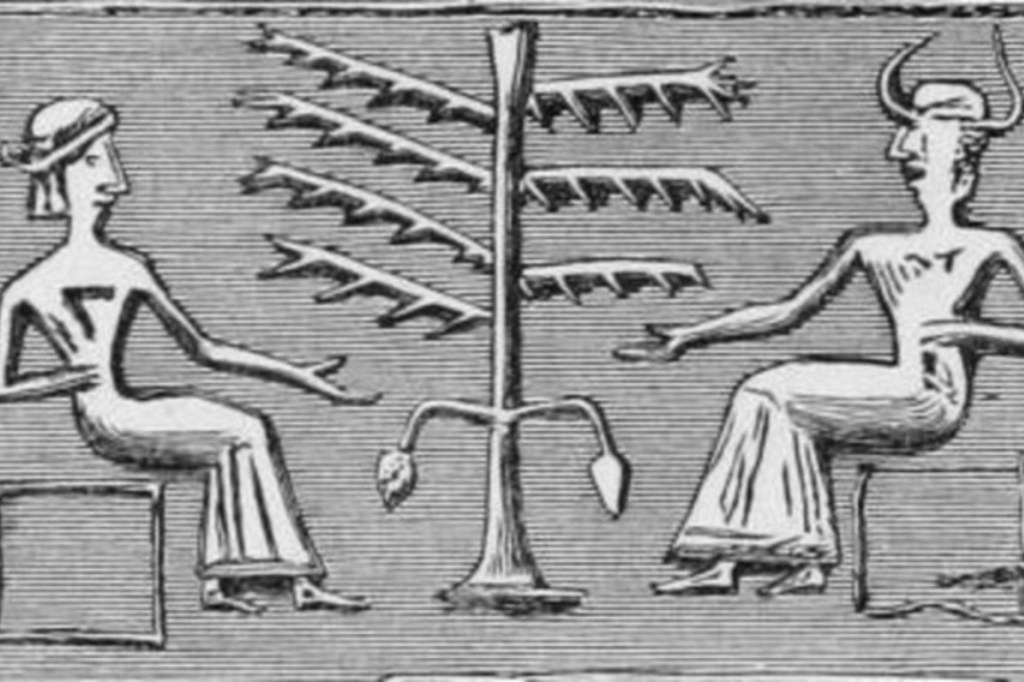
Sacred Tree and Serpent, from an ancient Babylonian cylinder
I will continue to quote from ‘Michelangelo: His Life, His Times, His Era’ (1921) by Georg Brandes because I enjoyed reading this book and because Brandes also dedicated a number of pages to examining Leonardo da Vinci. I have somewhat of an interest in Leonardo because it’s easy for me to understand him and his actions, and I have already acquired a few old books about him. “Michelangelo’s whole nature made it impossible for him to see in Raphael anything but an imitator and plagiarist who owed him everything. Contempt and hostility pervaded whatever recognition of merit the younger artist may have elicited. Toward Leonardo Michelangelo can scarcely have felt disdain, but beyond doubt he did entertain a frank hatred of this rival. In versatility both artists were equally outstanding. Both were painters, sculptors, draftsmen, poets. Leonardo apparently also shone in music, but to restore the balance Michelangelo’s gifts as an architect were more marked. Both were eminent engineers. Each reached the summit in painting and sculpture. Michelangelo had the good fortune to leave behind many more works than Leonardo, whose creations seemed to be ill-starred and whose genius, moreover, led him to dissipate his energies even more than did Michelangelo. But the main difference is that Michelangelo was content with mastery in the fine arts and notable stature as a poet, while Leonardo superimposed on the artist the thinker, scientist and inventor in the grand manner, his discoveries far outnumbering his works of art. Leonardo’s mind was a perpetual ferment. He brooded, searched, probed, analyzed, investigated, dissected everything, even the pigments he used. Then he would collect himself and after the most painstaking preparation discharge his energy in “everlasting” masterpieces that were either destroyed by time or the heedlessness of man or that crumbled of their own accord. Even when he had created something enduring, his spirit persisted in regarding it as unfinished and continued to play with it. Yet the two great men, in the face of their diversity, have many traits in common, vast as may be the gulf between brusqueness and grace, intuition and research. In their art both held fundamentally aloof from orthodox Christianity; both were fond of omitting haloes and all the other ecclesiastic paraphernalia. They shared a delight in studying the human body. When Leonardo represented clothed figures, he first drew their nude outlines, as did Raphael after him – witness Leonardo’s drawings for the Adoration of the Kings and the Last Supper. Both showed little concern for contemporary dress, in the representation of which most Florentine painters delighted. When commissions dealt with biblical themes, Michelangelo was drawn to the Old Testament, which he unfolded before us all the way from the majesty of the Creation to the genre paintings of the Ancestors of Christ. Leonardo, on the other hand, turned to the New Testament, when appropriate, though he carefully avoided the Passion and one can scarcely envision him painting a Crucifixion. Under his brush the Last Supper becomes a great love feast and the Madonna and child a pure idyll. Both have a definite affinity for antiquity. But while this was all-encompassing with Michelangelo, setting the whole tone of his art, it was of a lesser significance to Leonardo. His architectural designs show a certain interest in the ancient column orders, which he was fond of combining with Byzantine domes. He derived his figure arrangements from ancient art as well. Oddly enough, we find him complaining on one occasion that he was unable to equal the symmetry of the ancients. Like other masters of the Renaissance, Leonardo, in his architectural endeavors, was influenced by Vitruvius, whom he often cites. In his theories of proportion he proceeded from the principles of the ancient Greek sculptors. In his representations of rearing horses he was inspired by the equine figures on ancient gems – his biting war horses in The Battle of Anghiari are reminiscent in attitude of an ancient cameo showing the fall of Phaethon. Throughout his work one finds small hints of antiquity. One of the figures in the Adoration of the Kings reminds of Praxiteles’ Faun, another of a bronze Narcissus in Naples. The hermaphroditic features in not a few of Leonardo’s pictures echo the preference, at one period of antiquity, for blending masculine and feminine traits in the figure of Bacchus, to say nothing of Hermaphroditus proper. Leonardo’s St. John, in the Louvre, seems indeed of indeterminate sex, as do so many of the youthful male figures Leonardo was fond of drawing. Among their many resemblances, the two titans share a deficiency in education by the standards of their time, in that neither learned Latin in youth. Michelangelo, throughout his life, was preoccupied with so many things that he never found the time to make up for this lack. Leonardo, no less ambitious and more given to study, made an effort in the fourth decade of his life to learn Latin and apparently achieved a certain fluency, since he frequently gives Latin quotations. But it did not come easy, as seen from the word lists he made to aid his memory. Different as were these two incompatible men, they shared a propensity for pursuing vast schemes. We know that Michelangelo flirted with the idea of shaping into human form a huge rock that lay between Carrara and the sea, to serve mariners along the Riviera as a lighthouse. Leonardo, as an architect, was given to similar dreams. He wished to erect a royal tomb, to consist of a man-made mountain measuring two thousand feet across the base, surmounted by a circular temple, the floor of which would have lain at the height of the spires of the Cologne cathedral. The interior was to have been as wide as the nave of old St. Peter’s in Rome. Leonardo’s architectural plans show a tendency, foreign to Michelangelo, for harnessing mechanical forces to the purposes of beauty. Since Aristotile da Fioravantio, a Bolognese engineer who had lived and worked in Moscow, had moved a tower without damage, Leonardo proposed to the government of Florence a plan for lifting the Baptistry by mechanical power and installing it in an elevated position, with steps leading up to it. The Signoria was cautious enough not to essay such a scheme. In sharp contrast to Michelangelo, Leonardo loved to dwell on the representation of feminine grace. Yet the attitude of both men toward women is not dissimilar. No woman is mentioned by name in any of Leonardo’s manuscripts, with only two exceptions: a model, and an aged housekeeper. History tells of not a single liaison involving Leonardo with a woman; and the same thing is true of Michelangelo. He eschewed contemporary fashion, hair dress, foot gear. The toga seemed to him the ideal costume for men. But in contrast to Michelangelo, he delved deeply into the art of portraiture. We possess not a single likeness from Michelangelo’s hand. His bronze statue of Julius II was soon melted down, or it was done over Julius’ tomb. The drawing of Cavalieri, the only other portrait Michelangelo is known to have made, is lost. We know, however, that he regarded portraiture as a low form of art. On the other hand, nothing has so memorably impressed Leonardo’s stature upon posterity as the marvelous portraits he and his disciples have left us especially that wonder of wonders, the Mona Lisa. One has only to regard Raphael’s artless pen-and-ink copy of it to sense Leonardo’s profound grasp of womanhood. Perhaps he found in woman some part of the mysterious power that dwelt within his own soul. Such is Leonardo, ever and always mysterious, effortless, yet without a trace of mysticism.”
I’m still reading ‘The History of the Devil and the Idea of Evil’ (1900) by Paul Carus. This book too has plenty of interesting information, such as the following. “The Old Testament contains many noble ideas and great truths; indeed it is a most remarkable collection of religious books, than which there is none more venerable in the literature of the world. Yet there are tares among the wheat, and many lamentable errors were, even by some of the leaders of the old Israelites, regarded as essential parts of their religion. The writers of the Bible not only made God responsible for, and accessory to, the crimes which their own people committed, e.g., theft (Exodus xi.), and murder and rape (Numbers xxxi. 17-18); but they cherished also the same superstitions that were commonly in vogue among savages. Thus the command. So the temptation of Abraham, the slaughter of the first-born in Egypt, the brimstone and fire rained upon Sodom and Gomorrah, the evil spirit which came upon Saul, the pestilence to punish David – all these things are expressly said to have come from God. Even the perverse spirit which made the Egyptians err (Isaiah xix. 14), the lying spirit which was in the mouths of the prophets of Ahab (1 Kings xxii. 23; see also 2 Chron. xviii. 20-22), ignorance and indifference (Isaiah xxix. 10), are directly attributed to acts of God. The prophet Zechariah speaks of Satan as an angel whose office it is to accuse and to demand the punishment of the wicked. In the Book of Job, where the most poetical and grandest picture of the Evil One is found, Satan appears as a malicious servant of God, who enjoys performing the functions of a tempter, torturer, and avenger. He accuses unjustly, like a State’s attorney who prosecutes from a mere habit of prosecution, and delights in convicting even the innocent, while God’s justice and goodness are not called in question. It is noteworthy that Satan, in the canonical books of the Old Testament, is an adversary of man, but not of God; he is a subject of God and God’s faithful servant. And why was Christ a better Saviour than the gods and heroes of Greece? Simply because he was human and realistic, not mythological and symbolical; he was a sufferer and a man – the son of man, and not a slayer, not a conqueror, not a hero of the ferocious type, ruthless and bloodstained; he fulfilled the moral ideal which had been set up by Plato, who, perhaps under the impression of Aeschylus’s conception of the tragic fate of Prometheus, says of the perfect man who would rather be than appear just: “They will tell you that the just man who is thought unjust will be scourged, racked, bound’; will have his eyes burnt out; and, at last, after suffering every kind of evil, he will be hung up at the pale.” Alluding to Plato, Apollonius, a Christian martyr, declares: “One of the Greek Philosophers said: The just man shall be tortured, he shall be spat upon, and last of all he shall be crucified. Just as the Athenians passed an unjust sentence of death, and charged him falsely, because they yielded to the mob, so also our Saviour was at last sentenced to death by the lawless.” The old Greek saviours simply changed names and became Christian saints, or at least contributed important features to the legends of their lives. Christianity is a religion of peace, but the Western nations are warlike, and at the very beginning of the Christian era the need was felt to have the spirit of belligerency consecrated by religious sentiment and represented in struggling saints and angels. There can scarcely be any doubt that the original doctrine of Jesus of Nazareth was an ethics of peace; not only peacefulness and gentleness of mind in general, but peace at any price, and a non-resistance to evil. The warlike spirit among later Christians and the worship of belligerent archangels and saints were introduced into the writings of the early Church from pagan sources and the importance of this phase of Christianity grew with its expanse among the energetic races of the North. The Teutonic nations, the Norsemen, the Germans, the Anglo-Saxons and their kin, whose conversion is the greatest conquest Christianity ever made, proved no less belligerent than the Greek and Roman, but they were their superiors in strength, in generosity, in fairness toward their enemies, and in purity of morals. The religion of the Teutons was in the main a religion of fighters, and we do not hesitate to say that they, more than any other people on earth, developed the ethics of struggle. War, strife, and competition, are frequently regarded as in themselves detestable and immoral, but the Teutons discovered that life means strife, and that therefore courage is the root of all virtue. Their highest ideal was not to shrink from the unavoidable, but to face it squarely and unflinchingly. Their chief god was the god of war, and their noblest consummation of life was death on the battlefield. They despised the coward who was afraid of wounds and death. They respected and even honored their enemies if they were but brave. They scorned deceit and falsity and would rather be honestly defeated than gain a victory by trickery. And this view did not remain a mere theory with them, but was practised in life. The Teutons were repeatedly defeated by the Romans, by Marius, Caesar, and others who were less scrupulous in their methods of fighting, but in the long run they remained victorious and built a Teutonic empire upon the debris of Rome. The idea of evil played an important part in the religion of the Teutons. Loki, the god of fire, the cunning mischief-maker among the Asas, is believed to have brought sin and evil into the world. In the younger Edda, Loki takes part in the creation of man, whom he endows with the senses, passions, and evil desires. Loki’s children are (1) the Fenris wolf, (2) the Jormungander, i.e., the Midgard serpent, and (3) Hel, the queen of Nifelheim, the world of the dead. The worst deed which Loki accomplished was the death of Baldur, the god of light and purity. After that he was outlawed and resided no longer in Asgard. The most remarkable feature of Teutonic mythology is the conception of doomsday or Ragnarok (the twilight of the gods), boding a final destruction of the world, including all the gods. At present the powers of evil are fettered and subdued, but the time will come when they will be set loose. Loki, the Fenris wolf, the Midgard serpent, and Hel, with their army of frost giants and other evil beings, will approach; Heimdall, the watchman of the gods, will blow his horn, and the Asas prepare for battle. The combat on the field Vigrid will be internecine, for the Asas are to die while killing the monsters of wickedness whom they encounter, and the flames of Muspil will devour the wrecks of the universe. The world had a beginning, it therefore must come to an end; but when the world is destroyed a new heaven and a new earth will rise from the wreck of the old one, and the new world will be better than the old one. Leifthraser and his wife Lif (representing the desire for Life and potential Life) remained concealed during the catastrophe in Hodmimer’s grove and were not harmed by the flames. They now become the parents of a new race that will inhabit the new abode, called Gimel (the German Himmel), and among them will be found Odhin, with his sons, Thor, Baldur, Fro, and all the other Asas. When Christianity spread over Northern Europe it came into contact with the Teutonic and Celtic nations, who added new ideas to its system and transformed several characteristic features of its world-view. Christianity to-day is essentially a Teutonic religion. The ethics of Christianity, which formerly was expressed in the sentence “Resist not evil,” began, in agreement with the combative spirit of the Teuton race, more and more to emphasise the necessity of struggle.”
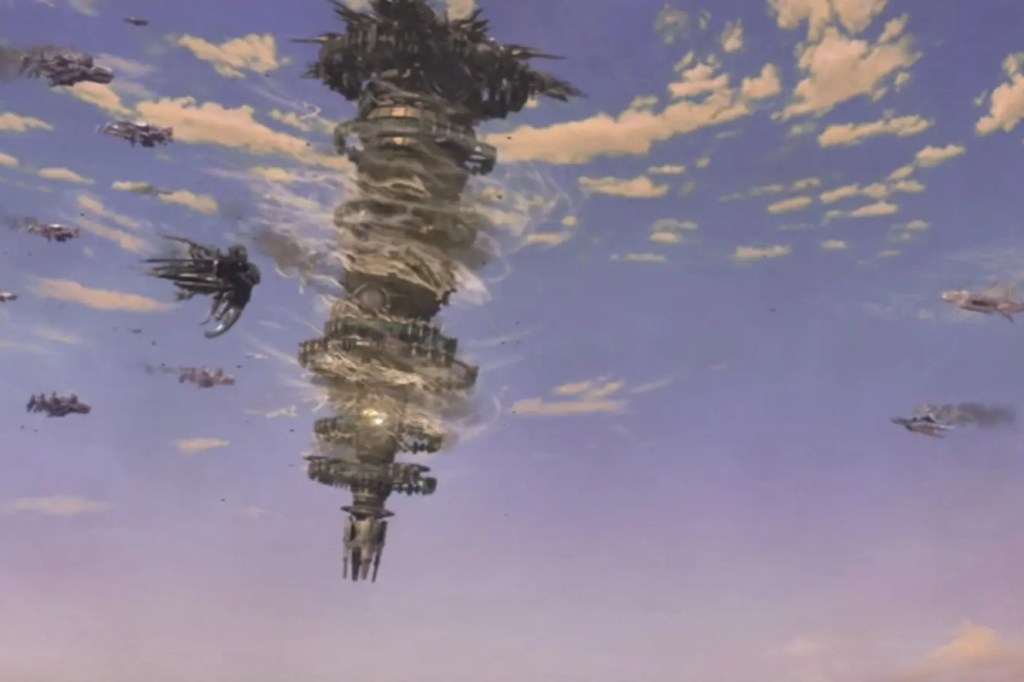
A still from Final Fantasy XII (2006), directed by Hiroyuki Ito & Hiroshi Minagawa
Since I recently finished playing Final Fantasy XII for the third time, I think that it’s worth reviewing it and explaining why it’s one of my favorite video games. The PlayStation 2 is the first home video game console that I bought, and Final Fantasy XII is one of the first video games that I acquired and played. This was over a decade ago. So, the fact that I completed the game for the third time recently isn’t surprising. Final Fantasy X, which is one of the best PS2 games and also one of my favorite video games, was released in 2001. But Final Fantasy XII was released in 2006. The development of Final Fantasy X lasted for two years. The development of Final Fantasy XII lasted for five years, which was a very long game development period for that time. Many video game critics on the internet, of which there is a big number, like to praise the works of notable video game designers like Fumito Ueda or Hidetaka Miyazaki, who has become perhaps the most admired video game designer in the last decade or so. I like their video games too, but I think that my favorite designer would be Yasumi Matsuno, if I had to pick a favorite. I think that his fictional stories and design ideas are my favorite. He’s responsible for not one but several engrossing and high-quality video games. The stories in the games on which he has worked are some of the most complex and sophisticated in all of gaming. One of the reasons why Final Fantasy Tactics (1997) is a great game is because it features a detailed and epic story written by Matsuno. So, in this video game, the protagonist Ramza Beoulve and his friends, who are normal people and mortals, come into conflict with not only other mortals and their schemes but also with beings of great power (the Lucavi demons) who were thought to be just a legend. I must say that story moments like when Cardinal Delacroix of the Glabados Church uses one of the Zodiac stones to transform into Cuchulainn, when Marach Galthena gets revived from death by the Scorpio auracite on the roof of a castle, or when Ramza confronts Confessor Zalmour Lucianada are very memorable. Similar story elements are fortunately also present in Final Fantasy XII. The heroes of the story have to battle not only against the judges of the Archadian Empire but also against the Occuria, who are actual gods. What Final Fantasy XII has that Final Fantasy Tactics doesn’t is the ability for players to revisit the well-designed locations in the game. So, if you want to go to the game’s typically beautiful 3D locations again you can do that in most cases. These locations are even more detailed than the locations in Final Fantasy X, and you have the freedom of rotating the camera. I already pointed out on my blog that The Legend of Zelda: Breath of the Wild (2017) is a game that features a big map and many beautiful 3D locations, but Final Fantasy XII offers this too with a world full of grand sights. Moreover, every location in Final Fantasy XII has its own music theme. Some of my favorite locations in the game are Rabanastre, Archades, Phon Coast, Necrohol of Nabudis, Nabreus Deadlands, Bhujerba, Lhusu Mines, Salikawood, Zertinan Caverns, Ridorana Cataract, and Stilshrine of Miriam. Final Fantasy XII is one of the most visually impressive video games for the PS2. One of the reasons for this is that the game was made when Square Enix was still in its heyday. Another reason for this is the involvement of Matsuno, who I suspect is a perfectionist and not only a great video game designer. The cutscenes are of a high quality. Another aspect that’s worth praising is the English localization, which I think is superb. Would Final Fantasy XII have been an even more impressive game if Matsuno hadn’t left development a year before the game’s release. Perhaps. But I’m not complaining about the final product. I can’t compare the original game to The Zodiac Age, which is a remaster that got released in 2017, because I haven’t played it. I already gave my opinion about video game remakes and remasters in an earlier post. Since the original game is closer to Matsuno’s vision, I don’t even feel like purchasing The Zodiac Age and checking how good it is and how it compares to the original. I can simply say that The Zodiac Age probably “stinks”, but I don’t like to talk about something that I know little or nothing about. This is why, for example, I haven’t said anything about the remake of Silent Hill 2 (2024). Since I haven’t played it myself, I don’t know how good it really is or if it has any positive aspects. However, I have posted a few reviews of this remake by people who have played it and who are passionate about the original game from 2001. The original is one of the greatest video games of all time, but it’s not a particularly special game for me. I’ve played it two times already, but I didn’t play it for the first time when I was a teenager. When I was a teenager, I didn’t get to play video games. Perhaps this is a good thing in a way because all I had was a wish to play some PC and PlayStation games, but I didn’t own a Nintendo console and Nintendo games. Many people did grow up owning a Nintendo console or another console, and now some of them are making videos on YouTube about how Nintendo games gave them unforgettable memories when they played these games as children and teenagers. Well, the demand is huge not only for new video games but also for retro video games. Some of them are brainy enough to disagree with Nintendo’s detestable policies, but they still talk about Nintendo with reverence. This sickens me somewhat, and I’m glad that I didn’t grow up playing Nintendo games. Therefore, I don’t think that Nintendo is the greatest video game company that has ever existed or that will ever exist. Sure, I like Nintendo games from the past, but I won’t talk about this company with reverence. When it comes to Matsuno, I am disappointed by the fact that Final Fantasy XII, which has received universal acclaim from video game critics, was his last great video game and that he didn’t get to make more great games. Apparently, Final Fantasy XII was released several months after it could have been released in order to not take away sales from Tetsuya Nomura’s Kingdom Hearts II, which is another great video game from an era full of great video games. The golden age of gaming lasted until the beginning of the eighth generation in 2012, but Matsuno’s last great game got released in 2006. Well, at least he got to make several great games before burning out or not getting the opportunity to lead another big project the way he wanted.
Now that I’m done praising Final Fantasy XII, I will get back to the book ‘Michelangelo: His Life, His Times, His Era’ (1921) by Georg Brandes. I recently finished reading it. The author had to say the following in the book. “The picture we have so far been able to form of Michelangelo’s temperament is quite incomplete. We have noted his zeal, his capacity for learning swiftly, his love of his family – even though those closest to him scarcely understood him – his vaulting ambition, his almost innate sense of self-assertion and, finally, the arrogance and predilection for taunting his teachers and fellows to which it gave rise. Yet the immense power that slumbered within him was offset by an equally conspicuous weakness. He was necessarily sensitive – in the meaning of receptivity to a wealth of sensory impressions – and this led to sudden attacks of anxiety and embitterment, leading in turn to ill-considered actions that demanded and usually found indulgence. The sculptors of the thirteenth century, who represented the Passion or the death of martyrs in the churches, conceived of suffering as a reflection of divine bliss. All pain was outshone by the gentleness and lovingkindness, the innocence and love here manifested. Christianity, familiar as an article of faith, was triumphant. The early fifteenth century brought a change in sentiment. The somber and tragic elements in Christianity asserted themselves in the representation of suffering, at the expense of faith triumphant. In Italy the theme of the Mother’s reunion with her crucified son had originally attracted painters rather than sculptors. Giotto had projected his quiet inwardness, Giovanni Bellini his lofty dignity and grave sentiment into the Madonna’s torment. Botticelli, finally, could scarcely outdo himself in expressing her despair. With him Mary falls in a dead faint, while the others present sob uncontrollably. Moving from such representations to the calm of Michelangelo’s Pieta, we find our souls deeply touched by the quiet sublimity of overwhelming but muted sorrow that speaks without words and does with a minimum of gesture. This Madonna, composed despite her deep agony, is the noblest expression of an elementary sense that something incomprehensible has happened here, doing violence to nature, senseless in its outrageous horror. Whoever has immersed himself in Michelangelo’s first quit relief, the Madonna of the Stairs, knows how austere and melancholy was his emotional cast. But it is not until we confront this wondrous work, the Pieta, that we fathom the full depths of his soul in its unique grandeur. At the age of twenty-four he had plumbed the abyss of sorrow in a single human soul. He had probed it in the soul of a mother who has lost her all, her most precious treasure on earth, the being she not only loved but encompassed with complete devotion. The son whom she had given life in mysterious fashion, whom she worshipped in obscure veneration – his dead body here rests upon her lap, his life wantonly destroyed. Youthfully shy and tender was the sentiment that rendered this lifeless male body so airy and sublime, so delicate and free of the dross of earthly life. And the Madonna herself is treated with the same tender awe. She is intentionally represented as young, scarcely older than her son; for in these mysterious reaches we are not subject to the laws of everyday life. In his old age Michelangelo offered a theologic explanation for this conspicuous youthfulness: the Virgin had never known the life of the senses, which ages and corrodes. Chaste as was her nature, she had kept young by a divine though humanly motivated miracle. The serenity that marks her features would appear supernatural but for the eloquent gesture of the left hand, which reveals that composure has been achieved only at the cost of inward struggle. She suffers as only a higher being suffers. The misfortune that has befallen her fails to disrupt the nobility of her features, does not cloud the purity of her brow, its height emphasized by the form and fall of her kerchief. Despite her desolation, her face remains harmonious, with its fine straight nose, the beautiful closed mouth, the firm strong chin, the inclination of the head – all underlined by the ruffled hem of the robe at her throat. As though enthroned she sits upon the flagstones of Golgatha, at the foot of the cross, shrouded in mourning weeds like the love that carefully enfolds the body on her lap. He lies stretched across her knee, resting in the folds of her cloak, supported by her right hand which reaches under his shoulder, almost reverently shielded with a corner of the cloak, as though the slack body must not be desecrated by any rude contact. Just as none of Michelangelo’s Madonnas look straight at the proud or playing child, so the Mother of God in the Pieta does not direct her gaze to the face of her grown and lifeless son. Her eyes are downcast, lost in deep feelings of her own and even deeper thoughts. In the spring of 1501, probably in May, the artist was back home, after an absence of four years. He returned as one who, with a single masterpiece, had proved that at the age of twenty-six he could lay claim to being the foremost sculptor of his country and age, even though at the time a superman like Leonardo was still living and working. Michelangelo’s mind was preoccupied with another matter – his encounter with the greatest artist of the age, Leonardo da Vinci, who had returned to Florence after an absence of seventeen years. Leonardo had arrived in the spring of 1501, when Michelangelo was still in Rome. In 1502, as military engineer in the service of Cesare Borgia, he had inspected the strongholds in the Romagna, returning in 1503. The story of his fame pervaded the city. Leonardo, accounted as handsome as he was versatile even as a youth, was now in his fifties, an impressive figure of a man. He dressed unorthodoxly though in exquisite taste, wore, in contrast to the long Florentine robes, a rose-colored cloak that came only to his knees, let his curly and well-tended beard grow down over his chest. Magnificent in appearance, he was an artist of rarest hue, a universal genius, a legend in his own time. His demeanor was courtly, his mastery undisputed, but both his character and circumstances had made him a stranger wherever he went. Under Ludovico Sforza, dubbed Il Moro, he had worked and trained disciples in Milan. His main lesson to them was that art had for its object the totality of the works of nature and man. In this respect he was sharply at odds with Michelangelo’s highly personal and instinctive creed that only the human body was a worthy object of art. Leonardo insisted that the variety of things, living and dead, challenged the painter to reproduce the peculiar and the ugly as well as the beautiful and the graceful. In Leonardo’s view the artist had to make his soul a mirror reflecting all things, doing justice to all things. Whoever mastered but one field was a poor artist (uno tristo maestro). One senses, in Leonardo’s later exposition of his views in his Treatise on Painting, a covert polemic against Michelangelo’s diametrically opposite approach. Michelangelo, who all his life maintained that sculpture rather than painting was his profession, insisted in his conversations with Vittoria Colonna, which have come down to us fairly accurately through Francisco de Hollanda, that the art that takes something away, that is to say sculpture, is superior to the art that adds something, to wit painting. These two titanic figures, separated by an age gap of twenty-three years, found it difficult to appreciate, one the other, as is not uncommon in contemporary geniuses of such different stripe, especially when circumstances place them in a state of rivalry. There can be little doubt, however, that Leonardo, whose urbanity and poise were far above envy and jealousy, would have met the rising young genius more than half way, had his willingness to pave the way to an understanding met a response. The fiery spirit that burned within Michelangelo made that impossible. Even outwardly he sensed the contrast he formed to the stately and exemplary figure Leonardo cut. He was ugly, or so he thought, his face disfigured by Torrigiano’s blow, uncouth and awkward, indifferent to dress and appearance, inured to wield his strong hands in passionate combat with marble. All his life his arrogance, served by a sharp tongue, made him see only a rival in every genius, junior or senior, who crossed his path. A rival – in his eyes that meant an enemy, to be outshone. He hated Leonardo from the beginning, as ten years later he hated Raphael. His relationships to these two, however, were quite different. In Leonardo Michelangelo encountered the artist in his prime, one from whom he could not help but learn many things, perhaps unconsciously, even as he sought to surpass him. In Raphael Michelangelo, then himself in his prime, saw the aspiring beginner, his character even more alien than that of Leonardo, who zealously and airily appropriated for his own use all that Michelangelo had pioneered in art.”
Extra thorough refers to really extending most of the triggers I use (percussion, sticky stethoscope, reflex testing, etc) so each one essentially has double the screentime it usually does. We’ve also got the fishbowl effect with the otoscope and I chose to do a ‘follow my instructions’ style test with the eye movement that turned out real nice, I think!
This video is indeed on the shorter side than what I usually do; I’ve been very sick for almost two weeks now and this was all I could handle. Fingers crossed for feeling better so we can get back to our long videos!
Welcome to Your Exam ~ 00:00 – 01:42 Percussing the Chest Wall ~ 01:42 – 04:09 Listening to Your Heart, Lungs & Abdomen ~ 04:09 – 13:09 Percussing the Abdomen ~ 13:09 – 15:11 Testing Your Reflexes ~ 15:11 – 19:29 Looking Inside Your Ears (Fishbowl Effect) ~ 19:29 – 24:40 Inspecting & Palpating the Eyes ~ 24:40 – 25:35 Follow My Instructions (Eye Movement) ~ 25:35 – 29:10 Taking a Look at Your Nose, Mouth, & Throat ~ 29:10 – 31:39 Reviewing Your Exam ~ 31:39 – 32:22 Wrapping up Your Examination ~ 32:22 – 33:58
Triggers include: soft speaking, whispering, pen writing, percussion, explaining, auscultation, guided breathing, sticky stethoscope, reflex testing, otoscope, fishbowl effect, inspection, palpation, titch of crinkly cling wrap sounds, follow my instructions, and eye movement testing.
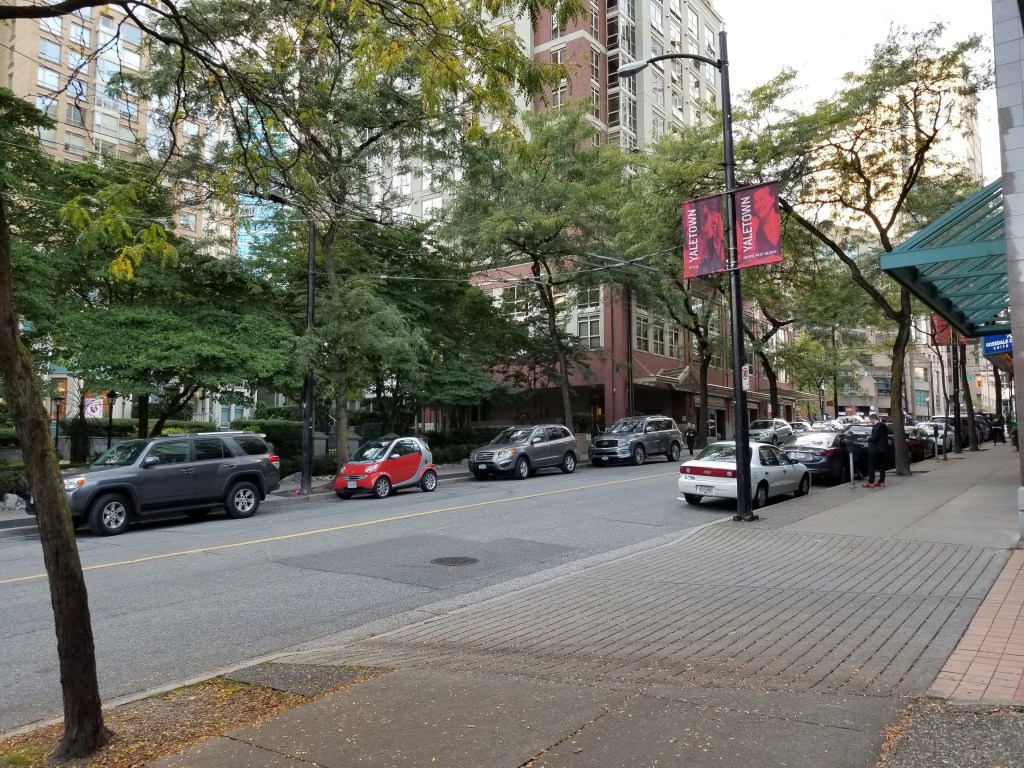
Smithe Street is a prominent street in Downtown Vancouver, British Columbia, running east-west through several key neighborhoods, including Yaletown, the Central Business District (CBD), and the Arts + Events District. It’s named after William Smithe, a former Premier of British Columbia, and is known for its blend of residential, commercial, and cultural significance.
Smithe Street cuts through Yaletown, a trendy, revitalized area that was once an industrial zone. Today, it’s a hub of modern luxury developments, upscale dining, and vibrant nightlife. Developments like One Pacific at 68 Smithe Street are part of Concord Pacific’s newest luxury projects, offering proximity to the Seawall, Roundhouse Community Centre, and Yaletown Canada Line Station. Further east, Smithe Street passes through the CBD, where office workers, food trucks, and high-end shopping on Robson and Alberni streets define the area. It’s a central connection point for SkyTrain routes, the West Coast Express, and the SeaBus to North Vancouver. The Arts + Events District area, intersecting Smithe Street, is rich with cultural landmarks and is walkable to neighborhoods like Gastown, Chinatown, and False Creek.
Properties like One Pacific and The Smithe highlight the street’s appeal for luxury living. These buildings offer modern amenities, stunning views, and easy access to parks, the Seawall, and public transit. Yaletown along Smithe Street is home to popular brunch spots like Chambar, Jam Cafe, and Cafe Medina, as well as The Dirty Apron, a culinary institution. The CBD section features Pacific Centre Mall and high-end boutiques. The street’s location provides quick access to Stanley Park, the West End, and Coal Harbour, making it ideal for outdoor enthusiasts. Gastown’s heritage charm and the Arts + Events District add a cultural layer with galleries and events.
Originally part of Vancouver’s industrial landscape, Yaletown (where Smithe Street is a key artery) has transformed into a model of livability. The mix of brick-and-beam heritage buildings with modern architecture reflects the city’s evolution, tied together by the iconic Seawall and waterfront parks. Smithe Street remains a dynamic part of Vancouver’s real estate market and lifestyle scene. Luxury developments continue to attract buyers, and its central location supports a bustling urban environment. Real estate platforms like REW.ca provide up-to-date listings and strata details for properties like One Pacific, reflecting ongoing interest in the area.



























 Igor's Blog