



sup nerds. Stanley Kubrick’s final film, Eyes Wide Shut, recently got a 4K Criterion release. This restoration proved to be quite divisive online, sparking a debate as to which version was superior. Is the new colour grading and added film grain an improvement, or does it take away from the dreamy feel of the original Blu-ray? Let’s compare the two to see why they look so different.
Hope you all enjoy 🙂













Pacific Boulevard runs along the northern edge of False Creek, a central waterway in Vancouver, and serves as a defining boundary for Yaletown. The neighborhood itself is roughly bounded by Nelson, Homer, Drake, and Pacific streets, as noted in the history provided by the Roundhouse Community Centre. Pacific Boulevard is a bustling corridor that connects Yaletown to other parts of downtown Vancouver, sitting between the Granville Street and Cambie Street bridges. It’s a major thoroughfare that offers both practical access and a scenic backdrop with views of False Creek.
Yaletown, including the area around Pacific Boulevard, has a rich history tied to Vancouver’s development. According to the Roundhouse Community Centre, the area was initially shaped by the arrival of the Canadian Pacific Railway in 1887. By 1900, the city planned a new eight-block warehouse district in what is now recognized as modern Yaletown, with Pacific Boulevard marking its southern edge. Back then, this area was a hub for processing, repackaging, and warehousing goods, thanks to its proximity to the railway and waterfront. It remained largely industrial until the late 20th century.
The transformation of Yaletown—and Pacific Boulevard by extension—began in the late 1970s and 1980s when young urban professionals started moving in, drawn by the affordable and attractive old warehouses. The area’s revitalization kicked into high gear after Expo 86, the world’s fair held in Vancouver, which turned Yaletown into a festival site and sparked widespread redevelopment. Today, Pacific Boulevard is part of a neighborhood known for its mix of art galleries, retail stores, restaurants, and residential towers, as described in the same historical overview.
Pacific Boulevard is home to several notable spots. David Lam Park, 1300 Pacific Boulevard, is a 12-acre park located right on Pacific Boulevard. It’s a large open space adjacent to Yaletown. It’s a popular spot for events, especially in spring and summer, and offers a place to relax with views of False Creek. The park hosts events like the annual lantern procession and “Labyrinth of Light” around December 21st, organized by the Roundhouse Community Centre. Roundhouse Community Centre is located near Pacific Boulevard. This centre is a hub for community activities and events, reflecting the area’s evolution from industrial to cultural. It’s tied to the history of Yaletown and often organizes events that spill into nearby spaces like David Lam Park. The street is dotted with businesses catering to both locals and visitors. For example, Atlantis Dental Yaletown at 1278 Pacific Boulevard offers dental services with extended hours (8:00 AM to 8:00 PM, Monday to Wednesday). Similarly, P Nails & Spa at 1271 Pacific Boulevard, formerly Posy Fingers & Toes Spa, provides nail and spa services, reflecting the area’s focus on lifestyle and wellness.
Today, Pacific Boulevard in Yaletown is a lively, pedestrian-friendly area that reflects the neighborhood’s “trendy” reputation. It’s a mix of modern high-rises, converted warehouses, and green spaces, with a strong emphasis on urban living. The street itself is a blend of functionality—connecting key parts of downtown—and leisure, with proximity to parks, dining, and cultural spots. It’s a hotspot for both residents and tourists, especially given its location near False Creek, which offers scenic views and access to seawall pathways for walking or cycling.
Pacific Boulevard is easily accessible via public transit, with the Yaletown-Roundhouse SkyTrain station nearby on the Canada Line. It’s also a short walk from downtown Vancouver. The area is active throughout the day, with businesses like Atlantis Dental operating from 8:00 AM to 8:00 PM, and the park and seawall drawing crowds for recreation at all hours. As noted, David Lam Park hosts seasonal events, making Pacific Boulevard a focal point for community gatherings, especially in warmer months or during festivals like the winter solstice lantern procession. Pacific Boulevard in Yaletown is a dynamic street that encapsulates the neighborhood’s evolution from an industrial warehouse district to a trendy urban hub. It’s a place where history, modernity, and community intersect, offering a mix of green spaces, cultural activities, and lifestyle amenities.

I am currently reading ‘Power Shift: The Rise of the Southern Rim and Its Challenge to the Eastern Establishment’ (1975) by Kirkpatrick Sale. I bought this book at a rather small store where used books are sold, among other things. It has been a rather interesting book for me right from the beginning. Therefore, I will post some quotes from it already. “If the Southern Rim were an independent nation, it would have a gross national product bigger than any foreign country in the world except the Soviet Union – it stood at some $312 billion in 1970, is probably closer to $400 billion today – and bigger than that of the United Kingdom, Italy, Sweden, and Norway combined. It would have more cars (43 million) and more telephones (38 million) than any foreign nation (more than the United Kingdom, France, and Germany combined), and more housing units (22 million), more television sets (25 million), and more miles of paved highway (1.1 million) than any nation except the Soviet Union. It would, in short, be a world power on the scale of the present superpowers. Which is only one way of dramatizing the enormous economic importance of the Southern Rim, an importance all the more remarkable in that it has come about only in the last thirty years, changing the pleasant little backwaters and half-grown cities into an industrial and financial colossus. The explanation of that remarkable growth is that, to an unusual extent, almost all of the general trends in the American economy since 1945 have been more to the benefit of the Southern Rim than any other section of the country. There is a broadly metaphorical but rather apt way of describing these rival power bases, the one of the Northeast and the other of the Southern Rim, as the yankees and the cowboys. Taken loosely, that is meant to suggest the traditional, staid, old-time, button-down, Ivy-League, tight-lipped, patrician, New England-rooted WASP culture on the one hand, and the aggressive, flamboyant, restless, swaggering, newfangled, open-collar, can-do, Southern-rooted Baptist culture of the Southern Rim on the other; on the one hand, let us say, the type represented by David Rockefeller, Charles Percy, Edmund Muskie, James Reston, Kingman Brewster, John Lindsay, Richard Lugar, Henry Ford, Sol Linowitz, Bill Buckley, and Stephen Sondheim, and on the other the type personified by Bebe Rebozo, George Wallace, Lyndon Johnson, Billy Graham, Frank Irwin, C. Arnholt Smith, H. L. Hunt, Strom Thurmond, Sam Yorty, John Wayne, and Johnny Cash. The terms are meant only in the loosest and most symbolic way, of course – flamboyant operators can be found in the Northeast, staid blue-bloods in the Southern Rim – but it is interesting that they even have an appropriate heritage in this very context. “Cowboys” was the epithet used by the Wall Street people who first ran up against some of the newly powerful Texas entrepreneurs, broad-rimmed hats and tooled-leather boots and all, when they started throwing their weight around in Eastern financial circles in the late 1950s and early 1960s – during the fierce battle, for example, between the Texas millionaires Clint Murchison and Sid Richardson and Pennsylvania’s patrician Allen Kirby for control of the Allegheny Corporation and the New York Central Railroad in 1961. “Yankee,” the invective which goes back to the days of the Civil War to describe Northerners in general, was naturally the word with which the newcomers responded, at least back home in the boardrooms and bars. The first and most important trend was obviously that of the population migrations. From 1945 to 1975, the Southern Rim underwent the most massive population expansion in history, from about 40 million people to nearly 80 million people in just three decades, giving the area today a population greater than all but seven foreign countries. Thanks to a complexity of factors – a hospitable climate, the development of air conditioning, water reclamation projects, available space for commercial and private building, the new technologies of communication and transportation – industries and individuals alike poured into new territories of the Rim. Every single one of the fifteen cowboy states grew during this period, some quite spectacularly – Texas by over 100 percent to become the third largest state, California by 200 percent, to become the largest state of all, Florida by 400 percent, Arizona and Nevada by more than 450 percent – and as a whole they have consistently made up nearly half of the growth that the nation as a whole has undergone. Migrations every year since World War II have poured millions of new people into the area – on average about 650,000 newcomers every year, turning bucolic farmlands into sprawling suburbs and little crossroads cowtowns into gleaming metropolitan centers. The cities have grown unlike any urban areas in the world, 500 and 800 and 1,000 percent in just this thirty-year span – Fort Lauderdale from 18,000 to 150,000, Huntsville from 13,000 to 140,000, Houston from 385,000 to 1,400,000, Phoenix from 65,000 to 755,000, San Jose from 68,000 to 446,000, incredible urban explosions right across the Rim – and today there are actually more cities over 100,000 people in this area than there are in the Northeast. Nor does this development show any signs of slackening, despite the economic downturn, despite the efforts of “no-growth” lobbies: the most recent statistics show that the Southern Rim continues to grow about three times as fast as the whole rest of the country combined, and even modest projections suggest that the region will have 83.7 million people by 1980. According to the demographers, never in the history of the world has a region of such size developed at such a rate for so long a time. The second decisive economic trend of this period has been the transformation brought about by the sophisticated new technology developed since World War II. In broad terms there has been a shift from the traditional heavy manufacturing long associated with the Industrial Belt of the Northeast to the new technological industries that have grown up in the Southern Rim – aerospace, defense, electronics – and from the dependency upon railroad transportation to the growth of air and highway transportation, both relatively more important in the Southern Rim. Similarly, in the use of natural resources there has been a development away from coal and heavy metals such as iron and steel, the resources of the Northeast, toward oil and natural gas and the light metals such as aluminum and titanium, the products of the Southern Rim. And in agriculture, new technologies have favored large-scale and often corporate farming, advantageous particularly where space in plentiful, growing seasons are long, and the crops are suitable, and that turns out to be the Southern Rim. Finally, trends in employment patterns over this thirty-year period have also tended to tilt things toward the cowboy economy. The single most important development has been the gradual decrease in blue-collar industrial workers – these the backbone of the Industrial Belt – and the sharp increase in service and government workers – these the ones most important in the newly populated states with expanding governments and in the tourist-and-retirement areas like Florida, Texas, Arizona, and Southern California; especially in the booming new Rim cities, service employment has enormously increased, in fact by more than 70 percent over the last twenty years, as against 6 percent in the older cities of the Northeast. In like nature, the employment shifts brought about by postwar programs of paid retirement, the expansion of Social Security, and union-won benefits for longer vacations and shorter hours have all meant more earlier retirements to the sunnier parts of the land and more emphasis upon climatic amenities as an inducement for resettlement of the labor force. Indeed, if any one industry can be said to be the backbone of the Southern Rim, it is defense. The decade of its initial postwar impact, from about 1952 through 1962 – that is, the period of the Korean War and the Cold War buildup, but before the Vietnam acceleration – has been studied in detail by a Brookings Institution economist, Roger Bolton. According to his findings, the overall contribution of defense to the total income of individual states was startlingly large – particularly in the Pacific Region (especially Southern California) and the Mountain Region (primarily Arizona and New Mexico), where it also accounted for 21 and 27 percent, respectively, of the economic growth of those areas, and in the South Atlantic Region and the Middle South, where it was responsible for 3 and 10 percent of the growth. At the same time, he figures a negative impact in the Northeast, where he finds that cuts in defense spending held back the Middle Atlantic region by 3 percent and the Great Lakes area by a significant 21 percent. As to individual states, the ones that saw a gain of 20 percent or more as a result of defense expenditures were California, Arizona, New Mexico, and Mississippi in the Rim, only New Hampshire in the Northeast, and Utah, Colorado, and Kansas; such states as Michigan, Wisconsin, and Indiana actually had negative growth rates. But in the second decade – the years of Vietnam and the moondoggle – the effect was even greater. During those years the balance of Pentagon prime contracts shifted sharply to the Southern Rim, with the percentages mounting every year, until by 1970 its states accounted for 44.1 percent of all the money going to the defense industry, the Northeast only 38.9 percent. Texas surpassed New York as the number two state behind California, and those two between them accounted for 28 percent of the contracts, more than twice as much as the next two states, New York and Illinois. By 1970, too, the Rim had five of the top ten states in terms of total Department of Defense spending (California, Texas, Georgia, Florida, and North Carolina), four of the top five states in aerospace funding (California, Texas, Florida, and Alabama), and four of the top five states in Atomic Energy Commission grants (New Mexico, California, Tennessee, and Nevada). The number of major defense installations (military bases, missile sites, etc.) in the Southern Rim had grown to 142 more than all the rest of the nation put together, and 82 more than were located in the Northeast. Defense Department payrolls by 1970 were also concentrated in the Rim: military salaries went primarily to California, Texas, Virginia, North Carolina, Florida, and Georgia, in that order, and military and civilian payrolls together amounted to more than $10 billion in the Rim, more than all the other states combined. And Pentagon research-and-development funds – the seed money that creates new technologies and industries – were concentrated in the Southern Rim, which had 49 percent of the funds as against just 35 percent for the Northeast. Today the repercussions of military money upon the once-placid Rim are evident everywhere. It is a commonplace that California is a heavily saturated defense area – especially around Los Angeles, where no fewer than seventy firms depend upon Pentagon prime contracts – and that it receives about a quarter of the total defense dollar all by itself; Texas, too, what with the Houston Space Center and major firms like LTV and Convair, has long been identified with the new Washington money. But few realize that even in such states as Louisiana, Georgia, Mississippi, Tennessee, and New Mexico, the defense industry is the single largest employer, an economic presence with enormous ramifications. Take New Mexico, for example. Without defense, it would still probably be a land of Indians and Chicanos – a reversion to which condition those two groups would no doubt welcome – instead of one of the nation’s fastest-growing states. It has eight major defense installations (including the White Sands Missile Range, the site of the first atomic bomb test), a dozen important research centers (including the Los Alamos and Sandia laboratories), and several dozen corporate defense contractors (including AT&T’s Sandia Corporation and United Nuclear). It gets more money from the AEC than any other state and almost as much from the Pentagon, together amounting to some $750 million a year – which works out to about $2,500 for every single family in the state. (The military loves the place so much that even the Navy spends money there – some $11 million a year – even though the state is completely landlocked and there’s not even a lake big enough to spit in.) And its industry is dominated by defense work, responsible for half of all employment and by itself the largest manufacturing sector in the state’s economy. It seems entirely fitting, if nonetheless gruesome, that one little New Mexico schoolchild after a visit to the Atomic Museum at Kirtland Air Force Base should write to the curator, “You have nice rockets and nice bombs. Thank you.” The industrial aspect of defense spending, though only one part of the total defense cornucopia, has been especially significant in the Southern Rim, inasmuch as it has been largely responsible for building the manufacturing substructure of the region. From 1965, thanks partly to Lyndon Johnson’s ascendancy, Southern Rim firms have gotten a greater percentage of Pentagon contracts than any other section of the country, an influx of $15 billion or so a year. And defense contractors, it should be noted, are in a uniquely strong economic position, with advantages not shared by the older, more conventional industries. They depend upon public money, from a Washington fountainhead that just never runs dry, and they are in the happy position of being able to tap it for practically as much as they want. Defense firms just don’t work like other firms. Since 1950, for example, 86 percent of their contracts with the Pentagon have been signed without competitive bidding, but simply through secret negotiations between military brass and industrial management, meaning that even firms with high bids can continue to get lucrative jobs, and certain favored contractors – Lockheed and Litton are familiar examples – can go on getting lucrative jobs even when their past performances would argue that they shouldn’t be given a contract to put stamps on envelopes. Defense contractors have other gimmicks, too: they are given the use of some $45 billion in plant and equipment in what amounts to a tax-free government loan; they are permitted to exercise cost-plus banditry through the so-called “golden handshake” clauses that provide that the government bails out any company whose costs run over a projected level; and they are permitted by the government to make exorbitant profits as a matter of course, often in excess of 50 percent and sometimes more than 500 percent (when a 20 percent profit would be considered good in most other manufacturing). All in all, no other business does quite as well as the defense business, and its preponderance in the Southern Rim has almost by itself allowed that region to develop the industrial might that today can challenge the traditional industrial power of the Northeast. One part of the defense industry that has been particularly glamorous in recent decades is aerospace and electronics, but that is actually just a part of the whole range of modern scientific and engineering businesses – including computers, calculators, semiconductors, scientific instruments, magnetic recordings, and much else besides – which can broadly be called the technology industry. Given its unquestioned importance now, even more outside of the defense industry than in it, and its assured centrality in any future industrial development, it seems reasonable to regard this as a separate economic pillar.”
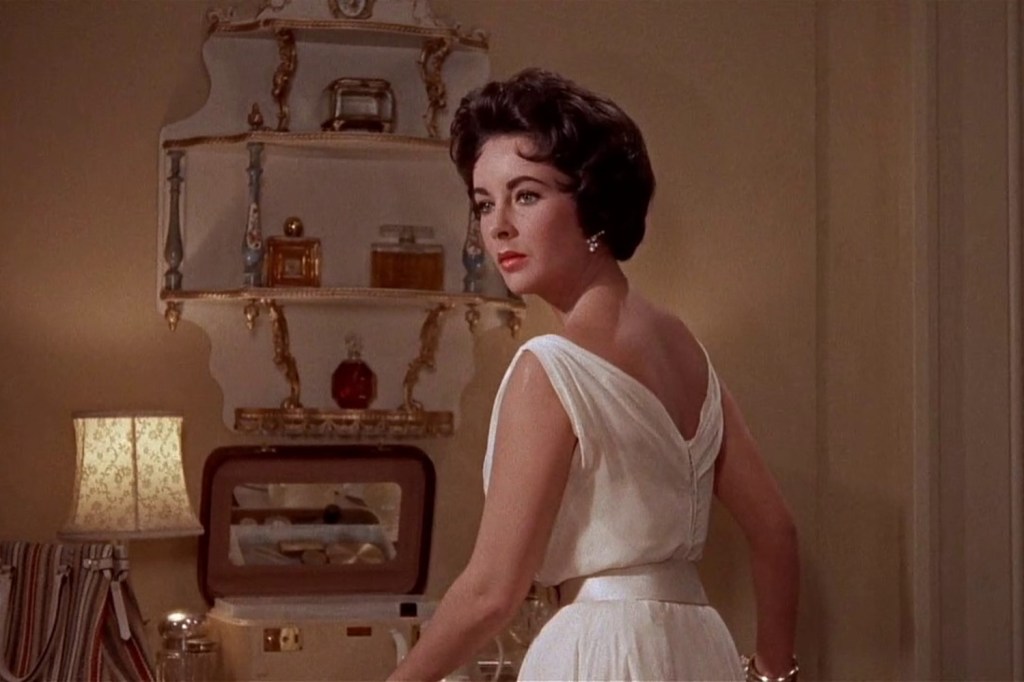
Philip French remembers the child star turned Oscar-winning actress, who was as celebrated as much for her tempestuous relationships as her movies.
For people like myself, born in Britain in the inter-war years and growing up during the second world war, Elizabeth Taylor will always be thought of as the youngest of four British evacuees who brought their immaculate English accents to Hollywood and became an essential part of a corner of Tinseltown that was forever England. She and Peter Lawford were transported across the Atlantic by their parents as war clouds gathered over Europe and were put under contract by MGM in the early 1940s. Roddy McDowall followed when bombs began to fall on Britain, as did Angela Lansbury who was also signed by MGM. McDowall was the first to attain stardom, playing the Welsh miner’s son in How Green Was My Valley and then appearing in MGM’s children’s classic, Lassie Come Home, in which Taylor had her first significant role. It was the beginning of a lifelong friendship and McDowall became her closest confidant.
Taylor, Lawford and McDowall were all in the tribute to British fortitude, The White Cliffs of Dover (1944), and the 12-year-old Taylor became a star as the farmer’s daughter who triumphed at Aintree in National Velvet, with Lansbury as her elder sister. Lawford gave Taylor her first screen kiss at 16, an innocent enough peck, and although it’s said that Taylor’s mother rather fancied the idea of a courtship between the two, an order went out from MGM’s boss Louis B Mayer that a romance should be discouraged. Taylor later said of Lawford: “Peter, to me, is the last word in sophistication and so terribly handsome.” They did work together again on the glossy 1949 version of Little Women, in which Taylor played Amy March, and they remained close friends until his death.
McDowall became a leading character actor (he appeared with Lansbury in the 1971 Disney movie Bedknobs and Broomsticks) and a highly regarded photographer. Lawford was a member of the Kennedy clan and the Sinatra Rat Pack but ended up as a seedy alcoholic. Lansbury continues to be one of the most respected actors of her time. Taylor was later to be reunited on screen with McDowall in Cleopatra (1963), where he played Octavian, and with Lansbury in The Mirror Crack’d, when she played second fiddle as a faded Hollywood diva to Lansbury’s Miss Marple. But she was the only one of this close-knit quartet to become a major screen star, one of the last to be created by the old studio system. She remained under contract to MGM until 1960, winning her first Oscar for her final movie there, the melodrama Butterfield 8.
Taylor was small (5ft 2in), dark-haired, her eyes a striking violet, her eyebrows unfashionably thick, her eyelashes as seductively employed as a courtesan’s fan, and she was beautiful in different ways at various stages of her 70-year career, although her weight fluctuated alarmingly later in life. In 1941, the head of Universal Studios, when deciding not to renew Taylor’s contract after her first film there, told her agent: “She can’t sing, she can’t act, she can’t dance, she can’t perform. What’s more, her mother has to be the most unbearable woman it has been my displeasure to meet.” This is rather like the infamous judgment on Fred Astaire’s first screen test and similarly misses the point. Taylor from the start had a rare intensity, sincerity, confidence and vulnerability, and she was blessed with that indefinable, attention-grabbing presence we call charisma.
She was never out of the limelight as an actress or a celebrity from childhood until the end of her life. But her finest work was done early on, up until the late 1950s, when she was least conscious of acting. During this period she appeared as Spencer Tracy and Joan Bennett’s daughter in Minnelli’s Father of the Bride (1950); the entrancing object of the sad, social-climbing blue-collar Montgomery Clift in A Place in the Sun, and the strong city girl brought to Texas by rancher Rock Hudson in Giant, both directed by George Stevens; and in versions of two Tennessee Williams plays in which she was respectively the wife and the intimate cousin of a closeted gay, Cat On a Hot Tin Roof (1958) and Suddenly, Last Summer (1959).
When the 17-year-old hero and his girlfriend go to the cinema in small-town 1951 Texas in Peter Bogdanovich’s The Last Picture Show, they see Taylor in Father of the Bride: she is clearly the belle idéale of postwar America. The iconic shot of her in a white bathing suit in Suddenly, Last Summer is famously ravishing and has a particular poignancy when one considers that in the scene from which it comes she’s being exploited as bait to attract young men to her homosexual cousin. In fact, throughout her life she had a special affinity with gay men (McDowall, Clift and Hudson were also close confidants) and seemed happiest and most relaxed in their company. She was among the first celebrities to play a prominent role in promoting public consciousness over Aids and then raising money for HIV-related charities.
Taylor was praised as a child and adolescent, but from the early 50s until Who’s Afraid of Virginia Woolf? it was customary for serious critics to regard her with patronising contempt. Variety said of A Place in the Sun that “the histrionics are of a quality so far beyond anything she has done previously that Stevens must be credited with a minor miracle”. The acerbic Dwight Macdonald reviewing Suddenly, Last Summer in Esquire ironically complimented Joseph L Mankiewicz for his “directorial triumph: he has somehow extracted from Elizabeth Taylor a mediocre performance, which is a definite step-up in her dramatic career”. Such reviews may well have been affected by the critics’ refusal to respond to her beauty and magic spell. This must have been deeply dispiriting, especially as she was aware, we now know, of how mediocre the films MGM put her into were.
Since a riding accident during the shooting of National Velvet, Taylor was to be dogged by ill health, ranging from back problems to heart disease and cancer. The sympathy this attracted coexisted with a more mixed response to her succession of marriages, eight in all, to seven husbands. The public felt deeply for her when her third husband, the flamboyant Mike Todd was killed in a plane crash after little more than a year of marriage. But this rapidly changed. A few months later, she was widely depicted as a brazen predator after stealing Eddie Fisher from Debbie Reynolds, whose seemingly perfect marriage had been thought of as the most emblematic of the Eisenhower era. Another couple of years on, she became the century’s most publicised Jezebel when she ditched Fisher during the filming of Cleopatra in the early 1960s and embarked on an affair with the married Richard Burton.
Cleopatra, in fact, was a turning point for her and a landmark in the history of Hollywood. She became the first star to be paid more than a million dollars, the film became legendary for its chaotic production history, and it made Taylor and Burton the most notorious lovers of the 20th century. They were as extravagant, reckless and wilful as the historical character they were playing on screen. The affair and the marriage made her determined to make her mark as a serious actress, a worthy partner to Burton. Some observers, however, see this as having a seriously detrimental effect on her work.
Over the next decade, Burton and Taylor were more celebrated for their vulgar ostentation and public rows than for their work. After Cleopatra, they appeared together in a further 10 films, most mirroring their marriage. Among them were The Sandpiper, in which liberated artist Taylor lures vicar-schoolteacher Burton off the straight and narrow; The Taming of the Shrew, which parallels their own tempestuous courtship; and the 1973 TV film, Divorce His-Divorce Hers, that more or less describes their final break-up. When they had come together after their divorce for a second brief marriage, an American columnist observed: “Sturm has remarried Drang”. The one truly successful film of this period is Mike Nichols’s version of Edward Albee’s Who’s Afraid of Virginia Woolf?, where a middle-aged academic couple tear each other apart in a manner reminiscent of Strindberg at his most atrabilious. Both gave raw, revealing performances.
Virginia Woolf brought Taylor her second Oscar, but her screen career from that point on can be seen as a downhill journey and the public tired of Burton and Taylor. She was very good in John Huston’s Reflections in a Golden Eye opposite Marlon Brando, but it was not popular, and most of her films thereafter failed to secure a wide release or went straight to graveyard slots on TV. At least two, however, are worthy of attention: Boom! and Secret Ceremony, both British films directed by Joseph Losey in 1968. After the 70s, only two of her pictures were widely seen: The Mirror Crack’d (1980), the poorest of a British series of Agatha Christie period whodunits, and her final theatrical film, playing Pearl Slaghoople, in The Flintstones (1994), a live-action, one-joke movie spin-off from the 60s TV cartoon series. It was a sad end to her big-screen career, though she did a deal of TV, including Malice in Wonderland (1985), a docudrama about Hollywood gossip columnists in which she plays Louella Parsons.
In those last couple of decades Elizabeth Taylor became a heroic coper with ill health, a supporter of good causes, and a vociferously loyal friend to, among others, Michael Jackson. She couldn’t shift tickets at the box office, but she was in demand as a star and a celebrity on the cover of popular magazines. She was always a dual national, born in Britain of American parents, and thus eligible to become a Dame of the British Empire in 2000.
Her only stage appearances were starring opposite Burton in Private Lives, Coward’s bittersweet comedy of marriage and divorce that perfectly reflected their relationship, and as the southern bitch Regina in a 1981 revival of Lillian Hellman’s The Little Foxes, the London version of which showed up the inadequacy of her stagecraft. But in looking at her life towards the end she invoked one of the greatest female roles of the 20th century: “I’m Mother Courage, baby, I’ve been through it all.”
So how will history judge her? In 1999, the American Film Institute, after an earnest weighing of evidence over performance, reputation, influence and so on, came up with a list of more than 100 film actresses who might be considered female screen legends. They submitted it to a carefully chosen selection of professionals from all branches of the film industry. Taylor was placed seventh, just ahead of Judy Garland, Marlene Dietrich and Joan Crawford and behind Katharine Hepburn, Bette Davis, Audrey Hepburn, Ingrid Bergman, Greta Garbo and Marilyn Monroe. This seems, for the moment, a satisfactory seating arrangement in the cinematic pantheon.